2013 ESA World of Insects Calendar Selection

Today I received word from Richard Levine at the Entomological Society of America that one of my photos had been selected for the 2013 version of their famed World of Insects Calendar!

Excuse me for a moment please… (pumps fist, stirs the pot, does a very bad moon walk…)

Okay, I’m back. Honestly, this is an honor that I did not expect—at least not yet. Historically dominated by such giants in the world of insect macrophotography as Piotr Naskrecki,  Thomas Myers, and others, competition for ESA’s World of Insects Calendar is fierce. Last year more than 500 photographs were submitted for 13 slots (12 months and an introductory page) by 98 photographers from around the world. I was one of those photographers, though not selected (no surprise as I was a first-time submitter). However, I took great pleasure in seeing fellow bug blogger Adrian Thysse nab two of the 2012 slots, and I increased my resolve to try again for next year with a selection of eight mostly newer photographs.

At the suggestion of Dave Stone, I present each of those photos below along with a short description of why I submitted it. However, I’m not going to tell you which photo ultimately was selected—I thought it might be fun to see which photo you think was selected and why. As added incentive for guessing, I’m going to award 10 BitB Challenge points to each person who correctly picks the selected photograph. BitB Challenge Session #6 is coming down to the wire, so this could have a big impact on the overall standings.

The 2013 Calendar will become available for sale later this year (probably October) at the ESA website—last year’s version cost only $12 (discounted to $8 for ESA members, and free for those attending the annual meeting [which I will be attending this year]).


Megaphasma denticrus (Phasmida: Diapheromeridae) – giant walkingstick

From North America’s longest insect (21 Aug 2009).  This is one of my earlier super-closeup attempts. I liked the combination of blue and brown colors on the black background.


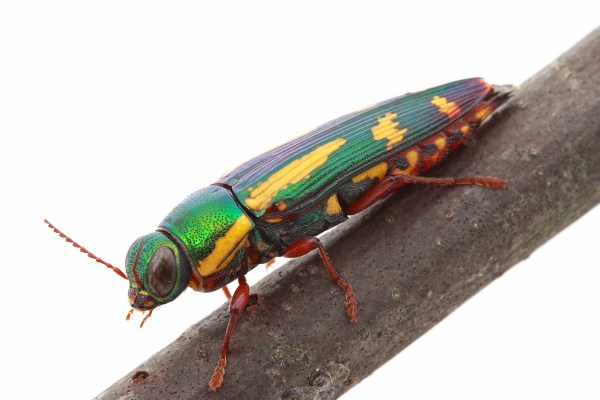
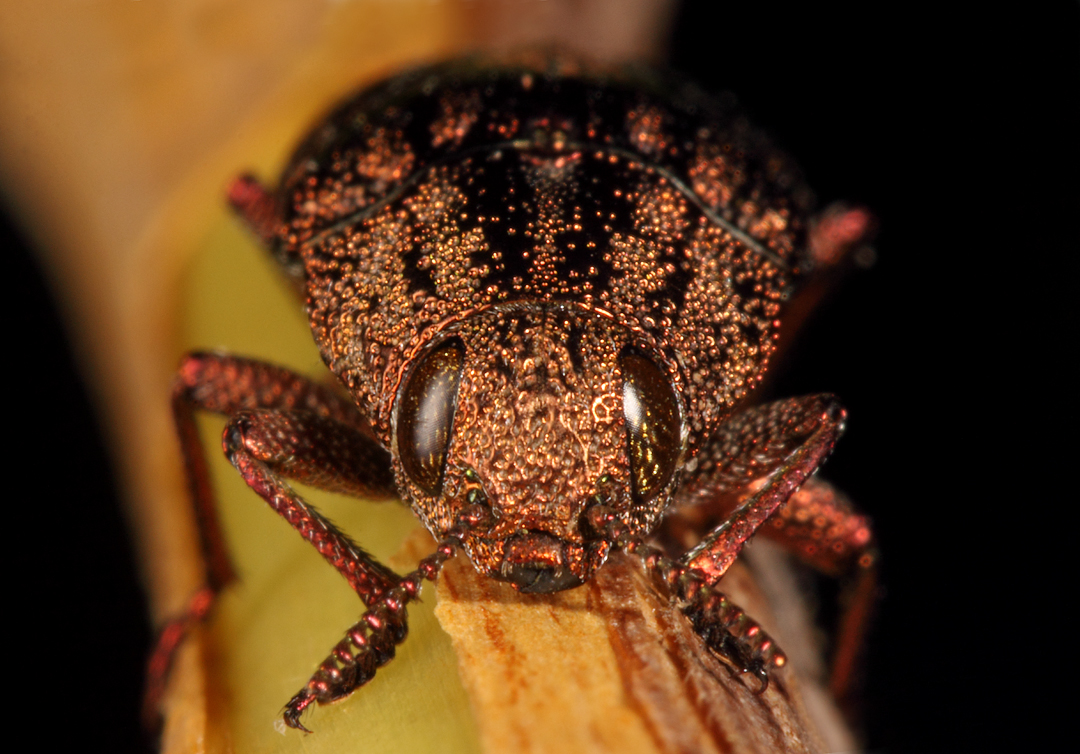
Buprestis rufipes (Coleoptera: Buprestidae) – redbellied Buprestis

From Special Delivery (13 July 2010).  The use of a white box shows off the brilliant (and difficult-to-photograph) metallic colors well, and I like the animated look of the slightly cocked head.


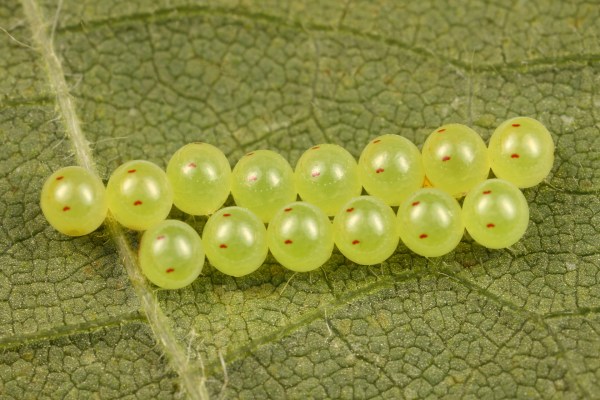
Edessa meditabunda (Hemiptera: Pentatomidae) – alquiche chico

From  (18 May 2011). I found these Edessa meditabunda stink bug eggs on the underside of a soybean leaf in Argentina almost ready to hatch. The developing eye spots in each egg gives the photo a “cute” factor rarely seen in such super close-ups.


Cicindela formosa generosa (Coleoptera: Carabidae: Cicindelinae) – eastern big sand tiger beetle

From  (10 May 2011). I like this slightly panned out view because of the sense of scale and landscape created by the inclusion of the plantlets and the view over the small rise.


Trimerotropis saxatilis (Orthoptera: Acrididae) – lichen grasshopper

From  (15 July 2011). Some of my favorite insect photos are not only those that show the bug in all its glory, but also tell a story about its natural history. This nymph is almost invisible when sitting on the lichens that cover the sandstone exposures in its preferred glade habitat. 


Tetracha floridana (Coleoptera: Carabidae: Cicindelinae) – Florida metallic tiger beetle

From  (23 August 2011). I used extension tubes to improve the quality of flash lighting (decreased lens to subject distance results in greater apparent light size), and I like the symmetry of the composition.


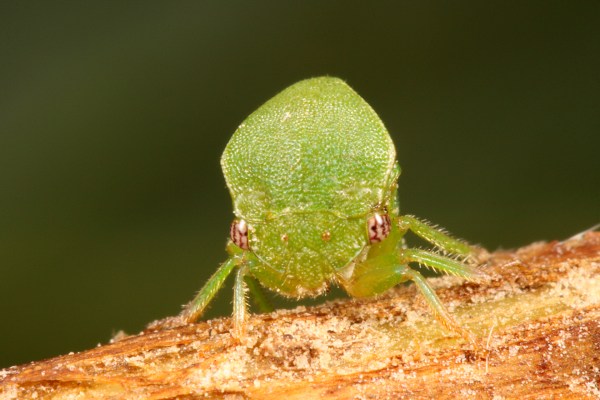
Spissistilus festinus (Hemiptera: Membracidae) – threecornered alfalfa hopper

From  (17 September 2011). Even though both the insect and the background are green, there is sufficient value contrast to create a pleasing composition, punctuated by the bizarre zig-zag pattern of the eyes.


Crossidius coralinus fulgidus (Coleoptera: Cerambycidae) – a rabbitbrush longhorned beetle

From  (4 October 2011). The blue sky background provides a pleasing contrast with the colors of this particular beetle and flowers.

Copyright © Ted C. MacRae 2012

Working with Cerceris fumipennis—Part 2

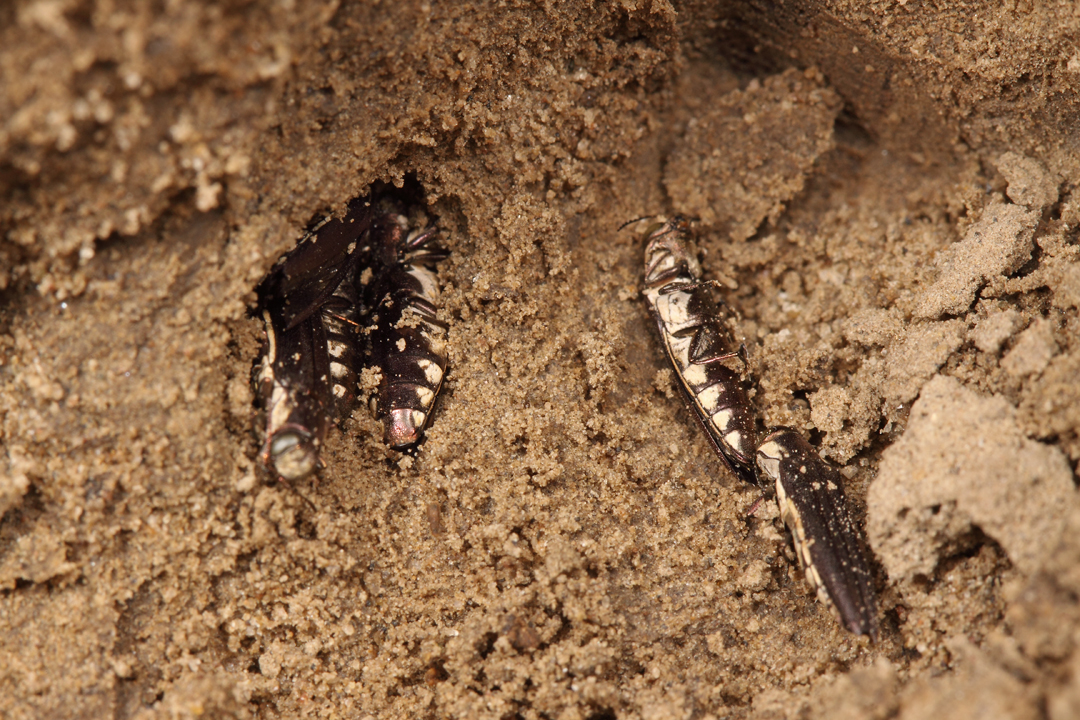
During the 6-week period from late May to early July this year, I collected ~400 jewel beetle specimens representing at least 20 species (see Working with Cerceris fumipennis—Part 1). A final accounting of the species represented won’t be done until this winter, but the genera represented include Acmaeodera, Actenodes, Agrilus, Anthaxia (Haplanthaxia), Buprestis (Knulliobuprestis), Chrysobothris, Dicerca, Poecilonota, and Spectralia. Perhaps two-thirds of the specimens were “ground-picked”¹, while most of the remaining third were “stolen” directly from wasps by netting wasps in flight as they returned to their nest carrying prey.

¹ It’s not clear to me why I found so many abandoned buprestids at nest entrances. The wasps are known to drop prey when threatened and, rather than search for and relocate the prey, fly off to look for a new beetle(Careless et al. 2009). I observed this myself in several cases when I missed netting the wasp but swiped the net close enough to scare it, at which time it dropped the beetle and flew off (and I popped the beetle in a vial). However, the bulk of the beetles I found on the ground were not only at the nest entrance, but even mixed within the diggings surrounding the nest. My first act when checking each field was to check each nest, pick up any adults lying on top of the burrow diggings, and then carefully spread out the diggings with a knife or trowel to collect the beetles hidden within them. One nest contained as many as 13 Agrlus obsoletoguttatus inside the diggings. I wondered at one point if the wasps were leaving the beetles at the burrow entrance and then digging out the burrow before coming back to retrieve them, but I never actually witnessed this. On the other hand, I observed numerous wasps approaching their burrows while carrying prey, and every time the wasp dropped directly into the burrow. In fact, I could even predict what beetle species I was likely to find inside the nest based on the species I found around the entrance (more on that below).

This ball field with contains several dozen Cerceris fumipennis nests.

There is a third method that I used to collect beetles that I haven’t yet discussed, and that is digging them out of nests. In the latter part of the survey period (late June and early July), beetle numbers dropped rapidly, as did apparent wasp activity. As mentioned in the previous post, this drop off in activity came precisely at the time of season when I have observed buprestid beetle activity to decline in Missouri. As the drop off in activity was taking place, I began wondering what I would find if I tried digging up some of the burrows. Of course, digging up a nest takes much more effort than netting wasps or picking beetles up off of the ground, so it becomes important not only to identify whether a nest actually belongs to C. fumipennis and if it is active and likely to contain freshly captured beetles.  In addition, I observed the burrows of a variety of other insects in these fields as well, some of which are shown here and which might be confused with burrow entrances of C. fumipennis.

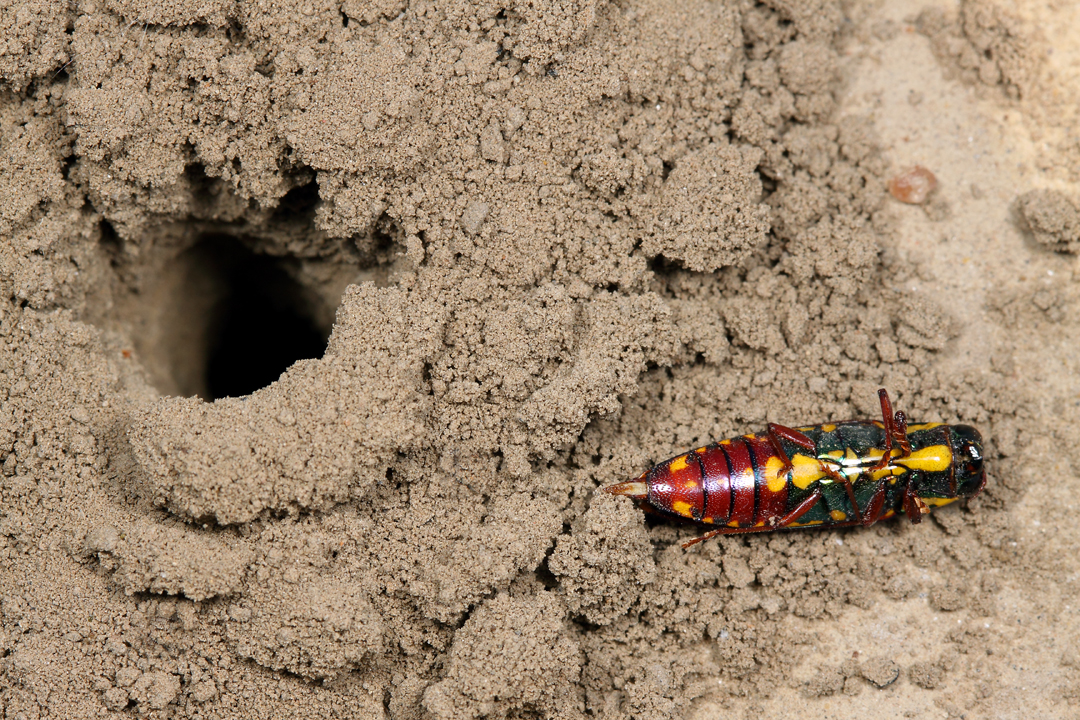
Cerceris fumipennis nest with Chrysobothris sp. adult left on diggings.

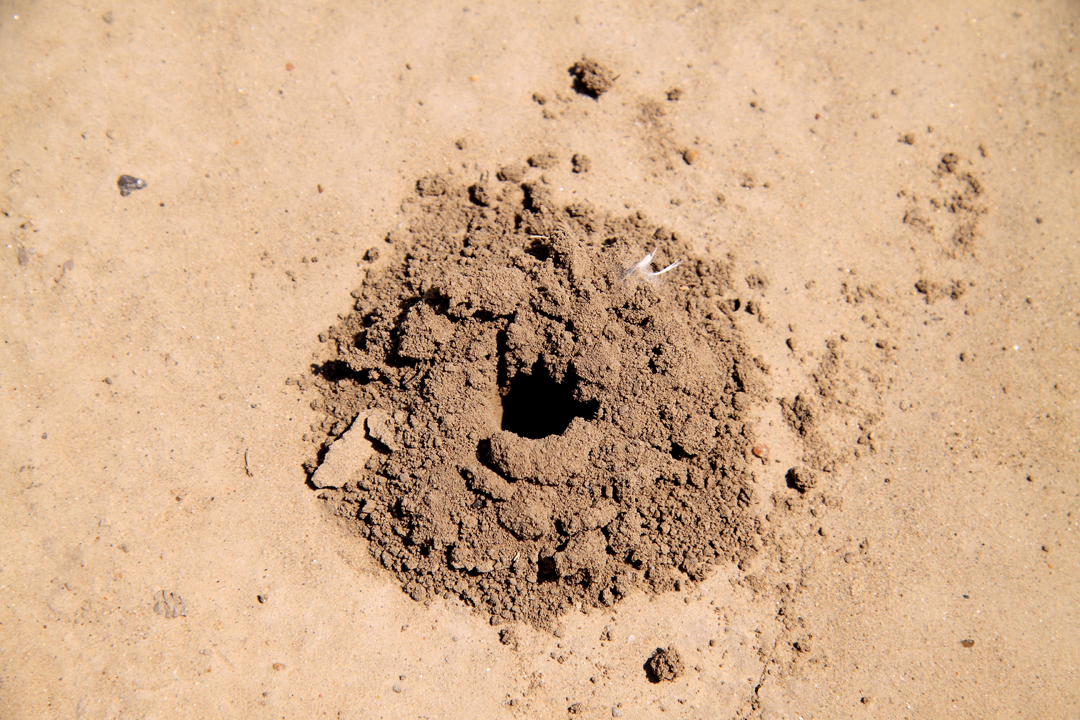
Cerceris fumipennis burrows exhibit perfectly circular, pencil-sized entrances surrounded by a symmetrical mound of diggings with a fine rather than granular texture. There are other Cerceris species that make nearly identical burrows, but they prey on other insects rather than buprestid beetles. At my site I found C. bicornis, a weevil specialist, almost as common as C. fumipennis. Their burrow entrances on the whole seemed slightly larger, but I could not use this as consistent distinguishing character. What I could use, however, was the presence of weevils rather than buprestids lying on the ground near the nest entrance. (I also observed this species returning to its nest and noted a rather faster, more powerful flight that made them even more difficult to capture than C. fumipennis). In contrast, there can be no doubt that the burrow above, with a buprestid beetle lying on the ground near the entrance, belongs to C. fumipennis

² The white plastic tag marks the burrow to facilitate locating nests on subsequent visits. It is secured with a golf tee and also can be rotated so that the hole covers the entrance. The hole is large enough to allow the wasp to leave but too small for a returning wasp to enter while carrying a beetle. The idea was to rotate the tags when I first entered a field to cover all the burrow entrances, watch for wasps returning with prey, and then net the wasps as they tried (in vain) to enter the burrow. However, I never actually observed a wasp trying to enter a covered burrow, even after leaving a field and returning 20–30 minutes later.

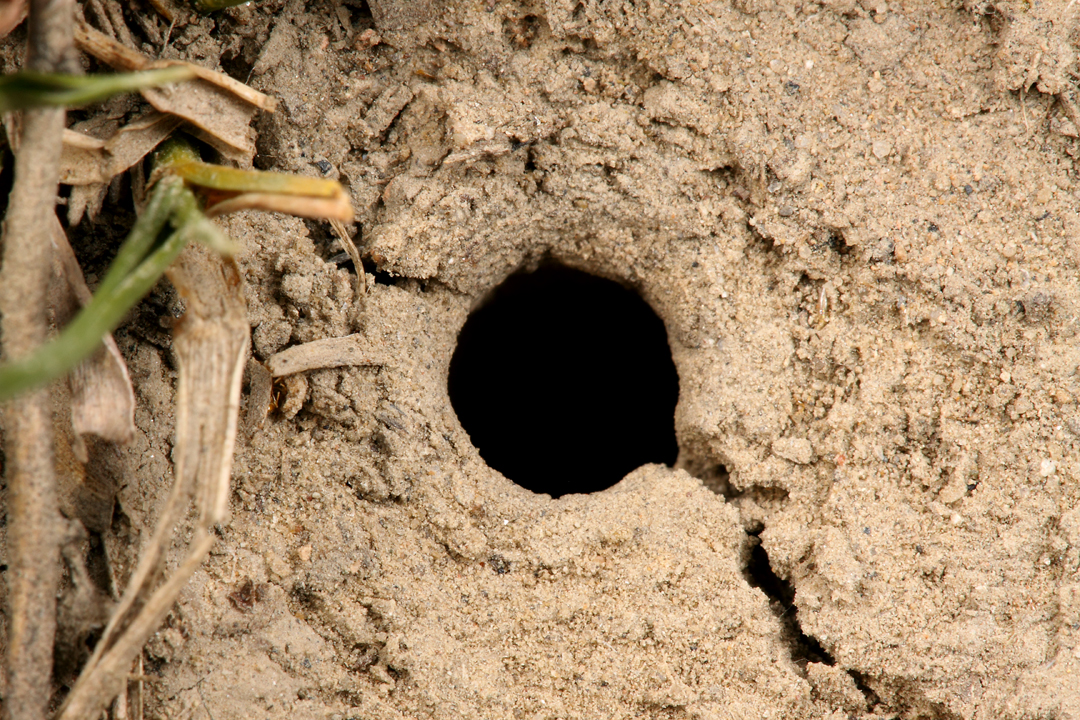
I presume this nest to be that of Bembix americana (sand wasp).

For the first few weeks, I thought the burrows such as that shown in the above photo also belonged to C. fumipennis. However, I never found beetles lying on the ground near the entrance, nor did I ever observe a wasp to enter or leave the burrow. I eventually noticed several distinct differences in burrow architecture—the burrow entered the ground at an angle rather than straight down, the diggings were distributed asymmetrically to one side of the entrance, and the latter seemed consistently a little larger than those of C. fumipennis. In addition, these burrows always seemed to be in the sandier portions of the fields. While I never associated any insect directly with these burrows, I did observe sand wasps (perhaps Bembix americana) in the vicinity and have seen similar-looking burrows dug by these wasps at Sand Prairie Conservation Area.

Larval burrows of Cicindelidia punctulata and other tiger beetles lack diggings around the entrance.

Tiger beetle larval burrows might also be confused with C. fumipennis burrows, especially after rain or high winds which can wash/blow away the diggings from around the entrance. I found adults of the punctured tiger beetle, Cicindelidia punctulata, fairly commonly at the site and presume the numerous tiger beetle larval burrows that were also present belong to that species. Larval tiger beetles burrows also enter the ground straight down and are, at first appearance, also perfectly round, but they are usually a little too small for C. fumipennis (those of Tetracha spp. being an exception)—the presumed C. punctulata burrow in the above photo measures about 5 mm in diameter. In addition, closer examination reveals a slight “D” shape to the burrow entrance (upper right in the above photo—the tiger beetle larva rests its jaws against the flat side) and, more distinctively, beveling of the ground around the rim of the burrow entrance. Cerceris fumipennis nests lack the slight D-shape and distinctive beveling.

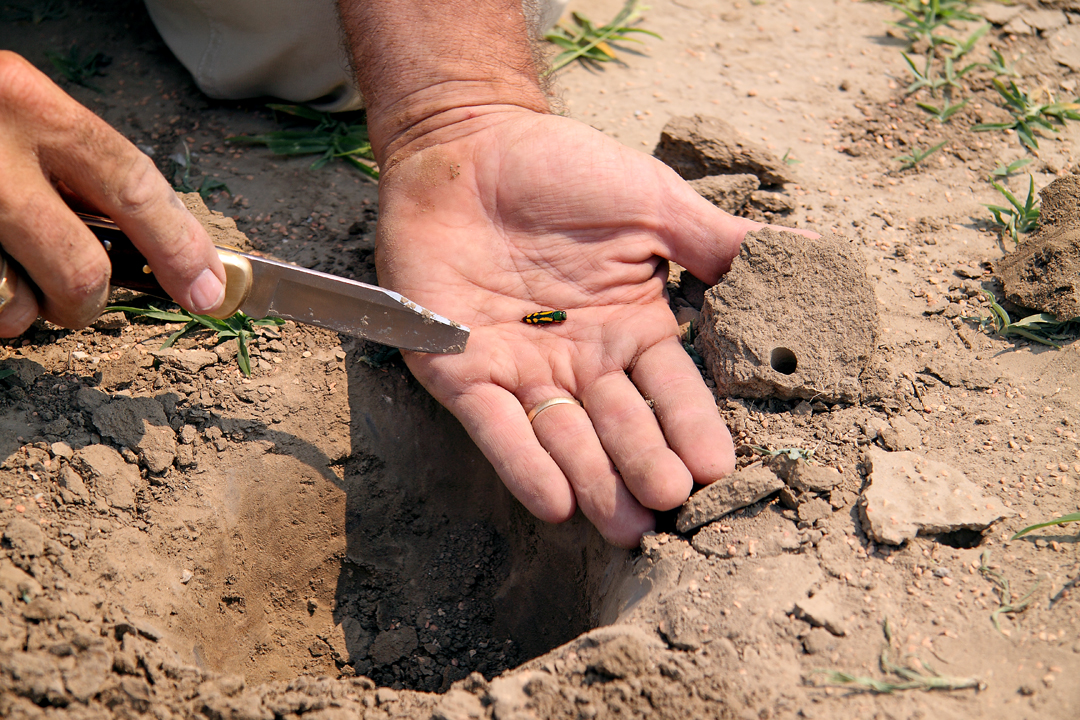
Use a grass stem as a guide while carefully digging away the surrounding soil.

Years of practice digging up tiger beetle burrows prepared me well for my first attempts at digging up C. fumipennis burrows. While it might seem an easy task to follow a hole into the ground while digging soil away from it, in practice the burrow can be quickly lost after even a few inches due to falling soil covering the hole and making it impossible to relocate. I use a thin, flexible but sturdy grass stem to preserve the burrow path, inserting the stem into the burrow and down as far as it will go and then removing the soil carefully from around the hole with a knife or trowel. I try to avoid letting soil fall over the hole by prying the soil away from the hole, but if the hole does get covered the grass stem allows it to be easily relocated.

This nest contained a single Buprestis rufipes

Cerceris fumipennis burrows are not very deep—only 10–15 cm, and angle to one side a few cm below the surface before leveling out near the bottom. I noticed the nest in the above photo because I saw a wasp fly into it. When I went over to look at it I found a Buprestis rufipes lying on the ground near the entrance and so decided to dig it up. As I expected, I found another B. rufipes at the bottom of the burrow (two above photos courtesy of Madison MacRae).

…while this one contained a cache of seven Agrilus quadriguttatus.

The above photo shows a cache of seven Agrilus quadriguttatus that I found at the bottom of another burrow. In this case, the prey is rather small compared to large prey such as Buprestis and Dicerca. While nests provisioned with species in these latter genera often contained only a single beetle in them, I nearly always found multiple beetles in nests provisioned with the smaller Agrilus species. One nest contained as many as 13 Agrilus obsoletoguttatus, among the smallest of the species I found utilized by C. fumipennis at this site.

Buprestidae taken from five different Cerceris fumipennis nests.

Some of the nests I dug up contained multiple species of beetles, but far more commonly I found only a single species in a given nest. The photo above shows the diversity and number of beetles found on one date after digging up five different nests. From top left the beetles are: 1) 1 Buprestis rufipes; 2) 2 Agrilus quadriguttatus and 1 A. obsoletoguttatus; 3) 2 A. quadriguttatus and 1 A. obsoletoguttatus; 4) 8 A. obsoletoguttatus; and 5) 2 Poecilonota cyanipes, 2 A. quadriguttatus, and 1 A. pseudofallax. It would make sense for wasps to provision nests with greater numbers of smaller beetles to ensure adequate food for their larvae to complete development. How the wasps actually locate their prey, and why this species has specialized almost exclusively on buprestid beetles, is a mystery (at least to me); however (and here comes the speculation du jour), I suspect the wasps may have keyed in on volatiles used by the beetles—either those released by suitable hosts or by each other to facilitate mate location. Use of buprestid pheromones or freshly dead host volatiles would allow wasps to more efficiently locate buprestid prey and, once locating a source (a tree harboring a particular beetle species), could return repeatedly to provision their nest fully. It seems less likely that wasps rely exclusively on visual location of prey, as this would involve a large amount of random searching through trees and passing up numerous, seemingly equally suitable prey.

REFERENCE:

Careless, P. D., S. A. Marshal, B. D. Gill, E. Appleton, R, Favrin & T. Kimoto. 2009. Cerceris fumipennis—a biosurveillance tool for emerald ash borer. Canadian Food Inspection Agency, 16 pp.

Copyright © Ted C. MacRae 2012

Working with Cerceris fumipennis—Part 1

For nearly 30 years, jewel beetles (family Buprestidae) have been my primary research interest. While some species in this family have long been regarded as forest and landscape pests, my interest in the group has a more biosystematic focus. A faunal survey of Missouri was the result of my initial efforts (MacRae 1991), while later research has focused on distributions and larval host associations of North American species (Nelson & MacRae 1990; Nelson et al. 1996; MacRae & Nelson 2003; MacRae 2004, 2006) and descriptions of new species from both North America (Nelson & MacRae 1994, MacRae 2003b) and South America (MacRae 2003a). Research interest in other groups—especially longhorned beetles and tiger beetles, has come and gone over the past three decades; however, I always return to jewel beetles as  my first and favorite group.

In recent years, one species in particular—the emerald ash borer (EAB, Agrilus planipennis) has garnered a huge amount of research, regulatory, and public interest after reaching North America from Asia and spreading alarmingly through the hardwood forests of Michigan and surrounding states. The attention is justifiable, given the waves of dead native ash trees that have been left in its wake. With huge areas in eastern North America still potentially vulnerable to invasion by this species, the bulk of the attention has focused on preventing its spread from infested areas and monitoring areas outside of its known current distribution to detect invasion as early as possible. One incredibly useful tool that has been adopted by survey entomologists is the crabronid wasp, Cerceris fumipennis. Like other members of the family, these solitary wasps dig nests in the ground, which they then provision with captured insect prey. The wasp uses its sting to paralyzed the prey but not kill it, and once inside the burrow the wasp lays an egg on the prey and seals the cell with a plug of soil. The eggs hatch and larvae develop by consuming the paralyzed prey (unable to scream!). After pupation the adult digs its way out of the burrow (usually the next season), and the cycle begins anew. However, unlike other members of the family (at least in North America), C. fumipennis specializes almost exclusively on jewel beetles for prey. So efficient are these wasps at locating and capturing the beetles that entomologists have begun using them to sample areas around known wasp populations as a means of detecting the presence of EAB. Philip Careless and Stephen Marshall (University of Guelph, Ontario) and colleagues have been leading this charge and have even developed methods for transporting wasp colonies as a mobile survey tool and developed a sizeable network of citizen scientists throughout eastern North America to expand the scope of their survey efforts. Information about this can be found at the excellent website, Working with Cerceris fumipennis (please pardon my shameless lifting of the title for this post).

I first became aware of the potential of working with C. fumipennis a few years ago when Philip sent me a PDF of his recently published brochure on use of this wasp for EAB biosurveillance (Careless et al. 2009). My correspondence with him and other eastern entomologists involved in the work suggested that ball fields with lightly vegetated, sandy soil would be the best places to look for C. fumipennis nests, but my cursory attempts to find the wasp at that time were unsuccessful. I reasoned that the clay-soaked soils of Missouri didn’t offer enough sand for the wasps’ liking and didn’t think much more about it until last winter when I agreed to receive for ID a batch of 500+ buprestid specimens taken from C. fumipennis wasps in Louisiana. What a batch of material! In addition to nice series of several species that I had rarely or never seen (e.g. Poecilonota thureura), three new state records were represented amongst the material. A paper is now in progress based on these collections, and that experience catalyzed a more concerted effort on my part to locate a population of the wasp in Missouri. Museum specimens were no help—the only records from Missouri were from old specimens bearing generic locality labels such as “St. Louis” and “Columbia.” Throughout the month of May, I visited as many ball fields as I could, but the results were always the same—regularly groomed, heavy clay, barren soil with no evidence of wasp burrows (or any burrows for that matter).

Near the end of May, however, I had a stroke of luck. I had switched to a flatter route through the Missouri River Valley to ride my bike to work because of knee pain (now thankfully gone) when I saw this:

Practice fields at Chesterfield Valley Athletic Complex | St. Louis Co., Missouri

Those are “practice” fields in front of regular fields in the background, and unlike the latter, this row of nine fields (lined up against the levee adjacent to the Big Muddy National Wildlife Refuge) showed no evidence of regular grooming or heavy human use. Only ten miles from my home, I made immediate plans to inspect the site at the first opportunity that weekend. Within minutes after walking onto the lightly vegetated, sandy-clay soil of the first field, I found numerous burrows such as this:
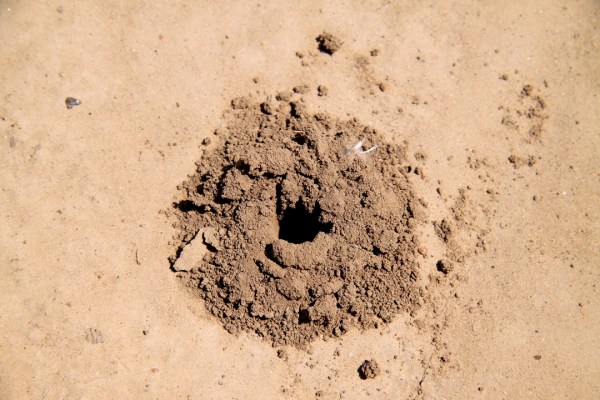
Cerceris fumipennis with circular, pencil-wide burrow entrance and symmetrical mound of diggings.

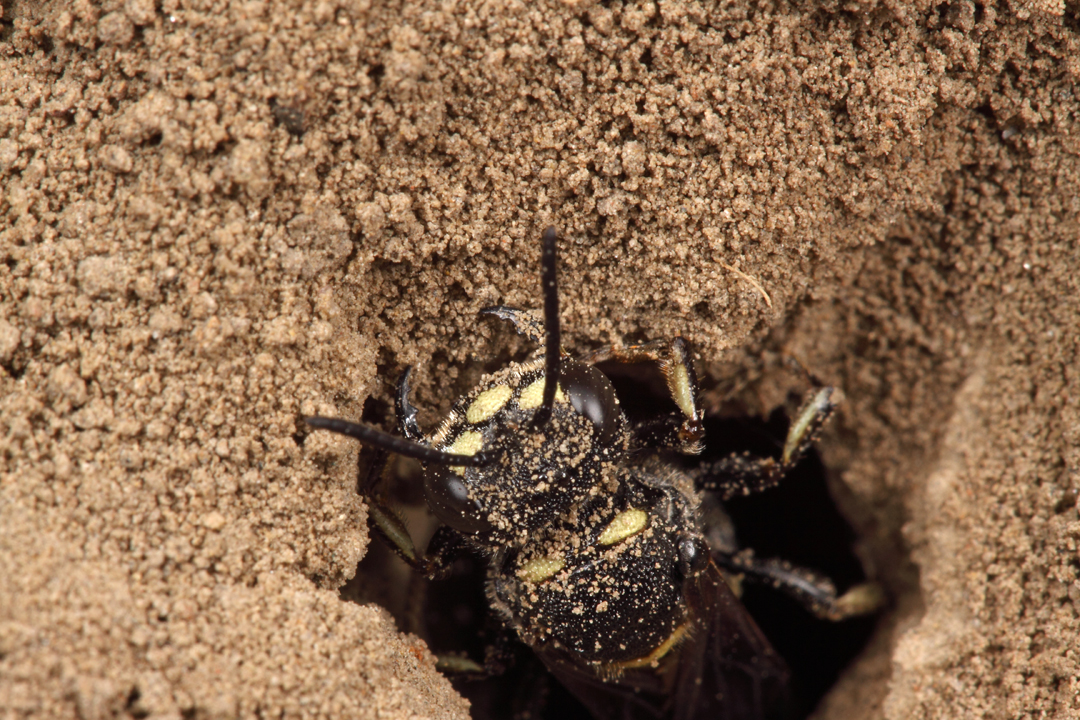
Only a few more minutes passed before I found an occupied nest, the wasp sitting just about an inch below the entrance to its pencil-wide burrow. The three yellow markings on the face indicated it was a female (males have only two facial markings), and in short order I found numerous other burrows also occupied by female wasps. Some were just sitting below the burrow entrance, while others were actively digging and pushing soil out of the burrow with their abdomen. I flicked a little bit of soil into one of the burrows with a female sitting below the surface, which prompted an immediate “cleaning out” of the burrow—this explains the dirty face of the female in the following photo, but the three yellow facial markings are clearly visible:
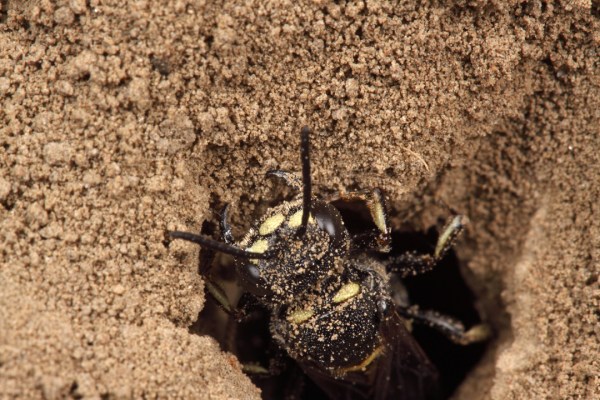
Cerceris fumipennis female removing soil from burrow entrance.

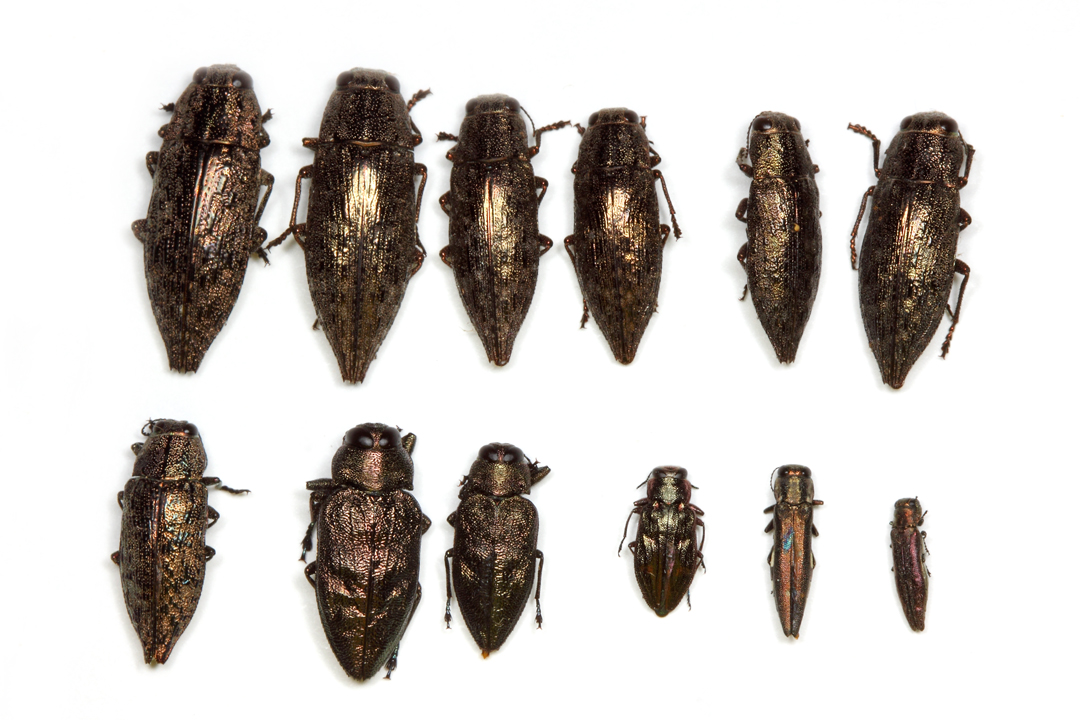
After finding the burrows and their occupants, I began to notice a fair number of wasps in flight—leaving nests, returning to nests, and flying about as if searching for a ‘misplaced’ nest. A few of these were males, but most were females, and I also caught a couple pairs flying in copula (or at least hitched, if not actually copulating). Despite the number of wasps observed during this first visit, I didn’t see a single wasp carrying a buprestid beetle. This puzzled me, because all of the Louisiana beetles I had determined last winter were taken by standing in the midst of nests and netting those observed carrying beetles. Finally, I had confirmation that I was truly dealing with this species when I found a couple of beetles lying on the ground near the entrance to a burrow. These would be the only beetles that I would find on this visit, but subsequent visits during the following few weeks would show “ground picking” to be the most productive method of collecting beetles. Across the nine fields, I found a total of nearly 300 nests, and the wasps showed a clear preference for some fields over others—one field (P-6) had about 150 nests, while a few others had less than a dozen. The photo shown in ID Challenge #19 shows a sampling of ground-picked buprestids from P-6 in a single day, and occasionally I would find a real prize like Buprestis rufipes:
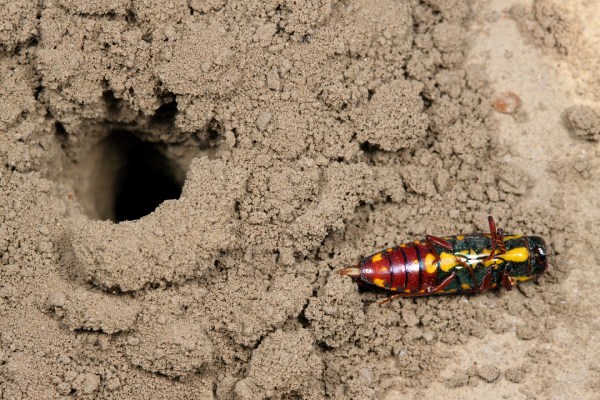
Buprestis rufipes laying near Cerceris fumipennis nest entrance.

Coincident with the appearance of large numbers of beetles laying on the ground near nest entrances, I also began to see wasps carrying their prey. Wasps carrying large beetles are easily recognized by their profile, but even those carrying small beetles look a little more “thick-thoraxed” (they hold their prey upside down and head forward under their thorax) and exhibit a slower, more straight-line flight path compared to the faster, more erratic and repetitively dipping flight of wasps not carrying prey. Learning how to discern wasps carrying prey in flight from the more numerous empty-handed wasps prevents a lot of wasted time and effort netting the latter. Nevertheless, there does appear to be some bias towards larger beetles when netting prey-carrying wasps in flight, as evidenced in the photo below of beetles taken by this method, also in field P-6, on the same date as the ground-picked beetles shown in ID Challenge #19. This could be a result of visual bias towards wasps carrying larger beetles, as in later visits (and presumably with a more refined search image) I did succeed in catching larger numbers wasps carrying smaller beetles (primarily in the genus Agrilus).
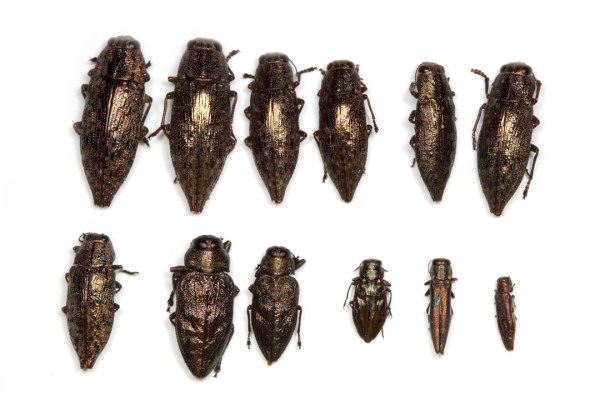
Buprestid prey of Cerceris fumipennis: L–R and top to bottom 2 Dicerca obscura, 2 D. lurida, 3 Poecilonota cyanipes, 2 Acetenodes acornis, 1 Chrysobothris sexsignata, 1 Agrilus quadriguttatus, and 1 A. obsoletoguttatus

All told, I collected several hundred beetles during my twice weekly visits to the site from late May to the end of June. Beetle abundance and wasp activity began to drop off precipitously in late June, which coincides precisely with the end of the adult activity period for a majority of buprestid beetles in Missouri, based on my observations over the years. This did not, however, spell the end of my activities in using C. fumipennis to collect buprestid beetles, which will be the subject of Part 2 in this series.

Congratulations to Joshua Basham, whose efforts in ID Challenge #19 earned him 12 points and the win. Morgan Jackson and Paul Kaufman were the only others to correctly identify the Cerceris fumipennis connection and take 2nd and 3rd, respectively. In an unexpected turn of events, BitB Challenge Session #6 overall leader Sam Heads did not participate and was leapfrogged by Brady Richards, whose becomes the new overall leader with 59 points. Sam now trails Brady by 5 points, while Mr. Phidippus lies another 3 points back. With margins this tight, the overall standing can still change in a single challenge, and there will be at least one more in this current session before an overall winner is named.

REFERENCES:

Careless, P. D., S. A. Marshal, B. D. Gill, E. Appleton, R, Favrin & T. Kimoto. 2009. Cerceris fumipennis—a biosurveillance tool for emerald ash borer. Canadian Food Inspection Agency, 16 pp.

MacRae, T. C. 1991. The Buprestidae (Coleoptera) of Missouri. Insecta Mundi 5(2):101–126.

MacRae, T. C. 2003a. Mastogenius guayllabambensis MacRae, a new species from Ecuador (Coleoptera: Buprestidae: Haplostethini). The Coleopterists Bulletin 57(2):149–153.

MacRae, T. C. 2003b. Agrilus (s. str.) betulanigrae MacRae (Coleoptera: Buprestidae: Agrilini), a new species from North America, with comments on subgeneric placement and a key to the otiosus species-group in North America. Zootaxa 380:1–9.

MacRae, T. C. 2004. Notes on host associations of Taphrocerus gracilis (Say) (Coleoptera: Buprestidae) and its life history in Missouri. The Coleopterists Bulletin 58(3):388–390.

MacRae, T. C. 2006. Distributional and biological notes on North American Buprestidae (Coleoptera), with comments on variation in Anthaxia (Haplanthaxia) viridicornis (Say) and A. (H.) viridfrons Gory. The Pan-Pacific Entomologist 82(2):166–199.

MacRae, T. C., & G. H. Nelson. 2003. Distributional and biological notes on Buprestidae (Coleoptera) in North and Central America and the West Indies, with validation of one species. The Coleopterists Bulletin 57(1):57–70.

Nelson, G. H., & T. C. MacRae. 1990. Additional notes on the biology and distribution of Buprestidae (Coleoptera) in North America, III. The Coleopterists Bulletin 44(3):349–354.

Nelson, G. H., & T. C. MacRae. 1994. Oaxacanthaxia nigroaenea Nelson and MacRae, a new species from Mexico (Coleoptera: Buprestidae). The Coleopterists Bulletin 48(2):149–152.

Nelson, G. H., R. L. Westcott & T. C. MacRae. 1996. Miscellaneous notes on Buprestidae and Schizopodidae occurring in the United States and Canada, including descriptions of previously unknown sexes of six Agrilus Curtis (Coleoptera). The Coleopterists Bulletin 50(2):183–191.

Copyright © Ted C. MacRae 2012

The importance of background and apparent light size

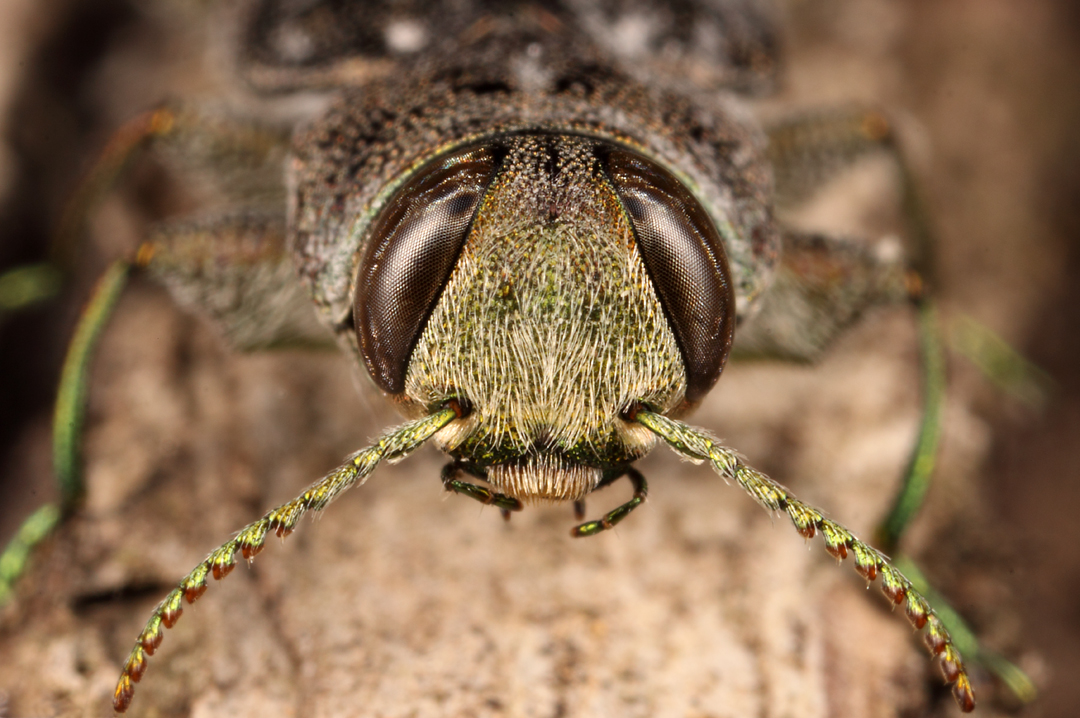
I’m still getting submissions for ID Challenge #19 and don’t quite have the followup post ready yet, so I’ll give it a couple more days. In the meantime, I’d like to re-share the photo below, originally shown a few weeks ago in my post  A few people commented that this was their favorite photo in the series—perhaps like me they are suckers for face shots, but I think this photo succeeds in large part because of its soft-green background. This was actually one of several similar face shots that I took, each differing the other almost exclusively in the choice of background. In the end, I chose the green background to include in the post, not only because it was the most aesthetically pleasing, but also because I felt it best represented the environment of the beetle—ensconced within the foliage of its preferred host plant, ninebark (Physocarpus opulifolius).

Green background—achieved by placing a leaf some distance behind the subject.

Such background is easily achieved in full-flash macro photography by placing a green leaf some distance behind the subject, although in practice this can be a little tricky—you want the leaf far enough away from the subject that it is completely out of focus, eliminating distracting details, but close enough so that it actually reflects light from the flash and shows up as green. This becomes trickier still if the photographer is already holding the subject (as I was, or at least the branch on which the subject was sitting), as the distance between the subject and the background must be adjusted by moving the subject (and hence the camera), rather than the leaf.

Black background—the typical background of full-flash macrophotography.

Here is a similar shot of the beetle without placing anything in the background. This is full-flash lighting because I’m using small apertures and high shutter speeds to prevent motion blur and maximize depth-of-field. As a result, only objects in the vicinity of the subject and illuminated by the flash will show up in the exposure. This results in the almost-trademark black background of typical full-flash illuminated macrophotography. Despite what you may read or hear, there is nothing wrong with a black background. Some consider it boring—probably because it is so common in macrophotography. However, there are times when it truly is the best choice of backgrounds—especially with a white or light-colored subject (for example, see this photo of the white-flowered Great Plains ladies’-tresses orchid, Spiranthes magnicamporum). With darker subjects, however, black may not be the most appealing choice of backgrounds, so it’s good to keep this in mind and choose accordingly.

Blue background—bump the ISO up to 320 and point the subject to the brightest part of the sky.

Of course, there is one way to avoid a black background without placing an object behind the subject (or placing the subject in front of an object), and that is to use the open sky to achieve a nice, blue background. This is one of the trickier of the background techniques, as it relies on finding a fine balance between ISO, aperture and shutter speed. For this photo, I bumped the ISO up to 320 (normally I use 160) and slightly opened up the aperture (f/13 rather than f/16). These settings, combined with pointing the subject to the very brightest part of the sky (excluding the sun!) allowed me to keep the shutter speed reasonably fast (1/200 sec). I find that lower shutter speeds nearly always result in some motion blur (all of my photos are hand-held), so I avoid reducing shutter speed if at all possible. I also find that ISO settings above 320 result in unacceptable graininess, so I will back down on the aperture (even down to f/11 or f/10) if I have to in order to avoid going above ISO 320 and below 1/200 sec exposure. On especially bright days, areas of the sky closest to the sun will provide enough light that you can use aperture to fine-tune the background to the desired intensity of blue—the smaller the aperture the more intense and darker the blue will be (along with providing greater depth of field). While a blue background works for this subject, I simply like the green background better. I find that blue background shots are most pleasing with foliage and flower-feeding insects, adding a touch of realism to the photo without the cluttered, distracting look of other natural backgrounds or the “studio” feel of black background shots. This photo of the South American weevil, Megabaris quadriguttatus, is perhaps my favorite example of the use of blue background.

By now, the more technically oriented photographer types among you might have noticed something that all three photos have in common (besides the subject), and that is the difference in specular highlighting exhibited by the left and right eyes of the subject. Reverse engineering suggests that I had two sources of light (which is true, I use Canon’s MT24-EX twin macro flash), and that the light source illuminating the beetle’s right side either had a much larger diffuser or was placed much closer to the subject. In fact, it was the latter, as I simply detached the left flash unit and held it much closer to the subject to confirm for myself what effect this has. Because the flash unit is closer to the subject, it has much larger apparent size, resulting in more even lighting over that side of the subject and, accordingly, softer specular highlights. If I had a third arm I would have done the same with the second light source (and a fourth arm would allow me to also hold a green leaf behind the subject!). Unfortunately, additional appendages are not an option, so I’m going to have to figure out an efficient, light, easy way to get my light sources as close to the subject as possible. Snoot diffusers are one option, but they have limited flexibility to make fine adjustments to the subject-distance as camera distance changes. Going to a single light source and holding it off-camera is another option, but hand-holding a light source leaves one less hand to hold other things (like the subject), and I do prefer the reduction of shadows provided by multiple light sources. I’ve already discussed the , and I do have some other ideas that I’m working on as well. However, your ideas also would be most welcome!

Copyright © Ted C. MacRae 2012

ID Challenge #19

We all have something in common…

Here is a bit of a different ID Challenge—can you identify the beetles represented in the photo, but more importantly can you deduce what all of these beetles have in common (other than the fact that they belong to the same family)? Obviously these are all jewel beetles (family Buprestidae), so we won’t worry about higher classification. Instead, I’ll give 1 pt for each correctly named genus (don’t bother trying to identify species) and a whopping 5 pts for figuring out what it is they have in common. Early bird pts will be given for the latter question only. Please read the full rules if you are not already familiar with them—good luck!

Copyright © Ted C. MacRae 2012

Dicerca pugionata – safe and sound!

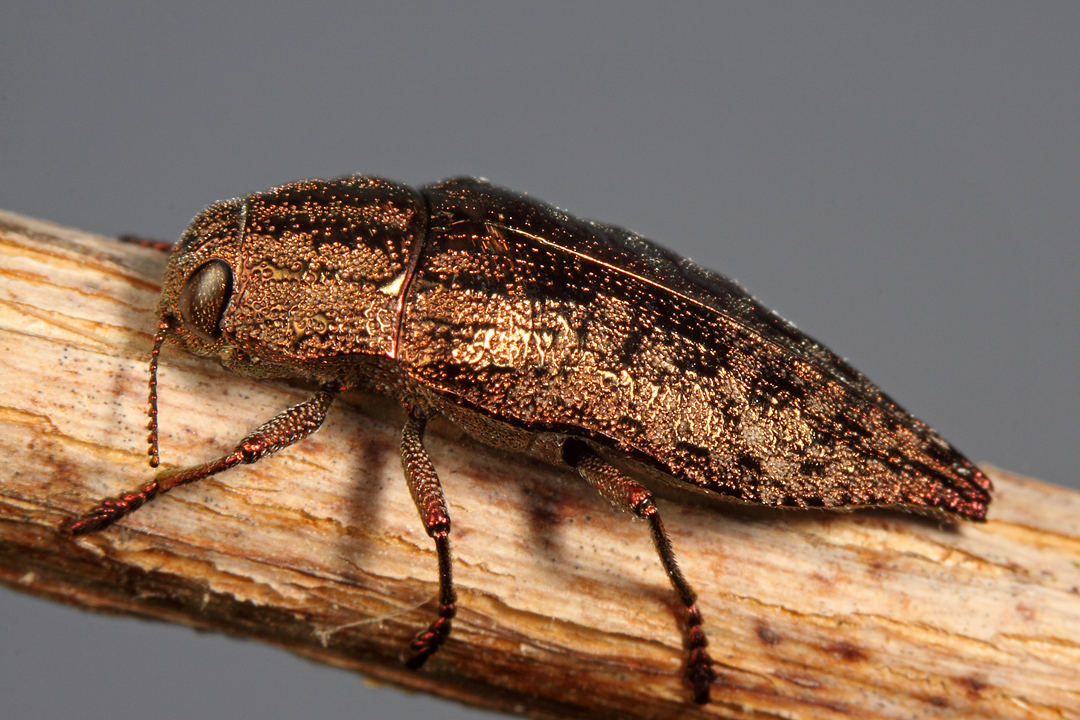
Dicerca pugionata on Physocarpus opulifolius (ninebark) | Jefferson Co., Missouri

One of my favorite beetle species in Missouri is Dicerca pugionata—a strikingly beautiful jewel beetle (family Buprestidae) found sporadically across the eastern U.S. Unlike most species in the genus, which breed in dead wood of various species of trees, D. pugionata larvae mine living stems of certain woody shrubs—namely alder (Alnus spp.), witch-hazel (Hamamelis virginiana) and ninebark (Physocarpus opulifolius) (Nelson 1975). When I first began studying Missouri Buprestidae (way back in 1982), the species had just been reported from the state based on a single specimen (Nelson et al. 1982). I happened to stumble upon these beetles at what became my favorite collecting spot during the 1980s—Victoria Glades Natural Area, just south of St. Louis in Jefferson Co. For several years while I was visiting Victoria Glades, I found these beetles regularly during spring and fall on stems and branches of living ninebark plants growing within the ravines and along the toeslopes at the lower edges of the glades.

After finding the beetles at Victoria Glades (and nearby Valley View Glades Natural Area), I made it a habit to examine ninebark wherever I found it growing in Missouri. Ninebark is actually rather common in the state along the rocky streams and rivers that dissect the Ozark Highlands. Interestingly, I almost never encountered this beetle on ninebark elsewhere in the state. I’m sure it occurs in other areas, but probably at too low a level to be easily detected. I surmised that the populations at Victoria and Valley View Glades were unusually high due to the non-optimal conditions for its host plant. The ravines and toeslopes where the plants grow are drier than typical for ninebark, and unlike the lush, robust plants found in moister streamside habitats, the plants at these glades are small, scraggly and often exhibit a certain amount of dieback. It seemed likely to me that the plants growing in the glades were less capable of fending off attacks by these insects, thus resulting in relatively higher numbers of beetles at these glades.

After the publication of my “Buprestidae of Missouri” (MacRae 1991), it would be many years before I actually returned to Victoria Glades. When I did return, I was pleased to see that management practices (e.g. prescribed burning, cedar removal, etc.) intended to halt the encroachment of woody vegetation and preserve the glade’s pre-settlement character had been implemented in the area. I was a little bothered, however, by the seeming paucity of insects compared to the years prior to management. I visited the glades again several times afterwards, and not only did insect populations in general seem to be depressed, but I never succeeded in finding D. pugionata adults on the ninebark plants. I began to worry that the prescribed burns, while clearly beneficial to the glade flora, might have had a negative impact on the glade’s insect populations.

I’m happy to report that, at last, I have found the beetles again. I returned to the glades in early May this year and, for the first time since 1987 I found the adults of this species—five in all (a typical number for the many dozens of plants checked) and right in the same areas where I had so consistently found them 25–30 years earlier. This does much to allay my concerns about the ability of these beetles to persist in the face of prescribed burning (though I remain convinced that this management technique should be used more judiciously in our state’s natural areas than it has in recent years), and I’m happy to have these new photographs of the species, which are a decided improvement over the old scanned slides taken nearly 30 years ago!

REFERENCES:

MacRae, T. C. 1991. The Buprestidae (Coleoptera) of Missouri. Insecta Mundi 5(2):101–126.

Nelson, G. H. 1975. A revision of the genus Dicerca in North America (Coleoptera: Buprestidae). Entomologische Arbeiten aus dem Museum G. Frey 26:87–180.

Nelson, G. H., D. S. Verity & R. L. Westcott. 1982. Additional notes on the biology and distribution of Buprestidae (Coleoptera) of North America. The Coleopterists Bulletin 35(2) [1981]:129–151.

Copyright © Ted C. MacRae 2012
Chrysobothris viridiceps

Chrysobothris viridiceps on dead branch of Quercus alba | Baxter Co., Arkansas

Despite their general popularity among beetle collectors, jewel beetles (family Buprestidae) have an admittedly deserved reputation for difficult taxonomy. Part of the reason for this is the existence of several highly speciose genera. In North America, for example, nearly half of its described species belong to just three genera—Acmaeodera, Chrysobothris, and Agrilus (the latter, with nearly 3,000 described species and many more awaiting description, being possibly the most speciose animal genus in the world). Identification of species within these genera is difficult enough due to their sheer numbers and is further complicated by the existence a number of “species-groups”—i.e., groups of very closely related species that have only recently become reproductively isolated from each other (likely in response to host partitioning) but have not yet evolved obvious unique morphological characters. Perhaps the most famous of these is the “Chrysobothris femorata species-group.” A dominant component of hardwood forests throughout North America, members of this group have confounded taxonomists, collectors, and foresters alike for many years. Fortunately, the recent revision of the group and formal description of several species by Wellso and Manley (2007) have brought much needed clarity to the group. While problems still remain (C. femorata sensu novo probably still encompasses several undescribed species), most individuals can now be identified with some confidence.

Males and females both exhibit completely divided post-median fasciae

I have previously discussed three of the seven now recognized species occurring broadly in eastern North America—the nominate C. femorata, still regarded as an important pest of ornamental and fruit tree plantings, C. caddo, one of the new species described by Wellso and Manley (2007) and associated with dead hackberry (Celtis spp.), and C. quadriimpressa, mostly associated with dead branches of oak (Quercus spp.). The individuals shown here, photographed on branches of a dead white oak (Quercus alba) in north-central Arkansas this past June, represent a fourth species in the group, Chrysobothris viridiceps. Unlike most members of the C. femorata species-group, C. viridiceps can be readily recognized in the field  due to the uninterrupted costa (raised narrow ridge) that completely bisects the posterior fovea (rounded pit) on each elytron. In all other species this costa is interrupted by the fovea. Moreover, this species is the only one in the group in which the males (easily distinguished from females by the bright green frons, or face) exhibit bicolored antennal segments, with the outer portion of each segment yellow and the remainder bright metallic green. While the species name is Latin for “green face,” this character is useless for species identification, as males of all species in the group exhibit a more or less green face.

Males sport not only the green face for which the species is named, but also distinct yellow areas on the antennal segments

Females are a little more difficult to distinguish in the field because, like those of other species of the group the antennae are more uniformly reddish. Likewise, the face also lacks the green coloration of the male, and although still useful for species identification the differences among females between the different species are more subtle and require microscopic examination. However, as in the male the elytral foveae are completely divided, allowing even females to be recognized relatively easily.

Females tend to be more reddish on the legs, antennae and face

One thing I have noticed about the different members of the C. femorata species-group is the usefulness of host plant association in distinguishing the different species. Of the seven species occurring in my region, I’ve seen C. femorata associated mostly with stressed but still living trees in genera other than oak or hickory (e.g., maple, sycamore, apple, poplar, ash, etc.), C. adelpha associated exclusively with dead hickory (Carya spp.), and C. caddo associated almost exclusively with hackberry (Celtis spp.). The remaining four species are all associated primarily or exclusively with oaks, but even these species often segregate according to branch size, with C. viridiceps occurring mostly on the smallest branches, C. quadriimpressa on somewhat larger branches, C. rugosiceps on very large branches and the upper trunk, and C. shawnee on large trunks and even stumps. Not surprisingly, these size preferences reflect the relative size of the beetles, with C. viridiceps (7–13 mm in length) generally being the smallest of the four species and C. shawnee (9–18 mm in length) the largest.

Okay, now to get photos of C. adelpha, C. rugosiceps and C. shawnee!

REFERENCES:

Wellso, S. G. and G. V. Manley. 2007. A revision of the Chrysobothris femorata (Olivier, 1790) species group from North America, north of Mexico (Coleoptera: Buprestidae). Zootaxa 1652:1–26.

Copyright © Ted C. MacRae 2012

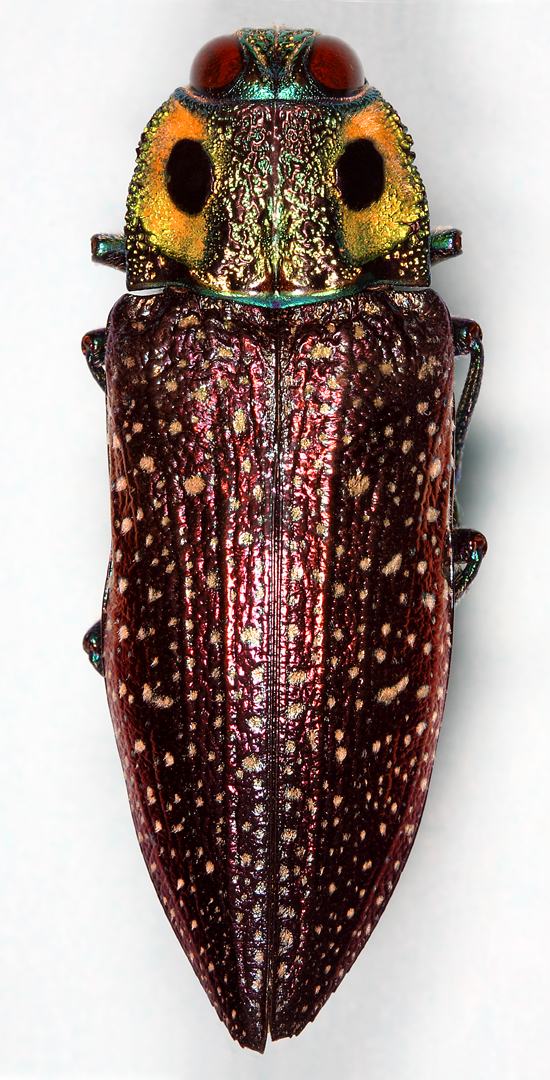
A Living Jewel – Madecassia rothschildi

In North America, beetles in the family Buprestidae are commonly referred to as “metallic woodboring beetles.” This may be a perfectly adequate name—accurate and descriptive, but it’s also a bit dry and not terribly imaginative. Personally, I much prefer the moniker given to these beetles by the rest of the world—”jewel beetles!” No other name better captures the essence of these dazzling insects—brilliant, sparkling, even gaudy in coloration and with the most exquisite of surface sculptures, and no other group of buprestids better typifies jewel beetles at their most extreme than the great tribe Chrysochroini—the ‘‘classic’’ jewel beetles! Members of this tribe are found throughout the world (Chalcophora, Texania, Lampetis and Dicerca are the most familiar North American genera) but reach their zenith in the ancient rainforests of Africa and southeast Asia—big, beautiful beetles with screaming iridescence of green, red, yellow and blue. Living jewels!

I have a fair number of chalcophorines in my collection, and among the more recent acquisitions is this fine specimen of the species Madecassia rothschildi. One of a pair of specimens given to me by friend and world buprestid-expert Chuck Bellamy, this larger of the two measures a whopping 45 mm in length (that’s almost 2 inches, folks!), surely near the top end of the range for this genus and paling only against such giants as Euchroma and Megaloxantha. The reddish-brown eyes on a brilliant green head, turquoise legs and white-flecked, wine-colored elytra are enough to make it stand out, but it is the distinctive yellow-lime “false eyes” that made me do a double-take when I first laid eyes on them after opening the box. A closer look at the eye spots reveals the yellow-lime area to be densely pulverescent.

Madecassia rothschildi and the two other species placed in the genus all hail from Madagascar (Bellamy 2008). This particular species must be rather common despite the well-chronicled disappearance of Madagascar’s native forests, as a quick Google search of the species name (or its older synonym, Lampropepla rothschildi) brings up a multitude of web sites for commercial insect dealers with this species in stock. The combination of its size, coloration, and availability must make it a popular item among philatelic collectors, and although I’m not a big fan of buying insects, I can understand the desire to purchase something as spectacular as this.

I’ll be the first to admit that these photos aren’t nearly as striking as Gianfranco Merati‘s photos of Polybothris sumptuosa, but they do well illustrate the iridescence that is common to these beetles. Iridescent coloration is due not to pigments in the exoskeleton, but rather the physical properties of different layers in the insect cuticle that reflect light of specific wavelengths in different directions (hence, resulting in apparent color shifts depending on the angle at which the subject is viewed).

Despite its commonness, it seems that virtually nothing known about the life history of this species or the host plants that it utilizes. Records in Madagascar are all from the south (Bellamy 2006), but all other references to this species consist exclusively of catalogue listings. A large, conspicuous, abundant species such as this almost begs for ecological studies—the “eye spots” can be presumed to function in predator avoidance, but how? What is the purpose of the dense brush of hairs inside the labrum (upper lip) and next to the mandibles, and why is the labrum itself so acutely emarginated? Adults are largely reproducers, not feeders—do these structures serve some other function not related to feeding? What about the dense covering of “pits” over most of the body surfaces—presumably they contain chemoreceptors for smell, but what? Host plant volatiles? Mates? Humidity? So many questions, so few answers. Imagine the even greater paucity of knowledge that exists for its smaller, less conspicuous relatives that also make their homes in the forests of Madagascar (most of them probably not adapting as well to the man-induced changes of the past century).


Congratulations to Tim Eisele, whose 13 pts not only nets him the win in Super Crop Challenge #11 but also moves him up to 2nd place in the overall standings for BitB Challenge Session #5 with 29 pts. Mr. Phidippus‘s 12 pts  just missed the win but keep him in well in command atop the overall standings at 43 pts. Strong showings by Dorian Patkus (11 pts) and Dennis Haines and Roy (10 pts each) also keep them in the overall hunt with 20, 25 and 28 pts, respectively. I suspect the top spot is now a lock, but it looks like we’ve got a real battle brewing for the remaining podium spots. There will be at least one more challenge in the current challenge session, and for the first time I am considering consolation prizes to the final 2nd and 3rd podium spots as well, so everybody will want to make sure they participate in the next challenge.

REFERENCES:

Bellamy, C. L. 2006. Insecta Coleoptera Buprestidae de Madagascar et des îles voisines. Catalogue annoté. Faune de Madagascar 92:1–267.

Bellamy, C. L.  2008. World catalogue and bibliography of the jewel beetles (Coleoptera: Buprestoidea),  Volume 1: Introduction: fossil taxa; Schizopodinae; Buprestidae: Julodinae—Chrysochroinae: Poecilonotini.  Pensoft Series Faunistica 76: 1-625.

Copyright © Ted C. MacRae 2012