Botanizing (and entomologizing) w/ the WGNSS Botany Group at Little Lost Creek Conservation Area

March has been incredibly warm in the St. Louis area, particularly during the second half in which temperatures exceeded 80°F on seven of 12 days and 90°F twice! As one would expect, such unusually warm conditions played havoc with the first wave of early spring bloomers, particularly the conspicuously flowering understory trees that normally follow a predictable sequence of bloom beginning with Lindera benzoin (spicebush—family Lauraceae) in early to mid-March, Prunus mexicana/americana (Mexican/American plum—family Rosaceae) and Amelanchier arborea (common serviceberry—family Rosaceae) in mid- to late March, Sassafras albidum (sassafras —family Lauraceae) and Cercis canadensis (eastern redbud—family Fabaceae) in late March to early April, and — the zenith of native blooming understory trees — Cornus florida (flowering dogwood—family Cornaceae) in early to mid-April. Instead of a tightly choreographed sequence of mass blooms, we instead witnessed haphazard displays beginning earlier than normal and progressing sporadically throughout late March, with many trees knocked out of bloom by quite cold temperatures during several nights.

Nevertheless, it was not the disappointing displays of any of the above species that the group came to Little Lost Creek to see, but instead a much less commonly encountered understory tree with even less conspicuous blossoms—Dirca palustris (eastern leatherwood). One of only two Missouri representatives of the Family Thymelaeaceae, commonly called “stringbarks,” this species is found in scattered locations across the Missouri Ozarks and has been found reliably blooming in early April along Little Lost Creek.
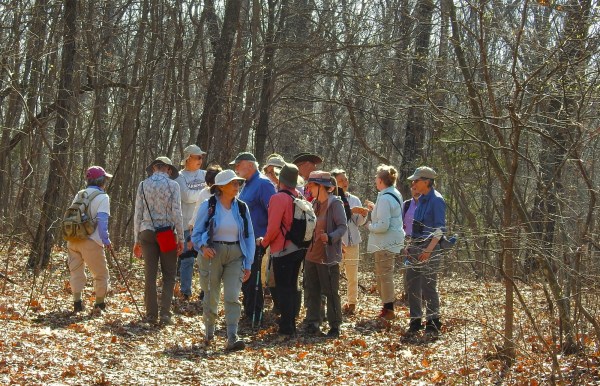
WGNSS Botany Group at Little Lost Creek. Photo by Kathy Bildner.

To get to the low, moist areas where D. palustris grows, however, we needed to hike the two-track across the old fields and rather disturbed adjacent forests where some of the more typical spring-flowering trees were seen. Sassafras was perhaps the least impacted by the crazy spring temperature, with most trees reliably in bloom.
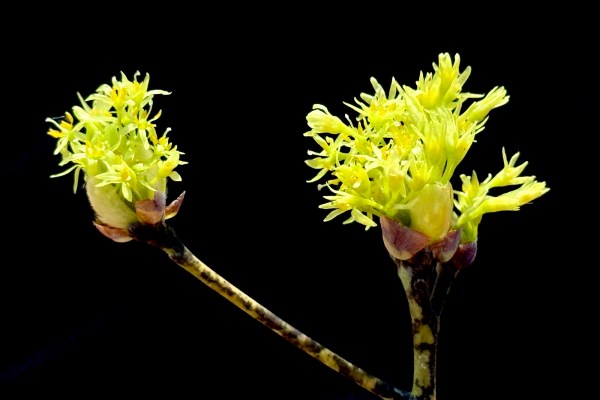
Sassafras albidum (sassafras). Photo by Ted MacRae.

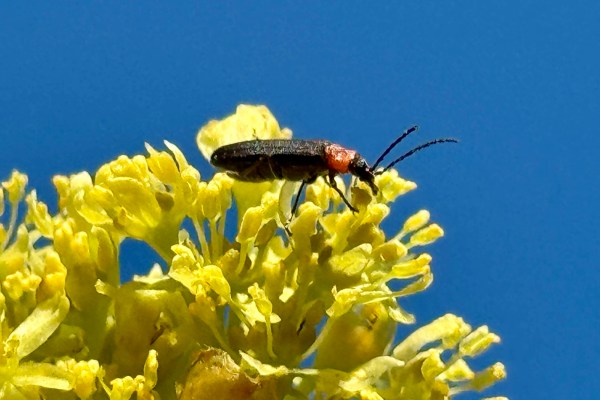
Ever the entomologist, I couldn’t help examining some of the flowers more closely in search of insects, eventually finding the aptly-named Ischnomera ruficollis (red-necked false blister beetle—family Oedemeridae), a frequent visitor to a variety of flowers.

Photo 3. Ischnomera ruficollis (red-necked false blister beetle) on flowers of Sassafras albidum (sassafras). Photo by Ted MacRae.

The patch of American plum along the two-track that I have seen blooming profusely in years past and had hope to photograph was, disappointingly, well past bloom. However, a fine specimen that I take to be Mexican plum was found blooming profusely along a fence line nearer to the beginning of the two-track. Mexican and American plums can be difficult to distinguish, but the former usually grows as anindividual tree while the latter tends to form clonal thickets with multiple stems arising from a single parental plant.
Prunus mexicana (Mexican plum). Photo by Ted MacRae.

Serviceberry also should have been in bloom across the upland understory but was limited instead to just a few scattered trees still bearing flowers. One fine specimen, however, was found near the patch of American plum that was covered in near-perfect blossoms that simply begged to be photographed.
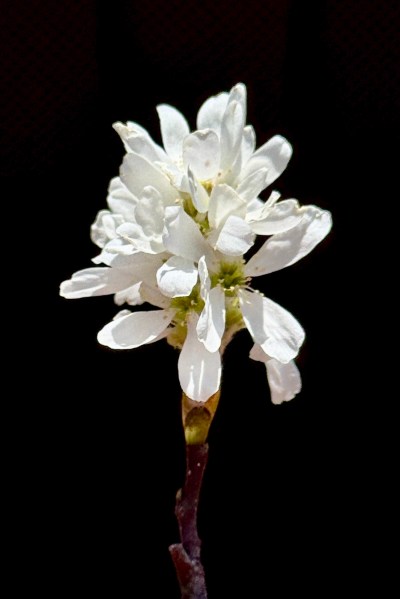
Amelanchier arborea (common serviceberry). Photo by Ted MacRae.

Veering into upland forests to approach the descent down into the valley, we saw some of the usual spring ephemerals and other plants that, despite not generally considered ephemerals, were nonetheless blooming quite early. Like the early-flowering trees, the spring ephemerals were impacted by the unusually warm March temperatures, with many of the species blooming far earlier than normal and now already fading despite the still-within-March date. Claytonia virginica (spring beauty—family Montiaceae, formerly Portulacaceae) is perhaps the best known ephemeral and, despite its commonness, is always a treat to see popping up in the woodlands after a long winter. The corolla color of this species is quite variable, with some being nearly white with barely perceptible venation, ranging to specimens with highly pronounced, vivid, pink venation.
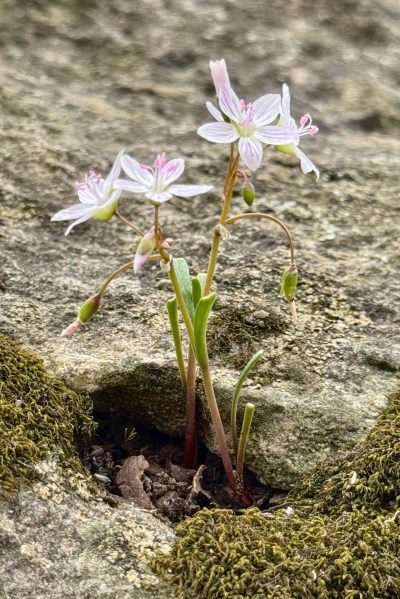
Claytonia virginica (spring beauty). Photo by Ted MacRae.

Antennaria parlinii (Parlin’s pussytoes—family Asteraceae), normally an April/May bloomer, also was in flower in the relatively dry, rocky forests before the descent into the valley. Missouri populations of this species were previously known as A. plantaginifolia, means “leaves of Plantain” and indeed the basal leaves do look like those of the genus Plantago—a character that distinguishes them from the single-veined leaves of Missouri’s only other species in the genus, A. neglecta (field pussytoes).
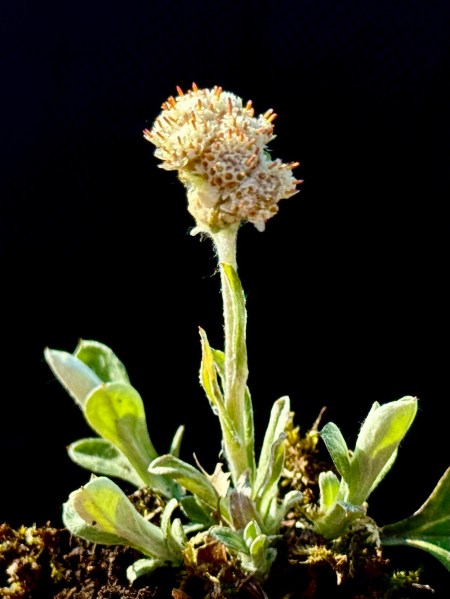
Antennaria parlinii (Parlin’s pussytoes). Photo by Ted MacRae.

The descent into the valley is rather steep and precarious, especially for those of us who are “getting long in tooth” and needed to pick our way slowly down the rocky trail. The effort, however, was worth it as even before reaching the valley we began seeing leatherwood trees in bloom in the increasingly moist woodlands approaching the valley. The plants were, if anything, slightly past peak bloom, but not to the point that it made it difficult to find fresh examples of the instantly-recognizable flowers in clusters of 2–4 accompanying newly emerging leaves. More unusual than conspicuous with its small pendulous flowers surrounded by rusty woolly bracts, the species is distinguished from its even rarer congener, D. decipiens (upland leatherwood) by the small but discernible stalks and moist rather than upland habitat.
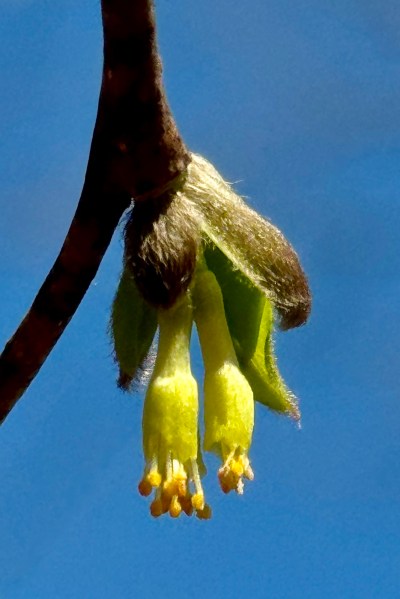
Dirca palustris (eastern leatherwood). Photo by Ted MacRae.

Several other botanical treasures awaited the group in the moist forests along Little Lost Creek besides leatherwood. One of these was very early blooming examples of Viola eriocarpa (smooth yellow violet—family Violaceae). This denizen of moist forests is often considered a smooth-leaved variety of V. pubescens (yellow violet) or even a synonym, and indeed the degree of “pubescentness” can be variable, making it sometimes difficult to distinguish a given plant.
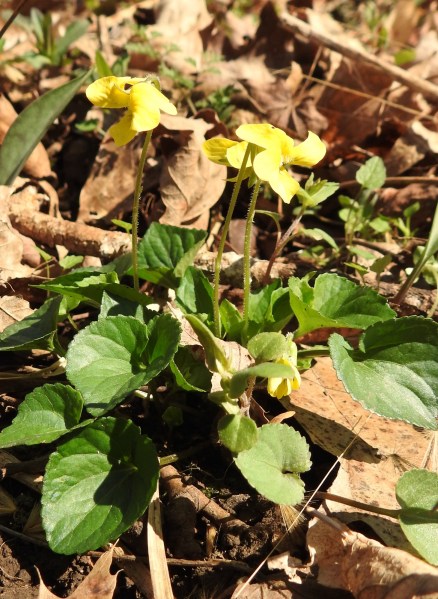
Viola eriocarpa (smooth yellow violet). Photo by Kathy Bildner.

Another deep, moist, rich woods resident the group saw was the always-charming-to-see Collinsia verna (spring blue-eyed Mary—family Plantaginaceae). Unusually, this bona fide spring ephemeral is one of the few Missouri wildflowers that is truly “blue.” Equally unusual, its distribution is mainly in the Upper Midwest but in Missouri is apparently concentrated across the middle latitudes of the state.
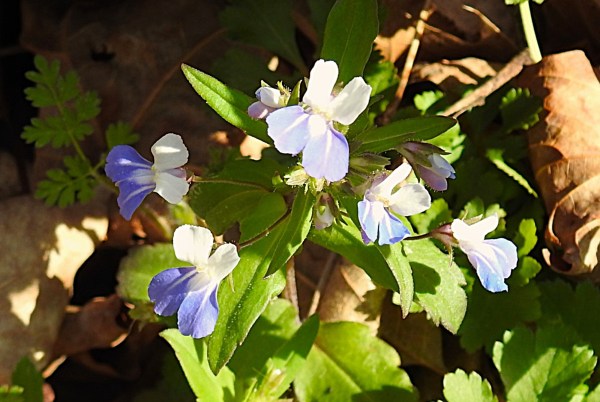
Collinsia verna (spring blue-eyed Mary). Photo by Kathy Bildner.

[Warning: entomological geekery ahead!]

I, myself, missed these botanical finds due to my discovery immediately upon reaching the valley of a large oak tree with a dark, wet stain of flowing sap on its trunk that was hosting a variety of insects (remember; it is still March here—not normally a time to observe insects). Numerous muscoid flies, expectedly, congregated at the flow and lapped up the sap, as did a couple of brightly colored Vanessa atalanta (red admiral butterfly—family Nymphalidae). These fast-flying butterflies overwinter as adults and, thus, were ready to take advantage of the sudden warming spell. They also could have been difficult to photograph had their sweet tooth not enticed them to pose nicely on the dark, sap-saturated bark.
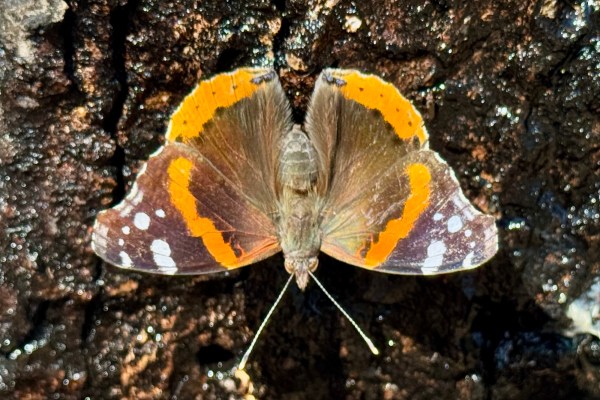
Vanessa atalanta (red admiral butterfly). Photo by Ted MacRae.

A closer look at the many insects congregating on the flow revealed the presence of two fireflies that proved to be Ellychnia corrusca (known as Photinus corruscus in some sources, e.g. iNaturalist) (winter firefly—family Lampyridae). Honestly, I didn’t recall ever having seen fireflies feeding on a sap flow, or for that matter any that were active in March—muggy summer nights are what I picture when I think of fireflies! The common name of this species, however, alludes to the fact that it can often be seen during warm days in winter, especially on tree trunks. Moreover, not only do adults become active in late winter, they mate at that time as well. The fact that these individuals were seen feeding on a sap flow is also unsurprising given that the species has been reported as a pest of sap buckets in the spring. There was one more surprise, however—as I was photographing the beetles, I noticed their all-dark abdomens, suggested they lack light-producing organs. This is surprisingly common among several groups of fireflies which have given up a crepuscular (i.e. active during dusk and/or dawn), luminescent lifestyle in favor of a diurnal (i.e., day active), non-luminescent existence. (We know that non- luminescent firefly species evolved from luminescent species—i.e., they used to be able to produce light and then lost the ability—rather than representing a lineage that evolved before other fireflies gained luminescent capabilities because their larvae do still posses light-producing organs.) Why did they do this? One possibility is the appearance of “femme fatale fireflies”—i.e., females of the genus Photuris that can that mimic the flash patterns of females in the genus Photinus to attract and eat Photinus males!
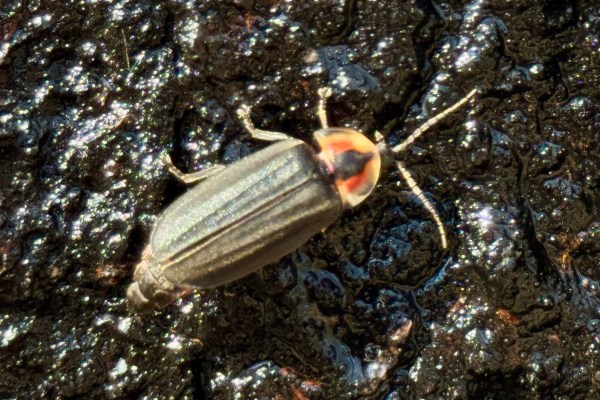
Ellychnia corrusca (winter firefly). Photo by Ted MacRae.

Non-luminescence as an antipredation strategy may be a good solution for femme fatales, but leading a diurnal existence still does not eliminate the risk of predation by other insects! One of the fireflies we saw on the sap flow had been attacked by a stink bug (family Pentatomidae) that came to the sap flow not for the sugary substance, but to prey on the other insects that it had attracted. For those of you who are asking “Aren’t stink bugs plant feeders?”, the answer is… mostly! While the majority of species use their piercing/sucking mouthparts to feed on developing seeds and fruits, there is one group of stinkbugs (the subfamily Asopinae) that has adapted its style of feeding to sucking the juices out of other insects rather than plants. This particular stinkbug was identified as Podisus maculiventris (spined soldier bug), and no amount of struggling by the firefly could release it from the stink bug, whose mouthparts had firmly impaled the firefly. Despite being predators, asopine stink bugs still lack chewing mouthparts and can only ingest liquid substances. This might be fine for sucking a juicy seed, but it falls short when trying to ingest another insect… unless it can digest the insect before it consumes it! This is called pre- or extra-oral digestion, whereby the stink bug injects its digestive enzyme-laden saliva into the prey and allows the enzymes to slowly liquify its innards. Once digested, the stink bug can then suck up thenutritious slurry, leaving only the shriveled external carcass of its hapless prey. Another such stink bug was seen elsewhere in the forest, this one preying on a fat, juicy caterpillar.
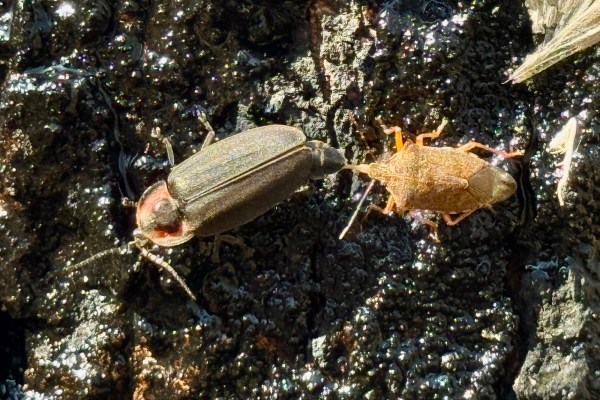
Podisus maculiventris (spined soldier bug) preying on Ellychnia corrusca (winter firefly). Photo by Ted MacRae.

For lunch, a smaller than usual crowd enjoyed authentic comida mexicana at Casa Tequila Cantina in nearby Warrenton.

For a complete listing of plants observed, notes, and short observations, see Little Lost Creek by Michael Laschober in the Monday Morning Botany Walks section at St. Louis Nature Students.

Participants: Brenda Adams, Gisela Baner, Prem Barton, Renee Benage, Kathy Bildner, Tina Cheung, Wayne Clark, Sally Fabbri, June Jeffries, Shari Langer, Michael Laschober, Ted MacRae, Len Meier, Burt Noll, John Oliver, David Steinmeyer, Kathy Thiele, Elaine Wolshock, Matthew Wolshock, Richard Wolshock, and Laura Yates.

©️ Ted C. MacRae 2026

Ozark Trail – Marble Creek Section

If you know wilderness in the way that you know love, you would be unwilling to let it go…. This is the story of our past and it will be the story of our future. – Terry Tempest Williams


During the past several years that Rich and I have been hiking the Ozark Trail, most of our hikes have taken place in the fall and winter months. From a hiker’s perspective, I really enjoy these off-season hikes – the foliage-free canopy affords unobstructed views of the terrain and vistas, the cool (even cold) temperatures are more comfortable under exertion (provided one has properly layered), and there are no mosquitos to swat, ticks to pick, or gnats to incessantly annoy. I also enjoy them as a naturalist, for the world is quiet and still, allowing me to focus on things I may not notice amidst the cacophany of life during the warmer months. By the end of winter, however, the biologist in me yearns to once again see bugs and flowers and the great interplay of life. Unfortunately, this makes something as simple as hiking from point A to point B rather difficult – too many distractions! Nevertheless, each spring Rich and I try to hike a small leg of the Ozark Trail before the crush of summer activities fills our calenders. Last week, we chose the Marble Creek Section, an orphan stretch (for the time being) in the rugged St. Francois Mountains that eventually will connect to the famed Taum Sauk Section. It would be our first return visit to the St. Francois Mountains since we first embarked on our goal to hike the entirety of the Ozark Trail.

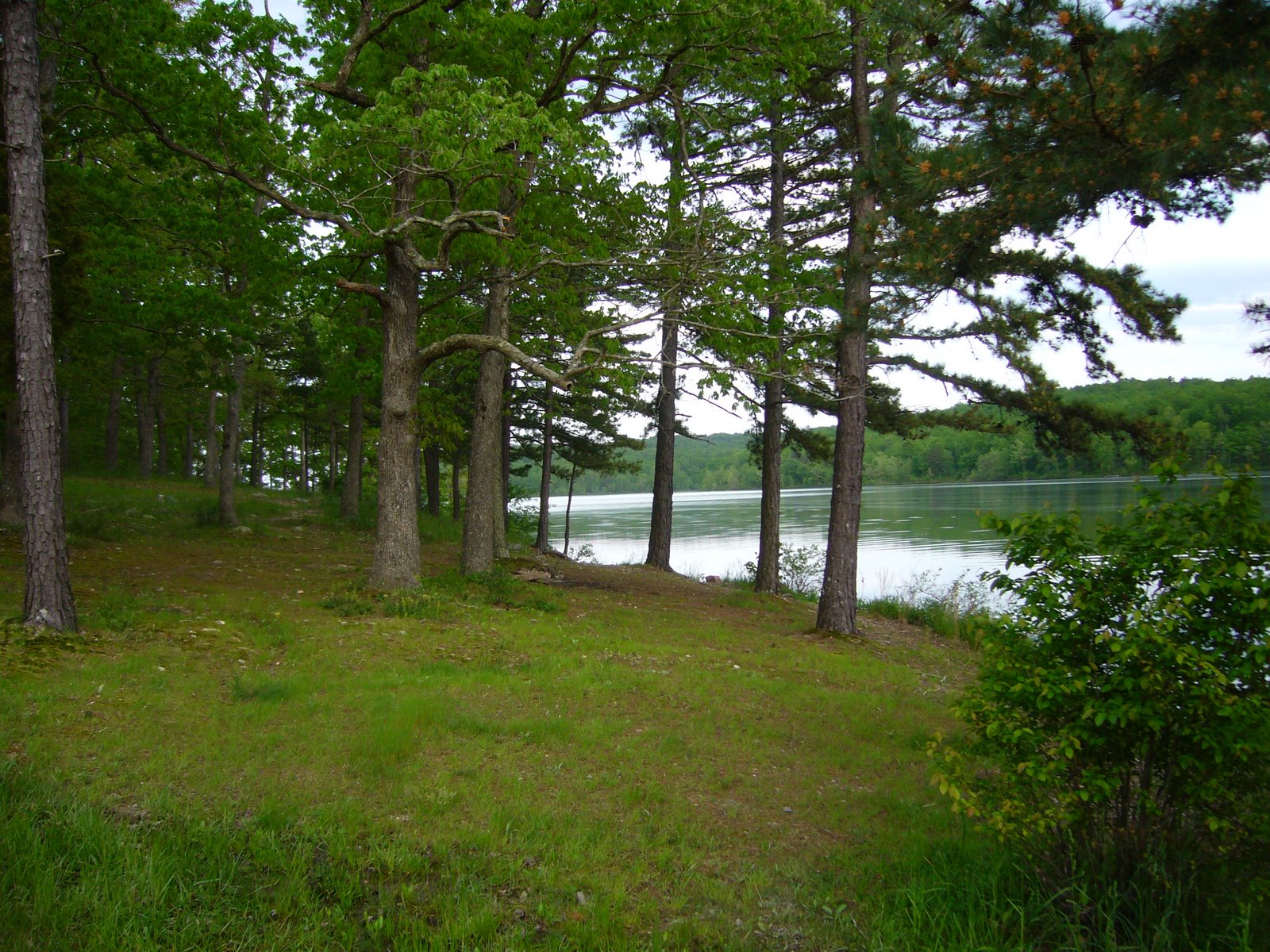
The St. Francois Mountains are the geologic heart of the Ozark Highlands. Since their primordial birth 1.5 billion years ago, recurring cycles of erosion and deposition have worn them down and covered them up, only to see them reemerge once again as the younger rocks covering them were themselves stripped away. The Ozarks are an ancient landscape with ancient hills, and none are older than those of the St. Francois Mountains. It’s as if the Earth itself began in these mountains. We began our hike at Crane Lake, a clear, blue 100-acre lake built in the 1970s by the Youth Conservation Corps. The trail surrounding the lake was built in 1975 and is, in its own right, a National Recreation Trail. It meanders along the lakeshore and through hillside igneous glades and descends into a deep ravine below the dam where Crane Pond Creek cascades through spectacular rhyolite shut-ins. East of the lake the trail connects to the Ozark Trail proper and continues to Marble Creek campground. All told, we would be hiking a 9-mile stretch.

I knew we were in a special place almost from the beginning when I noticed a small flowering plant growing next to the trail under the mixed pine/oak canopy. I’m not a very good botanist, but I instantly recognized the plant as dwarf spiderwort (Tradescantia longipes), an Ozark endemic known from only a handful of counties in Missouri and Arkansas. I knew this only because I had just the night before read about this wonderful plant on Ozark Highlands of Missouri, a superb natural history blog focused on my beloved Ozarks. Reading about this lovely, diminutive member of the genus, I wondered if I might encounter it on my own hike the next day. As we searched off the trail and near the lakeshore we encountered dozens of the plants, each with one or two exquisite blue flowers. Our excitement at seeing a true Ozark endemic increased with each plant we encountered, giving us confidence that its future, at least in this area, appears secure. Of the numerous photographs I took, I share two that show its short, squat habit and filament-covered stamens. Eventually we decided we needed to move on – we had spent 20 minutes and only hiked 100 ft!

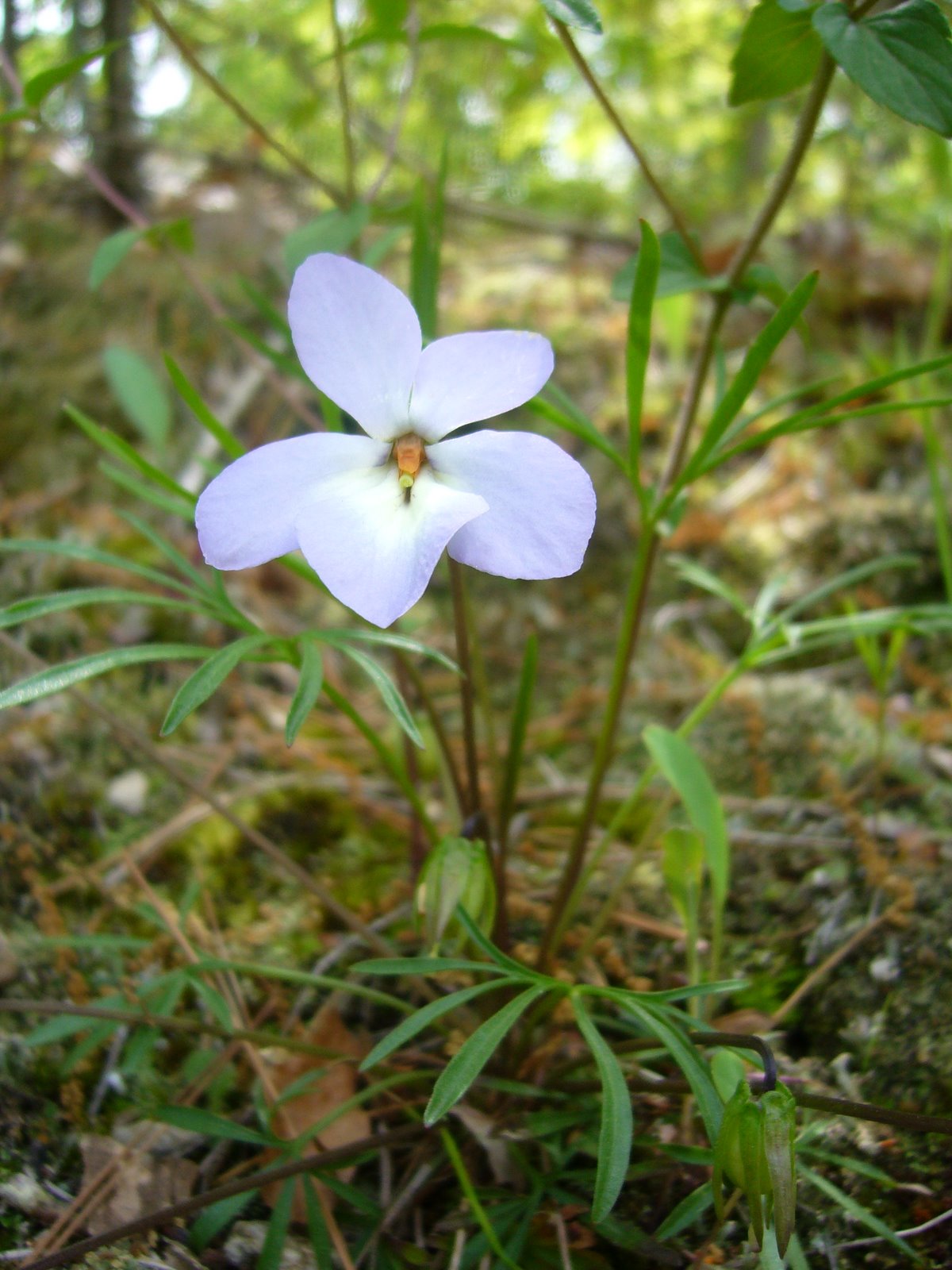
Looping around the south side of the lake, the trail traversed mesic to dry-mesic upland forest and afforded spectacular views of the lake and rugged north shore. The spring ephemerals had already come and gone, replaced by such classic woodland denizens as birdfoot violet (Viola pedata, pictured), fire pink (Silene virginica), cream wild indigo (Baptisia leucophaea), four-leaved milkweed (Asclepias quadrifolia), Pursh’s phacelia (Phacelia purshii), and shooting star (Dodecatheon meadia). Insect life was abundant, however, the only species seen in one of my chosen specialties, metallic wood boring beetles (family Buprestidae), were early spring species of Acmaeodera – pictured here is A. ornata on a dewberry (Rubus sp.) flower. This pretty little beetle occurs throughout eastern North America in early spring on a variety of flowers, where adults feed on pollen and mate. Eggs are laid on dead branches of certain hardwood trees, through which the larvae tunnel as they develop. Dry, dead wood contains little nutritional value, and the larvae cannot digest the cellulose. As a result, they eat considerable volumes of wood, extracting whatever nutrients they can for growth and ejecting the bulk as sawdust, which they pack tightly in their tunnels behind them. A year or more might be required before they have grown sufficiently to transform into the adult and emerge from the wood. A smaller relative, Acmaeodera tubulus, was also seen on flowers of native dwarf dandelion (Krigia biflora).

We stopped for lunch on a little point extending out towards the lake. The forest overstory was dominated by an open mixture of white oak (Quercus alba) and shortleaf pine (Pinus echinata). Thickets of highbush huckleberry (Vaccinium stramineum) and carpets of reindeer moss in the open areas belied the acidic nature of the igneous substrate. Stands of bastard toad flax (Comandra richardsiana) in full bloom were found at the tip’s dry, rocky tip. These interesting plants feed parasitically on neighboring plants, attaching to the roots of their hosts by means of their long, thin rhizomes. Resuming our hike, we descended down into a shaded, moist draw feeding the lake and saw a huge royal fern (Osmunda regalis var. spectabilis) bush. I had never seen this aptly named fern before, but it was immediately recognizeable by its large size (~5 ft in height) and presence of distinctive, fertile leaflets on some of its upper branches – a very striking and handsome fern, indeed. Nearby was a smaller, but no less attractive species of fern that I take to be marginal sheild fern (Dryopteris marginalis) – another species I have not seen before (or at least made the effort to notice).

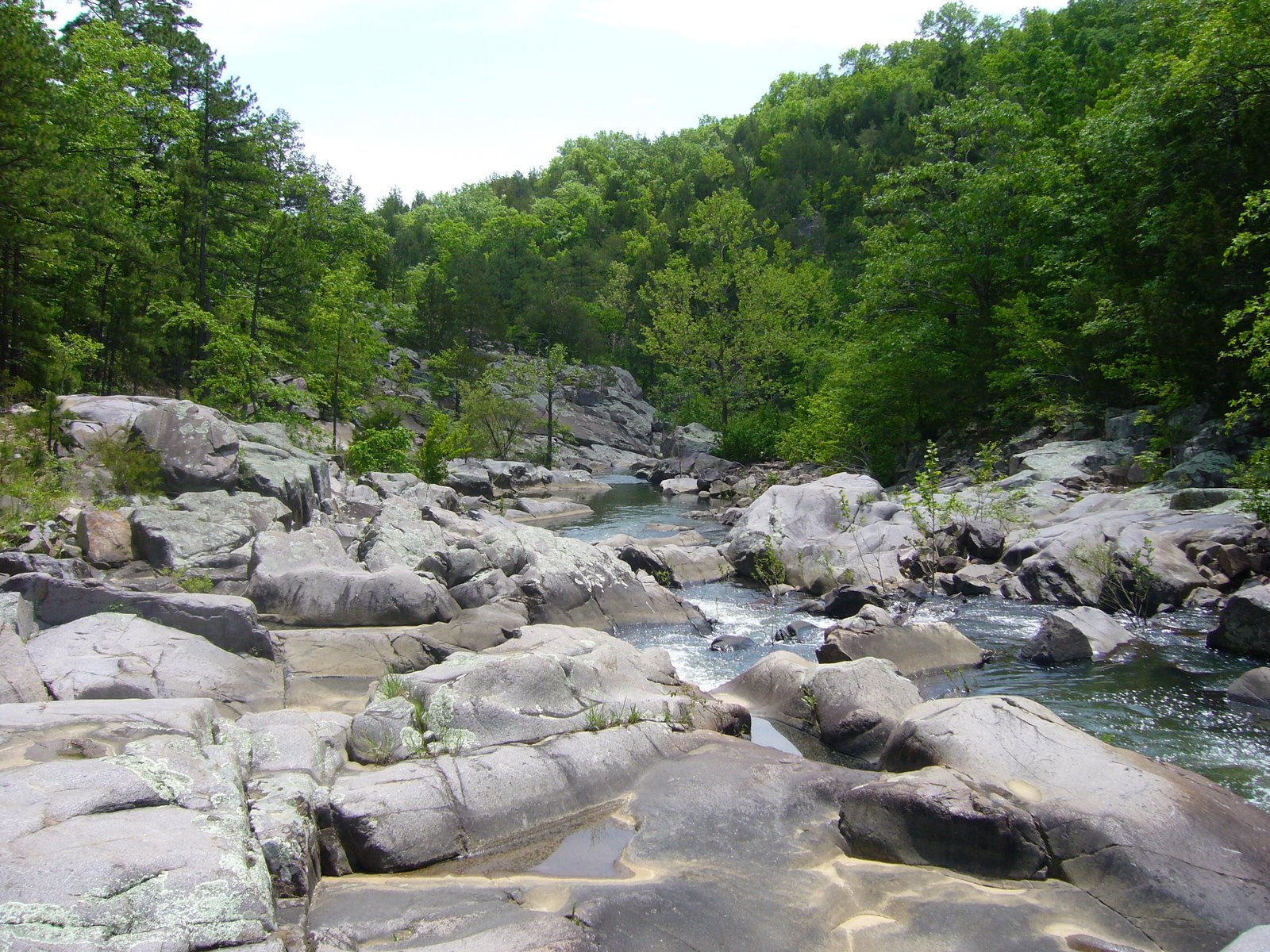
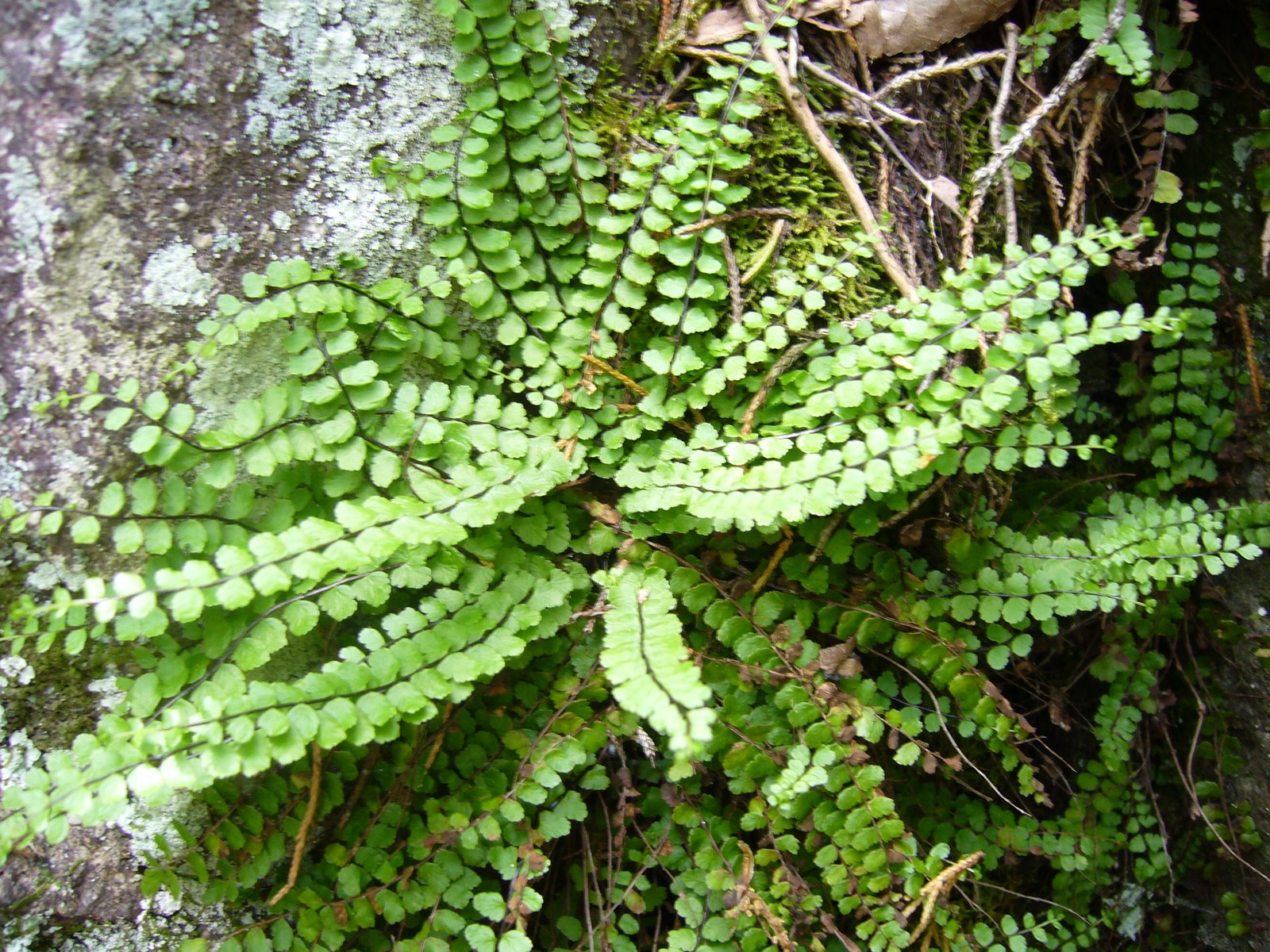
Soon, we reached the dam and for the first time saw the spectacular rhyolite shut-ins. While perhaps not quite as impressive as the nearby and much more famous Johnson’s Shut-Ins, Rich and I nonetheless watched entranced as the water roared over the smooth igneous rock exposure, forming elegant cascades, rushing through narrow chutes, and swirling into small pools. Steep canyon walls rose sharply on each side of the shut-ins, as if standing guard. Clambering amidst the pines and cedars that cloaked them, we found this maidenhair spleenwort (Asplenium trichomanes) nestled within a crack on a vertical rock face under continuous deep shade. Reaching the top of the bluffs, we were greated by one of my favorite of all Ozark habitats – the igneous glade. Glades are natural island communities surrounded by a sea of forest. Their shallow, dry, rocky soil conditions support plants and animals more adapted to prairie or desert habitats. Specific communities are influenced by the type of rock below – igneous and sandstone substrates support lichens, mosses, and other acid soil-loving plants, while limestone and dolomite substrates support a more calcareous flora. The photo here shows the massive boulder outcroppings typical of igneous glades and their weather-resistant bedrock. We hoped to see a collared lizard (Crotaphytus collaris), perhaps Missouri’s finest saurian reptile, but today was not the day. We did, however, see adults of the beautiful and aptly named splendid tiger beetle (Cicindela splendida) sunning themselves on the bare rock surfaces – flashing brilliant green and clay-red. The adults we saw had spent the winter deep inside tunnels dug into the rocky soil the previous fall and were now looking for mates. Male tiger beetles grab females by the neck, their jagged, toothy jaws fitting precisely in grooves on the female neck designed specifically for such. As I looked upon this prairie island within the forest, I thought about how the St. Francois Mountains were once themselves islands. I realized the landscape we were exploring today was itself a fossil – with rhyolitic ‘islands’ amidst a ‘sea’ of cherty dolomite laid down a half billion years ago in the warm, tropical, Cambrian waters that surrounded the St. Francois Islands, by then already a billion years old themselves. Yes, the Earth itself seems to have begun here.

Leaving the glade and once again entering the acid pine forest, we came upon one of the most striking floral displays that either of us have ever witnessed – wild azalea (Rhododendron prinophyllum) in the midst of full bloom! I have known about several colonies of this plant for many years now but had only seen them at the very end of the bloom period, with just a few, pitiful, limply hanging flowers still attached. Today, the plants were absolutely dazzling. The blossoms were not only visually attractive, a deep pink color, but also unexpectedly fragrant. We stood amongst several specimen plants as tall as ourselves, taking picture after picture amidst the clovelike aroma wafting around us.

We checked our watches – we were now 3 hours into our hike and had traversed just 2 miles. Clearly, this was not a sustainable pace, so we put our heads down and focused on covering ground. Once leaving the vicinity of Crane Lake, the trail became rather difficult to follow – it obviously receives little use, and in one stretch some logging activities had obliterated the trail completely. Were it not for the sporadic pieces of orange flagging tape tied just within sight of the previous, we would not have know where to go. At one point, we got completely off-track and had to backtrack a full half mile before we found the proper trail. The day put our contour map reading skills to their greatest test yet. It was difficult and strenuous terrain, with steep up and down grades and few long ridgetop stretches until (thankfully) the final 2 miles, which terminated in a long descent (more thankfully) to Marble Creek Campground. Despite the difficulties in following the trail and our not bringing enough water, I would have to rank this section a close second to the Taum Sauk stretch for its ruggedness, spectacular vistas, and unique plant communities. Yes, the St. Francois Mountains are truly the heart of the Ozarks.