In a break from recent years, I did only one out-of-state collecting trip this summer, and it didn’t take place until late in the season—August 22nd though September 4th. This wasn’t by design—I had originally planned a trip to California early in the season but had to scrap it for medical reasons, and an already full summer calendar left late August and early September as the only other time I could make such a trip. Where else to go at that time, however, than southeastern Arizona and adjacent New Mexico, the memories and successes (and also frustrations) of which are captured in this, the 19th installment in my series of “Collecting Trip iReports.”
For this trip, I was fortunate to be joined by fellow buprestophile Jason Hansen, who traveled with me for the entirety of the trip. Additionally, Norm Woodley and Steve Lingafelter graciously hosted us at their home in Hereford, Arizona and accompanied us to several of their favorite collecting localities. With their help, I collected several species that I’d not seen before.
Like previous trip reports, this one assembles field notes largely as they were generated during and shortly after the trip. Some sections may have been lightly “polished,” but the notes have not been substantially rewritten or changed based on subsequent examination of collected specimens (unless expressly indicated by “[Edit…]” in square brackets). Again (as suggested by the word “iReport”), this post is illustrated exclusively with iPhone photographs. Previous collecting trip iReports are:
– 2013 Oklahoma
– 2013 Great Basin
– 2014 Great Plains
– 2015 Texas
– 2018 New Mexico/Texas
– 2018 Arizona
– 2019 Arkansas/Oklahoma
– 2019 Arizona/California
– 2021 West Texas
– 2021 Southwestern U.S.
– 2022 Oklahoma
– 2022 Southwestern U.S.
– 2023 Southwestern U.S.
– 2024 New Mexico: Act 1
– 2024 New Mexico: Act 2
– 2024 New Mexico: Finale
– 2025 Southwestern U.S.: Act 1
– 2025 Southwestern U.S.: Act 2 (Finale)
Day 1—Aug 22nd
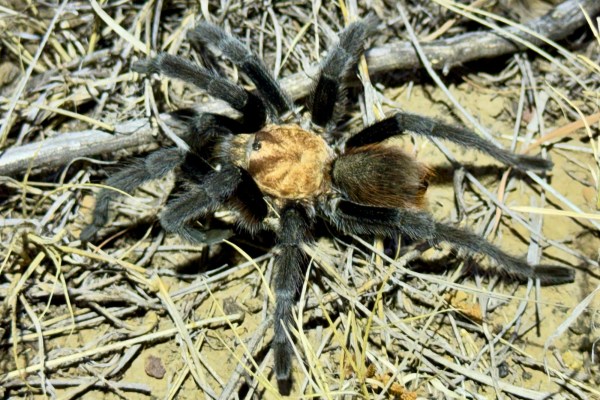
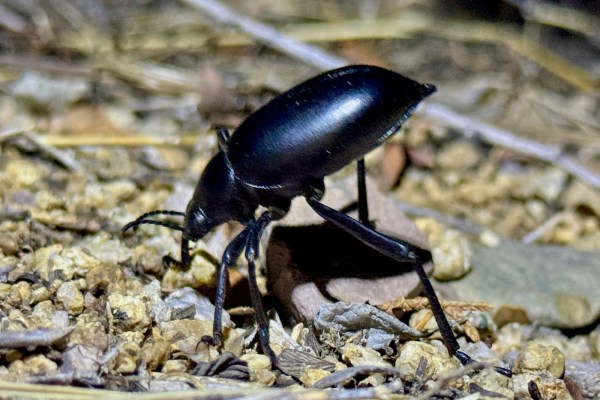
Our goal for Day 1 was to make it to Black Mesa State Park in the far northwestern corner of Oklahoma’s northwestern-most county (Cimarron Co.) before dark. We didn’t quite make it (it’s a +12-hour drive from St. Louis), but our car headlights allowed us to set up camp before making dinner and hanging a couple of Entoquip Entrap™ lantern kits. Expectations were low given the lateness of the season for this area, but the lantern traps are quick and easy to set up. I did collect a few miscellaneous beetles at the lights—the most colorful being Pyrota concinna (family Meloidae), but of greater interest were insects seen while scanning the juniper chaparral landscape around the campsite. These included Moneilema armatum (family Cerambycidae) and Chelinidea vittiger (cactus coreid bug—family Coreidae) on Cylindropuntia imbricata (cane cholla), Stenomorpha convexa (darkling beetle—family Tenebrionidae), and Aphonopelma hentzi (Texas brown tarantula—family Aphonopelmidae).
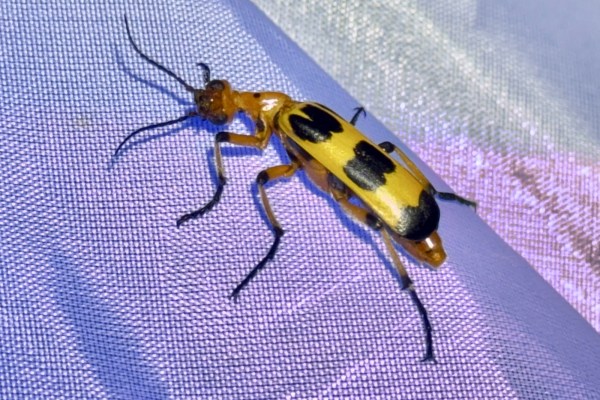
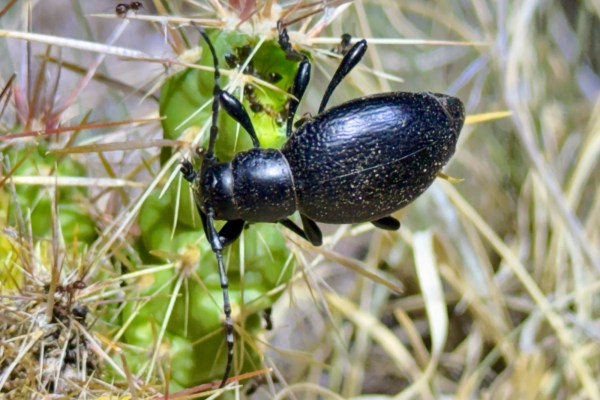
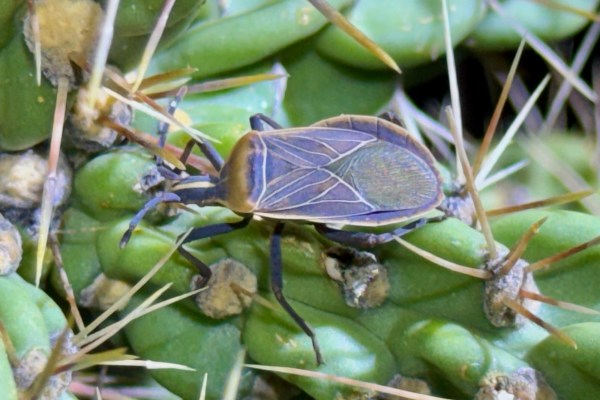
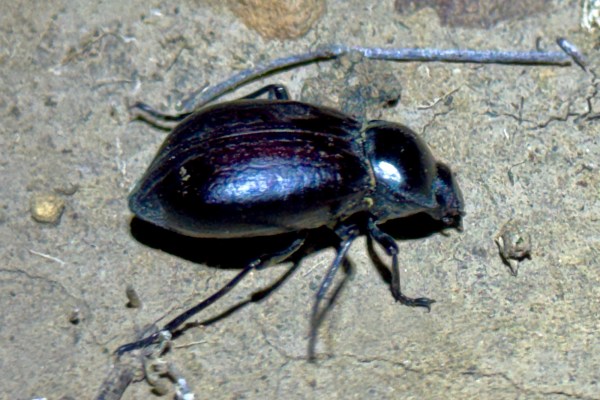
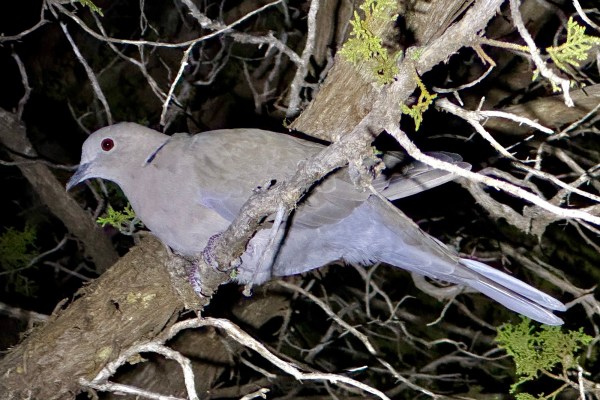
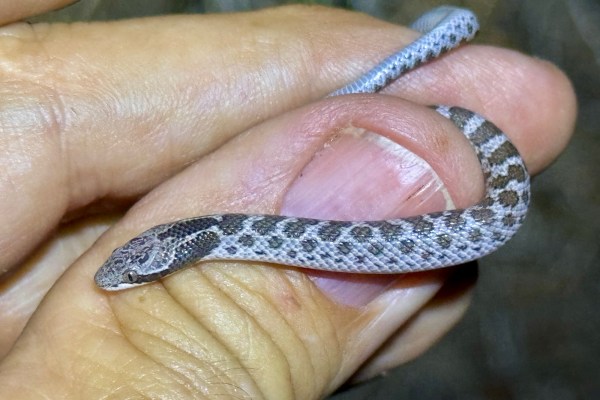
I even took the time to document a couple of vertebrates that posed (willingly or unwillingly) for photos—a non-native Eurasian collared dove (Streptopelia decaocto—family Columbidae) and a native Texas nightsnake (Hypsiglena jani ssp. texana—family Colubridae)—before retiring for the night.
Day 2—Aug 23rd
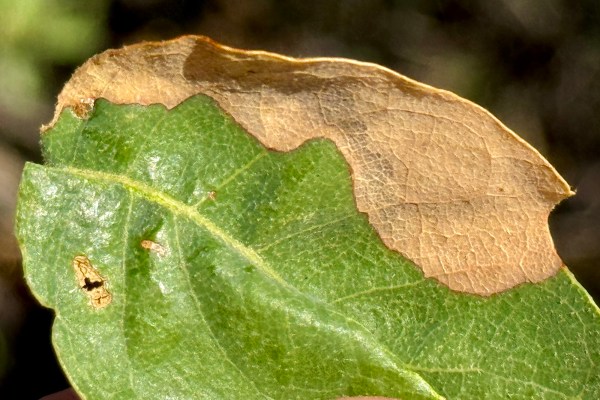
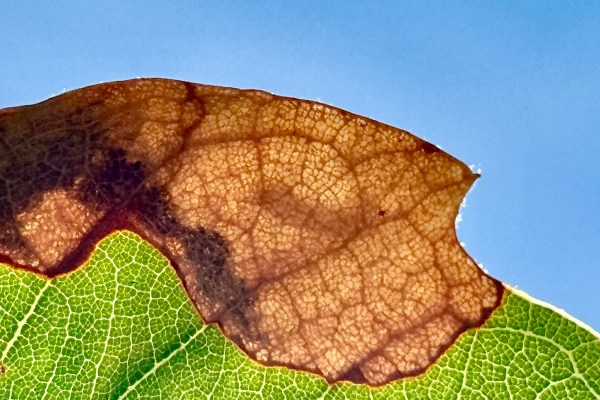
Despite facing another solid day of travel to reach our first target collection locality (Organ Mountains-Desert Peaks National Monument in south-central New Mexico), I could not leave the area without showing Jason the sandstone escarpment just east of nearby Kenton (Oklahoma’s westernmost town). The pinyon/juniper/oak woodland on the escarpment has, over the last 15 years, been a bonanza of interesting beetles, including numerous new state records of species more typically found in the Rocky Mountain foothills biotic zone further west. Again, the lateness of the season tempered our expectations, but late-season Acmaeodera spp. (family Buprestidae) on fall-blooming asters remained a possibility. We started out by beating the two oak species found in the area—Quercus × undulata (wavyleaf oak) and Quercus mohriana (Mohr’s oak), and it wasn’t long before Jason noticed larval mines of Brachys sp. (family Buprestidae) on leaves of the former. I have collected adults of Brachys barberi on these very same oaks in previous years during the spring, so surely that is the species responsible for the mines. To this point, the species has only been associated with Quercus havardii (shinnery oak), so our efforts immediately turned to collecting infested leaves. It took a couple of hours, but ultimately we ended up with nearly two dozen leaves, which I placed in containers kept in a cooler. Back home, they will be set up in rearing containers so that voucher specimens can be obtained to document the new larval host.
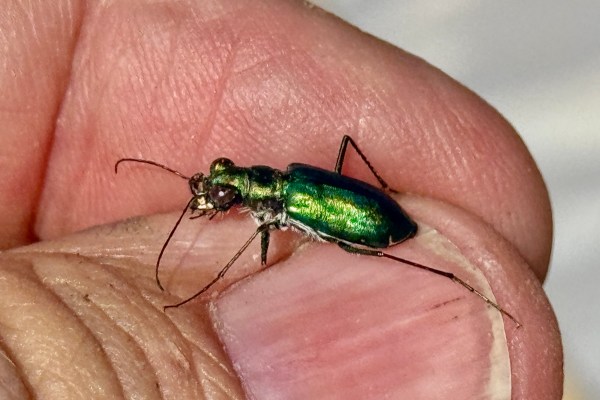
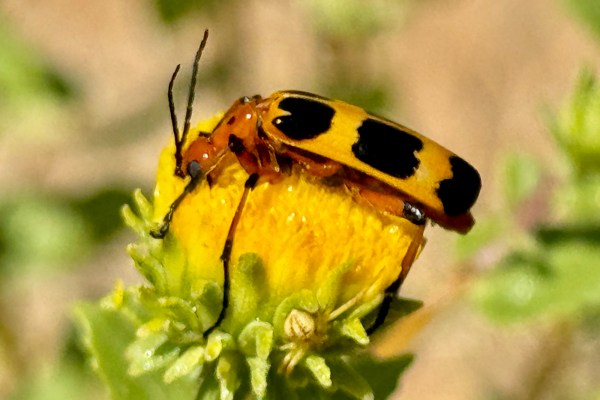
Not too many other insects of interest were seen, but beating Neltuma glandulosa (honey mesquite) yielded Stictipelta marmorata (family Membracidae), another Pyrota concinna was found on the flower of Grindelia nuda (curlytop gumweed), and another lone Cicindelidia punctulata chiricahuae (Chihuahua tiger beetle—family Cicindelidae) was found flitting along the 2-track.
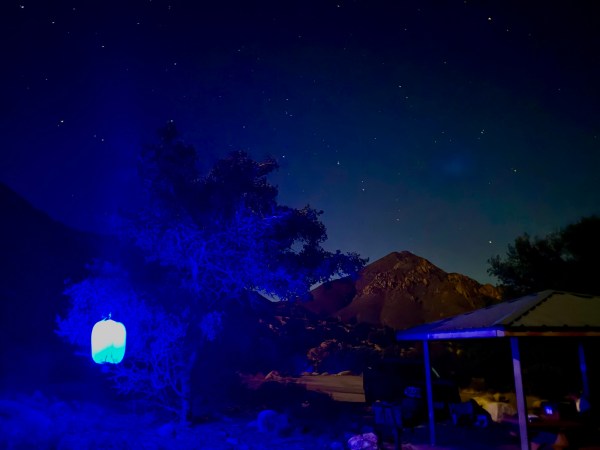
The rest of the day was spent driving to Organ Mountains-Desert Peaks National Monument (Doña Ana Co., New Mexico), where I have looked a couple of times for the recently-described Brachys rileyi, associated with Quercus gambelii (Gambel oak) at higher elevations here and a handful of other locations in New Mexico and western Texas. Aguierre Springs Campground was our destination for the evening, where we would camp and use as a base for searching for the beetle the next day. We arrived well after dark, only to find the gate to the campground shut with a sign saying “Closed”. What?! We had just begun debating whether this would be one of those nights that we would instead need to look for a hotel when we saw somebody from the nearby office walking up behind us with a flashlight. It was the campground host, who explained that they were having problems with “troublemakers” taking over the campground. Presumably able to see that we weren’t such people, she told us where we could go to be away from them and their noise, and unlocked the gate for us. She told us to drive slow with the brights on as we drove up the mountainside so the troublemakers would think we were rangers coming up to kick them out and would then hop in their vehicles and come down before we got there. That’s exactly what happened, as a caravan of several cars started down the mountainside just as we got about halfway up. When we got there the place was deserted except for only one other camper, so we were able to have our pick of the campground, set up camp, cook dinner, and run our lights in complete solitude. Only a few miscellaneous beetles were seen, but it was a beautiful evening at one of my favorite campgrounds.
Day 3—Aug 24th
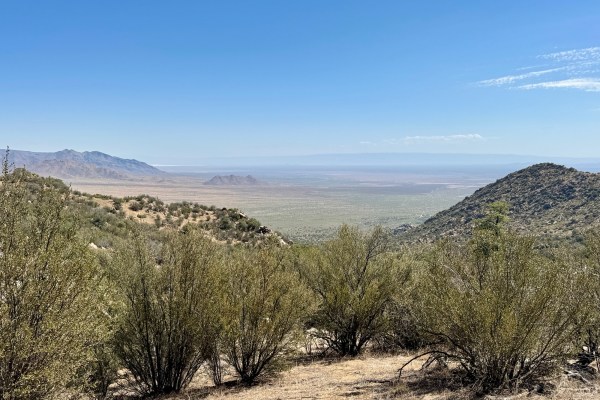
Our plan for the day was to hike the Pine Tree Loop Trail, a 5-mile loop that ascends 1000 feet up the northern flank of the Organ Mountains into the Gambel oak/Ponderosa pine zone before dropping back down into the oak/juniper woodland below. I knew it would be a tough hike—in 2022, I hiked a portion of the loop during my first, quick (and unsuccessful) attempt to find Brachys rileyi (I failed to reach the Gambel oak zone before dwindling daylight forced a turn back). Two years later, I hiked the trail in its entirety on another, also unsuccessful attempt to find the species (it rained shortly after I reached the Gambel oak zone). Warm, dry conditions and a full day available made either of those precious scenarios unlikely, so we ascended the mountain full of optimism. Along the way, we saw Acmaeodera rubronotata (family Buprestidae) on the flower of Gutierrezia sarothrae (broom snakeweed) and beat a series of Curculio sp. (family Curculionidae) from Quercus grisea (gray oak). Further up the trail, I found the right elytron of Lampetis sp. (family Buprestidae) on the trail. At first I assumed it was Lampetis drummondii, a species known from Texas north to Kansas, but later I would learn that Lampetis webbii, normally found in Arizona and western New Mexico, also occurs in the same area.
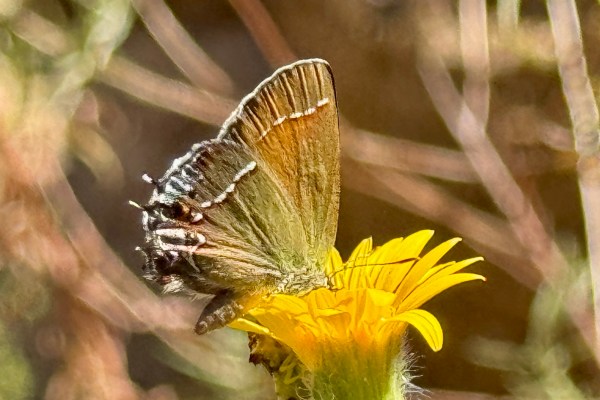
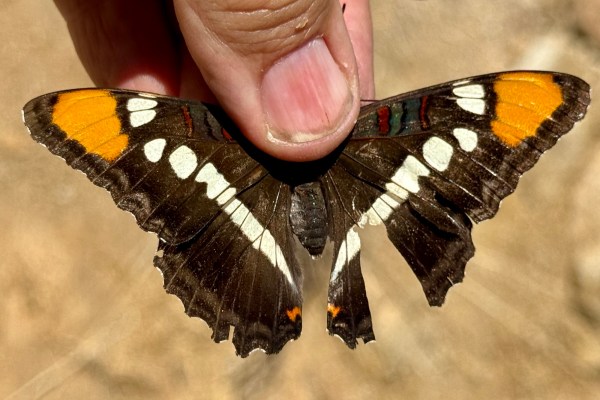
For the most part, few insects were seen until we reached a ravine about halfway up where two Acmaeodera spp. (rubronotata and amplicollis) were found on flowers of Heterotheca fulcrata (rockyscree false goldenaster). Butterflies were seen as well—Callophrys gryneus (olive hairstreak—family Lycaenidae) on H. fulcrata flowers and Adelpha eulalia (Arizona sister—family Nymphalidae) flying rapidly up and down the ravine.
Finally reaching the Gambel oak zone, we began beating trees systematically, hopefully inspecting the dislodged insects each time hoping to see B. rileyi. While we waited for it to finally land on our sheets, I picked up a smattering of other interesting insects beaten from the oaks—two species of treehopper (Telemonthe sp. and Platycotis vittata), a couple of leaf beetles (Pachybrachis sp. and a hispine tortoise beetle—family Chrysomelidae), and a different species of weevil (family Curculionidae). By far the most exciting insect beaten from the oaks, however, was a Lampetis webbii. Again, as I had done earlier when I found the right elytron, I first assumed it was Lampetis drummondii, but the appearance wasn’t quite right and I eventually confirmed its identity as L. webbii—a species I have collected only a couple of times before, both as singletons.
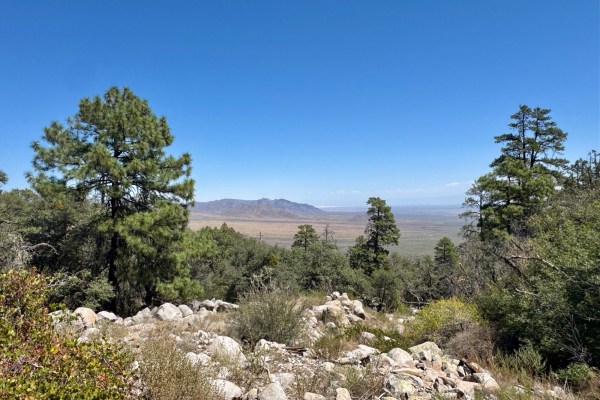
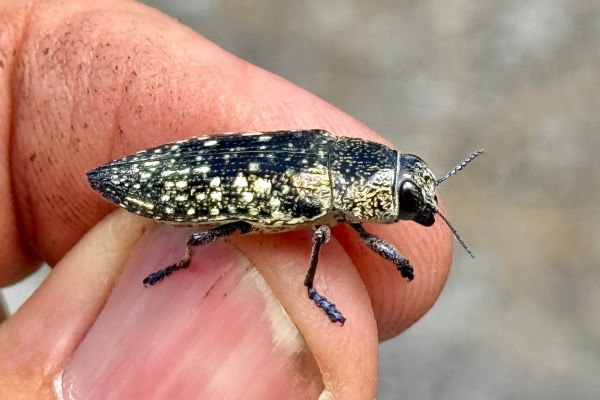
Sadly, we reached the end of the Gambel oak zone without having encountered B. rileyi—a disappointing result considering the time and effort we’d given to this, our first objective for the trip. The heat of the day and low supplies of water added insult to injury for the descent back down the mountain, which seemed to take forever!
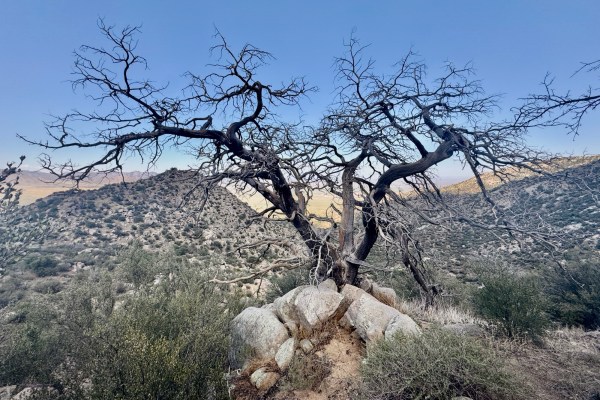
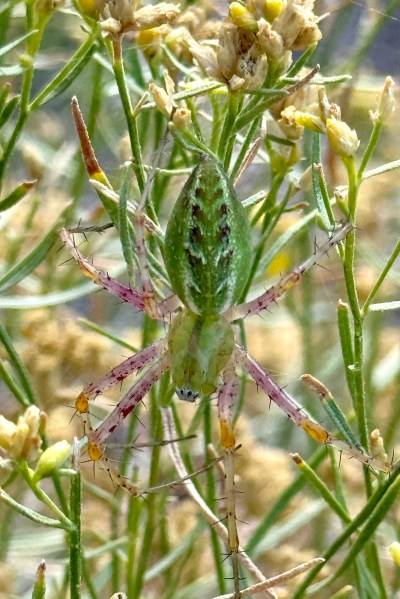
By the time we got back to camp, all we could think about was going into town to restock on ice and get some very cold drinks!
Day 4—Aug 25th
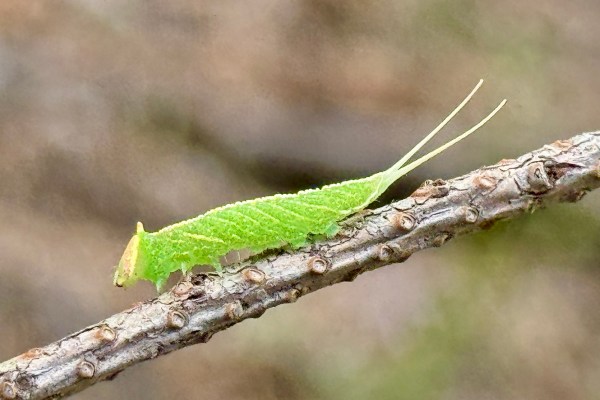
Our original plan was to travel from the Organ Mountains to the Peloncillo Mountains in southwestern New Mexico and Chiricahua Mountains in southeastern Arizona to look for several buprestid beetle species before continuing further west to hook up with Steve and Norm. First, however, we decided to devote another day to our search for Brachys rileyi, this time at Hop Canyon in the Magdalena Mountains of west-central New Mexico. One of the paratypes was collected there, and also at this time of season, giving us reason to believe that we still had a shot at finding the species. We reached the spot in the early afternoon and immediately began sampling in the Gambel oak zone at ~6000ft elevation (I opted for my long-handled tropical net in order to reach high into the canopy) in hopes of finding the tiny little red and blue beetle of our desires. Predictably, this would not happen, and in fact few insects at all were seen—my take being limited to a few Grandolobus grandis (family Membracidae) and some miscellaneous curculionids and other tiny beetles, though I did encounter the very interesting, forked-tail caterpillar of Macrurocampa dorothea (family Notodontidae).
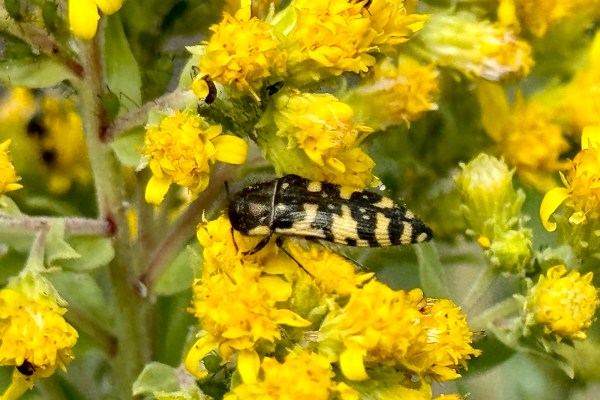
Despite the general scarcity of insects encountered on the oaks, several species of Acmaeodera were encountered on the variety of blooming plants that were present. Acmaeodera decipiens was the most common, with adults found on flowers of Machaeranthera tanacetifolia (Tahoka daisy), Solidago wrightii (Wright’s goldenrod), and Sphaeralcea fendleri (Fendler’s globemallow).
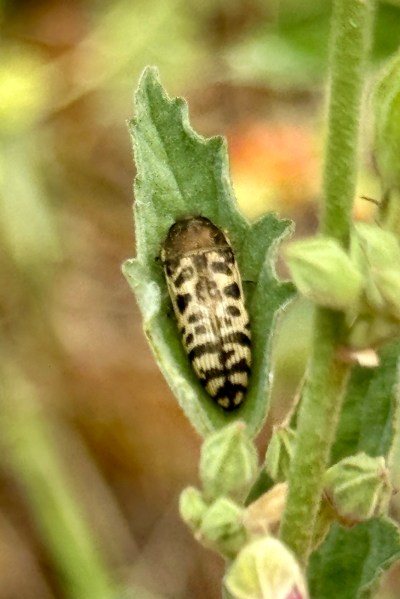
Two other species also were seen, though in lower numbers—A. rubronotata on flowers of S. wrightii and Gutierrezia sarothrae (broom snakeweed), and A. amabilis on flowers of the latter.
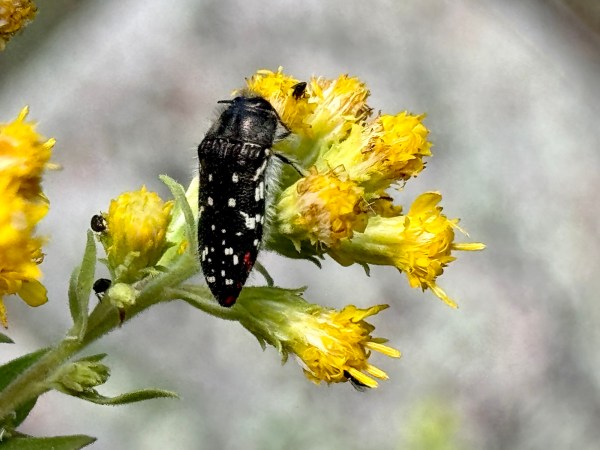
After devoting a second day to looking for (and not finding) Brachys rileyi, we resigned ourselves to admitting defeat and moving on to other targets. There wasn’t much time left in the day, however, to move further west, so we decided to camp at Water Canyon Campground a bit further south in the Magdalena Mountains. We still had a fair bit of daylight after arrived and before we needed to think about dinner, so after getting the camp set up I took a short walk around the campground to see what I could find. At the campground entrance I noticed a fine Tylosis maculata (family Cerambycidae) bedded down for the evening on the leaf of Sphaeralcea sp. He cooperated for some photos, and later I found another smaller individual in a nearby patch of plants. Nearby an Acmaeodera amplicollis was perched on grasses, as were two Crossidius pulchellus (family Cerambycidae) on the flowers of Gutierrezia sarothrae.
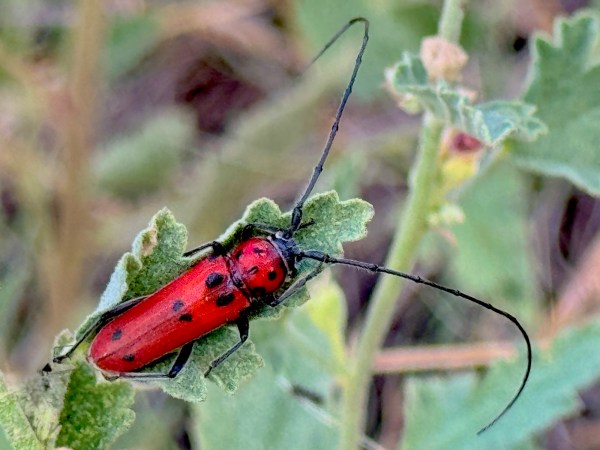
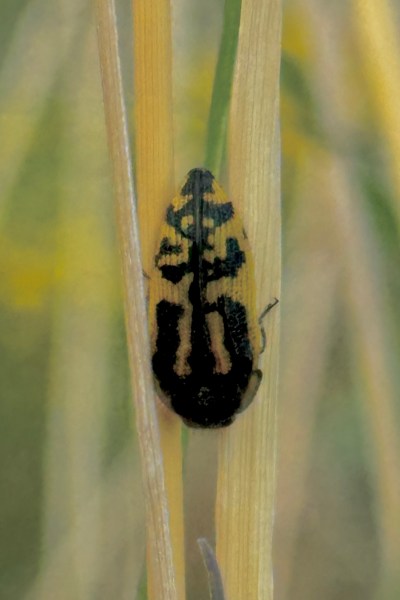
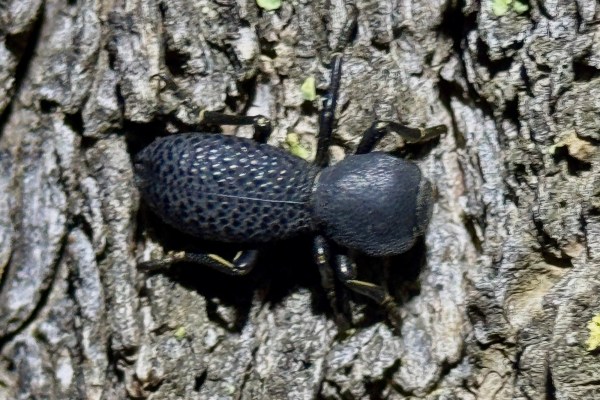
After dinner I hung two ultraviolet lights—one in the campsite and one across the road. From the former I got a few tiny tenebrionoid beetles, one bostrichid, and an anthribid weevil, while from the latter I got one ochodaeid and a few other small miscellaneous beetles. Checking tree trunks was more fruitful, with my good friend Zopherus concolor (family Zopheridae) on the trunk of a dead Pinus edulis and brought him back to the campsite for photos in the morning (he remained in a thanatotic state the entire time I carried him!). I shut the lights down shortly after 11 pm as the nearly full moon rose high, brightly illuminating the nighttime forest.
Day 5—Aug 26th
Our destination for the day was a spot along Geronimo Trail near the Arizona/New Mexico state line in the Peloncillo Mountains, where last year in late August Joel Dubois collected a single specimen of the super rare Acmaeodera discalis in a bottle trap (along with ~100 A. cazieri!). I’ve never seen that species, nor have I ever explored the Peloncillo Mountains, so my plan was to set a couple of bottle traps in the area to leave in place for the rest of our trip and pick them up on the way back. Geronimo Trail is extraordinarily remote—nearly an hour beyond the tiny, near-ghost town of Animas—along increasingly rough, rocky roads. After what seemed like all day (in fact, it was about six hours of travel), we arrived at the spot—an unpresuming stretch of grassland at ~5000ft elevation with a ribbon of oak/juniper woodland running along the hillside to the south and a dry creekbed running alongside the north. I set one bottle trap near the creekbed, then hiked up the hillside well into the woodland to set another. I also hung a “jug trap” baited with 50:50 sweet red wine/pure ethanol near each bottle trap in hopes of catching some interesting cerambycids. Sadly, the area was extremely dry, and there was virtually no insect activity that we could discern, so rather than finding a place to camp in the area went continued on to our next destination—the Chiricahua Mountains just across the state line in Arizona.
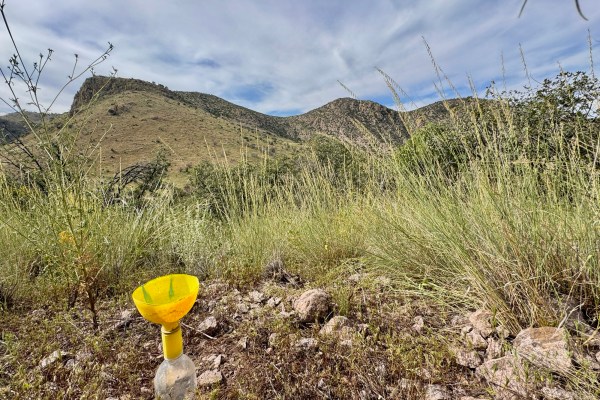
I’ve visited the Chiricahua Mountains many times over the years going back to my first visit in 1987. There were three species I wanted to look for here—Sphaerobothris ulkei (family Buprestidae) in the desert flats below Portal, an undescribed longhorned beetle in Cave Creek Canyon, and Acmaeodera reflexa at higher elevations in the mountains. I’ve collected the first and second on previous visits (though sparingly), but I’ve never collected the latter (nor have many others), which was reportedly collected along Rd 42 at ~6000ft by the late Delbert LaRue back in 2015 (Westcott & LaRue 2017). Both of these species, however, would have to wait until tomorrow, as it was well into the evening hours by the time we arrived at Sunny Flat Campground in Cave Creek Canyon. This would be the first evening that we would set up not only the quick-and-easy Entoquip Entrap Lantern Kits but also the full-sized Entoquip Entoceptor™ stand with both ultraviolet lights and a 175-watt mercury vapor light.
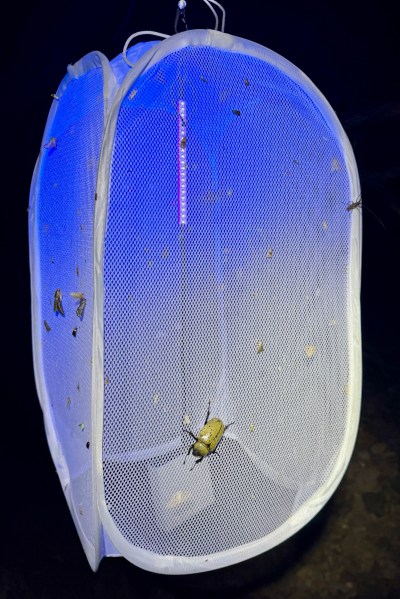
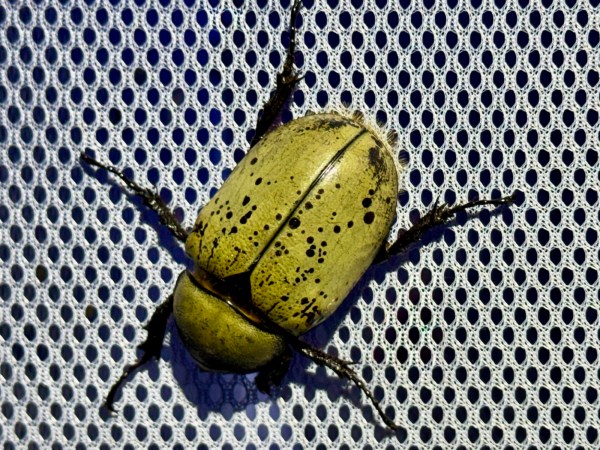
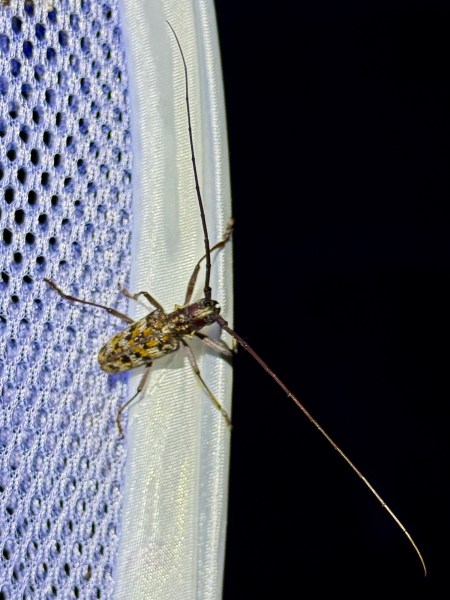
Almost immediately, some rather charismatic beetle species showed up at the lantern kits. These included a large female Dynastes grantii (western Hercules beetle—family Scarbaeidae) and a large male Monochamus clamator ssp. rubigineus (spotted pine sawyer—family Cerambycidae).
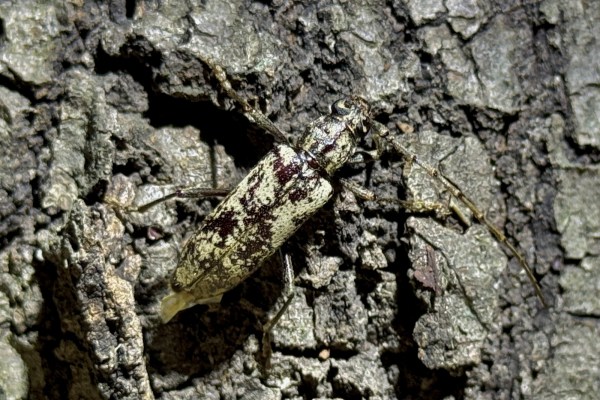
A little bit later another large longhorned beetle (Enaphalodes niveitectus—family Cerambycidae) showed up at the other lantern kit. Both lantern kits also attracted a variety of other miscellaneous smaller beetles.
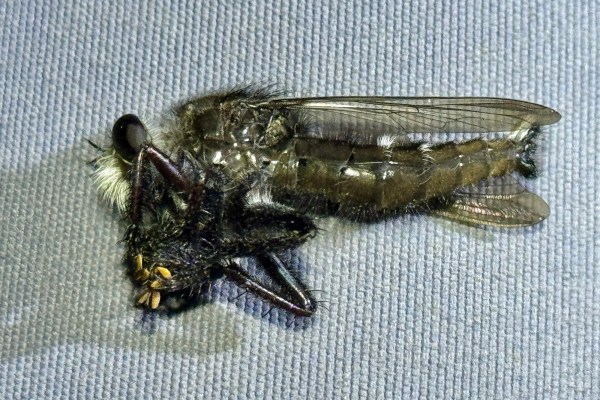
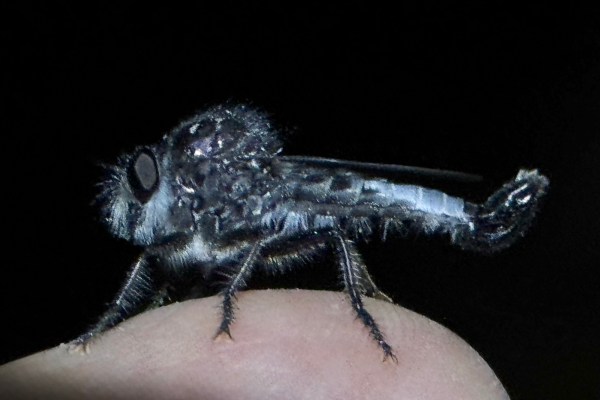
The appearance of such charismatic beetles as Dynastes and Monochamus at the lantern kits gave us hope that the full-sized stand with ultraviolet and mercury vapor lights would pull in even more such species, but other beetles were limited to a single Sternidius sp. (family Cerambycidae) and a few other miscellaneous species. Robber flies (family Asilidae), however, were nicely represented by Promachus atrox and Efferia sp.
Day 6—Aug 25th
Since we had two targets for the day—Sphaerobothris ulkei in the desert flats below Portal and Acmaeodera reflexa in the higher elevations, we decided to hunt for the former before the heat of the day set in, then retire to the cool mountain air to look for the latter. I’ve collected in the flats below Portal three times before and have only three specimens of S. ulkei to show for it. I’ve never seen the species anywhere else (although I did once find a detached elytron near White Sands, New Mexico), so this seems as good a place as any to look for it. On most of my previous visits here, Gyascutus caelatus and Hippomelas sphenicus (both family Buprestidae) have been quite abundant on Vachellia constricta (whitethorn acacia), and it was the same this time as well. These large, conspicuous, charismatic buprestids are fun to chase and catch, but they can fill a bottle quickly and distract one from spending time looking for more secretive and uncommon species like S. ulkei.
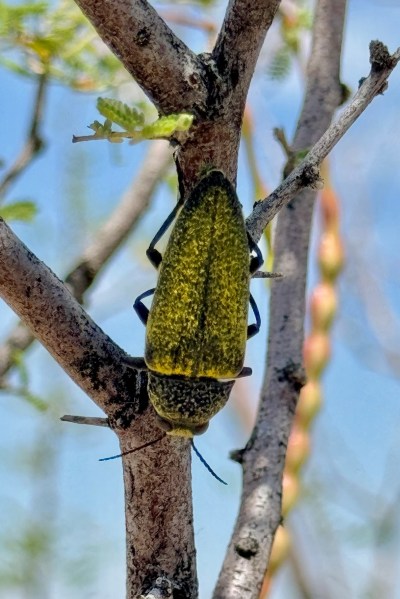
Still, it was hard to resist the siren call of adding at least a few more individuals of these charismatic species to my collection—better to eliminate temptation than to constantly fight it, so I went ahead and collected a small series of each. I’m glad I did, as while I was doing this I also encountered not only a few Acmaeodera gibbula on the flowers and dead branch tips, but also Chrysobothris knulli (family Buprestidae), a fairly uncommon species that I have seen only once before. I then set about systematically checking the Ephedra trifurca (longleaf jointfir) plants in the area. As I checked the plants, I noticed several H. sphenicus that seemed to be ovipositing at the joints of some of the plants (or at least probing with their ovipositor). Whether this indicates a larval host association remains to be seen.
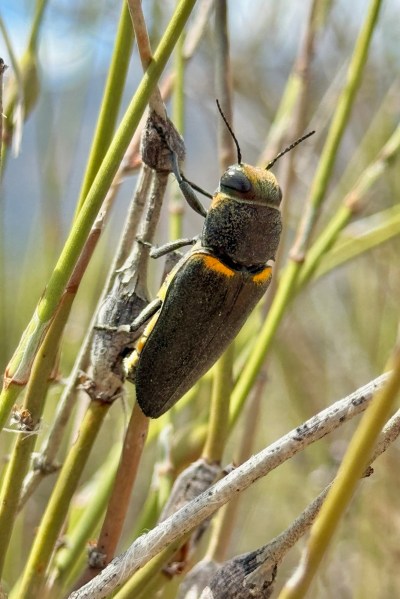
I continued to check the E. trifurca plants… and check… and check… and after nearly two hours and nearing the vehicle I was about ready to throw in the towel when I saw one! Despite its brilliant blue-green coloration, I don’t think I would have seen it had I not been able to recognize the tiny glimpse of its unique color perched deep within the plant.
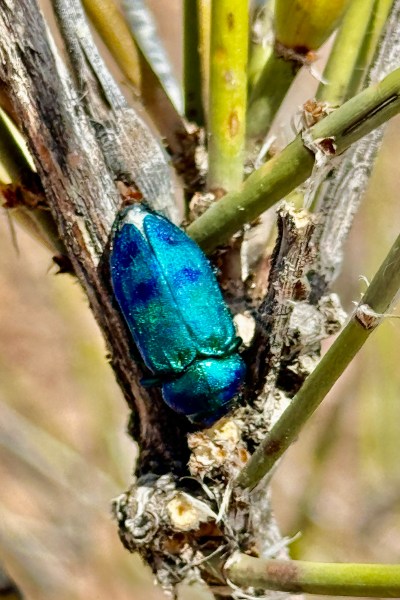
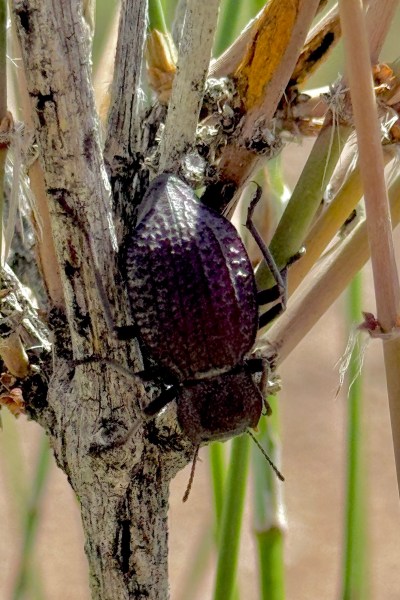
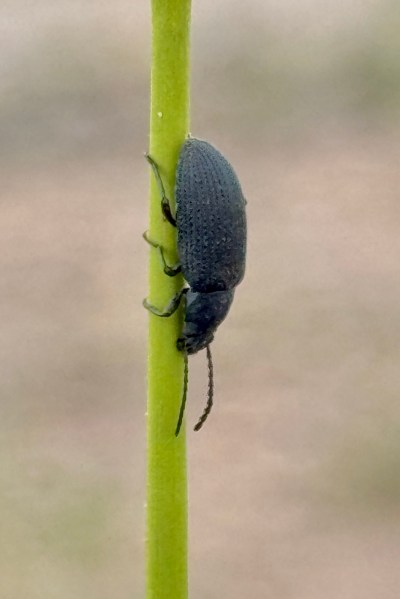
Finding one gave me renewed motivation to look for others. As I looked, I encountered a few other interesting insects, including Acmaeodera parkeri at the tip of a dead branch, the absurdly chunky and aposematically colored blister beetle (family Meloidae) Megatra punctata, and two species of darkling beetle (family Tenebrionidae)—the robust, tank-like Philolithus morbillosus, and numerous individuals of a relatively diminutive Cteisa sp.
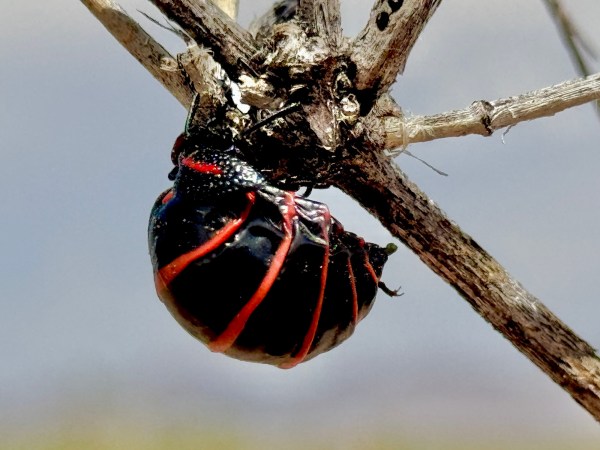
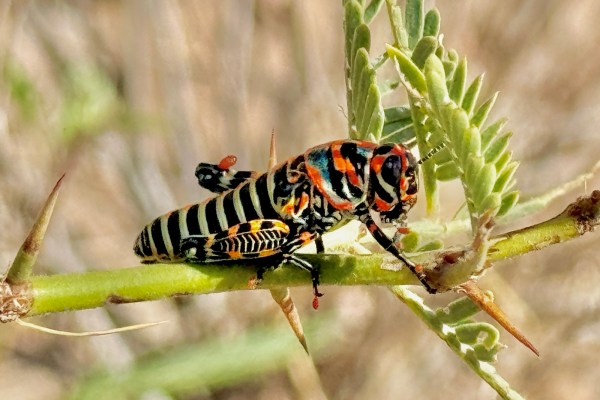
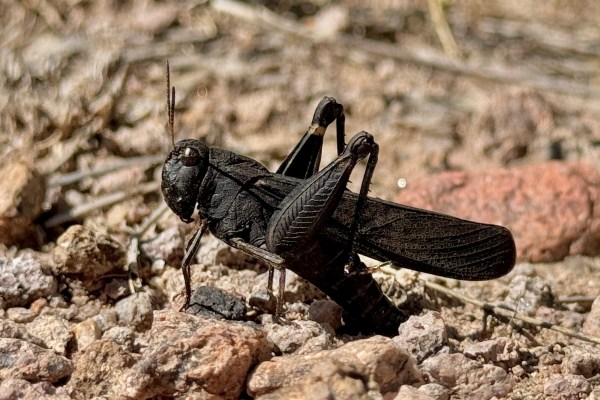
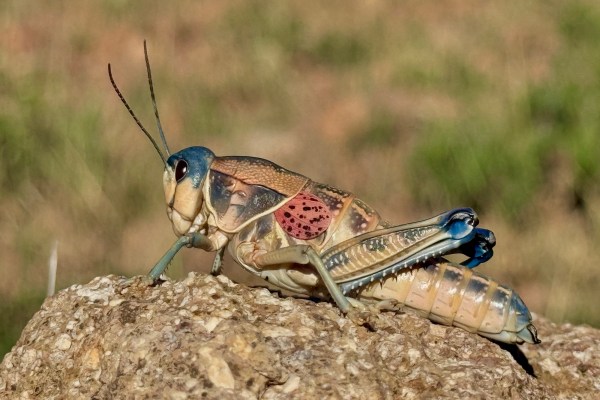
Certainly the most conspicuous insect seen during the day was the dazzlingly—and, like M. punctata, aposematically—colored Dactylotum bicolor (rainbow grasshopper—family Acrididae).
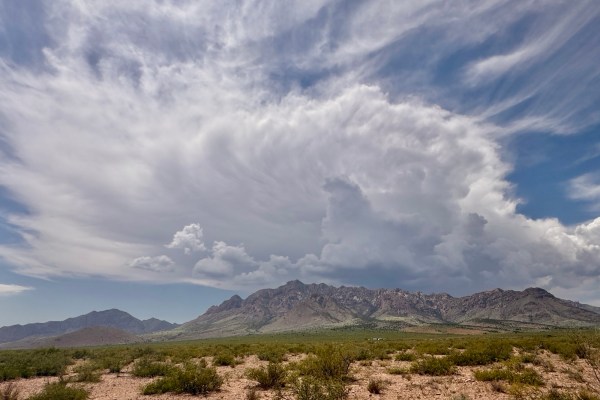
It would take another hour, but I finally saw a second S. ulkei, but I failed to anticipate just how skittish this individual was and failed in my efforts to secure the specimen—damn! Spending three hours and catching only one of two individuals seemed like a costly effort for such a meager payout, but—of course—one is better than none. It wasn’t lack of desire to continue searching, however, that caused us to give up the hunt, but rather the developing rain storm that we had been watching bloom over the nearby Chiricahuas. For a short time, it manifested only as a pickup of gusty winds, but eventually we started getting pelted with large raindrops and headed for the truck.
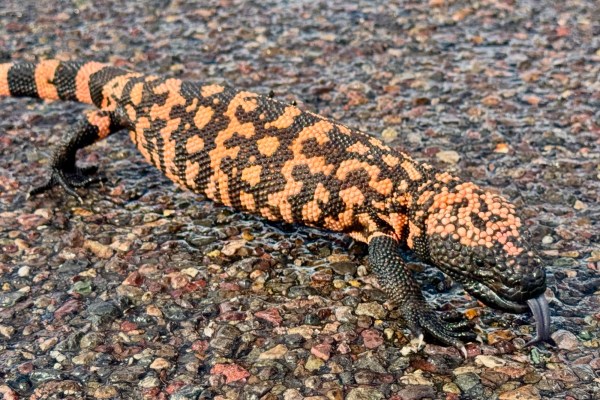
Steam rose from the newly wet pavement as we drove towards the mountains. Jason and I saw it almost simultaneously and recognized it almost instantly—the unmistakable form of a Gila monster crossing the road. Neither of us had ever seen a Gila monster in the wild, but with its sausage-shape body, heavy head, and four stubby legs covered with a mottled pink and black skin what else could it be?! We quick pulled over, got out, and ran back to the spot where it had left the road (not easy with my gimpy knees!). At first we had trouble locating it in the heavy brush, but I knew for sure it had entered at that spot and that it could not have moved far from it. Shortly we found it and used a net to “coax” it back out into the road so we could get some photos of it. I’ve long wanted to see a Gila monster for myself, so this was a highlight of the trip.
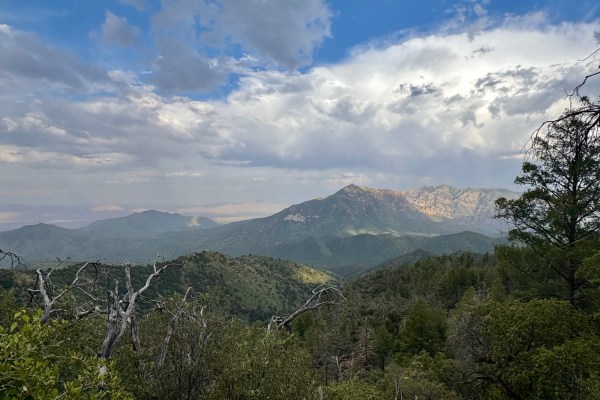
We were fortunate that the rains that moved through the lower elevations in the Chiricahua Mountains had missed the higher elevations, as that could have put an early end to our efforts to find our other target for the day—Acmaeodera reflexa. To the contrary, when we arrived at the spot things were dry and flowers were present in abundance, many of which are perfectly acceptable to species of Acmaeodera. Almost immediately we began finding A. amplicollis and A. decipiens, the former on flowers of Heliomeris multiflora (showy goldeneye), and the latter on the same as well as flowers of Ipomopsis macombii (Macomb’s skyrocket), Cirsium sp. (thistle), and Erigeron divergens (spreading fleabane). I paid special attention to that latter plant, as the A. reflexa collection record listed “Erigeron sp.” as the host. A large patch of this plant in full bloom was found about ¼-mile from where we parked, and since I did not see the plant anywhere else I imagine this must be the exact spot where the beetle had been collected. Unfortunately, we did not find it here or in any of the several other flowering plants at that location. This is often the case when looking for rare species based on a prior record—even finding the exact spot at the same time of season does not guarantee that the species will be encountered.
Although we lucked out avoiding the rain at our last stop, our campsite was not so lucky. We had neglected to put the rain fly on the tent as a precautionary measure and returned to wet bedding (at least it wasn’t soaked). Worse, we suffered a flat tire on the way down the mountain, meaning that Jason would have to get up early in the morning, drive to Lordsburg over an hour away, and get the tire fixed before we could pack up the truck and head to Steve and Norm’s.
Day 7—Aug 28th
Jason had already left by the time that I got up, so after breakfast (and coffee!) I hiked the riparian woodland along the Cave Creek Canyon Nature Trail with the goal of finding additional specimens of an undescribed longhorned beetle that I discovered along this very trail in 2018. The beetle represents not only a new species but also a new genus in the tribe Acanthocinini and most closely related to Astylopsis. I am working with Patrick Gorring, who subsequently collected a female specimen, but despite the best efforts of several other collectors no additional specimens have been found. The first specimen was collected during late July, so I didn’t have a lot of confidence that a full month later in the season it would still be around, but every opportunity must be taken advantage of. Worse, I collected the specimen during a stint of general sweeping of low woody vegetation, so I had no specific host plant information on which to focus my efforts. In this area, oaks or mimosas are the most likely candidates, so it was those plants on which I focused my efforts. A patch of Mimosa aculeaticarpa (catclaw mimosa) in open conditions at the back of the campground was especially productive for weevils (at least four species) and a clytrine leaf beetle, but I distinctly remember sweeping the longhorned beetle from understory vegetation near Stewart Campground, so I beat oaks and mimosas all the way to that point. Again, no longhorned beetles were seen—in fact, almost no insects at all were seen, save for two lone weevils on Quercus arizonicus (Arizona white oak) and Desmodium batocaulon (San Pedro ticktrefoil). A disappointing result, made even more so after realizing that a day and a half spent looming for three species had resulted in the capture of just a single specimen of one of them.
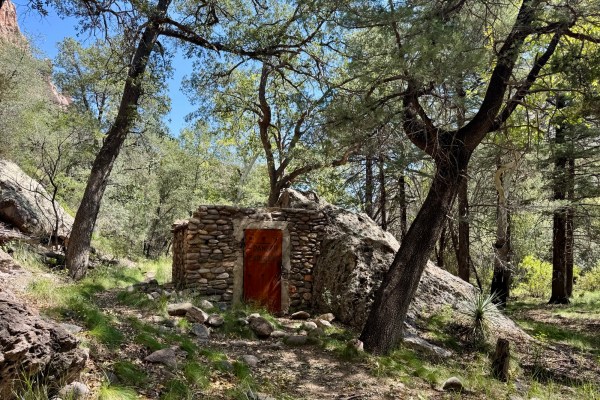
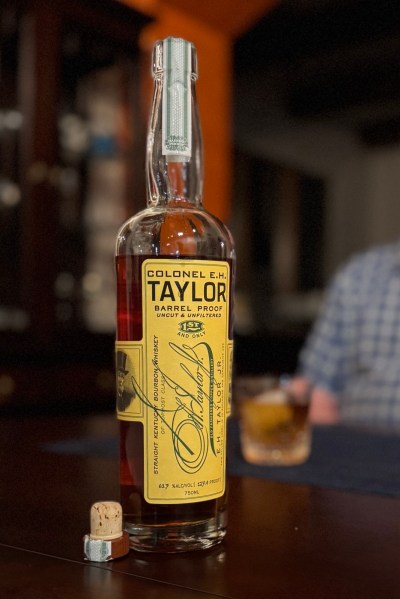
Jason had returned to the campground by the time I got back, so we loaded up the truck and made our way west to the home of Steve and Norm. Nestled in the oak woodlands below the eastern flank of the Huachuca Mountains, they are well located to reach several of the “Sky Islands” mountain ranges of southeastern Arizona. It was great to see them again, and we appreciated not only the wagyu beef dogs they served for dinner (accompanied by a fine 127.4 proof spirit), but also the good conversation and comfortable beds they provided for the night. Bonus: Steve leaves a blacklight permanently running in his yard during the summer, so we each inspected it for beetles of interest before retiring. I chose singletons of Atylostagma politum (family Cerambycidae), Digitonthophagus gazella (family Scarabaeidae), Coenonycha sp. (family Scarabaeidae), and Efferia sp.
Day 8—Aug 29th
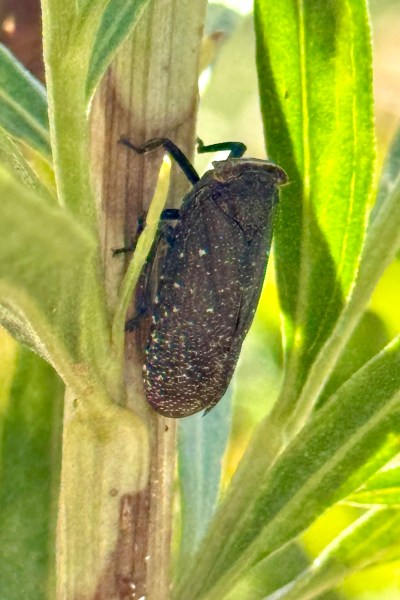
For our first day in the area, Norm accompanied us to several spots on Middelmarch Rd leading east of Tombstone toward the Dragoon Mountains. We stopped at a stand of Sapindus drummondii (western soapberry) from which Norm collected the type series of the recently described Agrilus botzi (family Buprestidae). We thoroughly swept the stand but did not find any. Jason collected Gyascutus caelatus and Acmaeodera gibbula on Vachellia constricta, and Norm saw Acmaeodera parkeri. but the spot looked very dry despite good rains in the area in general. It was much the same further down the road in the Dragoon Mountain foothills, where we stopped at a riparian wash through desert scrub. Sweeping/beating the vegetation was fruitless, but I did find an aggregation of Poblicia thanatophana (orange-tailed speckled lanternfly—family Fulgoridae) on Baccharis salicifolia (mule fat).
We continued down the road until we reach Middlemarch Pass (past the spot where two years ago Norm, Steve, and I collected a nice series of Acmaeodera horni) where the elevation was sufficient to support junipers and oaks in the grassland. Again, conditions remained dry and beating was largely fruitless—with the notable and welcome exception of Lampetis webbii, which I beat from Quercus arizonica. With two specimens now having been collected on the trip, my holdings of this species had doubled! Ironically, despite the very dry conditions, rain moving into the area forced us back to the car for an early exit.
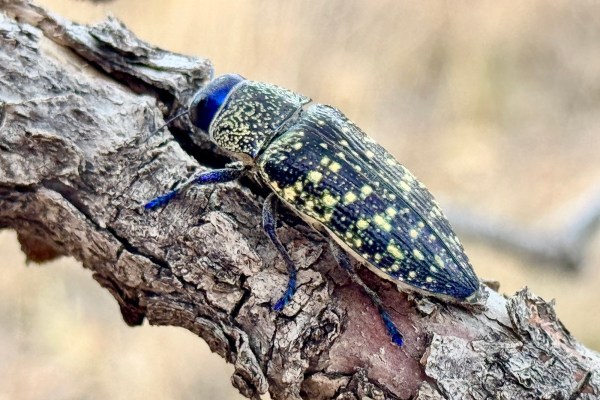
Heading back toward Tombstone, Norm mentioned that he had collected Acmaeodera flavopicta at a spot just east of town and asked us if we’d ever collected it. This is not a rare species, but neither is it very common, and in fact I had not ever encountered it myself, so we stopped at the spot and managed to collect a decent series on flowers of Picradeniopsis absinthifolia (hairyseed bahia). A few specimens of A. opacula and A. scalaris were also found in the same, and the latter was also found on flowers of Baileya multiradiata (desert marigold).
After returning, I decided to do some beating in the riparian oak woodland around their house. Two species of oak occur in this woodland—Quercus arizonica and Quercus oblongifolia (Mexican blue oak), and wanted to see what I might’ve able to find on them. Only a single Zygogramma sp. (family Chrysomelidae) was beaten from the former, but beating branches of the latter proved to be slightly more productive with yet another Lampetis webbii as well as one of the spotted Agrilus sp. and a few other miscellaneous beetles. I also encountered a small patch of Lasianthaea podocephala (San Pedro daisy), the flowers of which yielded a small series of Acmaeodera amplicollis. Finally, I noticed a lot of Calliandra eriophylla (pink fairy-duster) in the sunnier areas of the woodland. This is the host plant for Hippomelas parkeri, and species which I had not collected before but hoped to on this trip, and while I did not expect to find that species at this location, I did manage to sweep a few miscellaneous beetles from it.
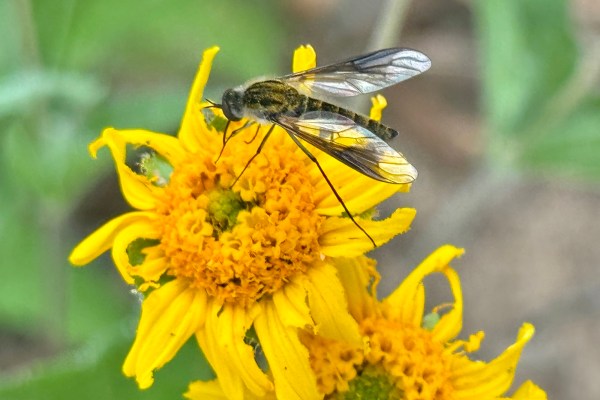
The rest of the evening was spent once again enjoying good food, drink, and conversation, and I managed to snag a Strategus sp. (family Scarabaeidae) at the lights before retiring.
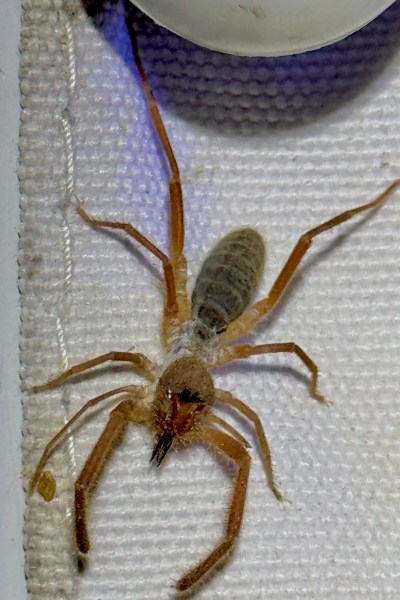
Day 9—Aug 30th
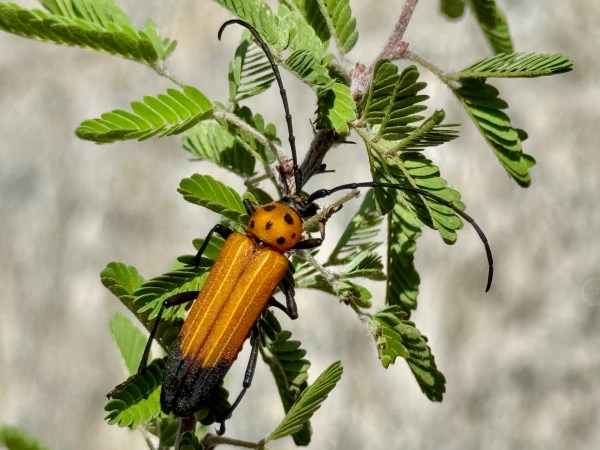
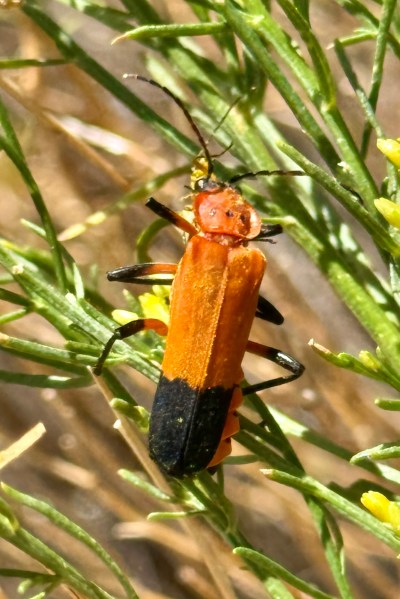
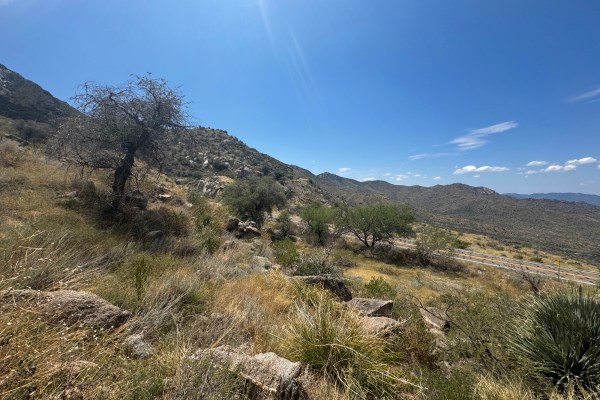
Two of my targets for the trip were Mannophorus forreri (family Cerambycidae) and Hippomelas parkeri. I collected a few individuals of the former below Kitt Peak Observatory in the Quinlan Mountains west of Tucson during mid-September back in 2019, but an effort to collect H. parkeri at the type locality during early August the year before was not successful. Fortunately, Norm has collected this species as well below Kitt Peak in the same general area where M. forreri has been collected, making the Quinlan Mountains an obvious destination for a day-long outing by all four of us. Hippomelas parkeri was my priority, so as soon as we arrived I began checking Calliandra eriophylla plants growing on the rocky slopes along the roadside, but almost immediately I saw a M. forreri on flower of Gutierrezia sarothrae. This shifted my focus to checking other nearby flowers, and I quickly started encountering M. forreri individuals on the flowers of a variety of variety of plants but especially Bebbia juncea (sweetbush), which was blooming profusely along the roadside in the area where we had parked. It didn’t take long for me to collect an adequate series, and along the way I also encountered several species of Acmaeodera (A. decipiens, A. gibbula, A. rubronotata, A. scalaris, A. solitaria)—most on Bebbia juncea but also G. sarothrae, Heterotheca fulciens (rockyscree false goldenaster), and Xanthisma gracile (slender goldenweed). I also encountered the presumed model for M. forreri (Chauliognathus profundus—family Cantharidae).
As pleased as I was with these encounters, I still had not yet encountered H. parkeri—my main objective for the day. I found Norm further up the road, who had already found and collected a small series, so I tagged along with him to learn his “tricks.” It took a while of checking the plants even further up the road, but I finally saw one and carefully maneuvered it into a vial.
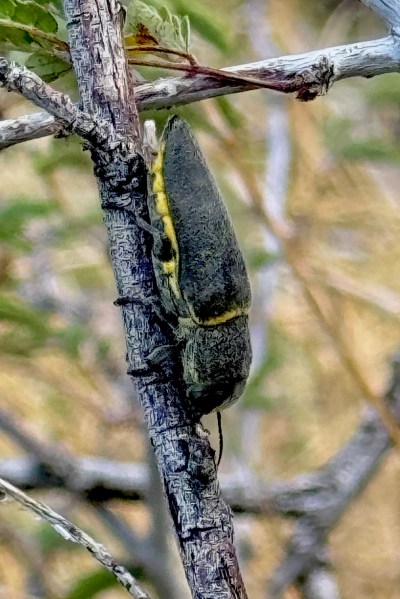
It was hard to see as it perched on the stem of the plant down inside the crown (despite its relatively large size compared to most buprestids, though smaller than other species of Hippomelas), so I began looking even more carefully. This didn’t seem to help—I checked many more plants but didn’t encounter additional individuals. I then encountered Jason as he returned from a small area up the road with access to many more plants and where he said he’d had good luck finding them by sweeping, so I borrowed his heavy-duty sweep net (I had only my aerial net) and started sweeping the plants myself. This also didn’t seem to work, and I started worrying that sweeping could actually be missing individuals buried deep with the crown of the plant. I went back to visually checking plants (even though it is a slower process), and it wasn’t long before I found a second individual. Buoyed by this success, I continued and started encountering individuals with regularity—also finding Hippomelas planicauda on Senegalia greggii (catclaw acacia), another species for the trip, and right as I’d collected what I thought was an adequate series the others pulled up in the car with big news…
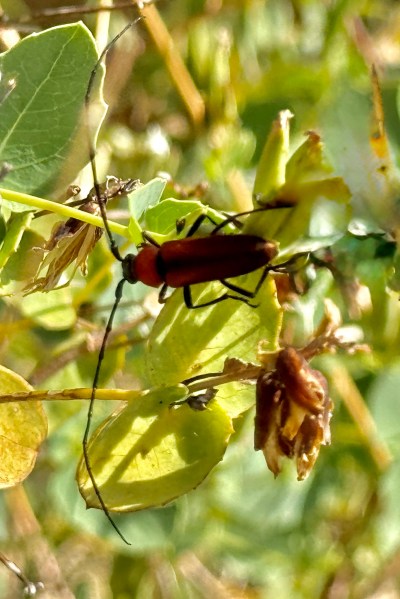
While Norm, Jason and I were focused on H. parkeri, Steve had walked a considerable distance up the road and encountered a species of longhorned beetle that he’d not previously seen from this area—Muscidora tumacacorii (family Cerambycidae)! Finding this species has been one of my goals for years, but repeated attempts to find it have failed. Steve had noticed several of its known host plant—Guardiola platyphylla (Apache plant), and ended up collected a decent series on plants in the area. He asked me if I’d like to collect it, and my answer was an emphatic “Yes!” We drove the short distance to the spot where he’d first seen them, and within minutes we saw one sitting on one of the plants. Of course, where there is one, there must be more (right?), so we kept checking plants. As often happens, however, further searching did not yield further specimens until we had not only walked far up the road, but then doubled back and walked at down the road. Only then did we see another individual (the one shown below), which I felt safe photographing before maneuvering into a vial.
With three target species acquired (one by surprise) and the afternoon waning, we decided to start heading back, but only after checking a spot along the way (southwest of Three Points, Arizona) where Norm has collected Acmaeodera convicta—another species (like A. flavopicta) that is not rare but also is not common and that I have not collected. We found them fairly quickly after arriving at the spot perched on the tips of Boerhavia coulteri (Coulter’s spiderling) along with A. alicia and A. solitaria. Four target species in one day seemed too god to be true, and we all enjoyed a celebratory dinner and margaritas at a Mexican restaurant before returning home and enjoying continued coleopterological conversations for the remainder of the evening.
Day 10—Aug 31st
We awoke to rain—always a possibility during monsoon season in southeastern Arizona. Rain in one place, however, does not mean rain elsewhere, and we had planned to go to Box Canyon in the Santa Rita Mountains to look for Spectralia cuprascens (family Buprestidae). Jason had never collected this species, and I had but a single specimen in my collection to show for several attempts to find it (that specimen also taken in Box Canyon). We hoped for the best as we drove through alternately areas of rain and no rain, but as we approached the spot we were welcomed by a persistent drizzle. Having collected series of the species already, that was enough to cause Norm to opt out and remain in the car. Jason and I, however, were more motivated and moved to adjacent areas on the hillside where patches of the beetle’s host plant, Anisacanthus thurberi (desert honeysuckle) were growing.
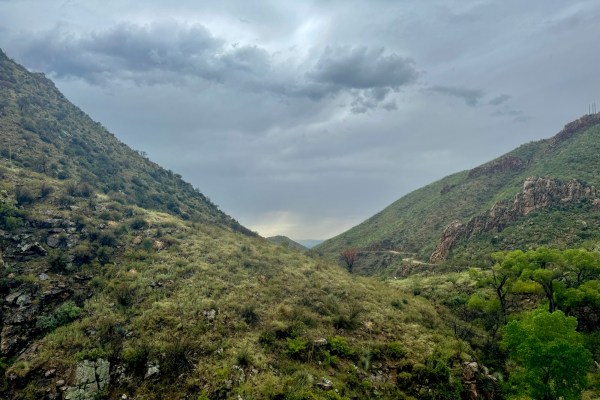
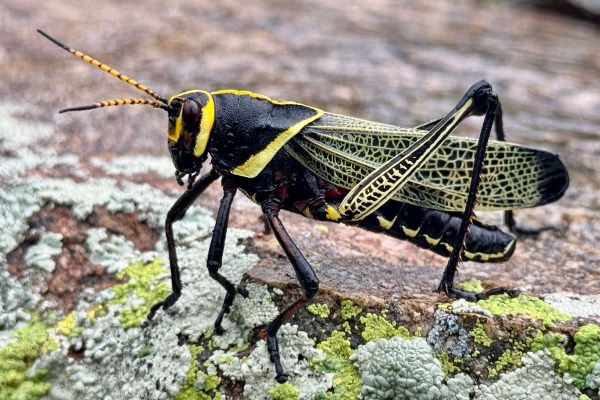
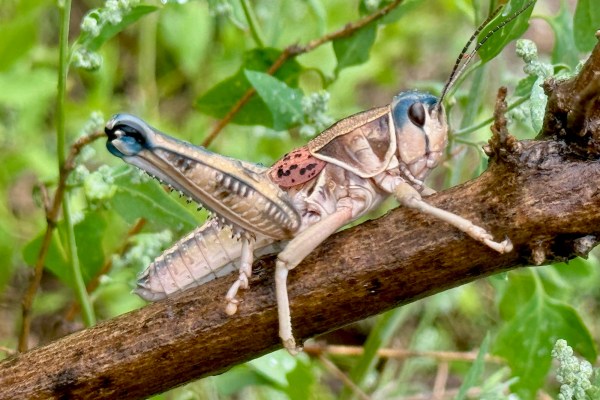
Jason opted for his sweeping strategy, while I again chose to more slowly but also more carefully check the plants visually before beating them. I didn’t know it at the time, but in this case Jason’s method would prove to be the better—collecting three specimens in this manner, while I did not collect any. However, I did encounter something else that, unbeknownst to me at the time, would prove to be much more desirable! Its bright green coloration made me think of Chrysobothris prasina, but it was larger with darker markings on the elytra. Normally wasn’t fooled at all—when I returned to the car and showed it to him, he immediately identified it as Chrysobothris socialis—a very uncommonly encountered species that I had not only never collected but never even seen in a collection. There were a few other captures—Sphaenothecus bivittatus (family Cerambycidae) and a few epitragine tenebrionids were beaten from A. thurberi, epitragines also on flowers of Ferocactus wislizenii (fishhook barrel cactus), and Hippomelas planicauda on stems of Mimosa dysocarpa (velvetpod mimosa). Enormous lubber grasshoppers (family Romaleidae)—both Romalea eques (horse lubber grasshopper) and Brachystola magna (plains lubber grasshopper)—didn’t seem to mind the rain!
As happy as I was with having found C. socialis, I was still a bit disappointed to not find S. cuprescens (when Jason had). But there was still hope as we elected to continue on to lower Florida Canyon, where additional stands of A. thurberi could be found. Norm had never collected S. cuprascens at this spot specifically, but it was reasonable to assume that it should be there and was worth giving a try while we were in the area. This would be a good decision, as beating the plants around the parking lot at the trailhead finally yielded for me a single specimen. Two target species (again, like yesterday, one by accident) despite the rainy conditions felt like a bigger win that any I could have hoped for, making the early return back home especially satisfying.
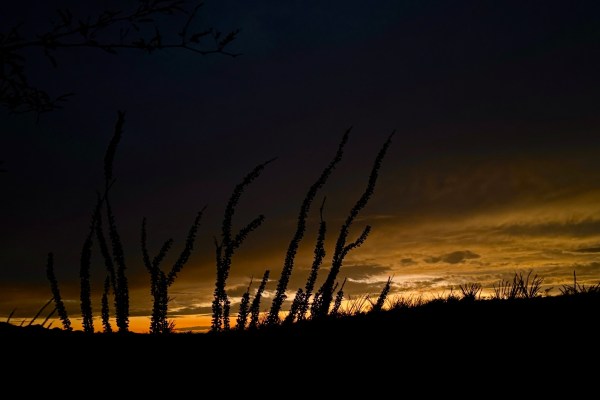
For our final night in the area, Steve took us to a low desert spot in Pima Co. west of Pantano Townsite on E Marsh Station Rd to try our hand at blacklighting. Our expectations were tempered by the rainy conditions and resulting cooler temperatures experienced earlier in the day, but we all decided it was worth a try and went for it. Unfortunately, the only good lighting came from the setting sun as it illuminated low-hanging clouds behind ocotillo silhouettes!
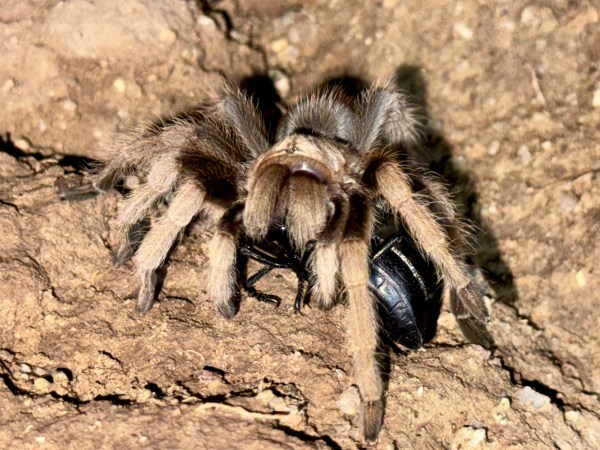
I tried to salvage the night by beating Neltuma glandulosa. Beating at night can be quite fruitful, as beetles that normally zip off the sheet as soon as they land during the day will remain in thanatotic torpor at night. This time, it yielded only one Chrysobothris octocola, one clerid, a couple of fulgoroid planthoppers, and a large chalcidid wasp. More interesting was the large female Aphonopelma chalcodes (Arizona blonde tarantula—family Theraphosidae) that I found outside its burrow feeding on a large darkling beetle…
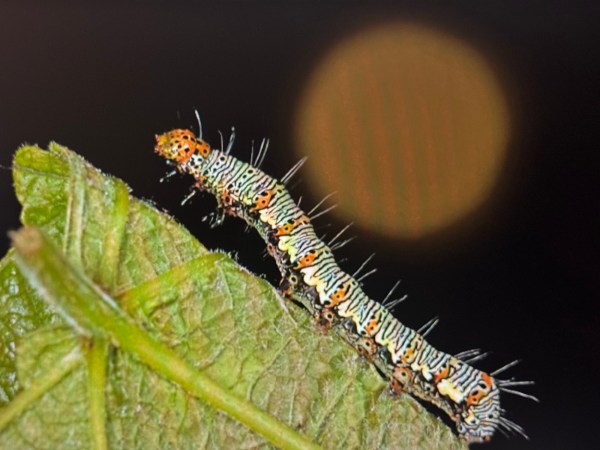
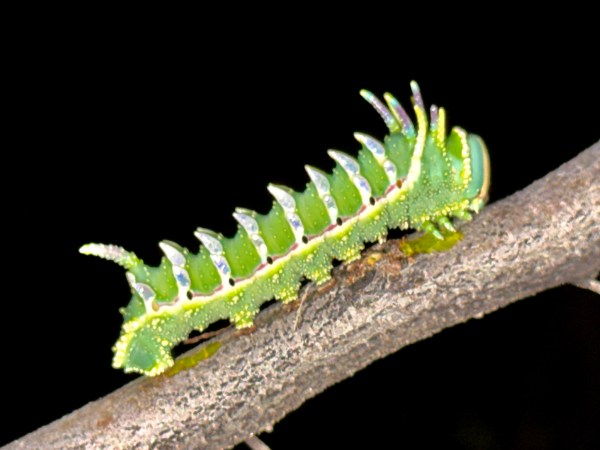
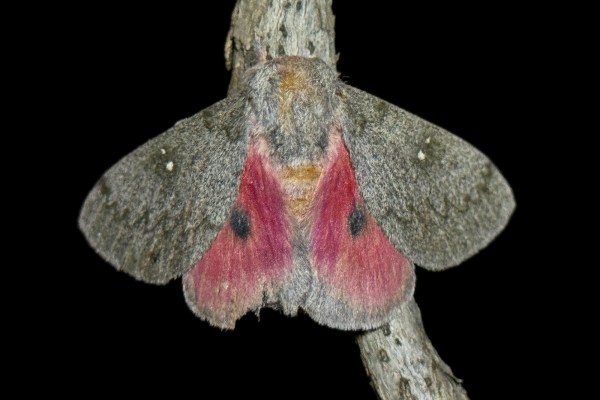
…and the striking caterpillar of Syssphinx hubbardi (Hubbard’s silk moth—family Saturniidae) that I found on the branch of Vachellia constricta.
Day 11—Sep 1st
For our last full day in Arizona, we traveled to Nogales for two primary targets—The aforementioned Muscidora tumacacorii which has been reliably collected in the Atascosa/Pajarito Mountains just west of Nogales, and Megasoma punctulatum (Arizona elephant beetle—family Scarabaeidae), which is known from several areas just north and east of Nogales. Even though I had just collected two specimens of the former below Kitt Peak Observatory, I still wanted a better series. Moreover, while scarab beetles are not my normal interest, a chance to collect a species as handsomely large as M. punctulatum is hard to pass up. Steve and Norm have a M. tumacacorii “honey spot” in the riparian oak woodland near Peña Blanca Spring, and Norm graciously volunteered to show it to us.

I have looked for M. tumacacorii previously in that same area, but (as we would see later in the day) the beetles can be extremely localized, and being close isn’t always good enough. As we walked through the riparian oak woodland to approach the spot, I collected Euphoria verticalis (family Scarabaeidae) in flight, Acmaeodera solitaria on flowers of Ipomoaea hederacea, (ivy-leaved morning glory) and Pseudognaphalium leucocephalum (white rabbit-tobacco), and Acmaeodera parkeri on flowers of Evolvulus arizonicus (Arizona blue-eyes).
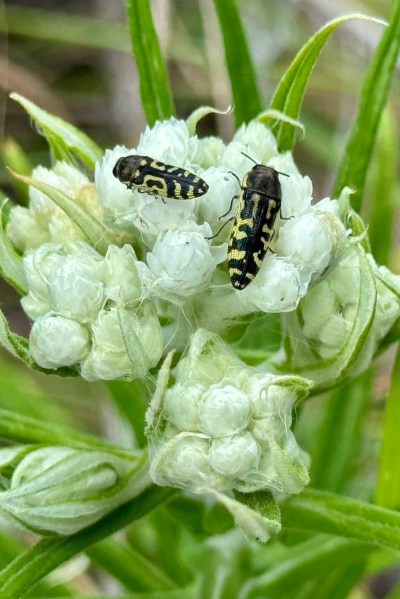
After reaching the “honey spot,” we began checking the host plant (Guardiola platyphyllum), and it wasn’t long before Norm saw a male M. tumacacorii in flight near one of the plants. It didn’t take long before I found a couple more individuals, these on flowers of Mimosa dysocarpa and Ipomoaea hederacea. However, I hit the “honey spot within the honey spot” when I encountered numerous individuals on the stems and flowers in a patch of Pseudognaphalium canescens (Wright’s cudweed). More A. solitaria were found on these plants as well, and both M. tumacacorii and A. solitaria were found nearby on the flowers of Desmodium batocaulon (San Pedro ticktrefoil). My vials full, I collected a few more A. parkeri that I found on flowers of I. hederacea, then went back to the parking lot to bid Norm adieu and thank him for all the help he and Steve had given us and for so graciously hosting us during the past several days. Jason and I then went to nearby White Rock Campground to lunch and await the arrival of Paul Kaufman, who was driving down from the Phoenix area to meet up with us.
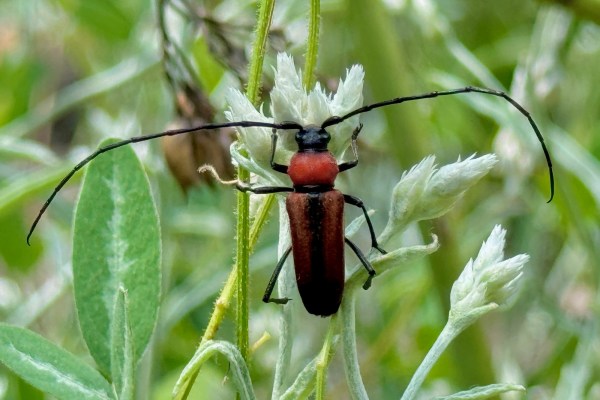
Paul arrived shortly enough, and we went back to the “honey spot” so that Paul could have a chance to collect M. tumacacorii himself for the first time. On the way, we passed several large clumps of Baccharis sarothroides (desert broom). As I approached the plants, I mentioned to Paul and Jason the importance of checking these any plants encountered, as it is possible to find Tragidion (family Cerambycidae) on their stems. They each gave the plants nearest them a cursory glance, but I carefully circled around the plants behind them and—sure enough—found a Tragidion sp. adult that they had missed! Lesson learned. At the money spot, both of them collected a satisfactory series of M. tumacacorii, while I focused on finding individuals that were in good position for field photographs. The photo below is about as good as I could have hoped for.
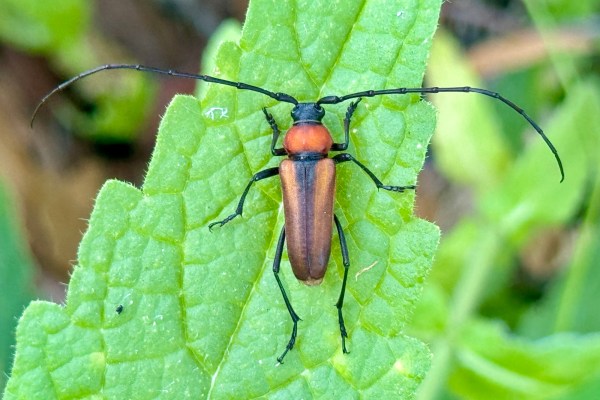
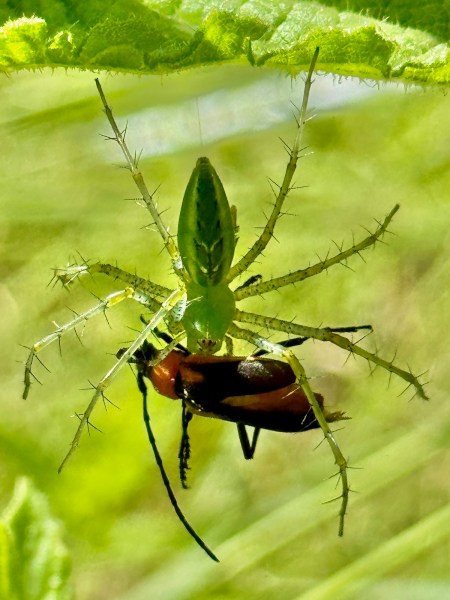
An unexpected photographic opportunity arose when I found a green lynx spider (Peucetia viridans—family Oxyopidae) feeding an an adult M. tumacacorii that it had captured—perhaps the first natural enemy association ever reported for the species.
A few other insects were collected: a large oestrid fly that landed on my hand, and a couple specimens of a Chrysobothris sp. (that I take to possibly be C. wintu) on the standing dead trunk of a wind-thrown Quercus emoryi (Emory oak).
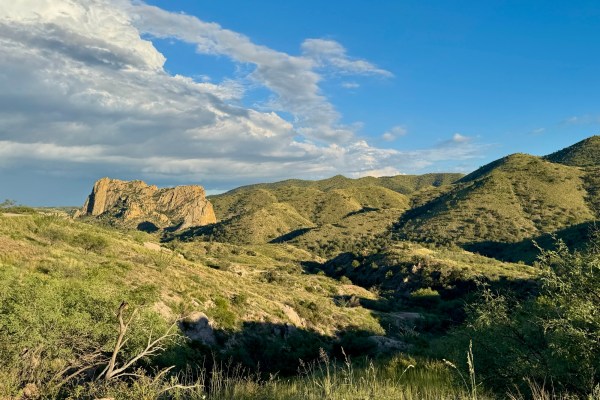
After collecting our fill of M. tumacacorii, we debated where to go next. The type locality of Acmaeodera chuckbellamyi—still known only from the unique holotype collected by my good friend Mike Arduser more than 20 years ago—was just a bit further down the road, but numerous people (Paul and me included) have repeatedly searched for it there without success (the type locality suffered a severe burn shortly after the holotype was collected). More promising to us seemed to be an even closer spot along Ruby Road where Hippomelas parkeri has been collected. The recent success that a Jason and I had with this species notwithstanding, we nevertheless welcomed the opportunity to add specimens from a different locality to our series, and Paul hadn’t yet collected the species at all. We arrived at the spot shortly, and it wasn’t long before each of us began encountering the adults, again all on Calliandra eriophylla—its only known host. Apparently proper timing, knowledge of its habits, and familiarity with the host plant are the keys to success in finding this species, since it doesn’t seem to be encountered much during more general collecting. We all collected a series of specimens to our liking, and I also took advantage of the opportunity to add a couple of specimens of H. planicauda collected on Mimosa dysocarpa.
My other main target for the area (Megasoma punctulatum) has been collected in mesquite savanna along nearby Duquesne Rd, so as evening approached we grabbed a quick dinner in town and set up our lights at the nearest of several spots along the road where the species has been collected. We got the lights set up just as dusk was settling, and we waited in hopes of seeing the first Megasoma.
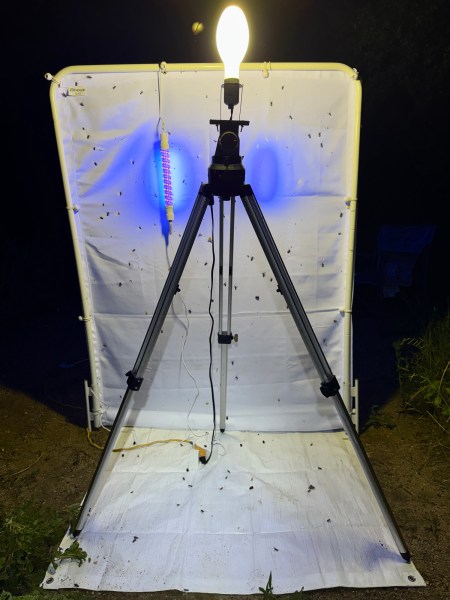
Instead of Megasoma, however, hundreds (if not thousands) of Oncideres rhodosticta (mesquite girdler) immediately started coming to the lights. The beetles were so numerous that they not only swarmed the light sheets but also the trees around the lights, the truck, and ourselves! In fact, it was nearly impossible to check the sheets for other insects without twig girdlers flying in your face and landing all over you, although Paul did give me a Cotalpa consobrina (gold bug—family Scarabaeidae) that came to his ultraviolet/mercury vapor lights setup (thanks!).
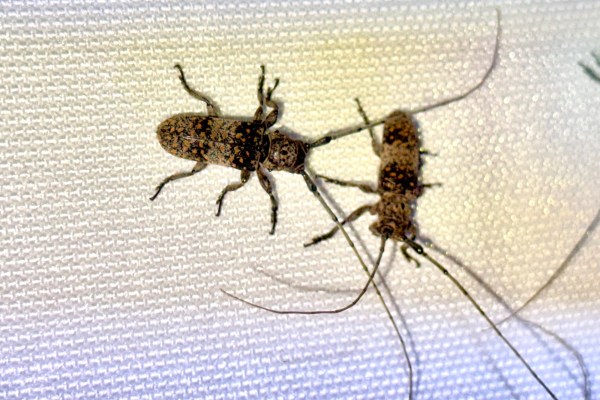
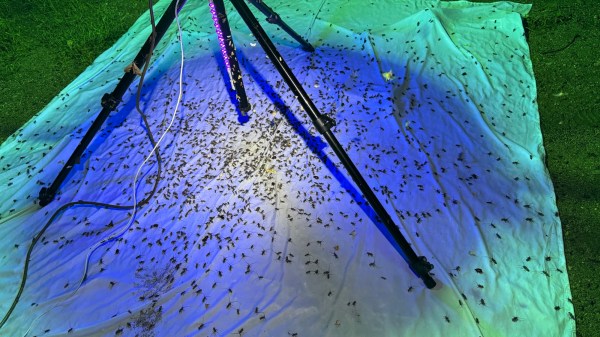
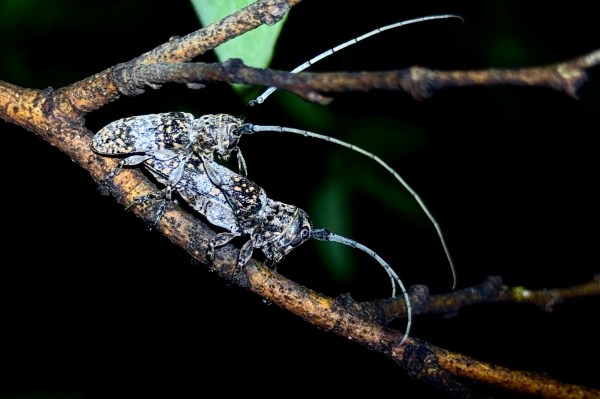
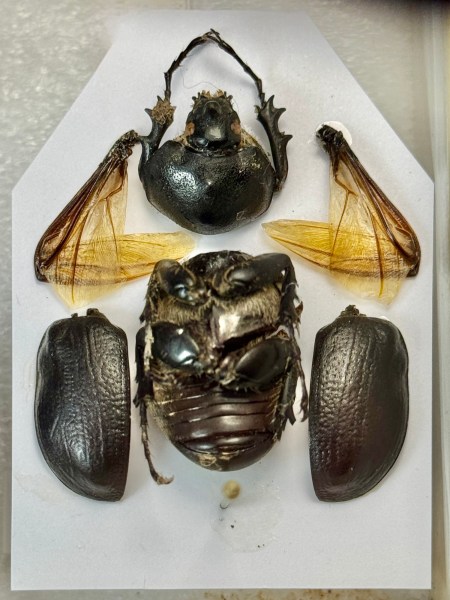
We wondered if rain earlier in the day at this spot had triggered a mass emergence and if moving to another spot where there were more big mesquite trees that we could check might give us a better chance at success, so pulled the lights and moved to further down Duquesne Rd to a spot where Jason had previously seen the beetle. We searched mesquite trunks in the area thoroughly (getting our boots soaking wet in the process because of the day’s earlier rain) but found no live beetles. Paul did find an intact female carcass on the ground, and I found a mostly intact male carcass in a black widow web on the trunk of a tree (relaxed, cleaned, and assembled on a card as my, for now, only specimen of this species). Records of this species on iNat extend from late July to late August, so we concluded that likely their season was over.
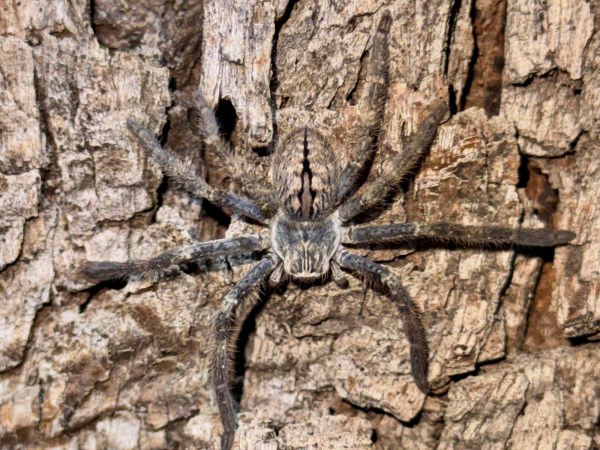
In a final effort, we decided to try just one more spot a little further down the road where several recent observations had been posted on iNat. Again, nothing was found on the trunks other than the occasional Olios giganteus (giant crab spider—family Sparassidae). Megasoma season was over, and we had to accept it.
Day 12—Sep 2nd
For our last day in the field, our plan was to return to the Peloncillo Mountains to retrieve the traps I had set, and the fact that they had gotten rain over the past week after we set them also gave us optimism that not only had they captured some good species (like A. discalis!), but that we would encounter better insect activity than we did back on Day 5. It would be a 5-hour drive—more than an hour longer than normal due to a washed out bridge on the Arizona side of Geronimo Trail, and the closer we got the more concerned we became by the persistence of the rain showers that were moving through the area—especially as we traversed the muddy/rocky roads in the final stretch. When we arrived at the trap site, rain was still falling—lightly but persistently, and I wasn’t anxious to hike the slippery rocky terrain in the rain, so we decided to continue on to the Arizona side to see if we could get into drier conditions. Remarkably, as soon as we crossed the pass just shy of the AZ/NM state line the rain stopped, and we headed a short distance further down to a spot where Norm told us he had collected some good species. The area certainly looked better than it did back on Day 5, but I didn’t encounter much of interest until I went a bit further up the hillside and encountered flowers of Heliomeris longifolia (longleaf false goldeneye) dotting the slopes. Three species of Acmaeodera (A. amplicollis, A. gibbula, and A. rubronotata) were encountered on the flowers—nothing unusual, but it was nice to see activity in an area where one week ago there was none.
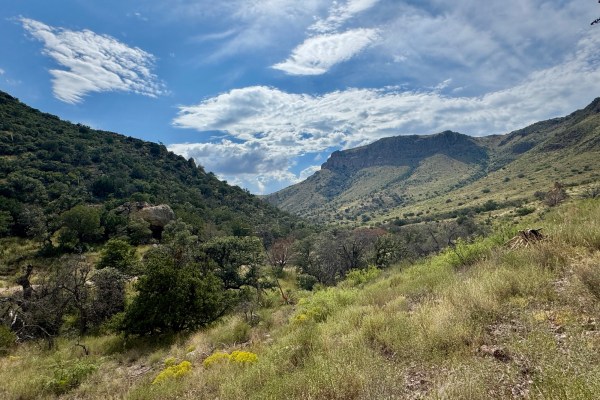
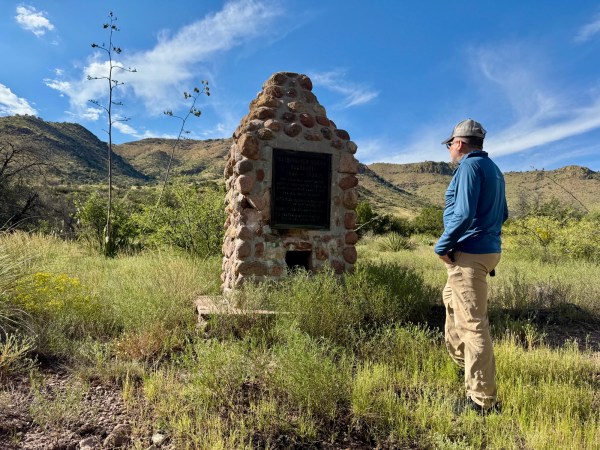
While we were there, the skies sunned up, and we decided to go back to the trap site to check the traps and see what else we might find. On the way, we took a few minutes to stop at the AZ/NM state line marker commemorating construction of Geronimo Trail nearly 100 years ago (1932–1933) under a cooperative agreement between Cochise Co. and the U.S. Forest Service.
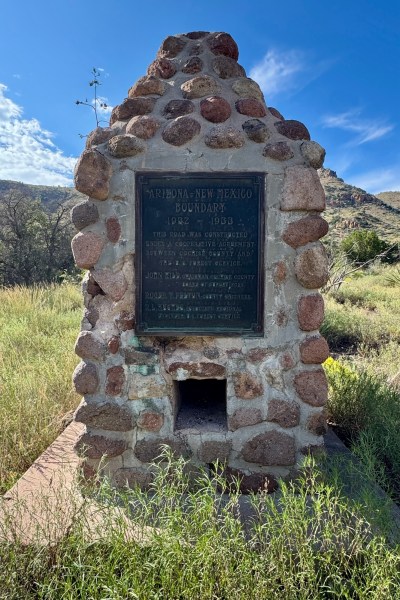
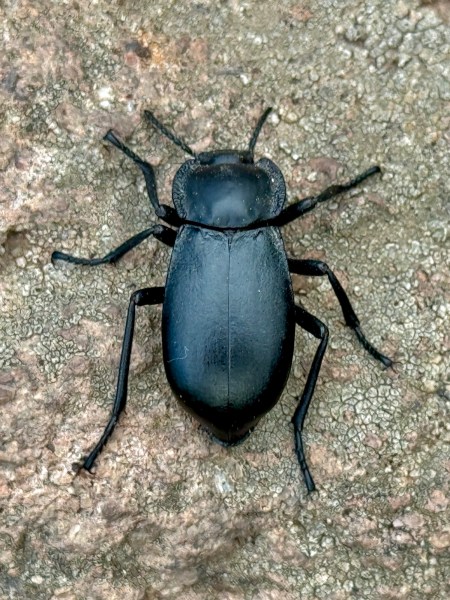
Back on the New Mexico side at the trap site, I was super anxious to see the catch but disappointed to see only a single buprestid (A. rubronotata) in the first bottle trap and a single cerambycid (Enaphalodes hispicornis) in the corresponding jug trap. Fortunately, there was much more to be excited about in the bottle trap that I’d placed further up the hillside—in fact, it is arguably the catch of the trip: two specimens of Acmaeodera reflexa! This super rare species has before now been reported only from the Animas Mountains just to the north (from where it was described), and more recently (in 2015) from the Chiricahua Mountains (see Day 6)—now it is also known from the Peloncillo Mountains. There were also a few A. amplicollis and A. rubronotata in the trap, and its corresponding jug trap contained both E. hispicornis and E. niveitectus along with a few other miscellaneous beetles. I couldn’t have been more pleased as I slowly made my way back down the mountainside, stopping only to pick up a darkling beetle (family Tenebrionidae) in the Stenomorpha marginata species complex.
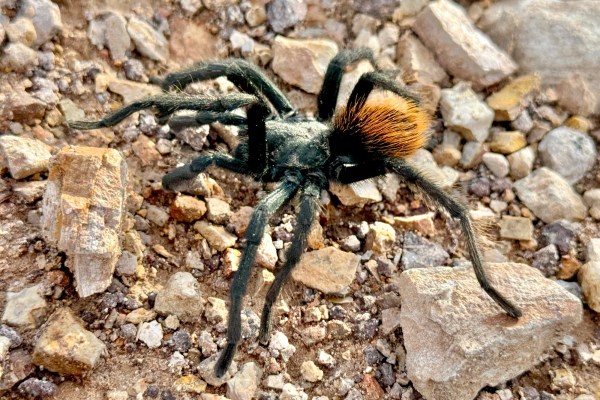
As a bonus, we saw a male Aphonopelma peloncillo (Peloncillo Mountains tarantula—family Aphonopelmidae) crossing the road as we were finishing up. This recently described species is restricted to the middle and lower elevations in and around this mountain range, but within the area it is reported to be fairly common. This makes the fifth North American tarantula species that I’ve seen in the wild (A. armada, A. chalcodes, A. gabeli, A. hentzi, and A. peloncillo). For more information on this species and a revision of North American tarantulas in the genus Aphonopelma, see Hamilton et al. (2016).
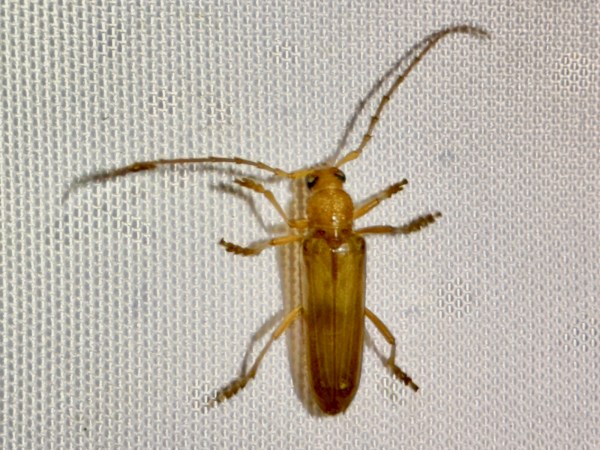
For our final stop, we went back over the AZ/NM state line and a bit further past our previous stop to another spot where Norm had collected Acmaeodera discalis on “white flowers.” Norm and Steve also told us it would be a good place to camp and run our lights, and, in fact, it was a perfect spot for this with nice, large Arizona white oaks nestled against a riparian woodland. We searched for white flowers in the area Norm had pointed to and found a patch of Eriogonum abertianum (Abert’s buckwheat) that must have been what he’d collected. I swept the plants thoroughly and collected several Acmaeodera, but they all proved to be A. decipiens—officially putting an end to our quest for A. discalis, at least on the present trip.
The insect collecting, however, was not yet over, as we had one last opportunity to run lights. In this regard, we were richly rewarded with by far the best night of lighting that we had on the entire trip. Several species of longhorned beetles were taken (Aneflus sp., Atylostagma politum, Enaphalodes niveitectus, Oncideres rhodosticta, and Orwellion gibbulum arizonense), as were several Strategus sp., some smaller scarabs, and species of Leptoglossus, Curculio, Fulgoroidea, and Oestridae.
Also showing up, but not collected, was the adult of Syssphinx hubbardi (recall we saw the striking caterpillar of this species two nights ago).
The collecting also wasn’t restricted to the lights. I routinely check tree trunks at night, especially those close to the lights, and for doing so this time my reward was yet another Lampetis webbii (making four for the trip—Jason got one also) and two cerambycids (A. politum and O. gibbulum arizonense), which were found on trunk of the largest Arizona white oak closest to the lights.
Day 13—Sep 3rd
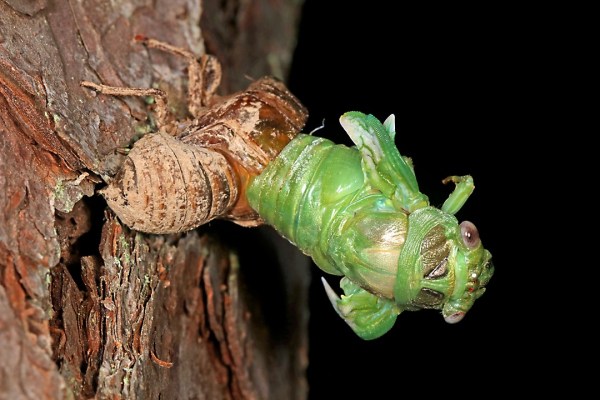
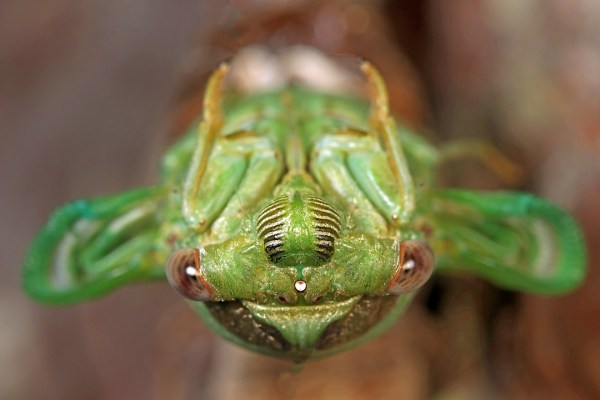
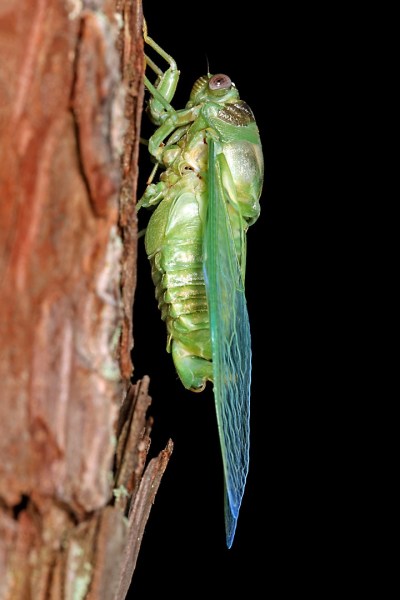
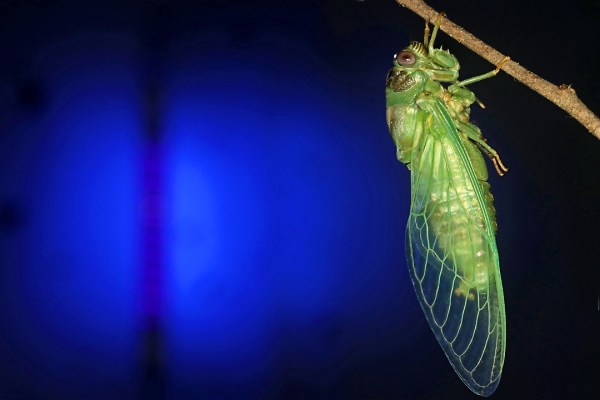
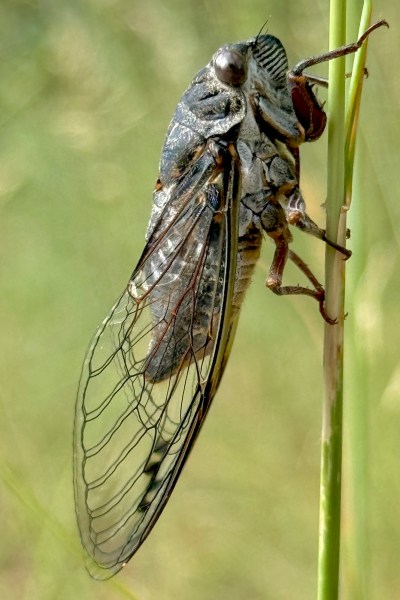
Our plan was to make it to Amarillo, Texas, which was a little over half the distance to St. Louis, so we broke camp without too much dilly dalying. I did take a moment to photograph (and catch) a Hadoa parallela (corrupted sun-singer—family Cicadidae) that had eluded me at the lights the night before.
Jason also had an ask—that we stop at the trap site where we’d gotten Acmaeodera reflexa in the bottle traps. We’d seen flowers in bloom when we were here yesterday, and he wanted to give one more shot at finding the adults by sweeping and checking flowers. I was fine with this but elected not to climb the mountain again and instead checked flowers along the roadside. This resulted in a small series of Acmaeodera amplicollis on the flowers of Heliomeris longifolia. I heard Jason let out a yell at one point as he was climbing the slopes and figured he must have found one, but I later learned that he’d had a close encounter with a rattlesnake—I was hoping it might have been the rare New Mexico ridge-nosed rattlesnake, which is restricted to the Peloncillo Mountains, but it seems to have been the more common and widespread blacktailed rattlesnake based on the pattern that can be made out in the quick photos he snapped.
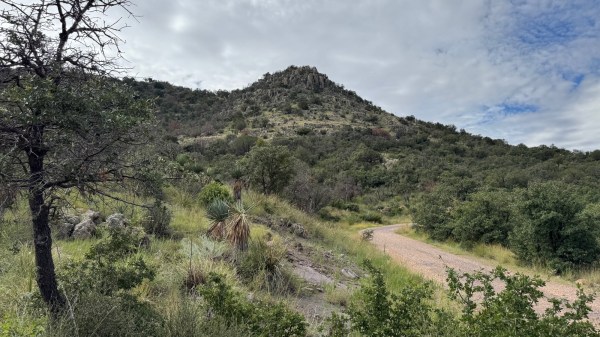
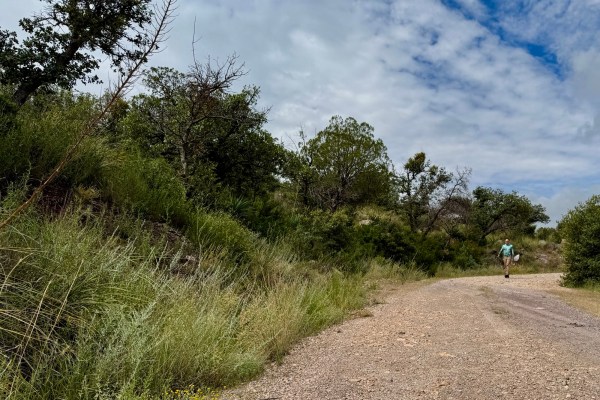
On our way out of Peloncillo Mountains, we encountered a young woman a few miles north of Geronimo Trail whose truck (w/ U.S. government plates) was sitting axle-deep in mud on the side of the road next to a large puddle. She exuded desperation as she described how she’d gotten stuck and asked if we had any advice, so we got out to assess the situation and see what we might be able to do. We had no cell service either and were surrounded by grassland with no rocks or sticks that we could put under the wheels, but we had seen a large truck sitting off the side of the road a few miles back and Jason suggested going back to ask them if they could help. As Jason was about to leave, that very truck appeared coming up the road, stopped and talked to Jason for a minute, and then drove toward us. Astonishingly, it continued driving through the puddle right past the woman and me—our mouths agape and nearly splashing us as it went by—before stopping a short way up in the middle of the road. When the man got out and started approaching us we could see he was Border Patrol agent, and he seemed suspicious as the woman explained her predicament. He looked at me, and I said I was just a passerby who stopped the help. He didn’t really respond to the woman’s request for help but got in his phone as he walked back toward his truck, leaving the woman and I to only look at each other and wonder what in the heck was going on. Shortly afterward another BP agent—this time in a clearly marked BP vehicle—pulled up. He was much friendlier and asked the woman if she had any chains. She did not, but she did have straps—which he attached to his and her vehicles… and promptly snapped as he began pulling!
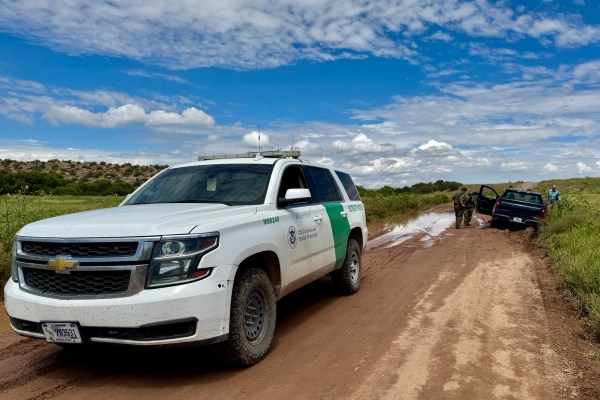
As the friendlier agent contacted other agents to see if any had proper chains, a third BP vehicle pulled up, this one driven by a very young but very formal “Yes, sir” and “No, ma’am!” type of agent who seemed to assume only an observatory role in the happenings. Eventually the friendlier agent said he’d been able to contact a “horse unit” who had chains and that they would be there shortly (the number of BP agents who were able to converge upon the scene in relatively short time was astounding, given the extreme remoteness of the spot—nearly an hour south of the barely visible town of Animas!). As the woman and I chit-chatted, I learned that she worked for the USDA and was in the area to survey grasshoppers. Of course, I found this very interesting and told her I was an entomologist as well, all of which resulted in an unexpectedly fascinating conversation.
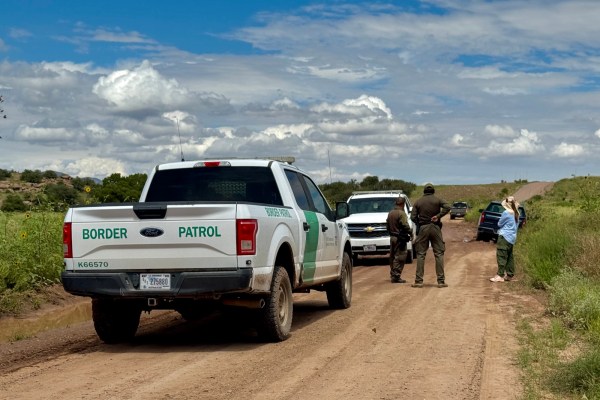
Shortly before the horse unit arrived, I noticed tiger beetles (Cicindelidia sp.) running along the wet margin of the roadside puddle. Despite the puzzled looks I was sure it would draw, I quickly pulled out my long-handled net and managed to catch a couple by the time the horse unit pulled up.
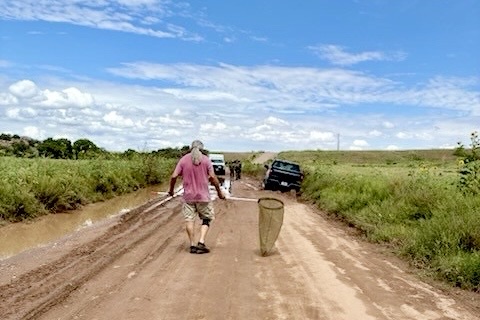
The large white pickup truck pulling a horse trailer passed us, turned around up the road, and pulled up to the stuck truck. Two badass cowboy types got out, and without saying a word got to work, hooked up the chains, and with the horse trailer still attached back up and pulled the truck free. The look of relief on the woman’s face was palpable as she realized show was no longer stranded in the middle of nowhere, and I’m sure she breathed a sigh of relief when she finally reached pavement—the trailing caravan of BP vehicles blasting past her at that point. We stayed behind her, and when she pulled over in Animas we pulled up beside her to make sure she was okay before resuming our journey back toward home.
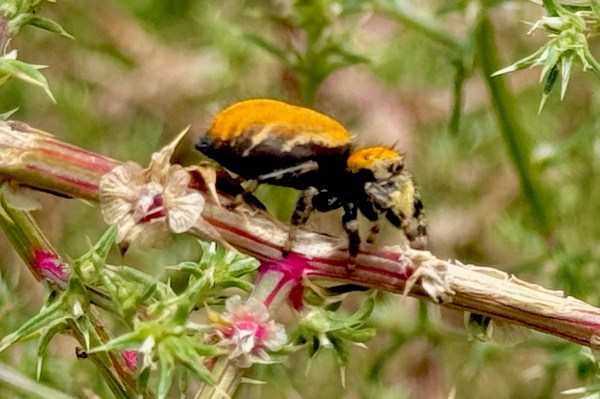
Day 14—Sep 4th

Literature Cited
Hamilton, C. A., B. E. Hendrixson & J. E. Bond. 2016. Taxonomic revision of the tarantula genus Aphonopelma Pocock, 1901 (Araneae, Mygalomorphae, Theraphosidae) within the United States. ZooKeys 560: 1–340. https://doi.org/10.3897/zookeys.560.6264
Westcott, R. L. & D. A. La Rue. 2017. New anthophilous host associations for adult Acmaeodera Eschscholtz, 1829 (Coleoptera: Buprestidae) species from the western United States and Texas. Insecta Mundi 0564: 1–8. https://journals.flvc.org/mundi/article/view/0564
©️ Ted C. MacRae 2026