After missing the last three weeks, I was happy to rejoin the WGNSS botanists on their regular weekly outing this past Monday. This week’s destination—Salt Lick Point Land & Water Reserve in western Monroe Co., Illinois—features a mosaic of loess hill prairie and limestone glades amidst dry to dry-mesic upland forest atop limestone bluffs towering up to 400 feet above the Mississippi River valley below.
View from the Newman Trail at Salt Lick Point.
It has been an exceptionally dry August and September, so much that fall blooming plants are noticeably delayed and sparse in their blooms. Nevertheless, welcome rains just in the past few days have breathed some “fall life” into the woods and brought with them the pungent, earthy aromas that one expects to accompany a landscaping morphing from the dull greens of summer to the vibrant ambers, tawnies, and golds of fall.
View from the Salt Lick Trail at Salt Lick Point.
The group first explored the upland and blufftop habitats along the challenging terrain of the Salt Lick and Newman Trails, then returned through flat lowlands along the bluff bottoms via the Johnson Trail. Although still just beginning to bloom, a diverse palette of “fall asters” gave us an opportunity to reacquaint ourselves with the characters that distinguish these often “easy-to-identify-to-genus but difficult-to-identify-to-species” plants. The bulk of these fell into one of two groups—the true asters (genus Symphyotrichum) and the goldenrods (genus Solidago).
Salt Lick Trail at Salt Lick Point.
Symphyotrichum patens (late purple aster) was the first true aster that we noticed, a rather common species distinguished by its purple (of course) flowers with loose but not recurved phyllaries and leaves broadly clasping the stem. It wasn’t long before we had a chance to test our knowledge when we encountered the similar appearing Symphyotrichum anomalum (manyray aster), also with purple flowers but distinguished from S. patens by its distinctly recurved phyllaries and petiolate rather than clasping leaves. Eventually, we would encounter a third species of the genus—Symphyotrichum lateriflorum (calico aster), distinguished by its numerous small white flowers at the tips of numerous lateral branches rather than the terminus of the stem.
View from the Newman Trail at Salt Lick Point.
Goldenrods, on the other hand, were not only more diverse but also comprised some quite conservative species. The first of these was Solidago drummondii (Drummond’s goldenrod). This near-endemic species is restricted to eastern Missouri and adjacent parts of Illinois and Arkansas and grows almost exclusively on limestone or dolomite bluffs. However, we found it growing on limestone boulders placed at the trailhead next to the parking lot. Its wide, toothed leaves on short petioles (along with habitat) make this species easy to identify. Another quite conservative goldenrod was found as we entered the dry to dry-mesic forest further up the trail—Solidago buckleyi (Buckley’s goldenrod). Restricted to the Ozarks and adjacent areas, it is a showy species with relatively large flowers and spready phyllaries. In this and other respects, it greatly resembles the much more common Soldago petiolaris (downy goldenrod); however, it differs from that species by its narrower leaves that lack distinct teeth. A third species was seen as we approached one of the larger loess hilltop prairie remnants—Solidago altissima (tall goldenrod). Unlike the previous two species, this is one of the commonest and weediest species of goldenrod in the region. Relatively tall and with pyramidal inflorescences, this species often aggressively monopolizes roadsides and fallow fields. It greatly resembles another fairly common species—Solidago gigantea (late goldenrod), which we would later see during the return hike along the edge of the river valley. Leaf texture, however, differs between these two species—S. altissima has leaves with rough surfaces (caused by stiff, unidirectionally recurved hairs that cause the leaf to move only one direction when rubbed between the thumb and forefinger), while S. gigantea has smooth leaves (that move in any direction when rubbed).
The group not only spent its time with its eyes down, but also out—across the vast Mississippi River valley spread out below the several lookout points dotting the trails. Tawny fields of near-ready-to-harvest corn provided a beautiful backdrop against the resplendent red sumacs and brilliant orange maples lining the blufftops.
Members of the WGNSS Botany Group admire the view from the Newman Trail at Salt Lick Point.
View from the Newman Trail at Salt Lick Point.
As the group’s lone entomologist/botanist (“entomotanist”?), I also kept an eye out for insects and was richly rewarded. A tiny “thorn” on the stem of S. buckleyi proved to be Enchenopa latipes (wide-footed treehopper), and unfolding the “folded” leaves of Cercis canadensis (eastern redbud) revealed the culprits—zebra-striped caterpillars of Fascista cercerisella (redbud leaffolder moth).
Enchenopa latipes (wide-footed treehopper—family Membracidae) on stem of Solidago buckleyi (Buckley’s goldenrod).
Fascista cercerisella (redbud leaffolder—family Gelechiidae) on Cercis canadensis (eastern redbud).
A spectacular earth boring beetle, Geotrupes splendidus, was seen lumbering clumsily along the trail in its endless quest for mammal dung to bury and lay an egg upon, while Bombus impatiens (common eastern bumble bee) worked the flowers of Eupatorium altissimum (tall boneset) and Eupatorium serotinum (late boneset).
Geotrupes splendidus (splendid earth-boring beetle—family Geotrupidae) on trail through dry-mesic loess woodland.
Bombus impatiens (common eastern bumblebee—family Apidae) on flower of Eupatorium altissimum (tall boneset).
A nearly mature Euchaetes egle (milkweed tussock moth) consumed the dwindling foliage of Cynanchum laeve (climbing milkweed), and Piezogaster calcarator (leaf-footed bugs) congregated on the inflorescences of Verbesina alternifolia (yellow ironweed).
Piezogaster calcarator (leaf-footed bug—family Coreidae) on flower of Verbesina alternifolia (yellow ironweed).
Nowhere, however, was insect activity more abundant than on the goldenrods, particularly the abundant stands of S. altissima in the uplands and S. gigantea below. Overwhelming numbers of Chauliognathus pennsylvanicus (goldenrod soldier beetles) and Lycomorpha pholus (black and yellow lichen moths) were accompanied by a cacophony of bees, wasps, and flies—a situation tailor made for Phymata sp. (jagged ambush bugs) to lay in wait while Epargyreus clarus (silver-spotted skipper) flew erratically overhead.
Phymata sp. (jagged ambush bug—family Reduviidae) mating pair on flower of Solidago altissima (tall goldenrod).
Epargyreus clarus (silver-spotted skipper—family Hesperiidae) perched on Solidago altissima (tall goldenrod).
Even in the deeply shaded mesic forest, Cyllopsis gemma (eastern gemmed satyrs) flitted deftly through the undergrowth.
Cyllopsis gemma (eastern gemmed satyr—family Nymphalidae) in mesic riparian forest.
The most unusual find, however, was a bizarre, green, jewel of a caterpillar found crawling on the forest floor—Isa textula (crowned slug moth or skiff moth), fringed with lacy projections that make it look more like a sea slug than an insect!
Isa textula (crowned slug moth, skiff moth—family Limacodidae) in leaf litter of mesic riparian forest.
Of course, a Monday WGNSS Botany Group outing isn’t truly consummated until it has enjoyed lunch at a local establishment—the choice this time being Tequila Mexican Restaurant in nearby Waterloo (best fish tacos I’ve ever had!).
Welcome to the 16th “Collecting Trip iReport” covering this season’s third—and final—insect collecting trip to eastern and southern New Mexico. This trip occurred during September 9–18, following “Act 2” on June 17–28 and “Act 1” on May 14–25, and had the objective of retrieving 18 “jug traps” and six “bottle” traps placed on the first trip. Unlike the previous two trips, I traveled solo this time, but I still managed to visit 16 different localities—14 in New Mexico, one in Oklahoma, and one in Kansas.
3.2 mi SSW of Piqua Woodson County,Kansas On my way to Black Mesa State Park (in the northwestern corner of Oklahoma) where I will be spending the night, I stopped at this abandoned quarry at the suggestion of Dan Heffern, who grew up in the area and collected his first Megacyllene decora (amorpha borer) here as a teenager on the Amorpha fruticosa that grows commonly on the steep banks surrounding the now water-filled reservoir.
Abandoned quarry lined with Amorpha fruticosa.
The timing seemed right, as patches of goldenrod (Solidago sp.) surrounding the reservoir were also just coming into bloom, but no adults were seen on either the stems of amorpha or the flowers of goldenrod. I did get to see a garter snake try (and fail) to catch a leopard frog. The snake had hold of the frog by one of its hind legs, but the frog used its other hind leg to eventually free himself while peeping desperately. I was kind of rooting for the frog, even though it would have been interesting to watch the snake as it ingested its prey.
A common garter snake (Thamnophis sirtalis) captures—momentarily—a leopard frog (Lithobates sp.).
I was hoping to make it to Black Mesa State Park (at the far western end of the Oklahoma panhandle) before dark, but the sun setting on a lonely stretch of highway well beforehand told me that wouldn’t be possible.
The sun sets in a lonely stretch of highway in far southwestern Kansas.
Black Mesa State Park West Canyon Campground Cimarron County, Oklahoma I arrived at the park well after sunset, but the tent went up quickly and I found a Cicindelidia punctulata (punctured tiger beetle) on the exposed clay after I finished.
Cicindelidia punctulata (punctured tiger beetle—family Cicindelidae) on clay exposure in juniper chaparral. The greenish cast suggests the population in this area represents an integrade between the nominotypical eastern subspecies and the western C. p. chihuahuae.
This prompted me to put the headlamp on and walk the roads to look for beetles. Amblycheila cylindriformis (Great Plains giant tiger beetle) has been taken in the park, though in July (September is likely a bit too late). Nevertheless, I walked to the spot where it had been found about a mile up the road, scanning the road with my headlamp as I walked.
Phoetaliotes nebrascensis (large-headed grasshopper—family Acrididae) in juniper chaparral at night.
A few big black Eleodes darkling beetles gave me the occasional false start, but in the end I did not find the tiger beetle. I did, however, get to see a beautiful 1st-quarter moonset amidst light high clouds and a starry starry night.
A waxing crescent moon glows feebly in the western sky.
Day 2
0.1 mi S Hwy 325 on D0035 Rd Cimarron County, Oklahoma There is an iNat record of an Amblycheila cylindriformis (Great Plains giant tiger beetle) larval burrow at this spot. Even though the record is a couple of years old, I thought I’d stop by and see if I could find one for myself. I did, fairly quickly I might add, right along the top edge of the steeply-sloped clay embankment alongside the road.
Amblycheila cylindriformis (Great Plains giant tiger beetle—family Cicindelidae) larval burrow at top edge of sloped clay embankment in mesquite chaparral.
A bit more searching nearby revealed the carcass of an adult embedded in the clay slope—I dug it out (in pieces) and saw the abdomen covered with a bit of spider webbing. I’m still not sure how it came to be embedded within the clay with only the head and probotum exposed.
Amblycheila cylindriformis (Great Plains giant tiger beetle—family Cicindelidae) cadaver embedded in sloped clay embankment in mesquite chaparral.
Amblycheila cylindriformis (Great Plains giant tiger beetle—family Cicindelidae) cadaver excavated from sloped clay embankment in mesquite chaparral.
Mills Rim Campground Kiowa National Grassland Harding County, New Mexico It took a couple of hours of driving to get to this, the first of six trap locations I have in New Mexico. I was happy to see all three jug traps still hanging, intact, and full of catch. All three had lots of Euphoria (mostly fulgida) and a fair number of elaterids, but other than a single Tragosoma sp. (I haven’t collected one of these in many years!) in the SRW trap the cerambycids seemed limited to just a few elaphidiines. The bottle trap had lots of bees (for Mike) and Euphoria kerni, but I did see a few Acmaeodera spp. and—remarkably—another Tragosoma sp. (an unusual catch for a bottle trap!).
Rim above Mills Canyon.
While I was checking the traps, I kept an eye out for tiger beetles and flower-visiting longhorns and buprestids. I did see one Acmaeodera rubronotata on flowers of Gutierrezia sarothroides (broom snakeweed), but this was the only one despite looking at many flowers and I chose not to linger.
“San Jon Hill” 9.3 mi S of San Jon Quay County, New Mexico Another two-hour drive brought me to “San Jon Hill”—a sandstone escarpment at the edge of a plateau featuring juniper/oak/pinyon woodland. Again, all three of my jug traps were still hanging and intact, and the SRW and SRW/EtOH traps were full of beetles! The EtOH trap, on the other hand, was bone-dry with far fewer specimens. Like Mills Rim, Euphoria (again, mostly fulgida) were dominant, but I was elated to see multiple Enaphalodeshispicornis (a species I’ve never collected) along with a few E. atomarius in all the traps. The SRW/EtOH and EtOH traps also had several Aethecerinus wilsonii—a great find that I first got near Kenton last year. There was also a Stenaspis solitaria in the EtOH trap along with the expected smattering of elaphidiines and elaterids in all three traps. The bottle trap also was overwhelmed, primarily with bees (for Mike), but I did see a fair number of Acmaeodera spp. (I’m hoping this includes A. robigo, one of which was in this trap last time).
Aethecerinus wilsonii (family Cerambycidae) taken in EtOH-baited “jug” trap in juniper/oak/pinyon woodland on sandstone escarpment.
Stenaspis solitaria (family Cerambycidae) taken in EtOH-baited “jug” trap in juniper/oak/pinyon woodland on sandstone escarpment.
Enaphalodeshispicornis (family Cerambycidae) taken in EtOH-baited “jug” trap in juniper/oak/pinyon woodland on sandstone escarpment.
Otherwise, I saw little insect activity despite the abundance of plants in flower—a Eusattus reticulatus (sand darkling beetle) crawling on the ground being my only other capture.
Eusattus reticulatus (sand darkling beetle—family Tenebrionidae) in juniper/oak/pinyon woodland on sandstone escarpment.
Continuing further south towards Oasis State Park, there is a field of wind turbines that, on my previous passing, provided a picturesque scene. This time again provided such opportunity.
Bovines bunch beneath a wind turbine.
Oasis State Park Roosevelt County, New Mexico The drive from my last stop was supposed to be only 1½ hours, but having to reroute after sitting a while for a motionless train and an unexpected but welcome FaceTime call with my grandson conspired to delay my arrival at the park until well after darkness had settled. No problem—I’ve set up many a tent in the dark, and the burger cooked on the grill afterwards was no less tasty. (I also had sufficient reception to relish watching Kamala Harris clean TFG’s clock, which was followed “Swiftly” by a major endorsement and only served to further buoy my mood.) After the evening’s entertainment, I set out to check a couple of light sources in the park to see if they’d attracted any beetles—a small utility building near the RV campground, and a mercury-vapor streetlight closer to the tent campground. Tenebrionids abounded in number and diversity under both light sources, and I took from each several examples of the weirdly-explanate Embaphion muricatum.
Embaphion muricatum (family Tenebrionidae) under mercury mercury-vapor light in sand dune habitat.
Scarabs were limited mostly to small melolonthine, but I did pick up nice series of at least two species of bolboceratine geotrupids.
Eucanthus sp. (family Geotrupidae) under mercury mercury-vapor light in sand dune habitat.
I had hoped to encounter the sand dune endemic longhorned beetle, Prionus spinipennis (I don’t know if it actually occurs here), but on my last visit in June I encountered its early-season counterpart P. arenarius. None were seen, however, so I am hopeful that I find it further south at Mescalero Sands, where it is known to occur and where I plan to go in the next couple of days.
Day 3
Passing through Portales in the morning, I did a double-take as I passed this “low rider.” I circled around the block so I could get another look, and for the rest of the day I had the eponymous song from Cheech & Chong’s Up In Smoke as a brain-worm.
“All my friends know the low rider (yeah)”
Portales Recreation Complex Roosevelt County, New Mexico My first stop for the day turned out to feature little-disturbed (i.e., ungrazed) dry grassland surrounding the ballfields. There are some iNat records of a couple of fall-occurring longhorned beetles (Megacyllene angulifera, Tragidion coquus) from here, so I thought I’d try my luck as I head south towards Mescalero Sands. The season felt a little early, as even though there were plenty of Helianthus annuus (annual sunflower) in bloom, the Gutierrezia sarothrae (broom snakeweed) was not. Still, I checked the sunflowers but saw only Chauliognathus basalis (Colorado soldier beetles) in abundance. The visit was “not for naught,” however—walking the sandy loam 2-track through the lower west side I encountered three species of tiger beetles: Jundlandia lemniscata rebaptisata (rouged tiger beetle), Cicindelidia punctulata chihuahuae (Chihuahua punctured tiger beetle), and—my favorite—Cicindelidia obsoleta obsoleta (large grassland tiger beetle).
Jundlandia lemniscata rebaptisata (rouged tiger beetle—family Cicindelidae) on sandy-loam 2-track through dry grassland.
Cicindelidia punctulata chihuahuae (Chihuahua tiger beetle—family Cicindelidae) on sandy-loam 2-track through dry grassland.
Cicindelidia obsoleta obsoleta (large grassland tiger beetle—family Cicindelidae) on sandy-loam 2-track through dry grassland.
“Mydas Alley” 6.6–6.9 mi S of Floyd Roosevelt County, New Mexico There are some iNat records of several interesting tiger beetles at this spot—an endless dry grassland with a sandy/red clay 2-track cutting through it. These include Cicindela formosa rutilovirescens (Mescalero Sands tiger beetle)—a main target for the trip, Cicindelidia obsoletaobsoleta (large grassland tiger beetle), and Cicindelidia nigrocoerulea (black sky tiger beetle).
Sandy-loam 2-track at “Mydas Alley.”
I didn’t have much expectation for the latter, since the record is based on a single, dead individual, and I’d just found C. o. obsoleta at the previous site closer to Portales, but I was really hoping to find C. f. rutilovirescens. Almost immediately I caught what I thought could be C. nigrocoerulea on the sandy/red clay 2-track near where I parked; however, it turned out to be the similar Cicindelidia punctulata chihuahuae (Chihuahua punctured tiger beetle), distinguishable by the single seta on the basal antennomere instead of two (an eyeglass on a lanyard around the neck at all times can really come in handy), its subparallel elytra that are slight wider posteriorly rather than subarcuate, and the generally shinier rather than opaque surface of its elytra.
Cicindelidia punctulata chihuahuae (Chihuahua tiger beetle—family Cicindelidae) on sandy-loam 2-track through dry grassland.
I found more C. punctulata further down the 2-track (although they looked more like the nominotypical subspecies due to their dark brown rather than greenish coloration), and I found myself paying attention to almost every C. punctulata that I encountered hoping one might be C. nigrocoerulea. Sadly, none would prove to be the latter (at least based on my examination in the field—subsequent closer examination at home may prove otherwise). I did, however, encounter a single Cicindela scutellaris scutellaris (festive tiger beetle) to add another tiger beetle species to the trip list.
Cicindela scutellaris scutellaris (festive tiger beetle—family Cicindelidae) on sandy-loam 2-track through dry grassland.
At the far end of the 2-track, I noticed something sitting on the stem of Eriogonum annuus (annual buckwheat) and was delighted to see it was Crossideus discoideus—one of the genera of fall-active longhorned beetles that I was hoping to encounter on the trip.
Crossidius discoideus (family Cerambycidae) on stem of Eriogonum annuum (annual buckwheat) in dry grassland.
A bit of careful searching in the immediate vicinity revealed more individuals on the stems and flowers of the plants growing in the area, and on the way back I found another C. discoideus on the spent flower of Heterotheca subaxillaris (camphorweed) near the front part of the 2-track. I had not, however, seen my main objective—C. f. rutilovirescens—and was beginning to resign myself to getting skunked on the species. As I reached the car and turned to go briefly down the 2-track to the east, however, I saw one on the more wide open section of the 2-track, then quickly saw another! Those would be the only two I would see until I turned back and approached the car again, seeing the third and final individual of the stop.
Cicindela formosa rutilovirescens (Mescalero Sands tiger beetle—family Cicindelidae) on sandy-loam 2-track through dry grassland.
I was hoping to get field photos with the “big” camera, but their scarcity made me decide to wait for my next chance at Mescalero Sands, where I hope to find them as well. The number of tiger beetle species seen on the trip now stands at six (if I include the Amblycheila cylindriformis carcass seen yesterday in the Oklahoma panhandle).
Presler Lake Chaves County, New Mexico Over the past couple of years, I have begun to rely ever more heavily on the natural history platform iNaturalist as a source for finding promising localities for interesting species. The first two localities I visited today were both found prior to my departure on this trip while searching for localities where species of Buprestidae, Cerambycidae, and Cicindelidae have been recorded. This locality was not found before I left, but rather after I left the last spot and saw that several species of beetles, including Eunota togata globicollis (alkali tiger beetle), had been reported from the area around this alkaline lake.
Alkaline flats around Presler Lake.
As I walked toward the lake, I noticed lots of Isocoma pluriflora (southern goldenbush), normally a good host for Crossidius longhorned beetles, that was already past bloom and wondered if any Crossidius would still be found on them. As I reached the lake margin, I saw a Crossidius suturalis male, but it was instead perched on Atriplex canescens (four-winged saltbush). No sooner than after I had photographed the beetle, marked its location, and made an entry in my notes, I noticed another—this one a big female perched on the spent bloom of I. pluriflora.
Crossidius suturalis suturalis (family Cerambycidae) on flowers of Isocoma pluriflora (southern goldenbush) along margin of alkaline lake.
The locality where E. t. globicollis had been recorded was on the far west side of the lake, so I walked the lake margin in that direction while checking the saltbush and goldenbush along the way. It was quite a while before I found another C. suturalis on I. pluriflora, and on another plant very nearby I found a nice little cetoniine scarab: Euphoria pilipennis—a species I’ve never collected before.
Euphoria pilipennis (family Scarabaeidae) on flowers of Isocoma pluriflora (southern goldenbush) along margin of alkaline lake.
The walking and checking was eating up time, however, and I noticed that the sun was beginning to dip rather low in the western sky. I needed to focus on finding E. t. globicollis if I wanted to get back to the car before it got dark (I would still have another hour’s drive to get to my campground near Roswell). I’d walked towards the lake margin earlier, going as far as I could go toward the water before my shoes started sinking into the thick, alkaline-encrusted mud, and didn’t see any tiger beetles, so I was not really expecting to see the species (it had been recorded there during the height of the summer). Remarkably, right as I made my closest approach to the spot, I saw one—E. t. globicollis running on the wet mud near the water’s edge of the alkaline lake.
Eunota togata globicollis (alkali tiger beetle—family Cicindelidae) along wet margin of alkaline lake.
I walked the margin all the way back to where I needed to divert back to the car and saw several more individual, but I was unsuccessful in capturing any beyond the first one!
Bedtime for tiger beetles approaches.
As I neared the car and the sun sank behind the horizon, I assumed the day’s collecting was done. Just then, I noticed a Gyascutus sp. sitting on Atriplex canescens (based on location, I suspect it is G. planicosta obliteratus), and within a few steps from there I saw another C. suturalis on I. pluriflora. This prompted some additional looking in the area around the car, but eventually the light became too dim to allow effective searching. It was an impromptu stop at an unlikely location and ended up being a successful stop for the trip.
Day 4
Palmer Lake Campground Bottomless Lakes State Park Chaves County, New Mexico I arrived at my favorite campsite in this campground well after dark last night, so I was pleased to see the area as green as could ever be imagined when I awoke this morning. Copious blooms of Allionia incarnata (trailing four o’clock) and Kallstroemia parviflora (small-flowered carpetweed) were blanketing the adjacent gypsum/red siltstone slopes.
Allionia incarnata (trailing four o’clock—family Nyctaginaceae) on slope below gypsum/red siltstone escarpment.
Not much of note was seen on the blooms, but I did find the fascinatingly-inflated Cysteodemus wislizeni (black bladder-bodied blister beetle) crawling on the ground amongst them.
A quick walk up into the draw behind the campsite also revealed little besides a variety of darkling beetles (family Tenebrionidae)—some of them monstrously-sized. However, once back at the campsite I found a rather beat up right elytron of what I believe to be Amblycheila picolominii (plateau giant tiger beetle). Since I included A. cylindriformis (Great Plains giant tiger beetle) to my running list of tiger beetle species seen on the trip, I’ll add this one as well as #8.
Amblycheila picolominii (plateau giant tiger beetle—family Cicindelidae) right elytron on slope below gypsum/red siltstone escarpment.
Bitter Lake National Wildlife Refuge Chaves County, New Mexico I found another iNaturalist record of Cicindelidia nigrocoerulea (black sky tiger beetle) at this refuge, which is located just north of Bottomless Lakes. I didn’t find this species at the previous spot where I looked for it (as far as I know), and since the refuge is managed by the U.S. Fish & Wildlife Service, I can only “look but don’t touch” (no collecting permit). Because of this, I decided to make today a “big camera” day instead of an “insect net” day.
Alkaline flats at Bitter Lake National Wildlife Refuge.
Tiger beetles were scarce on the dry alkaline flats where the record was taken (albeit, many years ago and in July) and limited to the über-common Eunota circumpicta johnsonii (Johnson’s tiger beetle) and Eunota togata globicollis (alkali tiger beetle). I’ve photographed both of these species already but attempted a few shots of each anyway to get some practice (photographing tiger beetles is challenging at best, requiring patience, persistence, and a willingness to get down on the ground no matter how dirty you will get). I found it difficult to approach either species (but especially the latter) in what was by then the heat-of-the-day, and the only shots I managed were of two individuals (one of each species)—engaged in shade-seeking behavior. I did find the mostly complete skeleton of what I take to be a common snapping turtle (Chelydra serpentina).
Common snapping turtle (Chelydra serpentina) skull along alkaline lake margin.
The margins of the oxbow lake on the other side of the parking lot were much wetter, and accordingly the tiger beetles were much more abundant there as well. In addition to the aforementioned E. c. johnsonii, which here also was by far the most abundant species, I observed Cicindelidia ocellata ocellata (ocellated tiger beetle)—common throughout the southwest, and Cicindelidia tenuisignata (thin-lined tiger beetle)—much less commonly encountered and a species I’d first seen during my previous trip to Bottomless Lakes in June. I managed to photograph a mating pair of E. c. johnsonii, but try as I might I was unable to photograph C. o. ocellata or C. tenuisignata—a rather deflating failure for someone who prides himself in his tiger beetle photography skills. For now, the iPhone photos that I took last time of individuals of the latter species attracted to ultraviolet light at night will have to do. There was a good amount of Isocoma pluriflora (southern goldenbush) still in good bloom around the parking lot, and I managed to photograph a fine male Crossidius suturalis suturalis on the flowers.
Palmer Lake Campground Bottomless Lakes State Park Chaves County, New Mexico The day’s high heat not only made futile any further attempts to photograph tiger beetles at Bitter Lake, but gave me pause about going out for more collecting as soon as I returned to my campsite—I needed a bit of time to chill. Eventually, however, I worked up the motivation to strap on the pack and grab the net. I had earlier noticed a nice stand of Isocoma pluriflora (southern goldenweed)—a good host for Crossidius longhorned beetles—at the end of the campground road, and that became my first destination. It took a bit of time before I found C. s. suturalis on the flowers, but after working the stand for about an hour I had a nice handful.
Crossidius suturalis suturalis (family Cerambycidae) on flowers of Isocoma pluriflora (southern goldenbush) in saltbush chaparral.
Many other insects were also visiting the flowers, most visibly a large Pepsis tarantula hawk (prob. P. grossa)—which I could not photograph—and numerous colorful blister beetles that I take to be Pyrota concinna—which I did photograph.
Pyrota concinna (a blister beetle—family Meloidae) on flowers of Isocoma pluriflora (southern goldenbush) in saltbush chaparral.
I next visited the small, slightly elevated picnic area next to the campground, where last time I had collected a small series of a nice, large buprestid, Gyascutus planicosta obliteratus, on Atriplex canescens (four-winged saltbush). I saw one yesterday at Presler Lake, and I hoped they might be still hanging around here as well, but no dice. I did, however, notice a small beetle clinging onto the foliage of Neltuma glandulosa (honey mesquite, formerly Prosopis glandulosa), which turned out to be a very late-occurring Acmaeodera mixta. I noticed that the temps were suddenly getting milder, signaling the onset of evening and reminding me to head back to camp since I wanted to drive to Mescalero Sands (about 40 miles away) for some evening/night collecting.
Mescalero Sands Recreation Area Chaves County, New Mexico There are two species of Prionus longhorned beetles endemic to the sand dunes of southeastern New Mexico and western Texas—P. arenarius, which occurs during spring and early summer, and P. spinipennis, which occurs during late summer and fall. I’ve collected the former twice—once several years ago here at this very spot, and again this year at Oasis State Park back in June. I’ve never collected P. spinipennis, however, and figured they should be out by now. I had brought with me a few prionic acid lures, to which the males are attracted (prionic acid is a main component of the pheromones that females of all Prionus species release to call mates), and I also hoped to find and photograph the sand dune subspecies of Cicindela formosa—i.e., C. f. rutilovirescens (which I found yesterday near Portales but did not photograph). Unfortunately, my arrival just 20 minutes before sunset precluded the latter possibility, so instead I hiked into the dunes a short distance to place the pheromone lures and enjoyed a spectacular sunset and moonrise, with the sky morphing from blue to orange before finally turning black.
Mescalero Sands at sunset.
A first-quarter moon rises above a flock of roosting vultures.
The sky morphs from blue to orange.
Sunset impression.
As soon as darkness fell, I began scanning the sand for anything crawling. Darkling beetles (family Tenebrionidae) appeared in numbers and diversity—my favorites, as always, being the weirdly-explanate Embaphion muricatum, which were as common as I’ve ever seen them.
Embaphion muricatum (family Tenebrionidae) in sand dunes at night.
A sand dune endemic Jerusalem cricket, Ammopelmatus mescaleroensis (Mescalero Jerusalem cricket), some of them being quite large, was also quite common.
Ammopelmatus mescaleroensis (Mescalero Jerusalem cricket—family Stenopelmatidae) in sand dune habitat at night.
About an hour after sunset, I finally saw one—a male P. spinipennis walking urgently across the sand in the general direction of the pheromone lure. I was glad my hunch had paid off and waited to see when the next male would arrive.
Prionus spinipennis (family Cerambycidae) attracted to prionic acid lure in sand dune habitat at night.
Sadly, I waited and waited—expectantly walking the dunes in the area around the vicinity of the lure looking for the next one, but it never came. Perhaps I am a bit on the early side of their adult activity period. Nevertheless, one is better than none, and it gives me a reason to look forward to returning to the dunes some other time during the heart of the fall season. After an hour had passed with no other individuals seen, I called it a night and drove back to my camp at Bottomless Lakes, where the pre-dawn sky was a star-studded as I’ve ever seen!
Orion rises in the moonless, early morning sky.
Day 5
7 mi E of Queen, X Bar Rd Eddy County, New Mexico My original plan was to leave today and spend the next two days at Dog Canyon Campground in Guadalupe Mountains National Park just across the Texas state line. That would serve as a base from where I could service the traps that I have on the New Mexico side of the line and also afford me an opportunity to take a day off of collecting and hike the park’s spectacular system of trails. Unfortunately, when I went online a few days earlier to reserve my campsite, I learned that the campground was closed until December due to a water line break! This was a major disruption to my plans, because the only other campgrounds between Bottomless Lakes and Dog Canyon are private KOA-types (ugh!) and the dreadfully ugly Brantley Lake State Park! I decided then to keep my campsite at Bottomless Lakes and just drive to the Guadalupes to service my traps. Afterwards I would drive back and spend an extra night in the far roomier and more beautiful campground at Bottomless Lakes. Again, I was pleased to see the SRW trap hanging and intact, although the reservoir had developed a slow leak and was nearly drained. The catch, however, was still moist, suggesting that the leak had developed only recently and, thus, had no negative impact on data collection. The catch was similar to “San Jon Hill” in that there were numerous Enaphalodes hispicornis and smaller numbers of E. atomarius, Eburiahaldemani, and a variety of smaller elaphidiines. Sadly, the SRW/EtOH trap had self-destructed—the bottom half of the trap was found lying on the ground not far from its still-hanging upper half (w/ bait even in the still-hanging bait bottle). The EtOH trap was also hanging and intact, though the bait bottle was dry (I’m seeing this pattern repeatedly—SRW and SRW/EtOH bait bottles still have some bait after 10 weeks in the field, but EtOH bait bottles are dry); however, there were only a few small elaphidiines representing the cerambycids. The white bottle trap had a decent catch of Acmaeodera spp. and bees (for Mike). However, there wasn’t much else going on insect-wise (the chunky, remarkably rock-like nymph of Leprus sp.—either L. intermedius [Saussure’s bluewinged grasshopper] or L. wheelerii [Wheeler’s bluewinged grasshopper]—notwithstanding).
Leprus sp. (bluewinged grasshopper—family Acrididae) in juniper/oak/pinyon woodland.
The lack of insect activity had me ready to leave as soon as I finished retrieving the traps. However, as I was emptying the last jug trap, I noticed that Dasylirion leiophyllum (smooth sotol) was growing in the area and decided I should check them for Thrincopyge buprestids—colorful species that breed in the newly senesced flowering stalks of the plants. I checked a few without success and suspected it was probably too late in the season to find the adults, then broke an old flowering stalk off of one of the plants and saw the characteristic adult emergence holes of the beetles in the lower part of the stalk. This at least confirmed their presence in the area. Then I saw a plant with a newly senescing flowering stalk. Cutting into the lower portion of the stalk revealed a fresh, frass-packed larval gallery, suggesting larvae are currently working inside the stalk, so I broke the stalk from the plant, carried it back to the car, and cut/bundled it up for transport back home and placement in a rearing box. With luck, the larvae will complete their development to adulthood and emerge next spring.
5.6 mi E of Queen Eddy County, New Mexico On my last visit to the area, I found Cicindelidia laetipennis (polished-winged tiger beetle, formerly C. politula petrophila) just over the Texas state line at high elevations in Guadalupe Mountains National Park. I was hoping to see (and properly photograph) it again this time, but the closure of Dog Canyon Campground nixed those plans. Fortunately, I found an iNat record for the species on the New Mexico side of the line (in fact, less than two miles from my previous trapping spot) and made plans to see if I not only could find it but photograph it with the “big camera.” As it turned out, the habitat was perfect—a wash of exposed limestone on a short 2-track above 5000’ elevation.
Exposed limestone habitat for Cicindelidia laetipennis (polished-winged tiger beetle) in juniper/oak/pinyon woodland.
Portulaca pilosa (shaggy portulaca—family Portulacaceae) in exposed limestone juniper/oak/pinyon woodland.
For the majority of the time I was there, however, I didn’t see any individuals. I did find the occasional Acmaeodera rubronotata on flowers of Eriogonum hieraciifolium (hawkweed buckwheat) and a lumbering Tenebrionidae that I take to be Philolithus aeger crawling on the clay portion of the 2-track.
Eriogonum hieraciifolium (hawkweed buckwheat—family Polygonaceae) in limestone/clay juniper/oak/pinyon woodland.
Philolithus aeger (family Tenebrionidae) on limestone/clay 2-track in juniper/oak/pinyon woodland.
On the way back, however, I saw the first individual, and not too long afterwards I saw the second. These would be the only individuals I would see—not nearly enough to get my camera gear and hike back in an effort to get proper field photos. Once again, my previous iPhone photos will have to do for now.
Back at the car I was about to pack up and move on to my next trap location when I noticed Grindelia nuda (curlycup gumweed) in bloom around the parking area. Since I’d collected a small handful of A. rubronotata on buckwheat flowers, I thought I might check out the gumweed flowers as well. Not only did I find several more individuals of that species, I also found one individual of A. opacula (formerly A. disjuncta).
Acmaeodera rubronotata (family Buprestidae) on flowers of Grindelia nuda (curlytop gumweed) along roadside in limestone/clay juniper/oak/pinyon woodland.
Acmaeodera opacula (family Buprestidae) on flowers of Grindelia nuda (curlytop gumweed) along roadside in limestone/clay juniper/oak/pinyon woodland.
Klondike Gap Rd, Hamm Vista Lincoln National Forest Eddy County, New Mexico As with the season’s previous two visits to this spot, the area looked dry and flowerless. Such conditions rarely warrant making the effort to take a closer look at things, and I wanted to get back to Bottomless Lakes with enough daylight left to search for tiger beetles at an area in the park that I not checked before—Lea Lake Recreation Area. With this in mind, I set about retrieving the traps and was happy to see the SRW trap hanging and intact (this trap was down last time due to rope failure). Also, even after nearly three months, the reservoir was moist and the bait bottle still had bait. There were lots of cerambycids in the catch, including several Enaphalodes hispicornis, E. atomarius, Tragidion coquus, Eburia haldemani, and smaller elaphidiines. The SRW/EtOH trap also, thankfully, was still hanging and in much the same condition as the SRW trap, but I did note far fewer cerambycids. This also seems to be the trend that I have noticed over the last two seasons of comparing these baits (although I must await stats analysis to see how real this is). The EtOH trap was also hanging and intact with plenty of liquid in the reservoir, but the bait bottle was dry (same as other locations), and there were hardly any cerambycids (same as some, but not all, other locations). Sadly, the white bottle trap was completely missing—I even managed to find the exact hole where it was pulled from, but the trap itself was nowhere in sight. This was frustrating, because it was by far the best-performing bottle trap on my last visit. I hate to think that someone deliberately stole it, but the thought is hard to resist—animals (primarily raccoons) often pull traps to eat the catch, but they don’t take the trap with them.
Lea Lake Recreation Area Bottomless Lakes State Park Chaves County, New Mexico I’d been wanting to look for tiger beetles around Lea Lake since I arrived and was planning on today being the day. Unfortunately, the extra time I spent at the previous spots beyond retrieving the traps (i.e., for cutting up the sotol stalk and looking for Cicindelidia laetipennis)—along with an unplanned but needed stop for supplies—resulted in me arriving only 20 minutes before sundown. There was a particular tiger beetle species I was looking for—Cicindelidia haemorrhagica woodgatei (Woodgate’s tiger beetle), of which several observations from here had been posted on iNat. The alkaline flats right alongside the lake looked perfect for tiger beetles, and I immediately began finding and collecting a variety of tiger beetle species.
Lea Lake.
Most were expected—Eunota circumpicta johnsonii (Johnson’s tiger beetle), E. togata globicollis (alkali tiger beetle), and Cicindelidia ocellata ocellata (ocellated tiger beetle). One individual, however, gave me pause—both when I first saw it and then when I pulled it from the net. At first glance it looked like the über-common and widespread Cicindelidia punctulata (punctured tiger beetle), but it didn’t seem quite right for the species, and its dark coloration contrasted with the greenish color exhibited by most individuals in this area (representing the western subspecies, C. p. chihuahuas, or Chihuahua tiger beetle). Then I noticed the rather rounded elytral sides and the generally dull elytral surface and immediately suspected that I had just collected my first Cicindelidia nigrocoerulea (black sky tiger beetle)—a goal for the trip and one that I had not succeeded in finding at three locations I had gleaned from iNaturalist and visited earlier! Closer examination of the photo and the specimen convinced me I was correct, so even though I did not find the species I was looking for, I still found another one that was a priority for the trip. [Edit: after some discussion, the consensus on iNaturalist is that this individual represents C. punctulata. Alex Harmon noted the elytra sides aren’t round enough for C. nigrocoerulea and that the texture is better for C. punctulata. He also noted that, for what it is worth, that C. nigrocoerulea are either blue, green, or black rather than brown as in this individual. After looking at my field guide upon my return back home, I am inclined to agree with him.]
Cicindelidia punctulata (punctured tiger beetle—family Cicindelidae) on alkaline flats along lake margin.
With the sun setting rapidly and so many tiger beetles still around, I decided that I would delay my departure from the area in the morning and come back to Lea Lake—perhaps I will still find C. h. woodgatei after all!
Dusk on the alkaline flats adjacent to the lake.
Pasture Lake Campground Bottomless Lakes State Park Chaves County, New Mexico Back at camp after cooking dinner (salmon—more on this), I decided to “night walk.” I hadn’t had a chance to do this the previous two nights because of reasons, and I wanted to take advantage of one last opportunity to look for Amblycheila picolominii (plateau giant tiger beetle), which I found on both of my previous visits here this year. The closest and easiest place to get to where I had found one was at the bottom of the steep, narrow ravine coming off the gypsum/red siltstone slopes just behind my campsite, so I headed there first. Within minutes after clambering down into the bottom of the ravine, I found one!
Amblycheila picolominii (plateau giant tiger beetle—family Cicindelidae) in bottom of gypsum/red siltstone ravine at night.
Filled with optimism about finding more, I searched the remainder of the ravine bottom, but no more were seen. After emerging from the ravine back at the campsite, I sat at the table briefly to update my field notes before continuing to other areas. At one point I looked up, and there was another one right at my feet! I looked away briefly to grab a vial, and when I looked back it was gone—nowhere to be seen! I searched the entire campsite in a gradually enlarging spiral, but to no avail. I started questioning whether I had actually seen what I was sure I had seen—there are few places to hide anywhere in this very large campsite, and I could not understand how such a large and conspicuous beetle could completely evade me like that. That would ultimately prove to be the last individual “seen” during the entire evening. Nevertheless, during my spiral search I encountered an interesting situation at the “salmon oil pit” (I had rinsed the accumulated oils from the salmon before cooking it and dumped the wash into a small pit that I dug in the soil). There were two tiger beetles inside the pit—Tetracha carolina carolina (Carolina metallic tiger beetle) and Eunota circumpicta johnsonii (Johnson’s tiger beetle)—presumably scavenging on the tasty oils saturating the soil (tiger beetles are well known scavengers when the opportunity arises).
Tetracha carolina carolina (Carolina metallic tiger beetle—family Cicindelidae) attracted to salmon oil on ground at base of gypsum/red siltstone slope at night.
Eunota circumpicta johnsonii (Johnson’s tiger beetle—family Cicindelidae) attracted to salmon oil on ground at base of gypsum/red siltstone slope at night.
Also during my spiral search, I found several Cysteodemus wislizini (black bladder-bodied blister beetle), each perched on the foliage of Tribulus terrestris (puncture vine). I didn’t know if there was any significance to the association, but I found them on no other plant (the significance would be revealed the next morning). Lastly, I encountered several individuals of a tank-like species of Stenomorpha darkling beetle in the mesquite/saltbush chaparral next to the campsite. I am unsure of the species (the genus is super diverse), but I collected a few specimens and will eventually update their identity in the iNat observation that I posted.
Stenomorpha sp. (family Tenebrionidae) in gypsum/red siltstone mesquite chaparral at night.
I spent a fair bit of time walking the roads afterwards and even went to the picnic area on the other side of Pasture Lake Campground to see if I could find more A. picolominii, but as alluded to earlier that effort would prove futile. At the end of the fifth collecting episode for the day (interspersed with five hours of driving), I collapsed exhausted onto my cot with a few minutes to spare before midnight!
Day 6
As I was drinking my morning coffee and working on yesterday’s field notes, I noticed another Cysteodemus wislizini (black bladder-bodied blister beetle) on Tribulus terrestris (puncture vine) where I had collected a few on the same plants the night before. This one, however, was not only perched on the plant, but also consuming its flowers. I would see two more on the same plants during the course of the morning, so it seems there is at least an adult floral host association between the beetle and this plant.
Cysteodemus wislizeni (black bladder-bodied blister beetle—family Meloidae) feeding on flower of Tribulus terrestris (puncture vine) in mesquite/saltbush chaparral below gypsum/red siltstone slopes.
Lea Lake Recreation Area Bottomless Lakes State Park Chaves County, New Mexico Before leaving the park, I wanted to spend some time looking for tiger beetles at Lea Lake. I’d gotten only a quick taste of the fauna there with yesterday’s 20-minutes-before-sunset visit, during which time I’d collected four species, including the new-for-me Cicindelidia nigrocoerulea (black sky tiger beetle), and I was hoping today to add a fifth—Cicindelidia haemorrhagica woodgatei (Woodgate’s tiger beetle) which has been reported here several times already. This time I started at the east end of the alkaline flats, seeing and collecting another C. nigrocoerulea as well as a few individuals each of the other three species I’d seen yesterday—Cicindelidia ocellata ocellata (ocellated tiger beetle), Eunota circumpicta johnsonii (Johnson’s tiger beetle), and Eunota togata globicollis (alkali tiger beetle)—on the alkaline flats along the lake margin. I noticed Isocoma pluriflora (southern goldenbush) at the far end of the flats and checked them for Crossidius suturalis, finding a handful of individuals on the flowers, before turning my attention back to tiger beetles and working my way towards the west side of the lake. I wanted to get proper field photographs of the species I had not yet done so (at least, with the “big camera”), which at that point were only C. nigrocoerulea and C. o. ocellata. I never did see another of the former, but the latter were common enough that I was able to “work” a few individuals before finding a (relatively) cooperative one. I hadn’t planned on collecting any more individuals of E. c. johnsonii, but then I encountered two beautifully sumptuous green individuals and couldn’t resist.
Eunota circumpicta johnsonii (Johnson’s tiger beetle—family Cicindelidae) green form on alkaline flats along lake margin.
Shortly afterwards, I noticed several individuals of a species I’d not yet seen at that location—Cicindelidia tenuisignata (thin-lined tiger beetle)—in an area of the alkaline flats that was wet from lake water lapping over the edge. I was able to not only collect a handful of specimens, but also get decent photographs of one of them—making moot my inability yesterday to photograph this species and C. o. ocellata.
Cicindelidia tenuisignata (thin-lined tiger beetle—family Cicindelidae) on alkaline flats along lake margin.
In the same area, I thought I’d collected a third C. nigrocoerulea, but it turned out to be the common Cicindelidia punctulata (punctured tiger beetle) with which it can be confused. Interestingly, it was dark-colored (as in the eastern subspecies—C. p. punctulata), not green (as in the western subspecies—C. p. chihuahuae). In the end, the number of species seen around the lake increased to six, but—unfortunately for me—C. h. woodgatei was not one of them. By then I’d been at it for two hours, and the heat of the day (99°F) was upon me. Such temps are no good for trying to photograph tiger beetles, so I found some shelter to eat a bit of lunch and then started west towards my next set of traps at a high elevation site near Cloudcroft.
Escaping the heat during lunch.
Switchback Trailhead Lincoln National Forest Otero County, New Mexico I always enjoy the drive from Roswell to Cloudcroft—searing desert heat yields to cool mountain air, and the landscape morphs from a flat, featureless, heavily-populated (and, thus, littered) plain, to sweeping, undulating hills of juniper chaparral, to foothills of oak woodland, and finally to bonafide mountains with dense forests of stately pines and firs.
Prime property south of Roswell.
Poetically, I was greeted at the higher elevations by not only cool air, but rain (I think it has done this on every trip I’ve made in this direction). The rain was nothing more than sprinkles, though with a brief 1–2-minute windshield-cleaning episode. By the time I reached my trap locality, clouds remained, but the rain had moved on. I picked this locality because of its ease of access to the precise habitat I wanted to sample—Gamble’s oak forest. When I first encountered the location in May (and again when I returned to service the traps in June), the area was deserted—just what I want in a trapping locality to minimize the chance of vandals finding and disturbing the traps. This time, however, I was horrified to find the area choked with vehicles and tents—the place was literally teeming with people. I got a bad feeling in the pit of my stomach about whether I would find my traps still hanging and intact, and these fears were confirmed when I approached the location of the SRW trap and found it was completely missing—not a shred of evidence that the trap had ever been there! This was really disappointing for obvious reasons, but, additionally, this was the trap that produced the most interesting catch of all traps at all locations on the previous visit. Fortunately, the SRW/EtOH trap was still hanging and intact with liquid in the reservoir and bait in the bottle. The catch was voluminous and appeared to consist largely of flies, yellowjackets, and butterflies; however, fingering through it I did find some interesting longhorned beetles: Tragidion coquus, Stictoleptura canadensis (a new addition to the list of species trapped), and the previously captured Stenocorus copei. This lifted my spirits a bit knowing that at least one trap had survived the human onslaught. The lift, however, was short lived when I approached the EtOH trap and found it lying on the ground—completely disassembled! I found most of the parts, but the nylon rope and carabiner used to hang the trap were gone—someone actually had to untie the rope at one end and unclip the carabiner at the other to take them. I really don’t understand the depravity of people that mess with other people’s stuff with no regard or remorse. Vandalizing traps not only wastes my time, effort, and expense, but in this case it also negatively impacts the integrity of the study I am conducting. It’s hard enough trying to anticipate and mitigate against weather, animals, equipment failure, and errors in deployment without also having to outfox the criminal element. I’ll have to consult with a statistician on the best way to analyze the trapping results while taking into account the loss of some trap events (i.e., unique trap/date combinations). On a positive note, the white bottle trap that I reset last time was still in place and had captured a nice quantity of both Acmaeodera and Anthaxia.
Hwy 70 at “Point of Sands” Otero County, New Mexico After checking the traps near Cloudcroft, my original plan was to camp at Upper Karr Canyon, a high elevation national forest campground south of Cloudcroft. However, seeing the zoo of campers at the trapping site, along with the throngs of people and cars I’d seen in town, suggested to me that any campground in the area was probably already filled to capacity on what I realized was a Saturday night of a holiday weekend (Monday is Mexican Independence Day). I noted that my next trapping location at Aguirre Springs Campground in the Organ Mountains-Desert Peaks National Monument was another 2-hour drive, but that I had plenty of time to make it there before dark—even if I stopped and collected along the way. Heading straight there wouldn’t solve the problem of finding an open campsite on a Saturday night, but at least the location was further removed from a town teeming with visitors. As for collecting along the way, I could think of no better spot than “Point of Sands”—a spot along U.S. Hwy 70 where the dunes of White Sands National Monument breach the fenceline and continuously spill out onto the highway. It’s a chance to get a quick taste of the dune flora and fauna without the need for permits, entry fees, etc. I stopped here also on both trips earlier this season, and while I didn’t find much out of the ordinary either time, I keep returning for two reasons—Acmaeodera recticollis and Sphaerobothris ulkei, two rather uncommon and desirable buprestid species that breed in Ephedra (jointfir). I collected a small series of the former here a couple of years ago, but my only evidence that the latter occurs here is a carcass I found lying on the ground a few years earlier. Someday, I will come to this spot at the right time and find adults of that species active on the Ephedra. Once again, however, that time would not be this time—despite the much more comfortable conditions than last time (when temps were 108°F), the only insect I saw worth putting into a bottle was the tank-like darkling beetle, Philolithusaeger, crawling on the white sand.
Philolithus aeger (family Tenebrionidae) on white sand at sand dune/saltbush chaparral interface.
I also had hopes of finding Crossidius longhorned beetles when I noted stands of Isocoma pluriflora (southern goldenbush) and Gutierrezia sarothrae (broom snakeweed) in bloom—both of which are favored hosts for beetles in this genus. None were found, however—just blister beetles, so after completing the circuit up one side of the road and down the other, I continued the drive to Aguirre Springs.
Lytta biguttata (two-spotted blister beetle—family Meloidae) on flowers of Gutierrezia sarothrae (broom snakeweed) in saltbush shrubland.
Aguirre Springs Campground Organ Mountains-Desert Peaks National Monument Doña Ana County, New Mexico My fears about the campground being filled seemed realized as I entered the loop and saw site after site already occupied. Fortunately, on the backside of the loop I found a few unoccupied sites, one of which was quite nice—buffered from the view of the road and nearby sites by trees and shrubbery and with a nice level area for the tent. It felt good to be back in one of my favorite places, and another “dirty burger” dinner tasted quite good!
“Dirty burger” on the grill.
Afterward, I walked the loop to see if I could find any beetles (hoping for Amblycheila, of course), but the only thing I saw were the occasional Eleodes darkling beetle and the glowing eyes of spiders, including the always charismatic Geolycosa sp. (burrowing wolf spider).
Geolycosa sp. (burrowing wolf spider—family Lycodidae) in juniper/oak/pinyon woodland at night.
Day 7
In the morning, I decided to relax a bit and work on my field notes while enjoying coffee and the views, then headed out to retrieve my traps.
The spectacularly jagged peaks of the Organ Mountains loom over oak woodlands below.
Yesterday’s poor trap fortune turned around completely when all three traps were found in place, intact, … and loaded with beetles! These included several species of elaphidiine longhorned beetles and a diversity of cetoniine scarabs. Two species of the latter group were Cotinis mutabilis (figeater beetle) and Gymnetina cretaceasunbbergi—both new for me! I don’t think the former is all that uncommon, but the latter apparently represents a recently-described subspecies that is endemic to the Organ Mountains.
Cotinis mutabilis (figeater beetle—family Scarabaeidae) in sweet red wine (SRW)-baited “jug trap” in juniper/oak/pinyon woodland.
Gymnetina cretacea sundbergi (family Scarabaeidae) in sweet red wine (SRW)-baited “jug trap” in juniper/oak/pinyon woodland.
The same pattern of fewer beetles in the EtOH trap was found here, although all three traps displayed greater total mass than their respective counterparts at other locations. After retrieved the EtOH trap, it hit me that I had just taken down the last trap at the last location in the final season of the 3-year study! There is still much work still to do—specimens to sort, prep, mount, and identify… data to assemble, crunch, and ponder… manuscripts to write, polish, submit, and revise… co-authors to correspond with and coordinate. However, with all that said, finishing the field work still feels like a major victory! At this point, I have no other place where I must go, so I am content to spend the rest of the trip exploring this beautiful area (this makes up for me not getting to spend a day hiking in Guadalupe Mountains National Park).
Ferocactus wislizeni (fishhook barrel cactus—family Cactaceae) flowers in juniper/oak/pinyon woodland.
As I was retrieving the traps, I scanned the nice variety of plants in bloom for beetles and quickly encountered not only Crossidius pulchellus on flowers of Gutierrezia sarothrae (broom snakeweed), but also Acmaeodera opacula, A. amplicollis, and A. rubronotata on the same as well. These are all late-season, mid- to high-altitude species, and surely the floral associations are well known. However, i did find two potential new ones—A. amplicollis (observed) and A. rubronotata (collected) on flowers of Pectis papposa (chinchweed). I don’t recall encountering this plant in my review of literature on host associations of North American Buprestidae and will have to look into this when I return from the field.
Crossidius pulchellus (family Cerambycidae) on flowers of Gutierrezia sarothrae (broom snakeweed) in juniper/oak/pinyon woodland.
Acmaeodera amplicollis (family Buprestidae) on flowers of Gutierrezia sarothrae (broom snakeweed) in juniper/oak/pinyon woodland.
Acmaeodera rubronotata (family Buprestidae) on flowers of Pectis papposa (chinchweed) in juniper/oak/pinyon woodland.
On the way back to camp to drop off the traps and refuel, I saw a Euphoria verticalis crawling on the broken granite substrate.
Euphoria verticalis (family Scarabaeidae) crawling on ground in juniper/oak/pinyon chaparral.
I’d gotten iPhone images of three of the Gutierrezia-associates, but since I have some flex time I decided to grab the big camera and see what kind of real photos I could get. I walked to an area with blooming Gutierrezia much closer to my camp on the south side. I found several C. pulchellus, photographing a mating pair, but persistent searching beyond the area never turned up any of the buprestids. So I looped back through the campground and walked back to the ravine I’d visited earlier. There, back up and down the ravine, I photographed C. pulchellus, A. rubronotata, and A. amplicollis (I never saw another A. opacula beyond the first). I then tuned my attention to other subjects: a snout butterfly, a scoliid wasp, a few plants, and something for a future quiz. I was content with the day and strolled back to camp to rest and cook dinner (steak!).
Dusk settles over Aguirre Springs Campground.
After dinner (and a thrilling football game between my beloved Chiefs and rival Bengals!), I did my “night walk,” this time leaving the campground loop and walking along Aguirre Springs Rd a short distance before turning back. Again, I encountered Eleodes darkling beetles—this time congregating on the trunk of a very large juniper cadaver—and the siren call of a wolf spider’s glowing eyes luring me in for images. I managed a dorsal shot, but she skedaddled before I could fire off a frontal portrait. [Edit: discussion on iNaturalist suggests this is an undescribed species currently known as the “big-eyed” Hogna with its pale, ghost-like markings. It seems to be common in New Mexico.]
Hogna n. sp. (“big-eyed” wolf spider—family Lycosidae) wanders about the juniper/oak/pinyon woodland at night.
The waxing gibbous moon threw enough light on the majestic peaks above to make for one the most beautiful night skies you’ll ever see!
A waxing gibbous moons throws light on the nighttime mountain landscape.
A tiny lantern lights up a lone campsite.
Day 8
I didn’t sleep well—my stomach began rumbling in the middle of the night, and by the time I got up I had full-blown GI problems. I had wanted to go down to lower elevations before the temperatures got too high in hopes of finding late-season “hangers on” of larger southwestern buprestids in the genera Gyascutus and Lampetis, but it seemed prudent instead to take it easy during the morning and give myself a chance to feel better. This did seem to happen… eventually… or perhaps it was just the product of wishful thinking!
Morning at Aguirre Springs Campground.
Bar Canyon Trail Organ Mountains-Desert Peaks National Monument Doña Ana County, New Mexico I went to a spot where late-season occurrences of Gyascutus, Lampetis, and Acmaeodera had been recorded on iNat.
Bar Canyon Trail ascends from Soledad Canyon Rd on the west slope of the Organ Mountains.
I got an early indication of good luck when I found Acmaeodera rubronotata and A. opacula on the flowers of Picradeniopsis absinthifolia (hairyseed bahia). I also found another Cotinis mutabilis (figeater beetle), this one on flowers of Gutierrezia sarothrae right around the parking lot.
Cotinis mutabilis (figeater beetle—family Scarabaeidae) on flowers of Gutierrezia sarothrae (broom snakeweed) in mesquite/acacia thornscrub.
A bit further up the trail, I found two additional species—A. amplicollis and A. maculifera—also on P. absinthifolia, and further still along the trail I found more of the former.
Acmaeodera maculifera (family Buprestidae) on flower of Picradeniopsis absinthifolia (hairyseed bahia) in mesquite/acacia thornscrub.
Alongside the trail was a wash, where Fallugia paradoxa (Apache plum) was growing—checking the flowers was, for the most part, fruitless; however, I did find on them singletons of A. opacula and A. rubronotata. There were other plants in flower as well that seemed like they should be good beetle hosts—notably Gymnosperma glutinosum (gumhead), from which I collected a single A. rubronotata. Otherwise, however, there was little to be seen (except the occasional monstrous lubber grasshopper).
Brachystola magna (plains lubber grasshopper—family Romaleidae) in mesquite/acacia thornscrub.
I was happy to see the variety of Acmaeodera on P. absinthifolia flowers—especially A. maculifera, a species I had not seen for two decades(!), but my GI problems seemed to worsen as I felt increasingly weak and overheated. Less than one mile up the trail, I simply couldn’t continue further and turned back towards the car for—what I thought—was an end to the day’s activities.
North Fork Las Cruces Arroyo Doña Ana County, New Mexico After a quick stop in town to purchase symptom relief, I intended to go straight back to the campground and rest for the remainder of the day. Apparently unable to stick to a good plan, however, I decided to scan iNat one last time to see if there were interesting records of Buprestidae from nearby areas and saw that A. maculifera had been taken in a wash just a few miles away. I couldn’t resist the temptation to take one more look at one more spot before heading back up the mountain. Walking down into the wash felt like descending into a furnace! It was by then mid-afternoon, and even though I had rehydrated I still felt weak on the feet. The promise of beetles, however, continued singing its siren song, and I quickly found what proved to be Heterotheca zionensis (Zion false goldenaster) abundantly in bloom and looking like a perfect host for Acmaeodera.
Heterotheca zionensis (Zion false goldenaster—family Asteraceae) in xeric wash.
At first I found nothing, but with continued searching I found a spot where several Crossidius pulchellus and a single Acmaeodera scalaris were seen clinging to its flowers—the latter being another buprestid species for the trip (though, admittedly, a rather common species). I managed to finally find several A. maculifera on the flowers after additional searching (along with A. opacula), but I was declining rapidly and decided best to turn around. Passing near the spot where I had first found beetles, I found more A. maculifera (along with A. rubronotata) and lingered to better my series. This last little delay, however, proved to be too much for me, and for the first time ever I experienced “being sick” in the field! My body was sending me a message, and it was loud and clear (not that it wasn’t loud and clear before then!). I went back up the mountain and spent the rest of the day sleeping and resting in the cool mountain air back at camp.
The view from my campsite is simply breathtaking!
Day 9
My original plan for the day (depending on how I was feeling) was to break camp and start heading back to the northeast. With luck, I would make it to the Oklahoma panhandle with enough daylight to explore a few localities in Texas Co. that I hadn’t visited before. I did get a much better night’s sleep; however, I still felt weak and had to take my time breaking camp. This delayed my planned early morning departure a bit, and the need for frequent stops made a pre-evening arrival even less likely. In the end, it didn’t matter as rain moved through the area, bringing abruptly cool, cloudy conditions and wiping out any hope of any insect activity in the waning hours of the day. I did, however, get to see an oversized Texan as I sliced through the uppermost tip of that oversized state and was greeted by an ironically hypocritical welcome sign as I entered adjacent Oklahoma.
An oversized Texan!
An “unwelcoming” welcome sign. Do they even see the irony?
Day 10
3.2 mi SSW of Piqua Woodson County, Kansas I got another text yesterday from Dan Heffern, who told me that his brother had found several Megacyllene decora (amorpha borer) on Amorpha fruticosa near his home in eastern Kansas. I had already checked the nearby locality near Piqua (where he had seen this species many years ago) without success, but I reasoned that it may have been too early and that another look (now that the species is known to be out) was warranted. I was feeling better, but not great, and was, thus, glad to encounter relatively mild conditions when I arrived. On the very first clump of Amorpha that I checked, I found a big Megatibicen dorsatus (bush cicada) female sitting on its stem, …
Megatibicen dorsatus (bush cicada—family Cicadidae) female on stem of Amorpha fruticosa along margin of quarry.
…and shortly afterwards I found the left elytron of M. decora on the ground amidst Amorpha and flowering Solidago sp.
Megacyllene decora left elytron on ground amidst Amorpha fruticosa and flowering Solidago sp. along margin of quarry.
“What luck!”, I thought, and proceeded to inspect each Amorpha clump and flowering Solidago that I could find. Remarkably, my search for adults would prove fruitless, and for the second time on the trip I would have to walk away from the spot empty-handed. I was also starting to feel weak and overheated again after an hour of searching, suggesting that I was still not recovered and that perhaps I should focus on finishing the drive to St. Louis so I could recover in the comfort of my home—a rather inauspicious ending to what was, by all other measures, as fun and successful a collecting trip as I could ever hope for!
For the first time in many months I was able to join the WGNSS (Webster Groves Nature Study Society) Botany Group on their regular Monday field trip (my frenetic bug collecting schedule and travel w/ Madam during this past summer had made this all but impossible). I wish I could have joined the group this summer, as that is when all the good stuff to see is out, but off-season botany is still fun, and the chance to test my ID skills with other experts only adds to the fun (not to mention just socializing as a group). St. Joe State Park is one of my favorites, and the Farmington Trailhead is a hidden gem that gets us away from the traffic of the park’s more popular bike loop and especially the grating noise of the ORV area.
The weather today was spectacular—almost too warm (I prefer a crisp, cool, sunny day for fall hiking), but the warm temps did have a bonus: a wealth of insects, some of which are not commonly encountered and one that I’ve never seen before. But, this was a botany outing, so I spent much of the time reinforcing my winter identification skills of the native warm-season grasses that grow in abundance along the paved trail that slices through the dry-mesic oak/pine forest. Little bluestem (Schizachyrium scoparium), big bluestem (Andropogon gerardii), Indian grass (Sorghastrum nutans), and witch grass (Panicum capillare) were common, as expected, and although all three are common species it was good to see them together as a reminder of their distinguishing characters: little bluestem with its small, curved seed-heads exposed along the stem, big bluestem with its “turkey foot” terminal seed-heads, and Indian grass with its robust, solid terminal spike of a seed-head. However, a number of other grasses were present that tested our skills (good thing we had Alan with us to help us out). Broomsedge (Andropogon virginicus) was abundant along the trail, resembling little bluestem but with its seed-heads guarded by elongated bracts and a bit more “yellowish” rather than reddish in color. We also saw a few plants of a less common relative, Elliott’s bluestem (Andropogon gyrans), its exaggerated bracts surrounding the terminal seed-heads and resembling the inflorescence of a bird-of-paradise (I think this is a very attractive grass that would look nice in native plantings). In the lower areas we found river oats (Chasmanthium latifolium), their distinctive flattened seed-heads ripe brown on still green leafy stems, colonizing drainages along and inside the woodlands, and a single patch of rock muhly grass (Muhlenbergia sobolifera) was also seen inside the woodland.
Insects made their appearance early on this warm fall day—catching up with the group at the beginning of the hike (I was a few minutes late, led astray by Google maps!), I encountered a Blackburn’s earth-boring beetle (Geotrupes blackburnii) on the trail—fall seems to be the time of year when I encounter these and their close relative, the splendid earth-boring beetle (G. splendidus), most commonly, and on the return trip at the end of the hike I found another one in almost exactly the same spot!
In between, we found some rather fresh scats on the trail (likely coyote) that were covered with broad-headed bugs (family Alydidae). To the chagrin of the others, I poked and prodded the scats to reveal several tiny dung beetles (Onthophagus sp.) underneath [2023-110b], and there were a few more on the scats when we looked again on the return, as well as another Blackburn’s earth-boring beetle. As we continued near the furthest point of our trip along the trail, I spotted a large, standing, dead shortleaf pine (Pinus echinata) in the forest not far from the trail. I hiked over to it hoping to find Rhagium inquisitor longhorned beetles (family Cerambycidae), which by now should have molted to adults in preparation for hibernating through winter in their circular, frass-lined pupal cells beneath the bark. The bark was intact but loose—perfect conditions for finding the beetles, but peeling back the first piece revealed something else—two adult Microtomus purcis assassin bugs (family Reduviidae). They dropped immediately and scrambled to hide under the leaf litter, but I persisted in chasing one of them until it tired of the chase and let me take a few shots.
Microtomus purcis (assassin bug—family Reduviidae), originally found under loose bark of large, standing, dead Pinus echinata (shortleaf pine) in dry-mesic, upland oak/pine forest.
At our furthest point along the trail, we saw something truly remarkable—a stream of ants crossing through trail (not in itself remarkable), and among them was an obvious queen heavily flanked by a gaggle of workers. According to resident ant-expert James Trager, these are Neivamyrmex nigrescens, one of two army ant species in the state, relocating their colony (the first time I have ever witnessed such an event). In warmer months, they do this before dawn for about two weeks out of every month; however, at this time of year the emigrations become morning affairs when it’s warm enough and cease altogether when it gets reliably cold. I struggled to get a passingly acceptable photo of the queen and her swiftly moving gang of supporters, but the memory will remain with me nonetheless.
Neivamyrmex nigrescens queen and gaggle of workers, one of two army ant species in the state, relocating their colony.
At various points to and from, we also found the larvae of two species of longhorned beetles (family Cerambycidae)—one in the stem of a small dead shortleaf pine sapling (probably one of the pine associates in the tribe Acanthocinini, perhaps Astylopsis sexguttata), and a twig pruner (Anelaphus parallelus) that had just cut the distal portion of the oak stem within which it was boring. In both cases, we located the larvae inside the stems and discussed the ways to recognize their presence within them. Finally, we found a small common eastern bumble bee (Bombus impatiens) male torpidly walking on the trail. This is the latest-flying of our midwestern species, but according to resident bee-expert Mike Arduser, “this is REALLY late!” He suspected there may have been a nest nearby since the male was not too beat up despite the lateness of the season. Having gotten our fill of grasses and bugs, the group then partook in a favorite post-activity tradition—lunch at a local restaurant!
Bombus impatiens (common eastern bumble bee—family Apidae) male in mesic riparian oak/hickory forest.
Welcome to the 12th “Collecting Trip iReport” covering a 22-day insect collecting trip (my longest in more than 20 years!) encompassing six states from May 15 to June 6, 2022. The trip started out with two days of setting traps in southern Illinois and across southern Missouri, continued with nine days of collecting in western Texas, three days of collecting in southeastern New Mexico and five days of collecting in southeastern Arizona, and ended with a day of collecting in extreme northwestern Oklahoma at the halfway point during the long drive back to St. Louis. Along the way, I teamed up with six different people during different parts of the trip—Jason Hansen, Joshua Basham, and Tyler Hedlund in Texas and New Mexico and Norm Woodley, Steve Lingafelter, and Paul Kaufman in Arizona.
Salt Lick Point Land & Water Preserve Monroe Co., Illinois I’m on my way to west Texas for a couple of weeks and southern Arizona for another week afterwards, but it’ll take a few days to get there while I hang insect traps here in southern Illinois and at a bunch of localities in southern Missouri and northern Arkansas. The traps are based on an idea from fellow cerambycid specialist Dan Heffern, who calls them “jug traps”. The traps utilize 8-oz bottles of 200 proof ethanol suspended inside a 1-G milk/water jug. A hole is drilled in the lid of the 8-oz bottle and a wick inserted to moderate release of the ethanol, which attracts the beetles. 500 mL of a 50:50 mixture of polypropylene glycol and water is placed in the bottom of the jug to act as a killing agent and preservative for beetles that are attracted to the trap and fall into the it. Early testing by Dan suggests the ethanol bait can last up to 4–6 weeks and the beetles that fall into the traps don’t decompose within that time period, enabling them to be placed at much more remote locations than the fermenting bait traps that I have been utilizing for many years now in the glades of Jefferson Co. just south of St. Louis but which need to be checked weekly. For my part, I am placing two traps at each location—one with pure 200 proof ethanol and another with a 50:50 mixture of ethanol and red wine (the latter is cheaper and works well as a beetle attractant on its own). If the mixture works as well as pure ethanol (remains to be seen), it would be a way to reduce cost.
Assembled jug trap with 50:50 red wine:ethanol in inner bait bottle and 500 mL 50:50 polypropylene glycol:water in the reservoir of jug.
I chose this location based on a visit last fall with the WGNSS Botany Group, during which we found Sideroxylon lanuginosum (gum bumelia)—host of the strikingly spectacular Plinthocoelium suaveolens (bumelia borer) and one tree in particular that showed evidence of active larval infestation by the telltale pile of frass at the base of the living tree. The trees are growing in dry hilltop forest adjacent to a renovated hilltop prairie remnant, and the beetle has not been formally reported from Illinois. I’ve had good luck trapping this beetle in the glades south of St. Louis, so I am hopeful these traps will also be effective and that I can document the occurrence of bumelia borer in Illinois.
Jug trap bait bottle hanging mechanism.
It was a tough hike—mostly uphill and I was trying to get in and out quickly. I had a bit of trouble locating the infested tree that we’d seen last fall (even with the location GPS recorded), but eventually I found it. At first, I had trouble throwing the carabiner and rope over a high branch—my slingshot idea with the rope tied to the carabiner did not work, so I ended up just throwing it and succeeded only after many attempts to develop my “technique.” Then, horrors… somehow the bottle carrying the mixture of red wine and ethanol broke and spilled much of the contents into my backpack. Fortunately, there was just enough remaining in the bottle to mostly fill the 8-oz bait bottle. From that point, the rest of the trap went together as planned, and I hoisted it high above eye level before assembling the ethanol-only trap and placing it about 100 feet from the first. The longer-than-I-remembered hike and problems with the first trap already had me close to an hour off schedule, so I hoofed it back to the car as quickly as I could, stopping only briefly to pick up a tiny Glaphyrocanthon viridis (one of our tiniest dung beetles) that I saw land on the trail. When I got back to the car and checked my recorded track, I noticed that I had made it about three-fourths of the way around the trail and could have saved time had I simply completed the circuit rather than doubling back! Ugh—an inauspicious start to a long trip!
Papilio glaucus (eastern tiger swallowtail).
St. Joe State Park St. Francois Co., Missouri This is another location that I visited recently with the WGNSS Botany Group and noted the occurrence of Sideroxylon lanuginosum (gum bumelia) in the dry post oak woodland bordering the bicycle trail south of the Harris Branch Trailhead. I hung a wine:ethanol trap not far from the parking lot on the west side of the trail and an ethanol-only trap about 300 feet further south on the east side of the trail.
Acmaeodera ornata (ornate yellow-marked buprestid) on flower of Coreopsis lanceolata (lance-leaved coreopsis).
When I returned to the car, somebody had used a sparkly wrist strap to tie a bicycle key chain to my door handle. I’m not sure if it was a gift from a fellow cyclist who recognized my “Share the Road” license plate or simply a random act of kindness—either way, I think I’ll hang the bicycle from my rear view mirror!
Gifts for me!
Hughes Mountain Natural Area Iron Co., Missouri This area features dry post oak woodlands surrounding xeric igneous prairie (glades). I’m not aware of the presence of Sideroxylon lanuginosum (gum bumelia) in these (or any other) igneous glades, but the post oak woodlands could support many other longhorned beetles that are attracted to ethanol and fermenting bait traps (especially species of Purpuricenus). I placed a wine:ethanol trap at the north end of the first glades and an ethanol-only trap just past the south end about 1/10 of a mile away.
Acmaeodera tubulus (family Buprestidae) on flower of Rubus sp. (wild blackberry) in dry-mesic upland deciduous forest.
Russell Mountain Trailhead Iron Co., Missouri This is another area with igneous glades surrounded by dry post oak woodland. I hung a wine:ethanol trap at the north end of the first glade and an ethanol-only trap at the south end about 400 feet away. While I was hanging the first trap, I saw a ground beetle (family Carabidae) crawling over the moss-covered rocks under the tree. I believe it is a species in the genus Dicaelus (notched-mouthed ground beetles).
Dicaelus sp. (notched-mouth ground beetle) in xeric rhyolite prairie.
Silene virginica (fire pink) in igneous post oak woodland.
Tradescantia longipes (wild crocus) in dry rhyolite forest.
Phemeranthus calcyinus (large-flowered fameflower) in xeric rhyolite prairie.
Peck Ranch Conservation Area Stegall Mountain Natural Area Carter Co., Missouri This area has some of the most extensive igneous glades in southeastern Missouri, and it’s remote location makes it an attractive spot for placing traps. Unfortunately, the entire natural area —glades and surrounding woodlands—has been subjected to a recent prescribed burn. I’ve never had much luck collecting in recently-burned habitats, so I had little hope that placing traps here would be worth the effort. Nevertheless, I was there and figured if nothing else it would be a chance to gather some objective data comparing a recently-burned area with similar non-burned areas. I hung a wine:ethanol trap at the north end of the glade next to the fire tower and an ethanol-only trap in the dry post oak woodland about 400 feet to the southwest.
Recently-burned xeric igneous prairie (glade).
Fire tower.
I cannot claim those stairs.
Peck Ranch Conservation Area Cater Co., Missouri I had originally planned to hang these traps at Mule Hollow Glade Natural Area—also in Peck Ranch Conservation Area but distinct from Stegall Mountain by the fact that the glade substrate is limestone rather than rhyolite. This results in a calcareous versus acidic environment and a completely different (and richer) glade flora—including potentially Sideroxylon lanuginosum (gum bumelia) and its beetle associate Plinthocoelium suaveolens. Sadly, after driving from Stegall Mountain through this enormous conservation area for about half an hour, I encountered a gate that prevented access to the glades. It was late in the day, and rather than drop the location, I decided to just hang traps where I ended up—a dry-mesic upland deciduous forest apparently with a chert substrate. I hung a wine:ethanol trap near the car on the east side of the road leading south behind the gate and an ethanol-only trap also on the east side of the road about 230 feet further south.
Penstemon pallidus (pale beardtongue).
Day 2 – Setting out more jug traps!
Mark Twain National Forest Bald Hill Glade Natural Area Ripley Co., Missouri I’d hoped to make it here yesterday, but the day just ran out and I ended up spending the night in Doniphan. A great little coffee shop in town put me in the right frame of mind this morning to make the trek into this—one of the most beautifully remote high-quality glades in all of Missouri. The Forest Service roads leading to the glade become increasingly rough the closer one gets, and the final 1-mile spur required a bit of log/branch removal to pass through and even bushwhacking around and under fallen trees before an impassable blockage about halfway down. The last half-mile has been abandoned for at least 10 years, and walking it by foot required a keen sense of reading the forest to discern the barely visible remnant path.
Ethanol-baited jug trap in Sideroxylon lanuginosum (gum bumelia) in xeric dolomite prairie remnant.
At last, I made it to the glade proper—a gorgeous tract of remnant xeric dolomite prairie (glade) with dry post oak woodlands interspersed within and surrounding the glades. I hung a wine:ethanol trap in a post oak on the east side of the main glade (past the first small glade) and an ethanol-only trap in a gum bumelia tree at the opposite end of the glade about 1/10 of a mile to the southwest. Along the way, I photographed and collected Nemognatha nemorensis (a blister beetle—family Meloidae) on a flower of Coreopsis lanceolata (lanceleaf coreopsis).
Nemognatha nemorensis (family Meloidae) on flower of Coreopsis lanceolata (lanceleaf coreopsis) in xeric dolomite prairie remnant.
As with the first stop yesterday, I underestimated the time needed to hike to the glade, hang the traps, and get back to the car, so by that time I was already off schedule. Nevertheless, considering the quality of the area, I decided to hang one of the two Lindgren funnel traps (baited with ethanol) near the car.
Shortly after turning off the spur onto the Forest Service road, I passed by a branch that looked suspiciously “pruned” (i.e., cut from the inside by a cerambycid larva). I stopped and walked back to the branch, which turned out to be Carya alba (mockernut hickory), and the size of the branch at the cut (~1” diameter) suggested it could be the work of Purpuricenus axillaris, a beautiful orange and black species that is very uncommonly encountered. I pruned off the excess twigs and collected the branch for rearing.
Caney Mountain Conservation Area Long Bald Glade Natural Area Ozark Co., Missouri After finishing up at Bald Hill Glade, I blasted two hours west to Caney Mountain Conservation Area at the eastern edge of the White River Hills region in southwestern Missouri. The White River Hills is perhaps my favorite area in Missouri—I have collected insects at many spots here over the years, a number of which occur in Missouri only in this part of the state. Caney Mountain is only one of the sites I’ve selected for placing traps, but like the previous site it contains some of the highest quality and most beautifully remote xeric dolomite prairie remnants (glades) in the state—especially on the far west side of the area in and around Long Bald Glade Natural Area.
Acmaeodera neglecta (family Buprestidae) on flower of Coreopsis lanceolata (lanceleaf coreopsis) in xeric dolomite prairie remnant.
As before, I hung a wine:ethanol trap in a Sideroxylon lanuginosum (gum bumelia) tree on the west side of the first glade and an ethanol-only trap in another gum bumelia tree on the north side of the main glade about 1/8 of a mile west of the first trap. I also hung a second Lindgren funnel trap here—when I arrived at the site, I’d noticed a large area of post oak woodland on the other side of the road had recently been thinned (via chainsaw). With all the dead wood laying around (in a cool natural community), it almost screamed for a trap, so I baited it with ethanol and hung it right smack in the middle of the renovated area.
Ethanol-baited Lindgren funnel trap in dry post oak woodland.
By this time, the day was starting to get away and I still had four locations that I wanted to hang traps. With six hours of daylight left, it would be a stretch to get to all four, so I avoided the temptation to spend any more time poking around in this fantastic site and headed to the next location further west.
Mark Twain National Forest “Blackjack Knob” Taney Co., Missouri I’ve been to this knob several times and collected good numbers of Missouri’s disjunct population of the spectacular Cicindelidia obsoleta vulturina (prairie tiger beetle) as well as discovered the larva of Plinthocoelium suaveolens (bumelia borer) in the root of a living Sideroxylon lanuginosum (gum bumelia) tree. There is lots of gum bumelia at this spot, and since it is right along the highway and I could hang traps here quickly, I added the spot to my list of locations. I hung a wine:ethanol trap in a gum bumelia tree on the south side of the knob and an ethanol-only trap in another gum bumelia tree on the north side of the knob about 300 feet north of the first trap.
Sisyrinchium campestre (prairie blue-eyed grass) in xeric dolomite prairie remnant.
Mark Twain National Forest Hercules Glades Wilderness Taney Co., Missouri Hercules Glades Wilderness contains some of the largest intact remnants of xeric dolomite prairie in the entire White River Hills region. Unlike those of other areas managed by state and federal conservation agencies, this designated wilderness has a “no management” mandate. As a result, there has been no effort to remove woody vegetation, either by chainsaw or by prescribed burning. While plenty of intact glade habitat remains, the margins and surrounding dry post oak woodlands are heavily colonized by Juniperus virginiana (eastern red-cedar)—a native tree that was historically restricted to bluffs and ledges but has since adapted to encroaching in glades and prairies as a result of fire suppression over the past one and a half centuries. I hung a wine:ethanol trap in a red-cedar near a Sideroxylon lanuginosum (gum bumelia) tree at the north end of the first glade and an ethanol-only trap in another red-cedar near gum bumelia about 450 feet to the southeast.
Along the trail in the dry oak-juniper woodland before reaching the glade, I found a Geotrupes splendidus (splendid earth-boring beetle) on its back waving its legs in the air. I flipped it over, took a photograph, and popped it in a vial.
Geotrupes splendidus (splendid earth-boring beetle) on trail in dry oak-juniper woodland.
Mincy Conservation Area Taney Co., Missouri Mincy Conservation Area is another area in Taney Co. with high quality remnant xeric dolomite prairie (glades). I have been here many times, and I couldn’t imagine placing traps in the White River Hills and not including this place. I hung a wine:ethanol trap in a Sideroxylon lanuginosum (gum bumelia) tree at the north end of the glade across the road from the campground area and an ethanol-only trap in another gum bumelia at the southwest end about 1/8 mile from the first trap.
A marvelously cryptic Dolomedes albineus (whitebanded fishing spider) on the trunk of Sideroxylon lanuginosum (gum bumelia) in xeric dolomite prairie.
Ethanol-baited jug trap in Sideroxylon lanuginosum (gum bumelia) in xeric dolomite prairie remnant during late evening.
Roaring River State Park ChuteRidge Glade Barry Co., Missouri I got here right at sunset, so I knew I would have to work quickly to get two traps hung before I completely ran out of daylight. This high-quality xeric dolomite prairie remnant (glade) has undergone extensive renovation over the past 25 years since I first began coming here, and it’s character is now much improved compared to those early days. I hung a red wine:ethanol trap in a Quercus stellata (post oak) tree near some Sideroxylon lanuginosum (gum bumelia) in the treeline about halfway up the slope at mid-glade. It was at that time that I noticed the bait bottle was missing from the second trap, so I had to hustle back to the car in the waiting light to retrieve another trap. It was too dark by then to wander back up into the main glade, so I walked the 2-track near the road to the north end of the glade and then east up the slope until I encountered an area where gum bumelia was growing, hanging an ethanol-only trap in a nearby hickory tree about 1/6 mile north of the first trap.
Psellidotus snowi (family Stratiomyidae) on flower of Coreopsis lanceolata (lanceleaf coreopsis) in xeric dolomite prairie remnant. ID by Martin Hauser.
As I walked the 2-track, I heard the call of nighthawks flying overhead—a familiar sound during the day and early evening when in the glades. Once I started hanging the trap, the oncoming cloak of darkness was announced by the whip-poor-wills (a relative of the nighthawk, both species belonging to the “goatsucker” family). If that was not enough, a Chuck-wills-widow—yet another nighthawk relative—joined the chorus! It was a magical moment of pure natural history to celebrate the completion of my trap placing effort, after which I pointed the car towards west Texas (or at least Fort Smith, Arkansas) for the night before the long drive tomorrow.
Xeric dolomite prairie remnant at sunset!
Day 3 – Travel to West Texas
Fire southwest of Abilene, Texas.
GoldMine Canyon Val Verde Co., Texas Today was a long, lonely, 11-hour drive from Ft. Smith, Arkansas to Dave Barker’s cabin above Gold Mine Canyon. I first came here last year a bit earlier in May with Rich Thoma to meet up with Dan Heffern, Brian Raber, and Ed Riley. Dave has been kind enough to make his cabin available to naturalists interested in studying the flora and fauna of the area around his cabin, and after getting a taste of the area last year I wanted to come back again and see it a tad bit later in the season. This time I met up with Jason Hansen, Joshua Basham, and Tyler Hedlund. The area got some rain in late April but has been dry since—and looked it. Nevertheless, insect activity at the lights (mercury-vapor and ultraviolet) was fairly high, although mostly moths and blister beetles. I did pick up one elaphidiine, a series of Hybosorus illigeri, and a few photogenic robber flies.
Efferia sp. male (family Asilidae) at mercury-vapor light in juniper chaparral.
Efferia sp. female (family Asilidae) at mercury-vapor light in juniper chaparral.
Brachynemurus sackeni (Sacken’s antlion) at mercury-vapor light in juniper chaparral.
Eventually the wind picked up to the point where I was worried about my light setup being blown down, so I took down the setup and searched (unsuccessfully) for Moneilema cactus beetles on the nearby Opuntia sp. (pricklypear cactus).
Day 4 – Devils River Area
Gold Mine Canyon Val Verde Co., Texas We stayed in the vicinity of the cabin to see what we could find. I wasn’t optimistic because of how dry everything looked but headed up the 2-track leading east of the cabin. Even though I was here earlier in May last year, things didn’t seem as far along—the Diospyros texanus (Texas persimmon) trees were just beginning to leaf out, and I didn’t see any of the plants in bloom that I’d seen last year such as Coreopsis or Opuntia. As I walked the 2-track, I noted a persimmon with emergence holes in the trunk that matched the size and shape expected for Spectralia robusta. The holes appeared fresh, suggesting there could still be some beetles inside, so I flagged the branch for later collection and rearing. Having flagged the tree, I decided I should beat the branches just in case, and a fresh adult landed on the sheet—sweet! I’ve collected this species before, but it was many years ago and I’d forgotten how pulverescent the adults are and how (unfortunately) the pulverescence rubs off when touched or placed in the kill vial, making it almost impossible to preserve. I focused on beating persimmons for the next hour, ending up with seven specimens, all of which were collected in the immediate vicinity of the tree that I’d originally flagged.
Hemiargus ceraunus (Ceraunus blue).
I had beaten a few other trees as well but wasn’t seeing anything, and by now temperatures were starting to soar, so I went back to the cabin to rehydrate and trade my aerial net for my sweep net so I could do some general sweeping. I worked my way back to the farthest point I’d gone before and shortly afterwards encountered Echinocereus enneacanthus carnosus (strawberry cactus) in bloom. To my surprise, I saw several Acmaeodera adults on the blossom, so I collected them with my aspirator and immediately thought of the larger clump of strawberry cactus blooms I’d checked earlier and not seen anything and then passed by this time. Again, there were quite a few Acmaeodera adults on the blossoms. As I collected the adults, others continued to fly in to the flowers, so I roamed back and forth between the two clumps collecting the adults until no more were seen. There were at least four species—the commonly encountered A. quadravittatoides and A. neoneglecta, the much rarer A. starrae (which I collected for the first time last year in Comstock) [Edit: I now regard these as A. robigo, also quite rare], and a fourth species that I didn’t immediatelyrecognize. In shuffling through the possibilities in my mind, A. riograndei came up based on my recollection of Nelson’s illustration of the species in the original description. I walked further east down the 2-track and encountered another cluster of plants in bloom, allowing me to increase my series of all four species. By then, temperatures were approaching 100°F and I was also hungry, so I returned to the cabin to rehydrate, eat, and rest to avoid pushing myself too hard. When Jason returned to the cabin later, he had also found the same four species on cactus flowers, and we both agreed the mystery species was A. riograndei—the first time either of us had seen this very rarely collected species.
Echinocereus enneacanthus carnosus (strawberry cactus) in juniper chaparral.
Acmaeodera robigo on flower of Echinocereus enneacantha carnosus (strawberry cactus).
Acmaeodera riograndei on flower of Echinocereus enneacantha carnosus (strawberry cactus).
Once I felt energetic enough, I braved one more trip even further down the 2-track to where it crosses the canyon, the latter in which Joshua had seen strawberry cactus flowers in bloom and collected all four species himself. I hoped to find a few more A. riograndei, as I had only a handful of specimens of that species. Joshua came along, and together were located and worked as many plants in bloom as we could find. It was hard work—the plants were very sparsely distributed and mostly on the steep-sloped portions of the canyon walls or up on top where footing was precarious. Most plants had the two common species, and I managed to collect several more A. starrae as well, but I never saw another A. riograndei until after we’d been out there for a couple of hours and I was almost ready to collapse from the heat (temps were by then ~105°F!). On the same flower that I finally found A. riograndei, I also found a fifth species—A. gillespiensis, a west Texas specialty. That was one of the last plants in bloom that I found before working my way back down into the canyon and heading back to the canyon. I really thought I was going to collapse from the heat before I got there, and I needed the rest of the afternoon to rehydrate and all evening to recover. It was too windy to blacklight, which was probably fortunate because I really needed to take it easy during the evening and let myself recover.
Bee fly (subfamily Bombyliinae) in juniper chaparral.
Crotaphytus collaris (eastern collared lizard) in juniper chaparral.
Day 5 – Devils River area (cont.)
Devils River near Dry Devils River Val Verde Co., Texas We carpooled to a spot along the west side of Devils River that required fording the river and then traversing some of the roughest, rockiest roads I’ve ever traveled (my new Bronco Sport Badlands, chosen for just such roads, handled everything perfectly). There is a stand of mature Carya illinoiensis (pecan) along the river that Joshua and I headed straight for, suspecting they might harbor Anthaxia caryae. We spent a fair bit of time beating the lower reachable branches, and I spent even more time afterwards using the extensible net to sweep the upper branches. A single adult—on one of the first few branches that I beat—was all we got for our efforts. I also collected a little chlamisine chrysomelid by sweeping Salvia sp., but otherwise I saw little insect activity. Joshua had been beating the nearby oaks while I was working the pecans, and when I passed by he said he hadn’t gotten anything off the oaks either. I walked back up to the bluffs overlooking the river to see if I could find cacti in bloom but found no Opuntia (pricklypear cactus) and only the infrequent Echinocereus enneacanthaintermedius (strawberry cactus) in bloom. Despite the generally poor condition of most of the flowers, I still managed to collect the same four Acmaeodera that we collected yesterday—including several A. starrae and two A. riograndei. While I looked for cacti, I also beat any Diospyros texana (Texas persimmon) that I encountered hoping to find more Spectralia robusta or the small Agrilus sp. that Tyler collected yesterday off the same at Gold Mine Canyon (I’m thinking it must be A. lautuellus), but all I collected was a single weevil and a single tenebrionid. By this time it was getting hotter than blazes, and we all returned to the car, drank some fluids and ate a bit, and decided the best way to spend the next two hours—the hottest part of the day—was by sitting in the river. We had no swim trunks, but underwear served the purpose just as well!
Zeltnera calycosa (Arizona or Buckley’s centaury) on limestone bluffs.
Zeltnera calycosa (Arizona or Buckley’s centaury).
Zeltnera calycosa (Arizona or Buckley’s centaury).
Gold Mine Canyon Val Verde Co., Texas After cooling off in the river and returning to the cabin, Jason and Joshua wanted to go check out the patches of Echinocereus enneacanthacarnosus (strawberry cactus) from which we’d collected so many Acmaeodera to look for more A. riograndei, and Tyler and I decided to hike down to the canyon where he had collected a few Agrilus sp. on Diospyros texana (Texas persimmon). Along the way we beat some of the persimmon trees where Tyler had collected a few Spectralia robusta but found only a single epitragine tenebrionid. We also encountered a single strawberry cactus patch with a couple of closed blooms, and as I approached to see if any Acmaeodera were on the flowers I saw one approaching the flowers in flight. I instinctively swiped the net and caught it, and when I pulled it from the net I saw it was another A. riograndei. I must have around ten specimens of this species now—a nice series of a rare species for my collection. We had to pick a rough and precarious path to reach the canyon bottom, but once we did we started beating the persimmons on which he’d collected the Agrilus sp. (prob. A. lautuellus). Almost immediately he found another one and gave it to me (what a guy!), and we continued working the trees down the canyon. We did not see any more for awhile, but then suddenly I hit a hit spot where I collected one or a few off of successive plants, ending up with a total of nine specimens. Tyler never did find another one after that first specimen (but he’d collected a small series yesterday so he was fine). Once we worked all the persimmon that we could find, we worked our way up the canyon walls on the south side to look for more strawberry cactus flowers with Acmaeodera. We found a few plants here and there, but in all cases the flowers were closed and no Acmaeodera were seen—I suspect the flowers close and the Acmaeodera stop flying as a matter of routine at this time of day (now early evening). As we worked our way east above the canyon to a point where we could cross back over to the cabin, we beat persimmon, but I collected only a single anthribid. By this time we were hungry and thirsty and hoofed it back to the canyon to eat and get ready for blacklighting.
Late afternoon sun over Gold Mine Canyon.
Winds were not as bad as they were last night (and I was feeling much better than I did last night, having taken better care to keep myself fueled and hydrated), so we were anxious to put up the lights and see if we could collect cerambycids. I put up my mercury-vapor/ultraviolet light combination just east of the cabin, while Jason set up his mercury-vapor light on the west side. I picked up a few miscellaneous insects from each over the next hour after it got dark, but I hadn’t yet seen a single cerambycid and started exploring the surrounding area with Tyler. Not far from my lights I found an elaphidiine cerambycid on the 2-track—most likely it had been pulled to the area by the mercury-vapor lamp but landed in the area rather than coming all the way to the light. I tried (and failed) to photograph a mutillid female, so I collected it instead, and we found a cool Stenomorpha sp. [Edit: since identified as S.furcata] (family Tenebrionidae) and some very impressive arachnids (two Hogna carolinensis wolf spiders—one juvenile and one adult female, a Centruroides vittatus scorpion, and a sun spider—Eremobatesnodularis)—all of which I did manage to photograph! Coming back to the lights, my generator had run out of gas and the lights died, so we brought the ultraviolet lights over to Jason’s setup and turned off his mercury-vapor lamp to encourage cerambycids that had been attracted to the area to come on in to the lights. A couple of Lagocheirus sp. turned up (Jason and Tyler got them), and I got a couple of Aneflomorpha sp. and one Elaphidionopsis fasciatipennis—a species I have not collected commonly. This would be the last beetle I collected on the evening, bringing to a close a second hot but relatively successful day of collecting. Tomorrow we will leave the cabin and start working our way west towards the Davis Mountains.
Sunset over Gold Mine Canyon.
Stenomorphafurcata. (family Tenebrionidae).
Centruroides vittatus (striped bark scorpion).
Hogna carolinensis (Carolina wolf spider) juvenile.
Hogna carolinensis (Carolina wolf spider) adult female.
Hogna carolinensis (Carolina wolf spider) adult female.
Eremobatesnodularis (order Solifugae).
Eremobatesnodularis (order Solifugae).
Day 6 – To Comstock area
22 mi N Del Rio – Jct Hwys 277 & 377 Val Verde Co., Texas We left Dave’s cabin in the morning, and on our way out to the Comstock area we stopped at this intersection where last May I collected Agrilus obtusus on Senna roemeriana (two-leaved senna). I got four more this time as well in the small patch of plants just inside the fence, but when I went up the north side where there used to be many more plants, I was disappointed to find that the highway department had dumped multiple loads of gravel over the area. Still, there were other plants in flower closer to the roadside, and when I went to look at them I noticed right away Batyle suturalis, Acmaeodera ornatoides, A. neoneglecta, and A. mixta on flowers of Thelosperma simplicifolium (slender greenthread). Over the next half hour or so, I collected more of the same plus a few additional species (including A. paradisjuncta) in smaller numbers. Another Batyle was taken off the flowers of Ratibida columnifera, but then I noticed Acmaeodera starrae on the small, low-growing flowers of Pinaropappus roseus (white rock-lettuce) and focused on those flowers, ending up with a fair series collected almost exclusively on the flowers of that plant save for single exceptions on the flowers of Sida abutifolia (spreading sida) and Stenaria nigricans (diamond-flowers). I found it interesting that no A. starrae were taken on the flowers of the much more abundant Thelosperma. To the contrary, I did find a few individuals of A. mixta and A. neoneglecta on the flowers of Pinaropappus.
Agrilus obtusus (family Buprestidae) mating pair on foliage of Senna roemeriana (twoleaf senna).
Thelesperma simplicifolium (slender greenthread).
Pinaropappus roseus (white rock-lettuce).
Sida abutifolia (spreading sida).
Stenaria nigricans (diamond-flowers).
11.5 mi SE Comstock on Hwy 90 Val Verde Co., Texas Jason has collected Agrilus esperanzae and Acmaeodera opuntiae at this spot during previous visits—two species I’ve not yet collected myself, so we stopped here to try our luck. Sweeping along the mesquite/acacia fence line produced only one Agrilus—not A. esperanzae (probably A. addendus)—and a smattering of other beetles; however, we were successful in our quest for A. opuntia, which we found on the flowers of Tiquilia canescens (shrubby tiquilia). They were not common and required a lot of effort to see and capture—sweeping was ineffective because of the very low-growing nature of the plants, and since the beetles are among the smallest Acmaeodera there are I had to crouch over each flowering plant and inspect carefully (under overwhelming heat). Fortunately, I was able to successfully aspirate them once I did see them, and I ended up with a small handful along with similar numbers of A. neoneglecta and A. starrae. The adults of A. opuntiae are unlike those I have in my collection collected by Ed Riley further south—the vittae are more broken, giving them a linearly-spotted rather than vittate appearance. One cool find was the blister beetle Pleuropasta reticulata—one of the two I captured going to Tyler since he had actually targeted that species for the trip.
After a hydration break, I went to the other side of the highway where a nice stand of Thelosperma filifolium (stiff greenthread) was hosting Acmaeodera and off which I collected a few A. miliaris and A. princeps amongst the more common A. mixta. There were also a few flowering Tiquilia plants on that side, and while I did collect a few more A. starrae and A. neoneglecta I did not see A. opuntiae. By then the heat had gotten to me and I worked my way back to the car—save for the efforts given to photograph a couple of robber flies and some neonate coreids.
Acmaeodera mixta (family Buprestidae) mating pair on flower of Thelosperma filiformis (stiff greenthread).
Efferia sp. (family Asilidae) female.
Ospriocerus aeacus (family Asilidae).
Newly hatched leaffooted bugs (family Coreidae) aggregating near egg shells.
Devils River at Bakers Crossing Val Verde Co., Texas After getting a hotel in town (I’m looking forward to a hot shower instead of a cold river, for once), we headed north on Hwy 163, along which Jason has had good collecting in the past. The first stop just north of Comstock was not productive despite the verdant plant growth, so we continued north to Bakers Crossing at the Devils River. It was now early evening, so the heat had broken, and immediately we started finding beetles by beating the various trees. I collected one Chrysobothris rossi, one Euderces reichei, and a weevil on Sapindus saponaria (soapberry), but it wasn’t until I started beating Prosopis glandulosa (mesquite) that the beetles started “raining” onto the sheet! Chrysobothris rossi was abundant—sometimes two or three falling into the sheet at once and scattering immediately despite the cooler temps. It took me a bit of time to perfect my technique to avoid losing as many as I was getting. Smaller numbers were also collected from dead branches of Vachellia constricta (white-thorn acacia), and just as dusk was falling I found numerous Stenosphenus dolosus bedded down on the thorny branches of Zizyphus obtusifolium. I also collected a couple more C. rossi on dead branches of Celtis sp. before calling it quits.
Danaus gilippus (queen butterfly) mating pair.
Stenosphenus dolosus (family Cerambycidae) mating pair on Zizyphus obtusifolia (lotebush).
Due to the lateness of the hour, and since it seemed to be such a good spot, we decided to stay out and put up the lights. Jason setup his mercury-vapor (MV) light closer to the river, while I put my MV/ultraviolet lights in the area where I had been beating. I collected a fair number of cerambycids (not a lot) and a variety of other beetles from the two lights while we waited for our coals to heat up so we could cook some dinner (a fiasco to recount on future trips).
Hogna carolinensis (Carolina wolf spider) adult female.
Hogna carolinensis (Carolina wolf spider) adult female.
Hogna carolinensis (Carolina wolf spider) adult female.
Corydalusluteus (family Corydalidae).
Day 7 – Pecos River area
The motel owner tooled around in his MAGA-mobile. Photo by Jason Hansen.
MAGA Power! Note Mike Pence’s name covered with “Impeach The Democrats” scrawled on duct tape. Photo by Jason Hansen.
Pecos River at Hwy 90 Val Verde Co., Texas We awoke to much cooler temperatures (hallelujah!) thanks to a cold front that moved through the area last night, though without the 40% forecasted chance of rain (also good). Our plan today was to work the area around the Pecos River and then look for oaks in nearby Seminole Canyon State Park.
Pecos River at Hwy 90 bridge.
Pecos River at Hwy 90 bridge.
On top near where we pulled the vehicles off the road, I beat a Chrysobothris rossi off dead Vachellia rigidula (blackbrush acacia)—many of which had been killed in the great Texas freeze two winters ago. About that time, Jason and Tyler called me over to look at a buprestid larvae they had beaten from a dead branch of the same—it was not chrysobothrine or agriline, and based on the size of the many emergence holes observed in the branches of this tree we suspected either Xenorhipis osborni (which I have reared from this plant at this location in the past) or a small species of Acmaeodera. Jason collected the larva, and we both collected branches to bring back for rearing. Nearby I found another dead tree of the same but noted a complete absence of emergence holes, yet when I broke apart one of the branches I found a buprestid larvae just like the previous (as well as a C. rossi adult on the branch) and collected some branches for rearing from that plant as well.
Hemiargus ceraunus (Ceraunus blue).
I noted a few flowers of Ruellia parryi (Parry’s petunia)—in my experience other species of this genus are good attractors of Acmaeodera—but did not see any adults. The day was still cool and cloudy, so I hoped I might see some later after it warmed up and the sun came out.
Ruellia parryi (Parry’s ruellia).
I crossed over the highway about halfway down since the others had gone further down on the side I was on, wanting to avoid working trees they’d already worked, and found a fence crossover stand at the bottom under the bridge. I’d never been down that far before or noticed the crossover, which gave me access to the old road going all the way down to the river. I started beating Prosopis glandulosa (mesquite) along the way, eventually accumulating around 8–10 C. rossi and a couple of Agrilus sp. along with a few other insects. There was also dead Celtis pallida (spiny hackberry) near the bridge, but I only beat a single miscellaneous beetle off one of the plants.
Atlides halesus (great purple hairstreak).
Near the bridge I noticed a small purple flower of Justicia pilosella (Gregg’s tube tongue) that looked like it had been eaten by Acmaeodera. I did not see any adults on it, but as I started to walk away movement caught my eye—movement like that of an adult Acmaeodera dropping from the flower. I used my aspirator to pick through the soil underneath the flower and eventually found the little guy laying there playing dead—presumably A. neoneglecta, which I then aspirated into a vial. There were just a few other plants in flower around that one, none of which showed evidence of feeding or were hosting a beetle.
Justicia pilosella (Gregg’s tube tongue).
By that time, Tyler had also found his way across the crossover and down to where I was, so together we explored the vegetation on each side of the old road leading down to the river. At one point while I was beating Senegalia greggii (catclaw acacia)—from which I collected a single C. rossi, Tyler called my attention to lycids (netwinged beetles) on Karwinskia humboldtiana (coyotillo). I came over and told him we should look for Elytroleptus—cerambycid beetles that mimic lycids but that are much less frequently encountered. I noticed that the bush was abuzz with bees and Pepsis wasps, unlike many of the other plants of this species that I’d seen further up. Within a few minutes he called out that he’d found one, and within a minute or two I found one as well (I believe they are E. divisus). We searched the stand thoroughly but found no more and continued down the old road—our focus now on inspecting the patches of coyotillo along the way instead of beating the mesquites and acacias (by the way, I never got anything more off the dead acacias after beating the single C. rossi off the first one!). A little ways down the road, Tyler saw another Elytroleptus fly up from a coyotillo bush—also in flower and abuzz with bees and Pepsis wasps, and when he swung his net at it I saw another one fly up from the bush and netted it. This happened twice again on the way down, each of us seeing and netting an adult flying up from a plant and the other one doing the same immediately afterwards. As we neared the bottom of the road, we noticed the plants—more exposed than those further up—were now mostly past flower and were instead setting fruit with no beetles (or bees or Pepsis wasps) being seen.
Karwinskia humboldtiana (coyotillo).
After exploring the dry river bed for awhile, we headed back up the road and met Jason and Joshua looking at the very same plants from which we had collected the first Elytroleptus—although they had not yet seen that species. Joshua had just taken a swing at a Pepsis wasp on the bush when I saw another Elytroleptus fly up and away. Nobody else saw it, and I took off after it, successfully netting it to “win” the “Elytroleptus competition”! As we all walked up the road past the bridge, I noticed a R. parryi flower that was now hosting several A. neoneglecta, and we further noticed the Tiquilia canescens (woody crinklemat, shrubby tiquilia) flowers that were now open and collected a few A. neoneglecta and one A. starrae—a new western range extension.
Vachellia farnesiana (sweet acacia).
I didn’t find anything more the rest of the way up the old road, but once I got back near the vehicle I noticed Acmaeodera adults on flowers of Sida abutifolia (spreading sida)—most of which looked like A. neoneglecta but at least one possibly being A. opuntiae, collecting around half a dozen total. By then everybody was ready to go into town and look for something to eat, so I cut up and bundled the wood I’d collected and we drove back into Comstock. (Ironically, once back in town, we pulled up to the local eatery got out of our cars. As we approached the door, somebody inside turned the sign from “Open” to “Closed”! I joked that probably the motel owner had seen the #Libtardandproud sticker on my car window and called the restaurant to warn them. It’s a conspiracy, I tell you!)
Seminole Canyon State Park Rio Grande & Canyon Rim Trails Val Verde Co., Texas After being denied service at the restaurant in Comstock, we drove to the state park and ate lunch at the picnic area (sardines and Triscuits for me) before divvying up the “oak-hunting duties”. We were hoping to see Spectralia roburella, an oak-associate that I have reared from Quercus fusiformis (plateau live oak) wood I collected at this site many years ago but which I still have yet to see in the field. Jason and Tyler took the Windmill Nature Trail, which has a stand of oaks, while Joshua and I took the Canyon Rim Trail (via the Rio Grande Trail), which has a couple of oak stands within a mile of the starting point. None of us had any luck with S. roburella, which I beat thoroughly as well as broke apart some of the dead branches, or anything on the trees for that matter. I did, however, collect a single Chrysobothris analis on Senegalia greggii (catclaw acacia) and a few clytrine chrysomelids on Vachellia vernicosa (viscid acacia) along the Rio Grande Trail, and shortly after starting down the Canyon Rim Trail I beat two Spectralia robusta from Diospyros texana (Texas persimmon). This latter capture renewed my enthusiasm for beating persimmon, which I did thoroughly whenever I was not beating oak, but I never saw another individual! At this point, my body was giving out (in spite of the much more tolerable temperatures today), and we regrouped to decide our next move for the trip (hint: we moved west!).
Vachellia vernicosa (viscid acacia).
We drove west to Sanderson and ended up in an RV park with tent sites for $7 and a few marvelous metal dinosaurs at the entrance (I was impressed with their selection of the rarely featured Allosaurus instead of the grossly overused Tyrannosaurus). It was not until around 2 am, however (and again at 5 am)—when the train rumbled by behind the campground—that we understood why the tent sites were so cheap!
Metal triceratops!
Metal allosaurus!
Ted MacRae, Jason Hansen, Joshua Basham & Tyler Hedlund.
Day 8 – To Monahans Sandhills
Despite its small size, the city of Sanderson offers a right nice cup of coffee to start the day by way of this retooled automobile dealership.
Ferguson Motor Co. retooled as a coffee shop.
17 mi N Sanderson, Jct US-285 & FR-2400 Terrell Co., Texas Our plan had been to continue traveling west to Ft. Davis, but the weather forecast for that area called for rain and cool temperatures. We decided instead to travel northwest to Monahans Sandhills State Park where the forecast looked much better. The spot has been on my radar ever since the species Chrysobothris mescalero was described, and I’ve already looked for the species there twice without success. It was a good decision (more on that later). On the way, we saw a roadside area with lots of flowers in bloom, so we made a quick stop to see what might be visiting the flowers. I’m glad we did—I picked up a nice little series of Acmaeodera paradisjuncta along with a few A. mixta and some large bees (for Mike) on flowers of Wedelia hispida (Texas creeping-oxeye).
Acmaeodera paradisjuncta (family Buprestidae) on flower Wedelia acapulcensis (Acapulco wedelia).
I found it interesting that they were not on the much more abundant Coreopsis flowers and mentioned this to Tyler, who said he did see one on “this other yellow flower”—which turned out to be Senna roemeriana (two-leaved senna). I told him this was the host plant for Agrilus obtusus and that he should be on the lookout for the adults, which can be seen sitting on the leaves. I walked to another plant a short distance away, and there they were—two adult A. obtusus sitting on a senna plant, which I gave Tyler the chance to see before placing them in the bottle. Heading back towards the cars, we encountered a patch of Croton pottsii (leatherweed). I mentioned to him that this was the host of Agrilus lacustris, and almost immediately afterwards I saw two adults sitting on the foliage of one of the plants. It was a nice little stop that added one more species to my trip list.
Agrilus lacustris (family Buprestidae) on foliage of Croton pottsii (leatherweed).
Tyler examines Croton pottsii (leatherweed) looking for Agrilus lacustris.
Monahans Sandhills State Park Jack Pump Picnic Area Winkler Co., Texas We arrived at the park early in the afternoon and, after checking in with the office, headed to the Jack Pump Picnic Area. Several Prosopis glandulosa (mesquite) were lining the parking lot, and with the first whack of a branch an Acmaeoderopsis sp. fell onto my sheet. I then spent a fair bit of time working the mesquites and collected not only a good series of Acmaeoderopsis but two different species of treehoppers and other miscellaneous types of beetles. I remembered collecting Acmaeoderopsis on mesquite a few years ago near Kermit, Texas and recalled their habit of dashing off the beating sheet when the day heated up and finding it easier at that point to net them as they flew to the tips of branches. Temperatures were still relatively moderate, so they were not yet doing that, but I started to look at the higher branches to see if I could see them flying to them anyway. I did not, but I did see small silhouettes of something buzzing around the flowers. I took a swipe with the net, and to my astonishment the net was filled with ghostly pale-yellow bees. I collected a few for Mike Arduser, feeling confident that he would find them of interest.
Me using a beating sheet to collect Buprestidae from Prosopis glandulosa (mesquite). Photo by Joshua Basham.
After working the mesquites around the parking lot (and having a hot dog with the very friendly family enjoying their holiday at the dunes), I moved out onto the dunes to see what might be going on. I had intended to look for stands of Quercus havardii (shin oak) to look for Chrysobothris mescalero but got distracted when I saw more Acmaeoderopsis—now flying to the branch tips of a line of mesquites. I spent a bit more time thus distracted but ended up with a nicer series of the species and then went back to the road to resume my search for stands of oaks. Along the way I collected an Acmaeodera immaculata and a Batyle suturalis on the flowers of Thelesperma megapotamicum (rayless greenthread) and a Lytta reticulata that was feeding on the flowers of Penstemon ambiguus (gilia bearstongue). At that point, Joshua came back with a Chrysobothris sp. that he’d collected on shin oak—it was definitely a member of the C. femorata species group but looked too large to be C. mescalero (could be C. caddo). Nevertheless, we were encouraged to focus our efforts at that point on searching the shin oak stands for the species. For this we decided to move over to the Shinnery Oak Picnic Area, but before doing this we again obliged the very friendly family, who were anxious to share with us more hot dogs!
Lytta reticulata feeding on flower of Penstemon ambiguus (gilia bearstongue) in sand hills.
Monahans Sandhills State Park Shinnery Oak Picnic Area Winkler Co., Texas I searched this area twice last year looking for Chrysobothris mescalero, both times finding branches that looked “flagged” among the abundant stands of Quercus havardii (shin oak) in the area but failing to rear out the beetles. I had also swept the plants a bit each time but came up empty. This time, with four of us trying, we intended to give it a full effort—and it didn’t take long! Jason found the first one… and the second… and I joined him to see exactly where and how he was finding them. He had been sweeping the stands of plants in one of the depressions in the dune, while I was working the plants on the upper slopes and ridge tops. I decided to try working the depression instead and immediately came up with one myself. I worked the depression fully and got four for my efforts, then started working nearby plants that were not in depressions. I reasoned that being nearby they had a better chance of hosting beetles. Apparently this was poor reasoning, because I didn’t encounter any more beetles in the ensuing half-hour of sweeping.
Habitat for Chrysobothris mescalero—depression in sand dunes with stands of thigh-high Quercus havardii (shin oak).
Exhausted, I went back to the car to rehydrate and debate whether I wanted to continue, but the four of us motivated each other and back out we went. This time, I went west of the picnic area and found a depression similar to the first with mostly thigh-high plants… and got another four. I spotted another very nice-looking depression across the road and made my way over, again focusing on the knee-high plants. From this depression I collected three more adults. One final depression—and one more more beetle, and I was able to return to the car satisfied. I was excited to have figured out the secret to collecting these beetles and was anxious to share with the others. As it turned out, each of the others had also learned this secret, and collectively we had a very nice series of the beetle. We sat at the picnic bench and recounted what a good day of collecting it had been and, to celebrate, decided to head into town for pizza!
Jason Hansen, Tyler Hedlund, Ted MacRae & Joshua Basham. Photo by Jason Hansen.
Day 9 – Davis Mountains
Monahans Sandhills State Park Shinnery Oak Picnic Area Winkler Co., Texas We had hoped to setup lights for insects at Monahans Sandhills State Park last night after returning from our celebratory pizza dinner, but extreme wind made not only that but even camping untenable. We tried to make it work, but the wind eventually blew my tent completely from its moorings, and I had no choice but to run into town and find a motel room.
This morning we set out for the Davis Mountains (our original plan yesterday), but on the way we stopped at this spot to see if we could find Agrilus cochisei on Ambrosia occidentalis (western ragweed). Jason, Tyler, and I had all collected the species in numbers near this spot over the past couple of years, and we wanted to give Joshua the chance to collect them as well. Unfortunately, the plants were not nearly as abundant or well developed as in previous years, and nary a beetle was to be found. While Joshua looked for the beetle, I swept Xanthisma spinulosum (spiny goldenweed), which was in bloom abundantly along the other side of the road. Two Acmaeodera mixta were swept from the flowers, and coming back I saw two more Acmaeodera—one A. neglecta/neoneglecta and one of a new species that Jason is describing—on the same. Back near the car there was a patch of Sphaeralcea angustifolia (narrow-leaved globemallow), which I swept hoping to find one of any number of buprestid/cerambycid species that could be on the plants but ended up only with a few weevils (Bob Anderson will be happy, however). There were a number of other flowers in bloom, but we avoided the temptation to look around further, as the Davis Mountains beckoned!
Xanthisma spinulosum (spiny goldenweed) along roadside.
Davis Mountains, 11 mi W Ft. Davis Point of Rocks Picnic Area Jeff Davis Co., Texas We were a bit disappointed at how dry things looked as we climbed into the Davis Mountains and made our way to Ft. Davis. We noted flowers in bloom along the roadsides, but the grass along the roadsides and covering the hills was bright, crispy brown and the oaks were largely still without any new foliage. Nevertheless, we hoped collecting might still be good as there had been a little bit of rain in recent days. Point of Rocks Roadside Park is one of my staple collecting localities in the Davis Mountains—it’s where I first collected cerambycids of the genus Elytroleptus hiding amongst the much more numerous Lycus beetles—the latter poisonous and colored orange and black to advertise that fact, and the former completely harmless but similarly colored in an effort to fool would-be predators; and it’s also where I first reared what would become the holotype of Mastogenius texanus and later not only collected a good series of the adults but also discovered its larvae in branches of oak. This time, the oaks lining the picnic area showed no signs of new growth, so I didn’t even try beating on them. In addition, the wind was so extreme that trying to use the beating sheet would have been utterly futile. Instead, I walked the roadside inspecting the variety of flowers in bloom for beetle activity. Unfortunately, not a single beetle was seen despite the diversity of blooms, but I did pick up a couple of Lithurgopsis apicalis (orange-tipped woodborer bee) on a flower of Opuntia engelmannii (Engelmann’s prickly pear) for Mike. Having run out of flowers to check, and still thinking beating the oaks would be futile, I went over to the stand of Sapindus saponaria (soapberry), which were just beginning to produce foliage and where I’d collected Elytroleptus so many years ago (1994, I believe), to see if there might be any of the buprestid species associated with soapberry. I swept some of the lower branches, taking care to keep the still-extreme wind from catching my net like a sail, and saw a couple of Agrilus ornatulus inthe net. I noticed when I got low and in certain positions around the grove of trees, I could minimize the wind, so I went back to the car and traded my sweep net for my beating sheet. Using the beating sheet in that kind of wind was a real challenge, but I still managed to collect seven adults of the species along with a number of clytrine chrysomelids. After having done this, I was less pessimistic about our prospects for collecting in the Davis Mountains—if only we could get out of the wind! We huddled and decided to go to Madera Canyon—all the way on the other side of the loop around the mountains, but higher in elevation and possibly more protected from the winds blasting up from the south.
Lithurgopsis apicalis (orange-tipped woodborer bee) in the flower of Opuntia engelmannii (Engelmann’s prickly pear).
Davis Mountains Madera Canyon Preserve Jeff Davis Co., Texas Arriving at the trailhead parking lot, we were happy to see that the brutal winds that had harassed us for the past couple of days did not follow us up the mountain, and with temperatures not expected to exceed the high 80s it seemed a beautiful day was on tap. Hopefully the collecting would follow suit. We tapped on this plant and that as we entered the preserve, not seeing much (and not yet expecting to), and by the time the trail reached the creek bed crossing and began to ascend the mountain on the opposite side we began scattering in different directions. I continued following the creek bed and noticed that, while most of the oaks still were showing no signs of beginning to leaf out, the occasional tree was leafing out nicely. I beat the first such one that I encountered—Quercus grisea (gray oak) but collected only a few clytrine chrysomelids. Then I noticed a shrub in bloom—Fallugia paradoxa (Apache plum)—and beat a few miscellaneous beetles from it but still no buprestids.
Fallugia paradoxa (Apache plum) in oak-juniper woodland.
A bit further down the trail I encountered a large Quercus vaseyana (Vasey oak) along the creek bed that, unlike most of the species, had broken bud and was developing new foliage. I whacked a few branches and collected only miscellaneous beetles, but then I whacked a branch and saw a large Agrilus sp. (likely A. albocomus)! At last, not only a buprestid, but one that I had never collected before. I crossed back over the creek bed and noticed another gray oak with fresh foliage, and the first whack produced several beetles, including a strange, narrowly triangular-shaped beetle that I soon realized was Brachys querci. This was even more exciting, as I have only collected a scarce handful of western Brachys—and never this one, making the genus a big target of mine for this trip. Things stood as such for awhile, save for a few miscellaneous beetles that I beat from Senegalia greggii (catclaw acacia) and with only the occasional large, sparsely-leaved Vasey oak to beat as I went down the creek bed. I noticed another creek bed joining the one I was on and decided to explore up that valley, shortly encountering a small but well-leaved Vasey oak. I gave the tree a few whacks, and there on the sheet were three more Agrilus and one more Brachys! Okay, it seemed I was onto something by focusing only on oaks with new foliage. After relaying this information to the others, Tyler and I worked together up the valley, working each gray oak with fresh leaves that we could find (no more Vasey oaks were encountered). Over the course of the next hour, we added sparingly to our Brachys totals (with lots of clytrine chrysomelids and other miscellaneous beetles) until I gave a branch a whack and saw what I first thought was a much smaller species of Agrilus but then realized was an Agrilaxia. In this area, it could only be A. texana, a species I hadn’t seen since 1984 (before it was even described) until encountering them on my recent trip to northwestern Oklahoma. Shortly afterwards, Tyler and I came upon two groupings of large, freshly-foliated gray oaks—one bordering the dam of the now-dry Chico Tank and another further up on the western slope leading down to the former waterline. Tyler began working the near group, and I told him that I would go work the farther group because it looked like (and I hoped it would be) the “buprestid motherload”! That comment was prescient, as I just about doubled my series of the three species I’d already collected and added a couple of Chrysobothris axillaris! By the time we finished working the trees, we were exhausted but fully satisfied and began working our way back down the valley to the parking lot. We encountered Jason and Joshua near the trail at the base of a large gray oak—they’d also had great collecting and even found one larva and one adult of A. texana inside a dead branch of the tree. A beautiful mature male Aphonopelma hentzi (Texas brown tarantula) entertained us for a bit, and after spending four hours at the preserve we decided that yet another celebratory dinner at the Mexican restaurant in town was in order.
Aphonopelma hentzi (Texas brown tarantula) adult male in oak-juniper woodland.
Aphonopelma hentzi (Texas brown tarantula) adult male in oak-juniper woodland.
After dinner, we decided to head west for lodging, but to our surprise the lodge was closed—seemingly abandoned, and we had to double back all the to Alpine to find an open motel. I was biting my fingernails as I pulled into the first gas station I saw with my car’s miles-to-go indicator reading “1” mile! Our greeter at the motel seemed appropriate for the situation.
Our greeter at the motel in Alpine.
Day 10 – El Paso area
Rio Bosque Wetland Park El Paso Co., Texas We made the three-hour drive to El Paso for a couple of days of collecting in this area. I would have liked to have spent another day in the Davis Mountains, but Joshua had to fly out of El Paso this afternoon and we had no choice but to move on. It’s a good thing we did! Our first spot to explore in this area was selected based on the recent capture of Knowltonia atrifasciata—a very uncommonly encountered buprestid that none of us have seen belonging to a small genus that none of us have collected—a few years ago at this wetland park right on the Rio Grande River. Our GPS coordinates did not direct us straight to the park, but twice tried to direct us across the border into Mexico! We were too smart for that, and with a little online sleuthing and manual Google Map use we finally found the spot. Despite the name, the place was bone dry, and in what is becoming a daily ritual we had little optimism for how good the results would be. Knowltonia is associated with Atriplex, and we surmised that K. atrifasciata should be associated in this area with A. canescens, which we found occurring abundantly in some areas but not so much in others. I thought beating would be the best way to encounter the species—assuming it was present, so we all grabbed our beating sheets and started working through the area leading from the parking lot. The plants, which are wind-pollinated, were in full flower and released clouds of pollen with each whack of the stick, so in short order I was covered with pollen dust from head to toe. After beating for a while and not seeing anything, I became distracted by the Prosopis pubescens (screwbean mesquite) trees—a species I had never seen before and always wondered if I would be able to distinguish from the “normal” mesquite (P. glandulosa) with which they were interspersed, but which turned out not to be a problem due to their distinctively “corkscrewed” pods. I did get a few beetles of the species—one Chrysobothris rossi and a few miscellaneous beetles.
Prosopis pubescens (screwbean mesquite).
I turned my attention back to the Atriplex when I noticed emergence holes (which I presumed were the work of Knowltonia) and began breaking/cutting branches showing such holes to see if I could find at least a carcass in decent condition or—better yet—an unemerged adult. The frass was packed tightly in the galleries, which I took to be evidence that the galleries were the work of buprestid larvae and not cerambycids, the latter which I assumed always had open larval galleries kept free of frass by the larvae. For a while, in every stem I broke or cut into, the larval galleries appeared too old and I didn’t encounter either adults (live or dead) or larvae until I happened upon a cerambycid carcass in its pupal chamber in one of the branches. The head was missing, so I wasn’t sure at first if it was a cerambycid, but when I pulled it from the branch and got a better look at it I was convinced it was and placed it in a vial.
About that time, Joshua directed my attention to a nearby Salix gooddingii (Goodding’s willow) tree off which he and Jason had beat a fair series of an Agrilus sp. I assumed it was A. politus, but he said it wasn’t… than I assumed it was A. quadriguttatus, but it had complete and well-developed elytral vittae rather than spots. I couldn’t think of another species it might be and went to the tree to see if I could get some specimens as well, partly pessimistic since two people had already worked the tree but partly optimistic because I had one thing they did not—an extensible handle on my net! I extended the handle to its full length and swept the foliage of the upper branches thoroughly, getting four on that first round (and a Stenelytrana gigas to boot—my first time collecting that species)! I came back to the tree twice more, getting six more Agrilus on the first return and nine more on the second. At first glance, the adults look nothing like anything i was familiar with from Texas (or the U.S. for that matter), especially among willow associates—I’ll have to take a closer look to determine if it represents a species known from Mexico but not yet recorded from the U.S. or possibly even a new species! [We later determined the species to be A. fisherianus, which has not yet been recorded from Texas, so not a new or Mexican species but still a new state record.] By this time, I had given up on seeing Knowltonia and spent a fair bit of time beating both P. pubescens and P. glandulosa—the most significant capture being Acmaeodera delumbis on the former.
Stenelytrana gigas swept from foliage of Salix gooddingii (Goodding’s willow). Yes, it’s a crappy photo, but it was the best I could do with this very uncooperative subject!
Eventually the time came for Jason to take Joshua to the airport, so we said our goodbyes and made plans to meet up with Jason again at San Felipe Park near Fabens. As Jason and Joshua drove away, Tyler and I pondered our next move, and at that moment something out of the corner of my eye caught my attention. I looked at the Atriplex bush right next to me, and there near the tip of one of the branches was the unmistakable silhouette of a bright blue-green chrysobothrine beetle! I yelled out “That’s it!” and instinctively took a swing at it. Unfortunately, my net was in the wrong position, but I twirled it quickly and took an assertive, albeit one-handed, swipe just as the wary beetle quickly took flight—missing it by inches! There are times in the life of a field entomologist when a missed capture causes true heartbreak, and this was one of them. I was both thrilled we had seen the species after all but dejected beyond belief that I had missed it, perhaps without another chance to look forward to. Okay, time to get to work! We knew with certainly that the beetles were there and that they were active, and we also realized that an aerial net rather than a beating sheet would be the best way to go after them. I called Jason (en route to the airport with Joshua) to tell him to come back here instead, and then Tyler and I began slowly approaching each bush to look for that flash of blue-green near the branch tips, working the same plants we’d already tried beating earlier in the afternoon. It only took about 15 minutes before I spotted movement on a plant and saw the unmistakable silhouette of a chrysobothrine beetle on the back side of a branch near its tip. The beetle made another slight movement, triggering an instantaneous and assertive swipe of my net—this time already in proper position. My heart skipped a beat when I first looked into the net and did not see the beetle, but soon it appeared as it tried to fly up the net—it’s fantastically biramous antennae easily visible and confirming it to be a male. What earlier had been heartbreak turned to elation and vindication—we’d come here to find a very uncommon species, and we would be walking away successful once again. That said, the next hour and a half would further emphasize just how truly fortuitous a capture it was, as we never saw another adult despite combing the area thoroughly.
When I came back to the car, Jason—as yet unsuccessful in his more brief effort to look for the beetle—was tearing apart an Atriplex bush looking for evidence of larvae. This motivated me to give it another crack, but this time instead of working branches with emergence holes, I worked those without. I had noticed larval galleries in nearly every branch I looked at, and when I found fresh-looking frass in a gallery down the middle of an otherwise healthy, living branch I started carefully following the gallery, eventually finding a pupal cell with something in it and cutting away the wood to expose another longhorned beetle (this one teneral). Jason did the same and found two pupae, which he gave to me and which I will keep alive (along with the teneral adult) to let them emerge and harden up. The adult reminded of the genus Amannus, which I thought contained two species further west, but after consulting Larry Bezark’s photographic catalogue of Cerambyidae I realized they were Amannus atriplici—a Texas species that is yet another new one for me.
Amannus atriplici teneral adult in its pupal cell in a living branch of Atriplex canescens (fourwinged saltbush).
Amannus atriplici teneral adult (top) and pupa (bottom) in their pupal cells in living branches of Atriplex canescens (fourwinged saltbush).
Amannus atriplici teneral adult in its pupal cell in a living branch of Atriplex canescens (fourwinged saltbush).
Amannus atriplici teneral adult crawling out of its pupal cell in a living branch of Atriplex canescens (fourwinged saltbush).
By this time, we had been in the park for 5½ hours—a record for this trip, so we went into El Paso to have yet another celebratory dinner (Olive Garden this time) and plan our next move.
Sunset north of El Paso, Texas.
Day 11 – El Paso to Cloudcroft
Rio Bosque Wetland Park El Paso Co., Texas Last night was another lodging fiasco that had us driving from one closed campground to another closed campground before biting the bullet and securing a motel in Fabens. It was our intention to collect this morning at nearby San Felipe Park, where last year I’d done well with Gyascutus planicosta and several cerambycids. However, as soon as we arrived we heard a series of gunshots (this is Texas, after all!). If that wasn’t enough to give us pause, both Jason and I realized when we looked in the backs of our vehicles that we’d left our beating sheets on the trail at yesterday’s last locality (we’d ditched them in favor of having two hands on the aerial net while looking for Knowltonia atrifasciata). The collecting gods seemed completely against us collecting at our intended location, so we blasted back to Rio Bosque Wetland Park and were relieved to find our beating sheets on the trail right where we’d left them. None of us were keen on going back to the gunshots, so we decided to stay and take another look around for K. atrifasciata. It would also give me a chance to collect potentially-infested stems of Atriplex canescens and rear out a better series of Amannus atriplici. I inspected all the plants carefully in the areas around the two spots where I’d seen the beetles yesterday but did not see any adults. As I did this, I beat a few Prosopis pubescens (screwbean mesquite) and collected a few miscellaneous beetles, then went back to the spot where I’d collected Agrilus fisherianus on Salix gooddingii (Goodding’s willow) and used the extended handled net to sweep four more adults from the upper branches of the tree. Finally, I went back to the plant from which Jason and I had cut pupae and teneral adults of Amannus atriplici (the two pupae we collected yesterday had since emerged as adults inside their vials) and cut several whole branches from the plant to bring back for rearing. A suspicious character got us a little on edge, and we decided we’d seen enough and headed up north into New Mexico.
Stems of Atriplex canescens (fourwinged saltbush) infested with Amannus atriplici cut up and packed in a temporary emergence box.
Hwy 70 at Point of Sands Otero Co., New Mexico Our plan was to go to Cloudcroft and look for the recently-described Brachys rileyi. Before doing that, however, I wanted to stop at Point of Sands, a cool place where White Sands National Monument spills across the park border and down onto Hwy 70. Last July when I stopped here with Jeff Huether, I found a carcass of Sphaerobothris ulkei and figured they might be out at this earlier point in the season. It ended up being a good thing that we stopped here, because little did we know that that plan had already been thwarted by closure of the National Forest due to extreme fire danger (we would not find this out until we were ready to leave).
The author ready for netting buprestids. Photo by Jason Hansen.
I crossed the road to start checking the plant host for the species—Ephedra torreyana (Torrey’s jointfir) in this case. Conditions were again not hot with a light breeze—much more pleasant than the blazing hot conditions at the beginning of the trip or the brutal winds that followed. The ground, however, looked parched, and I was not optimistic about anything being out. I had gotten nearly to the end of the Ephedra stands on that side of the road without seeing anything (and was starting to think I never would) when I noticed a bee-like insect hovering around the tip of one of the Ephedra plants. I realized it was an Acmaeodera and quickly netted it. When I pulled it from the net, I was thrilled to see it was Acmeodera recticollis—an uncommonly encountered species that I’ve never collected before. I told Jason and Tyler what I had found, and the three of us spent the next hour working the ephedra plants in the area, collecting a pretty nice series of the species.
Jason and Tyler search for Acmaeodera recticollis on Ephedra torreyana (Torrey’s jointfir, Torrey’s Mormon tea).
I diverted my attention only a couple of times—once when I saw a striking robber fly perched on yucca that I just had to photograph, and then again when Tyler and I found the spectacular adult males and females of Tragidion armatum on flowers of Yucca elata (soaptree yucca). By then, we’d learned that the National Forest was closed but had managed to reserve a camping site at a commercial campground just outside the national forest boundary. Our plans to collect Brachys rileyi today might have been thwarted, but we got an unexpected species for the trip as a consolation, and I was really happy we would not have to worry about accommodations for this evening.
Efferia sp. male (family Asilidae).
Sacramento Mountains, Mayhill Otero Co., New Mexico All we could do as we drove through the National Forest around Cloudcroft was stare longingly at the Quercus gambelii (Gambel’s oak) while signs posted at any potential pulloff flashed “Closed. No Entry.” Our commercial campground was, however, just outside the National Forest and looked to contain borderline-equivalent habitat, so we remained hopeful that we would be able to find Q. gambelii trees to beat for Brachys rileyi. While setting up camp, we saw a gorgeous red netwinged beetle (family Lycidae) that proved to be Lygistopterus rubripennis, and sweeping the lush vegetation along the nearby spring-fed creek produced several more along with a few other miscellaneous beetles. There was a trail leading from the campsite into the oak-juniper-pine woodland, and walking along it I found several small Q. gambelii—the tree we were looking for. Unfortunately, beating all the branches I could reach on all the trees I could find failed to produce B. rileyi (or anything else), so for the time being our quest for the species remains unfinished.
Quercus gambelii (Gambel’s oak).
Further down the trail under a powerline clearing I found stands of Q. havardii, which I swept in hopes of finding Brachys barberi but found only a couple of cryptocephaline chrysomelids and a clerid. I met up with Tyler and Jason on the other side of the creek and swept Cucurbita foetedissima (buffalo gourd) in hopes of finding Adetus brousi (another species I haven’t yet collected myself), but no cigar (and still haven’t collected it myself). There was a stand of Salix exigua (sandbar willow) nearby, and sweeping off of it produced only a series of galerucine chrysomelids.
Phlox nana (Santa Fe phlox).
As dusk approached, I setup the ultraviolet lights only (no mercur vapor lamp since I couldn’t fire up the generator), but I could tell the temperatures were cooling to the point that no beetles would be coming in. This proved to be the case, and with only a few lonely moths sitting on the sheet I turned to roaming the roadsides looking for night-active insects. Tyler and I found several Udeopsylla robusta (robust camel cricket), all barfing, defecating, and assuming hilariously defensive poses in response to our proddings.
Udeopsylla robusta (robust camel cricket).
Udeopsylla robusta (robust camel cricket).
Darkling beetles (family Tenebrionidae) were the main things collected, but at the top of the drive I found three Zopherus concolor, with their cool leg “racing stripes,” crawling slowly on the ground. By that time, I was exhausted from yet another long but successful day of collecting and turned in for the night.
Zopherus concolor (family Zopheridae).
Zopherus concolor (family Zopheridae).
Zopherus concolor (family Zopheridae).
Day 12 – Mescalero Sands
Mescalero Sands Recreation Area North Dunes Picnic Area Chaves Co., New Mexico In the morning after breaking camp, we went back to Cloudcroft to see if we could park somewhere along the side of the road and access Quercus gambelii (Gambel’s oak) to look for Brachys rileyi, but all the places we could pull off were well marked “Stop. No Entry” due to the Lincoln National Forest closure. Our quest for B. rileyi would have to wait for another day. With that, we headed for Mescalero Sands, where we hoped to get another shot at collecting another Brachys species we were targeting—B. barberi. We’d hoped to see it at Monahans Sandhills State Park at the beginning of the week but found only the other main target—Chrysobothris mescalero. I was also happy to have another shot at collecting Agrilus hespenheide, a single specimen of which Jason collected at Monahans and still represented in my cabinet by only a single specimen collected many years ago at this very site. We also welcomed the opportunity to find C. mescalero at its type locality. Temperatures were already topping 100°F by the time we arrived, but the tough conditions would mean little to us since we immediately found B. barberi sweeping stands of Quercus havardii (shin oak) very near where we parked. As we were beginning our sweeping, Jason encountered a small white yogurt cup that had been discarded in the dunes and noticed a few Acmaeoderaquadrivittatoides flying in and landing on the white rim of the cup. Jason collected them and then left, after which I emptied the sand and filled the cup with water to let it sit while I swept the stand of oaks next to it. When I returned, there were seven Acmaeodera trapped in the water—two clearly being A. quadrivittatoides but the other five not immediately recognizable (they look like very small A. starrae or A. riograndei—I will be anxious to look at them more closely). Over the next 2½ hours we would sweep the stands of shrubby oaks looking for B. barberi, often collecting none but sometimes getting as many as five individuals per sweeping pass. I worked each discrete stand systematically to avoid duplicative sweeping, as it was hard work in such heat, and in addition to B. barberi I collected two specimens of A. hespenheidei, four specimens of C. mescalero (two got away, as they moved fast in the heat!), two Acmaeodera neglecta, and another small Acmaeodera that looks very much like A. riograndei, which we collected much further south at Gold Mine Canyon in Val Verde Co., Texas. This latter find is significant , as the species had not been recorded before our trip from outside of the Big Bend region—if the ID is correct, the capture represents a new state record and a significant extension of the known range. In addition to the buprestids, treehoppers of the genus Cyrtolobus or near (two species) were abundant on the oaks, along with a gorgeous species of cassidine leaf beetle. I collected nice series of each and a smattering of many different species of beetles in other families. I was having so much success sweeping that eventually I had to force myself to stop and take a break to rest and rehydrate (I’m not 26 anymore!). I thought I wanted to go out for more A. hespenheidei after the break, but after the first sweeping pass I realized my body was done!
Sand dunes at Mescalero Sands Recreation Area.
Mescalero Sands Recreation Area Vic. North Dunes entrance Chaves Co., New Mexico After finishing with the oaks in the recreation area, we headed out to the highway near the entrance to work the nearby stands of Sapindus saponaria (soapberry). I had good success during my last visit here in 2018 with Agrilus sapindi in these stands, a species I have found very sparingly in other locations and which were best collected here by sweeping the small saplings rather than beating the branches of larger trees. We encountered the species almost immediately after we arrived, collecting them exactly as I’d done before (despite Jason’s skepticism). This also produced a few Agrilus ornatulus, and beating the branches produced one or two of each species as well. Jason also collected one individual of Agrilus limpiae, a species I collected on soapberry during my recent trip to western Oklahoma, but I did not encounter it here. I wonder what it is about this soapberry stand that A. sapindi likes so much?
Mescalero Sands Recreation Area.
We were all exhausted after working the sweep nets and beating sheets all day at Mescalero in the +100°F heat, so we ran into town to eat dinner (mine including a large milkshake!) before making the hour+ drive to our campsite near Carlsbad. Before leaving town, however, we had to stop at the alien memorial for photos and to leave our own contributions on the pedestal.
Ted MacRae, Jason Hansen & Tyler Hedlund.
My contribution to the alien memorial.
Capitan Reef Rd at Pecos River Chaves Co., New Mexico Jason knew a spot not far from the campground where we could setup the lights, and despite my exhaustion I agreed to go along since it seemed like it could be a good night. It wasn’t a good night—though it wasn’t a bad night either. Only two cerambycids were collected at the mercury vapor/ultraviolet lights—one tiny elaphidiine, and a conversely large Aneflus sp. (maybe A. prolixus). However, there was a smattering of other interesting insects that made the night not a bust—a few clerids of several different species, the same with bostrichids, lots of tiny bruchids (I don’t typically see these at lights—or maybe I just haven’t noticed them), a couple of small melolonthine scarabs, and one darnine treehopper. I had hoped for a greater diversity of beetles, especially longhorned beetles, but considering the success I’d had today I couldn’t complain.
Day 13 – Going solo!
Capitan Reef Rd at Pecos River Chaves Co., New Mexico We came back to the spot where we blacklighted last night to look for Gyascutus planicosta, which Jason had collected a few years ago on Atriplex (saltbush). Gyascutus planicosta adults are among the largest in the family in North America and are powerful fliers, so catching them can be a challenge even for the experienced entomologist. Sadly, we did not see any this time—I suspect we were a bit on the early side for the likes of such. The area was supremely uninteresting—choked with clumps of Prosopis glandulosa (mesquite) on raised mounds with ORV paths (apparently a very popular pastime in this area) winding amongst them and a few large, invasive Tamarix (tamarisk, salt cedar) trees. Nevertheless, I managed to beat a few centrotine and one darnine treehoppers and some miscellaneous beetles from the mesquite, and at the furthest point I walked before I’d had enough I encountered a small series of Acmaeoderopsis hulli flying to the tips of mesquite. At this point, it was time to bid Jason and Tyler adieu, as they started heading back to south Texas while I start making my way to Arizona. Jason and I each ended up with 43 species of Buprestidae for the trip, though he will likely get more on his way back to south Texas and I almost certainly will get many more (hopefully a few dozen!) over the next week in Arizona.
Sacramento Mountains, Mayhill Otero Co., New Mexico My path to Arizona took me right by the camp we stayed at two nights ago, where Jason had managed to collect a couple of Taphrocerus chevrolati (but I had not) by sweeping grasses along the side of the road. I did not see any sedges (typically the hosts of Taphrocerus species) mixed in the grasses and thought it was odd that these two individuals would be found on rather dry grasses. Nevertheless, since I had another opportunity I decided to see if I could come up one or two this time. I came up with 10 and don’t quite know what to think about this many individuals in patches of grasses that surely cannot be a larval development host. At any rate, these specimens will come in handy (the first I’ve collected in New Mexico) as I continue with my revision of the North American (north of Mexico) Taphrocerus fauna.
Roadside grasses from which I swept a series of Taphrocerus chevrolati.
1.8 mi W Cloudcroft on Hwy 82 Otero Co., New Mexico Just west of Cloudcroft, I noticed a lot of Quercus gambelii (Gambel’s oak)—host for Brachys rileyi—along the edge of the road and a large turnout without any “Stop. No entry.” signs posted where I could seemingly park the car. I hoped maybe staying along the roadside would not be a problem with the National Forest closure and began beating the trees looking for the beetle. I’d worked the trees less than 15 minutes, collecting a few miscellaneous beetles and treehoppers, when a Forest Service vehicle pulled up alongside me and, in a friendly voice that didn’t belie whether they thought I was doing something wrong, asked what I was doing. I replied that I was collecting beetles, to which they smiled and explained that the National Forest is closed and I was in violation of the order. Clear enough! I thought of asking if I could just move along or did I need to go to jail, but I decided not to tempt fate and promised to leave at once. I was kind of surprised they left without sticking around to make sure I actually did leave at once—I suppose I must have a trustworthy face.
Bronco Sport in its native habitat.
Hwy 70 at Point of Sands Otero Co., New Mexico My route to (eventually) Arizona also took me by this spot that Jason and Tyler and I had visited two days ago, where we ended up finding Acmaeodera recticollis on Ephedra torreyana (Torreys’ jointfir). I’d gotten a modest series and wanted to see if I could get a few more, but what I really wanted was to find Sphaerobothris ulkei, which utilizes the same plant as a larval host. Tyler had seen two adults when we were here before but had not manage to capture them, both flying beyond the fence when he saw them. Winds were as severe as I’ve ever experienced, and at one point I had to use the extended handle of my net to prevent my hat from escaping on the other side of the barbed-wire fence lining the roadside. The A. recticollis adults were not nearly so abundant today as they were two days ago, but I managed another modest series with which I can be satisfied. I never did see a S. ulkei adult, although three times a similarly shaped/sized insect fooled me into thinking that I had one. I also checked the Yucca elata (soaptree yucca) for more Tragidion armatum but struck out.
White Sands National Monument spills out onto the highway.
One interesting story—as I was checking the Ephedra, a Border Patrol vehicle pulled up to check out my vehicle, then circled back around to check out me (there is a Border Patrol station just up the highway). The officer explained that they had been notified about a person “walking along the fence” and came to check up on it. It ended up being a very pleasant conversation as I explained what I was doing, each answer bringing up another question out of seemingly genuine interest. You know you’ve exceeded expectations when a Border Patrol officer extends their hand to shake yours when they’re ready to leave.
Her eggs all laid, life has ended for this Pepsis sp. (a tarantula hawk wasp). Meanwhile, her victims are now “unable to scream!”
Organ Mountains—Desert Peaks National Monument Pine Tree National Recreational Trail Doña Ana Co., New Mexico For my final stop of the day, I’d planned to hike a trail on the other side of the mountains where Chrysobothris culbersoniana—a species I’ve not yet collected—has been recorded. However, as at the previous site the winds were so severe that using a beating sheet would have been impossible. I decided to instead take one more shot at Brachys rileyi. BugGuide shows a photo of a specimen collected at “Aguirre Springs” (presumably Aguirre Spring Campground), and iNaturalist shows another specimen with geo-coordinates very close to that spot along the Pine Tree Trail.
Approaching Organ Mountains—Desert Peaks National Monument.
Since both records state the beetles were collected on Quercus gambelii (Gambel’s oak), I kept an eye out for such. I never saw any on the parts of the trail that I hiked, but there was Q. grisea (gray oak) and the occasional Q. arizonica (Arizona white oak), and off the former I beat a few miscellaneous beetles but no Brachys querci (which has also been recorded here and which does utilize gray oak). At a few places I encountered Celtis reticulata (netveined hackberry), off which I beat a few more miscellaneous beetles including a single Agrilus leconteicelticola. In the meantime, I began to wonder if the geo-coordinates were accurate and left a comment on the iNaturalist record asking about it, hoping I might hear back before I left the area.
On Pine Tree National Recreational Trail at Organ Mountains—Desert Peaks National Monument.
Eventually I made it to the spot indicated by the geo coordinates on iNaturalist, but still the only oaks present were gray oaks. Unfortunately, by then I still had not heard back from the iNaturalist user who posted the record, so I surmised it was more likely that they had collected the species on gray oak and misidentified the host (I would not be surprised if this species turns out to use other oaks as hosts, as this is common among oak-associated Brachys) than the geo coordinates being incorrect. By then, I’d beaten enough oaks to conclude that neither Brachys species was active at the moment and headed back to the car.
On Pine Tree National Recreational Trail at Organ Mountains—Desert Peaks National Monument.
After I got into town later that evening, I saw a response from the iNaturalist user, who stated that the beetle was actually collected on the upper part of the Pine Tree Loop—not where indicated by the geo coordinates. Unbeknownst to me, Gambel’s oak does occur on the upper part of the loop, and in the user’s opinion the host ID rather than the geo coordinates should have been given weight for locating the plants. This is debatable—both are important and should be reported accurately, and the episode illustrates the importance of being cautious about relying on crowd-sourced data.
Day 14 – Travel Day (Las Cruces to Hereford)
Sunday was a day off from collecting while I drove west to the home of Norm Woodley and Steve Lingafelter in Hereford, Arizona. Norm and Steve are experts in Buprestidae and Cerambycidae, respectively, and were kind enough to host me during the third week of my trip for some pre-monsoon collecting in southeast Arizona. Insect numbers and diversity at this time of year may not compare with those seen once the monsoons start (usually in early to mid-July); however, there are a number of buprestid species (especially in the genera Agrilus and Brachys) that are generally seen earlier in the season and disappear by the time the monsoons arrive. I’ve collected a number of times in southeast Arizona during and after the monsoons; however, this would be my first attempt at collecting in the area before the monsoons. Thus, it was my hope that I would encounter many species that I haven’t seen before, especially some of those that are completely lacking in my collection. I didn’t arrive at Norm and Steve’s until late afternoon, so instead of collecting we enjoyed grilled burgers and fine spirits.
Day 15 – Dragoon & Huachuca Mountains
Before leaving for the Dragoon Mountains, Steve and I set out two jug traps in the wash on the south side of their house—one on the south side of wash baited with 50:50 red wine:ethanol and another on the north side baited with pure ethanol.
W side Dragoon Mountains 3.0 mi NE Rd 687 on N Middlemarch Rd Cochise Co., Arizona A few years ago, Norm discovered one of the rarest Acmaeodera species in North America—Acmaeodera horni—on flowers of Fallugia paradoxa (Apache plume) at a spot in the Dragoon Mountains. That was undoubtedly the biggest of the several priorities I had this week as I spend the last part of this three-week trip collecting in southeastern Arizona with Norm and Steve. The “horni spot” was first on our agenda for this first day of collecting with them, since Norm has seen them as late as June 1st but mostly in mid-May. When we arrived, we noticed the plants were a bit past peak bloom, as only a few sporadic flowers were present on the plants compared to the much more numerous fruiting structures. The plants are primarily along Clifford Wash, so we walked down the wash, looking at any flower we could find. At first I got distracted by the abundance of Acmaeodera quadrivitttatoides on the flowers and quickly collected my share. When Norm and I met up again about 15 minutes later, he had found two but I had yet to see one. Knowing they were still out, however, renewed my motivation to continue searching. After a while, I encountered Steve, and he too had caught one, while I still had yet to see one. I continued searching, and eventually I heard Norm call out my name. I came to where he was, and there it was—sitting on a flower that I had looked at not five minutes earlier! I easily netted the beetle, happy (and relieved) to have caught one but still wishing somewhat I could have found one on my own. I will just have to do that sometime in the future (with a mid-May trip). While I was looking for the beetle, I also collected a modest series of what may be Acmaeodera variegata to go along with the many A. quadravittatoides and three A. horni (Norm gave me his two). I also collected a couple of A. variegata and A. quadrivittatoides on flowers of Verbesina encelioides (cowpen daisy), as well as a very small lycid (the smallest I’ve ever seen) and a couple of chrysomelids on the white flowers of Mimosa aculeaticarpa.
Acmaeodera quadrivittatoides on flowers of Fallugia paradoxa (Apache plum).
Acmaeodera horni, taken from flowers of Fallugia paradoxa (Apache plum).
After scouring the patches of Fallugia one more time to ensure we had not left any A. horni behind, we drove 0.4 miles back down the road to another spot where the wash crossed the road and where Fallugia is again fairly abundant. We checked the plants thoroughly, and while A. variegata and A. quadrivittatoides were present, A. horni was not. With that, we said goodbye to the “horni spot” and proceeded to another spot where we suspected Tragidion armatum could be found on Yucca elata (soaptree yucca).
Hadoa simplex mating pair on Fallugia paradoxa (Apache plume).
W side Dragoon Mountains 0.4 mi N of N Middlemarch Rd on Rd 687 Cochise Co., Arizona This location was very different from the previous, with mesquites dotting a dry grass plain and the occasional Yucca elata (soaptree yucca)—many sending up flowering stalks. I checked a few for Tragidion armatum but didn’t see any beetles on the stalks, and then I got the idea to use my extended net handle to pry the rosette of stiff, sharp leaves away from the base of the stalk to see if any adults were hiding there. Success! I found one female hiding in the rosette of the first plant I checked, another female in the third plant I checked, a male and a female in the fourth plant I checked (but then no more in any of the many plants I checked after that).
Tragidion armatum taken from stalk base of Yucca elata (soaptree yucca).
3.0 mi NE Hwy 80 on N Middlemarch Rd Cochise Co., Arizona As a final stop for the day (not considering blacklighting for insects at nightfall), we stopped at a spot where there is a stand of Sapindus saponaria (soapberry), off which Norm has collected a new species of Agrilus that he is describing. I let him sweep the plants to try to get more for the species description, while I headed towards an old gnarled Prosopis glandulosa (mesquite) off which Norm said he has routinely collected a variety of buprestids. I didn’t have quite the luck with it myself, collecting only a single Chrysobothris rossi and a few other miscellaneous beetles, but a neighboring mesquite with lusher foliage did produce a new species for the trip—Acmaeoderopsis junki and a second C. rossi. A large, partially fallen Vachellia constricta (whitethorn acacia) in full bloom looked particularly inviting for buprestids, but I beat only a few miscellaneous beetles from it. It turned out that Norm had already worked it and gotten a mating pair of Chrysobothris merkelii from it. I swept the soapberry after Norm had finished with it, but as he’d only gotten a single specimen of the Agrilus after working it, I didn’t have much expectation of finding another one (and I didn’t). By this time we were hot and tired, and a quick stop in nearby Tombstone with the hope of ice cream and drinks was singing her siren song.
E side Huachuca Mountains Lower Hunter Canyon Cochise Co., Arizona After dinner, Steven and I went to nearby Hunter Canyon for some pre-monsoon blacklighting. Hunter Canyon is not nearly as well known as Miller Canyon, its much more famous neighbor to the north, but has similar habitat and is right in the heart of one of the coolest natural history spectacles of the insect world—the mass emergence of the cerambycid species Megapurpuricenus magnificus (formerly Crioprosopis magnificus)! This species develops as larvae in the trunks of living oaks and emerge once every three years in synchrony right after the first rains of the summer monsoons. For a brief few days afterwards, one can easily see a hundred adults flying high in the canopy—a true spectacle given their enormous size and fantastic red/black coloration. The spectacle last for only a few days, so seeing it requires careful planning and a bit of luck. The last emergence here was in 2021, so I am making plans to visit in 2024 in hopes of seeing this incredible phenomenon with my own eyes. For this evening, however, I would have to content myself with whatever pre-monsoon species might happen to be out and about. We set up our sheets just a bit out of sight from each other (to avoid competing for the same insects), each of us using one 175-w mercury-vapor (MV) bulb and two (me) or four (Steve) 15-w ultraviolet (UV) light bulbs. Since getting my MV bulb last year I have started using the setup/technique recommended by Steve and other cerambycid specialists—a vertical sheet with ground cloth on both sides, the MV on a tripod or stand raised to a level above the top of the sheet, and at least one UV light hanging on each side of the sheet. The MV light will attract beetles from a distance, but due to its brightness the beetles may land in the vicinity rather than on the sheet itself. For this reason, the MV light is then turned off after about an hour and all the nearby vegetation shaken or beaten to disturb the beetles, which are then attracted to the sheet itself by the UV lights. After a while, the MV light is turned back in and the cycle repeated. On this night, however, such technique would not be terribly important, as the number of beetles flying was rather small. The first cerambycid—Anelaphus simile—came to Steve’s sheet, and later an Anelaphus brevipes would also appear. A couple of the former also came to my sheet, and from both sheets I picked a smattering of miscellaneous beetles in other families. One of the more exciting finds of the night was a very late-occurring female of the spring species Knulliana sonorensis (I do not accept the current placement of this taxon as a subspecies of K. cincta), which was crawling on the ground in the parking lot and which may have been attracted to a pile of recently cut oaks that were near Steve’s lights. This prompted a search for other individuals that may have been so attracted, but the only thing we found was a headless carcass of Acmaeodera sp. (perhaps A. decipiens). When the expected 9:30 p.m. flush of cerambycids did not materialize, we called it a night, took down the lights, and headed back the house for some French Open replay action.
Choristostigma roseopennalis at ultraviolet/mercury-vapor light in mountain oak woodland.
Day 16 – Huachuca Mountains (cont.)
W side Huachuca Mountains Lower Copper Canyon Cochise Co., Arizona I knew it would be difficult to top yesterday’s Acmaeodera horni experience, but I still had hopes of collecting at least a few species that I’ve never seen in the field before, especially if they represented species not present in my collection. Copper Canyon is a famous locality for collecting, and Steve and Norm like to visit this spot regularly due to the variety of interesting species they have seen over the years here. We walked the lower mile or so of the trail up the canyon, beating primarily the different oak species looking for mostly Agrilus and Brachys. Many of the Arizona species of Agrilus and most of the Brachys occur prior to the monsoons, and since I’ve only visited Arizona during or after the monsoons I’ve not collected many of the Arizona species in these genera.
Lower Copper Canyon Trail.
It took a while for the collecting to pick up, but eventually we started focusing on the occasional trees with newly flushed foliage and had good success. Quercus arizonicus (Arizona white oak) was the most productive, yielding good series of Agrilus quercus and A. chiricahuae as well as a couple of Brachys cephalicus—all species I’ve never collected before. Quercus emoryi (Emory oak) was less productive (owing to the fact that only a few trees were flush with fresh leaves), yielding two more B. cephalicus and an A. chiricahuae. Quercus hypoleucoides (silverleaf oak) was the least productive—no buprestids were collected off these trees, defying Norm’s expectations. Other than buprestids, a variety of other insects—mostly leaf beetles, weevils, and a good variety of treehoppers—were collected from all three oak species. About a mile up, the trail crossed a wash and got steeper and narrower, and I found it difficult to beat off of anything except trees right along the trail, so I turned around and joined Norm in slowly working our way back down the trail, beating/sweeping the trees along the way and adding slightly to our series. Once back at the bottom, I hung a jug trap baited with ethanol near the wash next to a large silverleaf oak, which Steve will check during the rest of the season and which hopefully will produce some nice species of longhorned beetles.
Lower Copper Canyon Trail.
Before moving to our next spot, we made a quick visit to the nearby U.S./Mexico border. The Nazi-esque barbed wire atop steel cross bars was a far cry from the promised “big, beautiful wall” as it slashed across the landscape and up over the mountains. I joked with Norm that we should stick our nets over the fence and sweep for insects so we could label them as having been collected in Mexico!
U.S./Mexican border.
On this side is the U.S., and on that side is Mexico.
W side Huachuca Mountains Lower Ida Canyon Cochise Co., Arizona After a solid three hours at Copper Canyon, we were beat but wanted to check nearby Ida Canyon, the lower reaches of which has a stand of sedges from which Norm has collected several species of Taphrocerus. The sedge patch was completely dry and no Taphrocerus were found, so we beat/swept a bit on the oaks—again focusing on those occasional trees with a fresh flush of foliage. I got one Agrilus quercus on Quercus arizonica (Arizona white oak) and two Brachys cephalicus off of a single Quercus emoryi (Emory oak) along with a smattering of miscellaneous beetles off each. Once again, Quercus hypoleucoides (silverleaf oak) produced a smattering of miscellaneous insects but no buprestids. Beetle activity didn’t seem to be as high here as at Copper Canyon, so we didn’t spend too much time here and headed home for dinner before another night of blacklighting.
Lower Ida Canyon.
Huachuca Mountains Montezuma Pass Cochise Co., Arizona On the way back to Norm’s and Steve’s home, we stopped at the ever-scenic Montezuma Pass, which offers spectacular views of the U.S./Mexico border to both the east and the west. A large Cylindropuntia imbricata (tree cholla) in full bloom added a splash of color to the tawny-colored view.
View west from Montezuma Pass.
View east from Montezuma Pass.
Cylindropuntia imbricata (tree cholla).
E side Huachuca Mountains Upper Miller Canyon Rd Cochise Co., Arizona This spot near the top of Miller Canyon Rd is another of Steve’s favorite blacklighting spots, so we set up our lights here in the same manner as last night—just out of sight of each other along the trail and both setups using both ultraviolet and mercury-vapor lamps. Both light setups produced a smattering of miscellaneous insects but few longhorned beetles, a few Anelaphus (probably A. simile and A. brevipes) coming to my light but none coming to Steve’s. Who knows why this happens?
Menkeleon bellulus (family Myrmeleontidae) adult at ultraviolet/mercury-vapor light in riparian montane oak woodland.
Agrius cingulata (pink-spotted hawkmoth) at ultraviolet/mercury-vapor light in riparian montane oak woodland.
Cypherotylus californicus (blue fungus beetle) on trunk of juniper in riparian montane oak woodland at night.
Day 17 – Chiricahua Mountains
E side Chiricahua Mountains Herb Martyr Campground Cochise Co., Arizona The Chiricahuae Mountains are about a two-hour drive from Norm’s and Steve’s place, so our plan for the day was for Norm and I to spend the day collecting in Cave Creek Canyon and then Steve meet up with me to blacklight. Our target for this first spot of the day was Agrilus howdeni, which Norm has collected on the fresh leaves of Platanus wrightii (western sycamore) during June. This spot is very near the type locality for the species (Southwestern Research Station), and though it was the first day of June we hoped it would already be out. The stop had an inauspicious start—as soon as we got out of the car we saw a large Chrysobothris land on the sheet metal eave of the campground outhouse. It escaped Norm’s grasp but returned, only to then escape my net as well. Not a good start, but I did at least beat a longhorned beetle (probably Sternidius decorus) from Quercus hypoleucoides (silverleaf oak) before we headed down to the creek bed where the sycamores could be found. Once in the creek bed, I beat a few miscellaneous beetles off of Quercus arizonica (Arizona white oak) before turning my attention to the sycamores. We quickly realized that A. howdeni was not only present, but occurred in the biggest numbers Norm had ever seen—apparently the species is an earlier spring species than realized and the individuals seen later in June were probably hangers on. Collecting for me was slow at first, as I was limited by my beating sheet and 6-ft extensible handled net to the lower branches of the trees, while Norm was able to reach the higher branches with his much longer net handle. Eventually, however, after hiking up the creek bed a fair distance I encountered several trees with plenty of low growing branches from which I was able to collect a good series of adults and then make my way back. Back at the car, Norm and I both checked the outhouse again hoping that the Chrysobothris had returned, but no such luck. I did notice, however, a few small Robinia neomexicana (New Mexican locust), from which I swept a single Agrilus egenus, and then Norm saw a large Buprestis (probably B. laeviventris) land on the parking lot sign and nabbed it. Having gotten our fill of A. howdeni, we decided to move up to a higher elevation spot where Gayle Nelson had once collected the very rare Brachys apachei on Quercus hypoleucoides (silverleaf oak).
Leptotes marina (marine blue) on flowers of Amorpha fruticosa (leadplant) in montane woak woodland.
E side Chiricahua Mountains Rd 42 at East Turkey Creek Cochise Co., Arizona
East Turkey Creek.
The forest type was different at this higher-elevation spot, with pine and fir sharing the canopy with oaks. I had intended to focus on the oaks in hopes of finding the rare Brachys apachei, but I was immediately distracted by large flowering shrubs that turned out to be Ceanothus integerrimus (deerbrush ceanothus) and from which I beat a diversity of miscellaneous beetles and one treehopper (but no buprestids).
Ceanothus integerrimus (deerbrush ceanothus) in montane oak-pine woodland.
I then turned my attention to beating the abundant stands of Quercus hypoleucoides (silverleaf oak) in earnest. Norm got one Brachys floccosus—a very good find, but I collected only a clerid, a few treehoppers, and one very large and very gravid Judolia instabilis. Occasional lycids turned up in sweeps and in flight, and a single clerid was collected off of one of the few Quercus arizonica (Arizona white oak) that I beat. We had hoped to go even higher to Rustler Park, but the time was getting away from us so we headed back down the canyon to eat something before meeting up with Steve for blacklighting.
Judolia instabilis gravid female.
E side Chiricahua Mountains 1.2 mi NW Jct Rd 42 & 42A Cochise Co., Arizona We saw this area along Cave Creek with lush-looking areas near the water’s edge that looked promising for Taphrocerus. Norm swept the areas upstream from where we parked, and I swept the areas downstream—Norm finding a single Taphrocerus (either T. chevrolati or T. sulcifrons) but me sweeping only a single hispine leaf beetle.
Sceloporus jarrovii (Yarrow’s spiny lizard) in montane oak woodland.
On the way back down Cave Creek Canyon to Portal, we passed the property of the Cazier family—originally occupied by Mont Cazier, first director of the American Museum of Natural History’s nearby Southwestern Research Station.
The family of Mont Cazier, first Director of the nearby Southwestern Research Station, still owns his former residence in Cave Creek Canyon.
E side Chiricahua Mountains Herb Martyr Campground Cochise Co., Arizona Steve and I agreed that blacklighting at lower elevations would be more productive and decided to try a campground that Steve has done a few times near the Southwestern Research Station. Unfortunately, when we arrived it was already occupied (unusual, according to Steve), so we took the road the rest of the way to Herb Martyr Campground where Norm and I had collected earlier in the day. Fortunately it was vacant, so I set up my UV/MV lights in the spot nearest the parking lot while Steve set his up about 220 feet down the trail. Things looked promising when very early in the evening a male Prionus heroicus came to my lights, but that would be the only longhorned beetle we would see that night! Nevertheless, I picked up a diversity of other insects—especially cryptocephaline leaf beetles (including the smartly-dressed Griburius montezuma) and cyrtolobine treehoppers—to avoid having to consider the evening a waste. When the hoped for “9:30 cerambycid flush” did not materialize, we took down the lights and made the 2-hour drive back to Hereford.
Blacklighting with Steve Lingafelter.
Griburius montezuma at ultraviolet/mercury vapor lights in montane oak-pine woodland.
Day 18 –Huachuca Mountains (again!)
E side Huachuca Mountains Lower Carr Canyon Cochise Co., Arizona This is another of Norm’s regular spots, where he has collected a variety of Agrilus and Brachys from oaks over the years. After seeing the success that he has had during the past two days by using a very long-handled, large-rim aerial net to sweep the foliage in the higher canopy of the trees, I decided to give the method a try myself (fortunately, I already have and had brought with me such a net) and see how it compared with my standard approach of beating (which reaches the lower branches only). It was not a good day to make the comparison, as there were very few beetles to be found. I focused on sweeping Quercus arizonica (Arizona white oak) while Norm preferentially swept Quercus hypoleucoides (silverleaf oak), and both of us collected but a single buprestid—mine being the not uncommon Agrilaxia arizonae but Norm’s turning out to be the very rare Mastogenius puncticollis! Otherwise on the oak I collected only a smattering of leaf beetles. I also swept Platanus wrightii (Arizona sycamore) and collected another A. arizonae and a small eumolpine leaf beetle. With our luck running dry in the lower elevations of the canyon, we decided to go up to a higher elevation site for hopefully better luck.
“Beta-testing” the long-handled, large-rim sweep net method for sampling higher in the canopy.
E side Huachuca Mountains Reef Townsite Campgeound Cochise Co., Arizona I first came to this spot during last year’s trip, and while I didn’t collect many insects I did bring a lot of infested wood back home to put in the emergence boxes. That wood (both oak and pine) has been kicking out sawdust ever since, and I am hopeful that I will end up rearing series of some nice species as a result. Again, there is a lot of pine at this higher elevation, but Norm and I focused on Quercus hypoleucoides (silverleaf oak) and Q. arizonica (Arizona white oak), respectively, in an effort to find Agrilus and Brachys. Pickings were slim, but I managed to sweep single specimens of Brachys floccosus and Brachys cephalicus from the latter tree, along with a smattering of other insects (mostly leaf beetles and weevils) while Norm collected a few Agrilus from the former. There was a large, recently wind-thrown silverleaf oak in the campground that we looked at starting out hoping to see Chrysobothris running on the trunk, but none were seen. Norm went back to check periodically, however, and got a Chrysobothris costifrons on the trunk (which he gave to me). I was happy to receive the specimen, although I would have liked to have seen the beetle come to the tree since I have yet to collect the species myself. Despite the few insects collected, I was quite happy with the day, as Brachys floccosus is a very uncommon species that I have not collected previously, and I no doubt would not have collected it had I not been using the long-handled, large-rim aerial net to gain access to the higher branches in the canopy. The technique certainly warrants far more use than I have been giving it.
Quercus arizonica (Arizona white oak).
E side Huachuca Mountains Upper Miller Canyon Rd Cochise Co., Arizona On the way back to Hereford, we stopped off at Norm’s “Taphrocerus spot” near the upper end of Miller Canyon Rd. Norm has collected not only T. chevrolati and T. sulcifrons by sweeping the small patch of sedges at this spot (species I have previously collected at a spot lower down in the canyon during my first visit to Arizona way back in 1987), but also T. leoni—a Mexican species heretofore not formally recorded from the U.S. I have tried, without success, to collect Taphrocerus from the lower spot on several subsequent visits, so I was hopeful that being here earlier in the season would result in better success. It happened quickly! We each got a few specimens, including T. leoni (distinctive in the field due to its shiny appearance, larger size, and distinct pubescent maculations), by sweeping the isolated plants on the north side of the creek bed and more specimens by sweeping the patch of mixed sedges, rushes, and grasses on the south side of the creek bed. Later examination of the specimens under the microscope revealed that all three species were represented—success! Nearby, there were a few Quercus arizonica (Arizona white oak) that had been trimmed a few years ago and were generating vigorous resprouts, off which Norm swept a few Agrilus abditus. This is another species that I have not encountered previously, and Norm generously gave the specimens to me. As this was my last day staying with Norm and Steve and we’d planned to go out for a nice dinner, we called it a day and headed back to the house. Still, despite the few number of specimens collected on the day, I could not be disappointed considering they represented eight species of buprestids—four of which I’d never collected before!
Miller Peak from upper Miller Canyon Rd.
We closed out my week’s visit with Norm and Steve with a tasty dinner at Pizzeria Mimosa, a glass of fine cognac, and the persistent affections of their dog Noxy!
Me, Norm Woodley, and Steve Lingafelter at “Pizzeria Mimosa.”
Celebrating a successful week of collecting with a fine cognac!
Enduring the affections of “Noxy”!
Day 19 – Apache Junction area
Superstition Mountains Needle Vista Viewpoint Maricopa Co., Arizona After bidding adieu to Norm and Steve, I drove north to the Superstition Mountains to meet up with Paul Kaufman for a day of collecting and reconnecting. I first met Paul many years ago when he lived in Missouri and contacted me after collecting Saperda fayi—a very uncommon longhorned beetle that, at the time, had not yet been collected in Missouri. Paul and I spent time in the field a couple of times after that—once in southeast Missouri and another time after he moved to Farmington, New Mexico, and for many years afterwards Paul continued to send me beetles that he’d collected for identification. It was good to see him again after so many years, and I enjoyed chatting as we roamed the mountainous desert looking for beetles.
Paul had arrived first and, upon seeing how dry it was (and had been for a very long time), was not optimistic about our chances of success on the day. Nevertheless, I got out the long-handled net to see what we might find on the upper branches of the mesquites and acacias that dotted the landscape. We quickly became a little more optimistic when a Chrysobothris octocola ended up in my net with the very first tree that I swept, and over the next couple of hours I swept a variety of buprestids from Prosopis glandulosa (mesquite) and Vachellia constricta (whitethorn acacia)—including five species of Chrysobothris (C. knulli and C. merkelii both new species for the trip) and a nice series of Acmaeoderopsis sp.
For his part, Paul was surprised at the number of specimens that I managed to collect compared to what his expectations were starting out, and I have to give the credit to my use of the long-handled net, which I now firmly believe is a superior collecting method for buprestids compared to the beating sheet (at least in certain situations). The net bag essentially takes the place of the beating sheet, but since it is deeper the beetles are much less likely to escape like they can when they land on the sheet. Rather than hitting the branch from the top, the net bag is placed over the whole branch tip and gently shaken or placed under the branch and the rim tapped against the branch from below. There is less disturbance to neighboring branches if done carefully, and as a result the entire tree can be sampled in the same amount of time that is required to sample only the lower branches using a beating sheet, making it much more efficient. I estimate that on average I collected about twice as many specimens with this technique compared to beating, plus the ability to get into the upper canopy allowed me to capture some species that I would not have encountered by beating only. I am looking forward to making greater use of this technique in other areas and habitats.
Superstition Mountains 1 mi NE Tortilla Flat Maricopa Co., Arizona Having worked the area at Needle Vista Viewpoint sufficiently, we went to another nearby spot in the Superstition Mountains recommended by Norm and Steve.
Late afternoon sun over Mesquite Creek near Tortilla Flat.
The trees were quite a bit smaller at this location, and temps were starting to drop as we were later in the day, so I opted for the beating sheet instead of the long-handled net. Almost immediately I beat a single Chrysobothris knulli off of Vachellia constricta (whitethorn acacia), but further beating produced only a series of clytrine leaf beetles. As I was working the tree, I noticed an herbaceous plant clump below that showed evidence of feeding on the leaves, and unfurling the damaged leaves revealed numerous Microrhopala rubrolineata on what turned out to be Ambrosia ambrosioides (canyon ragweed). Interestingly, on many of the leaves with M. rubrolineata, there was also a small chlamasine leaf beetle (possibly Exema sp.) cohabiting the leaf (see photo).
Ambrosia ambrosioides (canyon ragweed).
Microrhopala rubrolineata (and a single Exema? sp.) on Ambrosia ambrosioides (canyon ragweed).
In a small area, we encountered a “hot spot” of buprestids—first I beat Acmaeodera pubiventris lanata from a dead branch of Prosopis glandulosa (mesquite). After I put the specimen in the vial, I noticed an Acmaeoderopsis junki sitting on the sheet that I’d overlooked—it was so pulverescent that I almost didn’t see it! Over the next half hour or so, I/we beat several buprestids from the mesquites in that small area, including Chrysobothris merkelii, C. octocola, and C. rossi along with a few other miscellaneous beetles. Paul also collected a couple of Agrilus (possibly A. felix) from Senegalia greggii (catclaw acacia), but my beatings from the plants produced only a few miscellaneous beetles. Finally, I found Quercus turbinella (turbinella oak, shrub live oak, gray oak—sometimes considered a subspecies of Q. dumosa), one of the few oaks that occur in lower elevation desert chaparral habitats, but beating its dense branches yielded only a single leaf beetle.
Acmaeodera pubiventris lanata, beaten from dead branch of Prosopis glandulosa (mesquite).
Acmaeoderopsis junki, beaten from dead branch of Prosopis glandulosa (mesquite).
By this time, it was getting late in the day and I wanted to setup blacklights back at Needle Vista Viewpoint, so Paul and I said our goodbyes before he headed back home and I headed for Needle Vista. On the way there, I stopped at a couple of scenic turnouts and enjoyed spectacular evening and sunset views to the west.
Late evening vista from Apache Trail above Needle Vista Viewpoint.
Late evening vista from Apache Trail above Needle Vista Viewpoint.
Late evening vista from Apache Trail above Needle Vista Viewpoint.
Sunset vista from Apache Trail above Needle Vista Viewpoint.
Sunset vista from Apache Trail above Needle Vista Viewpoint.
Sunset vista from Apache Trail above Needle Vista Viewpoint.
Me enjoying a sunset vista from Apache Trail above Needle Vista Viewpoint.
Superstition Mountains Needle Vista Viewpoint Maricopa Co., Arizona I returned to Needle Vista Viewpoint with just enough time to set up the UV/MV lights and enjoy a nice brew while darkness settled. High temps and low wind held the promise of a good night, and I was encouraged by the number and diversity of insects that began to flock to the lights as the last vestiges of sunlight silhouetted the mountains behind me and a stunning crescent moon blazed over them. Cryptocephaline leaf beetles came to the lights in numbers, and eventually the longhorned beetles started coming—sporadically at first, and then regularly once the “9:30 ‘bycid flight” began. Most of the longhorned beetles were elaphidiines, presumably species of Anelaphus, and around 10:00, just as suddenly as it had begun, the ‘bycid flight ended. It was an appropriately successful last night of blacklighting for my last night in Arizona and the beginning of the long trip back home starting the next morning—with a planned detour into western Oklahoma before finally heading home.
Enjoying a brew while the blacklights hum.
A crescent moon blazes above a mountain silhouette at nightall.
Creeping nightfall.
Sinking moon.
Insara elegans (elegant bush katydid) at ultraviolet/mercury vapor light.
Day 20 – Travel Day (Phoenix to Boise City)
Today’s plan was to drive from Phoenix, Arizona to the area around Black Mesa, Oklahoma in hopes that I would arrive in time to setup blacklights in the area. That plan did not work out, as the distance was just a bit too far (going from Arizona Standard Time to Central Daylight Time also robbed me of an additional two hours!). My route took me through northeastern Arizona and northern New Mexico on roads that I’ve not previously traveled, so I at least got a good look at some parts of the country that I haven’t seen before. It was well after dark by the time I reached the western panhandle of Oklahoma, so blacklighting was not an option. Instead, I headed straight for the motel and hoped for success in the morning.
“I did that!”
Day 21 – Oklahoma Panhandle
Black Mesa State Park Cimarron Co., Oklahoma I’ve been to this place twice before, and both times my efforts to collect were thwarted—first by dry conditions during another early June trip in 2013, and then again just four weeks ago by cold, rainy conditions. Still, I can’t help but feel that this area has a lot of potential—if I can just get the timing right. The rainout during my last trip made me think now would be the time, as it was super dry but receiving plenty of moisture while I was there. My only doubt was whether four weeks afterwards would be soon enough or if everything would have already happened and the place had dried out again before I got there. As it turns out, I believe that I may have still been too early (more on my reasoning for that later). I wanted to access the small canyon on the north side of the park, where soapberries and hackberries in the craggy rocks promised to yield a diversity of buprestids associated with those plants, and parked at the Scenic Overlook to hike down into the canyon. Puzzlingly, I did not get anything on either plant, save for a single clytrine leaf beetle on Celtis reticulata (net-veined hackberry), many of which were still pushing out new foliage. Sweeping the soapberrys, all still pre-bloom, was also fruitless, and even the few flowers that I found failed to produce any buprestids. At least other people will be happy—I collected a few dasytine beetles for Matt Gimmel and a couple of bees for Mike Arduser on flowers of Berlandiera lyrata (lyreleaf greeneyes). Hiking back up above of the canyon, I noticed a lone Prosopis glandulosa (mesquite) in full leaf and flower—a last chance for buprestids—but collected only a few more clytrine leaf beetles. It was a rare “buprestid strike out” for the trip, and I was beginning to think once again I would fail in my effort to unlock the potential of this area in the extreme northwestern corner of extreme northwestern Oklahoma. The day was young, however, and I decided to try my luck at another spot outside the park near Black Mesa Preserve where rocky outcroppings feature stands of oak—unusual in this area and always a potentially good host for buprestids.
Sapindus drummondii (soapberry) and Celtis reticulata (net-veined hackberry) dominate the rocky bluffs at Black Mesa State Park.
1.6 mi E Kenton on Hwy 325 Cimarron Co., Oklahoma I’ve also been to this spot a couple of times before—first during the aforementioned dry-as-a-bone June visit, and again the following year during late June. On that latter visit, I caught a number of Prionus heroicus (then a new state record for Oklahoma) and found buprestid-infested oak branches that I brought back for rearing (sadly, nothing emerged). Otherwise, I did not find much else going on, giving the visit a “too late” feel. This time started out much the same, as I started beating the oaks (ID’d on iNaturalist as Quercus × undulata, or wavyleaf oak). No insects were found at first, but I noticed a small tree that looked recently dead and encountered a chrysobothrine larva shortly after I began splitting branches. I went back to the car to get the hand saw and cut up the branches to bring back for rearing—hopefully I will have better luck this time rearing adults from the wood. I worked a number of oaks on the outcropping without finding anything, noting that many of them were just beginning to push new leaves, before crossing the highway and beating a single leaf beetle from a lone tree in full leaf.
Oak-colonized rock outcropping.
By now I was losing interest in the spot, but I’d seen a few mesquites further down the highway and thought I should at least give them a try. Again, nothing but a few leaf beetles and lots of leaffooted bugs (probably Mozena obtusa), so I finally accepted defeat—it seemed that I was again “too early”—and began working my way back to the car. At least I had the promise of buprestids from the wood I was bringing back for rearing. Rather than retracing my steps, however, I decided to walk the 2-track around the back side of the outcropping back to the car. About halfway up the road I saw an impressive Efferia sp. robber fly and, with not much left to do, occupied myself with trying to photograph it despite its repeated loping flits away from me.
Efferia sp. male (family Asilidae).
Efferia sp. male (family Asilidae).
Efferia sp. male (family Asilidae).
Resuming my trek back to the car, I then noticed Thelesperma megapotamicum (rayless greethread) flowers—with an Acmaeodera mixta adult sitting on one of them! Not that this species is at all uncommon, but if this species was at flowers then perhaps other species were as well. I’d seen precious few flowers to this point, so I began looking intently to make sure I wasn’t walking by any (Thelesperma can be easy to overlook due to its lack of ray flowers). I didn’t see any more flowers until I got back to the car, and there, not five feet from the car, were a few small Xanthisma spinulosum (spiny goldenweed)—each with one or two Acmaeodera sp. prob. neglecta. Finally, buprestids!
Thelesperma megapotamicum (rayless greethread).
Xanthisma spinulosum (spiny goldenweed).
I put my plans to leave on hold, set out some white bowl traps along the 2-track, and began searching for other flowers there and in areas adjacent to the highway. I would end up spending several more hours at the spot, finding additional Thelesperma and Xanthisma plants with the aforementioned buprestids on the flowers and also some small black individuals that could either be immaculate forms of the A. neglecta-like species or a different species altogether. Also in the same area, I found a single flowering plant of Calylophus lavandulifolius (lavender leaf sundrops) that, after visiting several times, produced several Acmaeodera (including one individual that I don’t recognize—larger and broader than A. neglecta and with uniform vittae rather than irregular spots)—and a single flowering individual of Senecio flaccidus (threadleaf groundsel) with a few A. mixta.
In the flats above the outcroppings, I noticed Echinocereus v. viridiflorus (green-flower hedgehog cactus) now in bloom (in contrast to earlier in the day at Black Mesa State Park). Most of the flowers on the plants were swarming with dasytine beetles, but a lone plant with a single flower that lacked dasytines had one A. neglecta-like buprestid in the flower. At some point while making the rounds between the flowers, I noticed an A. mixta in flight and successfully netted it.
Echinocereus v. viridiflorus (green-flower hedgehog cactus).
Once I’d monitored all the flowers in the area to my heart’s content, I picked up the bowl traps—all of which contained numerous Acmaeodera of multiple species (so happy that I saw this method work, first from Mike during last month’s Oklahoma trip, then earlier on this trip by accident in Mescalero Sands).
White bowl trap with several Acmaeodera spp.
My impression now, seeing how many of the trees were still pushing out leaves and that buprestid activity was limited to species of Acmaeodera, is that early June is still early season for this area (at least this year), and the timing of the season probably depends much more on the timing of rains—more similar to the western U.S.—than on the calendar and temperatures as in the eastern U.S. As a final effort to maximize my haul, I cut up some recently-cut branches of Juniperus monosperma (one-seed juniper) that I’d noticed earlier, finding a small cerambycid larva (probably Callidium sp.) under the bark when I cut into it. With both batches of wood cut up, bundled, and loaded into the car, it was finally time to make the final push home—or so I thought…
6 mi E Harmon Ellis Co., Oklahoma As I was leaving the Black Mesa area, I remembered a spot in Ellis Co. where I’d looked for Brachys barberi during last month’s western Oklahoma trip with Mike Arduser. Even though I was not successful in finding the species during that trip, I did collect a series of Agrilaxia texana—represented in my cabinet at the time by just two specimens collected decades ago—and one Elytroleptus floridanus—represented previously in my cabinet by just a single specimen and with this most recent collection representing a significant northwestern range extension and new host record for the species. The spot would not be too far out of the way, and since I would need to spend another night on the road anyway another attempt after allowing the season to progress a bit more might be worthwhile. Still, it would be a three-and-a-half-hour drive, which would get me there less than an hour before dusk. When I arrived (around 8:00 p.m.), I was happy to see the stands of Quercus havardii (shin oak) we’re putting out fresh foliage—something they were not yet doing on my previous visit (fresh oak foliage = Brachys!). I began sweeping the stands nearest the car and quickly came up with more A. texana along with a variety of miscellaneous beetles (mostly leaf beetles and weevils), but it wasn’t until I started sweeping stands with larger plants and the copse of tree-like plants that I finally found a couple of B. barberi. [Edit: Unfortunately, subsequent examination revealed them to be the common eastern species B. ovatus and not B. barberi.] There wasn’t much time left to sweep other stands, as by then it was getting too dark to see into the net. I was, however, able to see several longhorned beetles that had bedded down on flowers of Helianthus petiolaris (prairie sunflower) growing near the car and along the road, including Batyle ignicollis, B. suturalis, and Strangalia sexnotata. It wasn’t long before dusk had turned to darkness, and it truly was time to call it a day and officially bring to an end the collecting activities for the trip after 21 days. With nearly 600 miles still to go, tomorrow will be strictly travel with no detours… for a change.
Helianthus petiolaris (prairie sunflower) with Strangalia sexnotata and a mating pair of Batyle suturalis bedded down for the night.
Everything’s bigger in Texas… and western Oklahoma!
Day 22 – Travel Day (Woodward to St. Louis)
There is nothing sadder than the final travel day home after a long collecting trip—especially one as successful as this one. Nevertheless, I looked forward to starting the day with coffee from my favorite “creationist” coffee shop (which Mike and I discovered on our prior trip to western Oklahoma just a few weeks earlier). I’m not normally one to patronize such overtly evangelical businesses, but I had to admit they served a good cup of Joe. Sadly, a sign on the door read “Permanently Closed”—I suppose proselytizing and sipping Joe just don’t mix.
Sad to find my favorite “creationist” coffee shop has closed permanently!
Arriving home later that evening closed out my longest ever driving trip—5,181 miles! Had Norm and Steve not been kind enough to do the driving while I stayed with them during the final week of my trip, the number of miles would have been even higher.
Final stats for the trip—5,181 miles with nearly 100 hours of drive time (= 53.5 mph average).
Following is a preliminary checklist of the Buprestidae collected during the trip—66 species in all! This number surely will increase once I mount and examine all the specimens, since only the species that I recognize with some degree of confidence are listed, but it already exceeds the number of species collected on any other trip I’ve made, at least in the U.S. (trips to South Africa and Mexico probably well exceed this number). Interestingly, of the 66 species collected, 17 are species I’ve never collected (five also being completely new to my collection), despite having already made several trips to many of the areas I visited. This speaks to the importance of repeated visits to the field, especially at different times of the season and in different years, continual refinement of collecting techniques and strategies, and taking advantage of opportunities to learn from others. I’m already planning next year’s trip out west, which will surely involve different timing and multiple field companions.
Preliminary List of Buprestidae Collected 17 May to 6 June 2022 in Illinois, Missouri, Texas, New Mexico, Arizona, and Oklahoma *species not previously collected **species new to my collection
Okay, I know this isn’t a true dung beetle, but this earth-boring scarab (family Geotrupidae) is close enough that I’ll take the opportunity to use one of my favorite dung beetle jokes.¹ This is one of several individuals that I saw on a late October hike along the North Fork Section of the Ozark Trail in extreme south-central Missouri (just a few miles north of the Arkansas border). I regard these beetles to represent the species Geotrupes splendidus based on the punctured elytral striae, sutural striae ending at the scutellum, bright green coloration, and obvious punctures in the lateral areas of the pronotum. Of the half dozen adults that I saw during the day, all were found singly on animal dung or on the ground nearby. This was the most abundantly I’ve ever seen this species—up to that point I’d accumulated only a handful of specimens, always on mild days in late fall or early winter in association with animal dung on trails through high quality woodlands. The timing and circumstance is also true for Geotrupes blackburnii, the only other species in the genus that I have collected in Missouri—albeit much more commonly and abundantly than G. splendidus and easily distinguished from that species by its slightly smaller size, nearly impunctate pronotum and all black coloration.
¹ By the way, I don’t recall the provenance of that joke, other than I saw it as a one-frame cartoon, featuring two entomologists talking to each other, posted on a Department of Entomology door while I was in graduate school—way back in the early 1980s. If you know please tell me!
An interesting contrast between this species and true dung beetles (scarabs in the subfamily Scarabaeinae and representing such genera as Copris, Phanaeus, Canthon, Onthophagus, etc.) is the fact that while this species can and does utilize dung for both larval development and adult feeding, it is not the preferred food. Rather, adults are more often found feeding on fungus, and leaf litter—tightly packed by the adult at the end of a burrow in the soil, is most often used for larval development (Howden 1055). This does not seem to be a universal feature of the genus, as the common Missouri species, G. blackburnii, does seem to prefer dung for larval development. This is not to say that either species is exclusive in its preference—both seem to be more flexible in food choice than the true dung beetles, but in reality the larval biology of a great many species in this and other genera of the family remain unknown.
The opinion of scarab expert would be most helpful at this point. This species is broadly distributed across eastern North America, with eastern populations generally brighter green and western populations (e.g., here in Missouri) more often yellow-green with golden or reddish hints but ranging to dark purple. In fact, all but one of the Missouri specimens in my collection are dark purple, the other being green similar to the six beetles I saw on this date. Howden (1955) recognized the western forms as a separate subspecies, G. splendidus miarophagus (originally described as the species G. miarophagus by Thomas Say). These two subspecies are listed as valid in the recent checklist of Nearctic Scarabaeoidea (Smith 2003), and the specimens in my collection from Missouri are labeled as such by scarab expert Bill Warner. Despite this, most other sources I’ve checked—including BugGuide—list G. miarophagus as a synonym of G. splendidus. Color alone—especially when it is as variable as in this species—seems weak justification for subspecific distinction. Howden (1955) mentions a curious case of G. s. miarophagus utilizing fresh grass clippings for larval development; however, it is difficult to imagine this as anything more than just a very recent adaptation. If there are other reasons supporting subspecific distinction besides deference to Henry Howden, I’d be interested in knowing what they are.
REFERENCES:
Howden, H. F. 1955. Biology and taxonomy of North American beetles of the subfamily Geotrupinae with revisions of the genera Bolbocerosoma, Eucanthus, Geotrupes and Peltotrupes (Scarabaeidae). Proceedings of the United States National Museum 104:151–319.
Smith, A. B. T. 2003.Checklist of the Scarabaeoidea of the Nearctic Realm. Version 3. Electronically published, Lincoln, Nebraska. 74 pp.
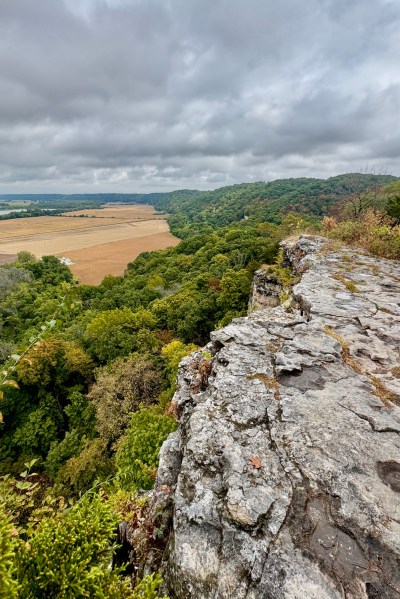

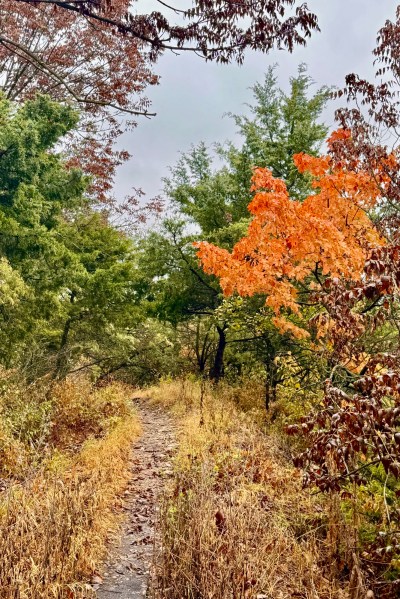
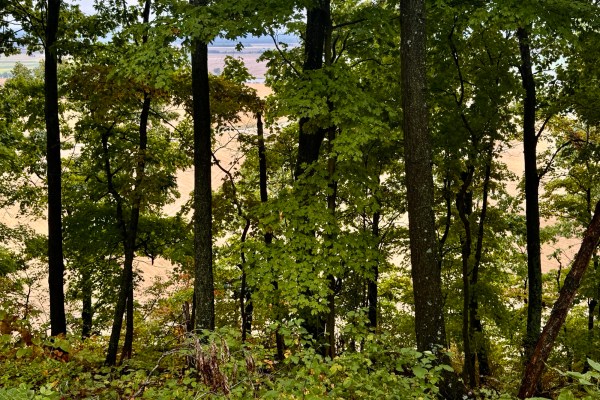
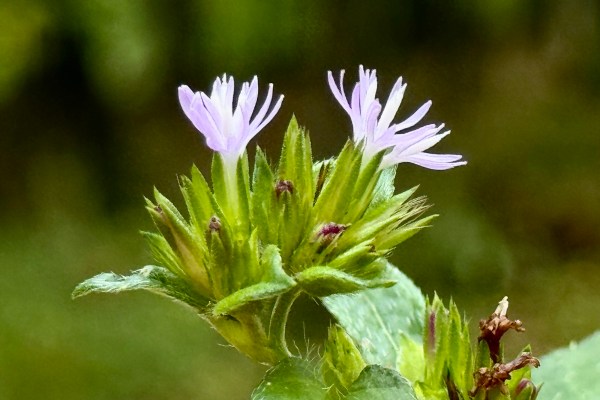
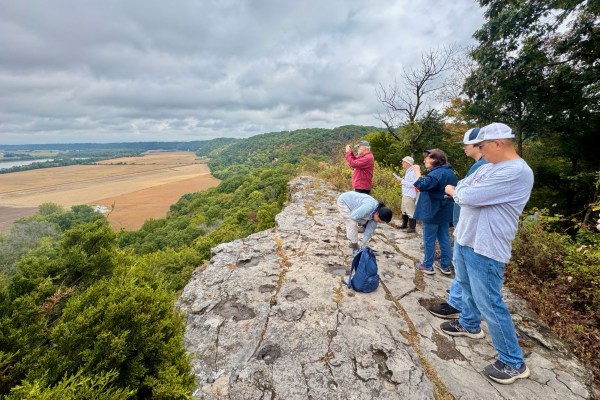
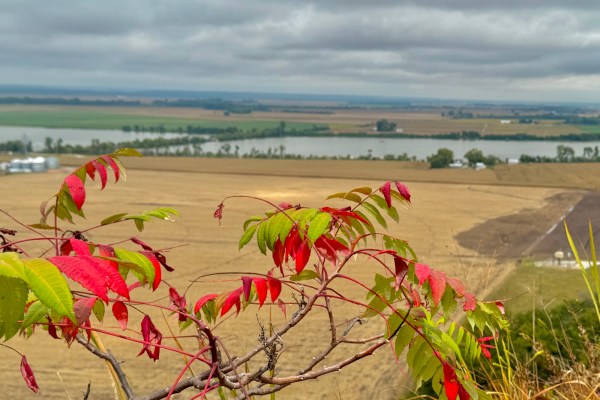

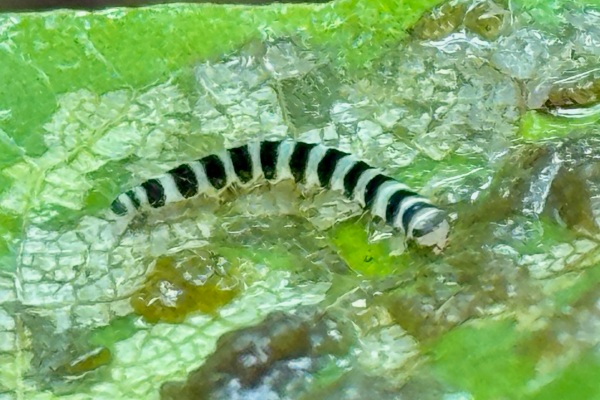


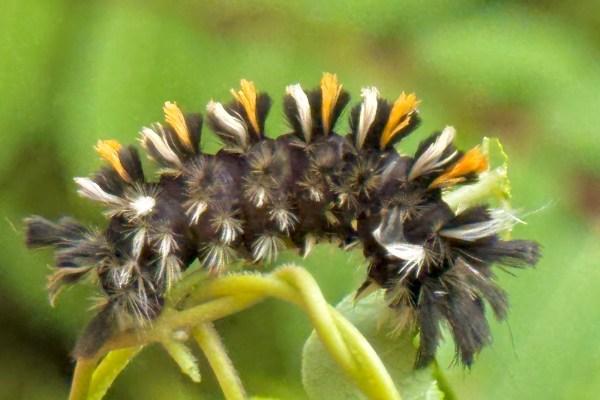


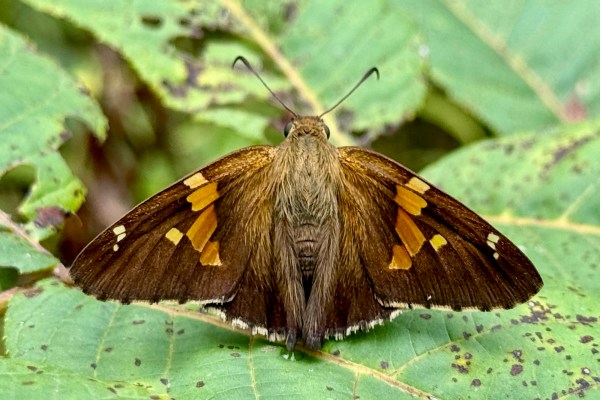


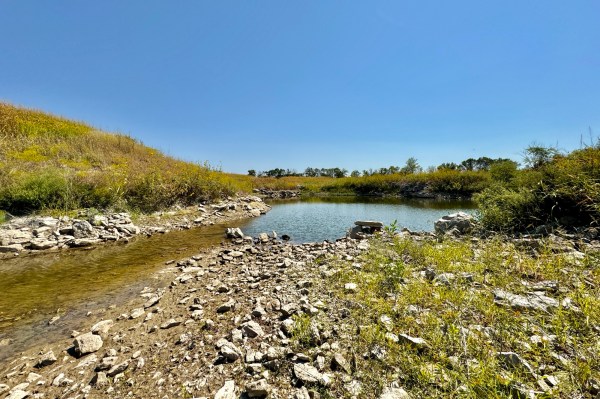
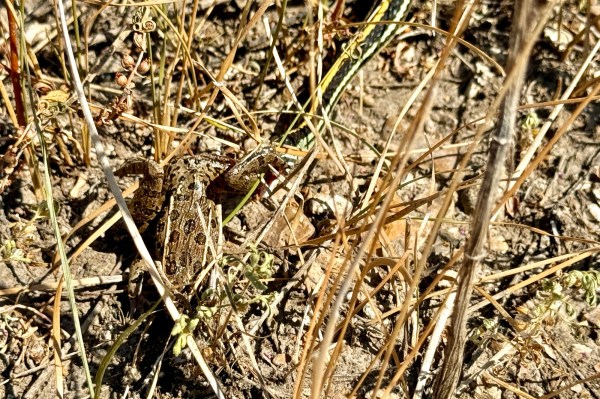


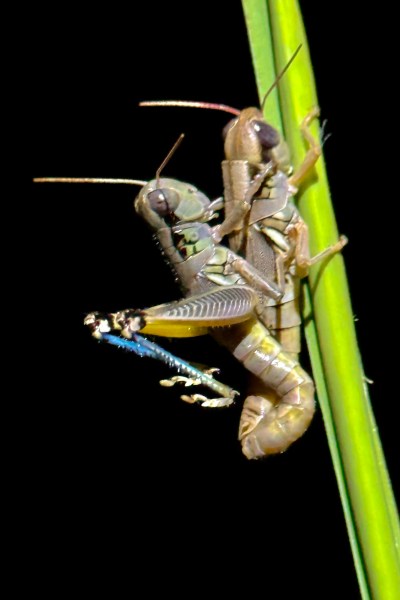
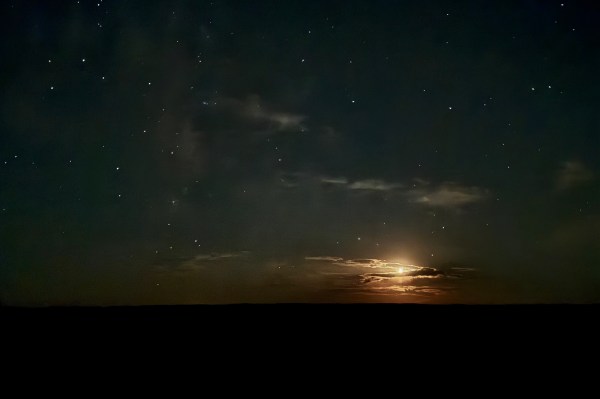


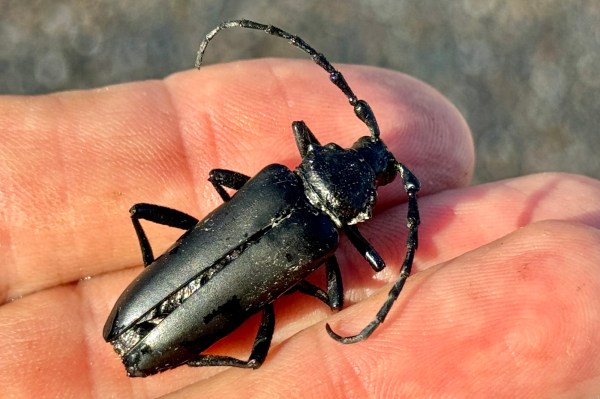





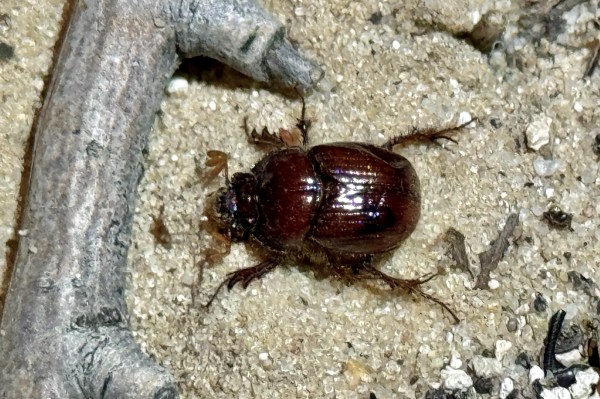



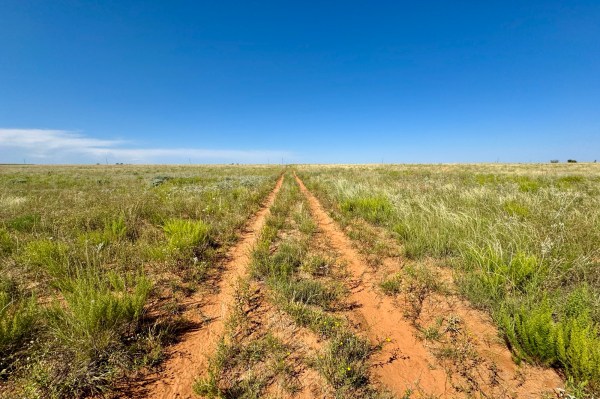


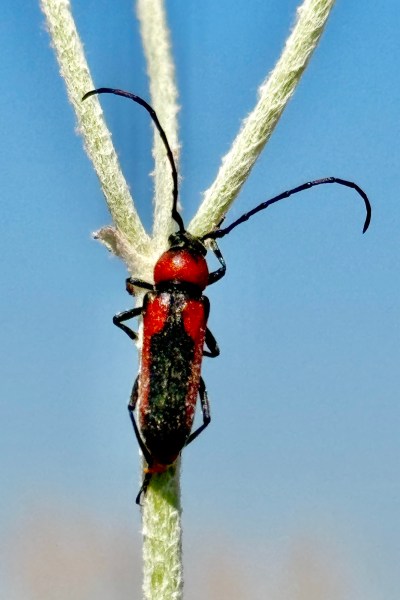

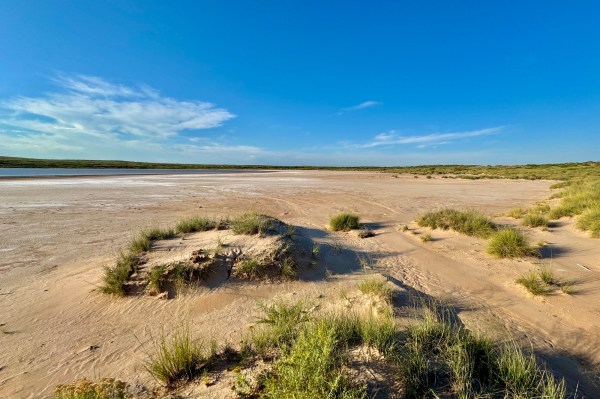


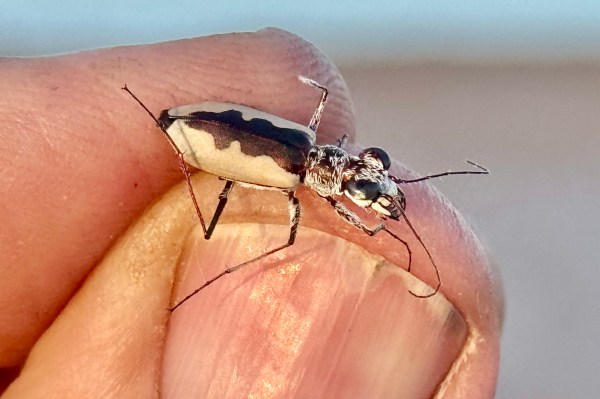

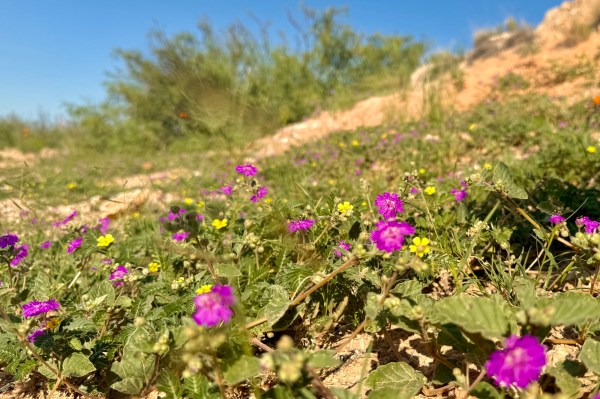
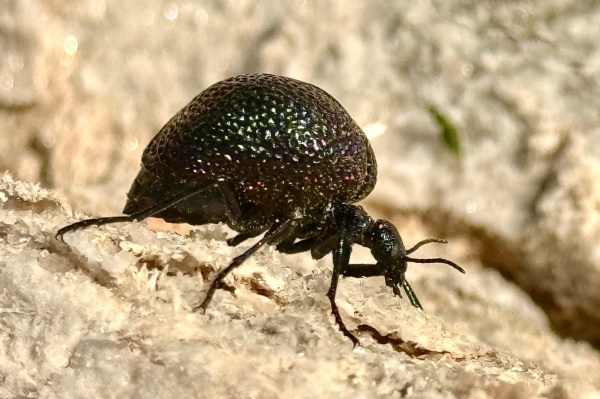
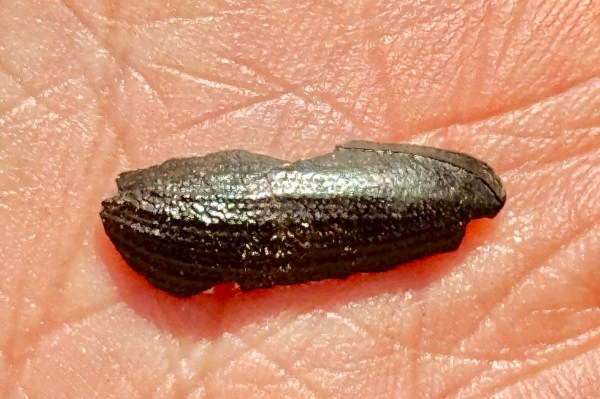

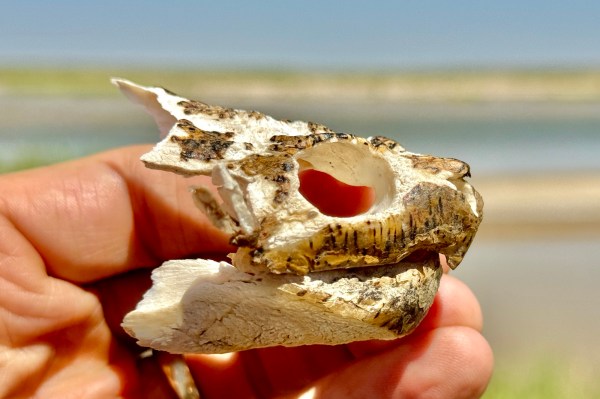
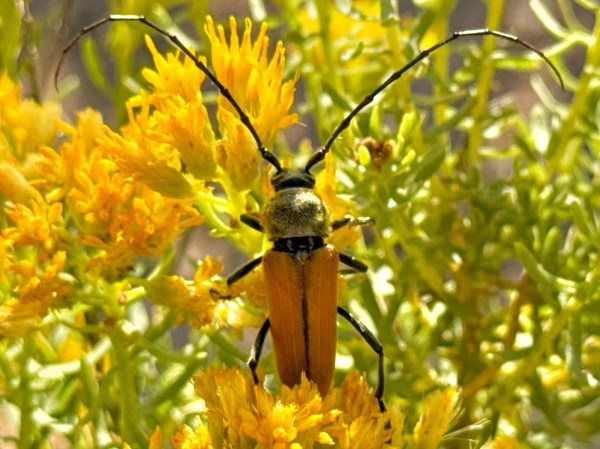

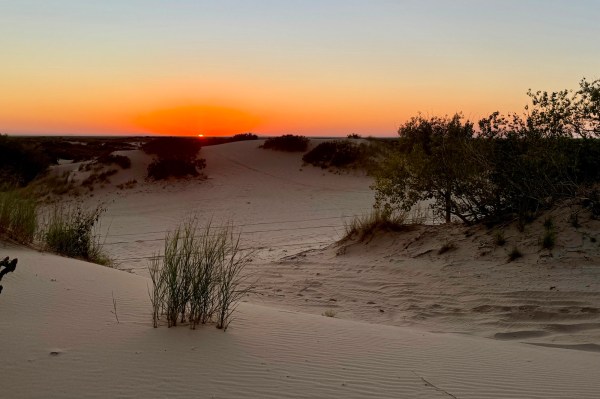



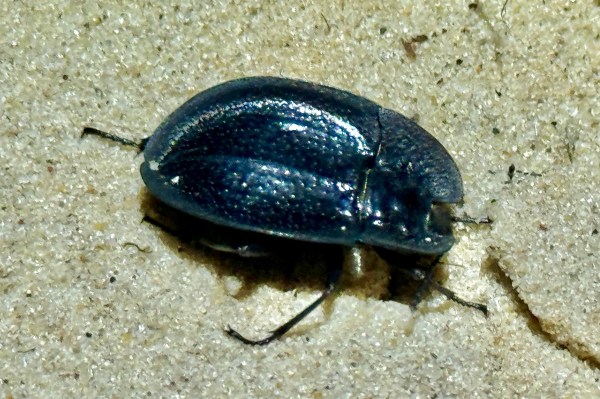


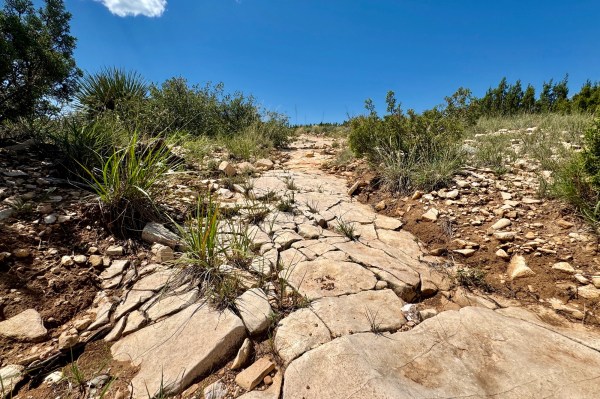

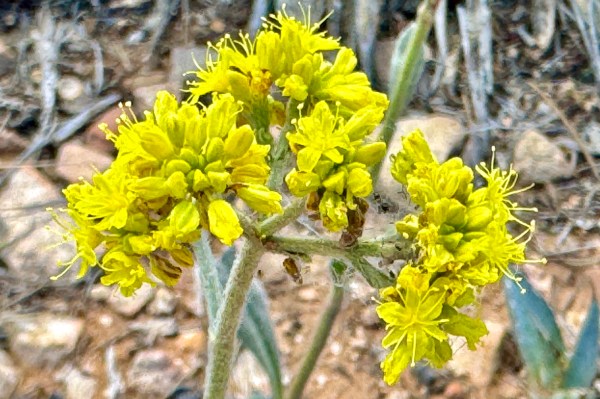

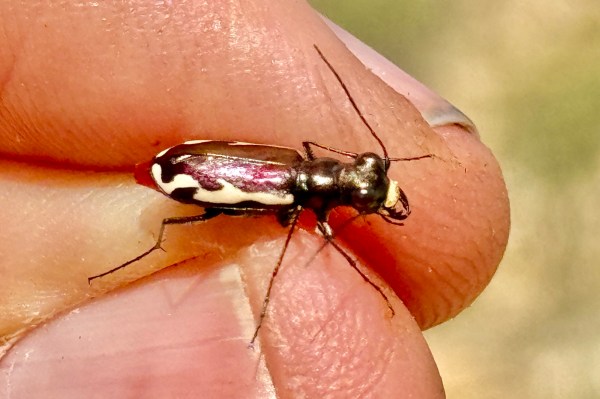


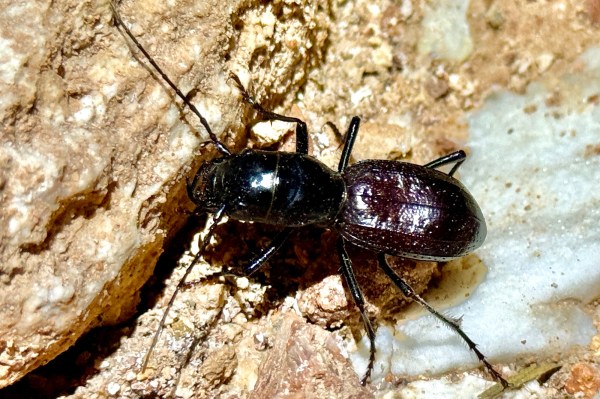
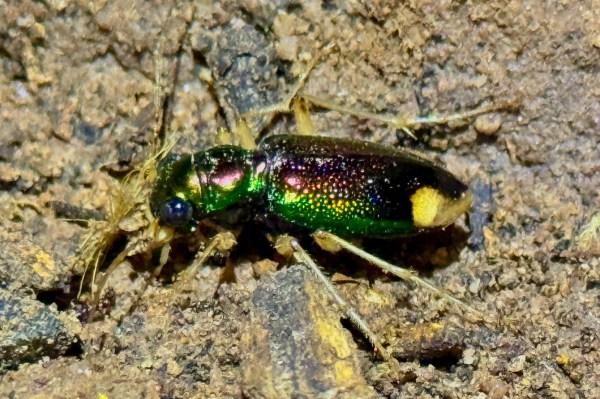
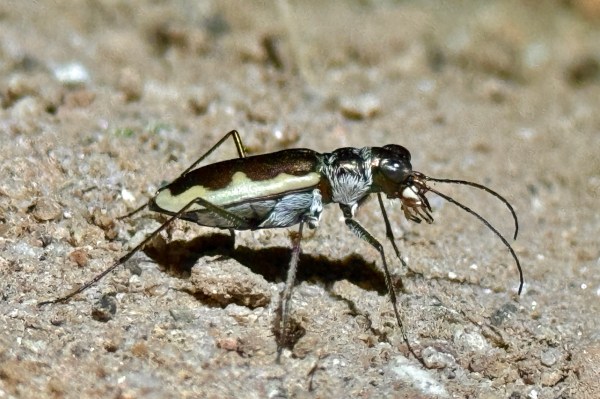
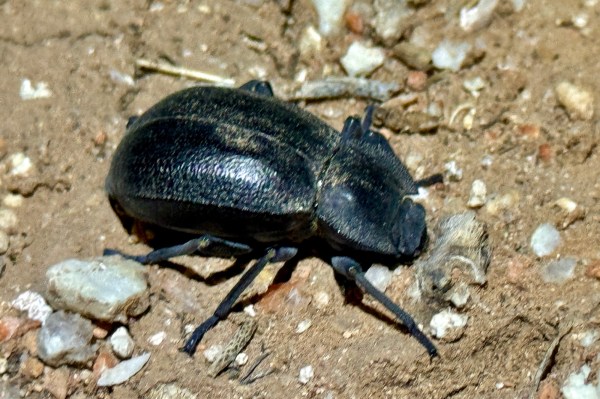

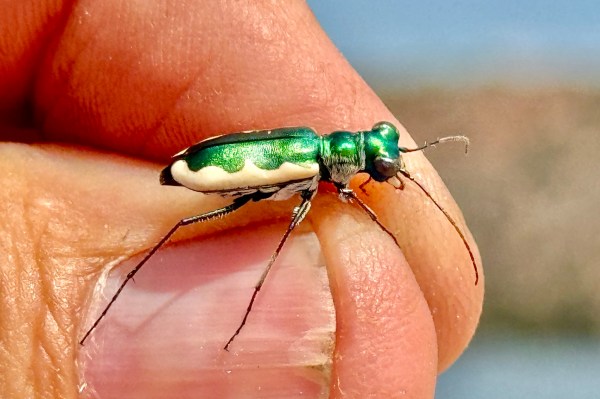


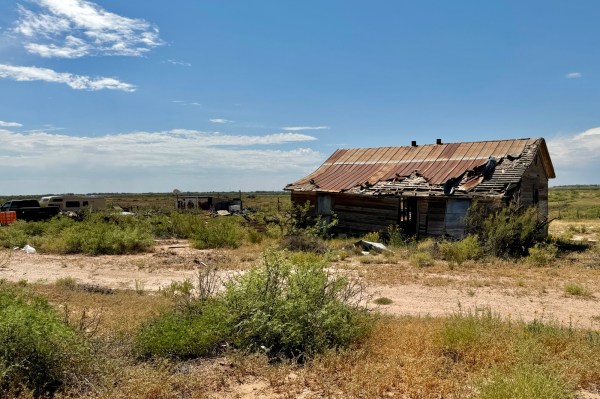

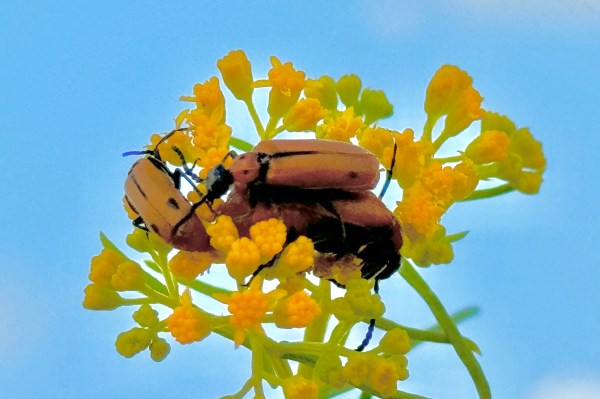

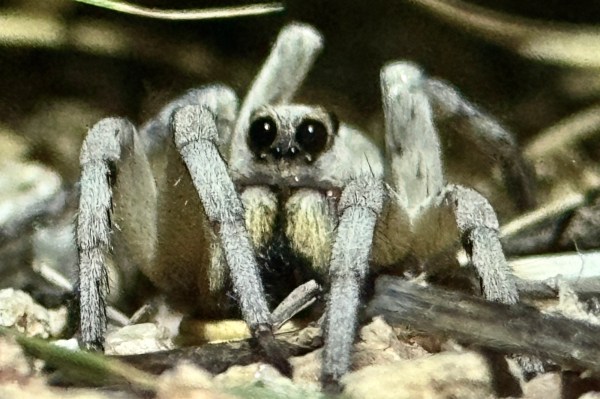
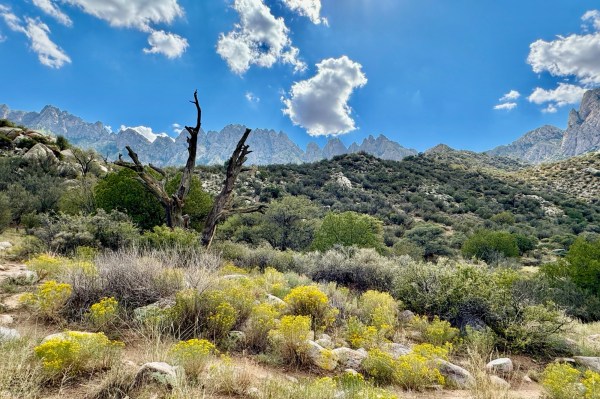

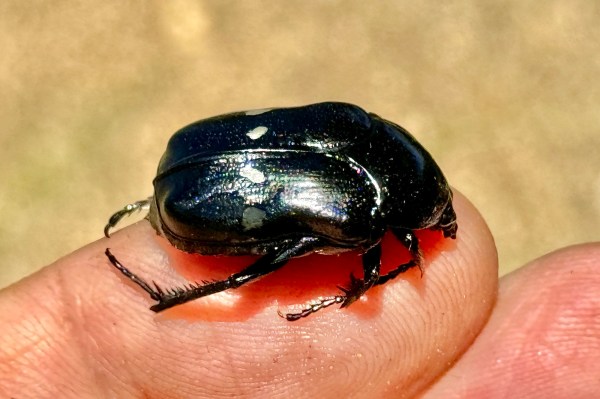
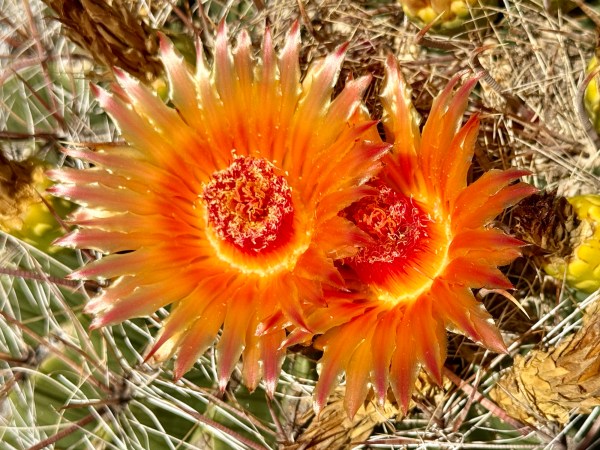

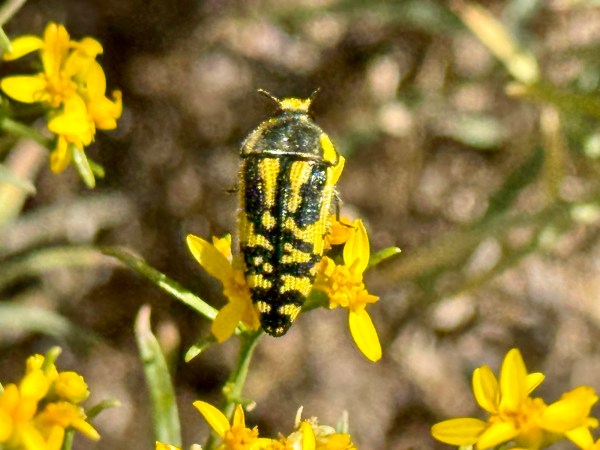

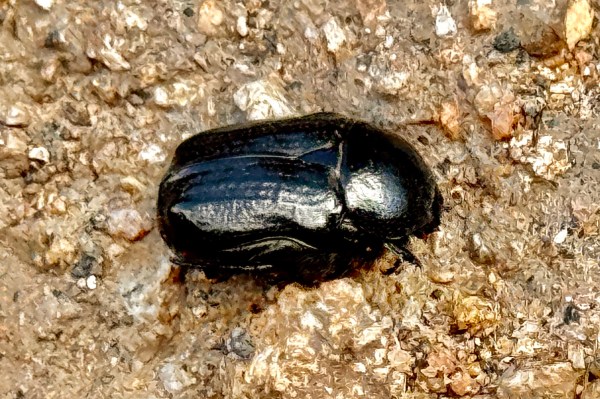
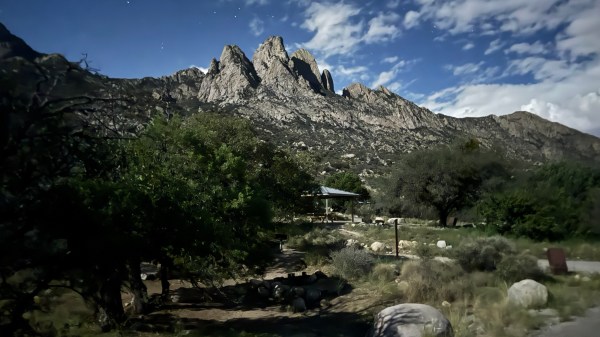
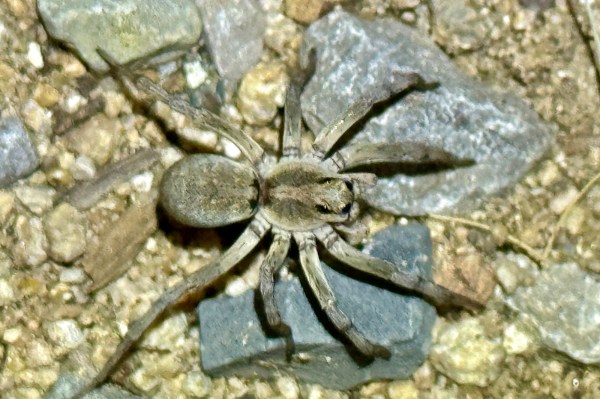
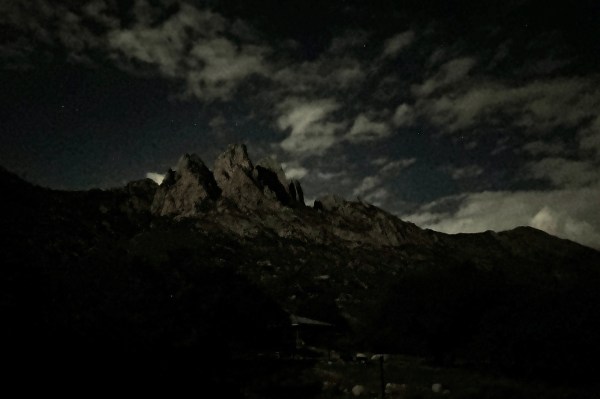


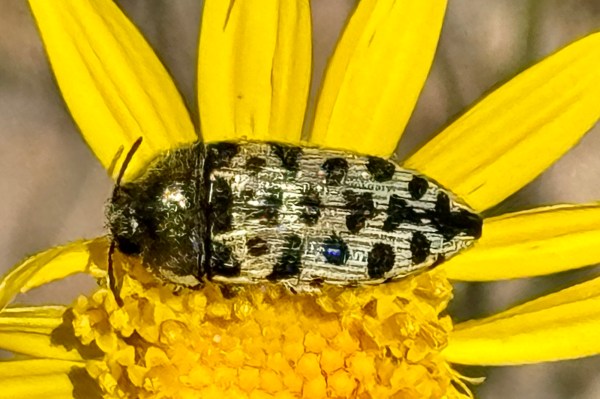


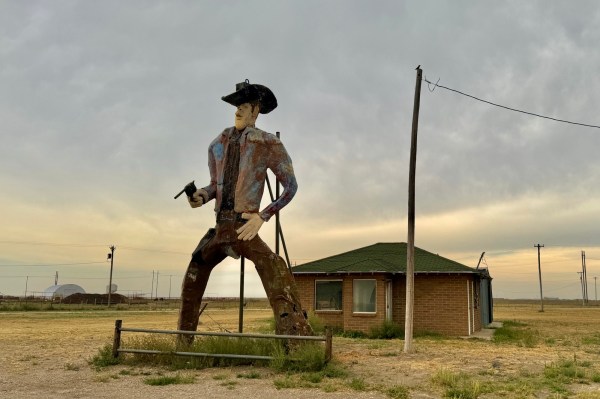


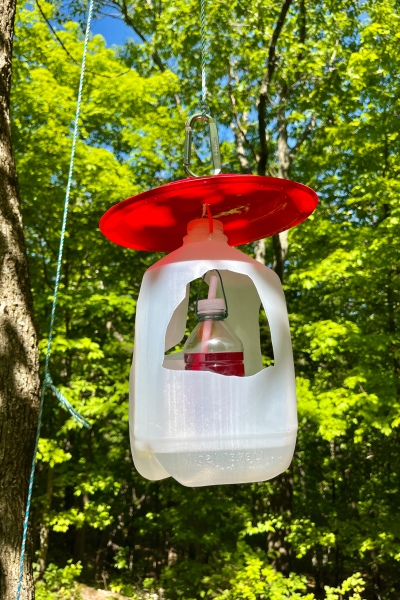


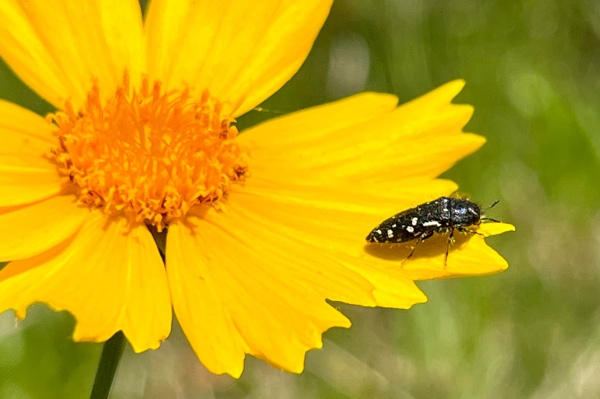

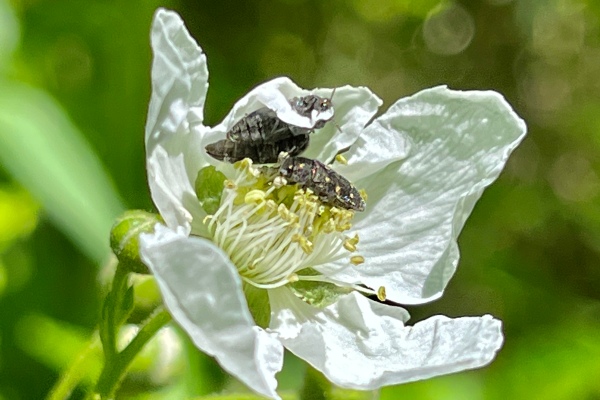
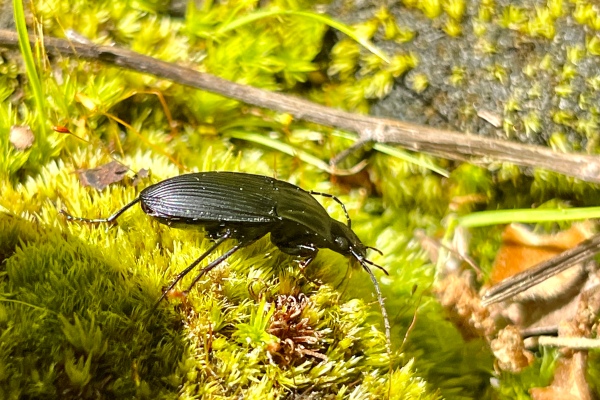
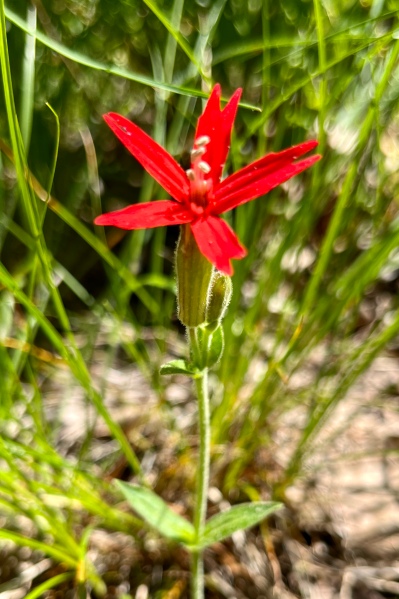
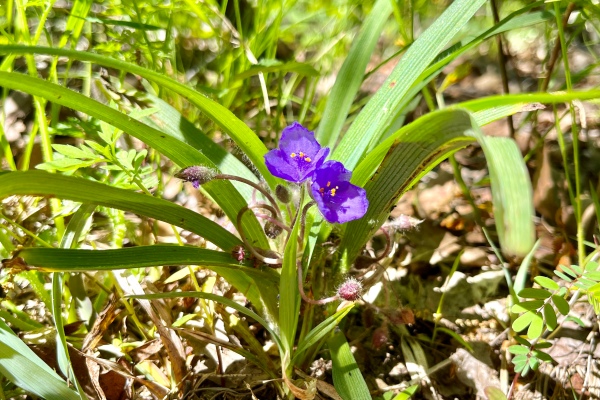

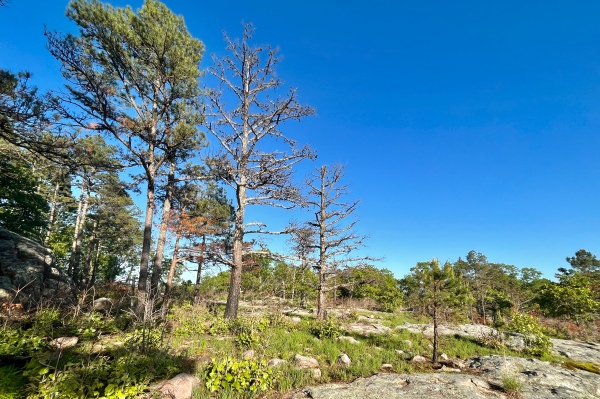

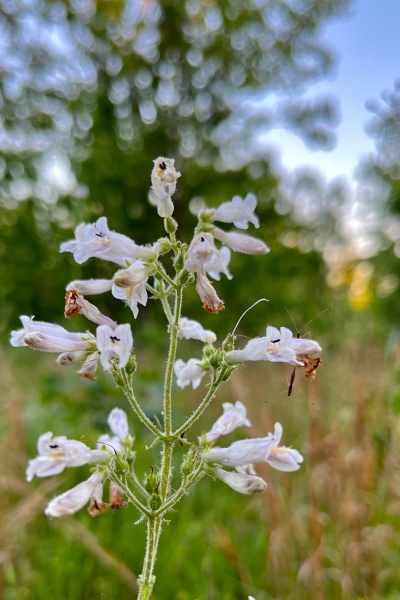


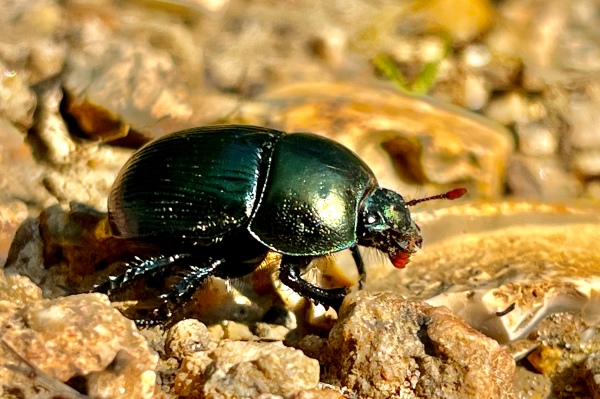
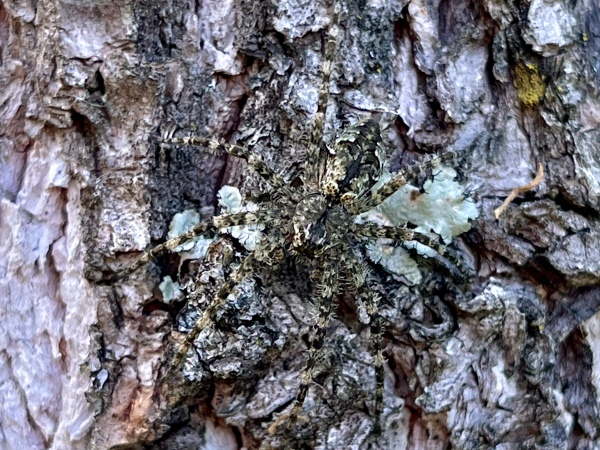
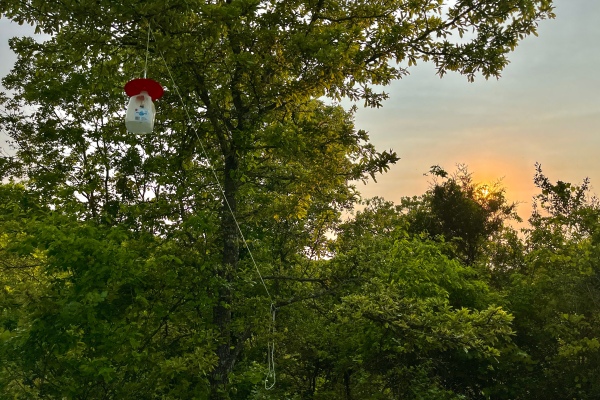
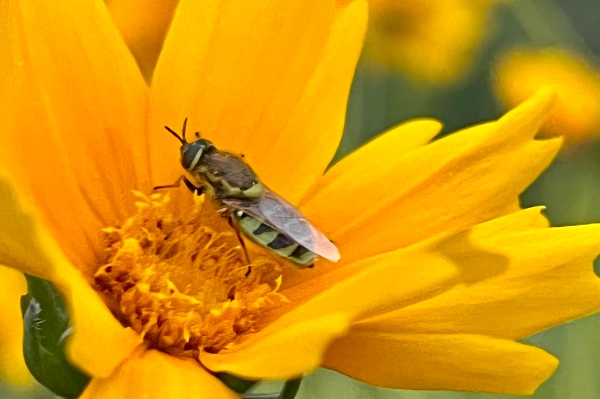
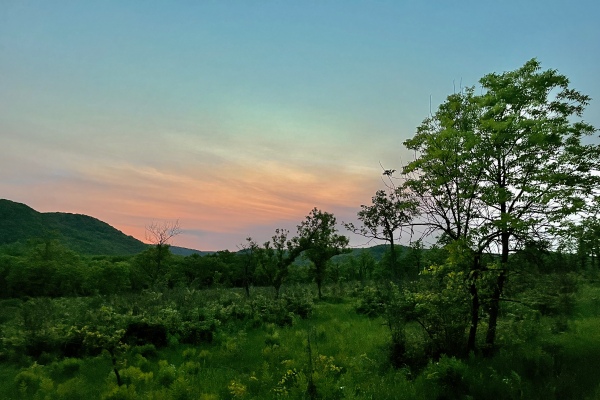
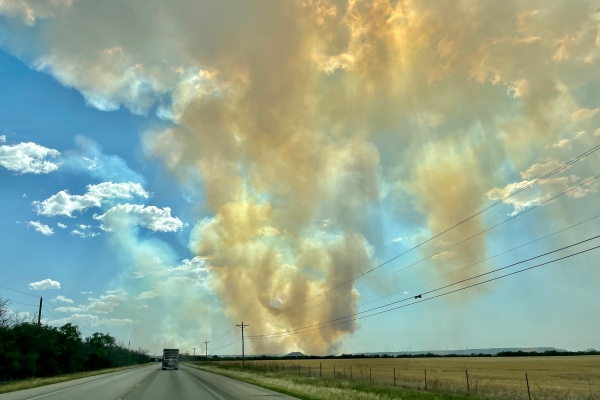
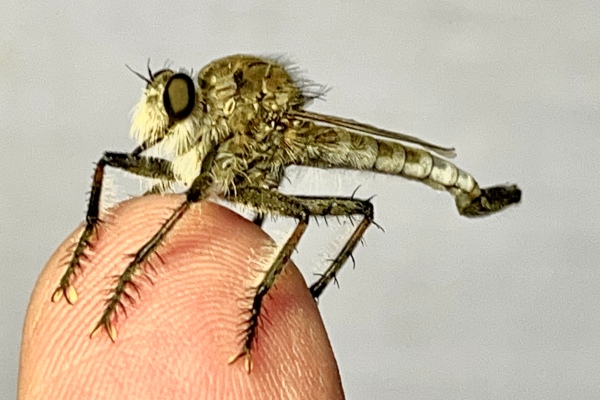
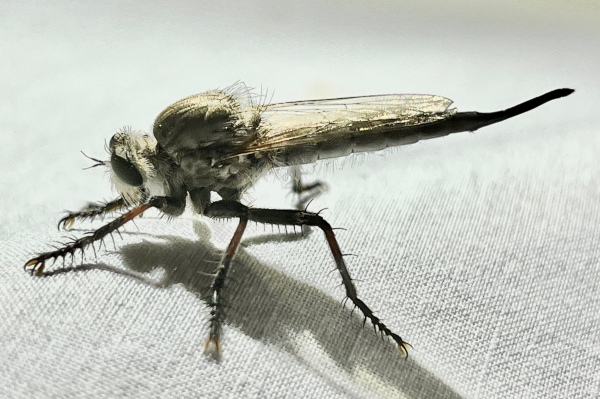

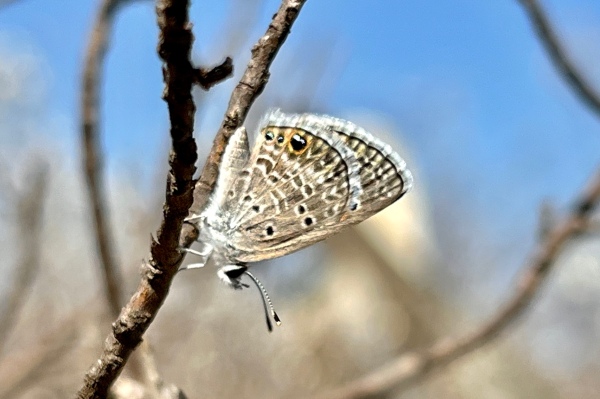
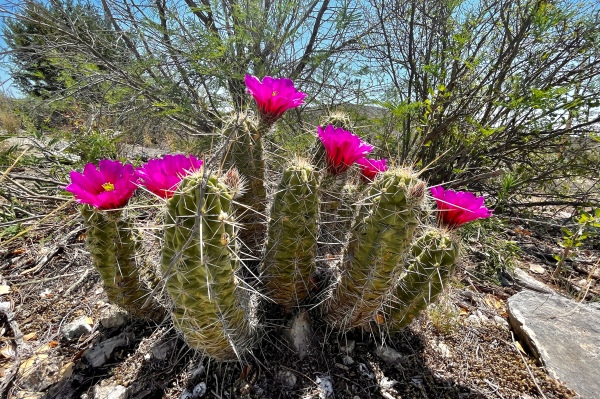
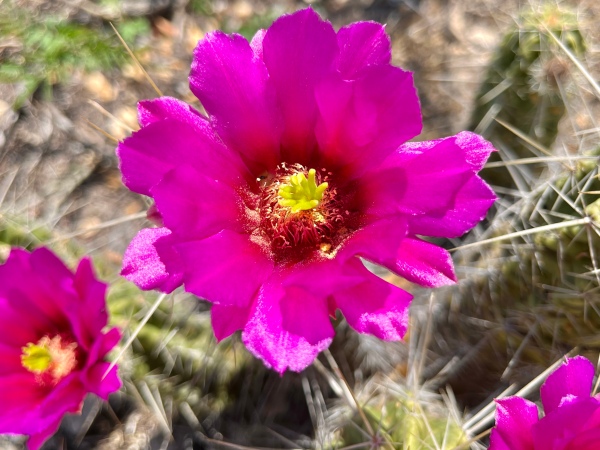
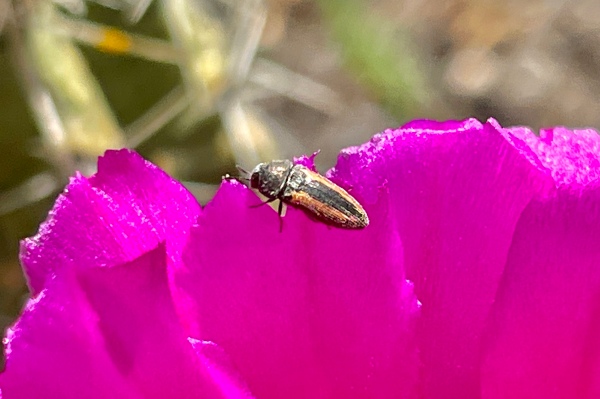

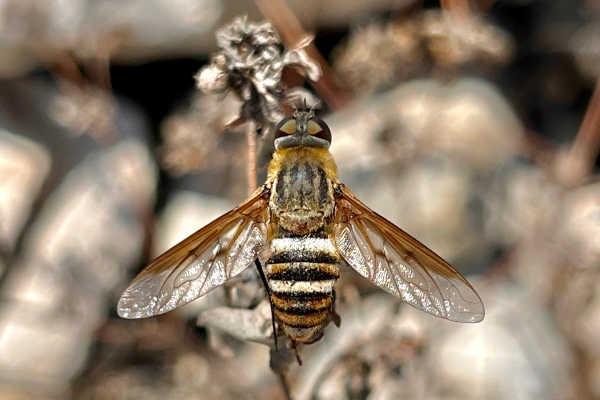


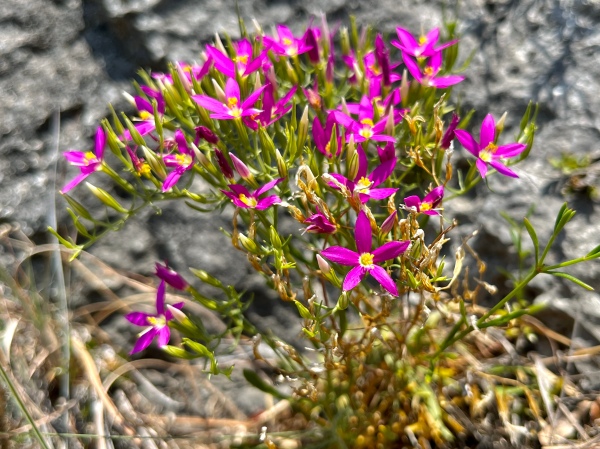


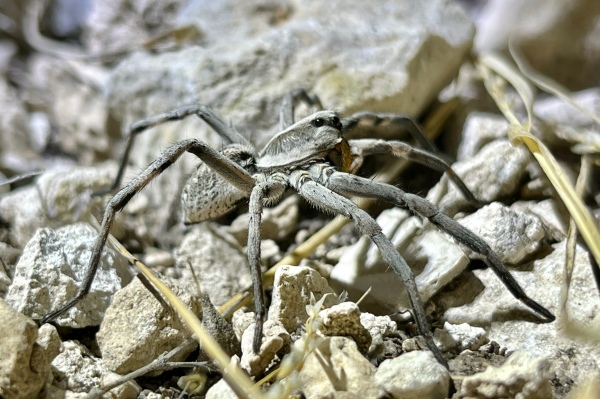
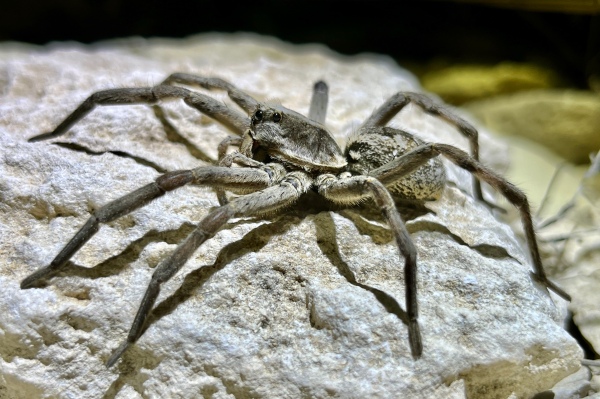
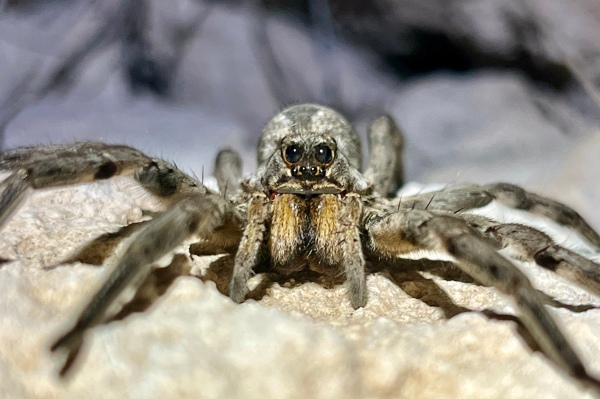
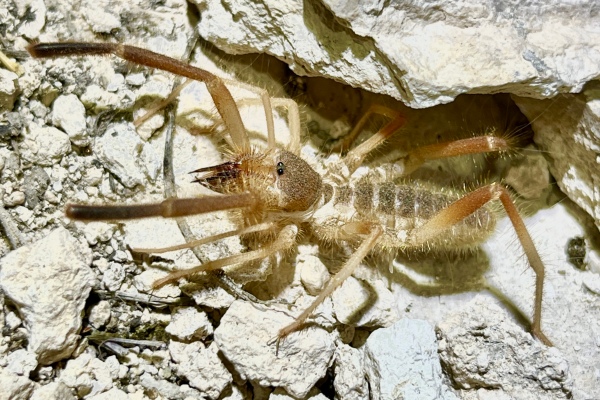
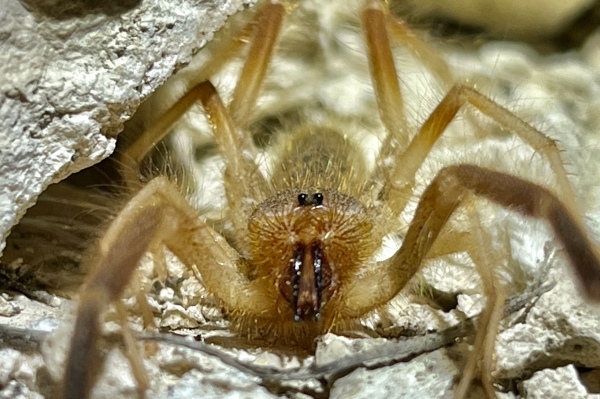


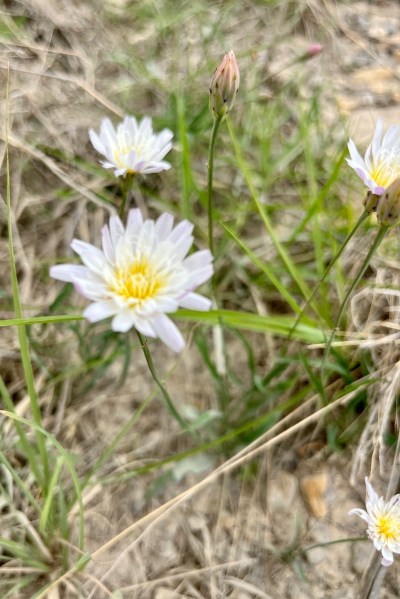

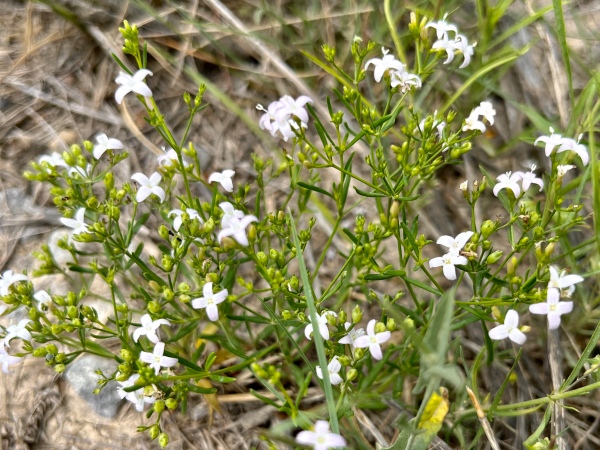
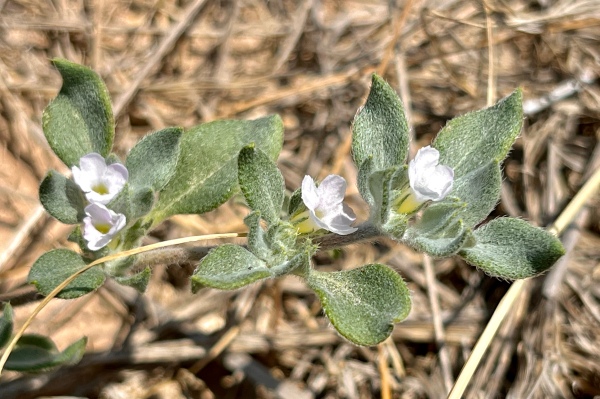
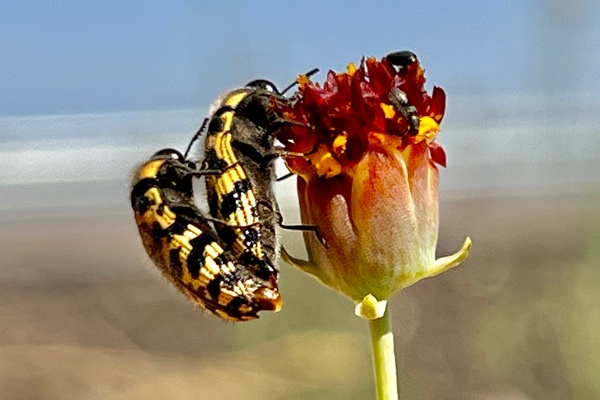


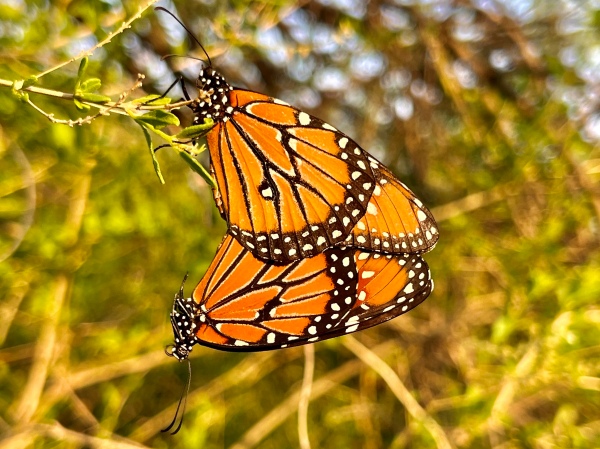
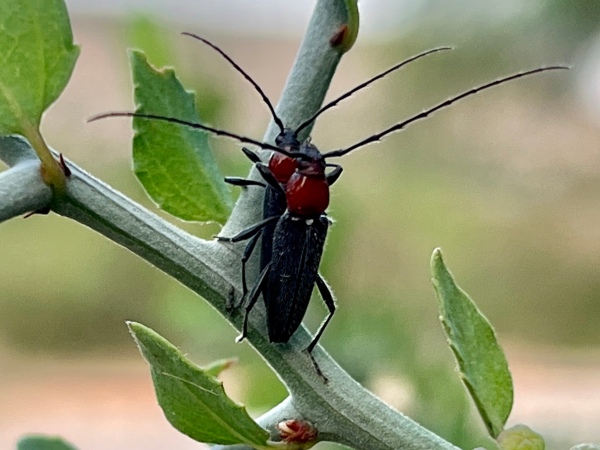


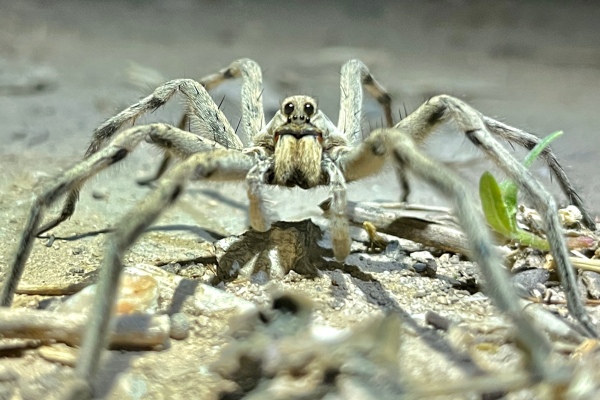
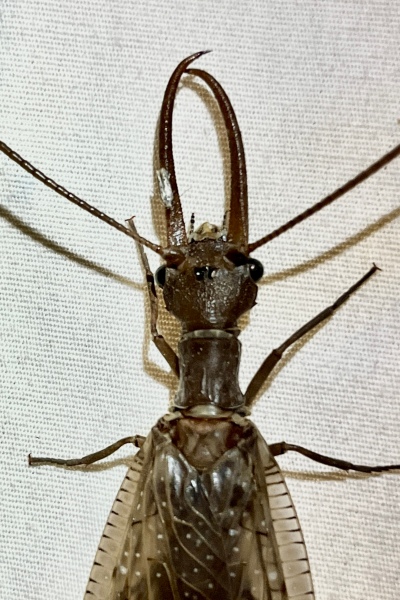


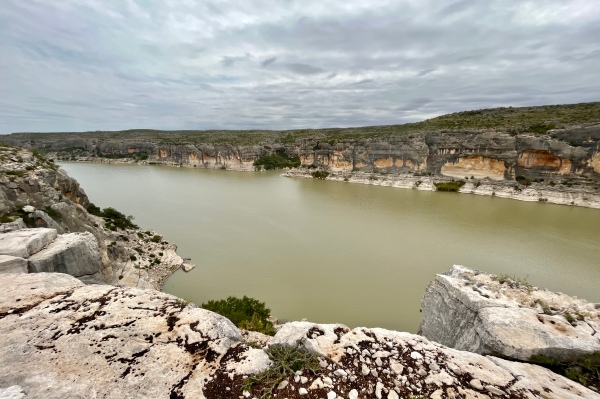


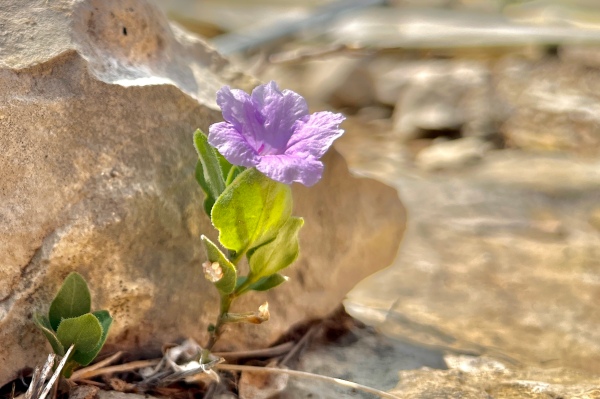
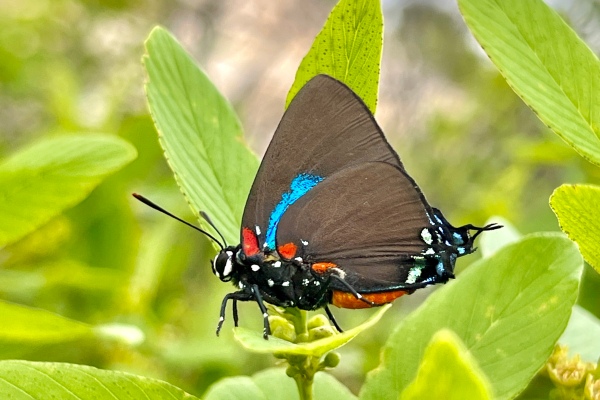


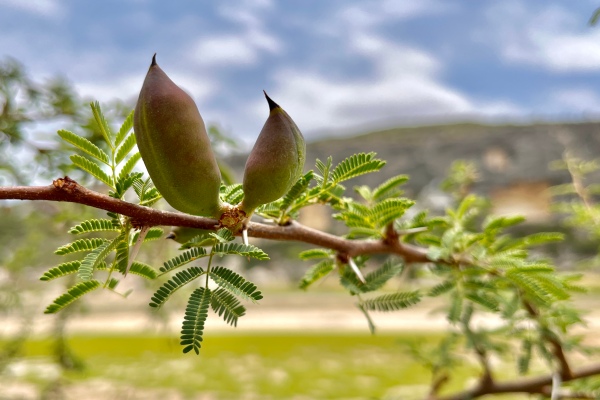
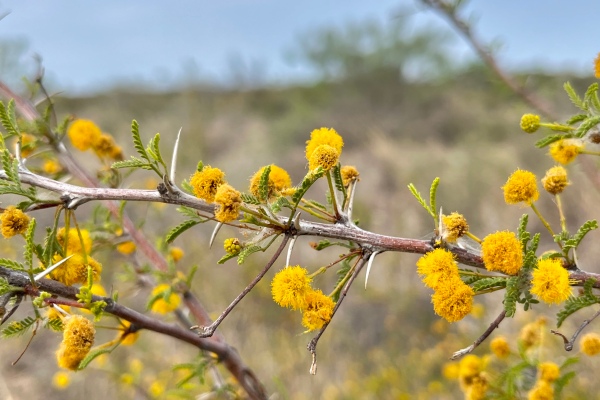

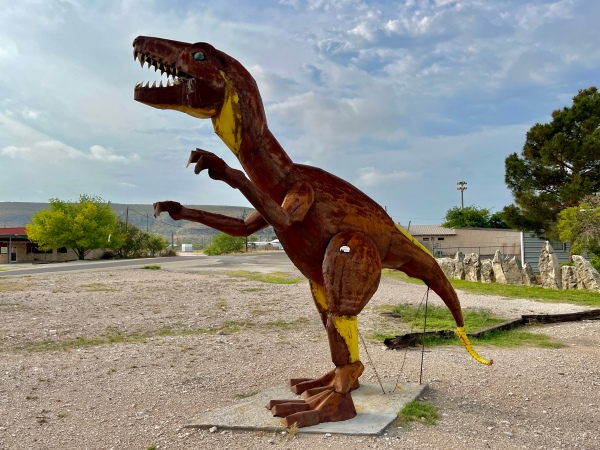

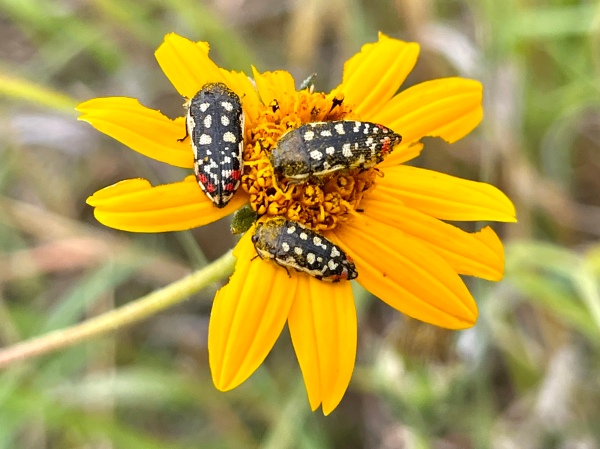
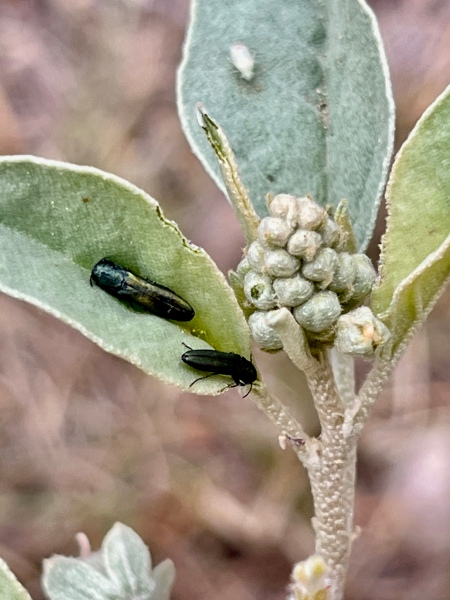
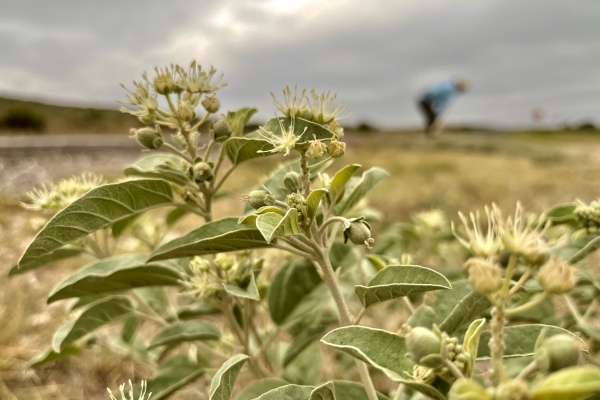
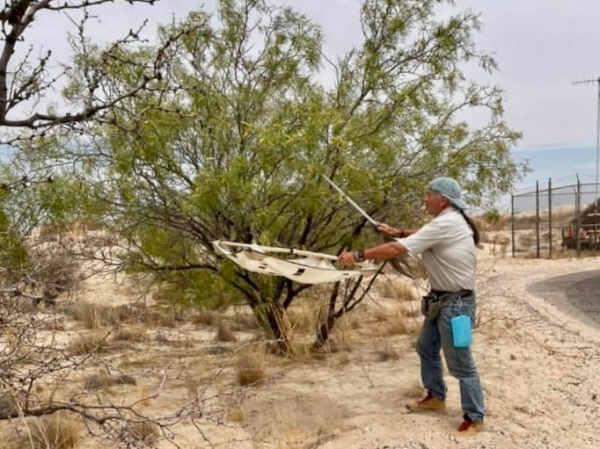
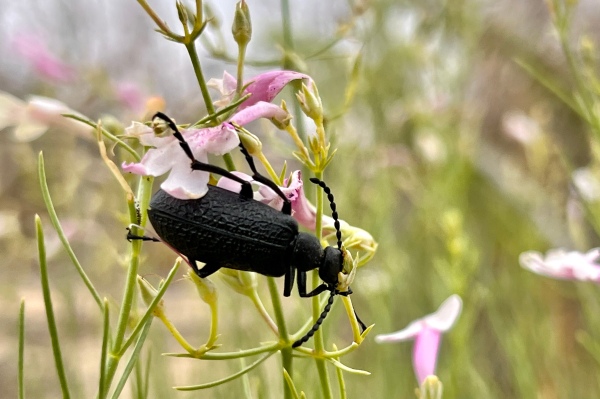


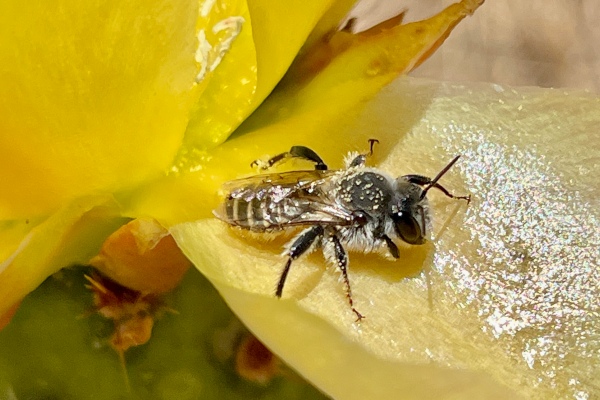
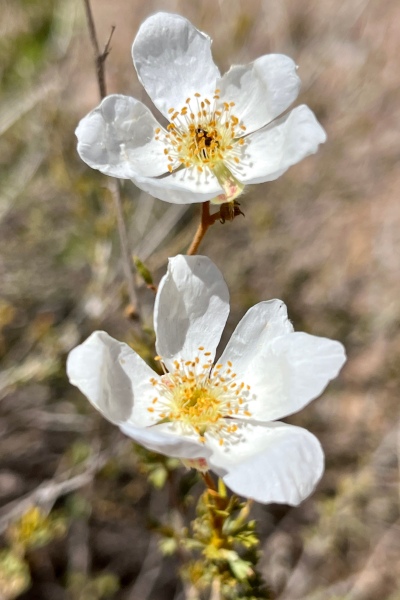
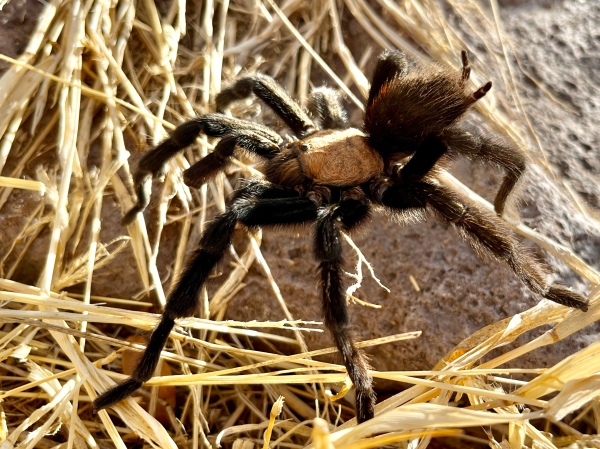
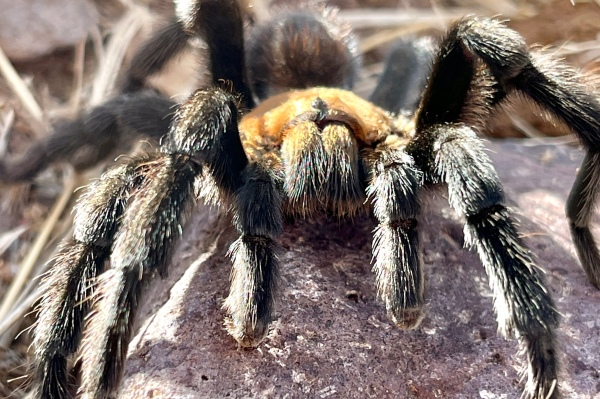
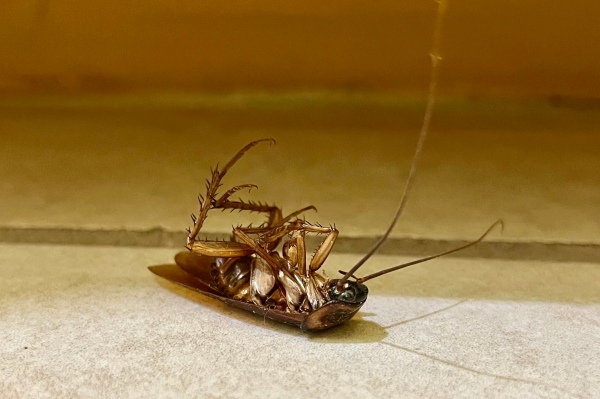
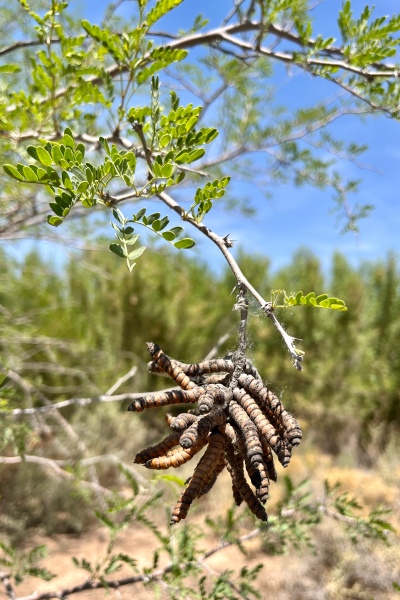


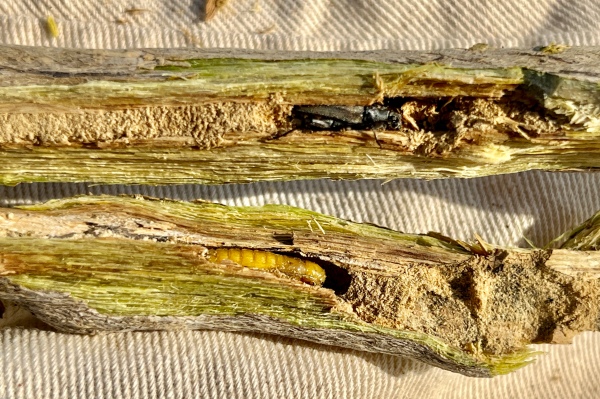

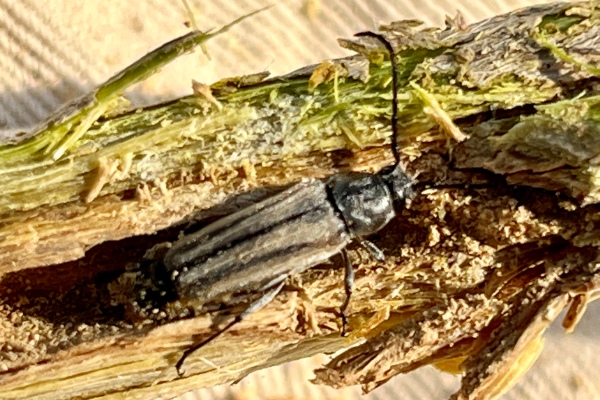


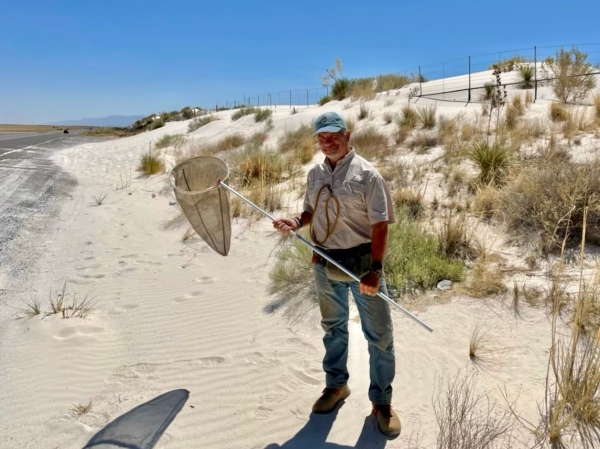

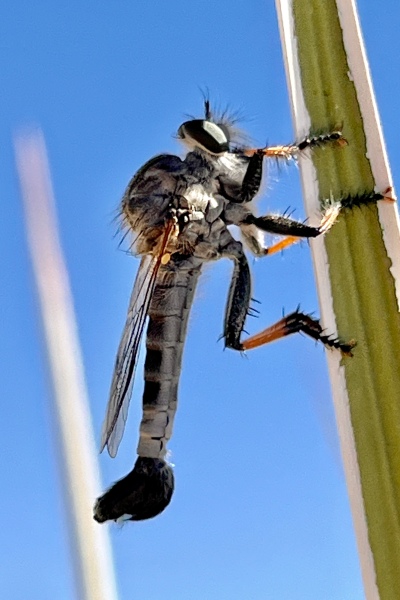
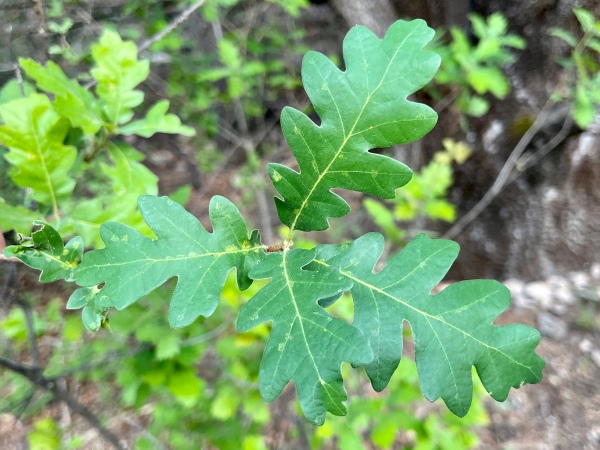
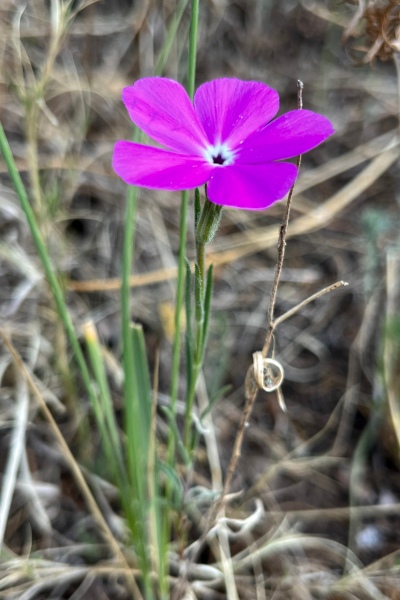
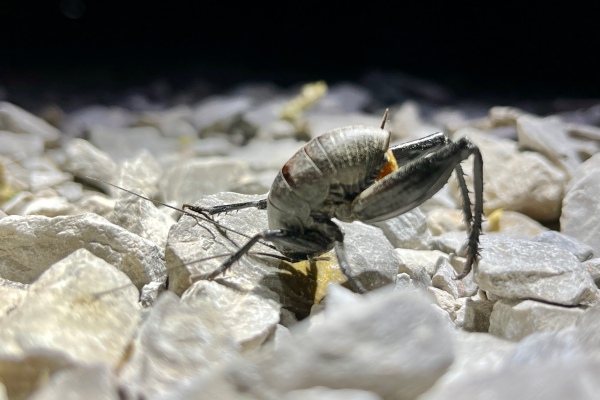
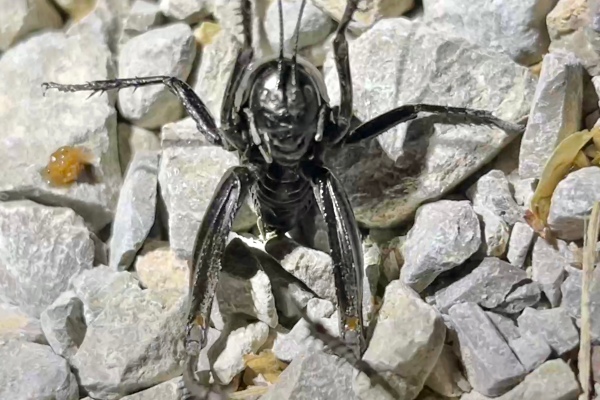


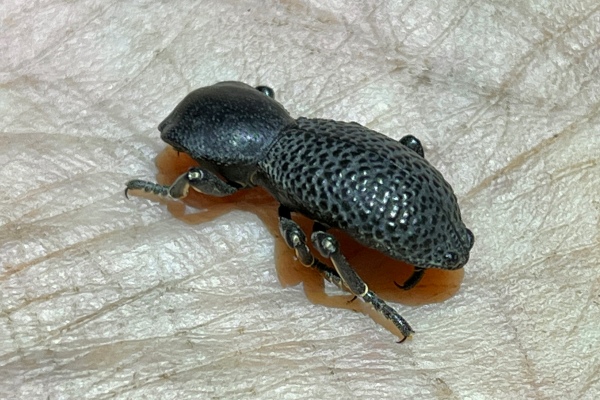

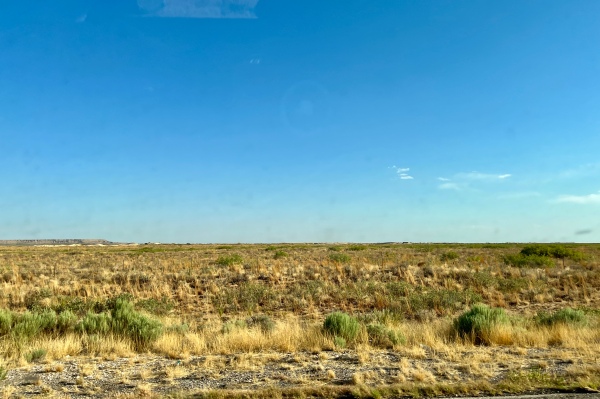
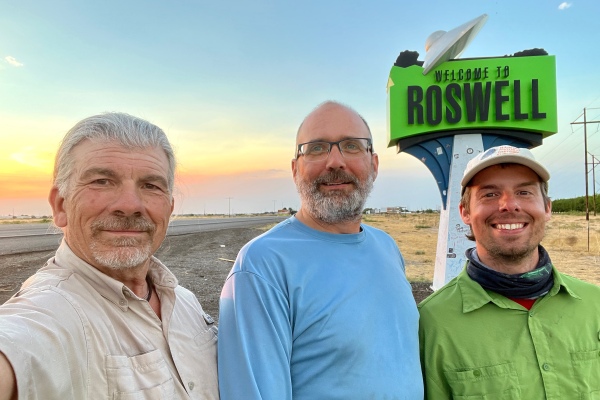
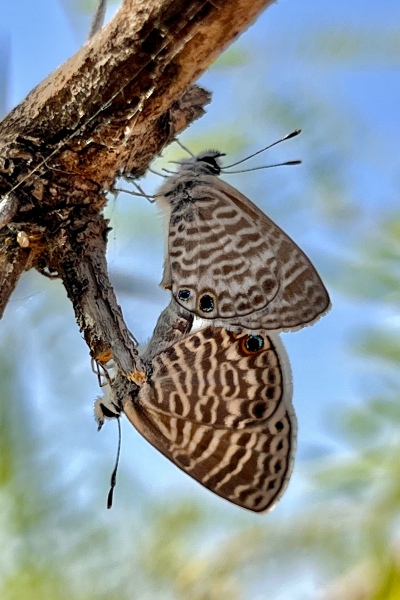


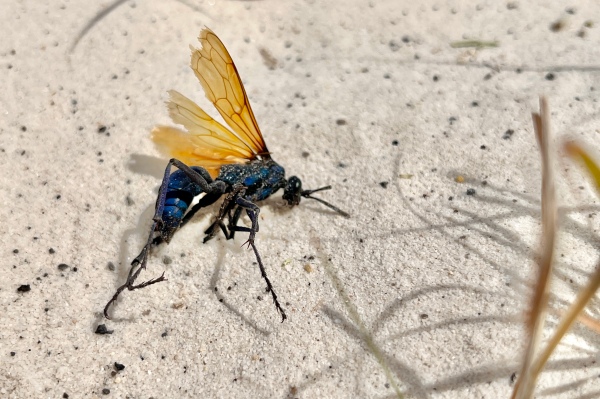

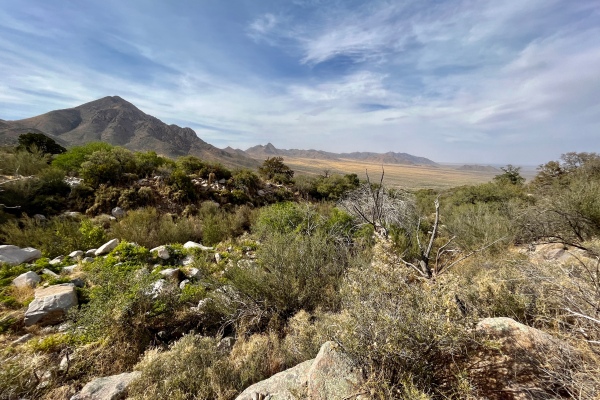
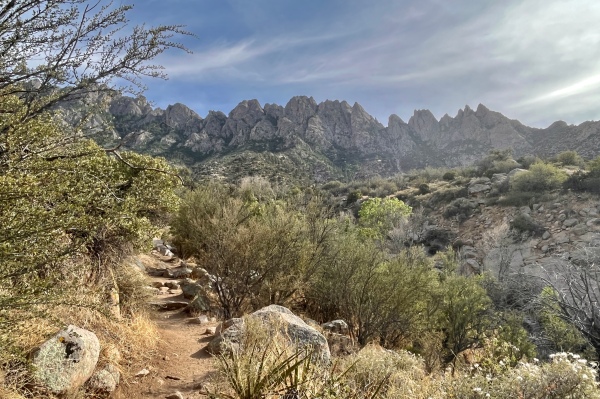
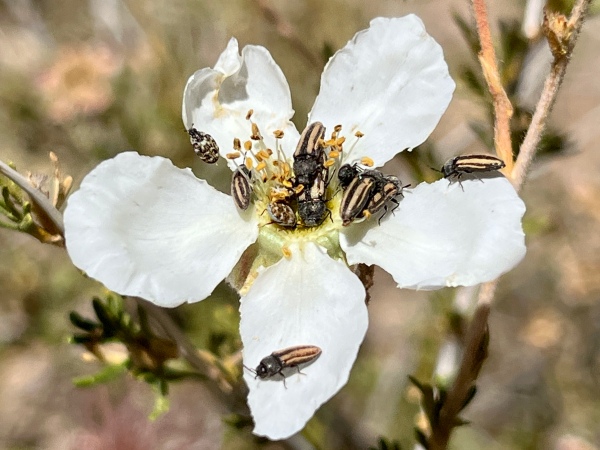
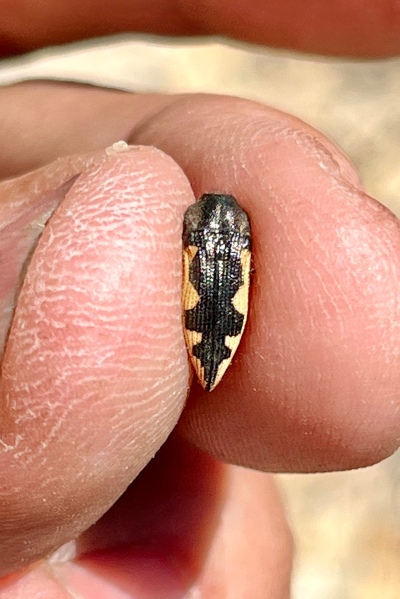
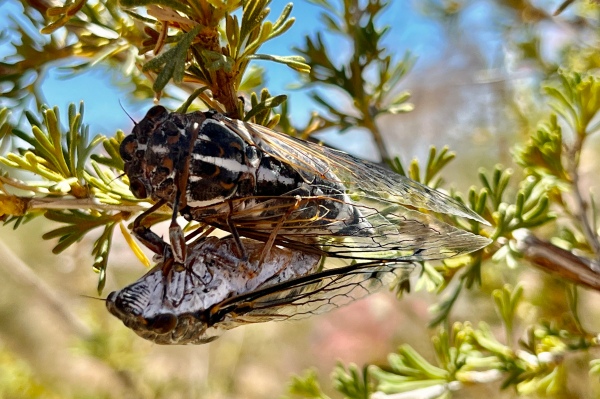
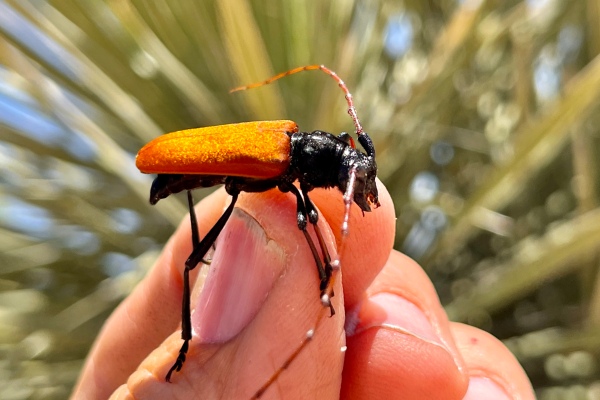

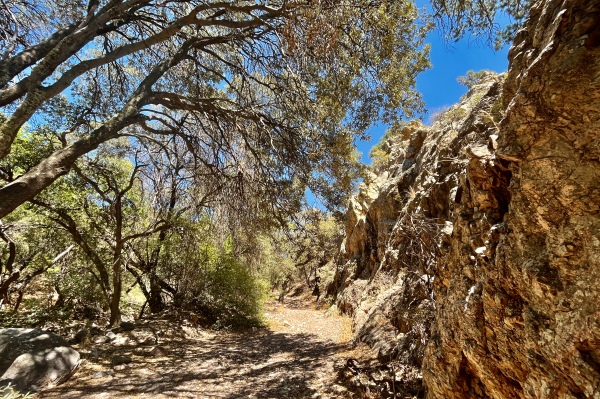


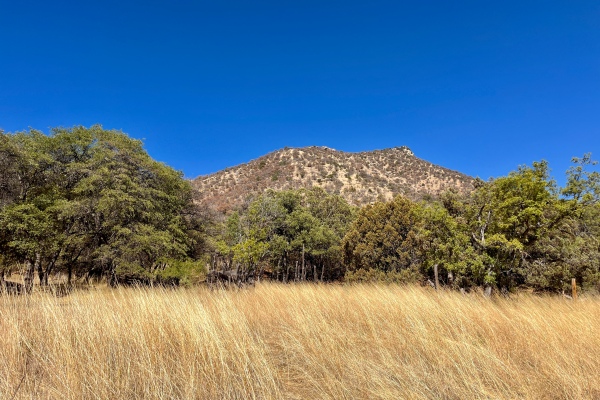
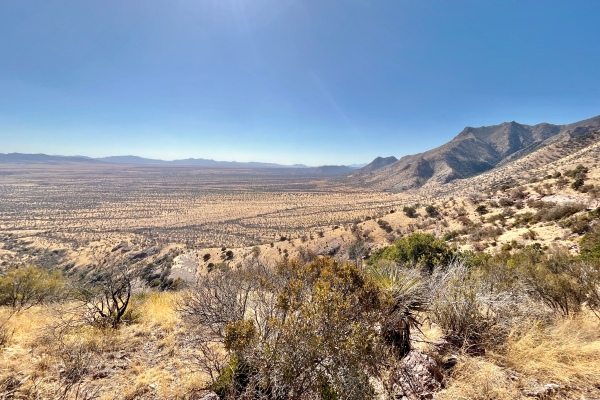
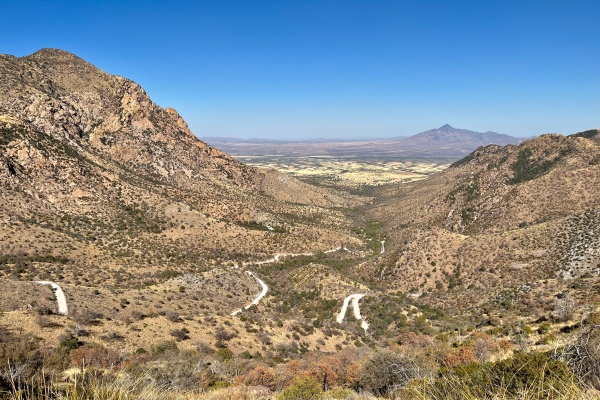
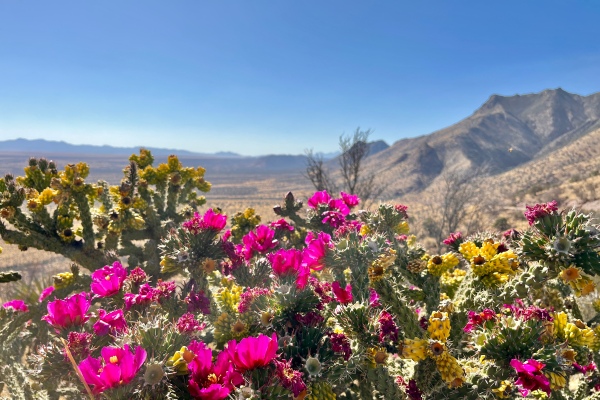
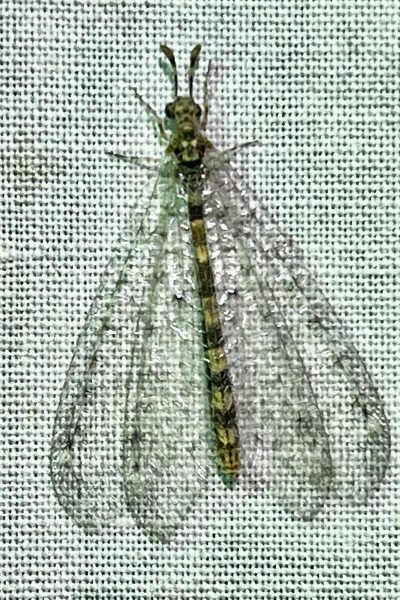


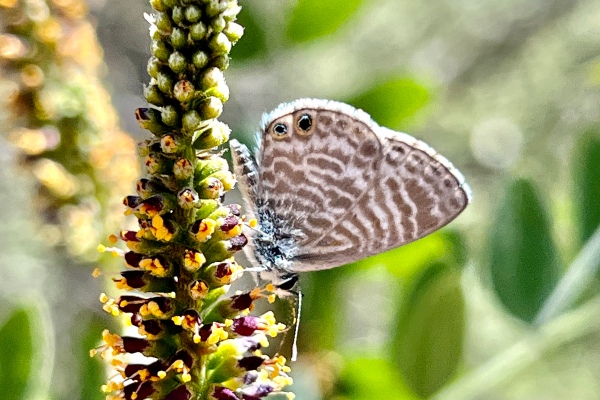
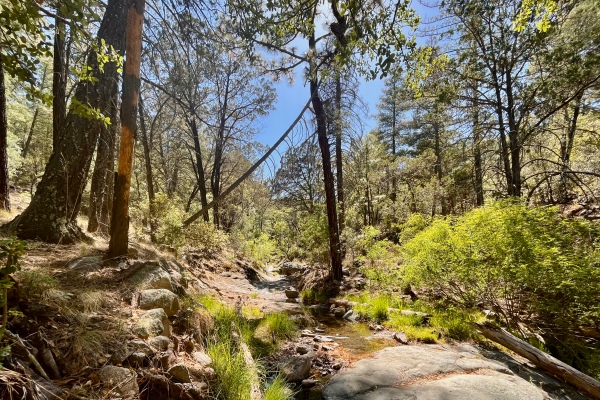


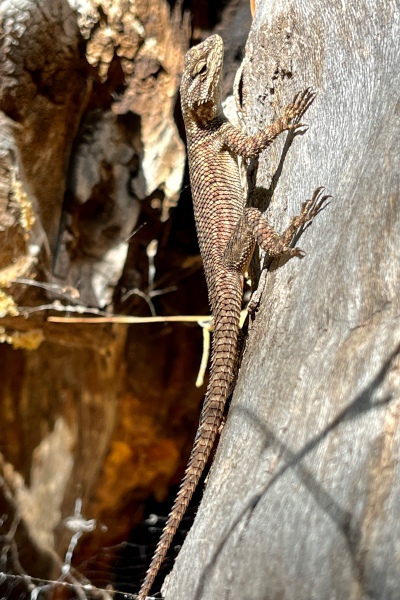

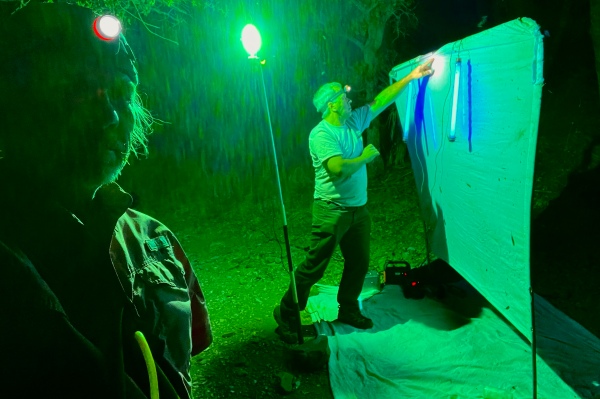
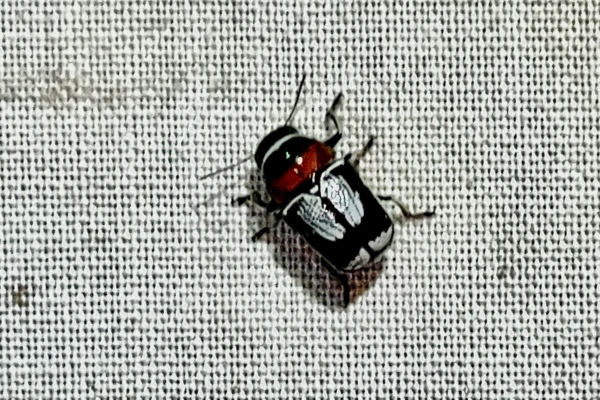

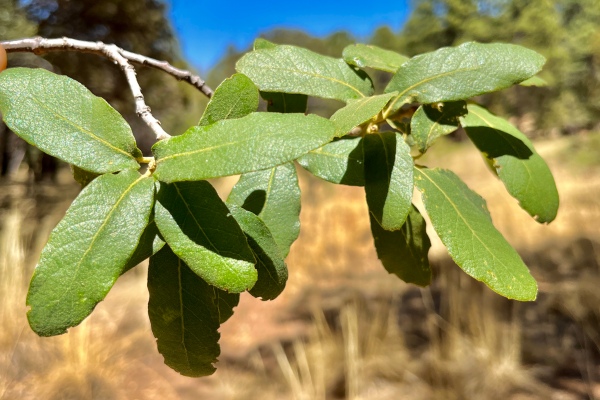




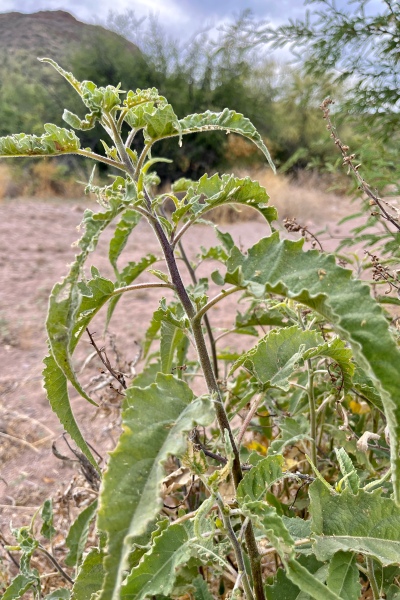

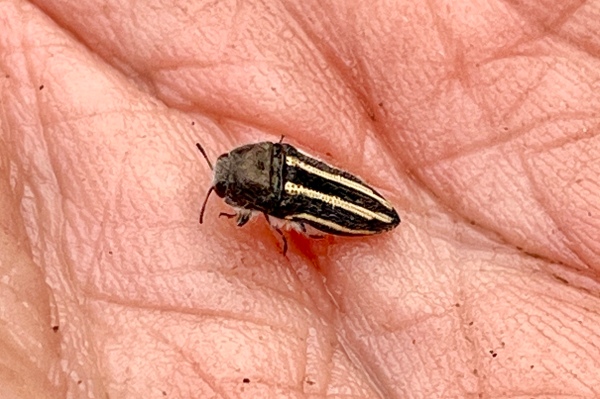
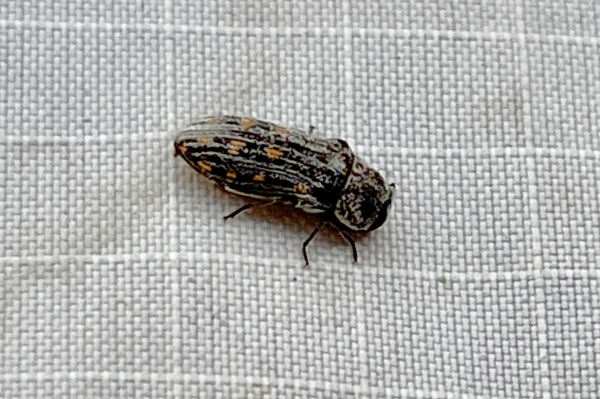
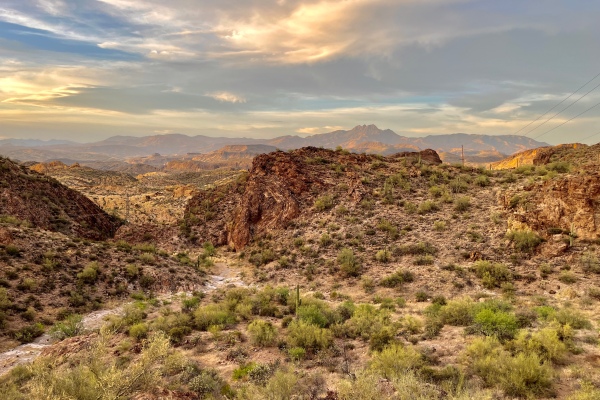

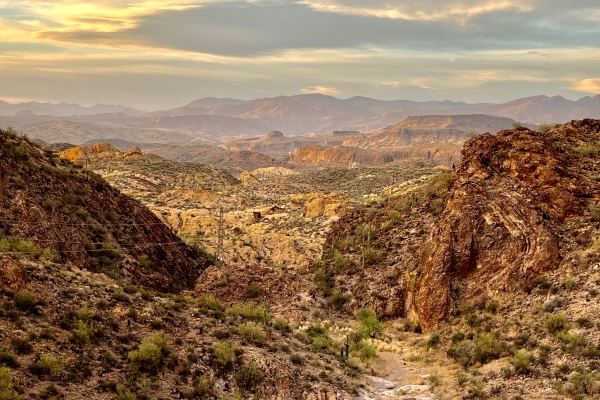
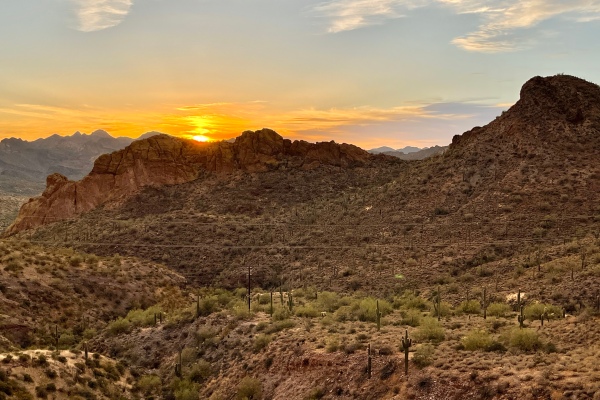
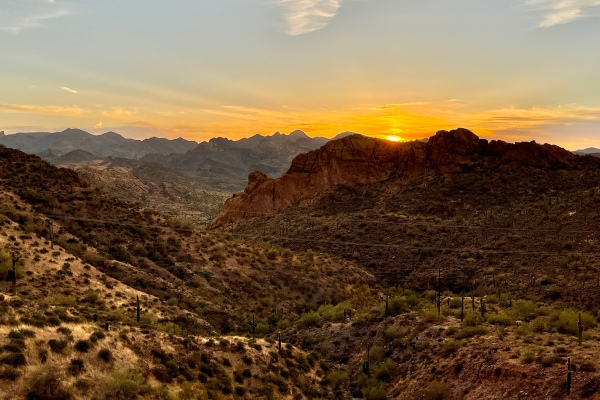
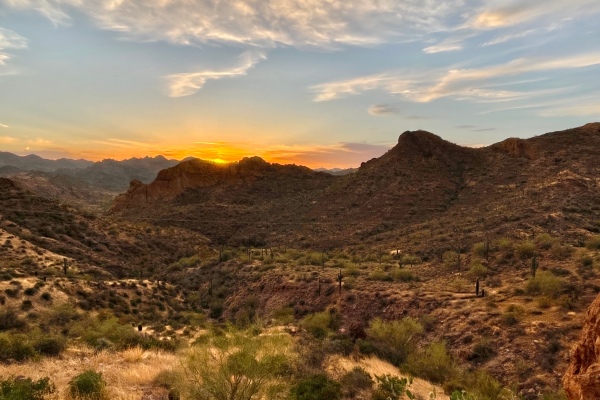
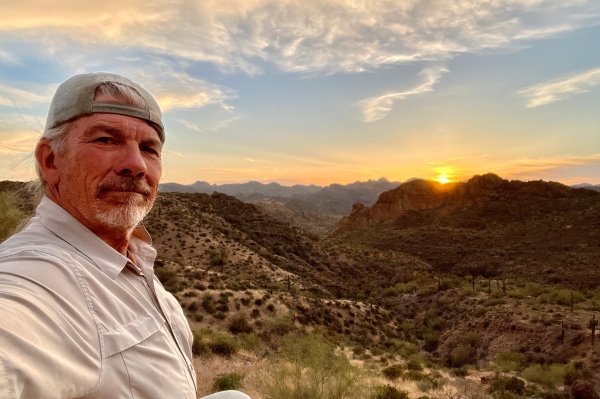
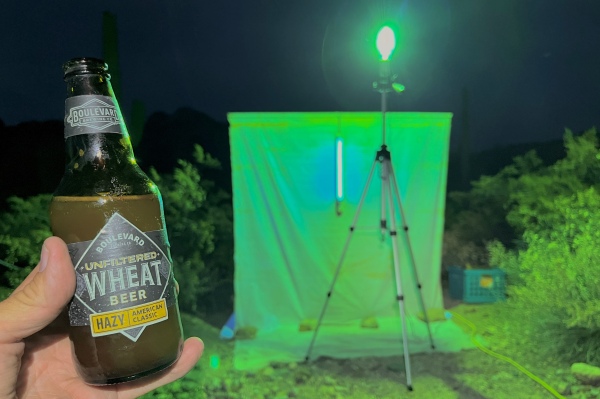
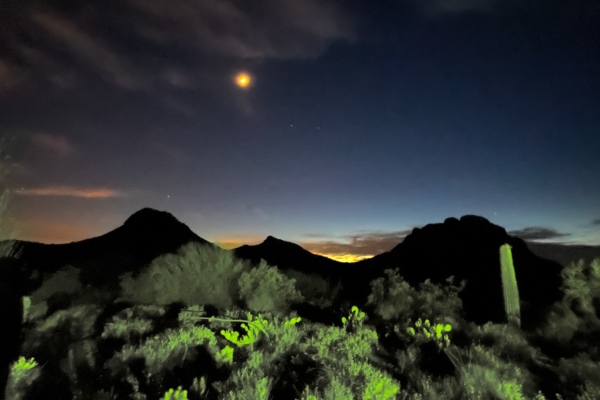

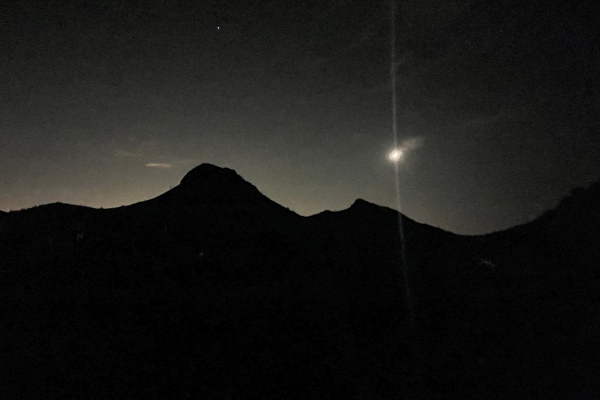
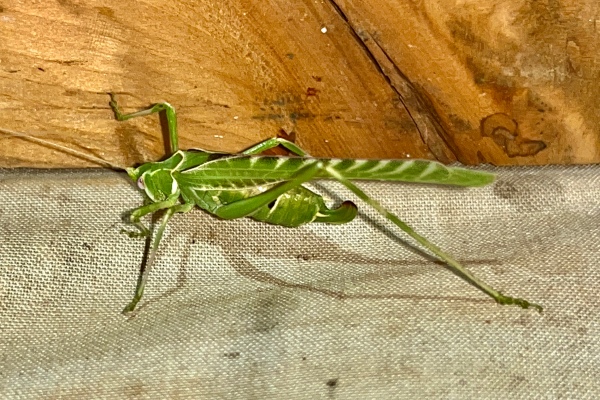

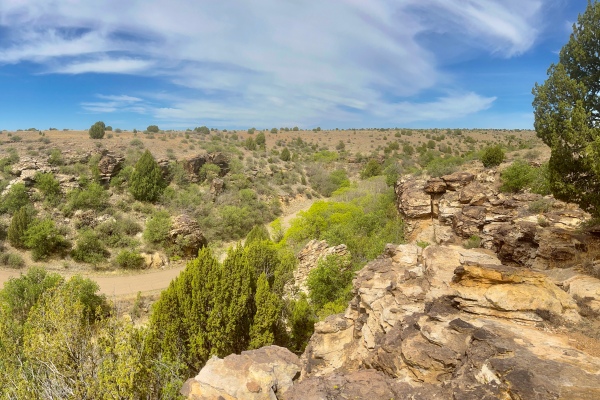
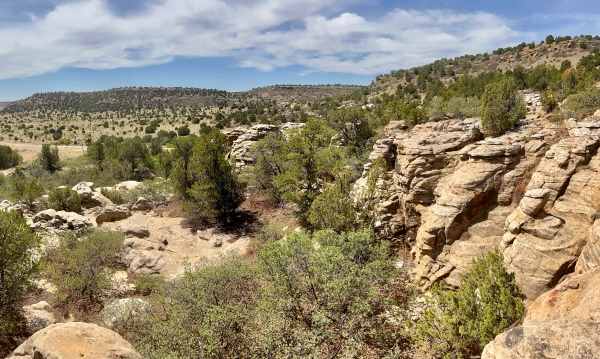
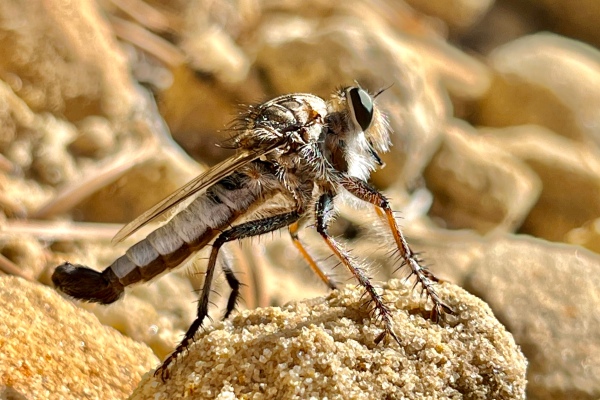

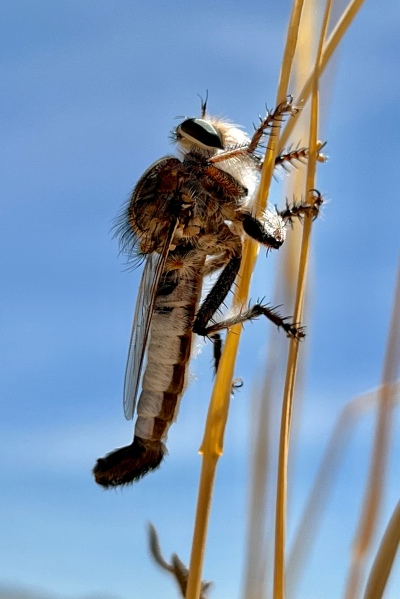
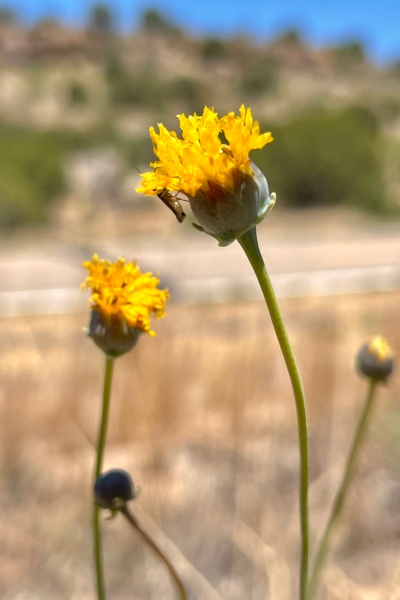
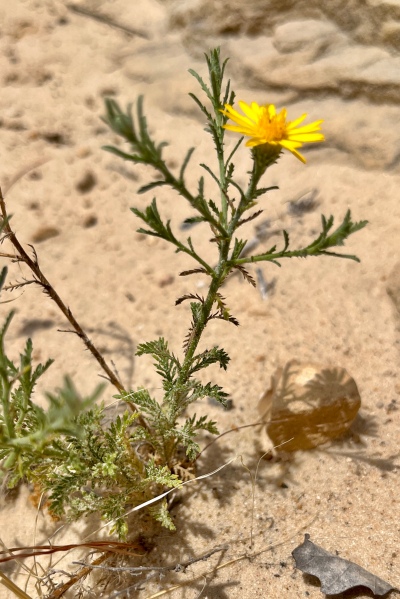
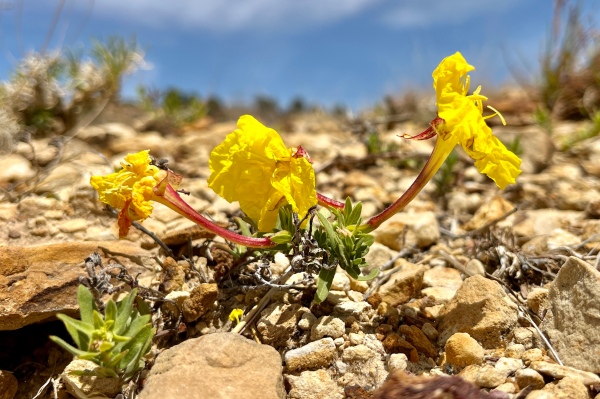
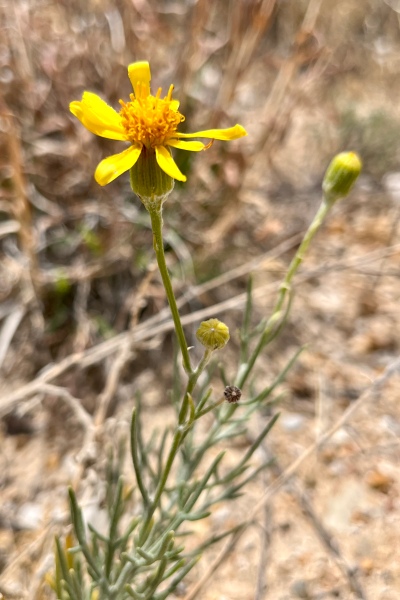
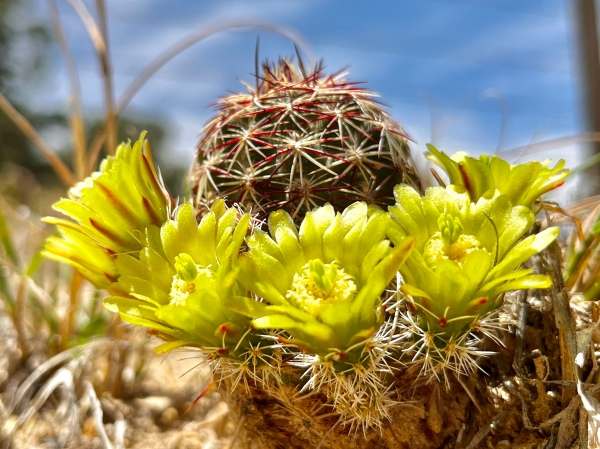
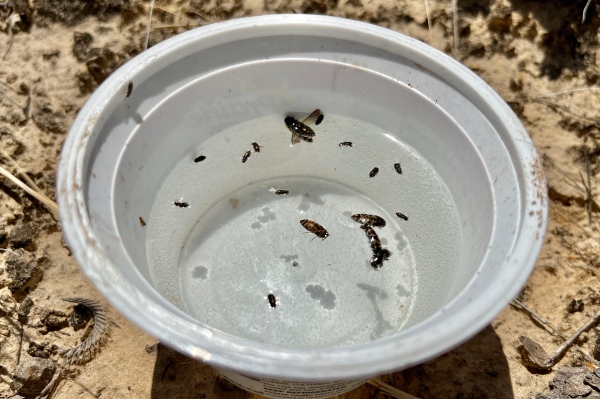
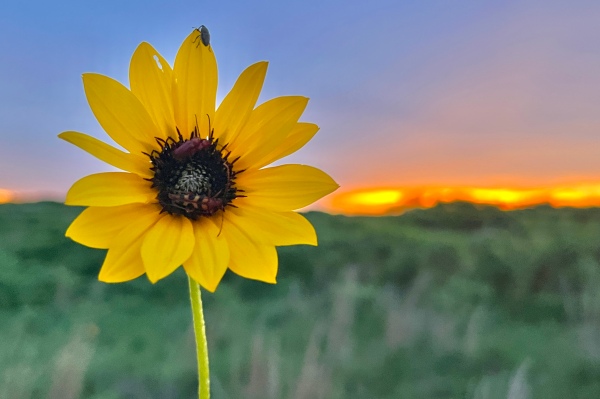





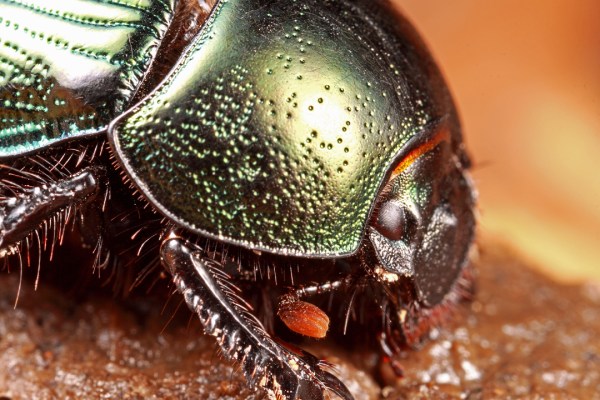
 Beetles In The Bush