The “obscure” Dicerca

IMG_0533_1200x800

Photo details (first 2 photos): Canon 100mm macro lens on a Canon EOS 50D, ISO 100, 1/250 sec, f/13, MT-24EX flash 1/4 power through diffuser caps

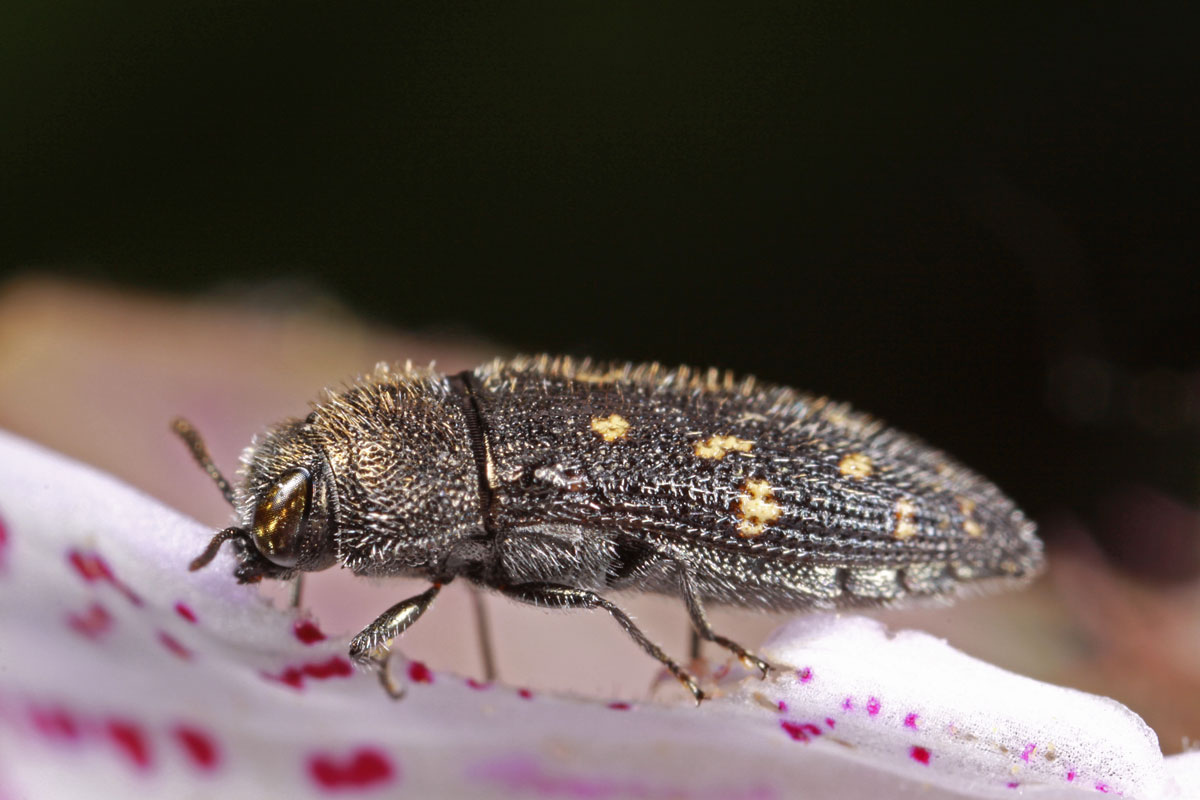
During my recent trip to northwestern Oklahoma, we visited Packsaddle Wildlife Management Area, a 17,000-acre chunk of land containing mixed-grass prairie, shinnery oak (Quercus havardii) shrublands, and mesic woodlands along the South Canadian River.  In one of these woodlands, I encountered a small grove of persimmon (Diospyros virginiana) trees – some of which had recently died.  Whenever I see dead persimmons, I immediately think of the jewel beetle species, Dicerca obscura (family Buprestidae).  This attractive species is one of the larger jewel beetles occurring in our country, and although it is fairly commonly encountered in collections, seeing the living beetles in the field is always a treat.  Dicerca obscura is most commonly associated with persimmon, from which I have reared it on several occasions, but Knull (1920) also recorded rearing it from staghorn sumac (Rhus typhina).

IMG_0534_1200x800I began inspecting the dead trees for the presence of the beetles but didn’t see any at first.  Then, I saw something moving right where I had been looking.  I had, in fact, looked right over this beetle without seeing it – even though I knew what could be there and what it looked like.  I don’t know if the species name (from the Latin obscurus, meaning indistinct) was actually given because of its marvelous cryptic abilities, but it certainly could have been.  As I continued to inspect the trees more closely, I found several additional adults – all sitting on trunks that I had just inspected a few minutes prior.  I couldn’t help but think of the irony – in collections, Dicerca beetles are quite gaudy and conspicuous appearing, with their shiny, brassy colors and exquisite surface sculpturing (as exemplified by Dicerca asperatathis photo of a pinned specimen in my collection of a similar species, D. asperata).  However, in the context of their environment, their coloration and sculpturing helps them blend in and become almost invisible.

Dicerca obscura occurs across the eastern U.S. but is absent from much of New England, the Appalachian Mountains, the Allegheny Plateau, and the upper Midwest – apparently due to the absence of persimmon in those regions.  It has been been recorded in Oklahoma as far west as Oklahoma City (Nelson 1975), so my record from Ellis Co. in far northwestern Oklahoma represents a bit of a range extension.  This is not surprising – the species will probably be found wherever persimmon grows.  You’ll just have to look carefully if you want to find it!

REFERENCES:

Knull, J. N.  1920.  Notes on Buprestidae with descriptions of new species.  Entomological News 31:4-12.

Nelson, G. H.  1975.  A revision of the genus Dicerca in North America (Coleoptera: Buprestidae).  Entomologische Arbeiten aus dem Museum G. Frey tutzing bei München 26: 87-180.

Copyright © Ted C. MacRae 2009

Add to FacebookAdd to NewsvineAdd to DiggAdd to Del.icio.usAdd to StumbleuponAdd to RedditAdd to BlinklistAdd to Ma.gnoliaAdd to TechnoratiAdd to Furl

Treatise of Western Hemisphere “Cicindelitae”

Sumlinia hirsutifrons

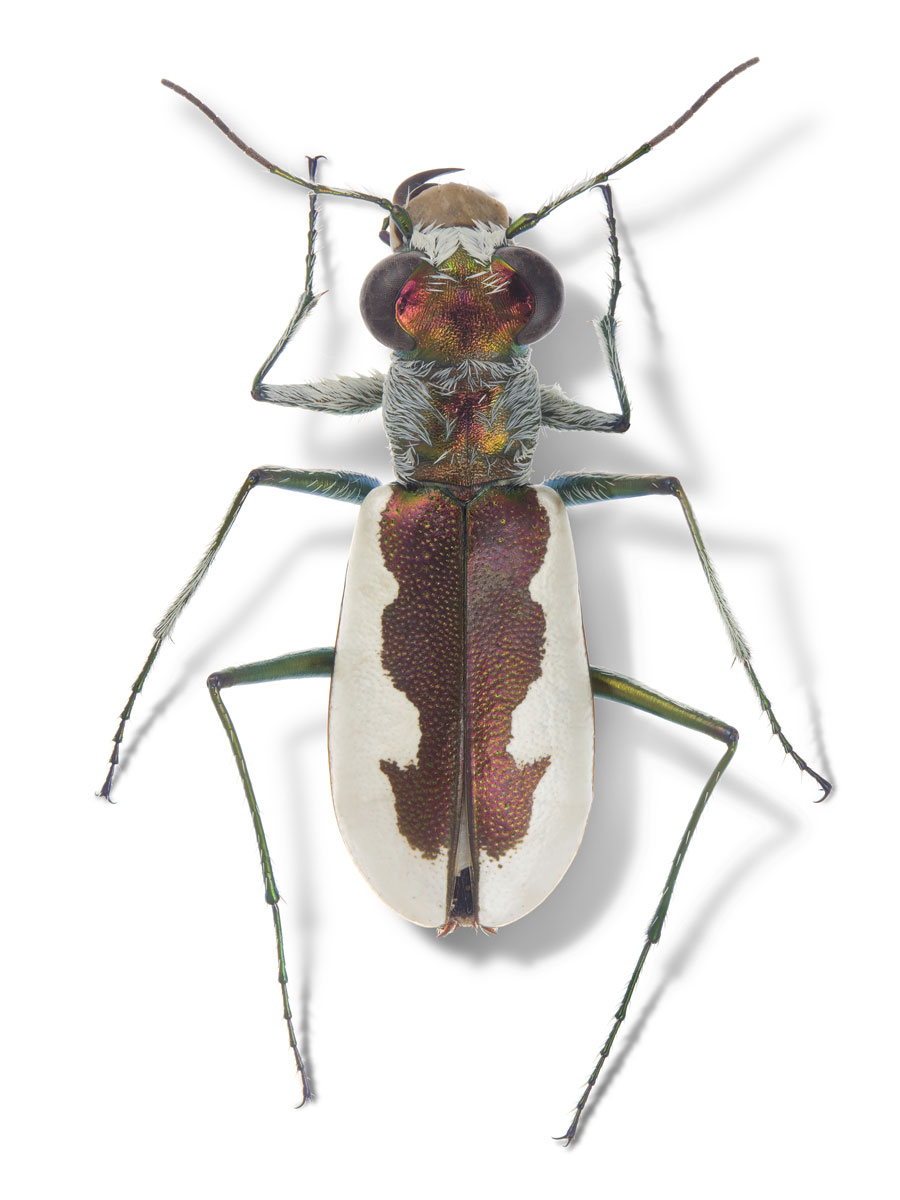
Sumlinia hirsutifrons (Sumlin). Copyright © T. L. Erwin and D. L. Pearson 2008

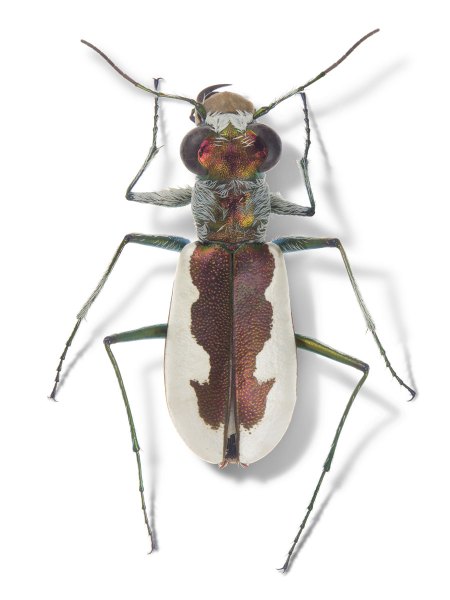
ResearchBlogging.orgTiger beetles have long enjoyed a popularity that is disproportionate to their diversity, abundance, and economic importance relative to other groups of beetles. This seems as much due to their charismatic behavior – toothy jawed predators in extreme habitats – as it is to their brilliant colors, dazzling designs, and penchant for polytopism. Never before has this popularity been more evident than in the past decade, during which time there has been a veritable explosion of popular and semi-popular tiger beetle books. Barry Knisley and Tom Schulz (1997) got things going with their regional guide to species occurring in the southeastern U.S., followed closely by a similar guide to the northeastern U.S. (Leonard and Bell 1998).  Both of these books featured color photographs of all species treated and supplemented species treatments with sections on biology, natural history, rearing, and conservation.  No longer were avocational or professional entomologists forced to consult dry, technical treatments in primary journals for information on these anything-but-dry, boring beetles.  These two books were, in turn, followed by several smaller regional treatments, including John Acorn’s (2001) eccentric and highly entertaining Tiger Beetles of Alberta and Paul Choate’s (2003) alternative treatment of Florida species (a silly little article about Missouri’s two dozen or so species also appeared in 2001), as well as a comprehensive summary of the group’s ecology and evolution by Dave Pearson and Alfreid Vogler (2001).  The granddaddy of all tiger beetle books – at least for U.S. cicindelophiles – appeared a few years later in the form of A Field Guide to the Tiger Beetles of the United States and Canada, by Dave Pearson and colleagues (2006).  At long last, keys, photographs, and discussions of habitats, biology, and variation of every species and subspecies known from the U.S. and Canada could be found in a single source.

The latest contribution to this growing body of literature is the most comprehensive yet.  In it, Dave Pearson has teamed up with ground beetle expert and lead author Terry Erwin to provide a synthesis of every species of tiger beetle known to occur in the Western Hemisphere.  Erwin and Pearson (2008) is a beautifully printed and handsomely bound treatise that elaborates the current classification, taxonomy, distribution at the country and/or state/provincial level, and way of life of each species and subspecies, including comments on habitats, flight and dispersal capabilities, seasonal occurrence, and behavior.  References for each species and an extensive bibliography are also provided, as are notes on threatened and endangered species and subspecies.

There is much to like about this book.  The scope of coverage to include the entire Western Hemisphere is unprecedented – few insect taxa, even popular ones, have been treated so expansively.  Those without access to comprehensive libraries of primary tiger beetle literature will appreciate having all of the available information in one book, while those with access to the literature will appreciate the references for individual species.  Even those whose interest is restricted to the North American fauna will find the historical nomenclature handy – something lacking in Pearson et al. (2006).  As a bonus, a full color plate is offered for each genus that offers a spectacular extended focus image of a representative species, along with additional photographs provided by a number of contributors (I myself provided some of the photographs used in the Cylindera and Dromochorus plates) of live beetles and their habitats.  Collectively, these images provide a comprehensive look at the diversity and habitats of New World tiger beetles that has until now not been available.

The book, however, is not without its criticisms.  There has long been controversy within the Tiger Beetle Guild regarding the relationship of tiger beetles to ground beetles and whether/which of the many described subgenera of the genus Cicindela should be accorded generic status.  Erwin and Pearson fall solidly in the camp that consider tiger beetles a subgroup of ground beetles, a position that is becoming increasingly easy to defend on the basis of molecular phylogenetic analyses (e.g., Beutel et al. 2008).  Nontheless, I suspect many will be bothered by the decision to rank tiger beetles as a supertribe – “Cicindelitae” – in the subfamily Carabinae, rather than according the group subfamilial status.  Unfortunately, no justification for such placement is offered (unless this appears in Volume 1).  Likewise with subgenera, Erwin and Pearson break ranks with the preponderance of recent North American literature (including Pearson’s own 2006 book) and accord full genus status to most of the former subgenera of the genus Cicindela, including such familiar North American taxa as Cylindera, Dromochorus, Ellipsoptera, Eunota, and HabroscelimorphaTribonia, on the other hand, is synonymized under Cicindela, leaving Cicindelidia as the only non-nominate subgenus of Cicindela.  Certain of these taxonomic acts will likely confront little opposition (e.g., Dromochorus as a full genus); however, again no justifications are provided, leaving the reader with the impression – rightly or wrongly – that the new rankings are the result of personal preference rather than new anaylsis.  I was also a bit puzzled by the inclusion of some subspecies as valid that Pearson himself had previously synonymized (e.g., Cicindela tranquebarica roguensis and C. tranquebarica lassenica).

The publisher, Pensoft, has established a reputation for quality with their previous offerings, and this book appears to continue that tradition. However, at a price of EURO 95, this book will probably not be highly sought after by the casual North American tiger beetle collector.  Nevertheless, I think any serious student of the group will want this in their library, regardless of how complete their literature collection on the group is.

I thank Terry Erwin for allowing me to use his gorgeous extended focus image of Sumlinia hirsutifrons (Sumlin), which graces the cover of this beautifully produced book.

REFERENCES:

Acorn, J.  2001.  Tiger Beetles of Alberta: Killers on the Clay, Stalkers on the Sand.  The University of Alberta Press, Edmonton, xix + 120 pp.

Beutela, R. G., I. Riberab and O. R. P. Bininda-Emonds. 2008. A genus-level supertree of Adephaga (Coleoptera). Organisms, Diversity & Evolution, 7:255–269.

Choate, P. M., Jr. 2003. A Field Guide and Identification Manual for Florida and Eastern U.S. Tiger Beetles.  University Press of Florida, Gainesville, 224 pp.

Erwin, T. L. and D. L. Pearson. 2008. A Treatise on the Western Hemisphere Caraboidea (Coleoptera). Their classification, distributions, and ways of life. Volume II (Carabidae-Nebriiformes 2-Cicindelitae). Pensoft Series Faunistica 84. Pensoft Publishers, Sofia, 400 pp.

Knisley, C. B. and T. D. Schultz.  1997.  The Biology of Tiger Beetles and a Guide to the Species of the South Atlantic States. Virginia Museum of Natural History, Martinsville, 210 pp.

Leonard, J. G. and R. T. Bell.  1998.  Northeastern Tiger Beetles: A Field Guide to Tiger Beetles of New England and Eastern Canada.  CRC Press, Boca Raton, 176 pp.

MacRae, T. C., and C. R. Brown. 2001. Missouri Tigers. The Missouri Conservationist 62(6):14–19.

Pearson, D. L., C. B. Knisley and C. J. Kazilek. 2006. A Field Guide to the Tiger Beetles of the United States and Canada. Oxford University Press, New York, 227 pp.

Pearson, D. L. and A. P. Vogler.  2001.  Tiger Beetles: The Evolution, Ecology, and Diversity of the Cicindelids.  Cornell University Press, Ithaca, New York, 333 pp.

Copyright © Ted C. MacRae 2009

Add to FacebookAdd to NewsvineAdd to DiggAdd to Del.icio.usAdd to StumbleuponAdd to RedditAdd to BlinklistAdd to Ma.gnoliaAdd to TechnoratiAdd to Furl

Beetle News: a new, online publication

Issue 1 of Beetle News featured a beginners guide to the Silphidae such as this burying beetle Nicrophorus vespilloides. © Richard Wright

Issue 1 of Beetle News featured a beginner's guide to the Silphidae such as this burying beetle Nicrophorus vespilloides. © Richard Wright

One of my favorite of entomology publications has always been the newsletter. Regardless of the specialty group to which they cater, newsletters usually share one, common feature – fun, easy-to-read articles about insects, techniques, collecting trips, etc., written in a casual flavor that makes them unsuitable for stuffy, scientific journals. Unfortunately, they have also shared several difficulties – continually rising costs for production and mailing of hard copies to a small (though dedicated) readership. The internet has changed all that – gone (or drastically reduced) are the costs, and with the growing ease of electronic publication all it takes now to sustain a newsletter are contributions by a few dedicated individuals and an internet-connected readership. Perhaps the finest example of one of these now electronic newsletters is the highly entertaining and informative SCARABS Newsletter, resurrected from the mimeographed ashes of its previous incarnation SCARABAEUS.

Recently, insect macrophotographer extraordinaire Kolby Kirk alerted me to the newest online beetle publication called Beetle News. Created by Richard Wright and hosted by the U.K. based Amateur Entomologists’ Society, this new, online newsletter deals exclusively with British beetles. Richard Wright explains the mission of the newsletter in his inaugural issue editorial:

Welcome to the very first edition of “Beetle News”. This is an internet publication devoted to British Beetles. It is a public domain publication which can be freely copied and distributed provided no charge is made. However, copyright to all text and photographs remains with the original authors and photographers. If you find Beetle News of interest, please pass it to others.

Beetle News will include any relevant material which is not suitable for publication elsewhere. It is not intended for articles which are more suited to formal journals such as The Coleopterist.

The intention is to publish on a quarterly basis, approximately in March, June, September and December. Beetle News can only continue if sufficient material is submitted to make it worthwhile. Please submit material for the June issue by 21st May.
Richard Wright

Articles in the first issue include:

  • Review: British Scraptiidae by Brian Levey – Richard Wright
  • Warwickshire Coleoptera – an update – Steve Lane
  • Somerset beetle records wanted – Andrew Duff
  • Some observations on the Orange Ladybird – Ralph Atherton
  • Vivarium heat mats : a few suggested uses for the coleopterist – Andrew Chick
  • Cassida nebulosa Linnaeus (Chrysomelidae) in flight – Andrew Duff
  • News from recording schemes (Tenebrionoidea, Scirtidae, Stenini, Silphidae) – Scotty Dodd, Jonty Denton, Richard Wright
  • Beetle publications for free download – Richard Wright
  • Beginner’s Guide Silphidae 1: Nicrophorus – Richard Wright

Although restricted to British beetles, I thoroughly enjoyed this newsletter (especially the very well produced and illustrated article on Nicrophorus) and look forward to the next issue, due to appear later this month (June 2009).

Copyright © Ted C. MacRae 2009

Add to FacebookAdd to NewsvineAdd to DiggAdd to Del.icio.usAdd to StumbleuponAdd to RedditAdd to BlinklistAdd to Ma.gnoliaAdd to TechnoratiAdd to Furl

Third time’s a charm!

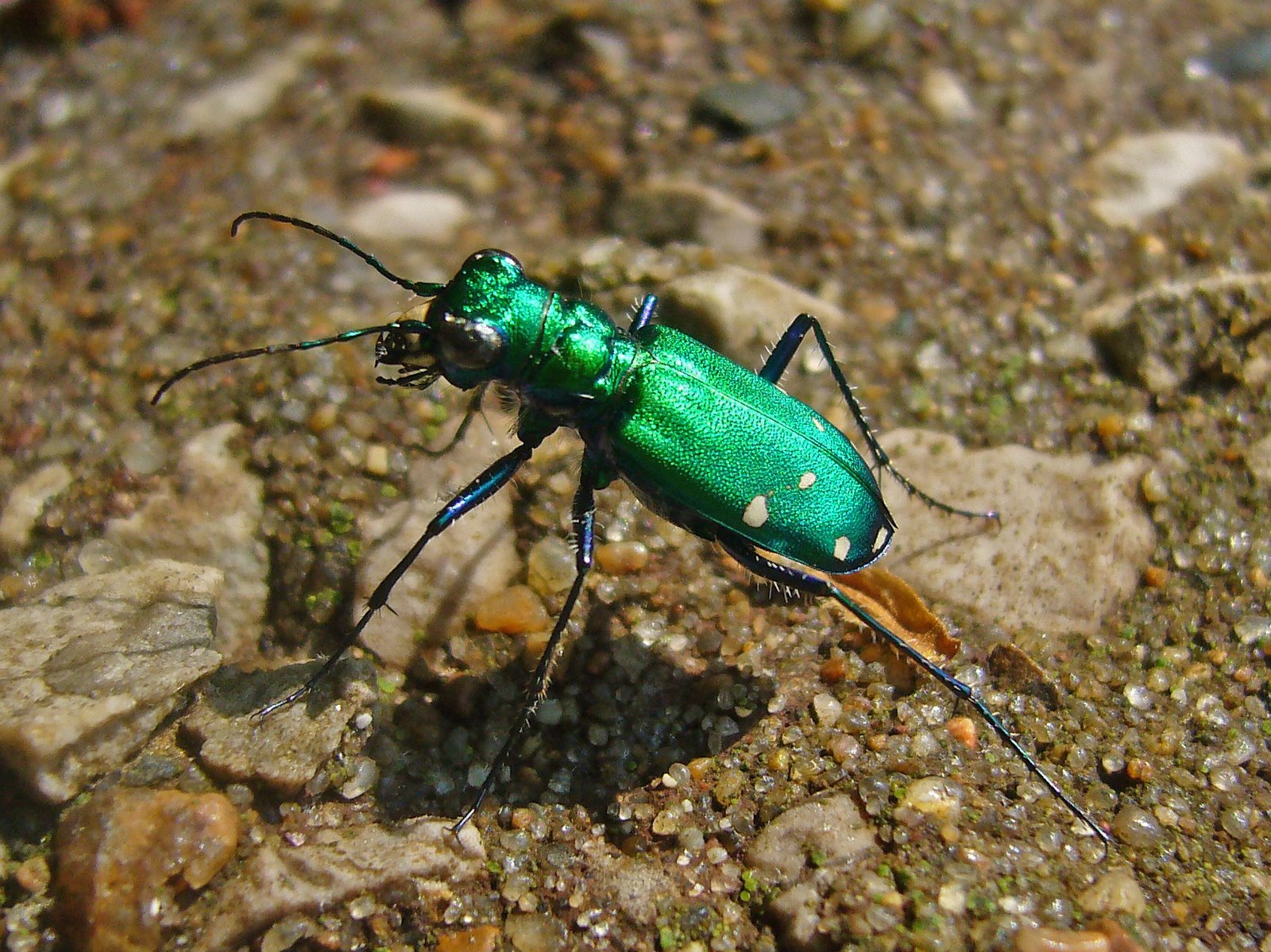
This post may seem like déjà vu to some of you, as it is my third featuring our common woodland tiger beetle species, Cicindela sexguttata (six-spotted tiger beetle). However, this post is as much a photography lesson as it is insect post, and when I say photography lesson I mean for myself – I’m not yet anywhere near the point where I feel qualified to dole out photography advice to others.

The last weekend of May, I returned to nearby Shaw Nature Reserve in hopes of photographing Cicindela unipunctata (one-spotted tiger beetle). This large, nearly flightless species has been recorded broadly across the eastern U.S. but is not encountered all that commonly. It is among the few species that seem to prefer more shaded woodland habitats (Pearson et al. 2006); however, its ecology is still not well understood. I had hoped to find it during my first outing with the new camera setup, but it was not to be and I had to settle for C. sexguttata as the first tiger beetle subject for my camera’s maiden voyage.   On this return visit, I arrived at the preserve shortly before noon and proceeded to walk back and forth along the trails where my colleague, Chris Brown, had noted healthy populations last year and one individual just three weeks ago.  For four hours, I gazed intently at the path in front of me in hopes of seeing the beetle – usually blending well with the ground because of its dull brown upper surface and noticed only because of its clumsy manner of running when disturbed.  All to no avail.  Of course, our old friend C. sexguttata was still present in good numbers, and since I wasn’t completely happy with the results of my first photo shoot of this species with the new camera I decided to try it again.

My main criticism of the initial photographs of this species was the harshness of the lighting.  I suspected that diffusers of some type would give a better result, so for this outing I covered the flash heads with small plastic diffuser caps that I had purchased with the flash unit.  The following series of photographs compare the results with and without the diffuser caps.  The photos have been left unenhanced but are reduced from their original size to 1200×800 pixels.  All of the photographs were taken using a Canon EF 100mm macro lens on a Canon EOS 50D, ISO 100, exposure 1/250 sec, and MT-24EX twin flash unit.  Click on the photos to see the enlarged version after reading the discussion of each.

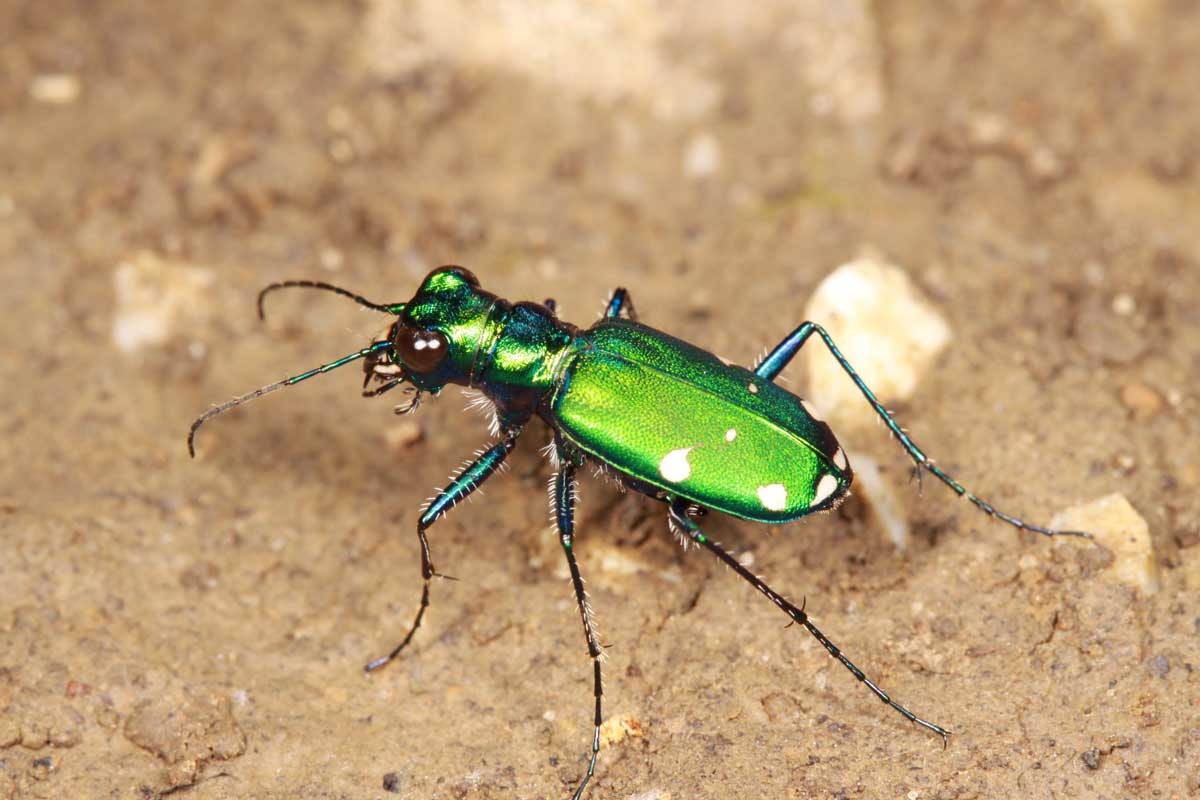
Flash 1/4 power without diffuser caps, f/20

Flash 1/4 power without diffuser caps, f/20

This first photo is from the first session, during which I ran the flash unit at 1/4 power without diffuser caps.  The conditions were rather bright, and it required a relatively high f-stop (f/20) to get the exposure right.  This resulted in very good depth of field, but as you can see the lighting is rather harsh with bright highlights due to the brilliant, metallic coloration of the beetle.

1/8 power flash w/ diffuser caps

Flash 1/8 power flash with diffuser caps, f/10

In this photograph, I reduced the flash power to 1/8 and used the diffuser caps.  This softened the light considerably and removed much of the harsh highlighting.  However, I had to open up the aperature to f/10 in order to get good exposure, and as a result the depth of field really suffered.  Apparently the diffuser caps also reduce the amount of light from the flash, which combined with reducing the power to 1/8 substantially lowered the light levels.

Flash 1/4 power, w/ diffuser caps, f/13

Flash 1/4 power with diffuser caps, f/13

I then increased the flash back up to 1/4 power but kept the diffuser caps in place.  This allowed me to increase the f-stop to f/13, which resulted in much better depth of field.  Since this photograph was taken in fairly bright conditions, this suggests that I might want to go up to 1/2 power flash in lower light situations if I want to maintain a higher f-stop.  I am very happy with this photograph – the lighting is even with no harshness, and virtually the entire beetle from foreground to background is in focus.  A little post-processing might still be helpful for reducing the shadows a bit, but otherwise I think this is a pretty good standard to shoot for with my future tiger beetle photographs.

Photo details: Canon EF 100mm macro lens on a Canon EOS 50D, ISO 100, 1/250 sec, f/13, MT-24EX flash 1/8 power with diffuser caps

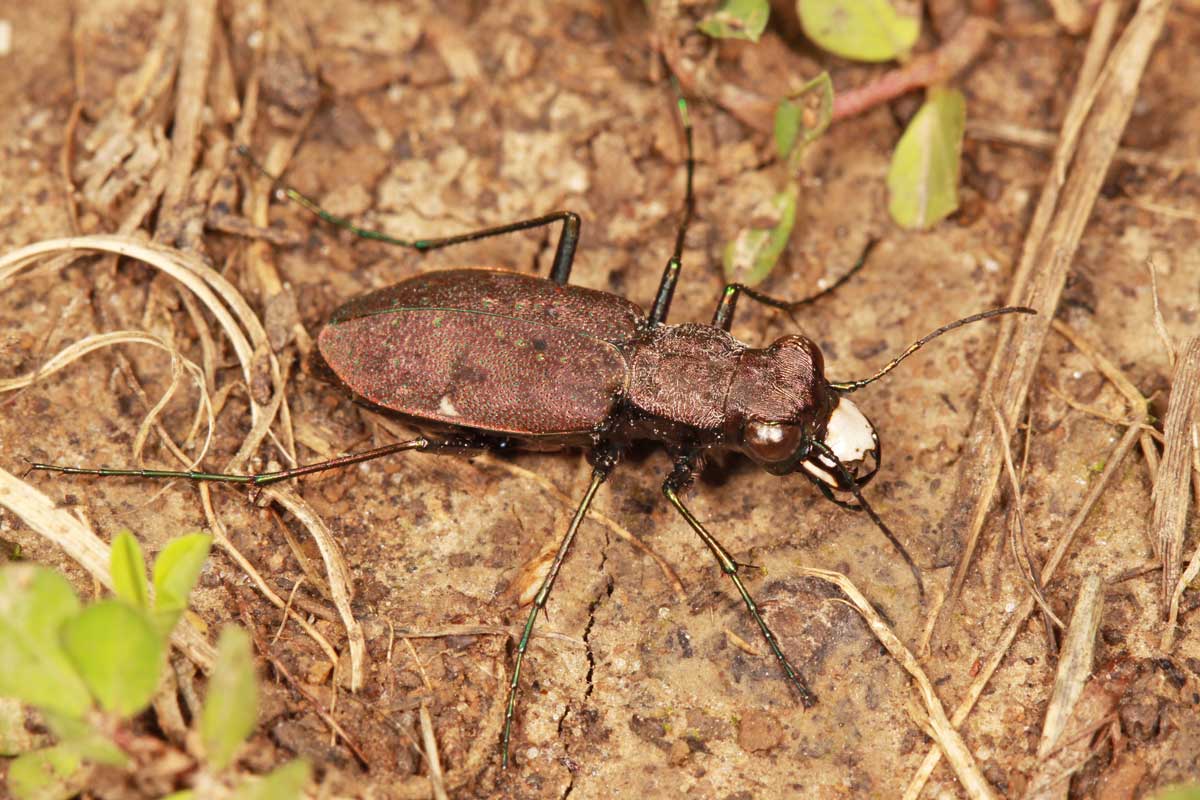
Cicindela unipunctata - flash 1/8 power with diffuser caps, f/13

As the saying goes, patience rewards those who wait, and a short time before I needed to leave, I finally saw the first C. unipunctata.  I was lucky enough to see it on the path without first disturbing it and was able to slowly crouch down into position and roll off a series of photos from this angle.  The photo I share here seemed to be the best of the series, but as I tried to shift to get a different view the little bugger began to bolt.  I blocked his escape with my hands until he seemed to settle down and then looked for him in the viewfinder, but I couldn’t find him – he had bolted as soon as I took my eye off of him, never to be seen again.  It amazes me how a relatively large beetle such as this – flightless even – can disappear completely amongst the vegetation.  Nevertheless, I accomplished my goal of getting at least one good photograph of this species, and you can be sure that I’ll be back to try for more.

I know there are several quite capable insect macrophotographers out there that occasionally read this blog – I encourage any comments or feedback that you might have on the techniques I have discussed here.

Copyright © Ted C. MacRae 2009

REFERENCE:

Pearson, D. L., C. B. Knisley and C. J. Kazilek. 2006. A Field Guide to the Tiger Beetles of the United States and Canada. Oxford University Press, New York, 227 pp.

Add to FacebookAdd to NewsvineAdd to DiggAdd to Del.icio.usAdd to StumbleuponAdd to RedditAdd to BlinklistAdd to Ma.gnoliaAdd to TechnoratiAdd to Furl

Brachys on oak

Although the beetles I photographed for my springtime Acmaeodera post are among the smaller buprestids occurring in Missouri, they are by no means the smallest. That honor belongs to the curious little genus Mastogenius, measuring only around 2 mm in length and, thus, looking for all intents and purposes like little black dots.  Slightly larger, but still smaller than our smallest Acmaeodera, are members of the tribe Trachyini.  Adults in this group exhibit a highly derived morphology compared to other groups of jewel beetles – flat, compact, and wedge-shaped rather than the elongate, cylindrical form more commonly associated with the family.  This seems in part due to their unique larval habits – mining within the leaves of their host plants rather than boring through the wood.  Three genera in this tribe occur in the U.S.¹, all of which are found in Missouri.  These include: 1) Taphrocerus, which mine the leaves of sedges (family Cyperaceae); 2) Pachyschelus, which mine the leaves of herbaceous plants in several families – primarily Fabaceae; and 3) Brachys, which mine the leaves of hardwoods, chiefly oaks (Quercus).  It was two species in this latter genus (out of three that occur in Missouri) that I encountered a couple weekends ago at Reifsnider State Forest in Warren County (noted for its high quality example of a mature white oak forest).

¹ A species in the Old World genus Trachys was introduced to North America from Europe and is established in New Jersey.

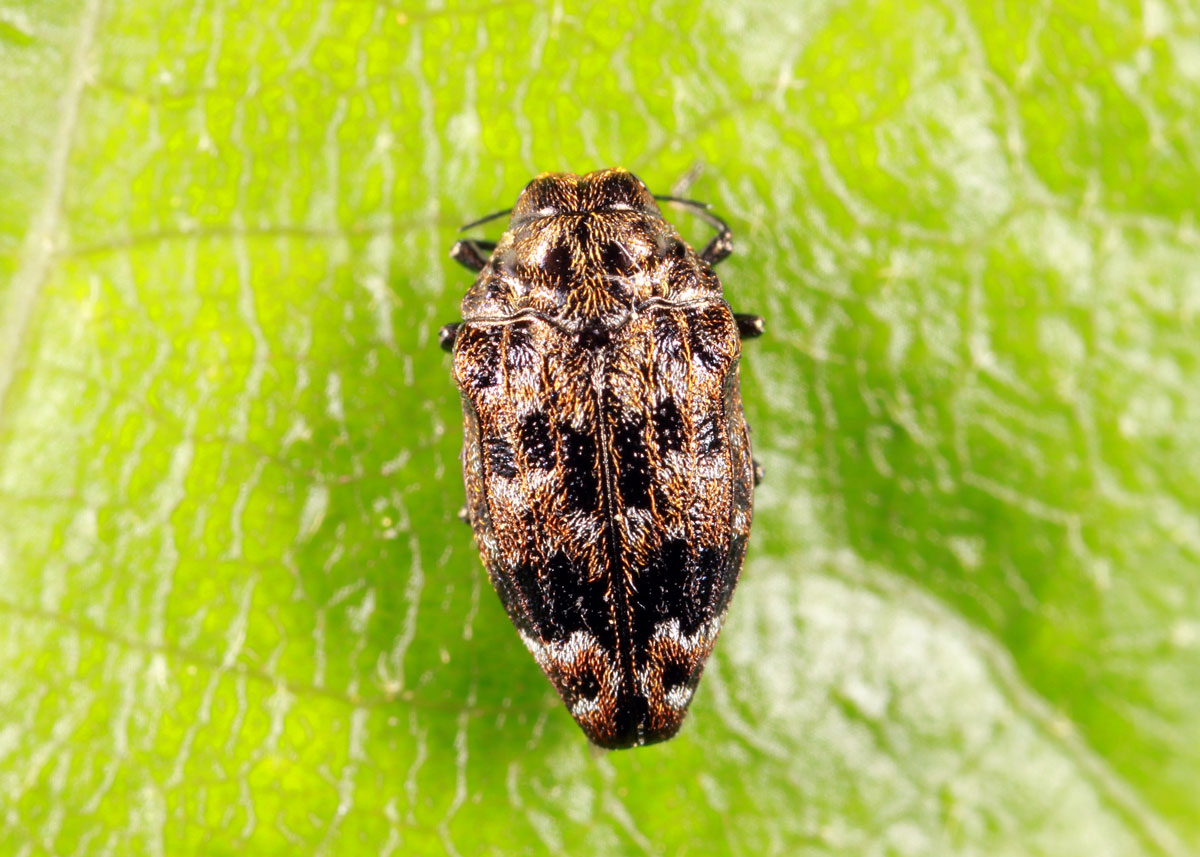
Brachys_ovatus_IMG_0193_enh2

Photo details: Canon MP-E 65mm 1-5X macro lens on a Canon EOS 50D, ISO 100, 1/200 sec, f/10, MT-24EX flash 1/8 power through diffuser caps

Brachys ovatus is the largest of the three species, usually measuring a little more than 5 mm in length. In addition to size, it can also be distinguished from Missouri’s two other species of Brachys by the dense row of long hairs occurring along the apex of the last abdominal sternum. For those of you who prefer not to have to look at the underside of its butt, the white-margined band of bronze pubescence before the apex of the elytra and longitudinal rows of bronze setae in the basal half of the elytra are usually sufficient for distinguishing this species.  Brachys ovatus is a common associate of oaks throughout Missouri during spring – I have collected it on ten of Missouri’s 21 oak species, including both ‘white oaks’ and ‘red oaks’. Despite its common occurrence on oak and the frequent reference to it in the literature as a leaf-miner of oaks, few reliable rearing records exist to document the range of hosts it actually utilizes.  There are older reports of this species mining the leaves of other hardwoods such as beech (Fagus), elm (Ulmus), hickory (Carya), and hornbeam (Carpinus); however, the veracity of these reports is questionable, and they may refer only to incidental adult associations.

Brachys_aerosus_IMG_0165_enh2

Photo details: Canon EF 100mm f/2.4 Macro Lens with Kenco extensions on a Canon EOS 50D, ISO 100, 1/200 sec, f/11, MT-24EX flash 1/8 power through diffuser caps

Brachys aerosus is another commonly encountered species.  This is a highly variable and hard-to-define species, but in general it can be recognized by the basal region of the elytra largely lacking pubesence and with a purple, blue, or green luster, and by the predominantly gold to bronze pubescence covering the apical area of the elytra.  Adult length is generally from 3 to 5 mm – somewhat smaller than B. ovatus, and differing also in that it is commonly associated with a variety of hardwoods besides oak.  In Missouri, I have primarily collected it on oaks and elms.  Literature reports – mostly old and unreliable – record as larval hosts many other hardwood genera such as chesnut (Castanea), beech, hazel (Corylus), hickory, hornbeam, linden (Tilia), poplar (Populus), and even such unlikely genera as huckleberry (Vaccinium) and grape (Vitis).  Because of its variability and the broad diversity of hosts with which it has been associated, this species is suspected of acutally being a species complex.  The late George Vogt spent many years making careful observations with reared material in an effort to determine species boundaries and their host associations. Unfortunately, Vogt passed away before publishing his observations, and his eccentric record keeping with cryptic notes (Anderson et al. 1991) makes it unlikely that they ever will be published. It will take some enthusiastic sole to repeat his work and publish it before we can ever know the true identity of the species hiding under this name.

A third species in the genus, Brachys aeruginosus, is smaller than either of the two above species – generally measuring only 3 to 4 mm in length.  This rather uncommonly encountered species is most similar to B. aerosus in appearance but can be distinguished, in addition to its generally smaller size, by the predominantly light gold to silver setae that cover the apical area of the elytra.  As with the two above species, it is most often associated with oaks but is occasionally collected on other hardwoods as well.  Whether it utilizes species beside oak for larval development is unknown.  I hope to find and photograph this species in the near future.

REFERENCE:

Anderson, D., C. L. Bellamy, H. A. Howden, and C. Quimby. 1991. George Britton Vogt (1920–1990). The Coleopterists Bulletin 45(1):93–95.

Copyright © Ted C. MacRae 2009

Add to FacebookAdd to NewsvineAdd to DiggAdd to Del.icio.usAdd to StumbleuponAdd to RedditAdd to BlinklistAdd to Ma.gnoliaAdd to TechnoratiAdd to Furl


Goldenrod Leaf Miner

Microrhopala_vittata_IMG_0183_enh2

Photo details: Canon MP-E 65mm macro lens on a Canon EOS 50D, ISO 100, 1/200 sec, f/16, MT-24EX flash 1/8 power through diffuser caps

While photographing Acmaeodera tubulus and A. ornata a couple of weekends ago (see Springtime Acmaeodera), I came across this leaf beetle (family Chrysomelidae) of the genus Microrhopala¹.  When I took Systematic Entomology (so many moons ago), beetles in this and related genera were placed in the subfamily Hispinae.  That taxon has since been subsumed by a more broadly defined Cassidinae (Staines 2002), which also includes the delightfully odd tortoise beetles.  There are several species of Microrhopala in North America – this individual can be diagnosed as M. vittata by means of its dull reddish elytral stripes, eight-segmented antennae, and smooth (not serrate or toothed) elytral margins (Clark 1983). 

¹ Derived from the Greek micr (small) and rhopal (a club) – presumably a reference to its small-clubbed antennae.

Many leaf beetles are expert botanists, restricted to and able to discriminate a single plant species or group of closely related species for hosts.  Microrhopala vittata is no exception, specializing on true goldenrods (Solidago spp.) and flat-topped goldenrod (Euthamia graminifolia) (family Asteraceae).  Adults feed on leaves in the upper part of the plant, leaving numerous small holes, but it is the larvae that have the biggest impact on their host by mining within the leaves between the upper and lower surfaces.  Larval mining eventually causes the leaves to turn brown and shrivel up. 

This species has been widely studied by ecologists interested in understanding the impacts of herbivorous insects on their host plants and associated changes to plant communities that result from their feeding.  While population densities of M. vittata are normally low, they occasionally reach densities that result in severe damage to their host plants.  Such effects are not limited to the host plants themselves – Carson and Root (2000) found that outbreaks of this species on stands of tall goldenrod (Solidago altissima) in an old field dramatically reduced the biomass, density, height, survivorship, and reproduction of tall goldenrod, resulting in higher abundance, species richness, and flowering shoot production among other plant species as a result of increased light penetration.  Conversely, in experimental plots where the beetles were removed, tall goldenrod developed dense stands that inhibited the growth of many other plants.  These effects lasted for several years after the outbreak.  Thus, the beetle can act as a keystone species² in old field communities, indirectly promoting woody plant invasion and speeding the transition of the old field to a tree-dominated community.

² A keystone species is one whose impacts on its community or ecosystem are large and greater than would be expected from its relative abundance or total biomass (Paine 1969).  Popular examples include the beaver, which transforms stream communities to ponds or swamps, and elephants, which prevent grasslands from converting to woodlands through destructive tree removal.  In contrast, trees, giant kelp, prairie grasses, and reef-building corals all have impacts that are large but not disproportionate to their also large total biomass and, thus, are not considered keystone species.

REFERENCES:

Carson, W. P. and R. B. Root.  2000.  Herbivory and plant species coexistence: Community regulation by an outbreaking phytophagous insect.  Ecological Monographs 70(1):73-99.

Clark, S. M. 1983. A revision of the genus Microrhopala (Coleoptera: Chrysomelidae) in America north of Mexico. The Great Basin Naturalist 43(4):597-617.

Paine, R. T. 1969. A note on trophic complexity and community stability. The American Naturalist 103(929):91–93.

Staines, C. L. 2002. The New World tribes and genera of hispines (Coleoptera: Chrysomelidae: Cassidinae). Proceedings of the Entomological Society of Washington 104(3): 721-784.

Copyright © Ted C. MacRae 2009

Add to FacebookAdd to NewsvineAdd to DiggAdd to Del.icio.usAdd to StumbleuponAdd to RedditAdd to BlinklistAdd to Ma.gnoliaAdd to TechnoratiAdd to Furl

Springtime Acmaeodera

Last weekend I mustered up the courage to begin experimenting with the 1-5X macro lens with my new camera. I had played around with it a little, trying to get a feel for finding the subject (it seemed hard) and the working distance (it seemed close). Really though, no amount of fiddling around could take the place of taking it out into the field and using it. I found some ideal subjects to experiment with – springtime Acmaeodera. With more than 150 species, this is one of the largest genera of jewel beetles (family Buprestidae) in North America. This genus is in terrible need of revision – new species continue to be recognized on a regular basis from the desert southwest and Mexico, where the group reaches its greatest diversity. Only a handful of species, however, are found in the eastern part of the U.S.

Acmaeodera_tubulus_IMG_0110_enh2

Photo details: Canon MP-E 65mm macro lens on a Canon EOS 50D, ISO 100, 1/200 sec, f/11, MT-24EX flash 1/8 power through diffuser caps

One of the most abundant and widespread of these is Acmaeodera tubulus (first two photos). Measuring only 5-7mm in length, it is among the smallest members of the genus and can be recognized by its black color with bronzy sheen and 8 (usually) small, yellow spots forming two longitudinal rows on each elytron. Adults of this species feed on the petals of a great variety of flowers – this individual was feeding on the petals of eastern beebalm (Monarda bradburiana). The larvae of this species are wood borers in twigs and small branches of various hardwood trees – I myself have reared it from dead branches of green hawthorn (Crataegus viridis), several species of hickory (Carya spp.), hackberry (Celtis occidentalis), honey locust (Gleditsia triacanthos), walnut (Juglans nigra), eastern hophornbeam (Ostrya virginiana), willow (Salix sp.), and slippery elm (Ulmus rubra).

Acmaeodera_tubulus_IMG_0123_enh2

Photo details: Canon MP-E 65mm macro lens on a Canon EOS 50D, ISO 100, 1/200 sec, f/11, MT-24EX flash 1/8 power through diffuser caps

While not apparent from these photos, adults in flight have the appearance of small bees. The elytra of all Acmaeodera are fused and do not separate during flight as in most other beetles, which in this small species results in a profile during flight similar to that of a small halictid (sweat bee). There is another species in Missouri (A. neglecta) that closely resembles A. tubulus but which can be distinguished by its larger punctures, duller surface, and the yellow spots of the elytra often longitudinally coalesced into irregular “C”-shaped markings on each side. Acmaeodera neglecta occurs primarily in the south-central U.S., and in Missouri I have found it most often in glade habitats.

Acmaeodera_ornata_IMG_0155_enh2

Photo details: Canon EF 100mm macro lens on a Canon EOS 50D, ISO 100, 1/200 sec, f/11, MT-24EX flash 1/8 power through diffuser caps

Another common (though much less so than A. tubulus), springtime Acmaeodera in the eastern U.S. is Acmaeodera ornata (last photo). This handsome species is distinctly larger than A. tubulus, usually around 8-11mm in length, and has a broader, more flattened appearance with a distinct triangular depression on the pronotum. The elytra have a bluish cast rather than the bronzy sheen of A. tubulus, and the spots on the elytra are smaller, more numerous, and more of a creamy rather than yellow color. No other species in the eastern U.S. can be confused with it, although there is a very similar species (A. ornatoides) that occurs in Oklahoma and Texas.

This species, too, is fond of a great variety of flowers – especially asteraceous species, with this individual photographed on the widespread (but unfortunately exotic) ox-eye daisy (Leucanthemum vulgare). The body is covered with numerous long, thin hairs which may function in pollination – enlarge the photo to see the large amount of pollen that has become trapped among the hairs of this individual. Despite its widespread occurrence across the eatern U.S., larval host records are almost non-existent for this species – limited to some very old (and not entirely reliable) reports of it breeding in hickory and black locust (Robinina pseudoacacia). I have not managed to rear this species yet, despite the large number of rearings I’ve done from a wide variety of woody species in Missouri.

Copyright © Ted C. MacRae 2009

Add to FacebookAdd to NewsvineAdd to DiggAdd to Del.icio.usAdd to StumbleuponAdd to RedditAdd to BlinklistAdd to Ma.gnoliaAdd to TechnoratiAdd to Furl

A new look at an old friend

Chris Wirth just wrote a nice post summarizing the use of digital SLR camera systems for insect macrophotography.  Having just gone through the process of upgrading to a dSLR system from a point-and-shoot myself, I can relate to much of what he discusses.  The advantages are clear – higher image quality, far greater magnification capabilities, and control over lighting, shutter speed, aperture, etc.  He also discusses the disadvantages – chiefly co$t, weight, and initial learning curve.  He ends with this recommendation:

…if you are serious about insect photography and have the monetary resources, a DSLR is your only choice. Again, as of yet, nothing else provides similar quality or control.

Although I dabbled in insect photography many years ago with an Olympus OM-10 SLR film camera and a Zeiko 50mm macro lens, it wasn’t until I started this blog 18 months ago that I started making a real effort to photograph insects, using a Panasonic Lumix DMC-FX3 point-and-shoot that my dad had given to me for my birthday earlier that year. At first, I was amazed at the macro capabilities of this little camera – point, autofocus, and shoot! Yes, the photo needed to be cropped, and the reliance on natural light was not only limiting but often resulted in deep shadows – but nothing a little Photoshop couldn’t fix! It wasn’t long, however, before I began to see the limitations – not just on size, with tiger beetles being near the lower end of the size of subject I could photograph, but also with the quality of the images themselves. The perfectionist in me started envisioning what I could do if only I had the equipment. Mind you, I’m proud of the photographs I’ve acquired over the past months, given what I had to work with. But now that I have the equipment to do it right, I see a conflict on the horizon – do I attempt to go back and re-photograph all of those species that I’ve already photographed, or do I move on and and not look back? Perhaps a little of both is the best approach.

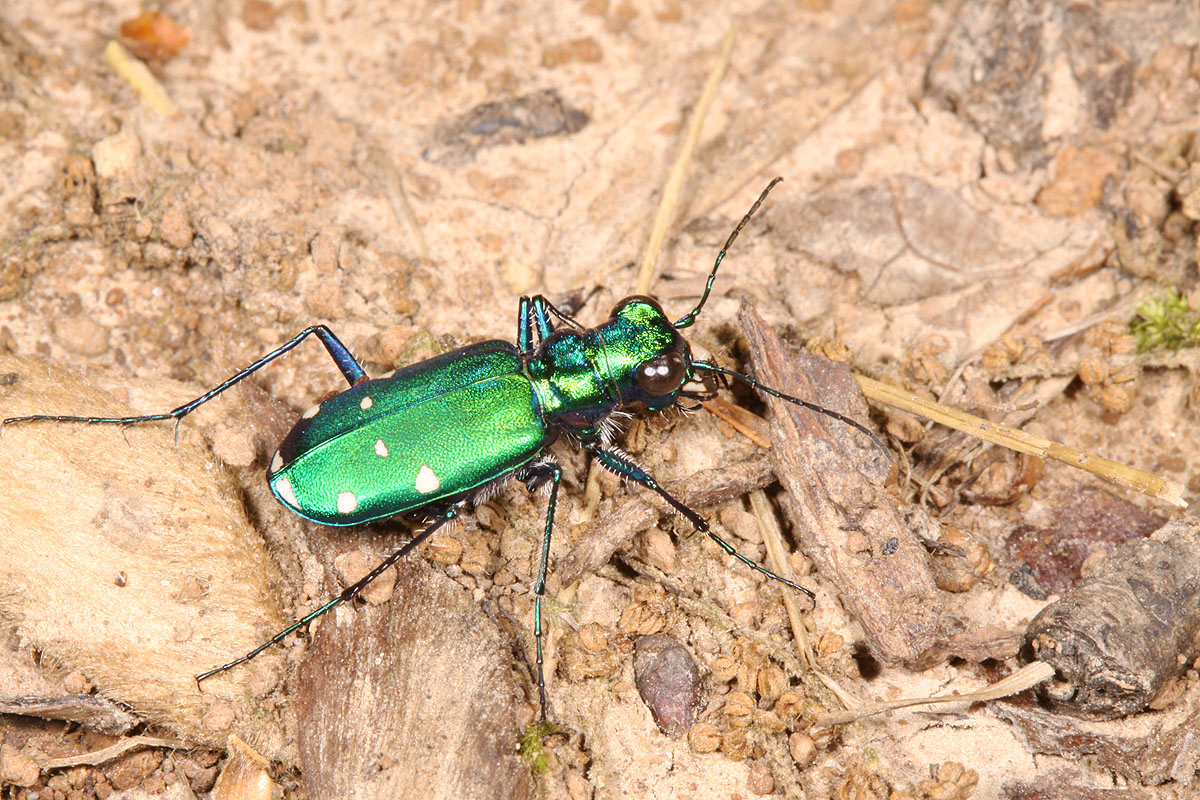
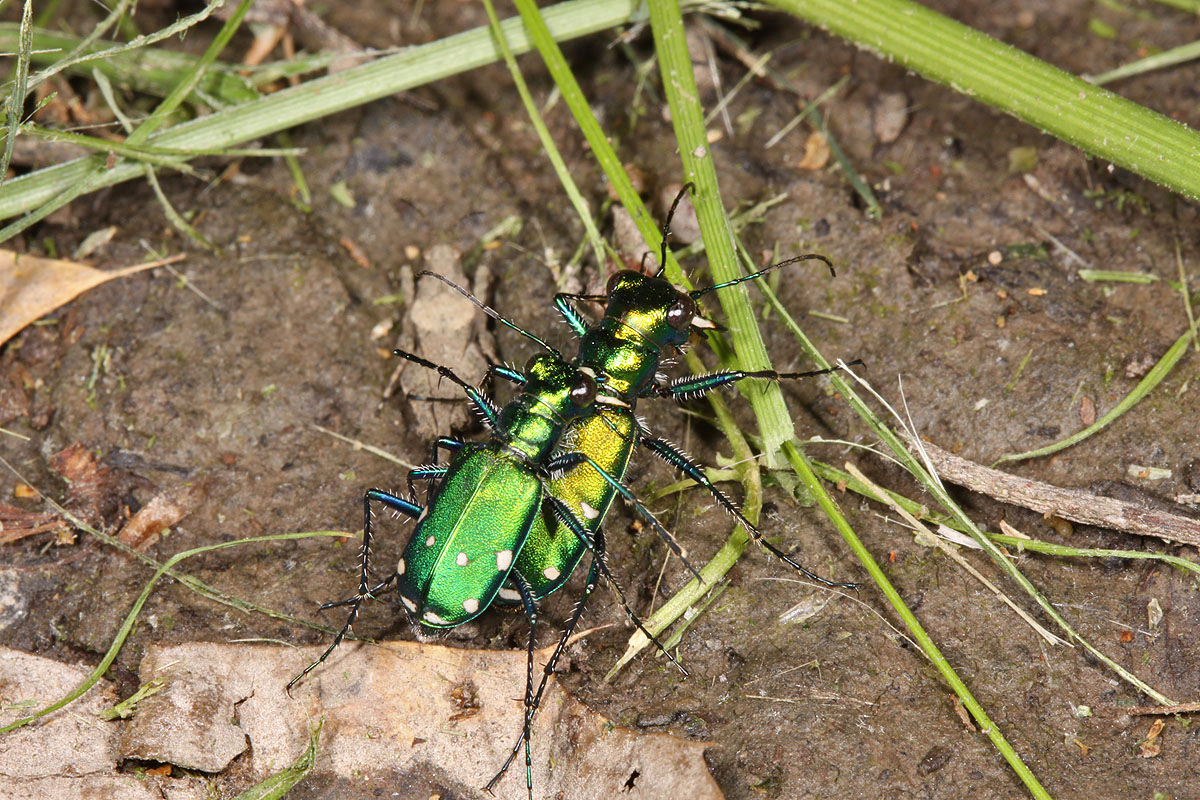
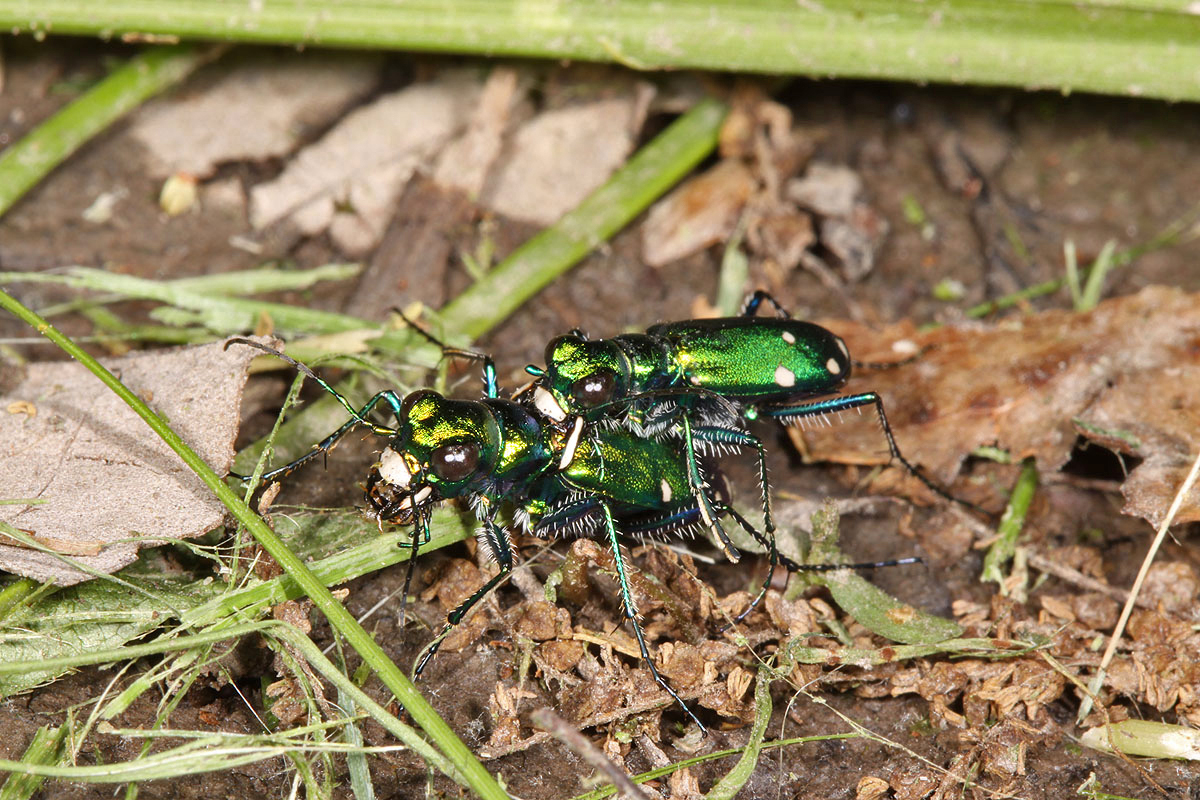
Cicindela sexguttataIn the meantime, I’ve got to learn how to use this camera. The first weekend I had it, I accompanied my friend and colleague, Chris Brown, to nearby Shaw Nature Reserve, where Chris had previously noted good populations of the very uncommon Cicindela unipunctata (one-spotted tiger beetle) [now Cylindera unipunctata, fide Erwin & Pearson 2008 – more on this in a future post] – what a fantastic species for my first photo shoot with the new setup. Unfortunately, we did not find this species (although I will eventually). Instead, I focused on the very prolific population of Cicindela sexguttata (six-spotted tiger beetle) that we found at this site. Cicindela sexguttata is the one tiger beetle that is, more than any other North American species, known by entomologists and non-entomologists alike. Cicindela sexguttataAnyone who has ever taken a walk in the eastern forests during spring has encountered this beetle – flashing brilliant green in the dappled sunlight, always a few yards ahead on the path. While belonging to the “spring/fall” group of species, adults of this species break ranks and stay put in their burrows during fall while other spring/fall species come out and explore for a bit before digging back in for the winter (Pearson et al. 2006). While many individuals do show the six white spots on the elytra that give the species its common name, this character is actually quite variable, with some northern populations completely lacking spots.

Cicindela sexguttataAs tiger beetles go, it’s one of the more difficult to photograph because of its shiny, metallic coloration (as opposed to the flat, dull coloration of Cyl. unipunctata). This was probably a good thing in terms of starting the learning process. I limited myself during this session to the 100mm macro lens (leaving the 1-5x beast for another day), with the photographs shown here being some of the better ones. While I like them, I also see a few things I did wrong. First was the flash – I set the flash units to 1/4 power and didn’t use any kind of diffusers, and as a result the lighting turned out harsh – especially for this brilliantly-colored, metallic species. Cicindela sexguttata I’ve softened the highlights a little bit in Photoshop, but the results are still not as good as if I had used a lower power and diffused the light, and ultimately my goal is to achieve well lit photographs that do not need post-processing to make them look right. Other than that, the day was mostly about getting used to handling the camera and learning how to judge f-stop based on my manual settings for exposure (1/200 sec) and ISO (100). The single individuals (above) were taken in full sunlight, and in that situation my f-stops tended to be too low (resulting in overexposure), while the mating pair was in shade where my f-stops tended too high (underexposed). Next time, I’ll try the diffusers I bought, use less flash power, and do more f-stop bracketing until I get a good feel for what I need in a given situation.

For comparison, here is the one C. sexguttata photograph I took with the point-and-shoot last year. This is about as good a photograph as I could get of this species using that camera. Besides being heavily cropped, it differs by being not very well exposed (despite post brightening), showing heavy shadows (despite post lightening), and lacking detail.
Cicindela sexguttata

REFERENCES:

Erwin, T. L. and D. L. Pearson. 2008. A treatise on the Western Hemisphere Caraboidea (Coleoptera). Their classification, distributions, and ways of life. Volume II (Carabidae-Nebriiformes 2-Cicindelitae). Pensoft Series Faunistica 84. Pensoft Publishers, Sofia, 400 pp. + 33 color plates.

Pearson, D. L., C. B. Knisley and C. J. Kazilek. 2006. A Field Guide to the Tiger Beetles of the United States and Canada. Oxford University Press, New York, 227 pp.

Copyright © Ted C. MacRae 2009

Add to FacebookAdd to NewsvineAdd to DiggAdd to Del.icio.usAdd to StumbleuponAdd to RedditAdd to BlinklistAdd to TwitterAdd to TechnoratiAdd to Furl