Working with Cerceris fumipennis—Epilogue

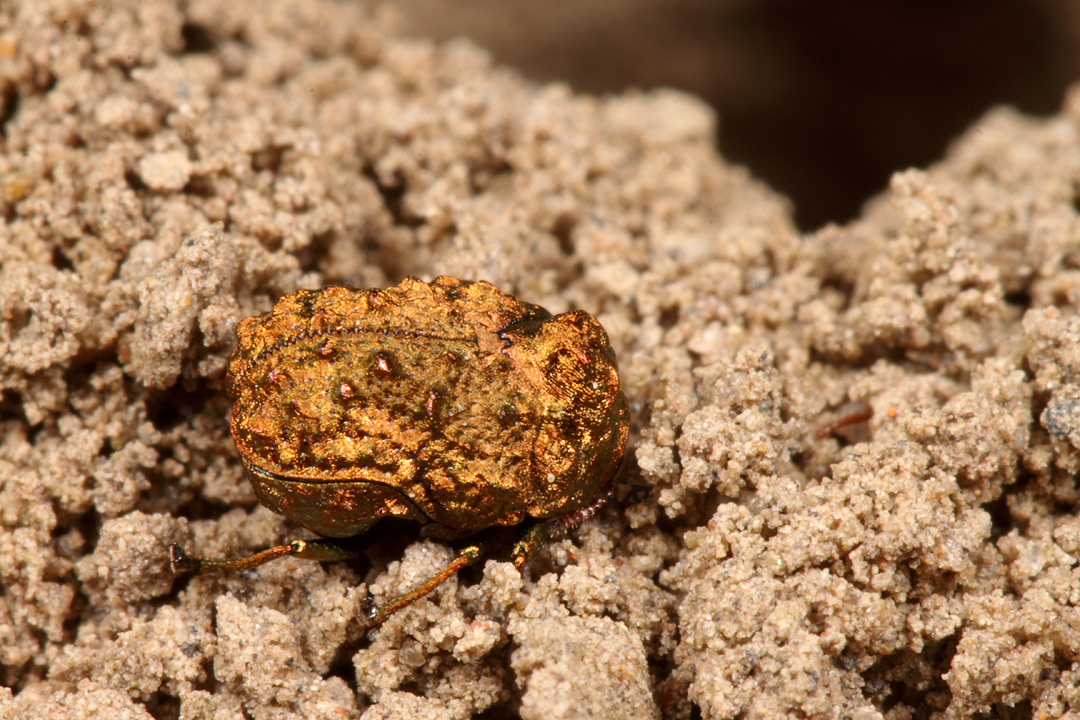
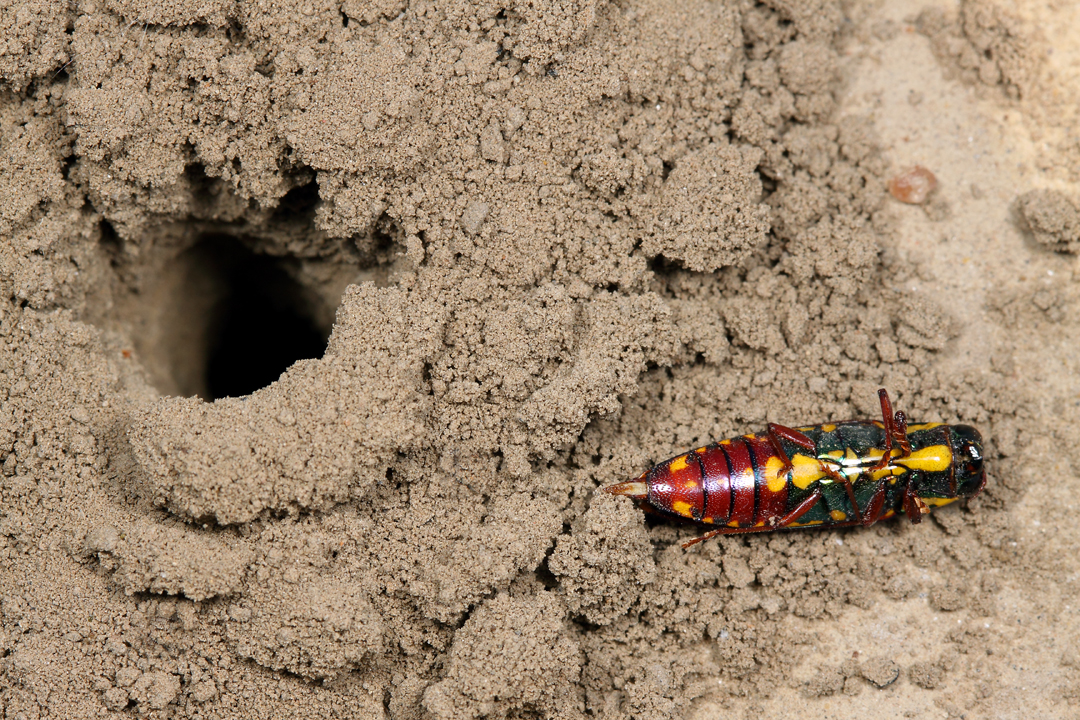
Cerceris fumipennis nest littered with Neochlamisus sp. beetles

In Working with Cerceris fumipennis Part 1 and Part 2, I talked about the use of this species as a biosurveillance tool for Buprestidae. These wasps are specialist predators of jewel beetles, which they capture almost exclusively and paralyze with their sting to use as food provisions for their offspring in underground nests. I also mentioned that there are other species of Cerceris, each specializing in its own distinct prey group, and at my site in east-central Missouri I found C. bicornis, a weevil specialist, almost as common as C. fumipennis. Thus, when I came upon this particular Cerceris wasp nest, I wondered it I had encountered yet another species in the genus, for littered around it were case-bearing leaf beetles in the genus Neochlamisus.

The bright coppery coloration suggests Neochlamisus platani

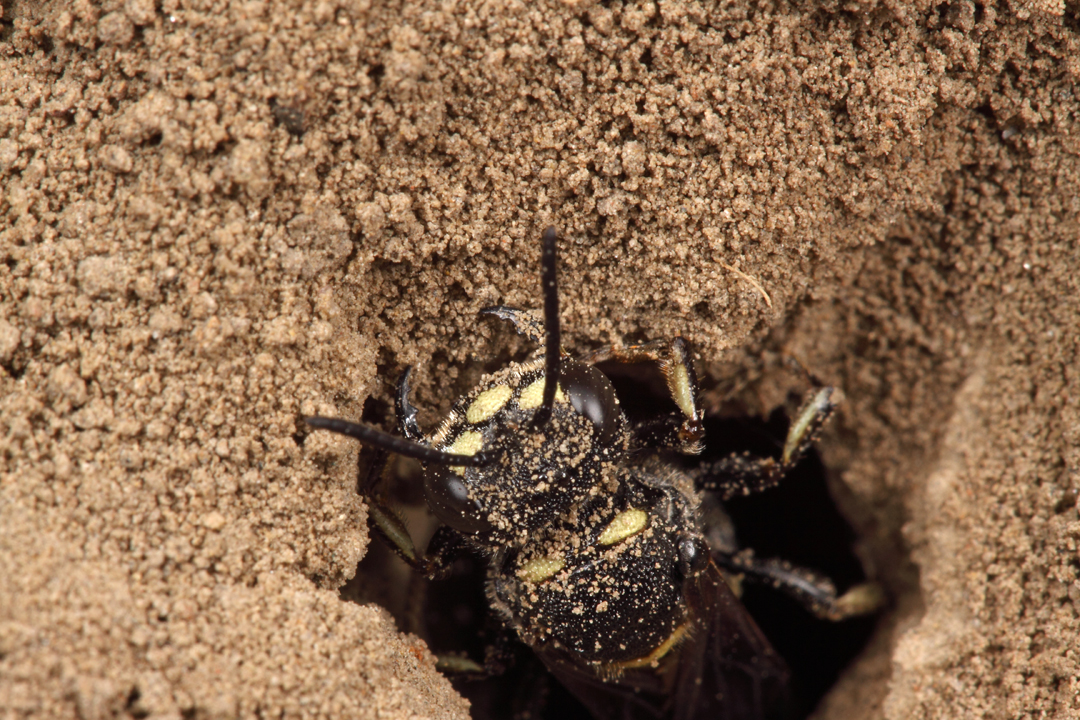
I counted 11 beetles lying on the diggings surrounding this nest, and as is typical with buprestids around C. fumipennis nests these beetles all appeared to represent the same species (I’ve done a little collecting of Neochlamisus beetles in Missouri—the especially bright coppery coloration suggests to me N. platani, a species found on eastern sycamore, Platanus occidentalis). I’ve also noted that C. fumipennis nests littered with beetles on the surface also have beetles—usually of the same species—freshly cached underground, so I decided to dig up the nest to see what might be in it. As I inserted the grass stem and started digging, I heard the distinctive buzzing indicating the wasp was still inside the nest, and when it appeared I noted the distinctive three yellow facial markings that identify it as a female C. fumipennis. As suspected, the nest contained another seven beetles of the same species, and I would later learn that C. fumipennis, while specializing on jewel beetles, does occasionally take other prey. Philip Careless and colleagues recorded two leaf beetles, including Neochlamisus bebbiana, and one weevil as hosts for this wasp at their Working with Cerceris fumipennis website. If my species ID of these beetles is confirmed, this should represent yet another non-buprestid host record for C. fumipennis, although I should also mention that out of several hundred observations this was the only non-buprestid prey I observed around or in a C. fumipennis nest.

Copyright © Ted C. MacRae 2012

Working with Cerceris fumipennis—Part 2

During the 6-week period from late May to early July this year, I collected ~400 jewel beetle specimens representing at least 20 species (see Working with Cerceris fumipennis—Part 1). A final accounting of the species represented won’t be done until this winter, but the genera represented include Acmaeodera, Actenodes, Agrilus, Anthaxia (Haplanthaxia), Buprestis (Knulliobuprestis), Chrysobothris, Dicerca, Poecilonota, and Spectralia. Perhaps two-thirds of the specimens were “ground-picked”¹, while most of the remaining third were “stolen” directly from wasps by netting wasps in flight as they returned to their nest carrying prey.

¹ It’s not clear to me why I found so many abandoned buprestids at nest entrances. The wasps are known to drop prey when threatened and, rather than search for and relocate the prey, fly off to look for a new beetle(Careless et al. 2009). I observed this myself in several cases when I missed netting the wasp but swiped the net close enough to scare it, at which time it dropped the beetle and flew off (and I popped the beetle in a vial). However, the bulk of the beetles I found on the ground were not only at the nest entrance, but even mixed within the diggings surrounding the nest. My first act when checking each field was to check each nest, pick up any adults lying on top of the burrow diggings, and then carefully spread out the diggings with a knife or trowel to collect the beetles hidden within them. One nest contained as many as 13 Agrlus obsoletoguttatus inside the diggings. I wondered at one point if the wasps were leaving the beetles at the burrow entrance and then digging out the burrow before coming back to retrieve them, but I never actually witnessed this. On the other hand, I observed numerous wasps approaching their burrows while carrying prey, and every time the wasp dropped directly into the burrow. In fact, I could even predict what beetle species I was likely to find inside the nest based on the species I found around the entrance (more on that below).

This ball field with contains several dozen Cerceris fumipennis nests.

There is a third method that I used to collect beetles that I haven’t yet discussed, and that is digging them out of nests. In the latter part of the survey period (late June and early July), beetle numbers dropped rapidly, as did apparent wasp activity. As mentioned in the previous post, this drop off in activity came precisely at the time of season when I have observed buprestid beetle activity to decline in Missouri. As the drop off in activity was taking place, I began wondering what I would find if I tried digging up some of the burrows. Of course, digging up a nest takes much more effort than netting wasps or picking beetles up off of the ground, so it becomes important not only to identify whether a nest actually belongs to C. fumipennis and if it is active and likely to contain freshly captured beetles.  In addition, I observed the burrows of a variety of other insects in these fields as well, some of which are shown here and which might be confused with burrow entrances of C. fumipennis.

Cerceris fumipennis nest with Chrysobothris sp. adult left on diggings.

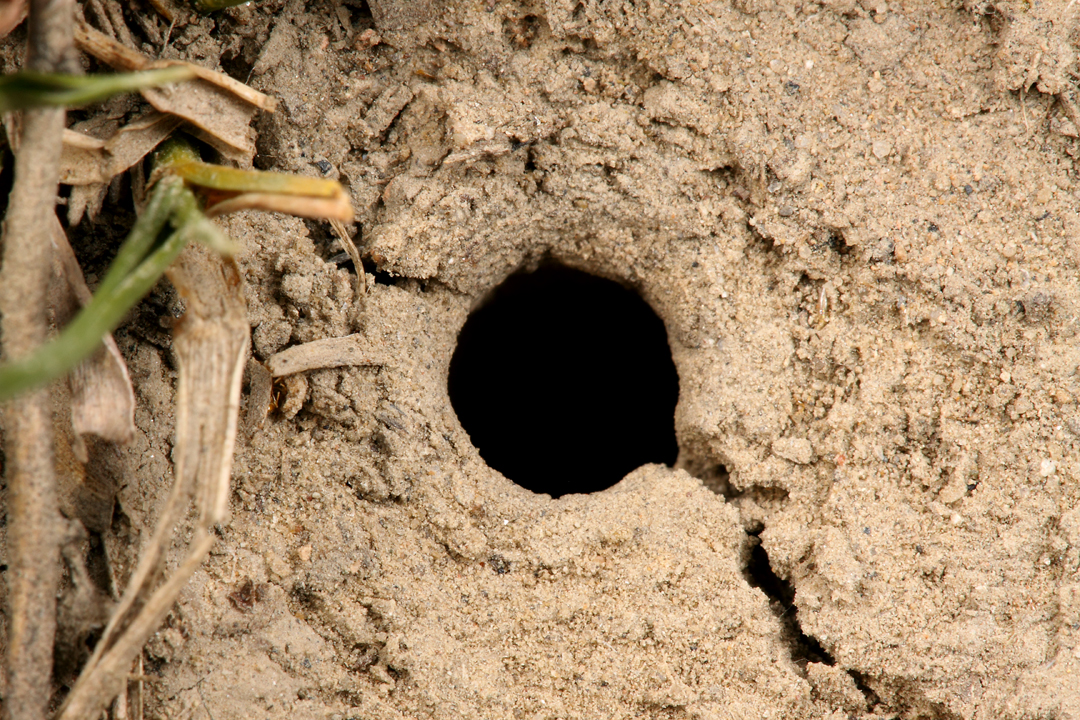
Cerceris fumipennis burrows exhibit perfectly circular, pencil-sized entrances surrounded by a symmetrical mound of diggings with a fine rather than granular texture. There are other Cerceris species that make nearly identical burrows, but they prey on other insects rather than buprestid beetles. At my site I found C. bicornis, a weevil specialist, almost as common as C. fumipennis. Their burrow entrances on the whole seemed slightly larger, but I could not use this as consistent distinguishing character. What I could use, however, was the presence of weevils rather than buprestids lying on the ground near the nest entrance. (I also observed this species returning to its nest and noted a rather faster, more powerful flight that made them even more difficult to capture than C. fumipennis). In contrast, there can be no doubt that the burrow above, with a buprestid beetle lying on the ground near the entrance, belongs to C. fumipennis

² The white plastic tag marks the burrow to facilitate locating nests on subsequent visits. It is secured with a golf tee and also can be rotated so that the hole covers the entrance. The hole is large enough to allow the wasp to leave but too small for a returning wasp to enter while carrying a beetle. The idea was to rotate the tags when I first entered a field to cover all the burrow entrances, watch for wasps returning with prey, and then net the wasps as they tried (in vain) to enter the burrow. However, I never actually observed a wasp trying to enter a covered burrow, even after leaving a field and returning 20–30 minutes later.

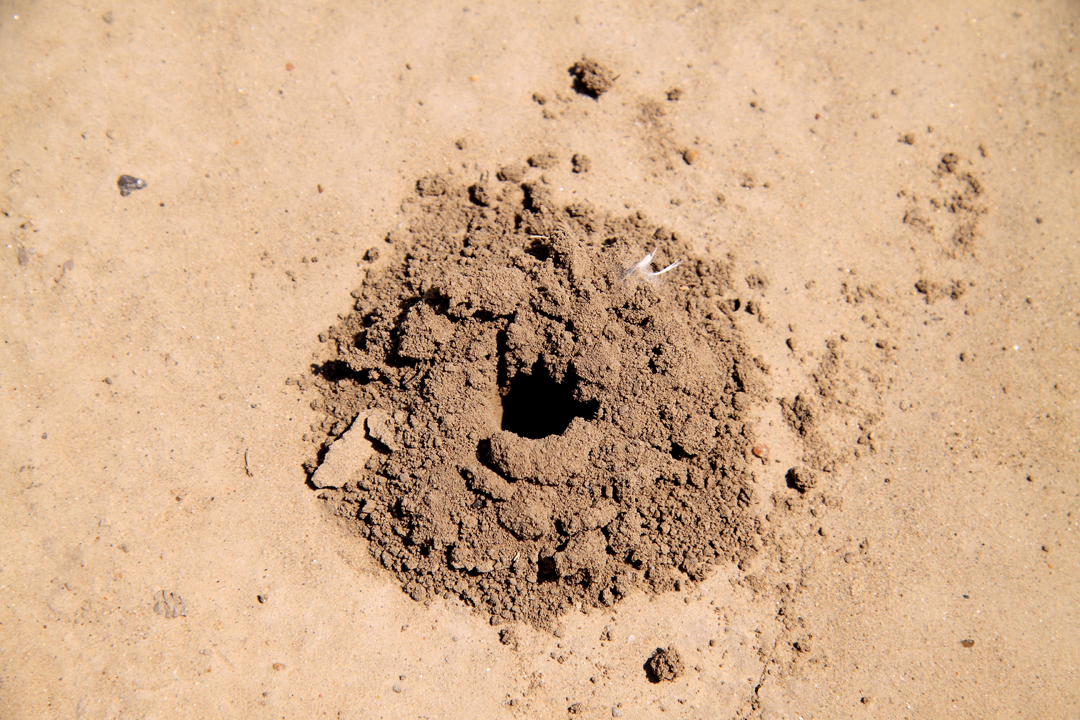
I presume this nest to be that of Bembix americana (sand wasp).

For the first few weeks, I thought the burrows such as that shown in the above photo also belonged to C. fumipennis. However, I never found beetles lying on the ground near the entrance, nor did I ever observe a wasp to enter or leave the burrow. I eventually noticed several distinct differences in burrow architecture—the burrow entered the ground at an angle rather than straight down, the diggings were distributed asymmetrically to one side of the entrance, and the latter seemed consistently a little larger than those of C. fumipennis. In addition, these burrows always seemed to be in the sandier portions of the fields. While I never associated any insect directly with these burrows, I did observe sand wasps (perhaps Bembix americana) in the vicinity and have seen similar-looking burrows dug by these wasps at Sand Prairie Conservation Area.

Larval burrows of Cicindelidia punctulata and other tiger beetles lack diggings around the entrance.

Tiger beetle larval burrows might also be confused with C. fumipennis burrows, especially after rain or high winds which can wash/blow away the diggings from around the entrance. I found adults of the punctured tiger beetle, Cicindelidia punctulata, fairly commonly at the site and presume the numerous tiger beetle larval burrows that were also present belong to that species. Larval tiger beetles burrows also enter the ground straight down and are, at first appearance, also perfectly round, but they are usually a little too small for C. fumipennis (those of Tetracha spp. being an exception)—the presumed C. punctulata burrow in the above photo measures about 5 mm in diameter. In addition, closer examination reveals a slight “D” shape to the burrow entrance (upper right in the above photo—the tiger beetle larva rests its jaws against the flat side) and, more distinctively, beveling of the ground around the rim of the burrow entrance. Cerceris fumipennis nests lack the slight D-shape and distinctive beveling.

Use a grass stem as a guide while carefully digging away the surrounding soil.

Years of practice digging up tiger beetle burrows prepared me well for my first attempts at digging up C. fumipennis burrows. While it might seem an easy task to follow a hole into the ground while digging soil away from it, in practice the burrow can be quickly lost after even a few inches due to falling soil covering the hole and making it impossible to relocate. I use a thin, flexible but sturdy grass stem to preserve the burrow path, inserting the stem into the burrow and down as far as it will go and then removing the soil carefully from around the hole with a knife or trowel. I try to avoid letting soil fall over the hole by prying the soil away from the hole, but if the hole does get covered the grass stem allows it to be easily relocated.

This nest contained a single Buprestis rufipes

Cerceris fumipennis burrows are not very deep—only 10–15 cm, and angle to one side a few cm below the surface before leveling out near the bottom. I noticed the nest in the above photo because I saw a wasp fly into it. When I went over to look at it I found a Buprestis rufipes lying on the ground near the entrance and so decided to dig it up. As I expected, I found another B. rufipes at the bottom of the burrow (two above photos courtesy of Madison MacRae).

…while this one contained a cache of seven Agrilus quadriguttatus.

The above photo shows a cache of seven Agrilus quadriguttatus that I found at the bottom of another burrow. In this case, the prey is rather small compared to large prey such as Buprestis and Dicerca. While nests provisioned with species in these latter genera often contained only a single beetle in them, I nearly always found multiple beetles in nests provisioned with the smaller Agrilus species. One nest contained as many as 13 Agrilus obsoletoguttatus, among the smallest of the species I found utilized by C. fumipennis at this site.

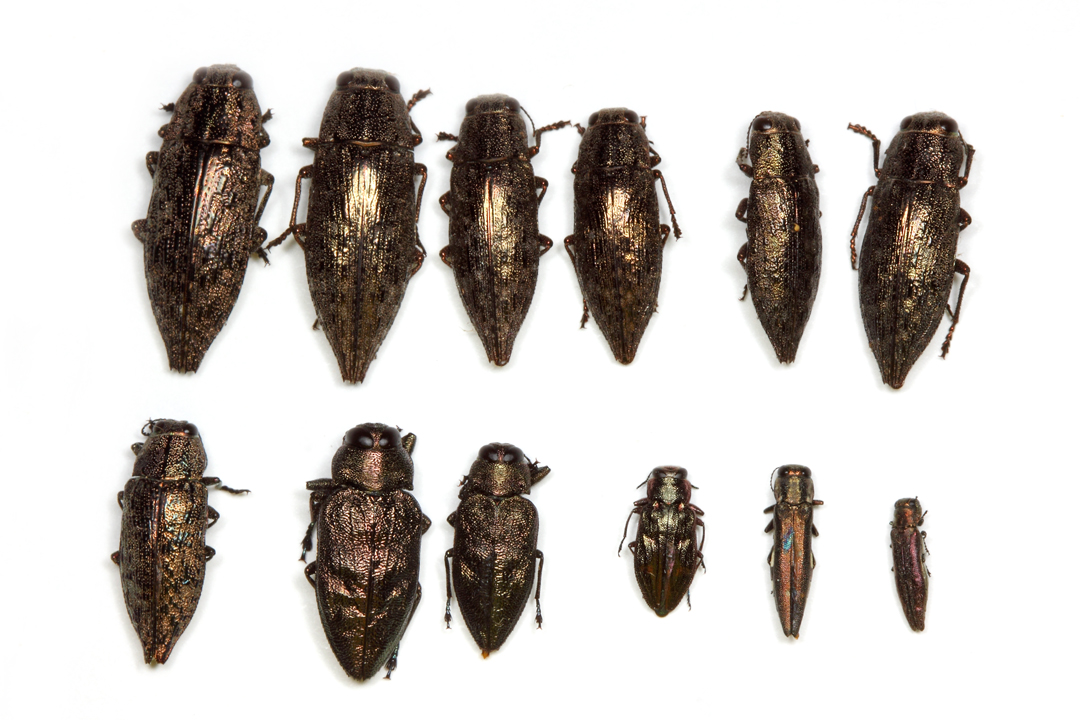
Buprestidae taken from five different Cerceris fumipennis nests.

Some of the nests I dug up contained multiple species of beetles, but far more commonly I found only a single species in a given nest. The photo above shows the diversity and number of beetles found on one date after digging up five different nests. From top left the beetles are: 1) 1 Buprestis rufipes; 2) 2 Agrilus quadriguttatus and 1 A. obsoletoguttatus; 3) 2 A. quadriguttatus and 1 A. obsoletoguttatus; 4) 8 A. obsoletoguttatus; and 5) 2 Poecilonota cyanipes, 2 A. quadriguttatus, and 1 A. pseudofallax. It would make sense for wasps to provision nests with greater numbers of smaller beetles to ensure adequate food for their larvae to complete development. How the wasps actually locate their prey, and why this species has specialized almost exclusively on buprestid beetles, is a mystery (at least to me); however (and here comes the speculation du jour), I suspect the wasps may have keyed in on volatiles used by the beetles—either those released by suitable hosts or by each other to facilitate mate location. Use of buprestid pheromones or freshly dead host volatiles would allow wasps to more efficiently locate buprestid prey and, once locating a source (a tree harboring a particular beetle species), could return repeatedly to provision their nest fully. It seems less likely that wasps rely exclusively on visual location of prey, as this would involve a large amount of random searching through trees and passing up numerous, seemingly equally suitable prey.

REFERENCE:

Careless, P. D., S. A. Marshal, B. D. Gill, E. Appleton, R, Favrin & T. Kimoto. 2009. Cerceris fumipennis—a biosurveillance tool for emerald ash borer. Canadian Food Inspection Agency, 16 pp.

Copyright © Ted C. MacRae 2012

Working with Cerceris fumipennis—Part 1

For nearly 30 years, jewel beetles (family Buprestidae) have been my primary research interest. While some species in this family have long been regarded as forest and landscape pests, my interest in the group has a more biosystematic focus. A faunal survey of Missouri was the result of my initial efforts (MacRae 1991), while later research has focused on distributions and larval host associations of North American species (Nelson & MacRae 1990; Nelson et al. 1996; MacRae & Nelson 2003; MacRae 2004, 2006) and descriptions of new species from both North America (Nelson & MacRae 1994, MacRae 2003b) and South America (MacRae 2003a). Research interest in other groups—especially longhorned beetles and tiger beetles, has come and gone over the past three decades; however, I always return to jewel beetles as  my first and favorite group.

In recent years, one species in particular—the emerald ash borer (EAB, Agrilus planipennis) has garnered a huge amount of research, regulatory, and public interest after reaching North America from Asia and spreading alarmingly through the hardwood forests of Michigan and surrounding states. The attention is justifiable, given the waves of dead native ash trees that have been left in its wake. With huge areas in eastern North America still potentially vulnerable to invasion by this species, the bulk of the attention has focused on preventing its spread from infested areas and monitoring areas outside of its known current distribution to detect invasion as early as possible. One incredibly useful tool that has been adopted by survey entomologists is the crabronid wasp, Cerceris fumipennis. Like other members of the family, these solitary wasps dig nests in the ground, which they then provision with captured insect prey. The wasp uses its sting to paralyzed the prey but not kill it, and once inside the burrow the wasp lays an egg on the prey and seals the cell with a plug of soil. The eggs hatch and larvae develop by consuming the paralyzed prey (unable to scream!). After pupation the adult digs its way out of the burrow (usually the next season), and the cycle begins anew. However, unlike other members of the family (at least in North America), C. fumipennis specializes almost exclusively on jewel beetles for prey. So efficient are these wasps at locating and capturing the beetles that entomologists have begun using them to sample areas around known wasp populations as a means of detecting the presence of EAB. Philip Careless and Stephen Marshall (University of Guelph, Ontario) and colleagues have been leading this charge and have even developed methods for transporting wasp colonies as a mobile survey tool and developed a sizeable network of citizen scientists throughout eastern North America to expand the scope of their survey efforts. Information about this can be found at the excellent website, Working with Cerceris fumipennis (please pardon my shameless lifting of the title for this post).

I first became aware of the potential of working with C. fumipennis a few years ago when Philip sent me a PDF of his recently published brochure on use of this wasp for EAB biosurveillance (Careless et al. 2009). My correspondence with him and other eastern entomologists involved in the work suggested that ball fields with lightly vegetated, sandy soil would be the best places to look for C. fumipennis nests, but my cursory attempts to find the wasp at that time were unsuccessful. I reasoned that the clay-soaked soils of Missouri didn’t offer enough sand for the wasps’ liking and didn’t think much more about it until last winter when I agreed to receive for ID a batch of 500+ buprestid specimens taken from C. fumipennis wasps in Louisiana. What a batch of material! In addition to nice series of several species that I had rarely or never seen (e.g. Poecilonota thureura), three new state records were represented amongst the material. A paper is now in progress based on these collections, and that experience catalyzed a more concerted effort on my part to locate a population of the wasp in Missouri. Museum specimens were no help—the only records from Missouri were from old specimens bearing generic locality labels such as “St. Louis” and “Columbia.” Throughout the month of May, I visited as many ball fields as I could, but the results were always the same—regularly groomed, heavy clay, barren soil with no evidence of wasp burrows (or any burrows for that matter).

Near the end of May, however, I had a stroke of luck. I had switched to a flatter route through the Missouri River Valley to ride my bike to work because of knee pain (now thankfully gone) when I saw this:

Practice fields at Chesterfield Valley Athletic Complex | St. Louis Co., Missouri

Those are “practice” fields in front of regular fields in the background, and unlike the latter, this row of nine fields (lined up against the levee adjacent to the Big Muddy National Wildlife Refuge) showed no evidence of regular grooming or heavy human use. Only ten miles from my home, I made immediate plans to inspect the site at the first opportunity that weekend. Within minutes after walking onto the lightly vegetated, sandy-clay soil of the first field, I found numerous burrows such as this:
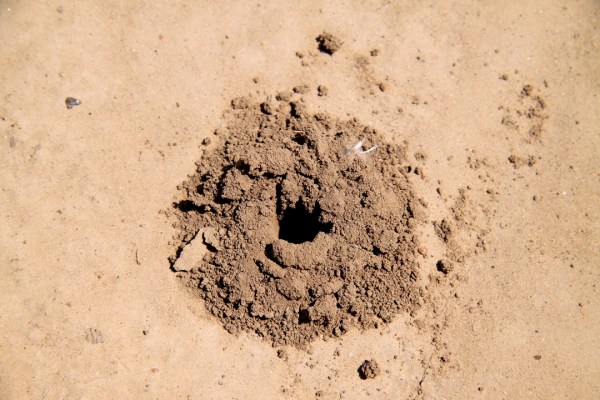
Cerceris fumipennis with circular, pencil-wide burrow entrance and symmetrical mound of diggings.

Only a few more minutes passed before I found an occupied nest, the wasp sitting just about an inch below the entrance to its pencil-wide burrow. The three yellow markings on the face indicated it was a female (males have only two facial markings), and in short order I found numerous other burrows also occupied by female wasps. Some were just sitting below the burrow entrance, while others were actively digging and pushing soil out of the burrow with their abdomen. I flicked a little bit of soil into one of the burrows with a female sitting below the surface, which prompted an immediate “cleaning out” of the burrow—this explains the dirty face of the female in the following photo, but the three yellow facial markings are clearly visible:
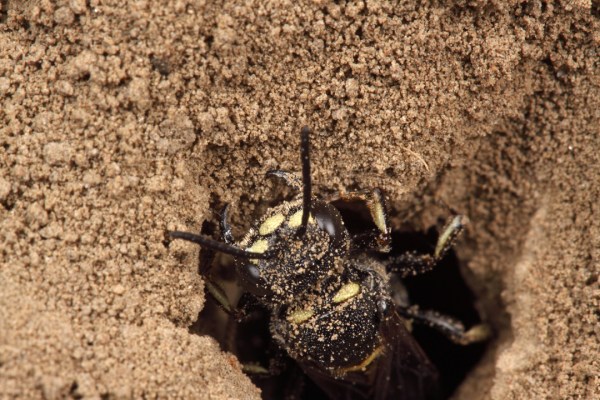
Cerceris fumipennis female removing soil from burrow entrance.

After finding the burrows and their occupants, I began to notice a fair number of wasps in flight—leaving nests, returning to nests, and flying about as if searching for a ‘misplaced’ nest. A few of these were males, but most were females, and I also caught a couple pairs flying in copula (or at least hitched, if not actually copulating). Despite the number of wasps observed during this first visit, I didn’t see a single wasp carrying a buprestid beetle. This puzzled me, because all of the Louisiana beetles I had determined last winter were taken by standing in the midst of nests and netting those observed carrying beetles. Finally, I had confirmation that I was truly dealing with this species when I found a couple of beetles lying on the ground near the entrance to a burrow. These would be the only beetles that I would find on this visit, but subsequent visits during the following few weeks would show “ground picking” to be the most productive method of collecting beetles. Across the nine fields, I found a total of nearly 300 nests, and the wasps showed a clear preference for some fields over others—one field (P-6) had about 150 nests, while a few others had less than a dozen. The photo shown in ID Challenge #19 shows a sampling of ground-picked buprestids from P-6 in a single day, and occasionally I would find a real prize like Buprestis rufipes:
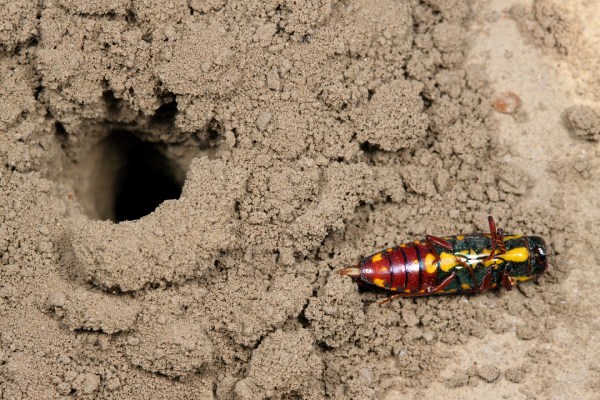
Buprestis rufipes laying near Cerceris fumipennis nest entrance.

Coincident with the appearance of large numbers of beetles laying on the ground near nest entrances, I also began to see wasps carrying their prey. Wasps carrying large beetles are easily recognized by their profile, but even those carrying small beetles look a little more “thick-thoraxed” (they hold their prey upside down and head forward under their thorax) and exhibit a slower, more straight-line flight path compared to the faster, more erratic and repetitively dipping flight of wasps not carrying prey. Learning how to discern wasps carrying prey in flight from the more numerous empty-handed wasps prevents a lot of wasted time and effort netting the latter. Nevertheless, there does appear to be some bias towards larger beetles when netting prey-carrying wasps in flight, as evidenced in the photo below of beetles taken by this method, also in field P-6, on the same date as the ground-picked beetles shown in ID Challenge #19. This could be a result of visual bias towards wasps carrying larger beetles, as in later visits (and presumably with a more refined search image) I did succeed in catching larger numbers wasps carrying smaller beetles (primarily in the genus Agrilus).
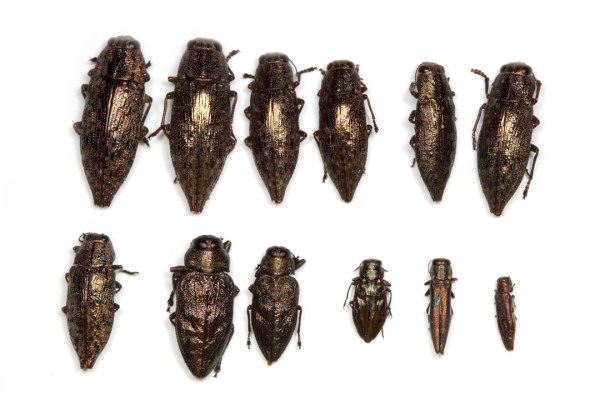
Buprestid prey of Cerceris fumipennis: L–R and top to bottom 2 Dicerca obscura, 2 D. lurida, 3 Poecilonota cyanipes, 2 Acetenodes acornis, 1 Chrysobothris sexsignata, 1 Agrilus quadriguttatus, and 1 A. obsoletoguttatus

All told, I collected several hundred beetles during my twice weekly visits to the site from late May to the end of June. Beetle abundance and wasp activity began to drop off precipitously in late June, which coincides precisely with the end of the adult activity period for a majority of buprestid beetles in Missouri, based on my observations over the years. This did not, however, spell the end of my activities in using C. fumipennis to collect buprestid beetles, which will be the subject of Part 2 in this series.

Congratulations to Joshua Basham, whose efforts in ID Challenge #19 earned him 12 points and the win. Morgan Jackson and Paul Kaufman were the only others to correctly identify the Cerceris fumipennis connection and take 2nd and 3rd, respectively. In an unexpected turn of events, BitB Challenge Session #6 overall leader Sam Heads did not participate and was leapfrogged by Brady Richards, whose becomes the new overall leader with 59 points. Sam now trails Brady by 5 points, while Mr. Phidippus lies another 3 points back. With margins this tight, the overall standing can still change in a single challenge, and there will be at least one more in this current session before an overall winner is named.

REFERENCES:

Careless, P. D., S. A. Marshal, B. D. Gill, E. Appleton, R, Favrin & T. Kimoto. 2009. Cerceris fumipennis—a biosurveillance tool for emerald ash borer. Canadian Food Inspection Agency, 16 pp.

MacRae, T. C. 1991. The Buprestidae (Coleoptera) of Missouri. Insecta Mundi 5(2):101–126.

MacRae, T. C. 2003a. Mastogenius guayllabambensis MacRae, a new species from Ecuador (Coleoptera: Buprestidae: Haplostethini). The Coleopterists Bulletin 57(2):149–153.

MacRae, T. C. 2003b. Agrilus (s. str.) betulanigrae MacRae (Coleoptera: Buprestidae: Agrilini), a new species from North America, with comments on subgeneric placement and a key to the otiosus species-group in North America. Zootaxa 380:1–9.

MacRae, T. C. 2004. Notes on host associations of Taphrocerus gracilis (Say) (Coleoptera: Buprestidae) and its life history in Missouri. The Coleopterists Bulletin 58(3):388–390.

MacRae, T. C. 2006. Distributional and biological notes on North American Buprestidae (Coleoptera), with comments on variation in Anthaxia (Haplanthaxia) viridicornis (Say) and A. (H.) viridfrons Gory. The Pan-Pacific Entomologist 82(2):166–199.

MacRae, T. C., & G. H. Nelson. 2003. Distributional and biological notes on Buprestidae (Coleoptera) in North and Central America and the West Indies, with validation of one species. The Coleopterists Bulletin 57(1):57–70.

Nelson, G. H., & T. C. MacRae. 1990. Additional notes on the biology and distribution of Buprestidae (Coleoptera) in North America, III. The Coleopterists Bulletin 44(3):349–354.

Nelson, G. H., & T. C. MacRae. 1994. Oaxacanthaxia nigroaenea Nelson and MacRae, a new species from Mexico (Coleoptera: Buprestidae). The Coleopterists Bulletin 48(2):149–152.

Nelson, G. H., R. L. Westcott & T. C. MacRae. 1996. Miscellaneous notes on Buprestidae and Schizopodidae occurring in the United States and Canada, including descriptions of previously unknown sexes of six Agrilus Curtis (Coleoptera). The Coleopterists Bulletin 50(2):183–191.

Copyright © Ted C. MacRae 2012

Cicada killer on the fly

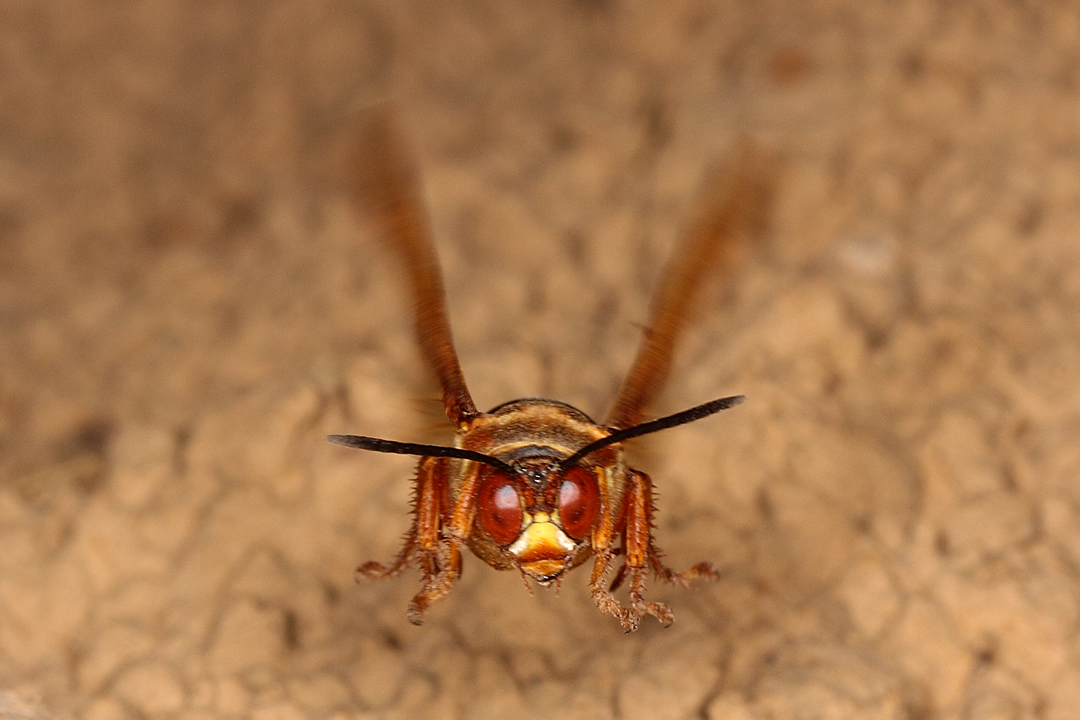
An eastern cicada killer (Sphecius speciosus) searches for her burrow | Jacksonville, Illinois.

I don’t normally spend much time trying to photograph insects in flight. To really do it right requires some rather specialized equipment, including very high-speed flash, and a bucketload of patience and skill. John Abbott exemplifies those whose great talent has produced stunning photographs of insects in mid-flight. That’s not to say that it can’t be done “on the fly,” so to speak, and even a hack like me can get lucky every now and then.

Earlier today I found a rather large number of eastern cicada killers (Sphecius speciosus) in a ball field in Jacksonville, Illinois. These impressive wasps are the largest wasp in eastern North America and have the rather gruesome habit of paralyzing cicadas with their sting, and then dragging them down into their burrows to be eaten alive by their grubs. I’ve recently become interested in solitary wasps (for reasons to be discussed later) and decided to see if I could get some decent photographs. I got a few I like (more on this later), but my favorite is this total luck-out shot of a wasp face-on in mid-flight. As I watched them, I noticed that each wasp spent a fair amount of time trying to identify its burrow amongst the dozen or more that were clustered along one side of the field. Occasionally they would land and search about a bit on foot, then take wing again to continue their search. I decided the best way to get a shot of one on the wing would be to watch for a wasp to arrive and begin its search. When I spotted one I would slowly close distance so I could be ready to get down on my elbows as soon as it landed (closing distance without spooking the wasp was not easy). I had just my center focal point set and autofocus turned on (normally I don’t use autofocus) and had already worked out a good flash exposure compensation setting. As soon as I got on my elbows, I would quickly frame the wasp and repeatedly trigger the autofocus as I got even closer, and when the wasp took flight I took the shot. This was still a crap shoot—I ended up with lots of out-of-focus and out-of-frame photos. Nevertheless, a few turned out fairly decent, one of which was this single, perfectly head-on and well-focused photo (though admittedly somewhat cropped).

Too bad I didn’t collect any of the wasps—at $49 each I could’ve made enough cash to buy that flash bracket I’ve been eyeing!

Copyright © Ted C. MacRae 2012

West Indian seagrape sawfly

I spent a few days in Puerto Rico last month. A quick in-and-out for work, there was little chance to do any real exploring. Nevertheless, I booked my return on the last possible flight out so that I would have at least part of a day to look around before needing to go to the airport. I’ve only been to Puerto Rico twice before—once in 1982 on a one-day visit during my honeymoon cruise (with a far-too-rushed guided tour to El Yunque), and again in 1999, also a quickie for work. Given my limited previous opportunities to explore San Juan, you might think I would choose La Forteleza and San Juan National Historic Site in Old San Juan for my day’s destination. After all, they were designated a World Heritage Site by UNESCO (United Nations Educational, Scientific, and Cultural Organization) in 1983. Tempting, but when I looked at the map of San Juan a nice, big, chunk of green immediately caught my eye—Bosque Estatal de Piñones (Pine State Forest). Call me single-minded, but not even a World Heritage Site can match the siren call of 1,500 acres of moist, subtropical forest!

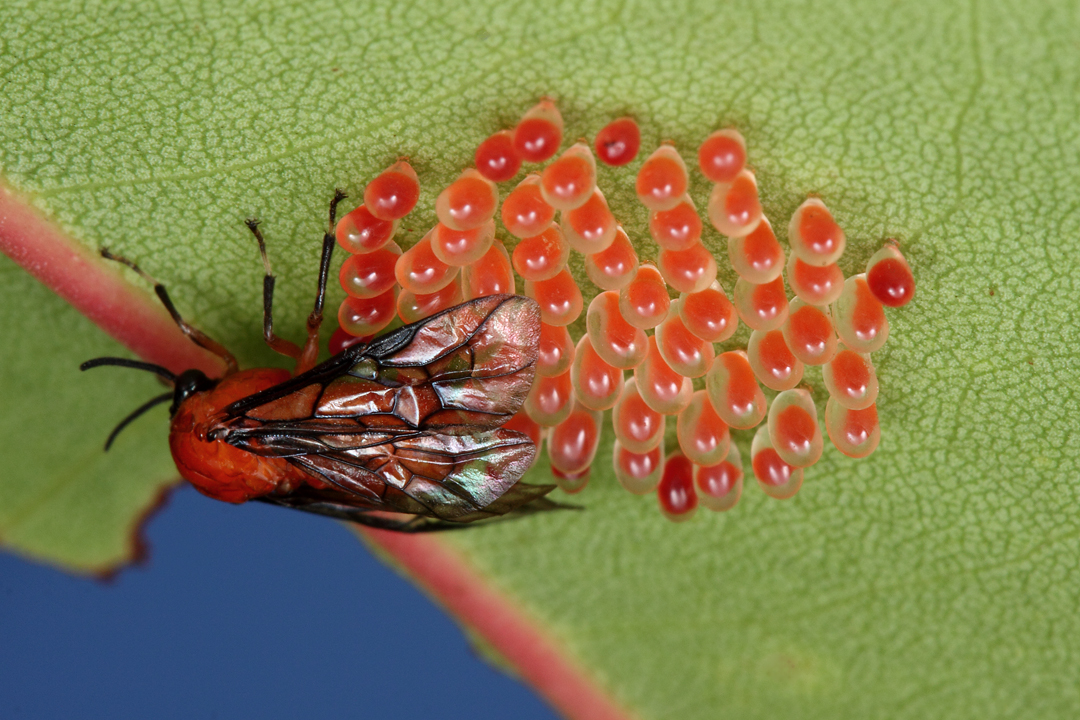
Sericoceros krugii female guarding eggs on leaf underside of sea grape (Coccoloba uvifera) | Bosque Estatal de Piñones, San Juan, Puerto Rico

Mangrove forest covers much of the reserve, accessed by a wide (and annoyingly elevated) boardwalk—an interesting stroll but unsatisfying to me since I couldn’t root around at ground level. One can get only so much enjoyment from distinguishing red, black, and white mangrove before the sameness of the canopy and exclusion from the ground flora/fauna starts to become monotonous. I went back towards the parking lot (photographing a few lizards along the way—more on them in a future post) and had just begun walking the perimeter of a picnic area when I encountered some very large seagrape (Coccoloba uvifera) plants. I’ve seen a lot of seagrape in Florida and have never found any insects on it, so I initially didn’t make much effort to go over and have a closer look at them. However, even from afar I could see that these particular plants had been very heavily damaged by some type of defoliating insect. The first few branches I looked at showed no outward evidence of who the culprit was, but I reasoned it must have been some sort of lepidopteran caterpillar. As I was inspecting the branches, the insect in the above photo caught my eye—at first I thought it was some type of “homopteran” because of the apparent egg-guarding behavior it was showing, but a closer look revealed that it was actually a sawfly! An egg guarding sawfly; who would have thought?!

Female ovipositing her clutch of eggs, which are solid red when first laid.

Predictably, subsequent identification was quite easy as there is only a single species of sawfly in Puerto Rico—Sericoceros krugii in the family Argidae. About 20 species make up this Neotropical genus, occurring from southern Mexico south to Argentina; however, S. krugii is the only species occurring in the West Indies and in addition to Puerto Rico is found in the U.S. Virgin Islands and Dominican Republic (Smith 1992). The species in this genus seem to specialize on Coccoloba spp. (family Polygonaceae) as host plants; however, one species is reported from Triplaris caracasana—also in the Polygonaceae (Smith & Benitez Diaz 2001), and another from Lonchocarpus minimiflorus in the family Fabaceae (Smith & Janzen 2003).

Larvae consume all but the largest veins of the foliage.

Wolcott (1948) describes how this species often defoliates long stretches of seagrape on the beaches of Puerto Rico, leaving “windrows of excrement on the sand underneath the naked branches and leaf midribs…” He also describes its apparent lack of natural enemies (although it has since been recorded as a host for a tachinid fly—Bennett 1999) and the fact that birds do not seem to eat them as possible reasons for its abundance and frequent outbreaks. To me, the screaming red/black coloration of the adult and apparent unpalatability to birds suggest the presence of chemical defenses, and although I couldn’t find any information on this specific to Sericoceros spp., many social species of sawflies are typically well-defended chemically and, thus, aposematic. Despite this apparent defensive capability, the remarkable maternal guarding behavior exhibited by the adult females suggests the eggs still need additional protection from predators and parasitoids. Sericoceros spp. are not the only sawflies to exhibit this behavior, which apparently has evolved across numerous sawfly lineages (see Social Sawflies, by James T. Costa).

This mature larva will soon spin a coccoon on the bark for pupation.

There were only a few, apparently mature larvae still around on the trees that I could find. Wolcott (1948) describes most outbreaks as occurring during the fall and winter months, after which the insects might completely disappear for many months or even a year. I must have caught the tail end of one such outbreak, although the number of females that I saw guarding eggs suggests another wave of defoliation would soon be occurring.

Congratulations to itsybitsybeetle, who showed up late to the party but still managed to pull out the win for Super Crop Challenge #13. Brady Richards came in a close 2nd, while Sam Heads and Mr. Phidippus share the final podium spot. The overall standings remain the same, with Sam leading Brady by a single, slim point and Mr. Phidippus only six points further back. There will be two more challenges in BitB Challenge Session #6, so it’s still possible for somebody to make a late run, especially if one or more of the leaders falters down the stretch. Remember—the top three points earners at the end of the session will get a choice of some loot, so don’t hesitate when the next challenge rolls around.

REFERENCES:

Bennett, F. D. 1999. Vibrissina sp. (Diptera: Tachinidae) a parasite of the seagrape sawfly Sericoceros krugii (Hymenoptera: Argidae) in Puerto Rico: a new record. Journal of Agriculture of the University of Puerto Rico 83(1–2):75–78.

Smith, D. R. 1992. A synopsis of the sawflies (Hymenoptera: Symphyta) of America south of the United States: Argidae. Memoirs of the American Entomological Society 39:1–201.

Smith, D. R. & Benitez-Diaz. 1991. A new species of Sericoceros Konow (Hymenoptera : Argidae) damaging villetana trees, Triplaris caracasana Cham. (Polygonaceae) in Paraguay. Proceedings of the Entomological Society of Washington 103(1):217–221.

Smith, D. R. & D. H. Janzen. 2003. Food plants and life histories of sawflies of the family Argidae (Hymenoptera) in Costa Rica, with descriptions of two new species. Journal of Hymenoptera Research 12:193–208.

Wolcott, G. N. 1948. Insects of Puerto Rico. Journal of Agriculture of the University of Puerto Rico 32(4):749–975.

Copyright © Ted C. MacRae 2012
Maddening mutillid

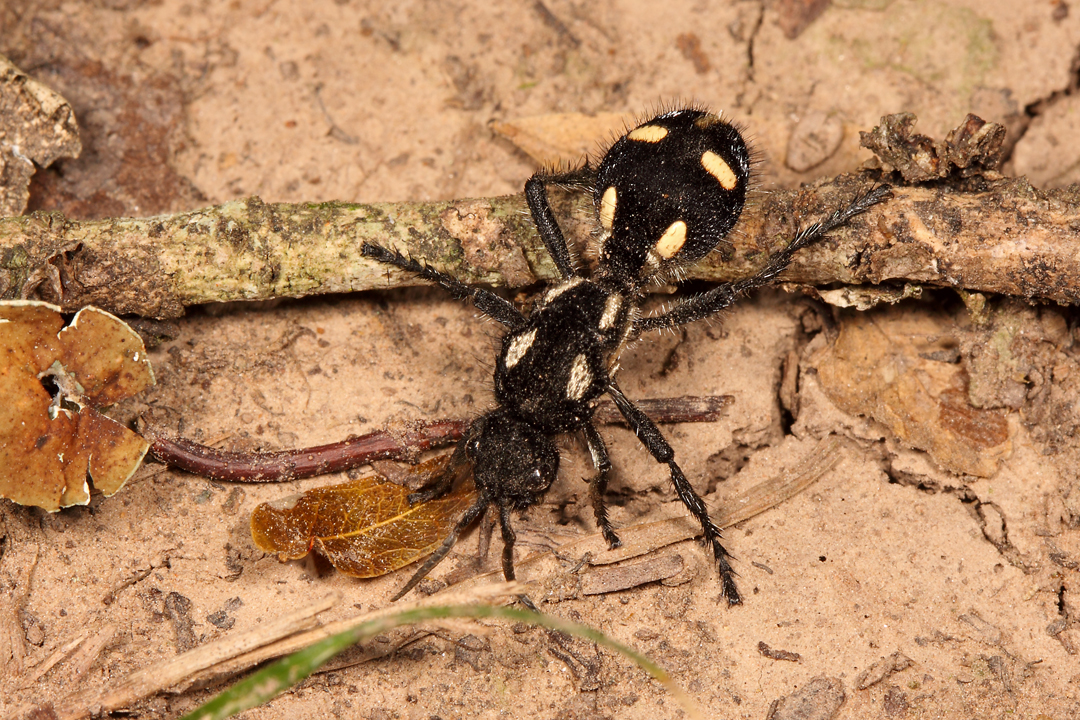
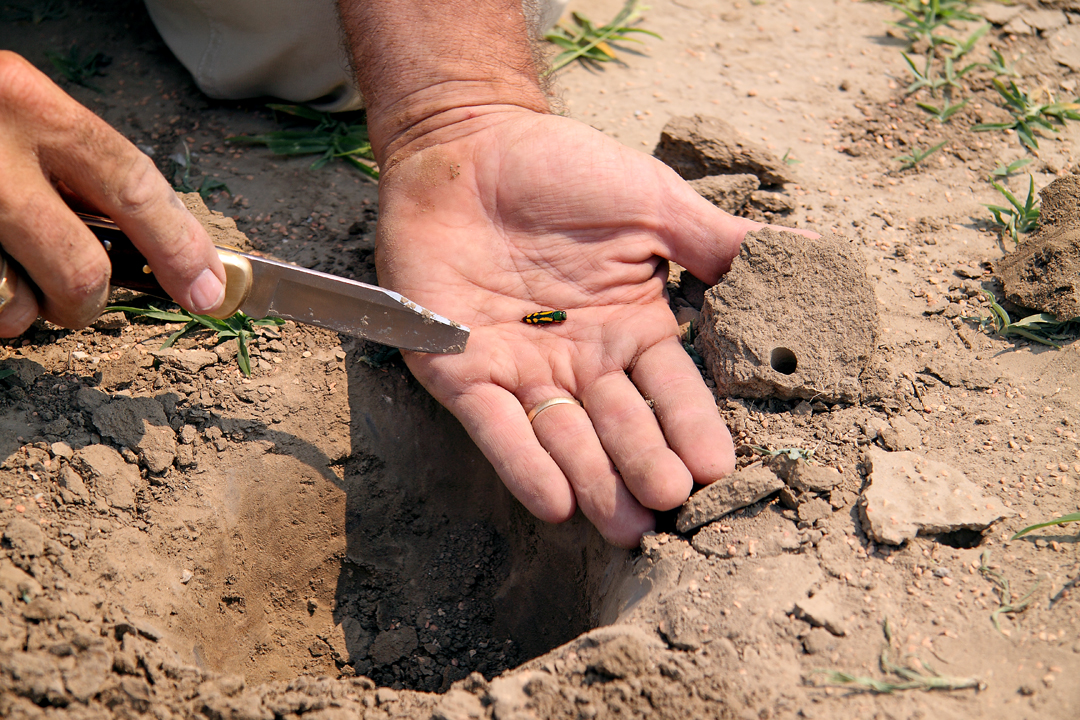
Traumatomutilla graphica (Gerstaecker, 1874) | Parque Nacional Chaco, Argentina

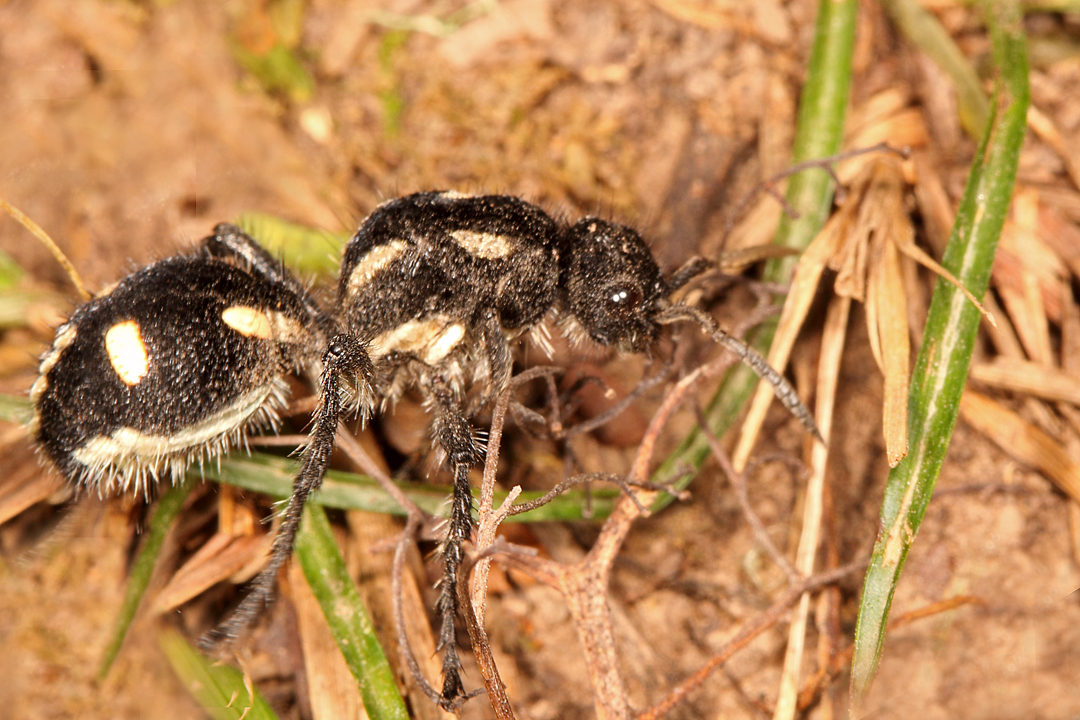
During my stay in Corrientes, Argentina, I had two distinct biomes to explore—the relatively moist “Selva Paraguayense” to the east in Corrientes Province (a southern adjunct to the Atlantic Forest of southeastern Brazil, and home to the cryptic longhorned beetle that I featured in Desmiphora hirticollis: Crypsis or Mimicry?), and the drier “Gran Chaco” to the west, home of the insect featured in today’s post. Precious few remnants remain of the original Gran Chaco, which once covered nearly 1 million square kilometers in northern Argentina, Paraguay and Bolivia and the best example of which can be found at Parque Nacional Chaco in north-central Argentina. I’ve already mentioned that conditions are typically quite dry by early April in northern Argentina, and this is especially true of Chaco Province, where droughts during the months of January through March are common. As a result, I didn’t expect to see much insect activity during my visit last month. For the most part this was true, but one insect I did see at several points along the trails through the park was this rather large velvet ant (order Hymenoptera, family Mutillidae). Not an ant, of course, but a true wasp, these insects must be treated with respect as they are capable of delivering a painful sting. This, combined with their ceaseless, erratic wanderings makes them incredibly difficult to photograph. However, with few other insects to see, I thought I would spend the time and effort to see if I could get some good field photographs of this very attractive species. I spent about half an hour attempting to photograph it by panning through the viewfinder while getting closer and adjusting the focus on the move, and then firing shots when I thought I might be close enough and had the individual more-or-less within the frame. This was wildly unsuccessful, as I had only a 3-ft wide path within which to work and had to constantly get up to block its escape into the adjacent vegetation. Moreover, it was exhausting! The constant moving and body contortions while in crouched or kneeling positions used muscles I didn’t even know I had (but was well aware of the following day by their soreness!). Out of the countless shots that I fired, these two photographs are the only ones that I consider worthy of posting—pretty good, but not great.

The distinctive color pattern is diagnostic for the species.

According to Kevin Williams (many thanks!), the distinctive color pattern readily identifies this individual as Traumatomutilla graphica (Gerstaecker, 1874). Nearly the size of our common eastern North American Dasymutilla occidentalis (a.k.a., cow killer), the bold, conspicuous patterning surely must serve as advertisement of its powerful defensive capabilities—I know I was deterred from trying to handle it. Kevin mentions it as a “great find!” and that the male of the species is still unknown, and I could find nothing about the biology of this species. However, mutillids in general are known to develop as external parasitoids of various wasps, bees, beetles and flies, the excessively long female ovipositor enabling piercing of host nest cells before injecting their powerful venom and placing the eggs (Hogue 1993).

REFERENCE:

Hogue, C. L. 1993. Latin American Insects and Entomology. University of California Press, Berkeley and Los Angeles, 536 pp.

Copyright © Ted C. MacRae 2012
Pseudomyrmex in Corrientes, Argentina

Early April is early autumn in northeastern Argentina, but seasons just south of the Tropic of Capricorn bear little resemblance to the well-defined spring, summer, fall and winter that we are accustomed to in eastern North America. Early fall here is not a riot of color, pungent smells, and sharp shadows cast from an oblique sun, but rather dull greens and browns, muted and dusty after eight months under a searing overhead sun with only the sparsest of rains for the past two. Such conditions are generally not conducive to insect life, and for the most part insects that live in warm, seasonally wet environments adapt by timing their adult activity (the time for reproduction) to the moist seasons—which in this part of Argentina means September through January. Thus, despite warm temperatures and a subtropical environment, early April is not the best time to be looking for insects here.

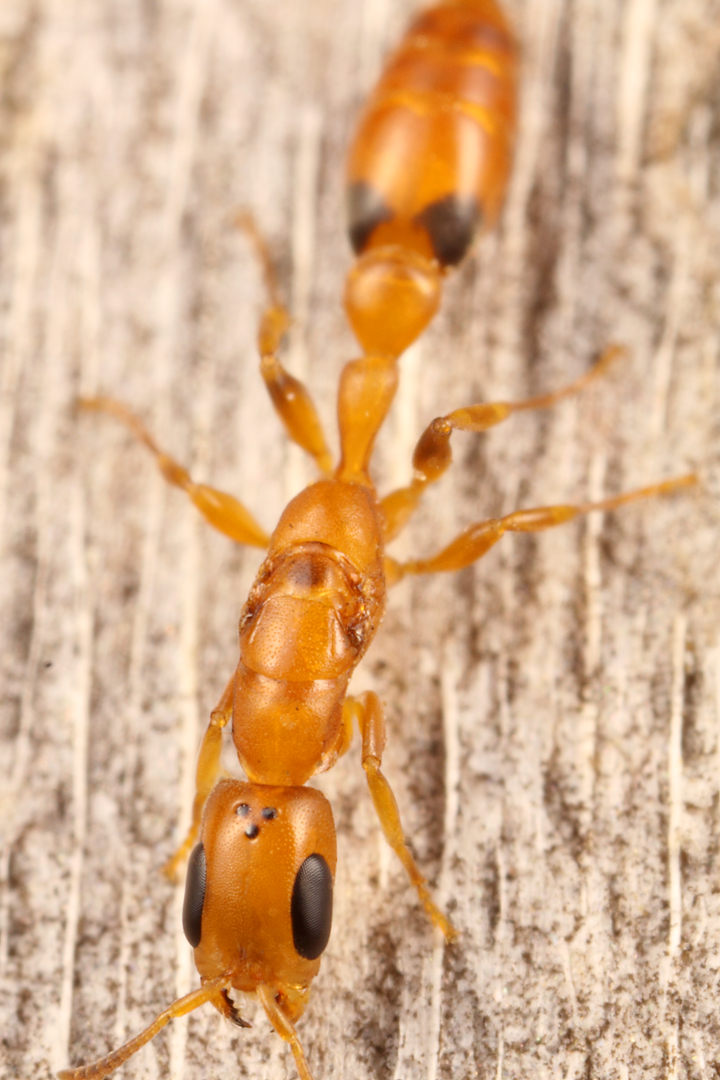
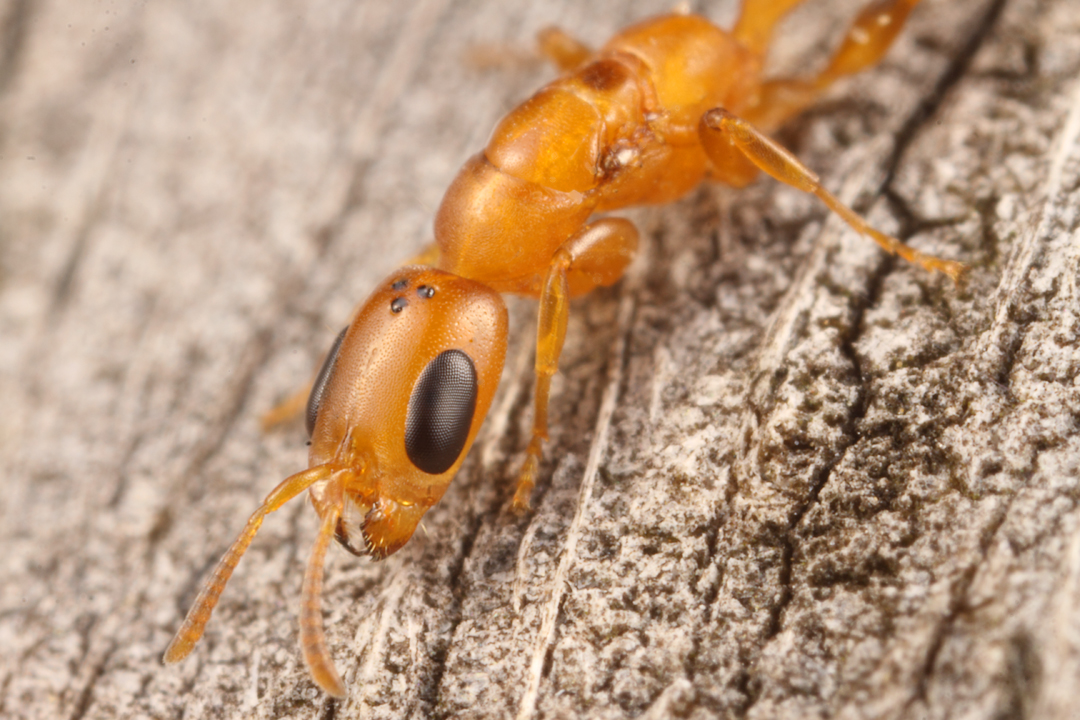
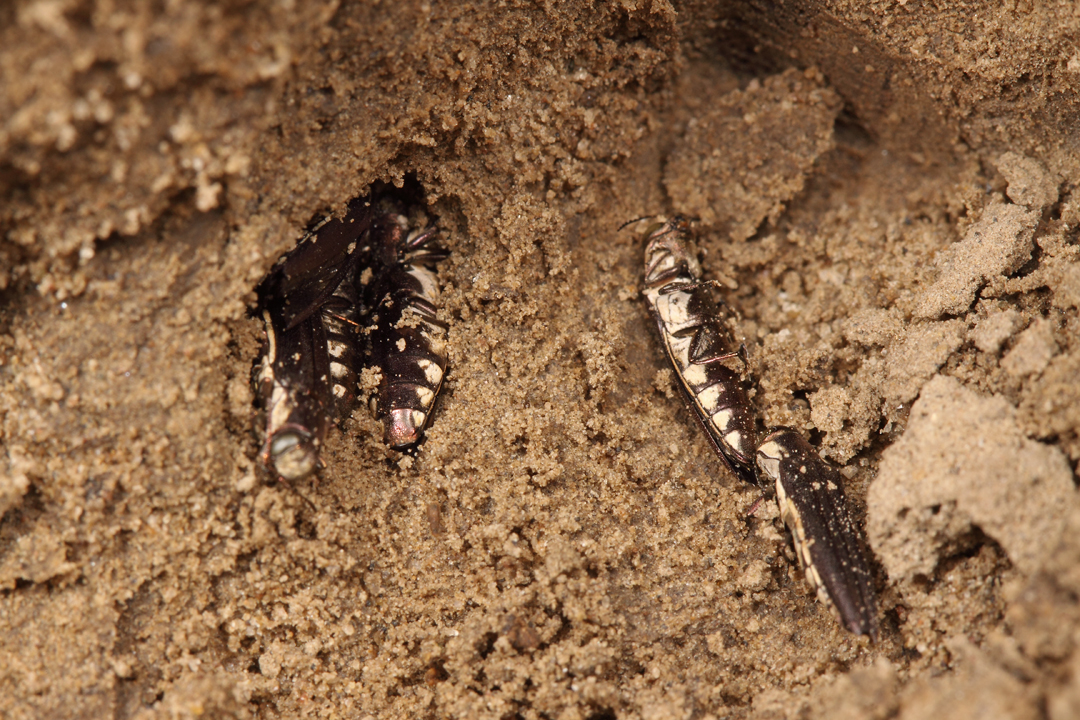
Pseudomyrmex sp. | Corrientes, Argentina

Nevertheless, not all insect groups respond in this fashion, and one in particular is as ubiquitous and diverse now as at any other time of year—ants! I had to trek into sand and mud along the Rio Paraná to find tiger beetles (a few), and it took some dedicated searching to ferret out a few stands of late-season blooming plants and fresh-cut woodpiles to encounter a small diversity of longhorned beetles. I think I may have even seen a single jewel beetle, a chrysobothrine of some type, as it landed on and then flash flew away from the same woodpile with which I had modest longhorned beetle success. The ants, however, have been everywhere—no tree, shrub, or square meter of ground is without them in astounding diversity of size and form.

At this point it appeared to be eating something it plucked from the bark.

I probably shouldn’t admit this, as I hear rumor there are a few myrmecologists that frequent this blog, but I have a hard time getting excited about ants. I know, their unique social structures and evolutionary history are among the most fascinating in the insect world, and watching their behaviors is a lesson in charisma beyond reproach. Still, however, for me there are just so many of them and their taxonomy so completely foreign to me that every time I try digging further I feel immediately overwhelmed. Coleopteran taxonomy may be an order of magnitude more diverse, but since I only pay attention to about 1.5% of the order, it’s as comfortable to me as an old shoe.

Close...

There is one group of ants that I do find endlessly fascinating—the genus Pseudomyrmex. I don’t know why that should be the case—there are plenty of other ant genera that seem to have the tools and structures that usually grab my attention (e.g., grossly oversized mandibles, sharp spines, heavy duty surface sculpturing, etc.). Pseudomyrmex spp. have none of these morphological gimmicks—just a simple, elongate, wasp-like form. Perhaps it’s their association with branches (like wood-boring beetles) rather than the ground—nope, tiger beetles are decidedly ground dwellers and I dig them (Get it? Heh!). No, it must be their super-sized eyes. Most ants have beady little eyes that make it hard to look into their soul. Pseudomyrmex eyes have charisma—you can see them looking at you (and almost read their thoughts).

closer...

Anyway, among the many ants that I’ve noted wandering the banks of the Rio Paraná here in Corrientes are these smallish, orangish Pseudomyrmex spp. This particular individual was the first one I saw, revealed when I happened to pull away a bark chip from trunk of the palm tree on which it was hiding. It wandered all over the palm trunk for the next 15 minutes or so as I chased after it with my 65mm lens. For such tenaciously crawling subjects I’ve found that simply firing off shot after shot as you track it in the view-finder rather than waiting for it to pause and trying to compose each shot is the best way to get some usable images. It’s simply a numbers game—the more shots you fire off, the better chance you have that at least some will be in-focus, nicely composed, and well-lit. These are the ones I was happiest with from the session. (And, OMG, did I really just give advice on how to photograph ants?)

Closest!

It goes without saying that a more specific ID, if possible, would be greatly appreciated (should any prominent myrmecologists happen across these photos). There are scads of species in this genus right across the river in Paraguay, and presumably the diversity in Argentina is similarly high.

Copyright © Ted C. MacRae 2012

Leafcutter ants on corn

Leafcutter ants attacking corn | western Buenos Aires Prov., Argentina

North American corn farmers certainly have their share of insect pests to worry about. Between corn borer, earworm, armyworm, and rootworm, there isn’t much of the plant that isn’t vulnerable to attack by at least one of these insects. Argentina corn farmers have all this and more—have you ever seen ants attacking corn? I took these photographs yesterday in a corn field in western Buenos Aires Province showing leafcutter ants dining on the developing kernels of late-planted corn. Okay, “dining” may not be the proper word, as they are not actually eating the kernels, but rather harvesting them to bring them back to their “hormiguera” (ant nest) for cultivation of the fungi on which they feed. The four pairs of spines on the pro-mesonotum and narrow distal antennal segments suggest this is a species of Acromyrmex, three species of which are mentioned as pests of corn in Argentina (A. lundii, A. striatus, and A. lobicornis). Of these, the individuals in these photos seem to best match AntWeb’s photos of Acromyrmex lundii, but that is just my guess.

Acromyrmex sp. poss. lundii?

Copyright © Ted C. MacRae 2012