It’s been a few months since I’ve been on a WGNSS field trip, so I was anxious to attend this past weekend’s joint trip between the Entomology and Nature Photography Groups to visit a private restored tallgrass prairie remnant located in extreme southwestern Washington County and named after Henry Schoocraft, who famously chronicled his journey through the Missouri Ozarks in the early 1800s and passed within a few miles of this spot (if you’ve not yet read Schoolcraft’s journal, I highly recommend this natural history classic!). The landowner, a restoration ecologist for Shaw Nature Reserve, has been using prescribed burns and selective thinning over the past several years to restore the 70-acre tract of upland forest, former cropland, and grassland remnants to their presettlement character. Stupidly, I did not bring my main camera, preferring to focus instead on collecting rather than photography. In hindsight, I would have been much better served had I had my camera, as the beetle groups that I study (Buprestidae and Cerambycidae) tend to be scarce at this time of season in Missouri, while interesting subjects for photography in other insect groups abound. As far as photos go, my iPhone would have to suffice.
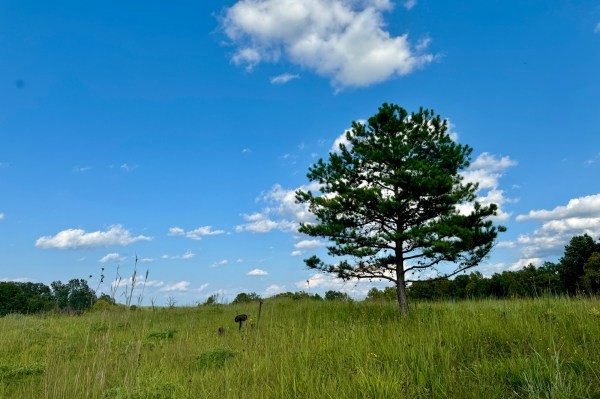
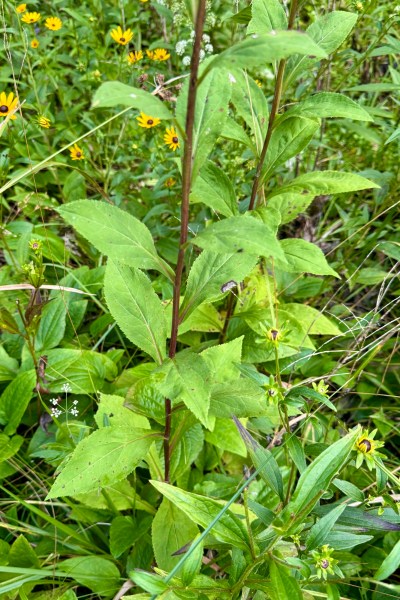
We arrived a bit after mid-afternoon and spent the bulk of the remaining daylight hours in the prairie remnant. Florally, it was one of the most diverse prairies I’ve ever seen, especially in this part of the Missouri Ozarks. One plant in bloom that was new to me was Liatris scariosa (devil’s bite blazingstar), distinguished from the similar L. aspera (also in bloom) by its flower heads on long stalks and with mostly flat phyllaries.

The first insect of interest that I found was the white fluffy early-instar caterpillar of Megalopyge crispata (black-waved flannel moth). The hairs of all species in this genus are venomous in the larval stage, and interestingly the later instars of a related species (M. opercula) resemble a tiny Trump toupee (look it up!).

Also present were Neotibicen auriferus (prairie dog-day cicada), whose whining, metallic songs filled the air. Normally very skittish and difficult to approach, I managed to snag one on the trunk of a small persimmon tree in the middle of the prairie.


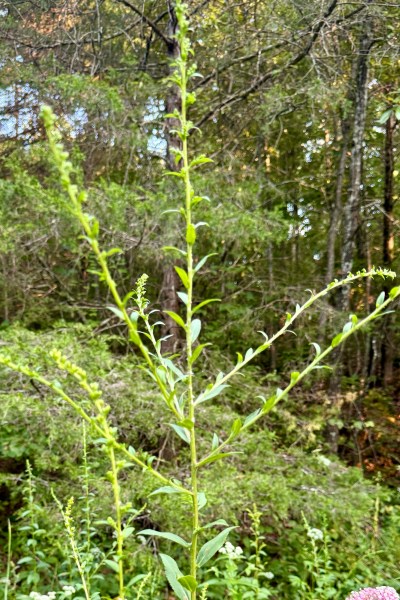
As afternoon progressed to evening, I went back down from atop the ridge and visited a small calcarous fen—a unique wetland habitat created by seepage of calcareous groundwater that results in saturated, low-oxygen soil. Fens often support unique plants, and in this one I found Solidago patula (swamp goldenrod). I’ve never seen this plant before, so I was a bit disappointed it was not yet in bloom, but I marveled at an enormous, darkly colored banded fishing spider (Dolomedes vittatus) sitting on one of the plants.

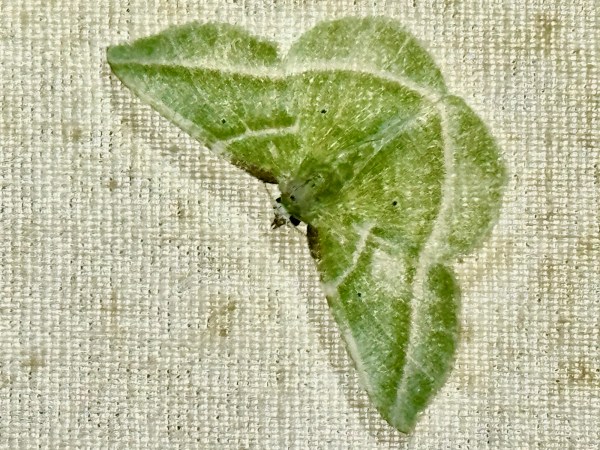
After dinner we set up several light stations, including one up in the restored prairie remnant. Despite the warm, humid conditions, I had little optimism that we would see much of interest at the lights due to the near-full moon shining brightly in the cloudless sky. This was mostly true, although I did collect a few ceresine treehoppers and weevils from the lights. Additionally, a few small but pretty moths warranted a photograph or two.

The truly interesting finds, however, would come in the form of caterpillars on the foliage of nearby trees. Three species of slug moths (family Limacodidae)—among the most bizarre-looking of caterpillars, and all of which can sting—would be found. Two of them were new to me—a beautifully lichen-colored Euclea delphinii (spiny oak slug moth), and the nearly amorphous Apoda y-inversa (yellow-colored slug moth). The third species was the striking Parasa indetermina (stinging rose slug moth)—always a treat to see!


Other striking caterpillars were found as well: Amorpha juglandis (walnut sphinx) and Ceratomia catalpae (catalpa sphinx)—adults of each also visiting the lights, Anisota virginiensis (pink-striped oakworm), Automeris io (io moth), Acronicta radcliffei (Radcliffe’s dagger moth), and Halysidota tessellaris (banded tussock moth). Some of these were photographed in situ, but most were brought back to camp for photographs under more controlled conditions.


Another interesting observation near the light in the prairie was a Neoconocephalus ensiger (sword-bearing conehead katydid—family Tettigoniidae) final-instar nymph molting to adulthood. At the time that I photographed it, the antennae were pulled taught—almost but not completely pulled free from the exuviae.

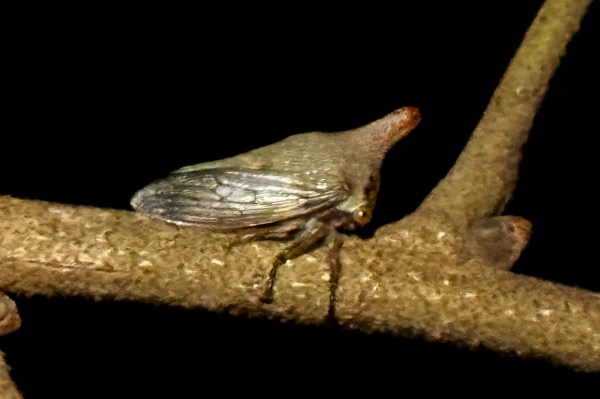
A final observation of a small treehopper (Platycotis vittata) on a Quercus stellata (post oak) twig—after which I called it a night (it was around 2 am!).
©️ Ted C. MacRae 2024
 Beetles In The Bush