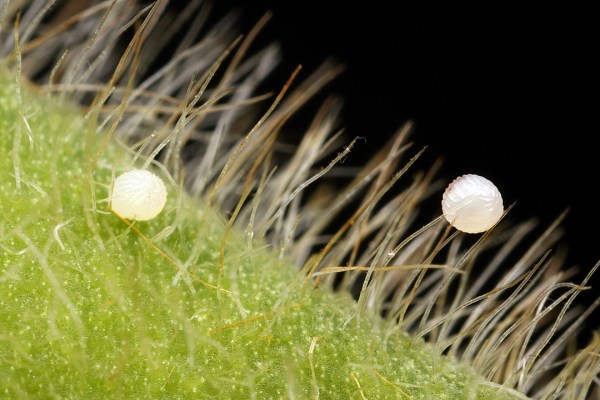
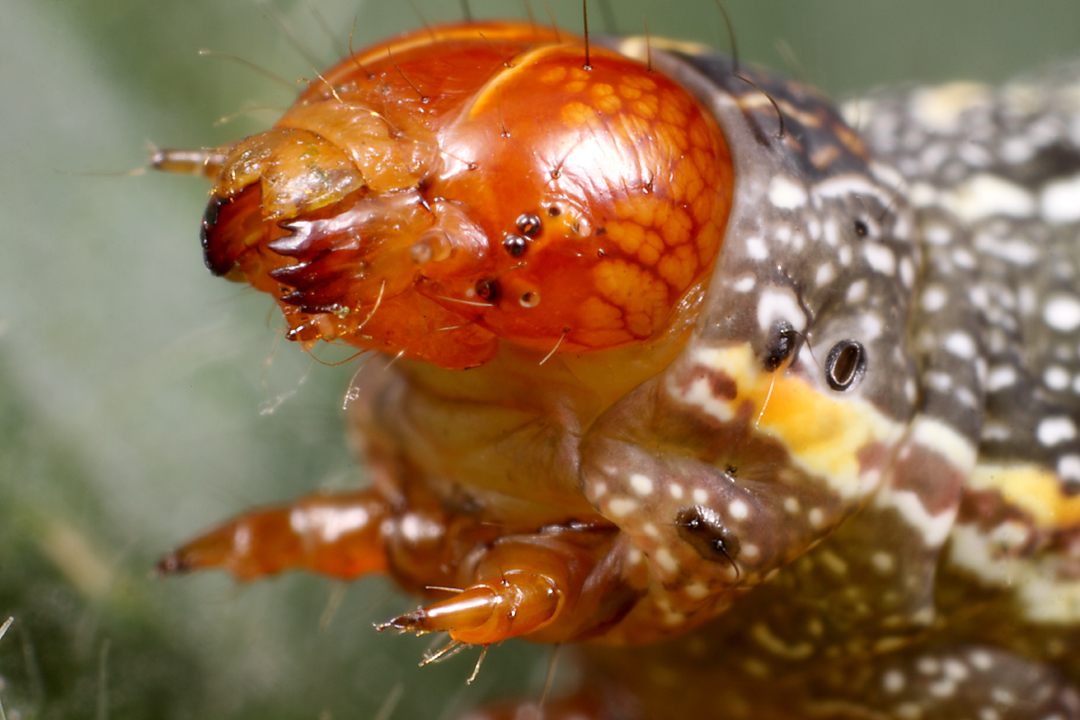
Hooray for iStock—I finally have an ID for my photo

I was all set to make a “One-Shot Wednesday” post today, but sometimes big news strikes and plans must change. The news today was in the form of a random tweet by Alex Wild:

iStock-caption_Wild-20131120

The link in the tweet led me to the following photo on iStock by Getty:

bedbug has captured worm

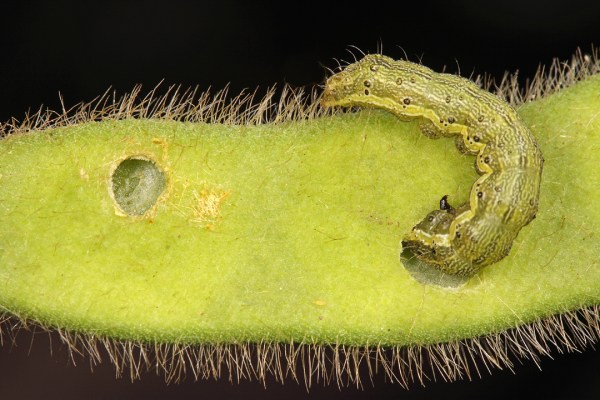
I was stunned—the photo depicted a scene almost identical to one that I had photographed back in September while visiting soybean fields in Louisiana. For two months I sat on the photo with no idea what I was looking at, but now thanks to Alex I have my answer! Compare the above photo with mine below, and you’ll see that everything matches perfectly—I had photographed a “bedbug” that had captured a “worm”!

Podisus maculiventris preying on Chrysodeixis includens larva

bedbug captures a worm

I considered myself to be fortunate, because there was not just one but two different subjects in the photo, and both of them matched perfectly with the subjects shown in the iStock photo. Gotta love the internet—nowadays names for even the most hard-to-identify bugs are just a click away if you know where to look!

</snark>

Of course, the aggressor in both photos is not a “bedbug” [sic for “bed bug”] (order Hemiptera, family Cimicidae) but a stink bug (family Pentatomidae), specifically Podisus maculiventris, or “spined soldier bug”—perhaps the most common predatory stink bug in North Amerca and ranging from Mexico and parts of the West Indies north through the U.S. into Canada. It is a well-known predator of crop pests and, as such, has been imported to several other countries as part of classical biological control efforts. As for the “worm,” in my photo it is a late-instar larva of Chrysodeixis includens, or “soybean looper, and while I haven’t been able to identify the exact species in the iStock photo it is definitely a lepidopteran caterpillar that appears to related to if not in the same family as the soybean looper (Noctuidae). Now, I concede that “worm” is sometimes used for lepidopteran larvae, but one must also concede that in it’s broadest sense “worm” can refer to members of several disparate phyla such as Nematoda (roundworms), Platyhelminthes (flatworms), or Annelida (segmented worms).

This case, of course, just screams for application of the Taxonomy Fail Index (TFI), which scales the amount of error in a taxonomic identification in absolute time against the error of misidentifying a human with a chimpanzee—our closest taxonomic relative. For example, when TFI = 1 the error is of the same magnitude as mistaking a human for a chimp, while  TFI > 1 is a more egregious error and TFI < 1 a more forgivable one. In the case shown here, one must go back to the common ancestor that eventually gave rise to all of the worm phyla and noctuid moths (~937.5 mya). In addition, since there are two subjects in the photo, one must also go back to the divergence of the main hemipteran groups that contain bed bugs and stink bugs (mid-Triassic, ~227.5 mya). This results a whopping 1.165 billion total years of divergence between the identifications assigned to the subjects in the iStock photo and their actual identity. Assuming that chimps and humans diverged approximately 7.5 mya, this gives a TFI for the iStock photo of 155! I haven’t searched thoroughly to determine whether this is a record for the highest TFI in a single photo, but surely it is a strong contender!

Copyright © Ted C. MacRae 2013

Quick Guide to Armyworms on Soybean

Throughout the soybean growing areas of the southern U.S. and South America, lepidopteran caterpillars are the most important pest complex affecting the crop. Millions of pounds of insecticides are sprayed on the crop each year in an effort to minimize their impact—a practice that is not always successful and entails significant exposure risks to the environment and farm workers alike. A variety of lepidopteran species occur in soybeans, and proper identification is essential to ensure adequate control and avoiding unnecessary applications. While the most important and commonly encountered species are velvetbean caterpillar (Anticarsia gemmatalis) and soybean looper (Chrysodeixis includens), others include soybean podworms (Helicoverpa zea in the U.S.; H. gelotopoeon and—now—H. armigera in Brazil and Argentina), sunflower looper (Rachiplusia nu), bean shoot moth (Crocidosema aporema), and armyworms of the genus Spodoptera. The last group contains several species that can affect soybean, and while they have traditionally been considered minor pests of the crop a number of species have increased in importance during the past few years.

I have been conducting soybean field trials in both the U.S. and South America for many years now and have had an opportunity to photograph most of the species known to occur on soybean in these regions. Identification of armyworm larvae can be rather difficult due to their similarity of appearance, lack of distinctive morphological differences (e.g. number of prolegs), and intraspecific variability in coloration. Conclusive identification is not always possible, especially with younger larvae; however, the different species do exhibit subtle characters that can usually allow for fairly reliable identification of large larvae. Considering the dearth of direct comparative resources—either in print or online—I offer this quick guide to the six armyworm species that I’ve encountered in soybean.


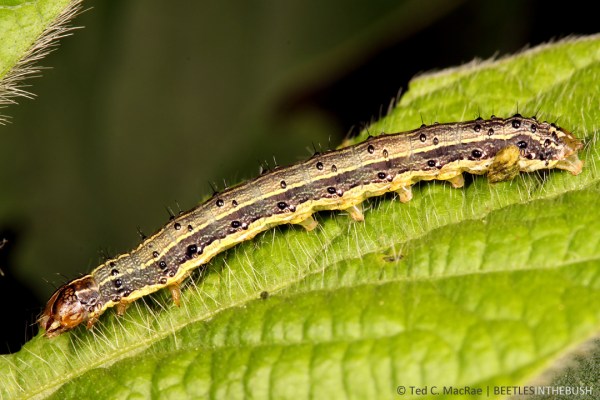
Spodoptera frugiperda (fall armyworm) | Jerseyville, Illinois

Spodoptera frugiperda (fall armyworm) | Jerseyville, Illinois

Spodoptera frugiperda (fall armyworm). This is not the most important armyworm pest of soybean, in contrast to its great importance in other crops such as corn and cotton. It is, however, the most widely distributed of the species, occurring in both the southern U.S. and throughout soybean growing areas of Brazil and Argentina. When problems do occur on soybean they are usually a result of larvae moving from grassy weeds to small soybean plants in late-planted or double-crop fields. Larvae can damage all stages of soybean, from seedlings (cutting them off at ground level) to later stages by feeding primarily on foliage and even pods. Larvae are somewhat variable in coloration but are distinctive among armyworms by virtue of the pinaculae (sclerotized tubercles) visible over the dorsum, each bearing a single stout seta. Four pinaculae are present on each of the abdominal segments, with those on the eighth abdominal segment forming a square, and larvae also exhibit a pronounced inverted, white, Y-shaped mark on the head.


Spodoptera exigua (beet armyworm) | Stoneville, Mississippi

Spodoptera exigua (beet armyworm) | Stoneville, Mississippi

Spodoptera exigua (beet armyworm). This species is better known as a pest of vegetables but will occasionally damage soybean in the southern U.S. In soybean larvae prefer to feed on foliage of seedling plants but will, if present during reproductive stages, also feed on blossoms and small pods. Late-instar larvae can be rather variable in appearance, but most tend to be green above and pinkish or yellowish below with a white stripe along the side. Larvae can be confused with Spodoptera eridania (southern armyworm) because of a dark spot that might be present on the side, but in southern armyworm the spot is on the first abdominal segment while in beet armyworm (when present) it is on the mesothorax.


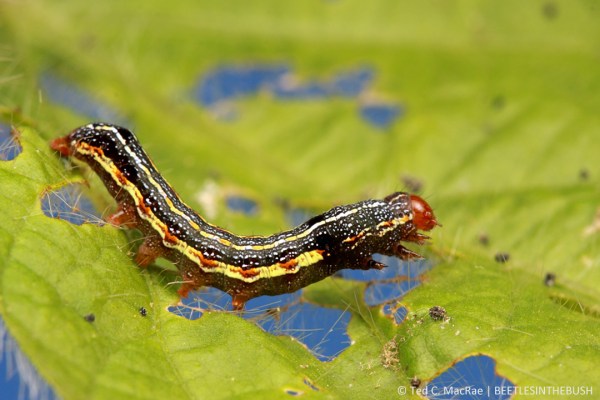
Spodoptera ornithogalli (yellowstriped armyworm) | Jerseyville, Illinois

Spodoptera ornithogalli (yellow-striped armyworm) | Jerseyville, Illinois

Spodoptera ornithogalli (yellow-striped armyworm). This species is widely distributed throughout North and South America, but its status as an occasional pest of soybean is limited practically to the southeastern U.S. It is often encountered in soybean in low numbers but can reach pest status in double-crop fields with small plants that have been planted after wheat (similar to fall armyworm). Compared to other species in the genus the larvae are rather uniform in appearance, exhibiting paired, black, triangular spots along the back of each abdominal segment with thin to prominent yellow stripes running lengthwise adjacent to and not interrupted by the spots. Larvae oftentimes have an almost black velvety appearance with distinctly contrasting bright yellow stripes.


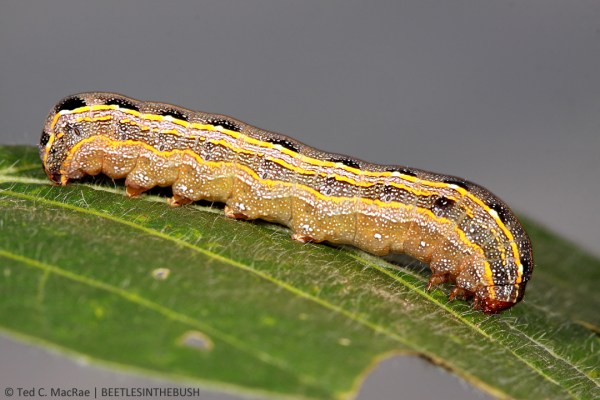
Spodoptera eridania (southern armyworm) | Jerseyville, Illinois

Spodoptera eridania (southern armyworm) | Jerseyville, Illinois

Spodoptera eridania (southern armyworm) | Union City, Tennessee

Spodoptera eridania (southern armyworm) | Union City, Tennessee

Spodoptera eridania (southern armyworm). This species is, like fall armyworm, widely distributed from the southern U.S. through Brazil and Argentina. In the U.S. it occurs only sporadically on soybean, usually causing “hot spots” of damage by groups of many larvae hatching from a single egg mass and skeletonizing the nearby foliage before dispersing as they grow larger. In Brazil and Argentina this species has emerged during recent years as one of the most important armyworm pests of soybean, especially in regions where cotton is also grown. Larvae can be somewhat variable in appearance and, in South America, can be easily confused with those of the black armyworm (S. cosmioides), both of which often exhibit prominent black markings on first and eighth abdominal segments and a subspiracular light-colored line along the length of the thorax and abdomen. Southern armyworm, however, rarely exhibits an additional black marking on top of the mesothoracic segment. Additionally, when the subspiracular line is present it is interrupted by the black marking on the first abdominal segment and is less distinct in front of the spot than behind, and if the line is not present then the black spots on top of the first abdominal segment are larger than those on top of the eighth abdominal segment.


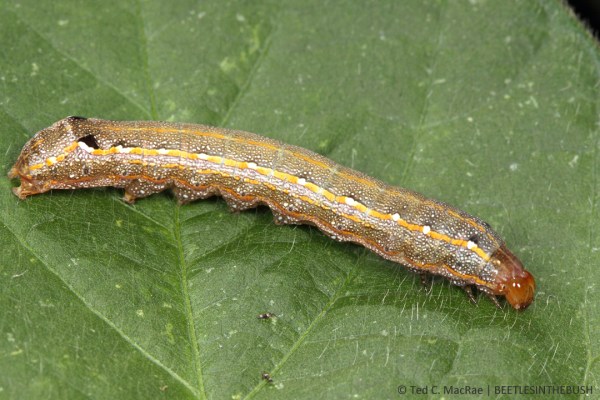
Spodoptera cosmioides (black armyworm) | Acevedo (Buenos Aires Prov.), Argentina

Spodoptera cosmioides (black armyworm) | Acevedo (Buenos Aires Prov.), Argentina

Spodoptera cosmioides (black armyworm) | Chaco Prov., Argentina

Spodoptera cosmioides (black armyworm) | Saenz Peña (Chaco Prov.), Argentina

Spodoptera cosmioides (black armyworm) | Acevedo (Buenos Aires Prov.), Argentina

Spodoptera cosmioides (black armyworm) | Acevedo (Buenos Aires Prov.), Argentina

Spodoptera cosmioides (black armyworm). No accepted English common name exists for this strictly South American species that was previously considered a synonym of the North and Central American species Spodoptera latifascia. In Brazil it has been referred to by such names as “lagarta preta” (black caterpillar) and “lagarta da vagem” (pod caterpillar). The latter name has also been applied to other soybean pests, including southern armyworm, so to me “black armyworm” seems the most appropriate English name to adopt. Like southern armyworm, this species is a sometimes pest of cotton and in recent years has become increasingly important in soybean throughout Brazil and northern Argentina. Larvae often resemble and can be easily confused with those of southern armyworm; however, there is almost always a dark spot on top of the mesothoracic segment that is lacking in southern armyworm. Additionally, the light-colored subspiracular line, when present, is not interrupted by the black spot on the first abdominal segment and is equally distinct in front of and behind the spot. When the line is not present the black spots on top of the first abdominal segment are smaller than than those on top of the eighth abdominal segment.


Spodoptera albula

Spodoptera albula (gray-streaked armyworm) | Saenz Peña (Chaco Prov.), Argentina

Spodoptera albula (unbarred or gray-streaked armyworm). While known to occur in extreme southern U.S., this species has been cited as a pest of soybean only in Brazil, although its importance has not matched that of southern or black armyworm. Like most armyworms it is polyphagous, but this species seems to prefer amaranth (Amaranthus spp.). Larvae of this species can be distinguished from other South American armyworms that feed on soybean by the trapezoidal black marking on the mesothorax (usually semicircular to slightly trapezoidal in black armyworm), the black marking on the first abdominal segment not larger than that on the sixth abdominal segment, both of which are smaller than those on the seventh and eight abdominal segments, the white-only rather than white and orange dorsolateral stripe, and the triangular black markings on the abdominal segments each with a small white spot in the middle or at the apex of the marking.

Copyright © Ted C. MacRae 2013
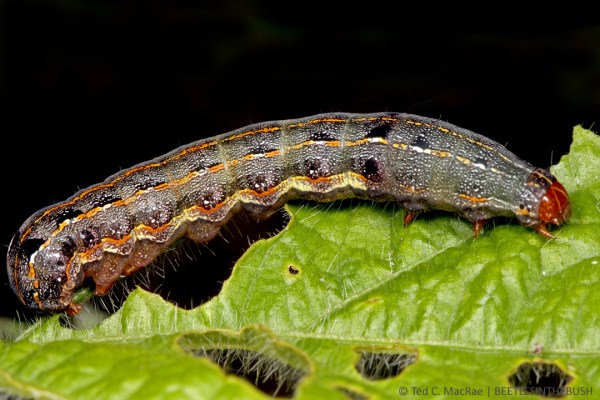
Bollworms rising!

One of the most pernicious pests that U.S. farmers have battled is the larval stage of Helicoverpa zea (Lepidoptera: Noctuidae). This insect is destructive enough to have earned not just one official common name, but four (corn earworm, cotton bollworm, soybean podworm, and tomato fruitworm)—one for each of the crops in which it has attained major pest status. It isn’t only North American farmers, however, that must deal with this pest, but South American farmers as well. For many decades, corn and cotton have been its most important hosts in North America, but in recent years its importance has increased steadily in soybean as well, particularly across the mid-south. In South America, however, it seems satisfied—curiously—to confine its attacks to corn. Lest you think that South American farmers are getting off easy, there are other species of Helicoverpa in South America that are causing problems of their own. Perhaps the most troubling one is H. armigera, the Old World bollworm¹—a sister species to H. zea (Goldsmith & Marec 2010) native to Africa, Asia, and Australia and just as polyphagous as H. zea that was recently found infesting corn, cotton, soybean, and other crops in several areas of Brazil.

¹ Interestingly, in the Old World this species is called the “American bollworm,” despite the fact that it did not come from the Americas at all. I guess neither hemisphere wants to take the blame for this species.

Helicoverpa gelotopeon (South American bollworm) | Buenos Aires Province, Argentina

Helicoverpa gelotopeon (South American bollworm) | Buenos Aires Province, Argentina

While we wait to see what impact H. armigera ends up having in South America, another species of the genus is quietly rising from the ranks of secondary to primary pest further south on the continent. For many years, Helicoverpa gelotopeon (or South American bollworm) has been a sometimes pest of cotton and other crops in Argentina, Chile and Uruguay (Evangelina et al. 2012), but in a situation that mirrors the rise of H. zea on soybean in North America, the incidence of H. gelotopeon has grown during the past few years in the more southern soybean growing areas of South America as well. Like its North American counterpart, this insect causes not only indirect damage by feeding on the foliage of the plant during vegetative stages of growth (reducing photosynthetic capacity of the plant), but also direct damage by feeding on the developing pods during reproductive stages of growth. Predictably (and regrettably), farmers have responded by increasing applications of organophosphate insecticides, but the efficacy of these products—despite their relatively high toxicity—has often been inadequate to prevent yield losses. As a result, other management techniques and technologies will be required to keep this insect from having a major impact on soybean production in the temperate regions of Argentina.

Young larvae feed on foliage (note the very small caterpillar in the lower center area of the leaf).

Young larvae feed on foliage (note the very small caterpillar in lower left area of the leaf).

A mid-instar larvae feeding on soybean foliage.

A mid-instar larvae feeds on soybean foliage and exhibits the black pinacula characteristic of the subfamily.

Larger larvae feed on developing pods, breaching the wall of the pod to consume the seeds within.

Larger larvae feed on developing pods, breaching the wall of the pod to consume the seeds within.

Adults are slightly smaller than H. zea and a little darker with somewhat bolder markings.

The photographs in this post may well be the best—and perhaps even the only ones—available of this species. A Google image search turned up nothing, and have I been unable to find any literature with photographs of either the adults or the larvae and their damage. If you are aware of any please leave a comment with the citation.

REFERENCES:

Goldsmith, M. R. & Marec, F. 2010. Molecular Biology and Genetics of the Lepidoptera. CRC Press, Boca Raton, Florida, 368 pp.

Evangelina, P., F. Crepo & J. C. Gamundi. 2012. Evaluación del daño simulado de “oruga bolillera” Helicoverpa gelotopoeon (Dyar) en estados vegetativos del cultivo de soja. Unpublished report, Instituto Nacional de Tecnología Agropecuaria (INTA), 6 pp.

Copyright © Ted C. MacRae 2013

Best of BitB 2012

Welcome to the 5th Annual “Best of BitB”, where I pick my favorite photographs from the past year. 2012 was one of the most intensive travel years I’ve ever had—I spent 8 weeks in Argentina from February through April, made separate trips to Puerto Rico and Arkansas in May (bracketing a personal week in California), traveled almost weekly to Illinois and Tennessee from June to September (interrupted by a personal week in Florida in July), toured the southeastern U.S. (Arkansas, Louisiana, Mississippi and Georgia—great food!) in early September, chased tiger beetles in Oklahoma, Texas and Arkansas in late September, went back to Argentina for a week in October, and capped off the travel year by attending the Entomological Society of America Annual Meetings in Knoxville, Tennessee (for the first time in more than 10 years!)—whew! While many would cringe at such a travel load, I am among the lucky few who actually get paid for doing something that is also my hobby—entomology! This gives me ample opportunity to further hone my photography skills (nine of the 13 photos I’ve selected below were actually taken while I was on business travel), resulting in two key accomplishments this year—my first ever photography talk at the ESA’s insect photography symposium and my first commercial sales (look for the BitB commercial site to go online in 2013).

Enough blather! Here are my favorite BitB photographs from 2012. Click the link in the text below the photo to see the original post. I would greatly appreciate knowing if you have a favorite (and why)—your feedback will be enormously helpful to me as I continue to learn and develop as a photographer.  For those interested, here are my previous year picks for 2008, 2009, 2010 and 2011. And, as always, thank you for your readership!


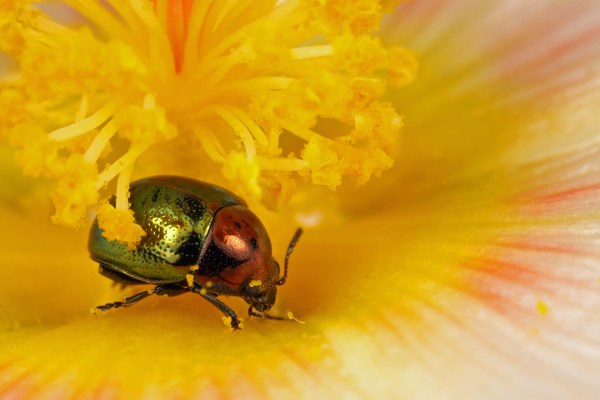
Spintherophyta (?) sp. in flower of Abutilon pauciflorum | Buenos Aires, Argentina

From  (posted 2 Feb). One of my 2012 learnings was that sometimes a photograph that is not so close is more effective than one that is as close as possible. In one of my earlier attempts at “not-so-close” macrophotgraphy, the soft colors of the flower compliment the brash shininess of the tiny leaf beetle that has been feeding on its pollen. Pink lines lead the eye directly to the subject and create a pleasing composition, and pollen grains stuck to the beetle—a distraction in some situations—add to the miniature natural history story of the photo.


Apiomerus flavipennis with stink bug prey and kleptoparasitic flies | Chaco Province, Argentina

From  (posted 11 Mar). I selected this photo solely for the complex natural history story drama it shows—stink bug (Piezodorus guildenii) feeding on soybean becomes prey of an assassin bug (Apiomerus flavipennis), with volatiles from the chemicals it emitted in a vain attempt to defend itself serving as cues to kleptoparasitic flies (families Milichiidae and Chloropidae) that benefit from the assassin bug’s labors.


Planthopper nymph | Buenos Aires Province, Argentina

From  (posted 26 Mar). Another learning that I began putting into practice in 2012 was the use of low perspective for compositional impact. The cryptic coloration of this planthopper nymph (family Fulgoridae) made it almost invisible on the branch on which it was sitting when viewed from a normal “top-down” human perspective. Getting “down under” it, however, brought the nymph to life and emphasized its unusual form.


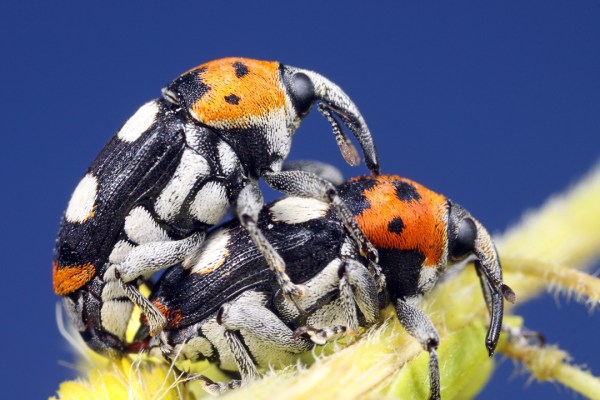
Megabaris quadriguttatus | Corrientes Province, Argentina

From  (posted 12 Apr). I spent much of 2012 working on the “blue sky background” technique, with these weevils from northern Argentina representing one of my better attempts. Macrophotography of insects with a blue sky background involves setting exposure, ISO, and aperture to achieve two separate exposures—full flash illumination of the subject for maximum depth-of-field, and ambient light from the sky to create a clean, uncluttered, natural-looking background. In this shot I managed to achieve an almost ideal shade of blue to compliment the wild black, white and red colors of the beetles. (My one criticism of the photo is having clipped one of the beetle’s feet.)


Bombylius sp. cf. mexicanus | Scott Co., Missouri

From  (posted 16 May). This photo is unusual if nothing else. Focus, lighting, depth-of-field, and composition are all better than can be hoped for in a single shot, but the subject—perfectly alive—is in a most unusual position. Read the original post to find out how this happened.


Perisphaerus sp. (a pill roach) | Vietnam (captive individual)

From  (posted 27 May). White-box photography is an excellent technique for clean, uncluttered photographs of insects, but it also isolates them from their natural surroundings and limits their natural history appeal. The best white-box photos are those that highlight a key feature or behavior of the subject—in this case a pill roach’s comically conglobulating defensive posture.


Micronaspis floridana (Florida intertidal firefly) larva | Pinellas Co., Florida

From  (posted 31 July). Here is another photo whose back story played a big part in its selection. This firefly larva not only represents a rare Florida-endemic species but was also first seen by my then 12-year old nephew, who willingly accompanied me through a dark, spooky salt marsh in the middle of a humid Florida night to see what he could learn. The lesson here for budding natural historians (and old-timers like me) cannot be overstated!


Arctosa littoralis (beach wolf spider) | Lewis Co., Missouri

From  (posted 23 Aug—prelude to  posted 28 Aug). Those who follow this blog know of my obsession with close-up portraits, and while tiger beetles are the subjects I most commonly photograph in this manner, I am always on the lookout for good subjects in other taxa. This wolf spider “face” almost looks human, with “two” eyes, two “nostrils” and a shiny upper lip above huge (albeit hairy) buck teeth! It’s enough fill-the-frame spidery goodness to melt (or explode) the heart of even the most ardent arachnophobe!


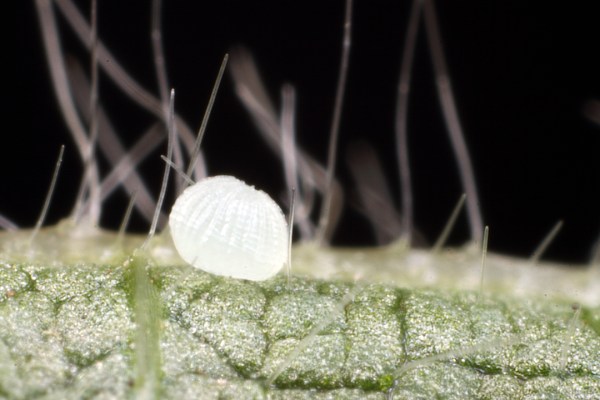
Anticarsia gemmatalis (velvetbean caterpillar) egg on soybean leaf

From Life at 8X—Guide to lepidopteran eggs on soybean (posted 3 Sep). “Life at 8X” was a new series I introduced this year, featuring insects photographed at magnifications testing the upper limit of my equipment and photographic skills. Diffraction is the chief difficulty with magnifications as high as this and is the primary flaw in the above photograph. Nevertheless, such view of a moth egg on the underside of a soybean leaf provides a spectacular view of the otherwise unseen micro-world that lives right beneath our noses.


Megacyllene decora (amorpha borer) on snakeroot flowers | Mississippi Co., Missouri

From  (posted 12 Sep). This second example of “blue sky background” was taken later in the year and was considerably more difficult to capture than the first because of the larger size of the subject and resulting need for a longer focal length macro lens. Getting a well-lit, focused, and composed image with a desirable shade of blue in the background depended not only on finding the proper camera settings, but also secure body and camera bracing techniques for this completely hand-held shot.


Cicindelidia politula politula (Limestone Tiger Beetle) | Montague Co., Texas

From  (posted 28 Sep). I will go ahead and say it—this is my favorite photograph of 2012. As discussed under the first entry, panning back from the subject can allow for some very interesting compositions. This photo combines charismatic pose by a wary subject with panning back and low perspective to create an image that scores high in both natural history and aesthetic appeal.


Calosoma sayi (black caterpillar hunter) | New Madrid Co., Missouri

From Black is beautiful! (posted 7 Nov). Of course, close-as-possible can also be used to create striking photos, especially if the subject exhibits features that are best seen up close. Anything with jaws fits the bill in my book, and highlighting the mandibular sculpturing of this caterpillar hunter (a type of ground beetle) required precise angling of the flash heads for maximum effect.


Cicindela repanda (Bronze Tiger Beetle) | St. Louis Co., Missouri

From  (12 Nov). This final selection is not a rare species, but it is as close as I have come to what I consider the “perfect” tiger beetle macrophotograph—a close, low angle, lateral profile of an adult in full-stilt posture (a thermoregulatory behavior), well lit, perfectly focused, and with a dynamic but pleasingly blurred background. It’s a perfect storm of a photo that took the better part of two hours to achieve—rarely do all of these elements come together in a hand-held photograph of an unconfined tiger beetle in its native habitat.


Well, there you have it. I hope you’ve enjoyed my selections, and again please do let me know if you have a personal favorite. See you in 2013!

Copyright © Ted C. MacRae 2012

Inchworm, Inchworm, Oh So Small

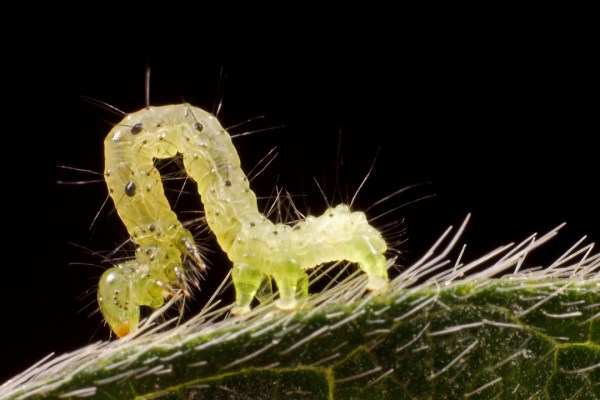
Soybean looper (Chrysodeixis includens) | 3rd-instar larva

Okay, I know this is not a real “inchworm” (generally restricted to caterpillars in the family Geometridae), but this young larva of a soybean looper (Chrysodeixis includens, family Noctuidae) is just too cute to not have an equally cute name. I believe it is an early 3rd instar, based on its small size (~7mm in length), lightly colored head capsule, and distinct bristles around the head and on the body—1st instars have a black head capsule, while 2nd instars have a light brown head capsule, and in both the bristles on the body are smaller and not as distinct.

This larva hatched from an egg laid on soybean by a laboratory-reared adult.

Copyright © Ted C. MacRae 2012

Life at 8X—Guide to lepidopteran eggs on soybean

Most of you are aware of my passion for beetles, but in reality that is just my evenings-and-weekends gig. By day, I am an agricultural entomologist conducting research on insect pests of soybean. I’m not sure how many latent soybean entomologists there may be among readers of this blog, but for this installment of “Life at 8X” I thought it would be interesting to feature eggs of several of the more important lepidopteran species that infest soybean in the U.S. Soybean is primarily a New World crop, and of the many lepidopteran species that attack soybean on these two continents, most belong to the great family Noctuidae (owlet moths). The species shown here include the most important species in North America, and in some cases South America as well.

See this post for details on photographic technique; however, note that most of the photos in this post that were shot at 8X have been cropped slightly (~10–15%) for composition (should I call this post “Life at 9X”?).


Anticarsia gemmatalis. Velvetbean caterpillar (“oruga de las leguminosas” in Argentina; “lagarta-da-soja” in Brazil) has long been the most important lepidopteran soybean pest throughout the New World. In North America its attacks are confined to the lower Mississippi River delta and southeastern Coastal Plain, but in South America nearly 100% of the soybean growing area is subject to attack. Eggs of this species are laid almost exclusively on leaf undersides throughout the canopy and are intermediate in size compared to the other species shown below (~7,000 eggs per gram). They are distinctive in their slightly flattened spherical shape and turn pinkish as they age and the developing larva takes form inside the egg.

Anticarsia gemmatalis—velvetbean caterpillar


Chrysodeixis includens (=Pseudoplusia includens). Soybean looper (“oruga medidora falsa” in Argentina; “lagarta falsa-medideira” in Brazil) was until recently primarily a North American pest with the same southern occurrence as velvetbean caterpillar. In recent years, however, it has gained importance in Brazil and northern Argentina as well, with its impact magnified by the capacity to develop resistance against most of the insecticides that have been used to control it. The egg of this species is quite small (~10,000 eggs per gram) and are are irregularly spherical with a somewhat translucent, crystalline appearance. Like velvetbean caterpillar, eggs of this species are laid almost exclusively on the leaf undersides, but the moths exhibit a clear preference for the middle or upper canopy depending upon plant growth stage.

Chrysodeixis includens (= Pseudoplusia includens)—soybean looper


Helicoverpa zea. Soybean podworm is better known in other crops as corn earworm, cotton bollworm, or tomato fruitworm (a testament to its polyphagous nature), and in South America the common names are even more diverse depending on both crop and country (“gusano bellotero,” “gusano cogollero del algodón,” “gusano elotero,” “isoca de la espiga en maíz,” or simply “bolillero” in Argentina; “lagarta-da-espiga-do-milho” or “broca-grande-do-fruto in Brazil). While it has long been considered a secondary pest of soybean in North America, recent years have seen a marked increase in its incidence across the mid-south growing areas. Unlike the above two insects, larvae of this species feed not only on foliage but also directly on pods, typically breaching the pod wall and consuming the developing seeds inside. This method of feeding not only causes direct yield impacts but also affords some protection to larvae from insecticide applications.

Also unlike the first two insects, eggs of this species can be laid anywhere on the plant—leaves (upper or lower surface), petioles, stems, pods, and even flowers. The eggs are rather large compared to the other species shown here (~3,500 eggs per gram) and assume a distinctive barrel shape when laid on the leaf. The creamy-white coloration, often with a light brown ring below the apex, is also distinctive compared to the previous two species. Eggs laid on pods tend to be attached to trichomes (hairs) rather than the pod surface, in which case they take on an almost perfectly spherical shape.

Helicoverpa zea—soybean podworm

Helicoverpa zea eggs on soybean pod


Heliothis virescens. Like the previous species, tobacco budworm has only recently gained attention as a pest of soybean. This importance, however, seems to be confined to Brazil (where it is known as “lagarta-das-maçãs”), while in North America it is usually found in combination with H. zea at minor levels. This is bad news for South American farmers; like soybean looper, tobacco budworm has developed resistance to all the insecticides that have been used against it in significant quantities. The oviposition and feeding behaviors of this species are very similar to those of H. zea, with eggs again laid on all parts of the plant and being very similar in appearance to those of H. zea except their slightly smaller (approx. 5,000 eggs per gram). In practical terms, eggs and young larvae of H. virescens and H. zea can be reliably distinguished only through species-specific immunoassay (Greenstone 1995) or feeding disruption bioassay using a diagnostic concentration of Bacillus thuringiensis ( Bailey et al. 2001).

Heliothis virescens—tobacco budworm

Heliothis virescens eggs on soybean pod.

As with H. zea, H. virescens eggs laid on pods tend to be stuck to hairs and assume a spherical shape.

This H. virescens egg has apparently died—note the shriveling and uniform black coloration.


Spodoptera frugiperda. Fall armyworm is a minor pest of soybean that rarely reaches economically damaging levels. However, its incidence in South America (where it is called “oruga militar tarde in Argentina and “lagarta-militar” in Brazil) has increased somewhat with the adoption of no-till cultivation of soybean. The species prefers grass hosts, but when these are knocked down by applications of post-emergence herbicides the larvae then move onto the soybean plants and continue feeding. Unlike any of the above species, eggs are laid in distinctive masses that are covered by abdominal setae and wing scales for protection. These eggs are also small (~8,500 eggs per gram), exhibit much finer and more numerous ridges than the above species, and are often colored orange, pink, or light green.

Spodoptera frugiperda—fall armyworm

Individual eggs inside the mass are covered by abdominal setae and wing scales.


REFERENCES:

Bailey, W. D., C. Brownie, J. S. Bacheler, F. Gould, G. G. Kennedy, C. E. Sorenson & R. M. Roe. 2001. Species diagnosis and Bacillus thuringiensis resistance monitoring of Heliothis virescens and Helicoverpa zea (Lepidoptera: Noctuidae) field strains from the southern United States using feeding disruption bioassays. Journal of Economic Entomology 94 (1):76–85.

Greenstone, M. H. 1995. Bollworm or budworm? Squashblot immunoassay distinguishes eggs of Helicoverpa zea and Heliothis virescens (Lepidoptera: Noctuidae). Journal of Economic Entomology 88(2):213–218.

Copyright © Ted C. MacRae 2012

The “Big 3” of corn in Argentina

While leafcutter ants are one of the more unusual pests that Argentina corn farmers must deal with, the three most important confront farmers throughout the Western Hemisphere: stalk borers, earworms, and armyworms. In the U.S. the primary stalk boring pest of corn is the European corn borer (Ostrinia nubilalis), while in Argentina it is the sugarcane borer (Diatraea saccharalis). Corn earworm (Helicoverpa zea) and fall armyworm (Spodoptera frugiperda), on the other hand, are common to both countries. Here are some recent photos of the three species in Argentina – the first two on corn and the latter on soybean.

After you look at the photos, I have a funny story…

Diatraea saccharalis eggs ready to hatch | Buenos Aires Prov., Argentina

Helicoverpa zea egg on corn silk | Buenos Aires Prov., Argentina

Spodoptera frugiperda mid-instar larva on soybean | Buenos Aires Prov., Argentina

Learning to speak a foreign language via immersion can result in some embarrassingly funny moments. This afternoon I made an unplanned visit to the field with some colleagues. There has been much rain recently so the ground was rather muddy. Not having my boots with me, I picked my way through as best I could, and afterwards as I was cleaning the mud off my shoes, I commented (in Spanish) to one of my Argentine colleagues (a young female) that this was my only pair of clean shoes. I said everything okay but messed up the word for shoes—instead of saying “calzados” I said “calzones.”

In Argentina, calzones means “underwear.”

I’m really glad the shocked look on her face quickly gave way to hysterical laughter once she figured out what I was trying to say.

Copyright © Ted C. MacRae 2012