ESA in absentia

Click on image to see larger version.

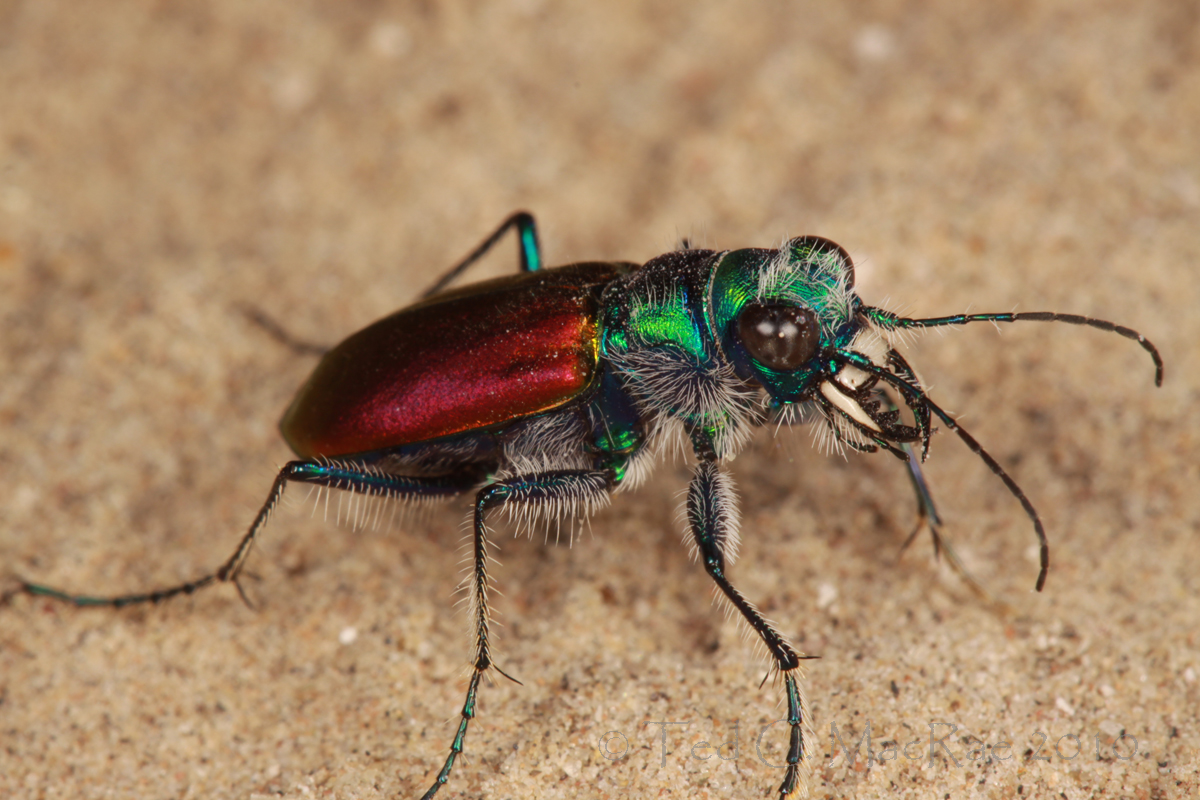
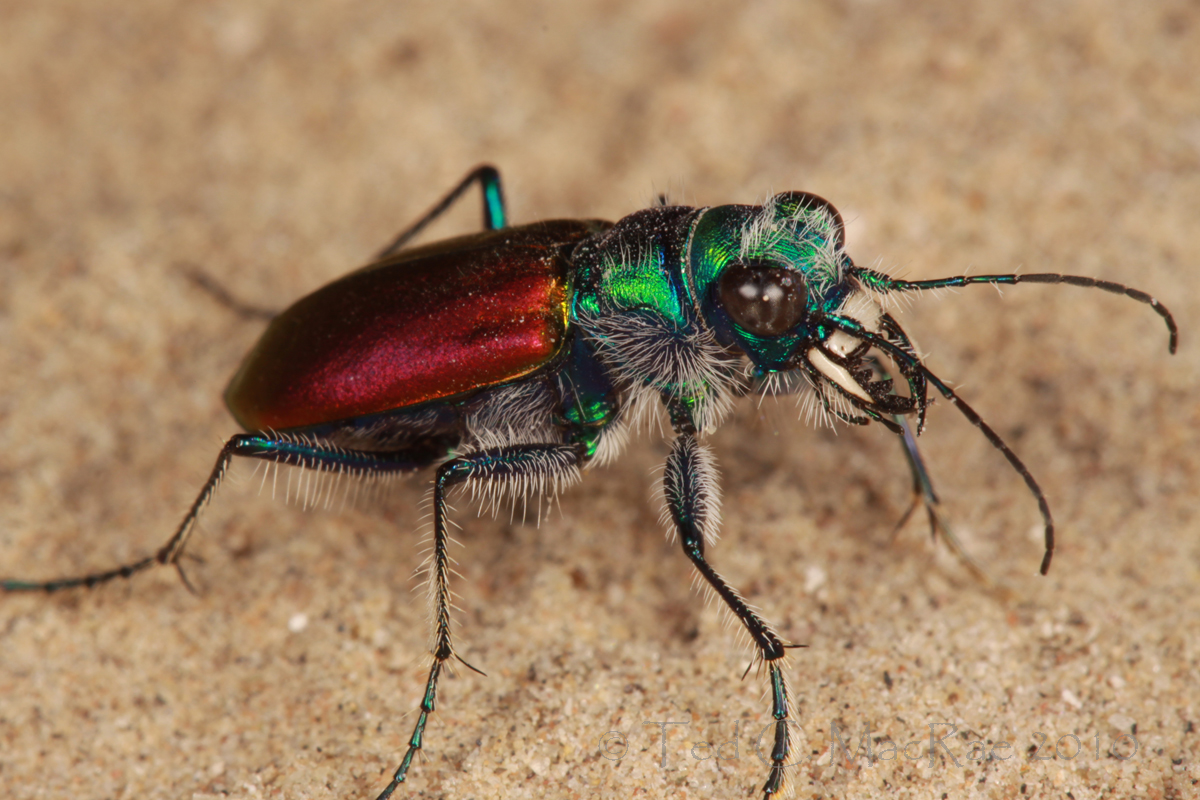
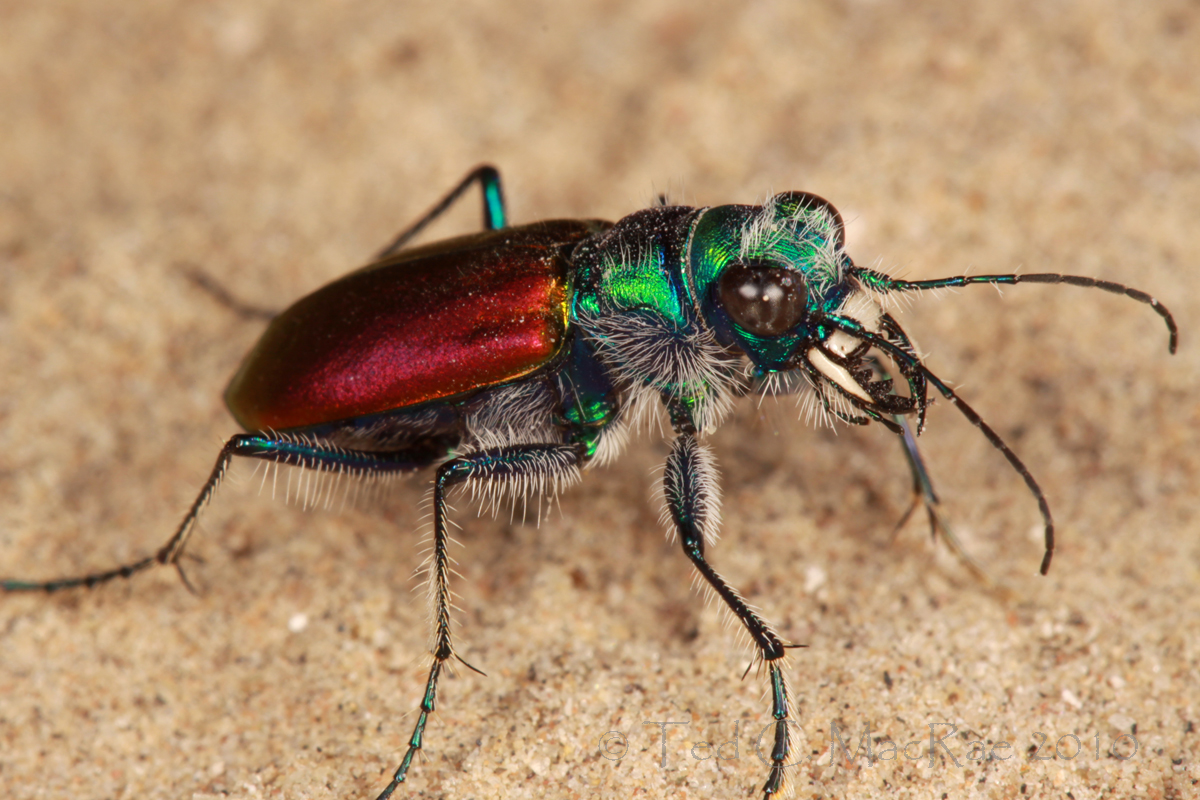
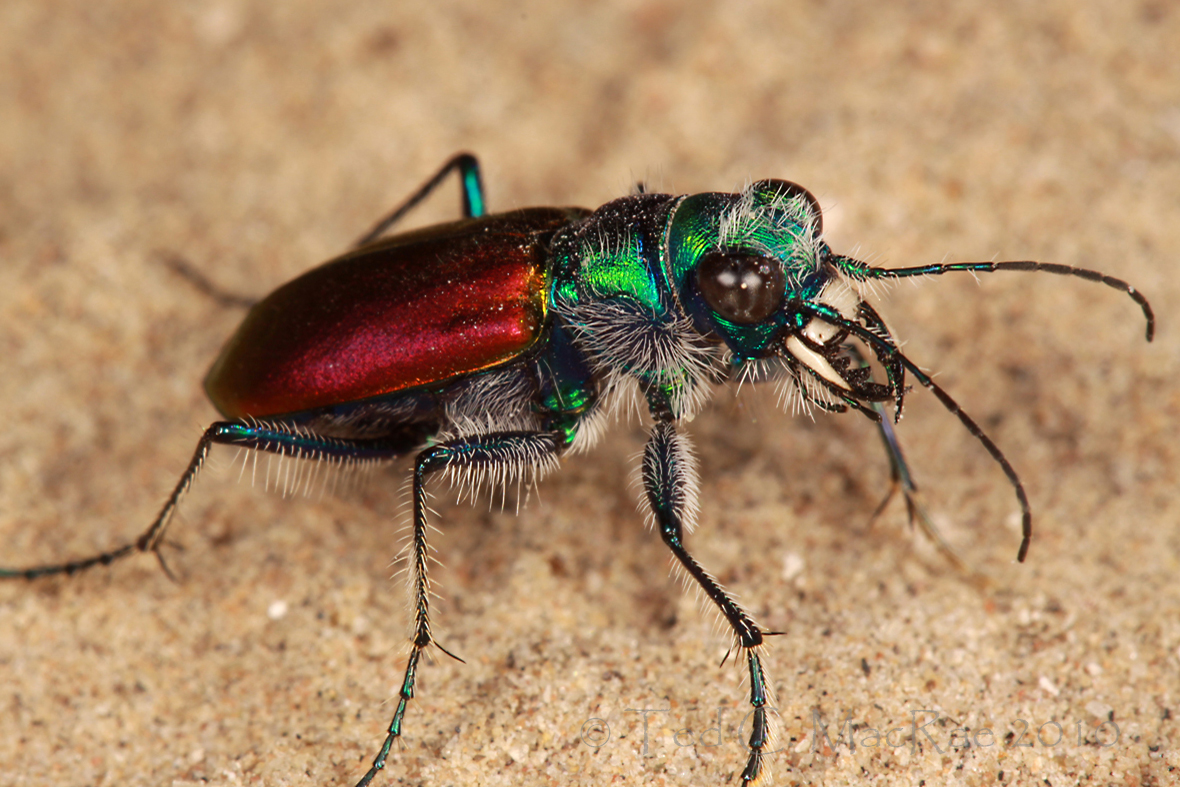
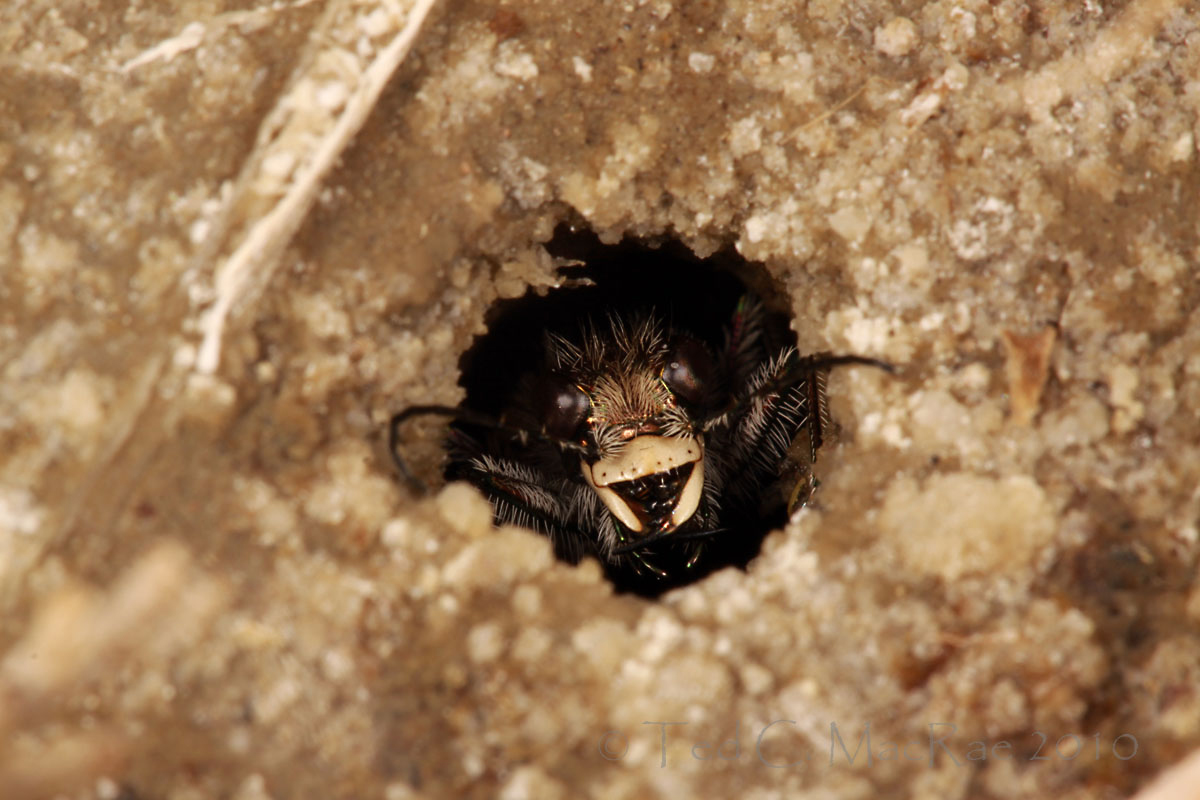
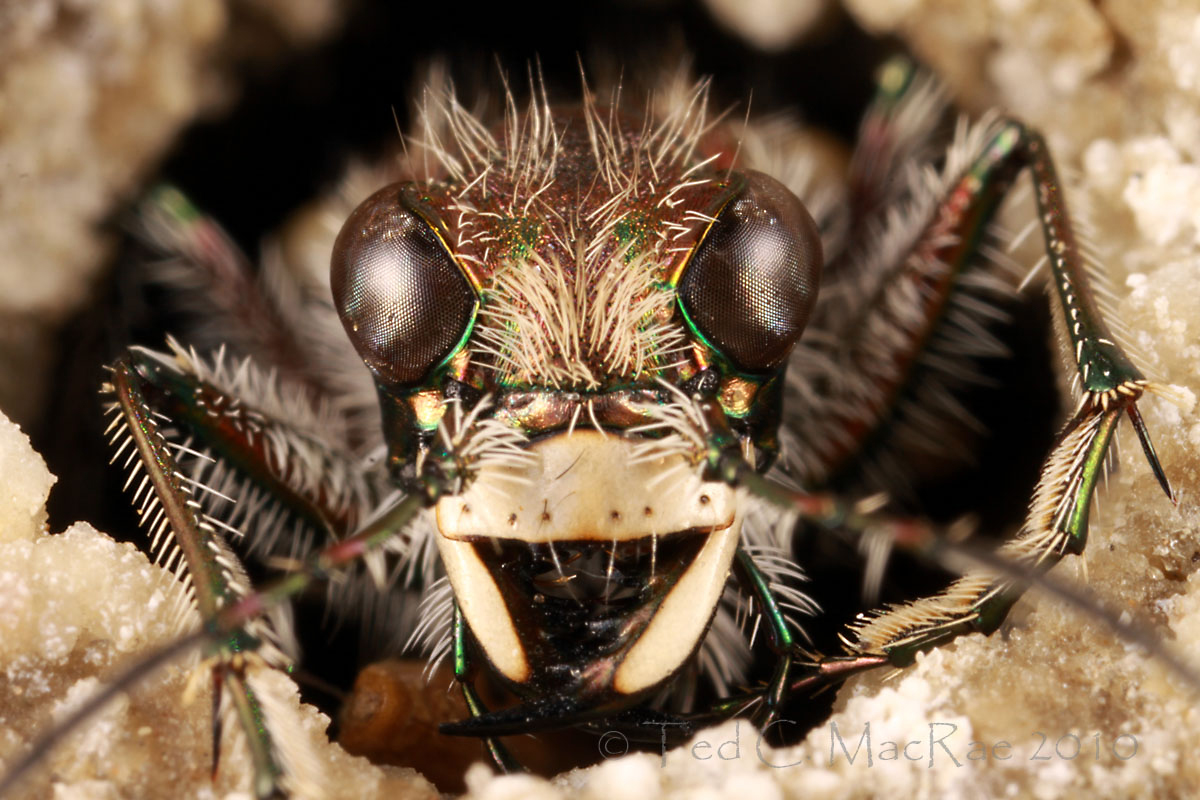
The Entomological Society of America (ESA) held its 58th Annual Meeting earlier this week in San Diego, California. For those of you who were unable to attend, I’ve included a link to a poster that I and coauthors Chris Brown and Kent Fothergill presented, titled Cylindera cursitans: Distribution and Seasonal Occurrence in Southeast Missouri. Okay, I can already see the puzzled faces, as many of you know I was unable to attend myself. In fact, none of the poster authors were in attendance – if Kelly Tindall, Kent’s entomologist-wife, hadn’t attended the meetings the poster would have never seen the light of day.

Despite lead authorship on the poster, I had a minimal role in its preparation.  Kent did much of the dirty work – clipping text and figures from a manuscript on the subject that we recently submitted to the journal CICINDELA, while Chris and I sat back and gave thumbs up and thumbs down opinions on each iteration of Kent’s hard work.  My heartiest congratulations to Kent for producing such a nice piece of work, to both Kent and Chris for putting up with my obsessive nitpicking over every trifling detail as we readied the manuscript for submission, and to Kelly for lugging a poster halfway across the country in the middle of winter when it didn’t even have her name on it.

REFERENCE:

MacRae, T. C., C. R. Brown, and K. Fothergill.  2010. Cylindera cursitans: Distribution and Seasonal Occurrence in Southeast Missouri. Annual Meeting of the Entomological Society of America, San Diego, California, December 12-15, 2010.

Copyright © Ted C. MacRae 2010

A First Class Box of Beetles

Warning: post contains lots of hardcore, beetle-collector geekery!

A nice selection of tiger beetles and buprestid beetles.

A few weeks ago I got an email from fellow buprestophile Henry Hespenheide (Professor Emeritus, UCLA) asking if I needed any specimens of Agrilus coxalis auroguttatus – recently dubbed the “goldspotted oak borer” after it was discovered damaging oaks in southern California (Coleman & Seybold 2008).  I replied that I did not have this species in my collection and that I would be grateful for any examples he could provide.  Shortly afterwards, I received another message from him saying that he had just placed in the mail a small box with a male/female pair of that species – along with about two dozen tiger beetles for my enjoyment!  Later that week I received the shipment at my office – I couldn’t wait to open it up and see what goodies were inside!

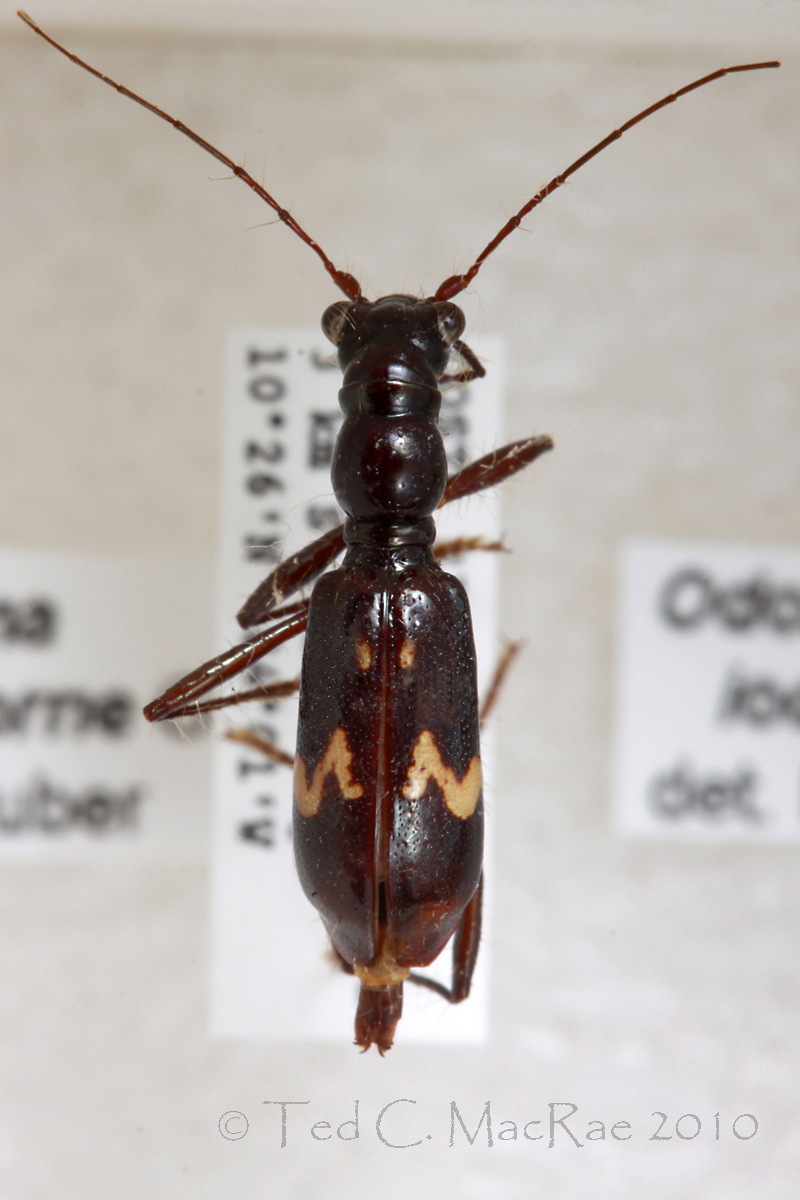
Ctenostoma maculicorne (Chevrolat, 1856)

Opening a box of just received specimens is a little like opening presents on Christmas – you don’t know for sure what’s inside, but you know you’re gonna like it!  This time was no exception, and I delighted as I realized the sending contained a dozen or so tiger beetles from Costa Rica and Nicaragua (a region in which Henry has spent many of his years studying the leaf-mining and twig boring buprestid beetles).  My eyes were immediately drawn to two tiger beetles in particular – specimen #1 in the first row, and specimen #4 in the second row.  Why these particular tiger beetles?  Obviously they are among the more showy specimens in the sending, but more significantly both of them belong to genera not represented in my collection.  The first of these is Ctenostoma maculicorne, representing also a new tribe for my collection (Collyridini, subtribe Ctenostomina).  I’m glad Ron Huber had already identified this specimen, as I probably would’ve only been able to determine the genus.  Beetles in this group are ant mimics, but in a much different manner than our U.S. ant-mimics (Cylindera cursitans and Cylindera celeripes).  Those latter species are found strictly on the ground (as are all U.S. tiger beetle species), while species of Ctenostoma are largely arboreal.  Troy Bartlett at Nature Closeups has some great photographs of another species in this genus seen last January in Brazil (Caraça Natural Park, Minas Gerais) that show just how ant-like these beetles can appear as they crawl about on twigs and branches.

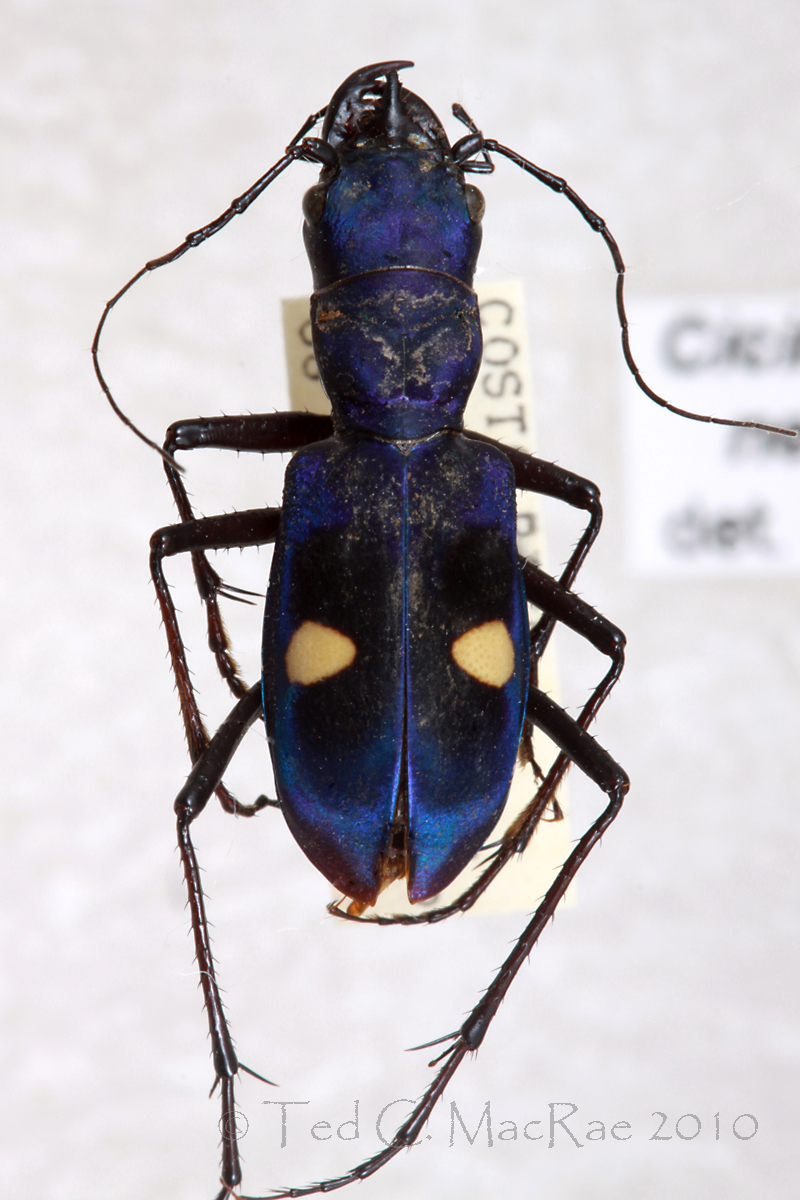
Pseudoxycheila tarsalis Bates, 1869

Despite lacking an identification label, I recognized the second specimen instantly as Pseudoxycheila tarsalis, dubbed by Erwin & Pearson (2008) as the “Central American montane tiger beetle.”  Pseudoxycheila is a rather large Neotropical genus (21 known species), but only P. tarsalis occurs north of South America.  Morgan Jackson at Biodiversity in Focus photographed an individual of this species during his visit to Costa Rica this past summer.  Its brilliant coloration is not only delightful to look at but also apparently aposematic in nature – Schultz and Puchalski (2001) found that benzene-like compounds isolated from the beetle’s pygidial glands are distasteful to humans, adding support to the potential of a Müllerian mimicry association with stinging mutillid wasps in the genus Hoplomutilla, which they resemble.  Note also the curious spine on the frons extending out over the mandibles – maybe it not only grabs its prey with its toothy jaws but also “stabs” it for extra measure (just kidding – though I do wonder about the function of that spine.  I’m not aware of its presence in any other genus of tiger beetles).

I also noted an interesting pair of tiger beetles that looked very different from each other, yet were both identified by Ron Huber as Tetracha ignea.  This species was recently synonymized under the nominotypical form of T. sobrina (Naviaux 2007) – the “ascendent metallic tiger beetle” (Erwin & Pearson 2008), a highly variable species with numerous described subspecies occurring in southern Mexico, Central America, northern South America, and the West Indies.  The specimen on the left has the normal appearance of T. sobrina sobrina, but the specimen on the right looks like it might have suffered some chemical discoloration (a common occurrence among collected tiger beetle specimens).

Update 16 Dec 2010, 12:00pm – I just learned from Henry that the Tetracha specimen on the right (from Nicaragua) was not seen by Ron Huber and, thus, is likely not conspecific with the specimen on the left (T. sobrina from Costa Rica).  That’ll teach me to blindly accept what I see but does not seem right.  Now, time to pull out my copy of Naviaux (2007) and test my abilities to work through a key written in French!

Tetracha sobrina sobrina Dejean, 1831 (L); Tetrach sp. undet. from Guatemala (R).

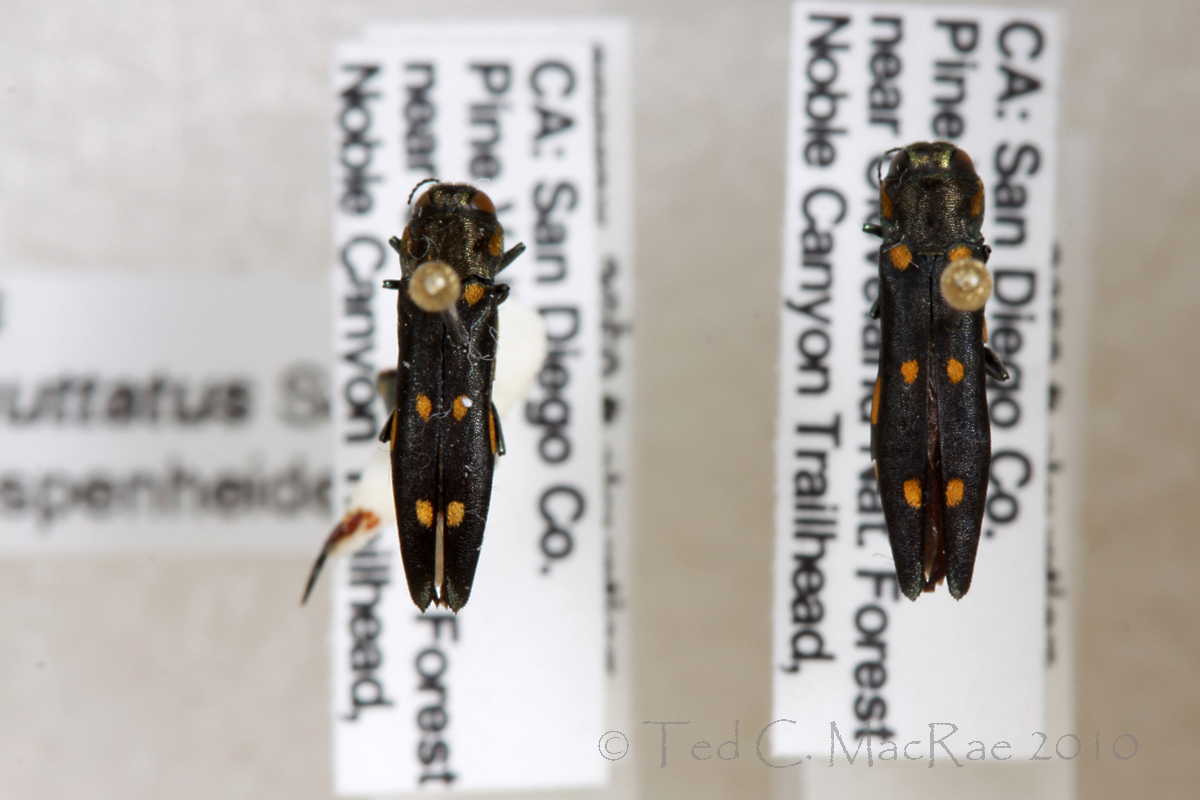
There are several other interesting species in the sending – some determined (two species each of Oxycheila and Brasiella) and others that I need to look at more closely.  You may note on the bottom row a few specimens of a species of Elaphrus – a genus of true ground beetles that often fool collectors by their strong resemblance to tiger beetles (looks like they fooled Henry, too).  As for the beetles that were the reason for this shipment in the first place, these are shown in the image below.  Agrilus coxalis auroguttatus was recently discovered as the cause of significant mortality in several species of oak trees in San Diego County (Coleman & Seybold 2008), thus joining the introduced Agrilus planipennis (emerald ash borer) and several native Agrilus spp. on the ever-growing list of buprestid beetles achieving economic pest status in North America.  This subspecies, known for many years from southern Arizona (where it is not a pest), is curiously widely disjunct from nominotypical populations in southern Mexico.  Its sudden appearance in southern California has all the hallmarks of being a human-aided introduction, although natural range expansion remains a possibility.

Agrilus coxalis auroguttatus Schaeffer, 1905

My deep appreciation to Henry Hespenheide for gifting me these specimens and for his always enlightening and often entertaining correspondence over the years.

REFERENCES:

Coleman, T. W. and S. J. Seybold.  2008.  Previously unrecorded damage to oak, Quercus spp., in southern California by the goldspotted oak borer, Agrilus coxalis Waterhouse (Coleoptera: Buprestidae).  The Pan-Pacific Entomologist 84:288–300.

Erwin, T. L. and D. L. Pearson. 2008. A Treatise on the Western Hemisphere Caraboidea (Coleoptera). Their classification, distributions, and ways of life. Volume II (Carabidae-Nebriiformes 2-Cicindelitae). Pensoft Series Faunistica 84. Pensoft Publishers, Sofia, 400 pp.

Naviaux R. 2007. Tetracha (Coleoptera, Cicindelidae, Megacephalina): Revision du genre et descriptions de nouveaus taxons. Mémoires de la Société entomologique de France 7:1–197.

Schultz, T. D. and J. Puchalski.  2001.  Chemical defenses in the tiger beetle Pseudoxycheila tarsalis Bates (Carabidae: Cicindelinae).  The Coleopterists Bulletin 55(2):164–166.

Copyright © Ted C. MacRae 2010


Cleaning Tiger Beetles

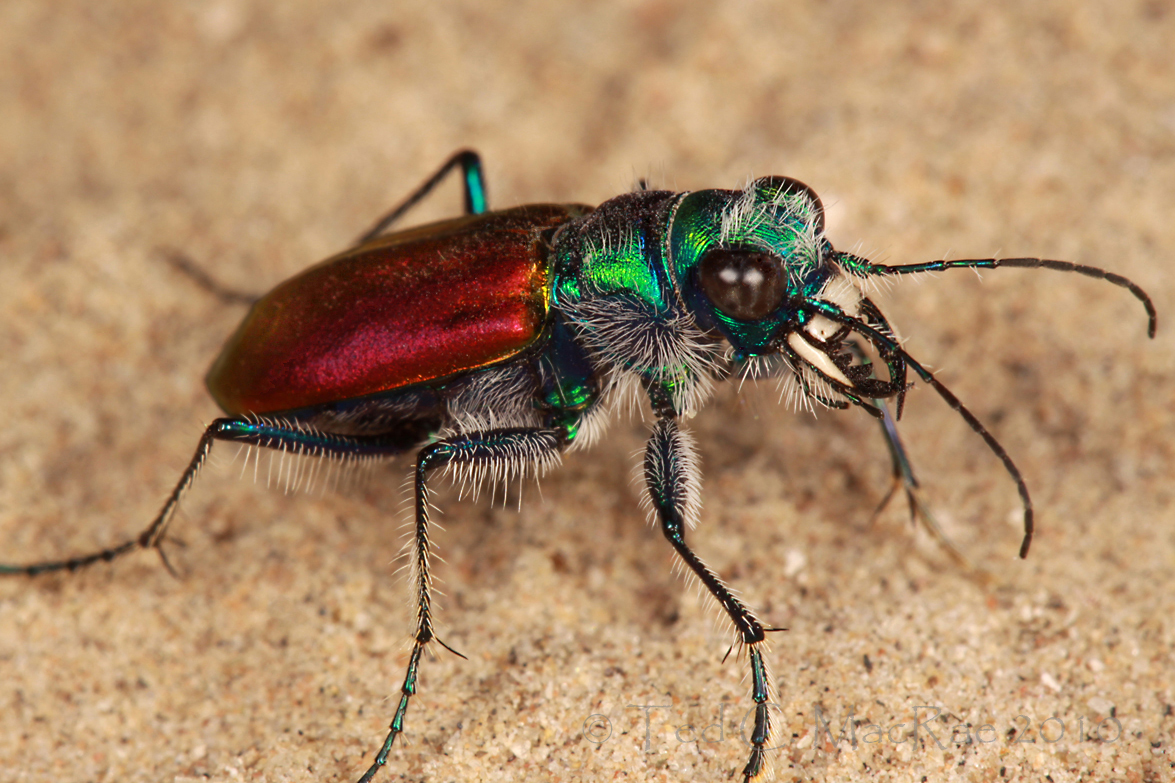
Cicindela scutellaris scutellaris - the festive tiger beetle

This is Cicindela scutellaris (festive tiger beetle), one of the six species of tiger beetles that we found last September at Monroe Canyon in the Pine Ridge area of northwestern Nebraska.  The red elytra and green head and pronotum are characteristic of nominotypical populations of this species that are found in sandy habitats throughout the Great Plains.  This is your classic tiger beetle in a classic tiger beetle pose; however, photographs such as this are not so easy to come by.  The biggest challenge is the beetle itself – rarely are they so accommodating to allow this nice lateral profile perspective with the head slightly cocked towards the camera while standing up on their front legs.  This posture is seen only when the beetles are warm and active, and warm beetles are skittish beetles that yield lots of not-as-interesting back shots (head directed away from the camera) as they persistently run away from the photographer.  Cooler temperatures make them less skittish and easier to approach from the desired angle, but in this case they often lay flat on the ground trying to absorb heat – flay-laying beetles are not very photogenic either.  With practice and patience, one learns how to “work” an active, skittish subject and get them accustomed to the photographer so that the above perspective can be achieved.

Getting the shot, however, is only half the battle.  Tiger beetles are dirty bugs!  They run around over bare ground and dig in it, often leaving them covered with debris.  This is particularly true for species that frequent sandy habitats.  For those of us who like to photograph wild individuals in their native habitats, debris-covered beetles is something we have to live with.  Or do we…?  The beetle in the above image looks squeaky-clean thanks to some simple digital image processing tools that I used to “clean up” the subject (I use Photoshop Elements 6.0).  Now, I’ve never been one to want to spend a lot of time on post-processing of my photographs.  I’d rather be looking for bugs, photographing them, studying them, and writing about them – time spent on post-processing is time not spent on any of these other activities.  However, I have developed a little routine that I follow for most of my tiger beetle photographs now that cleans them up a bit – some more than others – and doesn’t take too much time.  Maybe some of you will find this useful for your own photographs.¹

¹ Disclaimer:  I am not a Photoshop expert.  I’m not even a photographer.  I’m an entomologist with a camera.  As a result, this post is intended to be not so much an authoritative tutorial on the use of Photoshop as a summary of what I’ve learned in dealing with my own photographs.  Constructive dialogue about these and other techniques is welcome. 

Like it or not, no digital image comes out of the camera ready to use (still perhaps the most perplexing aspect of this whole digital photography thing for me personally).  Almost every image needs some levels adjustment and unsharp mask applied to it, and while others are against it I’m not above doing a little cropping to enhance the final composition of the photograph (hey, it’s difficult enough just getting these guys in the frame, much less positioned exactly where you want them).  These are the basic steps that I follow for almost every photograph, as illustrated in the following sequence (reduced versions used for all photos):

Original photograph before processing.

Slight cropping to enhance composition.

Levels adjusted to brighten photo.

Unsharp mask applied (amount = 80%, radius = 2.0 pixels, threshold = 12 levels).

 Normally I would be done at this point, but there are two things that bother me about this photo: 1) the dark shadow on the distal back portion of the elytra (common with this pose), and 2) the debris scattered about on the eye, mandibles, thorax, and elytra.  To fix the shadow, I used the Magic Wand Tool (set on contiguous) to select the shadowed area of the elytra, then used the Dodge Tool set on Highlights (exposure = 25%) to lighten the shadowed area.  For the debris, I enlarged the photo to 100% and used the Spot Healing Brush Tool to remove most of the sand particles, adjusting the size of the brush to just larger than the size of the individual sand particles.  This works fine for particles surrounded by a uniform background, but it doesn’t work so well for particles along edges (particularly the mandibles).  For this, I used the Clone Stamp Tool (again, with the photograph enlarged to 100%) and carefully “cloned” a clean spot along the edge of the mandible next to the sand particle and then replaced the piece of debris with the cloned piece of the image.  As with the Spot Healing Brush Tool, the pixel size is set to the smallest size needed for the size of the debris particles.  Compare the above image with the finished image below to see the difference.

Finished photo with dark shadows on elytra and sand debris on body removed.

 The biggest improvements can be seen with the eyes, always the focal point of a photo such as this, and the mandibles – both now appearing nice and clean.  Is this cheating?  Have I compromised my ideal of getting an image of a wild individual of this species in its native habitat?  I’d be interested to know your opinion about this.

Photo Details: Canon 50D w/ 100mm macro lens (ISO 100, 1/250 sec, f/16), Canon MT-24EX flash w/ Sto-Fen + GFPuffer diffusers.

Copyright © Ted C. MacRae 2010

Monroe Canyon – A Tiger Beetle “Hot Spot”

Steep, sparsely vegetated, fine sand road cut on the Nebraska Pine Ridge escarpment.

The vast landscape surrounding the Nebraska Pine Ridge boasts two entirely different natural communities – the High Plains shortgrass prairie atop the ridge stretching endlessly to the south, and the eerie, desolate Badlands on the north side of the ridge extending to the Black Hills of South Dakota.  Separating these two distinctive communities is the Pine Ridge escarpment itself – a precipitous 1,400-ft drop whose ponderosa pine forests and sage brushlands are more reminiscent of the Rocky Mountains some distance to the west rather than the Great Plains that surround them.  Instead of hard igneous and metamorphic rocks, however, the Pine Ridge is composed of soft, erodable sand- and siltstones, giving rise to canyons with dramatic white bluffs and escarpments.  One of the more scenic of these is Monroe Canyon, located six miles north of the tiny town of Harrison and part of the Gilbert-Baker State Wildlife Management Area.  I first explored Monroe Canyon two years ago, when Matt Brust took me there after our successful quest to see Cicindela nebraskana (prairie long-lipped tiger beetle) in the prairies above.  The steep, eroded road cuts in Monroe Canyon had become one of Matt’s favorite spots to look for tiger beetles, but on our visit there was not much going on save for single individuals of the ubiquitous sand-loving species Cicindela formosa (big sand tiger beetle) and Cicindela scutellaris (festive tiger beetle).  Still, the fine, deep, sparsely vegetated mixture of sand and silt extending far up the embankment is classic tiger beetle habitat, so when Chris Brown and I returned to the area this past September, we decided to give Monroe Canyon another try.

Of the several sand-associated tiger beetles that I thought we might encounter here, Cicindela lengi (blowout tiger beetle) was the one I was really hoping for.  I had encountered a few scarce individuals of this C. formosa-look alike during my 2008 trip and eventually reared another individual from suspected larvae plucked from their burrows.  My only photographs of this species, however, were taken during my PNS days, and I longed to see them once again through the viewfinder of a proper macro-rig.  The day hadn’t started well, getting skunked at a clay bank site in Crawford on the way to Monroe Canyon (where I resorted to photographing itty bitty little moths), and early indications once we got to Monroe Canyon were that it was going to be slow there as well.  Sporadic sightings of Cicindela purpurea audubonii (Audubon’s tiger beetle) had me yawning, and a lone individual of the remarkably infidel Cicindela ubiquita [= C. punctulata] (punctured tiger beetle) seen close to the roadside did little to boost my enthusiasm.  Still, conditions just seemed “right” and the habitat was extensive enough that it deserved a thorough searching before passing judgement.  I got a little more excited when I encountered a few C. purpurea audubonii black morphs, of which I got my first nice field photographs (you’ll see these in a future post), and then spent some time staking out larval burrows for attempted photographs.  We ended up spending a couple of hours at the site without seeing anything remarkable, but by then it was early afternoon and there was little point in trying to find another locality to search – it was a gorgeous spot on a gorgeous day, and just being out there was almost reward enough.  (I’m guessing by now you see where this is going…)

Cicindela lengi - blowout tiger beetle

As I began my umpteenth pass along the lower stretch of the embankment, I heard Chris call out, “I’ve got it!”  Chris hadn’t previously seen this species, so I fully expected when I walked over to where he was standing that I would find instead the much more common and amazingly similar C. formosa.  However, when I spotted the adult as he pointed to it, there was no doubt – the longer, obliquely straight humeral lunule (shoulder marking), the slightly more cylindrical, parallel-sided body, the more extensive brilliant green marginal highlights on the head and pronotum – it was, indeed, C. lengi!  The close resemblance of C. lengi to C. formosa is not the result of a close relationship, but rather an example of convergent evolution in response to similar habitat.  Cicindela lengi is actually more closely related to C. tranquebarica (oblique-lined tiger beetle) and other species formerly placed in the now defunct subgenus Tribonia.  As the first finder, Chris had first photo honors as well while I stood back, ready with the net should it spook and become uncooperative.  It did make a few short escape flights at first, but as I’ve learned before this species tends to make very short, weak flights before dropping straight down, making it rather easy to follow even on the steep embankment that we found ourselves.  This contrasts with C. formosa, whose long, powerful escape flights and bouncing tumbles upon landing can make them difficult to follow.  Eventually it became accustomed to our presence, and after Chris was satisfied with his photographs it was my turn.  We then we took turns again just to make sure we really got the shots we wanted.

Cicindela lengi - note the obliquely straight humeral lunule and relatively narrow, parallel-sided body.

It’s a good thing we didn’t pull the plug on Monroe Canyon that day, as tiger beetle activity really picked up during the afternoon hours.  Not only did we end up seeing several individuals of C. lengi during the next couple of hours, but also a few individuals of C. formosa and C. scutellaris and a single, seemingly misplaced Cicindela denverensis (green claybank tiger beetle), more fond of clay substrates than sand) – making Monroe Canyon a veritable “hot spot” of tiger beetle diversity.  While Monroe Canyon may not equal Willcox PlayaLaguna del Perro, Salt Plains National Wildlife Refuge, or Florida’s Road to Nowhere, six species is still a respectable amount of diversity by any measure, especially for a dry, upland site (all of the other sites mentioned are lowland saline habitats that owe their tiger beetle diversity at least in part to their broad range of available moisture zones).  After two days in the field, our trip total now stood at ten species, and in retrospect we were lucky to see C. lengi when we did as our subsequent search of the C. lengi spot 4 miles east of Harrison later that day turned up nothing.

Brilliant green highlights contrast spectacularly with the red body and bold white markings.

Copyright © Ted C. MacRae 2010

Tiny little slivers of life

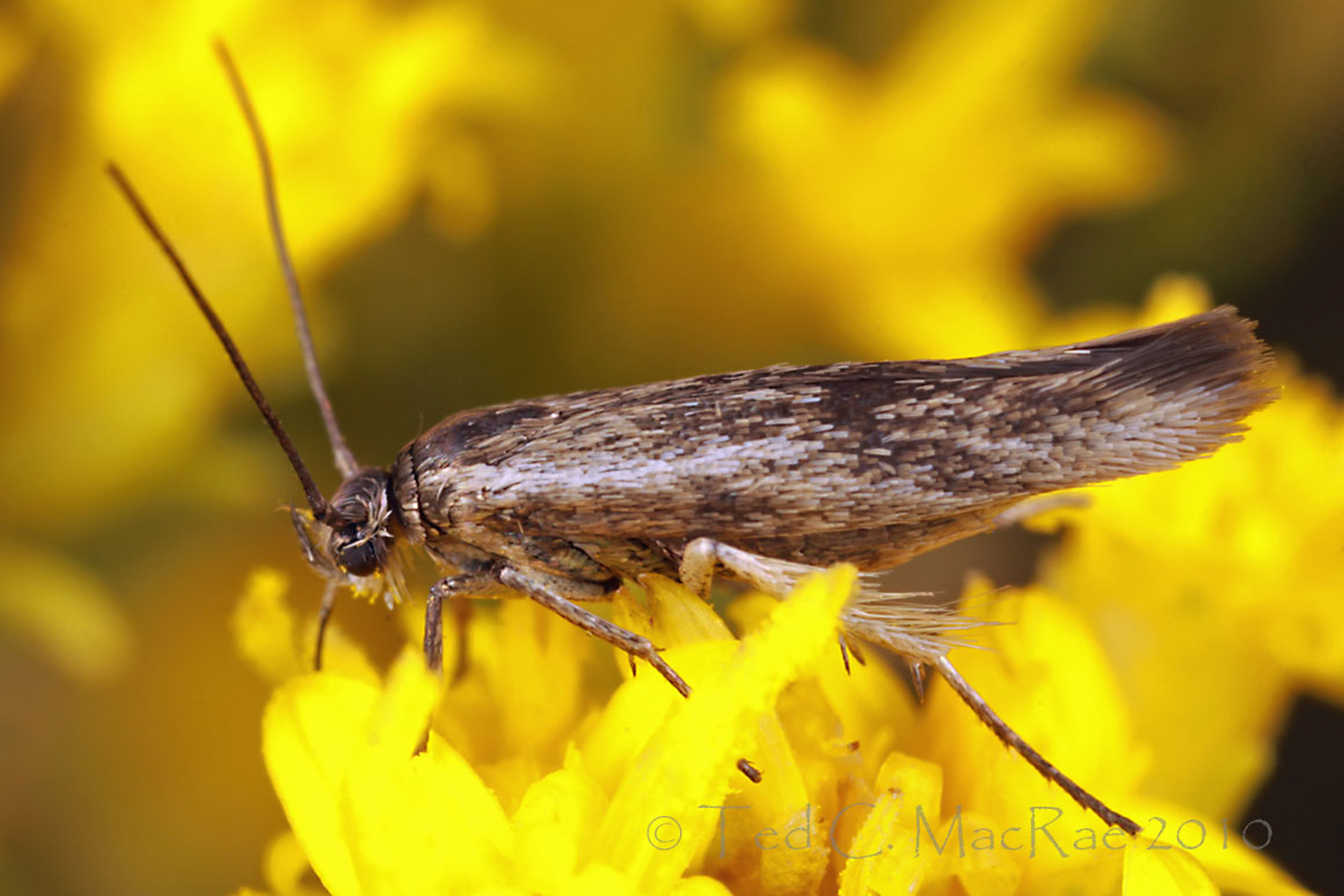
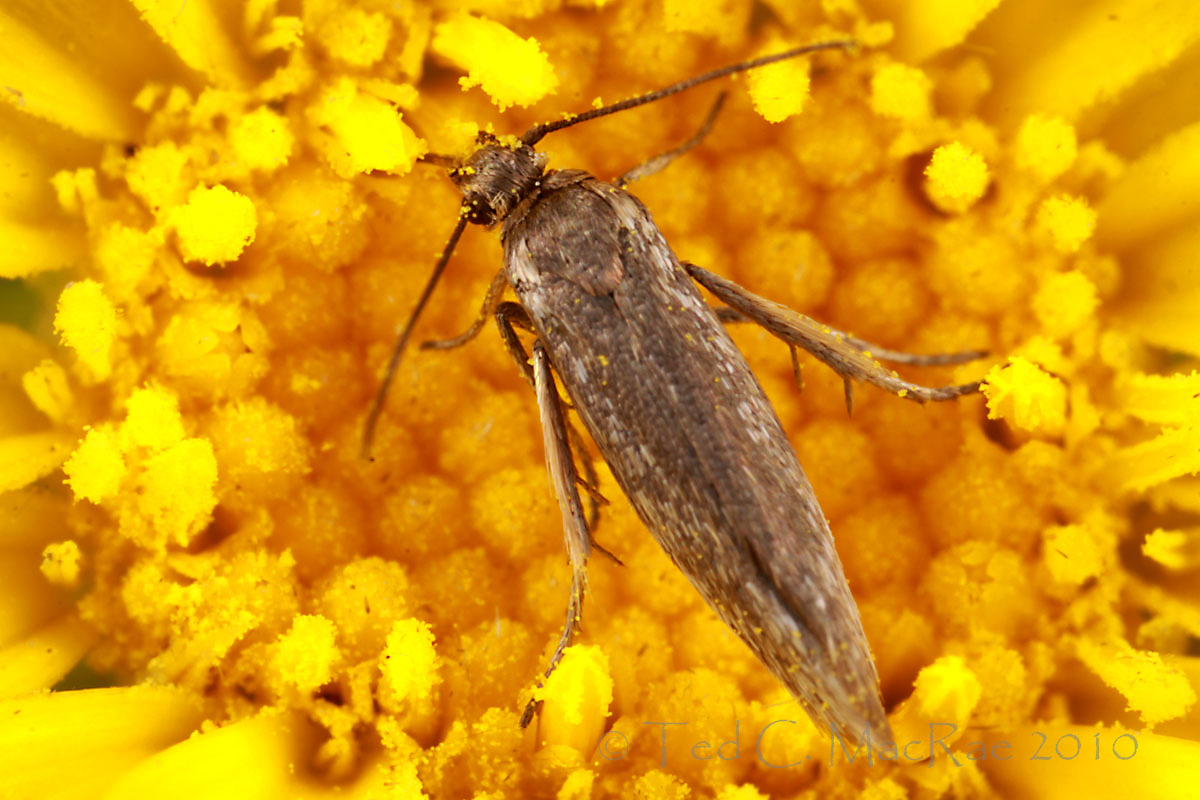
Day 1 of the 2010 Fall Tiger Beetle Trip™ had been an unqualified success.  Not only did we achieve our top goal of the trip – seeing good numbers of the recently discovered South Dakota population of Cicindela pulchra (beautiful tiger beetle), but we also saw C. nebraskana (prairie long-lipped tiger beetle) and a variety of other interesting insects in the nearby Nebraska Pine Ridge.  For Day 2, our destination was Monroe Canyon on the north face of the Pine Ridge escarpment, but on the way there we decided to check out some roadside clay banks in the town of Crawford.  Despite their appearance as perfect tiger beetle habitat, all we saw was a single individual of the normally ubiquitous C. purpurea audubonii (Audubon’s tiger beetle).  The area looked quite dry, and in fact there was little insect life of any kind present… or so I thought.  As I stood there looking out onto the embankment while deciding my next move, I glanced down at a nearby composit shrub with small yellow flowers.  These are often attractive to a variety of beetles (Crossidius longhorned beetles would be nice!), but I saw none.  I started to move on, but before I did I noticed some tiny little slivers of life moving about on the flowers.  Kneeling down to take a closer look, I saw that they were moths – in fact, they were some of the smallest moths that I had ever seen, and the shrub was covered with them.  Now, I may pride myself on my broad-based entomology knowledge, but when it comes to microlepidopterans there is a decided gap in that knowledge.  I really had no idea what they might be, but for some reason the combination of their unknown identity and tiny size became for me an irresistible photographic challenge (made truly challenging by the unrelenting prairie wind).  I’m fortunate that Chris also became distracted photographing something – any other collecting partner surely would have grown impatient waiting for me to finally be satisfied I’d gotten some good shots.

As far as I can tell, these moths represent something in the genus Scythris or perhaps Neoscythris.  These are the so-called flower moths, placed either in the family Scythrididae (Microleps.org and Moth Photographers Group) or subfamily Scythridinae of the Xylorictidae (BugGuide.net and Tree of Life).  According to Microleps.org, the life histories of relatively few scythridid species have been determined – the few that have showing a preference for feeding (usually internally, e.g., as leaf miners) on members of the Asteraceae.  There are images of several species of Scythrididae at the aforementioned sites; however, it’s a large group, and the individuals in these photos don’t appear to match any of the illustrated species.  Perhaps Chris Grinter or some other microlepidopterophile will chance upon this post and either confirm or further elucidate the identity of these individuals. 

Photo Details: Canon 50D w/ MP-E 65mm 1-5X macro lens (ISO 100, 1/250 sec, f/13), Canon MT-24EX flash w/ Sto-Fen + GFPuffer diffusers. Typical post-processing (levels, minor cropping, unsharp mask).

Copyright © Ted C. MacRae 2010

Kirby’s Tiger Beetle

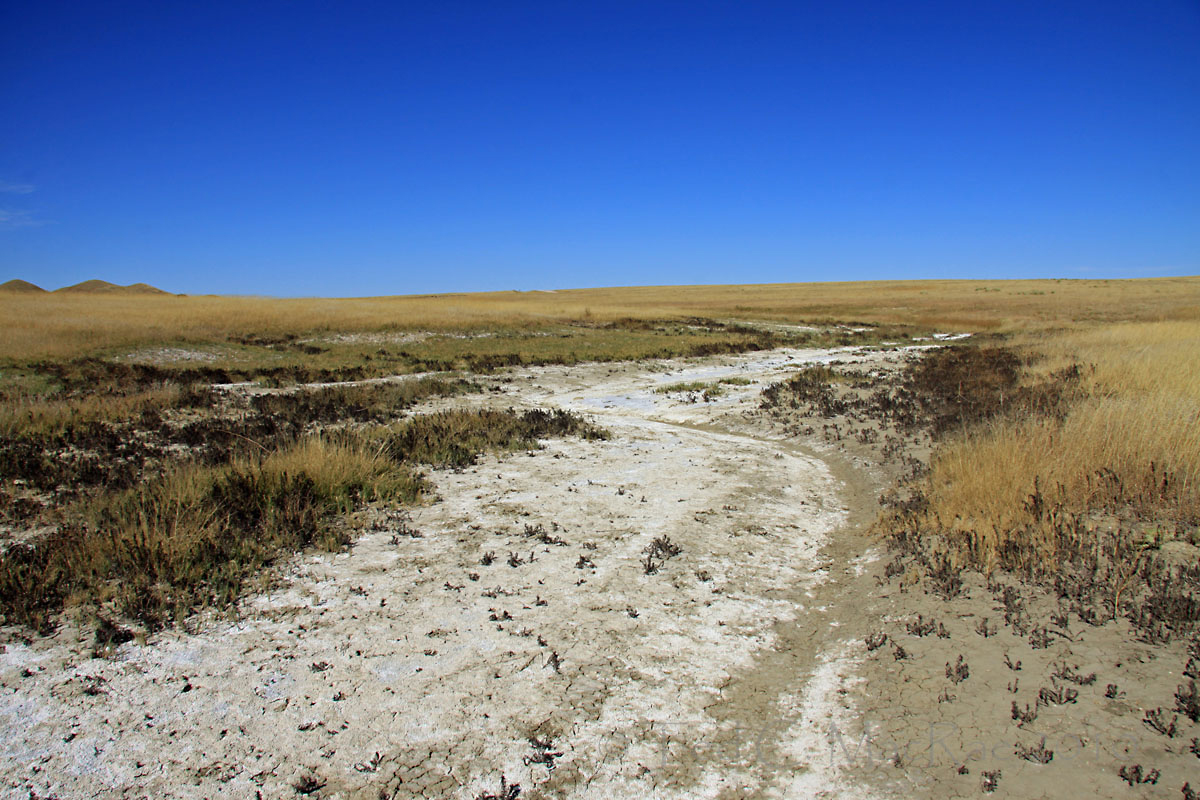
Dry alkaline creek in the Oglala National Grasslands, Sioux Co., Nebraska

At the northern edge of the Pine Ridge in northwestern Nebraska, the land drops precipitously from verdant High Plains to the eerie Badlands below.  The sterile landscape of eroded slopes and irregularly shaped landforms is at once beautiful and harsh.  Short grasses and silver sagebrush seem to be the only plants capable of living here, providing the meagerest of forage for the mule deer and pronghorn antelopes that dot the gently rolling hills.  Dissecting these arid grasslands are a series of seasonally dry alkaline creeks that support a number of tiger beetle species.  The most interesting of these is Cicindela fulgida fulgida (crimson saltflat tiger beetle), a beautifully colored little species that is restricted to wet, alkaline habitats.  It was this species that I and colleagues Chris Brown and Matt Brust wanted to see when we stopped by one such creek after finishing up at the C. pulchra site in South Dakota (and still recovering from “pulchra-fever”).

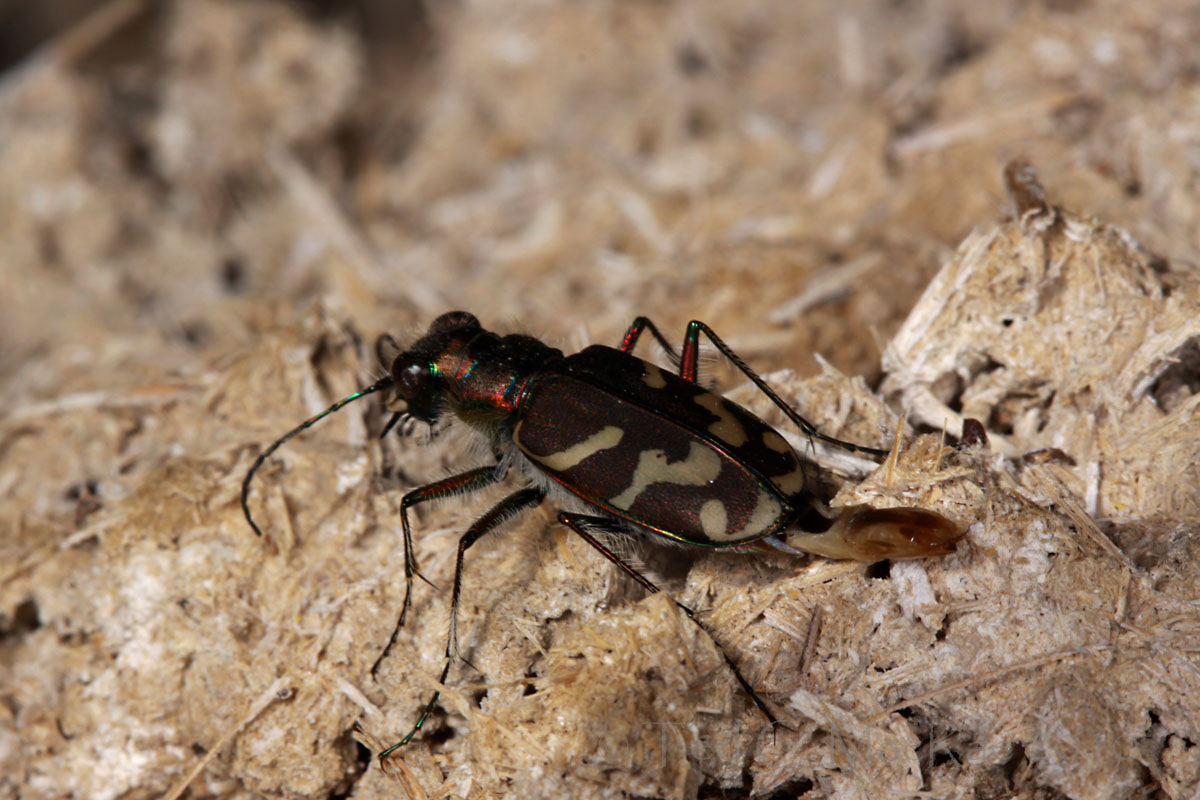
Cicindela tranquebarica kirbyi - Kirby's tiger beetle

I had been to this spot two years before and encountered a small number of C. fulgida along with much higher numbers of C. purpurea audubonii (Audubon’s tiger beetle) and C. tranquebarica kirbyi (Kirby’s tiger beetle).  Our luck wasn’t any better this time, and in fact we would encounter only a single C. fulgida that day.  This was Chris’ first opportunity to photograph this species, while I had already gotten some reasonably good field photos of the species during my 2009 visit to Salt Plains National Wildlife Refuge in northwestern Oklahoma.  As he photographed the individual, I continuing scanning the bright, alkaline barrens.  While I was not finding any C. fulgida, I was seeing a fair number of C. tranquebarica kirbyi, and it occurred to me that I still lacked good field photographs of this species.  I began stalking different individuals, but in the heat of the day I found it impossible to get close enough to any of them to attempt any shots.  It wasn’t until I encountered the individual shown above, apparently dragging something from its rear end, that I was able to close in for some shots.  A closer look revealed the individual to be a male who had somehow gotten his genital capsule pulled out of his abdomen.  Just the thought of how this might have happened makes me cringe.  At any rate, the individual exhibits the relatively broader white maculations that distinguish this Great Plains/Rocky Mountain subspecies from the more eastern nominotypical subspecies.

A newly emerged Kirby's tiger beetle sits at the entrance of his burrow.

As I continued scanning the soil, I noticed a number of larval burrows of what I took to be this species located up near the edge of the vegetated zone.  One burrow in particular caught my attention – partly because of its slightly larger size and irregular outline, but also because there appeared to be something sitting within it.  A closer look revealed an adult tiger beetle sitting just below the burrow entrance.  Cicindela tranquebarica is a so-called “spring-fall” species that emerges initially in the fall as a sexually immature adult before digging back in for the winter and re-emerging in spring for mating and oviposition.  I thus took this individual to be a newly emerged male that had not yet decided to leave its burrow and burst forth into a life of adulthood.  The opportunity couldn’t be passed up – I took a few photos of him sitting there, then switched out the 100mm lens for the 65mm 1-5X lens.  I had to get real close for this last shot, which caused him to retreat somewhat in his burrow.  However, a knife thrust into the burrow below him, followed by careful twisting until it touched his rear, caused him to return to the burrow entrance and once again pause before embracing his new world.

A male Kirby's tiger beetle prepares to leave his emergence burrow.

Copyright © Ted C. MacRae 2010

Litaneutria minor – agile ground mantid

Litaneutria minor - agile ground mantid

Have you ever seen a mantid that lives exclusively on the ground?  Most mantids are ambush predators, hiding amongst the bushes while patiently waiting for unsuspecting prey to happen within striking range.  However, a few small groups of mantids have adopted a different strategy – running down their prey!  One such group is the ground mantids, represented in the U.S. by two genera – Litaneutria and Yersiniops.  These small mantids, cryptically colored brown or gray, occur in desert and grassland habitats across the western U.S.  This particular individual was seen in the expansive shortgrass prairie atop the Pine Ridge in northwestern Nebraska.  The rounded eyes and brown coloration identify it as as a member of the genus Litaneutria (the tops of the eyes are pointed in Yersiniops, giving them a “horned” appearance, and they tend to be more gray).  Two species of Litaneutria are found in the U.S. – this one, L. minor, occurring broadly throughout the Great Plains and western U.S. into southwestern Canada (it is Canada’s only native mantid), while a second species, L. obscura, is restricted to the desert southwest.¹  Several common names have been applied to L. minor, including lesser ground mantid, minor ground mantid, and agile ground mantid.  While the first two represent more precise literal translations of the scientific name, I like the latter which well describes the ability of these mantids to hop over rocks and dart swiftly through sparse prairie vegetation in pursuit of prey or to evade predators (and inexperienced collectors!).  Despite its small size (total length less than 1.5″), the presence of wings – albeit small – indicate this is an adult. All females of this species are brachypterous (short-winged), but most males are as well.  However, males apparently have a small spot at the base of the forewings, which seems lacking in this individual, and a smoother pronotum – also not readily apparent in this individual, so I’m guessing that this is an adult female. 

¹ BugGuide and many other web sources list five additional U.S. species in the genus (including L. borealis, described from northwestern Nebraska).  However, Vickery and Kevan (1983) note that these were all synonymized under L. minor by Hebard in 1935 (sorry – I couldn’t find that reference).

“Mantid” vs. “mantis” vs. “praying mantis.”  It has become common to use the terms “mantid” and “mantis” (or even “praying mantis”) interchangeably.  However, in its strictest sense the term “mantis” is most properly applied to species of the genus Mantis – of which Mantis religiosa – the European mantid or praying mantis, introduced to the U.S. in the late 19th century (either accidentally on a shipment of nursery plants or deliberately for pest control – depending on the source) is the most widely recognized.  The term “mantid” refers to any species in the suborder Mantodea as a whole.

Carnivorous cockroaches!  When I was in college back in the late 1970s, mantids and most other “orthopteroid” insects had long been considered suborders of a single order, the Orthoptera.  Around that time began a great dismantling of the Orthoptera, pared down to only the grasshoppers, crickets, and katydids while the other former suborders (mantids, walkingsticks, cockroaches, etc.) were raised to full order status.  The walkingsticks (Phasmida), grylloblattids (Grylloblattodea), and gladiators (Mantophasmatodea) all continue to enjoy their elevated status (Tree of Life Web Project 2003); however, a close relationship has been established between the mantids, cockroaches, and termites² (Kristensen 1991), resulting in the sinking of all three former orders into a single order, the Dictyoptera (Tree of Life Web Project 2002) (and not to be confused with the lycid beetle genus Dictyoptera).  Mantids, thus, can be considered derived cockroaches with morphological specializations for predation!

² Long accorded an order of their own – the Isoptera, recent molecular phylogenetic studies have placed termites not only with the cockroaches, but within them (Ware et al. 2008).  Just as mantids can be considered cockroaches that evolved as predators, termites can be considered cockroaches that evolved to eat wood (with the help of cellulose-digesting gut symbionts)!

Photo Details: Canon 50D w/ MP-E 65mm 1-5X macro lens (ISO 100, 1/250 sec, f/13), Canon MT-24EX flash w/ Sto-Fen + GFPuffer diffusers. Typical post-processing (levels, minor cropping, unsharp mask).

REFERENCES:

Kristensen, N. P. 1991. Phylogeny of extant hexapods. Pp. 125–140 in Insects of Australia: A Textbook for Students and Research Workers. Volume I and II. Second Edition. I. D. Naumann, P. B. Carne, J. F. Lawrence, E. S. Nielsen, J. P. Spradberry, R. W. Taylor, M. J. Whitten and M. J. Littlejohn eds. Carlton, Victoria, Melbourne University Press.

Tree of Life Web Project. 2002. Dictyoptera. Version 01 January 2002 (temporary). http://tolweb.org/Dictyoptera/8253/2002.01.01 in The Tree of Life Web Project, http://tolweb.org/

Tree of Life Web Project. 2003. Neoptera. Version 01 January 2003 (under construction). http://tolweb.org/Neoptera/8267/2003.01.01 in The Tree of Life Web Project, http://tolweb.org/

Vickery, V. R. and D. K. M. Kevan. 1983. A monograph of the orthopteroid insects of Canada and adjacent regions. Lyman Entomological Museum and Research Laboratory Memoir 13:216–237.

Ware, J. L., J. Litman, K.-D. Klass, and L. A. Spearman. 2008. Relationships among the major lineages of Dictyoptera: the effect of outgroup selection on dictyopteran tree topology. Systematic Entomology 33(3):429–450.

Copyright © Ted C. MacRae 2010
Desmocerus palliatus – elderberry borer

Desmocerus palliatus (elderberry borer), Squaw Creek Natl. Wildlife Refuge, Missouri.

Last June I made two trips to the Loess Hills in northwestern Missouri to survey additional sites for Cylindera celeripes (swift tiger beetle), which my colleague Chris Brown and I had discovered in some of the area’s few remaining loess hilltop prairie remnants the previous year. One of these potential new sites was  Squaw Creek National Wildlife Refuge, where a few tiny slivers of hilltop prairie can still be found on the fingers of loess bluffs that border the refuge’s several thousand acres of restored wetlands that famously host large concentrations of snow geese and bald eagles during the fall and spring migrations.  On the first visit, I had arranged to meet with Corey Kudrna, Refuge Operations Specialist, who was kind enough to take several hours out of his day to personally guide me to each of the site’s loess hilltop prairie remnants. 

As we crossed the highway right-of-way at the base of the bluffs on our way to the one of the remnants, we passed through a large patch of common elderberry, Sambucus nigra ssp. canadensis.  Anytime I see patches of this plant, especially in June, I immediately think of Desmocerus palliatus (elderberry borer) – a spectacularly colored longhorned beetle (family Cerambycidae) that breeds exclusively in the living stems and roots of this plant.  It is not a particularly rare species, but for some reason I have not had much success in finding this species.  In my close to three decades of collecting beetles, I had encountered perhaps a half dozen individuals – never more than two at the same time.  Still, when I get the chance to look at elderberry I look for this beetle, and when I did so this time I was delighted to see one within a few moments of entering the patch.  I was ecstatic when I saw another one almost immediately after the first, and I was stunned when I realized that they were all around me!  Good fortune continued on my subsequent visit two weeks later, when I was able to spend a little more time trying to get a good field photograph.  Wind was a problem, the beetles were easily alarmed, and their tendency to rest in the upper reaches of the plant made it difficult to brace myself and the camera while shooting, making this a rather difficult subject to get a good photograph of.  The photo shown here is literally the last of around two dozen that I took and is the only one that I really like.

Many cerambycid beetles are mimics of other more noxious species, mostly ants and wasps.  However, elderberry borers appear to be the exception in that they are themselves noxious.  The cobalt blue and bright orange coloration of the adults screams aposematic (warning) coloration, and it is reasonable to assume that they accumulate in their bodies for defensive purposes the cyanogenic glucosides produced by elderberry plants (Huxel 2000).  Even their movements are those of a chemically protected model – lumbering and clumsy, without the alert evasiveness usually seen with other flower longhorn species.  Presumably this species participates in a Müllerian mimicry complex involving netwinged beetles (family Lycidae, particularly species in the genus Calopteron) and perhaps Pyromorpha dimidiata (orange-patched smoky moth, family Zygaenidae) as well, and it may serve as a Batesian model for the equally colorful but completely innocuous Lycomorpha pholus (black-and-yellow lichen moth, family Arctiidae).

Photo Details: Canon 50D w/ 100mm macro lens (ISO 100, 1/250 sec, f/10), Canon MT-24EX flash w/ Sto-Fen diffusers.

REFERENCE:

Huxel, G. R.  2000.  The effect of the Argentine ant on the threatened valley elderberry longhorn beetle.  Biological Invasions 2:81–85.

Copyright © Ted C. MacRae 2010