“Bugged on the Ozark Trail”

The Ozark Trail is a renowned resource for recreational activities. Perhaps less well appreciated are the outstanding opportunities for nature study it also offers. Traversing some of the state’s most pristine areas, numerous plants and animals make their homes in the diverse natural habitats found along its length. While reptiles, birds, and mammals may be the most conspicuous animals encountered, they are far from the most diverse or numerous. That honor belongs overwhelmingly to the insects.

The Trail Builder, Late Fall 2008

The above quote is an excerpt from the lead article in the latest issue of The Trail Builder, newsletter of the Ozark Trail Association (click on the banner for a PDF of that issue). Yes, I am the author, and it is purely a matter of coincidence that I ended up authoring the lead article in two different newsletters in the same month (see “Dungers and Chafers – a Trip to South Africa”).

The Mission of the Ozark Trail Association is to develop, maintain, preserve, promote and protect the rugged, natural beauty of the Ozark Trail.–Ozark Trail Association

The Ozark Trail is one of Missouri’s premier hiking resources, stretching from just south of St. Louis southwestward through the Ozark Highlands to the Arkansas border. The vision of a 700-mile through trail connecting to Arkansas’ Ozark Highlands trail is well underway, with almost 550 miles of trail already completed – 350 miles in Missouri. My friend, colleague, and hiking buddy Rich and I began hiking different sections of the Ozark Trail almost 10 years ago, and thus far we have seen 220 of those miles. From the rugged beauty of the Marble Creek and Taum Sauk Sections, traversing the ancient St. Francois Mountains, to spectacular vistas atop towering dolomite bluffs along the Current River and Eleven Point Sections, we’ve experienced the essence of a landscape that Henry Schoolcraft so elegantly described during his 900-mile journey through the Ozarks with companion Levi Pettibone, nearly 200 years previous.

“Bugged on the Ozark Trail” is a short, fun article describing just a few of the insects hikers can expect to see along the Ozark Trail. Missouri is home to perhaps 25,000 species of insects, and many of these are found in the Ozark Highlands by virtue of the diverse natural communities formed within that great landform. Dung beetles, who despite their unappealing diet perform a great service in clearing the trail of waste from horseback riders. My beloved tiger beetles, flashing brilliant green along wooded trails and on rocky glades. Ambush bugs, paradoxically using the beauty of flowers as cover for their deadly intentions. Endangered dragonflies, infuriating deer flies, and endearing butterflies – these are but a few of the insects that can be seen along the Ozark Trail.

Previous issues of The Trail Builder are also available at the Ozark Trail Association website in the archives.

Superior Scribbler Award

Huckleberry at Huckleberry Days recently honored me with a Superior Scribbler Award. Huckleberry maintains an excellent blog about “Biodiversity, conservation, natural history and more, mostly in British Columbia, Canada, mostly in the Fraser River Delta, but sometimes not…” I enjoy their richly illustrated posts, often highlighting invasive plants and the impacts they’ve had on natural communities in the Delta. I am pleased to have made their list of selections and thank Huckleberry for the consideration.

Superior Scribbler award
The Scholastic Scribe, originator of The Award, provides some rules that come with this award:

  1. Each Superior Scribbler must in turn pass The Award on to 5 most-deserving Bloggy Friends.
  2. Each Superior Scribbler must link to the author and the name of the blog from whom he/she has received The Award.
  3. Each Superior Scribbler must display The Award on his/her blog and link to this post, which explains The Award.
  4. Each Blogger who wins The Superior Scribbler Award must visit this post and add his/her name to the Mr. Linky List. That way, we’ll be able to keep up-to-date on everyone who receives This Prestigious Honor!
  5. Each Superior Scribbler must post these rules on his/her blog.

Items 2-5 are now satisfied; however, the requirement to nominate five other blogs has me a bit stumped. Not that I don’t think there are five that are deserving – quite the contrary, there are many other blogs that I enjoy, though often for different reasons. Some provide a quick, humorous quip, while others offer comprehensive insight on technical subjects. Some provide timely updates on items in the news, while others offer captivating glimpses into some personal journey or mission. Some emphasize photos, others emphasize prose. What they all have in common is that they possess some unique and, to me, interesting perspective on natural history. One only needs to look at my fairly long blog roll to see which I find interesting enough to follow on a regular basis. Since many of these are already very well known and popular, an award from little ol’ me hardly seems necessary. As a result, I have decided to bend the “5 blogs” rule and, instead, highlight just one blog that, for me, really stands out for its combination of interesting subject matter, impassioned writing, and lovely photographs. That blog is Ozark Highlands of Missouri, by the talented Allison Vaughn. A native of Louisiana and college classics major, Allison found her way to my beloved Ozark Highlands after a brief stint in Missouri’s Southeast Lowlands. Her blog’s subheading, “Musings on Missouri’s most ecologically diverse and culturally fascinating landscape”, aptly alludes to the rich variety found in her deftly written posts. From descriptions of fragile natural communities and searches for rare, endemic plants, to discussions of responses (anthropic and natural) to fire regimes and essays on significant cultural events in the region’s history, Allison’s writings are at once informative and insightful, yet intimate and introspective. Almost two years old by the time I discovered it earlier this year, Ozark Highlands of Missouri is one of the few blogs that I have gone back and read in its entirety. I don’t know if Allison, endearingly modest as she is, will accept this award, but I highly recommend you visit her blog and read a few of her posts. Treat it as a delicious novel – something warm to cozy up to with a hot cup of tea as we enter the long winter months ahead.

The Five Things Meme

Adrian Thysse has tagged me with The Five Things Meme:

5 things I was doing 10 years ago:

  • Enjoying my second year of fatherhood
  • Revising the North American species of the cerambycid beetle genus Purpuricenus
  • Collecting beetles in Arizona with Chuck Bellamy and Art Evans
  • Learning to speak Spanish
  • Worrying a lot more about career advancement than I do now

5 things on my to do-list today:

  • Take kids to the dentist – check
  • Put up kids tether ball pole – abort (pole sections don’t fit, need to exchange)
  • Vacuum carpets throughout the house – check
  • Hang pictures I took of wildflowers this spring (chosen, nicely framed, and given to me by my wife for my birthday) – check
  • Short 20-mile bike ride – CHECK!

5 snacks I love:

  • Spudmaster CollosalChips, handmade in the heart of Missouri
  • GK Select Gourmet Blend nuts (collosal cashews, almonds, macadamias & pecans)
  • Raspberry or blueberry scone and coffee
  • Pemmican Premium beef jerky, peppered
  • Chocolate covered almonds/raisins/strawberries/etc.

5 things I would do if I was a millionaire:

  • Help my dad retire
  • Enroll kids in private school
  • Substantial contributions to The Nature Conservancy
  • Buy a few acres on the west shore of Lake Tahoe
  • TRAVEL!

5 places I’ve lived:

  • Kansas City, Missouri (childhood)
  • Columbia, Missouri (university)
  • St. Louis, Missouri (1st job)
  • Sacramento, California (2nd job)
  • St. Louis, Missouri (3rd job)

5 jobs I’ve had:

  • Injection Mold Operator (3 mos)
  • Pizza Cook (9 mos)
  • Research Assistant (2 yrs)
  • Agricultural Inspector (8 yrs)
  • Research Entomologist (18 yrs)

And I tag Allison Vaughn, Doug Taron, Hugh, cedrorum and Huckleberry.

Pardon my introspection

In addition to this blog, I maintain a second, older blog called Bikes, Bugs, and Bones. That snarkier, decidedly less erudite site was my first venture into the world of blogging, initiated some two and a half years ago not due to any particular vision on my part, but more as a reaction to other blogs that were popping up by people I knew in the St. Louis cycling scene. At that time, I was deeply immersed in the world of amateur bike racing, and a blog seemed to be a natural outlet for reporting my take on the races in which I participated. The title – Bikes, Bugs, and Bones – was a reflection of my propensity to be interested in too many things (with not enough time). In reality, however, my surging interest in cycling had by then pushed my longer held entomological and natural history interests to the back burner, and my posts on that blog – then and now – dealt almost exclusively with bicycles and racing. For several reasons racing was something I needed to do, and I had a good run – winning 14 races in seven years (including three state championships) and crowing it all with a highly respectable finish in the 2007 Etape du Tour (an amateur race held on the “Queen stage” route of the Tour de France). My interest in entomology and natural history never waivered during this time, but the demands of training relegated any meaningful field work to short windows before the racing season began and after it ended each year. Eventually, the entomologist in me could be suppressed no longer, and at the end of last year I decided that I needed to get back to doing what I loved – bug collecting! I made a commitment to return entomology field work to its rightful place as my first priority (after family and work, of course) and race bicycles as time permitted. (I have since completely retired from racing, although I still ride and maintain Bikes, Bugs, and Bones as an outlet for discussing all things cycling.) As an expression of that renewed commitment, I started a new blog – this blog – and after much frustration finding that every blog name I thought of had already been thought of by someone else (and generally abandoned after only a few posts) settled on the name Beetles In The Bush. One year ago today – November 24, 2007 – I posted my first entry to this new blog (a subsequent entry, a list of my publications, was backdated to November 23).

Beetles In The Bush started with a simple mission – to document my entomological and other natural history experiences and provide an outlet for the photographs that I was beginning to take. Late fall is not the best time to begin an insect blog, especially with no insect photos on hand to serve as starter material. As a result, my initial posts appeared rather infrequently – primarily whenever I had the opportunity to do a winter hike. It was those first few hikes, however, and my efforts to write something interesting about the natural history represented in the photographs that I took, that called attention to what I realized was a glaring gap in my overall knowledge of natural history. I was a competent entomologist, to be sure, but that competency did not extend to general botany (other than the mostly woody plants with which the insects I studied were associated), or to the natural communities in which those plants and insects occurred, or to the geology of the landforms that contained those natural communities, or to the manner in which these fields intersect, an understanding of which I would have to have before I could consider myself a competent natural historian. More than just an outlet for posting pictures and stories about my adventures, Beetles In The Bush also quickly became a tool to help me learn more about botany, ecology, geology, and related fields. I have read more non-entomology literature in the past year than I have since earning my degrees, and since knowledge and passion are intimately linked in a positive feedback loop, I’ve found myself becoming even more passionate about entomology, too. I still have much to learn – I am a work in progress, far from complete. But in this case, it is the journey that is also the reward.

Like all bloggers, I’d like to think that I have a large, regular following, and that over time more and more people will find my writings interesting and worthy of their time. The numbers don’t support this – as of this one-year anniversary, Beetles In The Bush has received 6,987 hits – not triffling but by no means extraordinary. While the graph below shows steady growth during the first year of existence, the numbers don’t come within a rifle’s shot of some of the really popular natural history and science blogs. I surmise the main reason for this involves a relatively lower posting frequency – a little more than once per week on average instead of the daily or near daily frequency seen with many blogs. I suppose also my relatively specialized subject matter and tendency to ramble on are contributing factors. I have thought about writing smaller, more frequent posts and expanding my subject matter to create greater interest; however, in doing this I realized that what I enjoy most is writing stories about the things that interest me – stories that teach, stories that impart a sense of the passion that I feel, stories that allow me to reflect on what I’ve learned and what I still don’t know. If that makes a broad, daily readership less likely, so be it – I understand now that I’m doing this as much for me as anyone else. So, I mark this first anniversary with a resolution to wean myself from the lure of trying to increase traffic and refocusing my efforts on doing what I enjoy most – writing silly little stories about the things I stumble upon on my journey to become a better natural historian. For the readership that I do have, I am grateful. More importantly, I am thankful for the goodly number of “friendships” that have resulted from these writings. Thank you for your interest, and I sincerely hope that some day I have the chance to meet many of you in person.
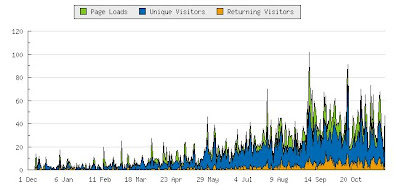
Beetles in the Bush - first year summary

Deciding on science

I hope you’ll forgive my momentary diversion into politics for this post. I’m not normally one to ‘proseletize’, and I promise to return to my normal subject matter in the next post. But at this moment we find ourselves on the eve of arguably the most important election in our history. Of the many objections that can be raised about the Bush administration’s policies during the past eight years, it is his seeming all-out attack on science and the environment that has most alarmed me. From supporting the teaching of ‘intelligent design’ in science classes and vetoing federal funding for stem cell research, to suppressing and censoring reports on subjects such as global warming and mercury pollution and stacking scientific advisory panels with political appointments, Bush has led what might be described as ‘the most anti-science’ administration in history. Under his administration, federal funding for physical and life science research has stagnated or declined, threatening our once dominant position in the scientific world and risking the future prosperity that depends upon science-based innovation. I suspect both Barack Obama and John McCain will implement science policies that would be a considerable improvement over those of Bush; however, let us consider the details.

Obama has promised to double the federal investment in basic research, restore integrity to the process of obtaining scientific advice, and invest in clean energy technology. McCain has also voiced support for increased science funding and restoring integrity; however, he has also proposed an across the board freeze on all non-defense discretionary spending. Throughout his campaign, Obama has emphasized the power of science and technology to increase U.S. competitivness, while McCain’s relative lack of statements on traditional areas of science policy suggests, if not antagonism, at least apathey. Both candidates recognize nuclear energy as an important non-carbon energy source, but where Obama has urged caution until the significant challenges of waste storage and potential for proliferation are addressed, McCain has called this “no problem.” McCain also sees aggressive oil drilling as an important step in achieving energy independence, despite the fact that the U.S. owns only 3% of the world’s oil reserves while being responsible for a full 25% of its consumption. He considers our need for oil to be a national security issue, justifying the opening of currently protected areas for drilling. Whenever I hear the shrill call to open up ANWAR, I am reminded of this oft-used passage from Life Without Principle by Henry David Thoreau:

“If a man should walk in the woods for the love of them half of each day, he is in danger of being regarded as a loafer, but if he spends his whole day as a speculator, shearing off those woods and making earth bald before her time, he is esteemed an industrious and enterprising citizen.”

John McCain also declined a recent Nature invitation to answer 18 science-related questions in writing (an invitation that Obama accepted), thereby missing another important opportunity to be more forthcoming about his science policy. In contrast, Obama’s science agenda clearly emphasizes a commitment to clean energy, environmental stewardship, and aggressive promotion of science-based education. This has prompted 62 Nobel Prize Laureates to write a letter on Sept. 25 endorsing Obama for president.

Perhaps most illuminating are the candidates responses to questions about the teaching of creationism (sometimes repackaged as ‘intelligent design’) in science classrooms and funding for research using human embryonic stem-cell lines. Obama acknowledges the strong consensus of the scientific community in the validity of evolutionary theory, opposes mandated teaching of ‘alternative’ theories that are not subject to experimental scrutiny, and strongly supports expanding research on stem cells. McCain’s statements have displayed more ambivalence – he believes in evolution and has voted to lift Bush’s ban on stem cell research but has also made statements supporting teaching “all points of view” about human origins and defining stem cell policies that “reflect a refusal to sacrifice moral values and ethical principles for the sake of scientific progress.” Republican vice presidential nominee Sarah Palin – a staunch critic of evolution and stem cell research and supporter of teaching intelligent design – has been anything but ambivalent on these issues, and her selection as his running mate is perhaps the most disturbing indicator of what McCain really believes.

I share with you some pictures that I took this past weekend at the Obama Rally in St. Louis. Our entire family was excited to have the opportunity to view Obama – rightly described by Colin Powell as a ‘transformational figure’ – in person. We expected the crowd would be large so arrived early in the morning, by which time the line already extended almost to the northern boundary of the Gateway Arch grounds. Nevertheless, we enjoyed a spot quite a close to the stage, and once inside savored and shared the excitement and anticipation with a diverse crowd who were all there for a common cause – the 2-hour wait was anything but boring! Local and state dignitaries primed the crowd, and by the time Obama arrived the crowd had swelled to over 100,000. Looking back upon the crowd from our spot near the stage and seeing the excitement, I felt like I was a part of history. While this flyer that was circulating (titled, “Scary Thought”) may be a bit of an exaggeration, I don’t think the choice could be clearer.

In Memoriam – Gayle H. Nelson

It was a very productive first day in the Black Hills of South Dakota, with several rather significant finds. However, I’m going to forego an update on these and instead dedicate this post to the memory of my friend and colleague, Dr. Gayle H. Nelson, who passed away on this day three years ago. Gayle was not only one of North America’s premier experts on Buprestidae but was also an outstanding teacher of human anatomy. With a career spanning nearly five decades and generating some 70+ beetle publications, Gayle had the opportunity to interact with many of the world’s most important coleopterists. Despite this, he was one of the most humble and accessible persons I’ve had the honor to meet. I think about Gayle often, especially while on collecting trips – remembering the places we visited and the lessons he taught me. On this 3rd anniversary of his passing, I reproduce here a remembrance that I wrote for a memorial issue of the The Pan-Pacific Entomologist, published September 24, 2006 on the 1st anniversary of his death.

“I had the privilege of calling Gayle Nelson both a mentor and a friend. I first corresponded with Gayle in 1984 as a young collector with a budding interest in beetles, and my first communication with him probably mirrors that of many others – me asking him for help identifying specimens. And, as he likely did for those many others, he graciously agreed. For the next several years, I would send him my “catch” at the end of each season and anxiously await the return shipment. Opening a box of specimens after he’d looked at them was as exciting as Christmas morning, not only to see how well I had fared in my tentative identifications, but also in anticipation of the “gifts” Gayle more often than not included for my collection. On one occasion, I had included examples of a strange looking Agrilus from south Texas that I had found during one of my earliest collecting trips outside of Missouri. They turned out to be A. toxotes, known previously only from Mexico, and a species not represented in Gayle’s collection (a true rarity by that point in his life). In his return letter, Gayle’s excitement about this find was obvious as he politely asked permission to retain a male/female pair. I agreed readily, and when the box of beetles was returned, I found added to its contents several dozen especially colorful examples of western U.S. Acmaeodera. To this young Midwesterner, those beetles were as “exotic” as if they had come from Brazil or Africa. During those early years, Gayle’s letters were rich with advice on collecting and suggestions for localities I should explore, and his kindnesses did much to solidify my passion for buprestids and eventually led to the first of our several coauthored publications.

“It was not until 1991, however, that I finally met Gayle in person while he was still residing in California. I had moved from St. Louis to Sacramento and was eager to explore the “buprestid heaven” that is southern California. Gayle had extended an open invitation to collect with him, so in early June I traveled to his home in Rancho Cucamunga, where he and his wife Jean graciously hosted me for the first two days of a weeklong collecting trip. That first evening I marveled at what was undoubtedly the most impressive private insect collection I had ever seen. Not only was it larger than any collection I had seen, but the exacting and careful manner in which the specimens had been curated and organized was enough to impress even the most retentive among us. We talked about the collecting localities he planned to show me and what species we might find there. To this still relatively “green” buprestophile whose collecting experience was limited primarily to the Missouri Ozarks, the prospect of collecting species of such “exotic” genera as Acmaeoderoides, Anambodera, Prasinalia, and Lepismadora – in one trip – almost seemed too good to be true. But true it was! Our first day in the field I met his longtime friend George Walters, and the three of us visited several of their favorite collecting localities in the San Bernardino Mountains near Wrightwood and in Lone Pine Canyon. I collected around 15 species of buprestids that day – more than I had ever collected on any previous field trip. The next day he took me to the beautiful Santa Rosa Mountains and its fabled Pinyon Flats, Whitewater Canyon and Palm Desert localities, where I added another dozen or so species to my catch – all different from the previous day. During those two days, I was not only astounded by Gayle’s endurance – he was well into his 60s by then – but also impressed with his dogged persistence in searching for his quarry. It didn’t take me long to figure out that this was one of the secrets to his great success as a collector. By the end of the second day, I was so exhausted that I slept during most of the long drive back to his home. I spent the rest of the following week visiting many of the other southern California localities Gayle had recommended, looking on the plants he had suggested, and ended up with a whopping trip total of ~60 buprestid species. During the years that followed, I had the good fortune to accompany Gayle on field trips as far away as southern Mexico and close to home in Missouri and Kansas. Each time he taught me something new and re-energized my passion for collecting buprestids. I knew I was “learning from the Master!” Gayle Nelson was large in stature and in life. He was a scientist, a teacher, a dedicated family man and a friend to us all. He will be missed by all who knew him.”

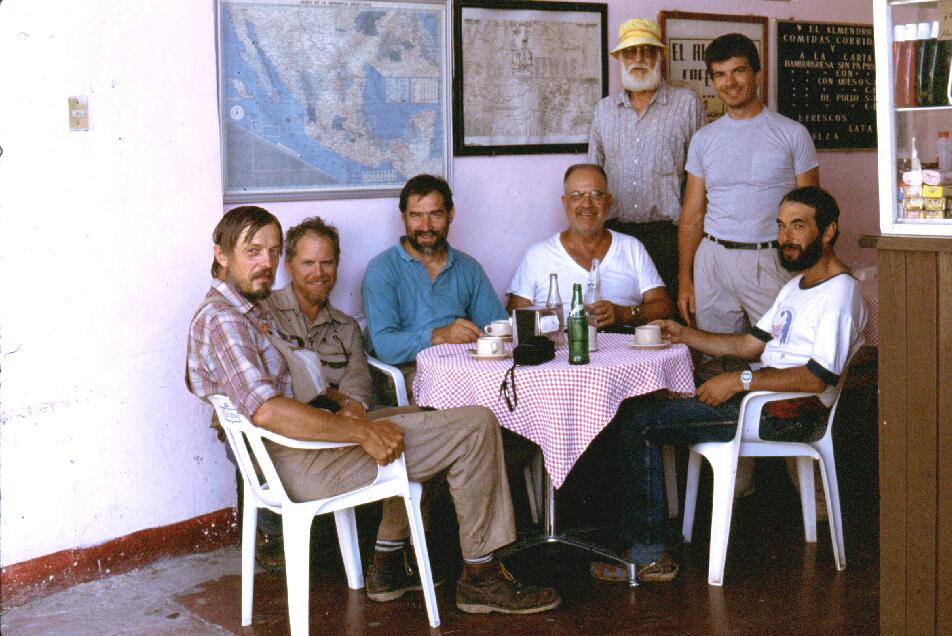
Below is a photograph of Gayle and several other buprestophiles (including a much younger me!), taken July, 1992 in Tehuantepec, Oaxaca, México during a world buprestid workers gathering (this photo was also published in the Pan-Pac memorial issue). The day this photograph was taken, Gayle and I had collected the first specimens of what we would later describe as Oaxacanthaxia nigroaenea – the second species in an odd little genus with Old World affinities that had been described just one year earlier by Chuck Bellamy from specimens collected in the very same area.

L-R: Svata Bílý (Czech Republic), Chuck Bellamy (USA), Hans Mühle (Germany), Gayle Nelson (USA), Dave Verity (USA), me, Mark Volkovitsh (Russia). Photo by Rick Westcott (USA).

My Dad

My dad had knee replacement surgery a couple days ago. The surgery went off without a hitch, and he’s doing very well. All signs are that he will bounce back quickly and suffer few, if any, complications. I’ve spent much of the past three days here at the hospital – sometimes providing support and encouragement, other times just keeping him company. He should be released tomorrow, and I’ll spend the rest of the week with him at his house – hopefully he’ll be able to get around okay by then.

Some thirty years ago, my dad got an infection that settled in his left hip. By the time doctors found it and figured out what was going on, his left hip socket had degenerated badly, and the only medical option after cleaning up the infection was a year in a full body cast that resulted in fusion of the socket with the femoral head. This left him with a left leg two inches shorter than his right, a bad limp, and a lifetime of pain medications. His right leg became his ‘good leg’ and his left became the ‘bad.’ Decades of walking with a cane and favoring his bad leg put a lot of pressure on his good leg, and at age 73 his right leg had had enough. Now, his good leg is his bad leg, and his bad leg is, well, still his bad leg. This will add a wrinkle to his recovery, since he won’t have a healthy leg to carry the load while his good leg recovers. But I will be there to help, if needed, and in a few weeks his good leg should be good as new.

My dad is not only my dad, but also my best friend. We have a relationship that is based on mutual love and respect, and I don’t know which of us appreciates more what we have with each other. It wasn’t always this way – my dad and I were estranged for 25 years starting when I was 10 years old. My parents married far too young, and each had their own issues – they were but children themselves. Having first me, then my brother and sister, only delayed but could not prevent the inevitable break up that resulted in my fathers absence. I paid a heavy price by not having a father during those crucial, formative years as I finished growing up, but I seem to have turned out okay regardless. It would take many years before I would be ready for something so bold as reconciliation, but maturity and the support of a loving wife eventually made it possible. There were difficult questions to answer, but through it I realized that my father had paid a heavy price as well. Not the selfish irresponsible man I had been taught about, instead I saw a sensitive, deeply introspective man who had lived a life of hard knocks, suffered the consequences, learned from his mistakes and turned his life around.

My dad loves to ride bikes. I do too, but I did not learn the love of cycling from him. My dad is simple yet elegant, with an understated class that people adore. I, too, try to show respect and modesty, but I did not learn these things from my father. We both love classical music (he can live without the metal), listen to NPR, and enjoy humor with more than a touch of irreverance – tastes acquired by each of us before we knew each other. What I have learned from my father during these past 15 years is why I am me – a gift I didn’t know I lacked. I don’t mourn the loss of those 25 years spent without my father, rather I rejoice at the very special relationship that we now have – perhaps possible only because of our separate pasts. My father describes that year in a body cast as the darkest period of his life. I did not know him then, so I could not be there to help him through it. While his recovery from knee replacement will not be near that ordeal, neither will it be easy. But I am here with him, and I know in my heart that whatever difficulties he faces during his recovery, he will look back on this as a small part of the best time of his life.