
Copyright © Ted C. MacRae 2012
No specific plants or animals are discussed in posts within this category.
Copyright © Ted C. MacRae 2012
 Over the past two years, we have made great progress in working through a backlog of manuscripts as we bring the journal closer to our eventual goal of on-schedule publishing. I thank the authors who contributed manuscripts, the Editorial Board for their efforts to work through this backlog, and especially the many reviewers who contributed their time and expertise to ensure that the manuscripts met our high standards of quality research.
With the backlog of manuscripts cleared and existing manuscripts moving quickly through the review process, we are in need of new submissions to maintain the momentum we have established as we finish out volume 88 and look forward to the publication of volume 89. The Pan-Pacific Entomologist is an international journal publishing manuscripts on taxonomy and biosystematics of insects and other closely related arthropods. Manuscripts from all world areas are welcome, with those from regions around the Pacific Rim especially desired.
For those of you conducting taxonomic or biosystematic research on insects and their relatives, I hope you’ll consider The Pan-Pacific Entomologist as an outlet for the publication of your research. Among the many journal choices that are available to you, we offer 60% reduced page charges for all members of The Pacific Coast Entomological Society, an additional 50% reduction of the first 5 pages for members that meet other qualifications, and a complete waiver of normal page charges for authors who follow our “pre-reviewed” process (up to 20 pages per volume). The Pan-Pacific Entomologist has long been and continues to be one of the lowest cost print journals for entomology with an international scope.
If you have a manuscript that you would like to consider publishing in The Pan-Pacific Entomologist, please don’t hesitate to contact me (Ted C. MacRae, Managing Editor) on this page or by direct message. I look forward to hearing from you!
Copyright © Ted C. MacRae 2012
I recently came upon a post titled, What will I find if I google you?, written last year by Scientopia blogger gerty-z at Balanced Instability. Although written from the perspective of a new, tenure-track academician giving advice to students with similar aspirations, the main point of the post is relevant to probably any profession: “SEARCH COMMITTEES WILL GOOGLE YOU.” That this is true for industry as well as academia is a fact—over the course of my now three-decades-long career, the past 22 in industry, I have been involved in many a search committee, and particularly over the past 3–4 years a Google search has become a standard part of my resume screening process as I try to whittle down the 10 or so resumes that have survived my initial screening to those 3 to 5 candidates that I will recommend for an interview.
For me, the post had it’s intended effect, as I started wondering what, really, I would find if I googled myself. Of course, I’ve done this in the past, primarily in the early days of my online and social media presence and more out of trivial curiosity than as part of an effort to critically assess what impression the results might give to a prospective employer. Not that I am actively looking for another job—I love what I do, have a reasonable amount of autonomy, and am fairly compensated. Nevertheless, one never knows what opportunity or circumstance might arise and the timing of such, and a favorable online reputation is much easier to maintain than to create or repair on short notice. In my case, that presence is extensive—I’ve blogged regularly for almost five years now and participated to greater or lesser degree in most of the other social media outlets frequented by entomologists—BugGuide, Facebook, Google+, Twitter, Flickr, etc.—for much of that same period. This blog alone contains nearly 650 posts and averages somewhere between 500 to 1,000 words per post—that’s in the neighborhood of one-half million words tagged with my very searchable name. Add to that my 3,601 comments here, innumerable comments and mentions on other blogs (including 1,158 on BugGuide alone), and perhaps somewhat sillier musings over on FB and Twitter—well, whatever reputation I’ve accumulated by now I’m probably stuck with, good or bad!
I didn’t think I would find any problems, but gerty-z’s post did convince me that I should at least take the exercise. What if I did suddenly find myself on a candidate short list for that dream curatorship at the U.S. National Museum (right!)? Would Terry Erwin, Steve Lingafelter, and the other members of their search committee be impressed or concerned by what they found when they googled my name? I probably represent the best case scenario for a prospective employer wanting to search my online presence—my first and last names are both fairly uncommon, and add to that the fact that I always sign with my middle initial. Enclose all that in quotes and one has a very specific search term with little likelihood that the results will be diluted by other people. What did I find? 40,800 results! (I made sure to turn off “Personal” results so that I would see the same search results that somebody else googling my name would see). Nevertheless, the results were largely what I expected. The top 4 and 7 of the top 15 results (see below) linked directly to Beetles in the Bush or one of its posts, and all but one of the remaining top 15 results linked to my various online profiles—all but one of which are either professionally oriented or highlight my entomological expertise. That’s a good thing—I’m happy for anyone to see my list of publications, research interests, professional capabilities, etc. The one exception is Facebook, and that is the only social medium I use that might possibly contain content that someone, somewhere, might find objectionable (I generally stick to entomology and photos from travel or my family while avoiding contentious subjects, but sometimes my touch of irreverence sneaks through). Still, it’s not like one will find photos of drunken excess or poor choices on my FB page, so I think my relative FB risk is small. I doubt many prospective employers would look much past the top 15 results, especially with such a consistent picture of who I am (at least who I project myself to be) having already been painted by that point, but those who do choose to look further will find several dozen subsequent results largely linking to blogs on which I have left a comment or been mentioned by name (the latter usually referring back to Beetles in the Bush or thanking me for an insect identification). I also conducted the search on “Images”, and the result was largely the same—page after page of images from Beetles in the Bush or from other blogs on which I had left a comment or been mentioned by name.
gerty-z suggests that Google searches by potential employers have either neutral or negative impacts on their decisions but rarely have a positive impact since anything “awesome” about you that can be found online should also be in your application. I’m not sure I agree with this latter point. Awesome can include more than simply a long list of publications or multiple summaries of degrees earned and experience gained—things that are easy to include in a resume. Awesome can also include a well-practiced commitment to high quality writing, or consistent involvement in outreach activities, or demonstrated taxonomic expertise far beyond that implied by a list of publications, or even a solid foundation of knowledge in subjects beyond one’s immediate area of expertise but that nevertheless enhance perspective. These are concepts that are much more difficult to capture or highlight in a resume but that might tip the balance in a candidate’s favor if all other considerations are equal. The point is, don’t look at your online presence only as something to manage to prevent failure, but rather as a potential tool to help build a positive reputation and enhance the information provided in your application.
Copyright © Ted C. MacRae 2012
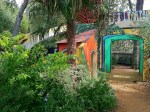
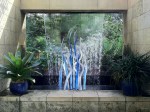
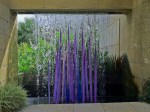
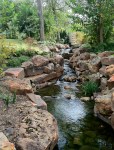
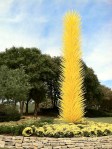
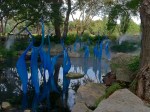
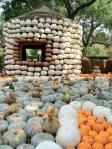
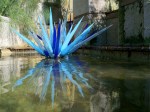
This post is a little different from my normal fare, so feel free to glance and move on (or if you like it, let me know that too). Earlier this week I traveled to Argentina, but along the way I found myself unexpectedly spending a day in Dallas due to a missed connection. Such travel snags are never fun, especially when the result is an entire day lost from a tight itinerary. I do, however, have to give American Airlines props for comping me a night’s stay at the Downtown Crowne Plaza Hotel (very, very nice!). The following day, my flight to Buenos Aires would not leave until early evening, so I had to find some way to occupy myself after my noon checkout. Whenever I find myself in a large city looking for something to do, my first thought is always the local botanical garden. Dallas, of course, has a world class example of such—the Dallas Arboretum, situated in the heart of the city on the east side of White Rock Lake. Any time of year is a good time to visit a botanical garden, but fall is without question my favorite time. Turning leaves and late-season blooms would have been enticement enough, but this particular day found the garden in the midst of its annual fall festival, featuring a Pumpkin Village and a charming little “Small Houses of Great Artists” exhibit, and artfully placed throughout the garden were glass sculptures by world-famous Dale Chihuly. There was a lot to see, and I’m thankful that I had the luxury of exploring the garden’s many meandering paths at a leisurely pace without feeling rushed for time.
Frustratingly, I had decided not to bring my good camera with me on this trip since I didn’t anticipate any opportunities for photography. Even though I’m not normally inclined to photograph gardens and especially sculptures (preferring instead native and naturalized landscapes), I found the expert fusion of art and nature in the displays irresistible and did what I could with my smart phone (which, it turns out, takes surprisingly good photos for its size, especially for certain applications such as wide-angle landscapes). Obviously, armed with such, it’s hard to take “unique” photos of subjects that thousands of others (also armed mostly with smart phones) are passing by daily. Hopefully, however, I managed one or two that provide a different perspective. With that, I’ve picked out my 24 favorites and present them here in a brief slide show (the slides cycle continuously, beginning with “Mexican Hat Tower” and ending with “Blue Icicles”). Below that is a gallery of the photos in case the slideshow does not function in your browser or if you would like to see a larger version of a particular photo.
I know which are my favorites—are there any that you would call out (compositionally at least)?






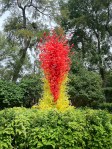

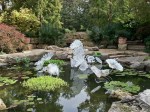

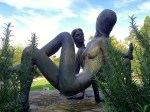
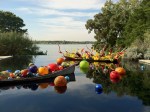



Copyright © Ted C. MacRae 2012
 It is with great pleasure that I announce the publication of The Pan-Pacific Entomologist Penrose Memorial issue (volume 88, number 2), mailed 14 September 2012. Published by the Pacific Coast Entomological Society, this issue is dedicated to the memory of the late Richard L. Penrose (1943–2011); long time member of the guild of California coleopterists. As Managing Editor, I had the distinct honor and pleasure of overseeing the assembly and production of this issue; however, it is only from the selfless efforts of many individuals that this issue came to fruition. I would like to thank the PCES Executive and Editorial Boards, the contributing authors and the reviewers for their participation in making this issue possible. Three individuals deserve special mention for their particularly stellar efforts: Richard Westcott (Oregon Department of Agriculture) and Chuck Bellamy (California Department of Food and Agriculture) for their dogged persistence in promoting the idea and recruiting contributing authors, and Floyd W. Shockley (Smithsonian Institution), who as the journal’s Coleoptera Subject Editor oversaw the review, revision and acceptance of the bulk of the papers appearing in this coleopcentric issue.
If you are not a PCES member, now is a good time to join. Membership is only $25/year ($12.50 for students) and includes four quarterly issues of The Pan-Pacific Entomologist. Following are the contents of the Penrose Memorial issue with hyperlinks to online versions through BioOne. Abstracts & References are open access, while Full Text and PDF versions are available to BioOne subscribers.
Richard L. Penrose
Ted C. MacRae
The Pan-Pacific Entomologist 88(2):i–i
Citation | Full Text | PDF (83 KB)
Richard Lynn Penrose (11 January, 1943–17 March 2011): Biographical sketch and memories
Richard L. Westcott and Richard E. Morel
The Pan-Pacific Entomologist 88(2):105–116
Citation | Full Text | PDF (1903 KB)
A new species of Cregya LeConte (Coleoptera: Cleridae: Peloniinae) from Florida, U.S.A. and Puebla, México
Jacques Rifkind
The Pan-Pacific Entomologist 88(2):117–121
Abstract & References | Full Text | PDF (107 KB)
Synetocephalus penrosei Gilbert & Clark (Chrysomelidae: Galerucinae: Luperini), a new species from California, U.S.A
Arthur J. Gilbert and Shawn M. Clark
The Pan-Pacific Entomologist 88(2):122–129
Abstract & References | Full Text | PDF (1970 KB)
Distribution and phenology of Rhagoletis fausta (Osten Sacken 1877) and Rhagoletis indifferens Curren 1932 (Diptera: Tephritidae) in California
Robert V. Dowell and Richard L. Penrose
The Pan-Pacific Entomologist 88(2):130–150
Abstract & References | Full Text | PDF (573 KB)
Acmaeodera penrosei Westcott (Coleoptera: Buprestidae), a new species from Chiapas, Mexico
Richard L. Westcott
The Pan-Pacific Entomologist 88(2):151—153
Abstract & References | Full Text | PDF (238 KB)
A new species of Trichoxys Chevrolat (Cerambycidae: Cerambycinae: Clytini) from Mexico, with a key to known species
Steven W. Lingafelter and James E. Wappes
The Pan-Pacific Entomologist 88(2):154—162
Abstract & References | Full Text | PDF (2333 KB)
Three new species of the genus Dysphenges Horn 1894 (Coleoptera: Chrysomelidae: Galerucinae: Alticini) from the United States
Arthur J. Gilbert and Edward G. Riley
The Pan-Pacific Entomologist 88(2):163–172
Abstract & References | Full Text | PDF (1826 KB)
Notes on distribution and host plants of Cerambycidae (Coleoptera) from southern México
Ted C. MacRae, Larry G. Bezark, and Ian Swift
The Pan-Pacific Entomologist 88(2):173–187
Abstract & References | Full Text | PDF (135 KB)
Hybopteroides, a new genus in the Cryptobatida group of subtribe Agrina, with three new species and notes on their way of life (Insecta: Coleoptera, Carabidae, Lebiini)
Terry L. Erwin and George E. Ball
The Pan-Pacific Entomologist 88(2):188–201
Abstract & References | Full Text | PDF (1702 KB)
A new species of sap beetle (Coleoptera: Nitidulidae) from Baja California Sur, Mexico, with a review of the genus Lobiopa Erichson
Andrew R. Cline and Scott A. Kinnee
The Pan-Pacific Entomologist 88(2):202–211
Abstract & References | Full Text | PDF (304 KB)
Addition of two new species and a previously unknown female to the ammoplanine complex, and a species of Pulverro Pate, 1937 is entered into synonymy (Hymenoptera: Crabronidae)
Norman J. Smith
The Pan-Pacific Entomologist 88(2):212–221
Abstract & References | Full Text | PDF (234 KB)
Dactylotrypes longicollis (Wollaston) (Coleoptera: Curculionidae: Scolytinae): an exotic bark beetle new to California and North America
James R. LaBonte and Curtis Y. Takahashi
The Pan-Pacific Entomologist 88(2):222–230
Abstract & References | Full Text | PDF (1390 KB)
Diurnal flight response of the walnut twig beetle, Pityophthorus juglandis Blackman (Coleoptera: Scolytidae), to pheromone-baited traps in two northern California walnut habitats
Steven J. Seybold, Jennifer A. King, Daren R. Harris, Lori J. Nelson, Shakeeb M. Hamud, and Yigen Chen
The Pan-Pacific Entomologist 88(2):231–247
Abstract & References | Full Text | PDF (1105 KB)
An analysis of the larval instars of the walnut twig beetle, Pityophthorus juglandis Blackman (Coleoptera: Scolytidae), in northern California black walnut, Juglans hindsii, and a new host record for Hylocurus hirtellus
Paul L. Dallara, Mary L. Flint, and Steven J. Seybold
The Pan-Pacific Entomologist 88(2):248–266
Abstract & References | Full Text | PDF (600 KB)
Penroseius lienosus, a new monotypic genus of Coraebini from Madagascar (Coleoptera: Buprestidae: Agrilinae)
C. L. Bellamy
The Pan-Pacific Entomologist 88(2):267–273
Abstract & References | Full Text | PDF (521 KB)
First occurrence of the goldspotted oak borer parasitoid, Calosota elongata (Hymenoptera: Eupelmidae), in California
Laurel J. Haavik, Tom W. Coleman, Yigen Chen, Michael I. Jones, Robert C. Venette, Mary L. Flint, and Steven J. Seybold
The Pan-Pacific Entomologist 88(2):i-i
Citation | Full Text | PDF (44 KB)
Recent collecting reveals new state records and geographic extremes in the distribution of the walnut twig beetle, Pityophthorus juglandis Blackman (Coleoptera: Scolytidae), in the United States
Steven J. Seybold, Tom W. Coleman, Paul L. Dallara, Norman L. Dart, Andrew D. Graves, Lee A. Pederson, and Sven-Erik Spichiger
The Pan-Pacific Entomologist 88(2):i-i
Citation | Full Text | PDF (325 KB)
Copyright © Ted C. MacRae 2012
The Entomological Society of America recently posted the 2012 Program for their Annual Meeting this November in Knoxville, Tennessee, and I’m honored to announce that I’ll be giving a presentation in the Section A Symposium “Entomologists Beyond Borders: Hands on Macrophotography to Help Think Globally.” Let me say this straight out: this looks like a fabulous symposium, but I’m a bit intimidated at the prospect of sharing the stage with such renowned insect macrophotographers as Alex Wild, Thomas Shahan, Marlin Rice, etc. Nevertheless, I hope that the techniques I plan to share on locating and photographing live, often wary insects in their native habitats will be considered useful by at least some members of the audience. At this point, my talk is still an amorphous collection of ideas swirling around in my head (although, as you might predict, there will be many photos of tiger beetles!), thus, if there are any particular points you would like to see addressed now is the time to let me know.
I have been to a number of ESA meeting in the past, but the last was many years ago. I look forward to attending once again, reconnecting with old acquaintances and (hopefully) meeting many new ones. I hope to see you at the Entomologists Beyond Borders Symposium, and please don’t hesitate to come up and say hello.
| 8:00 AM | Welcoming Remarks |
| 8:05 AM | Introduction to insect macrophotography Robert K. D. Peterson, Montana State University |
| 8:35 AM | This is not that difficult: Techniques for shooting digital macro-photography images of insects Marlin E. Rice, Pioneer Hi-Bred International, Inc. |
| 9:05 AM | Approaching the unapproachable: Tips and tricks for photographing live insects in their native habitats Ted C. MacRae, Monsanto Company |
| 9:25 AM | Digital Imagery: Tips, tricks and tools to make impressive insect images Jocelyn Gill, Agriculture and Agri-Food Canada |
| 9:45 AM | Methods of magnification Thomas Shahan, N/a |
| 10:15 AM | Photographing insects on a budget Alexander L. Wild, University of Illinois |
| 10:45 AM | Digital image processing: One perspective on organization, correction and retrieval of images Eugene D. White, Rose Pest Solutions |
| 11:15 AM | Concluding Remarks |
| 11:20 AM | Hands on workshop |
Copyright © Ted C. MacRae 2012
I’ve been blogging for going on five years now, and I can honestly say it has been one of the most enriching experiences of my adult life. It has expanded the breadth of my natural history interests, fostered connections with a broad range of entomologists, biologists, naturalists, etc. that I would not have had the pleasure to know otherwise, and indirectly led to my now full-blown interest in insect macrophotography. That is not to say, however, that it has always been easy. Through the years, I’ve persistently committed myself to a consistent new post frequency of once every 2–4 days—not only for the benefit of readers who want to know what to expect, but also for myself to ensure that I reap the long-term benefits of regular engagement. While my cup of ideas always runneth over, there are times when motivation wanes and I question whether anybody is reading or if I’m really making an impact. I draw on discipline (some call it stubbornness) to carry me through these dry periods until—inevitably—my motivation returns and I get on a roll again.
One thing that rekindles my motivation more than anything are the occasional emails that I get from readers who have something nice to say about my blog, or my photography, or how I’ve helped them become fascinated with, or at least more appreciative of, the world of insects. A couple of days ago I received one such email from a reader named Sue that just made my day. Sue has graciously allowed me to share her message here:
Just a note to tell you how much I enjoy reading your blog. The photos are incredible! You helped me identify the white spotted pine sawyer a while back, and now I have a whole new appreciation of the insect kingdom. Yesterday I noticed a praying mantis on the side of the library. I was able to get really close to it, and when I moved, it tipped its head (and compound eyes) and watched me. Most of your beetles are truly fantastically beautiful. It amazes me that all my life, I never looked closely at them. Thank you.
No, Sue—thank you!
Copyright © Ted C. MacRae 2012

What are these? Where did I find them? Who do they belong to? Full rules are here, and don’t forget to look for hints. Good luck!
Copyright © Ted C. MacRae 2012
 Beetles In The Bush