Yesterday Alex asked the question that has been on my mind for some time: Is Blogging Dead? He had some nice charts and graphs to illustrate the point, but in the end he thought not. Rather, he speculated, blogging provided an early social network structure that is now better served by Facebook and Google+. While some in blogging have left for these other platforms, there remains a dedicated contingent for whom blogging is the best platform to serve their needs.
There must have been a reason, however, that Alex asked the question in the first place, and in fact he is just the latest of many who have asked this same question with increasing frequency. The rise to pervasive dominance by Facebook (even better than sex) is an obvious factor, and although Google+ struggles to gain share, its better graphics-friendliness has cultivated a small but loyal following (hmm, sounds a little like another IBM vs. Mac). I don’t share Alex’s optimism about the future of blogging. I think social networks have not only pulled share from blogging platforms, but also made blogging irrelevant. The World Wide Web is now chock full of choices for information and entertainment, so much so that it is impossible to look at every site that might be of interest. Blogging takes too much time—why spend time reading long, prattling accounts of one person’s exploits when the short quips of 50 people can be read in the same amount of time? Limiting blogs to being primarily photo showcases doesn’t solve the problem—why spend time clicking through numerous individual sites to see photos that maybe you will like when all can be seen collated on a single page like Google+? Even the capability for interaction between the blogger and reader are better served by social networks—no logging in or word verification gauntlets; instead just a quick click of the “Like” button or, if the photo really struck a chord, a quick comment (“Cool photo!”). Gone are the long, interactive discussions following a post, having been replaced by greater reliance on use of the “Like” button for readers to indicate their approval. The sharp decline in appearance of new blogs and increasing dormancy of formerly active blogs (at least in the natural history realm) further illustrate the decline of blogging in the face of other online choices.
Where am I going with this? Obviously, as writer of ‘Beetles in the Bush’ I have a vested interest in the relevance of blogging. I’m beginning to feel, however, a little old school—like the Mom and Pop hardware store, offering an intimate, interactive experience to an increasingly hurried public that simply doesn’t have time for it. I’d like to know what your thoughts are? Is blogging really on the way out? Is Facebook-level quality for photos really just good enough, and if not is the showing of photos and exchange of ideas really better and more efficiently accomplished on Google+? Is all the extra information about natural history, learnings, etc. just an exercise in self-indulgence? I realize, of course, that any commentary received here will be skewed towards those still inclined to do such, and the thoughts of those who have already abandoned blogging for Facebook and Google+ will remain unknown—perhaps to the point that even this post was another exercise in self-indulgence. At any rate, I’ve been increasingly contemplating the future of individual blogs (and specifically natural history blogs, especially those by enthusiastic specialists) and what purpose they do/can/will/should serve. If everything I’ve said above is true, I personally don’t see how blogging per se can readily adapt to such realities—they essentially become a Facebook or Google+ stream of one!
p.s. These are expressions of an evolving thought process. Don’t expect any drastic changes here at BitB, at least in the near future!
Copyright © Ted C. MacRae 2012
 It’s time for a new BitB Challenge Session, and to begin the 6th edition we start off with a Super Crop Challenge. This is a combination challenge, with points on tap for naming the organism (order, family, genus) and visible structures. As always, standard challenge rules apply, including moderated comments, tie-breaker points for first correct answers, and possible bonus pts for additional relevant information at my discretion. Mr. Phidippus ran away with BitB Challenge Session #5, but Tim Eisele and Dennis Haines fought to the end for podium honors. Will one of them de-throne Mr. Phidippus, or will somebody else make a surprise run? Or, perhaps, 3-time champ Ben Coulter will return to stake his claim as the true BitB Challenge Session champion. Let’s get started!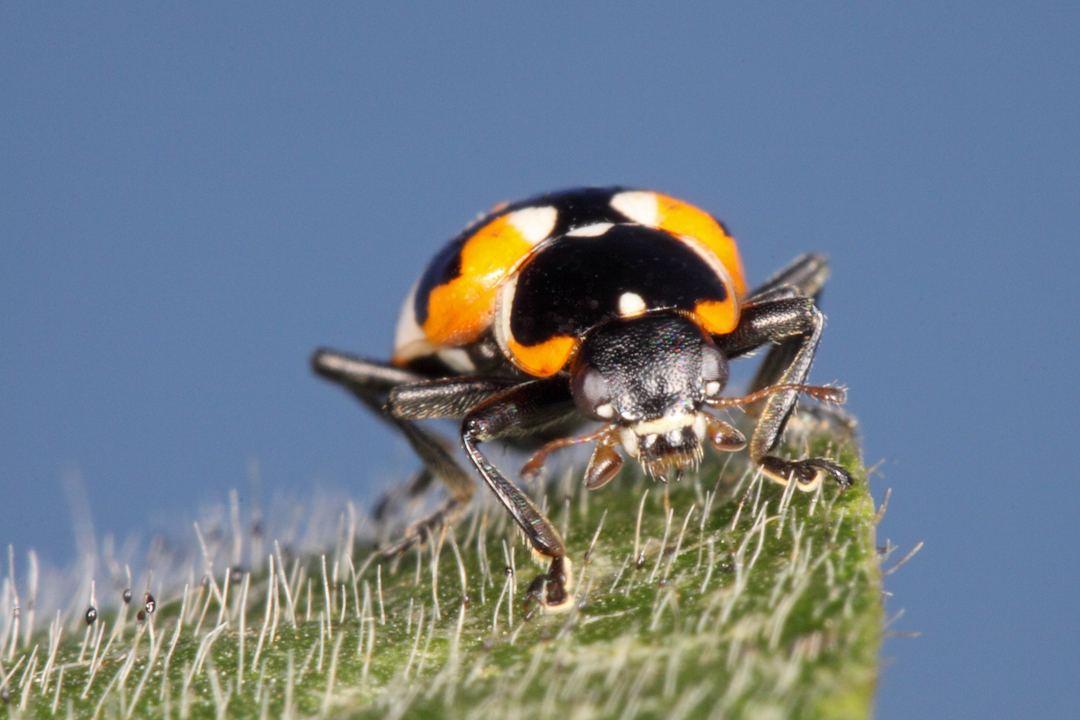

 Beetles In The Bush