ID Challenge #19

We all have something in common…

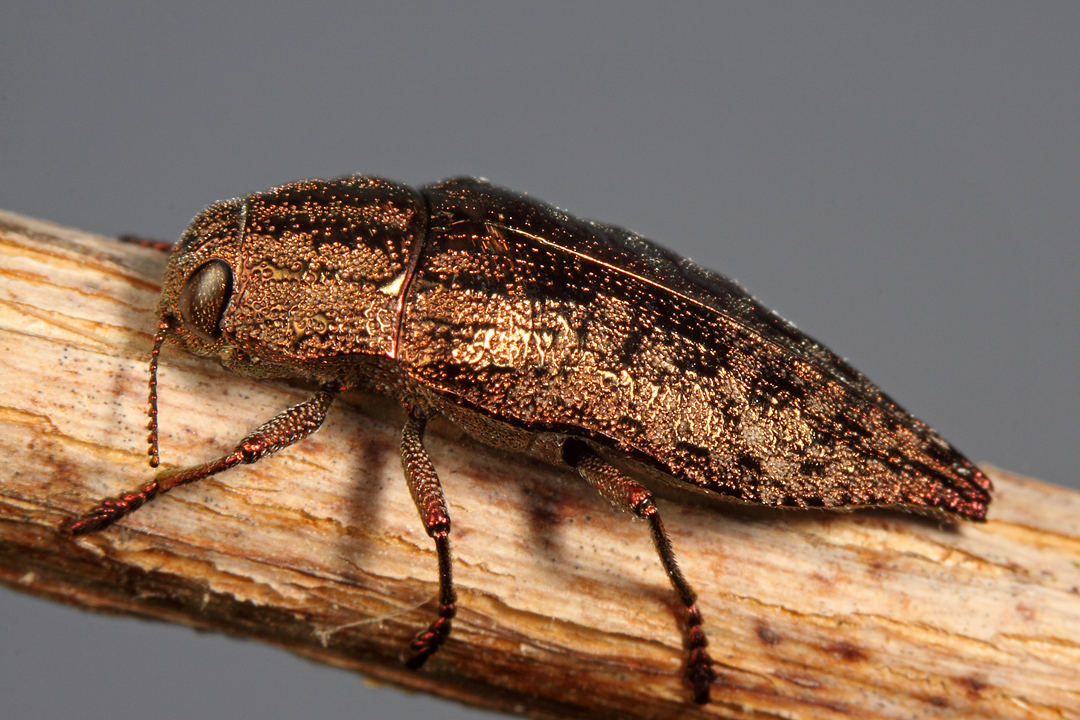
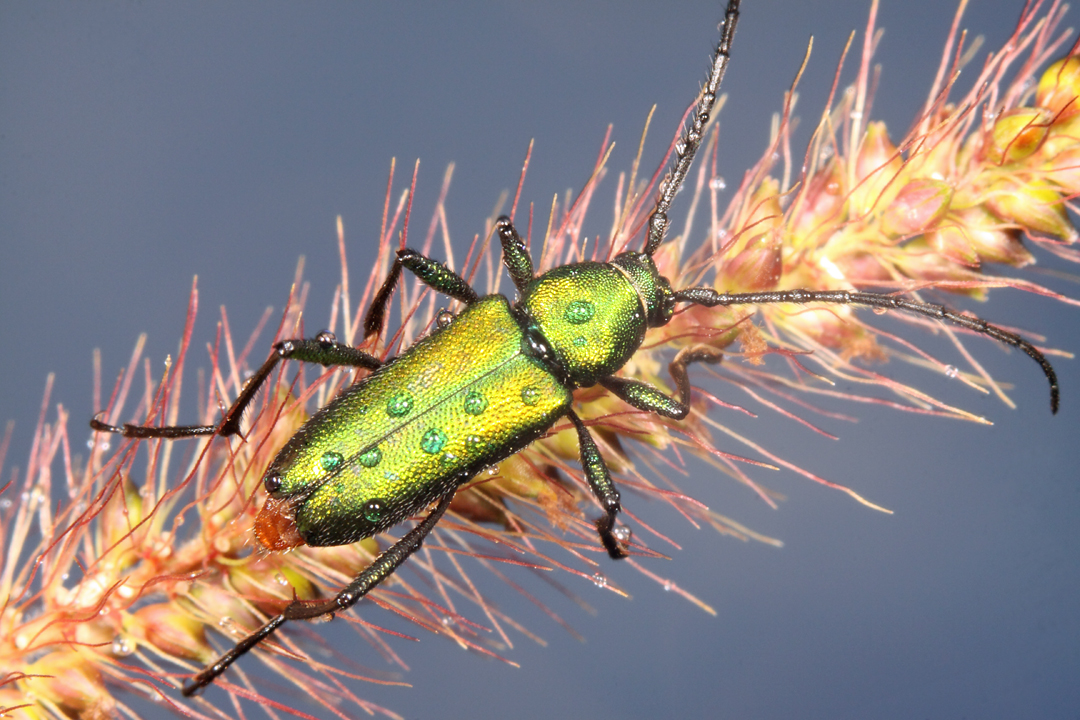
Here is a bit of a different ID Challenge—can you identify the beetles represented in the photo, but more importantly can you deduce what all of these beetles have in common (other than the fact that they belong to the same family)? Obviously these are all jewel beetles (family Buprestidae), so we won’t worry about higher classification. Instead, I’ll give 1 pt for each correctly named genus (don’t bother trying to identify species) and a whopping 5 pts for figuring out what it is they have in common. Early bird pts will be given for the latter question only. Please read the full rules if you are not already familiar with them—good luck!

Copyright © Ted C. MacRae 2012

Beetle botanists

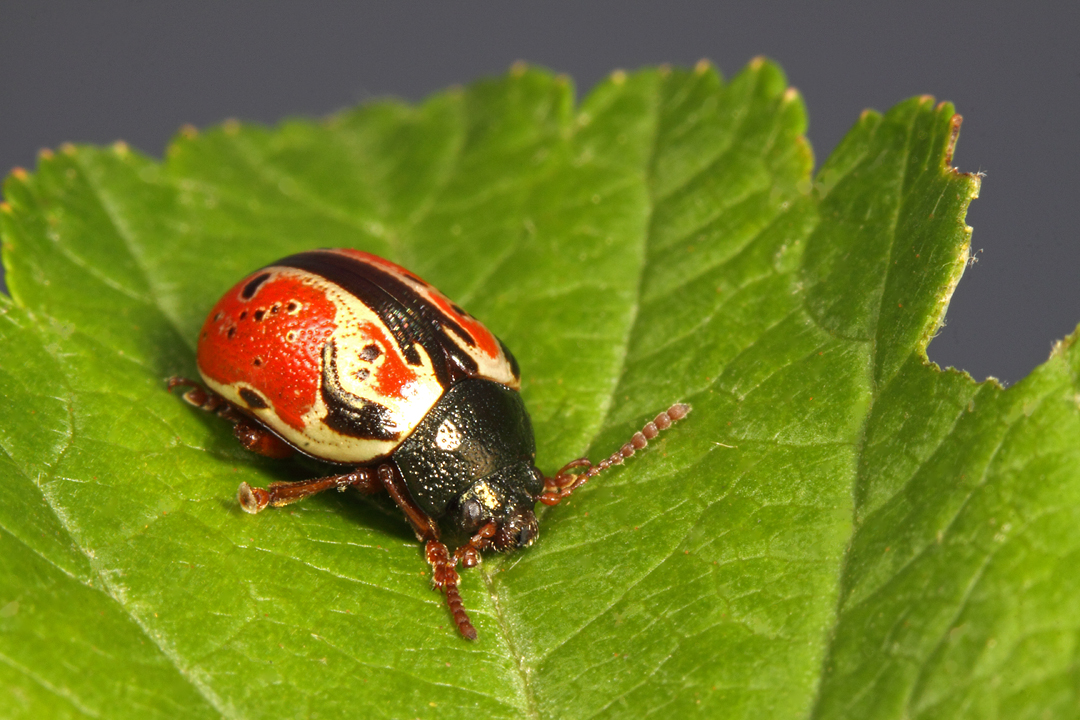
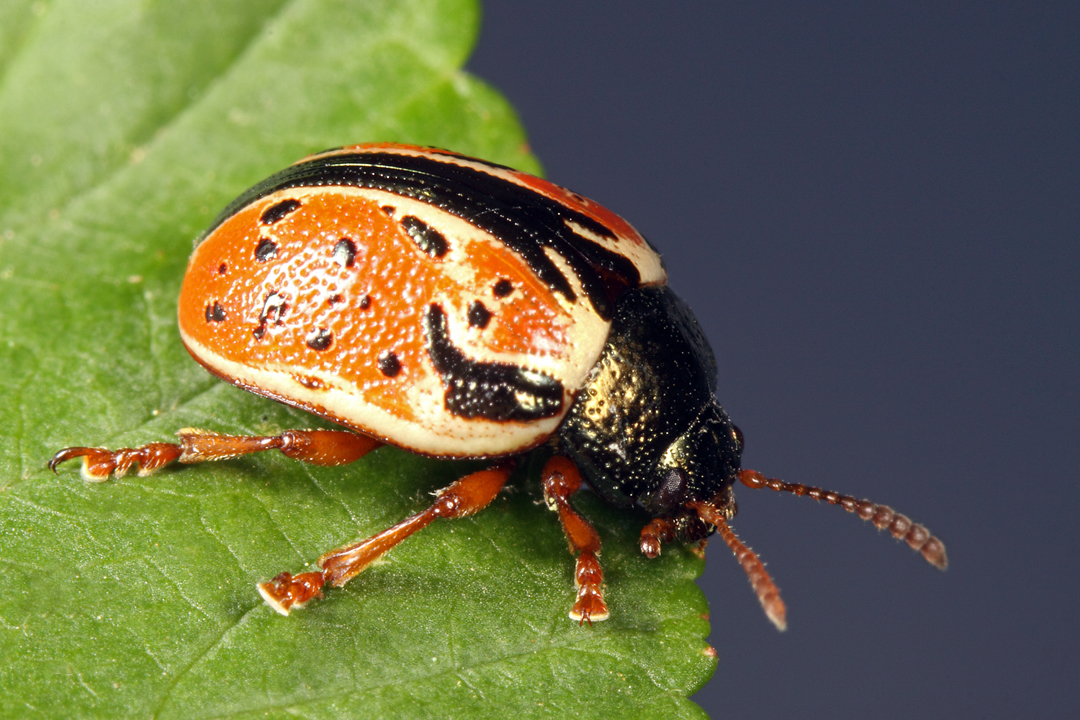
Calligrapha spiraeae on Physocarpus opulifolius | Jefferson Co., Missouri

While Dicerca pugionata (family Buprestidae) is, for me, the most exciting beetle species that I’ve found in Missouri associated with ninebark (Physocarpus opulifolius). it is not the only one. The beetles in these photographs represent Calligrapha spiraeae, the ninebark leaf beetle (family Chrysomelidae). Unlike D. pugionata, however, I almost never fail to find C. spiraeae on ninebark, no matter when or where I look, and whereas D. pugionata has been recorded in the literature associated with a few other host plants like alder (Alnus spp.) and witch-hazel (Hamamelis virginiana), C. spiraeae is not known to utilize any other plant besides ninebark as its host.

Beetles in the genus Calligrapha are among the most host-specific of all phytophagous beetles, with most of the 38 species in this largely northeastern North American genus relying upon a single plant genus as hosts (Gómez-Zurita 2005). The genus as a whole is fairly recognizable by its dome-like shape and black and white or red coloration, with the black markings on the elytra varying from coalesced to completely broken into small spots. The species, however, are another matter, with several groups of species that are quite difficult to distinguish morphologically. Fortunately most of them can be easily distinguished by their host plant (although such information is rarely recorded on labels attached to museum specimens). Calligrapha spiraeae, for example, with its reddish coloration and small black spots, looks very much like two other species in the genus—C. rhoda and C. rowena. Those latter species, however, are restricted to hazel (Corylus spp.) and dogwood (Cornus spp.); as long as the host is known, the species can be readily identified in the field.

At this point you may be wondering why the species name refers to the plant genus Spiraea rather than Physocarpus. In fact, ninebark was already known as the host plant when Say (1826) described the species, but the name spiraeae was given because at the time ninebark was included in the genus Spiraea (Wheeler & Hoebeke 1979).

REFERENCE:

Gómez-Zurita, J. 2005. New distribution records and biogeography of Calligrapha species (leaf beetles), in North America (Coleoptera: Chrysomelidae, Chrysomelinae). Canadian Field-Naturalist 119(1): 88–100.

Say, T. 1826. Descriptions of new species of coleopterous insects of North America. Journal of the Academy of Natural Sciences of Philadelphia 5:293–304.

Wheeler, A. G., & E. R. Hoebeke. 1979. Biology and seasonal history of Calligrapha spiraeae (Say) (Coleoptera: Chrysomelidae), with descriptions of the immature stages. The Coleopterists Bulletin 33:257–267. 

Copyright © Ted C. MacRae 2012

Just published: Cicindela 44(1) March 2012

Issue 44(1) of the journal Cicindela is now hitting mailboxes. This one-paper issue features an article by Chandima D. Dangalle and Nirmalie Pallewatta (University of Colombo, Sri Lanka) and Alfred P. Vogler (The Natural History Museum, London) reporting the results of a survey of tiger beetles of Sri Lanka and analysis of their habitat specificity. The authors sampled 94 locations on the island representing six habitat types: coastal and beach habitat, river and stream banks, reservoir systems, urban man-made sites, agri-ecosystems and marshy areas, finding ten species in the genera Cylindera, Calomera, Hypaetha, Lophyra and Myriochile at 37 locations representing all habitat types except the last two. The study further revealed that the species of tiger beetles were restricted to different habitat types, with most displaying a high degree of habitat specificity. Statistical analysis revealed significant differences between two or more species in four factors: solar radiation (i.e., sun or shade), soil salinity, soil moisture and wind speed. This suggests that these are the key factors involved in habitat selectivity in Sri Lankan tiger beetle species. Other factors such as temperature, relative humidity, soil type and soil color did not differ significantly between habitats for the different species, suggesting that these criteria are essential for tiger beetle survival in any habitat type.

You may also notice that my photo of Cicindela arenicola, taken last fall in Idaho Falls, graces the cover of this latest issue. Contact Managing Editor Ron Huber to begin your subscription—membership is a very nominal $10 per year in the U.S., a little more elsewhere to cover additional postage.

REFERENCE:

Dangalle, C. D., N. Pallewatta & A. P. Vogler. 2012.  Habitat specificity of tiger beetle species (Coleoptera, Cicindelidae) of Sri Lanka. Cicindela 44(1):1–32.

Dicerca pugionata – safe and sound!

Dicerca pugionata on Physocarpus opulifolius (ninebark) | Jefferson Co., Missouri

One of my favorite beetle species in Missouri is Dicerca pugionata—a strikingly beautiful jewel beetle (family Buprestidae) found sporadically across the eastern U.S. Unlike most species in the genus, which breed in dead wood of various species of trees, D. pugionata larvae mine living stems of certain woody shrubs—namely alder (Alnus spp.), witch-hazel (Hamamelis virginiana) and ninebark (Physocarpus opulifolius) (Nelson 1975). When I first began studying Missouri Buprestidae (way back in 1982), the species had just been reported from the state based on a single specimen (Nelson et al. 1982). I happened to stumble upon these beetles at what became my favorite collecting spot during the 1980s—Victoria Glades Natural Area, just south of St. Louis in Jefferson Co. For several years while I was visiting Victoria Glades, I found these beetles regularly during spring and fall on stems and branches of living ninebark plants growing within the ravines and along the toeslopes at the lower edges of the glades.

After finding the beetles at Victoria Glades (and nearby Valley View Glades Natural Area), I made it a habit to examine ninebark wherever I found it growing in Missouri. Ninebark is actually rather common in the state along the rocky streams and rivers that dissect the Ozark Highlands. Interestingly, I almost never encountered this beetle on ninebark elsewhere in the state. I’m sure it occurs in other areas, but probably at too low a level to be easily detected. I surmised that the populations at Victoria and Valley View Glades were unusually high due to the non-optimal conditions for its host plant. The ravines and toeslopes where the plants grow are drier than typical for ninebark, and unlike the lush, robust plants found in moister streamside habitats, the plants at these glades are small, scraggly and often exhibit a certain amount of dieback. It seemed likely to me that the plants growing in the glades were less capable of fending off attacks by these insects, thus resulting in relatively higher numbers of beetles at these glades.

After the publication of my “Buprestidae of Missouri” (MacRae 1991), it would be many years before I actually returned to Victoria Glades. When I did return, I was pleased to see that management practices (e.g. prescribed burning, cedar removal, etc.) intended to halt the encroachment of woody vegetation and preserve the glade’s pre-settlement character had been implemented in the area. I was a little bothered, however, by the seeming paucity of insects compared to the years prior to management. I visited the glades again several times afterwards, and not only did insect populations in general seem to be depressed, but I never succeeded in finding D. pugionata adults on the ninebark plants. I began to worry that the prescribed burns, while clearly beneficial to the glade flora, might have had a negative impact on the glade’s insect populations.

I’m happy to report that, at last, I have found the beetles again. I returned to the glades in early May this year and, for the first time since 1987 I found the adults of this species—five in all (a typical number for the many dozens of plants checked) and right in the same areas where I had so consistently found them 25–30 years earlier. This does much to allay my concerns about the ability of these beetles to persist in the face of prescribed burning (though I remain convinced that this management technique should be used more judiciously in our state’s natural areas than it has in recent years), and I’m happy to have these new photographs of the species, which are a decided improvement over the old scanned slides taken nearly 30 years ago!

REFERENCES:

MacRae, T. C. 1991. The Buprestidae (Coleoptera) of Missouri. Insecta Mundi 5(2):101–126.

Nelson, G. H. 1975. A revision of the genus Dicerca in North America (Coleoptera: Buprestidae). Entomologische Arbeiten aus dem Museum G. Frey 26:87–180.

Nelson, G. H., D. S. Verity & R. L. Westcott. 1982. Additional notes on the biology and distribution of Buprestidae (Coleoptera) of North America. The Coleopterists Bulletin 35(2) [1981]:129–151.

Copyright © Ted C. MacRae 2012

Science Outreach in Action

This evening I had the distinct pleasure of presenting to the Missouri Master Naturalist™ program, a community-based natural resource education and volunteer service program for adults whose mission is to “engage Missourians in the stewardship of our state’s natural resources through science-based education and volunteer community service.”  The purpose of this organization is to develop a corps of well-informed volunteers to provide education, outreach and service to benefit natural resources and natural areas management within the community. Master Naturalists receive training and contribute volunteer service to become a certified Master Naturalist™.

There are several chapters serving different areas of the state—my presentation was made to the Miramiguoa Chapter serving Franklin County in east-central Missouri. My talk was titled, “Tiger Beetles of Missouri,” and, as an “expert” in my chosen field, attendees received advanced training credit in addition to the basic training they receive in more general aspects of Missouri ecosystems. It is tempting to think that attendees were there just to get the credit, but what I found was one of the most engaged and interested audiences to which I’ve had the pleasure to speak in quite a long time. Naturally, it is not difficult for me to show a lot of passion when I get to present on something as dear to my heart as tiger beetles, but as a presenter I feed off audience enthusiasm as well. As a result, the combination of subject and audience engagement made for a fun discussion, and I only hope the audience enjoyed the 90 minute session as much as I did.

I write about this because I see Science Outreach by practicing scientists as critical to advancing appreciation of and participation in science by the general public—not just because I think they will have fun, but because a science-friendly community tends to make community and policy decisions favorable to and based on science. You might call it my brand of politics! I’ve been heavily involved in science outreach for many years now, talking to everyone from pre-schoolers to secondary school science classes to natural history organizations. The specifics of my message are tailored to the audience, but the underlying principle is the same—to help the audience gain appreciation of entomology in particular and science in general. I think I will chalk up tonight’s presentation as another win!

For those interested, here is a link to a PDF version of the presentation, which provides the best ‘snapshot’ look at the tiger beetle fauna of Missouri available so far:

Miramiguoa – May 2012 – TB of Missouri

Copyright © Ted C. MacRae 2012

Aglaoschema rufiventre in Chaco, Argentina

Aglaoschema rufiventre | Chaco Province, Argentina

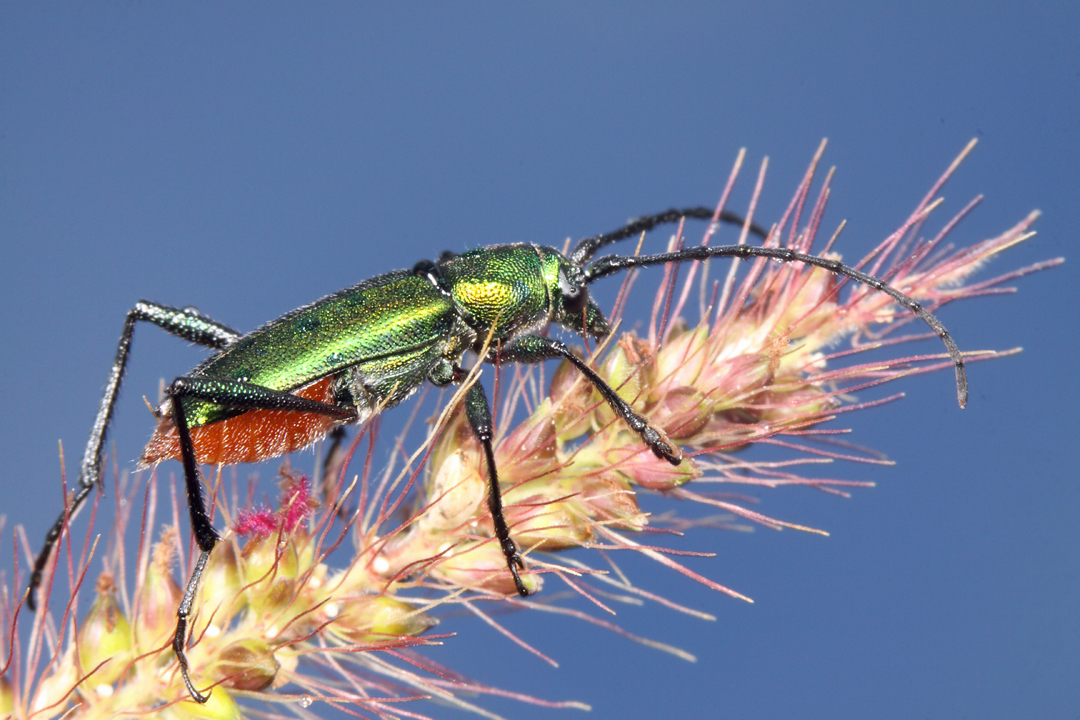
I’ve mentioned a few times that April is not a very good time to look for beetles in northern Argentina, as the months preceding April are typically hot and dry. September through January would be a much better time, especially to look for the wood boring beetles (families Buprestidae and Cerambycidae) that I am so fond of. Still, if I am in Argentina in April then I must look for beetles in April, and while I didn’t see a single buprestid during my week in Corrientes and Chaco Provinces last month I did a fair number of cerambycid beetles on stands of goldenrod (Solidago chilensis) at a few localities in Chaco Province. One particularly common species was Aglaoschema rufiventre, a beautiful metallic green species with, you guessed it, a red abdomen. Aglaoschema is a rather large (27 species), exclusively Neotropical genus whose members superficially resemble the diurnal, brightly colored species of the tribe Trachyderini but actually belong to the tribe Compsocerini. Most of the species occur in Brazil, but six extend further south into Argentina. Of these, A. rufiventre most resembles A. haemorrhoidale and A. ventrale but is distinguished by its subcylindrical antennal scape—or first segment (clavate in A. ventrale) and non-roughened elytra (roughened—or “asperate”—in A. hemorrhoidale) (Napp 2007). No hosts have been reported for A. rufiventre (Monné 2001), so my finding of adults on flowers of S. chilensis seems to be the first reported host association for the species.

The species name refers to its “red belly”

I photographed several of these beetles on S. chilensis flowers at two locations in Chaco Province along Ruta 16 west of Resistencia, but I was generally unsatisfied with how the photos turned out. The combination of the beetles’ metallic sheen and the bright yellow color of the flowers made getting the right exposure and lighting difficult—I either blew out the yellow on the flowers or ended up with deep shadows on the beetles. One morning I encountered this female sitting on the seed head of an grass unidentified grass. Torpid from the cool temperatures and covered in morning dew, she was a most cooperative subject, and the colors of the seed head turned out to be much more complimentary for photographing the beetle that the bright yellow goldenrod flowers.

REFERENCES:

Monné, M. A. 2001. Catalogue of the Neotropical Cerambycidae (Coleoptera) with known host plant—Part I: Subfamily Cerambycinae, tribes Achrysonini to Elaphidiini. Publicações Avulsas do Museu Nacional 88:1–108.

Napp, D. S. 2007. Revisão do gênero Aglaoschema Napp (Coleoptera, Cerambycidae). Revista Brasileira de Zoologia 24(3):793–816.

Copyright © Ted C. MacRae 2012

Desmiphora hirticollis: Crypsis or Mimicry?

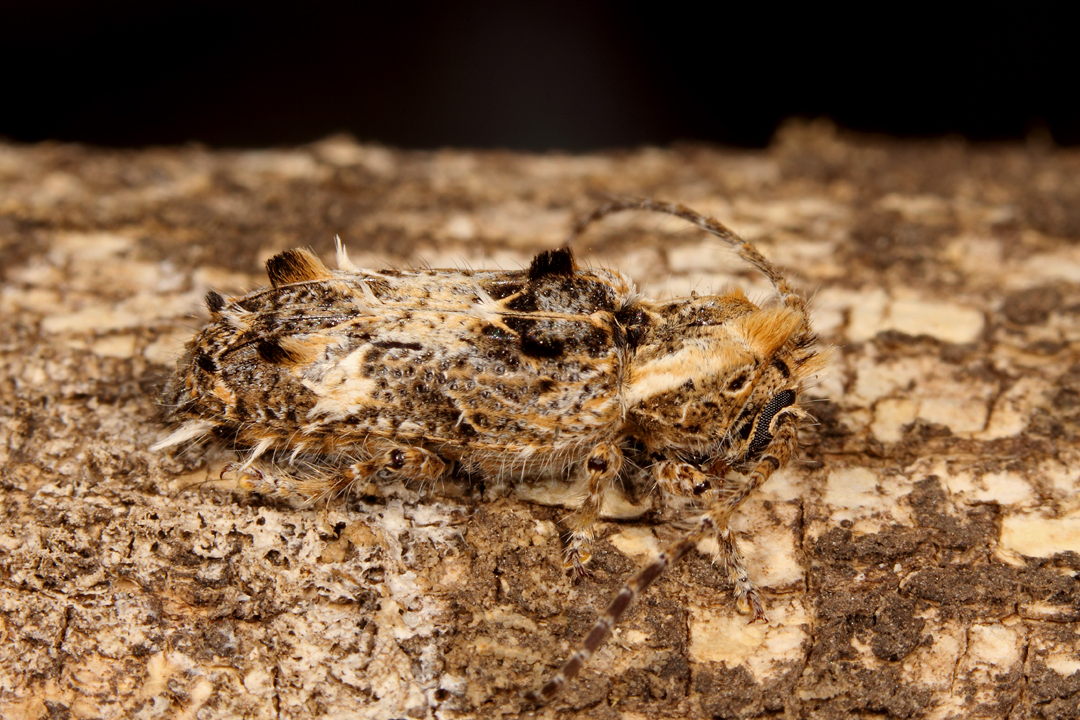
During my stay in Corrientes, Argentina last month, I was invited to spend the day with a colleague at his “camp” in Paso de la Patria. Located on the banks of the massive Rio Paraná at its junction with the Rio Paraguay, this small resort community boasts large tracts of relatively intact “Selva Paranaense,” which together with the Atlantic Forest in southeastern Brazil forms the second largest forest ecozone in South America outside of the Amazon. As my colleague skillfully prepared matambre, chorizo, and vacío (typical cuts of meat in Argentina) on the parilla (wood grill) at his camp, I explored the surrounding forest for insects. Early April is late in the season, and with generally droughty conditions in the area for the past several months there were few insects to be found. My luck improved, however, when I came upon a small area with stacks of fresh cut logs from recent wood cutting operations scattered through the area. Wood boring beetles (families Buprestidae and Cerambycidae) are often attracted to such wood piles, so approached each one slowly to look for day-active species of these beetles. After inspecting several piles without seeing anything on them, I began carefully turning over the logs to look for nocturnal species that tend to hide on the undersides during the day. Shortly I came across this highly cryptic species of cerambycid, and further searching revealed a fair number of these beetles hiding within the dozen or so log piles that I examined.
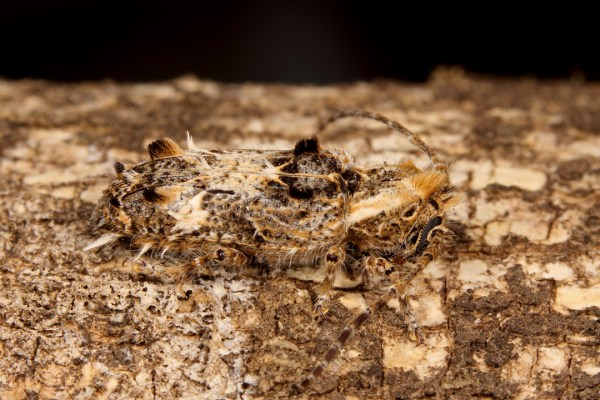
Desmiphora hirticollis on freshly cut guayabi (Patagonia americana) | Corrientes Prov., Argentina

I instantly recognized the genus as Desmiphora, an exclusively New World genus characterized by the presence of fasciculate tufts (or “pencils”) of erect or suberect hairs. Most of its nearly 50 species occur in Brazil, but two species extend as far north as southern Texas (Giesbert 1998). One of these is Desmiphora hirticollis, a widespread species found as far north as Corpus Christi, Texas and as far south as Bolivia and Argentina. I thought these beetles looked an awful lot like that species, and I later confirmed its identity as such due to its piceous (glossy brownish black) integument and the presence of small black pencils just before the elytral apices.

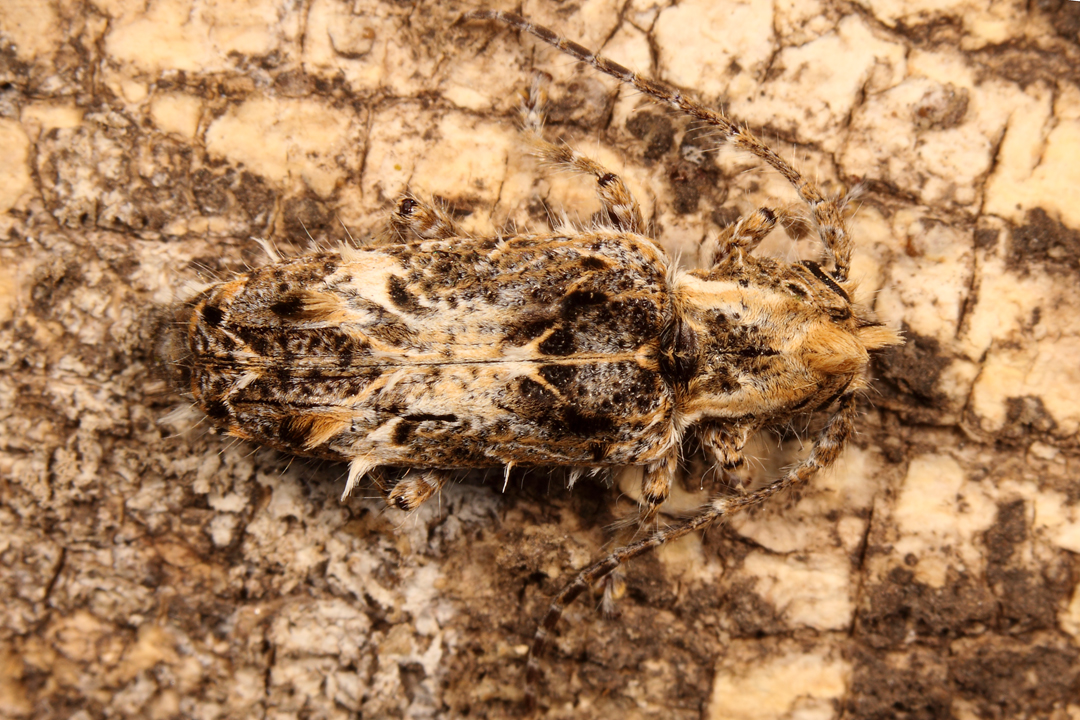
Adults are nearly impossible to see from overhead due to cryptic coloration…

The wood piles contained logs from several tree species, but all of the beetles that I encountered were on logs of guayaibi (Patagonula americana), a member of the family Boraginaceae and a characteristic component of Selva Paranaense (also an important timber species in Argentina). The number of individuals that I found and their occurrence only on guayaibi suggests it serves as a larval host for the beetle. Duffy (1960) described the larva from specimens collected out of Sapium sp. (family Euphorbiaceae), but in Texas this species is collected most often on Cordia spp. and Ehretia anacua (Rice et al. 1985)—both in the family Boraginaceae—with adults having been reared from Cordia eleagnoides (Chemsak & Noguera 1993).

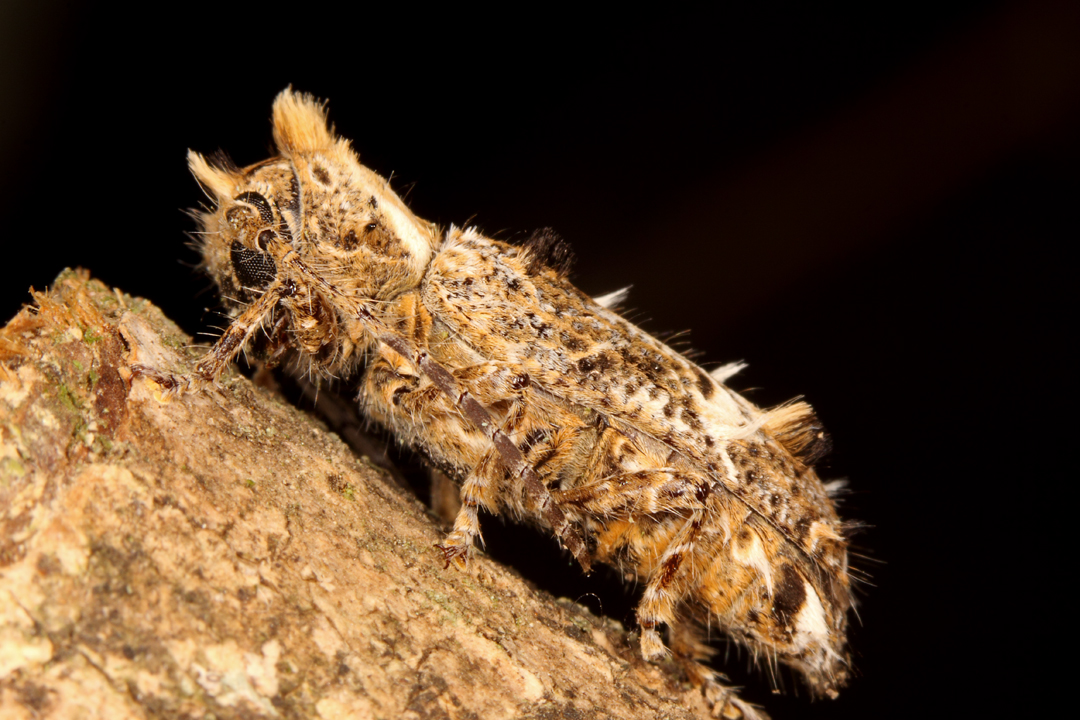
…while the hair tufts may function in obscuring the body outline…

It seems obvious that coloration of the beetle and its pencils of hair function in crypsis. From overhead the beetles are almost impossible to discern as they sit motionless on the similarly colored bark of their host trees. Even in profile or oblique views where the body becomes somewhat more visible, the pencils seem to break up and obscure the outline of the body. I wonder, however, if crypsis is the only function of the pencils—Belt (2004) described the strong resemblance of another species in the genus, D. fasciculata—a similarly penicillate species, to short, thick, hairy caterpillars (insectivorous birds often refuse to prey upon hairy species of caterpillars). That species can be seen sitting openly on foliage during the day, while D. hirticollis seems to be strictly nocturnal; however, cryptic and mimetic functions need not be mutually exclusive, so perhaps for this species the pencils function a little for both.

…or perhaps even mimicking ”hairy” caterpillars.

REFERENCES:

Belt, T. 2004. The Naturalist in Nicaragua. Project Guttenberg eBook.

Chemsak, J. A. & F. A. Noguera.  1993.  Annotated checklist of the Cerambycidae of the Estacion de Biologia Chamela, Jalisco, Mexico (Coleoptera), with descriptions of new genera and species.  Folia Entomológica Mexicana 89:55–102.

Duffy, E. A. J. 1960. A Monograph of the Immature Stages of Neotropical Timber Beetles (Cerambycidae). British Museum of Natural History, London. 327 p.

Giesbert, E. F. 1998. A review of the genus Desmiphora Audinet-Serville (Coleoptera: Cerambycidae: Lamiinae: Desmiphorini) in North America, Mexico and Central America. Occasional Papers of the Consortium Coleopterorum 2(1): 27–43.

Rice, M. E., R. H. Turnbow, Jr. & F. T. Hovore. 1985. Biological and distributional observations on Cerambycidae from the southwestern United States (Coleoptera). The Coleopterists Bulletin 39(1):18–24.

Copyright © Ted C. MacRae 2012

I fear no weevil…

Megabaris quadriguttatus (Klug, 1829) | Corrientes Province, Argentina

…especially when they are as colorful as these! I found this mating pair ~60 km south of Corrientes, Argentina feeding on flowers of what I presume to be the goldenrod species Solidago chilensis (family Asteraceae). Here, as in North America, goldenrod blooms in profusion along the roadsides during late summer and fall wherever moisture is to be found, and also as in North America goldenrod here is an insect magnet. During my week exploring Corrientes and Chaco Provinces, I learned to stop whenever I spotted a stand of the distinctive yellow blossoms. I found several stands and was treated to a variety of beetles, flies, and other insects that I’ll show over the coming days, with these being among the most striking that I found.

Weevils themselves may not be anything to be afraid of; however, their taxonomy is downright terrifying (and this coming from a beetle man!). With more than 40,000 described species worldwide (and who knows how many still awaiting description), the family Curculionidae (“true” weevils) may be the largest in the animal kingdom. I don’t know why, given the distinctive and striking coloration of these individuals, but I punted early and asked my friend Henry Hespenheide (a buprestid man, but knows a thing or two about weevils) if he knew what these were. Henry must have also been scared, because he went straight to the top and forwarded the photos to weevil heavy-hitters Charles O’Brien and Jens Prena, both of whom quickly replied back with an ID of Megadaris quadriguttatus (Klug, 1829). The state of weevil bionomics seems to be as incomplete as their taxonomy, as I was unable to find even the most basic information about the distribution and biology of this species (keep in mind I’m in Argentina right now with no access to libraries). As far as I can tell this is a strictly Neotropical genus.

Of course, had I checked Curculionidae de Argentina I might have noticed the photo of this species right there on the front page. Fear does strange things to one’s confidence.

Copyright © Ted C. MacRae 2012