More on ‘Conspicuous Crypsis’

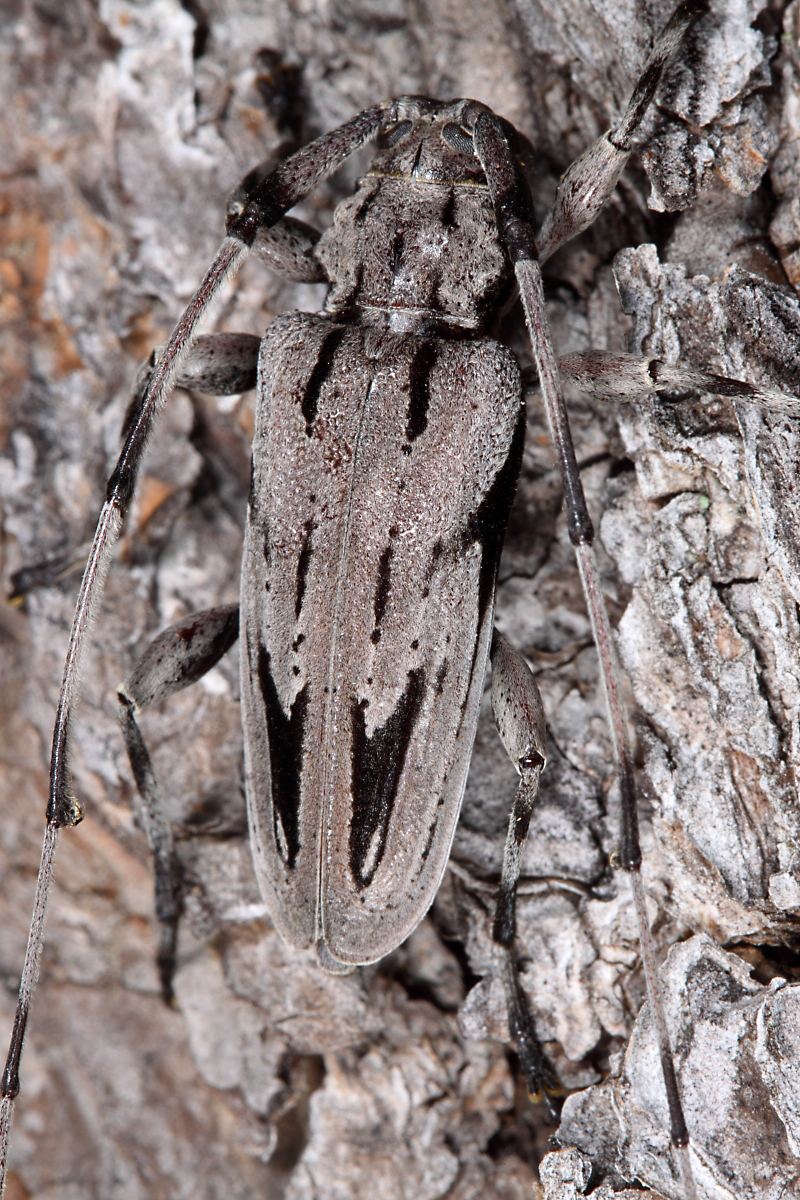
Acanthocinus nodosus on trunk of Pinus echinata | vic. Calico Rock, Arkansas

In my previous post (), I used the term ‘conspicuous crypsis’ to describe the sumptuously beautiful lichen grasshopper, Trimerotropis saxatilis, as an example of an insect that, despite strikingly conspicuous colors/patterns, blends in perfectly with its native surroundings. I don’t think this is a formally recognized ecological concept (and a quick search of the web and my limited ecology literature didn’t turn up anything about it) with any real biological/ecological relevance, but rather just a little irony that personally I find interesting.

The same individual in the above photograph in its original resting spot.

The photographs in this post were also taken during one of my June trips to the sandstone glade complex around Calico Rock, Arkansas and show another insect that I would describe as conspicuously cryptic. This is Acanthocinus nodosus, in my opinion one of eastern North America’s most attractive longhorned beetles (family Cerambycidae). This species occurs across the eastern U.S. (just sneaking up into southern Missouri), where the larvae mine the phloem beneath the bark of dead and dying pines (Linsley and Chemsak 1995). BugGuide describes it as “subtle, yet beautiful” with an antennal span in males reaching a spectacular 120 mm (that’s 5 inches, folks!). Perhaps others have encountered this beetle more commonly further south, but I have previously seen only single individuals on just three occasions—twice in the Ozark Highlands of southern Missouri (one at lights and another searching the trunk of a standing, decadent pine tree at night) and another at lights in Alabama. As a result, I was quite excited to find this individual clinging during the day to the trunk of a large shortleaf pine (Pinus echinata). The tree appeared healthy, but I found adults of several other wood boring beetles crawling on its trunk as well, suggesting that maybe the tree was stressed or in the initial stages of decline.

Subtle, yet beautiful!

I must confess that the first photograph above was staged—I had moved the beetle from its original resting spot and placed it on a part of the trunk where the bark color contrasted more strongly with the beetle to increase its visibility.  The second and third photos above and left show the beetle in its original resting spot and illustrate just how cryptic the beetle is when resting on older, more weathered pine bark.  Admittedly, the somber coloration of this species is not as extraordinary as the lichen-green of the lichen grasshopper, but I nevertheless find the slate gray with velvet black markings quite beautiful.  When mounted on pins and lined up neatly in a cabinet, individuals of this species are as attractive as any dead insect can be.  It was not until I saw this individual in Arkansas—and tried to photograph it during the day—that the cryptic function of its coloration and patterning became truly apparent to me.  Most species in the tribe Acanthocini (to which this species belongs) also exhibit somber coloration with variable black markings or mottling, although only a handful can be considered as ‘conspicuously cryptic’ as this one.

REFERENCE:

Linsley, E. G. and J. A. Chemsak.  1995. The Cerambycidae of North America. Part VII, No. 2: Taxonomy and classification of the subfamily Lamiinae, tribes Acanthocinini through Hemilophini. University of California Publications in Entomology 114:1–292.

Copyright © Ted C. MacRae 2011

Diminishing Stag Beetle

This past June I made a couple of trips to north-central Arkansas. They were my first real efforts to collect insects in Arkansas, despite hundreds (literally) of trips to various localities throughout the Ozark Highlands in adjacent southern Missouri. The similarities between the two areas were obvious, yet there was also the feeling of a brand new area just waiting for exploration. On the second trip, I found a campground that looked good for blacklighting to see what wood-boring beetles I might be able to attract amongst the surrounding pine/oak-hickory forest. The evening was warm (very warm!) and humid with no moon—typically ideal for blacklighting, but beetles were sparse at the sheets for some reason (perhaps deterred by the obnoxiously unrelenting yells of drunk Arkansans and their out-of-control offspring?!). The evening, however, was not a total loss—at one point an enormous stag beetle landed on the top of the sheet.  It was so big that I couldn’t even fit it into the viewfinder of my camera:

I fiddled with the camera and changed some settings.  I got a little more of the beetle in the viewfinder this time, but it was still just too big:

Additional fiddling with the camera allowed even more of the beetle to be seen:

As I took the photographs, I even began wondering if the beetle itself was actually shrinking:

Eventually, it turned out to be a normal-sized beetle after all:

This is a female of the common eastern North American species Lucanus capreolus.¹  I don’t seem to encounter female stag beetles as often as the males, so this was still a nice find on an otherwise frustrating night.

¹ Two bonus point in the current BitB Challenge session to the first person who correctly explains how I know this.  Overall contenders: here’s your chance to score an advantage as we enter the final stretch in the current Challenge session.

Copyright © Ted C. MacRae 2011

Four-humped Longhorned Beetle

Acanthoderes quadrigibba | Chalk Bluff Natural Area, Arkansas.

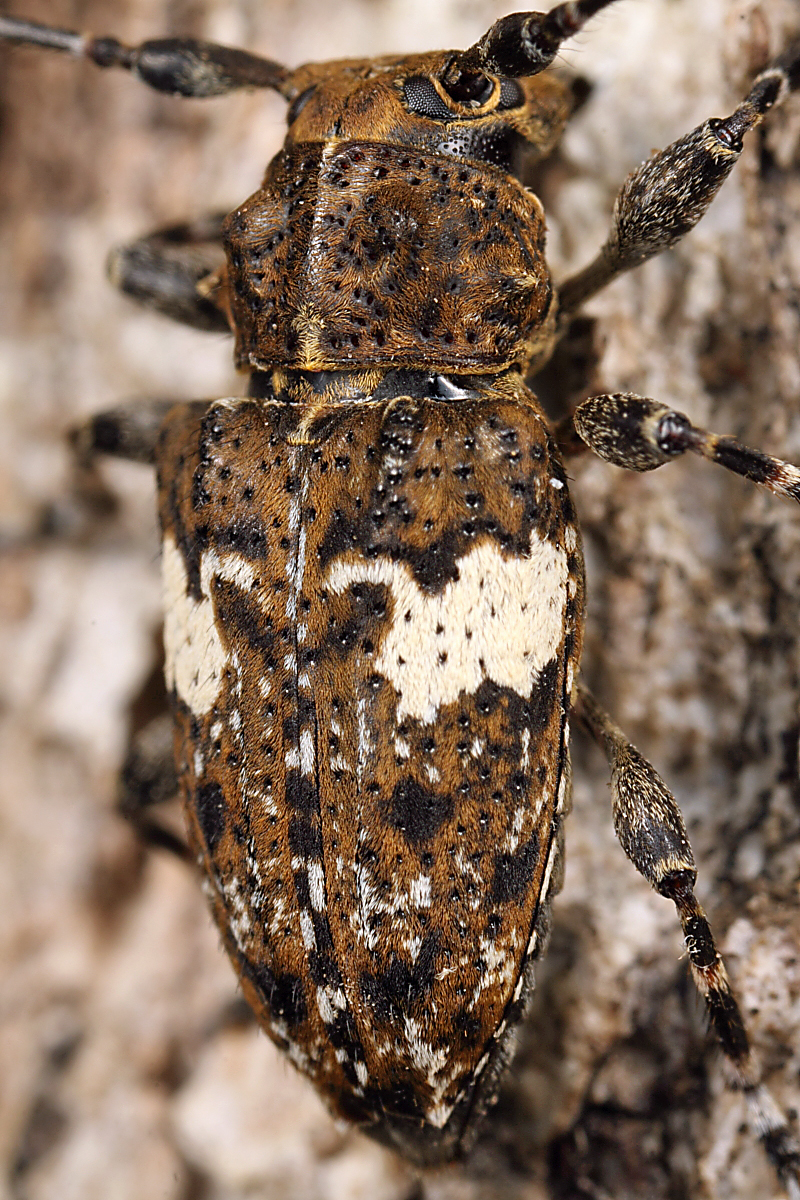
On a recent collecting trip, I went over to Chalk Bluffs Natural Area in the Mississippi Alluvial Plain of northeastern Arkansas.  My quarry was a population of Cylindera cursitans (ant-like tiger beetle) that has been reported from the site—one of the only known sites for the species in Arkansas.  While I was there, I noticed some movement on the trunk of a tree, and a closer look revealed that what appeared to be a piece of bark was actually a beetle—a longhorned beetle to be precise.  The elevated gibbosities of the pronotum and white, transverse fasciae of the elytra immediately identify it as Acanthoderes quadrigibba, a not uncommon species in the eastern U.S., but one that I still get excited about whenever I encounter it.

Note the four pronotal ''humps'' in this dorsolateral profile view.

Judging by the number and diversity of plant genera that have been recorded as larval hosts for this species—Linsley and Chemsak (1984) recorded Acer, Betula, Carya, Castanea, Celtis, Cercis, Fagus, Ficus, Quercus, Salix, Tilia, and Ulmus—you could be forgiven for thinking that this is one of the most common and abundant species of longhorned beetle in North America.  I have not found this to be the case, and I don’t think it is because I’m simply missing it due to its cryptic appearance.  Longhorned beetles in the tribe Acanthoderini are, like many species in the family, quite attracted to lights at night, and I’ve done plenty of lighting over the years.  What I have noticed is that nearly all of my encounters with this species have been in the Mississippi Alluvial Plain—an area rich with wet, bottomland forests that contrast markedly from the dry to dry-mesic upland forests that cover much of the southern two-thirds of Missouri.  I’ve also reared the species a few times from Salix, one of the host genera recorded by Linsley and Chemsak (1984).  In both cases, the wood was not freshly dead (as is commonly preferred by many other longhorned beetles), but a little past its prime and starting to get somewhat moist and punky.  In the case of this beetle, I suspect that the nature of the host wood may be more important than the species, the preference being for longer dead wood in moister environments.  Of course, observations by another collector in another state may completely obliterate my idea, but for now it sounds good.

A closeup photograph of the elytral markings of this beetle was the subject of ID Challenge #9, to which a record 18 participants responded (thanks to all who played!).  Troy Bartlett takes the win with 12 points (and attention to detail), while Dennis Haines, Max Barclay, Mr. Phidippus, and Josh Basham all score double-digit points.  Troy’s win moves him into the top spot in the overall standings of the current BitB Challenge Session with 23 pts, but Dave is breathing down his neck with a deficit of just a single point.  Tim Eisele and Max Barclay have also moved to within easy striking distance with 19 and 18 points, respectively, and several others could make a surprise move if the leaders falter.  I think I’ll have one more challenge in the current session before deciding the overall winner—look for it in the near future. 

REFERENCE:

Linsley, E. G. and J. A. Chemsak. 1984. The Cerambycidae of North America, Part VII, No. 1: Taxonomy and classification of the subfamily Lamiinae, tribes Parmenini through Acanthoderini. University of California Publications in Entomology 102:1–258.

Copyright © Ted C. MacRae 2011

Sugarcane Weevil in Brazil

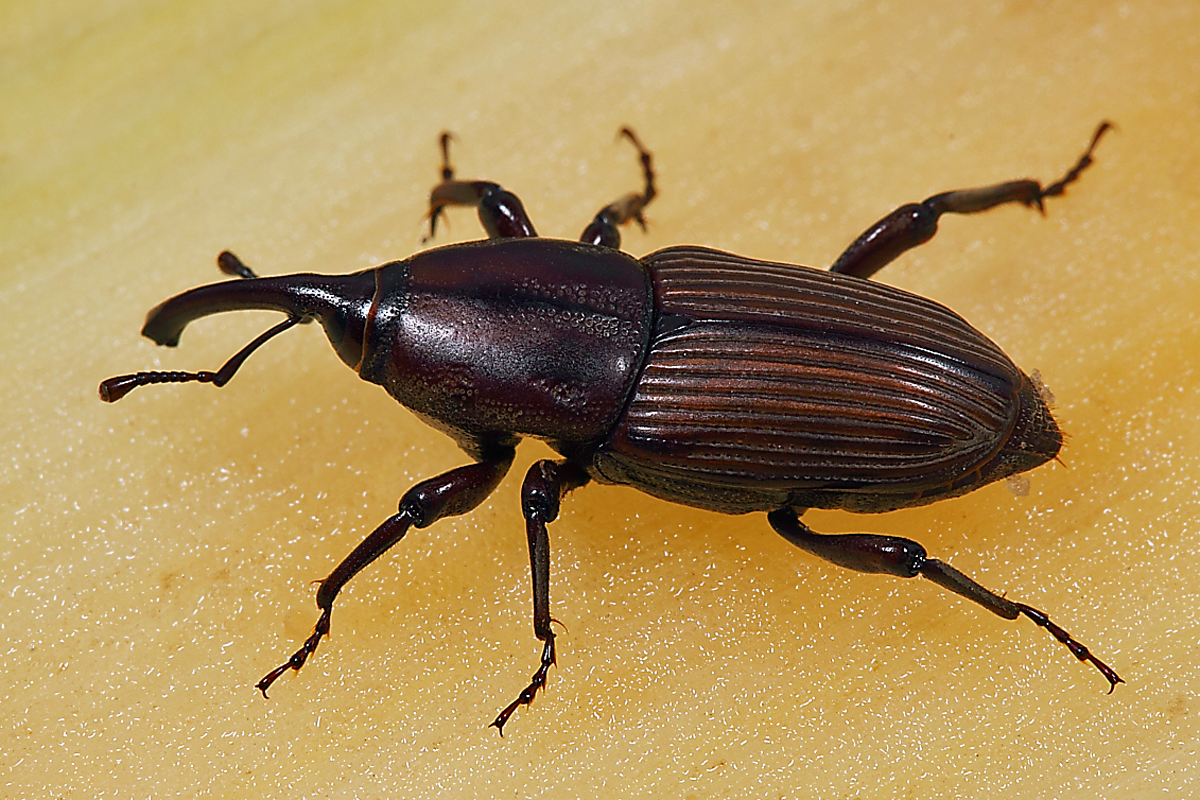
Sphenophorus levis (sugarcane weevil) | Conchal, Brazil.

Brazil is one of the world’s top producers of sugarcane, and they have the Middle East to thank for it.  While the U.S. was responding to the 1973 OPEC oil embargo by building bigger and bigger SUVs, Brazil aggressively developed an alternative fuels industry based on sugarcane for ethanol production.  Today, about half of Brazil’s sugarcane is milled for ethanol, yet despite this enough raw sugar is produced from the remaining sugarcane crop to rival India as the world’s top producer.

The large acreage devoted to sugarcane and tropical climate in which it is grown make Brazil’s crop especially vulnerable to infestation by insect pests—and there are many!  One of the most important is Sphenophorus levis (sugarcane weevil, or “bicudo da cana-de-açúcar”).  Larvae bore in the roots and crown of the plant, reducing biomass accumulation and longevity.  This feature of the insect’s biology also makes the larvae extraordinarily difficult to control, since they are largely protected from chemical applications by surrounding plant tissues.  This adult beetle was captured in a field trap placed in a sugarcane field in Conchal, approximately 175 km N of São Paulo.  The traps consist of split sugarcane stalks buried under debris within crop rows—adults are attracted to the cut surface of the stalks, where they congregate in numbers.  Traps are used not only to monitor beetle occurrence and abundance in fields, but also to provide a source of insects for laboratory rearing and evaluation of control test agents.

Copyright © Ted C. MacRae 2011

Tracking Tetraopes texanus with Terry

Last month I traveled to Starkville, Mississippi to meet with an academic cooperator at Mississippi State University.  While arranging the trip, I contacted Terry Schiefer (no, not the fashion jewelry designer, but curator at the Mississippi Entomological Museum) to let him know I would be visiting.  Considering that late May should be pretty good insect collecting in that area, I wanted to see if he might be interested in doing a little beetle collecting after I finished up with my meetings.  Terry also specializes in Coleoptera and shares with me an interest in the taxonomy and faunistics of Cerambycidae and Cicindelinae.  I first met Terry some 13 years ago during my previous visit to MSU; I remember ogling at an impressive series of Aegomorphus morrisii, a spectacular species of longhorn beetle that was known at that time by precious few specimens and that he had recently found in Mississippi.  We hadn’t seen each other since but managed to keep in contact with occasional correspondence during the course of our longhorn studies.

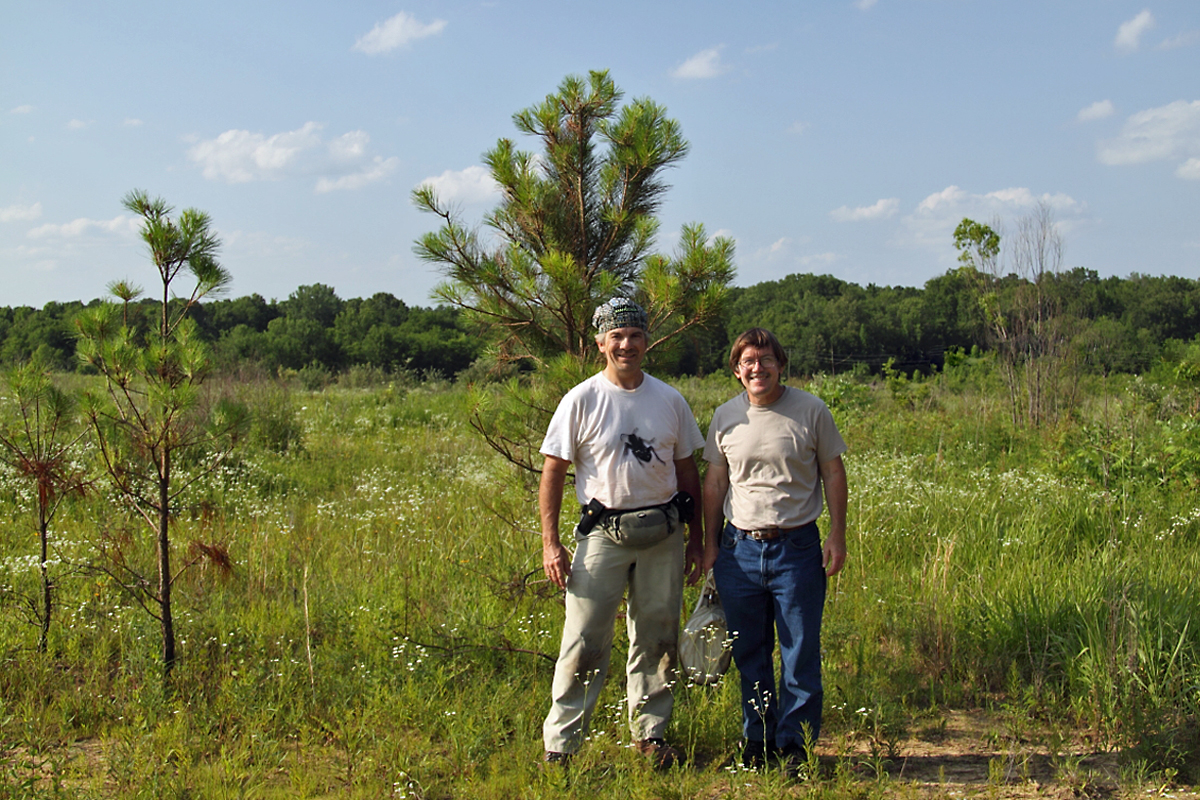
Me & Terry Schiefer | Noxubee National Wildlife Refuge, May 2011.

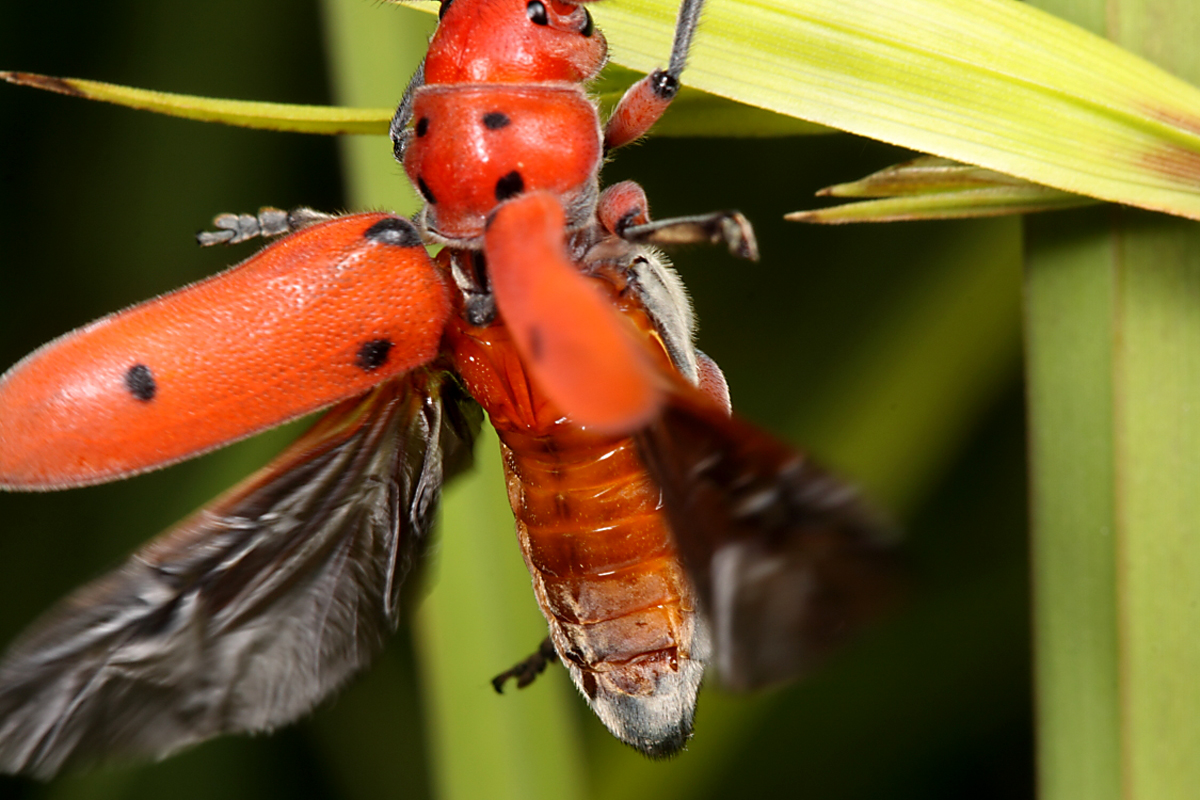
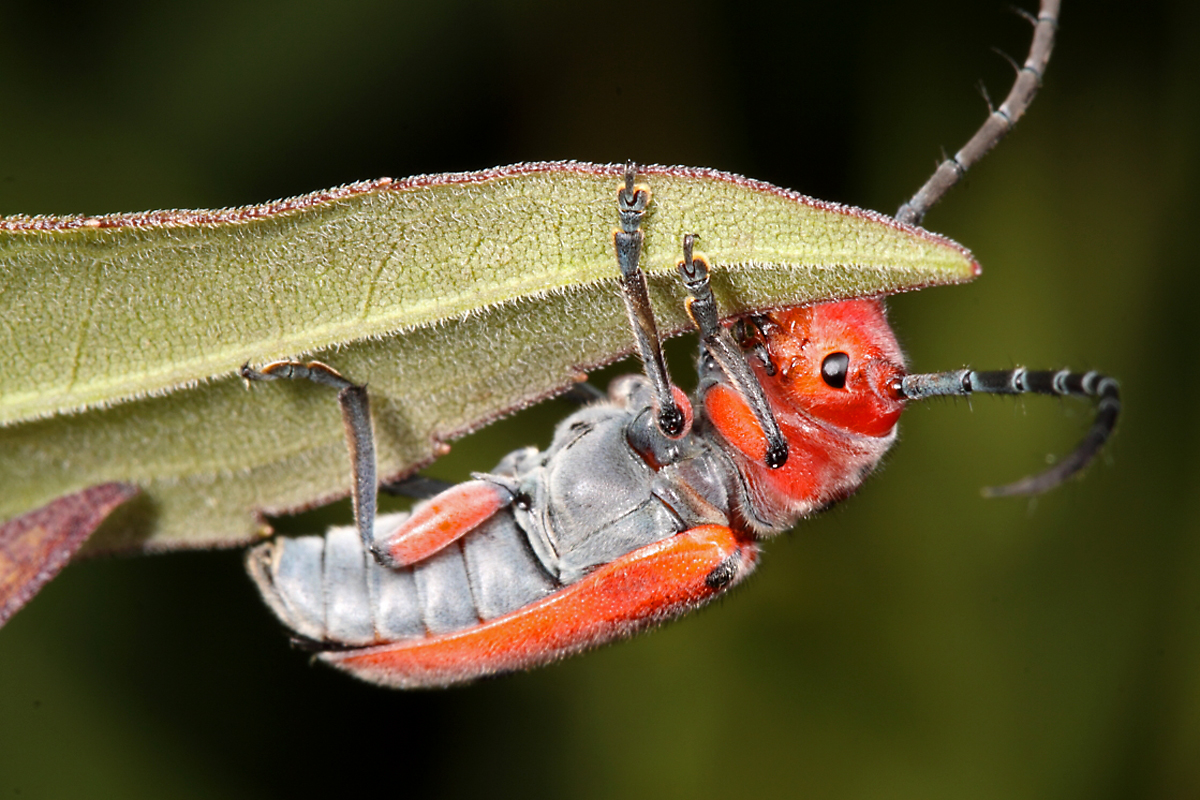
Terry was more than happy to go beetle collecting with me, and among the possibilities that he mentioned when I arrived at the museum was nearby Noxubee National Wildlife Refuge.  I had done a little collecting there on my last visit, but I was especially intrigued when he mentioned the local population of an uncommon milkweed beetle species, Tetraopes texanus, that he had reported in one of the refuge’s prairie remnants (Schiefer 1998).  I have only seen this species once, up here in in east-central Missouri and which I reported as the species’ northernmost known population (MacRae 1994).  My more recent attempts to find this species have not been successful, so I was excited at the chance to see this longhorned species once again.

We arrived at the prairie with plenty of daylight to spare and began walking through the area where Asclepias viridis (its presumed host in Mississippi; in Missouri I found it on Asclepias viridiflora) was growing.  Typically milkweed beetles are quite approachable, having nothing to fear from predators by virtue of the cardiac glycosides that they sequester in their bodies from their milkweed foodplants and advertise so conspicuously with their bright red and black coloration.  Thus, we were looking for beetles sitting brazenly on the plants, but none were seen.  Eventually, Terry saw one in flight, and then I saw one in flight as well.  For some time, this was the only way we were seeing the beetles, and only by slowing down and scanning the prairie vegetation more carefully and deliberately did we begin to see the adults sitting on vegetation.  Interestingly, very few of them were seen actually sitting on milkweed plants.  Rather, they were on all manner of other plants, and they were very quick to take flight on our approach.  This was playing havoc with my desire to get field photographs of the beetles, especially field photographs on the host.  I decided that any photograph—host plant or not—was better than none, so I began attempting some shots.  My first one didn’t work out so well:


Finally I was able to get one of the beetle sitting on a plant, but the dorsal characters can’t be seen, nor is there anything about the photo that allows the species to be distinguished as T. texanus (the abruptly attenuate last antennomere distinguishes it from similar-appearing species):


Progress—more of the dorsal surface can be seen in the photo below, and the beetle is actually sitting on a milkweed plant.  However, the antennal tips are still frustratingly out of focus.  Note the completely divided upper and lower lobes of the eye—Tetraopes beetles give new meaning to the term “four-eyes”:


I chased beetle after beetle in flight, endlessly zigzagging across the prairie in what had to be a spectacle to any unknown observer.  Eventually, we found a beetle sitting on its host plant, and it remained calm during my deliberate approach.  I circled around for a good view of the dorsal surface and snapped off an apparent winner—everything in focus, good composition… but arghh, the antennal tips were clipped!


I kept at it and was about to back off a bit on the magnification and switch to landscape mode so I could get the full antennae in the frame when the beetle turned in a most fortuitous manner—nicely positioning its distinctive antennal tip right in front of a bright green leaf for contrast.  My friends, I present Tetraopes texanus on its presumed host plant, Asclepias viridis!


Terry and I were both puzzled by the flighty, nervous behavior that the beetles were exhibiting.  Neither of us had seen such behavior with milkweed beetles before, and I’m not sure I can offer any explanation for such.  I’d be interested in hearing any ideas you might have.

My thanks to Terry for showing me a few of his favorite spots (allowing me to collect a few choice species of longhorns), and to my co-worker/colleague Jeff Haines for indulging my desire mix a little beetle collecting into the business trip.  I hope they enjoyed it as much as I did.

REFERENCES:

MacRae, T.C. 1994. Annotated checklist of the longhorned beetles (Coleoptera: Cerambycidae and Disteniidae) occurring in Missouri. Insecta Mundi 7(4) (1993):223–252.

Schiefer, T.L. 1998. Disjunct distribution of Cerambycidae (Coleoptera) in the black belt prairie and Jackson prairie in Mississippi and Alabama. The Coleopterists Bulletin 52(3):278–284.

Copyright © Ted C. MacRae 2011

A Missouri hotspot for Cylindera unipunctata

Cylindera unipunctata | Gray Summit, Franklin Co., Missouri

Cylindera unipunctata | Shaw Nature Reserve, Gray Summit, Franklin Co., Missouri

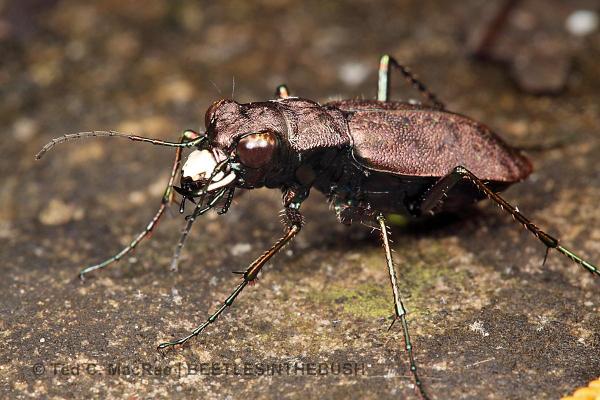
Long before I began studying tiger beetles in earnest, I became aware of one of Missouri’s more interesting species—Cylindera unipunctata (one-spotted tiger beetle).  One of my favorite woodboring beetle collecting spots back in the 1980s was Pinewoods Lake Recreation Area near Ellsinore in the southeastern Ozarks.  I had stumbled upon this spot in the beginning my beetle studies and spent countless days wandering the trails through the open forest that surrounded the relatively new lake and blacklighting in the campground at night.  I literally cut my entomological teeth at this spot.  While woodboring beetles were my quarry, I couldn’t resist the few brown, apparently flightless tiger beetles (in reality, they can fly but rarely do so) that I had seen clambering across the woodland trail in front of me during one of my first visits to the area.  That following winter, when I showed them to Ron Huber during a mutual visit at the home of long-time lepidopterist Richard Heitzman (and as far as I know, owner of the largest private insect collection in Missouri), I was pleased to see his palpable excitement at my find.  I kept an eye out for this species ever since, and while I have found them in a number of localities here in Missouri—all along the eastern edge of the Ozark Highlands south of St. Louis, I’ve never seen more than one or two, or maybe three at a time.  Even when returning to spots where I had seen them previously and looking for them specifically, they seemed a rare, elusive species.  By the time Chris Brown and I had begun our serious studies of the Missouri tiger beetle fauna, I had accumulated no more than a dozen or so specimens from places like Pinewoods Lake, Hawn State Park, and Trail of Tears State Park.  Their seeming preference for shaded, woodland habitats is unusual amongst North American tiger beetles, save for the conspicuous and commonly encountered Cicindela sexguttata (six-spotted tiger beetle), but within that habitat I had begun to notice a commonality—open woodland with steep rocky/clay slopes.

Beetles are quick to take cover in the leaf litter

Beetles are quick to take cover in the leaf litter

A few years ago, Chris Brown noticed that this species seemed to be fairly common at Shaw Nature Reserve in Gray Summit, Missouri.  I was surprised to learn of the occurrence of this species just 40 miles southwest of St. Louis (and only 15 miles from my home), and in 2009 I resolved to go there and see it for myself.  I had just begun digital insect photography at the time as well, so I was looking forward to the chance to photograph one of Missouri’s rarer tiger beetles.  On the first trip to SNR in May 2009, I searched the trails repeatedly where Chris had seen them but never saw a single one.  I thought maybe I was too early, so I went back a couple of weeks later at the end of May, and this time I found one… but just one!  I got off a series of shots before the beetle bolted and eventually disappeared, leaving me with one decent shot of the species.  The lighting and focus in the photo were good, but the photo was just… well… boring!

Adults were most frequent along sloping portions of the trail.

Adults were most frequent along sloping portions of the trail.

A few weeks ago, again near the end of May, I decided to try for the species again.  I’ve now been photographing tiger beetles for two years rather than two weeks, so perhaps I’ve learned a few tricks in locating and photographing the beetles that would give me a better variety of photos to show for my effort.  I went back to the same trail (Jane’s Wildflower Trail), and while I did have better luck (finding four beetles instead of just one) I was still not happy with the photos I had gotten to that point (only Photo #2 is from that session).  I decided to try my luck along another trail (Bluff Overlook Trail) where James Trager had seen an individual earlier just that week.  At first, the beetles seemed to have the same fairly low occurrence that they had along the first trail.  Still, I saw enough individuals to get a number of photos that I was happier with (#1, #3 and #4 in this series), and I figured the job was done.  We hiked down towards the river to see if we might find the population of Cicindela formosa generosa that Chris had seen on a sand bar in a previous year, but flooding by the Meramec River had much of the area—and certainly any open sandy areas—under water.

Beetles were less skittish when hidden amongst small plants.

Beetles were less skittish when hidden amongst small plants.

By the time we took the trail back up to the higher elevations it was getting later in the afternoon, and I returned to keeping an eye out for the tiger beetles.  As soon as we returned to the steep, rocky clay slope areas where I had seen the few earlier beetles, I started seeing them in decent numbers.  I had enough photos by then, so I collected a few more individuals to beef up the voucher series, and as we walked it seemed the beetles became more numerous with each step.  Then I saw something I had not seen all day—a mating pair!  I carefully setup for the shot, but I disturbed them in the process and they split up.  However, dejection quickly turned to elation, as almost immediately I saw another mating pair.  This time I made no mistakes and got in a few shots before they broke up and split.  As I was photographing them, I saw another mating pair perched on a nearby rock—I liked them even better, and the shot below is my favorite of that pair.  Over the next half hour, we saw countless adults and mating pairs.  Part of me wonders if it was the time of day, as the species is reported to be more active during late afternoon (Pearson et al. 2006).  I do note that all of my visits to Jane’s Wildflower Trail have been during morning and early afternoon, so perhaps they are just as common along that trail as well and I have just never been there at the right time of day to see that.

Mating pairs were seen with greater frequency during late afternoon.

Mating pairs were seen with greater frequency during late afternoon.

While most of the adults I saw were on the Bluff Overlook Trail, one thing I did find in numbers along Jane’s Wildflower Trail were larval burrows.  Their location was consistent with the habitat noted by Hamilton (1925), who described the larvae from specimens dug from bare, rocky soil on a steep, sparsely wooded hillside.  I returned the next morning to the spot where I had seen the larval burrows and was able to extract four larvae from their burrows by digging them out and have set them up in a rearing container of native soil.  I can’t yet rule out the possibility that they might represent C. sexguttata, which occurs commonly in the area; however, all signs—the depth of the burrows (only 3 to 4 inches), their occurrence on steep, rocky slopes, the open woodland—point to them belonging to C. unipunctata.

Larval burrows were located on steep rocky/clay slopes in open woodland.

Cylindera unipunctata may truly be more common across its range (eastern North American forests) than is realized.  In contrast to C. sexguttata, and despite their shared woodland habitat, C. unipunctata is somber colored, avoids sunlit spots, rarely flies, and shows a distinct preference for staying within the leaf litter.  These features make the beetles easily overlooked, even by experienced tiger beetle collectors.  Frank Guarnieri (2009) recently published a note describing a “hot spot” for this species in Maryland, in which he described an encounter with innumerable individuals in a Maryland state park from late May through June.  This encounter was all the more remarkable considering that he had only seen two individuals during the previous ten years.  I tend to agree with his assertion the scarcity of C. unipunctata is probably more apparent than real—an artifact of its cryptic habits, short temporal occurrence, and fairly specific habitat preferences that are atypical amongst most tiger beetle species.

REFERENCES:

Guarnieri, F. G.  2009.  Observations of Cicindela unipunctata Fabricius, 1775 (one-spotted tiger beetle) at Pocomoke River State Park, Worcester County, Maryland.  The Maryland Entomologist 5(1):2–4.

Hamilton, C. C.  1925.  Studies on the morphology, taxonomy, and ecology of the larvae of Holarctic tiger beetles (family Cicindelidae).  Proceedings of the U. S. National Museum 65(17):1–87.

Pearson, D. L., C. B. Knisley and C. J. Kazilek. 2006. A Field Guide to the Tiger Beetles of the United States and Canada. Oxford University Press, New York, 227 pp.

Dromochorus pruinina is not extirpated in Missouri… yet!

ResearchBlogging.orgWhen Chris Brown and I began our study of Missouri tiger beetles back in 2000, our goal was simply to conduct a faunal survey of the species present in the state.  Such studies are fairly straightforward—examine specimens in the major public and private collections, and do lots and lots of collecting, especially in areas with good potential for significant new records.  Over the next 10 years, however, our study morphed from a straightforward faunal survey to a series of surveys targeting a number of species that seemed in need of special conservation attention.  We were no longer just collecting tiger beetles, but trying to figure out how to save them.

There were good reasons for this—Missouri’s tiger beetle fauna is rather unique due to the state’s ecotonal position in the North American continent.  While its faunal affinities are decidedly eastern, there are also several Great Plains species that range into the state’s western reaches.  Even more interestingly, these western species occur in Missouri primarily as relict populations—widely disjunct from their main geographic ranges further west, and limited in Missouri to small geographical areas where just the right conditions still exist.  These include the impressive (and thankfully secure) Cicindela obsoleta vulturina (prairie tiger beetle), the likely extirpated Habroscelimorpha circumpicta johnsonii (Johnson’s tiger beetle, with Missouri’s disjunct population often referred to as the ‘saline spring tiger beetle’), Cylindera celeripes (swift tiger beetle)—still clinging precariously to existence throughout much of its former range, and the subject of our newest publication, Dromochorus pruinina (frosted dromo tiger beetle) (MacRae and Brown 2011).

We were first made aware of the occurrence of this species in Missouri when Ron Huber (Bloomington, MN) sent us label data from 7 specimens in his collection.  One was labeled from Columbia, Missouri—location of the University of Missouri, and source of many a mislabeled specimen culled from collections of entomology students.  The other specimens, however, collected in 1975 and labeled “10 miles W of Warrensburg” in western Missouri, seemed legit, and in 2003 we began searching in earnest for this species.  Our searches in the vicinity of 10 miles W of Warrensburg were not successful (and, in fact, we had difficulty even locating habitat that looked suitable), but on 15 July 2005 Chris found the species on eroded clay roadsides along County Road DD in Knob Noster State Park—precisely 10 mi east of Warrensburg.  With this collection as a starting point, we began an intense pitfall trapping effort in 2006 to more precisely define the geographical extent of this population in Missouri.  The Knob Noster population was confirmed at several spots along the 2.5-mile stretch of Hwy DD that runs through Knob Noster State Park, but we were surprised to find no evidence of this species at any other location throughout a fairly broad chunk of west-central Missouri (see Fig. 1 above).  We examined the area thoroughly in our search to find suitable habitats for placing pitfall traps, and it became quite obvious that the eroding clay banks that harbored the species in Knob Noster State Park were not extensive in the area.  This observation also seemed to further confirm our suspicion that the label data for the original 1975 collection were slightly erroneous, and that the Knob Noster population was, in fact, represented by that original 1975 collection.

In 2008, we conducted additional pitfall trapping surveys tightly concentrated in and around Knob Noster State Park.  Again, we only found the beetle along the same 2.5-mile stretch of Hwy DD, despite the presence of apparently suitable eroded clay roadsides in other parts of the park.  These other areas were either disjunct from the Hwy DD sites, separated by woodlands that this flightless species likely is not able to traverse, or were fairly recently formed through road construction activities.  These newly formed bare clay roadsides were quite close to the beetle sites, and we are still hard pressed to explain why the beetle has apparently not yet colonized them—perhaps there is some physical or chemical property that the beetle requires that is not present in these more anthropogenically formed habitats.  Whatever the explanation, the result is the same—the entire Missouri population of D. pruinina appears to be restricted to a scant 2.5-mile stretch of roadside habitat in west-central Missouri, disjunct from the nearest population further west (Olathe, Kansas) by a distance of 75 miles.  The highly restricted geographical occurrence of this species in Missouri is cause enough for concern about its long-term prospects, but the relatively low numbers of adults that were encountered—38 throughout the course of the study—is even more troubling.  Dromochorus pruinina is not extirpated in Missouri, but the prospect of such is a little too real for comfort.

As a result of our studies, D. pruinina is now listed as a state species of conservation concern with a ranking of “S1” (critically imperiled)—the highest possible ranking (Missouri Natural Heritage Program 2011).  Despite its highly restricted range in Missouri, the occurrence of this population entirely within the confines of Knob Noster State Park under the stewardship of the Missouri Department of Natural Resources (MDNR) provides some measure of optimism that adequate conservation measures will be devised and implemented to ensure the permanence of this population.  Chief among these is the maintenance of existing roadside habitats, which are kept free of woody vegetation by a combination of mowing and xeric conditions.  True conservation of the beetle, however, can only occur if the area of suitable habitat is significantly expanded beyond its present extent.  Much of the park and surrounding areas are heavily forested and, thus, do not provide suitable habitat for the beetle.  Significant areas within the park have been converted in recent years to open woodlands and grasslands; however, these areas still possess a dense ground layer and lack the patchwork of barren slopes that seem to be preferred by the beetle.  Further conversion of these areas to grasslands with more open structure will be required to create additional habitats attractive to the beetle.  Until this is done, D. pruinina is at risk of meeting the same fate that has apparently befallen the Missouri disjunct population of H. circumpicta johnsonii (Brown and MacRae 2011).

REFERENCES:

Brown, C. R. and T. C. MacRae.  2011.  Assessment of the conservation status of Habroscelimorpha circumpicta johnsonii (Fitch) in Missouri.  CICINDELA 42(4) (2010):77–90.

MacRae, T. C. and C. R. Brown. 2011. Distribution, seasonal occurrence and conservation status of Dromochorus pruinina (Casey) in Missouri CICINDELA 43(1):1–13.

Missouri Natural Heritage Program.  2011.  Species and Communities of Conservation Concern Checklist.  Missouri Department of Conservation, Jefferson City, 52 pp.

Copyright © Ted C. MacRae 2011

Bichos Argentinos #13 – Spotted Maize Beetle

Astylus atromaculatus (spotted maize beetle) | Inés Indart, Argentina.

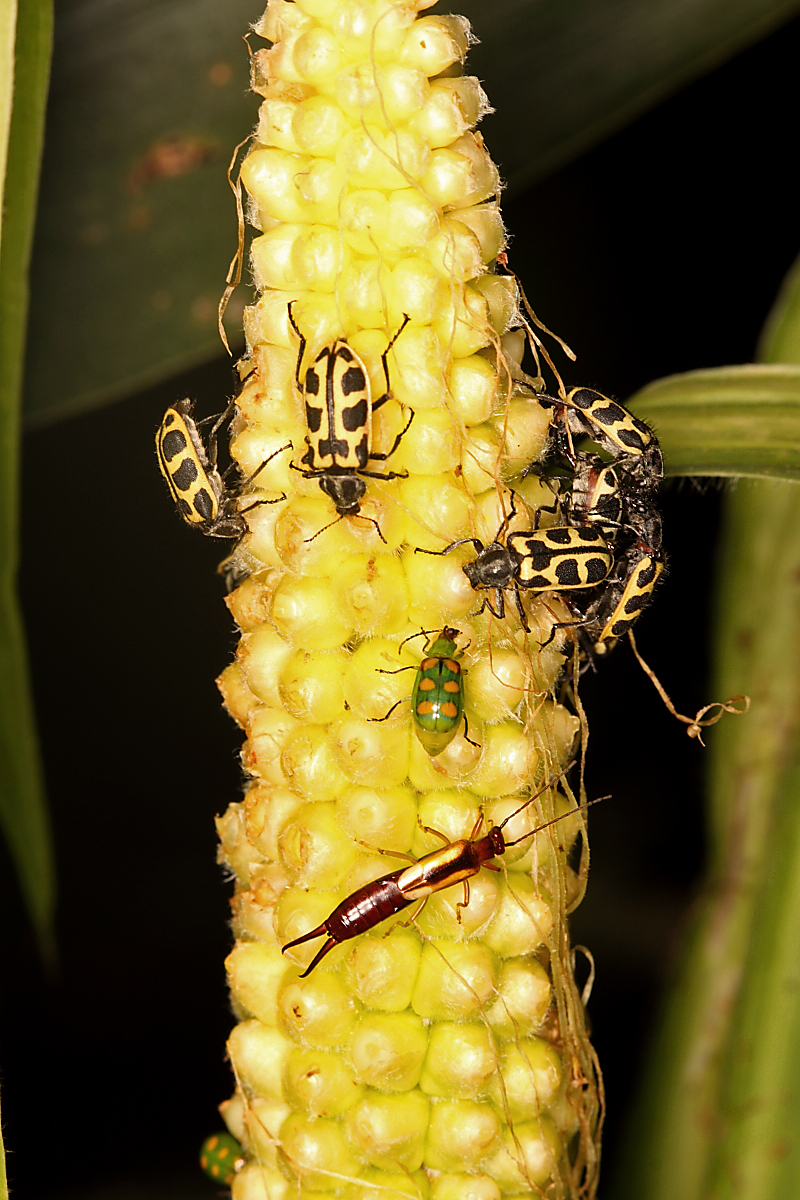
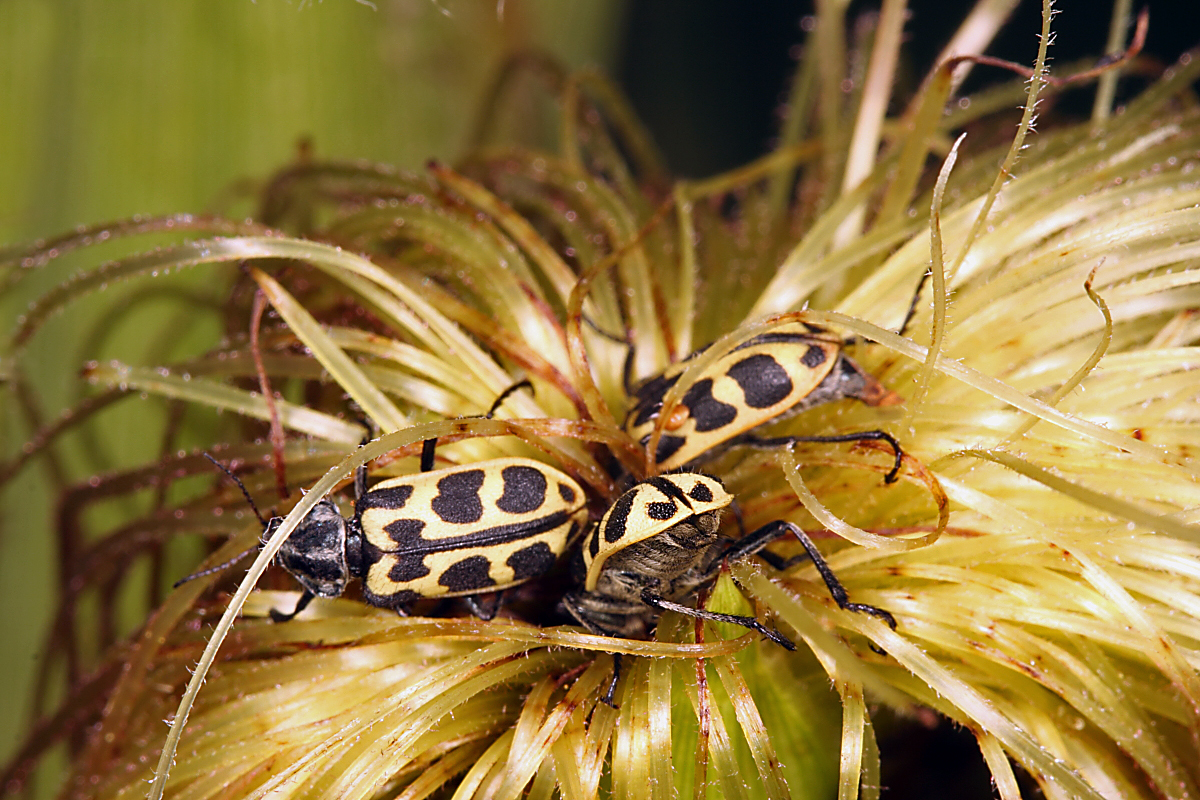
One of the most common insects encountered in agricultural fields in Argentina is Asylus atromaculatus (spotted maize beetle).  This native species can also be found further north in Bolivia and Brazil, and as implied by its common name it is frequently encountered in maize fields.  The species, however, is also common on soybean, on which the individual in the above photo (and mating pair in the previous post) were found.  Looking like some strange cross between a checkered beetle (family Cleridae) and a blister beetle (family Meloidae), it is actually a member of the Melyridae (soft-wing flower beetles)—placed with the Cleridae in the superfamily Clerioidea.

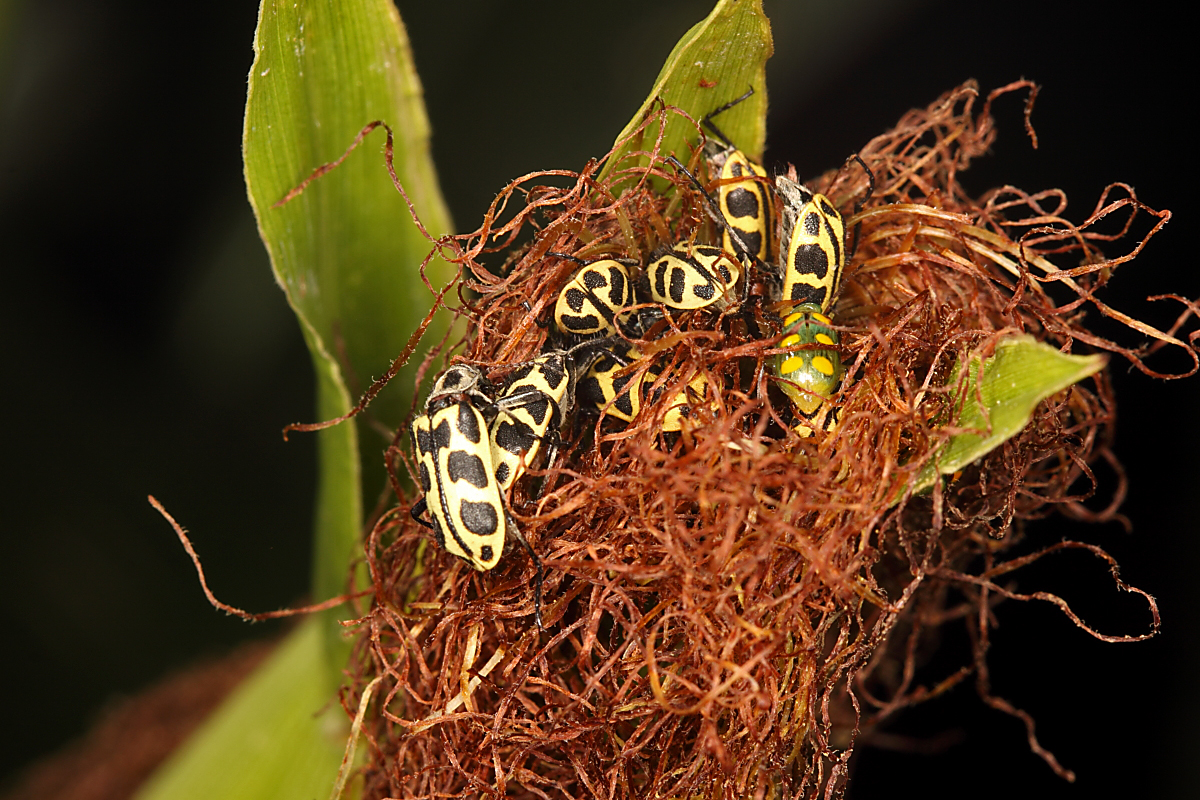
Despite its abundance (and the resultant attention it gets from growers), the pollen feeding adults are of little economic importance.  It’s easy to see, however, why this species gets so much attention from growers—during January through March the adults occur in tremendous numbers, congregating on a wide variety of flowering plants, but especially corn. Their large numbers are an impressive sight, with literally dozens to even hundreds of adults occurring on a single plant. Tassles—the source of corn pollen—are highly preferred, but when populations are heavy the silks and any exposed ears are also popular congregation sites. Despite their numbers, the impact of the beetles on yield is rarely sufficient to warrant the cost of control measures.


Whatever economic impact the species might have is actually due more the larvae—hidden within soil—than to the super-abundant and highly conspicuous adults. Feeding primarily on decaying plant matter within the soil, larvae do occasionally attack newly planted corn, either before or just after germination. Their attacks are more common in dry years and in severe cases can lead to the need to replant a field. This seems to be more common in South Africa, where the species was introduced in the early 1900s, than in its native distribution in South America.


Whenever I see a ubiquitous, diurnal, brightly and contrastingly colored insect, the first suspicion that comes to my mind is aposematic (warning) coloration and chemical defense against predation. There seems to have been some investigation into the toxicity of this species (Kellerman et al. 1972), and in South Africa they have been implicated in poisoning of livestock when accidentally ingested with forage (Bellamy 1985).  Few other reports of toxicity by beetles in this family are known, but four species of the genus Choresine have been shown to produce high levels of batrachotoxin alkaloids—these are the same toxins found in the skin of poison-dart frogs of the genus Phyllobates (Dumbacher 2004).  The frogs are unable to synthesize these toxins themselves, thus, it is presumed that they sequester these compounds from their diet—whether it is from some species of Melyridae remains to be determined.

Congratulations to Alex Wild and Max Barclay, who both answered the call to ID Challenge #8 and correctly determined all taxa from order to species.  Alex, by way of submitting his ID first, gets a bonus point and leads the current BitB Challenge session with 9 points.  Thanks to the rest who played along as well—see my response to your comments for your points earnings.

REFERENCES:

Bellamy, C. L. 1985.  Cleroidea, pp. 237–241.  In: Scholtz, C. H. and E. Holm (Eds.), Insects of Southern Africa, Butterworths, Durban.

Dumbacher, W. A., S. R. Derrickson, A. Samuelson, T. F. Spande and J. W. Daly. 2004.  Melyrid beetles (Choresine): a putative source for the batrachotoxin alkaloids found in poison-dart frogs and toxic passerine birds.  Proceedings of the National Academy of Sciences, USA 101(45):15857–15860.

Kellerman, T. S., T. F. Adelaar and J. A. Minne. 1972. The toxicity of the pollen beetle Astylus atromaculatus Blanch. Journal of the South African Veterinary Medical Association 43(4):377–381.

Copyright © Ted C. MacRae 2011