A Tiger Beetle Aggregation

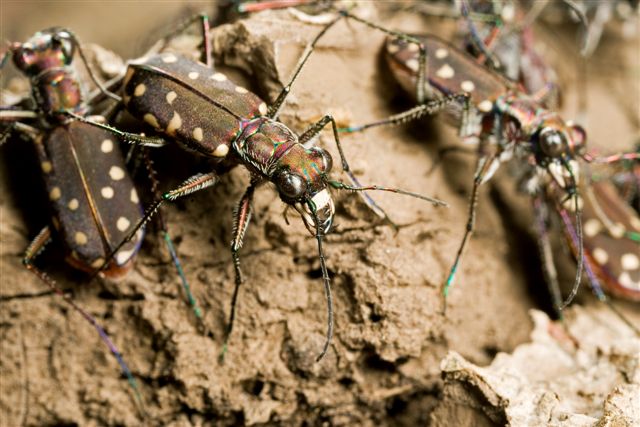
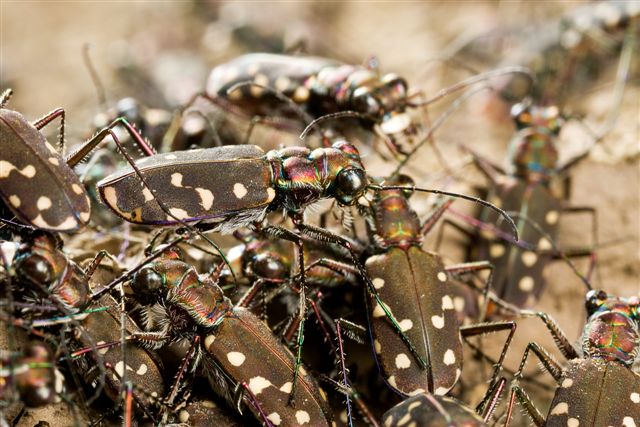
Not long ago, I received an interesting series of photographs from Joe Warfel, a nature photographer and macro specialist based in Massachussetts.  Joe traveled to Arizona last July, where he photographed an aggregation of Cicindela (Cicindelidia) sedecimpuntata (Western Red-bellied Tiger Beetle¹) near a small pool in the bottom of a dry creek bed at night.  Joe estimates that there may have been as many as 200 to 300 beetles per square meter in the aggregation, most of which were just “hanging out” and with only occasional individuals mating or feeding on moths that had been attracted to his headlamps.

¹ Found in the Sonoran and Chihuahuan Deserts of the southwestern U.S. and south through Mexico to Costa Rica. U.S. and northern Mexican populations are assigned to the nominate subspecies, while more southern populations are classified into four additional subspecies (Erwin and Pearson 2008).

Western Red-bellied Tiger Beetles are among the first tiger beetles to appear prior to the summer monsoons in the Sonoran Desert.  The species is famous for its daytime aggregations of as many as several thousand individuals, which congregate along the drying waterways and prey upon stranded tadpoles and other aquatic organisms (Pearson et al. 2006).  Joe noted that he has seen these aggregations many times before during the daytime at small pools and mudflats, with beetles usually mating and feeding frantically.  However, the aggregation shown in these photographs differs from those daytime aggregations by the relative inactivity of the beetles and the fact that they were congregated on dry ground rather than the moist areas that they frequent during the daytime.  In these respects, it seems to more resemble a communal nocturnal roost such as has been reported for several species of Odontocheila in South America.  In those cases, up to 70 beetles have been found resting on the foliage of low shrubs, apparently as an adaptation to avoid predation by multiplying chemical defense effectiveness as well as awareness of approaching enemies (Pearson and Vogler 2001 and references therein).  Cicindela sedecimpunctata is primarily a diurnal species (i.e., it is active during the daytime), though individuals are often attracted to lights at night, and adults of most diurnal species have been reported spending the night protected in burrows or under detritus and vegetation.  I am not aware of communal nocturnal roosts as a reported behavior for C. sedecimpunctata or any other North American tiger beetle species.

It is a bit ironic to think of tiger beetles – voracious predators that they are – as prey, but they must have many of their own predators to deal with since most species employ multiple antipredator mechanisms. In addition to the communal roosting behavior seen in these photos, a second antipredator characteristic exhibited by this species can be seen in their bright orange abdomen.  The abdomen is fully exposed only during flight, seemingly implying a “flash coloration” function for the bright color that disappears upon landing, momentarily confusing potential predators.  However, Pearson (1985) experimentally determined that orange abdomens in tiger beetles actually have an aposematic function in protecting them from predation against robber flies.  Most tiger beetle species with an orange abdomen also release a combination of benzaldehyde and cyanide² when captured (any tiger beetle collector is familiar with the characteristic “fruity” smell of a tiger beetle releasing benzaldehyde).  Pearson painted the abdomen of paper tiger beetles models either orange or black and endowed them with or without a drop of fresh benzaldehyde.  When presented on a tether to robber flies in the field, orange-abdomened models with benzaldehyde triggered significantly fewer attacks from robber flies than any other combination.  Interestingly however, vertebrate predators (lizards and birds) were not deterred by the defense chemicals or by the orange abdomen, perhaps explaining why only some and not all tiger beetle species produce defense chemicals and have bright orange abdomens (Pearson and Vogler 2001).

² Tiger beetles, thus, join millipedes as being among the few invertebrates that are capable of producing cyanide.
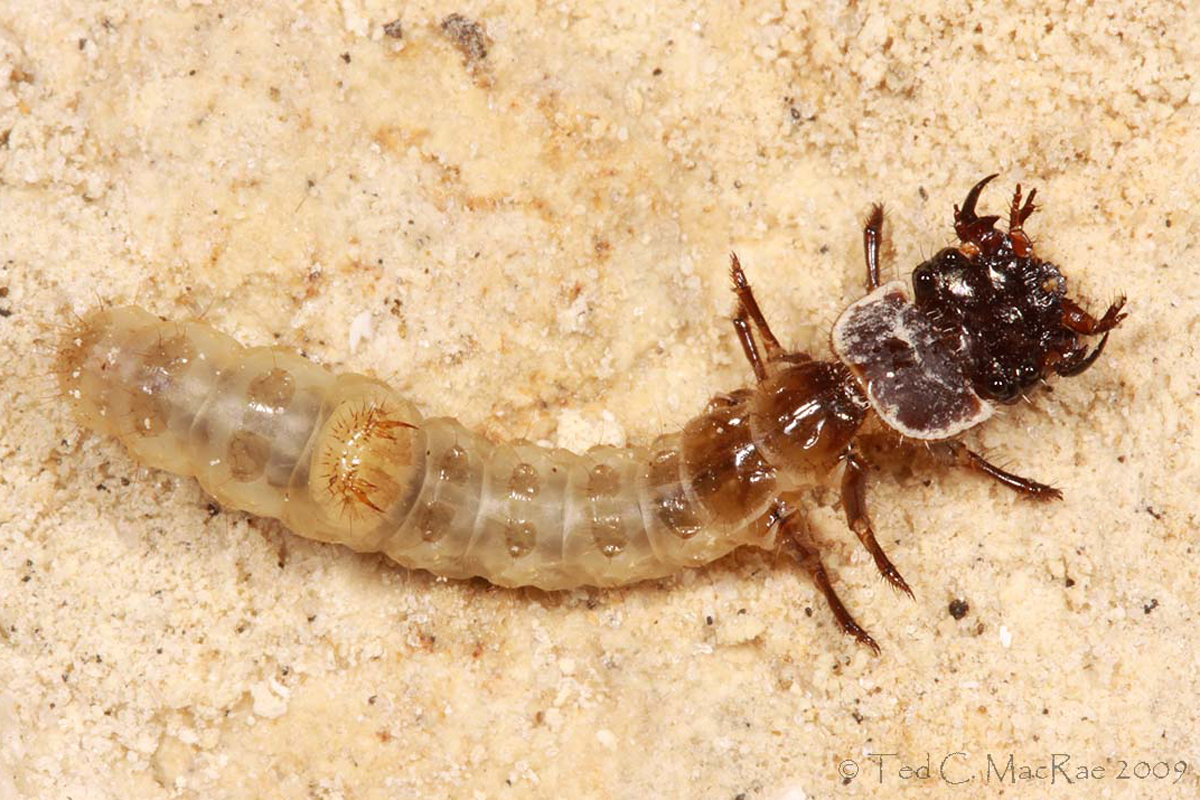
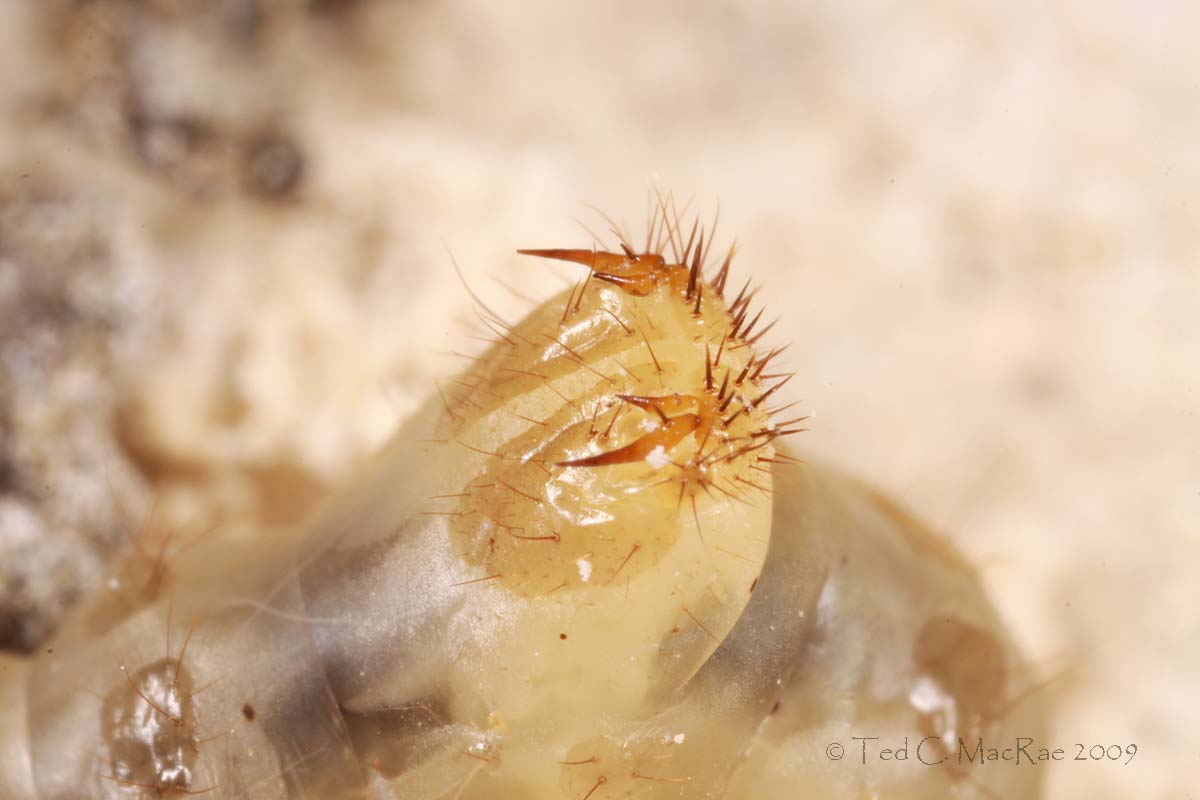
My sincere thanks to Joe Warfel for allowing me to use his photographs. More of his work can be seen at Eighth-Eye Photography.  Joe also recently had several images published in American Scientist magazine (November/December 2009 issue) for an article on harvestmen.  Check out the jaws on that juvenile!

REFERENCES:

Erwin, T. L. and D. L. Pearson. 2008. A Treatise on the Western Hemisphere Caraboidea (Coleoptera). Their classification, distributions, and ways of life. Volume II (Carabidae–Nebriiformes 2–Cicindelitae). Pensoft Series Faunistica 84. Pensoft Publishers, Sofia, 400 pp.

Pearson, D. L.  1985.  The function of multiple anti-predator mechanisms in adult tiger beetles (Coleoptera: Cicindelidae).  Ecological Entomology 10:65–72.

Pearson, D. L., C. B. Knisley and C. J. Kazilek. 2006. A Field Guide to the Tiger Beetles of the United States and Canada. Oxford University Press, New York, 227 pp.

Pearson, D. L. and A. P. Vogler.  2001. Tiger Beetles: The Evolution, Ecology, and Diversity of the Cicindelids.  Cornell University Press, Ithaca, New York, 333 pp.

Copyright © Ted C. MacRae 2010

Add to FacebookAdd to DiggAdd to Del.icio.usAdd to StumbleuponAdd to RedditAdd to BlinklistAdd to TwitterAdd to TechnoratiAdd to Yahoo BuzzAdd to Newsvine

Email to a friend

Monday Ménage – Brachyleptura rubrica

Photo details: Canon 100mm macro lens on Canon EOS 50D, ISO 100, 1/250 sec, f/18, MT-24EX flash w/ Sto-Fen diffusers.

This mating pair of longhorned beetles represents Brachyleptura rubrica, one of several so-called “flower longhorns” (including the rare Typocerus deceptus) that I saw on flowers of Hydrangea arborescens last June at Trail of Tears State Park in southeastern Missouri.  Flower longhorns collectively represent the subfamily Lepturinae, which among the Cerambycidae are distinguished by their posteriorly tapering elytra and generally narrow pronotum that give them a rather broad-shouldered look.  Their conical coxae (basal segment of the leg) and eyes that usually do not surround the base of the antennae distinguish them from the subfamily Cerambycinae, and the prognathous (forward slanting) face distinguishes them from the Lamiinae (flat-faced longhorns).  Additionally, a great majority of Lepturinae are diurnal (active during the day) and visit flowers as adults, whereas most other Cerambycidae (with notable exceptions) are nocturnal and seldom active during the day (most often being encountered by their attraction to lights).  The subfamily is named for its type genus, Leptura — derived from the Greek word λεπτός (leptos), or narrow, which I presume to be a reference to their relatively more slender appearance compared to other Cerambycidae.  Species in the genus Brachyleptura are distinguished from other Lepturinae by their often abbreviated elytra (“brachy” derived from the Greek word βραχύς, or short), although this is only scarcely the case in B. rubrica.  I’m confident most of you can determine the derivation of the species name.

Although fairly widespread across the eastern U.S., I can remember being really excited the first time I saw this species back in the mid-1980s when I was beginning my faunal study of the Cerambycidae of Missouri (MacRae 1994).  It is by no means rare, but at the same time it is not so routinely encountered as other common flower longhorns in the state such as Strangalia famelica solitaria, S. luteicornis, S. sexnotata, Typocerus octonotatus, and T. velutinus.  Unlike those more commonly seen species, B. rubrica shows a distinct preference for plants with white, compound, flat-topped floral structures.  No plant in Missouri meets this description better than Hydrangea arborecens, and it is on flowers of this plant that I have most often seen the species.  Other flowers on which I have collected it include Ceanothus americanus, Cornus drummondiiDaucus carota, and Parthenium integrifolium — all white, compound, and (except Ceanothus) flat-topped.  Larvae have been recorded breeding in a variety of hardwood species such as beech, birch, elm, hickory, and maple; however, I have only reared this species once — a single individual that emerged from a rather punky dead branch of Carpinus caroliniana (blue beech, musclewood, hornbean) (MacRae and Rice 2007).  I suspect that the condition of the wood (slightly decayed rather than freshly dead) is more important than the actual tree species (although perhaps it is confined to hardwoods and does not utilize conifers).

There is a related species in Missouri, Brachyleptura vagans, which resembles B. rubrica in form and by its white-annulated antennae, but it is distinguished by the elytra being wholly black except for small (usually) red patches behind the humeri (shoulders).  I haven’t encountered this species quite as commonly in Missouri, mostly in shortleaf pine (Pinus echinata) forests of the Ozark Highlands.  I’ve collected it on most of the same flowers as B. rubrica, but rather than H. arborescens it seems to be most fond of C. americanus.

REFERENCES:

MacRae, T. C. 1994. Annotated checklist of the longhorned beetles (Coleoptera: Cerambycidae and Disteniidae) known to occur in Missouri. Insecta Mundi 7(4) (1993):223–252.

MacRae, T. C. and M. E. Rice. 2007. Distributional and biological observations on North American Cerambycidae (Coleoptera). The Coleopterists Bulletin 61(2):227–263.

Copyright © Ted C. MacRae 2010

Add to FacebookAdd to DiggAdd to Del.icio.usAdd to StumbleuponAdd to RedditAdd to BlinklistAdd to TwitterAdd to TechnoratiAdd to Yahoo BuzzAdd to Newsvine

Email to a friend

Ants invade Beetles in the Bush!

For months now, your Beetles in the Bush host, Ted, has been nudging me to blog, in the end resorting to offering me a guest blogger gig at BitB. Given this golden opportunity, I’ve decided to utilize my web-logging debut to introduce my favorite insects, the fabulous Formicidae. First, a disclaimer: I have not mastered ant photography, and so will rely on the undisputed king of ant photographers, Alex Wild, through links to his numerous, unexcelled images.

Since about age 5, I can remember being interested in virtually anything living, but especially in small, active creatures. From the beginning, I have had a particular attraction to ants. With some notable exceptions, and aside from the pulchritudinous feature of their svelte waists, ants aren’t what most folks would call pretty, but they are — How else to say it? — just plain “cool”!

First, who are they and where do they come from? Ants constitute a single family, Formicidae, within the insect order Hymenoptera, so their relatives are wasps, bees, sawflies, horntails, gall wasps, and a vast array of small parasitic wasps that are mostly unappreciated except by specialists who study them. Within Hymenoptera, the ants are considered to belong to the superfamily Vespoidea, along with hornets, paper wasps, potter wasps and other solitary relatives.  The evidence at present indicates the first animals we would call ant had diverged from their common ancestry with these other stinging wasps some time in the Cretaceous, 130 million years ago, more or less.  Ants are classified in a varying number of subfamilies, currently at about 20. Fossils in amber up to 100 million years old represent early members of several modern subfamilies, and a few extinct groups. Most of us in the Northern Hemisphere Temperate Zone are familiar only with the big two subfamilies, Formicinae (carpenter ants, weaver ants, honey ants, etc.) and Myrmicinae (fire ants, harvester ants, leaf-cutter ants, etc.). In much of North America, folks may also be familiar with an abundant member of another subfamily, Dolichoderinae, namely odorous house ants, which frequent our gardens, kitchen counters, wall spaces, and even electrical outlets, especially in spring.

Ants are a conspicuous and often dominant presence in the World of the Little (or, what Piotr Nascrecki, in one of my favorite books, calls the “Smaller Majority” ). It is difficult for any observant person to sit still, outdoors in good weather, and not begin to see ants doing what ants do. They scurry about singly, in pairs or threesomes or foursomes, or in long lines, or columns. Our notice may be further piqued by their habit of transporting sundry bits of biomass or mineromass (pebbles, etc.).  Often this is just taking out the inedible food waste, or sawdust or soil excavated while expanding or remodeling their nests.  Less visibly, because more diffusely in space, ants carry a variety of items from foraging to their nests to provide nutrition for their colonies, or to add mass or create functional structure to their nests (to create better drainage, to provide incubation space for developing brood, and in some desert ants, to capture dew). In one of the most spectacular examples of ants transporting things, the so-called “slave-making” ants carry home the mature brood of a related species, these young ants later maturing in the brood-robbers’ nest to become its work force!

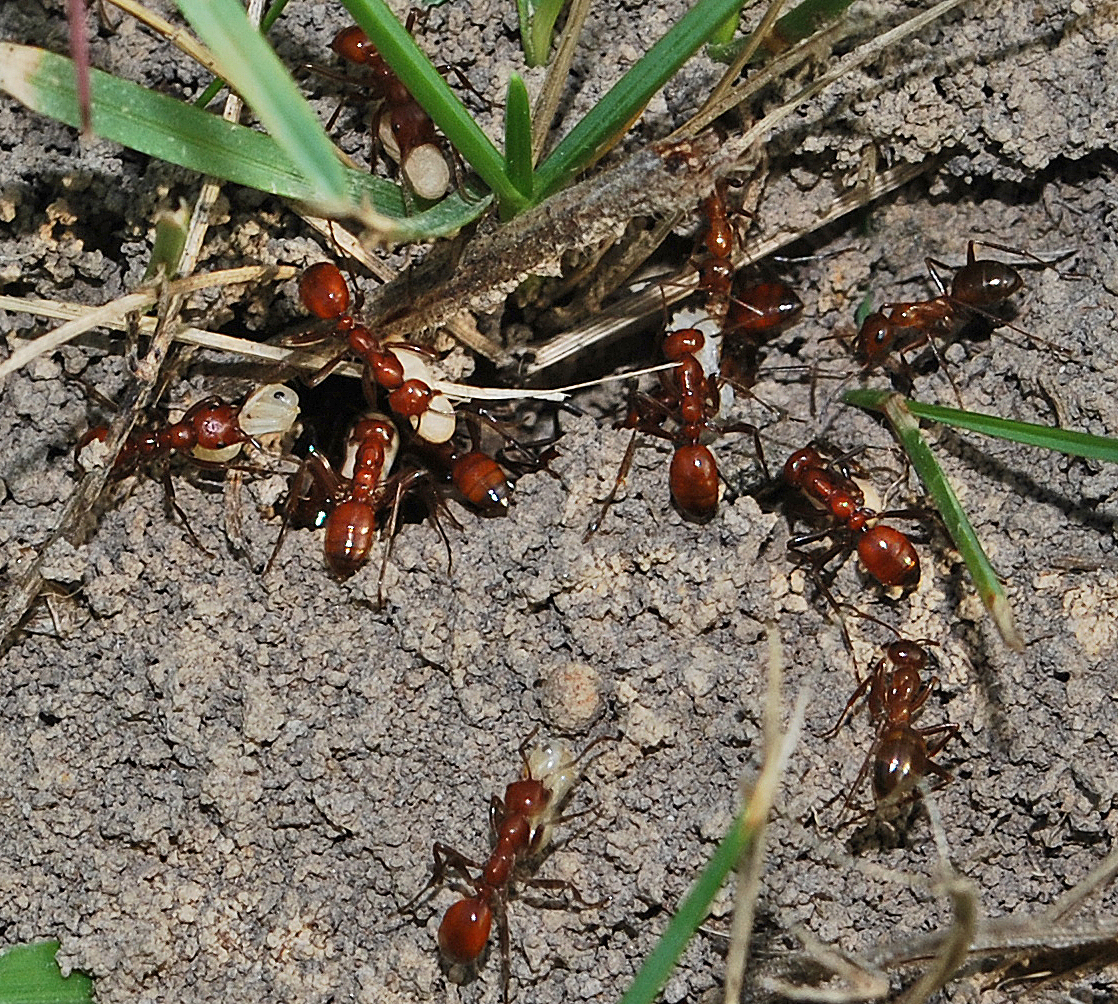
Shiny red workers of Polyergus lucidus return with pupae pillaged from a nest of Formica incerta several meters away. Two brown and differently proportioned workers of the latter that matured from raids earlier in the life of this Polyergus colony may be seen at the right of the photo.

Perhaps, not so widely known is that most of what most ants carry home is not some large, heavy particle in their mandibles, but rather is liquid carried in an expansible section of their esophagus called the crop. Because of the fine diameter of their gullets, adult ants cannot eat anything other than the most minute solid particles (e.g., pollen grains, loose cells from their prey).  Solid items may be cut up to feed to the legless, pale larvae, or the larvae may even be placed directly upon the killed prey to bite into it and feed on their own, using their flexible “necks”.  Adult ants get pre-digested food in return, in the form of glandular secretions loosely termed saliva, but which may be either a glandular secretion from the larva itself or simplify pre-liquefied flesh of prey lapped up from the larva’s messy eating.  In some lineages, known as Dracula ants, adults actually “bleed” the larvae through rapidly healing wounds made at particular locations on the larval exoskeleton.

Okay, I need to get back to my regular work, so let’s bring this home (to winter in the United States). Many of us are now in the dead of winter, or so it would seem. But, on sunny days, sap is beginning to flow upward in maple and other trees, and one ant species may actually be seen, creeping slowly through the woods, in search of dead arthropods and earthworms, or perhaps some sweet sap oozing from a sapsucker wound in a tree. This is Prenolepis imparis, sometimes called “winter honeypot ant”. This is a partial misnomer. While foragers may indeed fill their crops to over-full with sweet sap or honeydew, the very bloated “honeypots” in the deep nests of this ant are in fact, fat pots, having converted their food to whitish body fat. This is later converted to a glandular secretion that serves as food for developing larvae.  These ants are likely to be seen anywhere near where oaks of just about any species grow, and the where the soil is moist but well-drained. Look for these shiny little dark brown ants during your walks in the woods, on the sunny days that are sure to increase in number and warmth in the coming months.

Copyright © James C. Trager 2010
Add to FacebookAdd to DiggAdd to Del.icio.usAdd to StumbleuponAdd to RedditAdd to BlinklistAdd to TwitterAdd to TechnoratiAdd to Yahoo BuzzAdd to Newsvine

Email to a friend

Habitat Partitionining in Tiger Beetles

Cicindela willistoni estancia

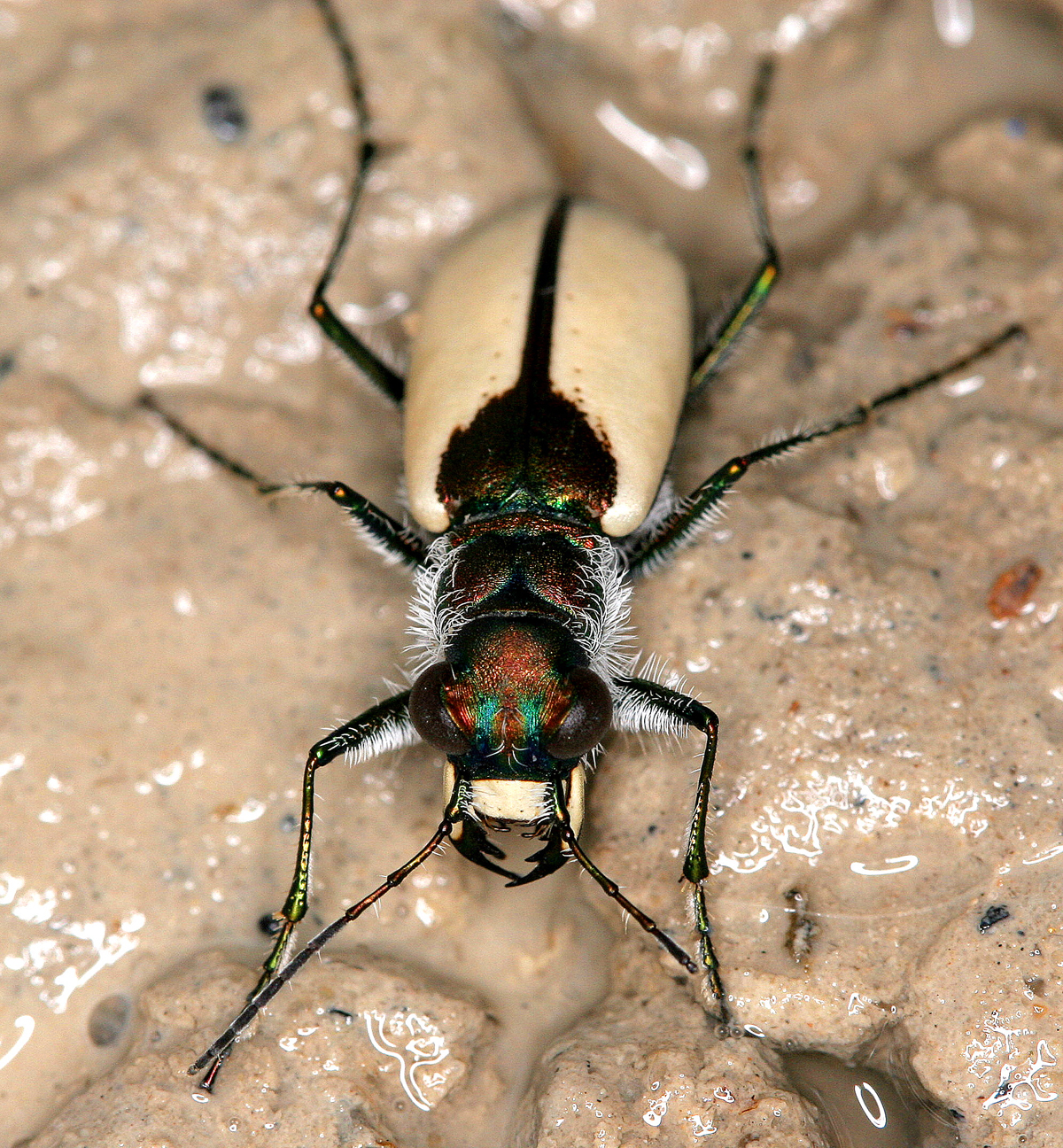
Cicindela willistoni estancia. Photo by David Melius.

ResearchBlogging.orgThe latest issue of CICINDELA (December 2009, vol. 41, no. 4) contains an interesting paper by David A. Melius titled, “Post-monsoonal Cicindela of the Laguna del Perro region of New Mexico.” This paper continues a theme that I have touched on a few times in recent posts regarding the partioning of resources by multiple species of tiger beetles utilzing the same habitat. The author reports on the results of two visits to the Laguna del Perro salt lake region of New Mexico (Torrance County) in July 2009, during which time he recorded a total of eight tiger beetle species in the area. As in many other parts of the arid west, tiger beetles in this region are highly dependent upon summer monsoonal rains to trigger adult emergence (Pearson et al. 2006), resulting in multiple species occupying a given habitat during the relatively short post-monsoonal period. However, according to the competitive exclusion principle (Hardin 1960), two species cannot stably coexist in the same habitat and compete for the same resources—one of the two competitors will always overcome the other unless resources are partitioned to avoid competition.

Cicindela willistoni estancia

Cicindela willistoni estancia. Photo by David Melius.

Tiger beetles that occupy the the same habitats employ a variety of mechanisms for avoiding direct competition. One of these is partitioning the environment into different “microhabitats.” One of the earliest reports of this was by noted American ecologist Victor Shelford, who reported that adult tiger beetles on the southern shores of Lake Michigan occupied different habitats from water’s edge to oak forest floor (Shelford 1907). Similarly, Choate (2003) found three sympatric species of tiger beetles in a coastal mudflat region in South Carolina, each of which utilized a different portion of the salt marsh. I myself have noted multiple species occupying the same habitat in Oklahoma’s Salt Plains National Wildlife Refuge, on a coastal salt marsh in Florida, and in the White River Hills of southwestern Missouri.

In the present study, the author noted distinct preferences among the eight species for different microhabitats within and adjacent to the salt flats, including 1) thick, wet mud immediately adjacent to the water, 2) damp, soft sand 10-20 m from the water and devoid of vegetation, and 3) dry to damp sand further away from the water with salt-tolerant plants. Nearby roadside habitats were also noted as an additional microhabitat. The species found and their preferred niches were:

  • Cicindela fulgida rumppii, exclusively in vegetated dry sand areas around the salt flats.
  • Cicindela (Cicindelidia) nigrocoerulea, mostly 10-20m from the water’s edge, a few also in roadside habitat.
  • Cicindela (Cicindelidia) punctulata chihuahuae, exclusively in roadside habitats.
  • Cicindela (Cicindelidia) willistoni estancia, mostly along the water’s edge.
  • Cylindera terricola cinctipennis, exclusively in dry grassy areas away from the water.
  • Ellipsoptera nevadica, exclusively along the water’s edge.
  • Eunota togata fascinans, unvegetated areas near and 10-20m from the water’s edge.
  • Habroscelimorpha circumpicta johnsoni, limited to roadside habitats and vegetated dry sand areas around the salt flats.

These microhabitat partitions can be visualized below. Note that although eight total species were collected, only 2-4 occur within each particular microhabitat and that all eight species were limited to just 1 or 2 microhabitats, resulting in unique species-guilds for each.

Some differences were also noted in species present during the different trips, suggesting that species occurring within the same microhabitat are also utilizing differences in temporal occurrence to further minimize competition. Differences in size among the different species were noted as well – for example, of the four species occurring in the vegetated, dry-damp sand microhabitat, Cylindera terricola is notably smaller and Habroscelimorpha circumpicta notably larger than the others. Since mandible length of adult tiger beetles is highly correlated with preferred prey size (Pearson et al. 2006), this likely results in utilization of different prey, further partioning resources within the different microhabitats.

I thank David A. Melius (Albequerque, New Mexico) for allowing me to include his stunning photographs of Cicindela willistoni estancia in this post.

REFERENCES:

Choate, P. M., Jr. 2003. A Field Guide and Identification Manual for Florida and Eastern U.S. Tiger Beetles.  University Press of Florida, Gainesville, 224 pp.

Hardin, G. 1960. The competitive exclusion Principle. Science 131:1292-1297.

Melius, D. A. 2009. Post-monsoonal Cicindela of the Laguna del Perro region of New Mexico. CICINDELA 41(4):81-89.

Pearson, D. L., C. B. Knisley and C. J. Kazilek. 2006. A Field Guide to the Tiger Beetles of the United States and Canada. Oxford University Press, New York, 227 pp.

Shelford, V. E. 1907. Preliminary note on the distribution of tiger beetles (Cicindela) and its relation to plant succession. Biological Bulletin of the Marine Biological Laboratory at Woods Hole 14:9-14.

Copyright © Ted C. MacRae 2009

Add to FacebookAdd to DiggAdd to Del.icio.usAdd to StumbleuponAdd to RedditAdd to BlinklistAdd to TwitterAdd to TechnoratiAdd to Yahoo BuzzAdd to Newsvine

Email to a friend

BitB Best of 2009

In my first post of 2009, I looked back at the photographs I had posted during 2008 and picked some of my personal favorites. I hesitated then to call myself a photographer (and still do), but I at least now have suitable equipment to aid in my progress toward that eventual goal. I have learned much over the past six months in my first attempt at serious insect macrophotography (prioritizing in situ field photographs of unmanipulated subjects as a matter of personal choice).  Through this, I’ve come to realize the following skills to be the most important for success:  

  1. Composition
  2. Understanding lighting
  3. Knowing how to use a flash
  4. Knowledge of the subject

I’ll give myself a “A” in the last of these, but in the other areas I still have much to learn. With this caveat, and for the last post of 2009, I offer the following twelve photographs as my final choices for the 2nd Annual “Best of BitB”:  

Best beetle

Cylindera celeripes (swift tiger beetle), Woodward Co., Oklahoma

From Revisiting the Swift Tiger Beetle – Part 1 (June 30).  A decent enough photograph, especially considering that I’d had my camera for about a month when I took it.  However, the discovery of robust populations of this formerly rare and enigmatic species throughout northwestern Oklahoma (and later also in northwestern Missouri) was the most significant find of the 2009 field season, and this photograph is the best capture of that moment.

Best fly

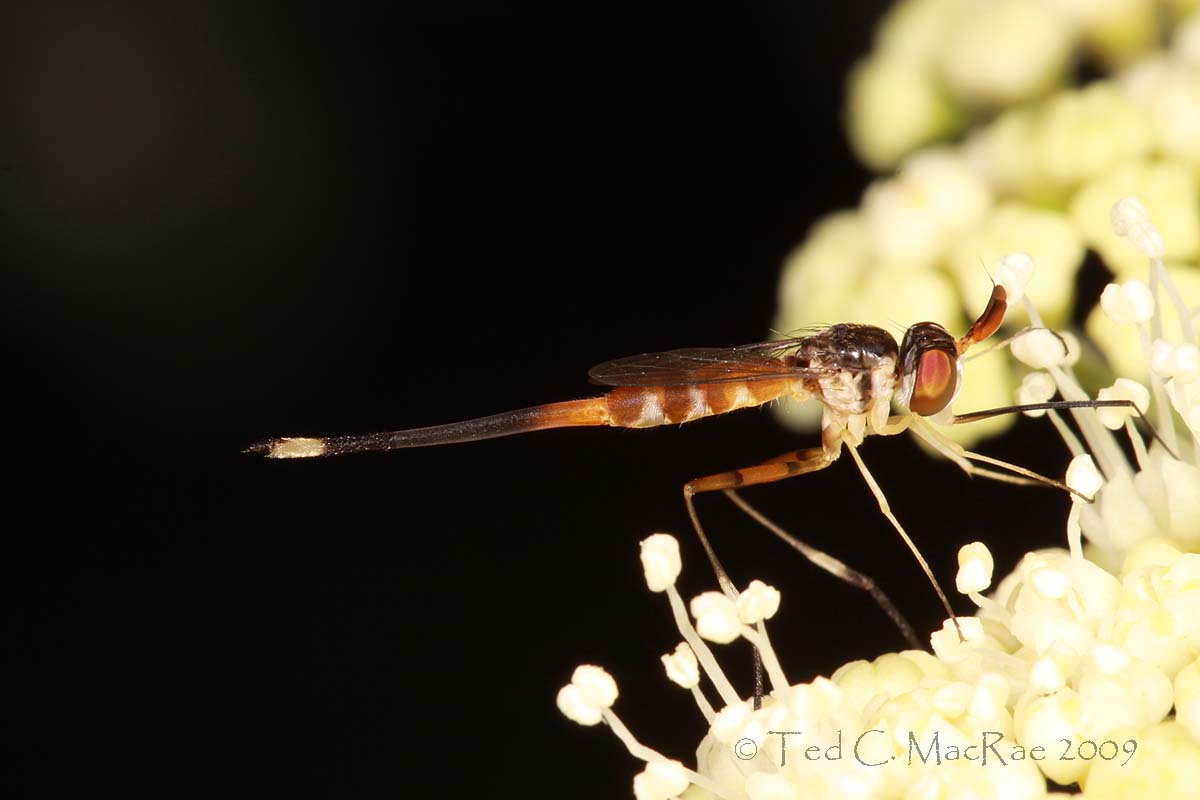
Stylogaster neglecta, a species of thickheaded fly

From Overlooked, needle-bellied, thick-headed fly (Aug 14).  One of my first good “black background” shots.  The white tip of the abdomen compliments the white flower stamens against the background.

Best “true” bug

Beameria venosa, a prairie obligate cicada

From North America’s smallest cicada (Aug 4).  So many different shades of green with white frosting on the bug’s body.  I tried taking this shot in portrait and it just didn’t work—I liked this landscape shot much better.

Best predator

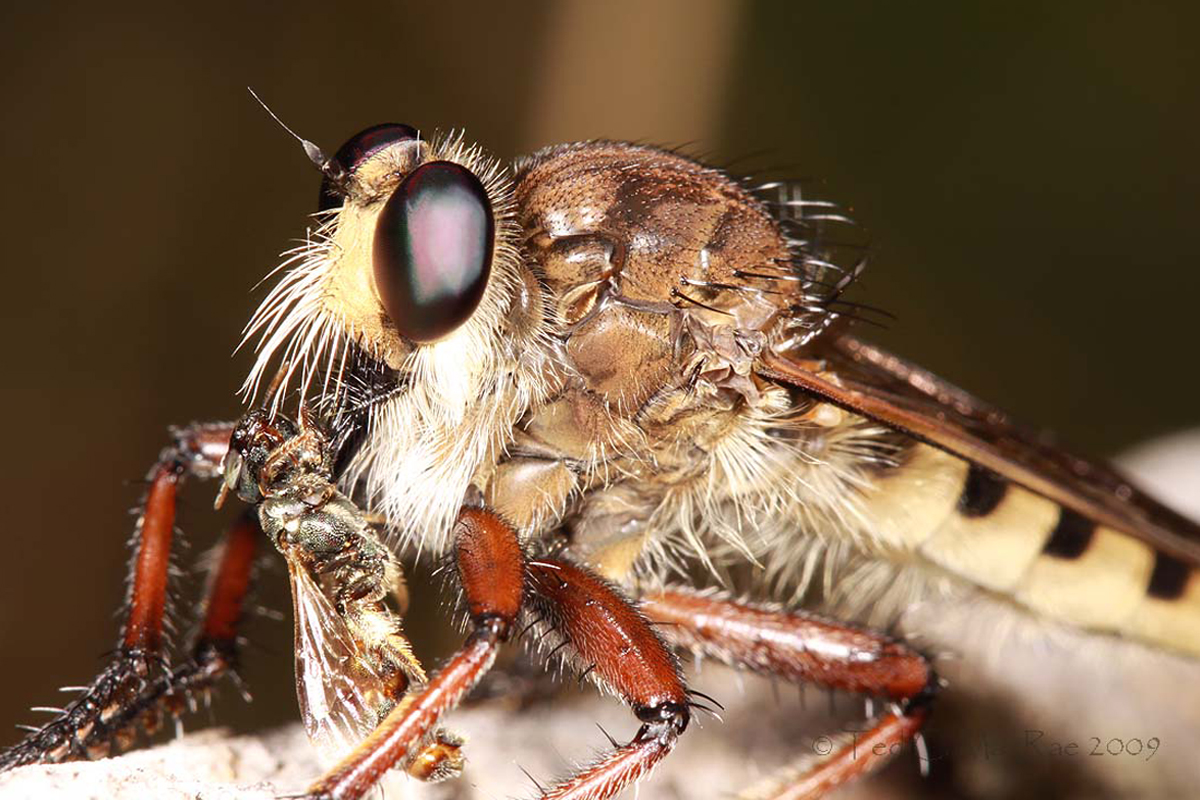
Promachus hinei (Hines giant robber fly) & Ceratina sp. (small carpenter bee) prey

From Prey bee mine (Sept 14).  Robber flies are immensely photogenic, especially those in the genus Promachus due to their prominent “beards.”

Best camoflauge

Dicerca obscura on bark of dead persimmon

From The “obscure” Dicerca (June 19).  Sparkling and gaudy as specimens in a cabinet, the coloration of many jewel beetles actually helps them blend almost perfectly with the bark of their preferred tree hosts.

Best immature insect

Tetracha floridana (Florida metallic tiger beetle) 3rd-instar larva

From Anatomy of a Tiger Beetle Larva (Oct 22).  “Otherwordly” is invariably the first word that comes to mind when someone sees a tiger beetle larva for the first time.  I was lucky enough to get this one in profile with a nice view of its abdominal hump and its curious hooks.

Best arachnid

Centruroides vittatus (striped bark scorpion)

From A face only a mother could love (Oct 6).  Despite some minor depth-of-field problems with this photograph, I’m fascinated by its “smile.”

Best reptile

Eastern collared lizard (Crotaphytus collaris collaris) adult male

From North America’s most beautiful lizard (July 10).  A simply spectacular lizard—all I had to do was frame it well and get the flash right.

Best wildflower

Spiranthes magnicamporum (Great Plains ladies

From Great Plains Ladies’-tresses (Dec 7).  Few flowers are as photogenic as orchids, even native terrestrials with minute flowers such as this one.  I like the frosty texture of the lip and the starkness of the white flower on the black background.

Best natural history moment

Thermoregulatory behavior by Ellipsoptera hirtilabris (moustached tiger beetle)

From Tiger Beetles Agree—It’s Hot in Florida! (Dec 18). I chose this photo for the classic “stilting” and “sun-facing” thermoregulatory behaviors exhibited by this tiger beetle on a blistering hot day in Florida.

Best closeup

Megaphasma denticrus (giant walkingstick)

From North America’s longest insect (Aug 21).  I haven’t tried a whole lot of super close-up photographs yet.  I liked the combination of blue and brown colors on the black background.

Best Landscape

Sand Harbor Overlook, Lake Tahoe, Nevada

From Sand Harbor Overlook, Nevada (March 23).   My choice for “best landscape” again comes from Lake Tahoe.  This is not a great photo technically—I was still using a point-and-shoot and had to deal with foreground sun.  However, none of the other photos I took during my March visit to the area captivate me like this one.  I like the mix of colors with the silhouetted appearance of the trees on the point.

Copyright © Ted C. MacRae 2009

Add to FacebookAdd to DiggAdd to Del.icio.usAdd to StumbleuponAdd to RedditAdd to BlinklistAdd to TwitterAdd to TechnoratiAdd to Yahoo BuzzAdd to Newsvine

Email to a friend

Tiger Beetles Agree—It’s Hot in Florida!

Florida is known for its rich assemblage of tiger beetles—27 species in all, including four endemics (Choate 2003).  However, late summer is generally considered not the best time of year for seeing this diversity, since adult populations of most species begin to wane as the intensity of the summer heat reaches its peak.  I knew the timing of my family vacation in early August might be a bit off; however, considering I had never looked for tiger beetles in Florida before, I remained optimistic that I still might encounter some interesting species.  My optimism was quickly rewarded—in one afternoon of exploring the small coastal preserve just outside the back door of my sister-in-law’s condo, I found Ellipsoptera marginata (Margined Tiger Beetle), its sibling species E. hamata lacerata (Gulf Beach Tiger Beetle), and several 3rd-instar larvae in their burrows that proved to be the Florida endemic Tetracha floridana (Florida Metallic Tiger Beetle).  Good fortune would continue when I made a one-day trip to the interior highlands in a successful bid to find Florida’s rarest endemic, Cicindela highlandensis (Highlands Tiger Beetle), finding also as a bonus the splendidly camouflaged and also endemic Ellipsoptera hirtilabris (Moustached Tiger Beetle).  Five species, including three endemics, in just over a day of searching!  I had one more day to sneak off and do what I love most, and I wanted to make the most of it. 

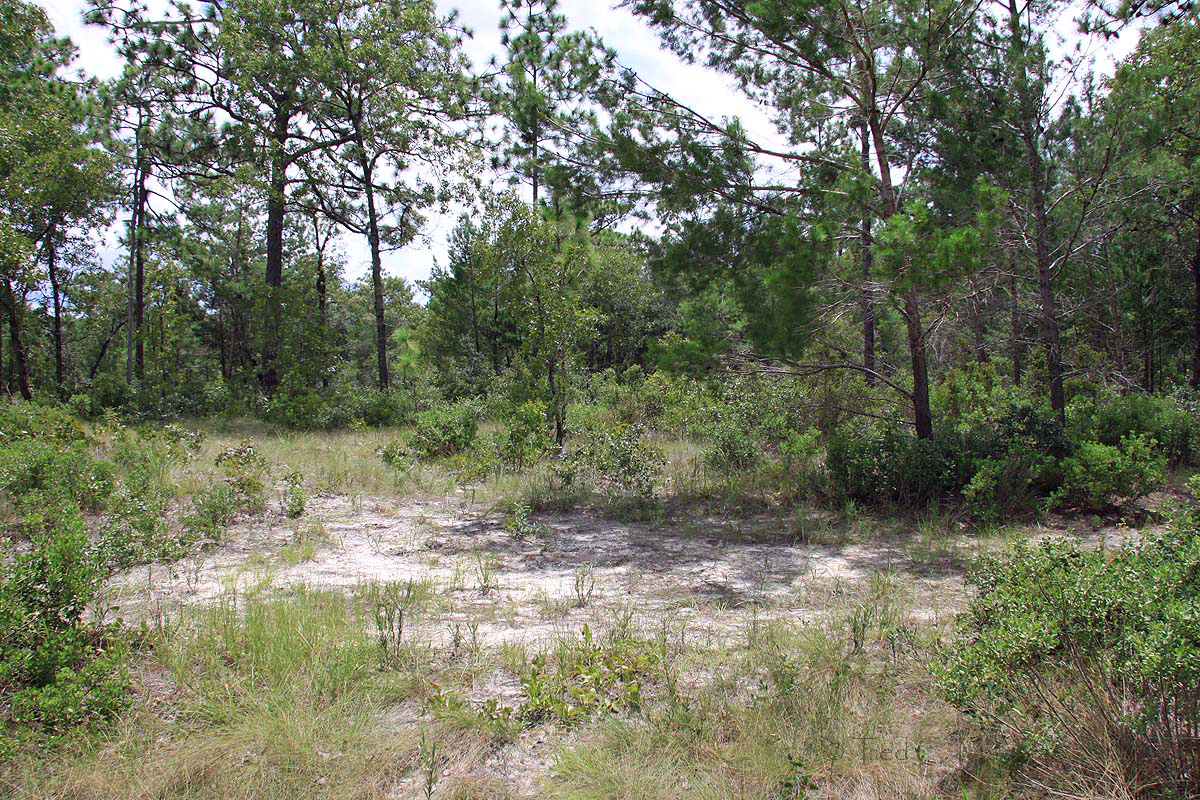
Pine sandhill habitat, Withlachoochee State Forest—Citrus Tract

Among the suggestions given to me by my colleagues, the most promising-sounding was the “end of the road,” a Gulf Coast salt marsh near Steinhatchee in Dixie County where I was told as many as 6-10 species of tiger beetles could be seen at once.  I didn’t know it at the time, but this particular location has achieved legendary status among tiger beetle enthusiasts (Doug Taron recently wrote about his experience, calling it the Road to Nowhere).  A 200+ mile drive from my base near St. Petersburg, it would take the better part of 5 hours to drive there, and not wanting to put all of my eggs in one basket, I looked for potential stops along the way.  About midway along the drive was Withlacoochee State Forest, where one of my colleagues had told me I might still find the fairly widespread Cicindela abdominalis (Eastern Pinebarrens Tiger Beetle) and its close relative, C. scabrosa (Scabrous Tiger Beetle)—the fourth Florida endemic.  My plan was to leave early in the morning and spend a few hours at Withlacoochee before driving the rest of the way to finish out the day at Steinhatchee. 
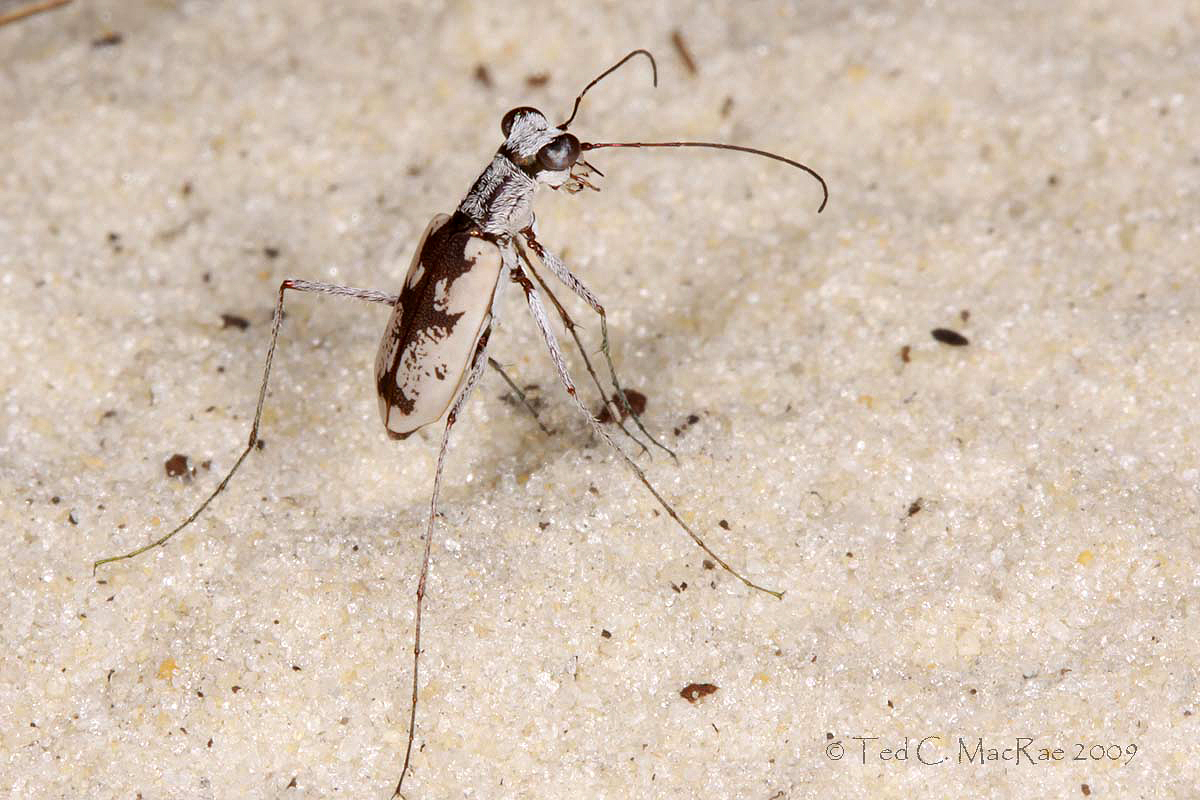
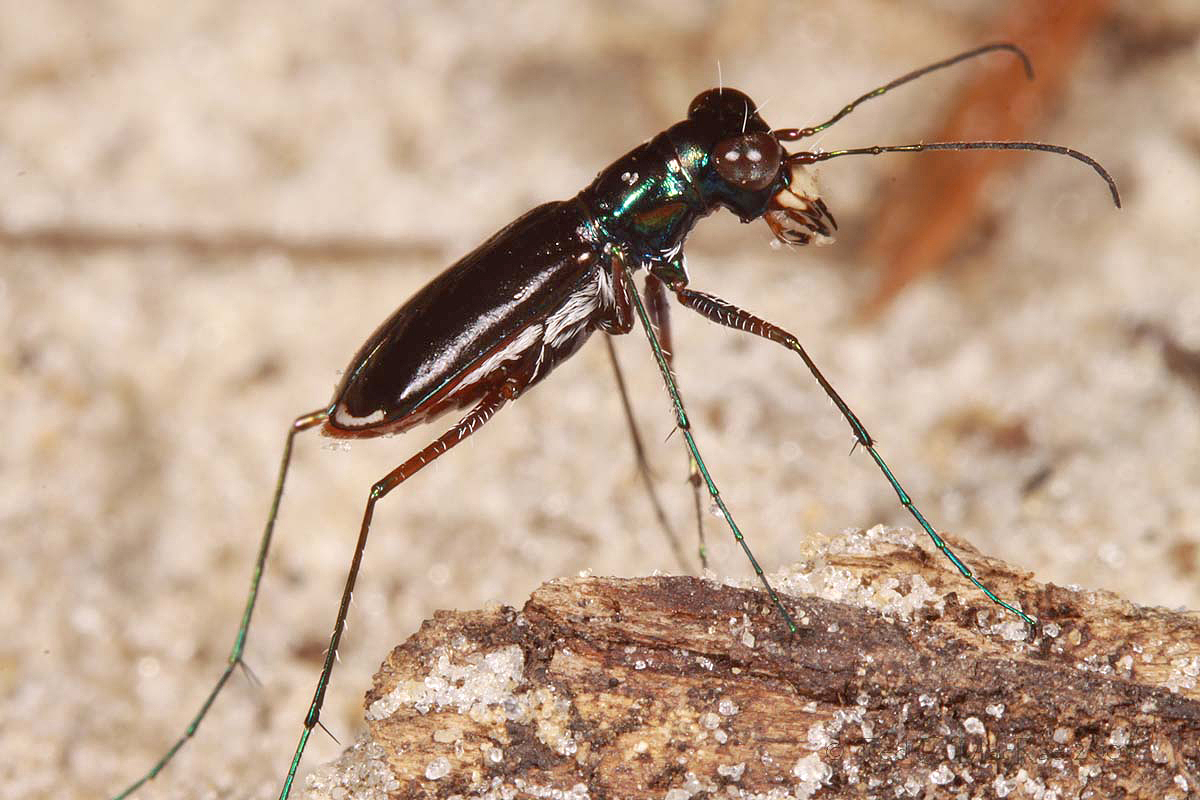
"Stilting" by Cicindela abdominalis (Eastern Pinebarrens Tiger Beetle)

It took some time to find my bearings upon arriving, but after some discussion with the decidedly forestry-oriented staff at the headquarters, it seemed that the Citrus Tract was where I wanted to be.  I was looking for the sand barren and pine sandhill habitats that these species require, and the staff’s description of the northern edge of the tract as having lots of sand and “not very good for growing trees” suggested this might be the place.  Pine sandhill (also called “high pine”) is a pyrophytic (fire-dependent) plant community characterized by sandy, well-drained soils, a widely-spaced longleaf pine (Pinus palustris) and turkey oak (Quercus laevis) canopy, and an herbaceous layer dominated by wiregrass (Aristida stricta).  I quickly found such habitat in the area suggested, and it wasn’t long before I found the first of the two species—C. abdominalis—rather commonly along a sandy 2-track leading through the area.  For those of you who see a distinct resemblance of this species to the rare C. highlandensis that I highlighted from my trip to the central highlands, this is no coincidence.  Cicindela abdominalis is very closely related to that species, the latter distinquished by an absence of flattened, white setae on the sides of the prothorax and the abdomen and by the highly reduced or absent elytral maculations (Choate 1984).  Dense white setae and distinct apical elytral maculations are clearly visible in the individuals shown in these photographs. 

Stilting is often accompanied by "sun-facing" for additional thermoregulation

It was a blistering hot day (just as every other day on the trip had been so far), and it wasn’t only me who felt that way.  Tiger beetles, of course, are ectothermic and rely upon their environment for their body temperature.  Despite this, they are able to regulate body temperatures to some degree by using a range of behavioral adaptations intended to mitigate the effects of high surface temperatures and intense sunlight.  The photos above show one of these behaviors, known as stilting.  In this behavior, the adult stands tall on its long legs to elevate its body above the thin layer of hotter air right next to the soil surface and as far off the sand as possible (Pearson et al. 2006).  As the heat of the day intensifies and the zone of hot air at the soil surface broadens, stilting alone may be insufficient to prevent overheating. When this happens, the beetles combine stilting with sun-facing, a behavior in which the front part of the body is elevated with the head oriented towards the sun. This position exposes only the front of the head to the sun’s direct rays, thus minimizing the body surface area exposed to incident radiation.

Stilting and sun-facing by Ellipsoptera hirtilabris (Moustached Tiger Beetle)

I was also fortunate to have another chance at photographing the beautiful and marvelously-camouflaged Ellipsoptera hirtilabris (Moustached Tiger Beetle), which, in similar fashion to C. highlandensis, I found co-occurring with C. abdominalis in rather low numbers. As before, they were extremely wary and difficult to approach, especially in the extreme heat of the day, and all of my best efforts to get a good shot of the species in its “classic” pose were frustrated. The photo above was about as close as I could get to any of these beetles when they were out in the open before they would flee; however, it nicely demonstrates the use of stilting combined with sun-facing during the hottest part of the day.

"Shade seeking" is another behavioral response to intense heat.

Another behavioral response to extreme heat is shade-seeking—adults may either remain active, shuttling in and out of shaded areas, or avoid exposed areas altogether and become inactive.  One thermoregulatory behavior for extreme heat that I did not observe was daytime-burrowing, in which adults construct temporary shallow burrows during the hottest hours of the day. Although I did not observe this behavior by either species at Withlacoochee, I have seen it commonly among several species in sandy habitats here in Missouri and in the Sandhills of Nebraska (e.g., Cicindela formosa, Cicindela limbata, Cicindela repanda, Cicindela scutellaris, Cicindela tranquebarica, Ellipsoptera lepida).

There was one disappointment on the day—I did not see C. scabrosa.  However, I still had the “end of the road” to explore, so I remained happy with the now six species I had encountered and optimistic about finding additional species later in the day… 

Photo Details: Canon EOS 50D, ISO 100.
Habitat: Canon 17-85mm zoom lens (landscape, 17mm), 1/100 sec, f/10, natural light.
Insects: Canon 100mm macro lens (manual), 1/250 sec, f/16–18 (C. abdominalis) or f/20–22 (E. hirtilabris), MT-24EX flash w/ Sto-Fen diffusers.

REFERENCES: 

Choate, P. M., Jr.  1984.  A new species of Cicindela Linnaeus (Coleoptera: Cicindelidae) from Florida, and elevation of C. abdominalis scabrosa Shaupp to species level.  Entomological News 95:73–82.

Choate, P. M., Jr. 2003. A Field Guide and Identification Manual for Florida and Eastern U.S. Tiger Beetles.  University Press of Florida, Gainesville, 224 pp.

Pearson, D. L., C. B. Knisley and C. J. Kazilek. 2006. A Field Guide to the Tiger Beetles of the United States and Canada. Oxford University Press, New York, 227 pp.

Copyright © Ted C. MacRae 2009

Add to FacebookAdd to DiggAdd to Del.icio.usAdd to StumbleuponAdd to RedditAdd to BlinklistAdd to TwitterAdd to TechnoratiAdd to Yahoo BuzzAdd to Newsvine

Email to a friend

Florida Metallic Tiger Beetle

Tetracha floridana

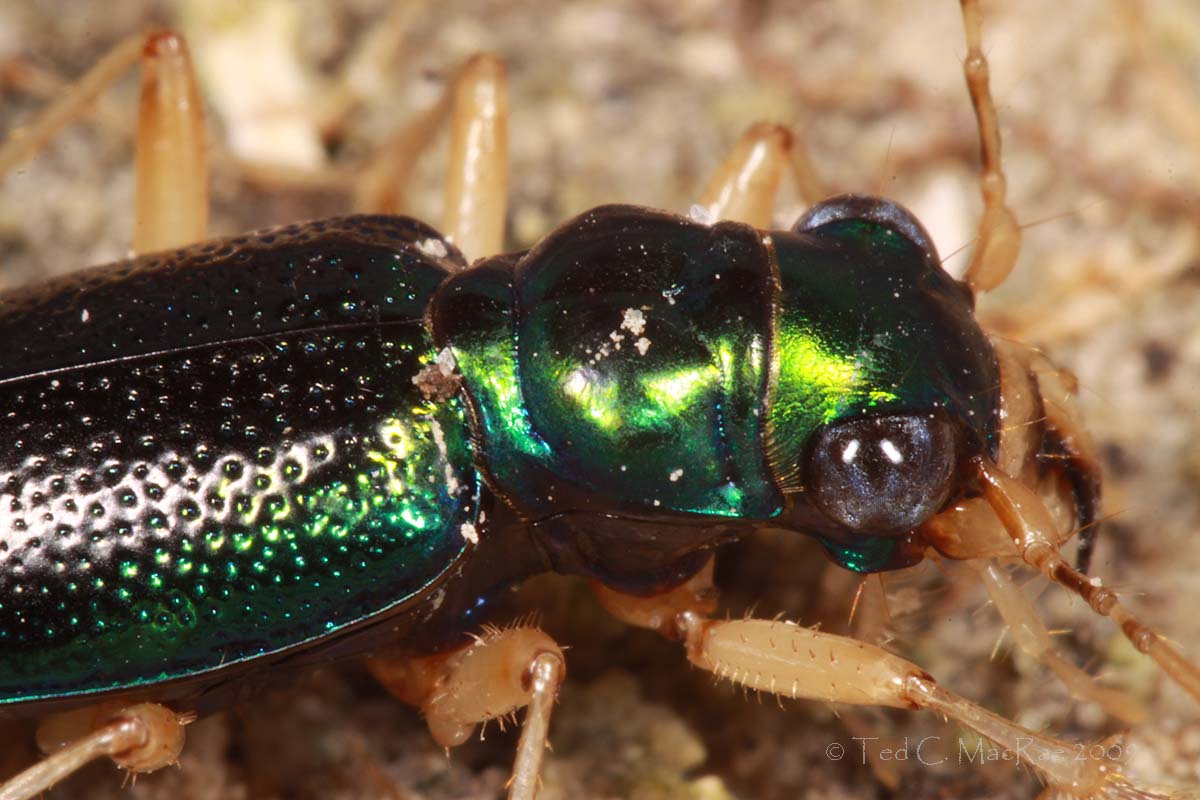
Tetracha floridana (Florida Metallic Tiger Beetle), dorsal view

In my previous post, I showed some photographs of the larva of an undetermined species of tiger beetle that I collected from its burrow in dry ground adjacent to a coastal salt marsh near St. Petersburg, Florida. I had assumed the larva belonged to the genus Cicindela or one of its former subgenera and was suprised to learn that this assumption was incorrect when the adult emerged 2 months later. Looking back at the photos, however, I realized that the photos and the information I gave regarding its location and habitat contained all of the necessary information to identify this larva. Five points to Mike Baker, who correctly deduced the genus (Tetracha), and in fact the larva represents Tetracha floridana (Florida metallic tiger beetle).

Hump of 5th abdominal segment, showing simple, thorn-like inner and outer hooks

The hump of the 5th abdominal segment bears simple, thornlike hooks.

The larva can be placed in the genus Tetracha by virtue of its simple, thorn-like hooks (in other eastern U.S. tiger beetle genera, the outer hooks are distinctly curved).  Two other genera of Nearctic tiger beetles that do not occur in Florida also bear simple hooks—Omus (Night-stalking Tiger Beetles, occurring along the Pacific Coast) and Amblychelia (Giant Tiger Beetles, occurring in the central and southwestern U.S.); however, the former bears three rather than two pairs of hooks, and the latter has the inner and outer hooks distinctly separated from each other.

Tetracha_floridana_1

Tetracha floridana (Florida Metallic Tiger Beetle), lateral view.

Four species of Tetracha occur in the U.S., three of which occur in Florida—T. carolina (Pan-American Big-headed Tiger Beetle), T. floridana (Florida Metallic Tiger Beetle), and T. virginica (Virginia Big-headed Tiger Beetle).  However, T. carolina is restricted in the state to the panhandle and interior of the peninsula along rivers and in disturbed sparsely vegetated areas (Choate 2006).  Of the two remaining species, T. virginica is widespread throughout the southern two-thirds of the eastern U.S. and occurs in a variety of habitats (Pearson et al. 2006), while T. floridana is restricted to salt marsh and mud flat habitats along the Gulf coast of Florida from Dixie County south to the Keys (Choate 2006).  While the widespread occurrence and generalist tendencies of T. virginica might suggest that it is the more likely choice, the locality and habitat match precisely with T. floridana.

Tetracha_floridana_2

The anterior lobes of the apical lunules are divergent.

Tetracha floridana is very similar to T. carolina and was long considered a subspecies of that more widely distributed species until Naviaux (2007) elevated it to species rank in his revision of this large genus.  Tetracha floridana is distinguished from T. carolina by the divergent anterior lobes of the apical lunules (photo above) and the uniformly black to dark green elytra that lack any violet or coppery reflections in the anteriolateral regions (photo below) (Choate 2003).

The anteriolateral areas of the elytra lack violet or copper reflections

The anteriolateral areas of the elytra lack violet or copper reflections.

I was happy as heck when I saw the first newly emerged adult in the rearing container, as this is a true Florida endemic.  I have encountered the two other eastern U.S. species commonly under street lamps and at building lights here in Missouri—T. virginica throughout the state and T. carolina in the southeastern lowlands, where it appears to reach its northern limit of distribution.  A fourth U.S. species in the genus, T. impressa (Upland Metallic Tiger Beetle) (T. affinis” in earlier works), occurs in northern Mexico and the Lower Rio Grande Valley (LRGV) of south Texas (Erwin and Pearson 2008).  Although I have not yet encountered it on any of my many trips to the LRGV (all of which pre-date my current cicindelophily), I understand it is regularly attracted to building and street lights in Brownsville (Pearson et al. 2006).  I believe I will have to go down there again and verify this for myself someday.

Feasting on a corn rootworm larva.

Feasting on a corn rootworm larva.

The last photo in this series illustrates the unique feeding behavior of these beetles, which despite their terrifyingly toothy mandibles are strictly fluid feeders.  The long, sharp mandibular teeth function primarily in prey subdual and in slicing and shredding their tissues, while the maxillae (second pair of feeding appendages behind the mandibles) and labium (fused third pair of appendages) comprise an “oral mill” that masticates the prey and and rolls it into a bolus.  Two brush-like structures can be seen behind the mandibles in the photo above—these are part of the maxillary laciniae and apparently function in containing and shaping the bolus as it is being masticated.  While this occurs, proteolytic enzymes are extruded from the midgut and mixed with the bolus to liquify its digestible components, which are then sucked into the beetles tiny mouth by the action of a pharyngeal pump.  Like the larva, the adult beetle thus “chews” but does not swallow its prey—a manner of feeding that is not too unlike that of spiders and other arachnids (sans the venom).

Photo details:
All photos: Canon EOS 50D, manual mode, ISO-100, 1/250 sec, MT-24EX flash w/ diffuser caps.
Photo 1: Canon 100mm macro lens w/ 68mm extension tube, f/25, 1/2 power flash.
Photo 2: Canon MP-E 65mm 1–5X macro lens, f/16, 1/8 power flash.
Photos 3–5: Canon 100mm macro lens w/ 36mm extension, f/18–f/22, 1/4 power flash.
Photo 6: Canon 100mm macro lens w/ 68mm extension, f/20, 1/2 power flash.

REFERENCES:

Choate, P. M., Jr. 2003. A Field Guide and Identification Manual for Florida and Eastern U.S. Tiger Beetles.  University Press of Florida, Gainesville, 224 pp.

Choate, P. M., Jr.  2006.  Tiger Beetles of Florida, Cicindela spp., Megacephala spp. (Insecta: Coleoptera: Cicindelidae).  University of Florida, IFAS Extension Service Circular EENY-005, 5 pp.

Erwin, T. L. and D. L. Pearson. 2008. A Treatise on the Western Hemisphere Caraboidea (Coleoptera). Their classification, distributions, and ways of life. Volume II (Carabidae-Nebriiformes 2-Cicindelitae). Pensoft Series Faunistica 84. Pensoft Publishers, Sofia, 400 pp.

Naviaux R. 2007. Tetracha (Coleoptera, Cicindelidae, Megacephalina): Revision du genre et descriptions de nouveaus taxons. Mémoires de la Société entomologique de France 7:1-197.

Pearson, D. L., C. B. Knisley and C. J. Kazilek. 2006. A Field Guide to the Tiger Beetles of the United States and Canada. Oxford University Press, New York, 227 pp.

Copyright © Ted C. MacRae 2009

Add to FacebookAdd to NewsvineAdd to DiggAdd to Del.icio.usAdd to StumbleuponAdd to RedditAdd to BlinklistAdd to TwitterAdd to TechnoratiAdd to Furl

Anatomy of a Tiger Beetle Larva

My first experience looking for tiger beetles in Florida had gone well.  Despite its small size and urban surroundings, the narrow strip of coastal scrub and saltwater marsh along the intracoastal waterway behind my sister-in-law’s condominium boasted a robust population of what I took to be a single tiger beetle species.  The specimens I collected and photographs I took would later reveal that two co-occurring and closely related species were present: Ellipsoptera marginata (Margined Tiger Beetle) and E. hamata lacerata (Gulf Beach Tiger Beetle).  I had spent close to two hours under the August sun observing and photographing the beetles before I decided that I had given the preserve a thorough enough look.

IMG_1077_1200x800_crp

As I was heading back, I noticed a little bit of high ground alongside a red mangrove thicket and went over to give it a look.  As I approached I saw something I hadn’t yet seen that day – tiger beetle larval burrows.  Larval burrows, especially larger ones such as these were, are unmistakeable – almost perfectly circular (slightly cut out on one edge) and smoothly beveled around the perimeter.  There were a number of burrows clustered on the small bit of high, dry ground, and my first thought was that their inhabitants represented the same (what I thought was a single) species that I had encountered so commonly that day as adults.  I then reasoned, however, that more likely they represented another species whose adults are active later in the season – perhaps one of the so-called “spring/fall” species whose larvae typically reach maturity during the heat of summer.  The size of the burrows (~5mm dia) suggested they were inhabited by 3rd instar larvae (the final instar before pupation), in which case it may be possible to rear a few to adulthood – if I could get at them. I tried fishing (Pearson and Vogler 2001) a few holes with a grass blade but didn’t get any bites, so I decided to watch for awhile and see if any of the larvae, believing the danger of my approach had passed, would reappear at the tops of their burrows.  Waiting for tiger beetle larvae to appear is a crap shoot – maybe they’re active, and maybe they’re not, and crouching in the stifling summer air of a coastal marsh in Florida is not an easy thing to do for very long.  Fortunately my wait was short, as within a few minutes I saw one re-appear at the top its burrow.  I slowly got out my knife and moved to place the tip on the soil about 1″ from the burrow at a 45° angle for an attempted tunnel block (Pearson and Vogler 2001), but it spooked and dropped back down into its burrow before I could get then knife in place.  No matter, I knew it was in there now and that it would likely reappear if I could muster the patience.  I positioned the knife and waited – crouched under the baking Florida sun, until when it did re-appear I plunged the knife into the soil with authority.  It was a good jab – I had blocked its retreat without injuring it, and a quick flip of the knife popped out the soil plug and exposed the startled larva, flipping vigorously in a vain attempt to escape before settling down amidst its unfamiliar, exposed surroundings.

IMG_1083_1200x800_enh

For those of you who have never seen a tiger beetle larva, they are among the most other-wordly creatures one can imagine.  The large, heavily sclerotized head bears two long, sickle-shaped, upward-pointing mandibles and up to three pair of highly-acute eyes whose arrangement on each side conveys the image of a “face” with congenital birth defects.  The top of the head is flattened to lie flush with the surrounding soil as the larva sits at the top of its burrow, and huge, powerful mandibular muscles fill the cranial cavity.  The remainder of the body – long, narrow, and cylindrical – hangs from the head at a 90° angle down into the burrow and is unremarkably grub-like, save for a curious hump on the dorsal side of the 5th abdominal segment.  Close examination of the hump reveals an intricate pattern of forward-facing hooks and spines that function in anchoring the larva against the side of its burrow to prevent struggling prey from dislodging it.  The life of a tiger beetle larva is a life of waiting – unlike the adults who run down their prey, the larvae sit in their burrows and wait for prey to come to within lunge’s reach.  While the eyes of most grub-like insects detect little more than light and dark, those of tiger beetle larvae are densely packed with photoreceptors that permit detailed focusing and depth perception for detecting whether potential prey has ventured close enough to their burrow (Pearson et al. 2006).  When that happens, they strike with lightning speed, plunge their mandibles into their prey, and drag it down into the depths of their burrow where it is summarily dispatched with a few bites of their powerful mandibles.  Larvae consume they prey in a manner similar to that of adults in that they chew but don’t swallow their prey. Rather, they secrete digestive secretions containing proteolytic enzymes that begin digesting the prey extra-orally as they chew.  The resulting bolus is masticated and its liquid components sucked out until nothing but a dry wad of indigestable chitin remains, which is spat out of the burrow (Pearson and Vogler 2001).

IMG_1081_1200x800

Looking at this strange insect, it occurred to me that I had not yet attempted macrophotographs of a tiger beetle larva out of its burrow, and this would be a good opportunity to get more practice with my Canon MP-E 65 mm macro lens – a lens with incredible magnification capabilities, but one that is also a bit of a temperamental beast to use hand-held in the field.  The subject was unusually cooperative, perhaps too stunned by its sudden predicament to know what to do, and as I took the photographs I focused in particular on characters of the head and dorsal hump (often useful in identifying tiger beetle larvae, at least to genus).  Time was growing short once I finished taking photographs, so I placed the larva in a vial and returned the following day to extract a chunk of native soil to place in a rearing container, managing to collect two more larvae as well (unfortunately, one became instant “prey” for the other.  Note to self: when placing multiple tiger beetle larvae in a container of soil, seal the artificial burrows into which you place each one!).  I paid little further attention to the photographs, other than to transfer them onto my computer and add metadata upon my return to St. Louis.  I didn’t know what species the larvae represented, but I assumed they were something in the genus Cicindela or one of its several former subgenera.  However, had I studied the photos and considered the locality and habitat, I would have realized that my assumption was incorrect¹.  That realization would come in surprise fashion two months later when the two adults emerged within a few days of each other…

¹ Ten points to whoever can use this information to arrive at an identification before my next post 🙂

IMG_1072_1200x800_enh

Photo details:
All photos: Canon EOS 50D, manual mode, ISO-100, 1/250 sec, MT-24EX flash w/ diffuser caps.
Photo 1: Canon 100mm macro lens, f/22, 1/4 power flash (photo slightly cropped).
Photos 2-4: Canon MP-E 65mm 1-5X macro lens f/16, 1/8 power flash.

REFERENCES:

Pearson, D. L., C. B. Knisley and C. J. Kazilek. 2006. A Field Guide to the Tiger Beetles of the United States and Canada. Oxford University Press, New York, 227 pp.

Pearson, D. L. and A. P. Vogler.  2001. Tiger Beetles: The Evolution, Ecology, and Diversity of the Cicindelids.  Cornell University Press, Ithaca, New York, 333 pp.

Copyright © Ted C. MacRae 2009.

Add to FacebookAdd to NewsvineAdd to DiggAdd to Del.icio.usAdd to StumbleuponAdd to RedditAdd to BlinklistAdd to TwitterAdd to TechnoratiAdd to Furl