Colorado’s Great Sand Dunes Tiger Beetle

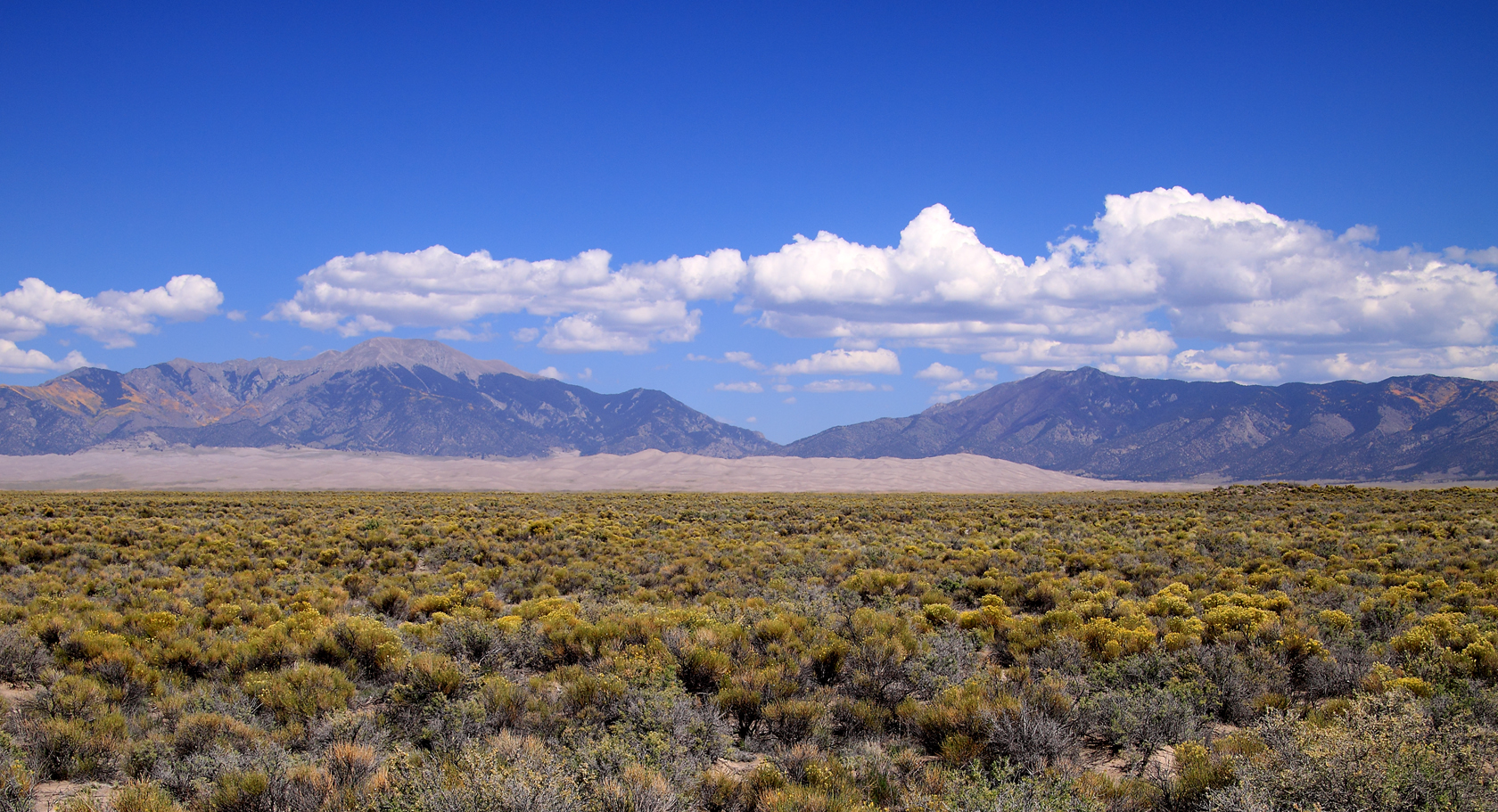
Great Sand Dunes National Park | Saguache and Alamosa Counties, Colorado (click for 1680 x 887 version)

Last year’s Annual Fall Tiger Beetle Trip entered its last day as an unqualified success. Travel partner Jeff Huether and I were doing the “Great Western Sand Dune Tour” on a quest to find and photograph some of North America’s most geographically restricted tiger beetles. The first four days featured successful visits to northwestern Colorado’s Maybell Sand Dunes for Cicindela scutellaris yampae and Cicindela formosa gibsoni, southeastern Idaho’s St. Anthony Sand Dunes for Cicindela arenicola, and southwestern Utah’s Coral Pink Sand Dunes for the prize of the trip—Cicindela albissima. The only endemic that we had failed to find was Cicindela waynei at southwestern Idaho’s Bruneau Sand Dunes (hopefully this was a result of poor fall emergence conditions rather than an indication of further decline of this perilously endangered species).

Small sand dune west of GSDNP in the Nature Conservancy's Medano-Zapata Ranch.

Day 5 featured a visit to southwestern Colorado’s Great Sand Dunes to look for the endemic Cicindela theatina. As on every day previous of the trip, the morning drive saw cool but rising temperatures under bright, sunny skies, so we were optimistic about our chances. Between Great Sand Dunes National Park (type locality of the beetle) and The Nature Conservancy’s Medano-Zapata Ranch west of the park, the entire 290 km² range of C. theatina is on protected land. Not knowing whether the beetle would be out and, if so, how extensively it would occur, our plan was to approach the Park from the west through Zapata Ranch and stop at any sand dunes we sighted along the way until we found the beetle.  It didn’t take long—as soon as we entered the Ranch we began to see small sand dunes in the distance, and within minutes after making the 1-km hike towards one particularly promising looking dune we saw the beetles. Even though this was the fifth western sand dune endemic I had seen in as many days, the first moment I laid eyes upon it was no less exciting—flashing red and green on coppery, white marked elytra, it seemed all hair and teeth!
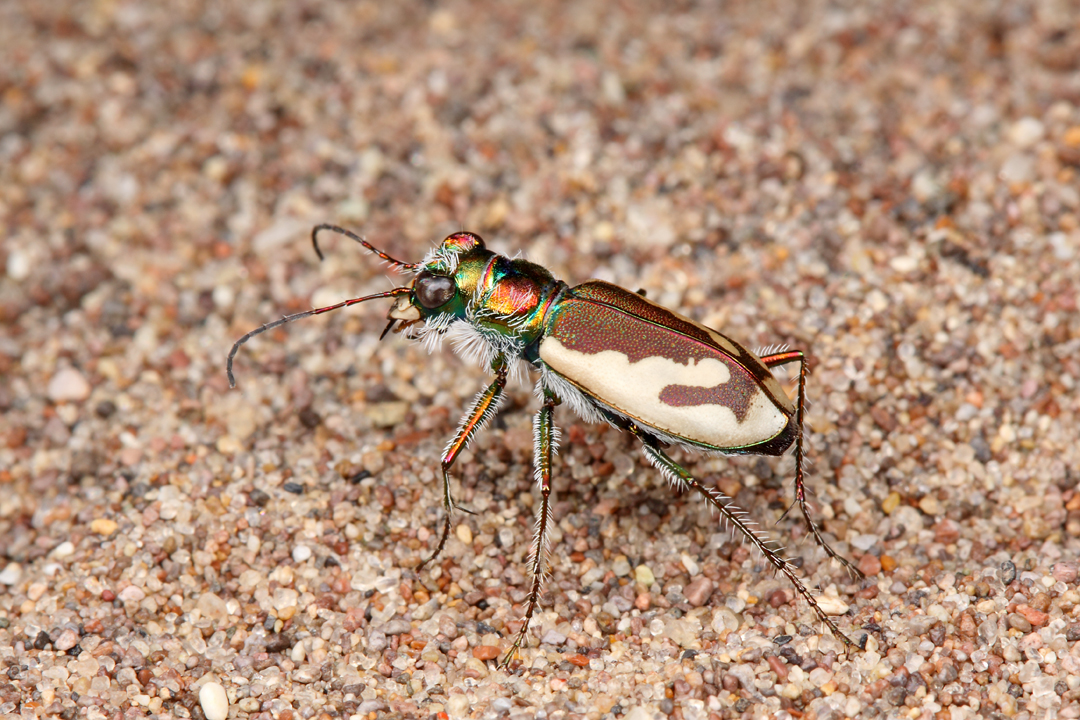
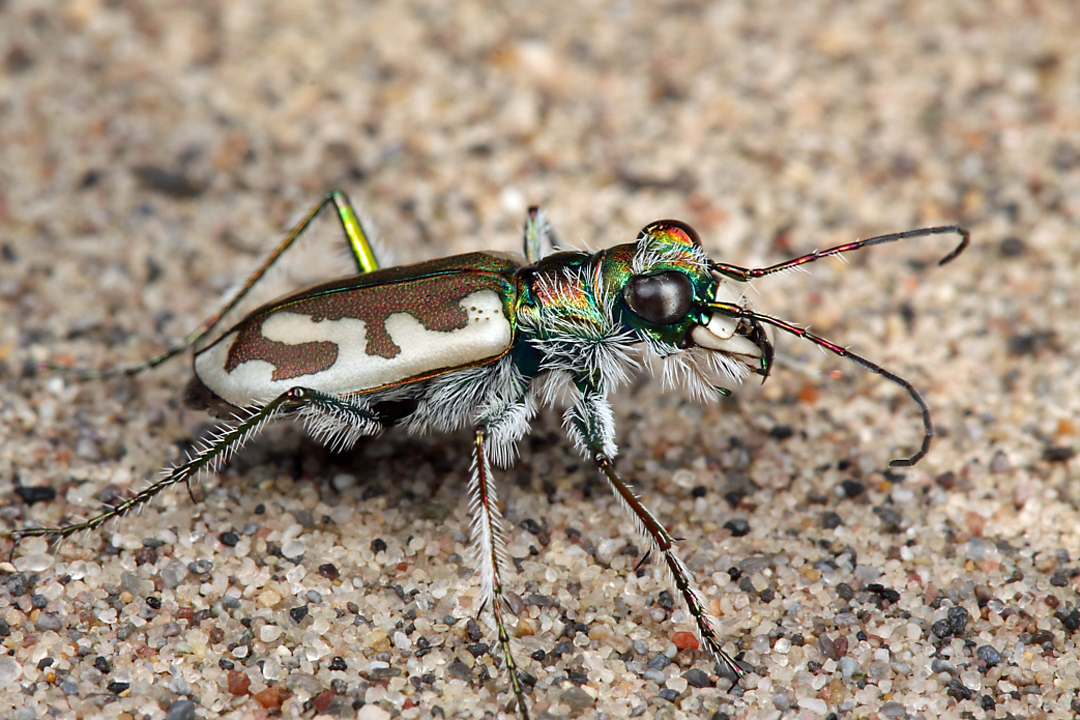
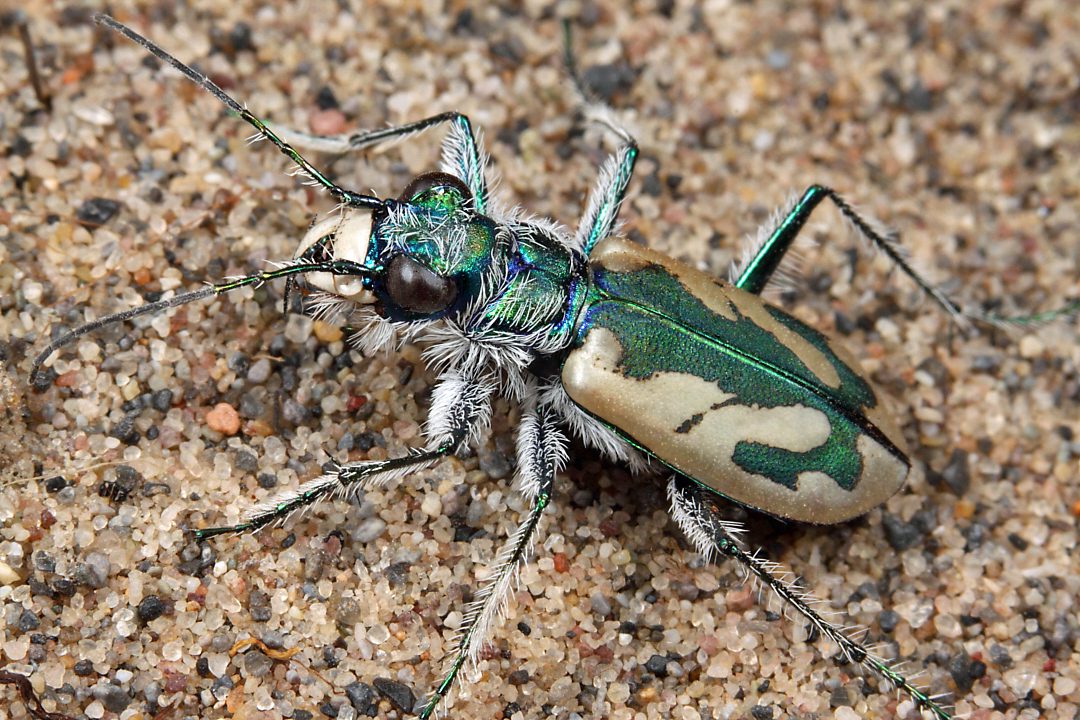
Great Sand Dunes tiger beetle (Cicindela theatina) | Medano-Zapata Ranch

Despite this being my first sighting of the species, there was no doubt about it’s identity. The only other tiger beetle that occurs with and could possibly be mistaken for C. theatina is the blowout tiger beetle, C. lengi; however, the broad marginal band that runs completely around the elytra and the green/brown dorsal coloration of C. theatina are enough to distinguish it from that species. Temperatures were still a bit on the cool side, but the beetles were already remarkably active and skittish. Like the other sand dune species we had already seen, they were enormously difficult to approach—numerous failed attempts were necessary before I encountered the slightly more cooperative female shown in these photos (although she still required several minutes of stalking to get her sufficiently accustomed to my presence to allow these shots).
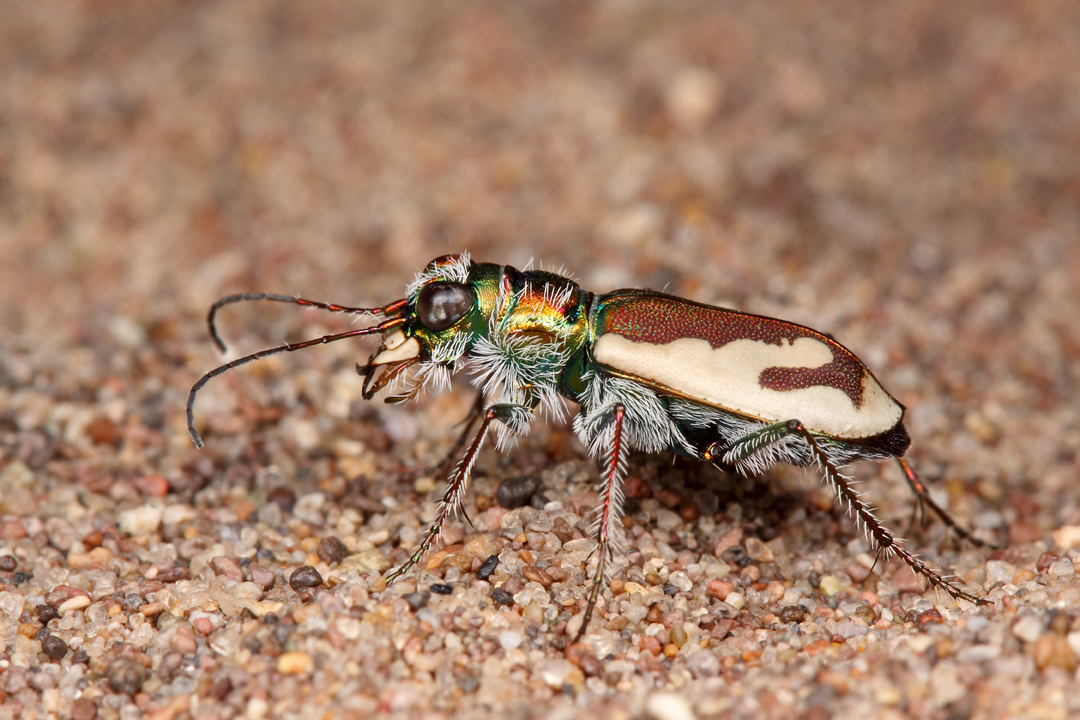
Like most sand dune tiger beetles, adults are densely hairy on the lateral and ventral surfaces.

Adults ''hug'' the sand for warmth during the cooler morning hours.

The dense covering of white hairs on the lateral and ventral surfaces of the adults belies their adaptation to the abrading sands of their wind-swept habitat. Scouring sands, however, are not the only hardships that the adults must contend with. Temperatures on the dunes can range from as low as 40° F on a chilly morning to nearly 140° F during the heat of the day. Accordingly, much of the adult beetle’s activities revolve around thermoregulation to maintain optimal body temperatures for activity (Pineda and Kondratieff 2003). These include not only stilting, shade-seeking, and mid-day burrowing to avoid excessive warming (see my post  for examples of these behaviors), but basking to gain warmth when temperatures are still a bit too cool for effective foraging (photo above).
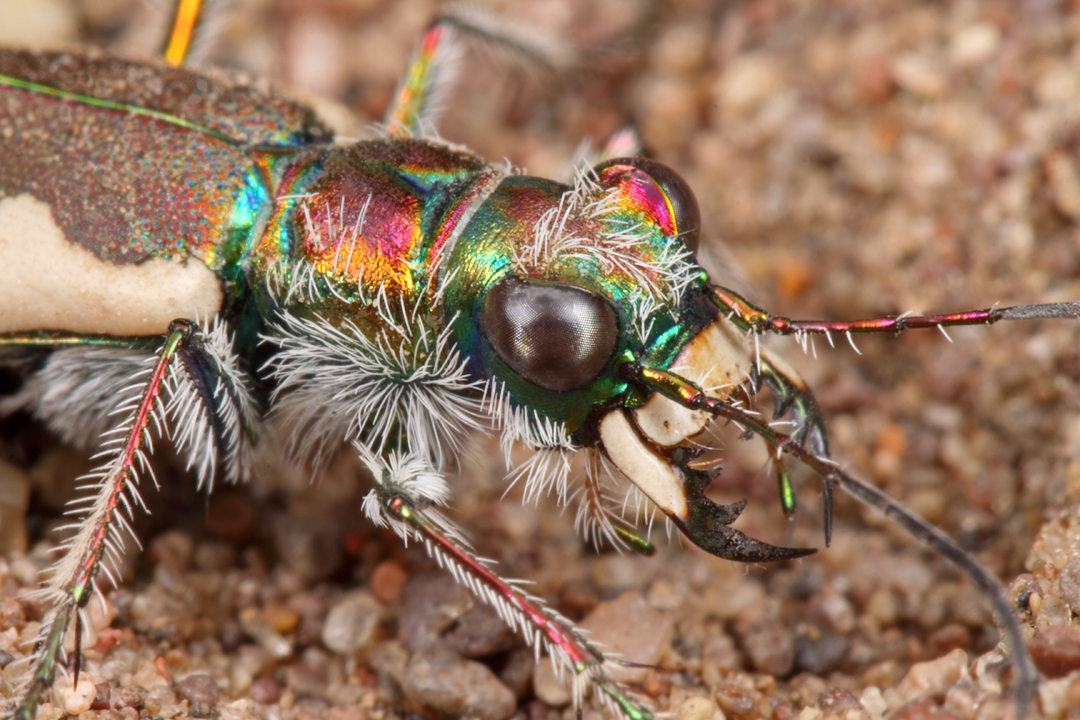
Fabulous metallic red and green highlights on the head and pronotum contrast with the reddish brown elytra and their white lateral markings.

Despite the fact that the entire range of this species is encompassed by protected land, WildEarth Guardians filed a petition for federal listing as an endangered species in 2007 (Tweit 2010). Whether protection will be granted remains to be seen—Coral Pink’s C. albissima has a global range only 1.3% the size of C. theatina‘s range (only slightly more than half of which is on protected land), yet that species has been awaiting listing for nearly three decades now! (Too bad C. theatina doesn’t have real fur, feathers, or those endearing mammalian eyes that would surely allow it to jump to the front of the line.)

For the first time in BitB Challenge history, we have a 4-way tie for the win. Dorian Patkus, Mr. Phidippus, Mike Baker, and David Winter all share the honors for . Mr. Phidippus is the big winner, however, as he strengthens his grip on the overall lead with a lead of 13 or more points over his nearest rivals (Roy, Tim Eisele, Mike Baker, and Dennis Haines). The competition is far from over though—a single misstep is all it would take to see the emergence of a new leader before this session is over.

REFERENCES:

Pineda P. M. and B. C. Kondratieff. 2003. Natural history of the Colorado Great Sand Dunes tiger beetle, Cicindela theatina Rotger. Transactions of the American Entomological Society 129(3/4):333–360.

Tweit, S. J. 2010. Beetle Mania. National Parks 84(4):24–25.

Copyright © Ted C. MacRae 2012

Swift Tiger Beetle: Species on the Brink

ResearchBlogging.orgIn July 2008, Chris Brown and I made a spur-of-the-moment trip to Hitchcock Preserve near Council Bluffs, Iowa, where only a week earlier Cylindera celeripes (Swift Tiger Beetle), one of North America’s most enigmatic tiger beetles, had just been discovered. Reportedly once common in the blufftop prairies of western Iowa and further west in eastern Nebraska and Kansas, this tiny (6–8 mm in length), flightless beetle has suffered severe population declines over the past 100 years. Only small numbers of individuals have been encountered outside of the type locality (Fort Riley, Kansas) in recent years, and in Nebraska the species is now considered extirpated (Spomer et al. 2008). Our reasons for going to Iowa had to do with our as yet unsuccessful effort to find the species in northwestern Missouri as part of our broader studies of the state’s tiger beetle fauna. Although it had never been recorded from Missouri, we felt there was some chance it might be found in the tiny loess hilltop prairie remnants still remaining in the state at the southern terminus of the Loess Hills landform. We reasoned our failure to find the species might be related to its very small size and rapid running capabilities (giving them more the appearance of small ants or spiders than tiger beetles), limited temporal occurrence, and tendency to hide amongst the bases of grass clumps (Pearson et al. 2006). If we could find the species at a locality where they were known to occur, perhaps an improved search image and better understanding of their precise microhabitat preferences would help us locate the species in Missouri.

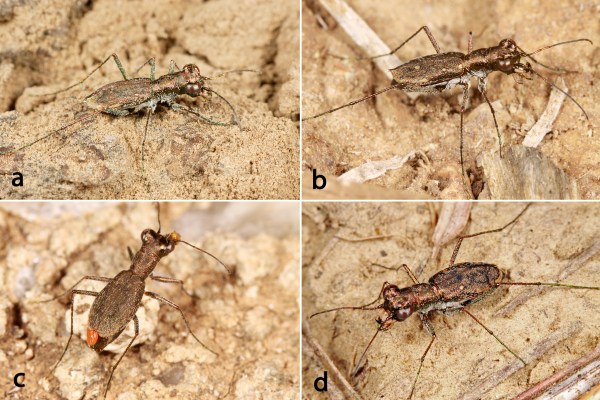
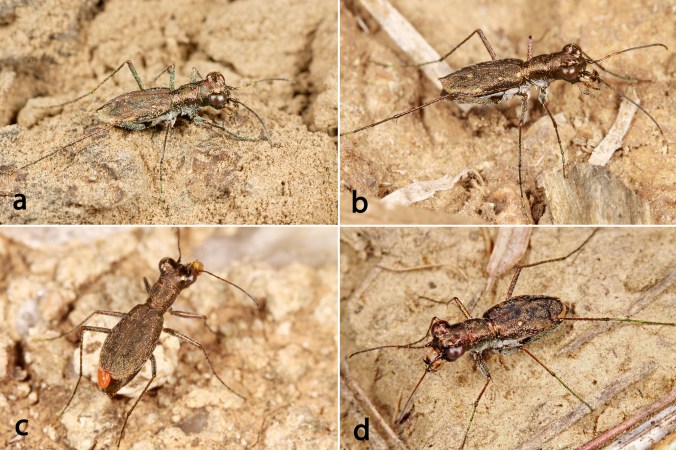
Fig. 1. Cylindera celeripes (LeConte) adults at: a) Hitchcock Nature Center, Pottawattamie Co., Iowa (13.vii.2008); b) Alabaster Caverns State Park, Woodward Co., Oklahoma (10.vi.2009); c) same locality as “b”, note parasite (possibly Hymenoptera: Dryinidae) protruding from abdomen and ant head attached to right antenna; d) Brickyard Hill Natural Area, Atchison Co., Missouri (27.vi.2009). Photos by C.R.Brown (a) and T.C.MacRae (b-d).

We didn’t realize it at the time, but that trip marked the beginning of a two-year study that would not only see us succeed in finding C. celeripes in Iowa, but also discover new populations in Missouri and northwestern Oklahoma (Figs. 1a–d). With so much new information about the species and the long-standing concerns by many contemporary cicindelid workers about its status, it seemed appropriate to conduct a comprehensive review of the historical occurrence of this species to establish context for its contemporary occurrence and clarify implications for its long term protection and conservation. This was accomplished through compilation of label data from nearly 1,000 specimens residing in the collections of contemporary tiger beetle workers, all of the major public insect museums in the states of Iowa, Kansas, Missouri, Nebraska, Oklahoma, and Texas, and the collections at the U.S. National Museum and Florida State Collection of Arthropods. Collectively, this material is presumed to represent the bulk of material that exists for the species, representing nearly all localities recorded for the species and time periods in which it has been collected.

Label data confirmed the historical abundance of this species, especially in the vicinity of Manhattan and Fort Riley, Kansas; Lincoln and Omaha, Nebraska; and Council Bluffs, Iowa. Hundreds of specimens were routinely collected in the native grassland habitats around these areas during the late 1800s and early 1900s, their abundance documented by entomologists in both journal articles and private letters. One of the most interesting examples of the latter was by Nebraska collector F. H. Shoemaker, who wrote the following in a 1905 letter to R. H. Wolcott:

There is another trip, down the river to the big spring by the railroad track near Albright, then across the river (the heronry route) where we collect hirticollis, repanda, vulgaris [= tranquebarica], cuprascens, and – vat you call ‘im? – celeripes! I took 147 of the latter in an hour and a half Sunday, and the supply was undiminished.

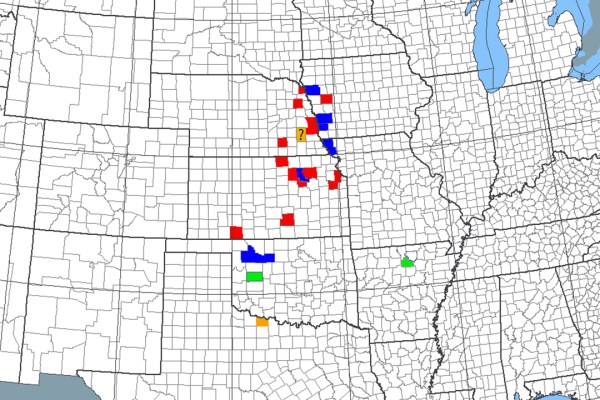
Fig. 8. Historical and currently known geographical occurrence of Cylindera celeripes by county. Red = last record prior to 1920; orange = last record 1941–1960 (“?” = questionable record); green = last record 1991–1996; blue = last record 2005–2011.

Although the recent collections of C. celeripes from near Council Bluffs and through the years near Fort Riley show that the species has managed to persist in these areas, there is little question that it is far less abundant and widespread now than it was in the early 20th century (Fig. 8).  Not only are the areas in which present day populations are known to occur limited, but the numbers of individuals seen in them are very low. In Missouri, the species was listed immediately after its discovery in the state as a species of conservation concern with a status of S1 (= “critically imperiled”) due to the highly restricted occurrence of suitable habitat (loess hill prairie) in the state and small populations observed within them. The situation is even worse in Nebraska, where the species has not been seen for nearly 100 years despite dedicated searches by expert contemporary tiger beetle workers such as Matt Brust and Steve Spomer. Considering the near-complete elimination of suitable native grassland habitats by conversion to agriculture and degradation of the few existing remnants due to encroachment by woody vegetation and invasive exotics, the likelihood of finding extant populations of C. celeripes in Nebraska seems remote. Only in the Red Hills of northwestern Oklahoma does the species appear to be secure due to the extensiveness of suitable areas of habitat and robust numbers of individuals observed within them at the present time. An enigmatic record exists from Arkansas, based on a single individual collected near Calico Rock in 1996. This individual represents a significant extension of the known geographical range of the species, but repeated attempts to find the species at that locality during the past year were not successful.

The persistence of populations, albeit small, in multiple areas, along with the occurrence of robust populations in northwestern Oklahoma, makes it unlikely that C. celeripesqualifies for listing as a threatened or endangered species at the federal level. Nevertheless, the limited availability of suitable habitat in many areas and low population numbers found within them clearly suggest that conservation measures are warranted at the state level, especially in Iowa, Kansas and Missouri, to prevent its extirpation from these states. In these states, land management practices should be implemented at sites known to support populations of the beetle in an effort to maintain and expand the native grassland habitats upon which they rely. These include various disturbance factors such as mechanical removal of woody vegetation, judicious use of prescribed burning, and selective grazing (taking care to do so in a manner that minimizes impacts to beetle populations).

REFERENCES:

MacRae, T. C. and C. R. Brown. 2011. Historical and contemporary occurrence of Cylindera (s. str.) celeripes (LeConte) (Coleoptera: Carabidae: Cicindelinae) and implications for its conservation. The Coleopterists Bulletin 65(3):230–241 DOI: 10.1649/072.065.0304

Pearson, D. L., C. B. Knisley and C. J. Kazilek. 2006. A Field Guide to the Tiger Beetles of the United States and Canada. Oxford University Press, New York, 227 pp.

Spomer, S. M., M. L. Brust, D. C. Backlund and S. Weins.  2008. Tiger Beetles of South Dakota & Nebraska. University of Nebraska, Department of Entomology, Lincoln, 60 pp.

Copyright © Ted C. MacRae 2011

St. Anthony Dune Tiger Beetle

Sand dune habitat for Cicindela arenicola | vic. Idaho Falls, Idaho

After kicking off the 2011 fall tiger beetle trip by finding Cicindela formosa gibsoni and C. scutellaris yampae in the Yampa Valley sand dunes in northwestern Colorado, I was even more optimistic about my chances of seeing the main goals of the trip—the four C. maritima species group endemics that inhabit sand dunes in Idaho (St. Anthony Dune Tiger Beetle—C. arenicola, and Bruneau Dune Tiger Beetle—C. waynei), Utah (Coral Pink Sand Dune Tiger Beetle—C. albissima), and Colorado (Colorado Dune Tiger Beetle—C. theatina).  Each of these closely related species is restricted to a single sand dune system in their respective states, resulting in small populations that are especially vulnerable to drought and threats to their required habitats (primarily invasive plants and offroad recreational vehicles).  Cicindela arenicola, described from the St. Anthony Dune system of southeastern Idaho (Rumpp 1967) was our first target, and while the drive through the Snake River Valley—aspen and maple in blazing full color—was stunningly beautiful, all I could think about during the 6-hour drive was the rising temperatures outside and the tendency of these sand dune tiger beetles to dig in if it gets too hot.  I had information about several localities along the St. Anthony Dune system, and by the time we arrived at the first of these it was already early afternoon.

Cicindela arenicola adult burrows

Walking onto the dunes at a locality near Idaho Falls, it didn’t take long to find the unmistakable signature of adult activity—burrows.  Many insects (especially bees) and even non-insects (spiders, solifugids, etc.) that live on sand dunes create burrows that can look similar to those created by adult tiger beetles.  However, after years of experience I can almost tell at a glance whether a burrow has been created by a tiger beetle versus some other arthropod by the size and shape of the opening and appearance of the diggings.  When there is doubt, a little bit of excavating with a knife gives further clues in the shape of the tunnel—flatter than most other diggers and angling almost horizontally back into the sand before taking a dive a few inches back.  Wind quickly obliterates evidence of the burrow entrance and pile of diggings, so when these are present and fresh-looking the beetles have either just dug in or just dug out.  I excavated a number of burrows that turned out to be empty, suggesting the beetles were out and about if only I could find them.  And find them I did, mostly along the sloping, south-facing dune face above the flatter sand plain below.  They were as beautiful as I imagined they would be—bold, white markings, screaming green and copper highlights on the head and pronotum, and a dense covering of white hairs on the sides and undersurface.  They were also extremely active and wary, so much so that I didn’t even attempt to photograph them for the time being despite the decent number of individuals that we saw at the site.

Cicindela arenicola adult excavating burrow (click for better view of beetle just inside burrow entrance)

Cicindela arenicola in completed adult burrow | September 2011 | Idaho Falls, Idaho

There were other nearby sites that I had planned to check also, but with good numbers seen already and several other interesting insects (e.g., Crossidius spp.) found in abundance on the blooms of snakeweed plants growing on the backside of the dunes, there was really no reason to go anywhere else.  Besides, I still had not even attempted a field photograph of C. arenicola (although I had made sure to capture some live adults for studio shots that night as a backup).  As the sun began sinking in the western sky and temperatures began to cool off, I noticed the adults were becoming scarce and that fresh burrows were appearing on the dune surface.  In contrast to earlier in the day, adult beetles were found in nearly every burrow that I excavated—the beetles were digging in, and if I wanted field photographs it was now or never.  I managed a few distant shots of the first several adults I tried to stalk, but none of these were close to keepers.  I eventually noticed that beetles in the sparsely vegetated areas of the dune seemed to be slightly more approachable than those out on the open dune surface (perhaps they felt a little more secure in the presence of some cover), and although the vegetation often obscured clear views of the beetles, it was at least a more manageable problem than not even being able to approach them.  Finally, after considerable effort, I managed the photograph shown below.  I’d like to take credit for the near perfect composition and focus, but it was an actually a completely accidental shot.  I had been stalking the beetle for some time and had finally gotten closer to it than I had managed for any other beetle.  Rather than a presenting me with a lateral profile, the beetle was directly facing me as I closed in for the shot. Just as I pressed the shutter the beetle turned profile and then darted off.  Other than nipping the middle tarsus I don’t think I could’ve framed this uncropped photo better if I had tried.

Cicindela arenicola | September 2011 | vic. Idaho Falls, Idaho

Cicindela arenicola is closely related to C. waynei (known only from sand dunes in and around Bruneau Dunes State Park in southwestern Idaho), and it is only recently that the two have been considered separate species.  Cicindela waynei differs in its generally green rather than bronze coloration, more expanded white markings, and the presence of a curious upward projecting tooth on the male mandible (Pearson et al. 2006).  There are some populations in south-central Idaho assigned to C. arenicola that show an intergradation of characters between the two species, primarily in the presence of individuals with green coloration and expanded markings, so I found it interesting to encounter just such an individual at this southeastern Idaho site as well.  The individual, a male (and photographed in a terrarium that evening), looks very much like C. waynei except that it lacks the distinctive mandibular tooth characteristic of that species.

Male from same locality with green elytra and expanded markings

Cicindela arenicola is largely restricted to the Snake River Plain of southern Idaho, with a small population also occurring in the Centennial Sandhills of southwestern Montana (Winton et al. 2010). The sand dunes on which these beetles depend have suffered numerous assaults in recent years at the hands of man, with exotic invasives (Bouffard et al. 2009), trampling by cattle (Bauer 1991), and offroad vehicular traffic having the greatest impact on tiger beetle populations.  The species has been considered for listing on the Endangered Species List due to the imperiled nature of its limited habitat, but to this point such status has not yet been accorded.  It has, however, been listed as globally imperiled by the Idaho Department of Fish and Game and the Bureau of Land Management.  Most people are completely unaware that this beetle exists, and probably fewer still would even care.  For me personally, however, the chance to see this rare and beautiful beetle in its native habitat and spend time watching its behavior was a thrill I won’t soon forget.

Tiger beetle's-eye view of its preferred sand dune habitat.

I haven’t forgotten about the challenges that led to this post.  However, the hour is late and I need my rest.  Points will be awarded over the next day or so, and the winner of BitB Challenge Session #4 will be crowned!  In the meantime, I’ve released the submitted comments so you can see how your answers fared against the competition—no do-overs!

REFERENCES:

Bauer, K. L. 1991. Observations on the developmental biology of Cicindela arenicola Rumpp (Coleoptera: Cicindelidae). Great Basin Naturalist 51:226–235.

Bouffard, S. H., K. V. Tindall and K. Fothergill. 2009. Herbicide treatment to restore St. Anthony tiger beetle habitat: a pilot study. Cicindela 41(1):13–24.

Pearson, D. L., C. B. Knisley and C. J. Kazilek. 2006. A Field Guide to the Tiger Beetles of the United States & Canada: Identification, Natural History, and Distribution of the Cicindelidae. Oxford University Press, New York, NY. 227 pp.

Rumpp, N. L. 1967. A new species of Cicindela from Idaho (Coleoptera: Cicindelidae). Proceedings of the California Academy of Science 35:129–140.

Winton, R. C., M. G. Kippenhan and M. A. Ivie.  2010.  New state record for Cicindela arenicola Rumpp (Coleoptera: Carabidae: Cicindelinae) in southwestern Montana.  The Coleopterists Bulletin 64(1):43–44.

Copyright © Ted C. MacRae 2011

Photographing the Newly Rediscovered Cicindelidia floridana

Cicindelidia floridana | Richmond Heights area, Miami-Dade Co., Florida

When Brzoska et al. (2011) announced the rediscovery of Cicindelidia floridana last April (and also provided convincing evidence for considering it a full species), I could hardly contain my excitement. At a time when increasing numbers of species are being reported in decline or going extinct, the news that this small jewel of a beetle had somehow managed to survive in tiny chunks of remnant habitat (completely surrounded by the sprawling metropolis of Miami) after having not been seen for more than half a century and presumed extinct (Pearson et al. 2006) was cause for celebration.  For me, the timing couldn’t have been better as I was already planning a visit to Florida later in the summer to spend a little time with my family and—of course—search for some of Florida’s several endemic tiger beetle species.  The precise locations where C. floridana have been found have not been publicly disclosed (for obvious reasons), but when I contacted lead author Dave Brzoska and told him of my plans to be in Florida this summer and my interest in seeing the beetles, he graciously offered to take me to the sites himself.  Expedition turned to party when Chris Wirth, author of the cicindelocentric blog Cicindela, made arrangements to fly down from Virginia and join Dave and I on our trip.  This would be Chris’ second visit to see the beetles, having been one of the very lucky first few to see it after its rediscovery while assisting second author Barry Knisley on the initial surveys that were conducted.  For me, it was a cicindelophile’s dream come true—a day in the field with Dave (whom I had not seen in more than 25 years), meeting Chris for the first time, and looking for and (hopefully) photographing one of North America’s rarest tiger beetles.

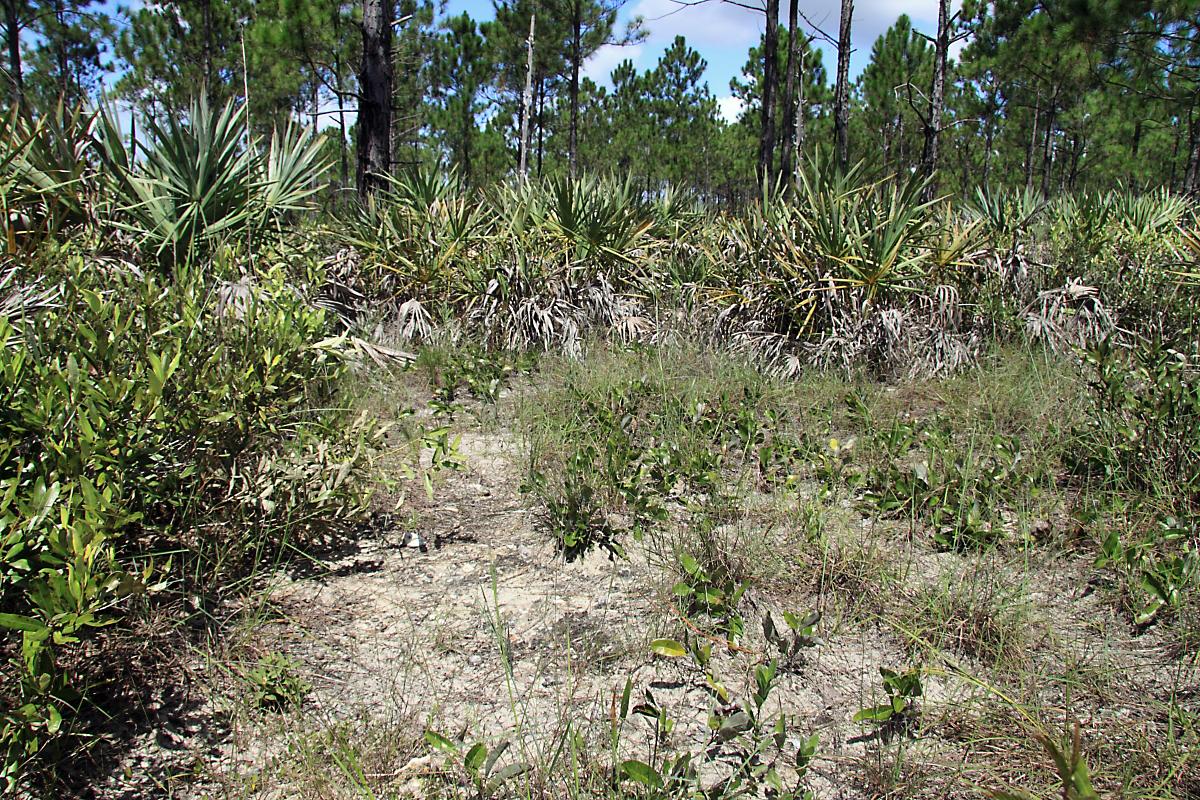
Pine rockland habitat for Cicindelidia floridana.

Adults beetles frequent sparsely vegetated sandy exposures in the palmetto understory.

After a delightful evening looking at meticulously curated specimens in Dave’s astounding collection, the three of us left early the following morning from his home in Naples to make the 2½-hr drive to Miami.  Temperatures in south Florida during early August can soar as the day progresses, and as they do the beetles—already flighty and difficult to observe—become even more so before eventually taking refuge under debris.  We arrived at the first site right at mid-morning, at which time I was allowed to remove my blindfold (just kidding!).  One of the features that distinguishes this species from C. scabrosa is its habitat—south Florida pine rockland as opposed to the more widespread peninsular sand pine scrub habitat frequented by C. scabrosaPine rockland is a fire-adapted community composed of an open canopy of south Florida slash pine (Pinus elliottii var. densa) and a diverse understory of cabbage palm (Sabal palmetto) and other shrubs.  As I readied my camera gear, Dave told me to look for small exposures in the understory and then watch them for any sign of movement.  The adult beetles, despite their brilliant coloration, are among the smallest tiger beetle species and are exceedingly difficult to detect amongst the vegetation and debris covering the soil.  I could have just let Dave look for the beetle first while I tagged along and then let him “show” them to me, but I wanted to find them for myself, so I struck out on my own and started searching.

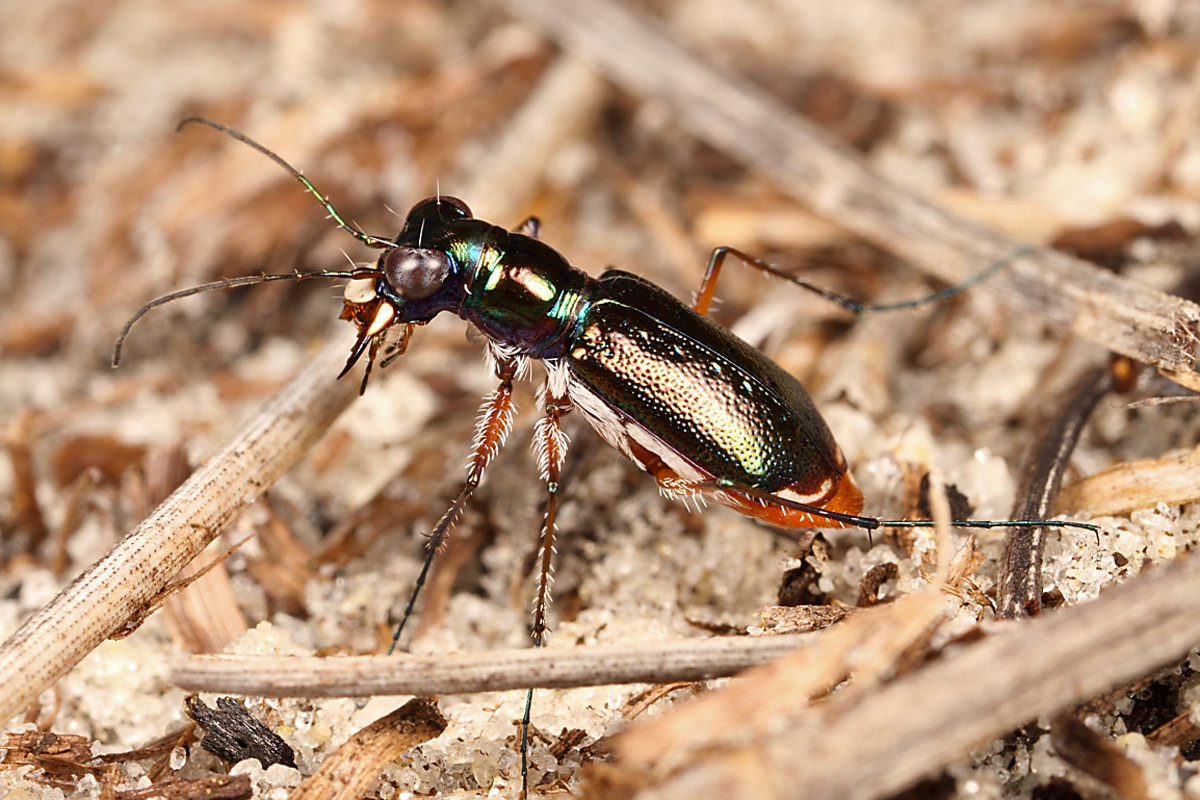
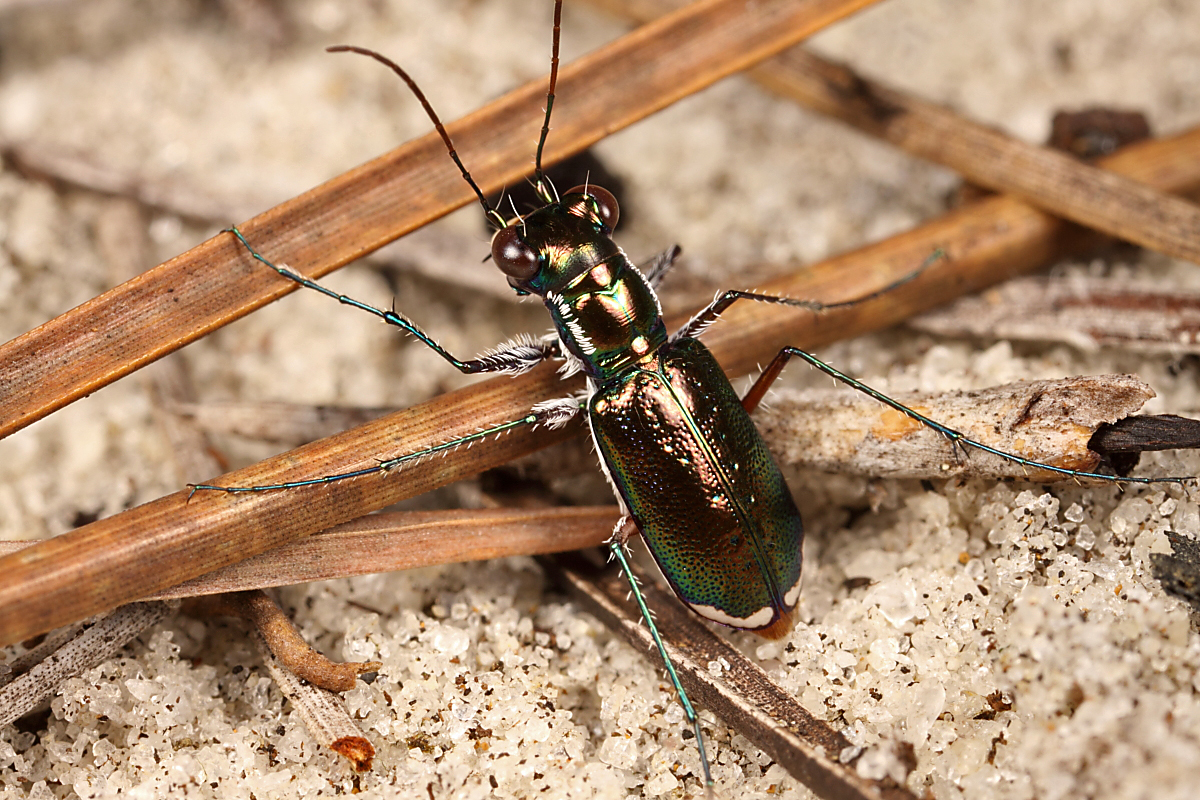
Shiny green coloration and reduced elytral maculation distinguish this species from C. scabrosa.

It wasn’t long before I heard Dave and Chris call out that they had seen one, and while the temptation was great to go over to where they were and look at what they had already found, I stayed the course and continued searching on my own.  Finally, I saw one!  It was gorgeous and brilliantly colored—much more copperish in appearance than I had expected (Dave later explained that this is something seen better in the live beetles and not so well in preserved specimens).  Deciding how to approach an unfamiliar tiger beetle for photography is always a crap shoot—until one gets a feel for its behavior and the way it reacts to movement it is difficult to know precisely how to approach it.  I had gone ahead and tempted fate by mounting my 65mm macro lens and its very short working distance, so I would need to draw on the entirely of my experience in photographing tiger beetles to figure out how to get close enough to these beetles to photograph them.  I hadn’t even gotten down on my knees yet before the first adult took flight and disappeared before my eyes.  Knowing what to look for now, I continued searching and found another adult after a short time—with the same result!  Beetle after beetle appeared before me on the sparsely vegetated sand openings and then zipped away well before I had the camera in position.  Finally, by about the 10th beetle that I saw I found one that seemed a little more cooperative (or maybe I had just finally learned how to move in on them).  I carefully, slowly layed down on the ground and got the camera in position as the beetle skitted here and there, obliviously feeding on the occasional ant, then located it in the viewfinder and started firing off shot after shot.  The two photos above represent my favorites from that series and well show not only the elytral sculpturing and flattened pronotal setae that distinguish both this species and C. scabrosa from the other members of the group (C. abdominalis and C. highlandensis), but also the bright greenish coloration, reduced elytral maculation, and lighter leg coloration that Brzoska et al. (2011) used as justification for elevation to a full species distinct from C. scabrosa.

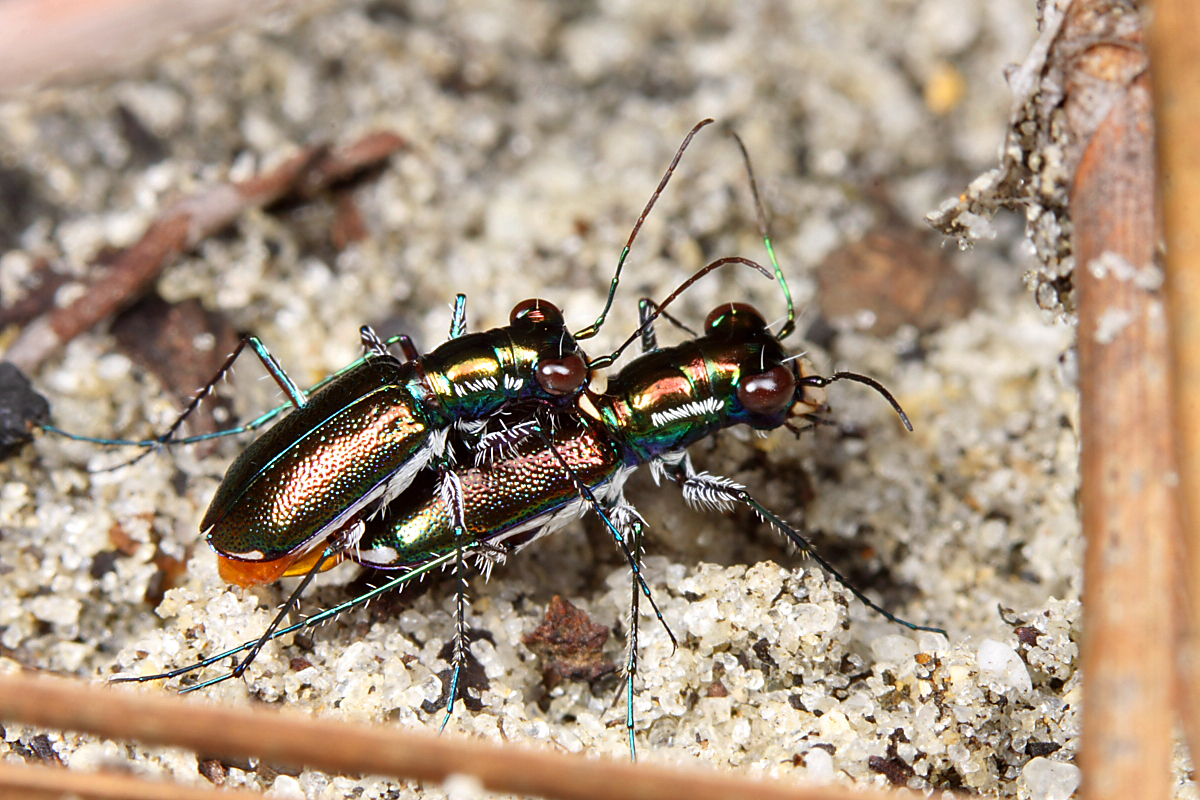
Cicindelidia floridana adults mating.

After failing to get more shots of the next 10 or so adults that I found, I saw a male hop on top of a female and attempt to mate.  I quickly got into position to photograph them, but just as I got them framed they uncoupled and ran their separate ways.  I figured I had probably lost my only chance to photograph a mating pair, but shortly afterwards I encountered another couple that was already engaged.  I saw them before they became disturbed and moved, and as a result I found it relatively (relatively!) easy to get in position and begin photographing without alarming them.  Tiger beetles are often encountered coupled but not actively mating, as the males will often ‘mate guard’ a female for an extended period after mating to prevent other males from mating with her (in many beetles, the last male to mate with a female stands a greater chance of fertizilizing the eggs she lays) (Pearson and Vogler 2001).  This couple, however, was actively engaged as evidenced by the exserted male genitalia firmly penetrating the female genital opening.

Genitalia actively engaged.

I watched the mating pair for a period of time and notice that at times the male held the female more tightly with his front legs, while at other times he held his front legs extended widely out to the sides.  I have seen this same behavior in nearly every tiger beetle species in which I have observed mating pairs and have yet to find or intuit an explanation.  The male has dense, brush-like pads on the undersides of the front tarsi, which presumably are used to aid in grasping the female during mating and may also possibly aid in signaling during courtship.  Perhaps extending the legs to the sides is done at times when the female is not struggling to dislodge the male (itself an interesting subject), allowing them to serve a tactile function to better warn against intruding males.

Sometimes the male held his forelegs against the female...

...while other times the forelegs were extended widely to the sides.

All told we spent about 2½ hours at the site, and I estimate that I saw a total of approximately 30 beetles.  Some may have been the same as those I had seen before, since I tended to focus my searches in three small areas of sandy exposures not too distant from each other.  Chris and Dave each worked separate areas as well, also seeing a good number of beetles and suggesting that the population at this site, despite the limited extent, is quite good.  Puddles of water on the road as we entered the site indicated that the site had received recent rains, which may have been at least partly responsible for the level of adult activity observed. We drove by additional pine rockland remnants in the vicinity before heading back to Naples, some of which are known to contain the beetle and others that still need additional survey to determine the presence of the beetle and its status. With an extent of suitable habitat that is among the smallest of all North American tiger beetles, I suspect that C. floridana will be a good candidate for listing on the Endangered Species List. It will be a second chance for the beetle—and for us to see if we will be able to muster the will to save a species once thought extinct from actually becoming so.

Me with Dave "Dr. Tiger Beetle" Brzoska.

Tiger beetle photographer extraordinaire Chris Wirth.

Congratulations to Ben Coulter, who returns to his winning form and takes this first round in the current BitB Challenge Session (#4) with 14 points. Dave Hubble takes 2nd with 12 points, while Mr. Phidippus and FlaPak tie for the final podium spot with 10 points each.  Nine other participants tested their skills, and if you didn’t play, they’ve all now got the jump on you!

REFERENCES:

Brzoska, D., C. B. Knisley, and J. Slotten.  2011.  Rediscovery of Cicindela scabrosa floridana Cartwright (Coleoptera: Cicindelidae) and its elevation to species level. Insecta Mundi 0162:1–7.

Pearson, D. L., C. B. Knisley and C. J. Kazilek. 2006. A Field Guide to the Tiger Beetles of the United States and Canada.Oxford University Press, New York, 227 pp.

Pearson, D. L. and A. P. Vogler. 2001. Tiger Beetles: The Evolution, Ecology, and Diversity of the Cicindelids.  Cornell University Press, Ithaca, N.Y., xiii + 333 pp.

Copyright © Ted C. MacRae 2011

Dromochorus pruinina is not extirpated in Missouri… yet!

ResearchBlogging.orgWhen Chris Brown and I began our study of Missouri tiger beetles back in 2000, our goal was simply to conduct a faunal survey of the species present in the state.  Such studies are fairly straightforward—examine specimens in the major public and private collections, and do lots and lots of collecting, especially in areas with good potential for significant new records.  Over the next 10 years, however, our study morphed from a straightforward faunal survey to a series of surveys targeting a number of species that seemed in need of special conservation attention.  We were no longer just collecting tiger beetles, but trying to figure out how to save them.

There were good reasons for this—Missouri’s tiger beetle fauna is rather unique due to the state’s ecotonal position in the North American continent.  While its faunal affinities are decidedly eastern, there are also several Great Plains species that range into the state’s western reaches.  Even more interestingly, these western species occur in Missouri primarily as relict populations—widely disjunct from their main geographic ranges further west, and limited in Missouri to small geographical areas where just the right conditions still exist.  These include the impressive (and thankfully secure) Cicindela obsoleta vulturina (prairie tiger beetle), the likely extirpated Habroscelimorpha circumpicta johnsonii (Johnson’s tiger beetle, with Missouri’s disjunct population often referred to as the ‘saline spring tiger beetle’), Cylindera celeripes (swift tiger beetle)—still clinging precariously to existence throughout much of its former range, and the subject of our newest publication, Dromochorus pruinina (frosted dromo tiger beetle) (MacRae and Brown 2011).

We were first made aware of the occurrence of this species in Missouri when Ron Huber (Bloomington, MN) sent us label data from 7 specimens in his collection.  One was labeled from Columbia, Missouri—location of the University of Missouri, and source of many a mislabeled specimen culled from collections of entomology students.  The other specimens, however, collected in 1975 and labeled “10 miles W of Warrensburg” in western Missouri, seemed legit, and in 2003 we began searching in earnest for this species.  Our searches in the vicinity of 10 miles W of Warrensburg were not successful (and, in fact, we had difficulty even locating habitat that looked suitable), but on 15 July 2005 Chris found the species on eroded clay roadsides along County Road DD in Knob Noster State Park—precisely 10 mi east of Warrensburg.  With this collection as a starting point, we began an intense pitfall trapping effort in 2006 to more precisely define the geographical extent of this population in Missouri.  The Knob Noster population was confirmed at several spots along the 2.5-mile stretch of Hwy DD that runs through Knob Noster State Park, but we were surprised to find no evidence of this species at any other location throughout a fairly broad chunk of west-central Missouri (see Fig. 1 above).  We examined the area thoroughly in our search to find suitable habitats for placing pitfall traps, and it became quite obvious that the eroding clay banks that harbored the species in Knob Noster State Park were not extensive in the area.  This observation also seemed to further confirm our suspicion that the label data for the original 1975 collection were slightly erroneous, and that the Knob Noster population was, in fact, represented by that original 1975 collection.

In 2008, we conducted additional pitfall trapping surveys tightly concentrated in and around Knob Noster State Park.  Again, we only found the beetle along the same 2.5-mile stretch of Hwy DD, despite the presence of apparently suitable eroded clay roadsides in other parts of the park.  These other areas were either disjunct from the Hwy DD sites, separated by woodlands that this flightless species likely is not able to traverse, or were fairly recently formed through road construction activities.  These newly formed bare clay roadsides were quite close to the beetle sites, and we are still hard pressed to explain why the beetle has apparently not yet colonized them—perhaps there is some physical or chemical property that the beetle requires that is not present in these more anthropogenically formed habitats.  Whatever the explanation, the result is the same—the entire Missouri population of D. pruinina appears to be restricted to a scant 2.5-mile stretch of roadside habitat in west-central Missouri, disjunct from the nearest population further west (Olathe, Kansas) by a distance of 75 miles.  The highly restricted geographical occurrence of this species in Missouri is cause enough for concern about its long-term prospects, but the relatively low numbers of adults that were encountered—38 throughout the course of the study—is even more troubling.  Dromochorus pruinina is not extirpated in Missouri, but the prospect of such is a little too real for comfort.

As a result of our studies, D. pruinina is now listed as a state species of conservation concern with a ranking of “S1” (critically imperiled)—the highest possible ranking (Missouri Natural Heritage Program 2011).  Despite its highly restricted range in Missouri, the occurrence of this population entirely within the confines of Knob Noster State Park under the stewardship of the Missouri Department of Natural Resources (MDNR) provides some measure of optimism that adequate conservation measures will be devised and implemented to ensure the permanence of this population.  Chief among these is the maintenance of existing roadside habitats, which are kept free of woody vegetation by a combination of mowing and xeric conditions.  True conservation of the beetle, however, can only occur if the area of suitable habitat is significantly expanded beyond its present extent.  Much of the park and surrounding areas are heavily forested and, thus, do not provide suitable habitat for the beetle.  Significant areas within the park have been converted in recent years to open woodlands and grasslands; however, these areas still possess a dense ground layer and lack the patchwork of barren slopes that seem to be preferred by the beetle.  Further conversion of these areas to grasslands with more open structure will be required to create additional habitats attractive to the beetle.  Until this is done, D. pruinina is at risk of meeting the same fate that has apparently befallen the Missouri disjunct population of H. circumpicta johnsonii (Brown and MacRae 2011).

REFERENCES:

Brown, C. R. and T. C. MacRae.  2011.  Assessment of the conservation status of Habroscelimorpha circumpicta johnsonii (Fitch) in Missouri.  CICINDELA 42(4) (2010):77–90.

MacRae, T. C. and C. R. Brown. 2011. Distribution, seasonal occurrence and conservation status of Dromochorus pruinina (Casey) in Missouri CICINDELA 43(1):1–13.

Missouri Natural Heritage Program.  2011.  Species and Communities of Conservation Concern Checklist.  Missouri Department of Conservation, Jefferson City, 52 pp.

Copyright © Ted C. MacRae 2011

Rediscovery of Cicindela scabrosa floridana

ResearchBlogging.orgIn refreshing contrast to the more usually heard reports of declining and extinct species, a new paper by Dave Brzoska, Barry Knisley, and Jeffrey Slotten (Brzoska et al. 2011) announces the rediscovery of a tiger beetle previously regarded as probably extinct.  Cicindela scabrosa floridana was described from a series of unusually greenish specimens collected in Miami, Florida in 1934; however, no additional specimens turned up in the following 70+ years despite dedicated efforts in the late 1980s and early 1990s by Brzoska, Knisley, and Ron Huber to locate and search areas around the presumed type locality.  This paucity of specimens and occurrence of the type locality in highly urbanized Miami had caused most contemporary tiger beetle researchers to presume that the population had fallen victim to the ceaseless sprawl of urbanization and its attendant habitat destruction.  However, in September of 2007, co-author Jeff Slotten, working with David Fine, rediscovered a population of individuals matching the type series while surveying butterflies in pine rockland habitat in the Richmond Heights area of Miami.  Subsequent surveys of pine rockland habitat in surrounding areas revealed populations of the beetle at three sites – all in the Richmond Heights area. 

Source: Brzoska et al. (2011)

Cicindela scabrosa floridana was originally described by Cartwright (1939) as a variety of the broadly distributed southeastern U.S. species C. abdominalis.  In describing the closely related C. highlandensis (endemic to the Lake Wales Ridge of central Florida), Choate (1984) also elevated the peninsular Florida-endemic C. scabrosa (previously considered a subspecies of C. abdominalis) to full species status and treated floridana as a subspecies of scabrosa, apparently due to the similarity of their elytral sculpturing, occurrence in both of dense flattened setae on the pronotum, and their allopatric distributions.  The new availability of additional specimens of floridana, however, has allowed more detail comparisons of this form with scabrosa.   In addition to the markedly greener elytra, the great majority of floridana lack post-median marginal spots – found consistently in scabrosa, and the apical lunule is generally thinner in floridana than in scabrosa.  Moreover, no floridana were found to exhibit the vestigial middle band that scabrosa often exhibits, and the leg color of floridana also is lighter and more yellow than most scabrosa specimens.  Differences in habitat, distribution and seasonality were also noted – scabrosa occurs in sand pine scrub habitat throughout most of peninsular Florida north of Miami from late spring to mid-summer, while floridana occurs only in pine rockland habitats in southern Florida with adults active well into October.  These consistent differences in morphology, distribution, habitat, and seasonality led Brzoska et al. to elevate floridana to full species status.  According to the most recent classifications of North American and Western Hemisphere tiger beetles (Pearson et al. 2006, Erwin and Pearson 2008), the new name would be Cicindela (Cicindelidia) floridana.  However, Brzoska et al. follow the classification initially proposed by Rivalier (1954) and followed by Weisner (1992) in regarding Cicindelidia as a full genus, resulting in the new combination Cicindelidia floridana.  The character differences identified by Brzoska et al. are illustrated with detailed photographs and presented in a key to allow recognition of the now four species in the abdominalis group.

The rediscovery of a rare species thought to be extinct is always cause for celebration.  However, there is much work still to be done before prospects for the long-term survival of C. floridana can be considered secure.  Many potential scrub and pine rockland sites throughout Miami-Dade, Broward, and Palm Beach Counties were identified and surveyed after the initial discovery of C. floridana in the Richmond Heights area.  Unfortunately, to date the beetle has been found only at three sites in the Richmond Heights area.  This suggests that C. floridana populations are small, highly localized, and greatly restricted in distribution, making the species a likely candidate for listing as endangered by the U. S. Fish and Wildlife Service.   To their credit, the authors have not revealed the precise locations of these sites, which will hopefully reduce the temptation by those with more philatelic tendencies to undercut ongoing studies of the distribution, abundance, biology, and habitat of C. floridana.  These studies will be critical in the development of effective conservation strategies to ensure that this highly vulnerable representative of Florida’s natural heritage does not, once again, become regarded as extinct.

REFERENCES:

Brzoska, D., C. B. Knisley, and J. Slotten.  2011.  Rediscovery of Cicindela scabrosa floridana Cartwright (Coleoptera: Cicindelidae) and its elevation to species level. Insecta Mundi 0162:1–7.

Cartwright, O. L. 1939. Eleven new American Coleoptera (Scarabaeidae, Cicindelidae). Annals of the Entomological Society of America 32: 353–364.

Choate, P. M. 1984. A new species of Cicindela Linnaeus (Coleoptera: Cicindelidae) from Florida, and elevation of C. abdominalis scabrosa Schaupp to species level. Entomological News 95:73–82.

Erwin, T. L. and D. L. Pearson. 2008. A Treatise on the Western Hemisphere Caraboidea (Coleoptera). Their classification, distributions, and ways of life. Volume II (Carabidae-Nebriiformes 2-Cicindelitae). Pensoft Series Faunistica 84. Pensoft Publishers, Sofia, 400 pp.

Pearson, D. L., C. B. Knisley and C. J. Kazilek. 2006. A Field Guide to the Tiger Beetles of the United States and Canada. Oxford University Press, New York, 227 pp.

Rivalier, E. 1954. Démembrement du genre Cicindela Linne, II. Faune americaine. Revue Francaise d’Entomologie 21:249–268.

Wiesner, J. 1992. Checklist of the Tiger Beetles of the World. Verlag Erna Bauer; Keltern. 364 pp.

Copyright © Ted C. MacRae 2011

Cylindera celeripes – Fig. 1

One of the plates from our recently submitted manuscript on Cylindera celeripes (swift tiger beetle).¹  For the record, this is my first official attempt at assembling a plate in Photoshop for electronic submission – I sure hope I get quicker at this!

Fig. 1. Cylindera celeripes (LeConte) adults at: a) Hitchcock Nature Center, Pottawattamie Co., Iowa (13.vii.2008); b) Alabaster Caverns State Park, Woodward Co., Oklahoma (10.vi.2009); c) same locality as “b”, note parasite (possibly Hymenoptera: Dryinidae) protruding from abdomen and ant head attached to right antenna; d) Brickyard Hill Natural Area, Atchison Co., Missouri (27.vi.2009). Photos by C.R.Brown (a) and T.C.MacRae (b-d).

¹ “Historical and contemporary occurrence of Cylindera (s. str.) celeripes (LeConte) (Coleoptera: Carabidae: Cicindelitae) and implications for its conservation” – submitted to Journal of Insect Conservation.

Copyright Ted C. MacRae 2011

Is Missouri’s disjunct population of Johnson’s tiger beetle extirpated?

ResearchBlogging.orgThe December 2010 issue of the journal CICINDELA came out a little over a week ago. Leading off inside is the first in a series of papers that I, along with colleagues Chris Brown and Kent Fothergill, have prepared detailing our work with several species of tiger beetles in Missouri of potential conservation interest. At the start of our surveys, Missouri’s tiger beetle fauna was already fairly well characterized, at least qualitatively, due to the efforts of heavy hitters Ron Huber and Dave Brzoska, who for many years lived in nearby eastern Kansas. Despite their attentions, however, questions lingered regarding the precise distribution and status of several species of restricted geographical occurrence within the state, and our surveys over the past 10 years have sought to resolve these questions and, if necessary, recommend conservation efforts to secure the long-term survival of these species within the state.

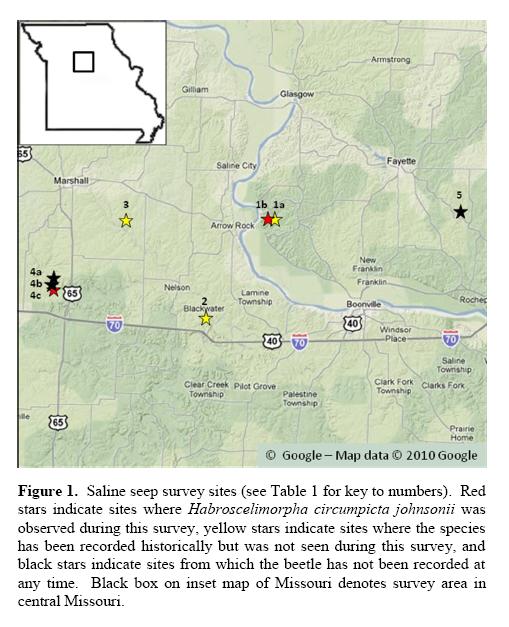
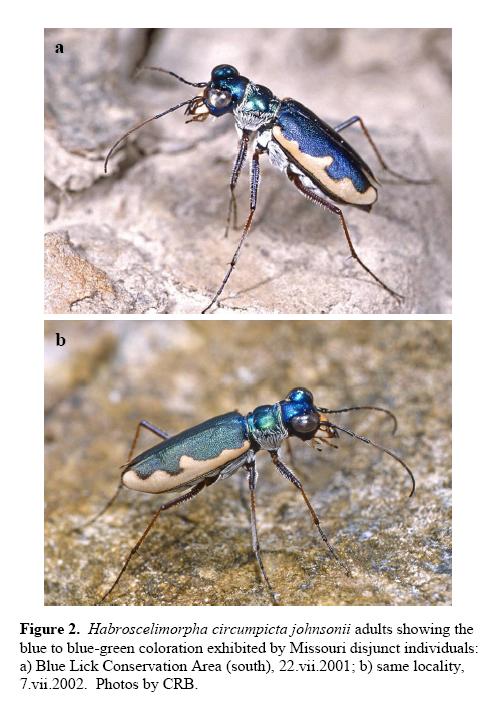
One of these species of interest is Habroscelimorpha circumpicta johnsonii (Johnson’s tiger beetle). This subspecies is widely distributed in inland areas of the central and south-central United States, where it is associated exclusively with barren areas surrounding saline seeps. Despite the broad occurrence of the main population, the Missouri population of this subspecies has long been of particular interest for several reasons: 1) its widely disjunct isolation, occurring several hundred miles east of the nearest populations in central Kansas, 2) its strict association with the highly restricted saline seeps of central Missouri (Fig. 1), and 3) the exclusive blue-green coloration of the adults (Fig. 2) that contrasts with the varying proportions of reddish and/or dark morphs, in addition to blue-green morphs, found in other populations. The highly disjunct and isolated occurrence of this population and its unique coloration have been considered by some workers as grounds for separate subspecific status. Another restricted, disjunct population of this species in North Dakota has already been accorded subspecific status – H. circumpicta pembina.

Despite its restricted occurrence in Missouri, a long history of collection records exist for the subspecies. Numerous specimens are housed in the Enns Entomology Museum in Columbia, Missouri, with a majority of these coming from a single location (Boone’s Lick Historic Site) and dating back as early as 1954. In more recent years (1985-1992), Ron Huber and Dave Brzoska found significant numbers of beetles at two additional locations near Boone’s Lick. Despite these numerous records, the subspecies was listed as a “Species of Conservation Concern” by the Missouri Natural Heritage Program with a status of “S2S3” (vulnerable or imperiled) due to the rarity of its required saline seep habitats in Missouri. Unfortunately, this alone did not appear to be sufficient protection for the species, as my own observations beginning in the mid-1990s suggested that populations of the beetle had declined significantly from their historical levels. Concomitant with these apparent declines was the observation that the sites supporting these beetles had themselves suffered severe degradation that reduced their apparent suitability as habitat for the beetle. As a result of these observations, Chris and I initiated comprehensive surveys during the 2001 field season to assess the conservation status of the Missouri population and identify potential new sites. Our first order of business was to petition a status change to “S1” (critically imperiled), and for the next three years we regularly visited the historical sites throughout the presumed adult activity period, noting occurrence of adults and recording their numbers and the circumstances of their habitat associations. Included in these surveys also were two new sites identified using the Missouri Natural Heritage Database.

The results were not good – during the 3-year survey, only a single beetle was observed at the historical location of Boone’s Lick, and none were observed at the two other locations discovered by Ron Huber and Dave Brzoska. More significantly, all three sites had suffered severe degradation due to vegetational encroachment, cattle trampling, or other anthropogenic disturbance. Moreover, of the two potential new sites identified, only one of these (Blue Lick Conservation Area) was found to support a small population of the beetle. Three apparently suitable saline seeps exist at this latter site; however, beetles were observed at only one of them. During the final year of the survey, prolonged flooding occurred at this site (frustratingly, a result of earth-moving operations by site personnel), which was followed in subsequent years by significant vegetational encroachment (Fig. 3). No beetles were observed at this site during the final year of the survey, nor has the species been seen there in multiple visits to the site in the years since.

Is the Missouri disjunct population of Johnson’s tiger beetle extirpated? There is little reason to be optimistic. What is clear is that the beetle is now below detectable limits, and with the loss of suitable habitat at all sites known to have supported the beetle in the past and little chance that new, high-quality sites will be identified, prospects for an unaided comeback are dim. The saline seep habitats at the three historic sites appear to have suffered irreparable degradation and offer little restoration potential to the degree required to support viable beetle populations; however, there are still two saline seeps at Blue Lick that do offer at least a semblance of suitable habitat. It is imperative that these last remaining examples of Missouri’s critically imperiled saline seeps habitats receive the highest priority for protection if the beetle (should it still exist) is to have any chance of surviving in Missouri. Johnson’s tiger beetle is only one of several tiger beetle species whose presence in Missouri appears to be in jeopardy (others being Dromochorus pruinina – loamy ground tiger beetle, and Cylindera celeripes – swift tiger beetle). I end this post with our closing admonition in the paper:

The loss of this beautiful and distinctive beetle from Missouri’s native fauna would represent a significant and tragic loss to this state’s natural heritage. We urge the Missouri Department of Conservation, the Missouri Department of Natural Resources, and other conservation organizations within the state to identify and allocate the resources needed to develop and implement a recovery plan for the species in Missouri.

REFERENCE:

Brown, C. R. and T. C. MacRae. 2011. Assessment of the conservation status of Habroscelimorpha circumpicta johnsonii (Fitch) in Missouri CICINDELA 42(4) (2010):77-90.

Postscript. On a happier note, I am pleased to be joining the editorial staff for CICINDELA. While my role as layout editor is more functional than academic, I am nevertheless thrilled with the chance to “rub shoulders” with the likes of Managing Editor Ron Huber and long-time cicindelid experts Robert Graves and Richard Freitag. I hope my contributions to the journal’s production on the computer end of things will be favorably received by its readership.

Copyright © Ted C. MacRae 2011