Florida Scrub Lizard

Sceloporus_woodi_IMG_1143_enh_1200x800

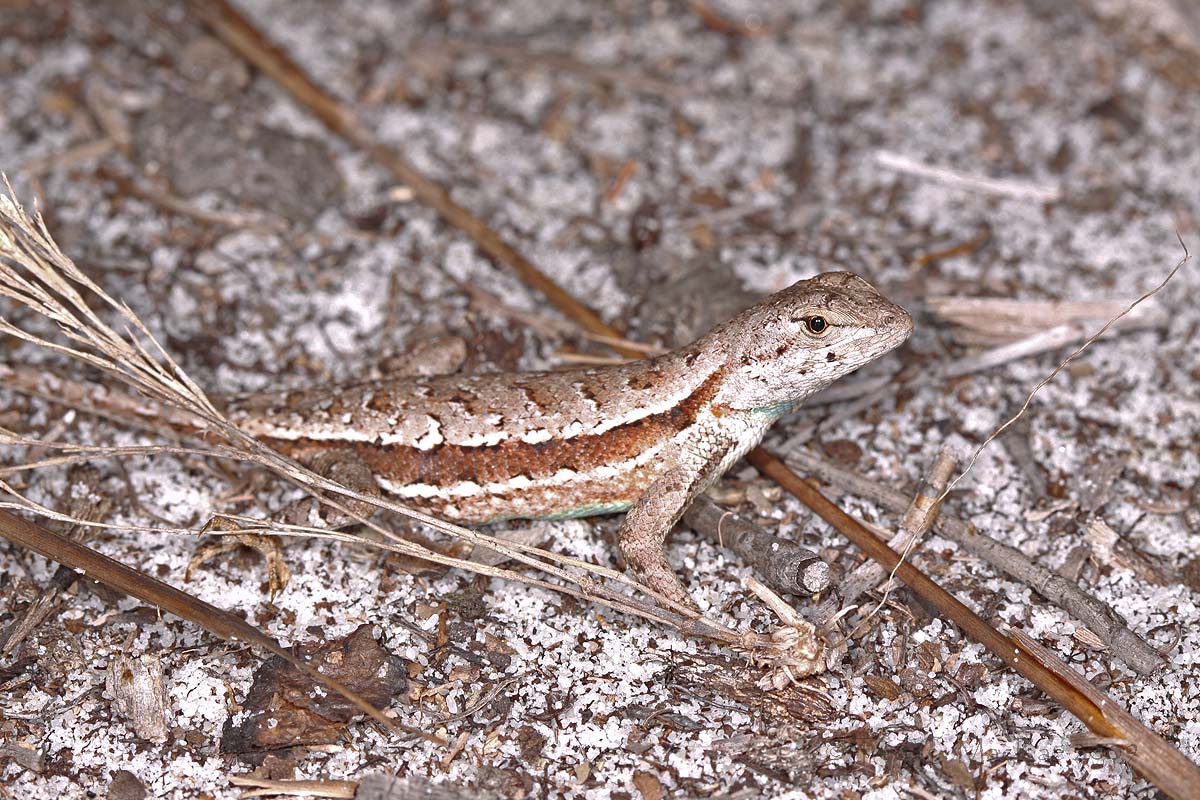
The Florida scrub lizard (Sceloporus woodi) is restricted to isolated sand scrub habitats in peninsular Florida.

Tiger beetles were not the only rare endemic species that I encountered during my visit to the Lake Wales Ridge in central Florida last August.  I didn’t know what this small lizard was as I watched it bolt from the trail and scamper for cover during my approach; however, having already found two endemic tiger beetles, I had a feeling that this lizard might also be a good one.  The photo shown here is admittedly not one of my best, but it was the only one I managed to get before the lizard ducked into the brush for good.  Horribly overexposed, I did what I could with it in Photoshop to make it halfway presentable, but there is no question that its subject represents a Florida scrub lizard, Sceloporus woodi¹.  This small, diurnal, ground-dwelling lizard belongs to the family Phrynosomatidae (same family as the Texas horned lizard that I featured in this post) and is restricted to Florida’s rare sand scrub and sandhill habitats.  Like the recently featured Highlands Tiger Beetle, this species is threatened by the isolated, disjunct nature of its required habitat—a threat made worse by the ever increasing pressures of agricultural conversion and urban development.

¹ Sceloporus is derived from the Greek word scelos meaning “leg” and the Latin word porus meaning “hole”, referring to the pronounced femoral pores found in this genus of lizards. The species epithet honors Nelson R. Wood, a taxidermist at the U.S. National Museum who collected the type specimen in 1912.

Distribution of the Florida scrub lizard (from Branch et al. 2003).

The Florida scrub lizard is related to and closely resembles the much more common and widely distributed southern fence lizard (Sceloporus undatus), which co-occurs with the scrub lizard in northern Florida.  Fence lizards, however, lack the dark brown lateral stripe that is clearly visible in the above photo, a feature seen in juveniles and adults of both sexes of the scrub lizard.  Juvenile and adult female scrub lizards also exhibit a dorsal zigzag pattern; however, this fades in males as they reach adulthood and develop the characteristic bright blue belly patches that are seen in both this species and in the fence lizard (Branch and Hokit 2000).  Since light blue patches are just visible on the belly and throat of the individual in the photograph, I haven’t been able to determine whether it represents a mature female or a still-juvenile male—any help from a knowledgeable reader would be greatly appreciated.  Unlike the fence lizard, the scrub lizard displays a high degree of habitat specificity, occurring as disjunct populations in strict association with the major sand scrub ridges of Florida.  The healthiest populations are found on the Mt. Dora Ridge in northern peninsular Florida, on which significant remnants of scrub habitat are preserved in the Ocala National Forest.  Populations also occur on the Lake Wales Ridge of central Florida and the Atlantic Coastal Ridge, but the status of these populations is less secure.  Populations also once occurred along the southwestern coast on the Gulf Coast Ridge, but these populations are now believed extirpated as a result of urban development (Jackson 1973, Enge et al. 1986).  While the Florida scrub lizard is not listed as a threatened or endangered species at the state or federal level, its high specificity to an increasingly isolated and fragmented habitat and its apparently low dispersal capabilities are clear causes for concern over its long-term prospects. As remnant habitats continue to shrink and become more isolated, the threat of localized extinction becomes an increasing concern for the lizard populations that they support.

Lake_Wales_Ridge_IMG_1129_1200x800_enh

Scrub lizard habitat is threatened by development, fragmentation and increased vegetation.

The precarious status of scrub lizards and their occurrence in several disjunct, isolated populations makes them interesting subjects for genetic studies. Mitochondrial DNA analyses suggest that scrub lizard populations exhibit a high degree of phylogeographical structure, with populations diverging significantly not only between major scrub ridges, but also within them (Branch et al. 2003).  The findings support the notion of long-term isolation of scrub lizard populations on the major scrub ridges and confirm their low dispersal rates among adjacent scrub habitats within ridges (as little as a few hundred yards of “hostile” habitat may be sufficient to prevent movement to adjacent habitats).  More significantly, the results support the concept of two distinct morphotypes on the Mt. Dora and Lake Wales Ridges and also raise the possibility that Atlantic Coastal Ridge populations represent a distinct evolutionary entity as well.  These findings are consistent with the hypothesis that scrub lizards evolved in central Florida, where they were isolated when surrounding lands were inundated by rising sea levels during the late Pliocene and subsequent interglacial periods during the Pleistocene.  During periods of low sea level they dispersed to the younger Atlantic and Gulf Coastal Ridges, where they were isolated from parent populations when more mesic conditions returned during the Holocene (12 kya to present).  The genetic distinctiveness of these different ridge populations may justify qualifying each of them for protection as “significant evolutionary units” under the U.S. Endangered Species Act, since it raises concerns about the use of translocations, a common strategy for establishing new populations in restored habitat or augmenting existing populations, as a conservation strategy for the species as a whole.  Since lizards located on different ridges are more divergent than lizards from populations located on the same ridge, movement of lizards between ridges could compromise the integrity of the genetic differences that have accumulated over millions of years and result in loss of genetic diversity.  As a result, augmenting populations on the Lake Wales and Atlantic Coast Ridges with lizards from robust populations on the Mt. Dora Ridge may not be desirable.  Instead, it may be necessary to protect individual scrub lizard populations on each of the major scrub ridges in order to preserve as much of their genetic diversity as possible.

REFERENCES:

Branch, L. C. and D. G. Hokit. 2000. Florida scrub lizard (Sceloporus woodi). University of Florida, IFAS Extension Service Publication #WEC 139, 3 pp.

Branch, L. C., A.-M. Clark, P. E. Moler and B. W. Bowen.  2003. Fragmented landscapes, habitat specificity, and conservation genetics of three lizards in Florida scrub.  Conservation Genetics 4:199

Enge, K. M., M. M. Bentzien, and H. F. Percival. 1986. Florida scrub lizard status survey. Technical Report No. 26, U.S. Fish and Wildlife Service, Jacksonville, Florida, U.S.A.

Jackson, J. F. 1973. Distribution and population phenetics of the Florida scrub lizard, Sceloporus woodi. Copeia 1973:746–761.

Copyright © Ted C. MacRae 2009

Add to FacebookAdd to NewsvineAdd to DiggAdd to Del.icio.usAdd to StumbleuponAdd to RedditAdd to BlinklistAdd to TwitterAdd to TechnoratiAdd to Furl

Highlands Tiger Beetle

When my wife and I made plans to spend a week at her sister’s condominium in Florida this past summer, I began making a list of the tiger beetle species that I wanted to see.  I would be happy to see anything, since I had never before tiger beetled in Florida, but early August was looking to be on the late side for many things.  In addition, since this was a family vacation, I would only have a couple days at most to sneak off on my own and immerse myself in bug hunting.  All this meant that I would have to be very judicious about where I went and what I looked for.  I sought advice from a few other cicindelophiles on species and localities, and by the time we made the 16-hour drive from St. Louis to Seminole (near St. Petersburg) I had settled on two destinations—the Lake Wales Ridge of central Florida to look for Cicindela highlandensis (Highlands Tiger Beetle), and the so-called “Road to Nowhere” near Steinhatchee where as many as 10 species of tiger beetles can be seen when the season is right.  Things started out well when, before even looking for any of these species, I stumbled upon Ellipsoptera marginata (Margined Tiger Beetle), its sibling species E. hamata lacerata (Gulf Beach Tiger Beetle), and some 3rd-instar larvae in their burrows that proved to be the Florida endemic Tetracha floridana (Florida Metallic Tiger Beetle) in the small coastal preserve just outside the back door of my sister-in-law’s condo.

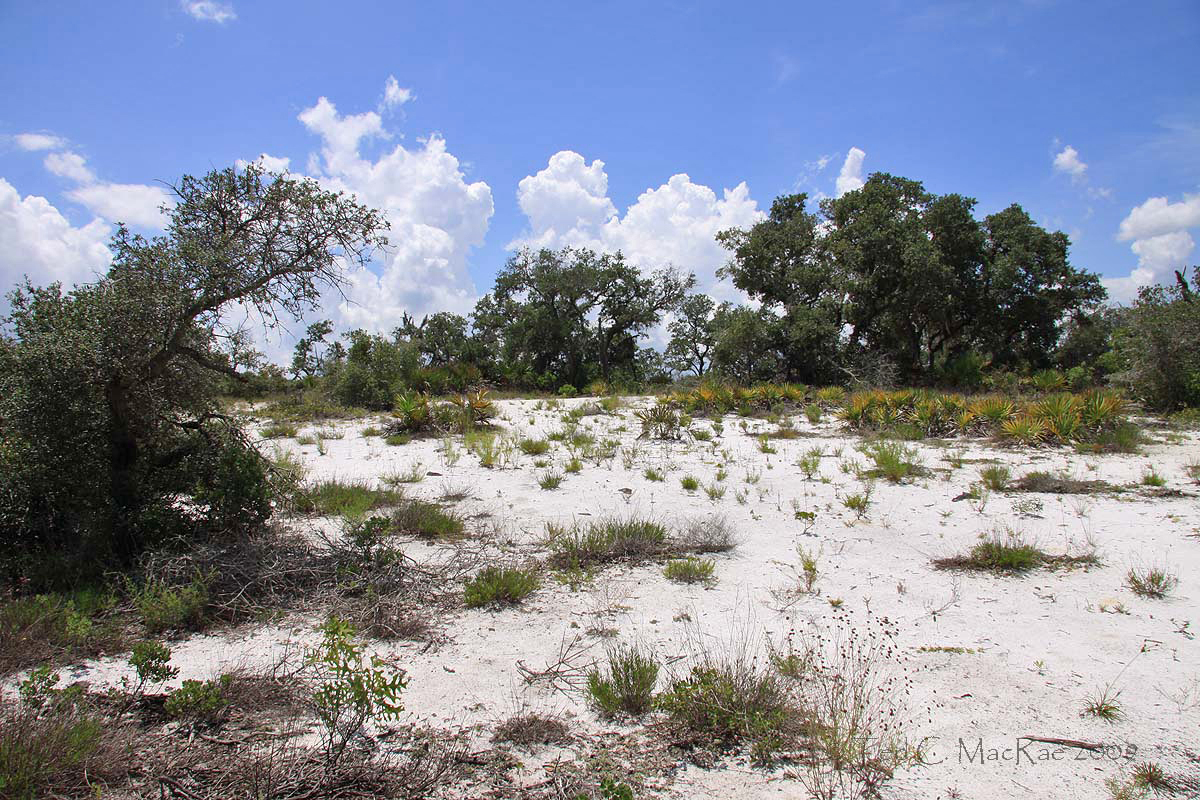
Lake Wales Ridge_IMG_1128_1200x800_enh

Dry sand scrubland on Lakes Wales Ridge in central Florida

The big target of the trip, however, was not so straightforward.  Cicindela highlandensis is one of Florida’s rarest endemic tiger beetles, being restricted entirely to remnant sand scrubland and pine woodland habitats along the Lake Wales Ridge of Polk and Highlands Counties in central Florida (Choate 2003).  The Lake Wales Ridge represents former shorelines deposited when the rest of peninsular Florida was covered by seas.  The quick draining sands have created desert-like open habitats dominated by oaks, pines, and other drought-tolerant species.  Cicindela highlandensis is one of many plants and animals endemic to the Lake Wales Ridge, which has the highest concentration of endangered plants in the continental U.S.  Unfortunately, the natural communities found on the Lake Wales Ridge have suffered severe reductions from their historical occurrence.  An estimated 85% of the scrub and sandhills has been converted to citrus groves and urban developments, and the few remaining tracts face not only continued development pressure, but also the threat of degradation from reductions in the frequency and extent of the wildfires that are essential for their maintenance (Turner et al. 2006).  NatureServe (2009) estimates that C. highlandensis populations have declined by as much as 90%, and only a few of the sites where it is known to occur are large enough to sustain viable populations.  While the species has a global status of G1 (critically imperiled) due to its limited range, restricted habitat, and very small population size, and is a candidate for listing as an endangered species by the U.S. Fish & Wildlife Service (Pearson et al. 2006), it remains—bafflingly—unlisted even as threatened by the State of Florida.  As a result, there is no formal conservation management plan for this species to ensure its survival.  Fortunately, the largest populations of C. highlandensis occur on an assemblage of public and private lands that are under partial to full conservation ownership, and preservation/management activities are taking place at most of these.

Cicindela_highlandensis_IMG_1126_1200x800_enh

Cicindela highlandensis, Highlands Tiger Beetle, in alert position

I had debated whether to look for Cicindela highlandensis at all—not because I wasn’t anxious to see it, but because I lacked confidence that I would be able find it.  A late season search for a rare species had all the hallmarks of a potential wild goose chase.  Nevertheless, I like a good challenge, and I had succeeded in obtaining information about specific locations for the species (a matter of public record; however, I prefer to maintain some discretion in this venue).  Although I began my search with tempered optimism, it didn’t take long for me to acheive my goal.  Similar to my experience with Cylindera celeripes in Oklahoma, I had barely walked ten yards into a gorgeous sand scrub habitat at the first site I had planned to search before I saw an individual.  The dark metallic blue coloration of the species would seem to make it easily seen in its white sand environs; however, in reality it is almost impossible to see until it moves.  Some have suggested that its coloration functions to make the beetle resemble the many small pieces of debris that litter the sand surface—perhaps the bits of charred wood that are common in open, fire-mediated environments.  Its dependence upon natural disturbance factors such as fire was made apparent to me by the distinct preference I noted for adults to congregate along trails kept open by human disturbance, and to a lesser degree in the larger, naturally open scrub areas.  The adults made very short escape flights and were easy to follow but difficult to approach closely enough for photographs due to extreme wariness—their long legs giving some indication of their highly cursorial capabilities.

Cicindela highlandensis

Cicindela highlandensis - note absence of setae on thorax and abdomen

Cicindela highlandensis is closely related to two other species of tiger beetles in Florida—C. abdominalis (Eastern Pinebarrens Tiger Beetle), widely distributed throughout the Atlantic and Gulf Coastal Plain, and C. scabrosa (Scabrous Tiger Beetle), confined to the Florida Peninsula and adjacent southeastern Georgia.  Both of these species are absent from the Lake Wales Ridge and, thus, do not co-occur with C. highlandensis. It is likely that C. highlandensis evolved from isolated populations of the widespread C. abdominalis that diverged during pre-Pleistocene separation of the Lake Wales Ridge from the mainland (Choate 1984).  Despite its resemblance to both C. abdominalis and C. scabrosa, C. highlandensis can be distinguished from both of those species by the complete absence of flattened, white setae on the sides of the prothorax and the abdomen and by the highly reduced or absent elytral maculations (note the very small apical markings on the individuals in these photographs).  All three of these species belong to the subgenus Cicindelidia (American Tiger Beetles) and possess red adominal coloration that is prominent during flight.

Photo details:
Photo 1: Canon 17-85mm zoom lens on Canon 50D (landscape mode), ISO-100, 1/160 sec, f/13, natural light.
Photos 2–3: Canon 100mm macro lens on Canon 50D (manual mode), ISO-100, 1/250 sec, f/14 (photo 2) or f/20 (photo 3), MT-24EX flash w/ Sto-Fen diffusers.

REFERENCES:

Choate, P. M., Jr.  1984.  A new species of Cicindela Linnaeus (Coleoptera: Cicindelidae) from Florida, and elevation of C. abdominalis scabrosa Shaupp to species level.  Entomological News 95:73–82.

Choate, P. M., Jr. 2003. A Field Guide and Identification Manual for Florida and Eastern U.S. Tiger Beetles.  University Press of Florida, Gainesville, 224 pp.

NatureServe.  2009.  NatureServe Explorer: An online encyclopedia of life [web application].  Version 7.1.  NatureServe, Arlington, Virginia.  Available at: http://www.natureserve.org/explorer (accessed: November 12, 2009).

Pearson, D. L., C. B. Knisley and C. J. Kazilek. 2006. A Field Guide to the Tiger Beetles of the United States and Canada. Oxford University Press, New York, 227 pp.

Turner, W. R., D. S. Wilcove and H. M. Swain.  2006.  State of the scrub: conservation progress, management responsibilities, and land acquisition priorities for imperiled species of Florida’s Lake Wales Ridge.  Archbold Biological Station, Lake Placid, Florida, iii + 44 pp.

Copyright © Ted C. MacRae 2009

Add to FacebookAdd to NewsvineAdd to DiggAdd to Del.icio.usAdd to StumbleuponAdd to RedditAdd to BlinklistAdd to TwitterAdd to TechnoratiAdd to Furl

North America’s largest robber fly

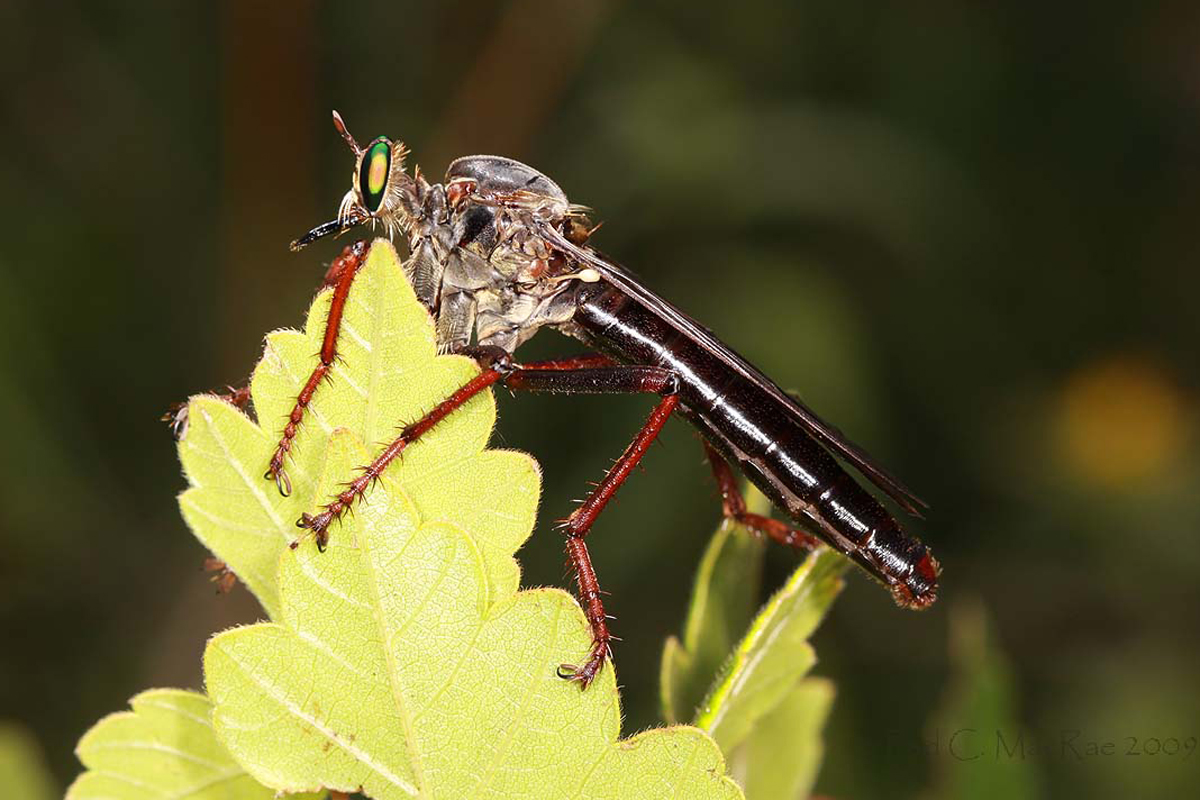
Female Microstylum morosum perched on fragrant sumac (Rhus aromatica) bush

Female Microstylum morosum perched on fragrant sumac (Rhus aromatica)

A few days ago, I featured Promachus hinei, one of the so-called “giant robber flies” and a common inhabitant of the glades and grasslands that dot Missouri’s largely forested landscape. That individual was seen at Long Bald Glade Natural Area in Caney Mountain Conservation Area, one of the many limestone glades that are a prominent feature of extreme southwestern Missouri’s White River Hills, as it snacked on a small carpenter bee (Ceratina sp.) and posed obligingly for a series of super close-up photographs. Promachus and its congeners are impressively large; however, I would see an even larger robber fly that day. I didn’t know what it was at the time, but I knew that never before had I seen such a magnificent fly, with its large, shimmering, emerald eyes, streamlined body almost devoid of setae (hairs), and ludicrously large size. These monsters were actually quite common at the glade, so I failed to appreciate the significance of what I was seeing as I chased one after another – more intent on securing photographs than specimens. This was not an easy task – they were extremely wary, rarely allowing me to approach within 12 feet no matter how cautiously and slowly I moved. Not one to back down from such a challenge (remember, I stalk tiger beetles), I persisted, traversing the rough, rock-strewn terrain amidst clumps of big bluestem (Andropogon gerardii), Indian grass (Sorghastrum nutans), and fragrant sumac (Rhus aromatica) until, at last, I got within striking distance of the impressive female shown in these photos. Taking flight before I felt assured of a good shot, I followed her repeated long, loping escape flights until I was able to get another few shots and she disappeared for good.

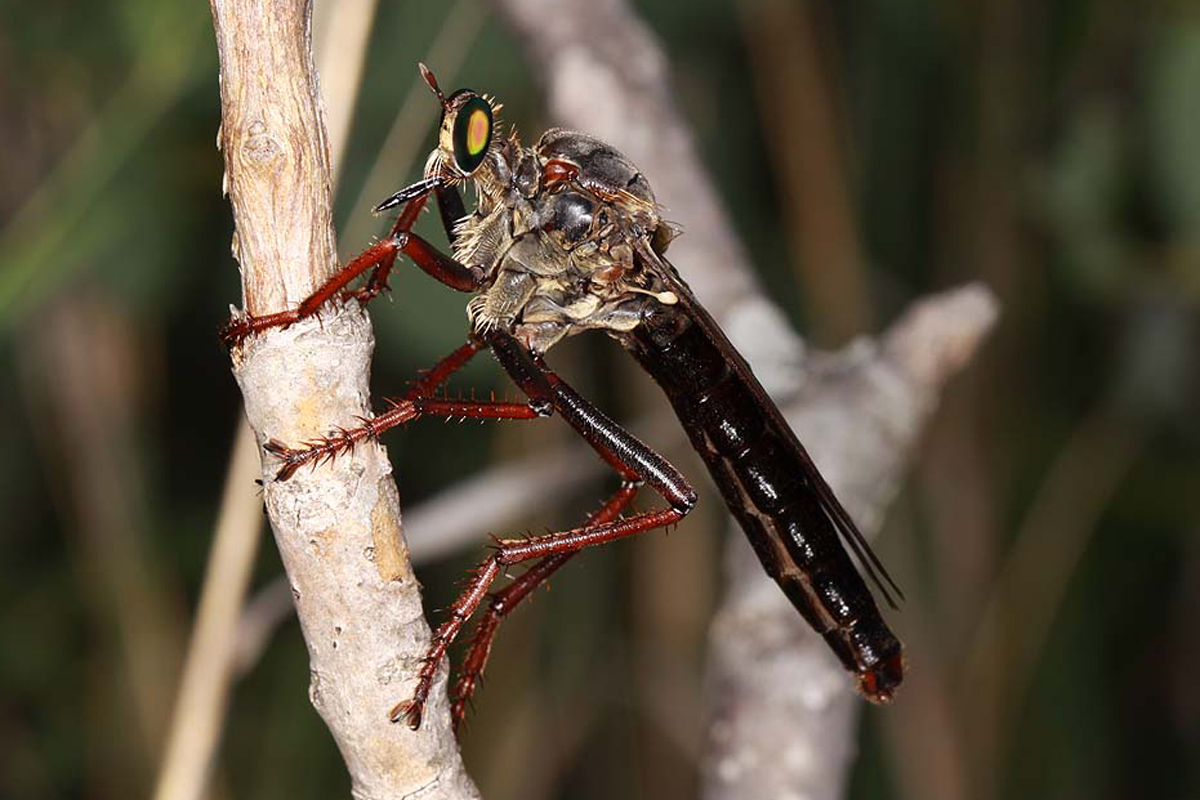
Same individual as in previous photo after flying to another perch.

Same individual as in previous photo after flying to another perch.

It didn’t take long after I returned home to figure out what I had seen, as there is really nothing that can be mistaken for Microstylum morosum, North America’s largest robber fly (Back 1909)¹. At 35–40 mm of length, this individual didn’t quite match the astounding 50-mm upper body length for the species (that’s 2 inches, folks!). Nonetheless, it was an impressive beast indeed! It is not surprising that North America’s largest robber fly should be a species of Microstylum, as it is this same genus that contains the world’s largest robber fly – the aptly named M. magnum from Madagascar, with a body length of 60 mm and an almost preposterous wingspan of up to 84 mm (that’s over 3 inches folks!). I don’t know if any flies exist that are larger than this, but certainly none can be more imposing.  While I’m happy with the photos that I did obtain, I must confess some disappointment that I wasn’t able to get more than these basic lateral profile shots.  Of the several photographs of this species that can be found on the web, this female, photographed by Greg Lavaty of Houston, Texas, is (in my humble opinion) certainly the most stunning.

¹ Puzzled by the use of the prefix “micro” in the genus name – hardly seeming appropriate for such an enormous fly – I asked Eric Fisher (retired, California Department of Food and Agriculture) about the name’s derivation, to which he replied, “The name refers to the quite small ‘stylus’ of the antenna apex; Macquart specifically mentions this character in his 1838 original description of the genus. (This is not a very helpful diagnostic character, as many asilids share this feature…).”

Even more significant than its size, however, was its very occurrence on this glade. Like Ospriocerus abdominalis, which I had seen just a few weeks earlier in the Loess Hills of extreme northwestern Missouri, M. morosum is a denizen of the Great Plains, and also like that species it has until now not been known from Missouri. That’s right – another new state record!  Unlike O. abdominalis, however, the Missouri occurrence of M. morosus represents a significant northeastern extension of its known range.  The species was long considered a Texas endemic until Beckemeyer and Charlton (2000) confirmed its occurrence in southeastern Arizona and documented significant range extensions into Oklahoma, Kansas, extreme southeastern Colorado, and extreme northeastern New Mexico.  Its eastern distributional limit was thought to occur along a north-south line from Douglas County, Kansas to Mayes County, Oklahoma to Brazoria County, Texas; however, Warriner (2004) documented its occurrence some 200 miles east of this line in the blackland prairies of southwestern Arkansas.  The occurrence of M. morosum in the White River Hills of Missouri represents yet another significant eastern extension of its known range – Long Bald Glade lies 185 miles NNE of the collection site in Arkansas and 155 miles ENE of the nearest known record in Mayes County, Oklahoma (Locust Grove), making it the easternmost known locality for this species.

As in Arkansas, where the collection site represents one of the highest quality blackland prairie remants in the state, Long Bald Glade represents a high quality remnant of the limestone glades that once occurrred much more extensively within Missouri’s White River Hills.  Like the blackland prairie of Arkansas, the limestone glades of the White River Hills have been dramatically reduced since EuroAmerican settlement due to land use conversion, and fire suppression and overgrazing of the remaining tracts have resulted in significant woody encroachment – chiefly by eastern red-cedar (Juniperus virginiana) – and loss of vegetational diversity. This has caused dramatic reductions in populations of the many Great Plains plant and animal species that are found here and nowhere else in the state.  Considering the overall distribution of M. morosum, it is unlikely that it occurs more extensively within Missouri than the White River Hills, emphasizing the importance of continued conservation and restoration activities in this unique part of Missouri.  However, since the White River Hills extend into northwestern Arkansas, M. morosum may occur in that part of Arkansas as well as the southwestern part of the state.

I thank Eric Fisher and Herschel Raney for confirming the identity of this species and its status as a new record for Missouri.

Photo details: Canon 100mm macro lens on Canon EOS 50D (manual mode), ISO-100, 1/250 sec, f/10-11, MT-24EX flash 1/2 power through diffuser caps.

REFERENCES:

Back, E. A. 1909. The robberflies of America, north of Mexico, belonging to the subfamilies Leptograstrinae and Dasypogoninae. Transactions of the American Entomological Society 35:137–400.

Beckemeyer, R. J. and R. E. Carlton.  2000.  Distribution of Microstylum morosum and M. galactoides (Diptera: Asilidae): significant extensions to previously reported ranges.  Entomological News 111(2):84–96.

Warriner, M. D.  2004.  First Arkansas record of the robber fly Microstylum morosum (Diptera: Asilidae).  The Southwestern Naturalist 49(1):83–84.

Copyright © Ted C. MacRae 2009

Add to FacebookAdd to NewsvineAdd to DiggAdd to Del.icio.usAdd to StumbleuponAdd to RedditAdd to BlinklistAdd to Ma.gnoliaAdd to TechnoratiAdd to Furl

Ant-like Tiger Beetle

Fig. 1.  Adult female Cylindera cursitans

Fig. 1. Adult female Cylindera cursitans

One of the more recent of the 24 species of tiger beetles that we’ve collected in Missouri is Cylindera cursitans (Ant-like Tiger Beetle).  Although not yet formally recorded from the state, we’ve known about its occurrence here for some time now based on a single specimen deposited in the Enns Entomology Museum (University of Missouri).  With no more locality information to go on than the frustratingly vague “nr. Portageville,” my colleague Chris Brown and I made several attempts over the years to look for this species – eventually deciding that one particular spot where the highway stretched east of Portageville and dead-ended at the Mississippi River was the most likely collection site.  This locality, which we would come to call the “end of the hiway” spot (I suspect that every state with at least one tiger beetle aficionado has one or more so-named spots), proved to be a true tiger beetle “hot-spot,” with no less than 8 species of tiger beetles found along its sandy banks in our first few surveys.  However, C. cursitans was not among them, and success would only come with a little bit of serendipity when I received an email in 2007 from Kent Fothergill.  Kent explained that he had learned of me from my Missouri Tigers article (MacRae and Brown 2001), offered some comments about the tiger beetles that he had been finding since his recent move to southeast Missouri, and included full label data from the tiger beetles in the small collection of the Delta Research Center where his then-fianceé had secured a position as a research entomologist.  I wrote Kent back, thanked him for the data, and added this plea for assistance:

There is a single specimen of Cicindela cursitans in the UMC collection, it was collected in “nr. Portageville” on July 7, 1991.  We have tried several times without success to locate this species in Missouri – it’s the only species that we have not relocated.  If you have any interest in looking for it that would be great.  Attached is a pdf of recent paper describing its habits and biology in Nebraska.

Fig. 2.  Adult female Cylindera cursitans ovipositing into substrate.

Fig. 2. Adult female Cylindera cursitans ovipositing in moist sand/loam substrate.

Little did I know how catalytic that comment would be – the very next day I received an email from Kent not only stating that he found it, but that he found it at the “end of the hiway” spot where we thought it might be.  A digital photo confirmed its identity, and the that weekend I blasted down to meet Kent and see the beetle for myself.  I would see just two beetles that day, but both were at a new locality about one mile south of where Kent had originally spotted them.  Kent would later find them at yet another locality further north along the Mississippi River, and in 2008 the three of us (Kent, Chris, and myself) conducted an intensive survey of potential habitats in southeastern Missouri that identified additional populations both north and south of the original localities.  We concluded that populations of C. cursitans, were restricted in southeast Missouri to the ribbons of wet bottomland forest that occupy the narrow corridor between the Mississippi River and the levees that confine it. However, the populations appeared secure and likely did not require any immediate conservation measures to ensure their long-term survival within the state. 

Fig. 3.  Adult male Cylindera cursitans.

Fig. 3. Adult male Cylindera cursitans.

The bottomland forests that harbor C. cursitans in southeast Missouri (Fig. 3) contrast sharply with the wet meadow habitats reported for populations in Nebraska (Brust et al. 2005a). Within these habitats, the beetles themselves are very easily overlooked because of their small size and rapid running capabilities.  In addition, adult activity peaks in June and begin to wane in July.  The combination of these factors explains our initial difficulty in finding the beetle; however, with a proper search image and better understanding of its temporal occurrence and habitat preference, we have since found the beetles to be rather easily located.  A lingering question from last year’s survey is, how far north along the Mississippi River does C. cursitans occur? Furthermore, might the species also occur in northeast Missouri due to its proximity to the Nebraska populations?  Most of Missouri straddles a curious distributional gap that separates the bottomland forest dwelling populations in the southeast from the wet meadow dwelling populations in the upper Great Plains (Hoback and Riggins 2001). This has led some authors to suggest that the observed distribution represents two disjunct forms and potentially two species (Ron Huber, pers. comm.). Additional surveys of potential habitat further north along the Mississippi River and in northwest Missouri along the Missouri River could prove useful in confirming or refuting that suggestion. 

Fig. 3.  Habitat for Cylindera cursitans, along Mississippi River, vic. Donaldson Point Conservation Area, New Madrid Co., Missouri.

Fig. 4. Habitat for Cylindera cursitans, along Mississippi River, vic. Donaldson Point Conservation Area, New Madrid Co., Missouri.

While such surveys were not possible this year, long-time fieldmate Rich Thoma and I were able to visit the Southeastern Lowlands in June to examine a few habitats along the Mississippi River found a little further north of the northernmost extent of our 2008 survey area. We succeeded in finding another population at one of these sites near the northern limit of the Southeastern Lowlands.  The individuals shown here (Figs. 1-3) were collected from that location (extreme northeastern Mississippi Co.), confined on local sand/loam substrate, and photographed a few days later.  In one of the photos (Fig. 2), a female can be seen in the act of ovipositing into a hole dug into the substrate with her ovipositor.  The more observant readers might notice a strong resemblance between this species and another species to which I have devoted several posts, Cylindera celeripes (Swift Tiger Beetle).  These two species are, in fact, quite closely related and can be distinguished by characters of the elytra (posterior portion not or only slightly expanded and lateral white maculations complete in cursitans, distinctly expanded and maculations reduced in celeripes) (Pearson et al. 2006), habitat (cursitans in moist lowland sites, celeripes in dry upland sites), and distribution (southeast Nebraska/southwest Iowa is the only area where the distributions of these two species overlap, although C. celeripes has not been seen in Nebraska for nearly 100 years! (Brust et al. 2005b)).

Photo details:
Figs. 1-3: Canon 100mm macro lens with Kenco extension tubes (68mm) on Canon EOS 50D (manual mode), ISO-100, 1/250 sec, f/18, MT-24EX flash 1/2 power through diffuser caps.
Fig. 4: Panasonic DMC-FX3 (landscape mode), ISO-100, 1/25 sec, f/2.8, natural light.

REFERENCES:

Brust, M., W. Hoback and C. B. Knisley.  2005a.  Biology, habitat preference, and larval description of Cicindela cursitans LeConte (Coleoptera: Carabidae: Cicindelinae).  The Coleopterists Bulletin 59(3):379-390.

Brust, M. L., S. M. Spomer and W. W. Hoback.  2005b.  Tiger Beetles of Nebraska.  University of Nebraska at Kearney.  http://www.unk.edu (Version 5APR2005).


Hoback, W. W. and J. L. Riggins.  2001.  Tiger beetles of the United States.  Jamestown, ND: Northern Prairie Wildlife Research Center Online.  http://www.npwrc.usgs.gov/resource/distr/insects/tigb/index.htm (Version 12DEC2003).

MacRae, T. C., and C. R. Brown. 2001. Missouri Tigers. Missouri Conservationist 62(6):14–19.

Pearson, D. L., C. B. Knisley and C. J. Kazilek. 2006. A Field Guide to the Tiger Beetles of the United States and Canada. Oxford University Press, New York, 227 pp.

Copyright © Ted C. MacRae 2009

Add to FacebookAdd to NewsvineAdd to DiggAdd to Del.icio.usAdd to StumbleuponAdd to RedditAdd to BlinklistAdd to Ma.gnoliaAdd to TechnoratiAdd to Furl

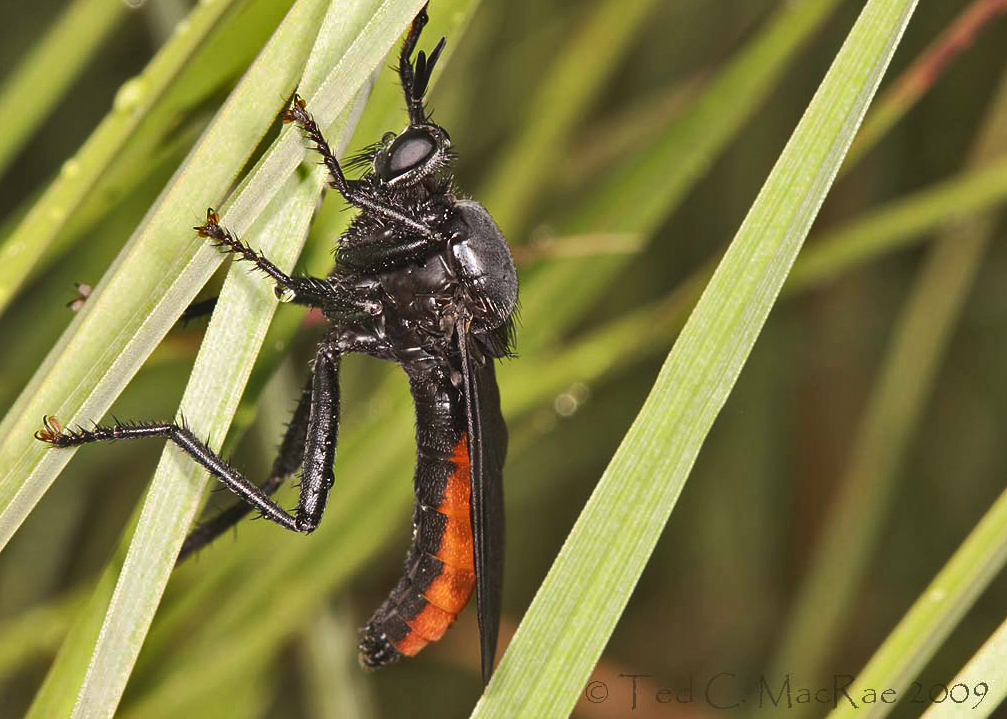
Ospriocerus abdominalis

Photo details: Canon 100mm macro lens on Canon EOS 50D, ISO 100, 1/250 sec, f/14, MT-24EX flash 1/4 power w/ diffuser caps.

Photo details: Canon 100mm macro lens on Canon EOS 50D, ISO 100, 1/250 sec, f/14, MT-24EX flash 1/4 power w/ diffuser caps.

My dipteran digression continues with this photograph of the robber fly, Ospriocerus abdominalis (Diptera: Asilidae).  More than just a pretty picture, this represents yet another apparently new state record that I and my colleague Chris Brown discovered a few weeks ago during our 2-day survey of Missouri’s critically imperiled hilltop prairies in the extreme northwest corner of the state.  Like the previously discussed Cylindera celeripes (swift tiger beetle) and Beameria venosa (a prairie-obligate species of cicada), O. abdominalis has not previously been recorded further east than Nebraska, Kansas, Oklahoma and Texas. This large fly is a grassland denizen that ranges over western North America and into Mexico (Cannings 1998, as Ospriocerus aeacus). It is somewhat suggestive of a mydas fly, although its short antennae immediately identify it as a robber fly (mydas flies have elongate clubbed antennae).  It also reminds me of the magnificent western robber fly Wyliea mydas by its mimetic, wasp-like coloration – presumably modeled after spider wasps of the genus Pepsis and Hemipepsis (Hymenoptera: Pompilidae) – but is distinguished by its black body and wings with red dorsal coloration on the abdomen (W. mydas has the abdomen wholly black and the wings red).  While not quite as handsome as W. mydas, it is impressive nonetheless.

The dry hilltop prairie remnants in which O. abdominalis, B. venosa, and C. celeripes were found are associated with the Loess Hills, a unique landform along the western edge of Iowa that reaches its southern terminus in extreme northwest Missouri.  Due to their extreme rarity and vulnerability to woody encroachment and anthropogenic degradation, these remnant habitats are considered one of Missouri’s most critically imperiled natural communities. Only about 50 acres of original habitat remain, and of this only half is in public conservation ownership.  Many of the plants and animals found in these habitats represent hypsithermal relicts that migrated eastward during a dry and warm period after the last ice age and were then “left behind” in pockets of relictual habitat as a return to cooler, wetter conditions forced the main populations back to the west.  More than a dozen plants and two vertebrates occurring in these prairies are listed as species of conservation concern.  As is typically the case, the flora and vertebrate fauna of these remnant habitats have been fairly well characterized, while precious little attention has been given to the vastly more diverse invertebrate fauna.  As we begin to study the insects of these habitats more carefully, we are almost sure to find a great many species that are more typically found further to the west and that live nowhere else in Missouri.  Their continued presence in the state will be wholly dependent upon the critically imperiled habitats in which they live, making conservation and restoration of the remaining loess hilltop prairie remnants in Missouri all the more important.

My thanks to Eric Fisher and Herschel Raney for confirming the identity of O. abdominalis.

REFERENCES:

Cannings, R. A. 1998. Robber Flies (Insecta: Diptera: Asilidae), in Smith, I. M., and G. G. E. Scudder, eds. Assessment of species diversity in the Montane Cordillera Ecozone. Burlington: Ecological Monitoring and Assessment Network.

Copyright © Ted C. MacRae 2009

Add to FacebookAdd to NewsvineAdd to DiggAdd to Del.icio.usAdd to StumbleuponAdd to RedditAdd to BlinklistAdd to Ma.gnoliaAdd to TechnoratiAdd to Furl

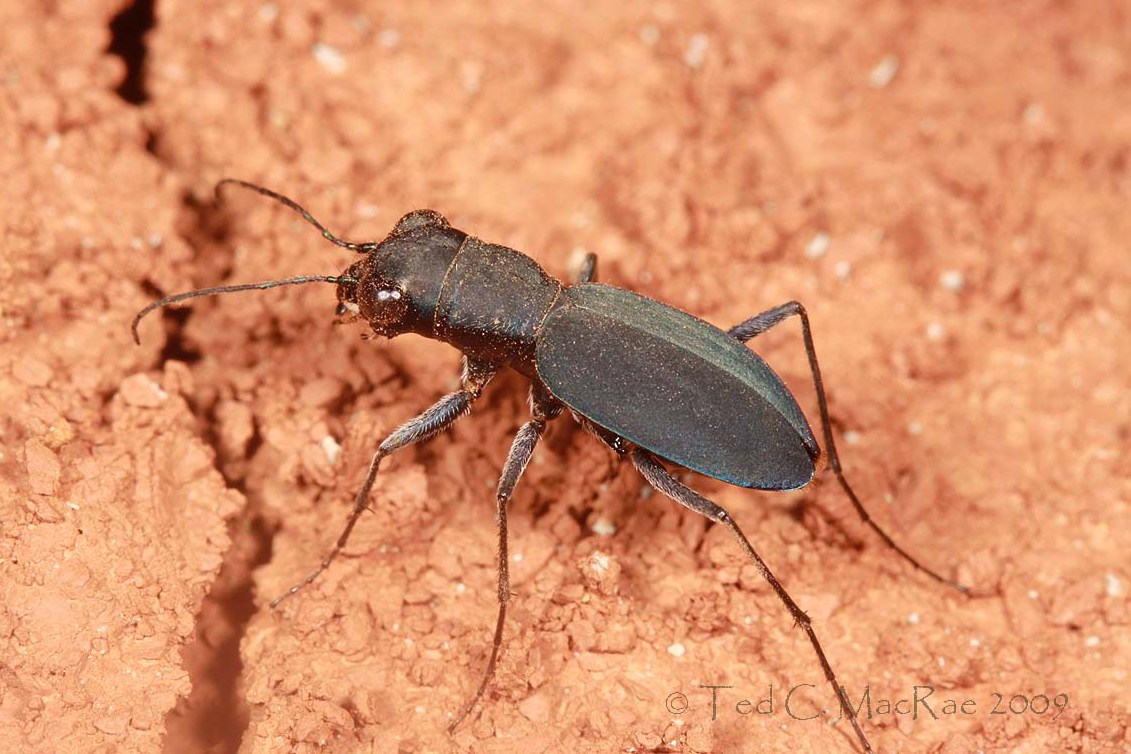
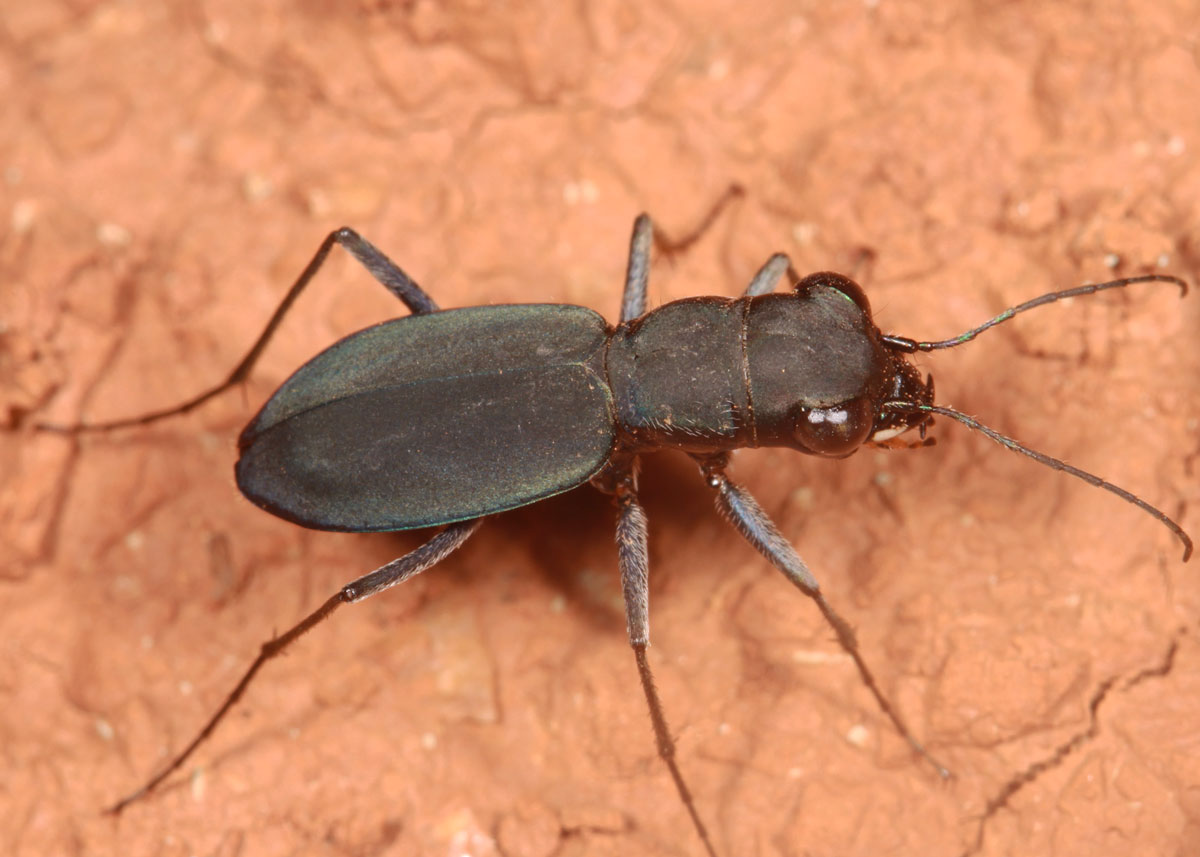
Dromochorus pruinina in Oklahoma

As my colleague Chris Brown and I continue to study the tiger beetle fauna of Missouri, one of the species we have become very interested in is Dromochorus pruinina (frosted dromo tiger beetle).  This is another of North America’s more enigmatic species and is one of a handful of species in Missouri – along with Cylindera cursitans (ant-like tiger beetle), C. celeripes (swift tiger beetle), Habroscelimorpha circumpicta johnsonii (Johnson’s tiger beetle), and Cicindela (Cicindelidia) obsoleta vulturina (prairie tiger beetle) – whose highly restricted distributions within the state make them worthy of special consideration for conservation (see Saving Missouri’s tigers and Revisiting the Swift Tiger Beetle – Part 3).  Of these, D. pruinina appears to be the most highly localized – thus far we have found this species only in west-central Missouri along a 2.5 mile stretch of roadside habitat in Knob Noster State Park.  This tiny population is not only the easternmost known occurrence of the species, but is also disjunct from the main population in Kansas, Oklahoma, and Texas by nearly 100 miles.  As a result of this extreme localization within the state, the species has been accorded a conservation status in Missouri of S1 – the state’s highest conservation ranking. 

IMG_0624_1200x800

Dromochorus pruinina is secretive and easily overlooked, and as a result little is known about it – in fact, the larva was unknown until just last year (Spomer et al. 2008).  There has also been little agreement on what to call it – many authors (e.g., Freitag 1999, Pearson et al. 2006) have considered it a synonym or subspecies of D. belfragei (loamy-ground dromo tiger beetle) from Texas; however, Spomer et al. (2008) and Erwin and Pearson (2008) consider it a valid species based on its smooth elytra in contrast to the granulated elytral surface of D. belfragei and the apparent lack of intergrades in central Texas where their geographical distributions overlap.  It was one of the species I had hoped to see during my early June visit to The Nature Conservancy’s Four Canyon Preserve in northwestern Oklahoma; however, I would not see this species there despite its abundance of exposed red clay slopes.  Following that visit, as I sat in a coffee shop in north-central Oklahoma trying to predict where the pounding rainstorm outside was least likely to spoil my collecting plans for the next few days, this species again came to my mind when I decided to go back to the red clay/gypsum hills just north of Four Canyon Preserve – where I had just seen the even more enigmatic C. celeripes.  I noted that this corner of Oklahoma was just at the western edge of the distribution given by Pearson et al. (2006) for the species, but still read through the notes on its habits and habitats in the off chance that I might still encounter it.  Despite all the forethought, it was nevertheless a surprise when an adult bolted across my path soon after beginning my search of the Gloss Mountains the next day (see Revisiting the Swift Tiger Beetle – Part 2).  Like C. celeripes, this species is flightless and runs swiftly – perhaps even more so – as it dashes between clumps of vegetation before disappearing.  It’s larger size would seem to make it easier to capture than C. celeripes, but that is not the case, yet I still managed to capture all three individuals I saw during the course of the several hours I spent on the lower talus slopes at the Gloss Mountains Scenic Overlook that morning.  With none of them could I even make an attempt at field photographs – their repeated mad dashes for cover eliminated all opportunity.  I placed the three individuals into a terrarium of native soil, resigned that I would have to settle for photographs in confinement (there is nothing wrong with confined photographs, which look every bit as natural as true field photographs – still, there is just something about not succeeding in photographing the subject in its native habitat).

IMG_0622_1200x800_2I returned to the Gloss Mountains late in the day and completed my search for C. celeripes in the State Park across the highway (and also saw my first massasauga rattlesnake).  By then it was about 7:00 pm, and my thoughts turned back to the D. pruinina I had seen across the highway earlier that day.  I recalled the tendency of the Missouri population of D. pruinina to be most active in the few hours before dusk and decided to have another go at them.  No sooner than I had begun to climb the talus slope did I see another one – he bolted into a grass clump, and despite my best attempts to tear the vegetation apart he was gone.  Frustrated, I got up and started walking up the slope again – and saw another one, with the same result!  Now I was mad.  I started searching the rankly vegetated clay slope with determination, and it wasn’t long before I saw a third individual higher up on the slope.  It was then and there that I decided I was going to get a field photograph.  I stopped dead in my tracks so as not to further disturb the beetle, and carefully took off my backpack and put my camera together as I kept a watchful eye on him.  Once ready, I moved slowly toward him – and he bolted.  This time I managed to catch him before he disappeared.  Okay – I’ve got one in the hand, now what?  I decided to try the time-out trick – placing him in the middle of an open area on top of the small mesa and covering him with my camera lens cap.  With luck, being covered momentarily would cause him to “settle down” long enough for me to get some shots.  I waited a few minutes, then carefully lifted up the lens cap – out he bolted with a vengeance.  Time for a new strategy.  I started blocking his path with my free hand everytime he tried to run out of the open area I had designated for him, hoping that he would eventually tire and rest momentarily – this was the strategy I successfully employed to get my first field photographs of C. celeripes the day before at Alabaster Caverns (see Revisiting the Swift Tiger Beetle – Part 1).  I did this for several minutes, and the little bugger just refused to settle down.  Finally, as I took my eye off of him for a split second, he disappeared into an adjacent grass clump and was never seen again.  IMG_0626_1200x800By now I was so frustrated that I considered giving up. Of course, I couldn’t – there was still daylight, and if there’s one thing I’ve learned in this game, it’s persistence. I started walking back down the slope searching for another individual, and right at the edge of the vegetated area I saw one running for cover.  This time I cut him off at the pass and forced him to run back towards the more open area of the upper slope.  Once out in the open, I continued to follow him as he nervously ambled across the slope into and out of erosion channels, looking for a place to hide.  Everytime he siddled up against a chunk of clay or tried to crawl into a crack I forced him out.  In the open expanse of the upper slope where I had him trapped, he eventually started pausing – not for long, but just long enough that I could get a shot or two in before he started running again.  Eventually, I got several shots that I thought might turn out acceptable.  I briefly looked at my camera to try another setting, looked up, and he was gone!  By now it was past 8:30 pm, and the sun was sinking fast.  I decided that I had given it my best effort, and that whatever shots I had would have to do.  I share with you here three of the five shots that I kept.

Photo details: Canon 100mm macro lens on Canon EOS 50D, ISO 100, 1/250 sec, f/14-16, MT-24EX flash 1/4 power through diffuser caps.

REFERENCES:

Erwin, T. L. and D. L. Pearson. 2008. A Treatise on the Western Hemisphere Caraboidea (Coleoptera). Their classification, distributions, and ways of life. Volume II (Carabidae-Nebriiformes 2-Cicindelitae). Pensoft Series Faunistica 84. Pensoft Publishers, Sofia, 400 pp.

Freitag, R.  1999.  Catalogue of the tiger beetles of Canada and the United States.  National Research Council Canada, Ottawa, Ontario, 195 pp.

Pearson, D. L., C. B. Knisley and C. J. Kazilek. 2006. A Field Guide to the Tiger Beetles of the United States and Canada. Oxford University Press, New York, 227 pp.

Spomer, S. M., P. D. Nabity and M. L. Brust. 2008. Larval description of Cicindela (Dromochorus) pruinina (Casey) (Coleoptera: Carabidae: Cicindelinae) with notes on habitat and adult behavior. The Coleopterists Bulletin 62(1):37-41.


Copyright © Ted C. MacRae 2009

Add to FacebookAdd to NewsvineAdd to DiggAdd to Del.icio.usAdd to StumbleuponAdd to RedditAdd to BlinklistAdd to Ma.gnoliaAdd to TechnoratiAdd to Furl

North America’s most bizarre lizard

Hmm, something funny going on here.  This is a bug blog – specifically a beetle blog, yet it’s a post about a lizard that generates a flurry of comments.  I don’t know if lightning will strike twice so quickly, but I did have this second ‘lizard’ post already lined up in the queue.

IMG_0390_1200x800

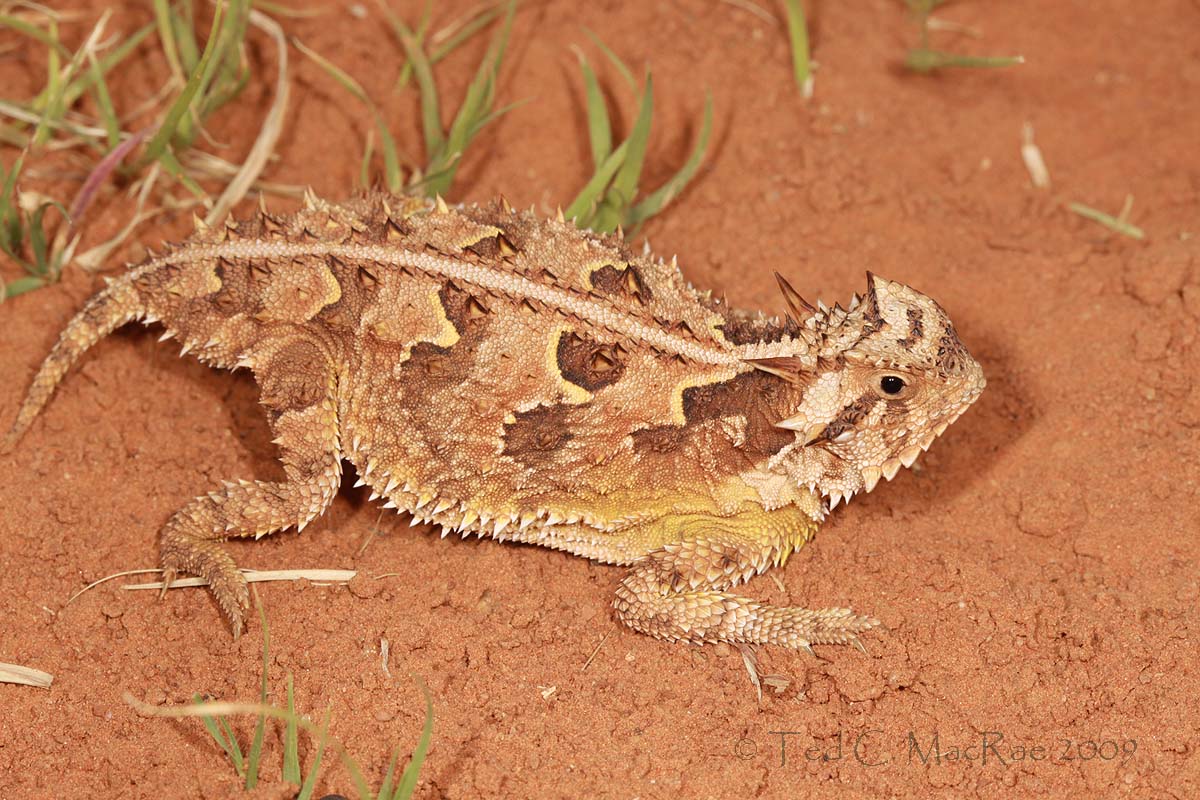
The day after seeing a couple of male eastern collared lizards at Four Canyon Preserve in northwestern Oklahoma, I got my second saurian treat with this horned lizard (genus Phrynosoma).  There are actually some dozen species of horned lizards in North America, but the majority are found further west in the U.S. and down into Mexico and Central America.  Of the two that occur in Oklahoma, this particular individual can be identified as a Texas horned lizard (P. cornutum) by the two occipital (back of the head) spines, presence of lateral abdominal finge scales, and dorsal white stripe.  Oklahoma’s other horned lizard (round-tailed horned lizard, P. modestum) is restricted to the northwestern corner of the panhandle and differs from the Texas horned lizard by having four occipital spines, lacking lateral abdominal fringe scales, and more solid pale coloration.

IMG_0392_1200x800Again, my claim of “most bizarre” might be open to debate, as there are certainly many bizarre lizards in North America.  The gila monster once more comes to mind, but I think grotesque is a better descriptor for that animal, and the fan-shaped toe pads of geckos might also get them some votes.  Nevertheless, do a Google search on the phrase “bizarre North American lizard” and the results will be overwhelmingly dominated by references to horned lizards.  It’s no surprise – their squat body form is more suggestive of toads than lizards¹, for which they are commonly called “horned toads” or “horny toads,” and their covering of “horns” (actually modified scales) gives them an otherworldly, almost dinosaurian appearance.  Who among my generation wasn’t terrorized by the sight of these lizards, cheaply magnified, as they threatened the scientists that encountered them in the 60’s sci-fi classic The Lost World?

¹ Even the genus name, derived from the Greek words phrynos (toad) and soma (body), alludes to its toad-like appearance.

IMG_0397_1200x800In reality, these lizards are anything but terrifying.  Instead they employ multiple strategies to avoid being eaten themselves. These adaptations were all on display as I initially passed this individual without even noticing it lying motionless in the middle of the road. Once I had passed I noted movement out of the corner of my eye and turned to see it scurrying towards the vegetation along the side of the road. It’s mottled coloration, blending well with its background, and spine-broken silhouette made it almost invisible. Feeling threatened by my too-close approach, it made a rapid burst for cover, but I cut it off at the pass and blocked its erratic scampers towards the roadside to keep it out in the open so I could take some photographs. Once cornered in the open, it resorted to a third strategy – puffing of the body to make it appear larger. Had I been a true predator, it would’ve had two more strategies up its sleeve that it could have employed as a last resort – bleeding from the eyes (which apparently has a foul taste and will cause a predator to drop the lizard from its mouth) along with the mechanical defense of its hard, spiny scales. Since I didn’t actually try to eat this little guy, I didn’t have a chance to experience these final lines of defense.

The photos here actually represent two individuals – the middle picture is a second lizard that suddenly appeared while I was photographing the first.  The second individual was somewhat smaller than the first and not as boldy marked (note the lack of a distinct dark stripe behind the eye).  Whether these were male and female is difficult to say – horned lizards lack outward sexual characters allow them to be easily distinguished in the field (females do tend to grow a little bit larger). While not threatened or endangered, Texas horned lizards, like many other horned lizard species, have experienced dramatic reductions in its range. Oklahoma has a year-round closed season for both species that makes it illegal to kill or capture horned lizards without written permission. I would see a few more of these fascinating little lizards during my three days at Four Canyon Preserve, suggesting that, at least in this part of the state, horned lizards are doing just fine.

Photo details: Canon 100mm macro lens on Canon EOS 50D, ISO 100, 1/250 sec, f/11-13, MT-24EX flash 1/4 power through diffuser caps.

Copyright © Ted C. MacRae 2009

Add to FacebookAdd to NewsvineAdd to DiggAdd to Del.icio.usAdd to StumbleuponAdd to RedditAdd to BlinklistAdd to Ma.gnoliaAdd to TechnoratiAdd to Furl

Revisiting the Swift Tiger Beetle – Part 3

…continued from Revisiting the Swift Tiger Beetle – Part 2.

The Oklahoma trip had been an unqualified success. Not only had I managed to find the rare Cylindera celeripes (swift tiger beetle) at Alabaster Caverns, I had also determined the population there was healthy and, in fact, occurred robustly across a large swath of red clay/gypsum hill habitat in the vicinity of the Cimarron River (Woodward and Major Counties) in northwestern Oklahoma. This is good news for the species, who some have regarded as a potential candidate for federal listing on the endangered species list. There is no doubt that the species has suffered greatly in many parts of its range during the past century – most likely due to loss of habitat; however, the presence of a strong population in Oklahoma gives reason for optimism about its long-term prospects. It would have been even better had I found the species at the two Nature Conservancy preserves (Four Canyon and Tallgrass Prairie) that I had targeted, and the reasons for its apparent absence at those two sites despite an abundance of apparently suitable habitat remain a mystery to me (although I have my suspicions). Nevertheless, I returned to St. Louis happy, with new localities in my database and live individuals in containers of native soil for another attempt at rearing.

Our work with this species was not done, however. While C. celeripes has never been recorded in Missouri, my colleague Chris Brown and I have long suspected that it might occur here – most likely, we felt, in extreme northwestern Missouri where the Loess Hills landform reaches its southern terminus. We had looked for it in this area a few times before on the few remaining dry, hilltop prairie relicts that are so common further north in Iowa, and we had also looked for it in the larger tallgrass prairie remnants of west-central Missouri. None of these searches were successful, and with each unsuccessful effort it seemed less and less likely that the species actually occurred within the state – especially considering the declines that the species has experienced throughout its range. However, when we managed to find a small, newly discovered population of the species last summer in the Loess Hills of southwestern Iowa, just 60 miles north of Missouri (see The Hunt for Cicindela celeripes), we decided that one more thorough effort to locate the species in Missouri was in order.

Star School Hill Prairie Natural Area (north tract), Atchison Co., Missouri.

Star School Hill Prairie Natural Area (north tract), Atchison Co., Missouri.

Our plan was straightforward – we would travel to northwestern Missouri each weekend beginning in late June and search the most promising hilltop prairie relicts that still remain in Missouri. There aren’t many of these, so I contacted Tom Nagel of the Missouri Department of Conservation – who probably knows more about Missouri’s hilltop prairie relicts than anyone else – for assistance in identifying these parcels. Tom graciously sent me descriptions and aerial photographs of the highest quality relicts still remaining in Missouri. None of these are large (12 contiguous acres or less), and all have been impacted to some degree by woody encroachment and are in various stages of restoration. We had already searched one of these tracts (Star School Hill Prairie) a few times, but two others were new to us. So, on a Friday evening before the first of three planned weekends for our study (and only two weeks after returning from Oklahoma), Chris and I made the long drive across Missouri and north along the Missouri River and began our search the next morning.

Fieldmate Chris Brown surveys loess hilltop prairie habitat at Star School Hill Prairie Natural Area, Atchison Co., Missouri

Fieldmate Chris Brown surveys loess hilltop prairie habitat at Star School Hill Prairie Natural Area (south tract), Atchison Co., Missouri

Our first stop was High Creek Hill Prairie in Brickyard Hill Conservation Area (Atchison Co.). We had been to Brickyard Hill a few times but had not previously found this particular hilltop prairie. We found the tract, a long, narrow series of ridge tops and southwest-facing slopes, thanks to Tom Nagel’s map and began searching with all the enthusiasm and optimism that accompanies any new search. Our optimism waned with each hilltop ridge that we traversed not seeing the beetle, until we reached the easternmost ridge amidst a jumble of eastern red-cedar cadavers that halted any further progress or promise. As we stood atop that last hill, we debated our next move. Chris had noted apparently good habitat on the lower slopes below us, while I had spotted another very small hilltop tract across a wooded ravine and disjunct from the main prairie. We decided these areas should be explored before moving on to the next site, but as we searched those lower slopes our optimism continued to wane. The habitat was perfect based on what we had seen in Iowa last year and what I had seen in Oklahoma earlier in the month – small clay exposures amongst clumps of undisturbed little bluestem and grama, but still no beetles. Chris, refusing to accept defeat, continued to search the slope, while I worked my way over to the smaller hilltop tract I had seen from above. After crossing through the wooded ravine, I found an old 2-track running along the base of the tract and began walking along it. The small slope above the 2-track was littered with large cadavers of the invasive eastern red-cedar (Juniperus virginiana), apparently left in place after chainsawing to provide fuel for a planned, future burn. As I walked, a white-tailed deer bolted from a nearby cadaver, giving me a bit of a start, and I veered towards the cadaver to have a look at where it had bedded down. By this time I almost wasn’t even really thinking about C. celeripes anymore – we had been there for about an hour and a half and searched the most promising habitats without success – the small tract where I was now working was almost a last gasp before moving on. As I approached the deer’s bedding site, a “flash” in the thick vegetation caught my eye, and I knew instantly what it was. Immediately I dropped to my knees and tried to “trap” the evasive little beetle (I’ve found that forming a “trap” between the crotches of my hands and gradually closing my hands together forces the beetle to run up and over one of my hands, at which time I can try to pin it down with my other). The beetle behaved exactly as expected, running over my left hand – but I missed it. I trapped it again, and once again it ran over my hand too fast to pin down. I tried to follow it as it zigzagged erratically through the thick vegetation, but in the blink of an eye it was gone. I spent the next several minutes frantically pulling apart the vegetation in a 2-foot radius around the spot in what I knew was a vain attempt to relocate the beetle before ultimately accepting that I had missed it. No matter – I had seen it and had absolutely no doubt about what it was – C. celeripes does indeed occur in Missouri! Wow – big news! I knew if I had seen one, I had a good chance of seeing another, so I began searching the area again – now with much more deliberation. I walked back and forth along the old 2-track, up and down the cadaver-littered slope, and back to the original spot several times. As time passed, a gnawing fear began to grow inside me that this new state record might lack a voucher. Suddenly, very near the original spot, I saw another. This time I pounced with authority and made no mistakes, and after securing the live beetle in a vial I gloated and congratulated myself unabashedly inside while bursting to give the news to Chris. I searched the slope some more, but I couldn’t take it anymore – I had to tell someone. I pulled out my cell phone and began texting a message to my daughter Mollie (who really doesn’t care about beetles but loves to receive text messages). As I was texting, Chris appeared on the lower slope, obviously noting that my net had been left on the ground purposely to mark a spot. As I finished texting I told Chris to come here, I wanted to show him something, and then non-chalantly handed him the vial. I would give anything to have a video of the look on Chris’ face as it changed from quizzical dumbfoundedness to shocked elation. Chris, too, had reached a low point in his optimism after thoroughly searching the previous slope without success, but now we were both as giddy as school boys – our long efforts had finally paid off with a new state record for one of North America’s rarest tiger beetles (the way we were acting, you’d have thought we’d just discovered plutonium!). We searched the slope for another half hour or so, with Chris seeing one more individual very close to where I had seen the first one. Whether it was the same or a different individual is unknown, so we decided that we had seen at least two individuals at this site. The discovery of C. celeripes here caused us to once again search the lower slope that Chris had previously searched so thoroughly, but again the beetle was not seen. Our giddiness was beginning to give way to concern over the few individuals we had seen and how localized they seemed to be. We had been at the site now for about three hours, and I was famished. I hiked back to the truck, noting some habitat at the far western end of the main prairie where we had begun our search that looked like it deserved another search. As I ate, Chris worked his way over to that spot, and after a period of time I heard him yell down to me and give me the “thumbs up.” I hurriedly finished eating and worked my way up to where he stood, and together we located two more individuals – taking one as a voucher for the site and ganging up on the other to keep it pinned into an open area where each of us could take field photographs before we finally let it “escape.” Seeing the species on the larger parcel had relieved our concern a little bit, and we felt a little less worried about its status here now.

Cylindera celeripes - High Creek Hill Prairie, Brickyard Hill Conservation Area, Atchison Co., Missouri (new state record)

Cylindera celeripes - High Creek Hill Prairie, Brickyard Hill Conservation Area, Atchison Co., Missouri (new state record)

Later in the day we would see the species again at Star School Hill Prairie Natural Area , the northernmost substantial loess hilltop prairie within Missouri, and one that we had searched at least twice previously for the species. Again, we saw only two individuals in almost three hours of searching, confirming the impression first gained at Brickyard Hill that the species is not present in very high densities. Like Brickyard Hill, the beetles at this site were found in areas of undisturbed hilltop prairie with moderately thick shortgrass vegetation and were seen only when they IMG_0789_1200x800ran from one grass clump to another after being disturbed by our approach. We also looked for it at a smaller disjunct parcel just to the north, but the lateness of the hour limited the time we had to explore this site. Star School Hill Prairie is some 6 miles north of Brickyard Hill, thus, finding C. celeripes at two sites not in close proximity increased our optimism that the species might actually occur in many of the loess hilltop prairie remnants still remaining in northwestern Missouri. This optimism was further increased the next day when we saw two more individuals at one of Missouri’s southernmost hilltop prairie relicts at McCormack Loess Mounds Natural Area in Holt Co. However, our optimism is tempered by the fact that, again, we saw only two individuals, both of which were seen in a small, unburned spur extending northward off the main prairie, while none were seen in the much larger main parcel that appeared to have been recently burned in its entirety.

Cylindera celeripes macrohabitat at Star School Hill Prairie.  Beetles were seen along the narrow trail in the foreground and on the mild upper slopes (below bur oak in upper left).

Cylindera celeripes macrohabitat at Star School Hill Prairie. Beetles were seen along the narrow trail (foreground) and on the mild upper slopes (below bur oak, upper left).

The presence of this rare Great Plains species in Missouri’s critically imperiled hilltop prairies is cause for both excitment and concern. Cylindera celeripes represents a unique and charismatic addition to the state’s rich natural heritage. However, like soapweed yucca (Yucca glauca var. glauca), skeletonweed (Lygodesmia juncea), and the dozen or so other plant and animal species of conservation concern found within the hilltop prairies of IMG_0774_1200x800Missouri’s Loess Hills, C. celeripes appears to be entirely dependent upon these habitats for its survival within the state. Ensuring its continued survival will require careful reconsideration of the management approaches used for these rapidly shrinking natural communities. Prescribed burning has been and will continue to be an important tool in restoring our hilltop prairies; however, nonjudicious use of fire could lead to local extirpaton of C. celeripes within these habitats. Should that occur, recolonization from nearby parcels is unlikely due to the small, highly disjunct, and upland character of Missouri’s hilltop prairie remnants and the flightless nature of C. celeripes. As a result, rotational cool-season burns should be utilized as much as possible to avoid localized extirpations, especially on smaller parcels (Panzer 2002).

Hilltop prairie at McCormack Loess Mounds Natural Area, Holt Co., Missouri.  The main tract (pictured) was recently burned - beetles were found in a small unburned spur (off left center).

Hilltop prairie at McCormack Loess Mounds Natural Area, Holt Co., Missouri. The main tract (pictured) was recently burned - beetles were found in a small unburned spur (off left center).

Photo details:
Beetles: Canon 100mm macro lens w/ 68mm extension on Canon EOS 50D, ISO 100, 1/250 sec, f/18, MT-24EX flash 1/2 power through diffuser caps.
Landscapes: Same except Canon 17-85mm zoom lens (17mm at Star School, 20 mm at McCormack), 1/60 sec, f/8-9 (Star School) or f/13 (McCormack), natural light.

REFERENCE:

Panzer, R. 2002. Compatibility of prescribed burning with the conservation of insects in small, isolated prairie reserves. Conservation Biology , 16(5):1296-1307.

Copyright © Ted C. MacRae 2009

Add to FacebookAdd to NewsvineAdd to DiggAdd to Del.icio.usAdd to StumbleuponAdd to RedditAdd to BlinklistAdd to Ma.gnoliaAdd to TechnoratiAdd to Furl