🪲 Entomologizing w/ the WGNSS Entomology Group at Hughes Mountain Natural Area — 11 Oct 2025

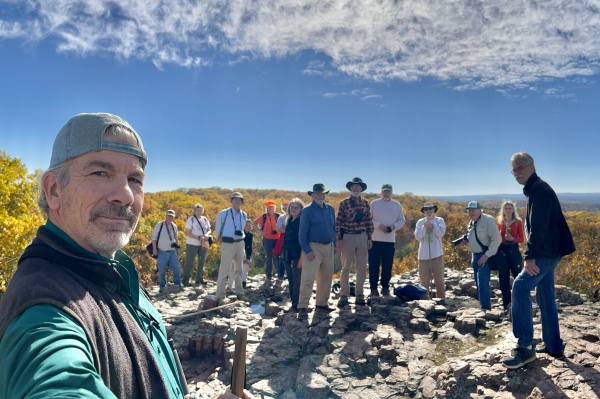
L-R: Ted “BugMan” MacRae, Pete Kozich, David Seidensticker, “Ozark Bill” Duncan, Lisa Meihls, Chris Brown.

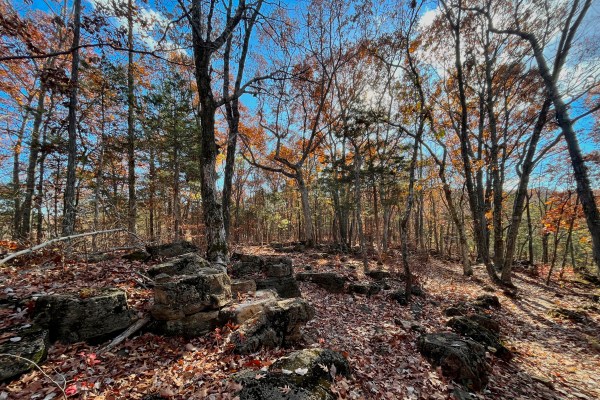
The Webster Groves Nature Study Society (WGNSS) Entomology Group began its final outing of the 2025 field season when eight participants (Chris Brown, Nathalie de Rocquigny, “Ozark Bill” Duncan, Jack Hambene, Pete Kozich, Ted “BugMan” MacRae, Lisa Meihls, and David Seidensticker) met up in the parking lot at Hughes Mountain Natural Area. Tucked into the southeastern corner of Washington Co., this gem of a natural area features 1.5 billion year old Precambrian outcrops that are among the oldest continuously exposed rocks in North America. Once molten as a result of volcanic activity associated with the St. Francois Mountains, the now hardened and weather-resistant rhyolite that formed after it cooled lies still exposed at the summit and surrounding areas. To the geologist, the polygonal columnar pattern of cracking at the summit—resulting in a unique formation called the “Devil’s Honeycomb”—might be the area’s most interesting feature. To the botanist, the xeric grasslands that formed on the surrounding exposures—i .e., “igneous glades”—might instead take this honor. To the entomologist, however, the unique fauna of insects associated with this interesting natural community earns top billing.

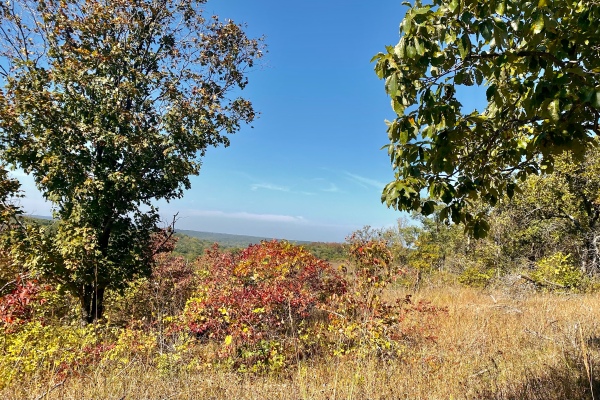
Rhyolite glade at Hughes Mountain Natural Area.

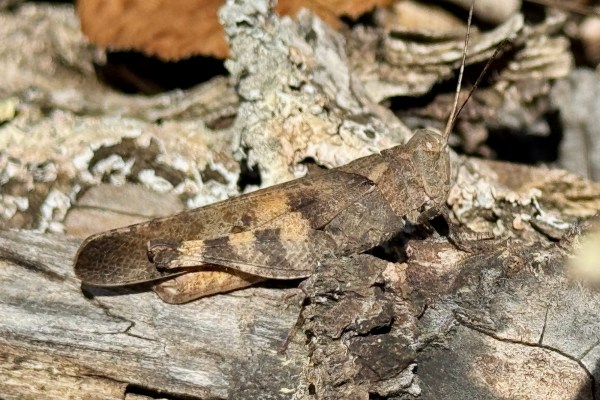
On two previous visits, the group has been fortunate to see one of Missouri’s rarest and most beautiful longhorned beetles—Tragidion coquus. Velvety black with vivid orange elytra, this charismatic species is usually seen during fall, and we hoped to be fortunate enough to see it again. Two species of fall tiger beetles—Cicindela limbalis (claybank tiger beetle) and Cicindela splendida (splendid tiger beetle), both colored iridescent green and brick red—were additional possibilities. A clear consensus quickly became apparent, however, when most participants voiced a desire to see Trimerotropis saxatilis—the famously and colorfully cryptic lichen grasshopper! It didn’t take long to see the first ones as soon as we began reaching the swathes of exposed rhyolite with their coverings of green and black lichens. Sitting motionless on the lichen-encrusted rocks, the grasshoppers were almost impossible to see, so perfectly colored and patterned was their camouflage.
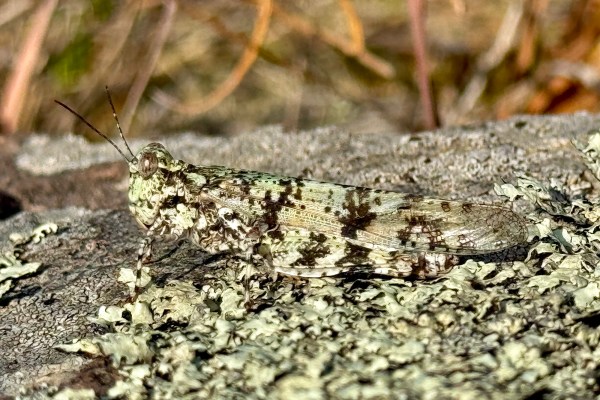
Trimerotropis saxatilis (lichen grasshopper—family Acrididae).

The abundance of lichen grasshoppers on the glades was somewhat expected, but what was not was the diversity of other grasshoppers also present at the margins of the glades and in the surrounding dry woodlands. Four such species were documented, including Hippiscus ocelete (wrinkled grasshopper), Melanoplus ponderosus (ponderous spur-throat grasshopper), Melanoplus rusticus (obovate-winged grasshopper), and Spharagemon bolli (Boll’s grasshopper)—all possessing their own forms of cryptic coloration that made relocating them after they jumped difficult.

Hippiscus ocelote (wrinkled grasshopper—family Acrididae).
Melanoplus ponderosus (ponderous spur-throat grasshopper—family Acrididae).
Melanoplus rusticus (obovate-winged grasshopper—family Acrididae).
Spharagemon bolli (Boll’s grasshopper—family Acrididae).

Two non-grasshopper orthopterans as well were found—several Scudderia furcata (fork-tailed bush katydid), ranging from green to tan to almost pinkish(!), were seen in the glades and woodlands, and an unusually cooperative Ceuthophilus sp. cave cricket (family Rhaphidophoridae) was also seen.
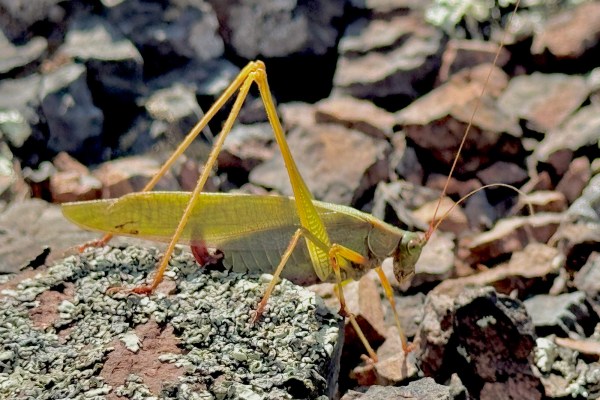
Scudderia furcata (fork-tailed bush katydid—family Tettigoniidae).
Ceuthophilus sp. (cave cricket—family Rhaphidophoridae).

The group fanned out across the glades as they worked their way up towards the summit. Of special interest were flowers that might host pollinating insects (and possibly even T. coquus). Few flowers would be found, however—a consequence of abnormally dry conditions since late July, and we found ourselves looking for other targets. Ted managed to photograph a beautiful red-marked variegated meadowhawk dragonfly (Sympetrum corruptum), while David “captured” (through the viewfinder) a male black swallowtail butterfly (Papilio polyxenes).
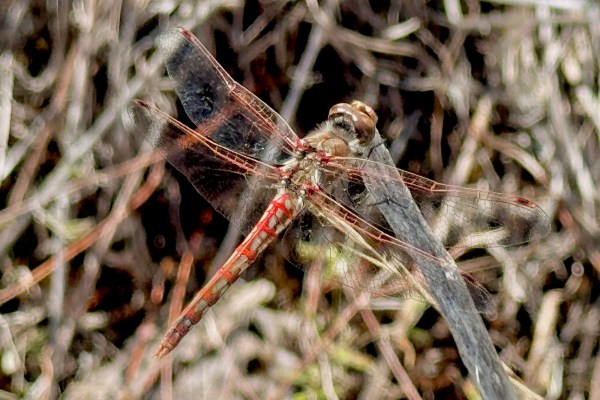
Sympetrum corruptum (variegated meadowhawk—family Libellulidae).

Eventually the group reached the summit, where the “Devil’s Honeycomb” and a spectacular vista awaited us. An unexpected feature at the summit was white splotches on the tops of many of the projecting columns of rock, which the group surmised to indicate use of the summit as a roosting site by turkey vultures.

“Devil’s Honeycomb” at summit of Hughes Mountain.

The group lingered to take in the crisp air, blue skies, and spectacular view created by 1200’ of elevation before turning back to begin the descent back down the mountain.

Buford Mountain (2nd highest point in Missouri) in the distance.

Descending the mountain, however, did not mean an end of things to see. Even before getting off the summit, Lisa noticed Chelinidea vittiger (cactus leaffooted bug) on pads of Opuntia cespitosa (eastern prickly pear). This species feeds and develops almost exclusively on the pads, fruits, and young growth of prickly pear cacti (Opuntia spp.), thus, its range coincides with the distribution of these cacti.

Chelinidea vittiger (cactus leaffooted bug—family Coreidae) on Opuntia cespitosa (eastern prickly pear).

Further down the mountain, another “variegated” species was seen—this time a variegated fritillary (Euptoieta claudia) butterfly. This well-worn individual was only the third butterfly species seen on the day, the aforementioned black swallowtail and a particularly fresh common buckeye (Junonia coenia) being the other two. This one was probably making its way south to overwinter in the southern U.S., where the species is a year-round resident.

Euptoieta claudia (variegated fritillary—family Nymphalidae).
Junonia coenia (common buckeye—family Nymphalidae).

Along the way, the lichen grasshoppers continued to attract our attention due to their abundance and striking diversity of coloration. We were treated to a particularly obvious example of this when we encountered a mating pair with the much smaller male exhibiting shades of brown instead of the greens exhibited by the much larger female.

It had been a leisurely descent off the main glade, and once clearing the woodland to emerge into the last glade fragments before the final descent, Chris and Ted were further delayed by a trio of observations in rapid succession. A large, impressively marked Neoscona crucifera (spotted orbweaver) spider hunkered down on a twig first caught Chris’ attention. Photographing it turned into an adventure when an effort to manipulate the twig on which it was resting ended up alarming the spider and causing it to drop down to the ground. They returned the spider to the twig using other twigs and leaves, but invariably it dropped again. Eventually, they learned they could “reel” the spider back up to the twig by its silk line if they acted quickly enough, and with repeated efforts both succeeded in getting photographs of the spider back up on the twig.

Neoscona crucifera (spotted orbweaver—family Aranaeidae).

While this was going on, the unmistakable droning buzz of Milesia virginiensis (yellowjacket hover fly or Virginia flower fly) caught their attention. The resemblance of the adults of this species to wasps is remarkable, and they are often seen hovering in midair, making erratic shifting movements, and then suddenly flying away. This particular fly, however, cooperated by landing on a rock (briefly) and allowing a few photographs before it abruptly departed.

Spider and fly photographs in hand, Ted and Chris resumed their descent but took only a few steps before another sighting demanded photographs—a rough green tree snake (Opheodrys aestivus) peering quizzically from amongst the rust-red leaves of a stunted blackjack oak. The snake cooperated at first, allowing a few closeup photographs before making a run for it. Fortunately, this is a very docile species that rarely (if ever) bites when handled, so Chris and Ted were able to corral it for additional photos before returning it back to the tree from whence it came.
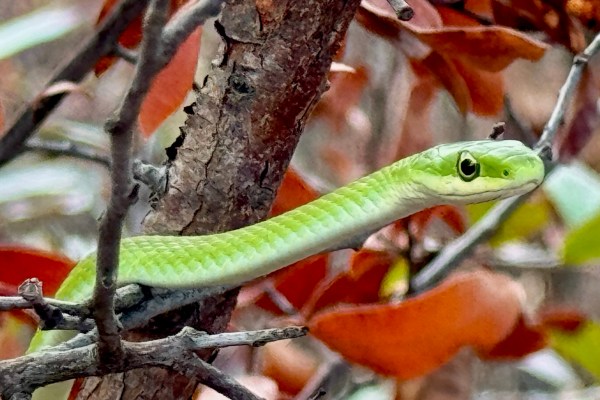
Opheodrys aestivus (rough green snake—family Colubridae).

At last, they were able to complete the descent and join the rest of the group in the parking lot, but not before making one last interesting find—the bizarrely beautiful caterpillar of Isa textula (crown slug moth). Like many members of the family Limacodidae (slug moths), the pale green, flattened caterpillars bear stinging spines/-in this case on lobes that radiate out from around the edge of the body. The caterpillar was found on the ground (it is probably mature and was looking for a protected place to spin a cocoon in which to spend the winter) and coaxed onto a leaf to bring it to the parking lot so everyone could have a chance to photograph it (it looked particularly stunning when set on a bright red sumac leaf).

Isa textula (crown slug moth—family Limacodidae).

©️ Ted C. MacRae 2025

🌿 Botanizing w/ the WGNSS Botany Group at Victoria Glades Preserve

6 Oct 2025—Fall continues to advance in the St. Louis area, and despite very dry conditions during the past two months the fall bloomers continue to make their appearance. One of the area’s most reliable and interesting places to see fall blooms is Victoria Glades south of Hillsboro, where orchids, gentians, and asters anchor a unique suite of fall-blooming plants that are rarely seen elsewhere in our mostly forested environs.

The group chose the Nature Conservancy portion of the complex to explore, as it was in the mesic forest along the riparian corridor below the glade on this side that the first of two orchids—the charmingly diminutive and seldom-seen Spiranthes ovalis (lesser ladies’ tresses)—was expected to be seen in bloom. Despite having recently taken GPS coordinates for the plants, it took several minutes of the group scouring the area around the coordinates before the tiny plants were finally found. Its delicate blooms, fall flowering season, small size, presence of basal and cauline leaves at anthesis, and preference for mesic habitats all serve to identify this species. Missouri’s populations are considered var. erostella, which lack certain essential flowering organs and are, thus, self-pollinated (cleistogamous).

Spiranthes ovalis var. erostellata (lesser ladies’ tresses—family Orchidaceae).

Clambering up and out of the creek bed and onto the open glade, the group found, again with some difficulty, the second orchid we were looking for—Spiranthes magnicamporum (Great Plains ladies’ tresses). Unlike S. ovalis, however, this species is much more commonly seen on dolomitic glades throughout the state, and there have been fall seasons at Victoria Glades featuring spectacular displays of it. Sadly, it does not appear that this will be one of those falls, almost surely because of the near absence of rain in recent months. The first two plants were found under and next to a cut eastern red-cedar, whose cadaver perhaps provided just enough protection to prevent a complete drying of the soil underneath and allowed the two plants to proceed to flowering. Of the nine species of Spiranthes presently known to occur in Missouri, S. magnicamporum is among the showiest due to its robust, often doubly helical inflorescences and relatively large flowers with spreading and arching lateral sepals. It is also among the most fragrant, with a sweetish fragrance of coumarin, which some people liken to vanilla.

Spiranthes magnicamporum (Great Plains ladies’ tresses—family Orchidaceae).

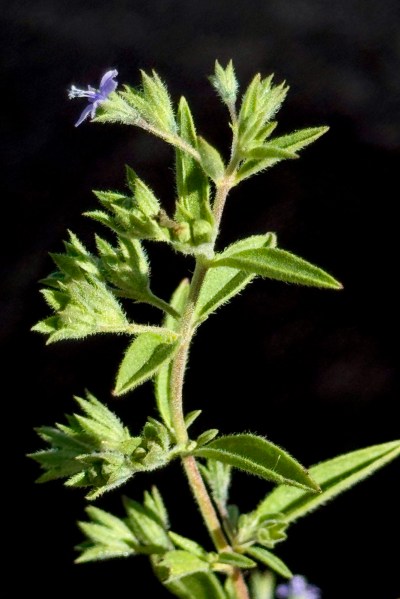
I’ve been visiting Victoria Glades for more than 40 years, yet I continue to see things I haven’t previously notified. This time it was Trichostema coeruleum (pennyroyal bluecurls), a member of the mint family (Lamiaceae). [Note: Trichostema coeruleum was known until recently as Trichostema brachiatum—now a synonym of Trichostema dichotomum.] Unlike Trichostema dichotomum (bluecurls), which prefers glades and other dry habitats with acidic substrates (e.g., sandstone), T. coeruleum prefers such habitats with calcareous substrates (e.g., dolomite). A third species of the genus, Trichostema setaceum (narrow-leaf bluecurls), also occurs in Missouri but is restricted to sand prairies in extreme southeastern Missouri.

Trichostema coeruleum (pennyroyal bluecurls—family Lamiaceae).

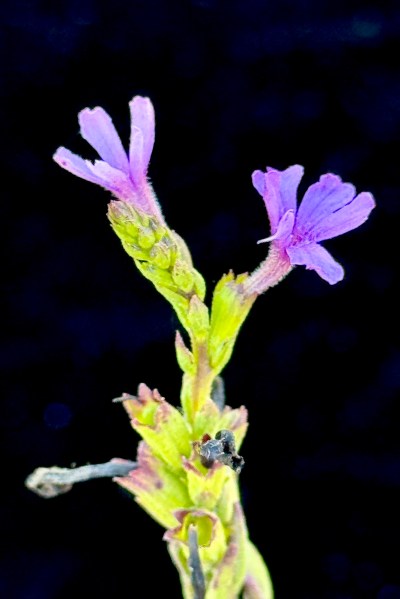
Dolomite glades are also the preferred habitat for many species of plants in the family Orobanchaceae, a bizarre family of mostly hemiparasitic plants that derive at least some of their nutrition not from the sun, but by tapping into the roots of nearby plants. Castilleja coccinea (scarlet paintbrush) is perhaps the best known of these, in most years joining the cacophony of wildflowers that form colorful displays across Victoria Glades during spring and early summer. There are, however, several less conspicuous but equally beautiful wildflowers in the family that are restricted in the area almost exclusively to the dolomite glades of Jefferson Co. One of these is Agalinis skinneriana (Skinner’s or pale gerardia/false foxglove), which the group found sporadically still in bloom across the open glade. There are several species of Agalinis in Missouri, some of which are quite common. However, A. skinneriana can usually be recognized by the characteristic habitat and generally upward-facing flowers with spreading to reflexed upper corolla lobes. The plants are also relatively slender and fewer-branched than the more common A. tenuifolia (common gerardia/false foxglove) and A. gattingeri (rough-stemmed gerardia/false foxglove).

Agalinis skinneriana (Skinner’s or pale gerardia/false foxglove—family Orobanchaceae).

Another plant in the family Orobanchaceae that the group saw was Buchnera americana (American bluehearts), represented by a single plant still bearing two worn blossoms. Normally blooming from June through September, plants in full bloom have no look-alikes and are not likely to be confused with anything else. Despite this, the vervain-like fruit-bearing structure of this late straggler fooled the group into at first thinking it was a species of Verbena until its true identity was realized.

Buchnera americana (American bluehearts—family Orobanchaceae).

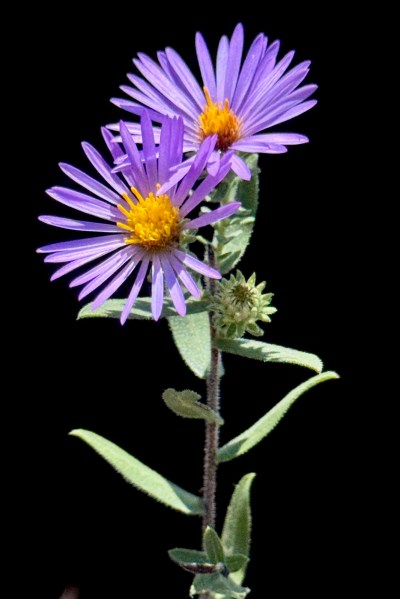
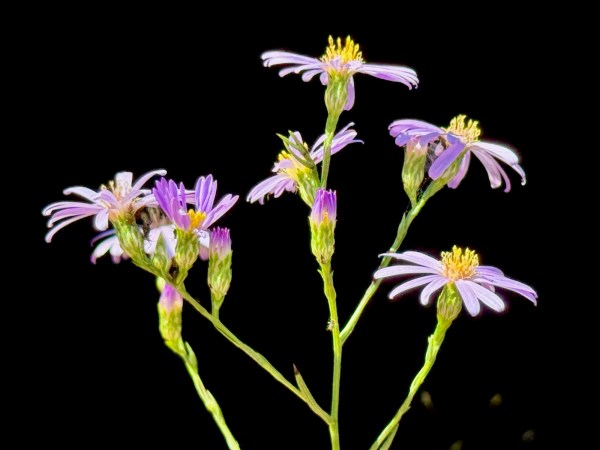
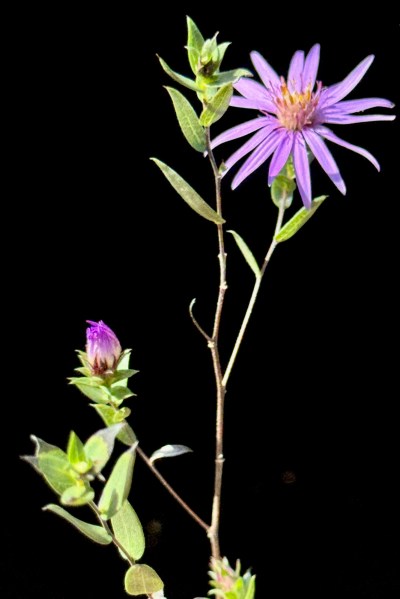
No group of plants more iconically represents fall than goldenrods (genus Solidago) and true asters (genus Symphyotrichum), and no place allows as many uncommonly seen species to be seen together as the dolomite glades. Three species of goldenrods were seen during the day—the super common Solidago nemoralis (old field goldenrod), the less common but more showy Solidago rigida (stiff goldenrod), and the highly restricted Solidago gattingeri (Gattinger’s goldenrod) (we were not able to locate a fourth species—Solidago radula [rough goldenrod], which we have observed during previous visits on the MDC portion of Victoria Glades). It was the true asters, however, that truly tested our plant identification abilities. Relatively easier are the purple asters, of which we found three species. The first and most abundant was Symphyotrichum oblongifolium (aromatic aster), recognized by its recurved phyllaries and branched habit with narrow, linear leaves that become more numerous and smaller in the upper plant. If one is still in doubt as to its identity, however, one needs only to crush the leaves between the fingers and enjoy its distinct aroma.

Symphyotrichum oblongifolium (aromatic aster—family Asteraceae).

Along the intermittent creek and near the interface with the dry post oak woodland on the north of the glade, we encountered a second species—Symphyotrichum oolentangiense (azure aster). Identification of this species came only near the end of the outing, as a key identifying characteristic of this species—the presence of distinctly petiolate cordate basal leaves that are rough to the touch—was not seen on any of the plants examined before then. At that point, we suspected Symphyotrichum turbinellum (prairie aster) due to the vase-shaped involucres. While that species has been found at Victoria Glades, it is usually a much more highly branched plant associated with more wooded habitats (despite the common name). Finally, we found a plant with such leaves present, albeit dried up, and then another with the leaves present and still fresh to confirm the identification.

Symphyotrichum oolentangiense (sky blue aster—family Asteraceae).

In a small area at the northernmost point of the glade, we found Symphyotrichum sericeum (silky aster). This species is immediately recognizable from afar by the silvery cast to the foliage—this, combined with its highly preferred habitat of glades or dry prairies are usually enough to identify the species, although it is said that the flowers are often more purple and less bluish than other “purple asters.”

Symphyotrichum sericeum (silky aster—family Asteraceae).

As we walked the margins of the glade, the group kept their collective eyes out for Gentiana puberulenta (downy gentian), a striking and rarely seen fall flowering species that has been found on several occasions at Victoria Glades. The species has been seen at Victoria Glades on a few occasions in past years, and the locations of these sightings were scoured thoroughly but without success. Unexpectedly, near the end of the outing, a single plant in flower was located—its perfectly fresh blossom initially hidden from view underneath fallen leaves. One of three members of the genus Gentiana in Missouri, this species is easily differentiated by having the corolla spread open at maturity. Missouriplants.com notes “The rich, deep blue color of the corollas is a striking and uncommon hue among our flora.” A strikingly beautiful final find of the day indeed, and a perfect note on which to gather for lunch at historic Russell House in nearby Hillsboro.

Gentiana puberulenta (downy gentian—Gentianaceae).

For me, no botany outing is strictly about plants (just as no entomology outing is strictly about insects), so there were a few interesting insect observations on the day. On our way to look for Spiranthes ovalis (lesser ladies’ tresses), June noticed a caterpillar on the Ulmus rubra (slippery elm) that we decided must represent Halysidotus tessellaris banded tussock moth).

Halysidota tessellaris (banded tussock moth—family Erebidae) on Ulmus rubra (slippery elm).

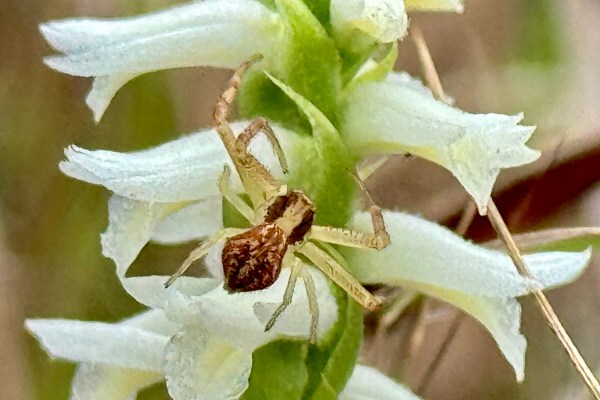
Later, after lunch with the group, I returned with the goal of more closely inspecting Physocarpus intermedius (Midwest ninebark) along the glade toeslopes and intermittent creek to see if Dicerca pugionata was out. It has been many years since I’ve seen this species in the fall (but it has also been many years since I’ve really tried to look for it during the fall). I started first with the plants along the moist toeslopes along the west side of the glade, checking several of the now very scraggly-looking plants without success. Along the way, I encountered an especially beautiful Spiranthes magnicamporum, so I paused to take photos. While doing so, I noticed a cryptically-colored crab spider on its blossoms—Mecaphesa asperata (northern crab spider)—the first time I’ve ever seen a spider hunting on the flowers of an orchid.

Mecaphesa asperata (northern crab spider—family Thomisidae) on flowers of Spiranthes magnicamporum (Great Plains ladies’ tresses).

Towards the end of the toeslopes, finally, two D. pugionata plopped onto my sheet. The plant they were on was near the far end of the toeslopes, and if I hadn’t seen any beetles by the time I reached the far end I would have given up the search. Finding them, however, motivated me to hike over to and continue looking along the intermittent creek, where I saw three more beetles in three different spots, the last one—satisfyingly—on the very last plant I checked before the creek disappears into denser woodland.

Dicerca pugionata (ninebark borer—family Buprestidae) beaten from living Physocarpus intermedius (Midwest ninebark).

Mission accomplished, I enjoyed one more leisurely stroll across the glade before calling it another (successful) day in the field.

©️ Ted C. MacRae 2025

LaBarque Creek Natural Area

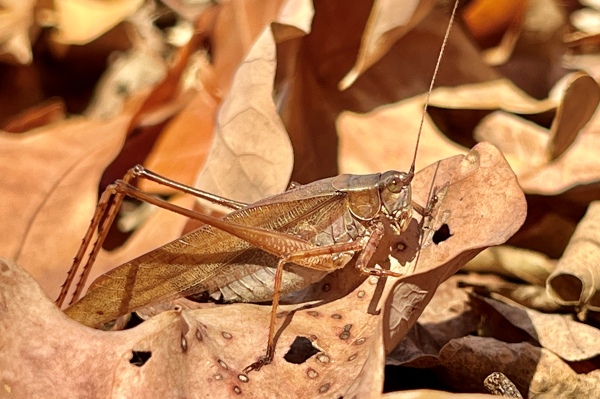
I haven’t been to LaBarque Creek for quite a while, so it was good to see it again, especially without encountering a single other person (the benefit of being able to hike during the week compared to a Sunday). It’s still much warmer than I prefer for a fall hike, but it was beautiful out and I did see one insect—an unusually pinkish-brown—colored bush katydid (Scudderia sp.).

Scudderia sp. (bush katydid—family Tettigoniidae) in dry-mesic upland oak/hickory forest.

This is, in my opinion, the most interesting of the three conservation/natural areas in the LaBarque Creek watershed—by far the most diverse of the seven main tributaries that feed into the Meramec River. More than likely this is a result of the diversity of bedrock—dolomite in the surrounding hillsides with underlying sandstone exposed by the erosive actions of LaBarque Creek. The “rock garden” along one of the high ridges is among my favorite spots in the area.

Dolomite “rock garden” in dry-mesic upland oak/hickory forest at LaBarque Creek Natural Area.

I was also very happy to see that the Department of Conservation has begun renovating the small sandstone glade remnants on the west side of the loop by cutting out much of the eastern red-cedar that has invaded the remnants over the past several decades.

Early-stage renovation of sandstone glade remnant—mechanical removal of eastern red-cedars (Juniperus virginianus).

It will be interesting to watch the vegetational succession that is sure to take place in them over the next decade or so as grasses like little bluestem and eastern broomsedge colonize the now exposed lichen ground layer that had developed beneath the junipers. It will also be an interesting place to look for insects next spring, as wood boring beetles are sure to be attracted to all the newly-available freshly-dead wood.

Sandstone glade remnant at LaBarque Creek Natural Area.

©️ Ted C. MacRae 2023

BitB Bits: March 2023

Welcome to a new series that I’m calling “BitB Bits,” an irregular collection of random natural history observations recorded in my notes over the previous month. The individual snippets are, by themselves, too short for stand-alone posts, but I hope that readers will find their collective and chronological nature interesting and informative.


March 9. Welcome home walk. Good to be home and glad to see we didn’t miss the start of spring here. Non-native daffodils are blooming everywhere (I must admit they make an impressive display); however, we also have our first native blooming plant—spicebush (Lindera benzoin). Apparently only the male plants are blooming so far (distinguished by their flowers with stamens/anthers only but lacking a central pistil); the female plants should follow suit shortly.

Lindera benzoin (northern spicebush)

March 12. Spring on hold. Now that spicebush is in bloom, a succession of flowering trees and shrubs should follow. Fragrant sumac (Rhus aromatica) would be the next to follow, but the rain of the last few days has put it on hold. The buds are swollen and ready, however, to burst forth on the next sunny day.

Rhus aromatica (fragrant sumac).

March 13. In my happy place. I didn’t get enough hiking at St. Francois State Park to satisfy my desires, so on the way back home I decided to stop off at Victoria Glades, one of my favorite places, and walk the perimeter of the main glade. I don’t think there’s another place on earth where I feel more connected to myself as a naturalist than here. I first visited way back in 1983 – the year after I moved to St. Louis after finishing grad school, and every year for the next eight years I came here once or twice per week throughout the summer to collect insects. I essentially “grew up“ here as an entomologist! In the time since moving back to St. Louis (now 27 years ago), I have resumed my regular visits – more in some years, less in others, and each time I do I feel rejuvenated. I have instructed Madam to sprinkle my ashes here (at least some of them) – if I depart and you happen to read this, please follow up with her to make sure that she does just that!

Victoria Glades Conservation Area, Jefferson Co., Missouri

March 15. Beware the Ides of March. On this day, in 44 B.C., Julius Caesar was stabbed to death by a mob of Roman senators led by his friend Brutus. The senators believed that Julius had consolidated too much power (he had only a year earlier been named dictator for life and was implementing sweeping imperialist offensives in an effort to expand Roman territory), and that his death would lead to the restoration of the Republic. Sadly (or fortunately, depending upon your perspective), the “Ides of March” plunged Rome into centuries of civil war that ultimately led to utter collapse by the 5th century. In the final years of the empire, a series of emperors took the throne in quick succession (usually after the murder of their predecessor by the Praetorian Guard, the emperor’s personal bodyguards), each of whom plundered the state while they had the opportunity. The Roman Senate, engaged in their own corrupt practices and suffering from incompetence, was unable to curb the excesses of these emperors, leading to a waning of civic pride and loss of trust by the Roman citizenry before the final collapse.


March 17. C-c-cold! Once again, the bright sunshine was deceptive, belying how cold it really was – especially with that wind! Temps plummeted even further once the sun set, but the views around my home are still spectacular.

“The pond” on Pond Rd

March 21. Still waiting… …for native blooms to begin. Until then, here is yet another non-native early bloomer—Scilla forbesii (Forbes’ glory-of-the-snow), which invaded the woods near my home after a neighbor planted some in their woodland garden. They are not nearly the problem that some other invasives are (like bush honeysuckle or burning bush) in that they don’t smother out nearby native plants, but they can provide a pollinating “sink” that competes for insects that would otherwise be pollinating the flowers of native plants.

Scilla forbesii (Forbes’ glory-of-the-snow)

March 22. Vernal equiNOT. Spring began two days ago, yet I’m still waiting for the first appearance of any native wildflowers in the neighborhood. Until that happens, here is yet another non-native species—the thankfully noninvasive hyacinth—that my neighbor planted in their garden.

Hyacinthus sp. (hyacinth)

March 24. Spring at last, spring at last, thank God Almighty, spring at last! Finally, after sitting dormant for more than a week, the flowers of Rhus aromatica (fragrant sumac) have opened—in my opinion the true opening salvo of spring. Even so, it’s not like the weather suddenly turned spring-like, but more like the sumacs finally said F this and decided to open despite the continued dreary conditions.

Rhus aromatica (fragrant sumac).

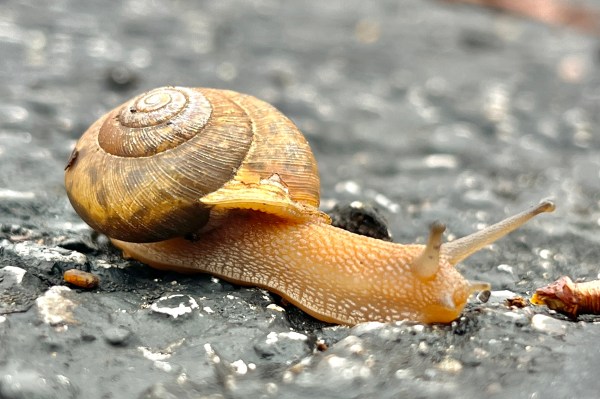
March 25. How do snail’s eyes differ from slug’s? They don’t—they’re both eye tentacles. 🥁

Mesodon thyroidus (white-lipped globe snail)

March 26. Spring beauty. Now that spring is truly here, Claytonia virrginica (spring beauty)—the icon of spring ephemeral wildflowers—has begun popping up everywhere.

Claytonia virrginica (spring beauty)

March 26. Water spider. I saw this large fly sitting on the curb. Of course, I knew it was a crane fly—a member of the family Tipulidae, but I hear people often confuse them for a “giant mosquito.” There is no such thing, and while I admit that they do look superficially like a mosquito on steroids (they happen to be distantly related to mosquitos), they do not bite or suck blood—arguably the most important part about being a mosquito. In fact, crane flies often do not eat anything once they become adults, with some species even lacking functional mouthparts. The family name is derived from the Latin word for “water spider,” perhaps because the larvae live in water and have a ring of tentacles around their head—just guessing. Anyway, I snapped a few pics of the little guy before he feebly began flapping his wings in the chilly air and took flight, probably looking for something to not eat.

Tipula sp. (crane fly)

March 28. Back to winter (midge). A few tantalizingly warm, sunny days had my hopes up that spring was finally here, but the return of cool, wet conditions have brought back that late winter feel. Perhaps appropriately, one of the first insects I’ve seen this season is this small, mosquito-looking fly that is actually a distant relative belonging to a group known as winter midges (genus Diamesa—also called snow midges—in the family Chironomidae). As their common names imply, the adult flies are seen active primarily during winter and can even be seen walking about on snow during warm spells during the winter (a scenario mimicked by the styrofoam on which this individual was photographed). Like the crane flies that I featured a couple days ago, winter midges do not feed as adults—if only for lack of suitable food sources, while the larvae feed on organic debris in cold, running water.

Diamesa sp. (winter midge)

March 29. What’s up, buttercup? Buttercups are popping up in the “more natural“ lawns of my neighborhood. We have a number of species buttercups in Missouri – this one is Ranunculus harveyi (Harvey’s buttercup). In general, you can distinguish buttercups by their small, bright yellow flowers and bristle of anthers surrounding the central disc.

Ranunculus harveyi (Harvey’s buttercup)

March 30. Bloodroot. I made a rather exciting wildflower find in the woodlands around my house this morning—a small patch of Sanguinaria canadensis (bloodroot) with (thus far) but a single bloom. This poppy relative (family Papaveraceae) is so named because of red, fleshy root, which gets its color from alkaloids, chiefly sanguinarine, in its toxic sap. First Americans traditionally used bloodroot to treat fever, rheumatism, ulcers, ringworm, and skin infections, and it is still used to produce natural red, orange, and pink dyes. There is likely some truth to the bioactive properties of bloodroot alkaloids, as they are currently being studied for use as anti-cancer agents, particularly for the treatment of skin cancer, and as a dissolving agent for skin growths such as warts. Bloodroot is also interesting from a natural history standpoint in that the seeds have fleshy appendages that are attractive to ants. The ants collect the seeds and bring them to their nest, thus effecting dispersal of the seeds. This is an advantage for these small plants growing in wooded habitats, where wind speeds are usually too low to aid natural seed dispersal.

Sanguinaria canadensis (bloodroot)

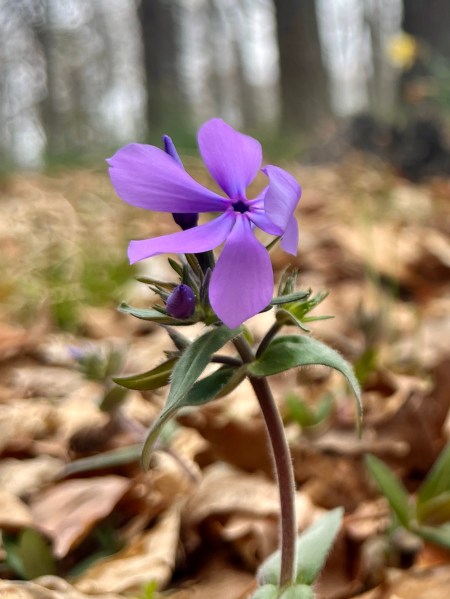
March 31. Sweet William. I saw these plants yesterday while their blooms were still closed and wondered if they would open before March closed out. I normally think of Phlox divaricata (sweet William) as a mid-April bloomer, but clearly it can begin earlier if conditions are right (as they have been the past several days).

Phlox divaricata (sweet William)

©️ Ted C. MacRae 2023

Rain on Russell Mountain

Hiking buddy Rich and I have already hiked the entirety of the Ozark Trail, doing so in 5–15 mile segments from 1996 through 2015. Since then, we have been redoing some other the segments in the reverse direction from the first time, the eventual goal thus being to hike the entirety of the Ozark Trail in both directions. Today was a small contribution to that goal, in which we did the short section between the fire tower at Taum Sauk State Park (containing Missouri’s highest point at 1,772’ asl) and Russell Mountain.

Raindrop prism.

The forecast was not promising, with steady rain predicted and temperatures remaining in the 30s. Still, Rich and I are not prone to cancelling a hike due to less than ideal conditions, so we arrived at Taum Sauk Mountain mid-morning despite the periodic rain and decided to give it a go. It was a good decision—our rain jackets and warm underlayers kept us confortable, and we were rewarded for our tenacity with an serenely beautiful look at the craggy, water-soaked landscape.

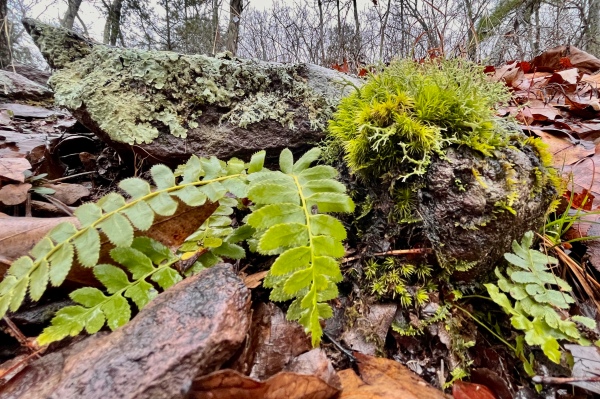
Young Polystichum acrostichoides (Christmas fern), Flavoparmelia baltimorensis (rock greenshield lichen), a fruticose lichen, and Polytrichum commune (common haircap moss) in dry-mesic upland deciduous igneous forest.

It was slow going as we both forgot our hiking sticks, forcing us to more deliberately choose our footing on the rugged, rocky, boulder-strewn trail. Normally on a winter hike, it is the buds, bark, and remnant leaves that I pay attention to as I strive to identify the component trees comprising the forest around me. Today, however, with intermittent light rain, heavy moisture-laden air, and our eyes mostly looking downward to choose our next footstep, it was the ferns, mosses, and lichens—bright green and water-swollen—that captured our attention.

Closeup of Polytrichum commune (common haircap moss) and a fruticose lichen from previous photo.

Polystichum acrostichoides (Christmas fern) dotted the forest floor and along the trail. Most of the plants we saw were older, their fronds and pinnae ragged and tattered. A young individual, however, captured our eye, partly because of its fresh, bright green foliage and partly because of the close association with Polytrichum commune (common haircap moss), Flavoparmelia baltimorensis (rock greenshield lichen), and an unidentified fruticose lichen—a natural mini-terrarium.

Closeup of young Polystichum acrostichoides (Christmas fern) from previous photo.

Further along the trail, a patch of Thuidium delicatulum (delicate fern moss) was found thriving in the cold, wet conditions. As the name suggests, the leaves of this moss resemble the fronds of a small fern but form colonial mats rather than arising from a basal rosette as in true ferns. Wet conditions such as existed today are ideal for seeing this moss in its most attractive state—under dry conditions, the leaves are more appressed and contracted against the central stems.

Thuidium delicatulum (delicate fern moss) growing trailside in dry-mesic upland deciduous igneous forest.

As we descended the hillside, running water could be heard in the distance, suggesting we would be treated to the sight of a waterfall. At the bottom, the normally dry creek ran full, water crashing over the rhyolite boulders strewn further up the ravine and gushing down below us. Some careful footwork was required to scale the hillside off-trail to reach the water’s edge and get a closeup and personal view, but experience made the careful footwork down the hillside and back up well worth the effort.

Rain-swollen creek.

Approaching the glades on Russell Mountain, the diversity of conspicuously green lichens and mosses immediately caught our attention. The normally xeric landscape was lush and moist—water pooling in depressions of the exposed rhyolite bedrock and stream over its slopes in sheets. Beds of Polytrichum commune (common haircap moss) colonized the edges of exposed bedrock, forming extensive mats of turgid, bright green, bristly vertical stems that looked like miniature primordial forests. Like Thuidium delicatulum (delicate fern moss), this moss also is more attractive when moist, its leaves widely spreading and straight, while in dry conditions they are erect with their tips often recurved.

Polytrichum commune (common haircap moss) on exposed rhyolite in the glade.

The final leg of the hike took us through the scenic rhyolite glades (more properly called xeric rhyolite prairie) between the Ozark Trail and the Russell Mountain Trailhead. Normally, the glades are a harsh habitat—dry grasses crackling underfoot amid the searing heat and the surrounding forest of Quercus shumardii (Shumard’s oak) and Carya ovata (shagbark hickory) stunted and open. Today, however, dense fog, heavy air, and water running over every surface made the glade seem mysteriously soft and gentle.

Fog settles over the glade.

The exposed rhyolite bedrock here represents remnants of volcanic rock formed 1.5 billion years ago. Representing one of the oldest continuously exposed landforms in North America, these craggy hills are but mere nubs of mountains that soared 15,000 feet above the salty Cambrian waters that lapped at their feet. It is only reasonable that these ancient rocks should be so heavily colonized by lichens—ancient life forms themselves resulting from a symbiotic association between fungi and a photosynthetic partner, usually algae or cyanobacteria (blue-green algae).

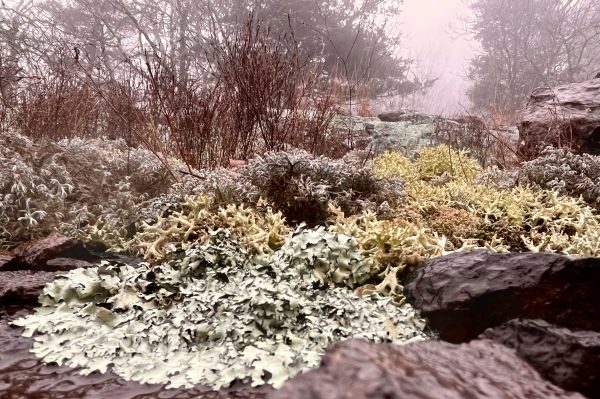
Exposed rhyolite heavily colonized by foliose and fruticose lichens and mosses.

Like the previously seen mosses, rain brings out the best in lichen attractiveness—their hydrated tissues at their brightest and most colorful. A number of fruticose and foliose lichens can be found intermingling in the exposed rhyolite surfaces, with Flavoparmelia baltimorensis (rock greenshield lichen) being one of the most conspicuous examples of the latter.

Foliose and fruticose lichens, including Flavoparmelia baltimorensis (rock greenshield lichen) in the foreground, co-mingle on the exposed rhyolite.

©️ Ted C. MacRae 2021

Hughes Mountain redux

Despite the relatively long drive from St. Louis, a healthy group of 15 showed up for this past Monday’s WGNSS Botany Group outing at Hughes Mountain Natural Area; participation no doubt helped out by a spectacular forecast (sunny with highs in the 70s) and near-peak fall colors. Hughes Mountain is situated in the northern portion of the St. Francois Mountains. At its summit is Devil’s Honeycomb—a barren expanse of uniquely fractured Precambrian rhyolite formed by the gradual cooling of magma inside a volcano that was then exposed over 1.5 billion years of erosion. Devil’s Honeycomb is one of Missouri’s geologic wonders, and it’s rocks are among the oldest exposed rocks in all of North America.

Devil’s Honeycomb, summit of Hughes Mountain.

Rocks are not the only items of interest here; the igneous substrate results in acidic conditions that affect the flora in equally interesting ways. This is most pronounced in the igneous “glades” (more properly called xeric igneous prairies) where the soils are too thin and conditions too dry to support the growth of trees, offering refugia for grasses and other herbaceous plants more typical of the western grasslands to persist. Surrounding the glades are dry and dry-mesic upland deciduous forests of oak and hickory featuring a rich shrub layer and open woodland-adapted herbaceous plants.

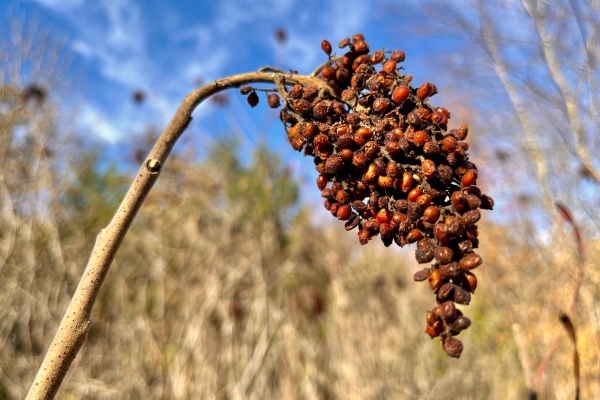
Beginning on the trail from the parking lot, John Oliver pointed out a stand of tall, now leafless sumacs which nearly everybody (including this author) assumed to be Rhus glabra (smooth sumac) due to their size. In fact, despite their size, they proved to be R. copallinum (winged sumac), with the ID confirmed by a few persisting leaves and their distinctive axial “wings.” John pointed out that an easy winter ID tip for this species is the fruiting structures, which nod distinctively after first frost (those of R. glabra do not).

Post-frost “nodding” seed head of Rhus copallinum (winged sumac).

Ascending the trail through the dry-mesic forest towards the first set of glades, we noted the brilliant colors of small Acer rubrum (red maple) saplings in the understory. When their leaves finally drop, they will be more difficult to distinguish from A. saccharum; however, their rounded rather than elongated buds will still allow differentiation.

Acer rubrum (red maple).

Several of the oaks were examined, with most thinking they were largely Quercus shumardii (Shumard’s oak) and Q. velutina (black oak)—both similar to each other but the latter bearing larger, grayer, pubescent, quadrangular terminal buds. Approaching the glades, Q. marilandica (blackjack oak), Carya texana (black hickory), and Ulmus alata (winged elm) became more abundant, all three much preferring the drier conditions found around the glade margins. An interesting feature of the latter (in addition to the distinctive, corky ridges on the twigs), is the leaves, which are smaller than those of most other elms but tend to grow larger towards the terminus of the twig. They also tend to be much less asymmetrical at their base than other elms.

Ulmus alata (winged elm) showing gradually larger leaves towards the twig terminus.

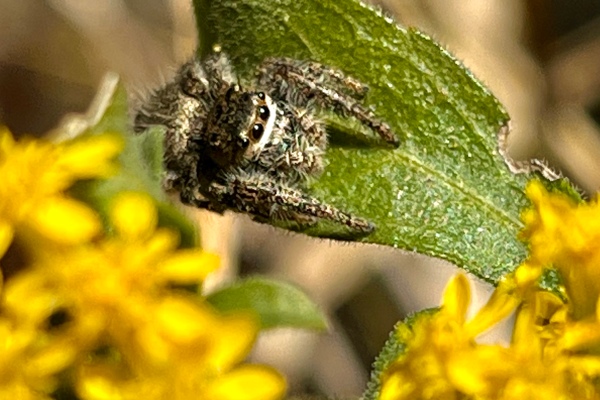
Very little was left in bloom, but the remnants of recent bloomers were still evident. Solidago petiolaris (downy goldenrod) and Symphyotrichum anomalum (many-rayed aster) were common along the trail and still recognizable, their showy flowers gone and replaced by developing seeds. Hieracium sp. prob. gronovii (beaked hawkweed) was found nestled among mosses perched on a rhyolite shelf, the flowers gone but the leaves still green and distinctively hairy. Hypericum gentianoides (pineweed) was found on the glades proper, most with their stems and leaves turning red but the occasional plant still green enough to allow crushing its stems and enjoying its orange-like fragrance. Bucking the trend, however, was a small patch of Solidago nemoralis (old-field goldenrod), it’s yellow flowers fresh and bright in defiance of the calendar’s call to senescence. A small jumping spider in the genus Phidippus took advantage of the lingering greenery, hiding among the leaves in hopes of finding equally persistent prey.

Hieracium sp. prob. gronovii (beaked hawkweed).
Solidago nemoralis (old-field goldenrod).
Phidippus sp. on Solidago nemoralis (old-field goldenrod).

The benefits of management efforts by the Missouri Department of Conservation in the area’s forests were more evident than ever. Between the first set of glades and the main glades surrounding the summit, a rich shrub layer dominated by Rhus aromatica (fragrant sumac) stretched endlessly under an open woodland of oak and hickory, the latter turning the canopy bright yellow in vivid contrast to the orange and red shrub layer beneath. Such open woodlands were once common in pre-settlement Missouri but are now rare due to the elimination of fire in the landscape and its mediating impacts.

Rhus aromatica (fragrant sumac).

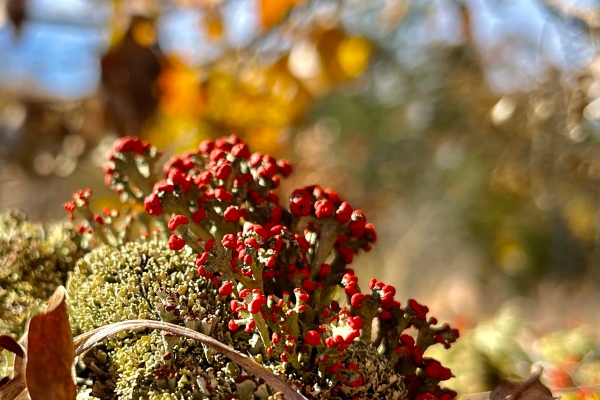
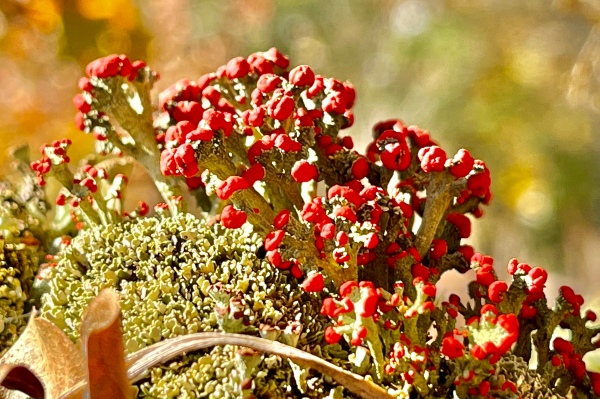
Entering the main glades, the group made their way up towards the summit and Devil’s Honeycomb, while Ted and Sharon stayed back to take a closer look at and photograph a robust colony of Cladonia cristellata (British soldiers) growing under Juniperus virginiana (eastern red-cedar). Lichens, of course, are unique in the world of vegetation in that they are a composite organism—a fusion between a fungus and another organism (usually a green alga or cyanobacterium) capable of producing food via photosynthesis. None of these groups of organisms are considered plants in the modern sense, and, in fact, fungi are more closely related to animals than they are to plants. Nevertheless, the convergence in appearance, habitat, and ecology of lichens with plants puts their study much more in the realm of botany than zoology.

Cladonia cristatella (British soldiers).

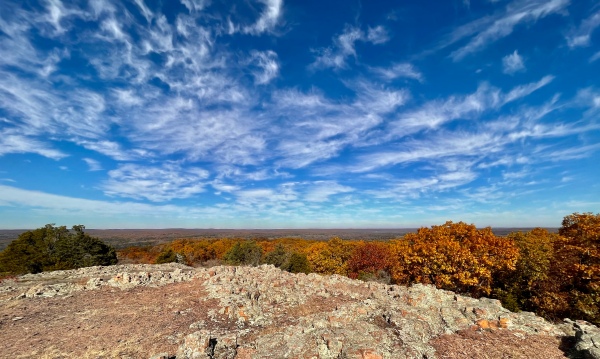
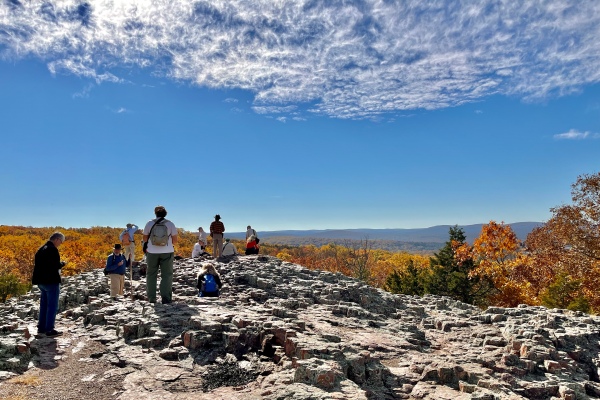
The group arrived at the summit just in time to enjoy spectacular vistas under crystal blue skies with wisps of clouds and the balmiest temperatures one could possibly hope for in early November.

The group enjoys the view from the summit of Hughes Mountain.
L–R: Ted MacRae, Rich Thoma, Kathie Bildner, Michael Laschober, Tina Cheung, Kathy Thiele, Nancy Mathis, Sharon Lu, Alan Brant, Mark Peters, John Oliver, Larry Lindenberger, Burt Noll, Gwyn Wahlman, Keith Woodyard.

©️ Ted C. MacRae 2021

Hiking at Valley View Glades Natural Area

My good hiking/collecting buddy Rich called me yesterday and asked if I was interested in a hike. Since I am retired, and he is retired, there was nothing on either of our schedules that prevented us from doing it the very next day, so we decided to come to one of our favorite places that we haven’t been to in awhile—Valley View Glades Natural Area near Hillsboro.

Fall color beginning at Valley View Glades Natural Area.

I brought my big camera along because I figured Great Plains ladies’-tresses orchids (Spiranthes magnicamporum) would be in good bloom, and I wanted to get good closeups with a blue sky background (I was successful in that regard—photos coming soon). I also brought along my collecting pack in case we found a beetle or two, but in this regard I was only half-successful—careful examination of several ninebark (Physocarpus opulifolius intermedius) patches did not reveal any Dicerca pugionata (seen a week ago at nearby Victoria Glades), but I did find a Blackburn’s earth-boring beetle (Geotrupes blackburni) on the trail. We also found a gum bumelia (Sideroxylon lanuginosum) tree with copious amounts of frass at the base, indicating infestation by a bumelia borer (Plinthocoelium suaveolens), and I recorded the location so I could put an emergence cage at the base of the tree next season to catch the emerging adult.

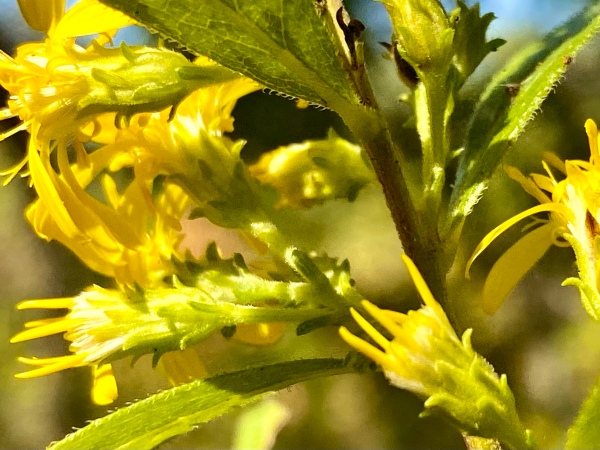
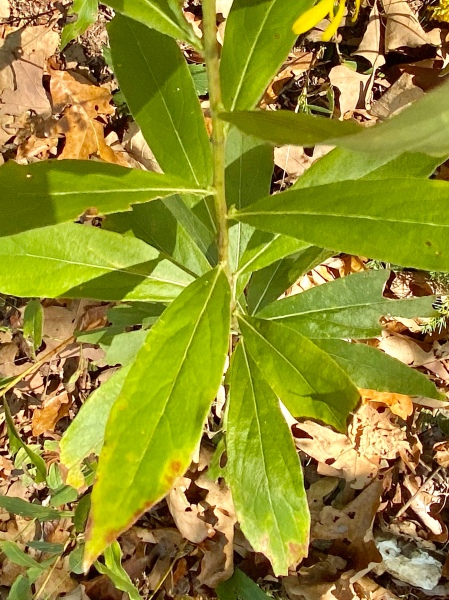
One other item of botanical interest was downy goldenrod (Solidago petiolaris) growing near the margins of the dry post oak woodlands—a species I’ve not previously noticed but was able to recognize due to its combination of recurved phyllaries and moderately widened leaves without teeth (Buckley’s goldenrod, S. buckleyi, also has recurved phyllaries but wider leaves with the edges distinctly toothed).

Downy goldenrod (Solidago petiolaris).

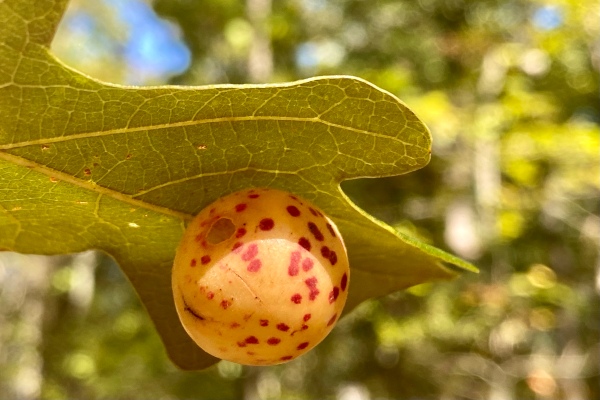
An especially colorful gall caused by the cynipid wasp Atrusca quercuscentricola on the leaf of post oak (Quercus stellata) piqued both entomological and botanical curiosity.

Atrusca quercuscentricola gall on leaf of post oak (Quercus stellata). Note adult emergence hole in upper left of gall.
Atrusca quercuscentricola gall on leaf of post oak (Quercus stellata)—turned upside down.

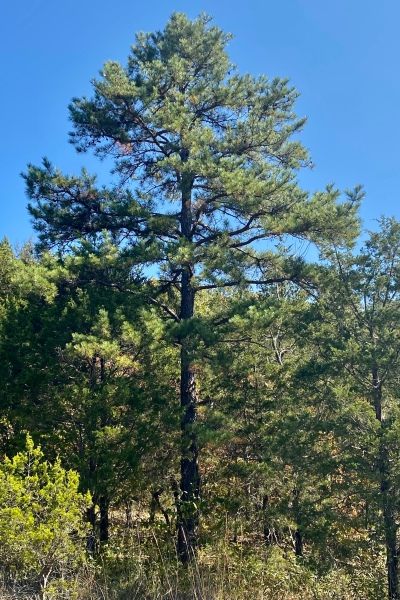
Near the end of the hike, I pointed out a shortleaf pine (Pinus echinata) tree that may be the northernmost naturally-occurring shortleaf pine in the state. I am aware of some trees further north along Hwy 21 at Sunridge Tower Park and in St. Louis Co. at Rockwoods Reservation, but I believe in both of these cases they are planted.

Shortleaf pine (Pinus echinata).

©️ Ted C. MacRae 2021

“62nd” Annual “Season-Opener-Birthday-Bug-Collecting-Trip”

This past Tuesday was my birthday, and as I have done for my entire adult life I took the day off and went on my traditional “Season-Opener-Bug-Collecting-Trip”. In the past I’ve usually just had one friend go with me, but today I had three—Rich, Chris, and Bill!

We started off by heading south about 3½ hours to Tingler Prairie Natural Area in Howell Co.. I wanted to come here because: 1) it was a place I’d never visited before, and 2) there is a population here of the endemic Ozark trillium (Trillium viridescens) that I thought might be in bloom. Rain in the forecast and a patch of the real thing on the way down had us a little worried, but the day turned out spectacular with temps climbing to 80°F and skies partly to mostly sunny.

IMG_6208 (Edited).JPG

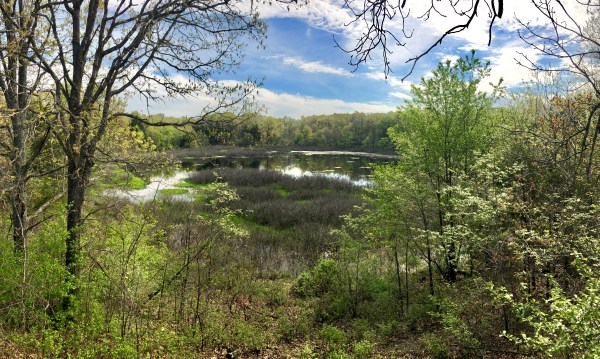
Tingler Lake – the centerpiece of Tingler Prairie Natural Area.

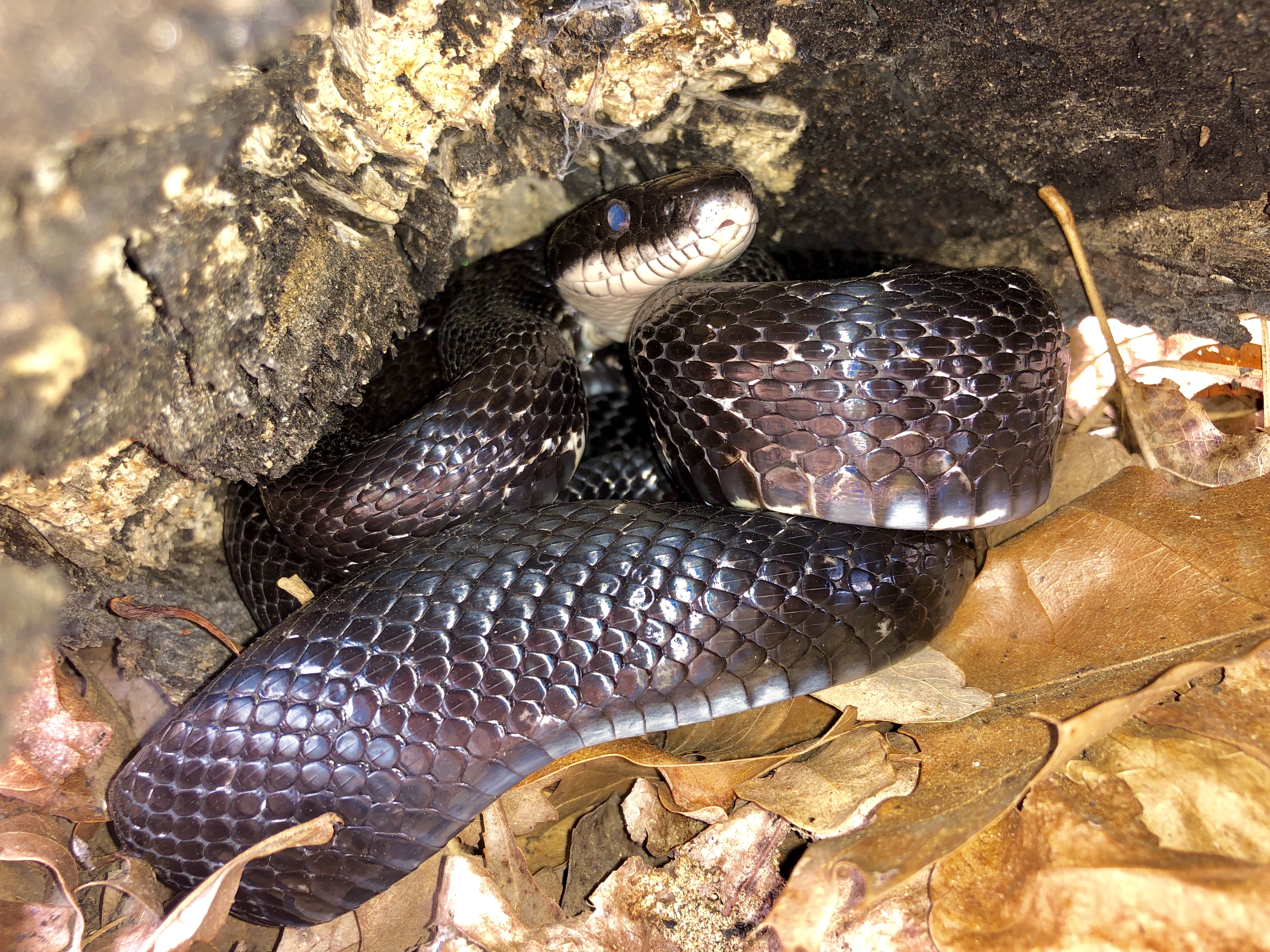
We never did find the trillium—even calling another friend (Casey), who had seen them here before to find out exactly where he saw them. Turns out we hit the right spot, but apparently we were too early, especially given how late spring has been moving along this year. Nevertheless, we still found much to capture our interest, including a yellow-bellied racer (Coluber constrictor flaviventris)—too quick for photos—and a black rat snake (Pantherophis obsoletus) that coiled up nicely under the end of a fallen log and tolerated my prodding and “cleaning” of the scene around him to get some good photos (albeit, only with the iPhone).

IMG_6219 (Edited)

Black rat snake (Pantherophis obsoletus).

IMG_6220 (Edited)

The “cloudy” eye is actually an artifact of the flash lighting reflected by the retina.

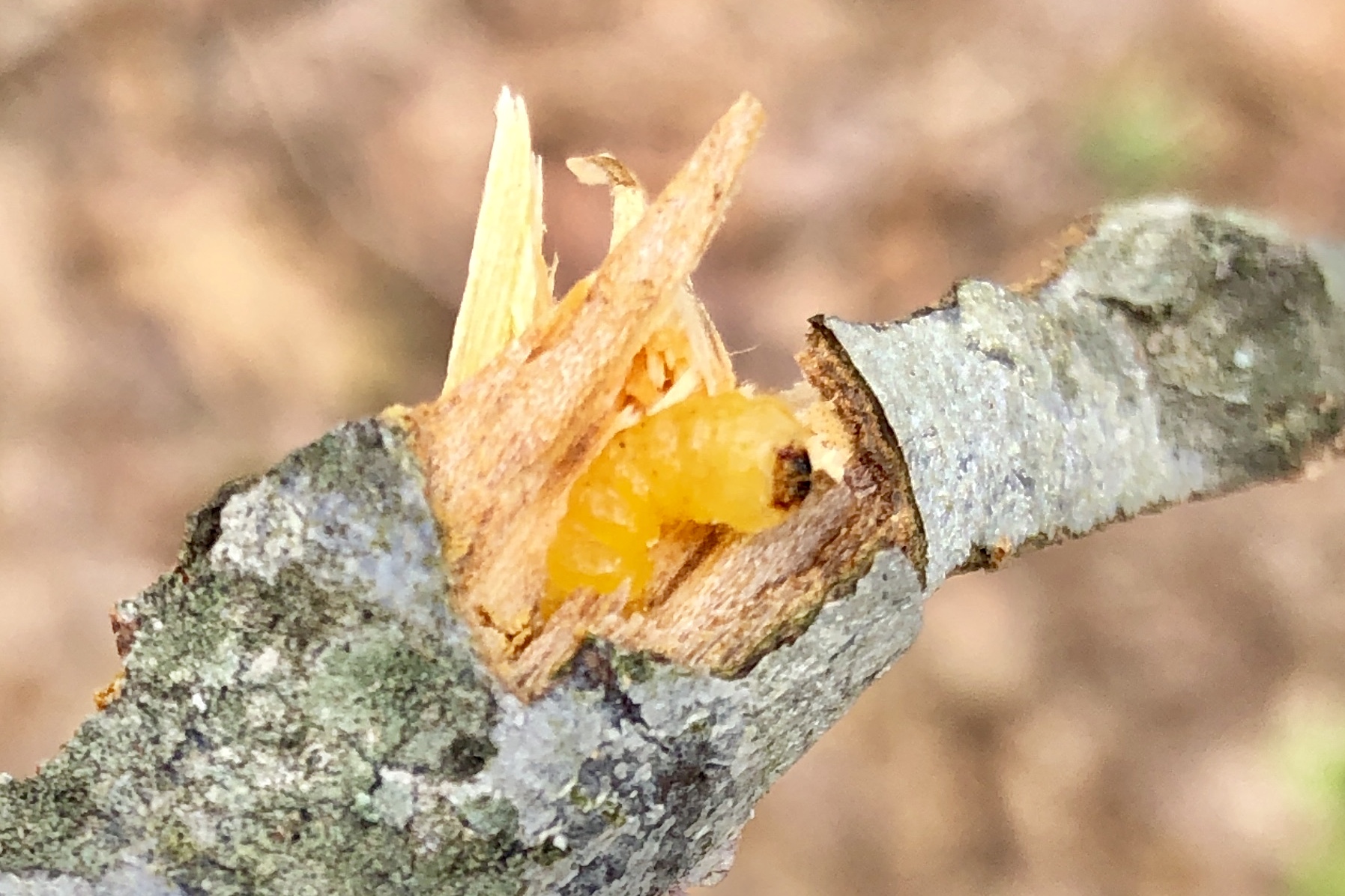
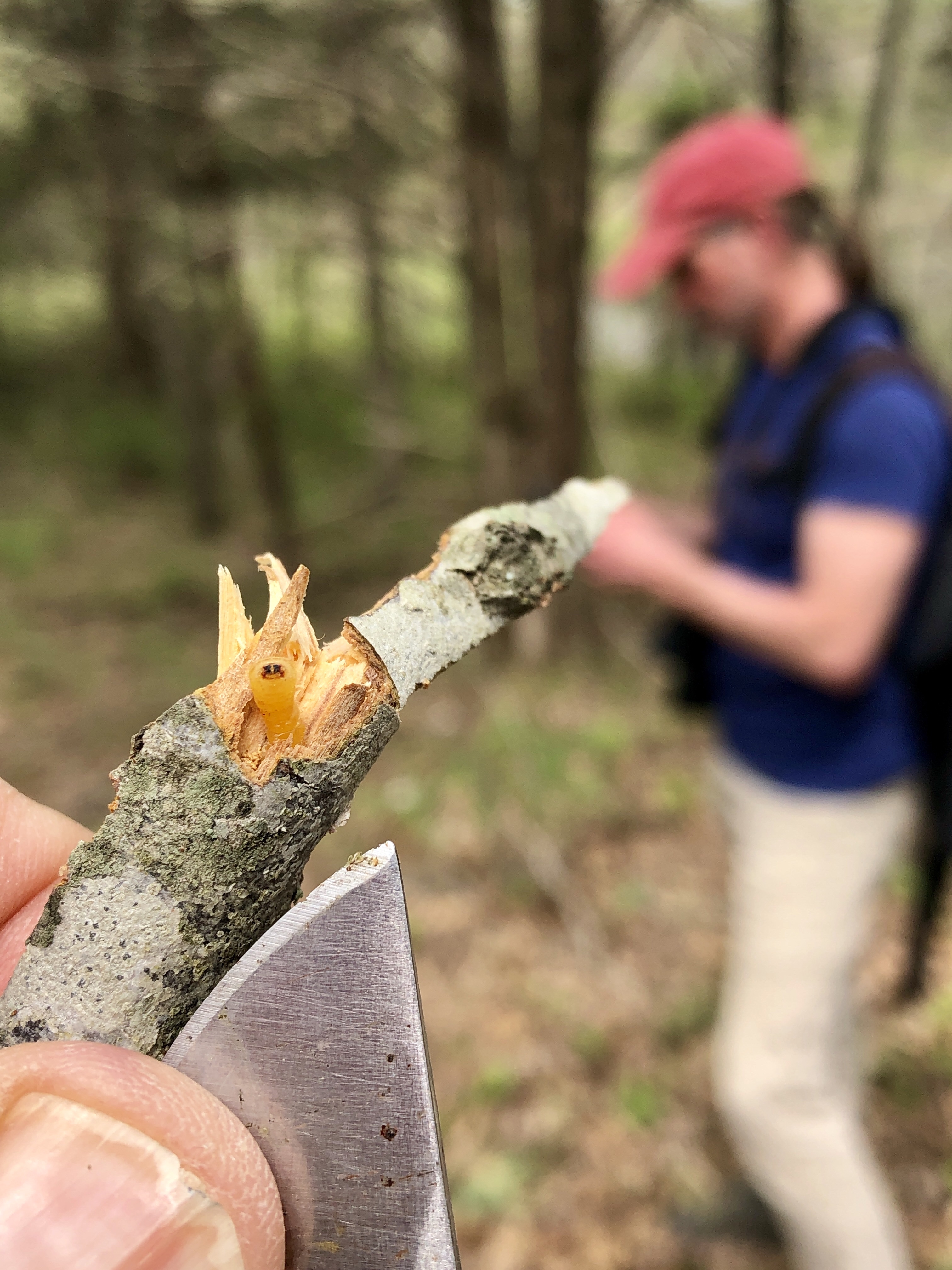
Unfortunately, insect activity was very light. We saw no tiger beetles and only the earliest spring forms of most other insects. I took about 10 specimens each of the early-spring jewel beetles Acmaeodera tubulus and Pachyschelus purpureus, which I found on flowers and foliage (respectively) of wild geranium, Geranium maculatum. It was the first time that I’d found the latter as abundant as this, so the series of specimens will be a welcome addition to my cabinet. I also took a couple of A. tubulus on a flower of violet wood sorrel, Oxalis violacea and showed the others the characteristic end of an oak twig pruned by a twig pruner (Anelaphus parallelus) larvae (and revealed the culprit for them to see). Despite the paucity of insects, it was a beautiful and high-quality spot, and I look forward to collecting here again sometime when the season is more advanced.

IMG_6227 (Edited)

Several adult Acmaeodera tubulus feeding on petals of wild geranium (Geranium maculatum) flowers.

IMG_6221 (Edited)

Twig pruner, Anelaphus parallelus, larva cut from its gallery near the base of a pruned oak twig.

img_6222

Revealing the culprit while Chris takes notes on some of the birds he’s been hearing.

img_6237

Redspotted purple butterfly, Limnetis arthemis astyanax (family Nymphalidae), caterpillar on black cherry (Prunus serotina), one of its favorite host plants. The caterpillar mimics bird droppings for protection.

img_6226

Fire pink, Silene virginica (family Caryophyllaceae) thrives on a dry, cherty hillside.

img_6233

Mayapple, Podophyllum peltatum (family Berberidaceae) prefers the rich, more mesic hillsides (this is where we expected Trillium viridescens to occur).

After finishing up at Tingler Prairie, we drove east an hour and bushwhacked over rough Forest Service 2-track to Bald Hill Glade Natural Area in Ripley Co. It had been close to 10 years since my previous visit, but I remembered the roads well. We had to park, however, about a mile from the entrance to the glade due to fallen trees across the final stretch 2-track. The landscape had changed considerably since my last visit—gone was the dense, close forest lining the 2-track, and in its place stood open woodland brought to this condition by active management that included the use of prescribed burning apparently as recently as the past season.

img_6238

Dwarf iris (Iris cristata).

img_6240

These diminutive plants are distinguished from other members of the genus by their short stature and sepals with midline beards.

img_6241

Bald Knob Glade Natural Area.

After hoofing through the forest we reached the glade and found a beautiful—if somewhat sterile—scene before us. The recent burn included not only the woodland but also the glade itself, and no unburned refugia could be found anywhere. Floristically, this is beneficial for the glade, which needs periodic fire to prevent woody encroachment, but in my experience such burns also result in severely depressed insect populations for years afterwards. It takes time for the insects to find and recolonize the glade, and in this case the lack of unburned refugia will only increase the amount of time that will be needed for the insect populations to recover.

Nevertheless, we enjoyed our hike through the area, watched and listened to the calls and songs of a number of cool birds, including summer tanagers, indigo buntings, blue-gray gnatcatchers, and—a first for me—the splendidly yellow prairie warbler. We also took photographs of the glade and some of its plants (with the big camera), and on the way back to the car we found several of the Polistes wasp-mimicking light flies, Pyrgota undata (family Pyrgotidae). Interestingly, all were mating pairs, and the ones we observed closely (as we photographed them with the big camera) were engaged in a most curious “French kissing” behavior. I can’t wait to read up more on this when I prepare to post the photos of this behavior.

img_6246

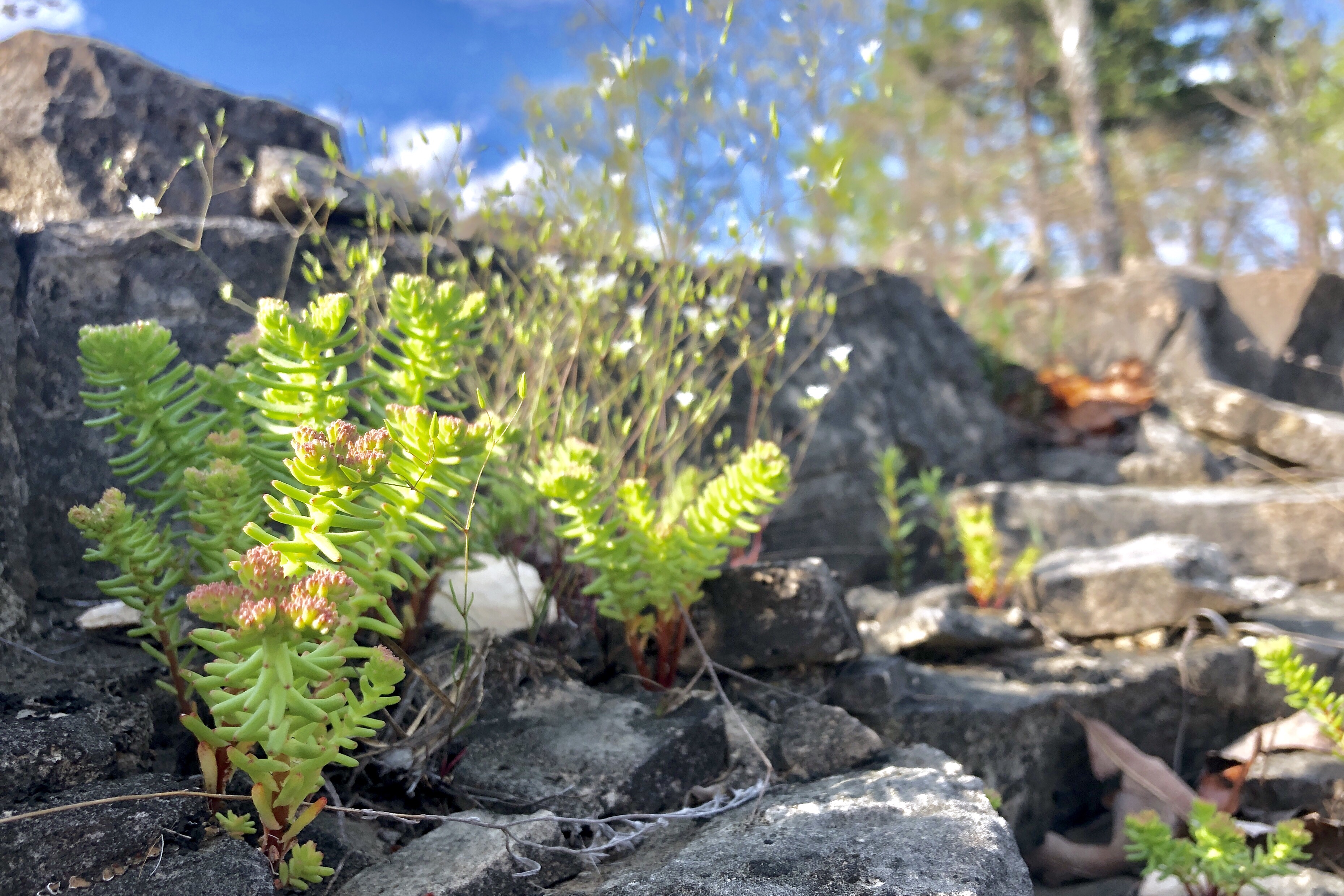
Widow’s cross (Sedum pulchellum).

55963458_10158503157048677_1504766440970911744_n (1)

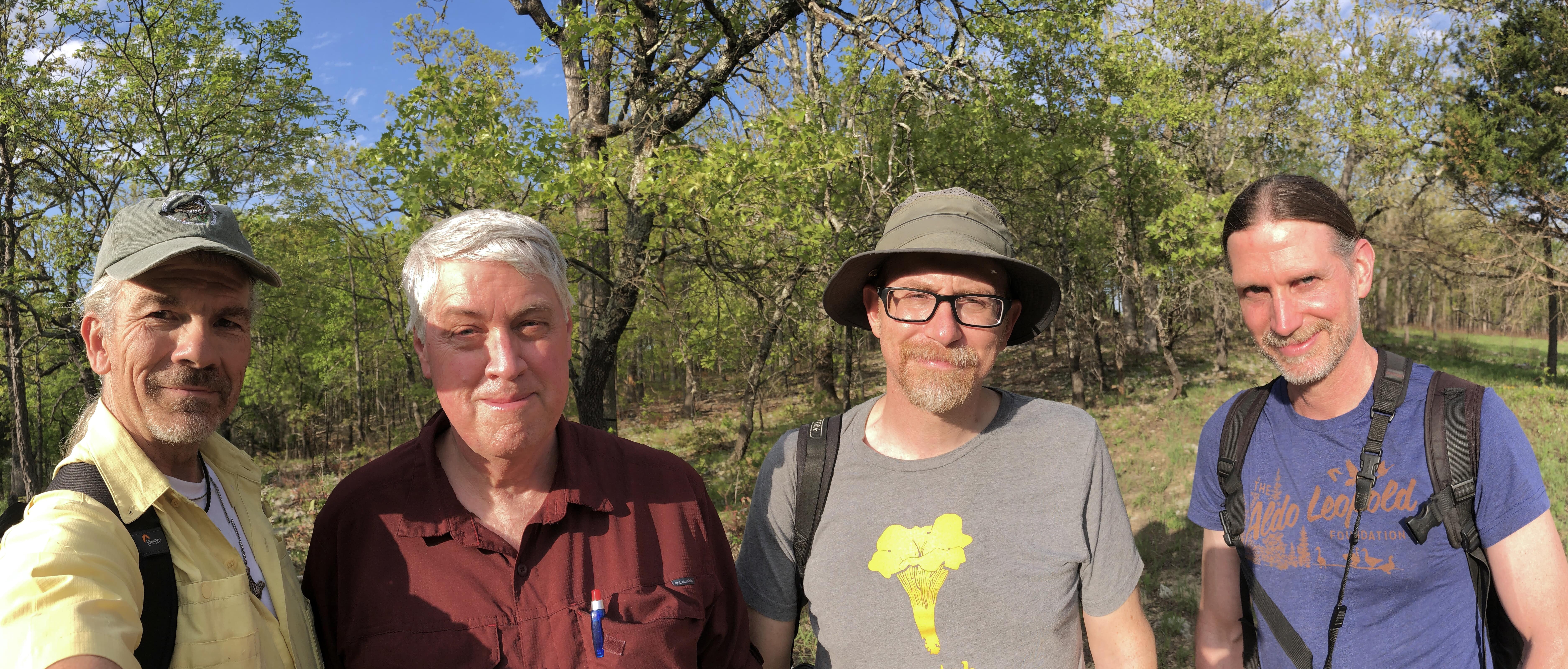
Me, Rich, Bill, and Chris.

Eventually, impending dusk signaled a close to the day, and after driving east another 1½ hours to have pizza dinner in Poplar Bluff we made the long drive back to St. Louis (arriving at my home at 12:30 a.m.!).

NOTE: All photos in this post were taken and processed with an iPhone X. The “real” photos taken with our “real” cameras will be shared as they become available.

© Ted C. MacRae 2019