Best of BitB 2012

Welcome to the 5th Annual “Best of BitB”, where I pick my favorite photographs from the past year. 2012 was one of the most intensive travel years I’ve ever had—I spent 8 weeks in Argentina from February through April, made separate trips to Puerto Rico and Arkansas in May (bracketing a personal week in California), traveled almost weekly to Illinois and Tennessee from June to September (interrupted by a personal week in Florida in July), toured the southeastern U.S. (Arkansas, Louisiana, Mississippi and Georgia—great food!) in early September, chased tiger beetles in Oklahoma, Texas and Arkansas in late September, went back to Argentina for a week in October, and capped off the travel year by attending the Entomological Society of America Annual Meetings in Knoxville, Tennessee (for the first time in more than 10 years!)—whew! While many would cringe at such a travel load, I am among the lucky few who actually get paid for doing something that is also my hobby—entomology! This gives me ample opportunity to further hone my photography skills (nine of the 13 photos I’ve selected below were actually taken while I was on business travel), resulting in two key accomplishments this year—my first ever photography talk at the ESA’s insect photography symposium and my first commercial sales (look for the BitB commercial site to go online in 2013).

Enough blather! Here are my favorite BitB photographs from 2012. Click the link in the text below the photo to see the original post. I would greatly appreciate knowing if you have a favorite (and why)—your feedback will be enormously helpful to me as I continue to learn and develop as a photographer.  For those interested, here are my previous year picks for 2008, 2009, 2010 and 2011. And, as always, thank you for your readership!
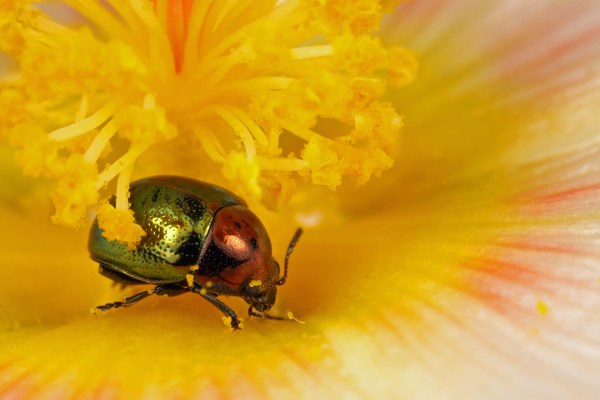

Spintherophyta (?) sp. in flower of Abutilon pauciflorum | Buenos Aires, Argentina

From  (posted 2 Feb). One of my 2012 learnings was that sometimes a photograph that is not so close is more effective than one that is as close as possible. In one of my earlier attempts at “not-so-close” macrophotgraphy, the soft colors of the flower compliment the brash shininess of the tiny leaf beetle that has been feeding on its pollen. Pink lines lead the eye directly to the subject and create a pleasing composition, and pollen grains stuck to the beetle—a distraction in some situations—add to the miniature natural history story of the photo.


Apiomerus flavipennis with stink bug prey and kleptoparasitic flies | Chaco Province, Argentina

From  (posted 11 Mar). I selected this photo solely for the complex natural history story drama it shows—stink bug (Piezodorus guildenii) feeding on soybean becomes prey of an assassin bug (Apiomerus flavipennis), with volatiles from the chemicals it emitted in a vain attempt to defend itself serving as cues to kleptoparasitic flies (families Milichiidae and Chloropidae) that benefit from the assassin bug’s labors.


Planthopper nymph | Buenos Aires Province, Argentina

From  (posted 26 Mar). Another learning that I began putting into practice in 2012 was the use of low perspective for compositional impact. The cryptic coloration of this planthopper nymph (family Fulgoridae) made it almost invisible on the branch on which it was sitting when viewed from a normal “top-down” human perspective. Getting “down under” it, however, brought the nymph to life and emphasized its unusual form.
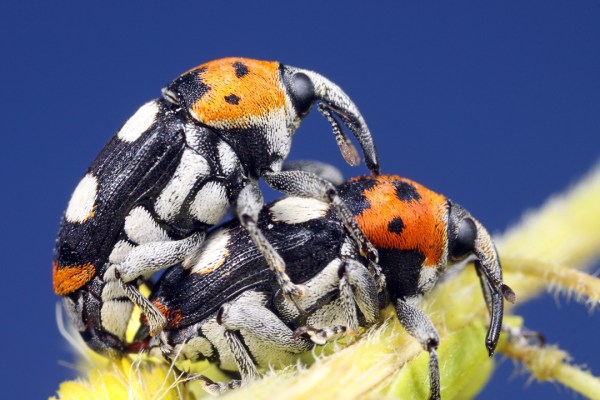

Megabaris quadriguttatus | Corrientes Province, Argentina

From  (posted 12 Apr). I spent much of 2012 working on the “blue sky background” technique, with these weevils from northern Argentina representing one of my better attempts. Macrophotography of insects with a blue sky background involves setting exposure, ISO, and aperture to achieve two separate exposures—full flash illumination of the subject for maximum depth-of-field, and ambient light from the sky to create a clean, uncluttered, natural-looking background. In this shot I managed to achieve an almost ideal shade of blue to compliment the wild black, white and red colors of the beetles. (My one criticism of the photo is having clipped one of the beetle’s feet.)


Bombylius sp. cf. mexicanus | Scott Co., Missouri

From  (posted 16 May). This photo is unusual if nothing else. Focus, lighting, depth-of-field, and composition are all better than can be hoped for in a single shot, but the subject—perfectly alive—is in a most unusual position. Read the original post to find out how this happened.


Perisphaerus sp. (a pill roach) | Vietnam (captive individual)

From  (posted 27 May). White-box photography is an excellent technique for clean, uncluttered photographs of insects, but it also isolates them from their natural surroundings and limits their natural history appeal. The best white-box photos are those that highlight a key feature or behavior of the subject—in this case a pill roach’s comically conglobulating defensive posture.


Micronaspis floridana (Florida intertidal firefly) larva | Pinellas Co., Florida

From  (posted 31 July). Here is another photo whose back story played a big part in its selection. This firefly larva not only represents a rare Florida-endemic species but was also first seen by my then 12-year old nephew, who willingly accompanied me through a dark, spooky salt marsh in the middle of a humid Florida night to see what he could learn. The lesson here for budding natural historians (and old-timers like me) cannot be overstated!


Arctosa littoralis (beach wolf spider) | Lewis Co., Missouri

From  (posted 23 Aug—prelude to  posted 28 Aug). Those who follow this blog know of my obsession with close-up portraits, and while tiger beetles are the subjects I most commonly photograph in this manner, I am always on the lookout for good subjects in other taxa. This wolf spider “face” almost looks human, with “two” eyes, two “nostrils” and a shiny upper lip above huge (albeit hairy) buck teeth! It’s enough fill-the-frame spidery goodness to melt (or explode) the heart of even the most ardent arachnophobe!
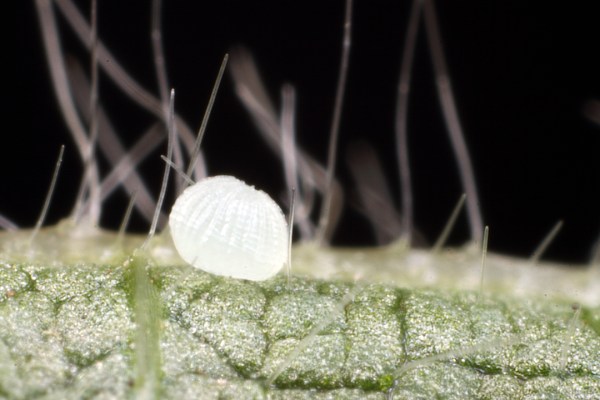

Anticarsia gemmatalis (velvetbean caterpillar) egg on soybean leaf

From Life at 8X—Guide to lepidopteran eggs on soybean (posted 3 Sep). “Life at 8X” was a new series I introduced this year, featuring insects photographed at magnifications testing the upper limit of my equipment and photographic skills. Diffraction is the chief difficulty with magnifications as high as this and is the primary flaw in the above photograph. Nevertheless, such view of a moth egg on the underside of a soybean leaf provides a spectacular view of the otherwise unseen micro-world that lives right beneath our noses.


Megacyllene decora (amorpha borer) on snakeroot flowers | Mississippi Co., Missouri

From  (posted 12 Sep). This second example of “blue sky background” was taken later in the year and was considerably more difficult to capture than the first because of the larger size of the subject and resulting need for a longer focal length macro lens. Getting a well-lit, focused, and composed image with a desirable shade of blue in the background depended not only on finding the proper camera settings, but also secure body and camera bracing techniques for this completely hand-held shot.


Cicindelidia politula politula (Limestone Tiger Beetle) | Montague Co., Texas

From  (posted 28 Sep). I will go ahead and say it—this is my favorite photograph of 2012. As discussed under the first entry, panning back from the subject can allow for some very interesting compositions. This photo combines charismatic pose by a wary subject with panning back and low perspective to create an image that scores high in both natural history and aesthetic appeal.


Calosoma sayi (black caterpillar hunter) | New Madrid Co., Missouri

From Black is beautiful! (posted 7 Nov). Of course, close-as-possible can also be used to create striking photos, especially if the subject exhibits features that are best seen up close. Anything with jaws fits the bill in my book, and highlighting the mandibular sculpturing of this caterpillar hunter (a type of ground beetle) required precise angling of the flash heads for maximum effect.


Cicindela repanda (Bronze Tiger Beetle) | St. Louis Co., Missouri

From  (12 Nov). This final selection is not a rare species, but it is as close as I have come to what I consider the “perfect” tiger beetle macrophotograph—a close, low angle, lateral profile of an adult in full-stilt posture (a thermoregulatory behavior), well lit, perfectly focused, and with a dynamic but pleasingly blurred background. It’s a perfect storm of a photo that took the better part of two hours to achieve—rarely do all of these elements come together in a hand-held photograph of an unconfined tiger beetle in its native habitat.


Well, there you have it. I hope you’ve enjoyed my selections, and again please do let me know if you have a personal favorite. See you in 2013!

Copyright © Ted C. MacRae 2012

Eye to eye to eye to eye with a tiger beetle larva

After the past few years of hunting tiger beetles, I’ve learned not only how to find the larval burrows but—at least for most of the species occurring in Missouri—how to identify the larvae in the field. While conclusive identifications rely upon morphological characters, a preliminary field ID is often possible based on a combination of burrow size, placement, soil type and knowledge of which species are likely to occur in a given habitat. Tiger beetle larvae don’t have the same aesthetic appeal to many people that the adults have, and for this reason many species remain undescribed in the larval stage—even the well-studied North American fauna has only about 60% of its species with the larval stages described (Pearson et al. 2006). Nevertheless, the ability to find, collect and rear tiger beetle larva remains an important part of my studies because it not only expands my survey power (most tiger beetles have more restricted temporal occurrence as adults than as larvae) but can also lead to novel findings such as previously undescribed larvae and unknown parasitoid associations.

Tetracha virginica 3rd instar larva | Mississippi Co., Missouri

Tetracha virginica 3rd instar larva | Mississippi Co., Missouri

This larva was dug from its burrow in bottomland forest habitat in the southeastern lowlands of Missouri. However, before I even saw the larva I knew it belonged to the genus Tetracha and probably represented the species T. virginica (Virginia Metallic Tiger Beetle, according to Erwin & Pearson 2008). How did I know this? First, the size of the burrow (~8 mm in diameter) excluded all but one other non-Tetracha species known to occur in Missouri—Cicindelidia obsoleta vulturina (Prairie Tiger Beetle), a species known to occur only in the dry, rocky, dolomite glades in the White River Hills region of extreme southwestern Missouri. Secondly, while T. carolina (Carolina Metallic Tiger Beetle) is also found in southeastern Missouri, that species has been associated almost exclusively with treeless habitats—at least in southeastern Missouri (K. Fothergill, personal communication). Since the burrow from which this individual was dug was found in wet, bottomland forest, chances were high that it instead represented T. virginica.

Simple, thorn-like outer hooks with much smaller inner hooks distinguish Tetracha larvae from other tiger beetle genera.

Simple, thorn-like outer hooks with much smaller inner hooks distinguish larvae of Tetracha.

Notwithstanding the circumstantial evidence, there are morphological characters that also distinguish both the genus and the species of this larva. Of primary importance are the hooks and setae on the prominent “hump” of the fifth abdominal segment. This hump is braced against the vertical wall of the larval burrow as it sits at the entrance waiting for passing prey. Once the prey is seized, the hump armature provides traction against the burrow wall, preventing the struggling prey from pulling the tiger beetle larva out of its burrow (where it would not only be ineffectual as a predator but also highly vulnerable to predation itself). Tiger beetle larvae can often be distinguished at the generic level by the shape and size of the main hooks. Tetracha larvae have four hooks—two outer and two inner—that are simple and thorn-like, with the inner hooks much smaller than and placed much closer to the outer hooks than to each other (other genera either have six hooks, or they have the outer pair 1) highly curved or 2) the inner pair larger and nearly as close to each other as to the outer hooks). There are also fine details of the pattern of the setae (smaller hairs) on the hump that identify this larva as T. virginica, but the presence of numerous hairs over the surface of the abdominal segments is a much easier character to see in the field (see first photo).

Note the white-margined pronotum and nearly equal sized simple eyes.

Note also the white-margined pronotum and nearly equal sized simple eyes.

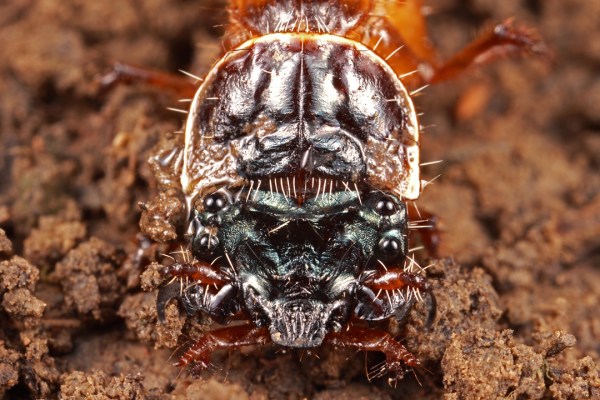
Finally, there is that head—two pairs of large, simple eyes sitting behind gaping, cocked jaws that give them an oh so alien aspect! An often metallic, shield-like pronotum sitting behind the head, both used in concert to seal the burrow entrance as the larva lies in wait, serve to complete the alien ensemble but also offer clues to the larva’s identity. All larvae of Tetracha and closely related genera bear a distinctive rim of white around the pronotal margin, making them instantly recognizable even while still sitting in their burrow. Also useful is the relative size of the eyes, which in the case of Tetracha the second pair of eyes are nearly as large as the first pair (Amblycheila and Omus have the second pair distinctly smaller than the first, while Cicindela and related genera also have the eyes more nearly equal-sized).

P.S. This is what I was photographing when my friend Kent Fothergill surreptitiously took this photograph of me!

REFERENCES:

Erwin, T. L. and D. L. Pearson. 2008. A Treatise on the Western Hemisphere Caraboidea (Coleoptera). Their classification, distributions, and ways of life. Volume II (Carabidae-Nebriiformes 2-Cicindelitae). Pensoft Series Faunistica 84. Pensoft Publishers, Sofia, 400 pp.

Pearson, D. L., C. B. Knisley and C. J. Kazilek. 2006. A Field Guide to the Tiger Beetles of the United States and Canada. Oxford University Press, New York, 227 pp.

Copyright © Ted C. MacRae 2012
Another autumn oedipodine

Shortgrass/sage brushland habitat in Medicine Bow Natl. Forest, Wyoming

In September 2010, Chris Brown and I explored shortgrass/sage brushland habitat atop the Laramie Mountains in southeastern Wyoming’s Medicine Bow National Forest (location “J” on this map). We were entering the final days of our 7th Annual Fall Tiger Beetle Trip™ and, to that point, had found every tiger beetle species we had set out to look for. This day, however, was the official “skunk” day of the trip, for although we did see one Cicindela limbalis (Common Claybank Tiger Beetle)—collected live to become the subject of one of the crappiest tiger beetle photos I’ve ever taken—we did not see the tiger beetle that we were there to see; Cicindela longilabris (Boreal Long-lipped Tiger Beetle). Of course, I rarely have trouble finding consolation on a skunk day, and during fall this is even easier—the deep blue sky, crisp fall air, and vivid colors of a morphing landscape are enough to make even a bad day of insect collecting better than a good day of just about anything else. And then there are the band-winged grasshoppers (family Acrididae, subfamily Oedipodinae)!  When there are no tiger beetles to be had, there are almost always members of this group around, and other than tiger beetles I don’t think there is another group of insects that I enjoy photographing more.

Arphia pseudonietana (red-winged grasshopper) | Medicine Bow Natl. Forest, Wyoming

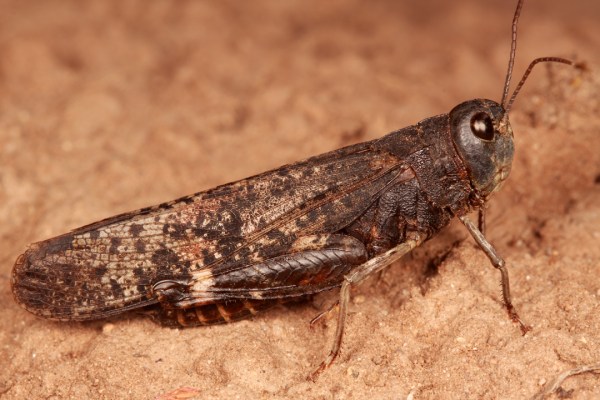
As we walked the trails not finding tiger beetles, I noticed these very dark grasshoppers every once in a while. They flew with a particularly noisy crackling sound that exposed bright red hind wings before dropping to the ground and instantaneously becoming almost completely invisible. Once I accepted that tiger beetle photography just wasn’t gonna happen that day, I began paying attention to these grasshoppers and, after working a few individuals, finally found one who was willing to let me get close enough for some photos. I’m not terribly fond of this first photo—the perspective is still too high as I had not yet learned by that time to get down flat on my belly for photographing anything on the ground (remember, this was two years ago). Nevertheless, it is the only one that I have that shows the entire body of the grasshopper. Since this location isn’t too far west of the Nebraska border, I figured an identification should be possible using the Nebraska grasshopper guide (Brust et al. 2008)—based on that work and subsequent examination of photos at BugGuide, I surmise this individual represents Arphia pseudonietana (red-winged grasshopper). There are other species of Arphia in Nebraska, some of which are easily confused with A. pseudonietana; however, most of these are more common further east. The only other species in the genus that occurs west into Wyoming is A. conspersa (speckle-winged grasshopper), and although it is similar in appearance and may have red hind wings (though more commonly orange to yellowish), adults are most common during spring and early summer. Arphia pseudonietana adults, on the other hand, are most active during mid-summer through fall.

The pronotum bears a single notch just in front of the middle.

Grasshoppers, particularly in the western states, tend to be loathed by ranchers who see them as competitors with cattle for meager forage resources, especially in dry years. This species does feed preferentially on a variety of grasses such as western wheatgrass (Pascopyrum smithii), buffalograss (Buchloe dactyloides) and blue grama (Bouteloua gracilis); however, it doesn’t seem to occur at economically important levels except in association with other, more numerous grasshopper species. I’m glad to know this, because for some reason I just don’t want anybody regarding band-winged grasshoppers of any kind as a pest. Other grasshoppers, fine—just not my beloved bandwings!

I presume this 5th instar nymph also represents A. pseudonietana

Later in the day I came across this presumed 5th-instar grasshopper nymph, and although it was quite skittish I eventually managed to get this single photograph before it resumed its frenetic hopping and I gave up in frustration. This is one of the better “one-shots” that I’ve managed to take—my only criticism being that the focus was just a tad too deep to catch the front metafemoral face. I really didn’t have much time to setup for this shot—once I got the critter reasonably in-frame I fired! Anyway, I’m inclined to think this also represents A. pseudonietana, although I’m less confident in that ID than I am for the adult as I wasn’t able to find a real good comparative photograph. Nymphs of A. pseudonietana are apparently most common from mid-spring to mid summer, so the seasonality is a bit off. I would be grateful to any acridophile who stumbles across this post and can provide an ID confirmation or correction (for either the nymph or the adult). Until then, I leave you with a shot that shows why I love fall regardless of whether I’m finding insects!

Quaking aspen glows under the late September sun.

REFERENCE:

Brust, M. L., W. W. Hoback and R. J. Wright.  2008. The Grasshoppers (Orthoptera: Acrididae and Romaleidae) of Nebraska.  University of Nebraksa-Lincoln Extension, 138 pp.

Copyright © Ted C. MacRae 2012

Inchworm, Inchworm, Oh So Small

Soybean looper (Chrysodeixis includens) | 3rd-instar larva

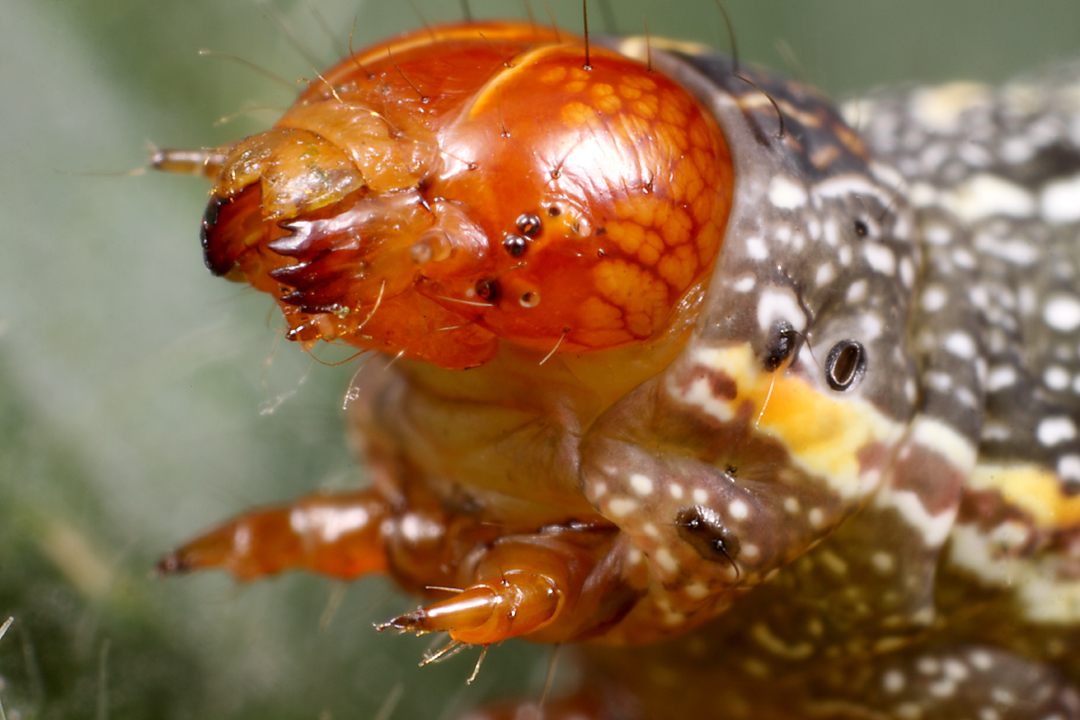
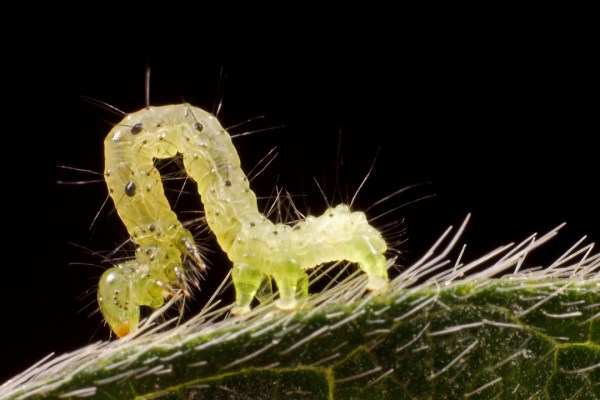
Okay, I know this is not a real “inchworm” (generally restricted to caterpillars in the family Geometridae), but this young larva of a soybean looper (Chrysodeixis includens, family Noctuidae) is just too cute to not have an equally cute name. I believe it is an early 3rd instar, based on its small size (~7mm in length), lightly colored head capsule, and distinct bristles around the head and on the body—1st instars have a black head capsule, while 2nd instars have a light brown head capsule, and in both the bristles on the body are smaller and not as distinct.

This larva hatched from an egg laid on soybean by a laboratory-reared adult.

Copyright © Ted C. MacRae 2012

Life at 8X—Guide to lepidopteran eggs on soybean

Most of you are aware of my passion for beetles, but in reality that is just my evenings-and-weekends gig. By day, I am an agricultural entomologist conducting research on insect pests of soybean. I’m not sure how many latent soybean entomologists there may be among readers of this blog, but for this installment of “Life at 8X” I thought it would be interesting to feature eggs of several of the more important lepidopteran species that infest soybean in the U.S. Soybean is primarily a New World crop, and of the many lepidopteran species that attack soybean on these two continents, most belong to the great family Noctuidae (owlet moths). The species shown here include the most important species in North America, and in some cases South America as well.

See this post for details on photographic technique; however, note that most of the photos in this post that were shot at 8X have been cropped slightly (~10–15%) for composition (should I call this post “Life at 9X”?).


Anticarsia gemmatalis. Velvetbean caterpillar (“oruga de las leguminosas” in Argentina; “lagarta-da-soja” in Brazil) has long been the most important lepidopteran soybean pest throughout the New World. In North America its attacks are confined to the lower Mississippi River delta and southeastern Coastal Plain, but in South America nearly 100% of the soybean growing area is subject to attack. Eggs of this species are laid almost exclusively on leaf undersides throughout the canopy and are intermediate in size compared to the other species shown below (~7,000 eggs per gram). They are distinctive in their slightly flattened spherical shape and turn pinkish as they age and the developing larva takes form inside the egg.

Anticarsia gemmatalis—velvetbean caterpillar


Chrysodeixis includens (=Pseudoplusia includens). Soybean looper (“oruga medidora falsa” in Argentina; “lagarta falsa-medideira” in Brazil) was until recently primarily a North American pest with the same southern occurrence as velvetbean caterpillar. In recent years, however, it has gained importance in Brazil and northern Argentina as well, with its impact magnified by the capacity to develop resistance against most of the insecticides that have been used to control it. The egg of this species is quite small (~10,000 eggs per gram) and are are irregularly spherical with a somewhat translucent, crystalline appearance. Like velvetbean caterpillar, eggs of this species are laid almost exclusively on the leaf undersides, but the moths exhibit a clear preference for the middle or upper canopy depending upon plant growth stage.

Chrysodeixis includens (= Pseudoplusia includens)—soybean looper


Helicoverpa zea. Soybean podworm is better known in other crops as corn earworm, cotton bollworm, or tomato fruitworm (a testament to its polyphagous nature), and in South America the common names are even more diverse depending on both crop and country (“gusano bellotero,” “gusano cogollero del algodón,” “gusano elotero,” “isoca de la espiga en maíz,” or simply “bolillero” in Argentina; “lagarta-da-espiga-do-milho” or “broca-grande-do-fruto in Brazil). While it has long been considered a secondary pest of soybean in North America, recent years have seen a marked increase in its incidence across the mid-south growing areas. Unlike the above two insects, larvae of this species feed not only on foliage but also directly on pods, typically breaching the pod wall and consuming the developing seeds inside. This method of feeding not only causes direct yield impacts but also affords some protection to larvae from insecticide applications.

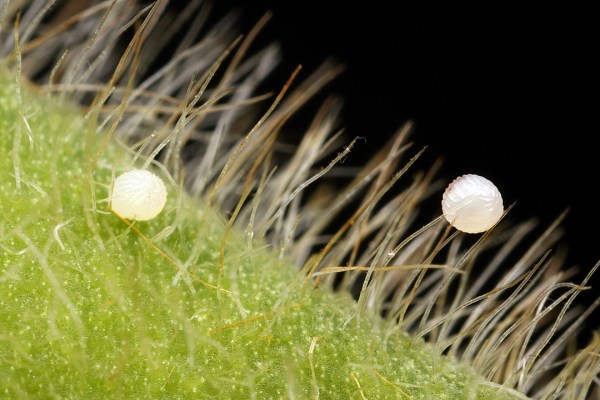
Also unlike the first two insects, eggs of this species can be laid anywhere on the plant—leaves (upper or lower surface), petioles, stems, pods, and even flowers. The eggs are rather large compared to the other species shown here (~3,500 eggs per gram) and assume a distinctive barrel shape when laid on the leaf. The creamy-white coloration, often with a light brown ring below the apex, is also distinctive compared to the previous two species. Eggs laid on pods tend to be attached to trichomes (hairs) rather than the pod surface, in which case they take on an almost perfectly spherical shape.

Helicoverpa zea—soybean podworm

Helicoverpa zea eggs on soybean pod


Heliothis virescens. Like the previous species, tobacco budworm has only recently gained attention as a pest of soybean. This importance, however, seems to be confined to Brazil (where it is known as “lagarta-das-maçãs”), while in North America it is usually found in combination with H. zea at minor levels. This is bad news for South American farmers; like soybean looper, tobacco budworm has developed resistance to all the insecticides that have been used against it in significant quantities. The oviposition and feeding behaviors of this species are very similar to those of H. zea, with eggs again laid on all parts of the plant and being very similar in appearance to those of H. zea except their slightly smaller (approx. 5,000 eggs per gram). In practical terms, eggs and young larvae of H. virescens and H. zea can be reliably distinguished only through species-specific immunoassay (Greenstone 1995) or feeding disruption bioassay using a diagnostic concentration of Bacillus thuringiensis ( Bailey et al. 2001).

Heliothis virescens—tobacco budworm

Heliothis virescens eggs on soybean pod.

As with H. zea, H. virescens eggs laid on pods tend to be stuck to hairs and assume a spherical shape.

This H. virescens egg has apparently died—note the shriveling and uniform black coloration.


Spodoptera frugiperda. Fall armyworm is a minor pest of soybean that rarely reaches economically damaging levels. However, its incidence in South America (where it is called “oruga militar tarde in Argentina and “lagarta-militar” in Brazil) has increased somewhat with the adoption of no-till cultivation of soybean. The species prefers grass hosts, but when these are knocked down by applications of post-emergence herbicides the larvae then move onto the soybean plants and continue feeding. Unlike any of the above species, eggs are laid in distinctive masses that are covered by abdominal setae and wing scales for protection. These eggs are also small (~8,500 eggs per gram), exhibit much finer and more numerous ridges than the above species, and are often colored orange, pink, or light green.

Spodoptera frugiperda—fall armyworm

Individual eggs inside the mass are covered by abdominal setae and wing scales.


REFERENCES:

Bailey, W. D., C. Brownie, J. S. Bacheler, F. Gould, G. G. Kennedy, C. E. Sorenson & R. M. Roe. 2001. Species diagnosis and Bacillus thuringiensis resistance monitoring of Heliothis virescens and Helicoverpa zea (Lepidoptera: Noctuidae) field strains from the southern United States using feeding disruption bioassays. Journal of Economic Entomology 94 (1):76–85.

Greenstone, M. H. 1995. Bollworm or budworm? Squashblot immunoassay distinguishes eggs of Helicoverpa zea and Heliothis virescens (Lepidoptera: Noctuidae). Journal of Economic Entomology 88(2):213–218.

Copyright © Ted C. MacRae 2012
Working with Cerceris fumipennis—Part 2

During the 6-week period from late May to early July this year, I collected ~400 jewel beetle specimens representing at least 20 species (see Working with Cerceris fumipennis—Part 1). A final accounting of the species represented won’t be done until this winter, but the genera represented include Acmaeodera, Actenodes, Agrilus, Anthaxia (Haplanthaxia), Buprestis (Knulliobuprestis), Chrysobothris, Dicerca, Poecilonota, and Spectralia. Perhaps two-thirds of the specimens were “ground-picked”¹, while most of the remaining third were “stolen” directly from wasps by netting wasps in flight as they returned to their nest carrying prey.

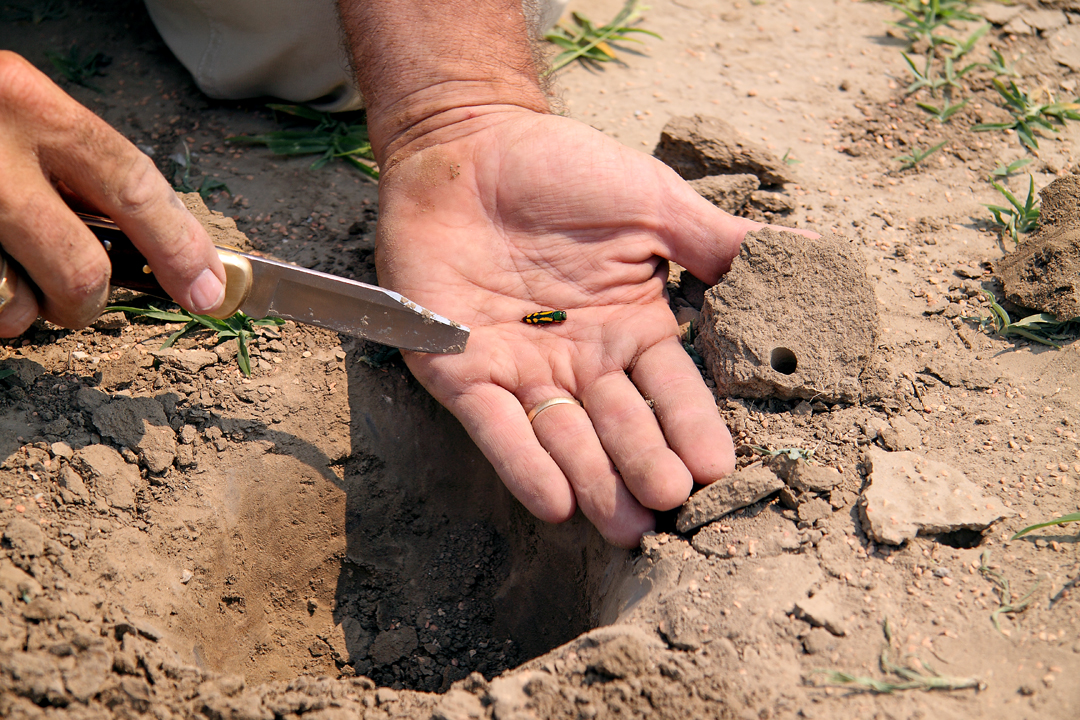
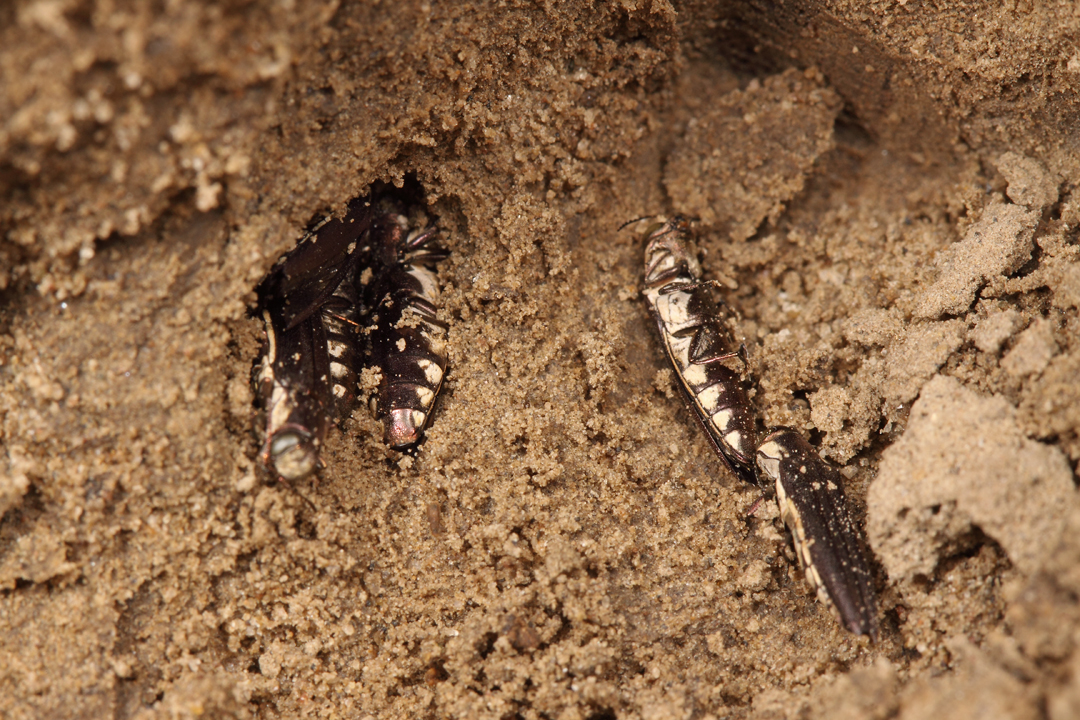
¹ It’s not clear to me why I found so many abandoned buprestids at nest entrances. The wasps are known to drop prey when threatened and, rather than search for and relocate the prey, fly off to look for a new beetle(Careless et al. 2009). I observed this myself in several cases when I missed netting the wasp but swiped the net close enough to scare it, at which time it dropped the beetle and flew off (and I popped the beetle in a vial). However, the bulk of the beetles I found on the ground were not only at the nest entrance, but even mixed within the diggings surrounding the nest. My first act when checking each field was to check each nest, pick up any adults lying on top of the burrow diggings, and then carefully spread out the diggings with a knife or trowel to collect the beetles hidden within them. One nest contained as many as 13 Agrlus obsoletoguttatus inside the diggings. I wondered at one point if the wasps were leaving the beetles at the burrow entrance and then digging out the burrow before coming back to retrieve them, but I never actually witnessed this. On the other hand, I observed numerous wasps approaching their burrows while carrying prey, and every time the wasp dropped directly into the burrow. In fact, I could even predict what beetle species I was likely to find inside the nest based on the species I found around the entrance (more on that below).

This ball field with contains several dozen Cerceris fumipennis nests.

There is a third method that I used to collect beetles that I haven’t yet discussed, and that is digging them out of nests. In the latter part of the survey period (late June and early July), beetle numbers dropped rapidly, as did apparent wasp activity. As mentioned in the previous post, this drop off in activity came precisely at the time of season when I have observed buprestid beetle activity to decline in Missouri. As the drop off in activity was taking place, I began wondering what I would find if I tried digging up some of the burrows. Of course, digging up a nest takes much more effort than netting wasps or picking beetles up off of the ground, so it becomes important not only to identify whether a nest actually belongs to C. fumipennis and if it is active and likely to contain freshly captured beetles.  In addition, I observed the burrows of a variety of other insects in these fields as well, some of which are shown here and which might be confused with burrow entrances of C. fumipennis.

Cerceris fumipennis nest with Chrysobothris sp. adult left on diggings.

Cerceris fumipennis burrows exhibit perfectly circular, pencil-sized entrances surrounded by a symmetrical mound of diggings with a fine rather than granular texture. There are other Cerceris species that make nearly identical burrows, but they prey on other insects rather than buprestid beetles. At my site I found C. bicornis, a weevil specialist, almost as common as C. fumipennis. Their burrow entrances on the whole seemed slightly larger, but I could not use this as consistent distinguishing character. What I could use, however, was the presence of weevils rather than buprestids lying on the ground near the nest entrance. (I also observed this species returning to its nest and noted a rather faster, more powerful flight that made them even more difficult to capture than C. fumipennis). In contrast, there can be no doubt that the burrow above, with a buprestid beetle lying on the ground near the entrance, belongs to C. fumipennis

² The white plastic tag marks the burrow to facilitate locating nests on subsequent visits. It is secured with a golf tee and also can be rotated so that the hole covers the entrance. The hole is large enough to allow the wasp to leave but too small for a returning wasp to enter while carrying a beetle. The idea was to rotate the tags when I first entered a field to cover all the burrow entrances, watch for wasps returning with prey, and then net the wasps as they tried (in vain) to enter the burrow. However, I never actually observed a wasp trying to enter a covered burrow, even after leaving a field and returning 20–30 minutes later.

I presume this nest to be that of Bembix americana (sand wasp).

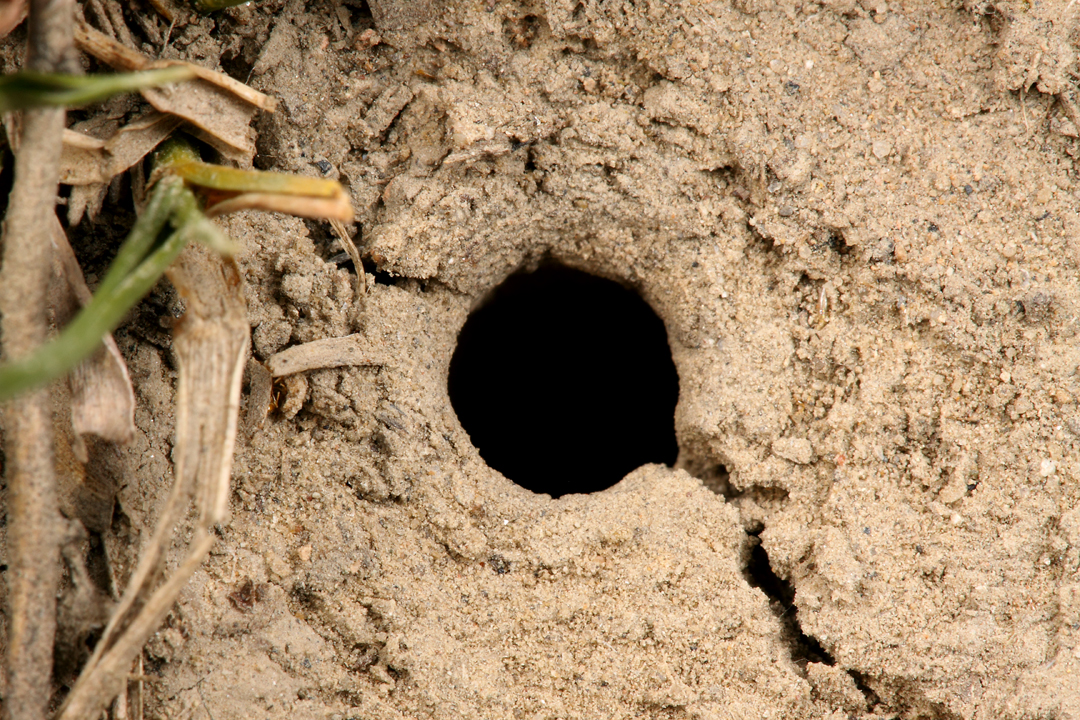
For the first few weeks, I thought the burrows such as that shown in the above photo also belonged to C. fumipennis. However, I never found beetles lying on the ground near the entrance, nor did I ever observe a wasp to enter or leave the burrow. I eventually noticed several distinct differences in burrow architecture—the burrow entered the ground at an angle rather than straight down, the diggings were distributed asymmetrically to one side of the entrance, and the latter seemed consistently a little larger than those of C. fumipennis. In addition, these burrows always seemed to be in the sandier portions of the fields. While I never associated any insect directly with these burrows, I did observe sand wasps (perhaps Bembix americana) in the vicinity and have seen similar-looking burrows dug by these wasps at Sand Prairie Conservation Area.

Larval burrows of Cicindelidia punctulata and other tiger beetles lack diggings around the entrance.

Tiger beetle larval burrows might also be confused with C. fumipennis burrows, especially after rain or high winds which can wash/blow away the diggings from around the entrance. I found adults of the punctured tiger beetle, Cicindelidia punctulata, fairly commonly at the site and presume the numerous tiger beetle larval burrows that were also present belong to that species. Larval tiger beetles burrows also enter the ground straight down and are, at first appearance, also perfectly round, but they are usually a little too small for C. fumipennis (those of Tetracha spp. being an exception)—the presumed C. punctulata burrow in the above photo measures about 5 mm in diameter. In addition, closer examination reveals a slight “D” shape to the burrow entrance (upper right in the above photo—the tiger beetle larva rests its jaws against the flat side) and, more distinctively, beveling of the ground around the rim of the burrow entrance. Cerceris fumipennis nests lack the slight D-shape and distinctive beveling.

Use a grass stem as a guide while carefully digging away the surrounding soil.

Years of practice digging up tiger beetle burrows prepared me well for my first attempts at digging up C. fumipennis burrows. While it might seem an easy task to follow a hole into the ground while digging soil away from it, in practice the burrow can be quickly lost after even a few inches due to falling soil covering the hole and making it impossible to relocate. I use a thin, flexible but sturdy grass stem to preserve the burrow path, inserting the stem into the burrow and down as far as it will go and then removing the soil carefully from around the hole with a knife or trowel. I try to avoid letting soil fall over the hole by prying the soil away from the hole, but if the hole does get covered the grass stem allows it to be easily relocated.

This nest contained a single Buprestis rufipes

Cerceris fumipennis burrows are not very deep—only 10–15 cm, and angle to one side a few cm below the surface before leveling out near the bottom. I noticed the nest in the above photo because I saw a wasp fly into it. When I went over to look at it I found a Buprestis rufipes lying on the ground near the entrance and so decided to dig it up. As I expected, I found another B. rufipes at the bottom of the burrow (two above photos courtesy of Madison MacRae).

…while this one contained a cache of seven Agrilus quadriguttatus.

The above photo shows a cache of seven Agrilus quadriguttatus that I found at the bottom of another burrow. In this case, the prey is rather small compared to large prey such as Buprestis and Dicerca. While nests provisioned with species in these latter genera often contained only a single beetle in them, I nearly always found multiple beetles in nests provisioned with the smaller Agrilus species. One nest contained as many as 13 Agrilus obsoletoguttatus, among the smallest of the species I found utilized by C. fumipennis at this site.

Buprestidae taken from five different Cerceris fumipennis nests.

Some of the nests I dug up contained multiple species of beetles, but far more commonly I found only a single species in a given nest. The photo above shows the diversity and number of beetles found on one date after digging up five different nests. From top left the beetles are: 1) 1 Buprestis rufipes; 2) 2 Agrilus quadriguttatus and 1 A. obsoletoguttatus; 3) 2 A. quadriguttatus and 1 A. obsoletoguttatus; 4) 8 A. obsoletoguttatus; and 5) 2 Poecilonota cyanipes, 2 A. quadriguttatus, and 1 A. pseudofallax. It would make sense for wasps to provision nests with greater numbers of smaller beetles to ensure adequate food for their larvae to complete development. How the wasps actually locate their prey, and why this species has specialized almost exclusively on buprestid beetles, is a mystery (at least to me); however (and here comes the speculation du jour), I suspect the wasps may have keyed in on volatiles used by the beetles—either those released by suitable hosts or by each other to facilitate mate location. Use of buprestid pheromones or freshly dead host volatiles would allow wasps to more efficiently locate buprestid prey and, once locating a source (a tree harboring a particular beetle species), could return repeatedly to provision their nest fully. It seems less likely that wasps rely exclusively on visual location of prey, as this would involve a large amount of random searching through trees and passing up numerous, seemingly equally suitable prey.

REFERENCE:

Careless, P. D., S. A. Marshal, B. D. Gill, E. Appleton, R, Favrin & T. Kimoto. 2009. Cerceris fumipennis—a biosurveillance tool for emerald ash borer. Canadian Food Inspection Agency, 16 pp.

Copyright © Ted C. MacRae 2012

One-Shot Wednesday: two-striped grasshopper nymph

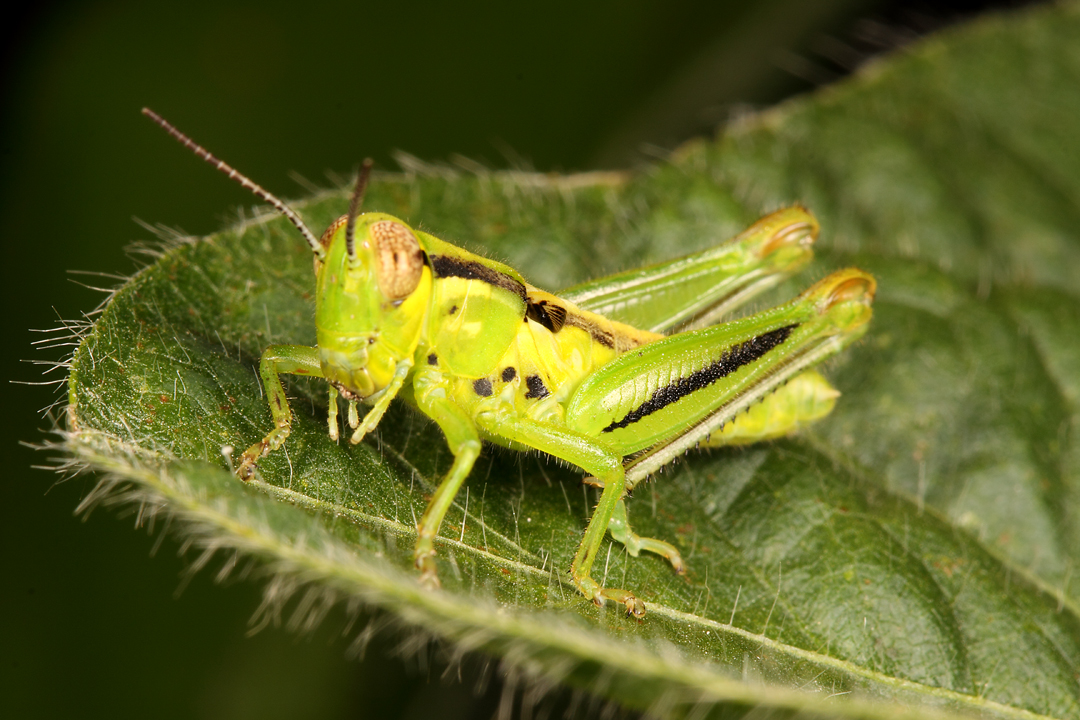
Melanoplus bivittatus (Two-striped Grasshopper) nymph | Jerseyville, Illinois

As the heat of summer solidifies its chokehold over the middle and southern latitudes of North America, grasshopper nymphs will begin to ramp up their development. I see grasshoppers commonly in my soybean field trials, where their feeding presents more of an annoyance to me than an actual threat to yields.

I photographed this particular individual on almost this same date last year in one of my Illinois soybean trials, not knowing for sure which species it represented. There was no particular reason for only taking this one single photograph, other than it was perched nicely when I saw it and that I did not feel like taking the time to chase it into another good pose after my first shot disturbed it.

Later in the season I saw numerous adults representing Melanoplus differentialis (differential grasshopper), a common species in this area, and assumed this was its nymph. However, a closer look at the photo suggests it represents the closely related M. bivittatus (two-striped grasshopper). While adults of these two species are easily distinguished based on coloration, the nymphs can look very similar (especially in their earlier instars) and are distinguished on the basis of the black femoral marking—more or less solid in M. bivittatus and broken into chevrons that create a “herringbone” pattern in M. differentialis.

Wing pad size and relative body proportions suggest this is a fourth-instar nymph.

Copyright © Ted C. MacRae 2012