Bizarre, beautiful extremes

No niche, it seems goes unfilled. Specialization is likely to be pushed to bizarre, beautiful extremes.–E. O. Wilson, The Diversity of Life

Wilson didn’t mention treehoppers specifically when he made the above quote, referring to the exuberance of extreme behavioral and morphological adaptations seen in the biota of the tropics, but he could have just as easily led off with them.  Treehoppers (order Hemiptera, family Membracidae) are well-known for their variety of oddly grotesque shapes resulting from a curiously inflated pronotum – presumably having evolved to resemble thorns and buds on their host plants, or the ants that vigorously defend numerous treehopper species in exchange for their sweet honeydew, or perhaps to aid in the dispersal of volatile sex pheromones (an attractive hypothesis but lacking experimental support). Despite inordinate attention in relation to their low economic importance, it remains that the pronotal modifications of many treehoppers are so bizarre that they continue to defy any logical explanation.

I must admit that, despite my passion for beetles, treehoppers were my first love.  (Well, actually anything that I could bring home from my solo wanderings in the urban woodlands and vacant lots near my childhood home and keep alive in a terrarium was my first true love, but from an academic standpoint, treehoppers were the first group to arouse my taxonomic interest as I began my transformation from child collector to serious student.) I had just begun graduate school in the Enns Entomology Museum under the late hemipterist Tom Yonke to conduct leafhopper host preference and life history studies, and although far more Cornell drawers in the museum contained Cicadellidae, it was the treehopper drawers that I found myself rifling through each afternoon after completing the day’s thesis duties. Despite their lesser number, the treehopper drawers had recently benefited from the attentions of a previous student, Dennis Kopp, whose efforts during his time at the museum concentrated on collecting treehoppers from throughout Missouri and culminated in the four-part publication, The Treehoppers of Missouri (1973-1974). I was enamored by these little beasts – specifically by their exaggerated pronotum – and started collecting them whenever I could on my forays around the state surveying for leafhoppers. They were closely enough related to leafhoppers to make them relevant to my work, only cooler – like leafhoppers on steroids! With The Treehoppers of Missouri as my bible and my desk located a half dozen footsteps from the largest treehopper collection within a several hundred mile radius, I delved into their taxonomy and, for a time, considered a career as a professional membracid taxonomist.

Fast forward nearly 30 years, and my involvement as a taxonomist is neither professional nor deals with membracids. Beetles have taken over as my focal taxon, and I conduct these studies strictly as an avocation. Still, I continue to collect treehoppers as I encounter them, and although such efforts have been largely opportunistic, I’ve managed to assemble a fairly diverse little collection of these insects as a result of my broad travels. Much of this has occurred in the New World tropics, and it is this region that is the center of diversity for the family Membracidae (fossil evidence suggests that subfamily diversification and subsequent New World radiation began during Tertiary isolation about 65 million years ago after South America separated from Africa, since only the primitive subfamily Centrotinae occurs in both the Old and the New Worlds – all other subfamilies are restricted the New World (Wood 1993)).  Every now and then, as I accumulate enough material to fill a Schmidt box, I sit down and study what I’ve collected, comparing it to my meager literature to attempt identifications.  For material I collect in eastern North America, this works fairly well, as there have been a number of publications covering different parts of this area.  Outside of this area, however, my only hope is to entice one of the few existing membracid specialists into agreeing to look at what I’ve accumulated and ask for their help in providing names, in exchange for which they will be granted retention privileges to benefit their research.
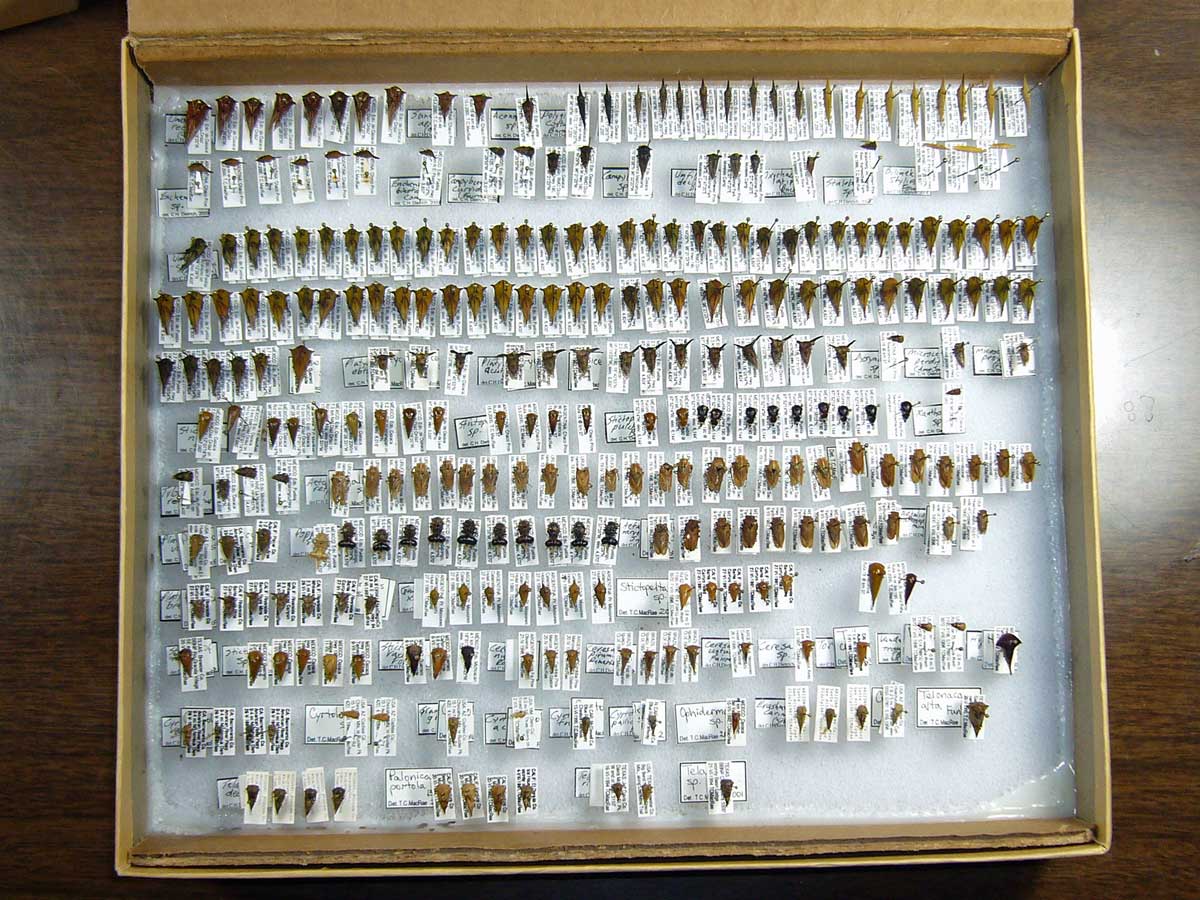
idd-treehoppersMost recently, I was able to convince Illinois Natural History Survey entomologist Chris Dietrich to take a look at the material I had accumulated during the past ten years or so, which included many specimens from Mexico and a smattering from other world areas, including South Africa. Chris did his doctoral work at North Carolina State University under “Mr. Membracid” himself, Lewis Deitz, and has since been conducting evolutionary and phylogenetic studies on Membracidae and the related Cicadomorpha. I recently received this material back from Chris (photo above), the majority of which he had been able to identify to species – only a few specimens in the more problematic genera were left with a generic ID.
Oaxaca)

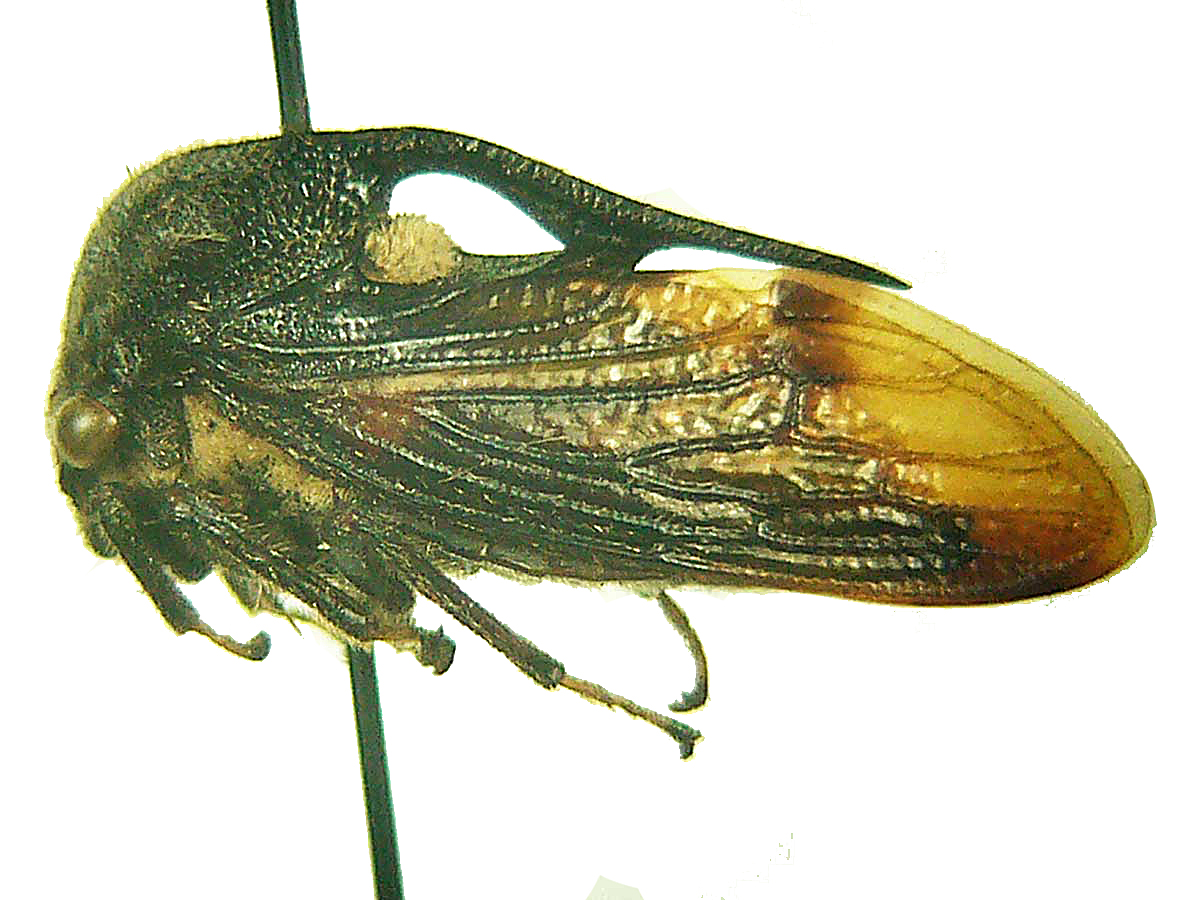
Campylocentrus sp. (Mexico: Oaxaca)

Oaxaca)

Hyphinoe obliqua (Mexico: Oaxaca)
Puebla)

Poppea setosa (Mexico: Puebla)

Oaxaca)

Umbonia reclinata (Mexico: Oaxaca)

Puebla)

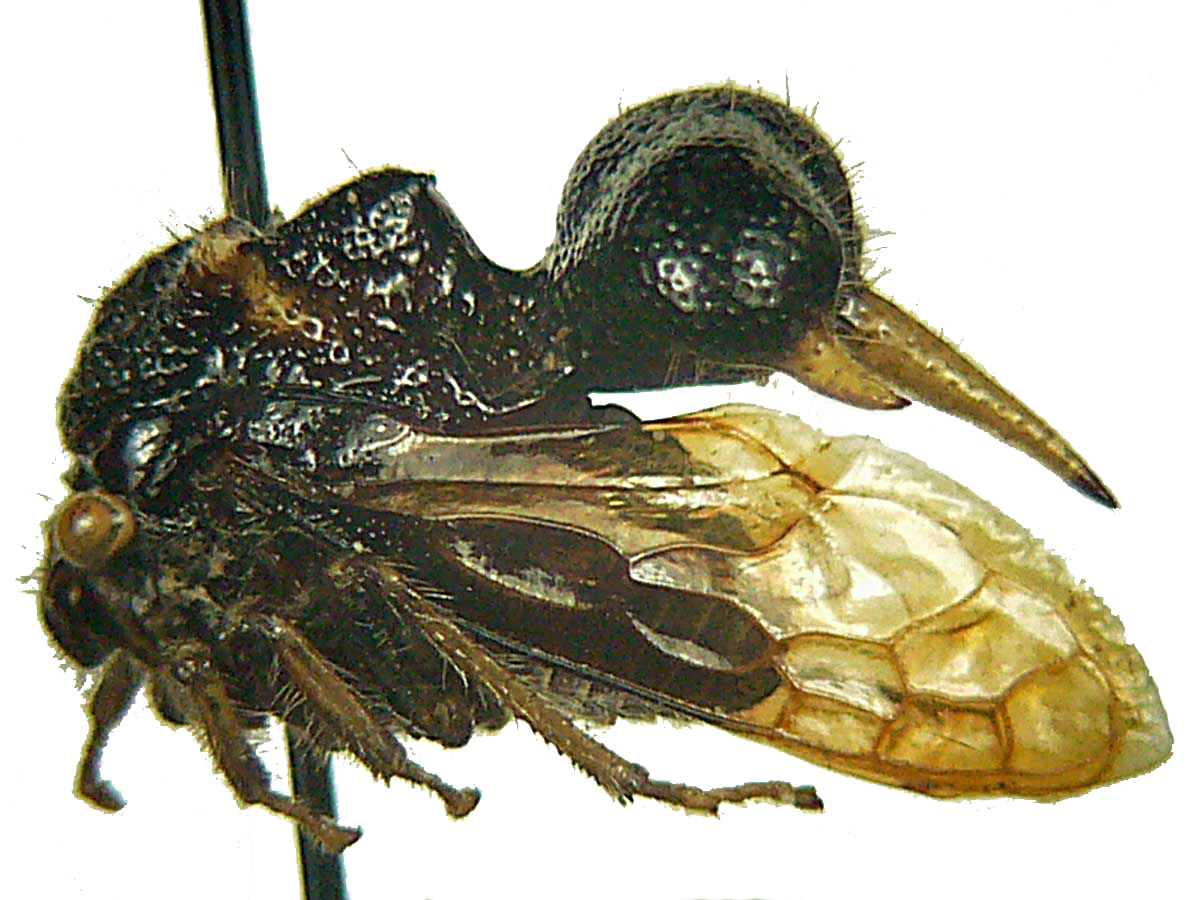
Umbonia crassicornis male (Mexico: Puebla)

umbonia_crassicornis_female

Umbonia crassicornis female (Mexico: Puebla)

The selection of photos here show a sampling of some of the more interesting forms contained within this batch of newly identified material – all of which hail from southern Mexico. Campylocentrus sp. is an example of the primitive subfamily Centrotinae, distinguished among most membracid subfamilies by the exposed scutellum (not covered by the expanded pronotum).  Hyphinoe obliqua is an example of the largely Neotropical subfamily Darninae, while Poppea setosa represents one of the more bizarre ant-mimicking species of the subfamily Smiliinae.  Umbonia is a diverse genus in the subfamily Membracinae, occurring from the southern U.S. south into South America. Umbonia crassicornis is one of the most commonly encountered species in this genus, with the photos here showing the high degree of sexual dimorphism it exhibits.  As membracids go, these species are quite large (10 mm in length from frons to wing apex for Campylocentrus sp. and P. setosa, a slightly larger 11-13 mm for the others); however, the many smaller species in this family are no less extraordinarily ornamented.  I’ve also included a photo (below) of one of the drawers from the main collection after incorporating the newly identified material – this drawer represents about half of my treehopper collection, with the largely Nearctic tribe Smiliini and the primitive family Aetalionidae contained in another drawer. In all, the material contained one new subfamily, six new tribes, 13 new genera¹, and 30 new species for my collection. For those with an appetite for brutally technical text, a checklist of the species identified, arranged in my best attempt at their current higher classification, is appended below (any treehopper specialist who happens upon this should feel free to set the record straight on any errors). For each species, the country of origin (and state for U.S. specimens) is indicated along with the number of specimens, and higher taxa new to my collection are indicated with an asterisk(*). Don’t worry, I didn’t type this up just to post it here – it’s a cut/paste job from my newly updated collection inventory for Membracoidea. Happy reading!

¹Wildly off topic, and perhaps of interest only to me, but two of the genera represented in the material are homonyms of plant genera: Oxyrhachis is also a Madagascan genus of Poaceae, and Campylocentrus is a Neotropical genus of Orchidaceae. Scientific names of plants and animals are governed by separate ruling bodies (ICBN and ICZN, respectively), neither of which specifically prohibit (but do recommend against) creating inter-code homonyms. The number of such homonyms is surprisingly high – almost 9,000 generic names have been used in both zoology and botany (13% of the total in botany) (source).  Fortunately, there is only one known case of plant/animal homonymy fr BOTH genus- and species-level names – Pieris napi japonica for a subspecies of the gray-veined white butterfly (Pieridae) and Pieris japonica for the popular ornamental plant Japanese andromeda (Ericaceae).
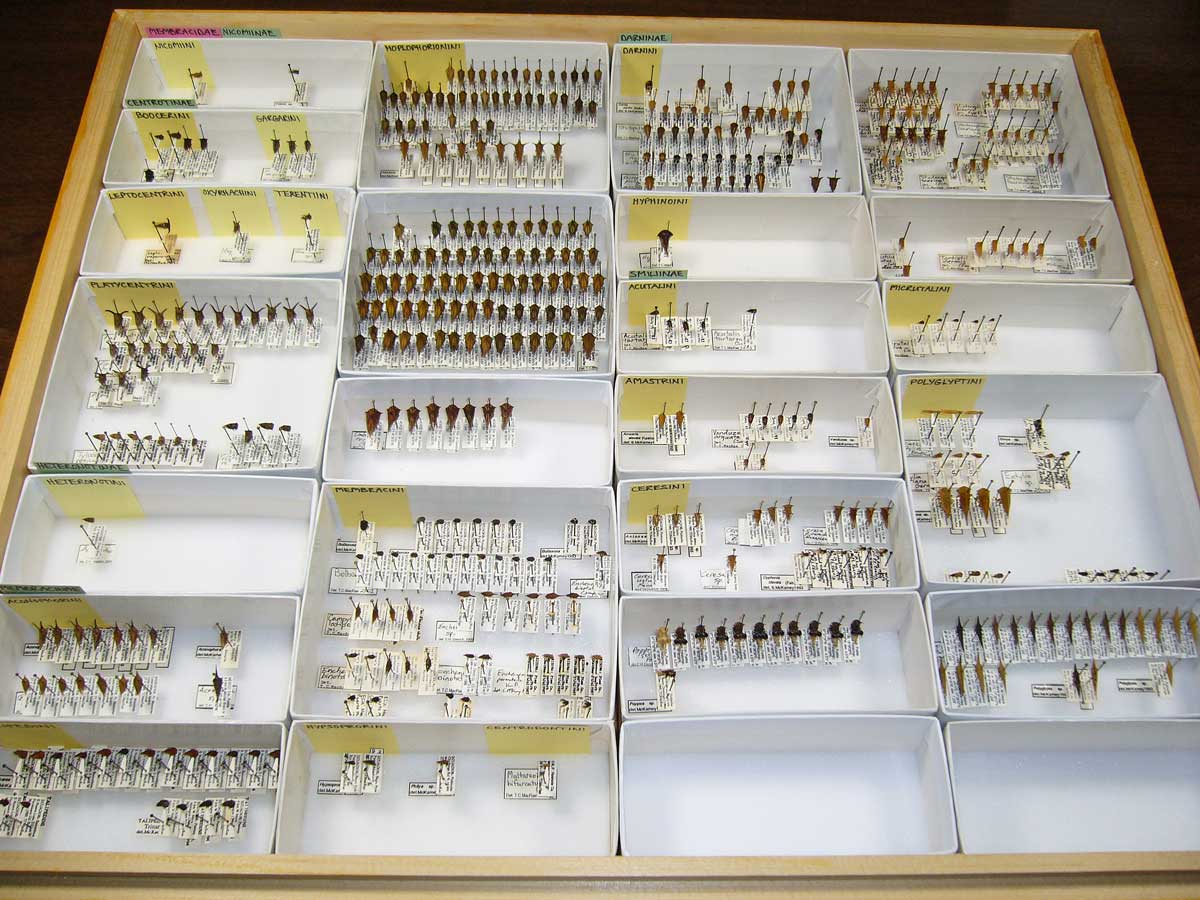
treehopper_drawer
REFERENCES:

Kopp, D. D. and T. R. Yonke. 1973-1974. The treehoppers of Missouri: Parts 1-4. Journal of the Kansas Entomological Society 46(1):42-64; 46(3):375-421; 46(3):375-421; 47(1):80-130.

Wood, T. K. 1999. Diversity in the New World Membracidae. Annual Review of Entomology 38:409-435.
.


.
Superfamily MEMBRACOIDEA
Family MEMBRACIDAE
Subfamily CENTROTINAE

 *Tribe BOOCERINI
*Campylocentrus curvidens (Fairmaire) [Mexico] – 4
Campylocentrus sp. [Mexico] – 1

*Tribe GARGARINI
*Umfilianus declivus Distant [South Africa] – 3

*Tribe OXYRHACHINI
*Oxyrhachis latipes (Buckton) [South Africa] – 1

Tribe PLATYCENTRINI
Platycentrus acuticornis Stål [Mexico] – 11
Platycentrus obtusicornis Stål [Mexico] – 3
Platycentrus brevicornis Van Duzee [USA: California] – 7
Tylocentrus reticulatus Van Duzee [Mexico] – 4

*Tribe TERENTIINI
*Stalobelus sp. [South Africa] – 1

*Subfamily HETERONOTINAE

*Tribe HETERONOTINI
*Dysyncritus sp. [Argentina] – 1

Subfamily MEMBRACINAE

Tribe ACONOPHORINI
Aconophora sp. female [Mexico] – 1
*Guayaquila xiphias (Fabricius) [Argentina] – 7

Tribe HOPLOPHORIONINI
Platycotis vittata (Fabricius) [USA: Arizona, California] – 3
Umbonia crassicornis (Amyot & Serville) [Mexico] – 73
Umbonia reclinata (Germar) [Mexico] – 8

Tribe MEMBRACINI
Enchenopa binotata complex [Mexico] – 1
Enchenopa sp. [Argentina] – 6

Subfamily DARNINAE

Tribe DARNINI
Stictopelta nova Goding [Mexico] – 9
Stictopelta marmorata Goding [USA: Texas] – 1
Stictopelta pulchella Ball [Mexico] – 11
Stictopelta varians Fowler [Mexico] – 3
Stictopelta sp. [USA: Arizona, California] – 5
Stictopelta sp. [Mexico] – 5
Stictopelta spp. [Argentina] – 6
*Sundarion apicalis (Germar) [Argentina] – 2

*Tribe HYPHINOINI
*Hyphenoe obliqua (Walker) [Mexico] – 1

Subfamily SMILIINAE

Tribe AMASTRINI
Vanduzeea triguttata (Burmeister) [USA: Arizona] – 2

Tribe CERESINI
Ceresa nigripectus Remes-Lenicov [Argentina] – 3
Ceresa piramidatis Remes-Lenicov [Argentina] – 4
Ceresa ustulata Fairmaire [Argentina] – 1
Ceresa sp. female [Argentina] – 1
Poppea setosa Fowler [Mexico] – 11
Tortistilus sp. [USA: California] – 1

Tribe POLYGLYPTINI
*Bilimekia styliformis Fowler [Mexico] – 3
Polyglypta costata Burmeister [Mexico] – 18

Tribe SMILIINI
Cyrtolobus acutus Van Duzee [USA: New Mexico] – 1
Cyrtolobus fuscipennis Van Duzee [USA: North Carolina] – 1
Cyrtolobus pallidifrontis Emmons [USA: North Carolina] – 1
Cyrtolobus vanduzei Goding [USA: California] – 4
Cyrtolobus sp. [USA: Arizona] – 2
*Evashmeadea carinata Stål [USA: Arizona] – 4
*Grandolobus grandis (Van Duzee) [USA: Arizona] – 1
Ophiderma sp. [Mexico] – 1
Palonica portola Ball [USA: California] – 4
Telamona decora Ball [USA: Missouri] – 4
Telamona sp. [USA: Texas] – 1
*Telamonanthe rileyi Goding [USA: Texas] – 2
*Telonaca alta Funkhouser [USA: Texas] – 1
Xantholobus sp. [Mexico] – 1

Subfamily STEGASPINAE

Tribe MICROCENTRINI
Microcentrus perditus (Amyot & Serville) [USA: Texas] – 1
Microcentrus proximus (Fowler) [Mexico] – 1

Family AETALIONIDAE
Subfamily AETALIONINAE

Aetalion nervosopunctatum nervosopunctatum Signoret [Mexico] – 9
Aetalion nervosopunctatum minor Fowler [USA: Arizona] – 2
Aetalion reticulatum (Linnaeus) [Argentina, Uruguay] – 26

Copyright © Ted C. MacRae 2009

Add to FacebookAdd to NewsvineAdd to DiggAdd to Del.icio.usAdd to StumbleuponAdd to RedditAdd to BlinklistAdd to Ma.gnoliaAdd to TechnoratiAdd to Furl

Christmas in January

One of the ironies about collecting insects is that the winter months can be just as busy as the summer months, sometimes more so. Despite the lack of insect activity during these short, cold days, I actually find myself at times a little overwhelmed with the amount of “work” I’ve set myself up to do.  There are specimens to mount, label, curate, and incorporate into the main collection.  Data from the just concluded field season need to be assembled and summarized so that reports and manuscripts can be written.  Applications for collecting permits need to be submitted, which can only be done once plans for the upcoming season have been formulated.  The fact that entomology is also my profession only exacerbates the situation.  Not that I’m complaining!  I love the fact (and sometimes still have a hard time believing) that I actually get paid to play with bugs, which affords me the opportunity to study them as I wish in my free time.

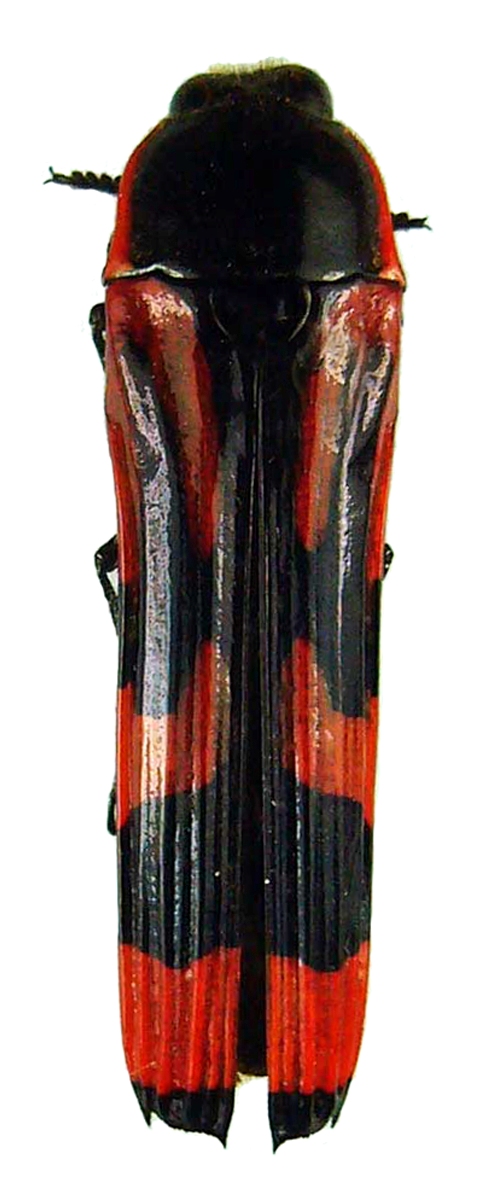
hiperantha-interrogationis-cruentata_dorsal_21Hiperantha interrogationis cruentata (ventral)In addition to these winter tasks for my own collection, I’ve also for a number of years now taken on the task of identifying material for other collectors.  While this may seem very nice of me, I can’t honestly claim that my motives are completely altruistic.  Doing this has given me the chance to develop relationships with a great many entomologists, specializing in taxa both within and outside my sphere of interest.  Often, material sent to me contains specimens that represent new distributional or host plant records, providing fodder for my own research.  Less frequently but more exciting, such material will contain species that I haven’t yet encountered on my own.  In most cases, the sender will be gracious enough to let me keep an example or two for my collection.  Such is the case with this gorgeous buprestid beetle, Hiperantha interrogationis, which was included in a recent shipment to me as a “gift” from long time friend and expert cerambycid specialist Dan Heffern.  This Neotropical representative of the tribe Stigmoderini (which also contains the Australasian genera Calodema and Metaxymorpha, featured in this recent post) not only represents a new species for my collection, but a new genus as well (reminding me of the old adage, “some of the best collecting is in other people’s collections” – or something like that).  Measuring right at 25mm in length, this spectacularly beautiful specimen is a welcome addition to my collection!

Hiperantha interrogationis is the only member of this otherwise South American genus to occur as far north as Central America and Mexico (Bellamy 2008).  This particular specimen was collected in Jalisco, and as such represents the subspecies cruentata, occupying the northernmost portion (Colima, Durango, Jalisco, and Nayarit) of the distributional range of the species (Bellamy & Westcott 2000).  Hiperantha interrogationis cruentata is distinguished from nominotypical populations by having all of the dorsal color pattern in red (nominate H. interrogationis exhibit some yellow markings) and the median longitudinal vittae of the elytra widely interrupted, thereby resulting in the formation of a distinctly transverse postmedian band. The apical transverse band of the elytra is also usually much wider in this subspecies than in the nominate form.

In a familiar refrain, not much is known about H. interrogationis other than distributional records.  Adults have most often been encountered on flowers of tropical trees, but larval hosts are completely unknown.  Manley (1985) published observations on the feeding behavior of adults on flowers of “Niguito”, Muntingia calabura (Elaeocarpaceae) near Guayaquil, Ecuador.  The adults were observed to be rather strong, high fliers that hovered over flowers in the tops of the trees before alighting, often on the terminal flower of a high branch.  Adults were observed consuming the petals of the flowers but were never observed feeding on the foliage.  After consuming all the petals of a flower, a process that required around 20-30 minutes, the adults moved off to adjacent foliage to groom themselves or rest.  No adults were observed on flowers of any other plant species in this area, but Bellamy & Westcott (2000) later recorded both subspecies on flowers of Acacia angustissima (Fabaceae) and the nominate subspecies on flowers of Chilopsis linearis (Bignoniaceae).

My sincere thanks to Dan Heffern for giving me his single specimen of this gorgeous species.

REFERENCES:

Bellamy, C. L.  2008. World catalogue and bibliography of the jewel beetles (Coleoptera: Buprestoidea),  Volume 2: Chrysochroinae: Sphenopterini through Buprestinae: Stigmoderini.  Pensoft Series Faunistica 77: 632-1260.

Bellamy, C. L. and R. L. Westcott.  2000. The genus Hiperantha: subgenera, type species, unavailable names and the Mexican fauna (Coleoptera: Buprestidae).  Folia Heyrovskyana 8(1):25-34.

Manley, G. V.  1985. Notes on the biology of Hyperantha interrogationis Klug (Coleoptera: Buprestidae).  The Coleopterists Bulletin 39(1):16-17.

Copyright © Ted C. MacRae 2009

Add to FacebookAdd to NewsvineAdd to DiggAdd to Del.icio.usAdd to StumbleuponAdd to RedditAdd to BlinklistAdd to Ma.gnoliaAdd to TechnoratiAdd to Furl

Welcome to the “new” Beetles In The Bush

After much consideration, I have decided to move Beetles In The Bush to its new home here at WordPress.  To those of you coming here from the old site, thank you for following the link.  To those of you who have stumbled upon this site from somewhere else, welcome!

The decision to move was not easy, nor was it taken lightly, but it was something I had been considering for quite awhile.  The debates about WordPress versus Blogger are well chronicled, and you will find many who strongly believe in one or the other.  For me, the choice was not so clear – each offers advantages relative to the other.  What really attracted me to  WordPress, however, was the horizontal menu bar linked to static “Pages” that are separate from chronologically-ordered posts – ideal for expanded profiles, tables of contents, indices, annotated link galleries, etc.  I toyed with different methods for creating these in Blogger and actually found a way to simulate them along with the menu bar.  However, it took a lot of effort learning HTML code, and the results were just not very crisp when compared this standard WordPress feature.  Frankly, I’d rather spend my time writing posts rather than HTML code.  Moreover, I’ve always been impressed with the clean, professional look of the WordPress templates – very attractive.

Nevertheless, the idea of actually moving my blog was still a daunting thought.  Would everything transfer or would I have to start over?  Would I lose my photos?  Would the post formatting get messed up?  The more I researched it, the more feasible it seemed, and when I actually created a site for beta testing I was immediately impressed with the functionality and ease of use.  Setting up the new blog, transferring the posts and comments from the old site, adding the “page” features that I had so long desired, and all the fine-tuning to achieve the “look” that I wanted only took a few hours.  The hardest part was deciding on a template.  Alex may think I simply copied what he did, the truth is I previewed both the initial blog and the finished blog in every template offered by WordPress.  I liked the clean lines, crisp fonts, and simple elegance of this layout.  I also debated about whether to replace the old banner, but ultimately decided a move to a new site deserved a new banner to go along with it.  I suppose switching sites might mess up page stats, Google rankings, and other technical issues that concern serious bloggers.  I’ll need to keep the old site live, since that is where all the photos from the previous posts are housed – that might ‘steal’ hits that would have otherwise come to this site when people do Google searches.  I guess all I can hope is that people landing on the old site will follow the redirect.

So, welcome to the new Beetles In The Bush – I hope you’ll take a moment to explore the new pages.  I’ve included a short biography in About, a Table of Contents with a complete list of posts (and recommendations for some of my favorites), a description of my personal Insect Collection with links to inventories for certain taxa, a complete list of my Publications, and an annotated list of Links that I’ve found useful for identification and nomenclature of insects and plants.  Comments are always welcome, and feel free to Contact me directly if you have specific questions or comments.  Don’t forget to update your links from:

http://beetlesinthebush.blogspot.com

to:

http://beetlesinthebush.wordpress.com

Collection Inventory update

The more observant – and taxonomically inclined – among my readers may have noticed the sidebar item entitled, “T. C. MacRae Collection”. The links within that item lead to Google documents detailing the species in those groups of insects that are represented within my collection. I am primarily a beetle guy, and within that vast taxon I focus mostly on the woodboring beetle groups Buprestidae and Cerambycidae and the tiger beetle family Cicindelidae. As you can see, however, I have inventories for several additional groups, including non-beetle families – a testament to my inability to suppress broad interest in insects as a whole. I don’t claim to be an expert in these other groups of insects, but I do enjoy learning about groups outside my chosen field of expertise. It’s a bit of a ‘throwback’ attitude – insect taxonomists of the 19th and early 20th centuries commonly studied multiple families or even orders of insects. This broad approach has largely disappeared in the past 50 years, as taxonomists increasingly have been forced to become narrowly focused on a single insect taxon. I can maintain this broad approach because, while I am a professional entomologist, I am a taxonomist only by avocation. My research is conducted at my own discretion and doesn’t rely on securing grants or fulfilling a departmental mission. Rather, it is directed only by what I find interesting and can reasonably afford in terms of time and expense.

The purpose of this update is twofold – to call attention to two recent additions to the list of inventories, and to explain how the inventories are constructed in the event that some future reader will want to utilize them for reference. In the past two weeks, I’ve received back material accumulated over the years in the families Mutillidae (velvet ants) and Asilidae (robber flies). This material had been sent to experts for identification – doctoral candidate Kevin Williams (Utah State University) graciously provided IDs for the velvet ants, while worldwide asilid expert Dr. Eric Fisher (California Department of Food and Agriculture) kindly identified the robber flies. For each of these groups, an inventory was constructed in which the species represented by my material are listed in the context of the group’s currently accepted higher classification. In each case, higher taxa not represented in my collection are indicated by lighter gray text. A similar approach has been used, to varying degrees, in the other listed inventories. The biggest one, Buprestoidea, represents the bulk of my collection, listing almost 1,500 species from around the world. In this case, not only is the complete higher classification indicated, but all currently recognized world genera are also listed, as well as all known North American species. Again, taxa not represented in my collection are indicated by lighter gray text. Similar inventories have been constructed for Cerambycidae and Cicindelidae, but in these cases the inclusion of taxa missing from my collection is limited to those occurring in North America – their combined worldwide fauna is simply too large for me to concern myself with, given my primary focus on the worldwide buprestoid fauna.

Regarding the Buprestoidea, Cerambycidae, and Cicindelidae – these are my chosen groups of interest in which I am actively building North American representation (worldwide for Buprestoidea). If anyone can provide specimens representing taxa not in my collection, please contact me directly. I am more than happy to exchange for such material. As for the other groups, they are primarily ‘just for fun’ – I collect them when convenient because they are interesting, but more importantly to make them available to others who might have a research interest in them. If anyone working in these groups sees species listed that are of interest to your research, please feel free to contact me for a loan or exchange. I have material in many additional groups not yet listed – inventories will be posted as they become available. If you have interest in a group not listed, please contact me and I’ll let you know what material I have available for loan/exchange.

A hunting we will go!

Maps have been prepared. Relevant emails from my esteemed colleagues to the northwest have been read and re-read. Summary sheets on the distribution, biology, and biogeography of the many different species I hope to encounter are in hand. Google Earth images of each locality I plan to visit – annotated with potential species occurrences and pinpointing precise locations of their likely habitats – have been assembled into a Powerpoint presentation, and detailed driving directions from Point “A” to Point “B”… all the way to Point “X” (home!) have been determined. All of this has been printed out and organized into a 3-ring binder. Why the extraordinary attention to detail? Because…

It’s time for the annual fall tiger beetle trip!

View Larger Map

The annual fall tiger beetle trip started several years ago when I, along with my friend and colleague Chris, began studying Missouri’s tiger beetle fauna. At first it was a diversion – buprestids and cerambycids are pretty well played out by fall, but tiger beetles across much of the U.S. exhibit a unique spring/fall fauna that is quite distinct from the summer fauna. Chris and I would go to different parts of Missouri, documenting the species encountered to fill in distributional data gaps. It was on these trips that I discovered how much I truly love early fall collecting – the cool air, the crisp smells, the long sharp shadows, and a landscape of foliage ever so lightly tinged with shades of red and yellow while grasses morph into fields of gold. In recent years, I’ve begun adventuring beyond Missouri’s borders on these fall trips, allured by the diversity of species found in the Great Plains – species alien to Missouri in an equally alien landscape. First, it was Barber County, Kansas, with its red gypsum hills inhabited by the aptly named Cicindela pulchra (beautiful tiger beetle) – deep wine-red and iridescent purple flashing across the barren red clay. Then last year I got my first taste of the Sand Hills of Nebraska at their farthest eastern extent. I watched in amazement as Cicindela limbata (sandy tiger beetle) – vivid white and metallic green – danced across the surface of sand blows, undaunted by scouring 30 mph winds. It was on that trip that I decided a long weekend wasn’t cutting it – I needed to take a whole week and get myself into the heart of the Great Plains. The annual fall tiger beetle weekend has just become the annual fall tiger beetle week.

As the map above indicates, I’ve got a rather ambitious itinerary of locations that I’d like to visit – 22 in all. I leave tomorrow, and if I have planned properly (and have a little luck) I might be able to visit all of them in the 9 days I have set aside for the trip. My “trip bible” will be my constant companion, along with my already worn copy of the newly issued Tiger Beetles of South Dakota & Nebraska (Spomer et al. 2008), as I explore deep into the Sand Hills and experience for the first time ever the Black Hills of South Dakota. I’ll even sneak over into Colorado and Wyoming for a spot or two. Unfortunately, my faithful colleague isn’t able to join me. I tried to seduce him with visions of Cicindela limbata and C. lengi (blowout tiger beetle) in the numerous sand blows, C. fulgida (crimson saltflat tiger beetle) around countless alkaline lakes, C. longilabris (Boreal long-lipped tiger beetle) in the high pine forests, and C. nebraskana (prairie long-lipped tiger beetle) and (if we’re really really lucky) C. decemnotata (Badlands tiger beetle) just sneaking into the shortgrass prairies of the extreme northwestern corner of Nebraska. I reminded him of my (wanting) photographic skills and the images we would have to settle for if his talent and equipment didn’t accompany me. I almost had him, but in the end he muttered some lame excuse about his 15-month old baby and wife needing him (just kidding, Chris!).

The map above should be fully interactive, so give it a click and follow me along on this adventure. If you happen to be at any of the spots marked by a balloon and see a khaki-clad fellow – insect net in one hand, camera in the other – how’s about joining me for a bit of tiger beetle hunting.