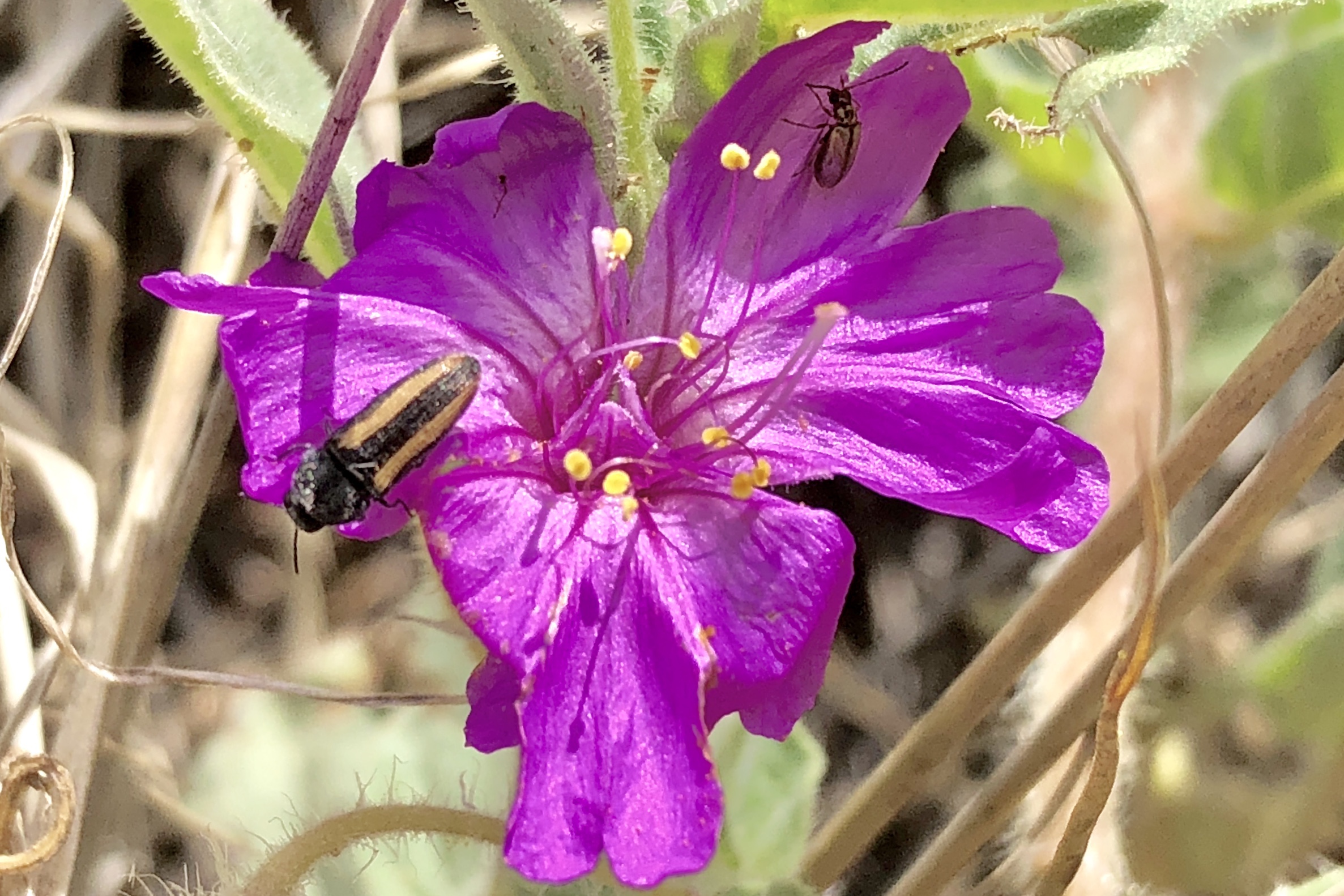
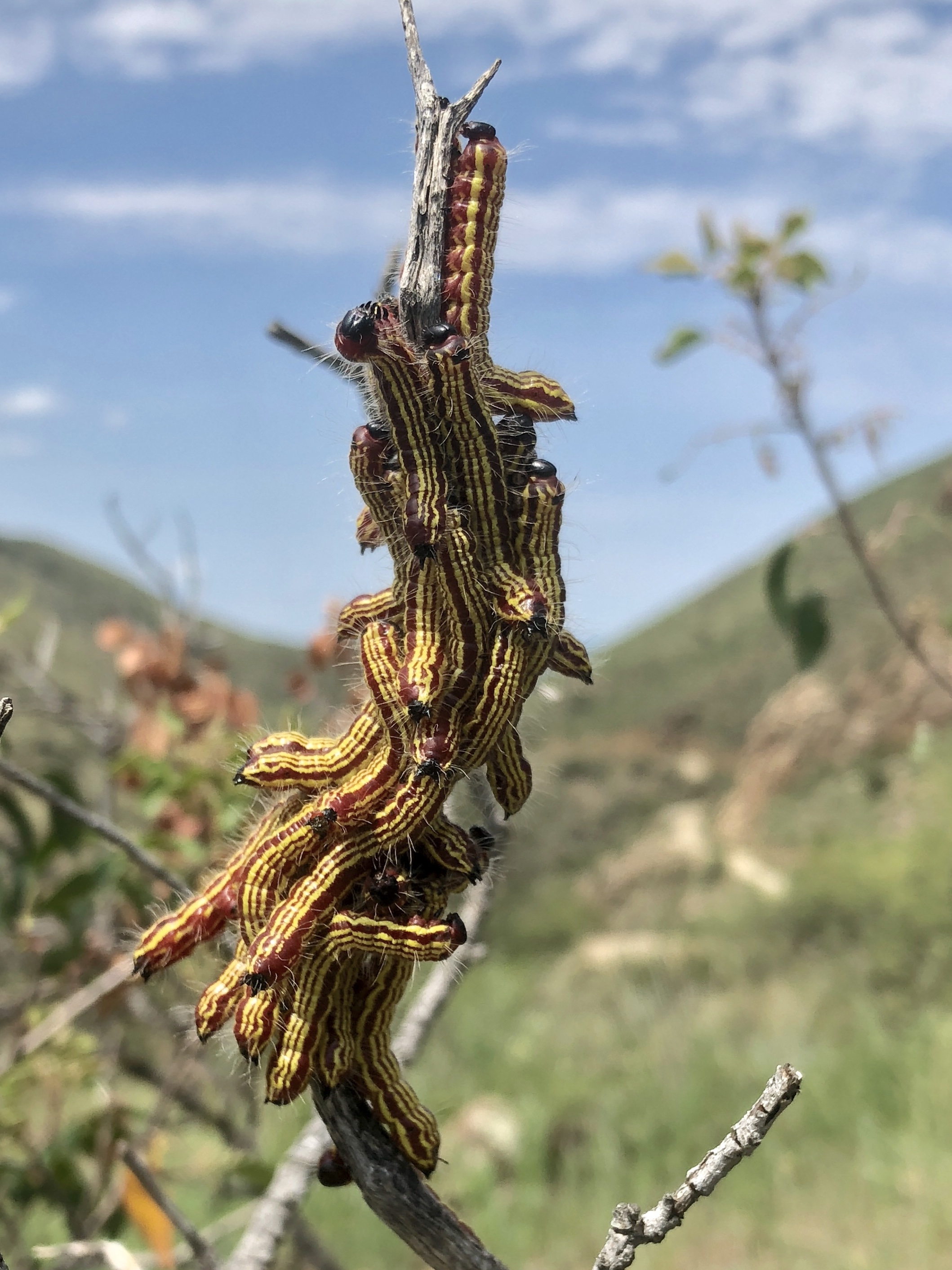
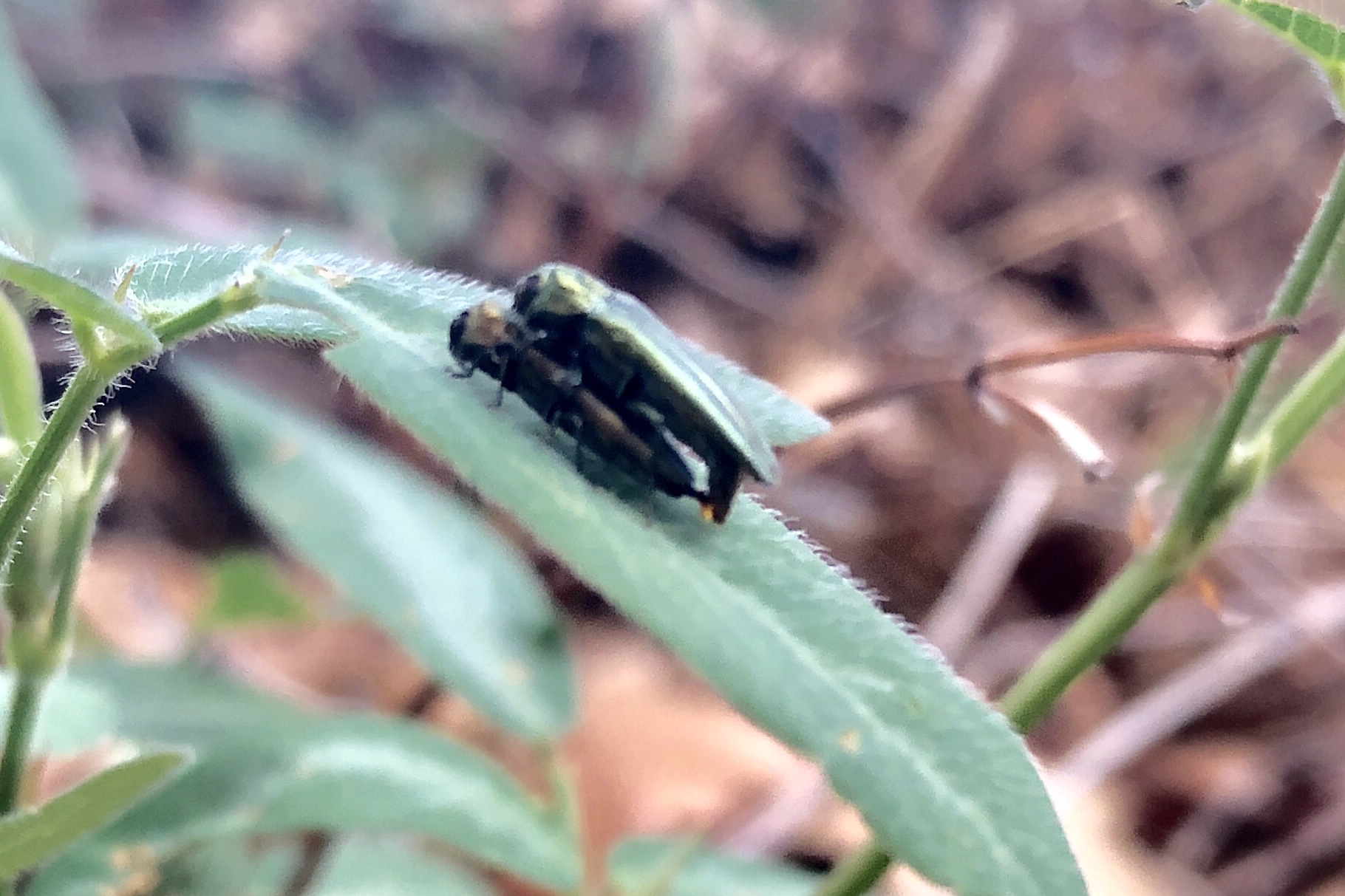
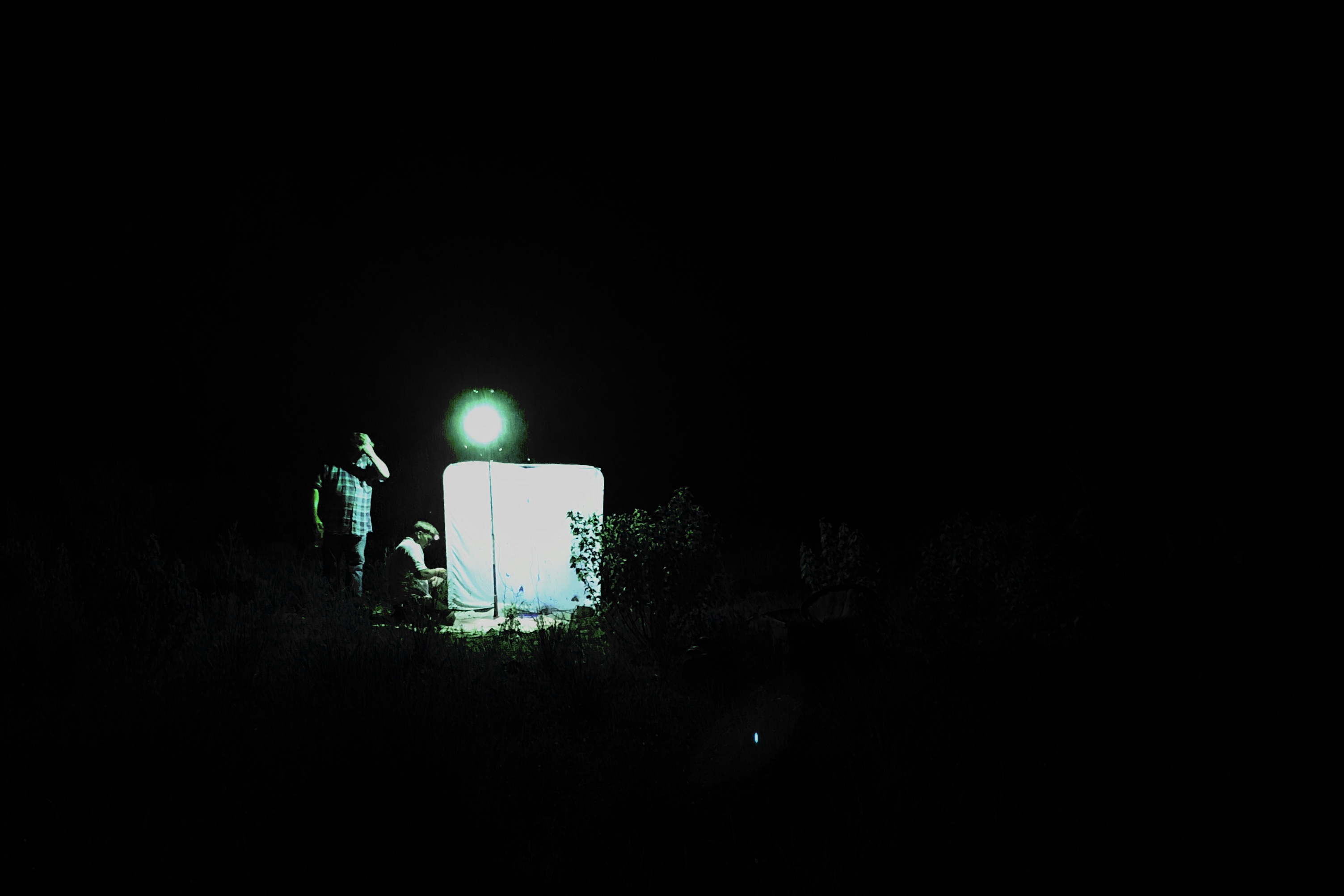
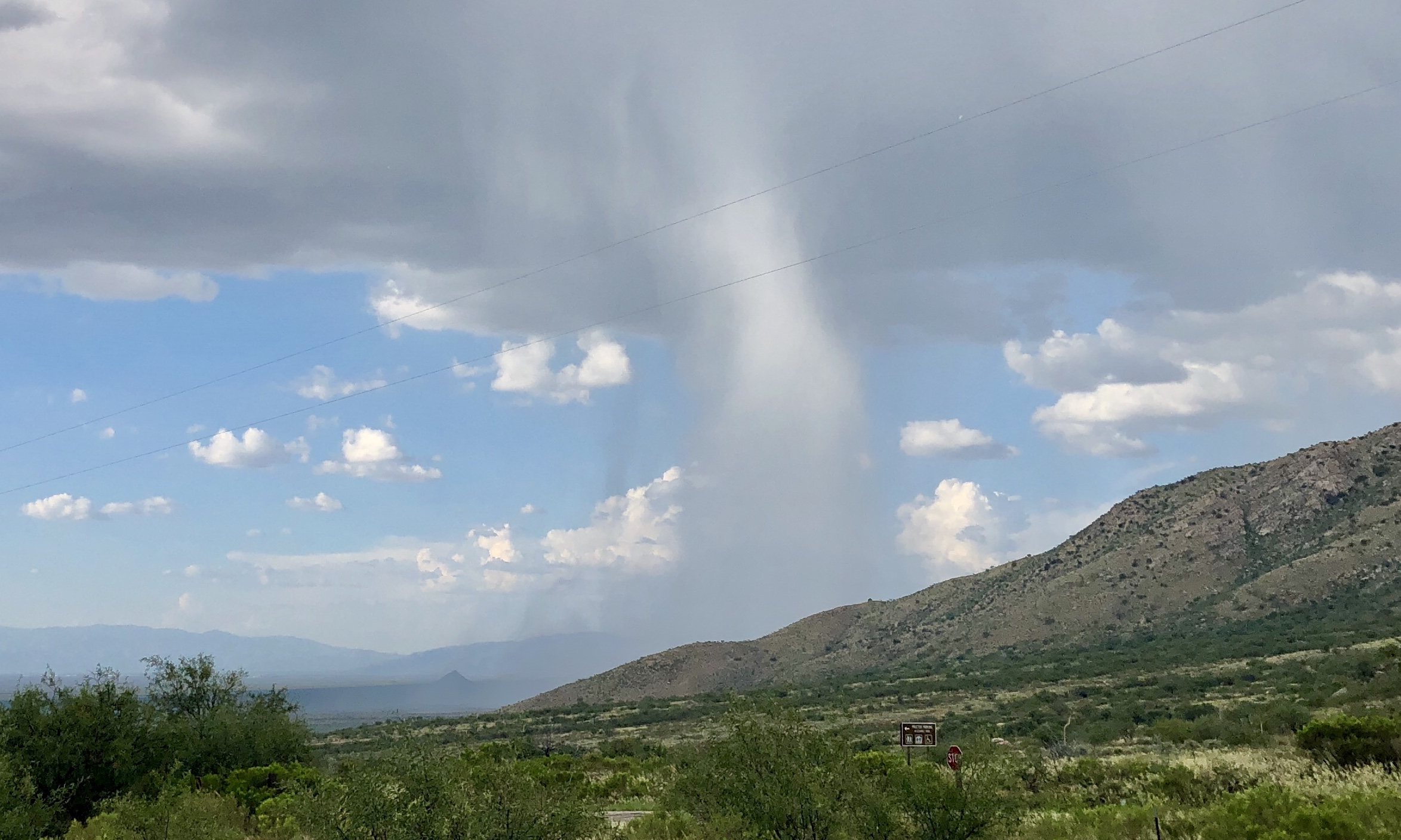
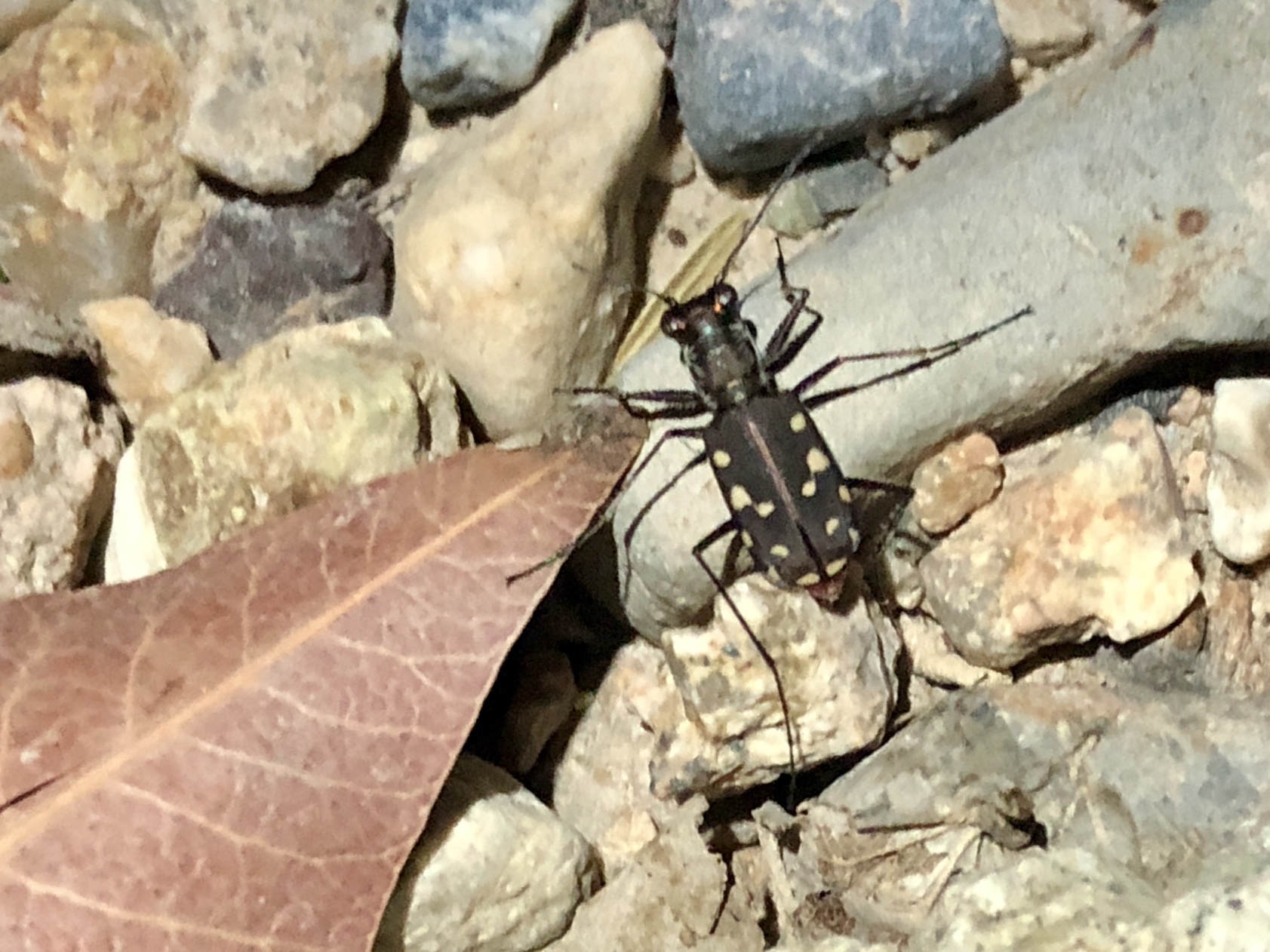
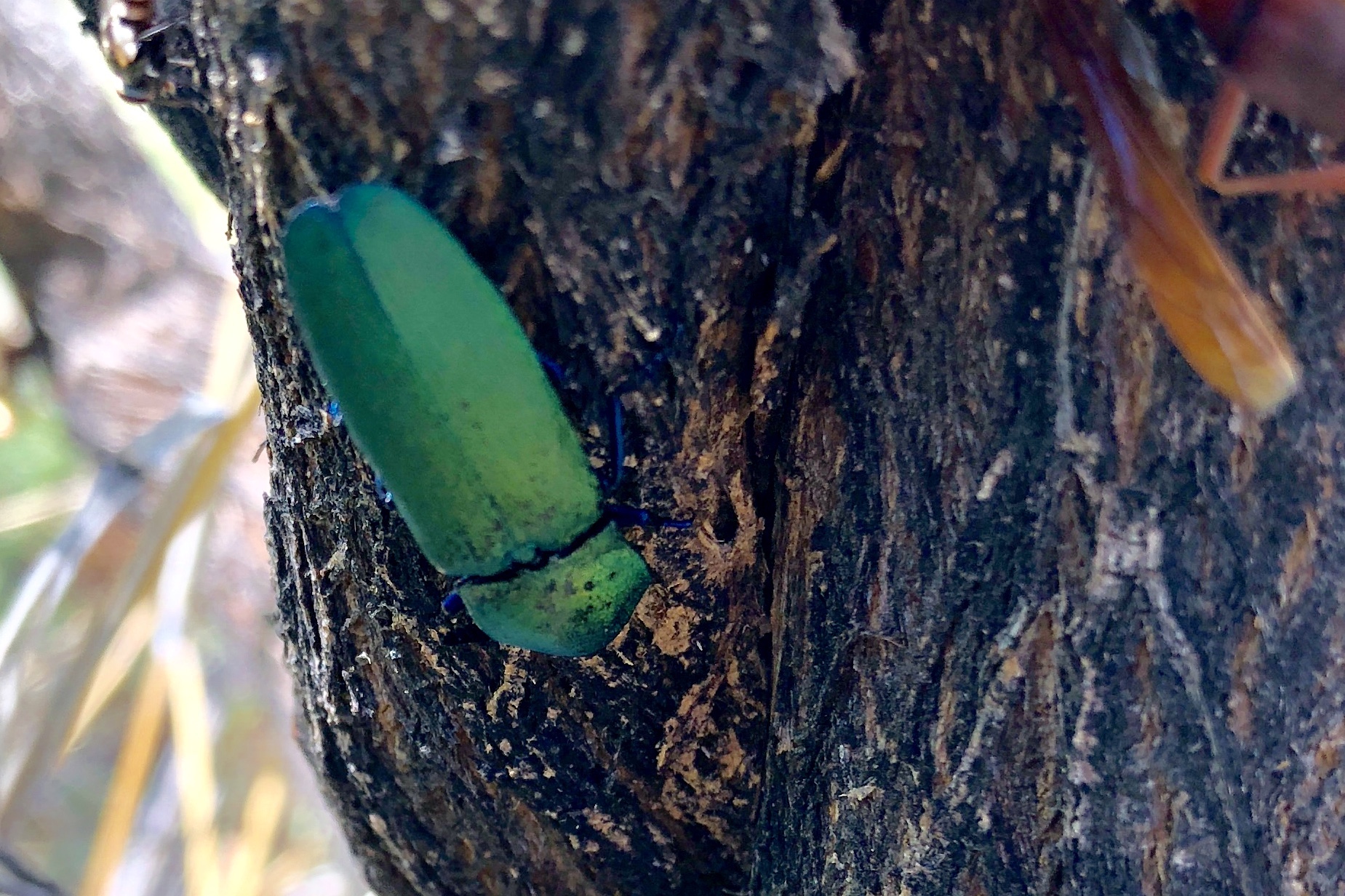
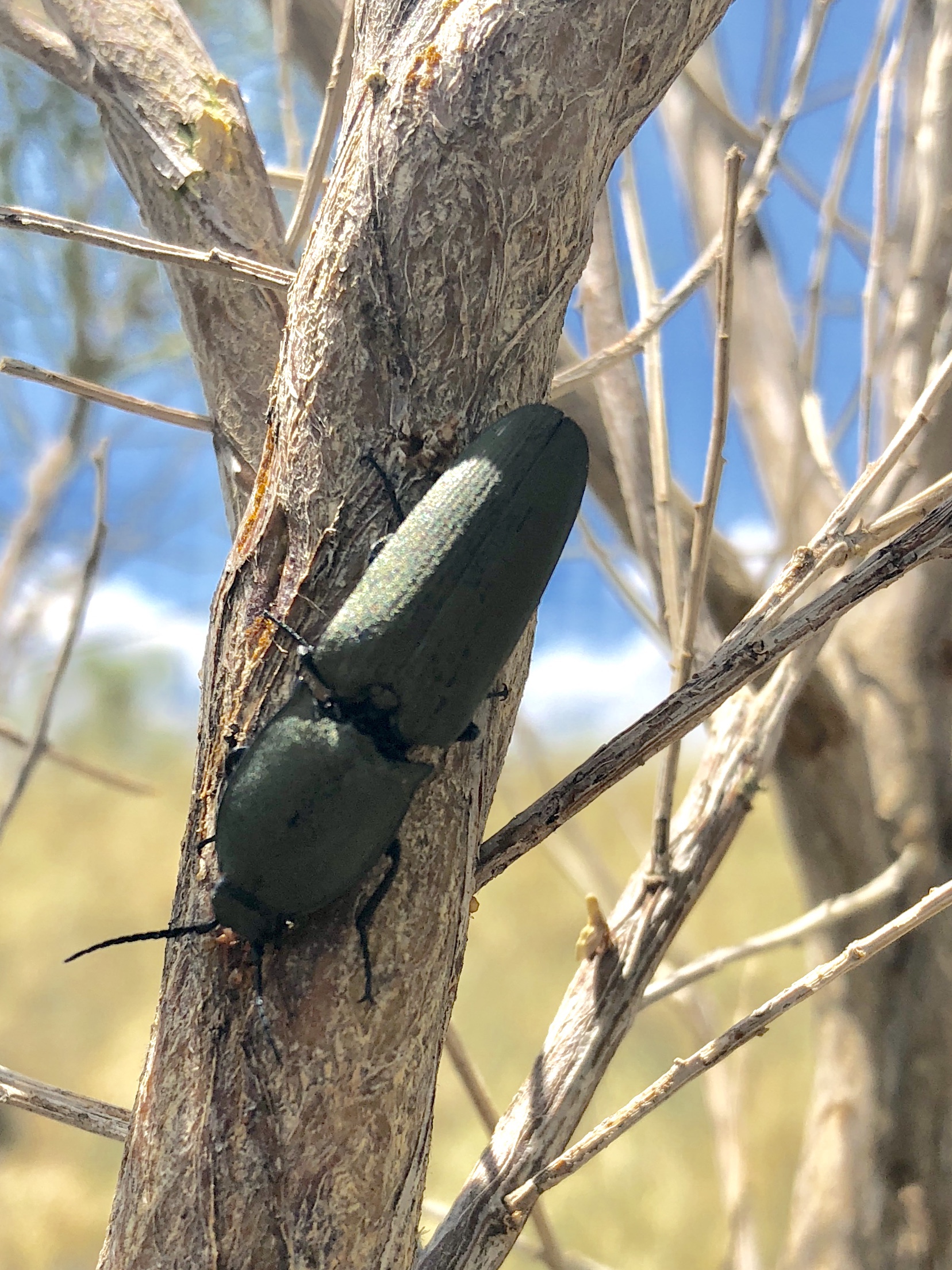
2019 Arizona/New Mexico/California Insect Collecting Trip iReport

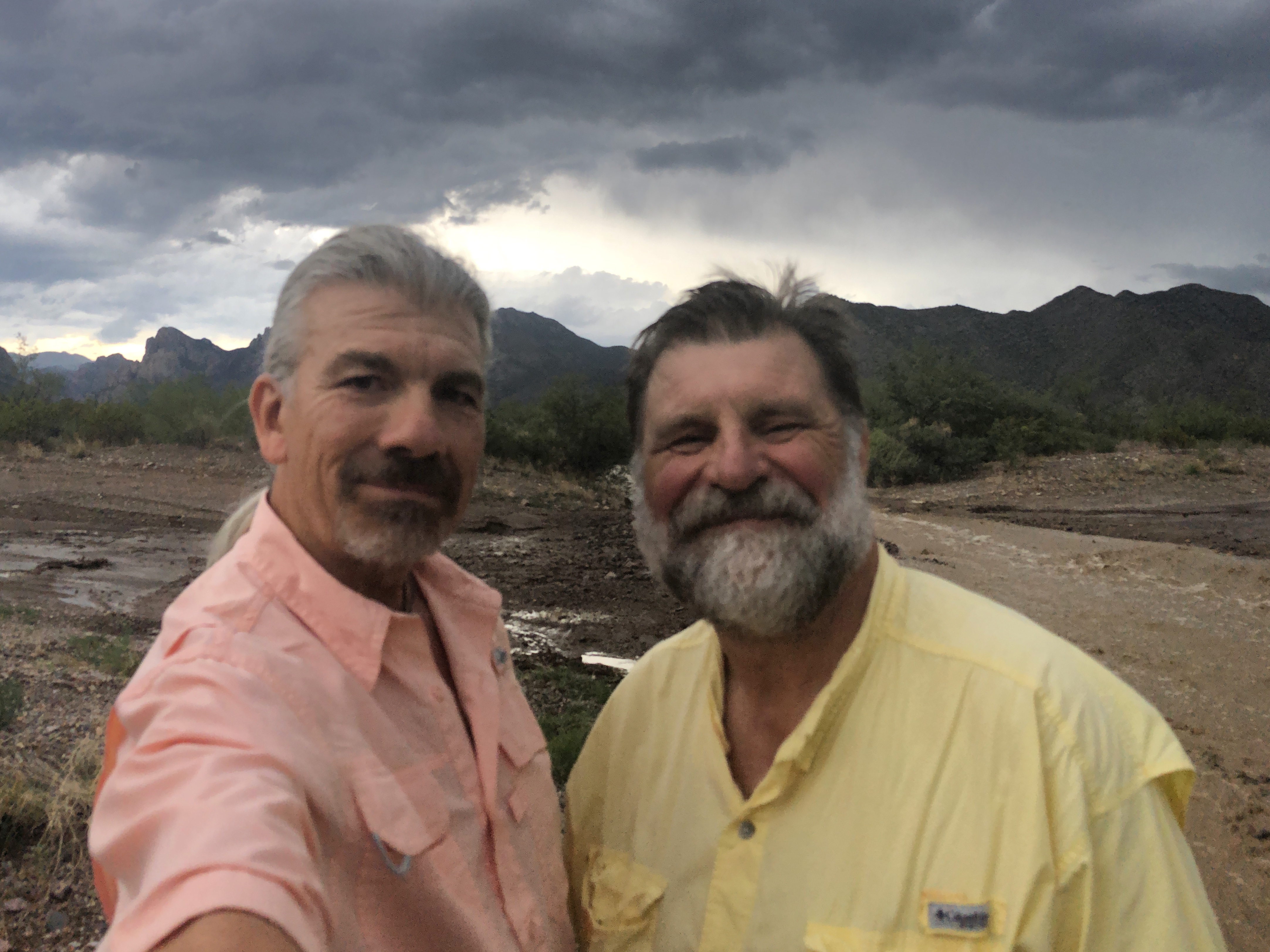
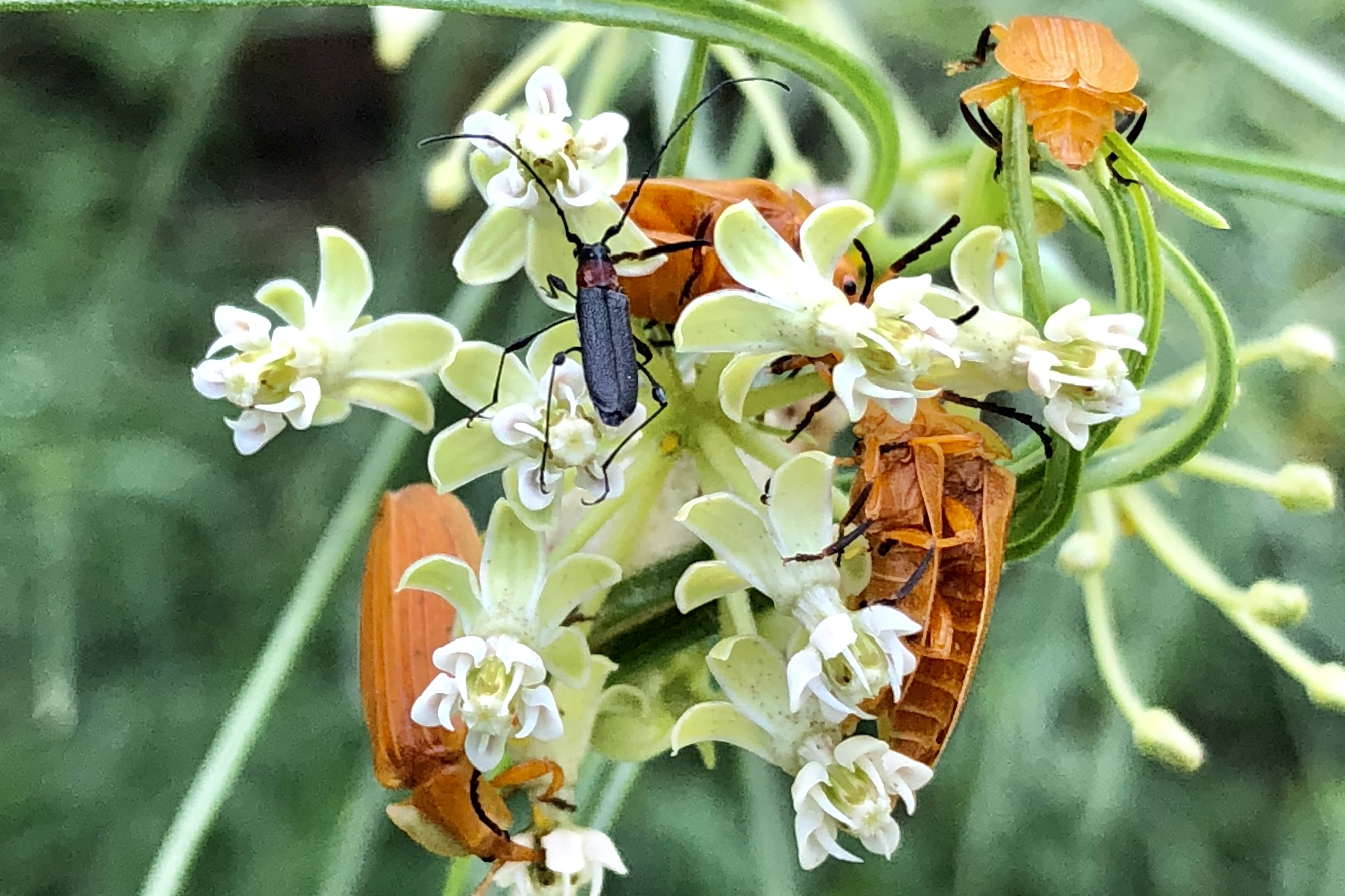
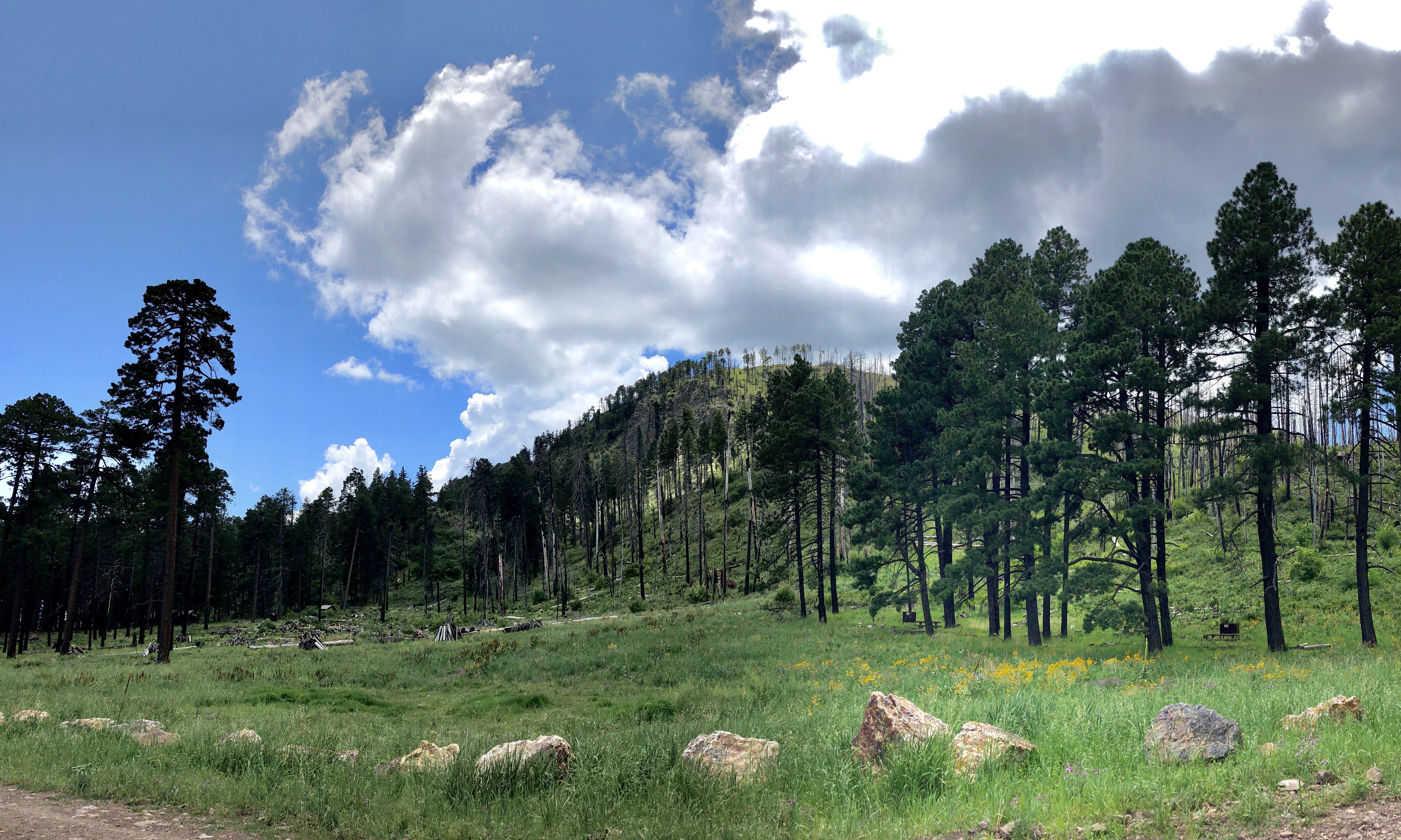
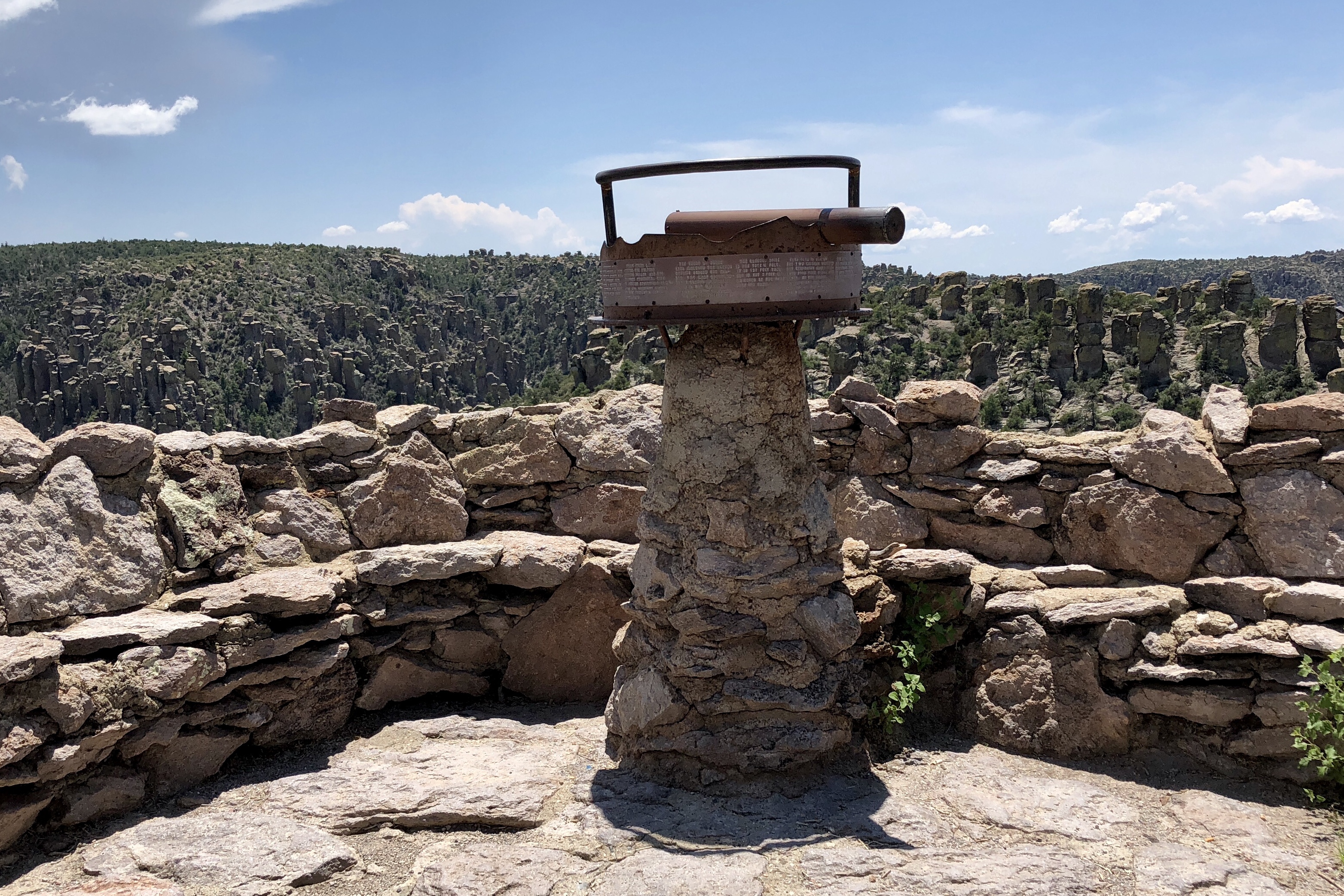
This is the eighth “Collecting Trip iReport”; this one covering a one-week trip to southern Arizona, New Mexico, and California from September 7–14, 2019 with meloid/cerambycid-enthusiast Jeff Huether. Jeff has been a frequent collecting trip partner during recent years, this being our sixth joint outing since 2012. Our initial objective on this trip was to collect cerambycid beetles of the genus Crossidius occurring across southern Arizona/California—part of a larger effort to sample as many of the named subspecific taxa as possible from multiple locations (including type locations when possible) for future molecular studies. We had good success, though we did not collect every taxon that we were after (we were a tad early in soCal). Also, the fact that we had Crossidius as our primary goal did not mean that we would not concurrently be on the lookout for buprestids (me), meloids (Jeff), or other cerambycids (both of us)—and in that regard we were also successful.

As with all previous “iReports” in this series, this report is illustrated exclusively with iPhone photographs (thus the term “iReport”), with previous versions including the following:
2013 Oklahoma
2013 Great Basin
2014 Great Plains
2015 Texas
2018 New Mexico/Texas
2018 Arizona
2019 Arkansas/Oklahoma


Day 1 – Dripping Springs Mountains, Arizona
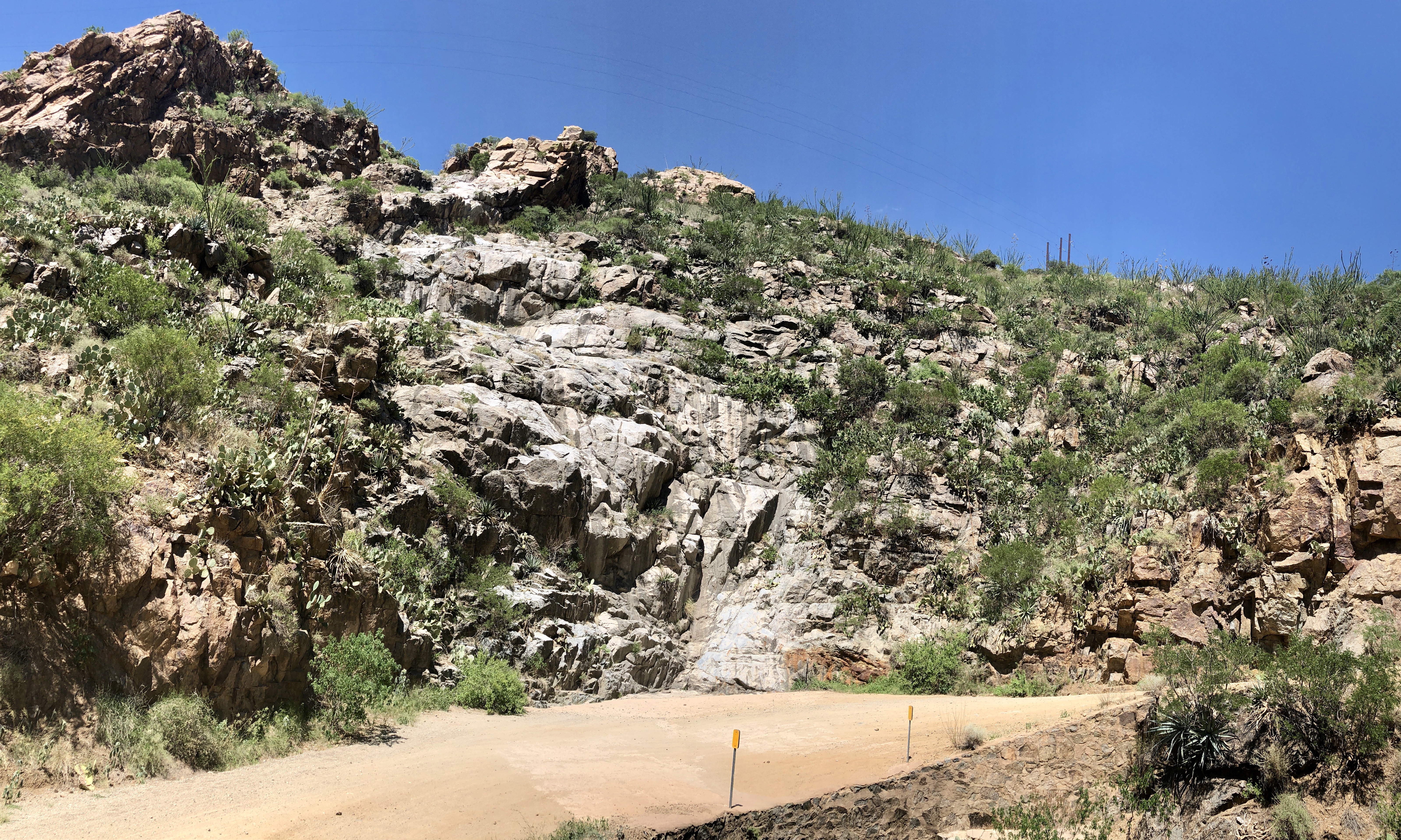
First stop of the trip, and we’re heading east to Safford. As soon as we got east of Superior up into the mountains we saw a place where Heterotheca subaxillaris was in bloom abundantly along the roadsides and pulled over. There were four species of Acmaeodera on the flowers, and I also found a fifth species on the flower of a small white aster. Nice first stop for the trip!

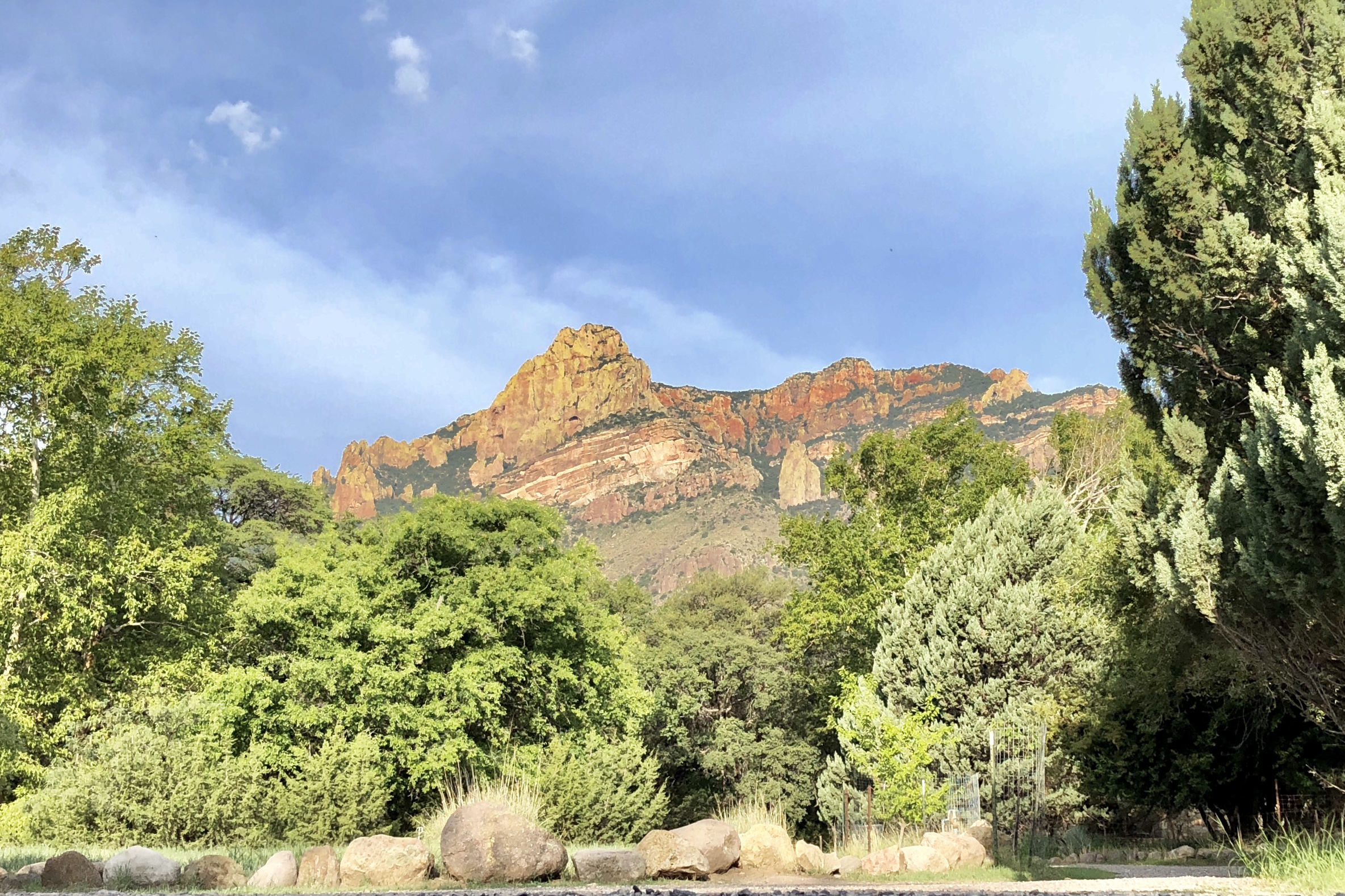
Dripping Spring Mountains.
Acmaeodera gibbula on flower of Heterotheca subaxillaris.
Acmaeodera rubronotata on flower of Heterotheca subaxillaris.
Acmaeodera alicia on flower of Heterotheca subaxillaris.

3.6 mi NW Bylas on US-70, Arizona
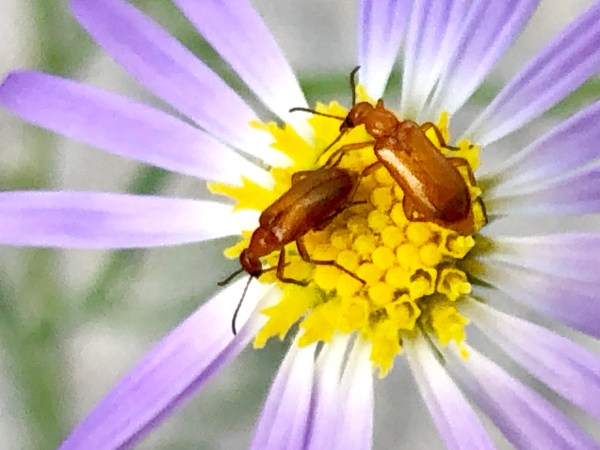
Continuing our way to Safford, Jeff saw some patches of sunflower and wanted to look for Epicauta phoenix. I found the first two (but not in sunflower), and then Jeff found two more. As we were walking back to the car I noticed a Crossidius suturalis sitting on Isocoma tenuisecta that was not quite in bloom, and then another nearby on the same plant. We searched the area again, but the only plants were those few right around the car.

I’ve never seen an orange jumping spider (family Salticidae) before!

5.7 mi NE Safford, Arizona
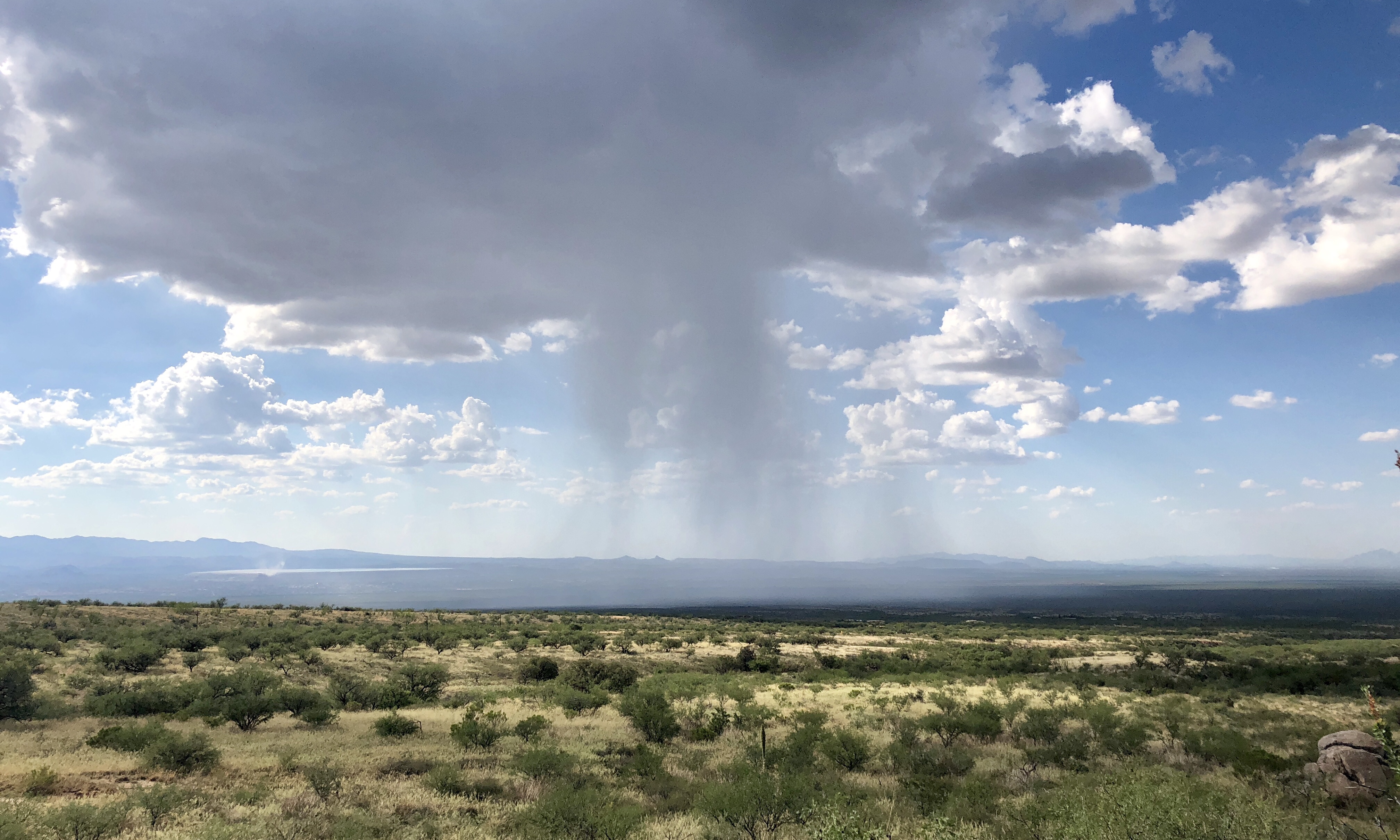
After getting a hotel in Safford, we had time to come back to a spot where Jeff had collected Epicauta phoenix back in July. We found quite a few (see photo) on plants nearby the original collection spot. Looking around more I found an Acmaeodera convicta perched on the tip of a shrub—first time I’ve collected this species! There were several species of tenebrionids crawling on the ground, perhaps prompted to activity by cooling temps as rain whipped up in the distance. I kept one eye on the skies and the other on the plants and eventually found two more A. convicta perched together on the same type of shrub just as rain began pelting my back. We made a quick dash back to the car and called an end to Day 1 in Arizona.

Epicauta phoenix (order Coleoptera, family Meloidae).

Day 2 – 1.9 mi S Artesia, Arizona
We started seeing Isocoma tenuisecta just coming into bloom as we headed south of town so stopped to see if we could find any Crossidius. I looked at a lot of plants before finding a single C. suturalis sitting on one of the non-blooming plants and in the meantime found one Trichodes peninsularis and a fair number of Zonitis dunniana on the flowers. Looking around on other plants, I found one large Chrysobothris sp. (not C. octocola, but longer and narrower) on the branch of a living Acacia constricta [Edit: this is C. knulli—a new one for me!] and one Acmaeodera disjuncta, several more Z. dunniana and T. peninsularis on flowers of Hymenothrix wislizeni. Finally, I did some sweeping of the bunch grasses in the area and got a nice series of what I presume to be Agrilus rubrovittatus—first time I’ve collected that species!

Crossidius suturalis on pre-blooming Isocoma tenuisecta.
Trichodes peninsularis on Isocoma tenuisecta.
Zonitis dunniana on flowers of Isocoma tenuisecta.

17.7 mi S Artesia, Arizona
Another stop with both Isocoma tenuisecta and also Gutierrezia microcephala coming into bloom. We immediately began finding Crossidius pulchellus on the latter and eventually collected a good series of them and also Trichodes peninsularis off the plants When I returned to the first plant we had checked (in fullest flower), a Lampetis webbii landed on it right in front of me! I eventually found C. suturalis on Isocoma tenuisecta, as well as Trichodes sp. and a few C. pulchellus. There was a tall-stemmed malvaceous shrub off which I got a male/female pair of Tylosis maculata, and sweeping produced a couple more Agrilus rubronotata, a few more T. peninsularis, and one Acmaeodera scalaris. I saw a couple of Acmaeodera disjuncta on Baileya multiradiata flowers but missed them both!
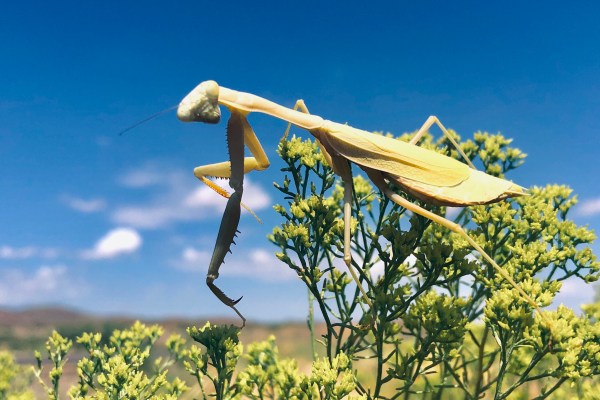
Stagmomantis limbata (bordered mantis) on Gutierrezia microcephala.
Lampetis webbii on Gutierrezia microcephala.

1.1 mi N Rodeo, New Mexico
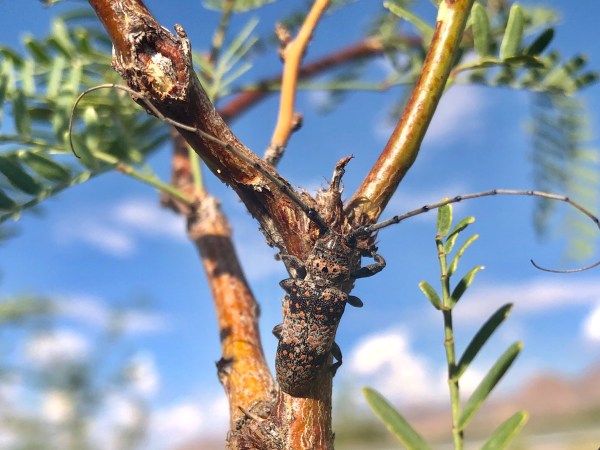
We slipped just inside the New Mexico border to visit the area around the type locality of Crossidius hurdi. We found a spot where there were good stands of Isocoma tenuisecta along the roadsides and checked them out. Like the other spots today they were just starting to come into bloom, and rain had just moved through the area. We found perhaps 20 Crossidius individuals total, and honestly they were so variable that I don’t know whether they represent C. suturalis, C. hurdi, or both! [Edit: they are all C. suturalis] I also collected one Sphaenothecus bivittatus and several individuals each of three species of clerids on the flowers of these plants. A male Oncideres rhodosticta was found on the twig of Prosopis glandulosa, and I also found a cool meloid that I’ve never seen before—Megetra punctata!

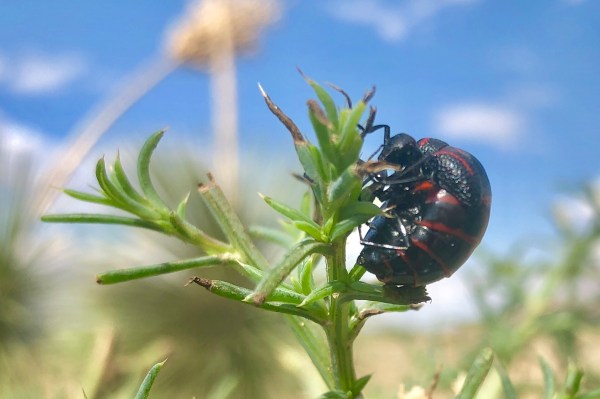
A particularly well-marked female Crossidius suturalis on flowers of Isocoma tenuisecta.
The coloration of Megetra punctata screams “Don’t eat me or you’ll be sorry!”
Oncideres rhodosticta on Prosopis glandulosa (mesquite).
Mule deerly departed.
Fence row to the Chiricahua Mountains.

Willcox Playa, Arizona
We plan to visit Willcox Playa tomorrow (my inaugural visit!), but we had some time at the end of the day and decided to come take a look. There were some stands of Isocoma tenuisecta at the north end of the playa, and I found just a couple of Crossidius individuals on them, presumably C. suturalis, but it looks like they are bedding down for the evening. Also got a couple of Enoclerus sp. on the flowers.
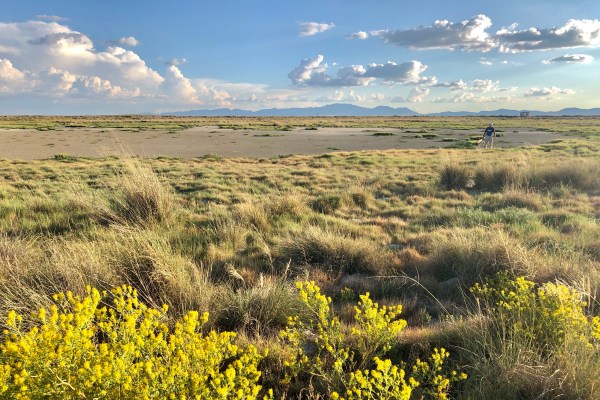
North end of Willcox Playa.

Day 3 – 8.4 mi SE Willcox, Arizona
On our way towards the Chiricahua Mountains to see if we can find any Crossidius host plant stands. We found patches of Isocoma tenuisecta and Gutierrezia microcephala along Hwy 186 southeast of town—the former was just coming into bloom, but there were plenty of Acmaeodera (scalaris, disjuncta, and amplicollis) on the flowers, including on the unopened heads. We found perhaps a dozen Crossidius suturalis on them as well, and Jeff found one small female that looks like C, hurdi [Edit: it is C. suturalis]. I looked at a lot of Gutierrezia before finding a single C. pulchellus sitting on one of the plants. The same diversity of Acmaeodera as well as a few A. gibbula and T. peninsularis was also found on flowers of Hymenothrix wislizeni, and I took a series of about 10 specimens of what I looks like A. parkeri on flowers of what appears to be Stephanomeria pauciflora. There were also some tiny membracine treehoppers on a thorny shrub (maybe Condalia?) being tended by ants—both adults and young, and I collected a few of the adults.
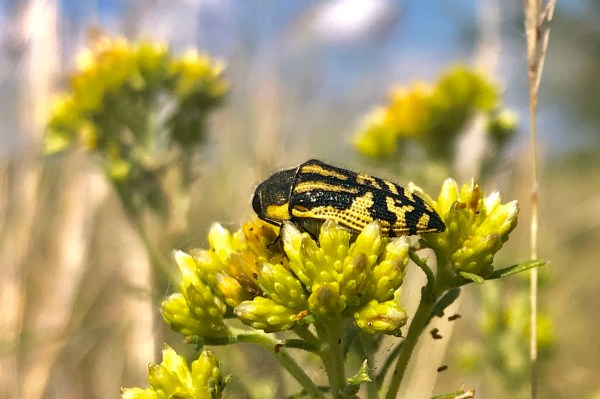
Acmaeodera amplicollis on flowers of Isocoma tenuisecta.
Acmaeodera disjuncta on flowers of Isocoma tenuisecta.
Acmaeodera scalaris on flowers of Hymenothrix wislizeni.

Jct AZ-186 & AZ-181, Arizona
After passing over a small range towards the Chiricahuas we didn’t see any Isocoma tenuisecta until we got to Hwy 181. There were some Baccharis sarothroides at the junction also, so we stopped and looked around. The Isocoma was just barely coming into bloom, but I found two Crossidius on them—one male C. suturalis and one small female that may be C. hurdi [Edit: nope, it is C. sururalis]. Heterotheca subaxillaris was in bloom abundantly, but there were no Acmaeodera on them and the area in general looked quite dry. I did find two A. decipiens on Sphaeralcea sp., and in the way back to the car I spotted a huge Lampetis webbii hanging on Ericameria nauseosa (which we’re not even close to blooming)—surely an incidental record.
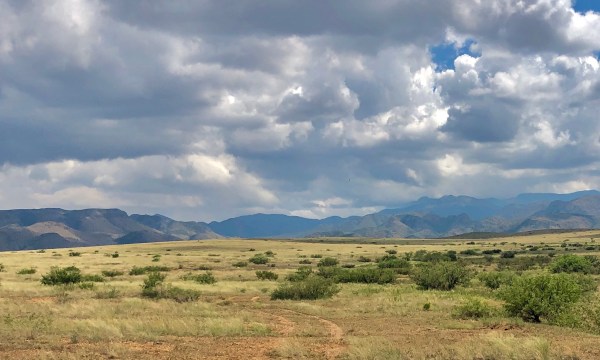
Chiricahua Mountains in the distance.

4.1 mi SE Willcox, Arizona
We came back towards town where things seemed to be further along and found stands of Isocoma tenuisecta in full bloom at the junction of Blue Sky Rd (a classic Arizona collecting locality). Crossidius suturalis were out in numbers on the flowers! Every now and then I got one that seemed too heavily maculated, making me think it could be C hurdi, but in the end I decided that all represented C. suturalis.

Crossidius suturalis mating pair on flowers of Isocoma tenuisecta. Note the difference in antennal length between the male (top) and female.

Willcox Playa, Arizona
We went to the Playa to see if there were any tiger beetles to be had. I hiked to the edge of the Playa, and within a few minutes I saw a Cicindela pimeriana—just the second one I’ve encountered (the first was last night at gas station lights)! With that promise of more, I hiked the entire playa edge and never saw another one! I only saw one other tiger beetle—Cylindera lemniscata—seems I’m a bit late in the season for the Willcox Playa tiger beetles. Nevertheless, it’s a cool place and was fun to see. I’ll definitely be back during the summer, not just for here but for nearby Blue Sky Rd. Arriving back at the car, I did find one Moneilema sp. (I think M. appressum) on cholla. There were Crossidius suturalis abundant on the Isocoma tenuisecta, which, like the last spot, was in full bloom, but I’d gotten my fill of them at the previous spot and didn’t collect any.
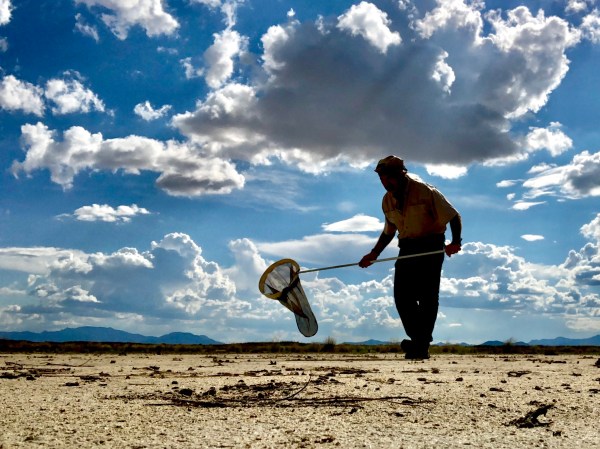
Stalking tiger beetles.
Jumping spider out in the playa.
Eking out a living.
Cow tracks.
These Gnathium sp. were the tiniest blister beetles I’ve ever seen.

Willcox, Arizona (epilogue)
Collecting the insects from the field is only the beginning. Each night they must be processed for storage until they can be mounted once back in the lab.

Processing the day’s catch.

Day 4 – Santa Rita Mountains, Box Canyon, Arizona
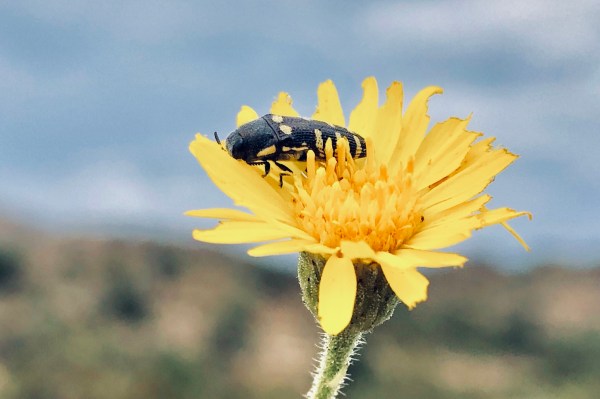
We passed through Box Canyon on our way to Madera Canyon, so we decided to stop near the dry falls where last year I’d collected such a nice diversity of Acmaeodera spp. on flowers of Allionia incarnata. There was evidence of recent rain, and we found the patch nicely in bloom with four species (scalaris, decipiens, cazieri, and parkeri) on the flowers. Nearby in the wash before it crossed the road was a yellow composite (Xanthisma gracile), from which I collected the first three as well as gibbula, rubronotata, and disjuncta. Euphoria verticalis scarabs we’re flying plentifully around the flowers also—first time I’ve seen the species.

Allionia incarnata (trailing four o’clock) blooming the canyon slope.

Flats below Madera Canyon, Arizona
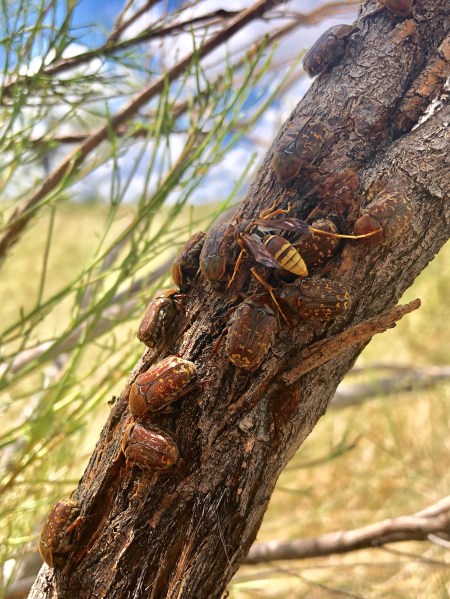
There are records of Deltaspis tumacacorii from Madera Canton at Proctor Rd collected on Croton, so we stopped by on our way south to give it a try. This seems to be a rather hard-to-find bug, so I didn’t have high expectations, and that’s a good thing because I didn’t see the beetle nor anything that even remotely resembled Croton. I ended up checking out the desert broom (Baccharis sarothroides) in the area on which I’d collected Stenaspis verticalis arizonensis and Tragidion spp. (also without high expectations). There were some interesting congregations of Euphoria leucographa feeding at sap flows on the stems and a few Stenaspis solitaria but otherwise litttle of note. I did find one Hippomelas planicauda hanger-on on a low fabaceous shrub (not Mimosa biuncifera), and inspecting the Gutierrezia microcephala plants revealed nothing but a single Acmaeodera rubronotata.

Stenaspis solitaria on Baccharis sarothroides (desert broom).
Peucetia viridans (green lynx spider) feeding on Acanthocephala thomasi twice its size!
Euphoria leucographa and a Polistes paper wasp feeding at a sap flow on Baccharis sarothroides (desert broom).
Euphoria leucographa on Baccharis sarothroides (desert broom).
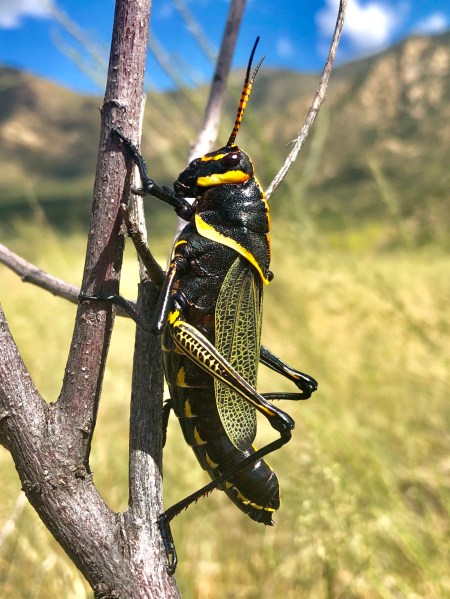
Taenipoda eques (lubber grasshopper). The striking coloration is a warning to potential predators that it is chemically protected.

Madera Canyon Rd, Arizona
We stopped real quick down the road on the way out of Madera Canyon because we saw stands of Isocoma tenuisecta, although they were still just shy of blooming. We looked at quite a few and found a single Crossidius suturalis—probably we are a tad early, and the area looks like it could use a good rain to pop things out and bring the Isocoma into bloom. We also saw low plants that could be the Croton that Deltaspis tumacacorii has been found on [Edit: I do not believe these are the plants, as they are too low]. Would be good to revisit this spot after a good rain!

The author with Ferocactus wislizenii (fishhook barrel cactus)—also called “compass barrel” due to its habit of leaning to the south.

Tumacacori Mountains, Walker Canyon, Arizona
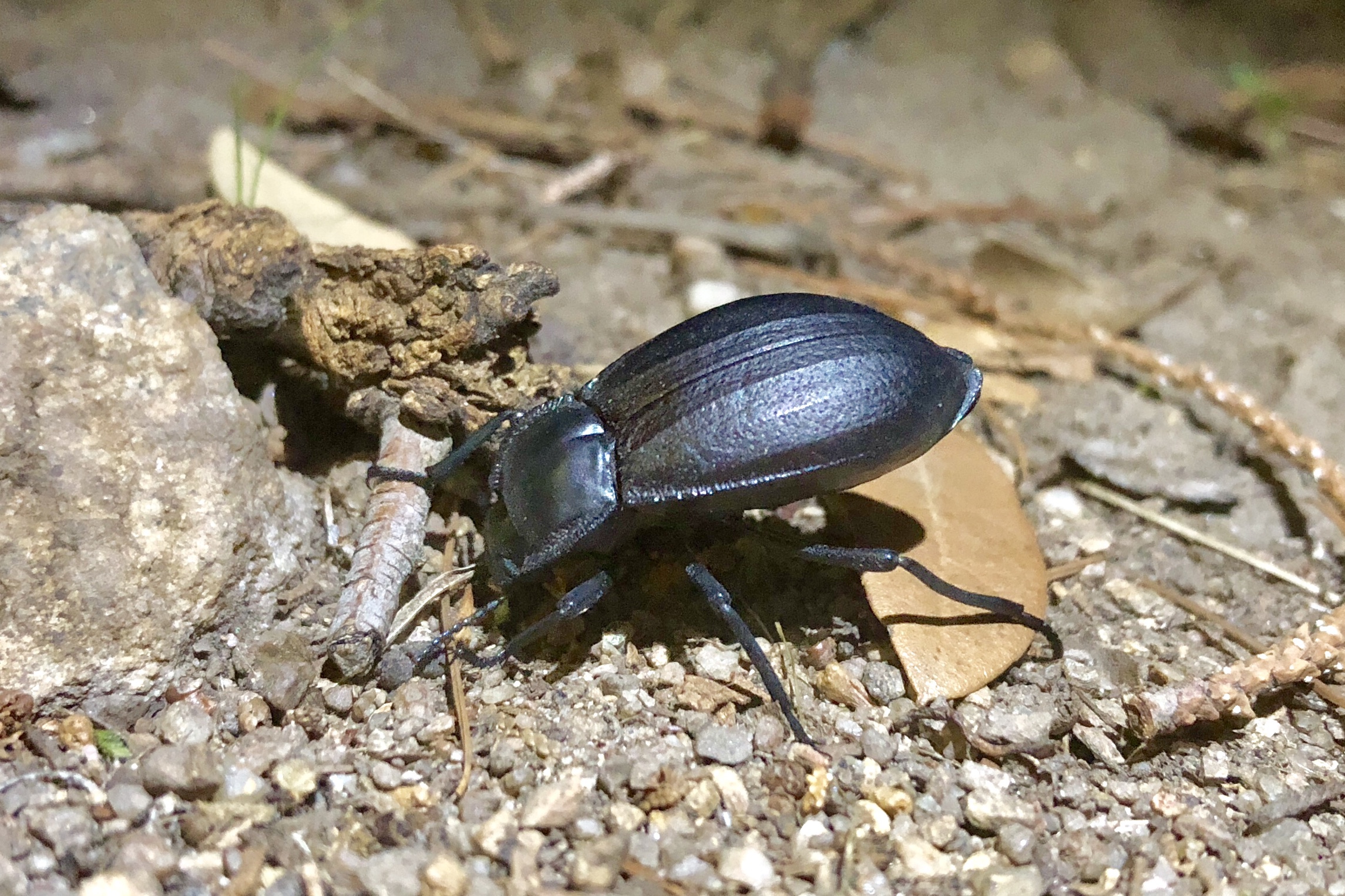
Our second shot at Deltaspis tumacacorii, which has also been taken in Walker Canyon. We found thick stands of knee-high flowers that we immediately took to be the Croton—just as described by our contact—on which the beetles have been taken. However, we quickly began doubting that ID and decided the plant must be some type of composite. That would make more sense from a host plant standpoint, as all known host plants for Crossidius spp. are composites (subsequently determined to be Pseudognaphalium leucocephalum, family Asteraceae). We looked at the dense stands for quite some time but didn’t see any beetles (or much of anything else) before deciding that we were probably too early—had the beetles already emerged we would have at least found some stragglers. I did take a few Acmaeodera on the flowers (scalaris and rubronotata), as well as a large cantharid (Chauliognathus profundus). I also took single A. amplicollis and A. rubronotata individuals off of a large helianthoid composite (Viguiera cordifolia) and one A. rubronotata on a small yellow composite (Xanthisma gracile). There were a multitude of darkling beetles crawling in the ground—in one spot I saw five individuals of several species all within a one-square foot area. We’ll have one more shot at D. tumacacorii tomorrow at Kitt Peak.

Pseudognaphalium leucocephalum (white rabbit-tobacco) blooms profusely in the dry wash.
Cantharid vs. cantharid! Chauliognathus profundus (right) feeds on a C. lewisi that it has captured.

Day 5 – Pan Tak, Arizona (road to Kitt Peak)
Today’s destination is Kitt Peak to look for Deltaspis tumacacorii and Acmaeodera resplendens, but at the entrance we saw some Isocoma tenuisecta just coming into bloom and decided to check it out. We found a half-dozen Crossidius suturalis but had to really work for them. Alliona incarnata was also nicely in bloom, but I got only one Acmaeodera parkeri? and one A. alicia off of the flowers. There was some Gutierrezia microcephala present, also not quite in bloom, off of which Jeff got a pair of C. suturalis and gave me one. Kinda dry but lots of flowers—wish there would have been more beetles coming to them.

Moneilema sp. on Cylindropuntia imbricata.

Kitt Peak National Observatory, Arizona
Our last chance to find Deltaspis tumacacorii, and I also got a tip that Acmaeodera resplendens has also been taken up here. We immediately found several species of Acmaeodera (amabilis, amplicollis, decipiens, and rubronotata) abundantly on several composite flowers—Heliomeris longifolia, Heterotheca fulcrata, Hymenothrix wrightii, Solidago velutina, and Gutierrezia microcephala, and I found a single A. solitaria on a pink malvaceous flower, but no A. resplendens. We also searched thoroughly for any Croton-like plant for D. tumacacorii but found nothing. The Kitt Peak records of that species are older than the Walker Canyon, Peña Blanca, and Madera Canyon records, and most of the records seem to be in August rather than September, so I suspect we are a bit late for both the species and its host plant. My plan at this point is to return sometime during the middle of August and enlist the help of the source of one of the recent records to accompany me.
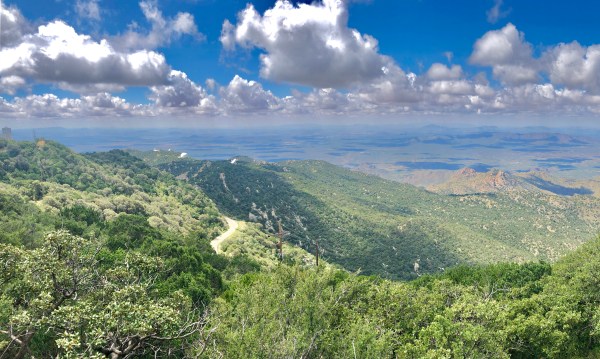
View north from Kitt Peak National Observatory.
Multiple species of Acmaeodera visiting flower of Heliomeris longifolia.
Acmaeodera amabilis on flower of Heliomeris longifolia.

Road to Kitt Peak, Arizona
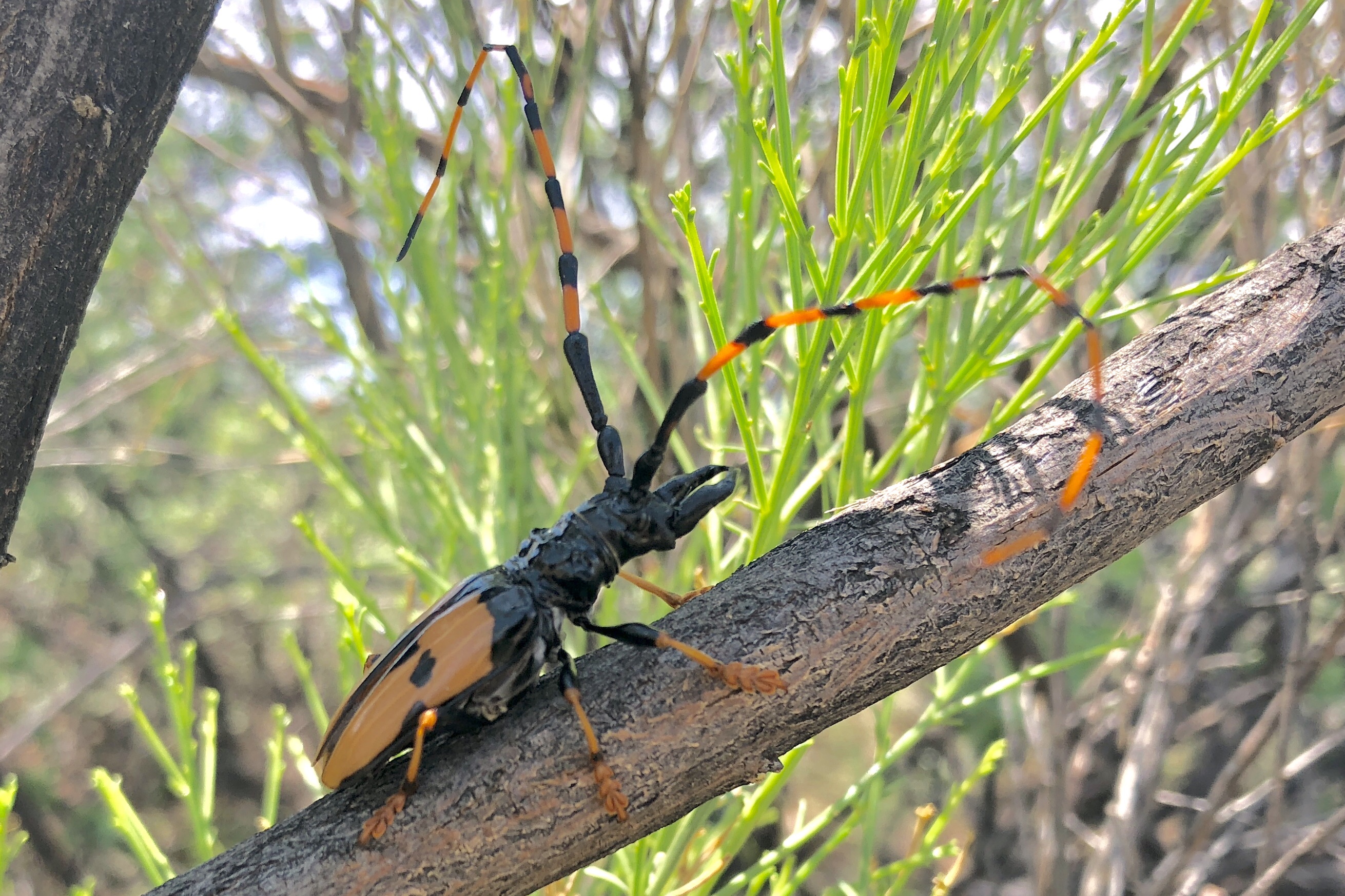
We had noticed Gutierrezia microcephala and some other yellow composites in bloom about halfway up the mountain on our way to Kitt Peak and decided then to stop and take a look around on the way down. I took “down” the mountain, Jeff took “up.” I hadn’t walked very far when I saw what I at first thought was the cantharid Chauliognathus profundus (which I had seen yesterday at Walker Canyon preying on another cantharid) on G. microcephala flowers, but something about it gave me pause—it was too cylindrical and robust. I leaned closer to get a better look and realized it was a cerambycid—one that I did not recognize, a beautiful orange color with black elytral apices and pronotal spots! I quickly grabbed it with my right hand, immediately saw another elsewhere on the bush and grabbed it with my left hand, and as I stood there trying to fumble a vial out of my pack to put them in I saw a third individual taking flight from the bush and spiraling into the air and out of reach! I shouted out to Jeff, who came down to where I was, and showed him what I’d found, and together we decided that it must be Mannophorus forreri—a very uncommonly encountered species and more than adequate consolation for not finding Deltaspis tumacacorii earlier in the day. We spent the next hour searching up and down the roadsides, and I ended up with two more individuals from Gutierrezia flowers and two from Heterotheca fulcrata. Jeff found an additional individual on flowers of Thelesperma sp. I also picked up a few black and white Enoclerus sp., one on flowers of G. microcephala and a mating pair on flowers of Acacia berlandieri. We have a long drive to California in front of us now, and it sure is good going into the drive with such a great find under our belts.

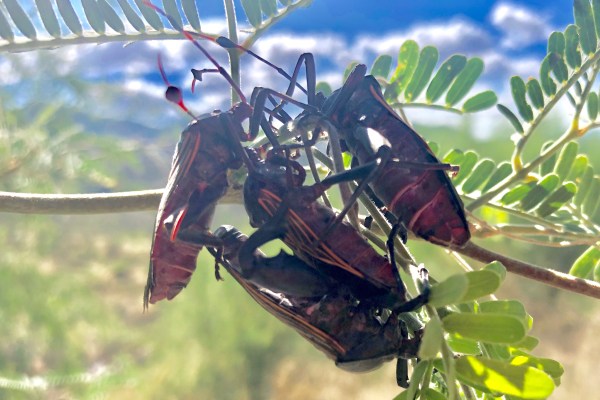
Lower slopes of the road to Kitt Peak Observatory.
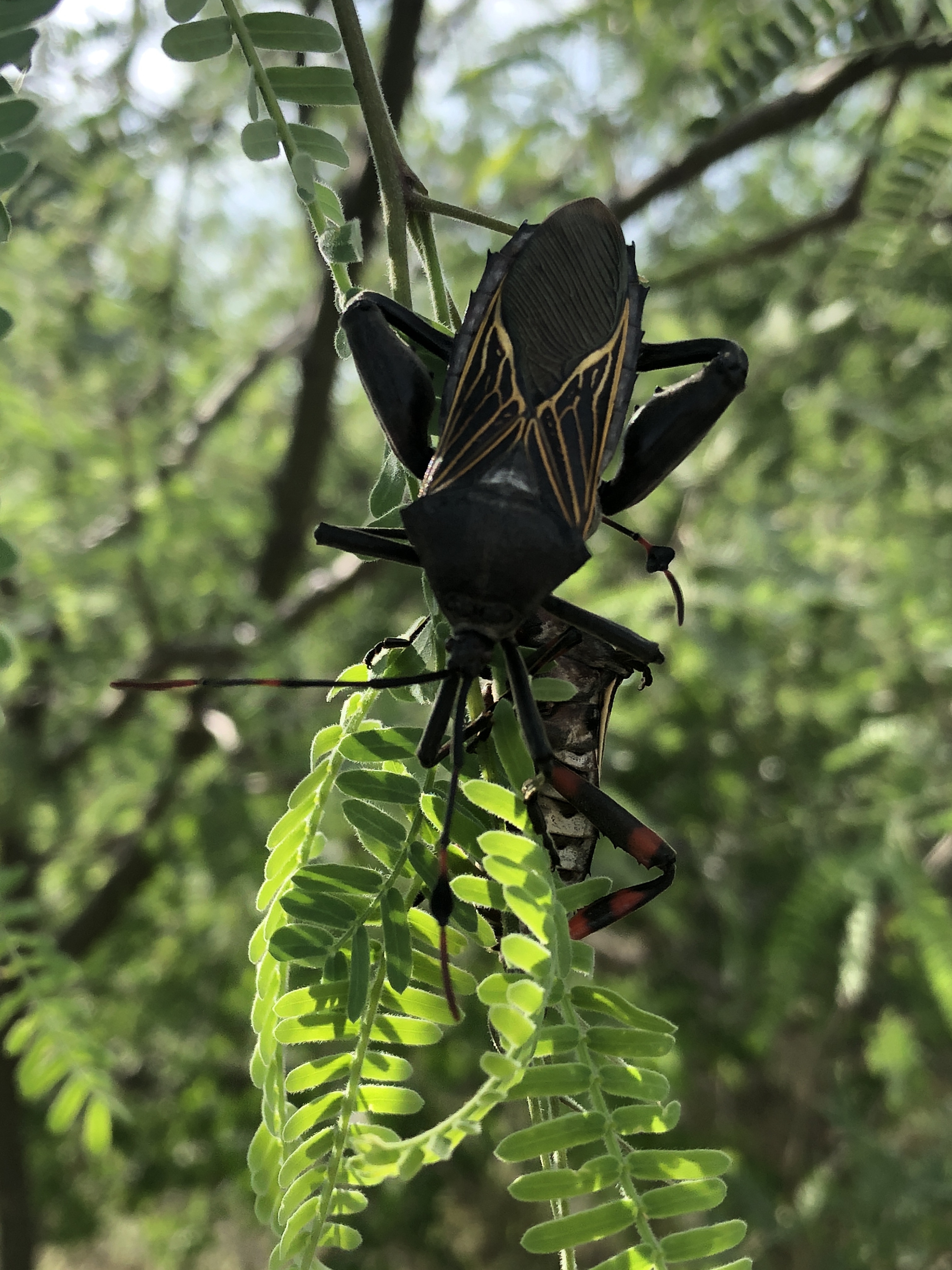
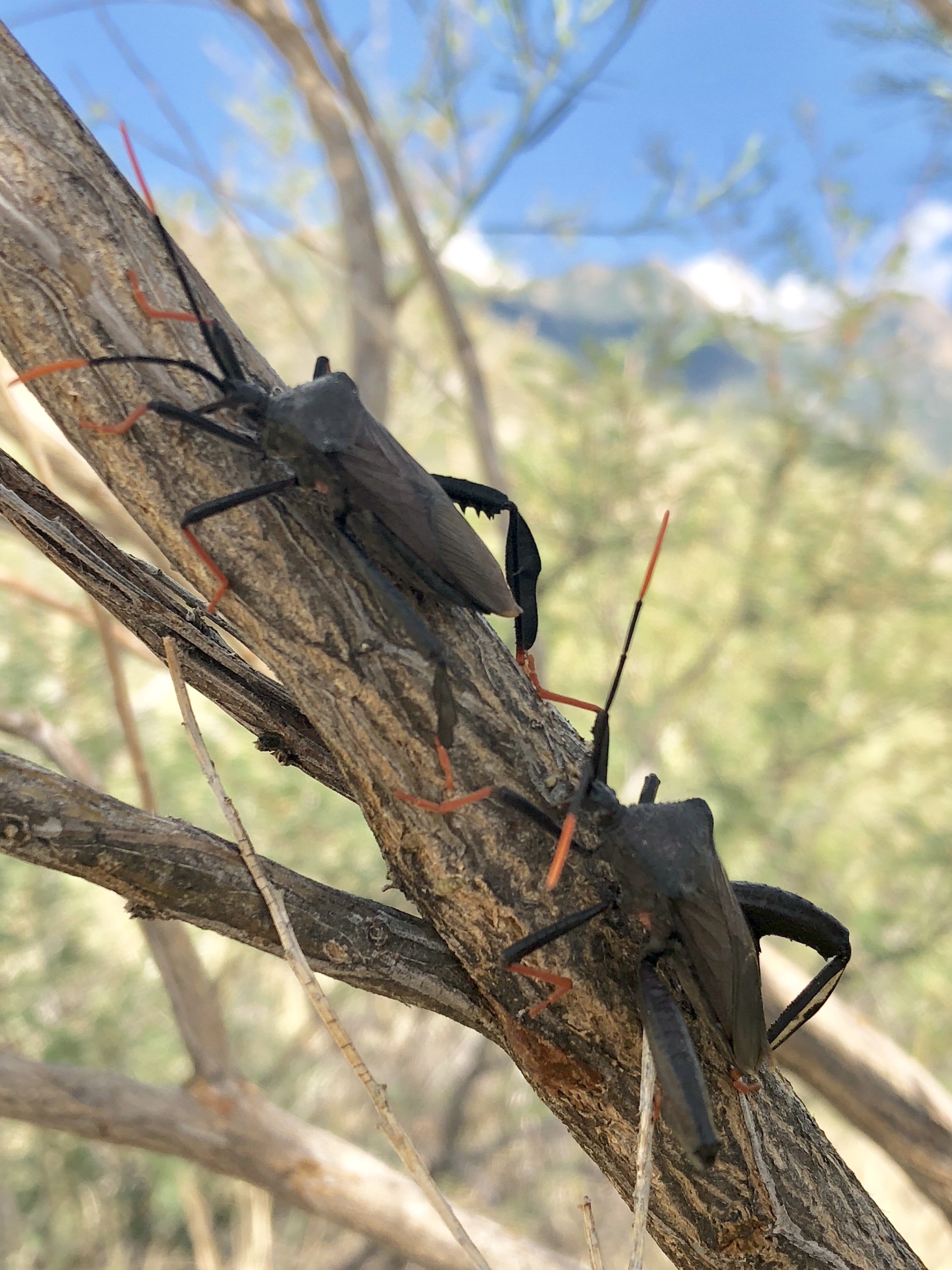
Thasus neocalifornicus (giant mesquite bugs) congregate on their host plant (Prosopis glandulosa).

Day 6 – Cajon Pass, California
Finally made it into California! Once we turned off the interstate, we made a quick stop to look at the roadside habitat where we spotted a good stand of Isocoma sp. in full bloom. We looked at quite a few plants but didn’t find any beetles on them. There were also good numbers of Ericameria nauseosa plants as well (host for Crossidius coralinus), but they weren’t quite yet in bloom yet and the only thing I found on them was a mating pair of Agrilus walsinghami. Moved on quickly to the next spot!

Lancaster, California
We met up with Ron Alten and traveled to a classic “Crossidius” collecting site (up to four species have been taken there). We’d stopped at a couple of places on the way there but not found anything—either the host plants were not yet blooming or no beetles were found, so we had the feeling that we might be a week or two early. We had to drive into the habitat a ways before we started seeing host plants—in this case Ericameria nauseosa—but eventually we found a nice large area with the plants in full bloom. It didn’t take long before we found Crossidius coralinus (populations in this area are assigned to subspecies ascendens) on the blossoms. We worked the area for a couple of hours in the heat (97°F) and got a sufficient series for study with some individuals in ethanol for DNA analysis. Males exhibit quite a bit of variability in the degree of development of the elytral markings (thin to moderately expanded sutural marking), while females were quite consistently fully expanded. Males also outnumbered females by 3:1, and all of the individuals I collected were perfect and not damaged—both suggesting that the species is just beginning to emerge. Perhaps that is why we did not find individuals of the other species (mojavensis, suturalis, and testaceus). What I did find, however, was a small trachyderine cerambycid that none of us recognized! It was on the flowers of E. nauseosa—just like C. coralinus—and at first I thought it might be a small, aberrant C. coralinus, but the elytra are completely blue-black and the size was significantly smaller than the smallest C. coralinus male that we saw. I scanned BugGuide and didn’t find anything that matched, so this will have to remain a mystery for now. [Edit: I later determined this to be a heavily marked C. discoideus blandus. In the field I couldn’t see the orange laterals on the elytra.]

Crossidius coralinus ascendens (male) on flowers of Ericameria nauseosa.
Crossidius coralinus ascendens (female) on flowers of Ericameria nauseosa.
Crossidius coralinus ascendens (mating pair) on flowers of Ericameria nauseosa.

Day 7 – Santa Catalina Mountains, Mt. Lemmon, Arizona
We decided we were just a bit to early for things in California and decided to come back to Arizona where we’d been having better success. I wanted to take another shot at Acmaeodera resplendens and had been told that Oracle Ridge Trail was a good locality for them, though maybe a bit late. We began seeing them soon after getting out of the car—unmistakable by their brilliant metallic green to copper color. They were not numerous, so I had to work for them and walked the trail about 2 miles out collecting them off a variety of flowers. The majority were on Bahia dissecta, and I also found occasional individuals of them and other species of Acmaeodera (amabilis, amplicollis, decipiens, and rubronotata) on flowers of Heliomeris longifolia, Heterotheca fulcrata, Hymenothrix wrightii, Ageratina herbarea, Achillea millefolium, sweeping, Cirsium sp., and prob. Viguiera dentata. One other beetle I found was a Megacyllene sp. sitting on a plant under a stand of Robinia neomexicana [Edit: this is M. snowi snowi—another new one for my collection!].

View from Oracle Ridge Trail @ 1 mile north of the trailhead.
Acmaeodera resplendens on flower of Heliomeris longifolia.

Scenic Overlook, Santa Catalina Mountains, Arizona
A quick stop on the way back down the mountain at a spot where we’d seen Gutierrezia microcephala and Heterotheca subaxillaris blooming along the sides of the road. There wasn’t much going on—a couple of Acmaeodera amplicollis and one A. rubronotata on the flowers of H. subaxillaris, one Enoclerus sp. on Solidago velutina, one A. solitaria on Baccharis sarothroides, and another swept from grasses. I did see Peucetia viridans (green lynx spider) feeding on a very bristly tachinid fly.

A clearwing moth (family Sesiidae).
Peucetia viridans (green lynx spider) feeding on a hairy tachinid fly.

Day 8 – Santa Rita Mountains, Montosa Canyon, Arizona (halfway up)
We decided to visit Montosa Canyon to take another shot at Deltaspis tumacacorii and also see if maybe we could find more Acmaeodera resplendens. We didn’t see many flowers along the way up the canyon until about the halfway point. When we did start seeing them we made a quick stop to see what might be on them. I collected some of the more common Acmaeodera (rubronotata, decipiens, and amplicollis) off a few different yellow composite flowers, but we quickly decided to take a look at the higher elevations.

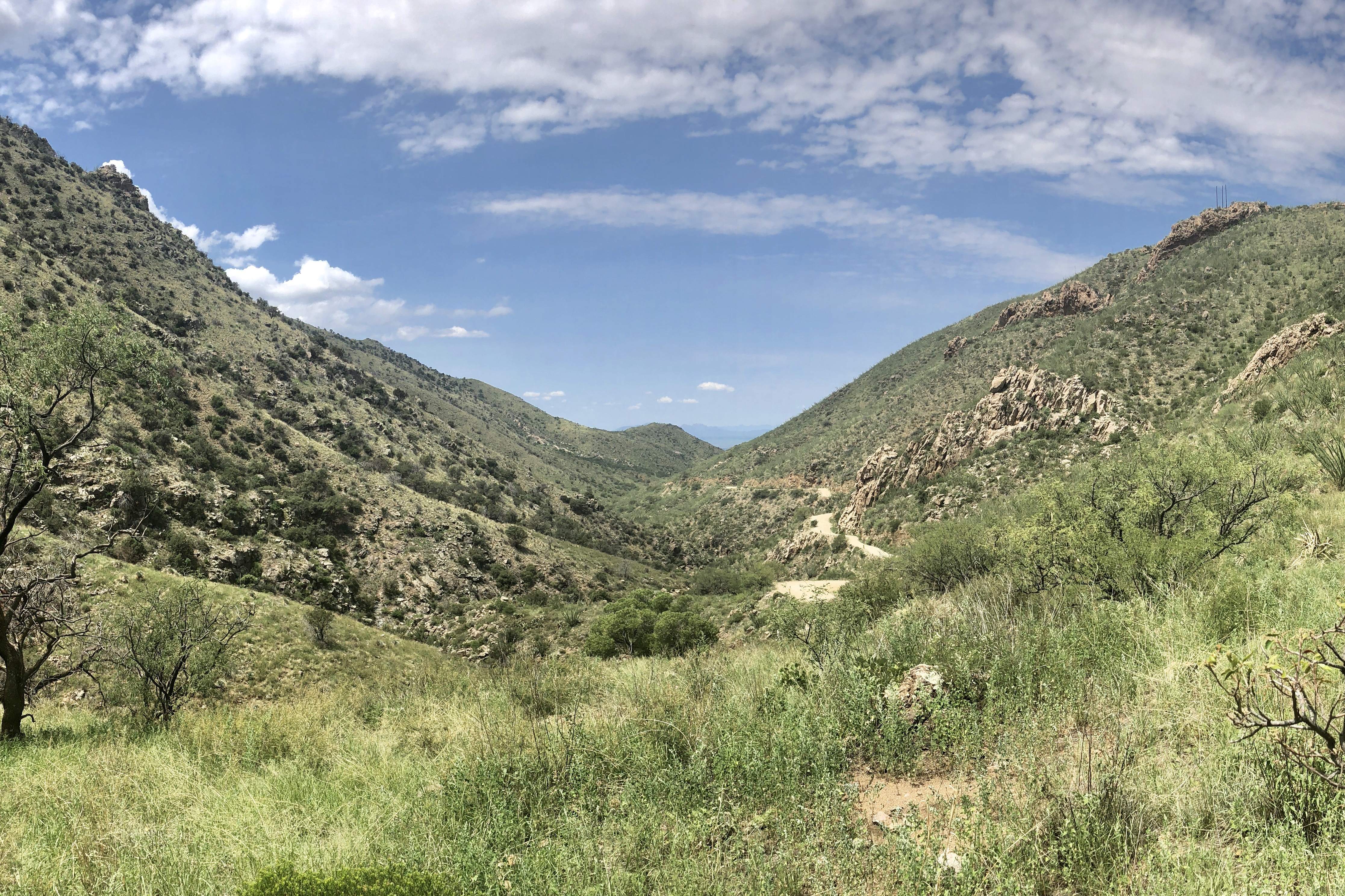
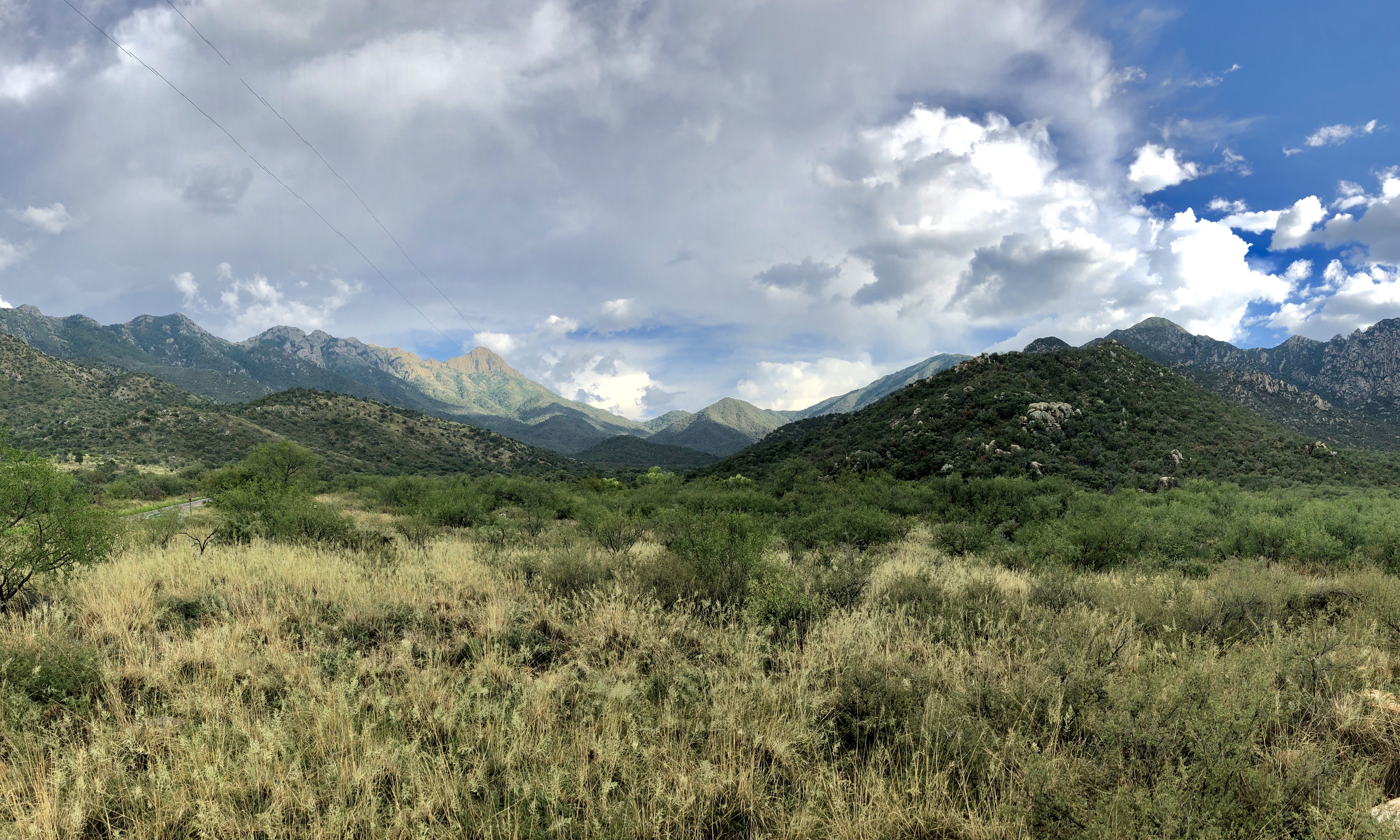
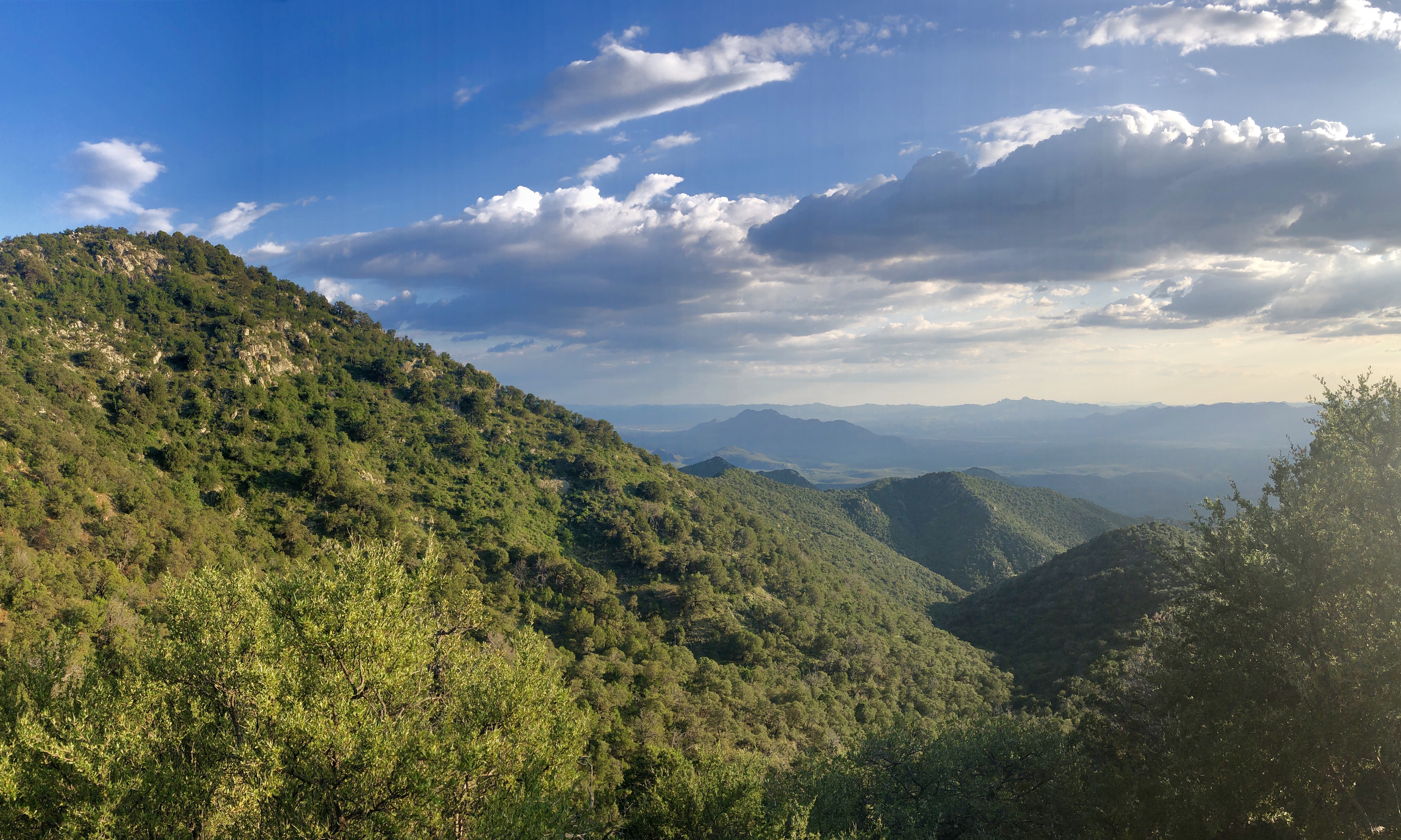
Panoramic view from halfway up the canyon.
Apyrrothrix araxes (dull firetip skipper) on flowers of Baccharis salicifolia.
The larvae of these large skippers feed on oaks.

Santa Rita Mountains, Montosa Canyon, Arizona (entrance to Whipple Observatory)
The road was gated past the km-13 point—Jeff took the roadsides, and I took a ridgetop trail off to the south for a little over a mile. The panoramic views were spectacular, and at the southern terminus I stood at the edge amidst gale-force winds admiring the landscape! Acmaeodera were diverse and abundant, though not quite as abundant as yesterday on Mt. Lemmon or a few days ago on Kitt Peak. However, I did get another nice series of A. resplendens, along with decipiens, rubronotata, amplicollis, and amabilis. Host flowers were collected for most of these: Hymenothrix wrightii, Erigeron neomexicanus, Linum neomexicanum, Heliomeris multiflora, Verbesina enselioides, Heliopsis parvifolia, Heterotheca subaxillaris, and Machaeranthera tanacetifolia. I also collected a small series of A. decipiens perching on grass stems and a very cool-looking wasp—black with a bright orange thorax and whitish abdominal apex [edit: I believe this is the scoliid Psorthaspis portiae].
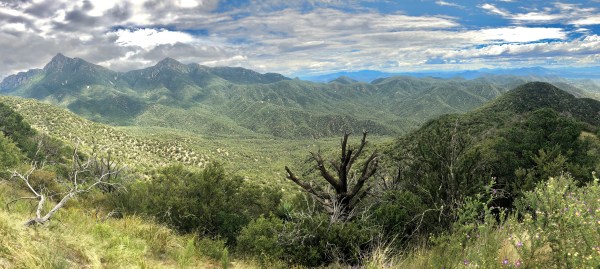
Vista from the southern terminus of the ridgetop trail off Mt. Hopkins Rd at km 13.
Acmaeodera decipiens on flower of Machaeranthera tanacetifolia.
A curious assemblage of bees on this Heliomeris longifolia flower. They were not active, just sitting. [Edit: these are Dufourea sp. (short-faced bees, family Halictidae)].

Santa Rita Mountains, lower Montosa Canyon, Arizona
We stopped at a spot near the bottom of the canyon on the way out to see what was going on at the lower elevations. The answer—not much! There were a variety of woody shrubs and other plants in bloom, but the area seemed rather “wilty”. I think this area has a lot of potential, we just didn’t hit it at the right time. I did take an impressively huge tarantula hawk, just because.

Fouquieria splendens (ocotillo) resembles cacti but is not a true cactus. Distantly related to persimmons, blueberries and acacias, it is now placed in its own family (Fouquieriaceae).
Apiomerus flaviventris (yellow-bellied bee assassin) with prey.
The prey is a soldier beetle (likely Chauliognathus lewisi).
Robber flies not only mate tail-to-tail, they fly coupled in the position also. This tandem of giant robber flies (possibly Promachus nigrialbus), flew by me and landed in the bushes. The male (right) tried to take flight again and pulled the female’s hind legs off her perch. She stood firm, however, forcing the male to grab a nearby branch with just his from and middle legs and leave his hind legs dangling also. Note that the female is also feeding on a honey bee—so much natural history going on here!

Flats below Montosa Canyon, Arizona
I was a bit disappointed at not finding any beetles at what seemed would be the last collecting stop of the trip. But on our way out we saw a patch of Isocoma tenuisecta in bloom in the lowlands some distance west of the entrance to the canyon—just what we were looking for! Jeff and I each quickly found Crossidius suturalis individuals on flowers of the plants and continued searching up and down along the roadway. We didn’t find any more for awhile but when I got back to the area where I started I spotted another one sitting on a plant on the other side of the barbed-wire fence. I extended my net handle to the max, maneuvered it in position, took an assertive swipe, and got it. Just as I was putting it into the bottle, I saw another one take flight from a plant right beside me. I hadn’t closed the bottle yet but didn’t want the other one to get away, so I capped my thumb over the opening, awkwardly wielded my net into position one-handed, chased after it and took a swing and got it, too! (More often than not these situations end up with me losing both specimens!). There was also a good amount of Hymenothrix wislizeni along the roadside, off the flowers of which I collected several Acmaeodera gibbula, A. disjuncta, and A. rubronotata. This is probably the last collecting locality of the trip, so I’m happy to end up having success with this subspecies of Crossidius (C. suturalis intermedius), which we havn’t found in large numbers on this trip. Just after leaving the site, we saw a bobcat on the side of the road—my first one! Unusual to see one in the middle of the day—it was a small one, must’ve been quite hungry!
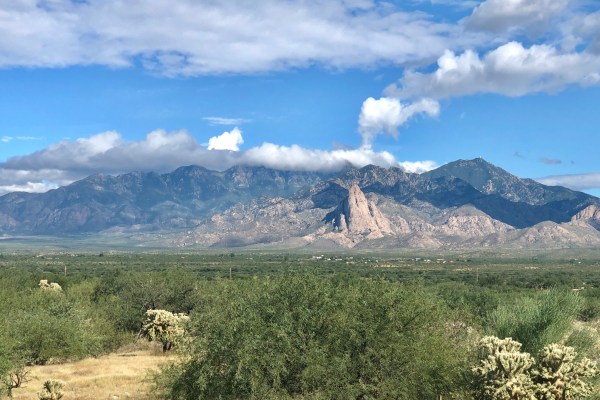
Santa Rita Mountains from the highway.

Phoenix, Arizona (epilogue)
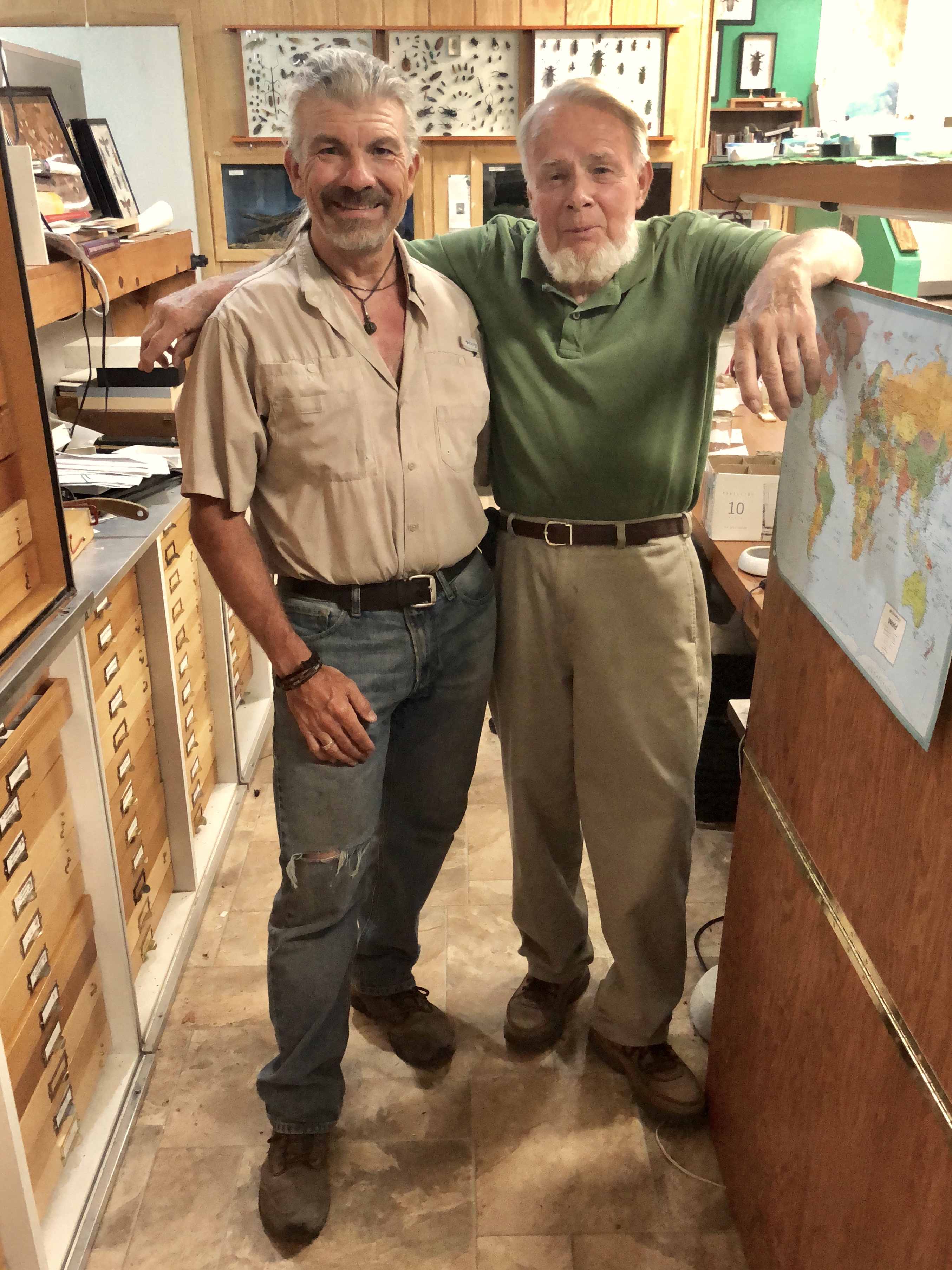
Bill Warner was kind enough to host Jeff and I for our last night in Arizona prior to returning home tomorrow. What an amazing collection he has built, and his use of flight-intercept traps in recent years has turned up even more amazing beetles. I was happy to also meet Andrew Johnston and Evan Waite, who joined us for dinner.

Bill Warner, an icon among Arizona beetle collectors, sits amidst newly collected I material waiting to be processed.
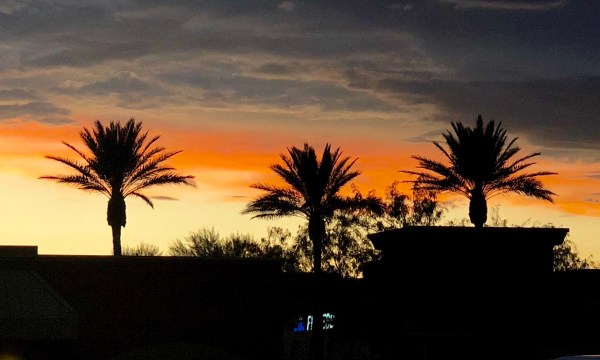
Sunset in Phoenix!

©️ Ted C. MacRae 2019

2019 Arkansas/Oklahoma Insect Collecting Trip iReport

Alternative title: Rich and Ted’s Excellent Adventure

This is the seventh “Collecting Trip iReport”; this one covering a 5-day trip to Arkansas and Oklahoma from June 7–11, 2019 with my friend and local collecting buddy Richard Thoma. As with all previous “iReports” in this series, this one too is illustrated exclusively with iPhone photographs.

Previous iReports include the following
2013 Oklahoma
2013 Great Basin
2014 Great Plains
2015 Texas
2018 New Mexico/Texas
2018 Arizona

Image may contain: 2 people, including Ted MacRae, people smiling, people standing, beard, tree and outdoor
…and so it begins!

Day 1 – Ozark National Forest, vic. Calico Rock, Arkansas
It’s been many years since I’ve visited these sandstone glades overlooking the White River near Calico Rock. Conditions were partly sunny when we arrived, but water on the ground suggested rain earlier in the day. We had only a short time to start exploring before the wind started blowing up and the smell of rain filled the air. I did manage to beat one Amniscus sexguttata from a branch of living Pinus echinata and collect a couple of Strigoderma sp. from Coreopsis lanceolata flowers before steady rain forced us to retreat.

Image may contain: cloud, sky, mountain, outdoor, nature and water
White River near Calico Rock, Arkansas—before the rain.
Image may contain: mountain, sky, outdoor and nature
White River near Calico Rock, Arkansas—rain’s a comin’!

Day 2 – Ouachita National Forest, Winding Stair Campground & Ouachita Trail, Oklahoma
We walked the trail from the campground S about 2½ miles and back. I started off with Acmaeodera tubulus on Krigia sp. flowers, eventually finding a lot of them on this plant at higher elevations along with a single Acmaeodera ornata, and I beat a few Agrilus cepahlicus off of Cornus drummondii. This had me thinking it would be a good buprestid day, but it wasn’t, the only other species collected being some Chrysobothris cribraria off of small dead Pinus echinata saplings and Pachyschelus laevigatus on Desmodium sp. Also beat a few miscellaneous insects off of Cercis canadensis and Vaccineum arborea and swept some from grasses and other herbaceous plants. Back at the campground I collected Chrysobothris dentipes on the sunny trunks of large, live Pinus echinata trees.

Emerald Vista, along the Talihema Scenic Drive.
Acmaeodera tubulus on flower of Rosa carolina.
Canthon sp.
Apheloria virginiensis reducta (ID by Derek Hennen).
The biggest cairn I’ve ever seen.

Ouachita National Forest, Talimena Scenic Dr at Big Cedar Vista, Oklahoma
There were lots of native wildflowers like Coreopsis tinctoria and Ratibida columnifera in bloom, so we stopped to check them out. There were lots of butterflies, however, I found only a single Typocerus zebra on Coreopsis lanceolata.

View south from Talimena Scenic Drive at Big Cedar Vista.
Coreopsis tinctoria (plains coreopsis).
Ratibida columnifera (upright prairie coneflower).

Ouachita National Forest, Winding Stair Campground, Oklahoma
We returned to the campground in the evening to do some blacklighting. I had high hopes, but only five cerambycids came to the lights, all represented by a single individual: Monochamus carolinensis, Acanthocinus obsoletus, Amniscus sexguttatus, Eutrichillus biguttatus, and Leptostylus tranversus (the first four are pine-associates). I also picked up a few other miscellaneous insects.

Rich processes the day’s catch as the blacklight hums in the background.

Day 3 – Medicine Park Primitive Campground, Oklahoma
There wasn’t much insect activity going on in eastern Oklahoma, so we drove out west to the Wichita Mountains for hopefully better luck. We found a small park with a primitive campground in the city of Medicine Park—my first thought was to beat the post oaks dotting the campground, but when I went into the native prairie between the campground and the creek I never came out! Right away I found what must be Acmaeodera ornatoides on flowers of Opuntia sp., then I found more on flowers of Gallardia pulchella along with Acmaeodera mixta. The latter were also on flowers of Thelesperma filifolium along with Acmaeodera neglecta—took a nice series of each, and I also got a few of the latter on flowers of Coreopsis grandiflora. Strangalia sexnotata were on flowers of C. tinctoria and Torilis arvensis, and then on the latter plant I saw a male Strangalia virilis—a Texas/Oklahoma specialty that I’ve never collected before! I spent the next hour looking for these guys and ended up with 3 males and 2 females along with a few Trichiotinus texanus—another Texas/Oklahoma specialty—and a single Agrilaxia sp. nr. flavimana (could be A. texana). One single Typocerus octonotatus was on flowers of Achillea millefolium. I think we may come back here tomorrow—I’d like to look for more S. virilis and beat the post oaks (the reason we stopped here to begin with).

A cacophony of native wildflowers!
An orgy of Euphoria kernii (Kern’s flower scarab) in Opuntia sp. flower. Multiple color forms exist for this species.
At first I thought this was a type of hover fly (family Syrphidae), but eventually I determined it to be Esenbeckia incisuralis, a horse fly (family Tabanidae)—incredible emerald green eyes!
Papilio polyxenes asterius (black swallowtail) caterpillar.
Echinocereus reichenbachii baileyi (lace hedgehog cactus).

Lake Lawtonka nr. Ma Ballou Point, Oklahoma
We stumbled into this area while looking for stands of Sapindus drummondii (soapberry)—found a small stand along the road, but it was too inaccessible. The same diversity of blooms were present as at the previous spot, so I picked a few longhorns off flowers of Coreopsis grandiflora and Gaillardia pulchella. Super windy, so we didn’t stay long.

View across Lake Lawtonka from Ma Ballou Point.
Neochlamisus sp. (case-bearing leaf beetle) larvae inside their “casas de caca” on Monarda fistulosa (bee balm).
I believe this is Harrisina coracina, a leaf skeletonizer in the family Zygaenidae. Both BugGuide and the Moth Photographers Group show records only from Texas.

Day 4 – Wichita Mountains National Wildlife Refuge, Oklahoma
Before starting the day’s collecting, we wanted to go into the Wichita Mountains National Wildlife Refuge to have a look around. On the way into the refuge we some American bison near the road and had to stop, take photos, and simply admire these massive, majestic beasts. We then went to the Cedar Plantation, where I had visited before back in 2012 and photographed black individuals of Cicindelidia obsoleta vulturina (prairie tiger beetle). No tiger beetles were out now (they come out in the fall), but I’d hoped to maybe see Cylindera celeripes (swift tiger beetle) along the 2-tracks in the area. No such luck—nevertheless, we saw a myriad of interesting insects, including several more Esenbeckia incisuralis (green-eyed horse flies) and a beautiful Trichodes bibalteatus (checkered beetle), the latter of which I photographed on flowers of Ratibida columnifera and Achillea millefolium with the big camera. Afterwards we visited the “prairie dog town” and got marvelous views and photographs of black-tailed prairie dogs.

Native American wildlife on a native American landscape.
American bison (Bison bison bison).
Wichita Mountains from Cedar Plantation.
Acmaeodera mixta on flower of Rudbeckia hirta (black-eyed Susan).
Typocerus octonotatus on inflorescence of Achillea millefolium (yarrow).
Strangalia sexnotatus on flower of Ratibida pinnata (gray coneflower)
Trichodes bibalteatus on flower of Rudbeckia hirta (black-eyed Susan).
Trichodes bibalteatus on flower of Ratibida pinnata (gray coneflower)
The author walks a bison trail through the Cedar Plantation.
Black-tailed prairie dog at its burrow entrance.
“Watch you lookin’ at, Willis?!”
Black-tailed prairie dog (Cynomys ludovicianus).

Medicine Park, Jack Laughter Park, Oklahoma
We’d noticed this spot yesterday because of the old post oaks and wealth of wildflowers blooming up the mountainside. There wasn’t much going on today, however—just a few Acmaeodera mixta on flowers of Gaillardia pulchella. I did find an Anthaxia (Haplanthaxia) sp. on my arm! Otherwise I spent some time photographing the landscape and some geometrid larvae on flowers of Gaillardia pulchella.

Opuntia sp. (prickly-pear cactus) amidst rocky exposures.
Small Oncoptus fasciatus (large milkweed bugs) nymphs colonize seed pods of Asclepias asperula (antelope-horns).

Medicine Park Primitive Campground, Oklahoma
We returned to this spot since we had so much luck yesterday. I was hoping to collect more Acmaeodera ornatoides and Strangalia virilis, but there was much less going on today than yesterday—basically didn’t see anything for the first hour and a half. I didn’t give up, however, and kept checking the area where we saw most of the S. virilis yesterday, and eventually I saw another male in the same area as yesterday on the same stand of Torilis arvensis. I found two more males in the same area over the next hour, so three males on the day was a good reward for the time spent looking for them. I also collected Trichodes apivorus and Trichiotinus texanus on flowers of Allium sp. Interestingly, beating the post oaks—the reason why I originally wanted to stop here—produced nothing. So, not very many specimens on the day, but happy with those I did get.

Thelesperma filifolium (stiff greenthread).
Coreopsis grandiflora (large-flowered tickseed).
Gaillardia pulchella (firewheel).
Coreopsis tinctoria (plains coreopsis).
Torilis arvensis (erect hedge parsley), introduced.
Opuntia sp. (prickly-pear cactus).
Allium sp. (wild onion).

Medicine Park, Jack Laughter Park, Oklahoma
I was pretty much done for the day after spending all morning at the refuge and most of the afternoon at the previous spot, but Rich wanted to take another look at Jack Laughter Park because he’d found some interesting grasshoppers there. As with earlier in the day there were few beetles of interest to me, but I did collect a couple of Trichiotinus texanus on flowers of Cirsium undulatum. I checked out some large post oaks with large dead branches thinking that might be what Strangalia virilis was breeding in but never saw any, and eventually I turned my attention to photographing a few interesting native plants that I found along the way.

Krameria lanceolata (trailing krameria).
Cirsium undulatum (wavyleaf thistle or gray thistle) inflorescence.

Cirsium undulatum (wavyleaf thistle or gray thistle) can be distinguished by its wavy leaves that are gray-green on both upper and lower surfaces.

Day 5 – Epilogue
We were tempted to do one last little bit of collecting on the way back to St. Louis, but since had pretty good luck during the last couple of days and the drive alone would take more than nine hours we decided to leave well enough alone and get home at a reasonable hour. A walk with Beauregard when I got home to stretch the post-drive legs was the perfect way to end the mini-vacation.


©️ Ted C. MacRae 2019

2018 Arizona Insect Collecting Trip “iReport”

Hot on the heels of the previous installment in this series, I present the sixth “Collecting Trip iReport”; this one covering a trip to Arizona during July/August 2018 with Art Evans and—like the previous installments in this series—illustrated exclusively with iPhone photographs (see previous installments for 2013 Oklahoma2013 Great Basin2014 Great Plains, 2015 Texas, and 2018 New Mexico/Texas).

This trip was a reunion of sorts—not only had it been 20 years since I’d collected in Arizona, it had also been 20 years since I’d spent time in the field with Art Evans—which just happened to be in southeast Arizona! For years I looked forward to our next opportunity, and when he told me of his plans for an extended trip to take photographs of his forthcoming Beetles of the Western United States, I couldn’t pass up the chance. Art had already been out west for five weeks by the time I landed in Phoenix on July 28th, and together we drove to Cave Creek Canyon in the Chiricahua Mountains and spent the night before beginning a 7-day adventure in and around the “Sky Islands” of southeastern Arizona.

As with the recent New Mexico/Texas post, the material collected still has not been completely processed and curated, so I don’t have final numbers of taxa collected, but there were a number of species—some highly desirable—that I managed to find and collect for the first time, e.g., the buprestids Acmaeodera yuccavoraAgrilus restrictus, Agr. arizonicusChrysobothris chiricauhuaMastogenius puncticollis, and Lampetis webbii and the cerambycids Tetraopes discoideus and Stenaspis verticalis. Who knows what as-yet-unrecognized goodies await my discovery in the still unprocessed material?!


Day 1 – Chiricahua Mountains, Cave Creek Canyon
After arriving at Cave Creek Ranch late last night, we awoke to some stunning views right outside our room!

View of Cave Creek Canyon at Cave Creek Ranch, Chiricahua Mountains.

Cave Creek Ranch, Cave Creek Canyon, Chiricahua Mountains.

Cave Creek Ranch, Cave Creek Canyon, Chiricahua Mountains.

The first buprestid of the trip was a series of Pachyschelus secedens on Desmodium near Stewart Campground. We beat the oaks and acacia along the way to Sunny Flat Campground but didn’t find much. Once we got near Sunny Flat I did some sweeping in an area with new growth of Helianthus sp. and got a series of Agrilus huachucae, a few lycids, and one Leptinotarsa rubiginosa. I beat one Acmaeodera cazieri from Acacia greggii and found another on flower of prickly poppy (Argemone sp.). On the roadside at Sunny Flat I found several Acmaeodera spp. on a yellow-flowered composite – one A. rubronotata, one A. solitaria(?), and three A. cazieri. Also collected one A. cazieri on a rain gauge, Mecas rotundicollis and one as yet undetermined acanthocinine cerambycid on miscellaneous foliage, one tiger beetle (Cicindela sedecimpunctata?) on the roadside, and two orange lycids in flight.

Majestic peaks loom over the canyon.

Blue pleasing fungus beetle (Gibbifer californicus) – family Erotylidae.

Me with Margarethe Brummermann.

Reddish potato beetle (Leptinotarsa rubiginosa) is an uncommon relative of the much more well known (and despised) Colorado potato beetle (L. decemlineata).

Margarethe Brummermann searches for beetles in Sunny Flat Campground.

Bordered patch (Chlosyne lacinia) – family Nymphalidae.

Desert flats east of Portal, Arizona
We came to this spot to look for Sphaerobothris ulkei on joint-fir (Ephedra trifurca), but after not finding any for awhile I got distracted by some big buprestids flying around. Caught several Hippomelas sphenicus, one Gyascutus caelatus, and two Acmaeodera gibbula on Acacia rigida, and the first and third were also on Prosopis glandulosa along with Plionoma suturalis. We finally found S. ulkei – searched the area for almost three hours, and Art and I each caught two and Margarethe caught one – also one each of P. suturalis and A. gibbula. I also got a mating pair of A. gibbula on Acacia greggii. After dinner, we went back and placed an ultraviolet light – checked it a couple hours later and got a nice series of Cylindera lemniscata and a few meloids (for Jeff).

Desert flats below Portal, Arizona – dominant woody vegetation is mesquite (Prosopis glandulosa), sweet acacia (Acacia constricta), and three-pronged joint-fir (Ephedra trifurca).

Art Evans photographing Hippomelas planicauda in the ‘studio’ afterwards.

Sphaerobothris ulkei, collected on Ephedra trifurca.

Day 1 of the trip ended in typical monsoon fashion – heavy, thunderous rainstorms moved into the area during late afternoon, dimming prospects for blacklighting. Still, we set them up anyway at several spots and checked them later in the evening (flood waters preventing us from going to all the spots we wanted to). Not surprisingly, the one trap that yielded interesting specimens was in the lowest (warmest) area and received the least amount of rain. For me it was a nice series of Cylindera lemniscata.


Day 2 – Southwestern Research Station, Chiricahua Mountains, Arizona
There is a large stand of a narrow-leaved milkweed (Asclepias sp.) at the station, so we stopped by in our way up the mountain to check it for beetles. Got a nice little series of Tetraopes discoideus (tiny little guys!) on the stems as well as a few Rhopalophora meeskei, two Lycus spp., and one Pelonides humeralis on the flowers.

Tetraopes discoideus (family Cerambycidae).

Rhopalophora meeskei and Lycus sp. on Asclepias sp.

IMG_3151 (Edited)

At the Southwestern Research Station with Barbara Roth, Art Evans, and Margarethe Brummermann.

Road from Southwestern Research Station to Ruster Park
After leaving the SWRS on our way up to Rustler Park, we stopped to check a couple of bushes of New Mexico raspberry (Rubus neomexicanus). Margarethe thought there might be lepturines on the flowers, but instead we found a few Acmaeodera spp. and some Rhopalophora meeskei.

New Mexico raspberry (Rubus neomexicanus).

Further up the road we made another quick stop to check roadside flowers – just a single A. rubronotata on a yellow-flowered composite, but spectacular views of the valley below.

Looking west from the Chiricahua Mountains, Arizona.

Gayle Nelson once told me about finding Chrysobothris chiricahuae on pine slash at Rustler Park, so I was pleased to see several fresh slash piles when we arrived. I saw a Chrysobothris (presumably this species) on the very first branch in the very first pile that I looked at, but I missed it (damn!) and didn’t see any more in that pile. However, in the next pile I visited I saw two and got them both. I looked at a third pile and didn’t see any, nor did I see any more on the two previous piles that I looked at. Still, two is better than none (assuming this is, indeed, what they are!).

Rustler Park, Chiricahua Mountains, Arizona.

Chiricahua National Monument
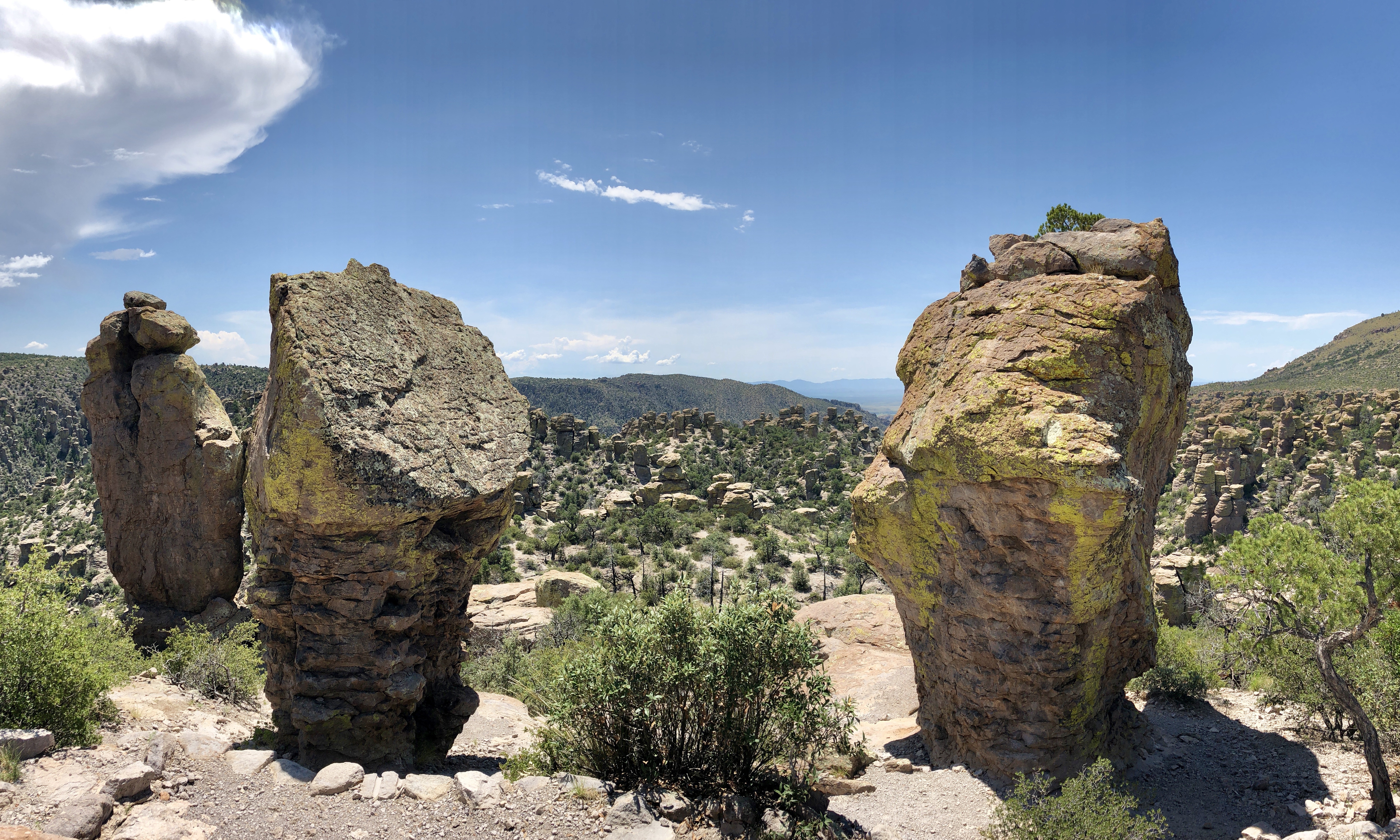
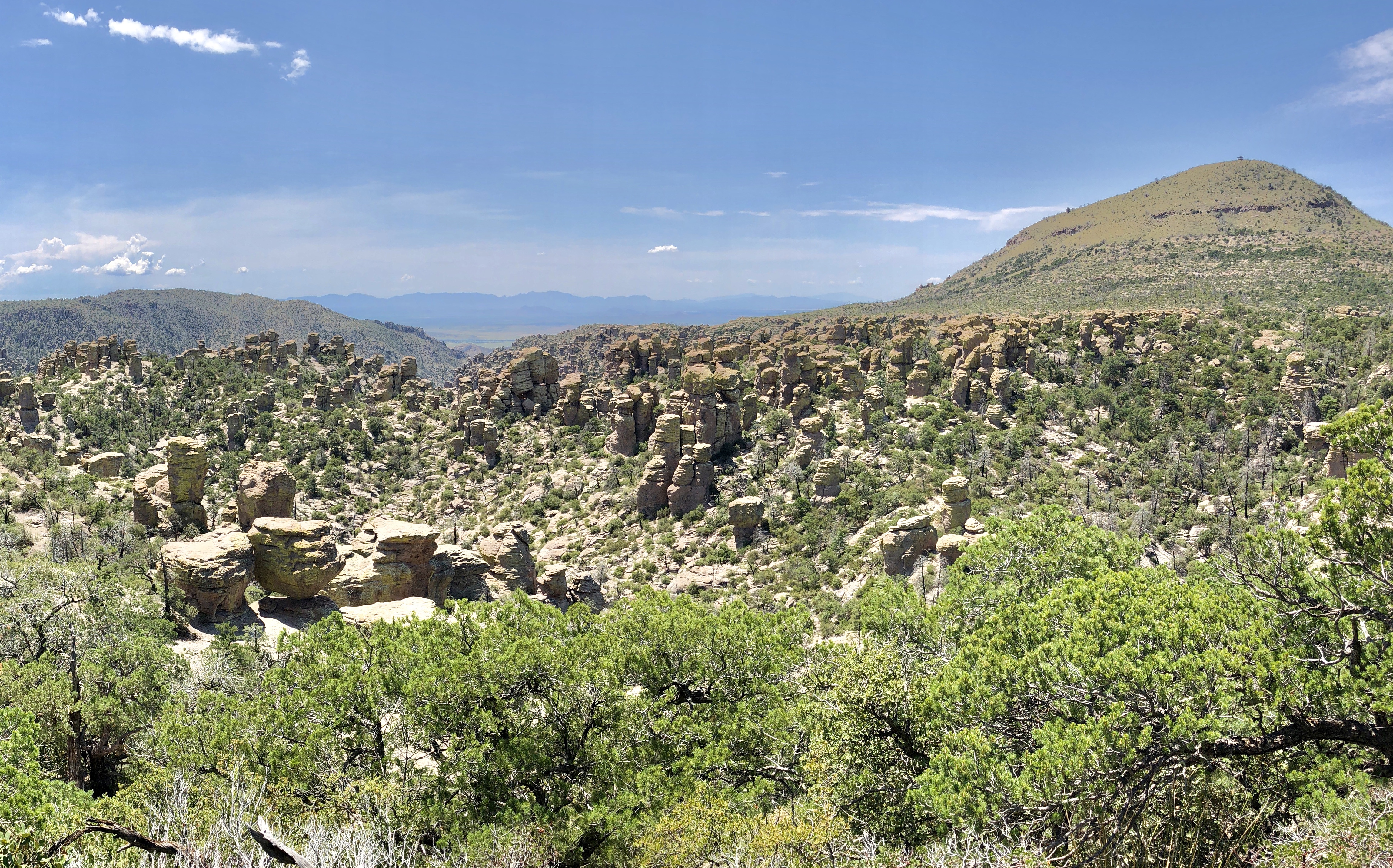
Not a bug collecting stop, but we wanted to drive into the monument and see the incredible rock formations which are best appreciated by driving through Bonita Canyon and then up to Massai Point. The unusual spires, columns, and balancing rocks are a result of erosion through vertical cracks in the compressed volcanic ash which was laid down in layers 25 million years ago and then uplifted. Tilting during uplift caused vertical fractures and slippage, into which water then worked its way to create today’s formations. One of the columns I saw is 143 feet tall and only 3 feet in diameter at one point near the base! Mexican jays were our constant, close companions as we hiked through the pinyon pine/oak/juniper woodland.

Vicinity Gleeson, Arizona
There is a wash across N Ghosttown Trail with stands of Baccharis sarothroides growing along the sides. Art previously collected a single Cotinis impia on one of the plants, so we came back to check them. We didn’t find any, but we did find two fine males and one female Trachyderes mandibularis on a couple of the plants. I also found a dead Polycesta aruensis.

Vicinity Tombstone, Arizona
Art saw Gyascutus caelatus here previously, so we came back and found them abundantly in sweet acacia (Acacia rigidula), which was in full bloom. They were extremely flighty and hard to catch, so we each got only four. I also collected one Stenaspis solitaria on the same and a Trachyderes mandibularis female in flight.

Trachyderes mandibularis female

At another spot nearby, we stopped to look for Lampetus webbii, which Art had seen but not been able to collect when he was here a couple of weeks ago. We did not see any (but read on…), and I saw but did not collect a Trachyderes mandibularis and two Stenaspis solitaria. I also saw and photographed some giant mesquite bugs (Thasus neocalifornicus).

Giant mesquite bugs (Thasus neocalifornicus).

Note the heavily armed and thickened hind legs of the male (L) versus the more slender and red/black banded hind legs of the female (R).

Not sure of the ID (other than ‘DYC’ – damned yellow composite).

The day ended enjoying steaks, Malbec, and Jameson with two of the best hosts ever!


Day 3 – Box Canyon, Santa Rita Mountains, Arizona
Our first stop of the day was Box Canyon, a gorgeous, rugged canyon on the east side of the range. Mimosa dysocarpa was in bloom, off which I beat two Agrilus aeneocephalus, several Hippomelas planicauda, and one Stenaspis solitaria. Norm gave me an Acmaeodera cazieri that he’d collected on an unidentified yellow-flowered composite, and right afterwards I found some small, low-growing plants with purple flowers and sticky leaves (eventually ID’d as Allionia incarnata, or trailing four o’clock) to which Acmaeodera yuccavora and A. cazieri were flying in numbers. After that I crawled up top and beat the mesquites, getting one Chrysobothris sp., a mating pair of S. solitaria, and a couple of large clytrine leaf beetles.

Box Canyon from just above the dry falls.
Prickly poppy (Argemone mexicana) blooming along the roadside.

Hippomelas planicauda mating pair on Mimosa dysocarpa.

Allionia incarnata, flower host for Acmaeodera cazieri and Acm. yuccavora.

Acmaeodera cazieri (left-center).

Acmaeodera yuccavora.

Lubber grasshopper (Taenipoda eques). The striking coloration warns potential predators that it is chemically protected.

Datana sp. caterpillars.

Vicinity Duquesne, Arizona
We came here to look for Tetraopes skillmani (this is the type locality). We found the host plant (Sarcostemma sp.), but there were no beetles to be seen anywhere. Maybe another location nearby…

Sarcostemma sp. (family Asclepiadaceae).

Patagonia Pass, Patagonia Mountains, Arizona
We went up higher into the mountains to get into the oak woodland, where I hoped to find some of the harder-to-collect oak-associated Agrilus spp. Right away I beat one Agrilus restrictus off of Emory oak (Quercus emoryi), but no amount of beating produced anything more than a single Enoclerus sp.. I also beat the Arizona oak (Q. arizonica) and got only a single Macrosaigon sp. On Desmodium sp. I collected not only Pachyschelus secedens but a nice series of Agrilus arizonicus. For me it is the first time I’ve collected either A. restrictus and A. arizonicus, the former being quite uncommon as well, so all-in-all not a bad stop.

Agrilus arizonicus mating pair – the males are brighter green than the females, which are more coppery.

Unidentified plant.

Me, Art Evans, and Norm Woodley.

Sycamore Canyon, Santa Cruz Mountains, Arizona
We came here for night lighting, but while we still had light I did some sweeping in the low vegetation and collected a mixed series of Agrilus arizonicus (on Desmodium sp.) and Agrilus pulchellus – the latter a first for me, along with two small cerambyids that could be Anopliomorpha rinconia. Conditions were perfect (warm, humid, and no moon), and we had lots of lights (Art’s five LED units, Steve’s MV/UV combo setup, and my UV setup), but longhorned beetles were scarce – just one Prionus heroicus and one Lepturges sp. for me, and Steve got a few others including a nice Aegomorphus sp. I did also collect a few scarabs – Chrysina gloriosa and Strategus alous – because they’re just so irresistible!

A beacon in the night!

Art, Steve, and Norm checking the lights.

Chrysina gloriosa.

A male oz beetle (Strategus aloeus).

Eacles oslari is a western U.S. relative of the imperial moth (E. imperialis).

Insects whirring around my head!

Day 4 – Prologue
One of the downsides (if you can call it that) of having great collecting is the need to take periodic “breaks” to process all the specimens and make my field containers available for even more specimens. Thanks to Steve and Norm for making their place available to Art and I so we can do this before heading out to our next set of localities.

Copper Canyon, Huachuca Mountains, Arizona
Copper Canyon is the classic spot for finding the charismatic Agrilus cavatus (see photo), but first we did some sweeping in the low vegetation near the parking area, where Norm got one Agrilus arizonicus and two Agrilus latifrons – and gave them to me! (Thanks, Norm!) I did some beating of the oaks, and after much work I ended up with a single Agrilaxia sp. and pogonocherine cerambycid on Emory oak (Quercus emoryi) and a couple of giant clytrines on the Arizona oak (Q. arizonicus). I then started sweeping the low-growing Acaciella angustissima – right away I got two A. cavatus. They were in the area past the cattle guard on the right where lots of dead stems were sticking up, and although I continued to sweep the plants more broadly in the area I never saw another one. Finally, Norm called me up to a small Mimosa dysocarpa near the car off which he collected three Agrilus elenorae – and gave them to me! (Thanks, Norm!) I gave the tree a tap and got one more, and in my last round of sweeping I came up with a Taphrocerus sp. (must be some sedges growing amongst the grasses).

Copper Canyon to the northwest.

Copper Canyon to the north.

Agrilus cavatus on its host plant, prairie acacia (Acaciella angustissima).

Robber fly (family Asilidae) with prey (a ladybird beetle).

Bear Canyon Crossing, Huachuca Mountains, Arizona
There was quite a bit of Mimosa dysocarpa in bloom along the roadsides on the west side of the Bear Canyon crossing, which I beat hoping to find some more Agrilus elenorae. I didn’t find any, but I did get several more Hippomelas planicauda, which is a nice consolation prize – and a great photo of the last one! Other than that I did a lot of sweeping and found only a single Acmaeodera cazieri.

Bear Canyon to the south.

Bear Canyon to the north.

Hippomelas planicauda on one of its hosts, velvetpod mimosa (Mimosa dysocarpa).

Appleton-Whittell Research Ranch of the National Audubon Society, Elgin, Arizona
Cool temperatures and a blustery wind discouraged most insects from finding our blacklights. However, our blacklight did find some other interesting local residents. These two individuals could be the stripe-tailed scorpion, Paravaejovis (Hoffmannius) spinigerus, a common species in Arizona and southwestern New Mexico.


Day 5 – Miller Canyon Recreation Area, Huachuca Mountains, Arizona
There was a lot of Baccharis sarothroides growing in the lower canyon near the parking area, so I checked it all out hoping to find Tragidion annulatum. None were seen, and in fact there was very little insect life in general. I did pick up a couple of Acmaeodera solitaria by sweeping – not anything significant but the 15th species buprestid of the trip and found a dead Cotinis mutabilis, and Art got a nice series of Chalcolepidius click beetles on B. sarothroides and Prosopis glandulosa. Puzzling the lack of insect activity, given how green all the plants were and how fresh the growth looked. I guess we’ll have to look elsewhere.

Acanthocephala thomasi, a leaf-footed bug (family Coridae).

I was all lined up for a side shot of the bug when suddenly he took flight.

Turkey vultures hanging out waiting for me to die!

Actually they were all hanging out around a dead cat, some of which I scared up as they were feeding on it.

Vicinity Naco, Arizona
We decided to try some desert thorn-scrub habitat so headed east towards Bisbee. Just north of Naco we saw some habitat where it had rained recently – everything was green with the sweet acacia (Acacia rigidula) and creosote (Larrea tridentata) in full bloom. Immediately out of the car I found a Dendrobias mandibularis on Baccharis sarothroides (and when I came back to it later I found a big, major male on it – see photos). On the sweet acacia we found a handful of Gyascutus caelatus (one of which I got a nice photo of), a mating pair of Sphaenothecus bivittatus, and a Cymatodera sp. Finally, out along the roadsides a riot of different yellow composites were in full bloom, including Heliomeris longifolia off which Art got a couple of Acmaeodera solitaria and I got two specimens of a large Acmaeodera sp. (blue-black with numerous small irregular yellow spots).

Dendrobias mandibularis – major male.

Them’s some mandibles!

Gyascutus caelatus on Acacia rigidula.

A blister beetle (family Meloidae) in the genus Zonitis – either sayi or dunnianus – on Heliomeris longifolia.

Heliomeris longifolia – host flower for both the Zonitis blister beetle and Acmaeodera sp. jewel beetle.

Vicinity Tombstone, Arizona
We decided to go back to the spot north of Tombstone where Art had earlier seen Lampetis webbii and give that species another shot. We looked at the Rhus sp. tree that he’d seen them on, and then we each followed the wash in opposite directions looking at the Rhus trees along them, which growing above the banks but never further away than about 25 feet. Along the way I collected several more Gyascutus caelatus on sweet acacia (Acacia rigida), which were more abundant this time than last and also easier to catch. After walking about 1/4-mile down the wash I saw something fly from a Rhus tree and land low on the bushes nearby. I quickly netted it, pulled it out, and was elated to see that it was, indeed, Lampetis webbii! I searched the Rhus in the area more carefully but didn’t find any more, then found some Rhus growing up along the road. At one point, I saw a large buprestid fly and land high in the top of another Rhus tree. I couldn’t tell for sure if it was L. webbii, but I extended my net as far as I could, positioned it beneath the beetle, and tapped the branch hoping it would fall in. Unfortunately, it flew away instead of dropping, so I can’t say for sure whether it was L. webbii or just a wayward G. caelatus. At any rate, L. webbii is yet another species that I have not collected before now and the 17th buprestid species of the trip.

Lampetis webbii, collected on Rhus sp.

Stenaspis solitaria on Acacia rigidula.

Ramsey Canyon, Huachuca Mountains, Arizona
After returning from Tombstone, we visited Pat & Lisa Sullivan at their home at the end of Ramsey Canyon. Pat is a scarab collector who runs lights at his home nightly, and after a delicious dinner we spent the rest of the evening checking the lights. I was hoping to collect Prionus heroicus, and I got my wish. Also got Prionus californicus and several other non-cerambycid beetles such as Chrysina beyeri, C. gloriosa, Lucanus mazama, and Parabyrsopolis chihuahuae (the latter a first for me). I also placed a prionic acid lure (thanks Steve!) and got three more male P. heroicus. We also hunted around the rocks and roadsides hoping to find Amblycheila baroni but didn’t find any. Art did, however, find a female P. californicus and gave it to me (thanks!).

Meeting Pat Sullivan!

Darkling beetles (family Tenebrionidae) such as this one come out at night to feed on decaying vegetation.

Chrysina beyeri (family Scarabaeidae) is one of three species in the genus occurring in Ramsey Canyon.

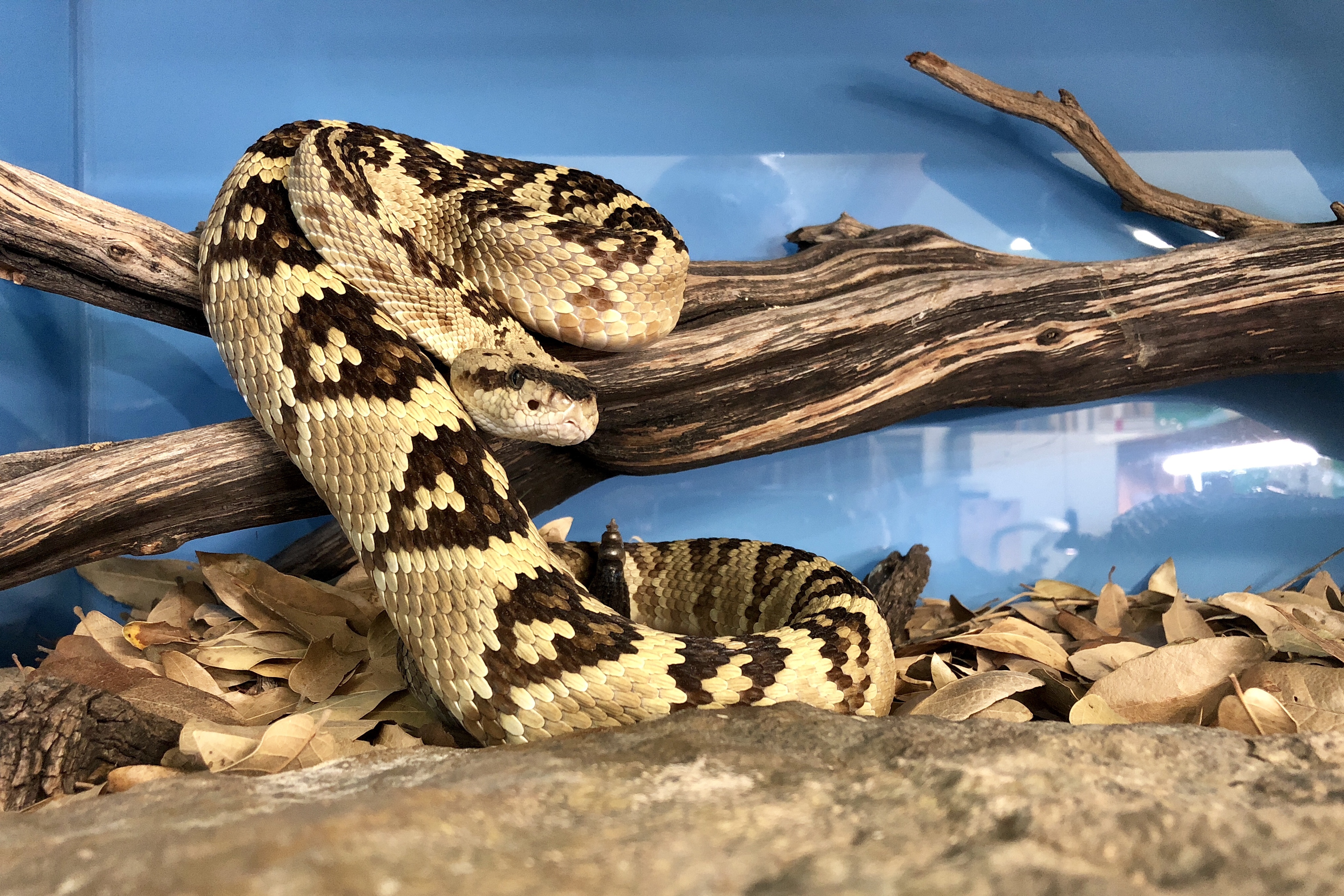
Black-tailed rattlesnake (Crotalus molossus), collected by Pat in Ramsey Canyon.

Sidewinder (Crotalus cerastes lateropens), collected by Pat in Yuma County.

“Sometimes the best collecting is inside!”

Day 6 – Vicinity Sonoita, Arizona
Unsuccessful attempt to collect Hippomelas martini, only recently described (Bellamy & Nelson, 1998) and part of the type series taken somewhere near this spot (“20 mi NE Patagonia, Hwy 82”) by “sweeping roadside vegetation”. At other locations it had been recorded on Calliandra sp., and I found patches of the plant here along and on top of the road cuts. This gives me confidence that I found the right spot, but I didn’t encounter this or any other beetles by sweeping the patches or visually inspecting them.

Box Canyon, Santa Rita Mountains, Arizona
We decided to come back to Box Canyon since we’d had such good luck last time. I started at the spot above the dry falls where I collected so many Acmaeodera cazieri and A. yuccavora on flowers of Allionia incarnata. This time it was hotter, drier, and windier, and the flowers were semi-closed. Still I found a few of each. I then started walking down the road towards the lower canyon crossing where I would meet up with Art. Things were really hopping on the Mimosa dysocarpa, with Hippomelas planicauda abundant (finally collected my fill) and several other Buprestidae also beaten from the plants: Agrilus aeneocepahlus, Acmaeodera scalaris, Acmaeodera cazieri, Chrysobothris sp., and a species of Spectralia! (seven species of Buprestidae at one location I think is the high for the trip.) I checked other plants and flowers along the way down but didn’t find much.

Halfway down from the “dry falls”.

The “dry falls” about halfway up the canyon.

Pseudovates arizonae – the aptly named Arizona unicorn mantis.

Lower Madera Canyon, Santa Rita Mountains, Arizona
Madera Canyon is perhaps the most famous insect collecting locality in Arizona – maybe in the country, and it is hard to make a visit to Arizona without stopping by here. We elected to work the lower canyon first in an area where Chrysobothris chalcophoroides has been taken on Arizona oaks (Quercus arizonicus). Hiking towards the oaks I found some Stenaspis solitaria in a Baccharis sarothroides and marveled at the variety of other insects active on the plants (see photos) – later I would also collect an elaphidiine cerambycid on the plant. Next I started working the oaks, beating every branch I could reach with my net handle. With one whack of the stick a single Paratyndaris sp. and a single Brachys sp. landed on my sheet – those would be the only buprestids I would collect off the oaks! Other than that I collected one Hippomelas planicauda on Mimosa dysocarpa for the record. While I was working the oaks up in the knoll, the weather started turning with blustery winds, and I could see the rain coming in the distance. By the time I got down from the knoll the rain had arrived, and I walked back to the car in a sunny downpour using my beating sheet as an umbrella!

Madera Canyon in the Santa Rita Mountains.

Acanthocephala thomasi on Baccharis sarothroides.

What appears to be a so-called “cricket killer” wasp (Chlorion aerarium) also feeds on sap on Baccharis sarothroides.

A longhorned beetle, probably in the genus Aneflus, rests on the foliage of Baccharis sarothroides.

Rain headed my way!

Rain passing into neighboring Florida Canyon.

Montosa Canyon, Santa Rita Mountains, Arizona
Just to try something different, we went to Montosa Canyon – the next canyon south of Madera Canyon – for tonight’s blacklighting. We set my sheet up just E of the crossing and Arts ground units back to the west along a gravel road on the south side of the crossing. Moths came in numbers, but the beetles were light – I collected only blister beetles (Epicauta sp.) and a Cymatodera sp. checkered beetle at the sheet, a series of tiger beetles and a female Strategus cessus at the second ground unit, and a male Strategus aloeus and two Stenelaphus alienus at the third ground unit.

A gorgeous sunset to start the evening.

A deepening dusk brings the promise of insects at the lights. 

A bee assassin bug, Apiomerus flaviventris.

An ocotillo, or calleta, silkmoth – Eupackardia calleta.

One of the western riparian tiger beetles.

Day 7 (last day) – Vicinity Continental, Arizona
There was a photo posted on BugGuide of Stenaspis verticalis taken last week, so we decided to give it a shot and see if we could get lucky and find it ourselves. We checked all the Baccharis sarothroides within ½-mile if the spot but didn’t find it. I did, however, collect four Euphoria leucographa, two Chalcolepidius smaragdula, two Aneflus spp., and singletons of Stenaspis solitaria and Dendrobias mandibularis. I also took a couple of Hippomelas planicauda on Mimosa dysocarpa – just for the record!

Euphoria leucographa on Baccharis sarothroides.

Chalcolepidius smaragdinus on Baccharis sarothroides.

Lower Madera Canyon, Santa Rita Mountains, Arizona
We returned to work the lower canyon area. I’d heard that the tiger beetle Cicindelidia obsoleta santaclarae has been taken in the area last week so was hoping to run into it. While Art worked the east side of the road I worked the west, initially following FR-781 into what looked like grassland areas where the tiger beetle might occur. I didn’t see any but took Acmaeodera scalaris on Heterotheca sp. flowers and Acmaeodera solitaria on Argemone mexicana flowers. There was also a fresh wind-thrown mesquite (Prosopis glandulosa) with a bunch of Chrysobothris octocola and one Chrysobothris rossi on it. Still the area looked abused from grazing and was uninteresting, so I looked for another area to explore.

Northwest of the parking lot I spotted another grassy area that was dotted with Baccharis sarothroides, so I decided to give that area a look. After clambering several times through barbed wire fence, I reached the area and began to give it a look. Still no tiger beetles, but every time I passed a B. sarothroides I inspected it closely. I’d looked at several plants when I came upon one with a Stenaspis solitaria sitting in the foliage, and when I looked down on one of the stems and saw a big male Tragidion sp. on the underside of the stem. After securing it, I looked closer at the plant and saw a pair of annulated antennae crawling up another stem – I knew right away it was a mating pair of Stenaspis verticalis! After carefully moving to the other side to confirm, I dared to take a few photos in situ (see below) and then secured the couple. Of course, this gave me newfound motivation to work the entire area to look for more. It was very hot by then, and I was already quite thirsty, but I summoned up all the stamina that I could and worked as many plants as I could, ending up with six Tragidion spp. and three Stenaspis verticalis. The latter was one of my top priority targets for this trips, and the only thing more satisfying than getting it is doing so on my last day on the field.

View to south edge of Madera Canyon – Elephant Head is at the right.

Chrysobothris octocola female ovipositing on freshly killed mesquite (Prosopis glandulosa).

Tragidion sp. mating pair on Baccharis sarothroides.

Mating pair of Stenaspis verticalis arizonensis on Baccharis sarothroides.

Chalcolepidius lenzi at a sap flow on Baccharis sarothroides.

Lateral view of Chalcolepidius lenzi.

Barrel cactus in bloom.

Montosa Canyon, Santa Rita Mountains, Arizona
We  returned to Montosa Canyon and stopped at the Astronomy Vista partway up. It was hotter than bejeebuz! There was not an insect to be seen except giant cactus bugs and a single Euphoria leucographa that Art found on a sapping Baccharis sarothroides. Temp was 103°F even at this elevation!

Stunning vista during the day! 

We needed to escape the heat, and I wanted to see oaks for one more crack at Mastogenius, so we drove up to the 13-km marker and I collected on the way back down to below the 12-km marker. Conditions were much more agreeable (temps in the 80s), and near the top there was a Ceanothus sp. bush in bloom, off which I collected Rhopalophora meeskei and Stenosphenus sp. – both genera represented by individuals with black versus red pronotum. Then I started beating the (Mexican blue, I believe) oaks, and right away I got a Mastogenius sp.! Kinda small, so I’m thinking not M. robusta and, thus, probably M. puncticollis (another species new to my collection). I also beat a largish Agrilus sp. that I don’t recognize, a few clerids, two R. meeskei, one Stenosphenus sp., and a couple of leaf beetles. There was also another type of oak there – Arizona white, I believe, which I beat as well but only got one clerid.

Spectacular views from 7000 ft!

A lichen moth on flowers of Ceanothus sp.

The biggest, fattest, bristliest tachinid fly I have ever seen!

The spectacular vistas just keep on coming!

An ancient alligator juniper stares down yet another sunset (perhaps its 50 thousandth!).

We stopped by the Astronomy Vista again on our way back down the canyon, and I found a pair of Moneilema gigas on cholla (Opuntia imbricata).

Obligatory dusk shot of Moneilema gigas on Opuntia imbricata.

Another individual on the same plant.

Sunset over “Las Cuatro Hermanas”.

It was a fantastic seven days in the field with Arthur, and it was a great pleasure to (in some cases, finally) meet Margarethe, Barbara, Steven, Norm, and Pat. I appreciate the warmth, generosity, and hospitality that all of them displayed to me and look forward to our next encounter, hopefully in the near future. Now, for some light reading during the plane ride home!

© Ted C. MacRae 2019

“The Botanists Among Us: Host plant specialization in insects”

It’s been a busy week for me—just two days after doing a presentation on tiger beetles to the Webster Groves Nature Society’s Entomology Group, I gave a talk to the St. Louis Chapter of the Missouri Native Plant Society. As implied by the title, the talk focused on host plant specialization among insects, first covering the major groups of plant-feeding insects and the evolutionary themes involved in adaption to (and away from) plant-feeding, then moving to examples of different types of host plant specificity and highlighting some of the more interesting insects that I’ve encountered (and managed to photograph) over the years.

Like my talk two nights earlier, it was another fun and lighthearted conversation with a highly engaged crowd, and I appreciate the great interest shown by a group that is normally much more focused on plants than on insects. Once again, it was well-attended locally, but for the benefit of those who were not able to attend the meeting in person and that may be interested in this subject, I’ve prepared a PDF version* of the presentation that you can download and peruse at your convenience.

* All content is copyrighted and may not be reproduced or distributed without written consent.

© Ted C. MacRae 2019

A “superb” southwestern Missouri cicada

Back in the summer of 2015, I made an early August trip to the White River Hills region of extreme southwestern Missouri. I was actually looking for one of Missouri’s more uncommon cerambycid beetles – Prionus pocularis, associated with shortleaf pine in the mixed hardwood/pine forests across the southern part of the state. I did not encounter the beetle in either my prionic acid-baited pitfall traps or at the ultraviolet lights I had set up the evening before, but while I was in the area I thought I would visit one of my favorite places in the region – Drury-Mincy Conservation Area in Taney Co. Sitting right on the border with Arkansas, the rolling hills of this area feature high-quality dolomite glades and post oak savannas. I’ve had some excellent collecting here in the past and hoped I would find something of interest this time as well. I didn’t arrive until after midnight, and since there are no hotels in the area I just slept in the car.

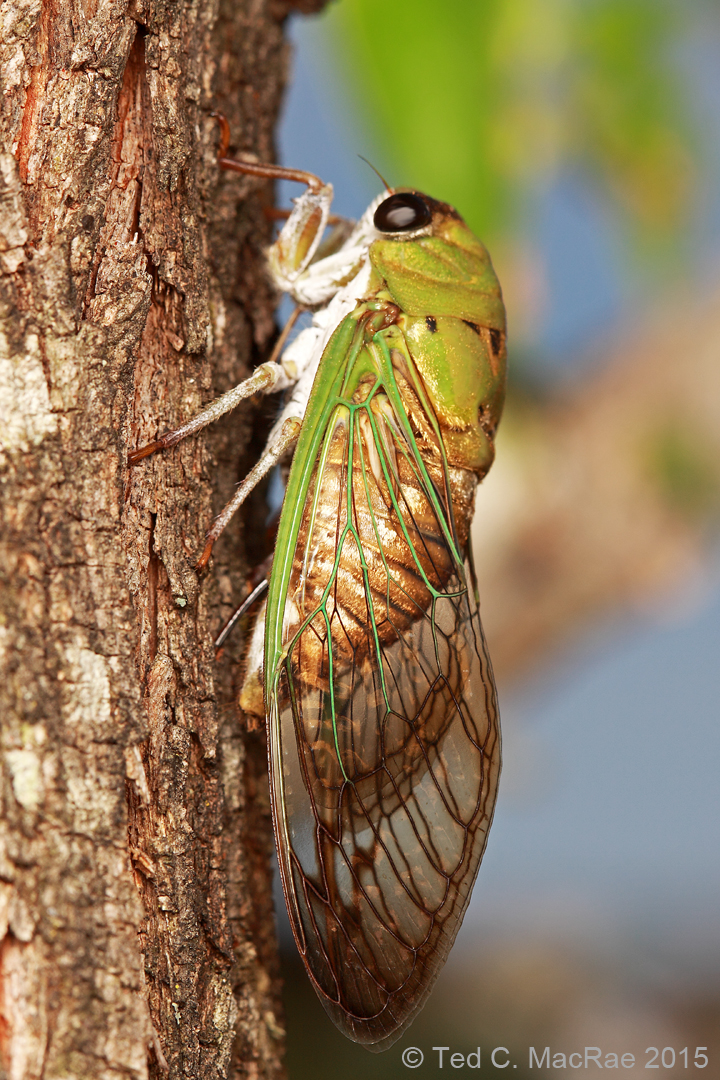
Neotibicen superbus

Neotibicen superbus

The next morning temperatures began to rise quickly, and with it so did the cacophony of cicadas getting into high gear with their droning buzz calls. As I passed underneath one particular tree I noticed the song was coming from a branch very near my head. I like cicadas, but had it been the song of a “normal” cicada like Neotibicen lyricen (lyric cicada) or N. pruinosus (scissor grinder cicada) I would have paid it no mind. It was, instead, unfamiliar and distinctive, and when I searched the branches above me I recognized the beautiful insect responsible for the call as Neotibicen superbus (superb cicada), a southwest Missouri specialty—sumptuous lime-green above and bright white pruinose beneath. I had not seen this spectacular species since the mid 1980s (most of my visits to the area have been in the spring or the fall rather than high summer), and I managed to catch it and take a quick iPhone photograph for documentation. A species this beautiful, however, deserves ‘real’ photos, so I spent the next couple of hours attempting to photograph an individual in situ with the big camera. Of course, this is much, much easier said than done, especially with this species—their bulging eyes give them exceptional vision, and they are very skittish and quick to take flight. Most of the individuals that I located were too high up in the canopy to allow a shot, and each individual that was low enough for me to approach ended up fluttering off with a screech before I could even compose a shot, much less press the shutter. Persistence paid, however, and I eventually managed to approach and photograph an unusually calm female resting – quite conveniently – at chest height on the trunk of a persimmon tree.

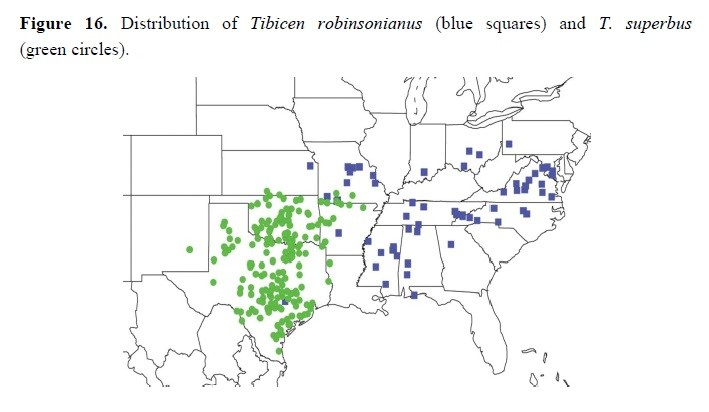
Sanborn-Phillips_2013_Fig-16

Source: Sanborn & Phillips (2013).

According to Sanborn & Phillips (2013, Figure 16 – reproduced above), Neotibicen superbus, is found in trees within grassland environments primarily in eastern Texas and Oklahoma, although records of it exist from each of the surrounding states – especially southern Missouri and northern Arkansas (Figure 16 below, Sanborn & Phillips 2013). Later the same day I would see the species abundantly again in another of the region’s dolomite glades – this one in Roaring River State Park further west in Barry Co., suggesting that dolomite glades are the preferred habitat in this part of its range. Interestingly, I think the Missouri records at least must be relatively recent, as Froeschner (1952) did not include the species in his synopsis of Missouri cicadas. This was all the information I had back in the 1980s when I first encountered the species in southwestern Missouri, its apparent unrecorded status in the state making it an even more exciting find at the time.

Neotibicen superbus

Neotibicen superbus

REFERENCES:

Froeschner, R. C.  1952. A synopsis of the Cicadidae of Missouri. Journal of the New York Entomological Society 60:1–14 [pdf].

Sanborn, A. F. & P. K. Phillips. 2013. Biogeography of the cicadas (Hemiptera: Cicadidae) of North America, north of Mexico. Diversity 5(2):166–239 [abstractpdf].

© Ted C. MacRae 2018

Ellipsoptera lepida – ghost tiger beetle

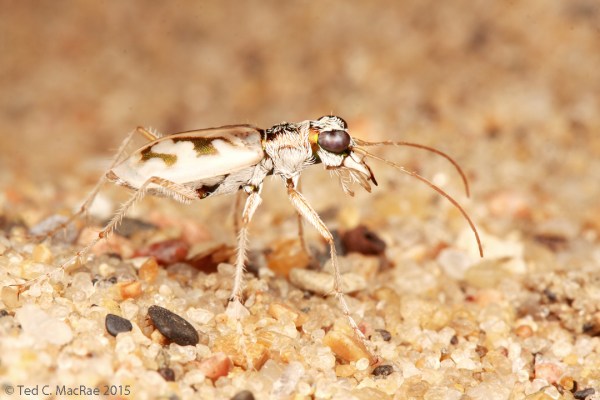
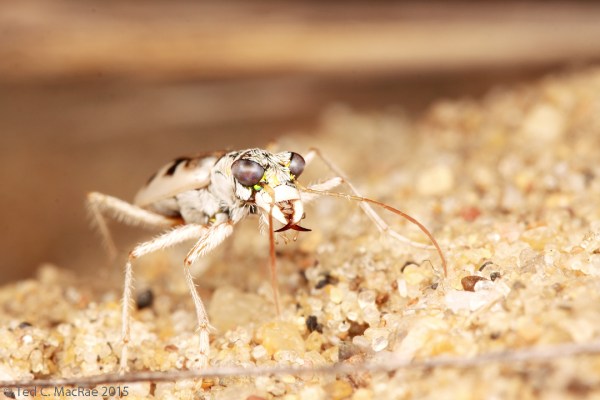
In the early 2000s, Chris Brown and I were beginning our general survey of Missouri tiger beetles. Our goal was to characterize the occurrence and distribution of all species within the state. At the time, 22 species were known to occur in Missouri, and our work would uncover the presence of two more—one being a vagrant occurrence of the widespread Cicindelidia trifasciata ascendens (ascendent tiger beetle) (Brown & MacRae 2005); the other being the rare Cylindera celeripes (swift tiger beetle) (MacRae & Brown 2011). Of the species already known from the state, however, some were known from only a few records and hadn’t been seen in the field by either Chris or myself. One such species was Ellipsoptera lepida (ghost tiger beetle), an almost pure white species known to occur in deep, dry sand habitats over most of central North America (Pearson et al. 2015). At that time, I had still seen only the more common species in Missouri, and the combination of its name and unusual, mostly-white color put this species high on my “must see” list.

Ellipsoptera lepida (ghost tiger beetle)

My first experience would come quickly. In June 2001, Chris and I visited a recent addition to Weldon Spring Conservation Area on the north side of the Missouri River in St. Charles Co. called Darst Bottoms. The area at one time was productive farmland, but the “Great Floods” of 1993 and 1995 left deep deposits of sand over the area. While no longer suitable for agriculture, the process of succession allowed valuable wildlife habitat to develop, and the area was purchased and added to the Conservation Area. By the time of our visit in 2001, early succession had resulted in young forests of mostly eastern cottonwood (Populus deltoides) surrounding a vast central plain of white sand. Chris and I didn’t know what to expect on that first visit, both of us being in the early stages of our survey of Missouri tiger beetles, but we figured we would find something interesting.

Ellipsoptera lepida (ghost tiger beetle)

I still remember the moment I first saw E. lepida and realized what it was. We had already found Cicindela formosa generosa (eastern big sand tiger beetle)—the first time I had seen that species in Missouri outside the southeastern lowlands (we would eventually find it at many sites along the Missouri and Mississippi Rivers and a few smaller interior rivers)—and were searching for additional specimens. We were in a small opening adjacent to the larger central plain when I thought I saw something move near my feet. I stopped to look down but didn’t see anything, so I began walking again while scanning the ground ahead of me. Again, I thought I saw movement nearby and stopped to look, this time pausing a little longer and doing so a little more carefully. That’s when I saw it, and even though I had seen only photographs of the species and museum specimens I recognized it instantly for what it was and yelled out “lepida!” Chris came over to see for himself, and we marveled at the effectiveness of their camouflage—they seemingly were able to disappear right before our eyes even though we were looking right at them.

Sand plain habitat for Ellipsoptera lepida (ghost tiger beetle).

Over the next few years, Chris and I found the species at several sites along or not too distant from the Missouri and Mississippi Rivers—always on sand deposits deep enough to become dry. We never found them in great numbers, sometimes just single individuals while other sand residents were abundant, and not at all sites where we did find more reliable species such as C. f. generosa and C. tranquebarica (oblique-lined tiger beetle). Pearson et al. (2015) mention that despite the broad distribution of this species across central North America that its actual occurrence is rather spotty and localized and that it has disappeared from many sites where it was previously known to occur. This was our experience in Missouri as well, as many of the museum records we had gleaned for the species no longer appeared to support populations of the beetle. This is likely due, at least in part, to the ephemeral nature of the habitats on which the species depends, at least those along the big rivers that are vulnerable to revegetation and succession back to bottomland forest.

Ellipsoptera lepida (ghost tiger beetle)

Of course, all of this occurred long before I took up insect macrophotography in 2009, and while I had managed to photograph most of the tiger beetle species in Missouri in the years that followed, E. lepida was one that I continued to lack. In the summer of 2015 I decided to rectify that situation and, when the time was right, returned to Darst Bottoms in hopes of finding and photographing this species. Imagine my surprise when I hiked into the area and, instead of young cottonwood stands surrounding a vast, barren sand plain, I found mature cottonwood forests surrounding a thickly vegetated sand prairie with only isolated patches of barren sand. Needless to say, with such little suitable habitat for the beetles they were neither abundant nor even common. In fact, the only evidence I found that told me they were still there at all was coyote scat containing unmistakable remains of the adult beetles. Skunked on my first effort, I decided to try another spot where we had seen good populations of the beetle—Overton Bottoms Conservation Area along the Missouri River in Cooper and Monteau Counties in central Missouri, now Overton Bottoms South Unit and part of the Big Muddy National Wildlife Area. Like Darst Bottoms, this area had experienced revegetation and succession in the decade+ since my previous visit; however, unlike the former there still remained a vast central plain that, while vegetated, was sparsely vegetated enough to continue providing suitable habitat for the beetle. It took some work, but I eventually found the beetles localized in one part of the sand plain (see photograph ), and there were enough of them out at the time of my visit that I succeeded in getting the series of photographs shown in this post.

Ellipsoptera lepida (ghost tiger beetle)

I have fond memories of all 24 tiger beetle species in Missouri—each one presenting a unique collection of experiences that will fuel my love affair with the group for years to come. With E. lepida, the jubilance and excitement of that first, unexpected encounter remains near the top of the list for me.

REFERENCES:

Brown, C. R. & T. C. MacRae. 2005. Occurrence of Cicindela (Cicindelidia) trifasciata ascendens (Coleoptera: Cicindelidae) in Missouri. Cicindela 37(1–2):17–19 [pdf].

MacRae, T. C. & C. R. Brown. 2011. Historical and contemporary occurrence of Cylindera (s. str.) celeripes (LeConte) (Coleoptera: Carabidae: Cicindelinae) and implications for its conservation. The Coleopterists Bulletin 65(3):230–241 [pdf].

Pearson, D. L., C. B. Knisley, D. P. Duran & C. J. Kazilek. 2015. A Field Guide to the Tiger Beetles of the United States and Canada. 2nd Edition. Oxford University Press, New York, 264 pp. [Oxford description].

© Ted C. MacRae 2017

Cicindela scutellaris flavoviridis (chartreuse tiger beetle)

In previous posts I have discussed some Texas subspecies of Cicindela scutellaris (festive tiger beetle) and C. formosa (big sand tiger beetle)—two widespread and geographically variable species that occur broadly across eastern North America and that segregate into several distinctive and geographically restricted subspecies (Pearson et al. 2006). With the former species, I actually found two of its Texas subspecies, the second being C. s. flavoviridis (dubbed the “chartreuse tiger beetle” by Erwin & Pearson, 2008). This subspecies occurs in a narrow band from north-central Texas south to central Texas and apparently does not intergrade with rugata (which I featured previously) to the east (Pearson et al. 2006) and minimally with subspecies lecontei to the north (Vaurie 1950).

Cicindela scutellaris flavoviridis

Cicindela scutellaris flavoviridis

This beautiful subspecies usually lacks maculations, at most possessing two tiny ivory white spots along the outer edge of the elytra, and the shining metallic upper body surface is the most stunning shade of greenish-yellow, or chartreuse, color that I have ever seen. It shares with C. s. rugata a more wrinkled pronotum and smoother head than other C. scutellaris subspecies, but the latter is distinguished by its darker blue to blue-green dorsal coloration. Vaurie (1950) regarded C. s. flavoviridis to be intermediate between rugata and scutellaris but more closely related to the latter due to their shared yellow/coppery reflections on the elytra. Cicindela s. flavoviridis can also be confused with immaculate forms of C. sexguttata (six-spotted tiger beetle), but the latter is less robust with a more tapered posterior, and both sexes of C. sexguttata have a whitish labrum—in all C. scutellaris subspecies only males have a white labrum and females have a dark/black labrum.

Cicindela scutellaris flavoviridis

Cicindela scutellaris flavoviridis

Like all of the other C. scutellaris subspecies, this one occurs in deep, dry sand habitats such as dunes, blowouts, and road cuts. I found this population along a tributary of the Red River known as Cobb Hollow” in Montegue Co., Texas in early October 2015, where they occurred in small numbers on deep sand bars alongside the small creek. I actually made two visits to this site one week apart—failing the first time in my efforts to obtain good, in situ field photographs but succeeding on the second visit.

Cicindela scutellaris flavoviridis

Cicindela scutellaris flavoviridis

I am quite satisfied with these photos, especially the first one above that gives a good lateral view of an adult striking an interesting pose on sloped sand, although I would have liked to have gotten at least one with some foliage in the photo to add a bit of perspective. Nevertheless, having now succeed in photographing the four “western” subspecies of C. scutellaris (rugata and flavoviridis in Texas, nominate scutellaris in the Great Plains, and yampae in northwestern Colorado), I am now motivated to get good photographs of the three “eastern” subspecies: lecontei proper (there are populations in northern Missouri), rugifrons along the North Atlantic coast, and unicolor in the southeastern U.S. (although I have photographed an interesting lecontei × unicolor intergrade population in southern Missouri).

REFERENCES:

Erwin, T. L. & D. L. Pearson. 2008. A Treatise on the Western Hemisphere Caraboidea (Coleoptera). Their classification, distributions, and ways of life. Volume II (Carabidae-Nebriiformes 2-Cicindelitae). Pensoft Series Faunistica 84. Pensoft Publishers, Sofia, 400 pp [Amazon descriptionbook review].

Pearson, D. L., C. B. Knisley & C. J. Kazilek. 2006. A Field Guide to the Tiger Beetles of the United States and Canada. Oxford University Press, New York, 227 pp. [Oxford description].

Vaurie, P. 1950. Four new subspecies of the genus Cicindela (Coleoptera, Cicindelidae). American Museum Novitates 1458:1–6 [AMNH Digital Library pdf].

© Ted C. MacRae 2017

Cicindela scutellaris rugata (the “wrinkled tiger beetle”)

During last year’s Fall Tiger Beetle Collecting Trip, I visited several rural cemeteries in northeastern Texas. No, this was not a diversion from my beetle collecting—cemeteries in rural areas can be great places to look for tiger beetles because they tend to be lightly managed parcels of land of low agricultural value, thus retaining to some degree the character of the original landscape. In this case, the cemeteries I visited were located in the northern part of Texas’ Post Oak Savannah, a transitional ecoregion with uplands characterized by deep sandy soils supporting native bunchgrasses and scattered post oaks. It is the open, sandy areas in this region where distinctive subspecific populations of two more broadly distributed tiger beetles can be found—Cicindela scutellaris rugata and Cicindela formosa pigmentosignata. One location where I looked for them was an old cemetery in Henderson County. Within minutes of stepping out of the car, I found the first subspecies—unmistakable by its solid shiny blue coloration.

Cicindela scutellaris rugata

Cicindela scutellaris rugata Vaurie, 1950—Henderson Co., Texas

Cicindela scutellaris rugata, dubbed the “wrinkled tiger beetle” by Erwin & Pearson (2008), is one of seven recognized subspecies of this widely distributed species that shows greater geographical variation than any other species of tiger beetle in North America (Pearson et al. 2006). Across its range the species is found in deep, dry sand habitats that are fully exposed to the sun and lack any standing water. Except in the far southeastern U.S., this species is often found in association with C. formosa (although in Missouri I have noted that C. scutellaris occurs slightly earlier in the spring and slightly later in the fall—perhaps at least in part to avoid direct competition with and possibly even predation by that larger species).

Cicindela scutellaris rugata

The “wrinkled tiger beetle” exhibits solid blue to blue-green coloration with no maculations.

This subspecies is similar in appearance to C. s. unicolor, distributed across the southeastern U.S. and separated from C. s. rugata by the Mississippi River floodplain—both are shiny blue to blue-green in coloration and exhibit no maculations on the elytra. However, C. s. rugata has a more wrinkled pronotum (hence, the subspecific epithet) and smoother head, while C. s. unicolor has a smoother pronotum and more wrinkled head. Another subspecies, C. s. flavoviridis, shares this surface sculpturing but differs in having the elytra colored lighter yellow-green—in this sense C. s. rugata can be considered intermediate between C. s. unicolor to the east and C. s. flavoviridis to the west (Vaurie 1950). Cicindela s. rugata can also be confused with immaculate forms of C. sexguttata (six-spotted tiger beetle), but the latter is less robust with a more tapered posterior, and both sexes of C. sexguttata have a whitish labrum (in all subspecies of C. scutellaris only males have a white labrum, while females have a dark to black labrum).

Cicindela scutellaris rugata

The more wrinkled pronotum and smoother head distinguishes C. s. rugata from C. s. unicolor.

As I have noted for other C. scutellaris subspecies that I have encountered (nominate as well as C. s. leconteiC. s. yampae, and Missouri’s intergrade population of C. s. unicolorC. s. lecontei), adults were fairly abundant during the late morning hours but largely disappeared during the afternoon, probably having dug into their burrows to escape the midday heat (although I did not search for the burrows and dig them out as I have done for the other mentioned subspecies). I did see a very few individuals at another sandy cemetery in neighboring Van Zandt Co. that I visited later in the afternoon (and at both locations I found the stunning C. formosa pigmentosignata—that will be the subject of another post).

REFERENCES:

Erwin, T. L. & D. L. Pearson. 2008. A Treatise on the Western Hemisphere Caraboidea (Coleoptera). Their classification, distributions, and ways of life. Volume II (Carabidae-Nebriiformes 2-Cicindelitae). Pensoft Series Faunistica 84. Pensoft Publishers, Sofia, 400 pp [Amazon descriptionbook review].

Pearson, D. L., C. B. Knisley & C. J. Kazilek. 2006. A Field Guide to the Tiger Beetles of the United States and Canada. Oxford University Press, New York, 227 pp. [Oxford description].

Vaurie, P. 1950. Four new subspecies of the genus Cicindela (Coleoptera, Cicindelidae). American Museum Novitates 1458:1–6 [AMNH Digital Library pdf].

© Ted C. MacRae 2016