My favorite of Missouri’s milkweeds

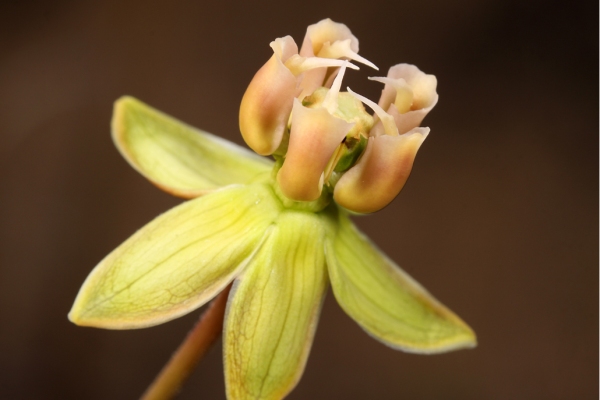
Milkweeds of the genus Asclepias are among my favorite plants, although I’m not fully sure why that is the case. Sure, their blooms are conspicuous and colorful, but so are those of many other plants. Perhaps one reason is their status as hosts for milkweed beetles (genus Tetraopes, family Cerambycidae). Four species of these beetles occur in Missouri, including the rare T. texanus. Another reason might be their diversity—in Missouri alone there are 16 different species, ranging from the ubiquitous common milkweed (A. syriaca) to the federally endangered Mead’s milkweed (A. meadii). The latter is one of six milkweed species occurring in Missouri that I have not yet seen, so I suppose I should withhold judgement until I’ve succeeding in finding all 16 species. Nevertheless, I would have to say that clasping milkweed (A. amplexicaulis) has to be my favorite of Missouri’s milkweeds.

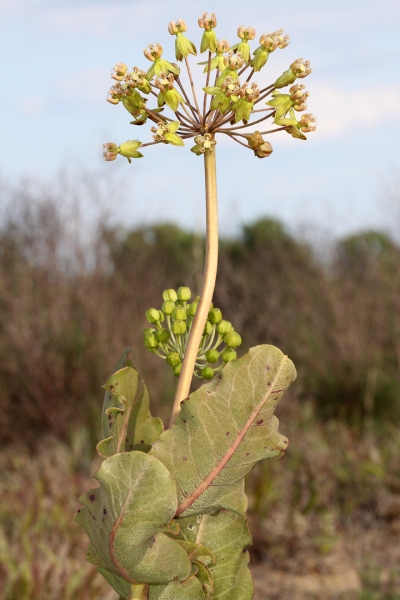
Clasping milkweed (Asclepias amplexicaulis) | Sand Prairie Conservation Area, Scott Co., Missouri

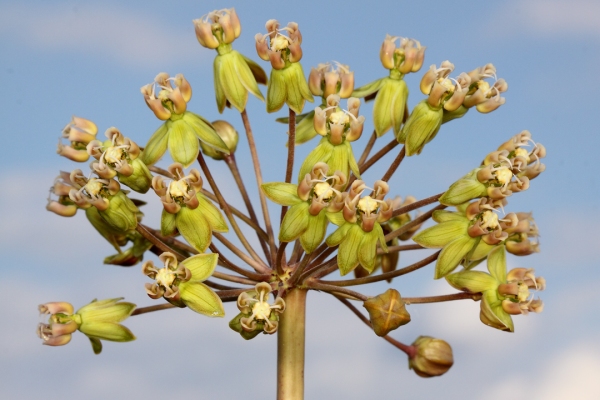
Clasping milkweed (Asclepias amplexicaulis) | Sand Prairie Conservation Area, Scott Co., Missouri

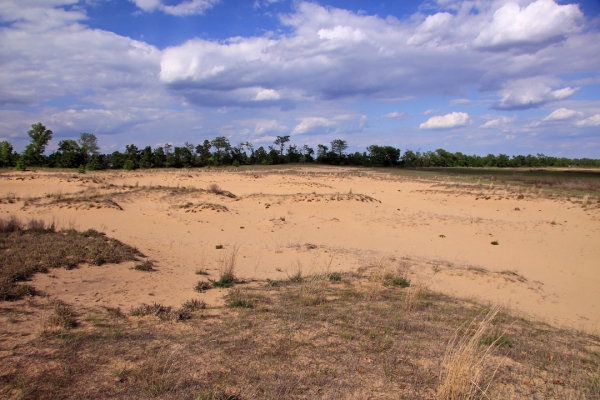
Clasping milkweed (also known as sand milkweed—not to be confused with A. arenaria occurring further west in the Great Plains) is said to occur sporadically throughout Missouri in prairies, glades, rocky open woods, roadsides, and railroads. However, I have seen this species only a few times—all in dry sand habitats in the southeastern Mississippi Alluvial Plain (or, the “bootheel” as we say here in Missouruh). Until a few  years ago the only time I had ever seen this plant was many years in an eroded sandy opening on Crowley’s Ridge (an elevated ridge of alluvium and loess deposited during the last glacial maximum). Those plants were not in flower, but their was no mistaking their identity due to their erect stems and broad, cordate-clasping, tomentulose leaves with wavy margins. I would see this plant again a few years ago during my first visit to Sand Prairie Conservation Area, and although I would see it again on many subsequent visits, at no time did I succeed in seeing the blooms.

This species is characterized by broad, clasping, tomentulose leaves with wavy margins.

Broad, clasping, tomentulose leaves with wavy margins.

Finally, last year, I returned to Sand Prairie during late April (a weather-delayed installment of my Annual-Birthday-First-Bug-Collecting-Trip-of-the-Year). I had actually gone there to photograph Missouri’s unique intergrade population of the Festive Tiger Beetle (Cicindela scutellaris), but the weather was cool and the beetles apparently had decided to remain in their burrows. A bad day of collecting, however, is still better than a good day of just about anything else—perhaps because there are almost always consolation prizes, and my consolation prize on this day was my first sight of clasping milkweed plants in full bloom.

A single inflorescence atops each stem.

A single inflorescence atops each stem.

I may not be exactly sure why I like milkweeds so much, but I think I now know why I like clasping milkweed above all others. The softly colored green and pink blossoms are exquisite, to be sure, but more importantly the species is firmly linked in my mind to one of my favorite Missouri habitats. I imagine that clasping milkweed might be an attractive, if somewhat gangly, addition to a native wildflower garden. However, I’m not sure I would enjoy cultivated plants in my garden as much as I do seeing wild plants in one of Missouri’s rarest and most endangered natural communities.

Sand Prairie Conservation Area, Scott Co., Missouri

Sand Prairie Conservation Area, Scott Co., Missouri

Copyright © Ted C. MacRae 2013

Fun at Salinas Grandes

IMG_2507_enh_1080x726
My colleagues and I greatly enjoyed our visit to the Salinas Grandes salt flats in Catamarca Province, but there was a moment of tension between Federico and Agustín. You see, Federico is only 12″ tall, so we have to keep a close eye on him to make sure he doesn’t get himself into any trouble. Apparently he had wandered off too far for Agustín’s comfort, leading to a bit of a scolding. Despite his small size, however, Federico took it all in stride and stayed close for the remainder of our visit.

Copyright © Ted C. MacRae 2013

Greetings from Argentina

Perhaps some have noticed that things have been relatively quiet of late here at Beetles in the Bush. I have been hard at work in South America for the past couple of weeks, first in Brazil and now in Argentina. Posting should return to normal when I return to the U.S. next week; however, in the meantime I thought it might be a good idea to show just how hard I have been working:

Salinas Grandes, Provincia de Catamarca, Argentina

Salinas Grandes, Provincia de Catamarca, Argentina

Copyright © Ted C. MacRae 2013

Backyard gems

I’ve been fortunate to have the chance to travel far and wide in my searches for insects—from the Gypsum Hills of the Great Plains and Sky Islands of the desert southwest to the subtropical riparian woodlands of the Lower Rio Grande Valley, tropical thorn forests of southern Mexico and veld of southern Africa. No matter how far I travel, however, I’m always happy to return to the Missouri Ozarks. It is here where I cut my entomological teeth so many years ago, and though I’ve now scrabbled around these ancient hills for more than three decades it continues to satisfy my thirst for natural history. Though not nearly as expansive as the Great Plains, there are nevertheless innumerable nooks and crannies nestled in the Ozarks, and I find myself constantly torn between looking for new spots (it would take several lifetimes to find them all) and going back to old favorites. Living in the northeastern “foothills” in the outskirts of St. Louis provides an ideal vantage for exploration; however, sometimes I am truly amazed at the natural history gems that can be found within a stone’s throw from my house. Some examples I’ve featured previously include Shaw Nature Reserve, home to a hotspot of the one-spotted tiger beetle, Castlewood State Park, where I found a gorgeously reddish population of the eastern big sand tiger beetle, and Victoria Glades Natural Area, site of the very first new species (and perhaps also the most beautiful) that I ever collected.

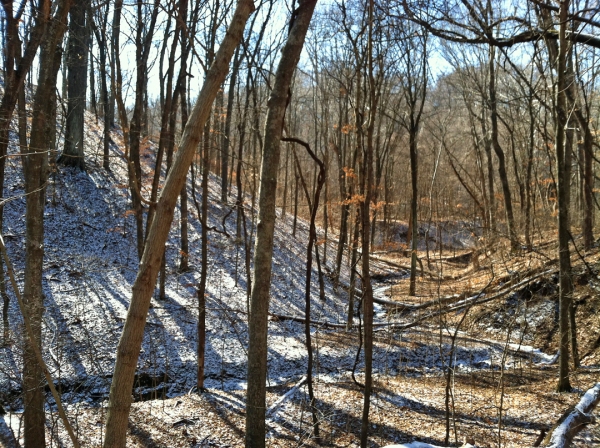
Englemann Woods Natural Area | Franklin Co., Missouri

Today I found another such area—Englemann Woods Natural Area, and at only 5 miles from my doorstep it is the closest natural gem that I have yet encountered. One of the last old-growth forests in the state, its deep loess deposits on dolomite bedrock overlooking the Missouri River valley support rich, mesic forests on the moister north and east facing slopes and dry-mesic forests on the drier west-facing slopes dissected by rich, wet-mesic forests with their hundreds-of-years-old trees. A remarkable forest of white oak, ash, basswood and maple in an area dominated by monotonous second-growth oak/hickory forests.

Englemann Woods Natural Area

Steep north-facing slopes border the Missouri River valley.

It is not, however, the 200-year-old trees that will bring me back to this spot, but rather the understory on the north and east-facing slopes. Here occur some of the richest stands of eastern hornbean (Ostrya virginiana) that I have ever seen. This diminutive forest understory inhabitant is not particularly rare in Missouri, but as it prefers rather moist upland situations it is not commonly encountered in the dry-mesic forests that dominate much of the Ozarks. Stands of this tree, a member of the birch family (Betulaceae) are easy to spot in winter due to their habit of holding onto their dried canopy of tawny-brown leaves (see photo below).

Englemann Woods Natural Area

Rich stands of eastern hornbeam (Ostrya virginiana) dominate the north- and east-slope understory.

Why am I so interested in this plant? It is the primary host of the jewel beetle species Agrilus champlaini. Unlike most other members of the genus, this species breeds in living trees rather than dead wood, their larvae creating characteristic swellings (galls, if you will) on the twigs and stems as they spiral around under the bark feeding on the cambium tissues before entering the wood to pupate and emerge as adults in spring. This species is known in Missouri from just two specimens, both collected by me way back in the 1980s as they emerged from galls that I had collected during the winter at two locations much further away from St. Louis. The presence of this rich stand of hornbeam just 5 miles from my home gives me the opportunity to not only search the area more thoroughly to look for the presence of galls from which I might rear additional specimens, but also to look for adults on their hosts during spring and (possibly, hopefully) succeed in photographing them alive.

Englemann Woods Natural Area

Inside the “hornbeam forest.”

Another “draw” for me is the restoration work that has begun on some of the west-facing slopes in the areas. Pre-settlement Missouri was a far less wooded place than it is today, as evidenced by the richly descriptive writings penned by Henry Schoolcraft during his horseback journey through the Ozarks in the early 1800’s. At the interface between the great deciduous forests to the east and the expansive grasslands to the west, the forests of Missouri were historically a shifting mosaic of savanna and woodland mediated by fire. Relatively drier west-facing slopes were more prone to the occurrence of these fires, resulting in open woodlands with more diverse herbaceous and shrub layers. At the far extreme these habitats are most properly called “xeric dolomite/limestone prairie” but nearly universally referred to by Missourians as “glades”—islands of prairie in a sea of forest! I have sampled glades extensively in Missouri over the years, and they are perhaps my favorite of all Missouri habitats. However, it is not future glades or savannas that have me excited about Englemann Woods but rather the availability of freshly dead wood for jewel beetles and longhorned beetles resulting from the selective logging that has taken place as a first step towards restoration of such habitats on these west-slopes. The downed trees on these slopes and subsequent mortality of some still standing trees that is likely to result from the sudden exposure of their shade adapted trunks to full sun are likely to serve as a sink for these beetles for several years to come. I will want to use all the tools at my disposal for sampling them while I have this opportunity—beating, attraction to ultraviolet lights, and fermenting bait traps being the primary ones. It looks like I’d better stock up on molasses and cheap beer!

Englemann Woods Natural Area

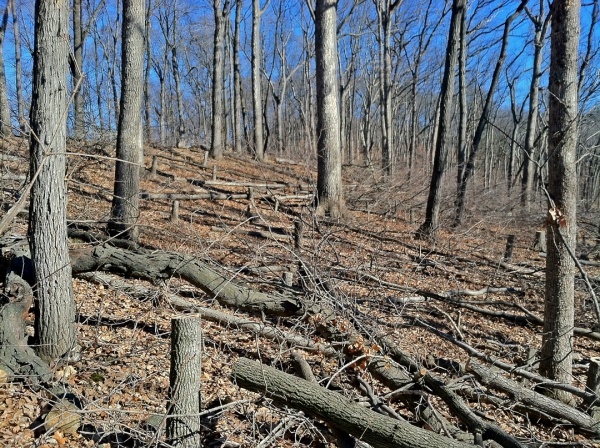
Restoration efforts on the west-facing slopes begins with selective logging.

Eastern red-cedar (Juniperus virginiana) is native to Missouri, but in our time it has become a major, invasive pest tree. The suppression of fire that came with settlement also freed this tree from a major constraining influence on its establishment in various habitats around the state, primarily dolomite/limestone glades. Nowadays most former glade habitats, unless actively managed to prevent it, have become choked with stands of this tree, resulting in shading out of the sun-loving plants that historically occurred much more commonly in the state. Untold dollars are spent each year by landscape managers on mechanical removal and controlled burns to remove red-cedar and prevent its reestablishment in these habitats. There is one habitat in Missouri, however, in which eastern red-cedar has reigned supreme for centuries or possibly millenia—dolomite/limestone bluff faces.

Juniperus virginiana

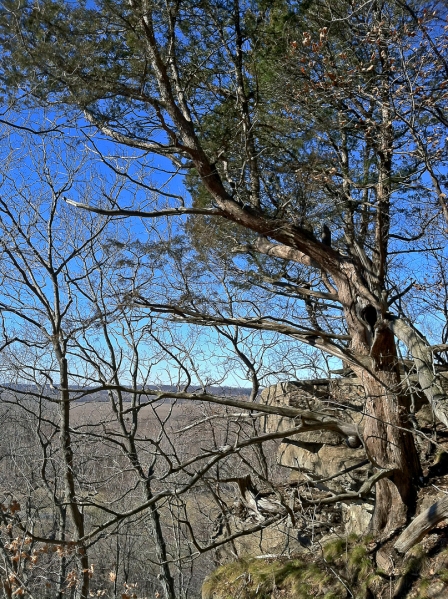
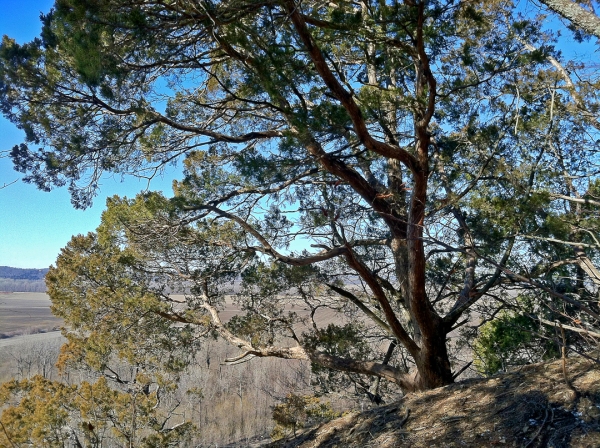
Craggly, old Eastern red-cedars (Juniperus virginiana) cling tenaciously to the towering dolomite bluffs.

With little more than a crack in the rock to serve as a toehold, red-cedars thrive where no other tree can, growing slowly, their gnarled trunks contorted and branches twisted by exposure to sun and wind and chronic lack of moisture. Some of the oldest trees in Missouri are red-cedars living on bluffs, with the oldest example reported coming from Missouri at an incredible 750–800 years old. There is something awe-inspiring about seeing a living organism that existed in my home state before there were roads and cars and guns. These ancient trees are now an easy drive from my house (though a rather strenuous 300-ft bushwhacking ascent to reach the bluff tops)—they seem ironically vulnerable now after having endured for so long against the forces of nature. For me, they will serve as a spiritual draw—a reason to return to this place again regardless of what success I might have at finding insects in the coming months.

Juniperus virginiana

This tree may pre-date Eurpoean settlement.

Aplectrum hyemale

Adam-and-Eve orchid (Aplectrum hyemale).

Copyright © Ted C. MacRae 2013

One Bad Beetle

Almost every tiger beetle trip that I take has a mix of gimmes and stretch goals. That’s alright—it’s impossible to find everything every time out, and if I eschewed the common and was happy only when I found something truly rare, then I would probably find myself rather unsatisfied most of the time. For the stretch goals, however, “success” can mean many things—obviously the best case scenario is to find it in good enough numbers to allow responsible collection of an adequate series and photograph enough individuals in situ to ensure that at least a few shots will have the focus, lighting, and composition that I want. Success can also be something less than that—maybe I find only a few and don’t get a very good series, or I have trouble getting field shots and am not happy with the shots I got…or worse I don’t even get field shots! The least successful version of “success” is when I end up with just one single beetle, and the only photographs I get are very ordinary-looking shots of that one beetle in confinement. Like what happened with Cicindela decemnotata (Badlands Tiger Beetle).

IMG_3717_1080x720

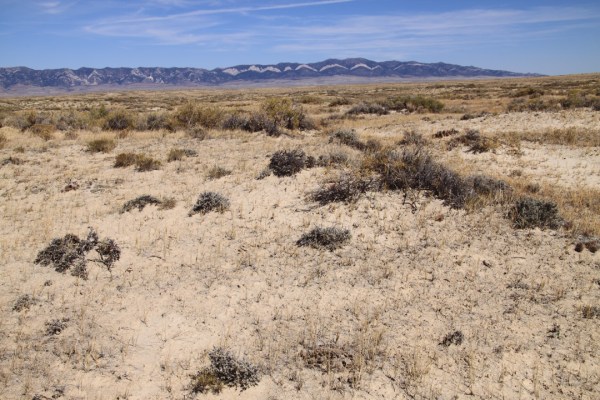
Soda Lake, Wyoming—we searched theses areas of alkaline exposures but never found beetles…

Chris Brown and I knew this species would be a stretch goal when we added “Soda Lake, Wyoming” to the itinerary of our 7th Annual Fall Tiger Beetle Trip™ (location “H” on this map). Cicindela decemnotata is the westernmost representative (Rocky Mountains from the northwestern Great Plains and northern Great Basin north to Yukon) of a group of species that seem to be closely related and resemble each other in their green coloration varying degrees of red on the head, pronotum and elytra and their variably developed white elytral markings (Pearson et al. 2006). Cicindela limbalis, C. splendida and C. denverensis occur as a partially allopatric species complex further east in the Great Plains, while C. sexguttata, C. patruela and C. denikei occupy more forested regions even further to the east. On this trip we were focusing on Great Plains tiger beetles and the dune specialists of the Yampa River Valley of northwestern Colorado. Our drive from northwestern Nebraska to the Yampa Valley would skirt the eastern edge of C. decemnotata‘s distribution, so we decided to stop by Soda Lake where Matt Brust had seen the species in previous years.
IMG_3721_1080x720

…until we started searching these small ridges of exposed sandy soil.

It took most of the morning to reach the spot, so by the time we arrived we were anxious to get out and start searching the sage brush habitat. For me it was an unfamiliar landscape—at that time my northwesternmost push for tiger beetles yet, and like many western habitats it seemed vast and unending. We were optimistic, however, because it just “looked” like good tiger beetle habitat, with ribbons of alkaline flats weaving through open brush. Of course, as time passes and one starts to recognize that they are again searching ground already covered with no sign of beetles, optimism begins to wane and searches become more deliberate. We were there for almost an hour before I heard Chris call out. He had abandoned the alkaline flats—obvious habitat it would seem—and started looking upon some slightly sandier low ridges a little further to the south. I hustled to where he was standing, and we both looked at the beetle, calmly sitting on the sand, as we deliberated our next move. Should we try to photograph it? It seemed not at all skittish—but what if we failed, it got away, and then we never saw another one? We played it safe, netted it (easily), and placed it in a vial for transfer to a container of native soil should further efforts at finding and photographing the species fail. It was perhaps another 45 minutes before we saw another beetle—I don’t know if it was just a less cooperative individual or the heat of the day had kicked in, but as soon as I started my approach it was gone. We saw another not long after, but same story. Finally we saw one last beetle that seemed to tolerate my approach to the point that I even began looking for it in the view finder—at which point it promptly zipped away. This small prospect of success only served to prolong our vain searching before we eventually we accepted defeat and tried to be happy with the single individual that we had caught and the photographs that we would take of it in its artificial home.

Cicindela decemnotata

Cicindela decemnotata (Badlands Tiger Beetle) | Soda Lake, Wyoming

Part of me really doesn’t like showing photographs of confined tiger beetles—not for any philosophical reasons, but because I just don’t like the way they look. Rarely do they exhibit the elegant stilting and other thermoregulatory behaviors that place them in much more pleasing postures when photographed in situ. Rather, they often have a “hunkered down” look that says “I’m not happy and I don’t want to be here, so I’m not going to smile for the camera!” Since these photos were taken, I have learned a few tricks to deal with confined beetles and achieve more aesthetically pleasing photographs—these include the use of much larger arenas, allowing the beetles more time to accommodate to their environs, and elevating the substrate relative to the camera (maybe a subject for a future post). In the end, however, they are still confined and can’t be passed off as anything but that.

The bold white markings, media band sharply angled and not reaching the edge of the elytra, and ''greasy'' appearance distinguish this species.

The bold white markings, media band sharply angled and not reaching the edge of the elytra, and ”greasy” appearance distinguish this species.

As an aside, tiger beetle pros Barry Knisley, Ryan Woodcock and Mike Kippenhan have recently published the results of an impressive study of this species in which a combination of morphological and molecular evidence support the recognition of four subspecific entities—three described as new (Knisley et al. 2012). The molecular analyses not only support the subspecific distinctions postulated from morphology but also suggest that populations have undergone rapid phylogenetic radiation in the recent geological past. Much of the area occupied by C. decemnotata was covered by an ice shield during the most recent glaciations and, thus, has opened up for colonization only during the past 10,000 years (Pearson and Vogler 2001). The molecular analyses showed a relatively low amount of genetic divergence within C. decemnotata populations, which combined with marked morphological differences suggests recent and rapid radiation—most likely in the wake of glacial recession. A similar situation has been observed with members of the Cicindela maritima species-group, which occupy much the same range as C. decemnotata and, presumably, have experienced similar selection pressures in the recent geological past.

REFERENCES:

Knisley, C. B., M. R. Woodcock & M. G. Kippenhan. 2012. A morphological and mtDNA analysis of the badlands tiger beetle, Cicindela (s. str.) decemnotata Say, 1817 (Coleoptera: Carabidae: Cicindelinae) with the description of three new subspecies. Insecta Mundi 0214:1–49.

Pearson, D. L., C. B. Knisley & C. J. Kazilek. 2006. A Field Guide to the Tiger Beetles of the United States and Canada. Oxford University Press, New York, 227 pp.

Pearson, D. L. and A. P. Vogler.  2001. Tiger Beetles: The Evolution, Ecology, and Diversity of the Cicindelids.  Cornell University Press, Ithaca, New York, 333 pp.

Copyright © Ted C. MacRae  2012
Another autumn oedipodine

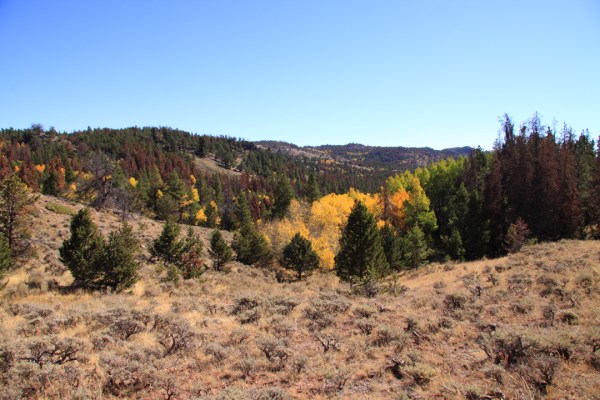
Shortgrass/sage brushland habitat in Medicine Bow Natl. Forest, Wyoming

In September 2010, Chris Brown and I explored shortgrass/sage brushland habitat atop the Laramie Mountains in southeastern Wyoming’s Medicine Bow National Forest (location “J” on this map). We were entering the final days of our 7th Annual Fall Tiger Beetle Trip™ and, to that point, had found every tiger beetle species we had set out to look for. This day, however, was the official “skunk” day of the trip, for although we did see one Cicindela limbalis (Common Claybank Tiger Beetle)—collected live to become the subject of one of the crappiest tiger beetle photos I’ve ever taken—we did not see the tiger beetle that we were there to see; Cicindela longilabris (Boreal Long-lipped Tiger Beetle). Of course, I rarely have trouble finding consolation on a skunk day, and during fall this is even easier—the deep blue sky, crisp fall air, and vivid colors of a morphing landscape are enough to make even a bad day of insect collecting better than a good day of just about anything else. And then there are the band-winged grasshoppers (family Acrididae, subfamily Oedipodinae)!  When there are no tiger beetles to be had, there are almost always members of this group around, and other than tiger beetles I don’t think there is another group of insects that I enjoy photographing more.

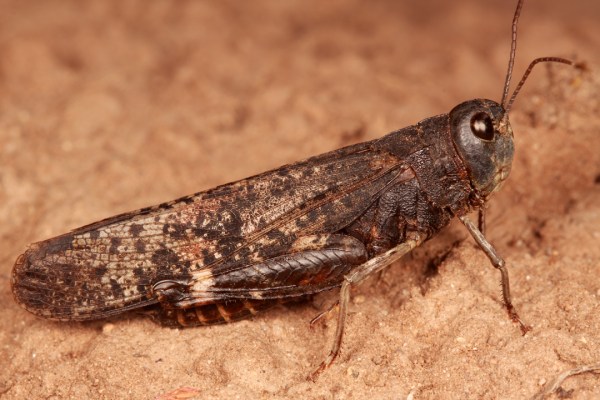
Arphia pseudonietana (red-winged grasshopper) | Medicine Bow Natl. Forest, Wyoming

As we walked the trails not finding tiger beetles, I noticed these very dark grasshoppers every once in a while. They flew with a particularly noisy crackling sound that exposed bright red hind wings before dropping to the ground and instantaneously becoming almost completely invisible. Once I accepted that tiger beetle photography just wasn’t gonna happen that day, I began paying attention to these grasshoppers and, after working a few individuals, finally found one who was willing to let me get close enough for some photos. I’m not terribly fond of this first photo—the perspective is still too high as I had not yet learned by that time to get down flat on my belly for photographing anything on the ground (remember, this was two years ago). Nevertheless, it is the only one that I have that shows the entire body of the grasshopper. Since this location isn’t too far west of the Nebraska border, I figured an identification should be possible using the Nebraska grasshopper guide (Brust et al. 2008)—based on that work and subsequent examination of photos at BugGuide, I surmise this individual represents Arphia pseudonietana (red-winged grasshopper). There are other species of Arphia in Nebraska, some of which are easily confused with A. pseudonietana; however, most of these are more common further east. The only other species in the genus that occurs west into Wyoming is A. conspersa (speckle-winged grasshopper), and although it is similar in appearance and may have red hind wings (though more commonly orange to yellowish), adults are most common during spring and early summer. Arphia pseudonietana adults, on the other hand, are most active during mid-summer through fall.

The pronotum bears a single notch just in front of the middle.

Grasshoppers, particularly in the western states, tend to be loathed by ranchers who see them as competitors with cattle for meager forage resources, especially in dry years. This species does feed preferentially on a variety of grasses such as western wheatgrass (Pascopyrum smithii), buffalograss (Buchloe dactyloides) and blue grama (Bouteloua gracilis); however, it doesn’t seem to occur at economically important levels except in association with other, more numerous grasshopper species. I’m glad to know this, because for some reason I just don’t want anybody regarding band-winged grasshoppers of any kind as a pest. Other grasshoppers, fine—just not my beloved bandwings!

I presume this 5th instar nymph also represents A. pseudonietana

Later in the day I came across this presumed 5th-instar grasshopper nymph, and although it was quite skittish I eventually managed to get this single photograph before it resumed its frenetic hopping and I gave up in frustration. This is one of the better “one-shots” that I’ve managed to take—my only criticism being that the focus was just a tad too deep to catch the front metafemoral face. I really didn’t have much time to setup for this shot—once I got the critter reasonably in-frame I fired! Anyway, I’m inclined to think this also represents A. pseudonietana, although I’m less confident in that ID than I am for the adult as I wasn’t able to find a real good comparative photograph. Nymphs of A. pseudonietana are apparently most common from mid-spring to mid summer, so the seasonality is a bit off. I would be grateful to any acridophile who stumbles across this post and can provide an ID confirmation or correction (for either the nymph or the adult). Until then, I leave you with a shot that shows why I love fall regardless of whether I’m finding insects!

Quaking aspen glows under the late September sun.

REFERENCE:

Brust, M. L., W. W. Hoback and R. J. Wright.  2008. The Grasshoppers (Orthoptera: Acrididae and Romaleidae) of Nebraska.  University of Nebraksa-Lincoln Extension, 138 pp.

Copyright © Ted C. MacRae 2012

Araneus marmoreus encore

Araneus marmoreus adult female—ventral view showing epigyne.

Here is the full-sized photo from which the crop shown in Super Crop Challenge #14 was taken. The small finger-like structure in the upper right of the photo—the object of the challenge—is the epigyne (or epigynum) of Araneus marmoreus (marbled orb weaver spider). Spiders have a rather unusual mating strategy—rather than possessing genitalia that couple for insemination, male spiders first form a packet of sperm (spermatophore) and transfer the packet to an enlarged segment (tarsus) at the end of their pedipalps. During mating, the male inserts the tarsus into the female genital opening, thereby effecting sperm transfer. The female genital opening and associated structures, located on the underside near the front of the abdomen, are called the epigyne and function to direct the male pedipalps during sperm transfer. The shape of the epigyne varies greatly and uniquely among species—probably serving as an isolating mechanism that prevents interspecific mating and also providing a good diagnostic character for species recognition among even very closely related species (similarly to the hardened male genitalia of many insect groups). An even closer view of the epigyne of A. marmoreus can be seen in this BugGuide photo.

Araneus marmoreus (marbled orb weaver) | Washington Co., Missouri

This is actually the second time I’ve featured A. marmoreus in a quiz—the intricate pattern of the dorsal abdomen being the subject of Super Crop Challenge #2. Folks had an easier time identifying the critter in that challenge than this one, which I guess is not surprising since people tend to know animals more by their color patterns than the structures of their genitalic openings. As in that first challenge, I encountered this adult female during a hike along the Ozark Trail, this time in Washington County in east-central Missouri. Unlike before, however, I found this spider crawling on a fallen log in the dark forest floor rather than resting in her web. The colors of this species are diverse and spectacular—a recipe that makes them almost irresistible to insect macrophotographers. That this is true is demonstrated by the 360! photos of this species posted to BugGuide.

Hot orange and yellows glow against the dark, moist wood of a fallen tree trunk.

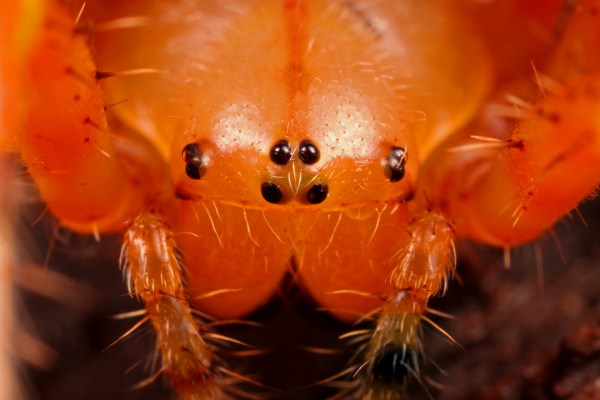
While my previous photos of this species were colorful, these simply glow due to the more orange coloration of this individual and its contrast with the darkened color of the moist wood. It’s a November color scheme if there ever was one—appropriate since I took them exactly one year ago today on November 23, 2011. She was a lot more cooperative than the first subject, and because of this and the stable substrate on which she was sitting I was able to get my favorite shot of all—the face portrait! Not quite as endearing as a jumping spider face (with its large, anthropomorphic median eyes), but striking nevertheless.

The obligatory BitB face shot!

A word about the challenges—I’m not sure if the lack of response to this one is an indication of difficulty or further evidence of declining relevance of blogs as an interactive social medium. I can’t help but notice that blog commenting in general has dropped with the rise of more functionally interactive media such as Twitter and Google+. What do you think—was this challenge too hard, or has the concept of challenge posts lost its appeal?

Copyright © Ted C. MacRae 2012