Vinerunt, futuerunt, ierunt

Very rough translation: They loved us, then left us. (the cicadas, that is.)¹ 

¹ Guest blogger’s subtext — Maybe if I dazzle the readers with a title in the colorful language of Pompeiian graffiti, they’ll forgive me for not posting pictures as beautiful as Ted’s. Well, anyway…

On this year’s US Independence Day, we in the St. Louis area were able to proclaim our freedom from the 5-week-long din of cicadas, or so the TV “news” reporters would have us believe. For me, it was more of a return to the dominance of human-made noise; the faint drone of a distant highway, the monotone roar of a neighbor’s lawn mower, the repetitively plosive engine of one of the many diesel pickups that float by, with the CD player’s bass thumping at an almost certainly hearing-damaging decibel level.

Magicicada burrows

I started my celebration early in the day, by doing some gardening and rearranging in the yard. Moving a pile of concrete paving stones, I reached the bottom one and lifted it, and was greeted with a view of abandoned nymphal emergence burrows made by just a few of the many thousands of periodical cicadas that graced my yard with their presence this year. The burrows were already showing wear at the edges in their disuse. A little later later in the morning, I heard the whoooooooa-ooh of a last, lone Magicicada tredecim male from the hackberry tree—first one call, then another, then no more. But nature’s course proceeds, and as afternoon drifted into evening, I was pleased to hear the first of the dogday, or annual, cicadas of the genus Tibicen. These are not truly annual; They emerge every year, but actually take several years—4 or 5, it is said—to develop from egg to adult. 

The four Magicicada species that can be found in the St. Louis area, near the western edge of Periodical Cicada Brood XIX (a.k.a. the Great Southern Brood), are famous for their intermittent emergence as adults, every 13 years. (Life spans of 17 years occur in three, more northern species that do not occur in the St. Louis area). In fact, during years to either side of the two emergences of Brood XIX that I’ve experienced since moving to this area 24 years ago, I have always heard, and if really lucky, seen a few, one or two years before and after the “scheduled” emergence. But, the vast majority stick to the plan of feeding on the xylem sap of tree roots as subterranean, tan-colored nymphs for 13 seasons before coming out of the ground, then molting to the ever-so-buggy-looking, winged, black insects with red eyes and wing veins, that “freak everyone out” during their mass emergences. 

The mass emergence is all about reproduction, the successful transmission of genes to the next generation—you know, Darwinian fitness. When a female happens to “like” the song of a particular male, she flies to him, then is courted a for a bit with a different song, before “succumbing to his charms”. Mating typically takes place up in trees. But, being amoral creatures of little brain or scruples, they may choose indelicately to copulate on a porch rail or other such public place. 

Magicicada mating
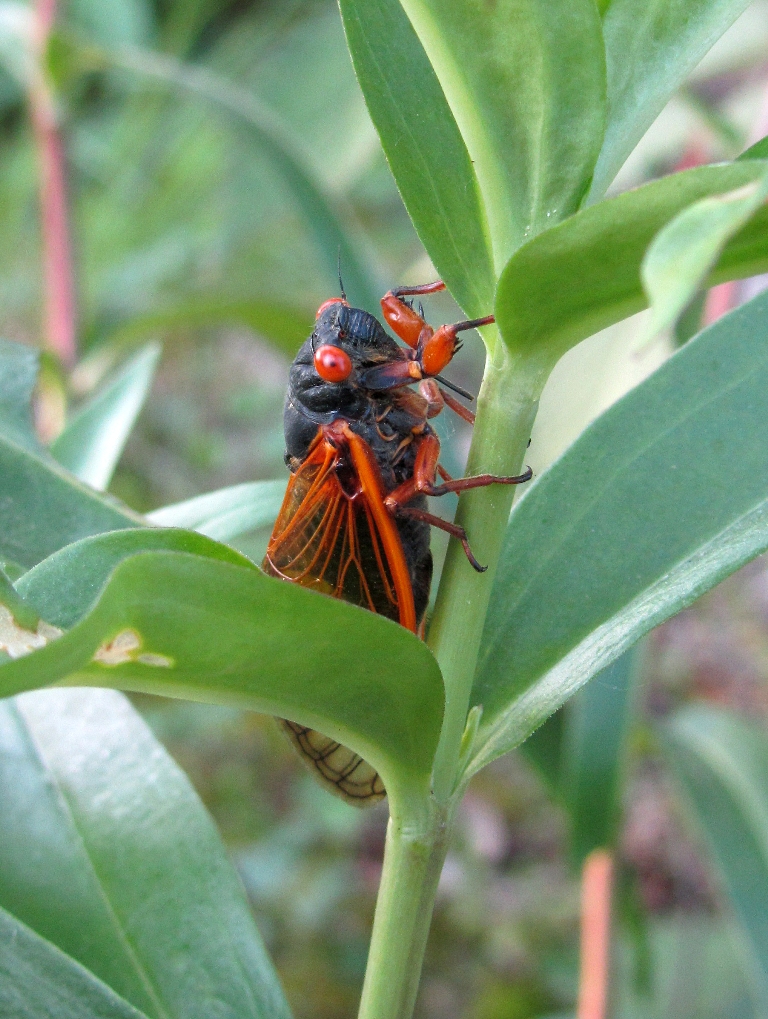
Magicicada sipping Gentiana andrewsii

Consumed with sex, the adults don’t eat much, but occasionally one sees a cicada poking its proboscis into some soft plant tissue for a drink of sap (clearly exhibiting the relationship of these large insects to those smaller sap-feeders, the aphids and such). A little sap-drinking does little damage to plants, but the insertion of eggs by the mated females into small twigs of woody plants can do quite a bit of “natural pruning”. This would be more of a concern if it happened every year, I suppose, but it really also does little damage in the long run, especially on a mature tree. Still, I would have appreciated it they hadn’t found my recently planted black gum tree such an attractive oviposition site. 

Magicicada damage on Acer saccharum

Magicicada meets Nyssa sapling

But I don’t begrudge them this. I miss their mass serenade. I treasure the remembered sight of a corpulent hairy woodpecker muddying itself to pull one nymph after another from rain saturated ground. I delighted in seeing a surprisingly chubby chipmunk perched fearlessly on an exposed root as it munched a cicada whose wings never properly expanded. Perhaps best of all was watching a red-shouldered hawk clumsily hop about on the lawn to snarf up cicadas that weakly fluttered to the ground. But now, the periodical cicadas are, till May of 2024, mere shells of their former selves. 

To end on a pretty note, here’s a gaudy cicada that was attracted to lights of the scientific station’s laboratory building in Yasuní National Park, Ecuador, and obligingly posed for a photo on the windowsill.
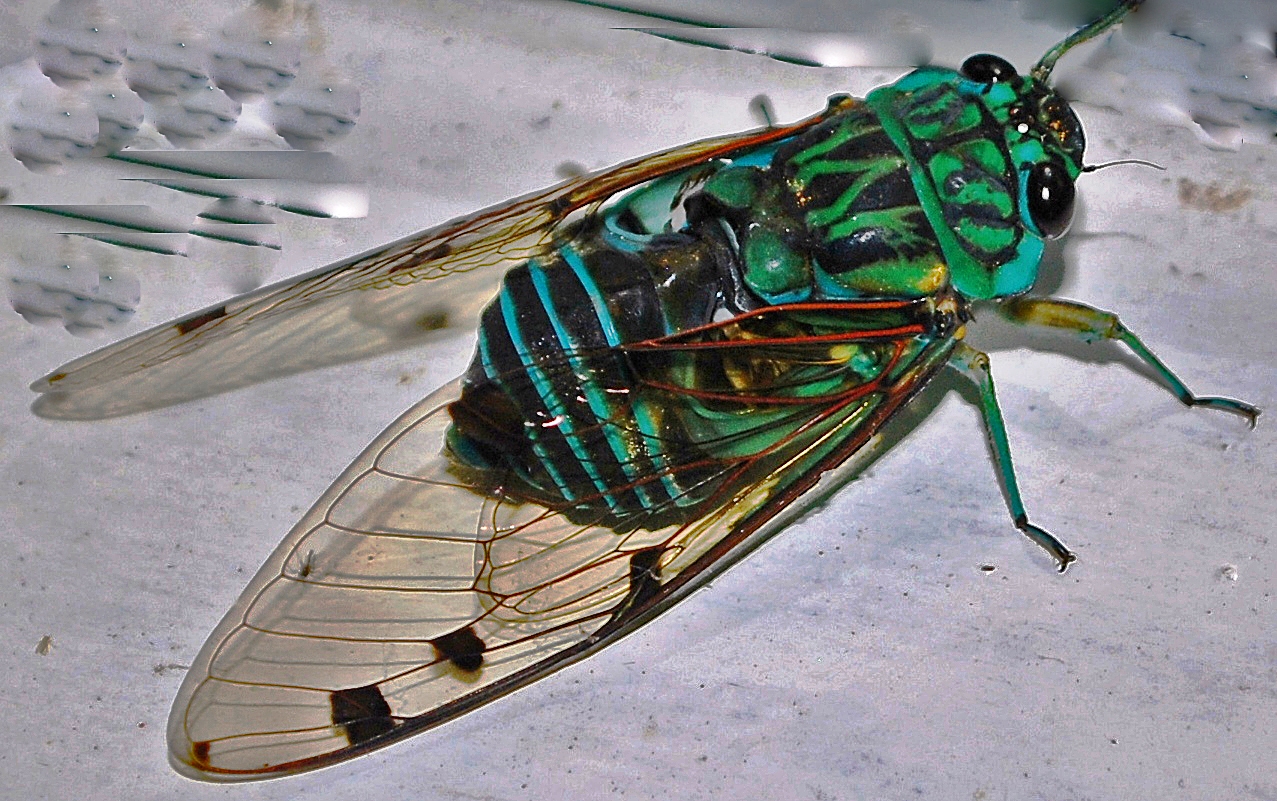
Ecuadorian cicada

Copyright © James Trager 2011

A “Giant” Pygmy

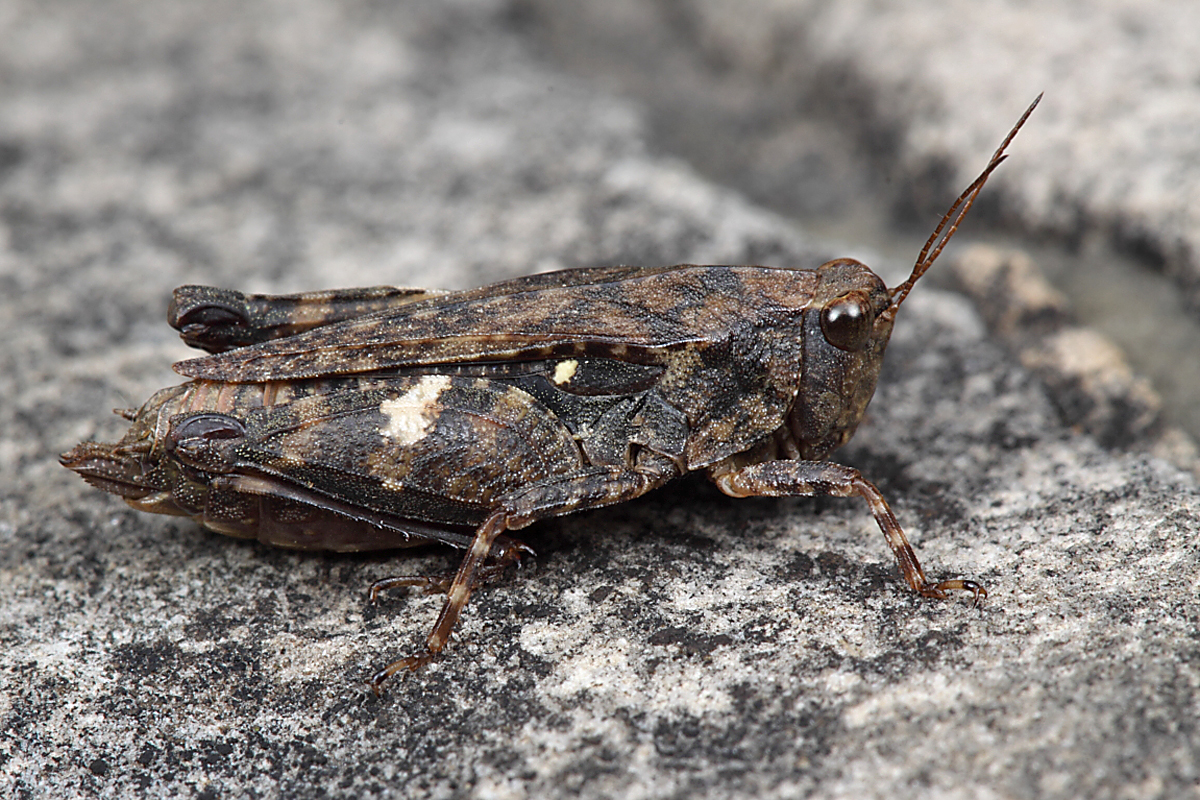
Not long ago, I got an email from grasshopper expert David J. Ferguson confirming my identification of  (and also encouraging my recent fascination with band-winged grasshoppers (family Acrididae, subfamily Oedepodinae) and their marvelously cryptic nymphs).  He suggested that I might also find the “toad lubbers” (family Romaleidae) and pygmy grasshoppers (family Tetrigidae) interesting, since they too have many of those qualities I was finding attractive in band-winged nymphs, only on a very small scale.  It was a prescient comment, as I’d already started taking notice of the pygmies and even photographed one before ever getting his email.

Tettigidea lateralis | Shaw Nature Reserve, Missouri.

I take this individual to represent Tettigidea lateralis (black-sided pygmy grasshopper), which I saw at Shaw Nature Reserve during my May search for .  Actually, I’m not sure I would have even noticed this individual, as I walked along the trail going from open woodland through dry dolomite glade, had it not actually been sitting on my net rim.  I haven’t studied pygmies all that much, other than to note that they seem common around streams and other wet areas and are usually quite small.  This one, however, at close to 15mm in length seemed positively gigantic!  I placed it on the barren dolomite along the trail, expecting it to flee immediately.  Instead it just sat there—begging me to photograph it, so I did.

Bold, white femoral markings contrast nicely with its otherwise marvelously cryptic coloration.

This one appears to be a female with a short pronotum, but I can’t tell if it is an adult with short wings or still a nymph (it was certainly large enough to be an adult!).  Either way, I’m interested in the function of the bright white femoral marking on what is otherwise a very cryptically colored individual.

Copyright © Ted C. MacRae 2011

My Dad (reprise)

I first wrote this post on Father’s Day 2008. It didn’t appear on Beetles in the Bush, but rather my other blog, the now largely defunct Bikes Bugs and Bones.  My dad is my hero, my confidant, and my best friend.  It’s hard watching him age, but it would be even harder not to.  I repost on this day in his honor and urge everyone to honor their own father is some small way.  Happy Father’s Day!

Me and my dad | Pickle Springs Natural Area, St. Genevieve Co., Missouri, Dec. 2007

My dad had knee replacement surgery a couple days ago. The surgery went off without a hitch, and he’s doing very well. All signs are that he will bounce back quickly and suffer few, if any, complications. I’ve spent much of the past three days here at the hospital—sometimes providing support and encouragement, other times just keeping him company. He should be released tomorrow, and I’ll spend the rest of the week with him at his house—hopefully he’ll be able to get around okay by then.

Some thirty years ago, my dad got an infection that settled in his left hip. By the time doctors found it and figured out what was going on, his left hip socket had degenerated badly, and the only medical option after cleaning up the infection was a year in a full body cast that resulted in fusion of the socket with the femoral head. This left him with a left leg two inches shorter than his right, a bad limp, and a lifetime of pain medications. His right leg became his ‘good leg’ and his left became the ‘bad.’ Decades of walking with a cane and favoring his bad leg put a lot of pressure on his good leg, and at age 73 his right leg had had enough. Now, his good leg is his bad leg, and his bad leg is, well, still his bad leg. This will add a wrinkle to his recovery, since he won’t have a healthy leg to carry the load while his good leg recovers. But I will be there to help, if needed, and in a few weeks his good leg should be good as new.

My dad is not only my dad, but also my best friend. We have a relationship that is based on mutual love and respect, and I don’t know which of us appreciates more what we have with each other. It wasn’t always this way—my dad and I were estranged for 25 years starting when I was 10 years old. My parents married far too young, and each had their own issues—they were but children themselves. Having first me, then my brother and sister, only delayed but could not prevent the inevitable break up that resulted in my fathers absence. I paid a heavy price by not having a father during those crucial, formative years as I finished growing up, but I seem to have turned out okay regardless. It would take many years before I would be ready for something so bold as reconciliation, but maturity and the support of a loving wife eventually made it possible. There were difficult questions to answer, but through it I realized that my father had paid a heavy price as well. Not the selfish irresponsible man I had been taught about, instead I saw a sensitive, deeply introspective man who had lived a life of hard knocks, suffered the consequences, learned from his mistakes and turned his life around.

My dad loves to ride bikes. I do too, but I did not learn the love of cycling from him. My dad is simple yet elegant, with an understated class that people adore. I, too, try to show respect and modesty, but I did not learn these things from my father. We both love classical music (he can live without the metal), listen to NPR, and enjoy humor with more than a touch of irreverence—tastes acquired by each of us before we knew each other. What I have learned from my father during these past 15 years is why I am me—a gift I didn’t know I lacked. I don’t mourn the loss of those 25 years spent without my father, rather I rejoice at the very special relationship that we now have—perhaps possible only because of our separate pasts. My father describes that year in a body cast as the darkest period of his life. I did not know him then, so I could not be there to help him through it. While his recovery from knee replacement will not be near that ordeal, neither will it be easy. But I am here with him, and I know in my heart that whatever difficulties he faces during his recovery, he will look back on this as a small part of the best time of his life.

Copyright © Ted C. MacRae 2008

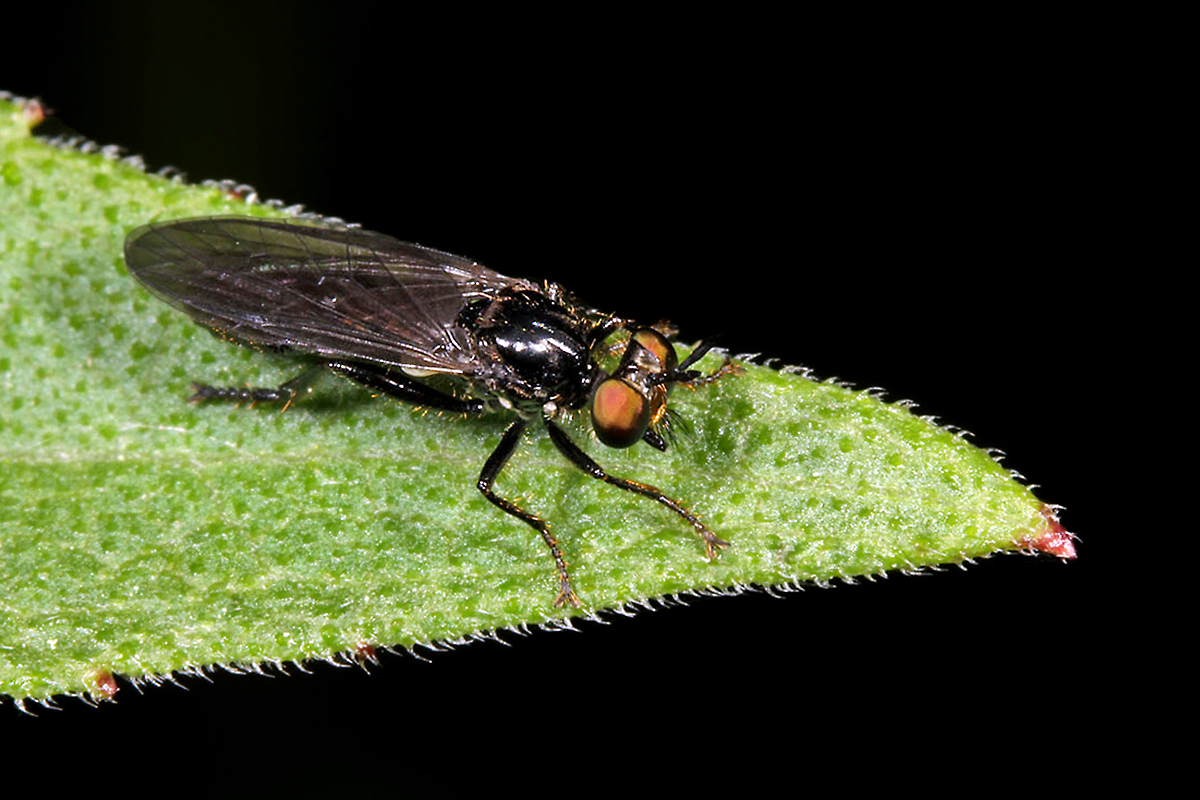
Forgotten Foto Friday: Eudioctria sp.

Eudioctria sp. | Shaw Nature Reserve, Gray Summit, Missouri

In keeping with my recent theme featuring insects from Shaw Nature Reserve, I present here a long-forgotten photograph that I took back in May 2009.  In fact, not only was this photo taken on the maiden voyage of my Canon dSLR setup, but it is the very first photograph of an insect that I took with the camera—image #19 (1-18 were the initial test shots and a few immediately discarded photos).  It won’t win any awards, but it’s not a bad photo, and the fact that I immediately began attempting shots with the lens dialed all the way up to 1:1 shows I had no qualms about going for broke.

As best I can tell, this is a member of the robber fly genus Eudioctria in the subfamily Stenopogoninae.  Species in this genus are among the tiniest of North American robber flies,  measuring only 6–8 mm in length (compare this with the spectacular 35–40 mm length of North America’s largest robber fly).  They superficially resemble species of the unrelated genus Cerotainia (subfamily Laphriinae) but lack the extra-long antennae. According to Norman Lavers (The Robber Flies of Crowley’s Ridge, Arkansas), Eudioctria can also be distinguished behaviorally, as it prefers flat leaves at the top of small shrubs, while Cerotainia tends to perch on twig-ends.  Eudioctria is primarily a western U.S. genus, although four of its 14 species (albius, brevis, propinqua, tibialis) occur in the eastern states (Adisoemarto and Wood 1975).  I can’t possibly determine which of those four species this individual represents, as to do so requires examination of facial gibbosities and judgements about the degree to which various body parts are pollinose(?)—perhaps I should stick with beetles!

REFERENCE:

Adisoemarto, S. and D. M. Wood.  1975.  The Nearctic species of Dioctria and six related genera (Diptera, Asilidae).  Questiones Entomologica 11:505–576.

Copyright © Ted C. MacRae 2011

A Missouri hotspot for Cylindera unipunctata

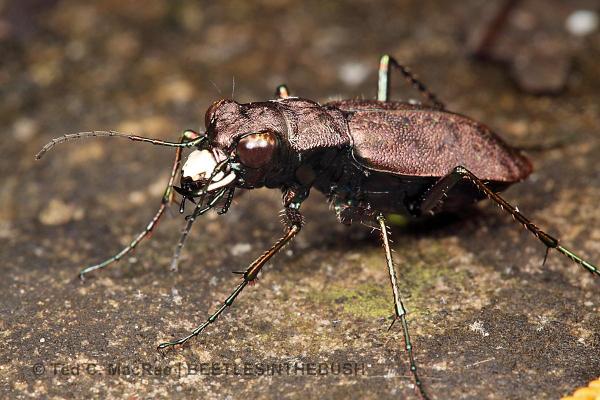
Cylindera unipunctata | Gray Summit, Franklin Co., Missouri

Cylindera unipunctata | Shaw Nature Reserve, Gray Summit, Franklin Co., Missouri

Long before I began studying tiger beetles in earnest, I became aware of one of Missouri’s more interesting species—Cylindera unipunctata (one-spotted tiger beetle).  One of my favorite woodboring beetle collecting spots back in the 1980s was Pinewoods Lake Recreation Area near Ellsinore in the southeastern Ozarks.  I had stumbled upon this spot in the beginning my beetle studies and spent countless days wandering the trails through the open forest that surrounded the relatively new lake and blacklighting in the campground at night.  I literally cut my entomological teeth at this spot.  While woodboring beetles were my quarry, I couldn’t resist the few brown, apparently flightless tiger beetles (in reality, they can fly but rarely do so) that I had seen clambering across the woodland trail in front of me during one of my first visits to the area.  That following winter, when I showed them to Ron Huber during a mutual visit at the home of long-time lepidopterist Richard Heitzman (and as far as I know, owner of the largest private insect collection in Missouri), I was pleased to see his palpable excitement at my find.  I kept an eye out for this species ever since, and while I have found them in a number of localities here in Missouri—all along the eastern edge of the Ozark Highlands south of St. Louis, I’ve never seen more than one or two, or maybe three at a time.  Even when returning to spots where I had seen them previously and looking for them specifically, they seemed a rare, elusive species.  By the time Chris Brown and I had begun our serious studies of the Missouri tiger beetle fauna, I had accumulated no more than a dozen or so specimens from places like Pinewoods Lake, Hawn State Park, and Trail of Tears State Park.  Their seeming preference for shaded, woodland habitats is unusual amongst North American tiger beetles, save for the conspicuous and commonly encountered Cicindela sexguttata (six-spotted tiger beetle), but within that habitat I had begun to notice a commonality—open woodland with steep rocky/clay slopes.

Beetles are quick to take cover in the leaf litter

Beetles are quick to take cover in the leaf litter

A few years ago, Chris Brown noticed that this species seemed to be fairly common at Shaw Nature Reserve in Gray Summit, Missouri.  I was surprised to learn of the occurrence of this species just 40 miles southwest of St. Louis (and only 15 miles from my home), and in 2009 I resolved to go there and see it for myself.  I had just begun digital insect photography at the time as well, so I was looking forward to the chance to photograph one of Missouri’s rarer tiger beetles.  On the first trip to SNR in May 2009, I searched the trails repeatedly where Chris had seen them but never saw a single one.  I thought maybe I was too early, so I went back a couple of weeks later at the end of May, and this time I found one… but just one!  I got off a series of shots before the beetle bolted and eventually disappeared, leaving me with one decent shot of the species.  The lighting and focus in the photo were good, but the photo was just… well… boring!

Adults were most frequent along sloping portions of the trail.

Adults were most frequent along sloping portions of the trail.

A few weeks ago, again near the end of May, I decided to try for the species again.  I’ve now been photographing tiger beetles for two years rather than two weeks, so perhaps I’ve learned a few tricks in locating and photographing the beetles that would give me a better variety of photos to show for my effort.  I went back to the same trail (Jane’s Wildflower Trail), and while I did have better luck (finding four beetles instead of just one) I was still not happy with the photos I had gotten to that point (only Photo is from that session).  I decided to try my luck along another trail (Bluff Overlook Trail) where James Trager had seen an individual earlier just that week.  At first, the beetles seemed to have the same fairly low occurrence that they had along the first trail.  Still, I saw enough individuals to get a number of photos that I was happier with (#1, and #4 in this series), and I figured the job was done.  We hiked down towards the river to see if we might find the population of Cicindela formosa generosa that Chris had seen on a sand bar in a previous year, but flooding by the Meramec River had much of the area—and certainly any open sandy areas—under water.

Beetles were less skittish when hidden amongst small plants.

Beetles were less skittish when hidden amongst small plants.

By the time we took the trail back up to the higher elevations it was getting later in the afternoon, and I returned to keeping an eye out for the tiger beetles.  As soon as we returned to the steep, rocky clay slope areas where I had seen the few earlier beetles, I started seeing them in decent numbers.  I had enough photos by then, so I collected a few more individuals to beef up the voucher series, and as we walked it seemed the beetles became more numerous with each step.  Then I saw something I had not seen all day—a mating pair!  I carefully setup for the shot, but I disturbed them in the process and they split up.  However, dejection quickly turned to elation, as almost immediately I saw another mating pair.  This time I made no mistakes and got in a few shots before they broke up and split.  As I was photographing them, I saw another mating pair perched on a nearby rock—I liked them even better, and the shot below is my favorite of that pair.  Over the next half hour, we saw countless adults and mating pairs.  Part of me wonders if it was the time of day, as the species is reported to be more active during late afternoon (Pearson et al. 2006).  I do note that all of my visits to Jane’s Wildflower Trail have been during morning and early afternoon, so perhaps they are just as common along that trail as well and I have just never been there at the right time of day to see that.

Mating pairs were seen with greater frequency during late afternoon.

Mating pairs were seen with greater frequency during late afternoon.

While most of the adults I saw were on the Bluff Overlook Trail, one thing I did find in numbers along Jane’s Wildflower Trail were larval burrows.  Their location was consistent with the habitat noted by Hamilton (1925), who described the larvae from specimens dug from bare, rocky soil on a steep, sparsely wooded hillside.  I returned the next morning to the spot where I had seen the larval burrows and was able to extract four larvae from their burrows by digging them out and have set them up in a rearing container of native soil.  I can’t yet rule out the possibility that they might represent C. sexguttata, which occurs commonly in the area; however, all signs—the depth of the burrows (only 3 to 4 inches), their occurrence on steep, rocky slopes, the open woodland—point to them belonging to C. unipunctata.

Larval burrows were located on steep rocky/clay slopes in open woodland.

Cylindera unipunctata may truly be more common across its range (eastern North American forests) than is realized.  In contrast to C. sexguttata, and despite their shared woodland habitat, C. unipunctata is somber colored, avoids sunlit spots, rarely flies, and shows a distinct preference for staying within the leaf litter.  These features make the beetles easily overlooked, even by experienced tiger beetle collectors.  Frank Guarnieri (2009) recently published a note describing a “hot spot” for this species in Maryland, in which he described an encounter with innumerable individuals in a Maryland state park from late May through June.  This encounter was all the more remarkable considering that he had only seen two individuals during the previous ten years.  I tend to agree with his assertion the scarcity of C. unipunctata is probably more apparent than real—an artifact of its cryptic habits, short temporal occurrence, and fairly specific habitat preferences that are atypical amongst most tiger beetle species.

REFERENCES:

Guarnieri, F. G.  2009.  Observations of Cicindela unipunctata Fabricius, 1775 (one-spotted tiger beetle) at Pocomoke River State Park, Worcester County, Maryland.  The Maryland Entomologist 5(1):2–4.

Hamilton, C. C.  1925.  Studies on the morphology, taxonomy, and ecology of the larvae of Holarctic tiger beetles (family Cicindelidae).  Proceedings of the U. S. National Museum 65(17):1–87.

Pearson, D. L., C. B. Knisley and C. J. Kazilek. 2006. A Field Guide to the Tiger Beetles of the United States and Canada. Oxford University Press, New York, 227 pp.

Predator Satiation

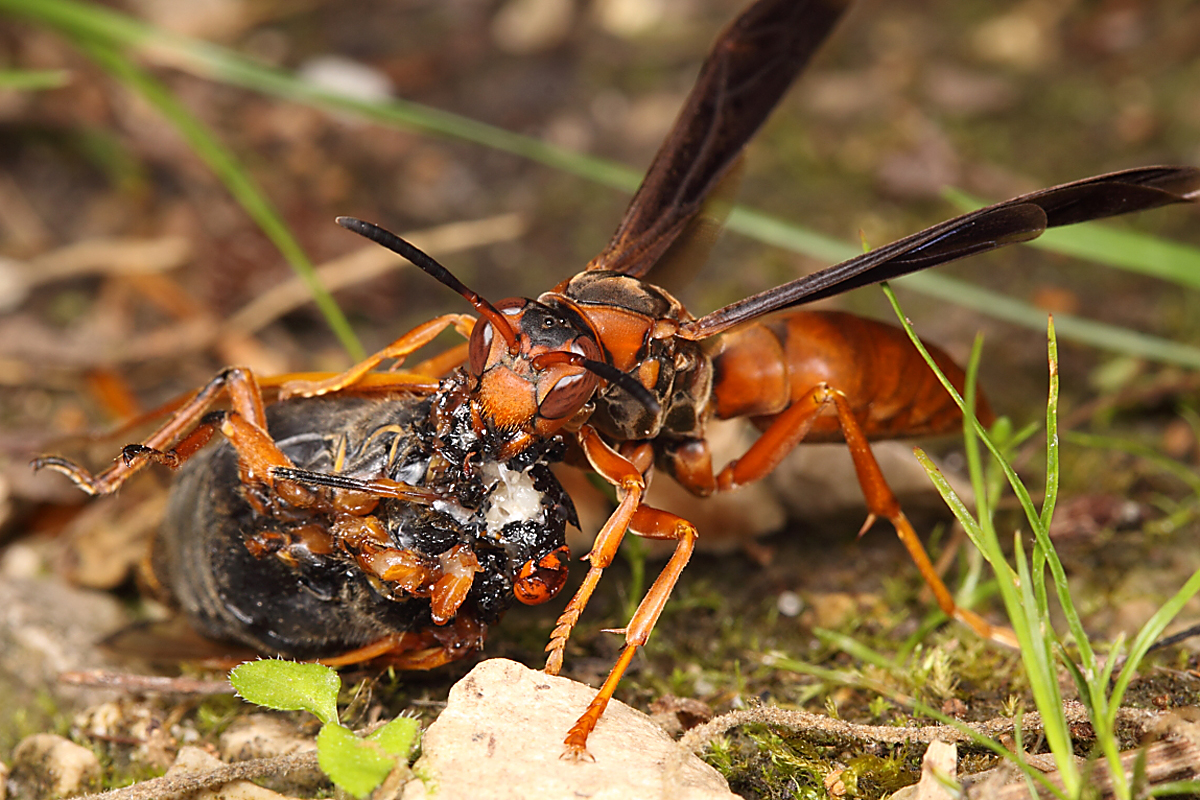
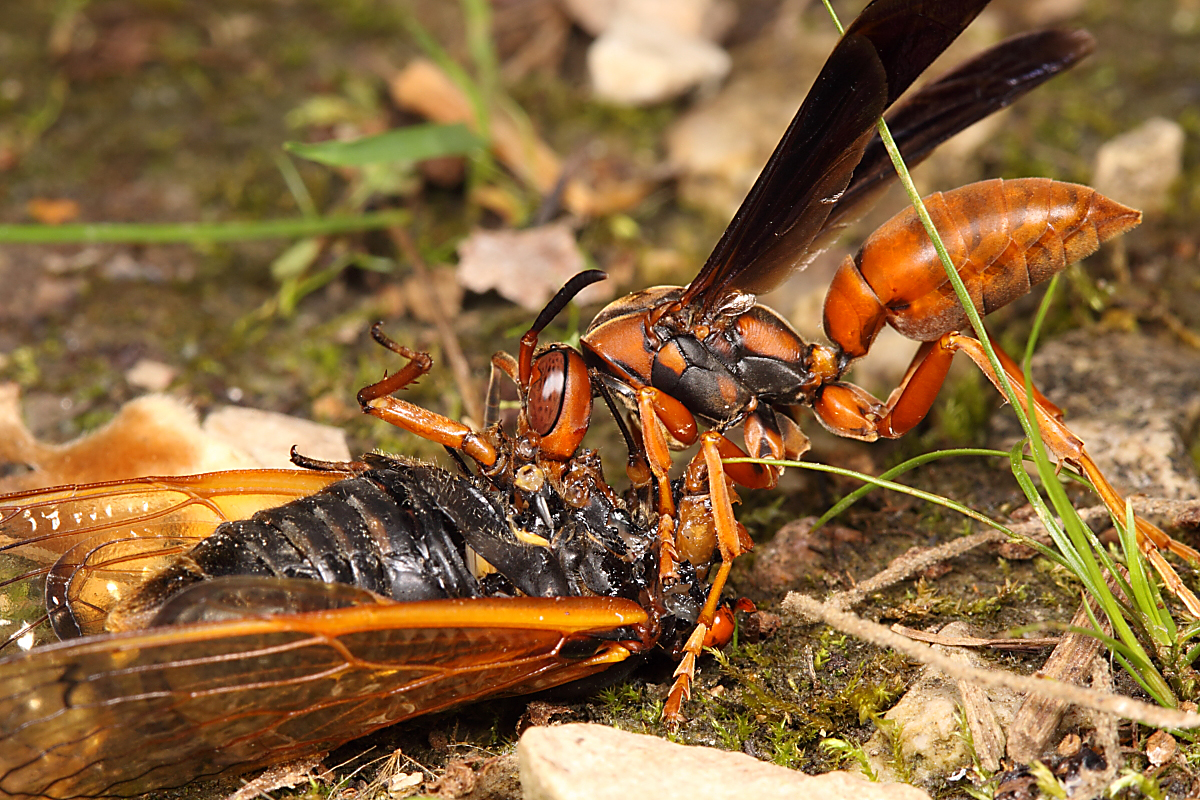
Polistes carolina/perplexus with Magicicada prey | Shaw Nature Reserve, Missouri

I’ve probably used the term predator satiation more often during the past couple of weeks than I have during the entire rest of my life.  Students of ecology know this as an antipredator adaptation in which prey occur at such high population densities that they overwhelm predator populations.¹  This ‘safety in numbers’ strategy reduces the probability that any given individual will be consumed, thereby ensuring that enough individuals survive to reproduce.  With St. Louis currently experiencing the appearance of Brood XIX of periodical cicadas, I’ve gotten lots of questions recently from many coworkers and friends wanting to know more about these cicadas.   Often the first question is “What is their purpose?”  My standard reply begins with a statement that they, like all living organisms, are the products of natural selection, which then presents an opportunity to explain how natural selection might result in such massive, temporally synchronized, multiple-species populations.  A few eyes have glazed over, but I think most have found my answer interesting, often even leading to further questions about where they lay their eggs, what is their life cycle, why are they so loud, how do they “do it” and select mates, etc.  Of course, as an entomologist with a strong natural history orientation, I’m always anxious to introduce people to ecological concepts, and right now the periodical cicada is providing a conspicuous, real-life example of such.

¹ Also called “predator saturation,” although this term might be misconstrued to mean that it is the predators that are over-abundant.

First the eyes...

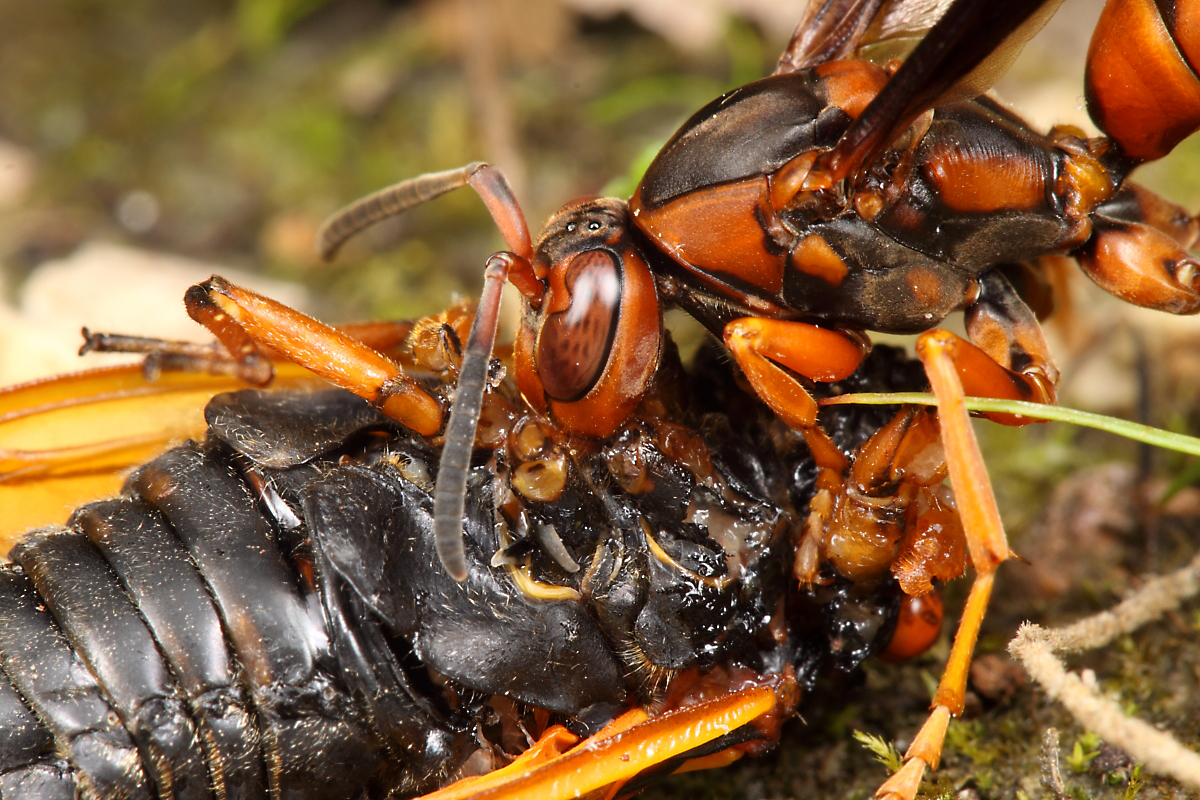
A few weeks ago, right at the beginning of their emergence in the St. Louis area, my friend Rich Thoma and I observed predator satiation in action.  While hiking one of the trails at Shaw Nature Reserve, we heard the unmistakable shriek and cellophane-sounding wing flapping of a just-captured male cicada.  Tussling on the ground ahead of us was the cicada in the grasp of a Polistes carolina/perplexus wasp, which was repeatedly stinging the hapless cicada on the underside of the abdomen.  The shrieking and wing-flapping grew less frequent as the stinging continued, until at last the cicada lay quiet.  As we approached, the wasp spooked and flew off, but we knew it would be back—we parked ourselves in place while I setup the camera, and before long the wasp returned.  It took several minutes of searching from the air and on the ground before the wasp finally relocated her prey, but once she did she began voraciously devouring it.  As the wasp was searching, we hypothesized that our presence had altered the visual cues she had memorized when flying off, resulting in some confusion when she returned, and thus the long period of time required to relocate her prey.

...then the legs!

We watched for awhile—first the eyes were consumed, then the legs.  As it consumed its prey, Rich remarked that he bet he could pick up the wasp and not get stung—likely the entirety of its venom load had been pumped into the cicada.  Both of us declined to test his hypothesis.  We also wondered if the wasp would butcher the cicada after consuming part of it and bring the remaining pieces back to the nest.  We had seen a European hornet do this once with a band-winged grasshopper, consuming the head, then cutting off the legs from the thorax and flying away with it before returning to collect the abdomen as well.  No butchering took place this time, however, the wasp seemed content to continue eating as much of the cicada as possible—a satiated predator if there ever was one!

Leg after leg is consumed.

One eye and all six legs down, time to start on the abdomen.

Copyright © Ted C. MacRae 2011

Do you think I’m tasty?

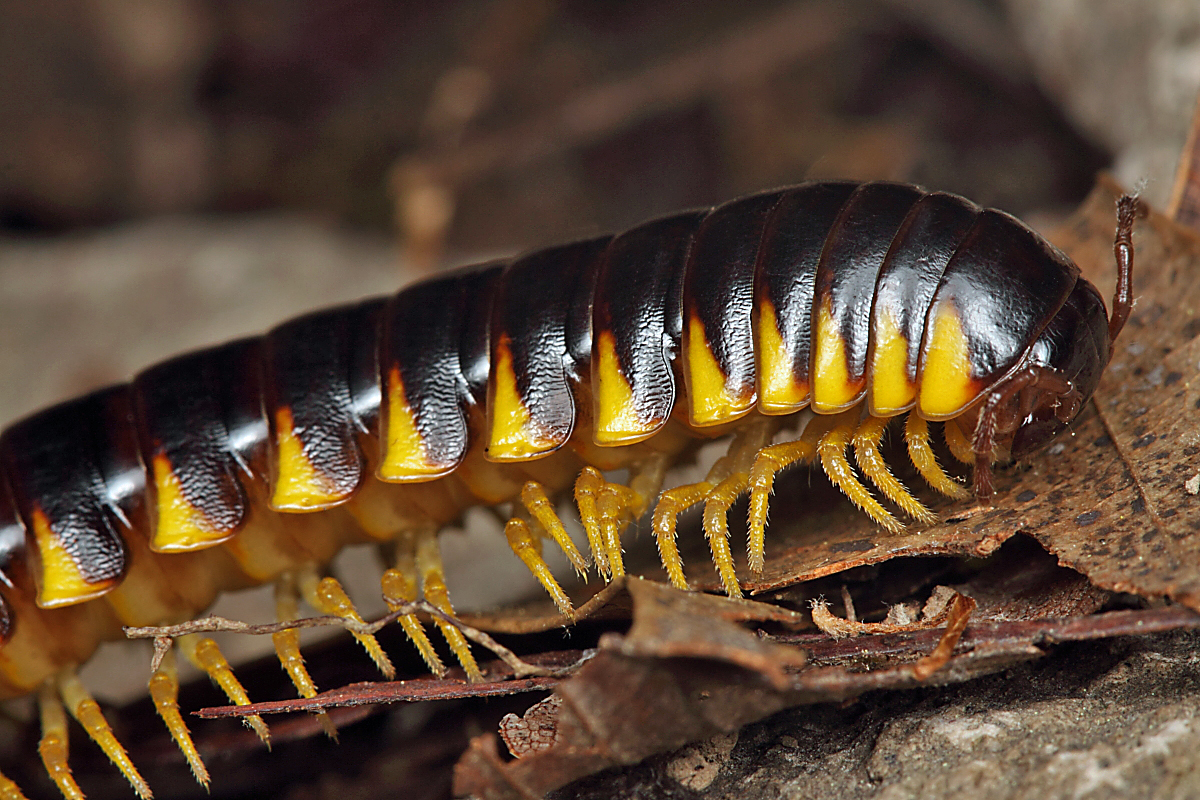
As I hiked the upper stretch of the Shut-Ins Trail at Sam A. Baker State Park in southeastern Missouri, I encountered this 2-inch long millipede slowly making its way across the rocks.  Many millipedes, of course, produce hydrogen cyanide (HCN) as their primary method of defense against predation, and the bright yellow markings of this individual were an obvious sign that this particular species is no exception.  The wrinkled dorsal surface and black coloration with yellow wedge-shaped posterolateral markings identify it as a species of Pleuroloma (BugGuide), and of the four species known from North America (Shelley 1980) only the widespread Pleuroloma flavipes (literally meaning “yellow legs”) occurs as far west as Missouri (Shelley et al. 2004).  A similar pattern of coloration is seen in a number of related genera, e.g. Apheloria, Boraria, and Cherokia—all belonging to the order Polydesmida, presumably functioning across the group as an aposematic (warning) signal to predators that they should be left alone.  Another feature shared by the members of this group is the lateral expansion of the dorsal segments into “paranota,” giving the species a much more flattened appearance than other millipedes with the more typical cylindrical shape.  While all millipedes exhibit diplosegmentation (embryonic fusion of paired body somites and associated legs, spiracles, and ventral nerve cord ganglia), members of the Polydesmida have taken this condition to its culmination with no evidence of external sutures (Myriapoda.org).

The bright coloration of this species was an interesting contrast to the cryptic invisibility of the copperhead snake I had seen just a few moments earlier during the hike—opposite strategies with identical goals.  Defense compounds are, of course, widely employed by many plants and animals; however, only millipedes and a few insects have developed the ability to utilize HCN, a highly toxic compound that halts cellular respiration in most animals through inhibition of the mitochondrial enzyme cytochrome c oxidase.  Evidence suggests that Pleuronota flavipes and other millipedes can tolerate HCN because they possess a resistant terminal oxidase that makes their mitochondria insensitive to the effects of HCN (Hall et al. 1971).

Perhaps some of you will be interested in this recent checklist of the millipedes of North and Central America (Hoffman 1999).

Update 6/13/11: My ID as Pleuroloma flavipes must be considered tentative, as Rowland Shelley has sent me an email with the following comment:

It could be Pleuroloma flavipes Rafinesque, 1820, or it could be Apheloria virginiensis reducta, I can’t really tell from the photos.


REFERENCES:

Hall, F. R., R. M. Hollingworth and D. L. Shankland. 1971. Cyanide tolerance in millipedes: The biochemical basis. Comparative Biochemistry 34:723–737.

Hoffman, R. L.  1999.  Checklist of the millipedes of North and Middle America. Virginia Museum of Natural History Special Publication No. 8, 584 pp.

Shelley, R. M. 1980. Revision of the milliped genus Pleuroloma (Polydesmida: Xystodesmidae). Canadian Journal of Zoology 58:129–168.

Shelley, R. M., C. T. McAllister, and S. B. Smith. 2004. Discovery of the milliped Pleuroloma flavipes in Texas, and other records from west of the Mississippi River (Polydesmida: Xystodesmidae). Entomological News 114 (2003):2–6.

Copyright © Ted C. MacRae 2011

Eye to eye with a copperhead

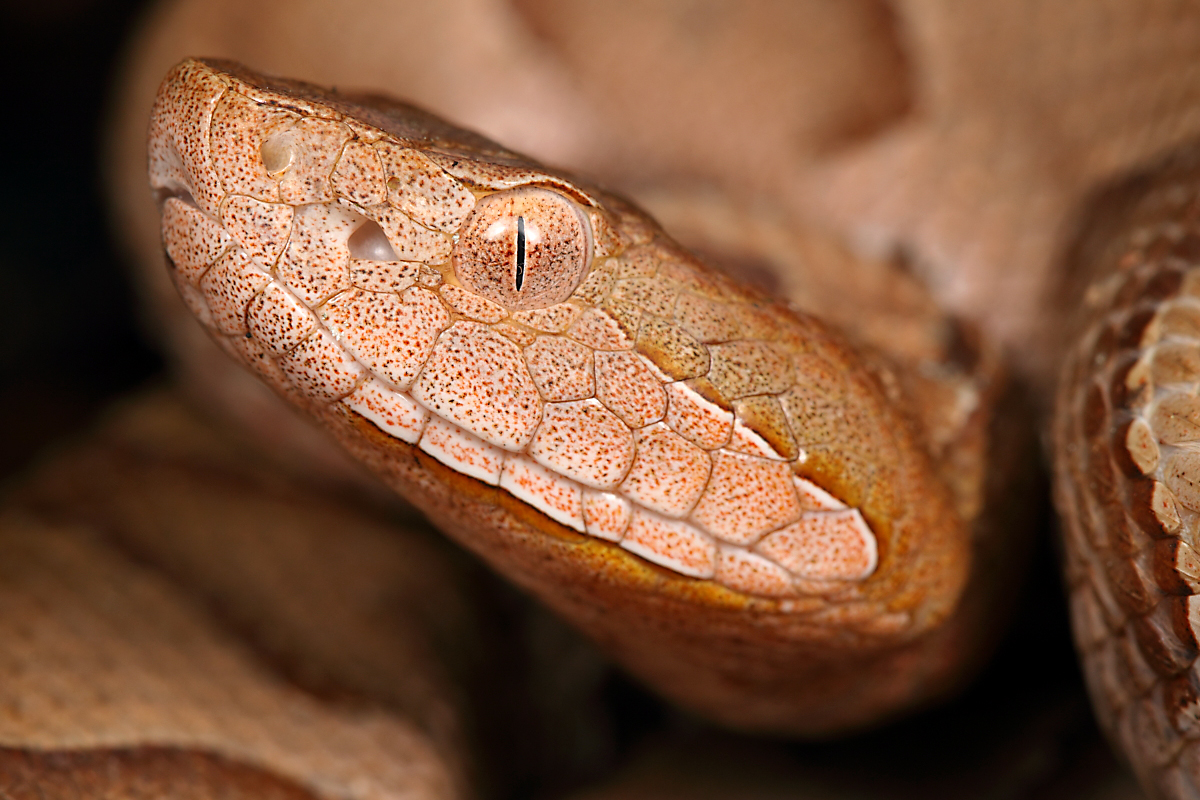
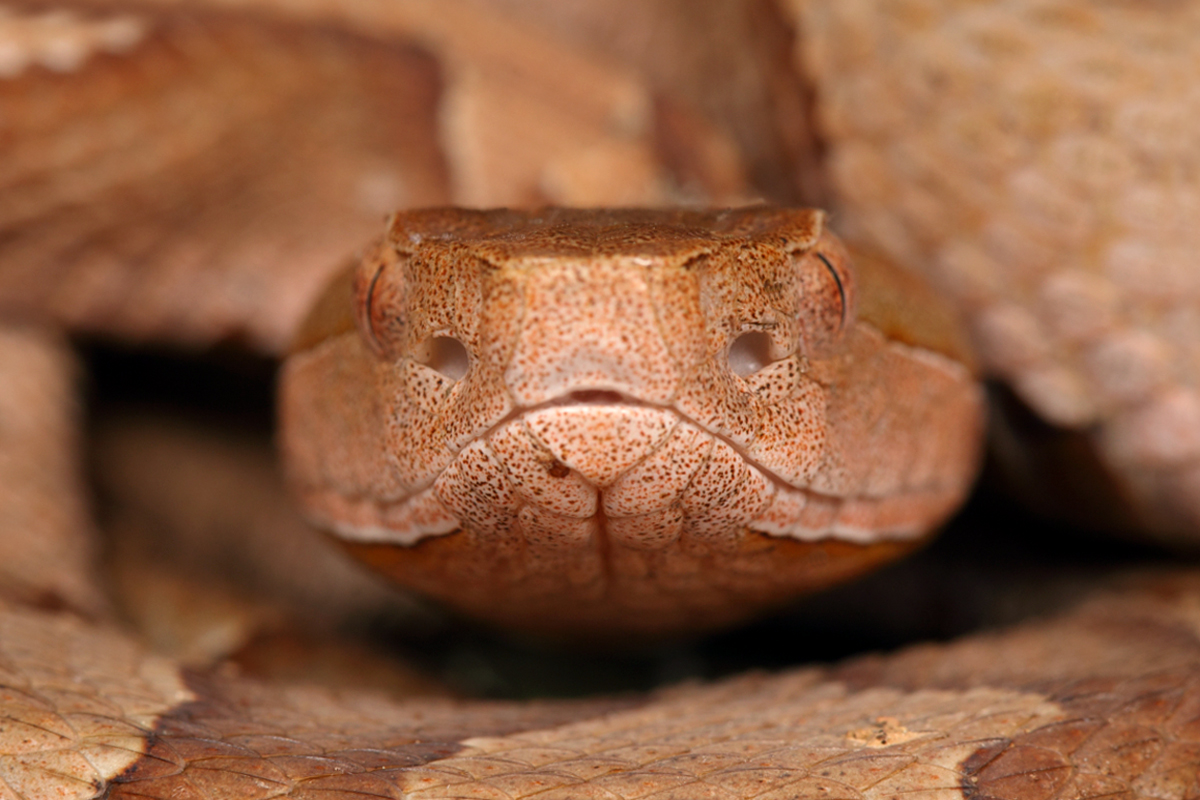
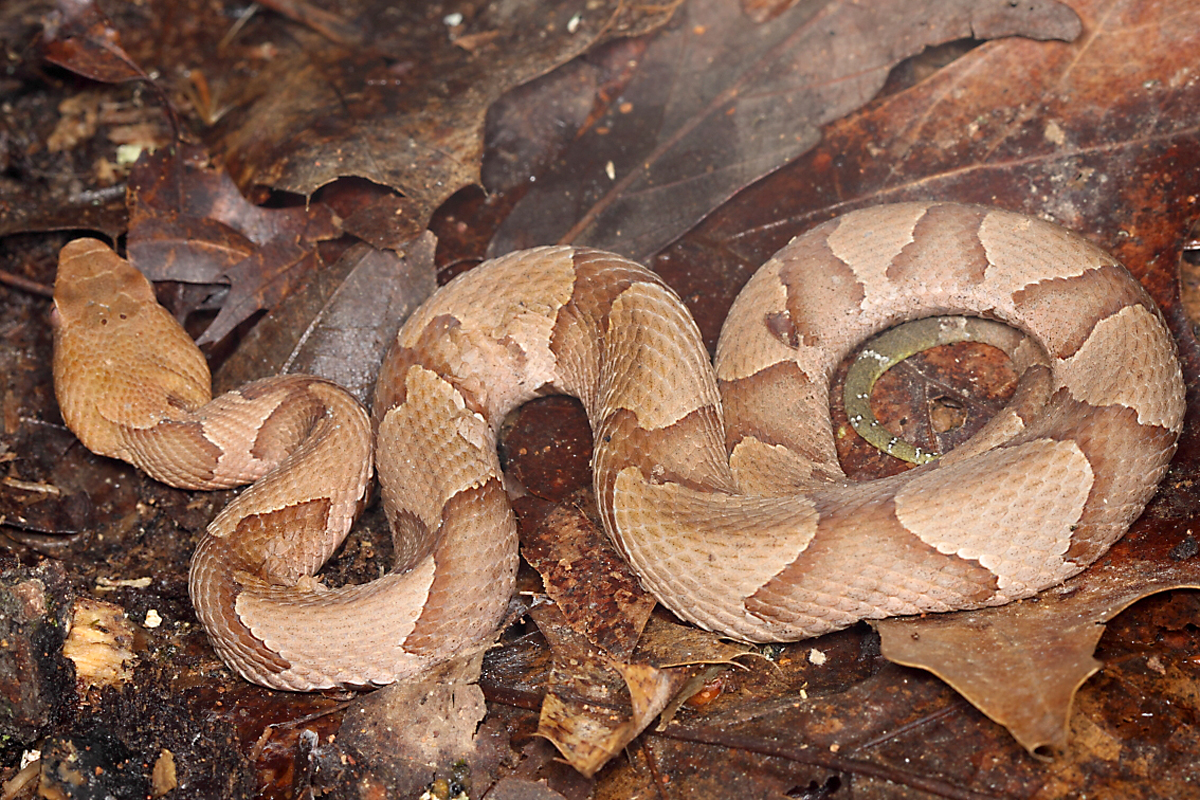
I don’t know what it is about Osage copperheads (Agkistrodon contortrix phaeogaster) that makes every encounter with one so special. They are perhaps the most common of Missouri’s five venomous snake species, and I’ve seen them more often than I can count. Still, every time I see one I simply must stop and marvel. This particular individual was seen a few weeks ago at Sam A. Baker State Park in Missouri’s southeastern Ozark Highlands. You might say it was “sloppy seconds”—I had actually gone to the park to look for timber rattlesnakes (Crotalus horridus), a juvenile of which I had seen during last year’s Annual-Birthday-First-Bug-Collecting-Trip-of-the-Season™ trip. I did not see any rattlesnakes this time, as access to the rockpilish cliffs along Big Creek where I saw the juvenile last year was blocked by high water, but I was quite pleased to find this copperhead underneath a log while we were there.

Copperheads are marvelous photographic subjects. Beautiful, rarely seen by those who don’t know how to look for them, and with an air of “danger” about them. Yet they are among the most docile of all snakes, venomous or otherwise. They don’t use aggression or warning sounds when threatened like cottonmouths (Agkistrodon piscivorus) or rattlesnakes, nor do they dash for cover like most non-venomous species. Instead, they rely on their cryptic, dead-leaf coloration to make them invisible. It works—even I, my eyes tuned to see just about anything after a half-century of clambering through the brush, didn’t immediately notice this individual when I first rolled over the log under which it had taken cover (although I did immediately notice the little red-backed salamander, Plethodon cinereus, at the other end of the area covered by the log). I suspect I’ve walked right by many more copperheads than I have seen, completely unaware of their presence.

Their docile nature also invites extreme close-ups that I wouldn’t dare attempt with a rattlesnake or cottonmouth—at least not without a much longer lens than my 100mm. These photos make it seem that I was right on top of the snake, although at a maximum magnification of around 1:2 there was still a reasonable amount of working distance (I did, however, keep my hands well back of the front of the lens—just for good measure). Still, in all my copperhead experiences, I have never seen a copperhead actually try to strike unless I touched it (not what you think!).

Eventually it’d had enough of our gawking and began to look for new cover.  As it uncoiled, I could see it’s still greenish but not too yellowish tail, indicating that it was still a youngster, though perhaps a little older than the first copperhead I tried to photograph.  We watched it as it crawled into the loose, dry leaves… and disappeared.


Copyright © Ted C. MacRae 2011