Pardalophora phoenicoptera – Orange-winged grasshopper

For some reason, I’ve found myself increasingly fascinated with certain grasshoppers—not just any grasshoppers, but band-winged grasshoppers (family Acrididae, subfamily Oedepodinae).  And not just band-winged grasshoppers, but band-winged grasshopper nymphs.  It began last year when I found adults and nymphs of Trimerotropis latifasciata in the Glass Mountains of northwestern Oklahoma.  I believe it has something to do with the combination of their frequent association with the same habitats where I look for my beloved tiger beetles and their marvelously cryptic coloration.  Adults themselves are cryptic enough—that is, until they flash their brightly colored hind wings, but the nymphs are positively invisible until they move.  Moreover, many species show a wonderful range of intraspecific diversity in their crypsis—Ronald Reagan may have thought every redwood tree looked the same, but when you’ve seen one band-winged grasshopper nymph, you most certainly have not seen them all.


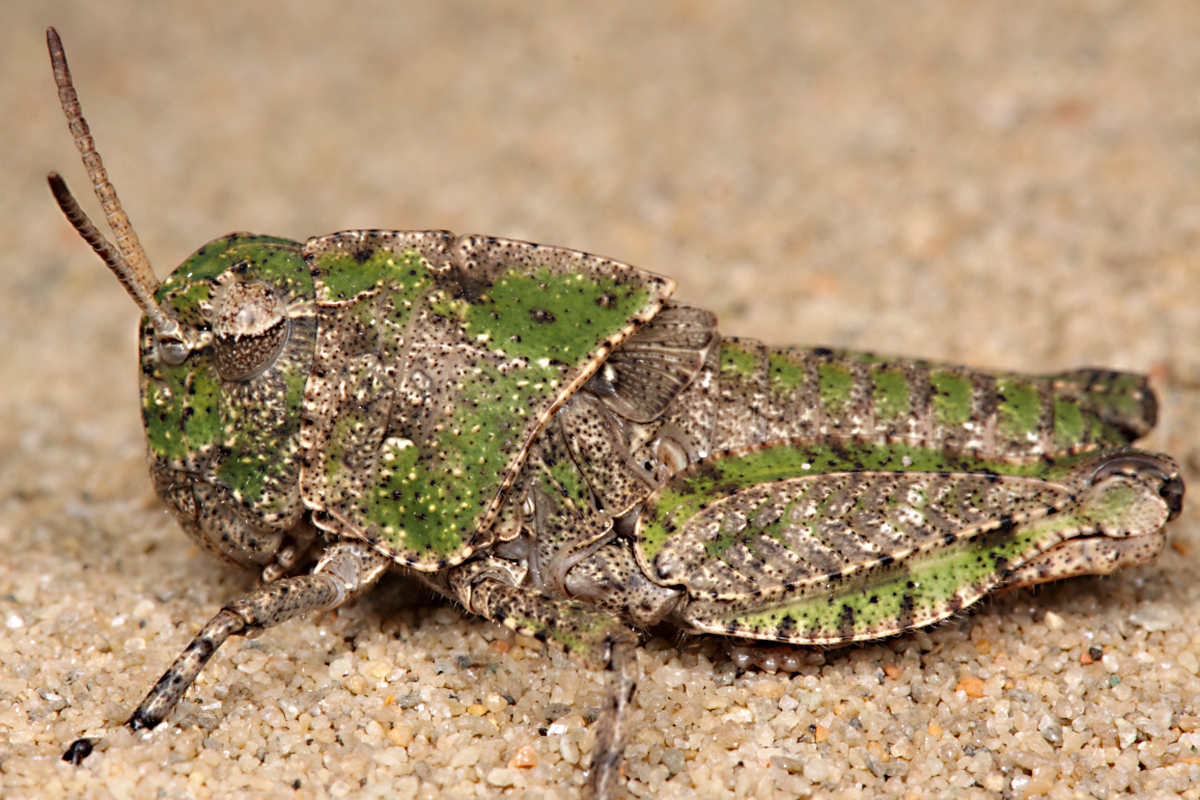
These two band-winged nymphs were seen at St. Joe State Park (St. Francois Co., Missouri) in the vast central “sand flats” of the park (actually waste areas of crushed limestone tailings left from lead mining operations during the previous century).  At first I assumed they each represented a different species, but based on comments at BugGuide I take both of them to represent Pardalophora phoenicoptera (orange-winged grasshopper)—distinguished from Xanthippus by having only one notch in the pronotal crest and unusual amongst most grasshoppers in that the winter is passed as a nymph rather than egg.  This leads to well-developed nymphs at the beginning of spring and adults much earlier in the season than many other grasshoppers.  These photos were taken on April 28, and the size of the wing pads suggests they are not quite full-grown yet, maybe 3rd or 4th instars.  Acridoid aficionado David J. Ferguson has found this species in the Ozarks on rocky/gravelly hilltops (e.g., “cedar glades”) and on gravelly or stable sandy slopes in sunny openings in Oklahoma. He places the species (particularly the green ones) high on his favorite hopper list, and I’d have to say I agree with him (so far).

One of these days, I’m going to find and photograph the king of all green oedepodines—Trimerotropis saxatilis!

Update 6/8/11: Dave Ferguson has kindly confirmed the ID, writing:

…yes these are identified correctly.  Assuming 5 instars, they look like 4th (where there are 6 instars, numbers 4 and 5 look a lot alike).

Copyright © Ted C. MacRae 2011

They’re baaaaack… finally!

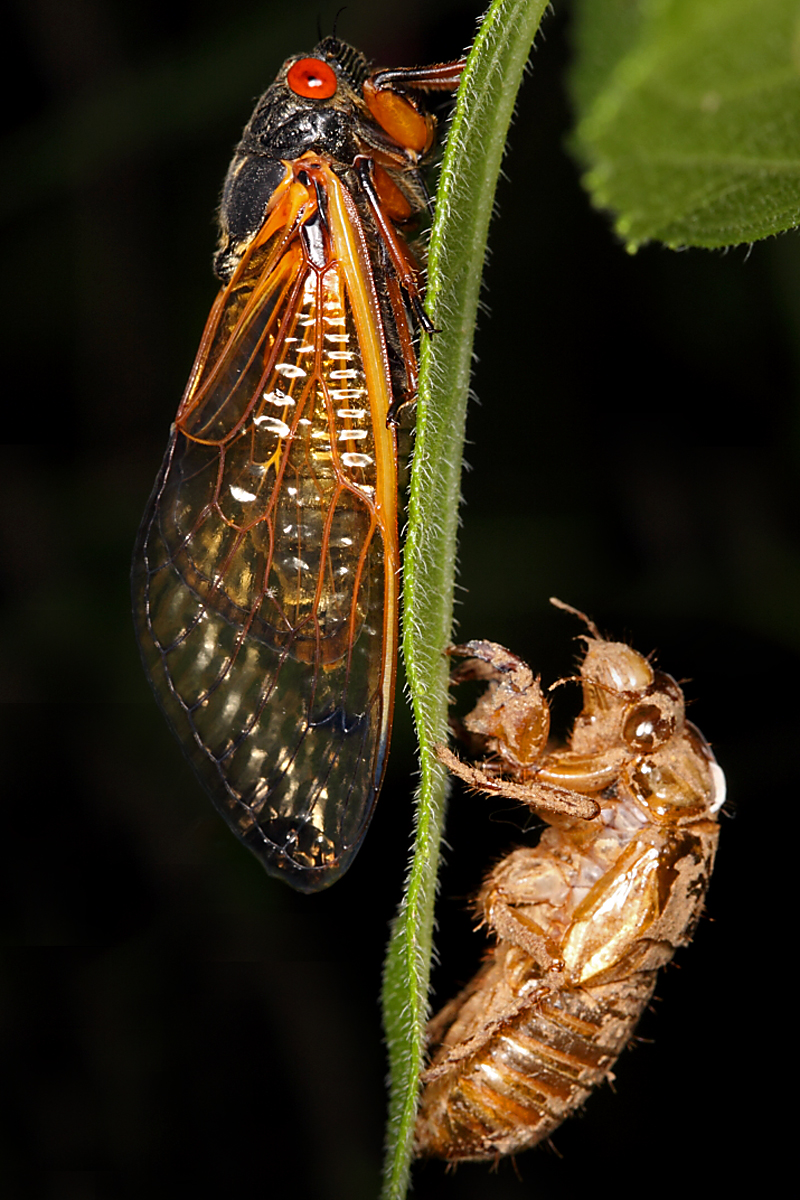
For almost a month I waited—waited for that spaceship-sounding drone from the trees; waited for their bodies to drip from the vegetation and their skins to litter the yard; waited for their delightful shrieks every time I jostle a tree branch. I had seen them mass emerging from the ground in southern Missouri in late April, but just 100 miles north in my hometown it seemed they would never show. Cold, rainy springs must not be to their liking, as it was not until the sun finally broke through and temperatures climbed into the 80s that they finally made their appearance in St. Louis—nearly a month after that mass emergence event further south had me looking and listening daily for one of North America’s most spectacular natural history events, Brood XIX of the periodical cicada!

Finally, on May 21 I saw the first adults of the year at Shaw Nature Reserve not too far from my house (not intending to claim this as the date of their first appearance in my area!). They were not yet singing, but the adults were everywhere, many sitting right next to the skins they had just emerged from the previous evening. I had to travel on business through the southeastern U.S. that following week, and it was while visiting the beautiful MSU campus in Starkville, MS that I got my first taste of their late-afternoon synchronized, pulsating song. Upon my return to St. Louis at the end of the week, the eery drone filled the air as soon as I stepped out of the airport. It had been 13 years since I’d heard that sound, but euphoric recall instantly transported me back to 1998 and 1985 and my experiences with these marvels of evolution.

I don’t know that there is anything I can say about the periodical cicada that hasn’t already been said—repeatedly—by the numerous, more erudite sources that are following this event as if it were the approach of Haley’s comet. I don’t even know for sure which species are in my area and how to tell them apart. All I do know is that the constant droning of their singing is both maddening and amazing—a spectacle to behold for what it is, knowing that it will be the year 2024 before I have my next chance to witness it.

As I write this, I’m sitting in my hotel room in Salem, AR, where the cicadas are even more abundant than around my home in the woods—several stops to check building lights for beetles have ended in frustration because the cicadas were so numerous that they virtually swamped the space on the walls under the lights. There do seem to be two species here—a smaller one with a completely dark underside and the raspy, screeching sound that I am familiar with, and a larger one with the abdominal segments light along the posterior margins and a softer trill that almost reminds me of the song of an American toad. Maybe there are other species mixed in that I have not discerned, but I’ll not concern myself with that. Instead, I will continue to marvel at the extraordinary event unfolding before me, watch it as it cycles out, and chuckle at the complaints of the masses bemoaning their temporary inconveniences.

Copyright © Ted C. MacRae 2011

Wrong lens

During the past couple of years, as I’ve transitioned from strictly a net-wielding entomologist to one that also carries a camera, I’ve had to start making choices about whether to keep the camera in the backpack or hold it at the ready, and if the latter which lens to keep on it. They are situational decisions, influenced largely by what I’m focused on (heh!) at the time—keeping the camera in the bag facilitates collecting, but it also tends to reduce the number of subjects I deem worthy of the setup effort required to photograph them. Conversely, carrying the camera out of the bag greatly impedes collecting but results in much more photographs having been taken. Even when I do decide to carry the camera at the ready, which lens should I have on it—the 100mm for tiger beetle-sized and larger, or the 65mm for tiger beetle-sized and lower? (Annoyingly, most tiger beetles are right at that life-sized threshold, and neither lens alone allows me to float above and below 1:1 for the full range of photos I like for them. As a result, I sometimes end up with extension tubes stacked under the 100mm lens to give me some extra range above its normal 1:1 limit.) I wish there was some way to have the camera with either lens at the ready (and not impeding net swings would be even better), but that just isn’t possible. As a result, I sometimes find myself with the wrong lens on the camera when I see something I want to photograph. If it’s important, I’ll go through the trouble to switch out lenses—hopefully quickly enough to avoid losing the photographic opportunity; other times I might just decide I don’t really need the photo that badly.  Then there are times when I feel a little adventurous and will just go ahead and take the photo anyway without switching lenses.

The following is an example of the latter—an eastern fence lizard (Sceloporus undulatus) photographed with the 65mm lens (minimum magnification 1:1). Not only is this the first time that I have succeeded in approaching one of these lizards closely enough to take a good photograph, but the short working distance of the 65mm required that I get extraordinarily close. He was on the side of a fallen log, and I approached from the other side crouching low, then slowly (slowly!!!) peered over the edge of the log until I had his head in focus. I got off just this one shot, as the flash caused the lizard to bolt for good. The angle could have been better, but I got the eye focused spot-on so it’s a keeper.

Sceloporus undulatus (eastern fence lizard) | Shaw Nature Reserve, Franklin Co., Missouri

I wonder if anybody else has ever photographed a 6-inch long lizard with a 65mm lens…

Copyright © Ted C. MacRae 2011

Mite on White

I found this velvet mite at Shaw Nature Reserve (Franklin Co.) in east-central Missouri on a trail through mesic upland forest. At 4 mm in length, this member of the superfamily Trombidioidea is a downright honker compared to most other mites. I suspect it belongs to the nominate family, but comments at BugGuide suggest a lateral view of the palps are necessary for a conclusive ID to family. Regardless of its identity, its screaming red color made it ideally suited to be photographed on a white background. On the other hand, its small size and refusal to ever stop crawling made it a frustrating subject to track through a 65mm lens (all photos shown uncropped).


Copyright © Ted C. MacRae 2011

Sawfly larva – Periclista sp.


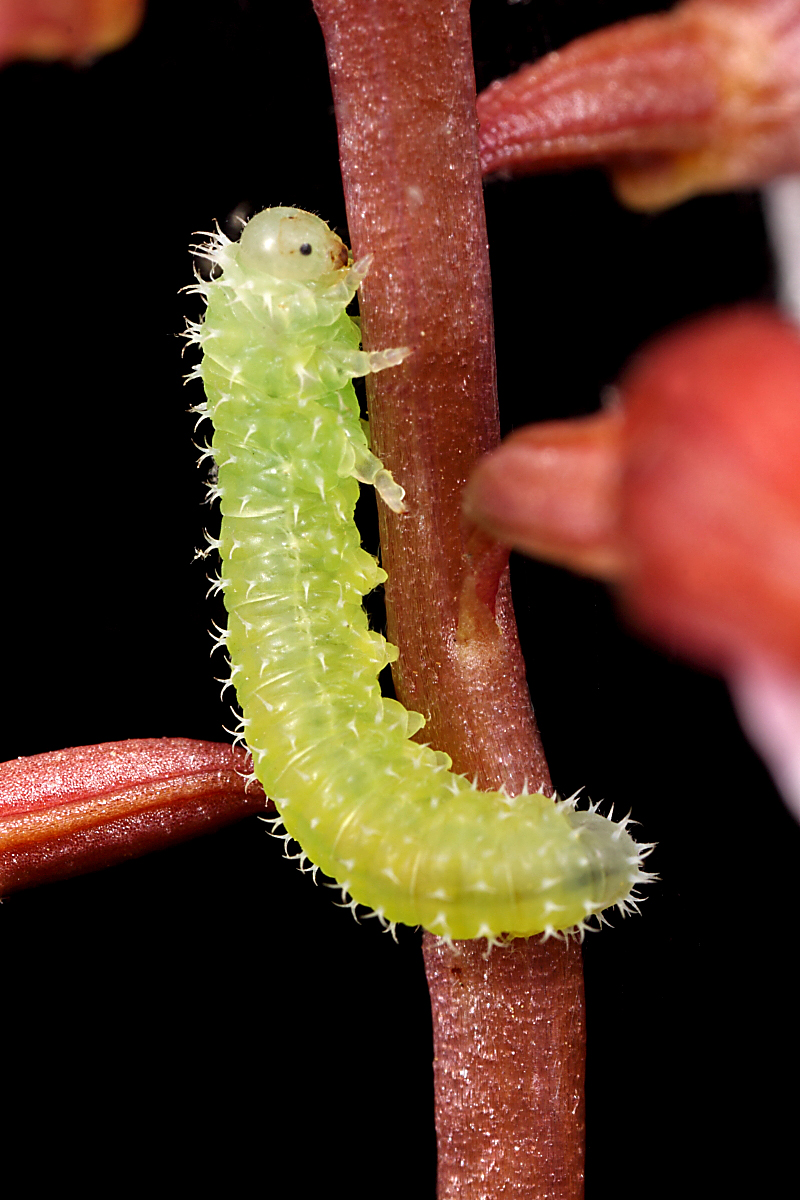
As I was photographing spring coralroot orchids in my front yard, I noticed a small green object clinging to the underside of one of the flowers.  Zooming in with the camera lens revealed the object to be a caterpillar, but this was no ordinary caterpillar (i.e., a member of the order Lepidoptera), but rather a sawfly larva.  Sawflies are not lepidopterans, but members of the order Hymenoptera, making them more related to bees and wasps while their larvae look much more like those of a moth or butterfly.  Although there are few absolutes in the world of insects, distinguishing sawfly larvae from lepidopteran caterpillars is as easy as counting the prolegs (false legs behind the three pairs of true legs)—lepidopterans have at most 5 pairs of prolegs (often less), while sawfly larvae always have 6 or more pairs of prolegs.

While its identity as some type of sawfly was immediately apparent, I wasn’t sure beyond that.  One thing I was fairly certain about was that the orchid itself was likely not its host plant.  I could see no evidence of feeding on any part of the plant on which it was resting (and orchids by the large seem relatively free of defoliating insect pests), nor could I find any other sawfly larvae on the plant or its neighbors (where there is one sawfly larva, there are usually more).  Rather, I suspected that it had fallen from one of the many native oaks and hickories that shade the front yard (and which provide the habitat that allows orchids to grow in my front yard to begin with).  Nevertheless, I Googled “orchid sawfly,” only to come up with page after page of links referring to the sawfly orchid (Ophrys tenthredinifera), native to the Mediterranean Region.  That wasn’t much help, so I began the process of slogging through the sawfly images posted at BugGuide in hopes that something close had already been posted.  Eventually I stumbled upon photos of larvae in the family Tenthredinidae, subfamily Blennocampinae that exhibited similar branched dorsal spines (including the pestiferous Monophadnoides rubi, or raspberry sawfly).  I gradually settled on a generic ID of Periclista sp. based on the resemblance of the larva in my photos to those in photos such as this one, and the fact that this genus of ~20 North American species feeds as larvae on oak and hickory seems to support to the identification.

This past week’s Super Crop Challenge was taken from the dorsal side of the caterpillar in the first photo and rotated—it apparently proved a little too tough for most people to handle.  Predictably, most participants guessed one of the different spined caterpillars of the order Lepidoptera, but Dave used the extended quiz time wisely and eventually came up with a correct ID and the challenge win.  He even suggests the species P. marginicollis, based on its widespread eastern distribution and the bifurcate processes—it’s a good guess, but the larval description in Smith (1969) is a little beyond my comprehension, so I’m leaving the ID at Periclista sp.  Dave’s win moves him into the top spot in the current overall standings, while Tim moves up to tie Alex for 2nd place with 9 pts each.

REFERENCE:

Smith, D. R.  1969.  Nearctic sawflies I.  Blennocampinae: Adults and larvae (Hymenoptera: Tenthredinidae).  U.S. Department of Agriculture, Agricultural Research Service, Technical Bulletin No. 1397, 179 pp. + 19 plates.

Copyright © Ted C. MacRae 2011

Dromochorus pruinina is not extirpated in Missouri… yet!

ResearchBlogging.orgWhen Chris Brown and I began our study of Missouri tiger beetles back in 2000, our goal was simply to conduct a faunal survey of the species present in the state.  Such studies are fairly straightforward—examine specimens in the major public and private collections, and do lots and lots of collecting, especially in areas with good potential for significant new records.  Over the next 10 years, however, our study morphed from a straightforward faunal survey to a series of surveys targeting a number of species that seemed in need of special conservation attention.  We were no longer just collecting tiger beetles, but trying to figure out how to save them.

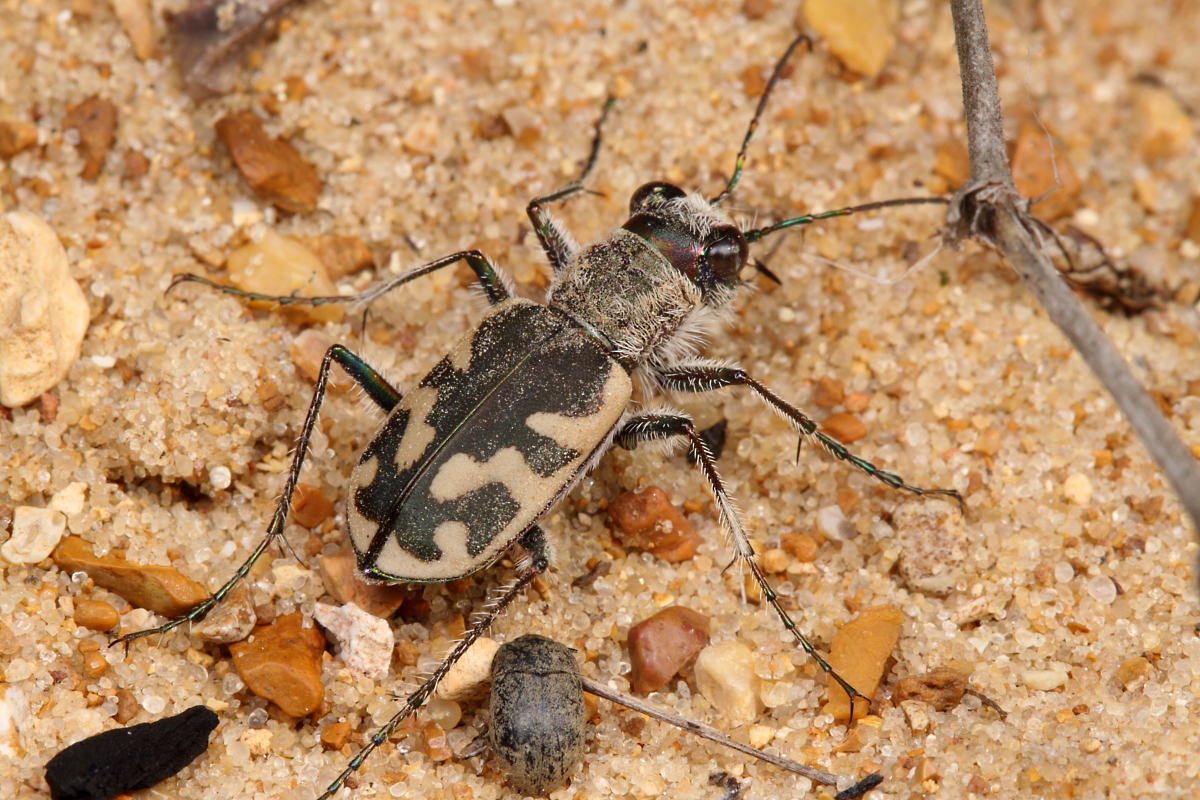
There were good reasons for this—Missouri’s tiger beetle fauna is rather unique due to the state’s ecotonal position in the North American continent.  While its faunal affinities are decidedly eastern, there are also several Great Plains species that range into the state’s western reaches.  Even more interestingly, these western species occur in Missouri primarily as relict populations—widely disjunct from their main geographic ranges further west, and limited in Missouri to small geographical areas where just the right conditions still exist.  These include the impressive (and thankfully secure) Cicindela obsoleta vulturina (prairie tiger beetle), the likely extirpated Habroscelimorpha circumpicta johnsonii (Johnson’s tiger beetle, with Missouri’s disjunct population often referred to as the ‘saline spring tiger beetle’), Cylindera celeripes (swift tiger beetle)—still clinging precariously to existence throughout much of its former range, and the subject of our newest publication, Dromochorus pruinina (frosted dromo tiger beetle) (MacRae and Brown 2011).

We were first made aware of the occurrence of this species in Missouri when Ron Huber (Bloomington, MN) sent us label data from 7 specimens in his collection.  One was labeled from Columbia, Missouri—location of the University of Missouri, and source of many a mislabeled specimen culled from collections of entomology students.  The other specimens, however, collected in 1975 and labeled “10 miles W of Warrensburg” in western Missouri, seemed legit, and in 2003 we began searching in earnest for this species.  Our searches in the vicinity of 10 miles W of Warrensburg were not successful (and, in fact, we had difficulty even locating habitat that looked suitable), but on 15 July 2005 Chris found the species on eroded clay roadsides along County Road DD in Knob Noster State Park—precisely 10 mi east of Warrensburg.  With this collection as a starting point, we began an intense pitfall trapping effort in 2006 to more precisely define the geographical extent of this population in Missouri.  The Knob Noster population was confirmed at several spots along the 2.5-mile stretch of Hwy DD that runs through Knob Noster State Park, but we were surprised to find no evidence of this species at any other location throughout a fairly broad chunk of west-central Missouri (see Fig. 1 above).  We examined the area thoroughly in our search to find suitable habitats for placing pitfall traps, and it became quite obvious that the eroding clay banks that harbored the species in Knob Noster State Park were not extensive in the area.  This observation also seemed to further confirm our suspicion that the label data for the original 1975 collection were slightly erroneous, and that the Knob Noster population was, in fact, represented by that original 1975 collection.

In 2008, we conducted additional pitfall trapping surveys tightly concentrated in and around Knob Noster State Park.  Again, we only found the beetle along the same 2.5-mile stretch of Hwy DD, despite the presence of apparently suitable eroded clay roadsides in other parts of the park.  These other areas were either disjunct from the Hwy DD sites, separated by woodlands that this flightless species likely is not able to traverse, or were fairly recently formed through road construction activities.  These newly formed bare clay roadsides were quite close to the beetle sites, and we are still hard pressed to explain why the beetle has apparently not yet colonized them—perhaps there is some physical or chemical property that the beetle requires that is not present in these more anthropogenically formed habitats.  Whatever the explanation, the result is the same—the entire Missouri population of D. pruinina appears to be restricted to a scant 2.5-mile stretch of roadside habitat in west-central Missouri, disjunct from the nearest population further west (Olathe, Kansas) by a distance of 75 miles.  The highly restricted geographical occurrence of this species in Missouri is cause enough for concern about its long-term prospects, but the relatively low numbers of adults that were encountered—38 throughout the course of the study—is even more troubling.  Dromochorus pruinina is not extirpated in Missouri, but the prospect of such is a little too real for comfort.

As a result of our studies, D. pruinina is now listed as a state species of conservation concern with a ranking of “S1” (critically imperiled)—the highest possible ranking (Missouri Natural Heritage Program 2011).  Despite its highly restricted range in Missouri, the occurrence of this population entirely within the confines of Knob Noster State Park under the stewardship of the Missouri Department of Natural Resources (MDNR) provides some measure of optimism that adequate conservation measures will be devised and implemented to ensure the permanence of this population.  Chief among these is the maintenance of existing roadside habitats, which are kept free of woody vegetation by a combination of mowing and xeric conditions.  True conservation of the beetle, however, can only occur if the area of suitable habitat is significantly expanded beyond its present extent.  Much of the park and surrounding areas are heavily forested and, thus, do not provide suitable habitat for the beetle.  Significant areas within the park have been converted in recent years to open woodlands and grasslands; however, these areas still possess a dense ground layer and lack the patchwork of barren slopes that seem to be preferred by the beetle.  Further conversion of these areas to grasslands with more open structure will be required to create additional habitats attractive to the beetle.  Until this is done, D. pruinina is at risk of meeting the same fate that has apparently befallen the Missouri disjunct population of H. circumpicta johnsonii (Brown and MacRae 2011).

REFERENCES:

Brown, C. R. and T. C. MacRae.  2011.  Assessment of the conservation status of Habroscelimorpha circumpicta johnsonii (Fitch) in Missouri.  CICINDELA 42(4) (2010):77–90.

MacRae, T. C. and C. R. Brown. 2011. Distribution, seasonal occurrence and conservation status of Dromochorus pruinina (Casey) in Missouri CICINDELA 43(1):1–13.

Missouri Natural Heritage Program.  2011.  Species and Communities of Conservation Concern Checklist.  Missouri Department of Conservation, Jefferson City, 52 pp.

Copyright © Ted C. MacRae 2011

Friday Flower – Spring Coralroot Orchid

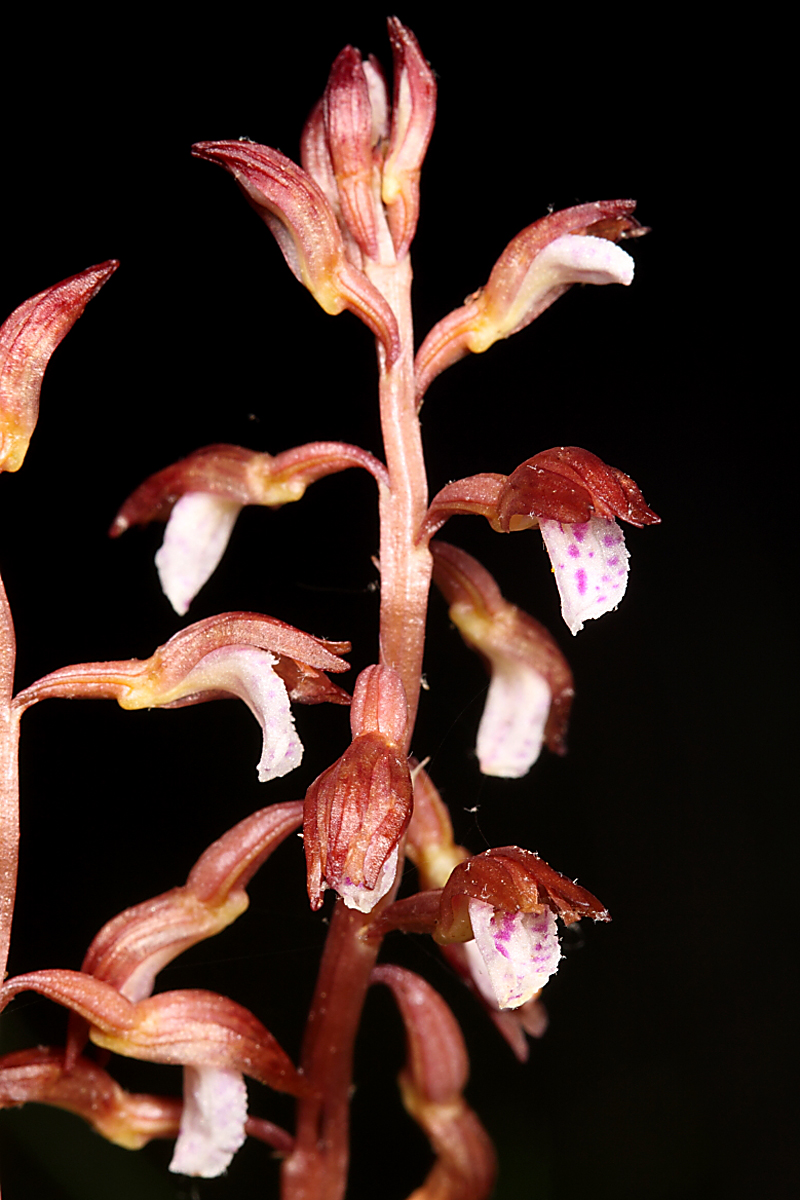
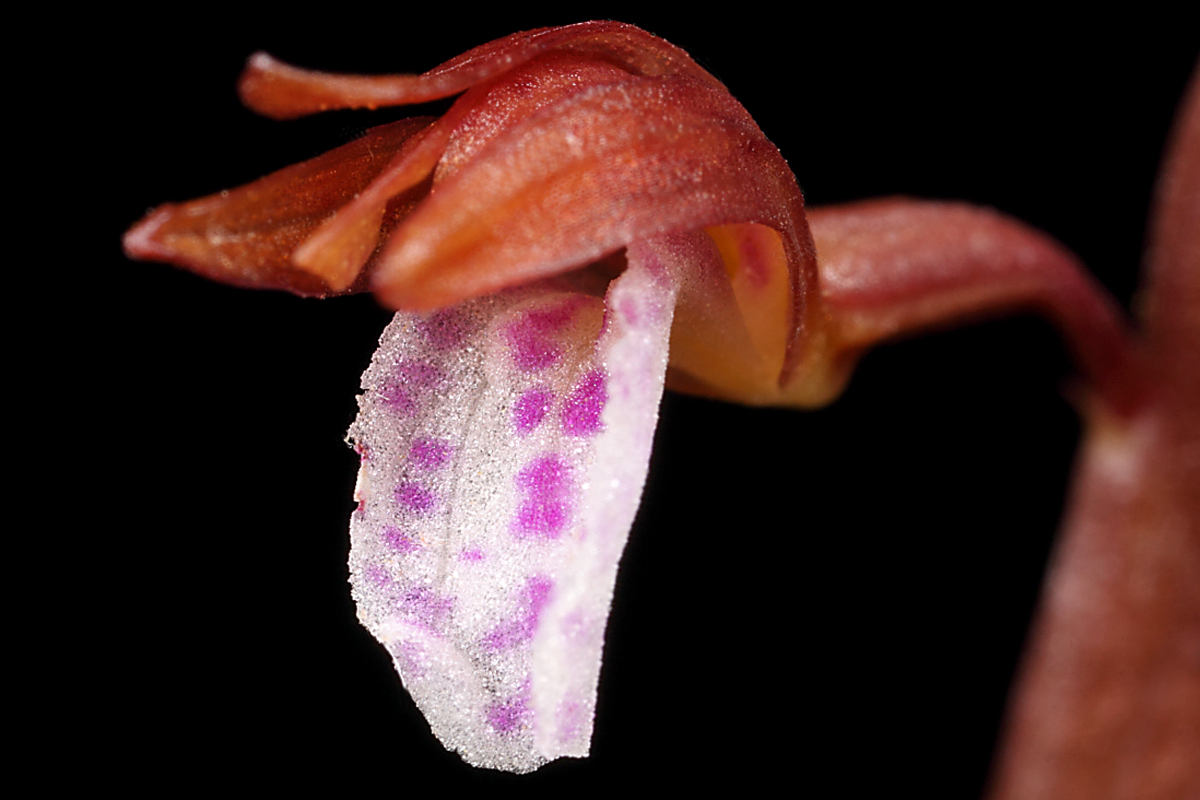
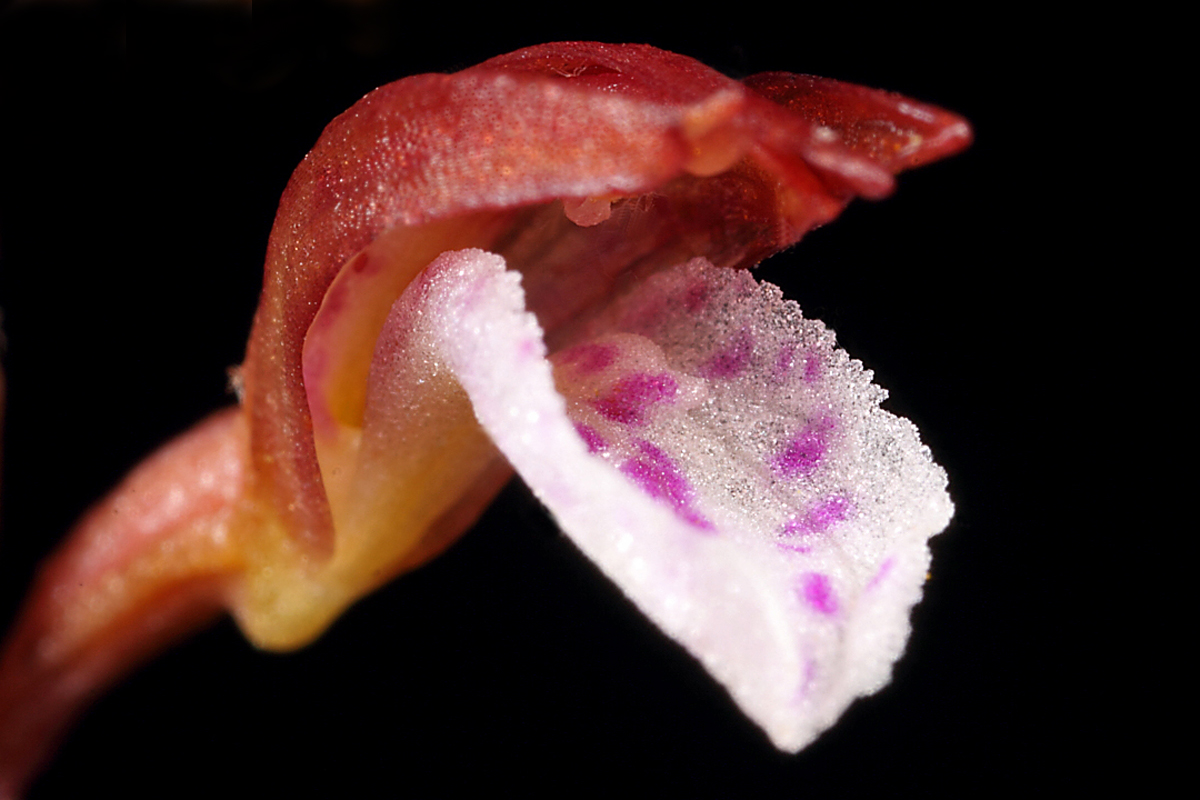
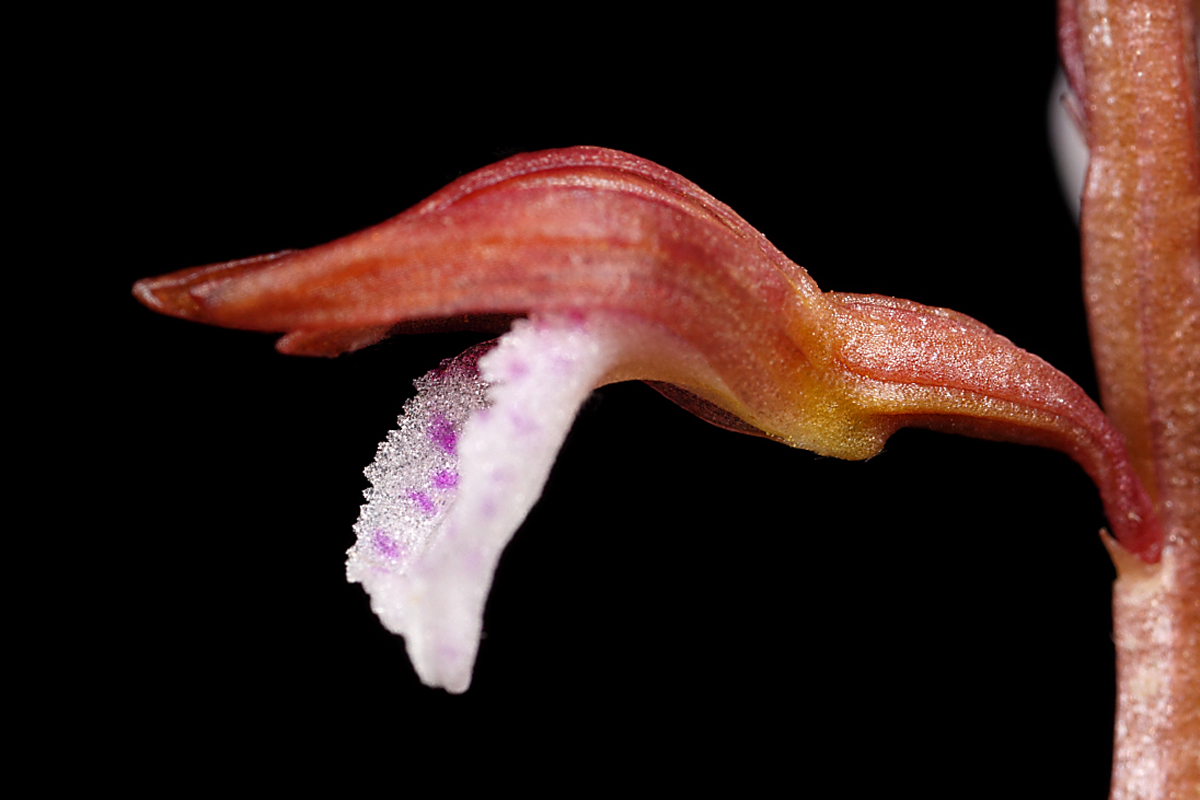
As flowers go, I have a passion for orchids.  Despite comprising perhaps the largest family of flowering plants on earth, most people think of orchids as rare, epiphytic plants restricted to the lush, hyper-diverse, tropical rain forests of South America and southeast Asia.  In reality, terrestrial orchids abound in the temperate regions of the Northern Hemisphere, with more than 200 species occurring in the United States and Canada.  Some, such as the lady slippers (genus Cypripedium),  have blossoms as magnificent as their tropical counterparts, while others are less conspicuous and easy to overlook; however, all share the hallmark that unites the family—a modified petal forming a conspicuous lower lip¹

¹ Interestingly, the lip is actually derived from the uppermost petal, but in most species the flower twists during development so that the lip is oriented at the bottom.

Missouri is home to 34 species of orchids (one introduced, and another discovered in Missouri for the first time just a couple years ago).  None of them are truly common like Rudbeckia or Coreopsis, although some are far more common than is realized.  I’ve featured a few of these previously, including Spiranthes magnicamporum (Great Plains Ladies’-tresses), Platanthera lacera (green fringed orchid), Aplectrum hymenale (Adam and Eve orchid), and Goodyera pubescens (rattlesnake plantain orchid).  I’ve traveled to the far corners of the state to see them, but for today’s featured species—Corallorhiza wisteriana (spring coralroot)—I had to travel no further than my front yard.


I’m sure my neighbors hate my front yard. I don’t use fertilizers or herbicides, and I’m unconcerned about the moss that grows amongst the thin stands of mixed grasses under the tall native oaks that shade much of the yard. My neighbor down the street especially probably shakes his head as he walks his dog past my yard every day, frustrated that I don’t share his passion for the lush, thick, über-green bluegrass monoculture that he has achieved (and must pay somebody to cut at least once a week). Spring must be especially frustrating for him, as I don’t even cut the grass until late May, giving the lawn an especially ragged, unkempt appearance. However, whatever my yard lacks in graminaceous greatness, it more than makes up for in its diversity of woodland natives—spring beauty, toothwort, trout lily, violets, coral bells… and spring coralroot. I have several colonies growing at different spots in the yard, all marked with surveyor’s flags to prevent accidental trampling until their bloom period ends and I can (begrudgingly) begin mowing the grass (no more than once a month, if I can get away with it). I’ve enjoyed these coralroot colonies every spring since I’ve lived here, but this spring was the first that I took the opportunity to photograph their blooms.

Of the three Corallorhiza species that can be found in Missouri, C. wisteriana is the most common, occurring in rich or rocky acidic soils of low wooded valleys, ravine bottoms, along streams and on ridges and slopes of open woods (Summers 1981).  My yard qualifies as the latter, occurring on a limestone ridge in mesic upland forest made only slightly more open by the late 1980s construction of the neighborhood and its minimal disturbance limited to the roads, driveways, home footprints and a small amount of associated lawn.  It is distinguished in Missouri from C. odontorhiza (Autumn coralroot) by its spring flowering period and larger flowers with notched or lobed lip, and from the rare C. trifida (known from only a few Missouri counties) by the purple or brownish stems and spotted lip.


As suggested by the unusual coloration, Corallorhiza species are largely (though not completely) lacking in chlorophyll, and as a result are mostly unable to photosynthesize their own food. Instead, the bulbous rhizomes remain hidden within the soil for much of the year, forming symbiotic relationships with soil fungi and flowering only when conditions are favorable (Luer 1975). The past several springs have been wet here, and accordingly I’ve been rewarded with the wonderful sight of these exquisite tiny blossoms.

I can’t say that I’m entirely happy with these photographs, as I found it difficult to get the entire blossom in focus—when the petals were in focus the lip was not, and vice versa, even in straight lateral profile.  Nevertheless, they still show the delicate structure of the lip, with its scalloped edge and crystalline-appearing surface.  The blooms are fading now—soon there will be no above-ground evidence of their existence, and my neighbor and wife will likely gang up on me to finally power up the lawn mower.

REFERENCES:

Luer, C. A.  1975.The Native Orchids of the United States and Canada Excluding Florida.  The New York Botanical Garden, 361 pp. + 96 color plates.

Summers, B.  1981. Missouri Orchids.  Missouri Department of Conservation, Natural History Series No. 1, 92 pp.

Copyright © Ted C. MacRae 2011

Big, Bold, and Beautiful

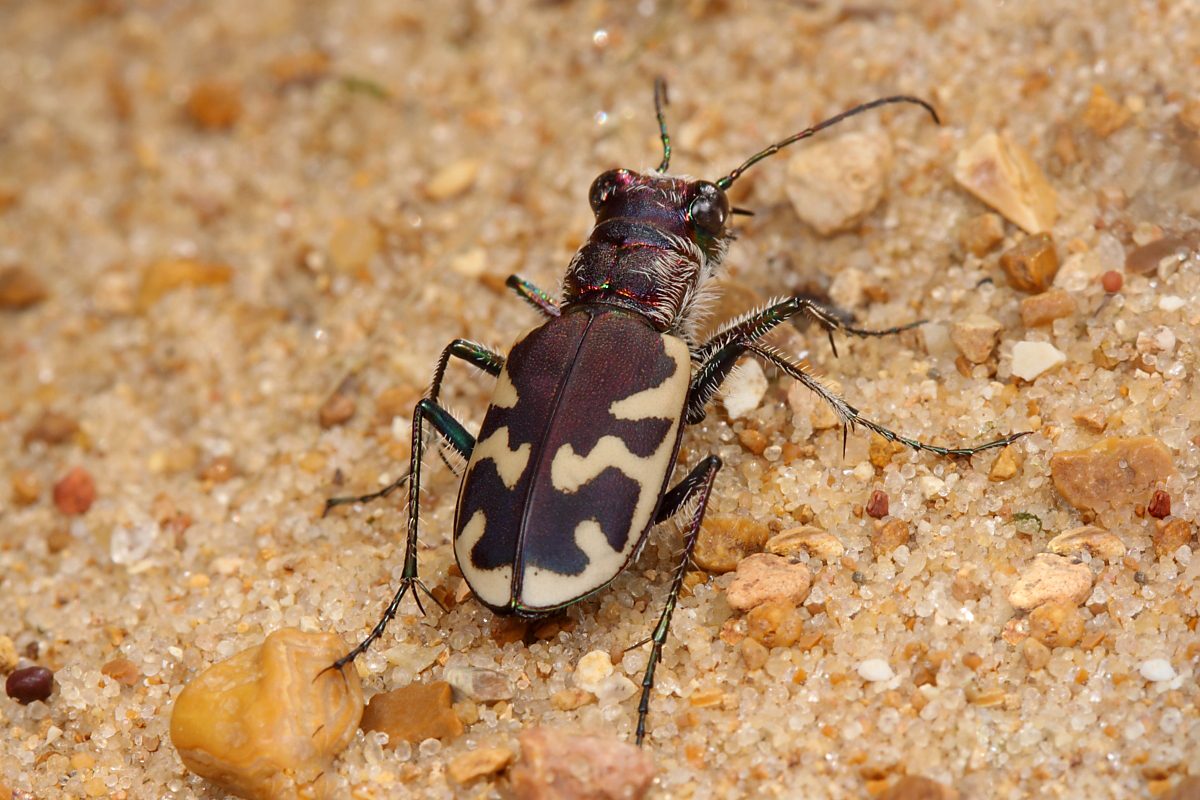
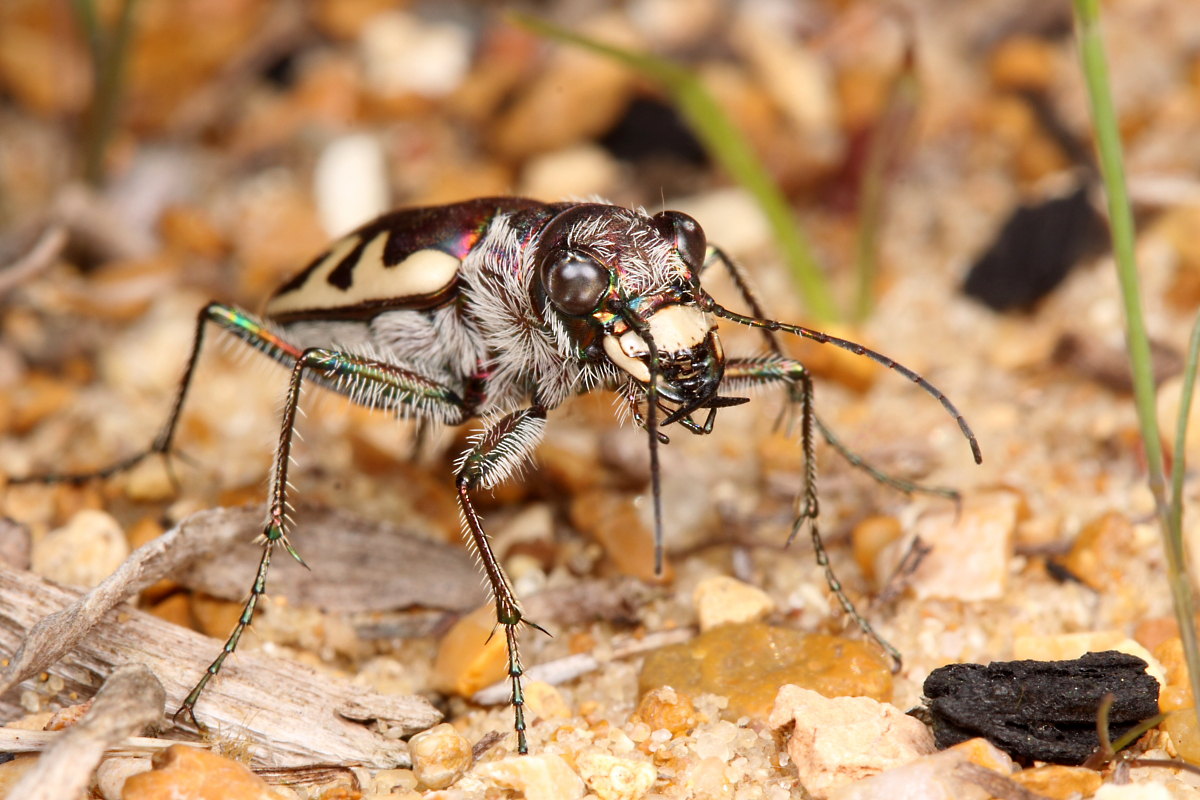
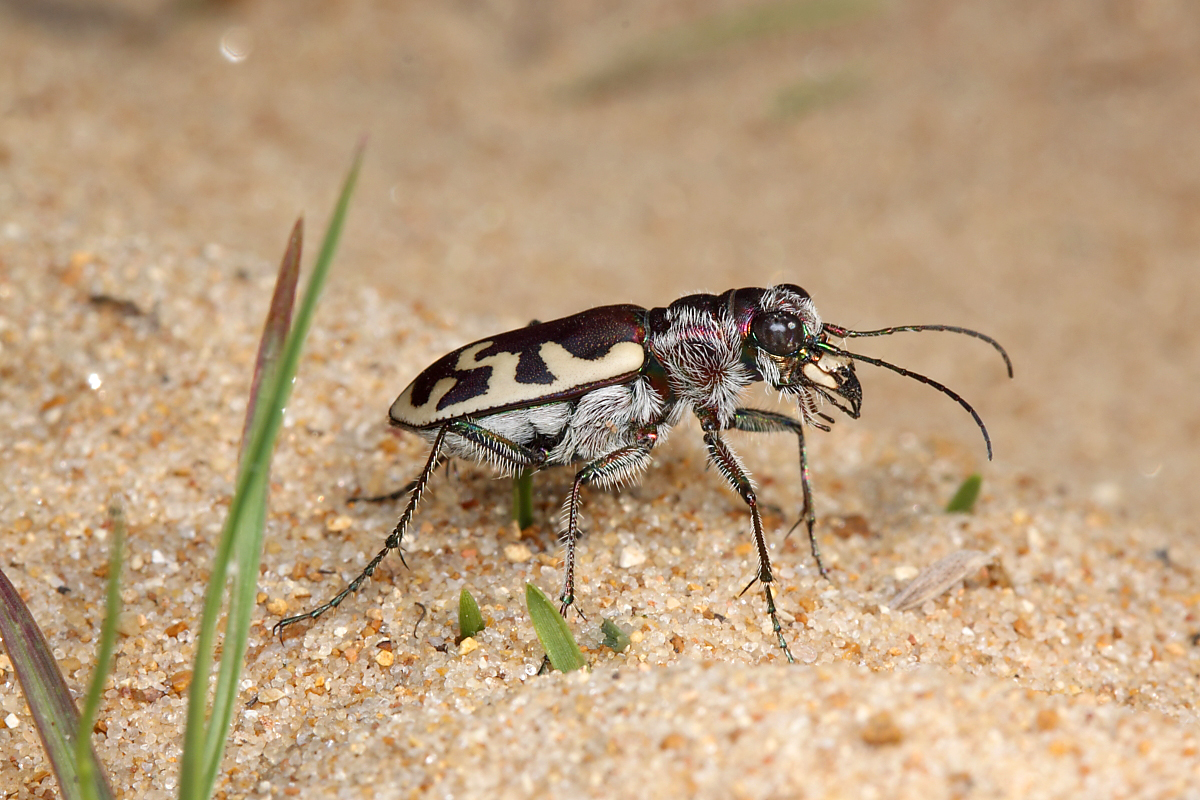
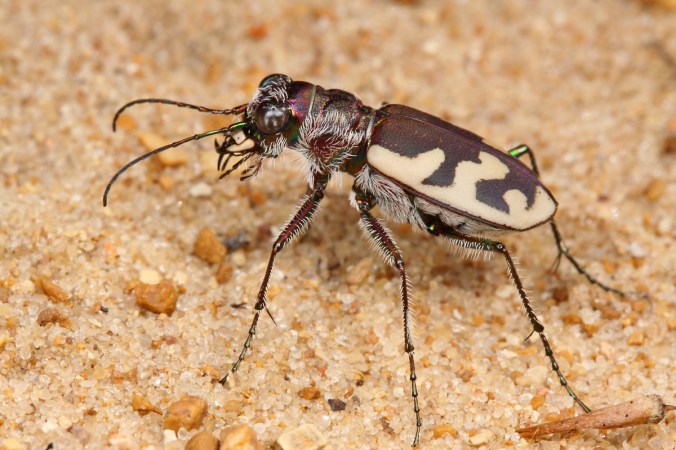
Cicindela formosa generosa | Castlewood State Park, Missouri.

Last fall I took my younger daughter to the Al Foster Trail on the western side of Castlewood State Park, just a few miles down the road from my house.  As we walked the trail through typical bottomland forest next to the Meramec River, I noticed what appeared to be open ground on a rise to the north of the trail.  When I went up to investigate, I saw a rare sight for Missouri—dry sand!  Obviously a deposit from some past flood event, the post oaks established around its perimeter and native warm season grasses sparsely dotting its interior suggested it had been laid down many years ago.  Such sights were likely common along the big river systems of pre-settlement Missouri, as natural flooding cycles laid sand deposits up and down the river courses, each deposit gradually succumbing to vegetation as new deposits were laid down elsewhere.  Today, with channelization and levees for flood control, the Missouri and Mississippi Rivers are just narrow, hemmed-in shadows of their former selves, unable to lay down such deposits in most years until, at last, catastrophic flooding occurs on a grand scale (as is occurring now).  Feeding into the Mississippi River just south of the Missouri River is the Meramec River—as the state’s only still-undamned undammed river system, it still has opportunity on occasion to lay down these interesting dry sand habitats.
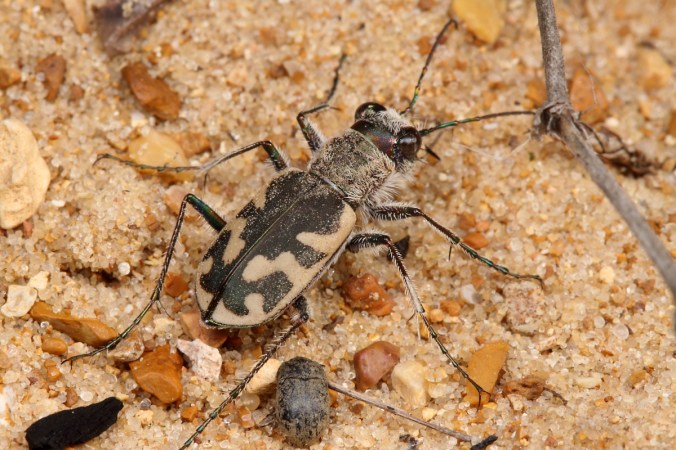
The dark brown coloration of this rather ''dirty'' individual is typical of most Missouri populations.

When I see dry sand habitats in Missouri, three tiger beetle species immediately come to mind—Cicindela formosa (big sand tiger beetle), C. scutellaris (festive tiger beetle), and Ellipsoptera lepida (ghost tiger beetle).  My colleague and co-cicindelophile Chris Brown and I have spent many a weekend traveling up and down the state’s river systems with these species in mind.  None of them are rare in the state, but their fidelity to deep, dry sand habitats also makes them by no means common.  It is always cause for celebration when a new site is discovered for one of these species somewhere in Missouri.  Thus, it was in anticipation of one (or more) of these species that I returned to the spot last week on the first truly gorgeous spring day of the season.  Could it really be that, after ten years of searching for these species throughout the state, I would find a population just a few miles down the road from my house?!
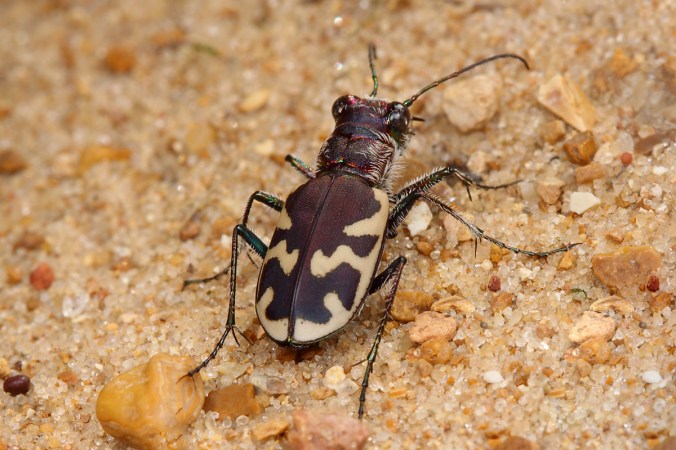
A number of individuals in this population show traces of the bright coppery red coloration more typical of nominotypical populations west of Missouri.

Walking onto the site, I began to see tiger beetles immediately.  However, they were Cicindela tranquebarica (oblique-lined tiger beetle), a common species in Missouri that enjoys not only dry sand habitats, but also wet sand, wet mud, dry clay, and even concrete habitats—hard to get excited about such a habitat slut!  Nevertheless, within minutes I began seeing more robust beetles that were unmistakably big sand tigers.  Big, bold, and beautiful, the beetles were wary in the late afternoon heat and quickly launched into their powerful escape flights that ended comically some 20 yards away with a characteristic bounce and a tumble.  Such behavior might seem to make them impossible to photograph, but I’ve been at this for awhile and know their behavior pretty well—a slow, cautious approach, crouching carefully at the right distance, and crawling deliberately on elbows and knees while peering from behind the camera until it shows up in the lens set to 1:3 (one-third life size).  Then it’s a matter of even more slowly closing the distance and scooting around to get the desired angles and composition.  Move slowly enough and they’ll forget you’re there and resume normal behavior—you’ll be richly rewarded with views of foraging, stilting, and other classic tiger beetle behaviors.
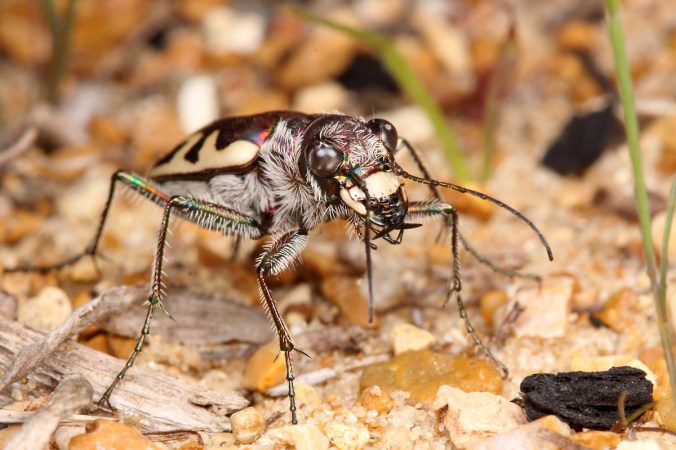
Coloration and markings may seem conspicuous but provide excellent camouflage against the pebbley-sand substrate.

Most of the big sand tiger beetle populations we have found in Missouri are typical of the eastern subspecies C. formosa generosa, distinguished from other named subspecies by the dark brown dorsal coloration and thick white markings that are separate dorsally and joined along the outer edges of the elytra (Pearson et al. 2006).  This subspecies is predominantly midwestern and northeastern in distribution, while the typically bright coppery-red individuals assigned to the nominotypical subspecies are found further west in the Great Plains.  There are, however, certain populations in Missouri that show more or less suffusion of coppery-red coloration.  This is typically explained as hybrid influence, as Missouri lies on the western edge of the distributional range of subspecies generosa.  However, we have only seen these coppery-red indications on the eastern side of Missouri, while populations on the western side of the state along the Missouri River exhibit typical dark brown coloration.  The population here in St. Louis Co. is the third population we have found to show this coppery-red influence, and in fact most of the individuals I saw exhibited greater or lesser amounts of this coloration.  My personal belief is that there is no genetic basis for this subspecific distinction, but that the differences in color are instead related to conditions of the soil in which they live—possibly pH.  Sand habitats in the eastern United States are typically acidic, while alkaline soils abound in the Great Plains (formerly a vast sea bottom).  Hey, it’s a thought!

Big sand tiger beetles remain one of my favorite beetle species in Missouri.

The combination of striking coloration and bold white markings exhibited by big sand tiger beetles might seem to make them quite conspicuous and vulnerable to predation—especially in the open, sparsely vegetated areas that they inhabit; however, against the textured sandy substrates on which they are found they are almost impossible to detect until they move.  I’ve learned not to try to see them first and sneak up on them, as this is a lesson in futility.  Rather, I simply walk through an area and fix my sights on individuals as they take flight, watching them as they fly and eventually land and then sneaking up to the spot where I saw them land.  I generally need to stop about 8-12 feet out and study the spot carefully to pick them out, and then I can continue sneaking up on them.

Photo Details: Canon 50D w/ 100mm macro lens (ISO 160, 1/200 sec, f/16), Canon MT-24EX flash w/ DIY oversized concave diffuser. Typical post-processing (levels, minor cropping, unsharp mask).

REFERENCES:

Pearson, D. L., C. B. Knisley and C. J. Kazilek. 2006. A Field Guide to the Tiger Beetles of the United States and Canada. Oxford University Press, New York, 227 pp.

Copyright © Ted C. MacRae 2011