North America’s second-rarest pine

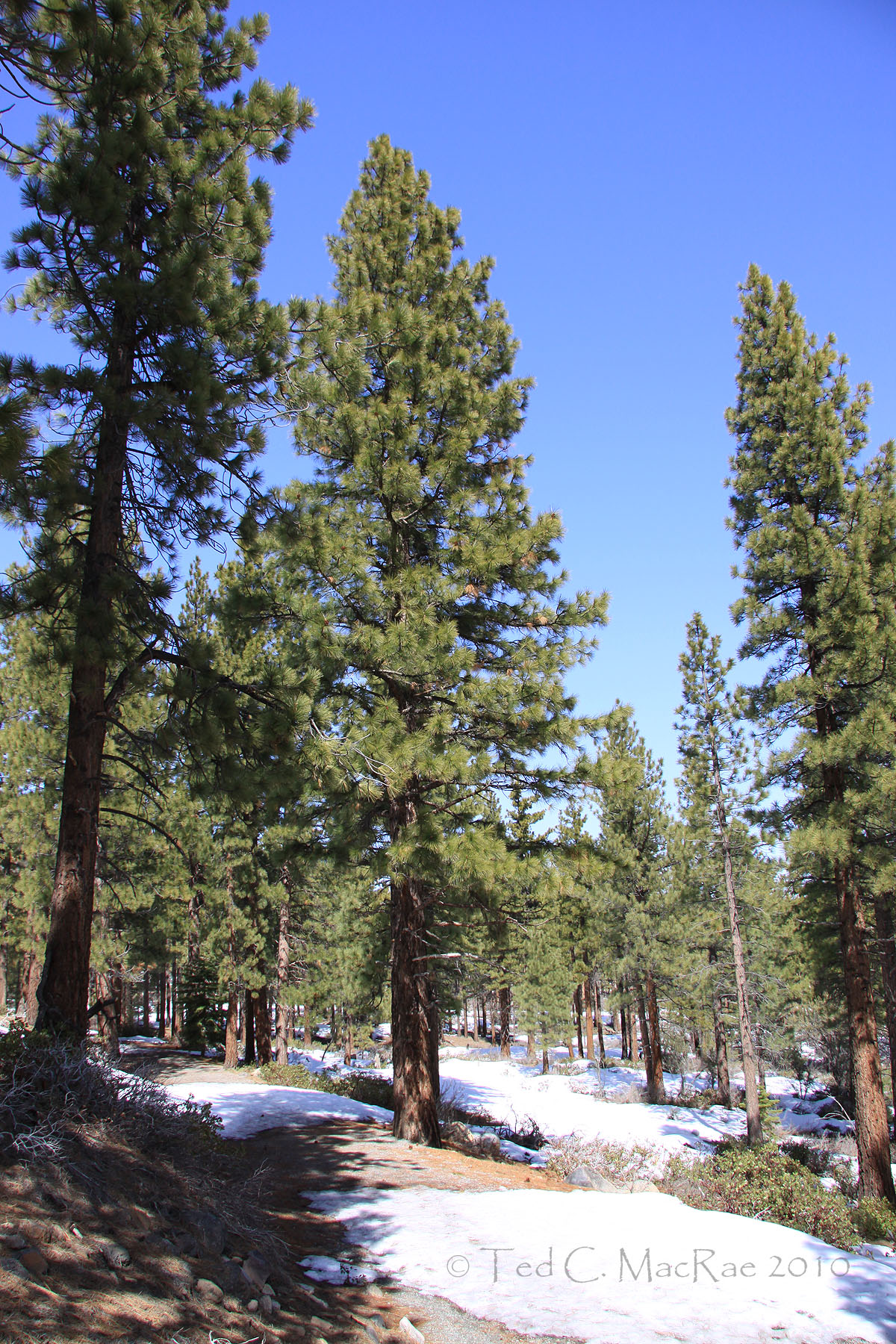
Jeffrey (L) and Washoe (R) pines at Galena Creek Park

During last year’s trip to Lake Tahoe, I made it a goal to find all of the 11 conifer species occurring naturally in the Lake Tahoe Basin.  It took some effort, some good references (Arno 1973, Graf 1999, Lanner 1999, and Peterson 1975), and the help of an especially knowledgeable associate at the U.S.D.A. Forest Service headquarters in South Lake Tahoe, but I succeeded in my quest and later wrote two posts covering the Lake Tahoe conifers (Trees of Lake Tahoe – The Pines, Trees of Lake Tahoe – The “Other” Conifers).  In the first of the posts covering the six species of pines, I added the following footnote:

Two additional species of pine – Washoe pine (Pinus washoensis) and single-leaf pinyon pine (P. monophylla) – are often treated as occurring in the Lake Tahoe area. However, they are of sporadic occurrence on the eastern slopes of Mount Rose, and thus do not occur within the Tahoe Basin proper.

Of these, I am quite familiar with single-leaf pinyon pine.  Widespread on isolated mountain ranges throughout the Great Basin into eastern and southern California and Baja California Norte, I have encountered it during many of my field trips out west and reared a number of buprestid species from its tough, scrubby branches (including 2 specimens of the rarely encountered Phaenops piniedulis).  The other species, Washoe pine, was a new one on me, and it is, in fact, the second-rarest species of pine in all of North America (Torrey pine, Pinus torreyana, being the rarest).  Well, that was all it took to make me commit to finding this species on this year’s return to Lake Tahoe.

Washoe pine cones surround a larger Jeffrey pine cone.

Washoe pine grows only in a few locations, primarily in northern California with the best stands found in the Warner Mountains in Modoc County.  In the Tahoe area, Washoe pine grows only on the eastern slope of Mt. Rose in Nevada, where it is limited to the upper reaches of Galena Creek (Graf 1999, Lanner 1999).  It is apparently very similar to Jeffrey pine (P. jeffreyi) – the most common pine in the Tahoe area – but seems to be more closely related to ponderosa pine (P. ponderosa), which occurs at lower elevations and barely makes it up to the Tahoe area (some authorities even question the distinctiveness of this species, instead considering it a high elevation variety of ponderosa pine).  All three species are 3-needled and grow into tall, pyramidal trees with widely spaced horizontal branches.  Like ponderosa pine, the bark of mature trees forms broad yellowish plates separated by black fissures (the bark of Jeffrey pine is often more reddish with plate more narrowly separated).  The resin of Washoe pine is also chemically similar to that of ponderosa pine, both of which differ from the heptane-producing resin of Jeffrey pine.  However, Washoe pine cones more closely resemble those of Jeffrey pine, being somewhat smaller but sharing the “inward-curved” prickles on the scale tips that make them easy to handle (those of ponderosa pine point outwards, making them very prickly to handle).

Ponderosa (L) and Washoe (R) pine cones. Note smaller size and outward-pointing spines of ponderosa pine cone.

Jeffrey (L) and Washoe (R) pine cones. Both have inward-pointing spines, but Washoe pine cone is smaller and more loosely built.

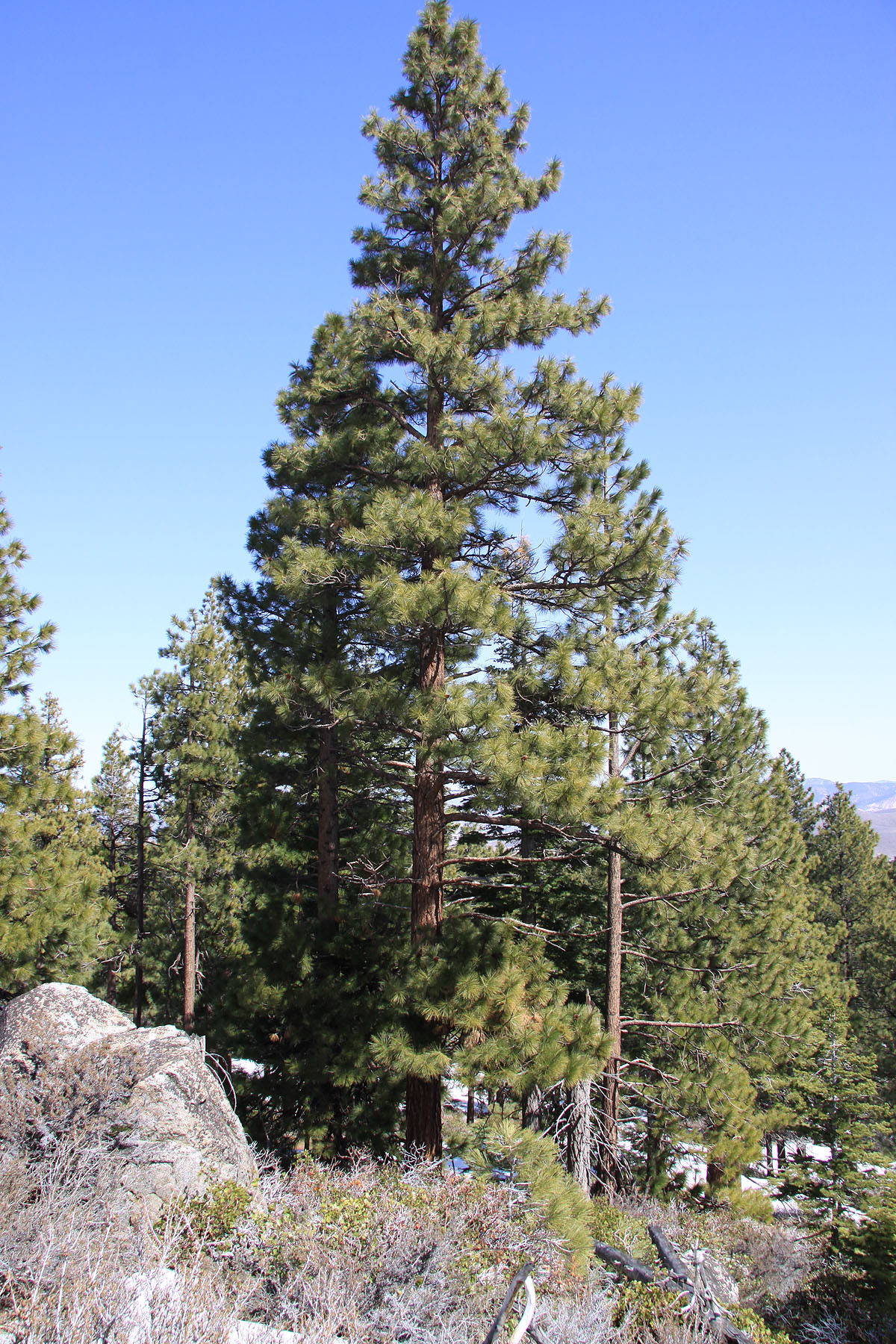
None of my references had any specific locality information for Washoe pine beyond what I’ve stated above, but a little bit of Google snooping through conservation action plan documents revealed that the species occurred at Galena Creek Park, so early in the morning daughter Madison and I made the one-hour drive from South Lake Tahoe to the park.  Arriving at the park, I was disappointed to find nobody manning the headquarters, no maps in the park information board – indeed, no information whatsoever about the occurrence of Washoe pine within the park and where it might be found.  The only clue that there was something special about the pines at this place were the wooden signs around the parking and picnic areas stating “Collection of pine cones prohibited.” I reasoned that it would be very difficult to distinguish the species by its needles, bark, or form, but that the pine cones should be easier to distinguish. I also had no idea whether the pines would occur close to the parking area or if we would need to hike into the area to find them.  So, we just began picking up pine cones.  For a time, all of the pine cones seemed to be typical Jeffrey pine (abundant in the area) with an occasional ponderosa pine (just making up the 6,200′ of elevation in this area).  Ever concerned that I might be missing a subtle difference, I studied each “Jeffrey” pine cone carefully looking for any reason to regard it as truely smaller than normal.  Within about 15 minutes, however, we found it!  Picking up the pine cone, it had the compact build and inward-pointing spines of a Jeffrey pine, but it was smaller and a little more loosely built.  I looked at the trees above and could see no difference from what I would expect for a Jeffrey pine.  Further looking revealed numerous cones of the same type – each tree we found them under was otherwise indistinguishable from Jeffrey pine (at least to this eastern U.S.-based wannabe botanist).  Nevertheless, it was clear that we had found Washoe pine, and that it was quite abundant within this small watershed that we were exploring.  Jeffrey pine was also common in the watershed, and an occasional ponderosa pine could be found.  I took photos of mature individuals of each of the three species, identified conclusively by way of the cones found underneath them, to show how similar in appearance the three species are.

Pinus ponderosa

Pinus jeffreyi

Pinus washoensis

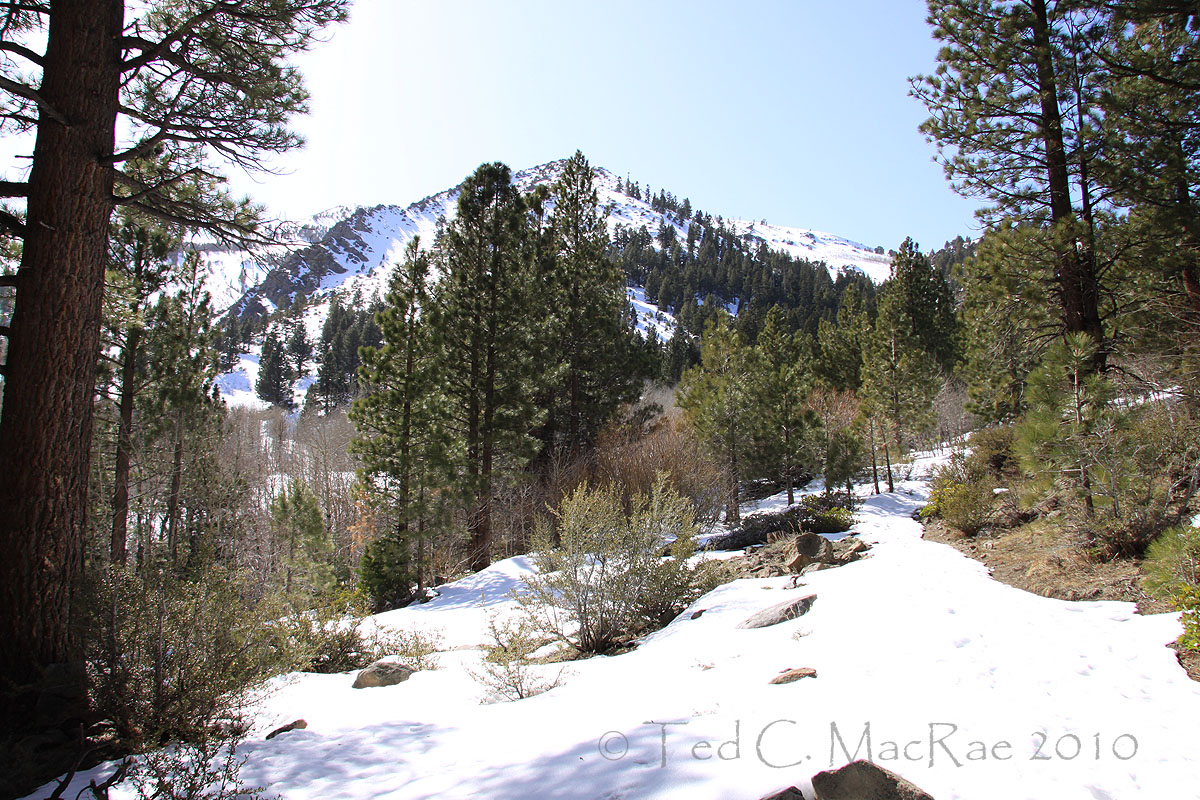
Madison and I later hiked out of the watershed into the higher elevations of Mt. Rose (from where these ants were photographed) – we noticed that almost immediately upon hiking out of the watershed the Washoe and ponderosa pines disappeared, and only Jeffrey pines were seen.  Although I have seen it many times before, I was still hoping to see single-leaf pinyon pine, but none were seen.

REFERENCES:

Arno, S. F. 1973. Discovering Sierra Trees. Yosemite Association, Yosemite National Park, California, 89 pp.

Graf, M.  1999. Plants of the Tahoe Basin.  Flowering Plants, Trees, and Ferns.  A Photographic Guide. California Native Plant Society Press, Berkeley, 308 pp.

Lanner, R. M.  1999. Conifers of California.  Cachuma Press, Los Olivos, California, 274 pp.

Peterson, P. V., and P. V. Peterson, Jr.  1975. Native Trees of the Sierra Nevada.  University of California Press, Berkeley, 147 pp.

Copyright © Ted C. MacRae 2010

Winter Botany Quiz #6 – answers and a checklist

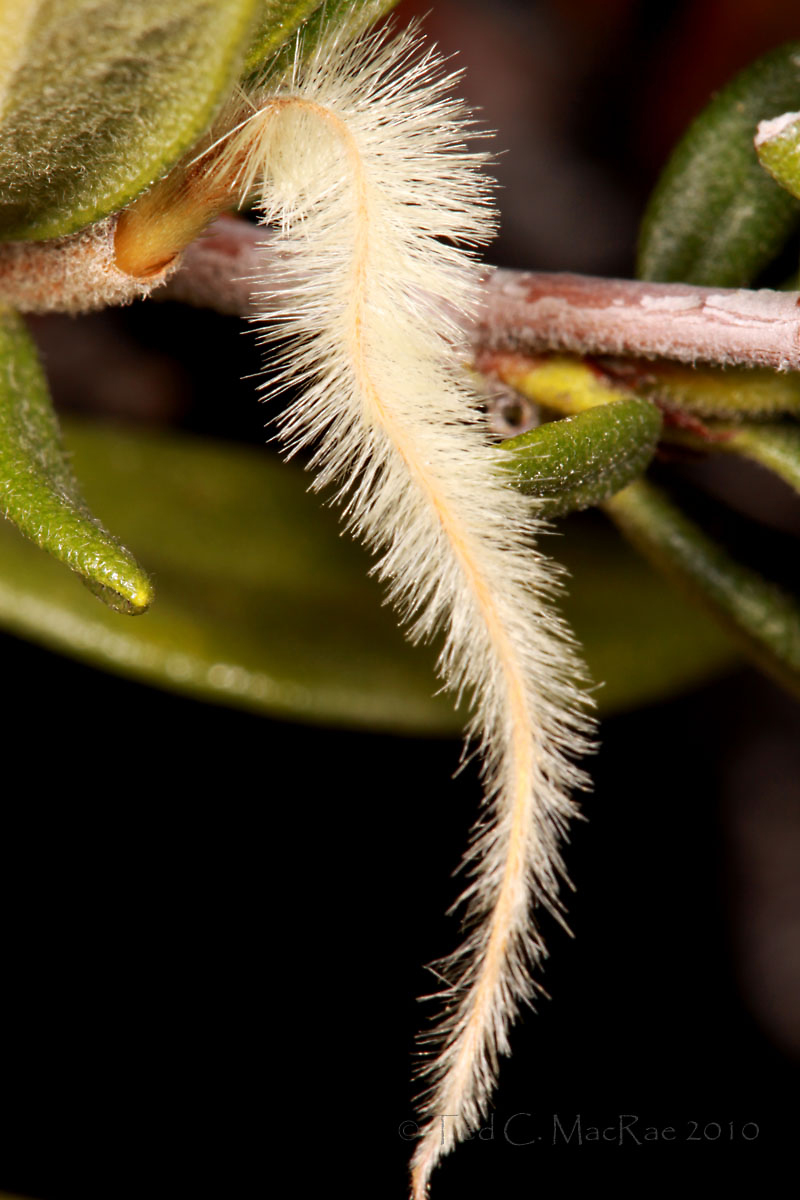
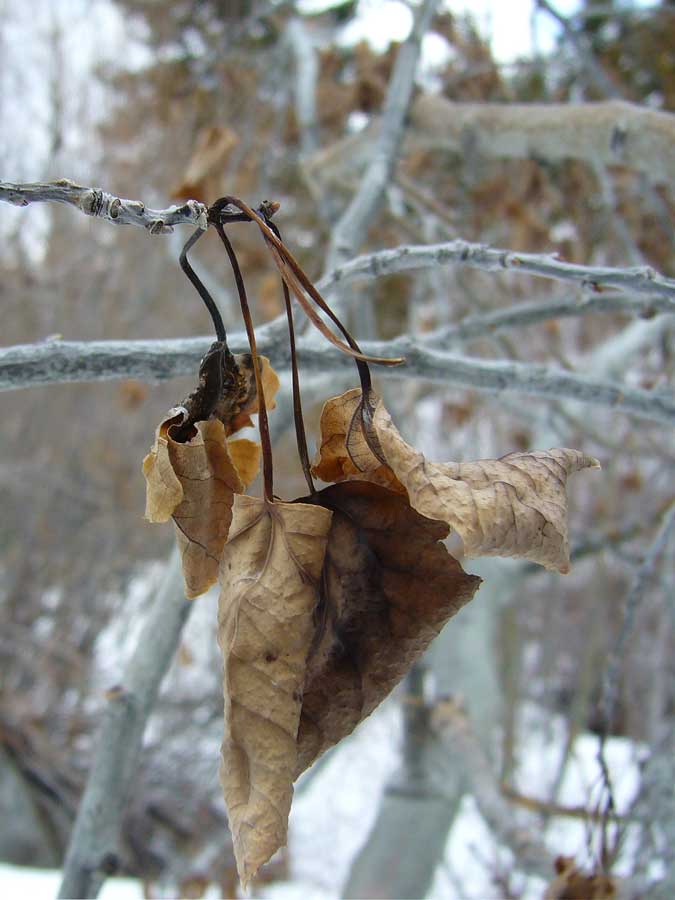
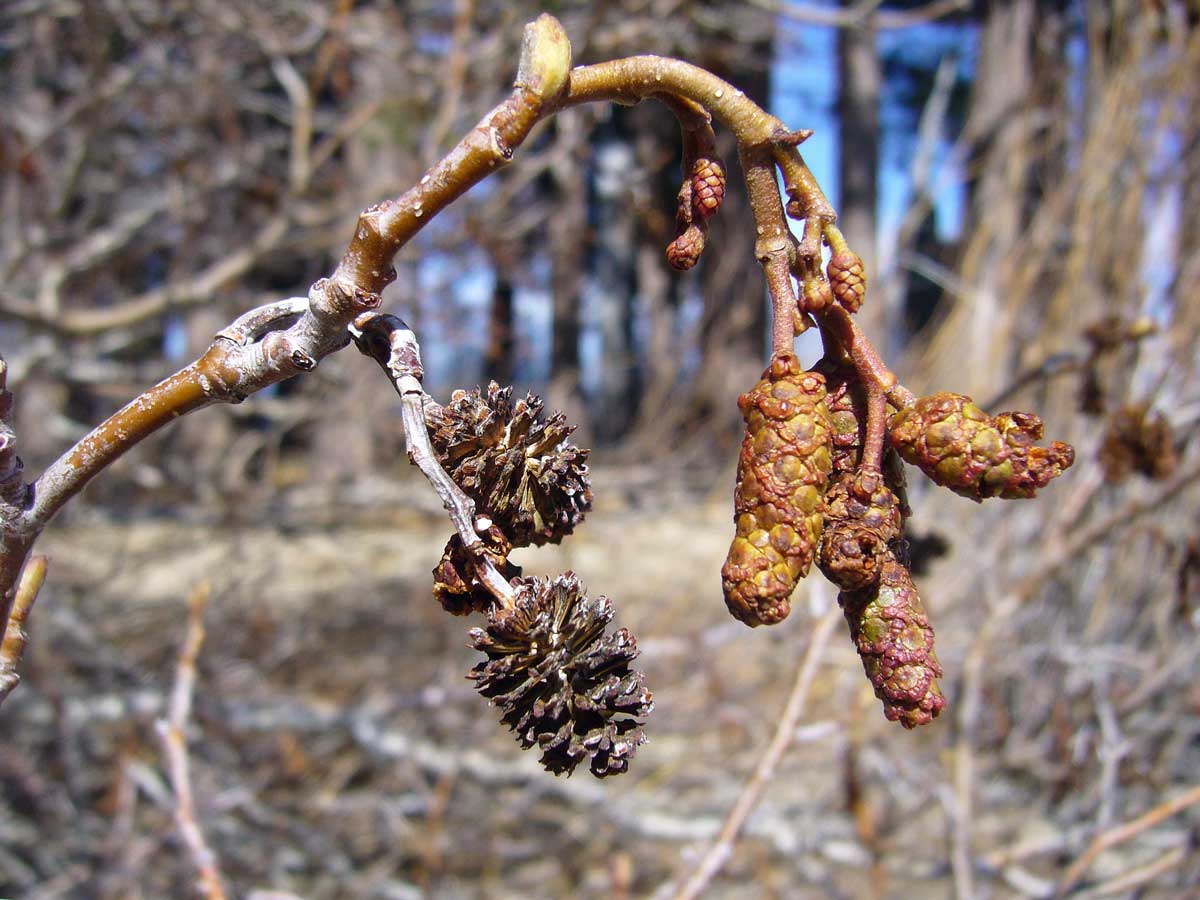
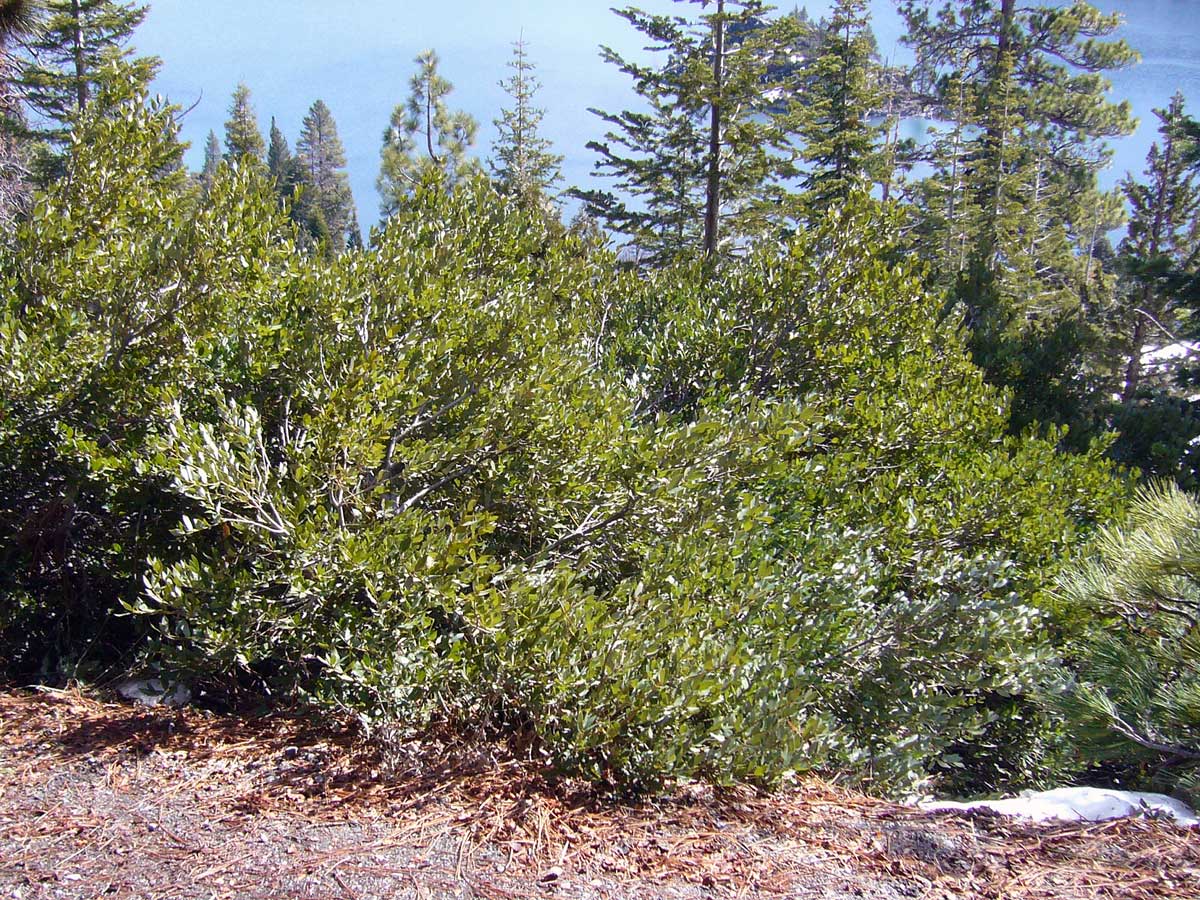
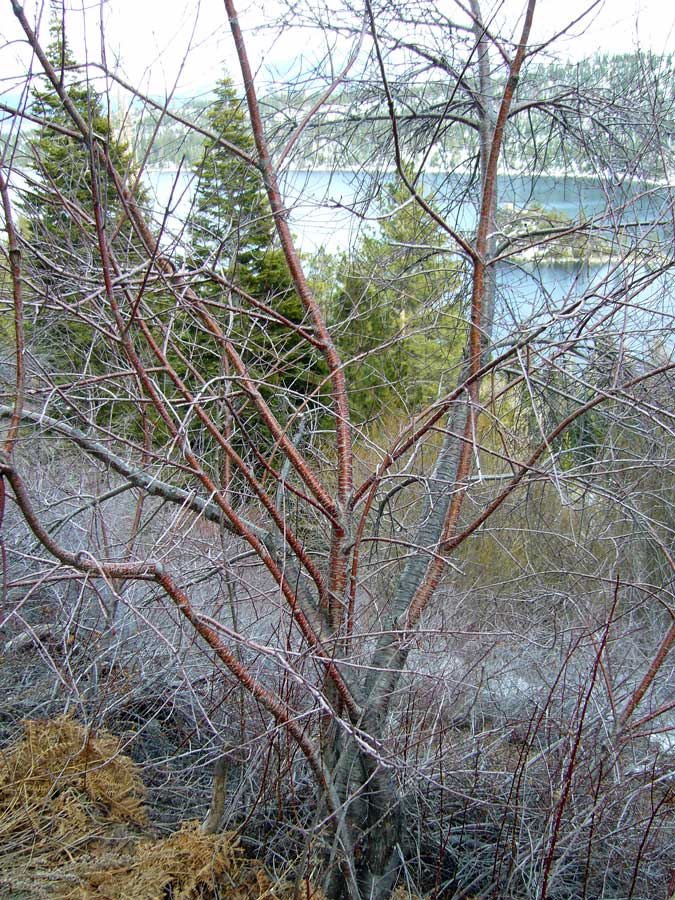
I thought yesterday’s Winter Botany Quiz #6 would be a fairly difficult, and given the apparent difficulty of my previous quizes (Pismire Puzzle and Tuesday Teaser) I thought I’d give readers a break this week and narrow down the location to the Lake Tahoe area. Despite publishing in the dead of night, it took only 31 minutes for Peter Yeeles to swoop down and correctly name the family, genus, species, and function for the structure pictured. His only lapsus regarded the terminology used for the name of the structure itself, leaving the door open for James Trager to snag some scrap points. The plant is, of course, Cercocarpus ledifolius (curl-leaf mountain mahogany) in the family Rosaceae, and the structures pictured above and in the previous post are the stigmas of the flowers persisting as wind-assisted dispersal structures for the fruit. “Cercocarpus” is, in fact, derived from the Greek words for “tailed” and “fruit”, whose numerous erect hairs give the plant in a silvery sheen late in the growing season.

Why was I interested in this plant? It was one of the few tree species occurring in the Lake Tahoe Basin that I wasn’t able to find for last year’s 3-part series, Trees of Lake Tahoe (including The Pines, The “Other” Conifers, and The Deciduous Trees).  Widespread in the mountainous west (and barely qualifying as a tree), its occurrence in the Tahoe Basin is more sporadic.  Better stands are found outside the basin proper on the dry eastern flank of the Sierra Nevada (Graf 1999), and indeed these plants were photographed at ~6,500 feet on the eastern slopes of Mt. Rose.

My real interest in Cercocarpus, however, is as a favored host plant for species of jewel beetles (family Buprestidae).  About two dozen species of these beetles have been associated with Cercocarpus spp. in North America, nine of which have been confirmed as breeding within dead branches of these plants and five having been associated with no other plant.  I’ve collected a number of these species myself, particularly in the San Gabriel and Santa Rosa Mountains of southern California and the Chisos Moutains of Big Bend National Park in Texas, including Polycesta cazieri, Chrysobothris piuta, and paratype specimens of Acmaeodera rubrocuprea. I thought it might be of interest to any readers who might collect these insects to present a checklist of Buprestidae associated with Cercocarpus in North America (see appendix below).

REFERENCE:

Graf, M. 1999. Plants of the Tahoe Basin. Flowering Plants, Trees, and Ferns. A Photographic Guide. California Native Plant Society Press, Berkeley, 308 pp.

Checklist of North American Buprestidae associated with Cercocarpus

(Bold indicates species that have been reared from Cercocarpus.  An asterisk indicates species that have been associated exclusively with Cercocarpus).
Acmaeodera (s. str.) angelica Fall
Acmaeodera (s. str.) connexa LeConte
Acmaeodera (s. str.) dolorosa dolorosa Fall
Acmaeodera (s. str.) idahoensis Barr
Acmaeodera (s. str.) mariposa mariposa Horn
Acmaeodera (s. str.) mariposa dohrni Horn
Acmaeodera (s. str.) nelsoni Barr
Acmaeodera (s. str.) nexa Fall
Acmaeodera (s. str.) plagiaticauda Horn
Acmaeodera (s. str.) pubiventris lanata Horn
Acmaeodera (s. str.) rubrocuprea Westcott & Nelson*
Acmaeodera (s. str.) vandykei Fall
Acmaeodera (s. str.) variegata LeConte
Acmaeodera (Squamodera) vanduzeei (Van Dyke)
Anthaxia (Haplanthaxia) caseyi sublaevis Van Dyke
Anthaxia (Melanthaxia) porella Barr*
Anthaxia (Melanthaxia) simiola Casey*
Chrysobothris bisinuata Chamberlin*
Chrysobothris mali Horn
Chrysobothris piuta Wickham
Chrysobothris purpureovittata purpureovittata Horn
Chrysobothris purpureovittata cercocarpi Westcott & Nelson*
Dicerca (s. str.) hornii hornii Crotch
Polycesta (Tularensia) californica LeConte
Polycesta (Tularensia) cazieri Barr

Copyright © Ted C. MacRae 2010

Add to FacebookAdd to DiggAdd to Del.icio.usAdd to StumbleuponAdd to RedditAdd to BlinklistAdd to TwitterAdd to TechnoratiAdd to Yahoo BuzzAdd to Newsvine

Email to a friend

Winter Botany Quiz #6

This photo was taken during my March trip to Lake Tahoe.  Can you identify the plant (family, genus, species), the structure shown, and its function?  Answer and more photos tomorrow.

© Ted C. MacRae 2010

Add to FacebookAdd to DiggAdd to Del.icio.usAdd to StumbleuponAdd to RedditAdd to BlinklistAdd to TwitterAdd to TechnoratiAdd to Yahoo BuzzAdd to Newsvine

Email to a friend

Bicycle ride around Lake Tahoe

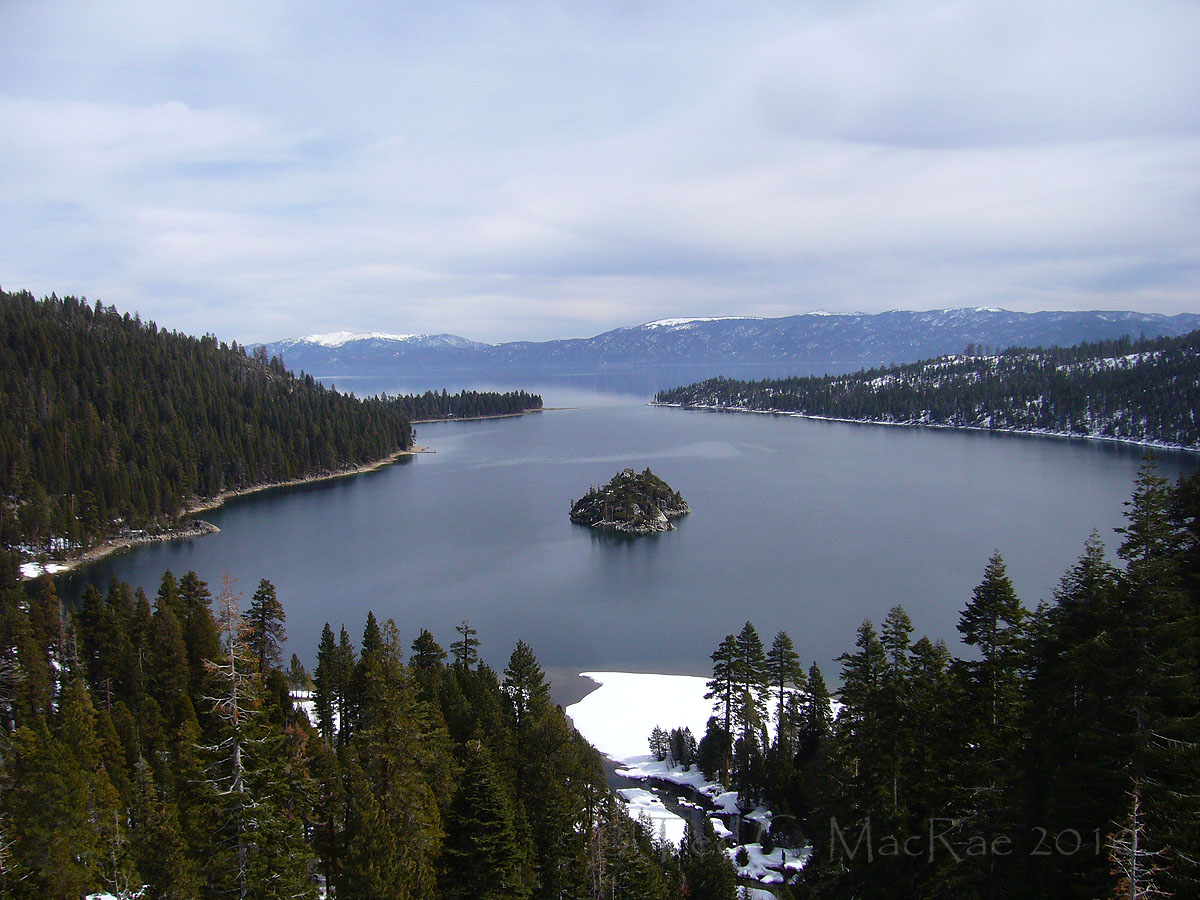
Overlooking Emerald Bay from Emerald Bay Pass.

Perhaps some of you have by now deduced that, in addition to insects and natural history, I have a second passion – cycling! In fact, I raced bikes competitively as an amateur for seven years (going by the local nickname “BugMan“) before hanging it up at the end of 2008.  However, even though I’m not racing anymore, I still ride as much as ever, only now it’s purely for the fun of it!  I’m a dedicated roadie, riding year-round and averaging around 5,000-6,000 miles a year.  I love the speed and the smoothness of the road and the opportunity it provides to cover long distances and enjoy the sights (not to mention the resulting freedom to eat like a horse and stay relatively trim!).

One of my most memorable cycling experiences was in 1995, when I joined a group that rode the entire circuit around Lake Tahoe.  I was living in Sacramento at the time and was a relative newbie – the 72-mile ride with 3,500 feet of climbing at elevations ranging from 6,200 feet at lake level to more than 7,000 feet near Carson Pass was without question the most difficult ride I had ever attempted at that point.  Now, as a seasoned ex-racer, such a ride is not extraordinarily difficult for me – in fact, I do rides in the 60-80 mile range with as much climbing or more almost every weekend.  Still, my memories of the challenge and the unbelievable scenery have kept that ride high in the ranks of my most epic, and since we began going back to Lake Tahoe two spring ago I’ve wanted to do it again.  It would not have been possible during our first trip back, as the roads still had quite a bit of snow on them; however, last year the roads were clean and dry, and I resolved to bring my bike with me on this year’s trip in the event that such was again the case.  Madonna del Ghisallo (patron saint of cycling) must have been smiling down upon me, because this year the roads were again in beautiful condition, despite the amount of snow blanketing the surrounding landscapes.  It made for one of the most beautiful bike rides I have ever done in my life.

There was a comforting familiarity to the ride, despite the 15 years since the last – the stunning landscape that I have come to cherish so dearly, the massively shaded solitude of the west shore, lunching on California cuisine in a quaint village along the north shore, and the long climbs and screaming descents through open Jeffrey pine forests along the east shore.  It was also different – I was by myself, yet despite that I was stronger and briming with confidence; not only a seasoned cyclist, but also much more knowledgeable of and closely attuned to the natural history of the area.  I didn’t fear the climbing, I relished it!  I didn’t overcome the challenge, I enjoyed it!  I stopped at a few places to take photographs (taken with my small point-and-shoot, for obvious reasons) and share some of them here – I hope they give you a tiny taste of the flavor of that day.

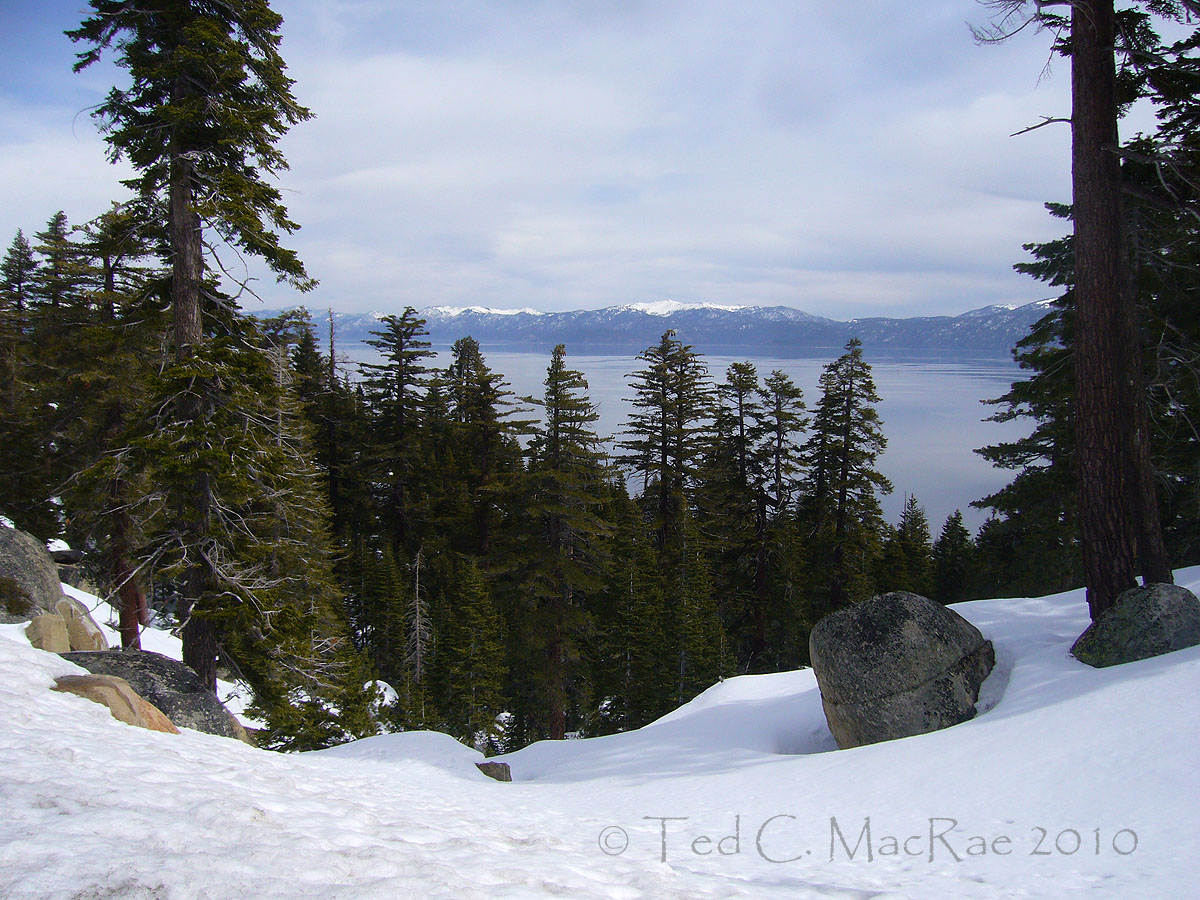
Near the summit of Emerald Bay Pass, looking back at Mt. Tallac.

High point on Emerald Bay Pass.

The descent to Eagle Falls at Emerald Bay.

 This is an avalanche zone (note deep snow deposits on steep slopes on left side – these extend high up the mountain here).  Moments after taking this photo, an avalanche fell onto the road right as I was descending by this spot. At ~35 mph there was no stopping – I rode right through it as the initial snow drop hit the pavement and then watched in amazement as the main drop dumped onto the road behind me.  It was not big enough to bury anything, but I surely would have crashed had I gotten there just a moment or two later!

Overlooking Emerald Bay from Emerald Bay Pass.

Emerald Bay is a glacial scour formed during the last glacial period ending only 10,000 years ago. Fannette Island, Lake Tahoe’s only island, is thought to be a resistant rib of granite rock that was overridden by the glacial ice. Lateral glacial morraines enclose each side of the bay, and an incomplete terminal morraine connects Emerald Bay to the main lake. Last year, I stood atop the outermost rock of the left side of the terminal morraine and took photographs looking back in this direction

Grove of sugar pines at D. L. Bliss State Park.

Sugar pine, Pinus lambertiana, is among my favorite of all pines.  More common on the west shore due to their preference for higher levels of moisture, their towering, ragged, asymmetrical crowns with long, pendulous cones (usually a foot or more in length) hanging from the branch tips are immediately recognizable from afar.  These majestic trees are the world’s tallest pine and bear the longest cones in the genus; they stand in defiant contrast to the uniformly symmetrical crowns of the more common Jeffrey pines (Pinus jeffreyi) and white firs (Abies concolor) that surrounded them.  For a more thorough treatment of the trees of Lake Tahoe, please visit my three-part series covering the pines, the “other” conifers, and the deciduous trees.

Some might think it was still a little too early in the season for bike riding.

Looking west across Lake Tahoe from Logan Shoals Overlook.

The east shore in Nevada is decidedly drier than California’s west shore.  The forest on the Nevada side is a more open, fire-mediated landscape dominated by Jeffrey pine, as opposed to the denser forests on the west shore with higher incidence of shade-tolerant trees such as white fir and incense-cedar (Libocedrus decurrens).

View of Cave Rock (left center) from Logan Shoals Overlook.

Cave Rock was and still is a sacred place for people of the Washoe tribe, whose ancestors occupied Lake Tahoe during the summers and performed religious ceremonies inside the largest of its caves.  These caves, sitting several hundred feet above the current lake level, were carved by wave action shortly after Lake Tahoe’s formation nearly 3 million years ago when lake levels were much higher than they are today.  The first of two highway tunnels was blasted through the rock in 1931 (much to the dismay of the Washoes), and the second was added in 1957.

Looking north along Lake Tahoe's east shore from atop Logan Shoals Overlook.

Copyright © Ted C. MacRae 2010

Add to FacebookAdd to DiggAdd to Del.icio.usAdd to StumbleuponAdd to RedditAdd to BlinklistAdd to TwitterAdd to TechnoratiAdd to Yahoo BuzzAdd to Newsvine

Email to a friend

Lake Tahoe – 2010 Preview

How does an entomologist/wannabe botanist-ecologist-geologist-cyclist-nature photographer spend his time on a family vacation?

  • Thursday evening to Saturday late afternoon:
    – Drive from St. Louis to Lake Tahoe.  In between driving shifts:
    – Complete manuscript on Cylindera cursitans surveys
    – Complete manuscript on Dromochorus pruinina surveys.
    – Arrive late afternoon, quick 1-hr bike ride before dark.
  • Sunday:
    – Cross-country skiing with the family: Spooner Lake (~6 miles).
    – Sight-seeing: Sand Harbor Overlook on the east shore.
    – Hang out at the hot tub with the family and a glass of wine.
  • Monday:
    – Drive to Sacramento with the family.
    – Visit buprestid-colleagues Chuck Bellamy (CDFA) and Mark Volkovitsh (Russian Academy of Science).
    – Private lesson from Mark on how to dissect buprestid larvae for taxonomic description.
    – Dinner with my favorite brothers-in-law.
    – Drive back to Lake Tahoe.
  • Tuesday:
    – Snowshoe hike with the family: Emerald Bay to Eagle Lake and back (2 miles, 1,900′ of climbing).
    – Bike ride: South Lake Tahoe to Bliss State Park and back (33 miles, 1,100′ of climbing).
  • Wednesday:
    – Bike ride: all the way around Lake Tahoe (72 miles, 3,500′ of climbing).
    – Hang out at the hot tub with the family and a glass of wine.
  • Thursday:
    – Botanizing and hiking with daughter Madison at Mt. Rose (4 miles, 1,300′ feet of climbing).
    – Hang out at the hot tub with the family and a glass of wine.
  • Friday:
    – Alpine skiing with the family at Heavenly Ski Resort.
    – Join a 2-hour ski tour with US Forest Service rangers discussing natural and cultural history of Lake Tahoe.
    – Hang out at the hot tub with the family and a glass of wine.
  • Saturday morning to Sunday night:
    – Drive from Lake Tahoe back to St. Louis.  In between driving shifts:
    – Process/file photographs from trip (~250).
    – Complete reports for 2009 collecting permits.
    – Complete new applications for 2010 permits.
    – Begin manuscript on Cylindera celeripes conservation status.
  • Monday:
    – Return to work mentally refreshed!

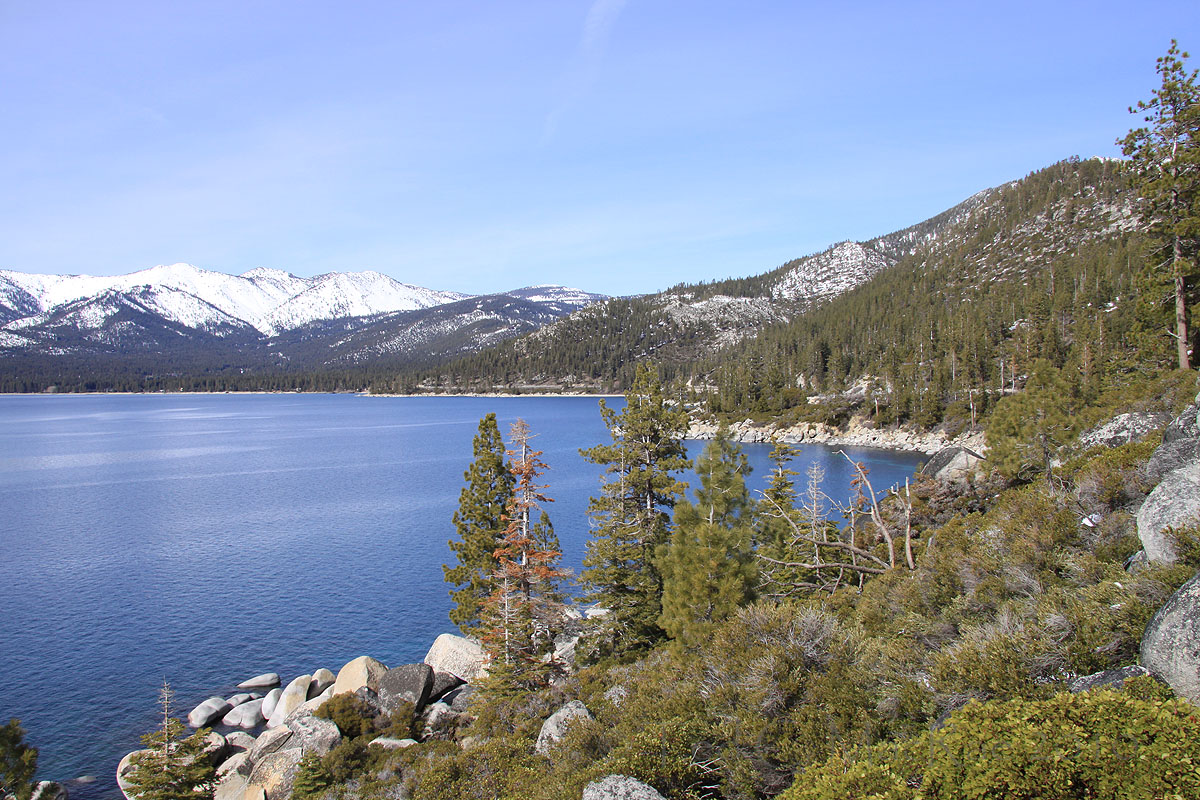
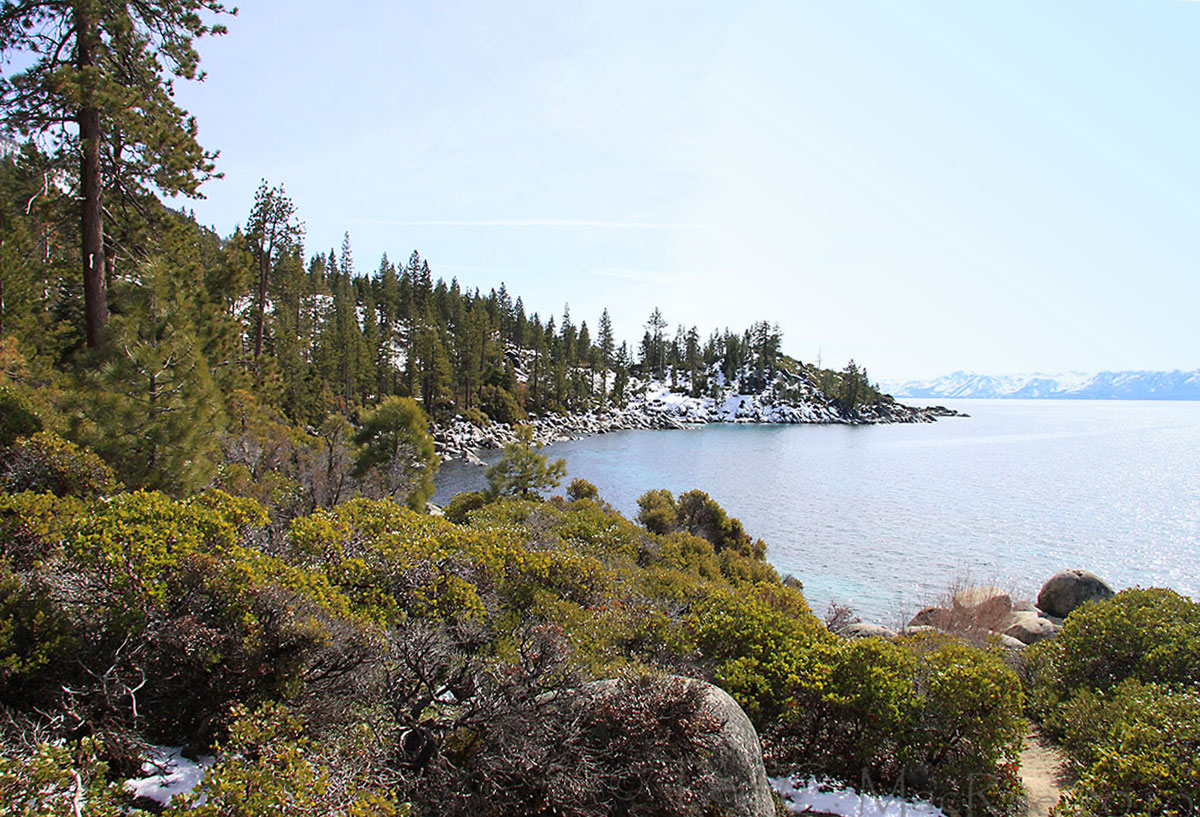
I’ve already shared a bit of the trip with a view of Mt. Rose from 7,000′ and ensuing pismire quagmire.  Today I share some views of one of the most scenic of lakeside spots on the east shore – Sand Harbor Overlook.  I featured this spot in this post from last year’s trip due to its stunning beauty, and this year I was no less impressed.  I still had that same, annoying, afternoon sun to deal with (next year I’ve resolved to get here during the morning) but managed to get some passable photographs.  The one above is my favorite, and I hope you enjoy the following as well. (p.s. if someone knows how to fix a sun-blown sky in Photoshop Elements, please let me know).

Copyright © Ted C. MacRae 2010

Add to FacebookAdd to DiggAdd to Del.icio.usAdd to StumbleuponAdd to RedditAdd to BlinklistAdd to TwitterAdd to TechnoratiAdd to Yahoo BuzzAdd to Newsvine

Email to a friend

Pismire Puzzle

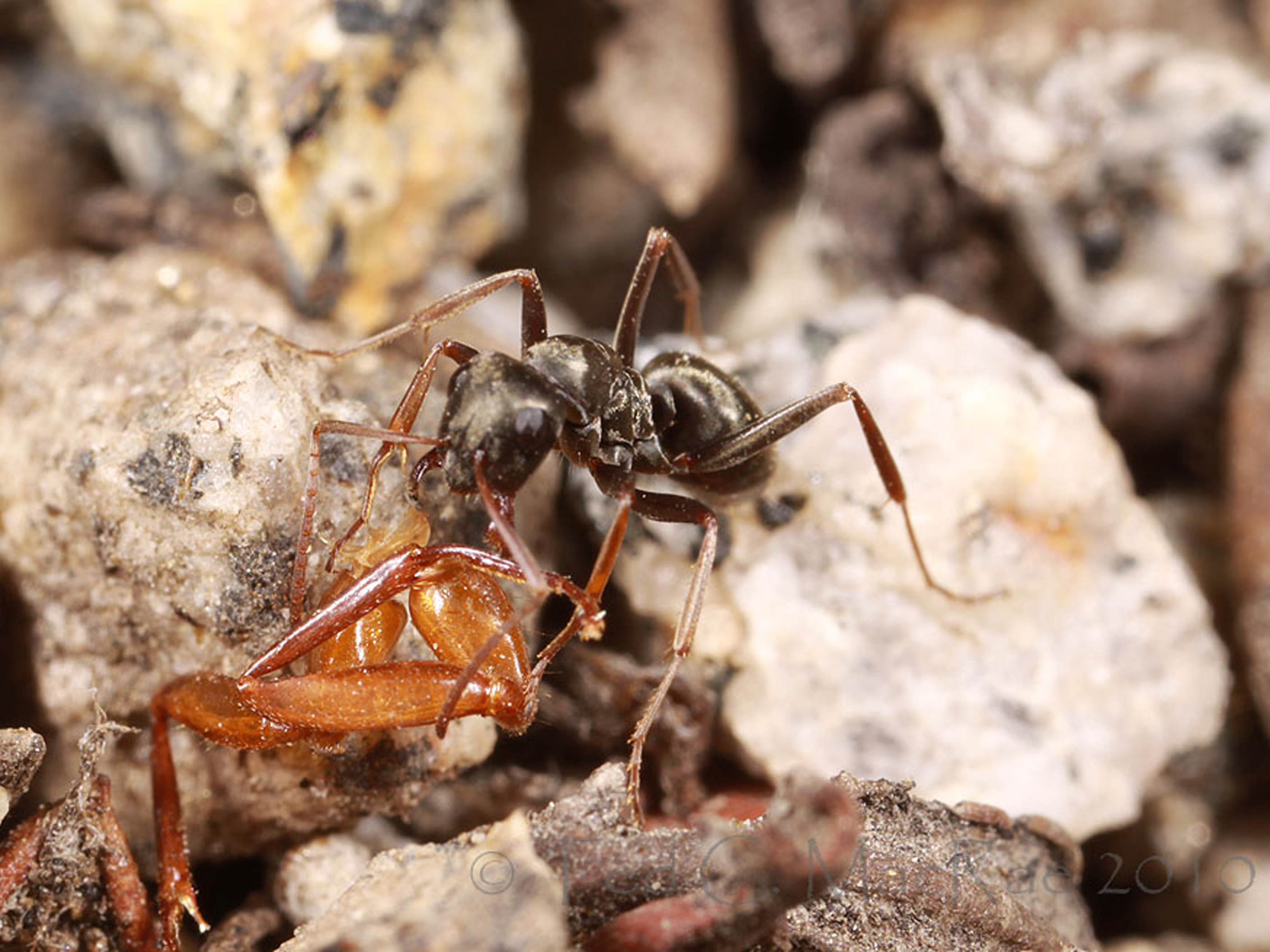
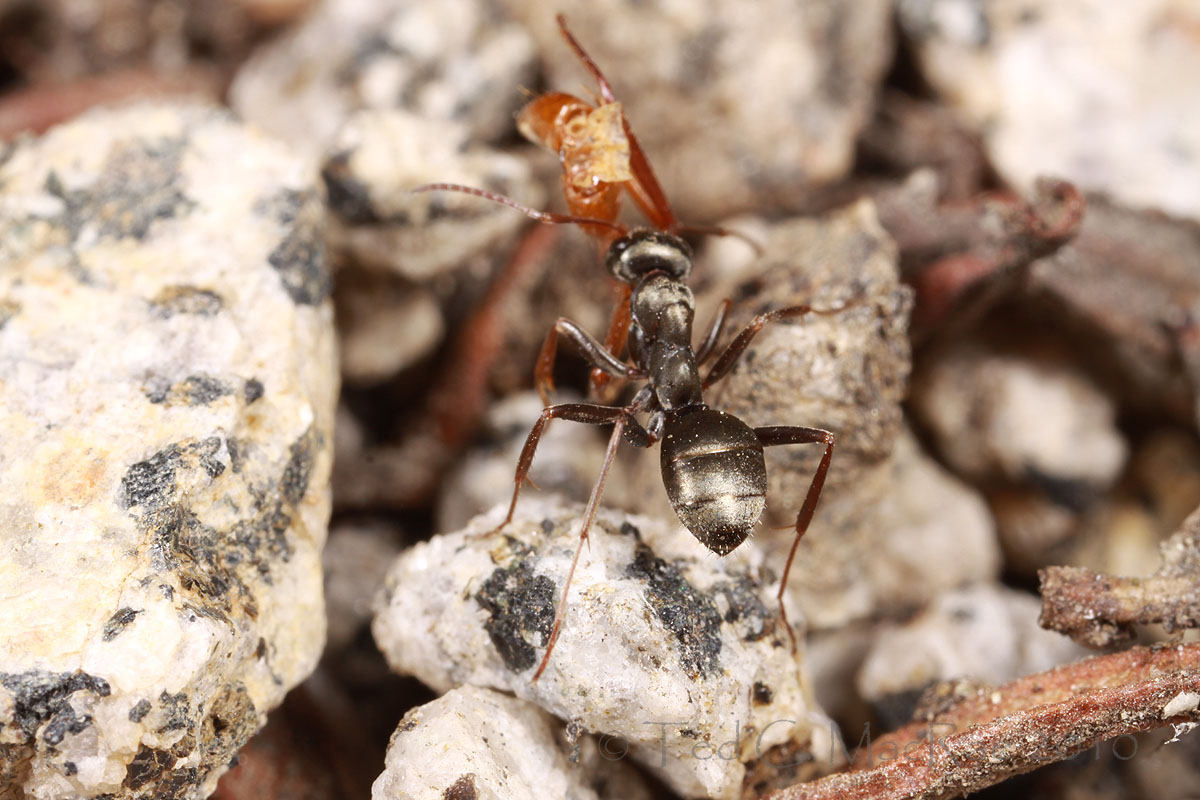
I returned home from a much-needed vacation late last night, and even though it was a family trip I have much to share from the past 10 days. However, I must remain coy about where I was for the time being so that I may present this little quiz:

Who am I?

I had planned to post this yesterday, but the best title I could come up with – “Monday Myrmecine Mystery” – was just too similar to a Monday tradition on another blog that we’ve all grown to love.  (Also, I just couldn’t get to it.)  No longer constrained by an M-themed title, I came up with this alternative¹ that I hope will make the 12-year old boy in each of us giggle aloud.

¹ Pismire (from pissemire) is an archaic name of Scandinavian origin for ant. Derived from pisse urine (referring to the smell of formic acid) + mire ant.

What am I doing?

I expect members of the Formicine Guild will jump all over this, so I should probably make this quiz about more than just the name of the ant (which I don’t know, so does that make this an illegal quiz?).  Maybe I should offer double points to non-myrmecologists for a proper ID (but then, I would need the consensus of the myrmecologists – perhaps a conflict of interest?).

Why do I do this?

I could also offer points for correctly guessing what the ant is carrying – which again I wasn’t able to figure out, so I guess points will have to be awarded for the most plausible explanation.  What I do know is the ant carried this carcass while meandering aimlessly over the same patch of ground – occasionally stopping very briefly to dig its jaws into it before resuming its wanderings.  I followed the ant for about 10 minutes, and it never left an area of about 1 square foot – no nest nearby that I could see, no direction to its travels, no apparent purpose to its labors.

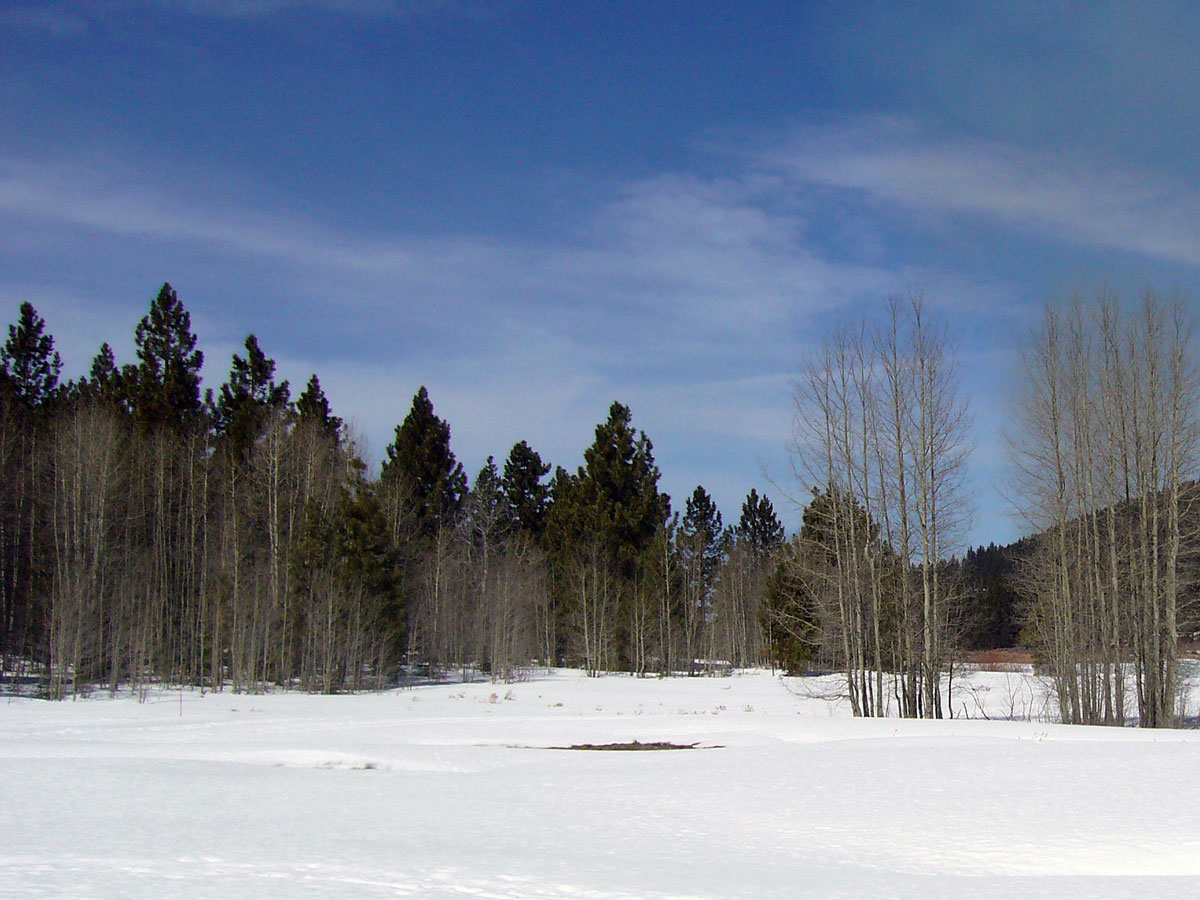
This is where I live.

I most definitely know where I was, so firm points are on offer for correctly guessing the answer to that question – either on the basis of the ant ID or the above photograph of its habitat.  Yes, that is snow on the ground – lots of it!

Copyright © Ted C. MacRae 2010

Add to FacebookAdd to DiggAdd to Del.icio.usAdd to StumbleuponAdd to RedditAdd to BlinklistAdd to TwitterAdd to TechnoratiAdd to Yahoo BuzzAdd to Newsvine

Email to a friend

Trees of Lake Tahoe – The Deciduous Trees

Alder, Maple, and Nuttall’s Flowering Dogwood make beautiful bowers over swift, cool streams at an elevation of from 3000 to 5000 feet, mixed more or less with willows and cottonwood; and above these in lake basins the aspen forms fine ornamental groves, and lets its light shine gloriously in the autumn months.–John Muir, The Mountains of California (1894).

p1020724_2

This is the third installment of a “Trees of Lake Tahoe” series summarizing the trees of Tahoe Basin. The basin forests are, of course, dominated by a diverse assemblage of conifers – eleven species in all.  These were covered in parts 1 (Trees of Lake Tahoe – The Pines) and 2 (Trees of Lake Tahoe – The “Other” Conifers ) of this series.  Yet, despite this coniferous domination, the 14 species of deciduous trees¹ that occur in the Tahoe Basin is three more than the number of coniferous tree species.  These deciduous tree species will be covered in this third and final part, including the nine species I was able to locate on my recent visit to the area back in mid-March.  Because of the timing of that trip, the trees will be discussed from a decidedly wintertime perspective that makes species identifications a little more challenging compared to the coniferous species.

¹ Admittedly, I use the term “tree” in the broadest sense, since many of these species might better be described as “tree-like shrubs” or “shrubby trees,” often representing only the largest examples of genera whose members include a number of true shrubs.  Only a handful of these species routinely form large, unmistakably tree-like forms, the largest of which still pale in comparison to the coniferous giants that dominate the basin.

Family SALICACEAE

This family of dioecious plants (male and female flowers on separate plants) is represented in the Tahoe Basin by two genera.  Two species of Populus occur here, and both decidedly trees in form.  Most of the nine species of Salix that grow in the basin grow only as shrubs, while two of them sometimes form distinct trees.

Quaking aspen (Populus tremuloides)

…in winter, after every leaf has fallen, the white bark of the boles and branches seen in mass seems like a cloud of mist that has settled close down on the mountain, conforming to all its hollows and ridges like a mantle, yet roughened on the surface with innumerable ascending spires.–John Muir, Steep Trails (1918).
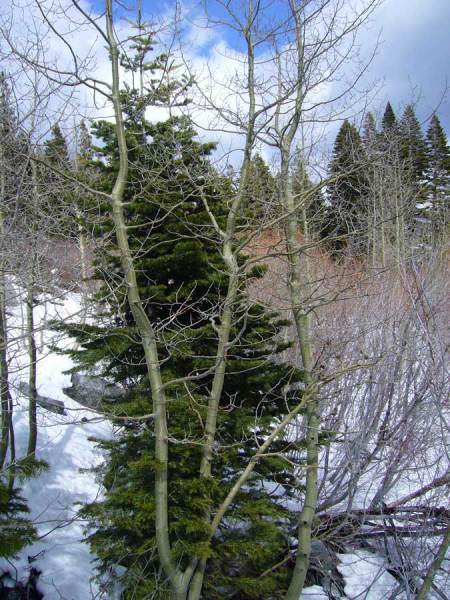
p1020610_2p1020611_2

Quaking aspen is one of the most unmistakable trees of the Tahoe Basin – regardless of the season.  Famous for its shimmering foliage during summer and blazing fall colors, it is equally distinctive during winter when its smooth, creamy, greenish-white trunks stand in stark, leafless contrast to the dark green coniferous foliage that cloaks the landscape.  Thick stands of this species are common in moist meadows and stream margins, with stands typically representing clonal colonies of genetically identical trees sprouting from a common root mat.  Although another species of Populus does occur in the basin (black cottonwood – see below), that species is not nearly as abundant as quaking aspen and lacks its distinctive smooth bark.

The second photo above shows some of the few, still-clinging leaves that I found, unremarkable in senescence but showing the flattened petioles that cause to summertime leaves to flutter and quiver incessantly with the summer breezes, alternately flashing their bright green upper surface and silvery underside.

Black cottonwood (Populus balsamifera ssp. trichocarpa)

p1020701_2p1020700_2

Black cottonwood is the largest American Populus and the tallest non-conifer in western North America.  Growing throughout the cool, moist Pacific Northwest, it is at its elevational limit in the Sierra Nevada along moist streams and lakeside habitats in the lower Tahoe Basin. The wonderfully knowledgeable Forest Service worker, who helped me greatly in my quest to locate all of the basin’s conifers, was skeptical about my chances of finding this species; however, while hiking the Rubicon Trail at Emerald Bay State Park I spotted the unmistakable, deeply furrowed, gray bark of this close relative of our own eastern cottonwood (Populus deltoides).  Examining the twigs revealed the large, pointed buds, sticky with resin, and a few clinging leaves whose wide, ovate shape confirmed the species’ identity.  It was the only black cottonwood I saw in the basin, although surely others exist throughout the basin at lakeside elevations.

Willows (Salix spp.)
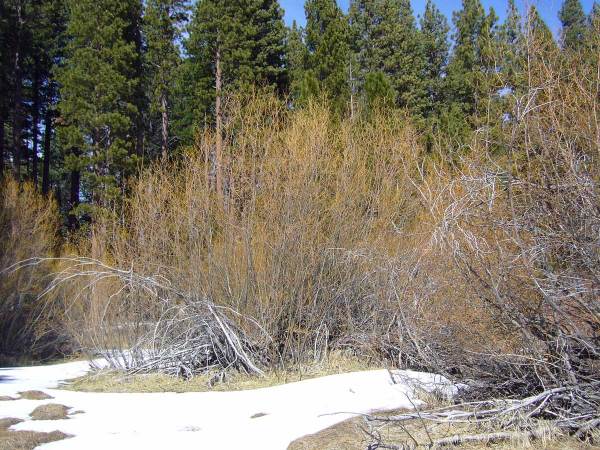
p1020673_2

As a group, willows are easily distinguished from the other deciduous trees and shrubs that occur in the Tahoe Basin.  However, discriminating among the several species can be quite difficult, even for trained botanists.  Winter is not the best time to try to identify willows, as many species are distinguished by characters of the foliage and flowers.  In some cases, examination of both male and female flowers is required – frustrating since they are borne on separate plants!  Wintertime characters normally useful for other plants such as bark and twig color are rarely informative for different species of willow, and even growth habit as trees or shrubs can vary greatly within species depending on elevation and available moisture.  All of this is a long-winded way of saying I don’t know which or how many species of willow I observed in the Tahoe Basin.
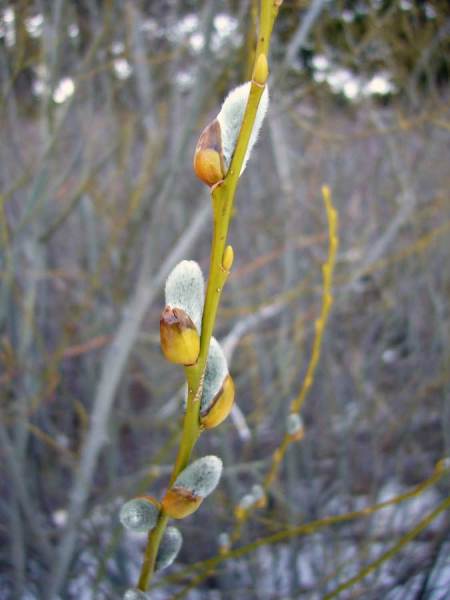
p1020705_2p1020707_2According to Graf (1999), there are nine species of willow in the Tahoe Basin; however, only two of them are trees – the abundant shining willow (S. lucida spp. lasiandra), and the more drought-tolerant Scouler’s willow (S. scouleriana).  The remaining seven species are shrubs that rarely exceed 10-12 feet in height.  Indeed, one of them – arctic willow (Salix arctica) – grows no more than 4 inches tall, occurring in seepy slopes and along lake and stream margins in the subalpine zone at Carson Pass.  Most of the willows I observed were at lower elevation along the shore of Emerald Bay and in the wet meadows around South Lake Tahoe and Spooner Lake and were growing as large shrubs or small trees and exhibited either bright yellow or red bark on the year-old branches, turning to smooth gray on older branches.  I don’t know whether these represent one or more species, or if they even represent one of the two arborescent species, but I suspect the yellow-twigged species may represent Lemmon’s willow (S. lemmonii), one of the shub species and Tahoe’s most common willow.  Perhaps a stretch goal for next year’s trip could be to find and distinguish all nine Tahoe Basin willow species, but realistically I would settle for knowing for sure what species the plants in these photographs represent (although I definitely would like to find the diminutive arctic willow).

Family BETULACEAE

Like the Salicaceae, plants in this family have male and female flowers on separate structures called catkins, but the plants themselves are monoecious (both sexes on the same plant).  Two genera – Alnus and Betula – occur in the basin, each represented by one species.

Mountain alder (Alnus incana ssp. tenuifolia)
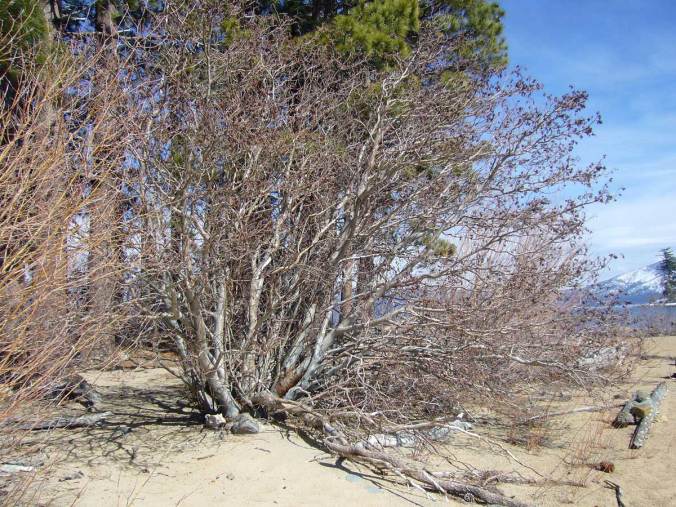
p1020675_2p1020677_2

Like the willows, mountain alder is another deciduous plant that straddles the line between tree and shrub, and as is typical of most species in these two plant families (Salicaceae and Betulaceae) the species shows a high affinity for moist sites along stream and lake margins and on seepy north- and east-facing slopes.  The largest specimens I saw, as pictured above left, were found growing on the granite sand beaches along the Rubicon Trail on the western shore of Emerald Bay in Emerald Bay State Park.  Like alders anywhere, this species is immediately recognizeable in winter due to the persistent woody cones that represent the previous year’s female catkins.  Another larger species of alder, white alder (A. rhombifolia), occurs in the Sierra Nevada, but it is not clear to me whether this species actually occurs in the Tahoe Basin proper.  Graf (1999) does not include it in his rather comprehensive treatment of Tahoe Basin plants, but Peterson & Peterson (1975) and Quinn (2006) both list it from the basin (although rare). 

Water birch (Betula occidentalis)

I did not observe this species, which Graf (1999) records from Carson Pass.  The only birch occurring in the Sierra Nevada, it is more common outside the basin proper on the eastern slopes above the burning sagebrush plains.  Like alder, separate male and female catkins are borne on the same tree; however, the female catkins of birch are solitary rather than clustered and disintegrate when ripe rather than persisting as woody cones.

Family FAGACEAE

This family contains the über diverse genus Quercus – represented in California by 20 species.  However, of the five arborescent oaks that occur in the Sierra Nevada, only one has successfully penetrated the high elevations of the Tahoe Basin. A second species of Quercus also inhabits this montane region but grows exclusively as a low shrub, and another shrub in the related genus Chrysolepis also grows here – these two latter species will be treated more fully in a future post.

Canyon live oak (Quercus chrysolepis)

The trunk was all knots and buttresses, gray like granite, and about as angular and irregular as the boulders on which it was growing—a type of steadfast, unwedgeable strength.–John Muir, The Mountains of California (1894).

p1020618_2p1020614_2

This is one of North America’s most variable oaks, exhibiting extreme variability in leaves and fruit and developing as either a tree or a shrub, depending upon the site where it grows. Slow growing and solid, it does best in sheltered locations, where it can develop an impressive, spreading crown and live a hundred years or more. On exposed slopes, it takes on a shorter, shrubbier aspect (above left) or forms dense thickets (above right).  I saw most of this species at lower elevations within the basin – along the Vikingsholm Trail in Emerald Bay State park leading down to the west shore of Emerald Bay.
p1020615_2

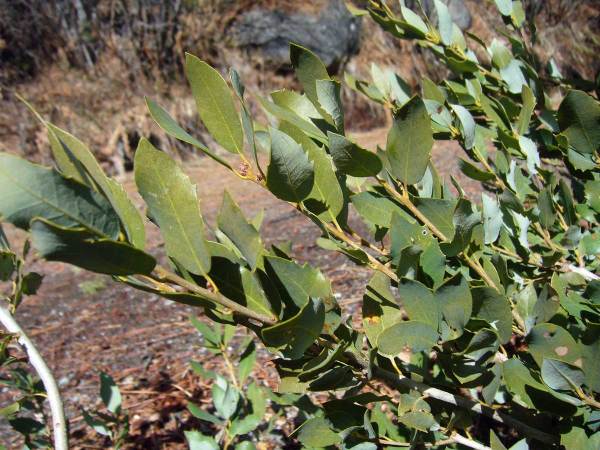
The leaves of this evergreen species are bluish green with numerous golden glandular hairs when young and becoming dull gray and smooth with age. Although there are no other arborescent oaks at this elevation with which it can be confused, I did find growing alongside it the strictly montane and shrubby huckleberry oak (Q. vaccinifolia).  The somewhat smaller, mostly entire leaves were the only indication it was not merely a shrub form of canyon live oak, and further study revealed that the two species can be distinguished by the presence of multiradiate glandular hairs on both leaf surfaces of canyon live oak.  These two species are closely related (both are in the Protobalanus – or “golden oak” – section of the genus), and widespread hybridization has apparently been documented in this part of the Sierra Nevada where the two species’ distributions overlap (Nixon 2002).

Family ROSACEAE

This large family of dioecious plants with usually pentamerous radial flowers is represented in the Tahoe Basin by nearly three dozen mostly perennial shrubs.  Six of these species, representing the genera Amelanchier, Cercocarpus, Prunus and Sorbus, sometimes develop a tree form.

Cherry (Prunus sp.)
p1020713_2p1020712_2

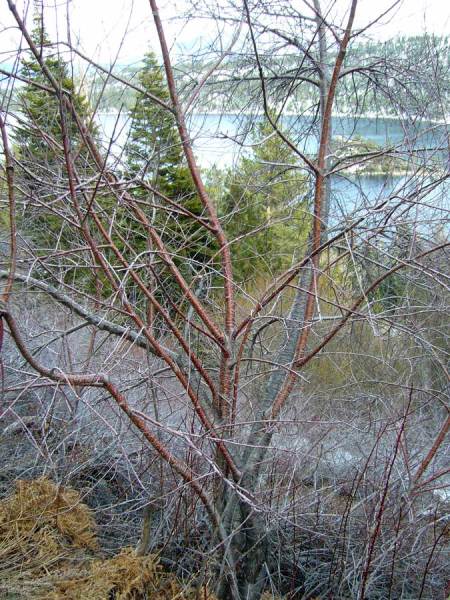
Two species of Prunus – bitter cherry (P. emarginata) and western chokecherry (P. virginiana var. demissa) – occur in the Tahoe Basin, both growing as either shrubs or small trees.  I cannot say for sure which species is represented in these photographs (taken on the slopes above Emerald Bay at Emerald Bay State Park), as the two species are best distinguished by subtle differences in their flowers and foliage.  Bitter cherry is apparently common in the Tahoe Basin and has bark that is smooth and dark brown, while chokecherry is more of a foothill species that is uncommon on the western shore (where these photos were taken) and has more grayish brown and somewhat scaly bark.  I can go either way with bark color based on these photos, so I’ll forgo an ID for the time being and seek to follow up during my next visit.  A third species of Prunus, the strictly shrubby desert peach (P. andersonii), formerly occurred at low elevations around the south shore, but it is now considered to be extirpated from the basin.

Mountain ash (Sorbus californica)

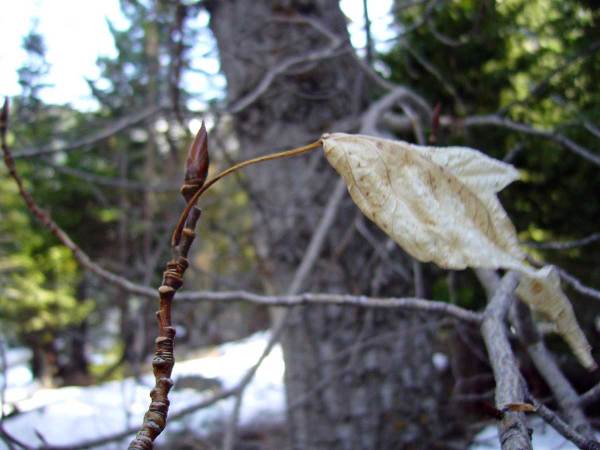
While hiking the Rubicon Trail in Emerald Bay State Park, I spotted a single, small tree with distinctive, large winter buds that reminded me immediately of the ornamental species mountain ash (Sorbus aucuparia) from my former days as a nursery inspector.  This thought seemed to be confirmed when I found a senesced but still attached leaf, pinnately compound with nine ovate, toothed leaflets.  However, my pocket copy of Native Trees of the Sierra Nevada (Peterson & Peterson 1975) included no species of Sorbus, and I concluded it must be something else.  This lone tree was located in deep shade within the white fir forest near the western shore of Emerald Bay, so I opted to find another tree in better lit conditions for taking photos – unfortunately, no other trees of this species were found.  Once I got back home, I was happy to find Sorbus californica listed in my just purchased copy of Graf (1999).  This species has attractive white flowers in small panicles during the summer that give rise to bright red berries during fall and is apparently common in mid- to higher-elevation riparian communities around the lake.

Serviceberry (Amelanchier spp.)
Curl-leaf mountain mahogany (Cercocarpus ledifolius)

I did not locate either of the two species of serviceberry that occur in the Tahoe Basin, the common serviceberry (Amelanchier utahensis) and the more localized glabrous serviceberry (A. alnifolia var. pumila).  Being highly familiar with our eastern species, A. arborea (just recently finished flowering), I suspect either of these species would be readily recognized, even in winter, by their smooth, silvery-gray bark and shrubby, small-tree form.  I also did not see curl-leaf mountain mahogany (Cercocarpus ledifolius), another species that barely qualifies as a small tree.  It is apparently more at home on the dry eastern flank of the Sierra Nevada but can be found within the basin proper sporadically in the southwest and along the southeastern lake shore and more commonly on dry slopes in the far north and south of the basin.  I have collected a number of woodboring beetles from mountain mahogany across the southwestern U.S. from the mountains of southern California to the Chisos Mountains of Texas.

Family ACERACEAE

The single North American genus, Acer, is represented in California by four species, three of which occur in the Sierra Nevada but only one occurring in the Tahoe Basin.  Plants in this family are closely related to the Hippocastanaceae, represented in the Sierra Nevada foothills by California buckeye (Aesculus californica).

Mountain maple (Acer glabrum var. torreyi)

As with mountain ash, I found a single small tree representing this species near the west shore of Emerald Bay while hiking the Rubicon Trail.  Despite lacking foliage, I recognized it immediately as a maple by its opposite, scaly buds.  Also like mountain ash, I assumed I would see more after finding the first one and thus didn’t photograph this particular tree growing in deep shade.  That’ll teach me.  This species sometimes grows as a multi-stemmed shrub in moist situations, and even when assuming tree form, as did the one I saw, it is at best a small tree with a maximum height of only around 15′.  With fall foliage in varying shades of pink to red, it must rather nicely compliment the blazing yellow cloak of the quaking aspen during September and October.  Tahoe Basin individuals are placed in var. torreyi due to their bright reddish twigs, while those on the eastern slope of the Sierra Nevada exhibit gray twigs and are placed in var. diffusum.

This concludes my “Trees of Lake Tahoe” series – at least until next year when I hope to locate some of the remaining species I did not find during this year’s visit.  However, I do have one more “flora of Lake Tahoe” post in preparation covering some of the many woody shrubs that occur within the basin.

REFERENCES:

Arno, S. F. 1973. Discovering Sierra Trees. Yosemite Association, Yosemite National Park, California, 89 pp.

Graf, M. 1999. Plants of the Tahoe Basin. Flowering Plants, Trees, and Ferns. A Photographic Guide. California Native Plant Society Press, Berkeley, 308 pp.

Muir, J. 1894. The Mountains of California. The Century Co., New York, xiii+381 pp.

Muir, J.  1918. Steep Trails. Houghton, Mifflin, Boston, ix+390 pp.

Nixon, K. C. 2002. The oak (Quercus) biodiversity of California and adjacent regions. USDA Forest Service General Technical Report PSW-GTR-184, 20 pp.

Peterson, P. V., and P. V. Peterson, Jr. 1975. Native Trees of the Sierra Nevada. University of California Press, Berkeley, 147 pp.

Quinn, C.  2006.  A Nature Guide to the Southwest Tahoe Basin: Including Desolation Wilderness and Fallen Leaf Lake: Trees, Shrubs, Ferns, Flowers, Birds, Amphibians, Reptiles, Mammals, and Fishes Inhabiting the Sierra Nevada Watershed Southwest of Lake Tahoe, California.  CraneDance Publications, Eugene, Oregon, 232 pp. 

Copyright © Ted C. MacRae 2009

Add to FacebookAdd to NewsvineAdd to DiggAdd to Del.icio.usAdd to StumbleuponAdd to RedditAdd to BlinklistAdd to Ma.gnoliaAdd to TechnoratiAdd to Furl

Myths about why Lake Tahoe does not freeze

p1020598_2In my recent post, Born of glaciers, I touched on the formation of Lake Tahoe and discussed the glacial origins of Emerald Bay and nearby Fallen Leaf and Donner Lakes.  At the end of that post, I listed some interesting facts about Lake Tahoe, including the fact that Lake Tahoe does not freeze over.  That last fact was linked to one of the many internet sources explaining that Lake Tahoe’s massive size and the fact that its waters are always in motion prevent it from freezing. Sounded good to me.

Fortunately, my post drew the attention of David C. Antonucci, an environmental and civil engineer and author of the website TahoeFacts.com. David pointed out that this widely circulated explanation for why Lake Tahoe doesn’t freeze (repeated even by the U.S.D.A. Forest Service, Lake Tahoe Basin Management Unit FAQ website) is, in fact, wrong. David is currently updating his TahoeFacts.com website to include a more detailed explanation about this, but he sent me a draft of his update and has graciously given me permission to quote from it in order to help clear up some of the confusion.

As David points out, size is not the reason – Lake Baikal has more than three times the depth of Lake Tahoe and 160 times the volume, yet is freezes over to a thickness sufficient to support a railway. Nor is it the motion of the water – the Bering Sea is rocked all winter long by violent storms but still forms thick ice cover. The real reason results from a combination of three basic scientific principles:

  1. Freshwater has the unique property of reaching its maximum density at about 39°F – that is, water is densest at a temperature 7°F above the temperature at which it freezes.    For any lake to freeze, its surface waters must cool to 39°F, at which time they become denser than the underlying waters and sink beneath them.  This process continues until the water at all depths is a uniform 39°F, after which the surface waters can continue cooling down to 32°F and begin freezing.
  2. Freshwater bodies gain heat during summer when air temperatures exceed the temperature of the water at the surface and lose it during winter when air temperatures are below the water surface temperature.  The rate at which stored heat is lost during winter depends upon the surface area/volume ratio – lakes with a higher ratio (i.e., they have a large surface area compared to their volume) lose heat quickly, while those with a smaller ratio (small surface area compared to their volume) lose it more slowly.
  3. The rate at which heat is lost is also affected by climate.  Freshwater bodies in colder climates will lose heat more quickly than those with the same surface area and volume in a milder climate.

These three principles combine to explain why Lake Tahoe does not freeze over.  Lake Tahoe has a very small surface area/volume ratio due to its great depth but relatively small circumference.  This limits the rate at which stored heat is lost from the lake during the colder winter months.  The relatively mild climate that occurs in the Tahoe Basin, due to its proximity to the warm Pacific Ocean, further limits the rate at which stored heat is transferred to the air above it.  The result of all this is that the surface temperature of Lake Tahoe never reaches 39°F.  The lake is coldest in late March with a temperature of 41°F at the surface and gradually decreasing to 39°F at a depth of 500-600 ft and below.  Before the surface of the lake has a chance to cool further, increasing sunlight and air temperatures start raising the temperature at the surface.  By early May, surface temperatures reach 50°F, and they peak at 65°F to a depth of 15 ft by mid-August.  However, the summer warming penetrates only to a depth of about 375 ft – where the temperature has remained at 41°F.  Since the upper layers of water never cool below this temperature, they never sink below this depth and allow further cooling to take place.  It is, ironically, a lack of movement that prevents Lake Tahoe from freezing. In order for Lake Tahoe to freeze over, climatic conditions would have to become much colder, or the lake would have to fill in and decrease its depth enough to achieve a sufficiently high surface area/volume ratio.

David also points out that Emerald Bay has formed complete ice cover at least three times during the 20th Century and partial cover in more years. The reason for this is that Emerald Bay lacks the same depth of the main lake – its surface area/volume ratio is high enough to lose its accumulated heat and reach the required 39°F top to bottom during particularly cold winters.

Copyright © Ted C. MacRae 2009

Add to FacebookAdd to NewsvineAdd to DiggAdd to Del.icio.usAdd to StumbleuponAdd to RedditAdd to BlinklistAdd to Ma.gnoliaAdd to TechnoratiAdd to Furl