The importance of background and apparent light size

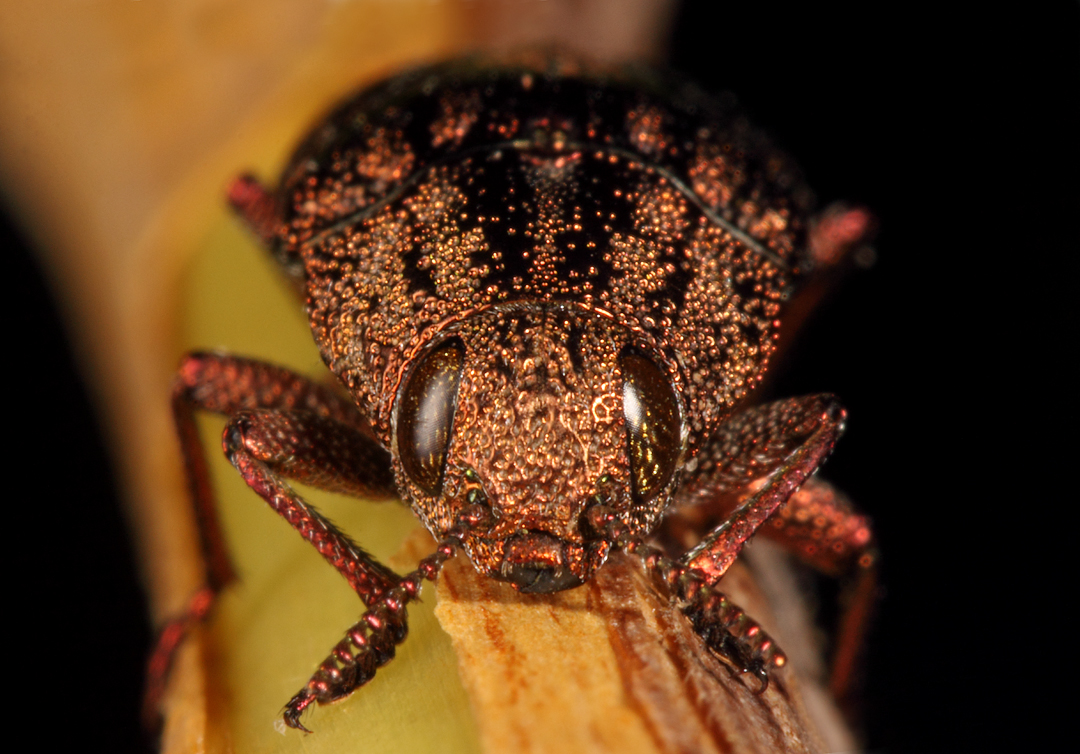
I’m still getting submissions for ID Challenge #19 and don’t quite have the followup post ready yet, so I’ll give it a couple more days. In the meantime, I’d like to re-share the photo below, originally shown a few weeks ago in my post  A few people commented that this was their favorite photo in the series—perhaps like me they are suckers for face shots, but I think this photo succeeds in large part because of its soft-green background. This was actually one of several similar face shots that I took, each differing the other almost exclusively in the choice of background. In the end, I chose the green background to include in the post, not only because it was the most aesthetically pleasing, but also because I felt it best represented the environment of the beetle—ensconced within the foliage of its preferred host plant, ninebark (Physocarpus opulifolius).

Green background—achieved by placing a leaf some distance behind the subject.

Such background is easily achieved in full-flash macro photography by placing a green leaf some distance behind the subject, although in practice this can be a little tricky—you want the leaf far enough away from the subject that it is completely out of focus, eliminating distracting details, but close enough so that it actually reflects light from the flash and shows up as green. This becomes trickier still if the photographer is already holding the subject (as I was, or at least the branch on which the subject was sitting), as the distance between the subject and the background must be adjusted by moving the subject (and hence the camera), rather than the leaf.

Black background—the typical background of full-flash macrophotography.

Here is a similar shot of the beetle without placing anything in the background. This is full-flash lighting because I’m using small apertures and high shutter speeds to prevent motion blur and maximize depth-of-field. As a result, only objects in the vicinity of the subject and illuminated by the flash will show up in the exposure. This results in the almost-trademark black background of typical full-flash illuminated macrophotography. Despite what you may read or hear, there is nothing wrong with a black background. Some consider it boring—probably because it is so common in macrophotography. However, there are times when it truly is the best choice of backgrounds—especially with a white or light-colored subject (for example, see this photo of the white-flowered Great Plains ladies’-tresses orchid, Spiranthes magnicamporum). With darker subjects, however, black may not be the most appealing choice of backgrounds, so it’s good to keep this in mind and choose accordingly.

Blue background—bump the ISO up to 320 and point the subject to the brightest part of the sky.

Of course, there is one way to avoid a black background without placing an object behind the subject (or placing the subject in front of an object), and that is to use the open sky to achieve a nice, blue background. This is one of the trickier of the background techniques, as it relies on finding a fine balance between ISO, aperture and shutter speed. For this photo, I bumped the ISO up to 320 (normally I use 160) and slightly opened up the aperture (f/13 rather than f/16). These settings, combined with pointing the subject to the very brightest part of the sky (excluding the sun!) allowed me to keep the shutter speed reasonably fast (1/200 sec). I find that lower shutter speeds nearly always result in some motion blur (all of my photos are hand-held), so I avoid reducing shutter speed if at all possible. I also find that ISO settings above 320 result in unacceptable graininess, so I will back down on the aperture (even down to f/11 or f/10) if I have to in order to avoid going above ISO 320 and below 1/200 sec exposure. On especially bright days, areas of the sky closest to the sun will provide enough light that you can use aperture to fine-tune the background to the desired intensity of blue—the smaller the aperture the more intense and darker the blue will be (along with providing greater depth of field). While a blue background works for this subject, I simply like the green background better. I find that blue background shots are most pleasing with foliage and flower-feeding insects, adding a touch of realism to the photo without the cluttered, distracting look of other natural backgrounds or the “studio” feel of black background shots. This photo of the South American weevil, Megabaris quadriguttatus, is perhaps my favorite example of the use of blue background.

By now, the more technically oriented photographer types among you might have noticed something that all three photos have in common (besides the subject), and that is the difference in specular highlighting exhibited by the left and right eyes of the subject. Reverse engineering suggests that I had two sources of light (which is true, I use Canon’s MT24-EX twin macro flash), and that the light source illuminating the beetle’s right side either had a much larger diffuser or was placed much closer to the subject. In fact, it was the latter, as I simply detached the left flash unit and held it much closer to the subject to confirm for myself what effect this has. Because the flash unit is closer to the subject, it has much larger apparent size, resulting in more even lighting over that side of the subject and, accordingly, softer specular highlights. If I had a third arm I would have done the same with the second light source (and a fourth arm would allow me to also hold a green leaf behind the subject!). Unfortunately, additional appendages are not an option, so I’m going to have to figure out an efficient, light, easy way to get my light sources as close to the subject as possible. Snoot diffusers are one option, but they have limited flexibility to make fine adjustments to the subject-distance as camera distance changes. Going to a single light source and holding it off-camera is another option, but hand-holding a light source leaves one less hand to hold other things (like the subject), and I do prefer the reduction of shadows provided by multiple light sources. I’ve already discussed the , and I do have some other ideas that I’m working on as well. However, your ideas also would be most welcome!

Copyright © Ted C. MacRae 2012

Maddening mutillid

Traumatomutilla graphica (Gerstaecker, 1874) | Parque Nacional Chaco, Argentina

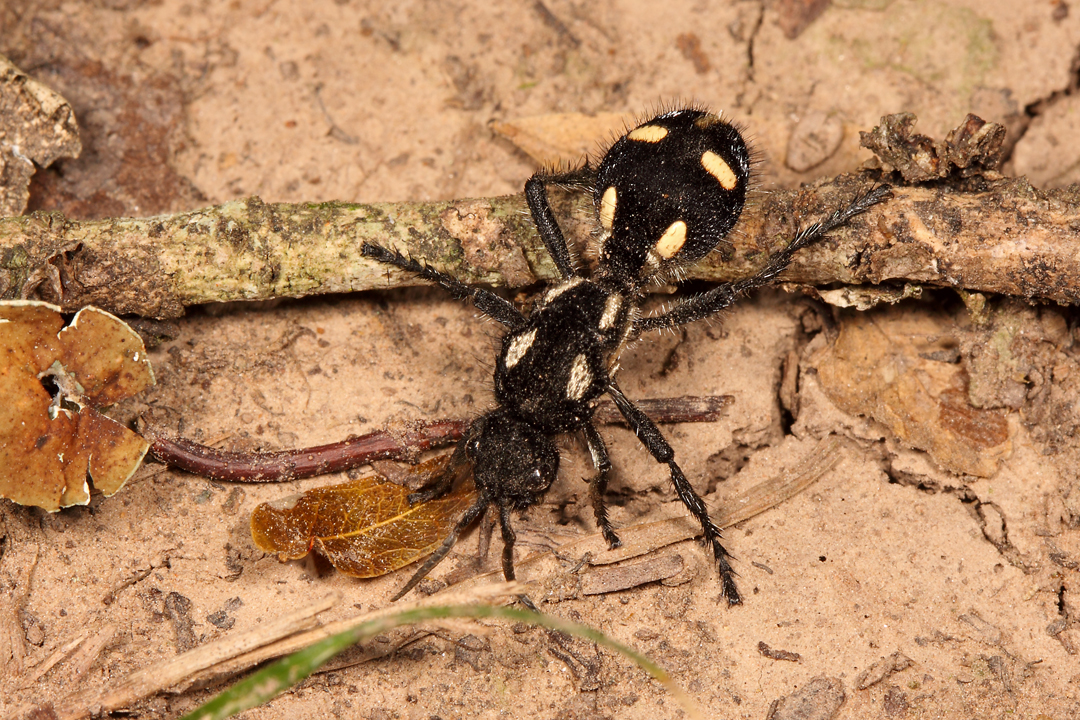
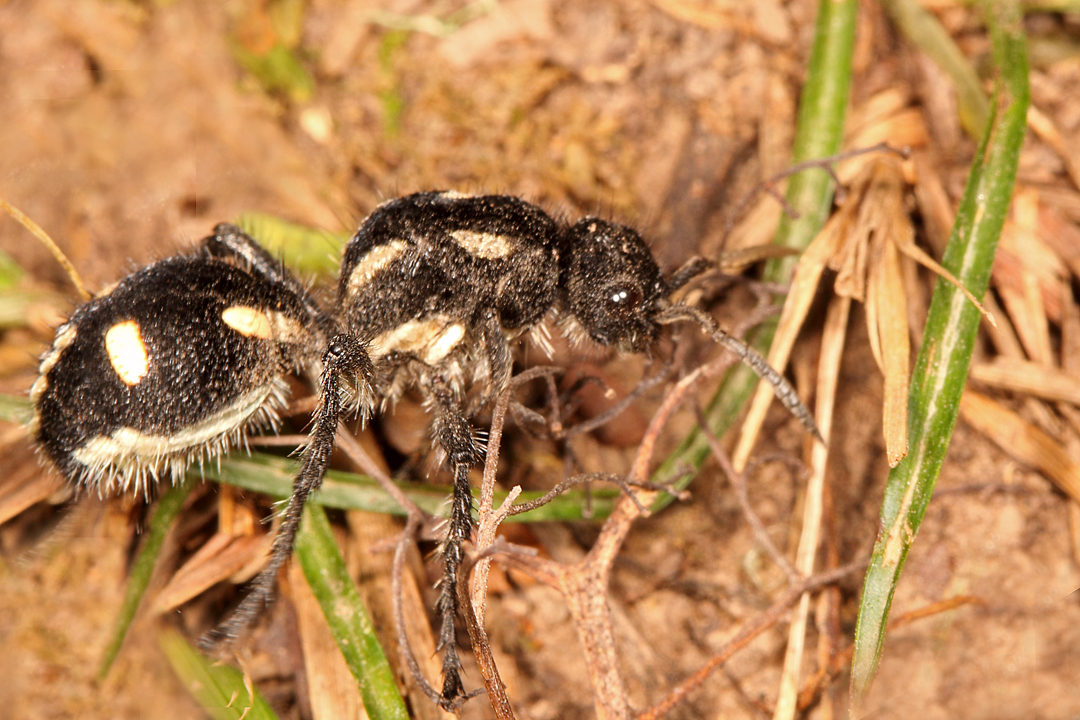
During my stay in Corrientes, Argentina, I had two distinct biomes to explore—the relatively moist “Selva Paraguayense” to the east in Corrientes Province (a southern adjunct to the Atlantic Forest of southeastern Brazil, and home to the cryptic longhorned beetle that I featured in Desmiphora hirticollis: Crypsis or Mimicry?), and the drier “Gran Chaco” to the west, home of the insect featured in today’s post. Precious few remnants remain of the original Gran Chaco, which once covered nearly 1 million square kilometers in northern Argentina, Paraguay and Bolivia and the best example of which can be found at Parque Nacional Chaco in north-central Argentina. I’ve already mentioned that conditions are typically quite dry by early April in northern Argentina, and this is especially true of Chaco Province, where droughts during the months of January through March are common. As a result, I didn’t expect to see much insect activity during my visit last month. For the most part this was true, but one insect I did see at several points along the trails through the park was this rather large velvet ant (order Hymenoptera, family Mutillidae). Not an ant, of course, but a true wasp, these insects must be treated with respect as they are capable of delivering a painful sting. This, combined with their ceaseless, erratic wanderings makes them incredibly difficult to photograph. However, with few other insects to see, I thought I would spend the time and effort to see if I could get some good field photographs of this very attractive species. I spent about half an hour attempting to photograph it by panning through the viewfinder while getting closer and adjusting the focus on the move, and then firing shots when I thought I might be close enough and had the individual more-or-less within the frame. This was wildly unsuccessful, as I had only a 3-ft wide path within which to work and had to constantly get up to block its escape into the adjacent vegetation. Moreover, it was exhausting! The constant moving and body contortions while in crouched or kneeling positions used muscles I didn’t even know I had (but was well aware of the following day by their soreness!). Out of the countless shots that I fired, these two photographs are the only ones that I consider worthy of posting—pretty good, but not great.

The distinctive color pattern is diagnostic for the species.

According to Kevin Williams (many thanks!), the distinctive color pattern readily identifies this individual as Traumatomutilla graphica (Gerstaecker, 1874). Nearly the size of our common eastern North American Dasymutilla occidentalis (a.k.a., cow killer), the bold, conspicuous patterning surely must serve as advertisement of its powerful defensive capabilities—I know I was deterred from trying to handle it. Kevin mentions it as a “great find!” and that the male of the species is still unknown, and I could find nothing about the biology of this species. However, mutillids in general are known to develop as external parasitoids of various wasps, bees, beetles and flies, the excessively long female ovipositor enabling piercing of host nest cells before injecting their powerful venom and placing the eggs (Hogue 1993).

REFERENCE:

Hogue, C. L. 1993. Latin American Insects and Entomology. University of California Press, Berkeley and Los Angeles, 536 pp.

Copyright © Ted C. MacRae 2012

Out with the old (but on a good note)

This past March was the warmest on record here in Missouri and that made for some nice opportunities to get out and photograph. That said, my enthusiasm for macro photography has been somewhat tempered since my camera body is getting old and showing some signs that it might be on its last leg. The mere fact that I am still using a camera from 2004 may be your first indication that I am something less than a macro photography perfectionist and this is a reflection of the equipment that I first used when I began shooting macro. I started with Canon manual equipment in the mid-1990’s because I thought this would be the best way to learn photography. My stint with a used, and malfunctioning, Canon AE-1 was thankfully short. It was stolen as I returned from a photography trip to the Chiricahua Mountains, but I still lament that the thief made off with the spent rolls of film from the trip! The experience with the AE-1 pushed me towards higher quality, more professional equipment that would stand up to field conditions better. Next up was the Canon F1 and then the wonderfully solid Canon F1N followed later with the game-changing addition of a power winder. The latter was great since insects typically didn’t wait around for me to manually wind the film, refocus, and shoot. The real challenge though was getting the lighting right. At fist I often times had the camera on a tripod which resulted in too many missed shots, restricted what I could shoot, and it didn’t meet what I later realized was my overall goal of macro photography. What I wanted was to have the ability to take satisfactory macro images while not loading myself down with equipment that would detract from also being able to conduct research or simply observe/enjoy nature without trying to capture it on film. I still have a graveyard of old flashes, brackets, and bracket parts that I employed in various combinations to get suitable lighting though it is now clear that I was never able to get the perfect balance. That changed in 2001 when Canon introduced the new MT-24EX macro twin flash and I bought a 1V body. After testing the new system a minimal amount, I realized that macro photography was now made easy relative to what I had wrestled with over the years prior. I had the complete package—no bulky brackets, no hand holding flashes, more certainty of exposure, and quick field set-up. The twin flash allowed me to fire off just the minimal amount of light to obtain my desired depth of field and the flash had sufficient battery power at the lower flash output settings to essentially shoot consecutively without having to wait for the flash to power-up.

Well, at least I thought I had the perfect setup until Ted MacRae took up macro photography and soon demonstrated that options for continuous improvement exist even for this system.

In 2004 I sadly shelved the 1V body and went digital. I briefly used the Canon 10D, which seemed inadequate for various reasons, but then jumped on the newly released Canon 1D Mark II during that same year. It was more than I wanted to spend but there weren’t many options and the benefits were too much to pass up. Most notably, I was sick of buying film, scanning slides, and most of all my hand ached from cataloguing so many slides, i.e., writing a unique code on each slide prior to archiving it in plastic. The time savings alone made the 1D Mark II price palatable and I hoped that investing in a top notch, newly released body would help it remain relevant for a while. I never looked back.

That brings me to that warm day this past March when I settled in to photograph a toad bug, Gelastocoris oculatus (Heteroptera: Gelastocoridae), along the margin of an intermittent creek in Perry Co., Missouri.  As I mentioned above I felt like I was limping along with my dated 1D Mark II but I couldn’t pass up the opportunity to again photograph an individual of G. oculatus that so superbly blended in with its substrate (Figures 1 and 2).

Figure 1. Gelastocoris oculatus, 3.13.2012, Perry Co., MO

Figure 2. Gelastocoris oculatus, 3.13.2012, Perry Co., MO

As I have mentioned before I like to take multiple shots of a subject to help tell a story (yes, including the obligatory head-on close up that Ted always mentions). One important shot in the series can be a photograph from a distance to: 1) better see the subject in its surroundings which can give more insight into its natural history; 2) offer a more artistic view, or, in this case; 3) to show the effectiveness of its cryptic coloration. The actual close-up is great for detail but only gives the viewer an idea that the subject is similarly colored to its background but only a more distant shot really conveys how well the subject melts into the substrate. In this case, Figure 3 was the next progression towards that shot but I was stopped short that day partly due to my middle son falling in the creek and partly due to the apparent malfunctioning of the camera. As you can see, I wasn’t far enough away from the subject to capture what attracted me to the bug in the first place—how well it mimicked its background. In that sense the picture is disappointing because I didn’t finish the story. But on the other hand, the malfunctioning of the camera combined with its age, made it clear that it was now time for a new camera body. So I put on my best frustrated/disappointed face and presented my case to my wife, Jess. It was an easy sell since Jess is… well… at least 95% supportive of my photography. I’ll discuss the new body and the first images soon.

Figure 3. Gelastocoris oculatus, 3.13.2012, Perry Co., MO

Below are more of the variable faces of G. oculatus that I have come across over the years (Figs. 4 – 8). Gelastocoris oculatus is one of two species of Gelastocoris that we have in North America (Arnett 2000). Gelastocoris oculatus can be found continent-wide however G. rotundatus ranges only in the southwest. I love the origin of the family name which the online Merriam-Webster dictionary mentions is from the Greek “gelastos”+ “koris” which translates to “laughable bug”, no doubt due to its odd appearance. Both species are predators that live along the margins of water. Their predaceous nature is made clear by the appearance of their powerful forlegs clearly specialized for catching and securing prey. As you can see, I do not have a picture of their forlegs so I’ve got a great reason to again get down on their level with the new camera.

Figure 4. Gelastocoris oculatus, 5.23.2010, Perry Co., MO

REFERENCE:

Arnett, R.H. 2000. American Insects: A Handbook for the Insects of America North of Mexico. Boca Raton, Florida: CRC Press.

Copyright © Christopher R. Brown 2012

Seeing the unseen

While trying to nab a cicada from the small trees planted on the grounds at our experiment station here in Fontezuela, Argentina, I happened to notice a bit of movement on one of the branches nearest to me (while the cicada flew off with a screech and a clatter). A closer look revealed what looked like a slight protuberance of the branch to be a nymphal planthopper (family Fulgoridae), and at ~15 mm in length a pretty good-sized one at that. I would have never noticed it had it not moved, so good was its camouflage, but I didn’t have the time to spend trying to photograph it right then and there. Instead, I popped it into a vial (you do always carry a vial with you, don’t you?) and continued my fruitless quest for cicadas.

Undet. fulgorid nymph | northwestern Buenos Aires Province, Argentina

Later that evening I placed it on a palm tree in the hotel courtyard (not really the appropriate host, but it was the only real tree available). I took the standard dorsal view photo, and while not as good a color match as the (still undetermined) tree upon which I found it one still gets a sense for how difficult it might have been to see this nymph flattened against the slightly greenish bark.

A lateral profile view makes the bug much more visible.

One thing I’ve learned from much better photographers than myself is to get down and low relative to the subject—even to the point of looking up at it if possible. This provides views that are far more interesting than the typical looking-down-from-above shots. In the case of this nymph, the above and following low-angle shots really brought it to life and emphasize its unusual form.

Even lower. How did I get the nymph to "prop" itself?

Of course, with the nymph on the side of a fairly large tree, one can only get so low. To get even lower, I placed the nymph on a small stick and used hand-holding and bracing techniques to get even lower. I took quite a few shots experimenting with composition, and the shots I ended up liking the best were frontal-oblique from slightly below bug-level with the stick rather sharply angled down and the bug slightly propped up on its front legs. Easier said than done—this nymph was loathe to stop crawling once I moved it to the stick and tended to be negatively geotactic (crawled upwards). As a result, every time I angled the stick downward it would turn around and start crawling the other way, and in any case when it did stop it tended to flatten itself against the branch. Through trial and error, I learned that if I braced my thumb and forefinger against its head/pronotum to stop its progress and held it in place for awhile it would stay put. I also learned that if I slightly blew on its face when it was flattened against the branch that it would prop itself upwards a bit. Thus, for this shot it was a matter of letting it crawl upwards almost to the end of the stick (to eliminate excess stick that poke into the camera with a frontal-oblique angle), bracing it for a moment, inverting the stick downward and pointing slightly towards the camera, and then blowing on its face a bit—simple, huh? The black transverse band on the lower face adds a lot of character to the shot.

The obligatory face-on shot

The face-on shot is a staple for me, but even with this shot the angle is important—angle the back of the stick down too much and you get the all black background (not in itself bad, just not what I wanted for this shot), angle it too high and too much of the back of the bug shows up as blurred clutter in the background). The foreward projecting “nose” of this nymph prevented me from getting both the tip of the nose and the eyes in focus (without using excessively small aperatures), so I opted for the latter (I’ve never seen a good face shot of an insect in which at least the eyes were not in focus).

Unfortunately, family-level identification is as good as it is going to get for this individual. I sent the photos to fulgorid expert Lois O’Brien, who eliminated several options but couldn’t narrow down further among several remaining possible genera (“Our ignorance of nymphs is abysmal…”). Her recommendation was to go back to the tree and try to find adults, and apparently some species tend to live on the same tree for years and years. I’ll be returning to Fontezuela later in April—hopefully the fall season will not have advanced to far by then.

Copyright © Ted C. MacRae 2012

A tortoise beetle gift

Chelymorpha varians | northwestern Buenos Aires Province, Argentina

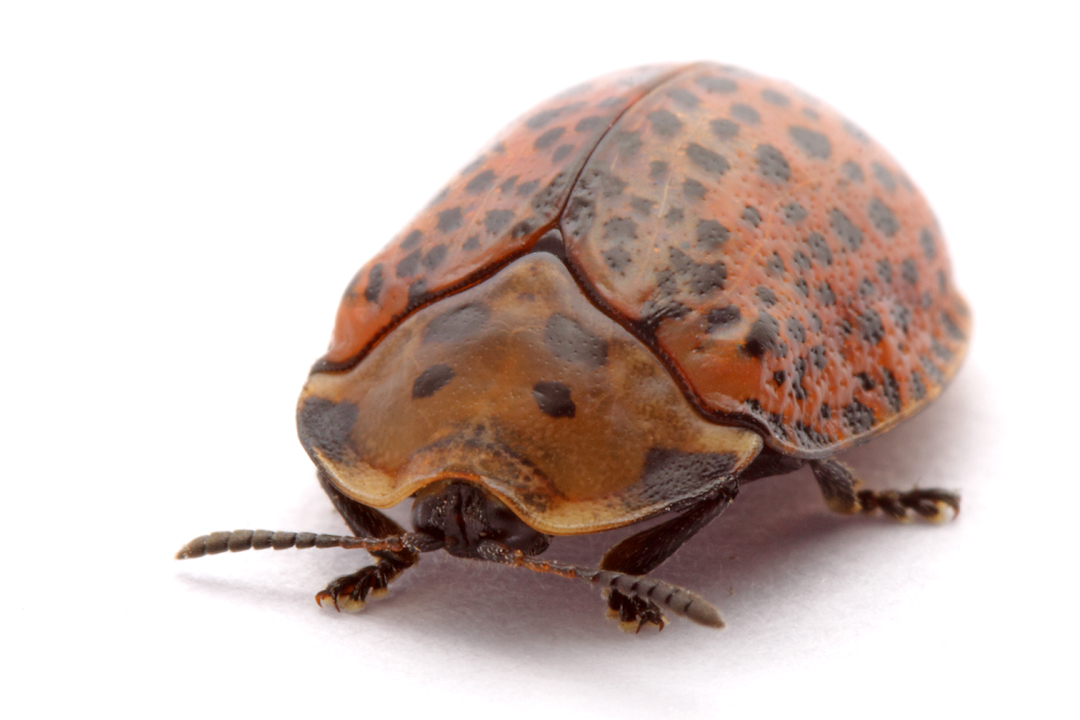
A few days after returning from travel through northern Argentina, I found a jar on my desk with this beetle in it. One of my colleagues has seen it in the field while I was away and figured I would be interested in seeing it. Although I’m half-a-world away from home, I immediately thought of our North American species Chelymorpha cassidea when I saw it. Armed with this hunch, I typed “Chelymorpha Argentina” into Google, and the first result that came up was a paper by Hamity & Neder de Román (2008) about the species Chelymorpha varians in Argentina and its potential as a biocontrol agent for the widespread weed Convolvulus arvensis. Included in the paper was a plate showing variability of coloration and maculation in the adults, and my individual was a dead ringer for the species. Still, getting a species ID on the very first hit of the very first search attempt just seemed too easy, so I consulted the wonderfully comprehensive Cassidinae of the world – an interactive manual. This site, too, contained multiple images of Chelymorpha varians showing an extraordinary range of variability in color (from yellow to red) and degree of maculation (from immaculate to heavily maculated). A quick perusal of other species indicated as similar or also occurring in Argentina turned up nothing nearly as similar and convinced me that I had, indeed, arrived at a correct ID.

As the name suggests, markings are highly variable in shape and degree of development.

As indicated in the above cited paper, and like our own C. cassidea, species in the genus Chelymorpha are associated almost exclusively with plants in the genus Convolvulus. I would have preferred to photograph the beetle on foliage of this plant, but not knowing precisely where I might find it I decided to do white box instead. I got some printer paper and was looking for a cardboard box to line the inside with it when I spotted a styrofoam cooler of just the right size.

The scientific name translates literally to ''variable turtle-body''

These are okay white box photos, but I’ve decided if I want to do white box right I need to get a larger flash unit that is a little easier to work with off the camera. Right now I have only the small twin-flash heads from my MT-24EX—their small size makes them difficult to manipulate off the camera, and leaving them attached to their bracket limits the directions in which they can be oriented relative to the subject. As a result, I had to use more heavy-handed post-processing in these photos than I normally like to do in order to get the levels right. Hmm, I have a birthday coming up in about a month…

REFERENCE:

Hamity, V. C. & L. E. Neder de Román. 2008. Aspectos bioecológicos de Chelymorpha varians Blanchard (Coleoptera: Chrysomelidae, Cassidinae) defoliador de convolvuláceas. Idesia 26(2):69–73.

Copyright © Ted C. MacRae 2012

Retrachydes thoracicus – times four!

Disclaimer—these are not great photos!

A few days ago I posted this little quip as my status on Facebook: “Cool! Found a Retrachydes thoracicus thoracicus on the sidewalk outside my hotel!” I chuckled a little as I posted it, knowing that only a select few who read it would know what the heck I was talking about (of course, a right click to select “Search with Google” reveals the answer instantly). Of course, it is a species of longhorned beetle (family Cerambycidae) that apparently is found commonly in South America. I wanted to take some photographs of the beetle to show those who didn’t do the Google search just what it looked like. Unfortunately, the beetle was already somewhat moribund when I found it, and no matter how much I coaxed and prodded it on the stick I placed it on, it just looked… well, dumb. Legs out of position, antennae hanging limply, and the beetle itself laying prostrate on the branch, as if it barely had the strength to hang on (which actually was the case). Shame—it sure is an attractive species, with its densely pubescent and transversely gibbous pronotum (obviously the source of its name) and striking orange-banded antennae. C’est la vie!

Lately I’ve been trying to get a better handle on choosing backgrounds when I photograph insects, no longer content with the often busy and distracting backgrounds that show up in photographs taken completely in situ. It’s often a simple matter to hold the object on which the insect is sitting in front of something that gives the desired background effect, and having this perfectly calm yet strikingly attractive beetle to work with seemed to invite experimentation. I’m also trying to get a better feel for how to use higher ISO settings to make it easier to get these various “non-black” backgrounds while still using flash to get acceptable depth of field with the subject itself. Below are four of the better shots that came out of the session (yes—sadly, these are the “better” ones). I’m loathe to go below 1/160 sec exposure because of motion blur and would like to keep aperture settings quite small, so fairly high ISO settings are required to get the background effects I’m looking for. I think I’ve learned that ISO 1000 is about as high as I can go before the background gets unacceptably noisy—at small sizes the photos look fine, but open them up larger size and you’ll see what I mean. Anyway, ignoring the composition and noise issues, which background do you like best?

ISO 1000, 1/160 sec, f/14 - cloudy sky background

ISO 1600, 1/160 sec, f/14 - pavement background (close)

ISO 1600, 1/160 sec, f/14 - pavement background (more distant)

ISO 1600, 1/160 sec, f/14 - pavement background (foliage)

Copyright © Ted C. MacRae 2012

Of Bots and Warbles

As an undergraduate at Truman State University during the mid-90’s I was part of a small mammal research group led by Dr. Scott Ellis.  My focus was on flying squirrels, but others in the group studied mice.  There were always opportunities to help my colleagues trap mice, and that is where I first encountered bot flies (Oestridae: Cuterebra spp.).  It was common for the live trapped mice to be infected with bot fly larvae, or bots, developing just under the skin of the host.  You might expect a fly parasite of a mouse to be relatively small but that is not the case with bot flies.  The bots cause a grotesquely large growth (or warble), and Cramer and Cameron (2006) report that a single bot can weigh as much as 5% of the host body weight.  That’s like a 150 lb guy having a 7.5 lb growth!  One unfortunate mouse that comes to mind had a warble on its head which caused its eye to bulge out.  I hate to make light of that poor mouse’s condition, but I distinctly recall that the bulging eye made it look as if it was continually surprised.  That said, Cuterebra fontinella infections are not thought to have a negative impact on white-footed mice, and in fact some studies have found that infected mice actually live longer than their non-infected neighbors (Cramer and Cameron 2006).  This relatively benign relationship between host and parasite is also the case in general with other species of Cuterebra, which is attributed to the long evolutionary history shared between the parasite and a single or very few closely related hosts (Catts 1982).  Negative impact or not, I was glad that I didn’t have to worry about bot flies infecting me, at least while I was in temperate Missouri.  Of course I had heard plenty of stories of humans being parasitized in the tropics by the human-attacking Dermatobia hominis, and they didn’t sound like very pleasant experiences.  My favorite story involved the person that had a bot in their ear that just about drove them crazy because they could hear the bot any time it changed positions.  Actually the Slansky article discusses the more negative interaction between D. hominis and its host, and this has been attributed to the less specialized relationship between the parasite and any one host because D. hominis has a broad range of hosts. 

Dermatobia hominis actually employ another insect to deliver its eggs to the host!  They lay eggs on mosquitoes or other blood-feeding Diptera for subsequent transfer to the host.  This makes a lot of sense from my point of view as a potential host—the adults are huge (bumble bee size), and I sure would be wary of one approaching me.  But mosquitoes, now there’s an idea—they are very adept at finding their hosts and are inconspicuous enough that they just might be able to get in close enough to allow the body heat of the host to stimulate the hatching and deposition of a bot.

There are other species of Cuterebra, and each is host specific to some degree.  Cuterebra abdominalis (Fig. 1) and Cuterebra buccata are both specific to lagomorphs (rabbits).  No doubt male tree squirrels and chipmunks get a little nervous every time they hear the species name of their bot fly—“emasculator”.  The species name originated from the observation that the warbles were often located near the genitalia of the squirrels, which prompted the idea, given the impressive size of the warble, that there must be an impact on the reproductive ability of the afflicted squirrels.  Luckily for the squirrels, research has demonstrated that the species name is a misnomer (Catts 1982).
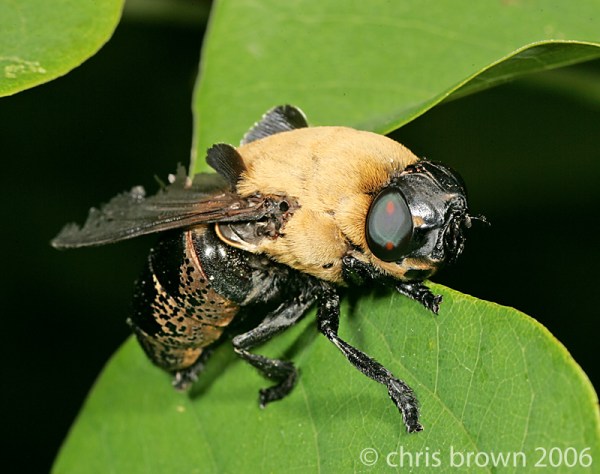
Figure 1. Cuterebra abdominalis, a rabbit bot fly

I knew nothing of the adult Cuterebra at the time I saw the parasitized mice, but that changed when Ted MacRae netted an adult rabbit bot fly, Cuterebra buccata, while we were looking for tiger beetles in northeastern Missouri.  In May of 2006, my wife Jess and I came across an adult C. abdominalis on the edge of a glade at Shaw Nature Reserve near St. Louis, and it is this photo that I discuss more below (Fig. 1).  The only other encounter was from southeastern Missouri in April of 2009 when Ted again found a rabbit bot fly, and this individual had only recently emerged from its puparium (Figs. 2 and 3– See Ted MacRae’s previous post from 2009 on this exact same fly).  All told, that’s only three encounters with adult bot flies from countless hours spent in the field, so my experience is that adult bot flies are rarely encountered.
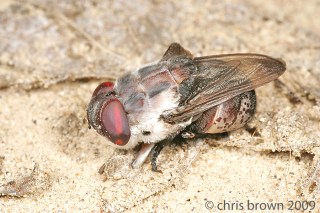
Figure 2. Newly emerged rabbit bot fly, Cuterebra buccata
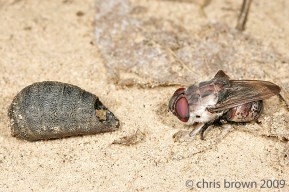
Figure 3. Newly emerged C. buccata with shed puparium


The image in Figure 1 represents well the type of photographic opportunity that I look for because it readily leads into various side stories.  Here are some examples: 

1) Amazing natural history—you just can’t make this stuff up.  The Catts review article cited discusses numerous other aspects of bot fly natural history in addition to the discussion above.  For example:

  1. Cuterebra spp. are thought to oviposit in the host habitat where the eggs await close passage of a host.  As with the D. hominis, the body heat of the host stimulates the eggs to hatch. The first instar larvae enter the host through an existing orifice or wound and then travel through the host to find a suitable subcutaneous location to create a warble.  Here, the larva molts to the second instar and continues to draw nourishment from the host.  Cuterebra larvae feed on fluids of the host as opposed to feeding on actual tissue, which would be more damaging to the host.
  2. The larvae spend roughly one month in the host.  Upon completion of the third instar, the larva exits the host, digs into the soil, and pupates.  Bot flies overwinter as pupae.
  3. Adults do not feed and are relatively short-lived.  Their attention is focused on the serious business of reproduction. 

2) Mimicry.  As you can see from the image, C. abdominalis very much resembles a bumble bee.  This image is great for presentations because it captures the attention of grade school kids.  I include this image at the end of a series of slides containing images of bees and wasps alongside the flies that mimic them.  Kids become very engaged and have a lot of fun trying to guess which images represent the models and which represent the mimics.  By the end of the series the kids have become pretty savvy about picking out the imposters but I present this image last and C. abdominalis is so bizarre that it always stumps the audience.  The kids become even more captivated by the discussion of how bot flies make a living.

3) Insect photography technique.  It’s thrilling to find new insects, but the experience can quickly turn disappointing if the insect flies off never to be seen again just as you begin to approach it for a photograph. That would have been the case with my encounter with C. abdominalis if I didn’t have a companion with me in the field.  I was lucky to have my wife, Jess, with me on this hike.  She kept an eye on the fly as I moved in for pictures.  Once or twice it flew at my approach, and Jess was able to keep track of it so I could try again.  Ted and I have also acted as spotters for one another, and this has made the difference between getting the pic or not.

4) Great location.  We encountered C. abdominalis on the edge of the scenic glade that slopes away from the Trail House at Shaw Nature Reserve in Franklin County, Missouri.  It’s always fun to revisit certain places and get to know them and the photographic opportunities they provide.  The Nature Reserve is one such place for me.  It offers countless opportunities for insect photography close to St. Louis due to a wide variety of habitats including prairie, glade, forest, wetland, and riparian areas. 

REFERENCES:

Catts E. 1982. Biology of New World bot flies: Cuterebridae. Annual Review of Entomology 27:313–338.

Cramer J. and G. Cameron. 2006. Effects of bot fly (Cuterebra fontinella) parasitism on a population of white-footed mice (Peromyscus leucopus). Journal of Mammalogy 86:1103–1111.

Slansky, F. 2007. Insect/mammal associations: Effects of cuterebrid bot fly parasites on their hosts. Annual Review of Entomology 52:17–36.

Copyright © Christopher R. Brown 2012
Another cover photo

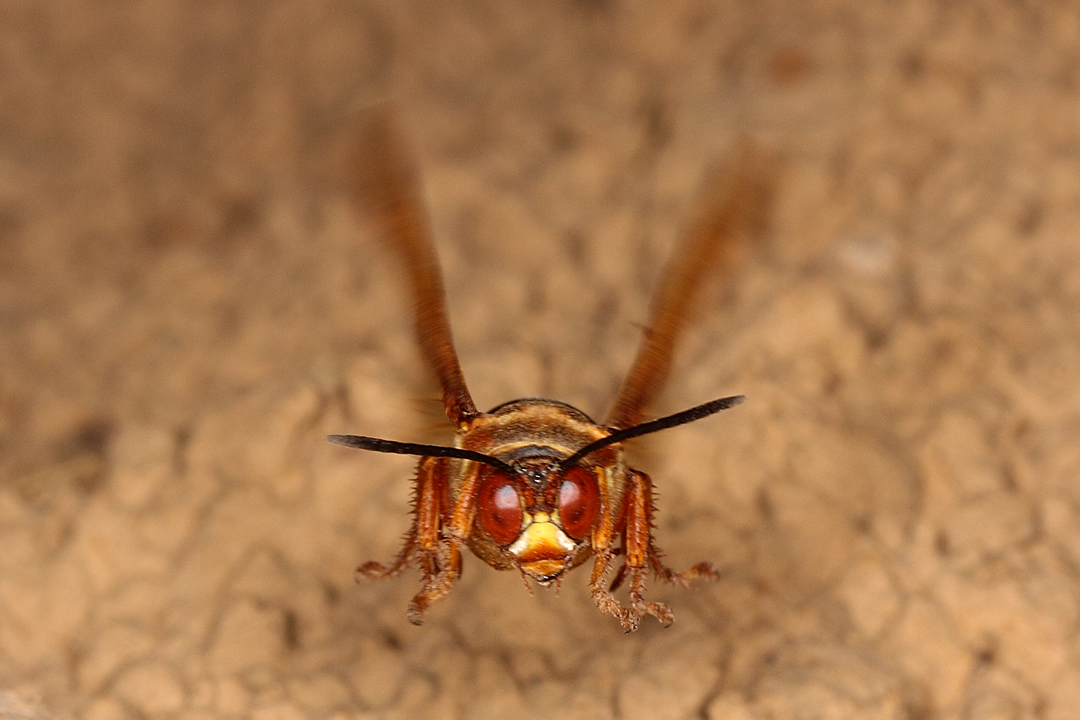
Issue 43(4) of Cicindela (A quarterly journal devoted to Cicindelidae) is now hitting mailboxes (my copy arrived earlier this week), and for the second issue in a row the cover features one of my tiger beetle photos. Gracing the cover this time is the recently rediscovered Cicindelidia floridana, known only from a small area in the Miami metropolitan area of south Florida, and which I was fortunate to have the opportunity to see this past summer. Because the species is regarded as critically imperiled and a likely candidate for listing as an endangered species, the precise whereabouts of its habitat have not been disclosed. So far I am one of only a few people who have had the chance to photograph it in the field.

Now, some of you may think that because I serve as Layout Editor for the journal that I can horn in and put one of my own photographs on the cover whenever I want. This is not the case, and it was only because Managing Editor Ron Huber asked me if I had anything for the issue that I supplied the photo after having just done so for the previous issue. In actuality, we encourage others to submit their tiger beetle photographs for consideration, and since a majority of U.S. species have already been featured at some point over the years we especially encourage ex-U.S. photographers to submit their photos so that we can limit repetition. Obviously, C. floridana has never been featured on the cover before now, so it was a no-brainer choice for this issue.

The issue contains two delightful papers. The first is another by Mathew Brust on the stunningly gorgeous Cicindela pulchra that discusses not only additional northern range extensions in South Dakota and Wyoming, but also the rediscovery of the species in Nebraska far from the single previously known collection record in the state nearly 100 years ago! It is amazing to me that one of North America’s most conspicuously beautiful tiger beetle species has gone undetected for so long in such a large part of its range. The second paper by Dave Brzoska and Ron Huber is a long overdue biography of tiger beetle icon Norman Rumpp, who in his professional life was a rocket scientist (literally!) and as an avocation became one of North America’s leading authorities on tiger beetles (I am proud to claim ownership of Rumpp’s nearly complete set of The Coleopterists Bulletin). In addition to numerous publications and unpublished reports on tiger beetles in the western U.S., Rumpp described 12 species and subspecies of tiger beetles—including three of the western sand dune endemics that I have featured in recent weeks (Cicindela scutellaris yampae, C. arenicola, and C. albissima). What may not be appreciated is Rumpp’s sense of humor—well, just read the paper and see!

Copyright © Ted C. MacRae 2012