A festive (tiger beetle) birthday

Last Thursday was my birthday, and as has become my custom, I took the day off and went on my ‘Annual Season Opening Birthday Bug Collecting Trip.’  One or two of you might remember how these plans were scrubbed last year by a last minute business trip, during which I discovered Pipestone National Monument in southwest Minnesota. That experience – and the post that I wrote about it – remain high among my all-time favorites. Despite that, nothing was going to derail my plans to go collecting this year, and at 5:30 in the morning I awoke to begin what would turn out to be as enjoyable and successful a day as I could hope for. I had convinced my colleagues and long-time collecting buddies Rich Thoma and Chris Brown to take the day off as well and accompany me down to the lowlands of southeastern Missouri to search for additional localities of the festive tiger beetle – Cicindela scutellaris.

Records of Cicindela scutellaris in southeast Missouri

Records of Cicindela scutellaris in southeast Missouri

As far as is currently known – C. scutellaris is represented in Missouri by three highly disjuct populations in the extreme northwestern, northeastern, and southeastern corners of the state.  The two northern populations are unambigously assignable to the northern subspecies lecontei, although their absence from areas further south in Missouri along the Missouri and Mississippi Rivers remains a mystery.  The southeastern population apparently represents an intergrade population with influences from both lecontei and the southeastern subspecies unicolor.  While this population was discovered many years ago (I first collected it in the mid-1980s), it remained known only from sand forests in Holly Ridge Conservation Area on Crowley’s Ridge.  A second population was discovered several years ago on sand exposures in the extreme western lowlands near the Ozark Escarpment when Chris Brown and I began our formal survey of tiger beetles in Missouri, and last year I succeeded in locating several populations of the beetle in the critically imperiled sand prairie relicts located along the spine of the Sikeston Sand Ridge.

cicindela_scutellaris_p1020910_2This year, we wanted to determine if intergrade populations also occurred on the Malden Sand Ridge – the southernmost expanse of sand exposures in the southeastern lowlands.  We didn’t know if they did – presettlement sand prairies were less abundant on the Malden Ridge due to its higher soil organic content.  As a result, no sand prairie relicts survived the Malden Ridge’s complete conversion to agriculture.  Undeterred, I got onto Google Maps and scoured satellite imagery of the ridge and located several spots that seemed to have potential – even though they were agricultural fields, they appeared to be of sufficient expanse and with enough sand to possibly support populations of the beetle.

So, on the morning of April 23, my ‘Annual Birthday Season Opening Bug Collecting Trip’ began by meeting up with Rich and Chris and driving the 223 miles from Wildwood to Kennett to explore several locations for a beetle based only on the suggestion of a flickering computer screen.  The first of these locations was a bust – there was a house constructed right in the middle of the site that wasn’t on the Google Map.  cicindela_scutellaris_p1020889_2Maybe the beetle occurred here and maybe it didn’t, but the last thing I wanted to do on a Thursday morning was interrupt a homeowner from their morning routine and ask them if we could collect bugs in their front yard.  Besides, there was another locality just a couple miles up the road that looked equally promising.  We found the spot and drove by slowly – it was an agricultural field that looked like it had been fallow for at least a short time, and although it did not look great (not as much sand as I had hoped) we eventually decided that since we were there we might as well take a look.  It wasn’t long before we saw an individual near the highest part of the field, and through a couple hours of exploring and digging adult burrows we had observed a limited number of adults.  Success!  The landowner happened by while we were there and graciously allowed us to continue our searches.  Through her, we learned that the field had been under soybean cultivation during the previous season.  This was good news to learn that beetles were inhabiting sand exposures on the Malden Ridge despite its complete conversion to agriculture.

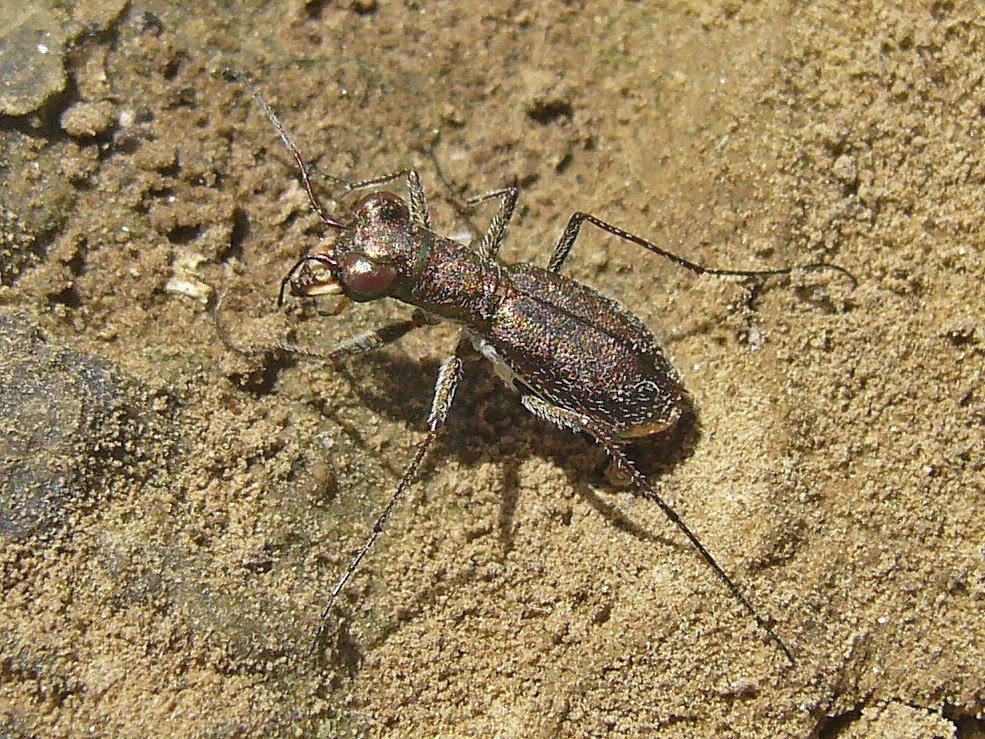
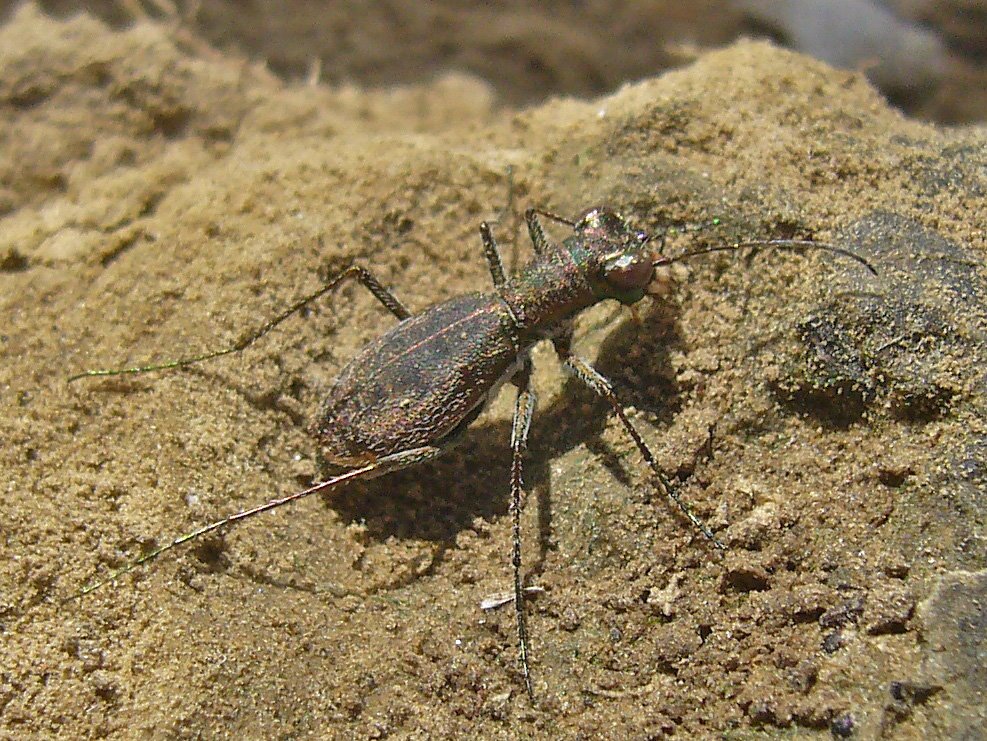
Having confirmed the occurrence of C. scutellaris on the Malden Ridge, we then began driving to the next putative locality some miles north along the ridge.  Along the way, Chris spotted a rather large sand expanse in another agricultural field right next to the highway.  cicindela_scutellaris_p1020906_2Even though I hadn’t detected it in my Google Map search, it looked promising enough to explore, and so we did a quick U-turn and found a place to pull over.  This spot can only be described as the ‘festive tiger beetle motherlode’ of southeast Missouri!  Even though the field was obviously under active agricultural use, the beetles were abundant within the fairly large expanse of exposed sand within the field (photo below).  We were quickly able to collect a sufficient series to document the beetle’s range of variation and set about obtaining additional photographs.  I felt fortunate to be able to photograph this mating pair, which nicely illustrates the white labrum of the male (top) versus the dark labrum of the female (bottom) – one character that distinguishes this intergrade population from the similar-appearing six-spotted tiger beetle (C. sexguttata – commonly encountered along woodland trails throughout the eastern U.S., and with both sexes exhibiting a white labrum).  Note also how the male is holding his legs out horizontally (a behavior I’ve seen with other mating pairs) and the more heavily padded tarsi on his front legs. The latter specialization is thought to aid in grasping and holding the female (Pearson et al. 2006), although in this instance it clearly is not serving that function, but I have not yet determined for what purpose the horizontal posturing of the front legs is all about (perhaps it is related to alarm behavior).

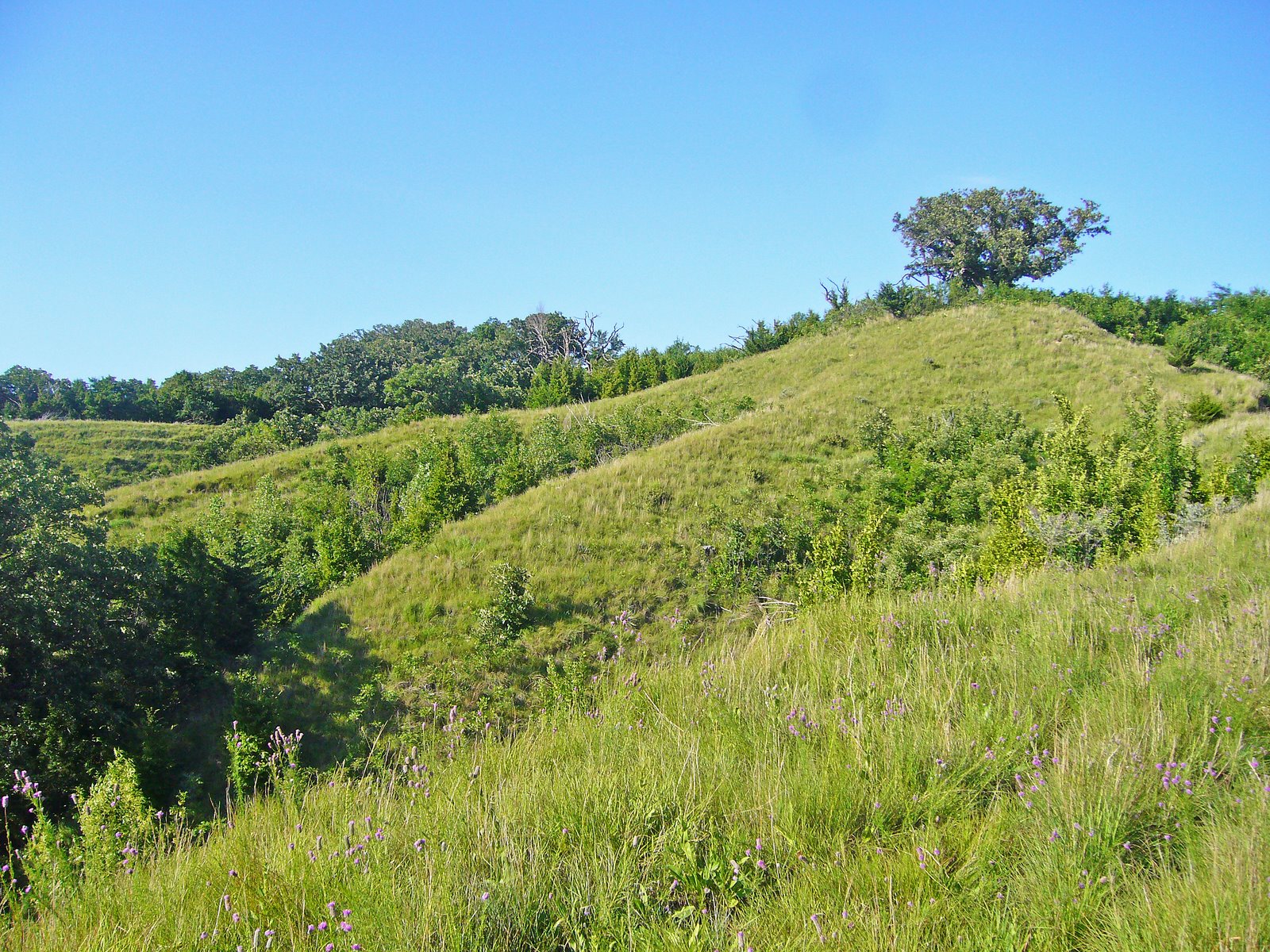
cicindela_scutellaris_habitat_p1020899_2We completed the day by documenting the occurrence of this species on the third of only three sizeable sand prairie relicts that remain on the Sikeston Sand Ridge – a private parcel located a few miles south of the other two preserves.  These observations have increased our confidence that C. scutellaris is secure in Missouri’s southeastern lowlands, and that – thankfully – no special conservation measures will be required at this time to assure its continued existence.  We also now have enough material on hand to characterize the range of variation exhibited by individuals across this population.  We hope this will allow a greater understanding of the relative influence of lecontei populations to the north versus unicolor populations to the south in contributing to the makeup of this population.

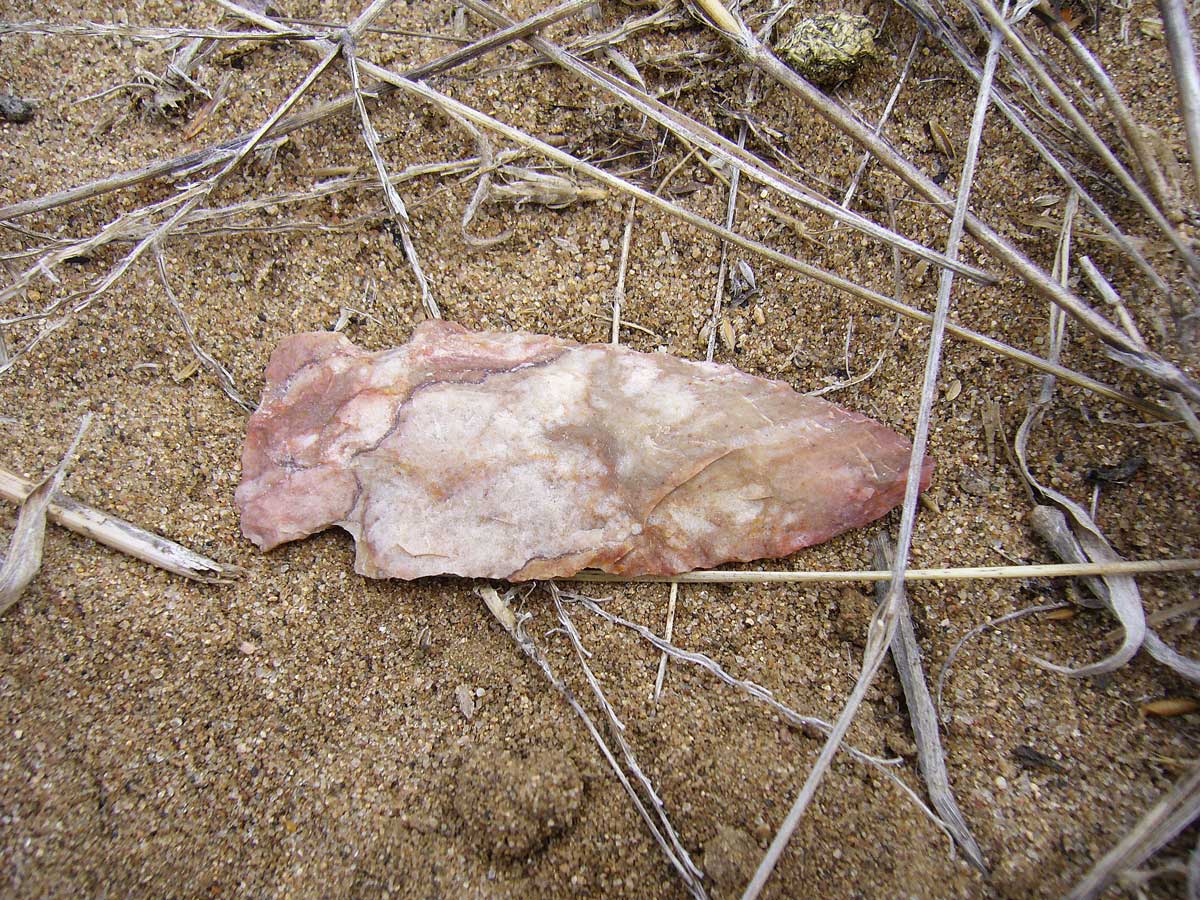
Since it was my birthday, it was appropriate that I should discover this “gift” next to the rim of my net after I slapped it over a mating pair of beetles.  I haven’t found a large number of Native American artifacts during my time in the field, but this has to be most impressive of those that I have found – it is in almost perfect condition, with only the smallest of chips off of one of the lower corners.  Edit 5/5/09: After a little research, I believe this to be a spear point from the Archaic period (12,000 to 2,500 years ago).
arrowhead_p1020900_2

p.s. – my 100th post!

REFERENCE:

Pearson, D. L., C. B. Knisley and C. J. Kazilek. 2006. A Field Guide to the Tiger Beetles of the United States and Canada. Oxford University Press, New York, 227 pp.

Copyright © Ted C. MacRae 2009

Add to FacebookAdd to NewsvineAdd to DiggAdd to Del.icio.usAdd to StumbleuponAdd to RedditAdd to BlinklistAdd to Ma.gnoliaAdd to TechnoratiAdd to Furl

Illinois Butterfly Monitoring Network

For those of you who plan to be in the Chicago area on Saturday, March 7th, perhaps you’ll be interested in attending the 2009 Illinois Butterfly Monitoring Network Annual Indoor Workshop. I’ll be giving a talk entitled, “From Hilltops to Swamps: Insects in Missouri’s Rarest Prairies,” in which I’ll focus on the natural history and some associated insects in two of Missouri’s most critically imperiled natural communities – the loess hilltop prairies in the northwestern corner of the state, and the sand prairies of the southeastern lowlands. How a beetle guy ended up being invited to talk to a butterfly group is still a little confusing to me, but apparently IBMN Director, Doug Taron (author of Gossamer Tapestry) put in a good word for me.

The Illinois Butterfly Monitoring Network (IBMN) is a citizen scientist program monitoring the health of butterfly populations throughout northeastern and central Illinois.

The IBMN was initiated in 1987 by The Nature Conservancy to explore the effects of habitat management on invertebrates. From 7 sites in the Chicagoland area in its first year, the program has expanded greatly and is now monitoring more than 100 sites throughout Illinois.  Butterflies are ideal “indicator organisms” with which to monitor the effects of prescribed burning and other management techniques, since many species are restricted to intact prairie and savanna remnants by narrow habitat requirements.  The fact that they are relatively easy to identify allows them to be monitored in a cost effective manner with the help of dedicated amateurs.  Much the same can be said for tiger beetles (which will – surprise! – be featured prominently my talk).

The workshop will be held Saturday, March 7, 2009, 9:30 AM until 3:00 PM at the Gail Borden Public Library, 270 North Grove Avenue, Elgin (directions).  Registration is required, contact Mel Manner at (847) 464-4426 or by email.

Copyright © Ted C. MacRae 2009

Add to FacebookAdd to NewsvineAdd to DiggAdd to Del.icio.usAdd to StumbleuponAdd to RedditAdd to BlinklistAdd to Ma.gnoliaAdd to TechnoratiAdd to Furl

Magnificently Monstrous Muscomorphs

I suppose tiger beetles have gotten more than their fair share of attention here lately, so for this post I thought I’d highlight insects of a completely different group – flies! Admittedly, as a coleopterist, I tend to view flies with much the same disdain as your average insect non-enthusiast – as pesky, pestiferous vermin worthy of little more attention than a decisive swat. I don’t begrudge them their amazing diversity – at ~100,000 described species worldwide, they are strong contenders with the Lepidoptera and Hymenoptera as the second largest order of insects (of course, you need all three of these orders combined to match the diversity of the Coleoptera). I am also prepared to accept that they may well represent, at least morphologically, the pinnacle of insect evolution (a position that a few hymenopterists I know might argue with) due to their amazing flight capabilities and the morphological adaptations they have developed for such. These include the development of aristate antennae for detecting wind speed, the conversion of the second pair of wings into stabilizing organs (halteres), and the ability to beat the remaining pair of wings at incomprehensible rates – up to 1,000 times per second in some very small midges (even more baffling when one considers that the wing “beat” is actually just a passive result of rhythmic distortions of the thoracic box). I even acknowledge that the vast majority of fly species are not even pests, living their lives innocuously as herbivores, scavenging organic matter that nothing else wants, and preying upon or parasitizing other insects, including important agricultural pests. Still, flies bug me – mosquitoes prevent me from sleeping under the stars without a tent, deer flies drone around my head incessantly while I’m trying to stalk an elusive tiger beetle, stable flies trick me into assuming they are just another house fly (until they bite me!), house flies (the real ones) rudely land on my sandwich with their filthy feet, and eye gnats insist on committing hary kary in my eyes as I walk the trails (I won’t mention their other common name, derived from their habit of clustering around exposed canid genitalia).

There is, however, one group of flies that possess “cool factor” rivaling that of even the most popular insect groups – robber flies and their kin. I’ve always picked them up as an aside, even sending them off for authoritative ID and constructing an inventory of the species in my collection. The brute of a fly pictured here is not a true robber fly, but in the related family Mydidae. Mydus clavatus can be recognized easily in the field by its large size and distinctive black coloration with red/orange on top of the 2nd abdominal segment. Presumably this is an example of Batesian mimicry modeled upon spider wasps (family Pompilidae) in the genus Anoplius. This mimicry allows them to fly rather boldly in the open and is so persuasive that it can not only fool the casual observer, but even the most knowledgable of entomologists might be loathe to handle it despite knowing better. Although common across the eastern U.S., aspects of its life history are poorly understood. Adults have been reported to be predators of other insects, but apparently there are some doubts about the veracity of such reports. Patrick Coin of BugGuide has observed adults (males?) taking nectar from flowers and has suggested that reports of predation by adults might have been an erroneous assumption due to their relation and resemblance to robber flies. Larvae are reported to be predaceous on woodboring beetle larvae, and I have reared adults of this species from a dead sycamore (Platanus occidentalis) stump in southern Missouri that was infested with mature larvae of the large buprestid species, Texania campestris. This habit is similar to robber flies of the genus Laphria, which mimic bumble bees and carpenter bees.

In Greek mythology, Promachos (Προμαχοε) was “the champion” or one “who leads in battle” – an appropriate generic name for the so-called “giant robber flies” of the genus Promachus. These large flies are dominant and fearless predators that will capture just about any flying insect – even adult dragonflies. There are three species of Promachus in the eastern U.S. that exhibit the yellow and black tiger striping of the abdomen seen in this individual, identified as a female Promachus hinei by Herschel Raney at BugGuide due to its reddish femora and occurrence in the central U.S. Promachus rufipes is similar but has black femora with distinctly orangish tibiae and is more common in the southeastern U.S., whereas P. vertebratus has more muted two-toned legs with smaller dark areas dorsally on the abdominal segments and is more common in the northern states. Additional species occur in the region but lack the tiger striping of the abdomen, and even more species occur in the western U.S. Members of this genus generally lay their eggs on the ground near grass roots, and the larvae burrow into soil after hatching and feed on soil insects, roots, and decaying matter before pupating within the soil in an unlined cell.

During my recent trip to Nebraska I encountered this related robber fly genus Proctacanthus, also determined by Herschel provisionally as P. milbertii. These large robber flies with a prominent beard are similar in habit to Promachus species, laying their eggs in crevices in soil and the larvae feeding on soil insects, roots, and decaying plant matter. Proctacanthus milbertii is a late season species that occurs across much of the U.S. and reportedly loves butterflies. However, Joern & Rudd (1982), in studying predation by this species in western Nebraska (where the individual pictured here was photographed) found that grasshoppers made up 94% of the prey captured by this species. Interestingly, nearly all of the remaining prey captures were other P. milbertii, which was carefully verified as such since mating postures can be easily mistaken for prey handling positions. Grasshopper prey species taken by this species were most strongly influenced by availability rather than size, suggesting that even the largest grasshopper species could be captured as easily as smaller species – a testament to the ferocity of this robber fly.

Another family of flies modestly related to robber flies and also ranking high in “cool factor” are the bee flies (family Bombyliidae). The scaly bee fly, Lepidophora lepidocera (ID confirmed by Joel Kits at BugGuide), is a particularly attractive member of the family. The distinctive, hunch-backed shape of this southern U.S. species is shared with the more northern L. lutea, from which it is distinguished by having pale scales only on the 5th abdominal segment and not on the 4th also. Most bee flies are presumbably mimics of – yes – bees; however, the species in this genus might actually be mimics of robber flies instead. Adults are most often seen taking nectar from flowers – this individual was taken on flowers of tall boneset (Eupatorium altissimum). Larvae are characterized by Sivinski et al. (1999) as kleptoparasites on the provisions of solitary wasps in the families Vespidae and Sphecidae – meaning that the larva does not parasitize wasp larvae directly, but instead usurpes the nest provisions on which the wasp larvae were supposed to feed. The little thieves!

Cicindela scutellaris lecontei x scutellaris unicolor intergrades in southeast Missouri

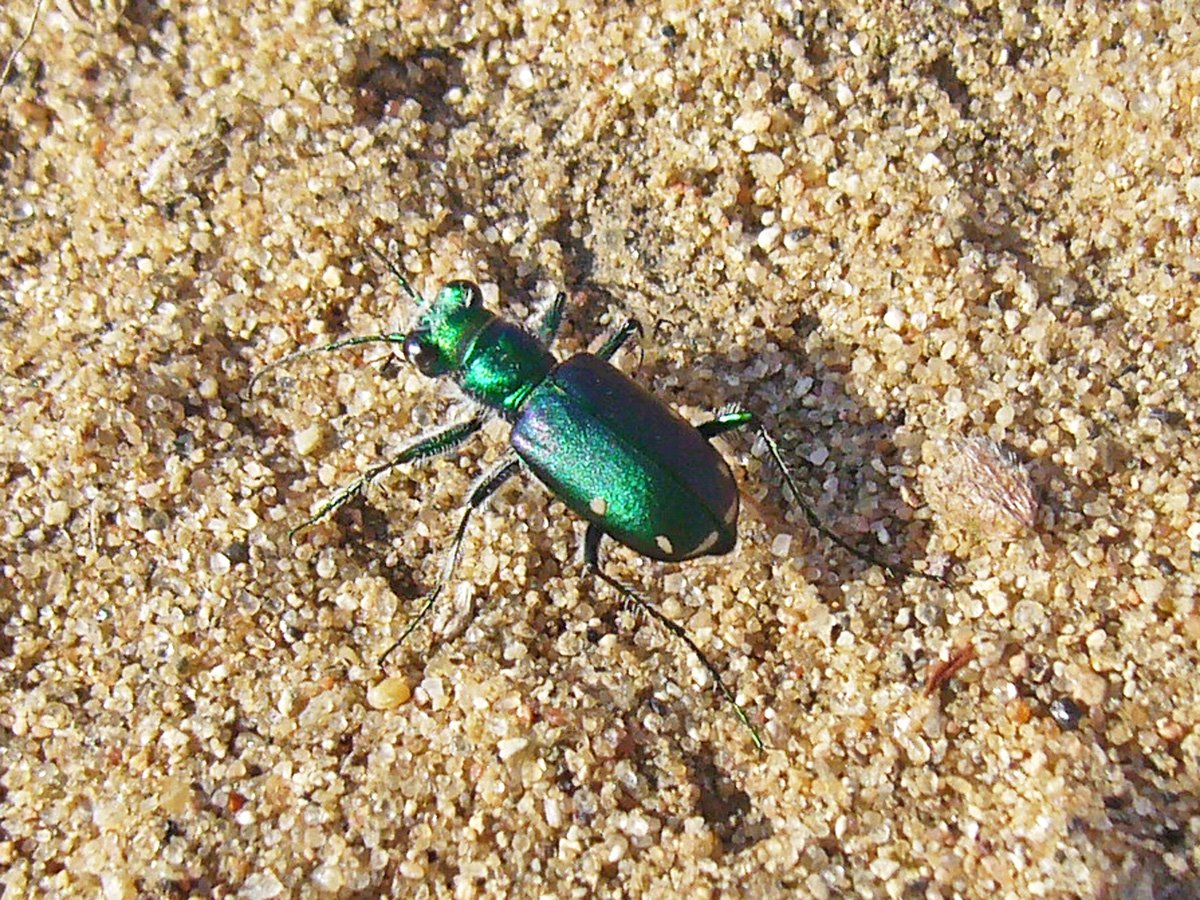
An individual from Sand Prairie Conservation Area.  Note the uniform blue-gray coloration and complete lack of maculations, making this individual indistinguishable from true unicolor.Cicindela scutellaris (festive tiger beetle) is widely distributed in the U.S., having been recorded from most areas east of the Rocky Mountains except Appalachia, the lower Mississippi River delta, and south Florida. Within this range, the species occupies deep, dry sand habitats without standing water. It is often found in the company of Cicindela formosa (big sand tiger beetle), whose range largely coincides with that of C. scutellaris (except the southeastern Coastal Plain). More than any other North American Cicindela, populations of this species show extraordinary variability in color across its range of distribution. Seven geographically recognizable subspecies are generally accepted, with considerable variation evident within some of these and along zones of contact between them.

An individual from further south on the Sikeston Ridge (~20 mi S of Sand Prairie Conservation Area).  Note the generally blue-green coloration as in unicolor, but it also exhibits fairly well developed maculations and a suffusion of maroon color on the elytra - distinct influences from subspecies lecontei.The greatest portion of the species’ range is occupied by nominotypical populations in the Great Plains and subspecies lecontei in the Midwest and northeast. Similar to what I’ve noted in previous posts for other species, a broad zone of intergradation between these two subspecies occurs along the upper Missouri River. Other subspecies occupy more limited ranges along the upper Atlantic Coast (rugifrons), southeastern Coastal Plain (unicolor), eastern Texas and adjacent areas of northwestern Louisiana and southwestern Arkansas (rugata), and north-central Texas (flavoviridis), and the highly restricted and disjunct yampae is found only in a small area of northwestern Colorado. Populations in the upper Midwest and Canadian prairie are sometimes regarded as distinct from lecontei (designated as subspecies criddlei) due to their broadly coalesced marginal elyral maculations, and an apparently disjunct population of small, blue individuals in south Texas may also be regarded as subspecifically distinct.

Another individual from Sand Prairie Conservation Area.  It is similar to the unicolor-type individual in Photo 1 but also exhibits small maculations derived from its lecontei influence.Although Missouri lies well within the boundaries of its range, this species has been found in only three widely-separated parts of the state – near the Missouri River in the northwest part of the state, near the Mississippi River in the extreme northeast corner, and in the southeastern lowlands (formally known as the Mississippi River Alluvial Basin). The two northern Missouri populations are assignable to and typical of lecontei, with their uniform dull maroon to olive green coloration and continuous to near-continuous ivory-colored border around the outer edge of the elytra. Additional dry sand habitats occur along the lower Missouri River in central and east-central Missouri and along some of the larger rivers that drain the Ozark Highlands; however, this species has not been located in these habitats despite their apparent suitability and occurrence of C. formosa with which it frequently co-occurs. The reasons for this distributional gap between the northern and southern populations – some 400 miles in width – remain a mystery. The southeastern Missouri population is not clearly assignable to any subspecies, apparently representing an intergrade between lecontei to the north and unicolor to the south. Accordingly, individuals from this area are known by the unwieldy appellative “Cicindela scutellaris lecontei x scutellaris unicolor intergrade.” Pearson et al. (2005) states that intergrades between lecontei and unicolor are evident only in northern “Missouri” (an obvious error for Mississippi) and Tennessee. Thus, the existence of intergrades in southeastern Missouri suggests that the zone of intergradation extends further north than previously realized.

A second individual from ~20 mi S of Sand Prairie Conservation Area.  Similar to the individual in Photo 2 except with smaller maculations.  Note the gorgeous suffusion of maroon, especially on head and pronotum - a spectacular individual.Prior to this season, I had located two main population centers in the southeastern lowlands – one at Holly Ridge Conservation Area in Stoddard County, and another at Sand Pond Conservation Area in Ripley County. Holly Ridge is located on Crowley’s Ridge – an erosional remnant of Tertiary sand and aggregate sediments left behind by the late Pleistocene glacial meltwaters whose scouring action formed the surrounding lowlands, while the sandy sediments at Sand Pond were deposited west of Crowley’s Ridge along the southeastern escarpment of the Ozark Highlands during that same period. These erosional and depositional events created the deep, dry sand habitats that Cicindela scutellaris requires. I had known also about the Sikeston Sand Ridge further to the east – another erosional remnant of Tertiary sands deposited by the ancient Ohio River – but had not explored it closely until this season when I initiated my surveys at Sand Prairie Conservation Area. I expected Cicindela scutellaris might occur here, and in my first fall visit in early September I found two individuals in the sand barrens (alongside Cicindela formosa). Another individual was seen here in early October, but more robust populations were observed at a small, high-quality sand prairie remnant (last photo) further to the south along the Sikeston Ridge, and around eroded sand barrens behind private residences still further to the south. Clearly, the species is well-established in the southeastern lowlands wherever open dry sand habitats can be found.

Sand prairie habitat for Cicindela scutellaris in southeast Missouri.  Note the well-spaced clumps of grass, in this case splitbeard bluestem.The individuals shown here exemplify the range of variation exhibited by Cicindela scutellaris populations in southeast Missouri. They greatly resemble subspecies unicolor by their uniform shiny blue-green coloration. Indeed, the individual in the first photo might well be classified as such due to the complete absence of white maculations along the elytral border. Most individuals, however, show varying development of such maculations, ranging from small disconneted spots to the more developed apical “C”-shaped mark – clearly an influence from subspecies lecontei. Another apparent lecontei influence is the suffusion of wine-red or maroon coloration that can be seen on the head, pronotum, and elytra of the individuals in photos 2 and 4. These characters make this population divergent from the typically monochromic unicolor (as its name suggests). Because of their bright green coloration and white maculations, individuals in this population greatly resemble subspecies rugifrons, but that subspecies is limited to the northern Atlantic seaboard. They also resemble the common and widespread Cicindela sexguttata (six-spotted tiger beetle) but can be distinguished from that species by the more noticeably domed profile of the elytra, rounded rather than tapered elytral apex, and dark labrum of the female (both sexes of C. sexguttata have a white labrum).

There is one additional sand ridge in Missouri’s southeastern lowlands – the Malden Ridge. This sand ridge occurs south of Crowley’s Ridge and is much smaller than the Sikeston Ridge. No significant remnant habitats remain on the Malden Ridge, but it is possible that sufficient areas of open sand remain that might support populations of C. scutellaris. Determining whether this is true will require some time studying Google Earth and even more time on the ground to search them out. If they do exist, however, it will be interesting to see what level of influence by lecontei is exhibited in this most southerly of Missouri populations. Only spring will tell!

A sand prairie autumn

Splitbeard bluestem seed headsAsk any astronomer when autumn begins, and they will likely tell you it begins at the autumnal equinox – when shortening days and lengthening nights become equal as the sun crosses over the celestial equator. According to them, fall began this year on September 22 – at 11:44:18 A.M. EDT, to be precise. I agree that autumn begins at a precise moment, but it is not at the equinox. Rather, it is that unpredictable moment when a sudden crispness in the air is felt, when the sky somehow seems bluer and shadows seem sharper, and hints of yellow – ever so subtle – start to appear in the landscape. Butterfly pea blossomIn Missouri, with its middle latitudes, this usually happens a few weeks before the equinox, as August is waning into September. It is a moment that goes unnoticed by many, especially those whose lives and livelihoods have lost all connection with the natural world. To plants and animals, however, it is a clear signal – a signal to begin making preparations for the long cold months of winter that lie ahead. Plants that have not yet flowered begin to do so in earnest, while those that have shift energy reserves into developing seeds. Animals take advantage of their final opportunities to feed before enduring the scarcities of winter, digging in to sleep through them, or abandoning altogether and migrating to warmer climes. Insects begin hastily provisioning nests for their broods or laying eggs – tiny capsules of life that survive the harsh winter before hatching in spring and beginning the cycle anew.

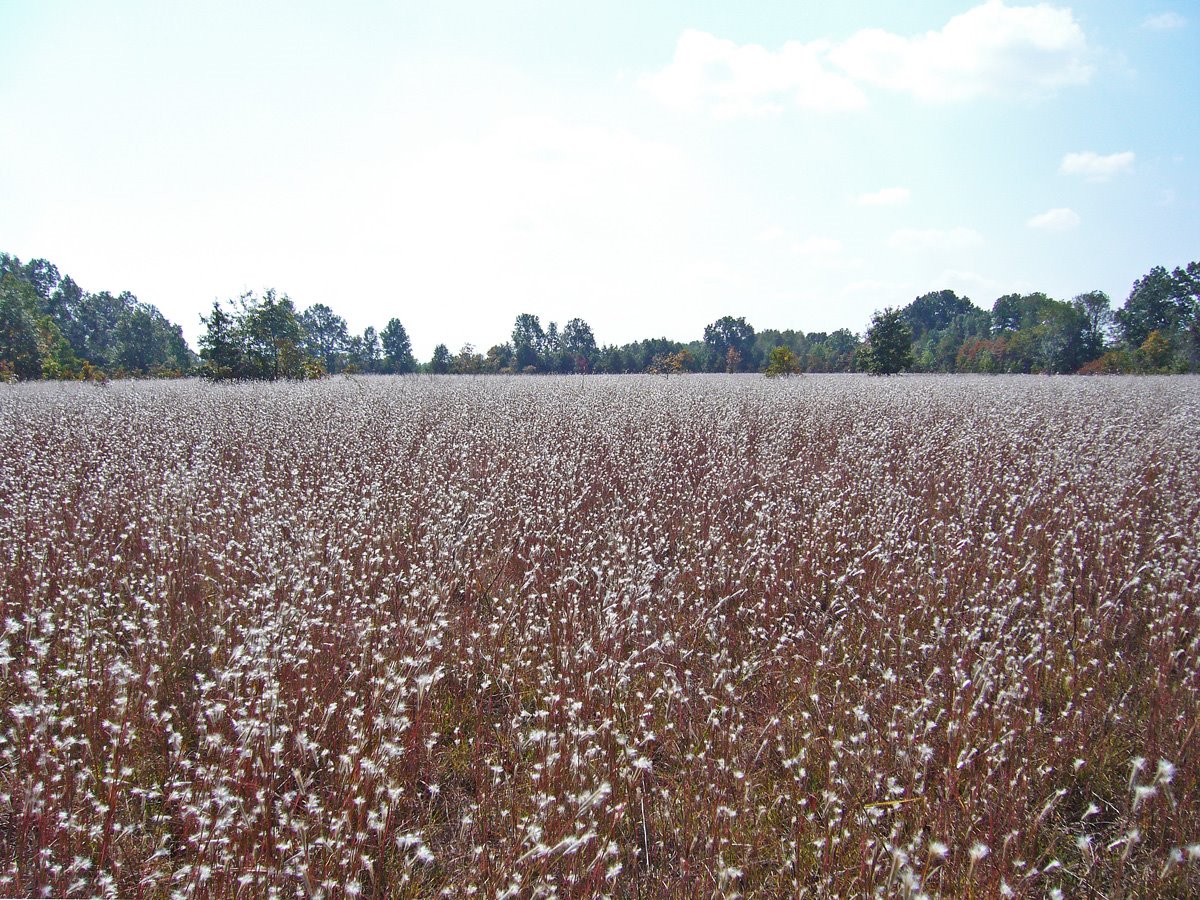
Sand prairie in early September.Sand prairie in early October.  Note abundance of splitbeard bluestem seed heads.Across much of Missouri, in the Ozark Highlands and in riparian ribbons dissecting the northern Plains, autumn brings an increasingly intense display of reds, purples, oranges, and yellows, as the leaves of deciduous hardwoods begin breaking down their chlorophyll to unmask underlying anthocyanins and other pigments. Small southern jointweedIn Missouri’s remnant prairies, seas of verdant green morph to muted shades of amber, tawny, and beige. This subtle transformation is even more spectacular in the critically imperiled sand prairies of the Southeast Lowlands, where stands of splitbeard bluestem (Andropogon ternaries – above) turn a rich russet color while fluffy, white seed heads (1st paragraph, 1st photo) appear along the length of each stem, evoking images of shooting fireworks. Small southern jointweed (Polygonella americana – right) finds a home at the northern extent of its distribution in these prairie remnants and in similar habitats in nearby Crowley’s Ridge, blooming in profusion once the cooler nights arrive. Butterfly pea (Clitoria mariana – 1st paragraph, 2nd photo) blooms add a gorgeous splash of soft purple in contrast to the muted colors of the plants around them.

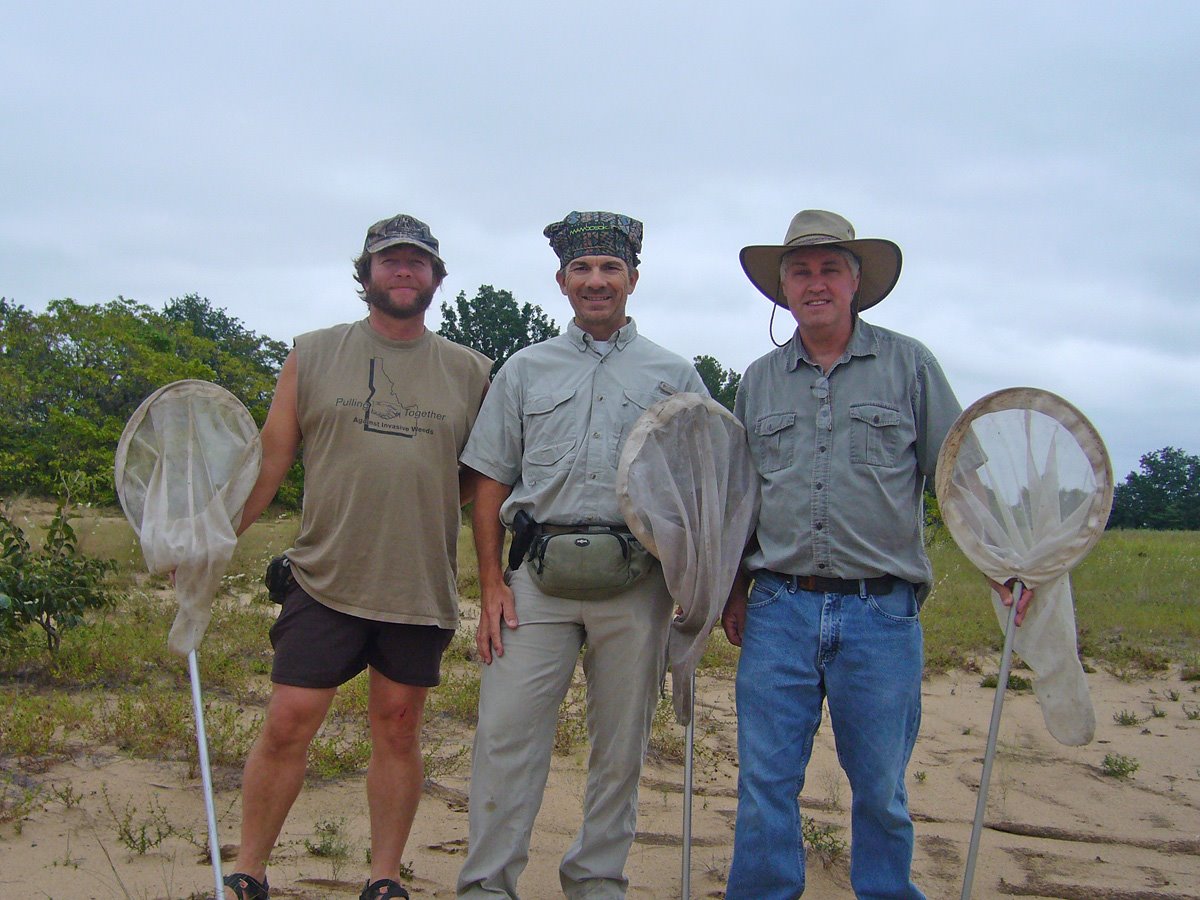
Kent Fothergill, Ted MacRae, and Rich ThomaAfter first becoming acquainted with Missouri’s sand prairies this past summer, I knew a fall trip (or two) would be in order. The extensive deep, dry sand barrens were ideal habitat for sand-loving insects, including certain spring/fall species of tiger beetles that would not be active during the summer months. The cooler nights and crisp air of early fall make insect collecting extraordinarily pleasurable, so it took little effort to convince friends and colleagues Kent and Rich to join me on another excursion to these extraordinary remnant habitats, along with my (then 8 yr-old) daughter Madison (who would likely characterize this as “tallgrass” prairie). Madison MacRae, age 9 (almost)I was, as ever, on the lookout for tiger beetles; however, temperatures were cool, skies were overcast, and the fall season was just beginning, greatly limiting tiger beetle activity during this first fall visit. We did see one Cicindela formosa (big sand tiger beetle), which cooperated fully for a nice series of photographs. We also found single specimens of the annoyingly ubiquitous C. punctulata (punctured tiger beetle) and a curiously out-of-place C. duodecimguttata (12-spotted tiger beetle), which must have flown some distance from the nearest dark, muddy streambank that it surely prefers. Of greatest interest, we found two specimens of C. scutellaris (festive tiger beetle), which in this part of Missouri is represented by a population presenting a curious mix of influences from two different subspecies (more on this in a later post…). Despite the scarcity of tiger beetles, other insects were present in great diversity, some of which I share with you here.

Ululodes macleayanusThis bizarre creature, sitting on the stem of plains snakecotton (Froelichia floridana), is actually a neuropteran insect called an owlfly (family Ascalaphidae). Looking like a cross between a dragonfly and a butterfly due to its overly large eyes and many-veined wings but with long, clubbed antennae, this individual is demonstrating the cryptic resting posture they often assume with the abdomen projecting from the perch and resembling a twig. The divided eyes identify this individual as belonging to the genus Ululodes, and Dr. John D. Oswald (Texas A&M University) has kindly identified the species as U. macleayanus. As is true of many groups of insects, their taxonomy is far from completely understood. Larvae of these basal holometabolans are predaceous, lying on the ground with their large trap-jaws held wide open and often camouflaging themselves with sand and debris while waiting for prey. The slightest contact with the jaws springs them shut, and within a few minutes the prey is paralyzed and can be sucked dry at the larva’s leisure.

Ant lion, possibly in the genus Myrmeleon.Another family of neuropteran insects closely related to owlflies are antlions (family Myrmeleontidae, sometimes misspelled “Myrmeleonidae”). This individual (resting lower down on the very same F. floridana stem) may be in the genus Myrmeleon, but my wanting expertise doesn’t allow a more conclusive identification [edit 4/12/09 – John D. Oswald has identified the species as Myrmeleon immaculatus]. Strictly speaking, the term “antlion” applies to the larval form of the members of this family, all of whom create pits in sandy soils to trap ants and other small insects, thus, it’s occurrence in the sand prairie is not surprising. Larvae lie in wait beneath the sand at the bottom of the pit, flipping sand on the hapless prey to prevent it from escaping until they can impale it with their large, sickle-shaped jaws, inject digestive enzymes that ‘pre-digest’ the prey’s tissues, and suck out the liquifying contents. Finding larvae is not easy – even when pits are located and dug up, the larvae lie motionless and are often covered with a layer of sand that makes them almost impossible to detect. I’ve tried digging up pits several times and have failed as yet to find one. Larvae are also sometimes referred to as “doodlebugs” in reference to the winding, spiralling trails that the larvae leave in the sand while searching for a good trap location – these trails look like someone has doodled in the sand.

Bembix americanaThis digger wasp, Bembix americana (ID confirmed by Matthias Buck), was common on the barren sand exposures, where they dig burrows into the loose sand. Formerly included in the family Sphecidae (containing the better-known “cicada killer”), members of this group are now placed in their own family (Crabronidae). Adult females provision their nest with flies, which they catch and sting to paralyze before dragging it down into the burrow. As is common with the social hymenoptera such as bees and paper wasps, these solitary wasps engage in active parental care by providing greater number of prey as the larva grows. As many as twenty flies might be needed for a single larva. I found the burrows of these wasps at first difficult to distinguish from those created by adults of the tiger beetles I so desired, but eventually learned to distinguish them by their rounder shape and coarser, “pile” rather than “fanned” diggings (see this post for more on this subject).

Stichopogon trifasciatusRobber flies (family Asilidae) are a favorite group of mine (or, at least, as favorite as a non-coleopteran group can be). This small species, Stichopogon trifasciatus (ID confirmed by Herschel Raney), was also common on the barren sandy surface. The specific epithet refers to the three bands of alternating light and dark bands on the abdomen. Many species in this family are broadly distributed but have fairly restrictive ecological requirements, resulting in rather localized occurrences within their distribution. Stichopogon trifasciatus occurs throughout North America and south into the Neotropics wherever barren, sandy or gravely areas near water can be found. Adults are deadly predators, swooping down on spiders, flies and other small insects and “stabbing” them with their stout beak.

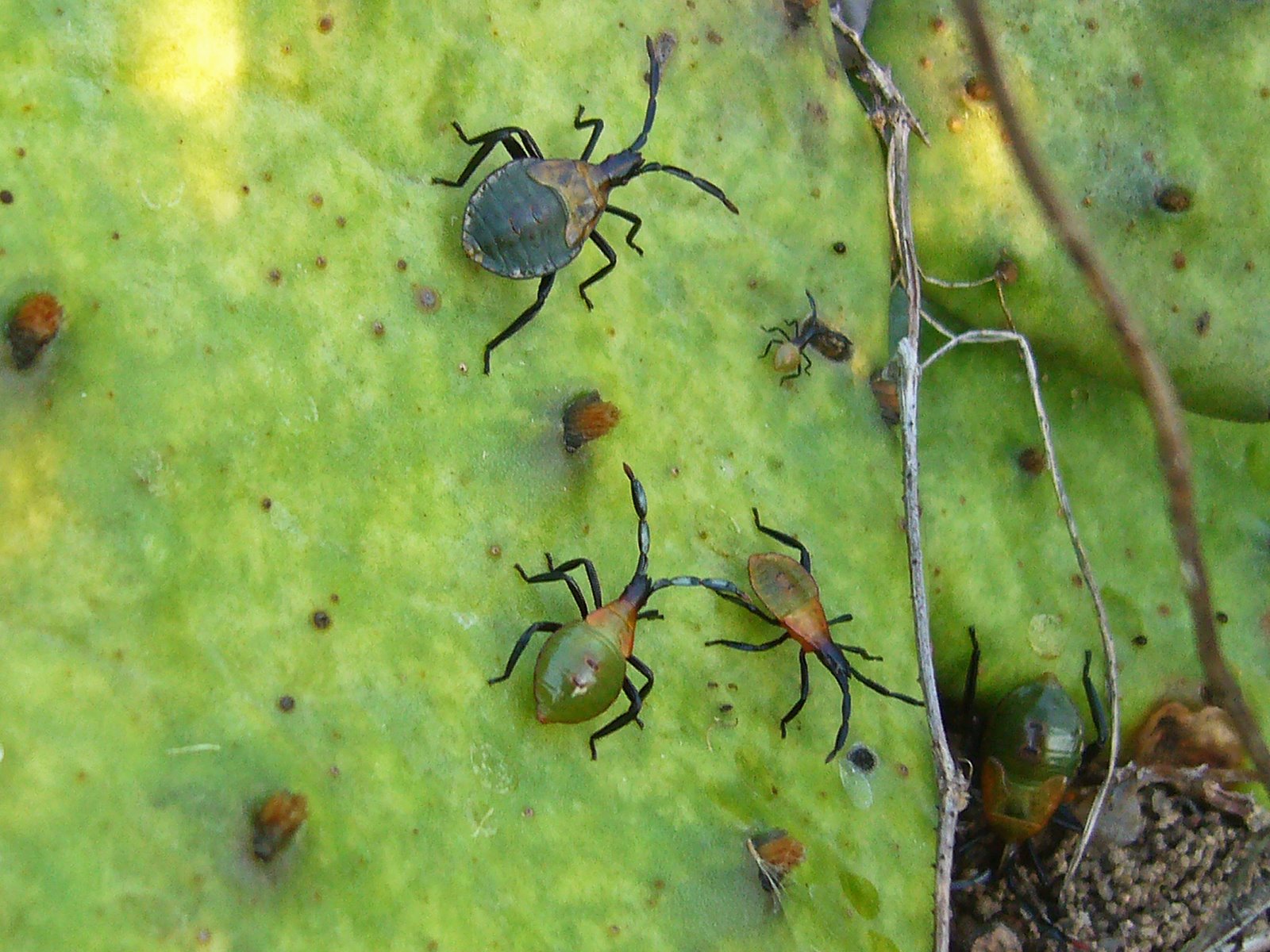
Chelinidea vittigerPrickly pear cactus (Opuntia humifusa) grows abundantly in the sandy soil amongst the clumps of bluestem, and on the pads were these nymphs of Chelinidea vittiger (cactus bug, family Coreidae). This wide-ranging species occurs across the U.S. and southward to northern Mexico wherever prickly pear hosts can be found. This species can either be considered a beneficial or a pest, depending upon perspective. On the one hand, it serves as a minor component in a pest complex that prevents prickly pear from aggressively overtaking rangelands in North America; however, prickly pear is used by ranchers as emergency forage, and fruits and spineless pads are also sometimes harvested for produce. In Missouri, O. humifusa is a non-aggressive component of glades, prairies, and sand and gravel washes, making C. vittiger an interesting member of the states natural diversity.

Ammophila sp., possibly A. proceraThis wasp in the genus Ammophila (perhaps A. procera as suggested by Herschel Raney) was found clinging by its jaws to a bluestem stem in the cool morning, where it presumably spent the night. One of the true sphecid (or “thread-waist”) wasps, A. procera is a widespread and common species in eastern North America. One of the largest members of the genus, its distinctive, bold silver dashes on the thorax distinguish it from most other sympatric congeners. Similar to the habits of most other aculeate wasp groups, this species captures and paralyzes sawfly or lepidopteran caterpillars to serve as food for its developing brood. Females dig burrows and lay eggs on the paralyzed hosts with which the nests have been provisioned. Adults are also found commonly on flowers, presumably to feed on nectar and/or pollen.

Dusty hog-nosed snakeRich is a bit of herpatologist, so when he brought this hog-nosed snake to our attention we all had a good time pestering it to try to get it to turn upside down and play dead. I had never seen a hog-nosed snake before but knew of its habit of rolling over and opening its mouth with its tongue hanging out when disturbed, even flopping right back over when turned rightside up or staying limp when picked up. We succeeded in getting it to emit its foul musky smell, but much to our disappointment it never did play dead, instead using its shovel-shaped snout to dig into the sand. Dusty hog-nosed snake - head closeupWe had assumed this was the common and widespread eastern hog-nosed snake (Heterodon platirhinos); however, in our attempts to turn it over I noticed its black and orange checker patterned belly. I later learned this to be characteristic of the dusky hog-nosed snake (H. nasicus gloydi), only recently discovered in the sand prairies of southeast Missouri and regarded as critically imperiled in the state due to the near complete destruction of such habitats. Disjunct from the main population further west, its continued survival in Missouri depends upon the survival of these small sand prairie remnants in the Southeast Lowlands.

A hunting we will go!

Maps have been prepared. Relevant emails from my esteemed colleagues to the northwest have been read and re-read. Summary sheets on the distribution, biology, and biogeography of the many different species I hope to encounter are in hand. Google Earth images of each locality I plan to visit – annotated with potential species occurrences and pinpointing precise locations of their likely habitats – have been assembled into a Powerpoint presentation, and detailed driving directions from Point “A” to Point “B”… all the way to Point “X” (home!) have been determined. All of this has been printed out and organized into a 3-ring binder. Why the extraordinary attention to detail? Because…

It’s time for the annual fall tiger beetle trip!

View Larger Map

The annual fall tiger beetle trip started several years ago when I, along with my friend and colleague Chris, began studying Missouri’s tiger beetle fauna. At first it was a diversion – buprestids and cerambycids are pretty well played out by fall, but tiger beetles across much of the U.S. exhibit a unique spring/fall fauna that is quite distinct from the summer fauna. Chris and I would go to different parts of Missouri, documenting the species encountered to fill in distributional data gaps. It was on these trips that I discovered how much I truly love early fall collecting – the cool air, the crisp smells, the long sharp shadows, and a landscape of foliage ever so lightly tinged with shades of red and yellow while grasses morph into fields of gold. In recent years, I’ve begun adventuring beyond Missouri’s borders on these fall trips, allured by the diversity of species found in the Great Plains – species alien to Missouri in an equally alien landscape. First, it was Barber County, Kansas, with its red gypsum hills inhabited by the aptly named Cicindela pulchra (beautiful tiger beetle) – deep wine-red and iridescent purple flashing across the barren red clay. Then last year I got my first taste of the Sand Hills of Nebraska at their farthest eastern extent. I watched in amazement as Cicindela limbata (sandy tiger beetle) – vivid white and metallic green – danced across the surface of sand blows, undaunted by scouring 30 mph winds. It was on that trip that I decided a long weekend wasn’t cutting it – I needed to take a whole week and get myself into the heart of the Great Plains. The annual fall tiger beetle weekend has just become the annual fall tiger beetle week.

As the map above indicates, I’ve got a rather ambitious itinerary of locations that I’d like to visit – 22 in all. I leave tomorrow, and if I have planned properly (and have a little luck) I might be able to visit all of them in the 9 days I have set aside for the trip. My “trip bible” will be my constant companion, along with my already worn copy of the newly issued Tiger Beetles of South Dakota & Nebraska (Spomer et al. 2008), as I explore deep into the Sand Hills and experience for the first time ever the Black Hills of South Dakota. I’ll even sneak over into Colorado and Wyoming for a spot or two. Unfortunately, my faithful colleague isn’t able to join me. I tried to seduce him with visions of Cicindela limbata and C. lengi (blowout tiger beetle) in the numerous sand blows, C. fulgida (crimson saltflat tiger beetle) around countless alkaline lakes, C. longilabris (Boreal long-lipped tiger beetle) in the high pine forests, and C. nebraskana (prairie long-lipped tiger beetle) and (if we’re really really lucky) C. decemnotata (Badlands tiger beetle) just sneaking into the shortgrass prairies of the extreme northwestern corner of Nebraska. I reminded him of my (wanting) photographic skills and the images we would have to settle for if his talent and equipment didn’t accompany me. I almost had him, but in the end he muttered some lame excuse about his 15-month old baby and wife needing him (just kidding, Chris!).

The map above should be fully interactive, so give it a click and follow me along on this adventure. If you happen to be at any of the spots marked by a balloon and see a khaki-clad fellow – insect net in one hand, camera in the other – how’s about joining me for a bit of tiger beetle hunting.

The Loess Hills in Missouri

The term Mountains in Miniature is the most expressive one to describe these bluffs. They have all the irregularity in shape, and in valleys that mountains have, they have no rocks and rarely timber. – Thaddeus Culbertson, missionary, 1852


One of the things I enjoy most about the natural history of Missouri is its diversity. Lying in the middle of the North American continent, it is here where the eastern deciduous forest yields to the western grasslands. Coinciding with this transition between two great biomes is a complex intersection of landforms – the northern plains, recently scoured by glaciers; the southeastern lowlands, where the great Mississippi River embayment reaches its northern extent; the Ozark Highlands, whose craggy old rocks comprise the only major landform elevation between the Appalachian and Rocky Mountains; and the eastern realm of the vast Great Plains. This nexus of east and west, of north and south, of lowlands and highlands, has given rise to a rich diversity of natural communities – 85 in all according to Paul Nelson (2005, Terrestrial Natural Communities of Missouri). Despite the overwhelming changes wrought upon Missouri’s landscape during the past 200 years, passable examples of most of these communities still exist in many parts of the state and provide a glimpse of Missouri’s rich natural heritage.

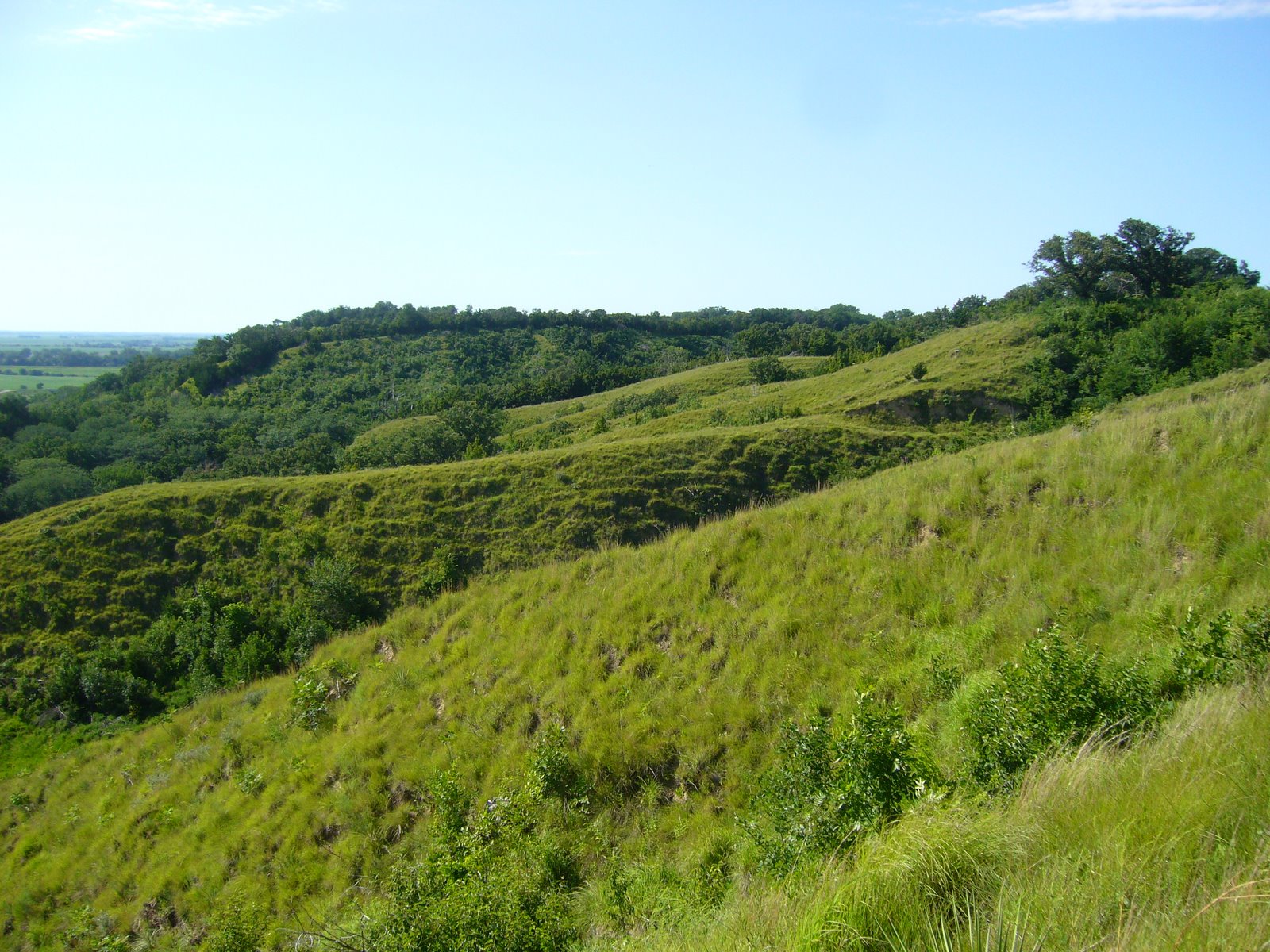
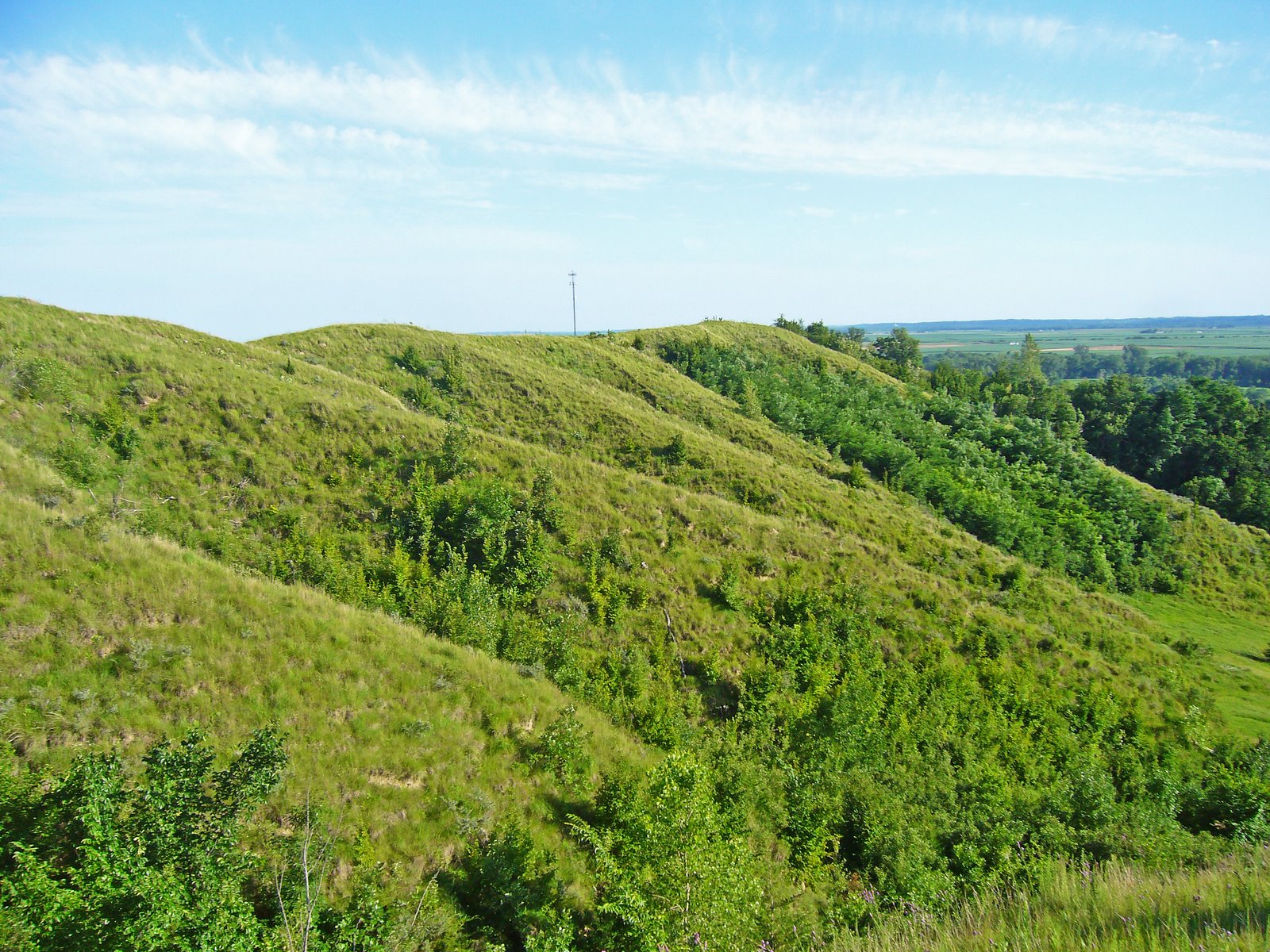
Last month I talked about the critically imperiled sand prairie community in extreme southeast Missouri. This month, we travel 500 miles to the distant northwestern corner of the state to visit another critically imperiled community – the dry loess prairie. These communities are confined to thin slivers of bluff top along the Missouri River in Atchison and Holt Counties. The bluffs on which they lie are themselves part of a unique landform called the Loess Hills. Like the sand prairies of the southeastern lowlands, this angular landscape owes its birth to the glacial advances of the Pleistocene epoch (2.5 million to 10,000 years ago), when streams of meltwater – swollen and heavily laden with finely ground sediments (i.e., glacial “flour”) – filled river valleys throughout the Midwest during Pleistocene summers. Brutal cold during winter reduced these flows to a trickle, allowing the prevailing westerly winds to pick up the sediments, left high and dry, and drop them on leeward upland surfaces across Iowa and northern Missouri. The thickest deposits occurred along the abrupt eastern border of the Missouri River valley – at least 60 feet deep, and in places up to 200 feet. Loess (pronounced “luss”) is a homogeneous, fine-grained, quartz silt – undisturbed it is highly cohesive and able to stand in near vertical bluffs. It is also extremely prone to erosion, and as a result for 10,000 years now the forces of water have reshaped the Loess Hills into the landform we see today. Loess itself is not rare – thick deposits can be found in many parts of the world and over thousands of square miles across the Midwest. It is here, however, along the western edge of Iowa and northern Missouri – and nowhere else in North America – where loess deposits are deep enough and extensive enough to obliterate any influence by the underlying bedrock and dictate the form of the landscape.

It is this form that makes the Loess Hills so unique. The depth of the soil, its cohesiveness, its natural tendency to slump on steep slopes and sheer in vertical planes, and the action of water over the past several millenia have created a landscape of narrow undulating ridges flanked by steep slopes and numerous side spurs, intricate drainages with sharply cut gullies, and long, narrow terraces called “catsteps” cutting across the steep upper hillsides. It’s a sharp, angular, corrugated landscape, stretching 200 miles north and south in a narrow band of varying width from north of Souix City, Iowa, to its southern terminus in northwestern Missouri. Its western boundary is sharply delimited by the Missouri River valley, where lateral erosion (now halted by channelization of the river) and vertical sheering have created precipitous bluff faces. The eastern boundary is harder to delimit and is dependent upon the thickness of the loess. Deposits that fall below 60 feet in depth are unable to mask and reshape the rolling terrain of the eroded glacial till lying beneath. In general, this happens at distances of only 3 to 10 miles from the western edge of the landform.

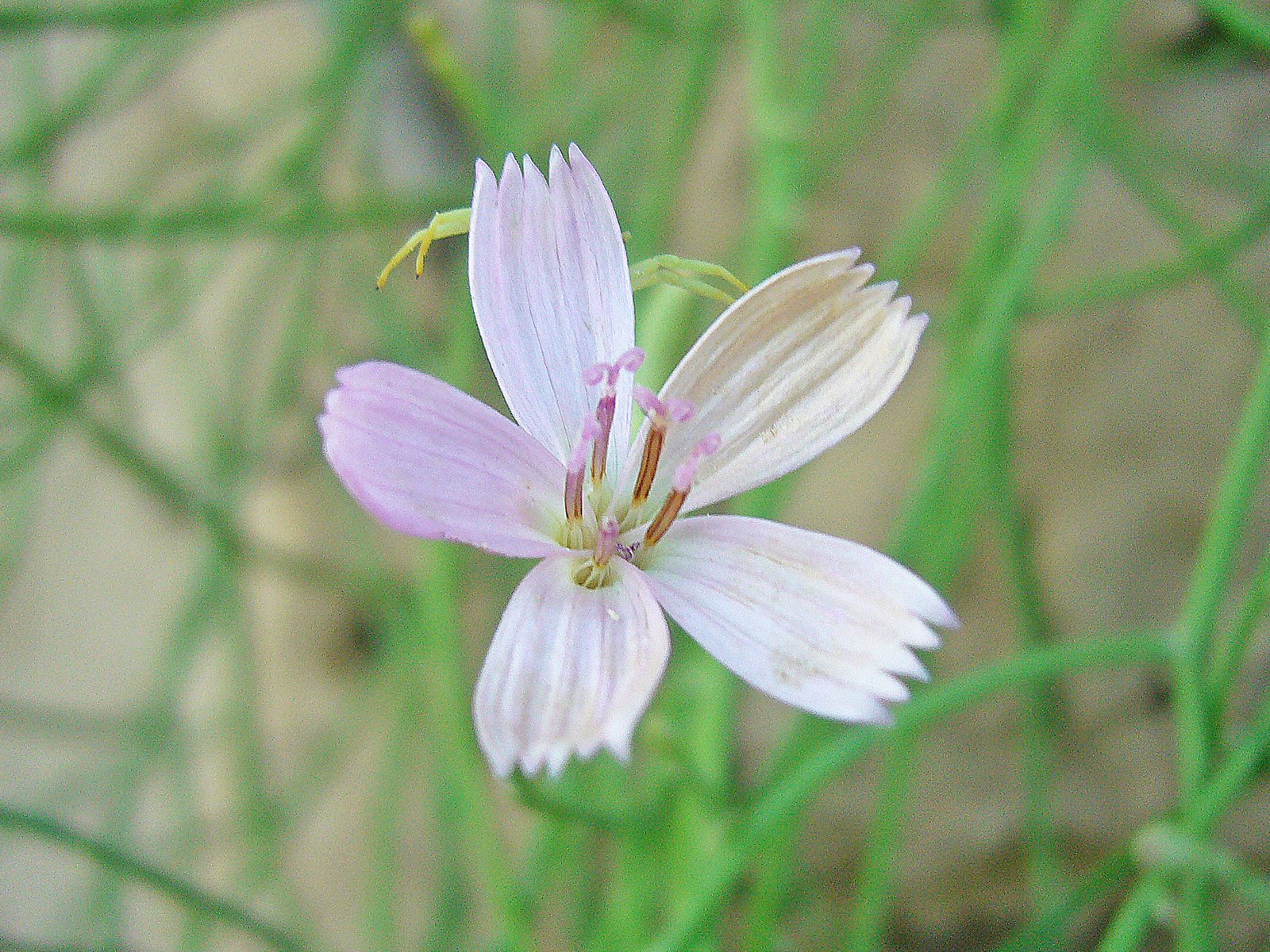
Its southern terminus in Missouri, however, is the most arbitrary boundary. Discontinuous patches of deep loess terrain do occur as far south as Kansas City, but the dry hilltop prairies, common in the north, are gradually replaced by woodland in the south and disappear completely just north of St. Joseph. It is this interdigitation of two great biomes – the great deciduous forest to the east, and the expansive grasslands stretching far to the west – that give the Loess Hills such a fascinating natural history. This is due as much to the physical character of the Loess Hills themselves as to their ecotonal position at the center of the continent. Rapid drainage of rainwater off the steep slopes combines with direct sun and prevailing southwesterly summer winds to create very dry conditions on hilltops and south and west facing slopes, especially on the steeper slopes along the landform’s western edge. Such xeric conditions favor the growth of more drought-tolerant species derived from the western grasslands. North and east facing slopes and valley floors, protected from direct sun and drying winds, are able to retain more moisture, favoring the growth of woody plant species more common in the eastern forests. Seasonal moisture also shows a north-south gradient, with southern latitudes receiving higher annual rainfall totals that also favors the growth of woody plants, while the lower rainfall totals further north result in larger, more expansive grassland habitats. The steep slopes and rapid drainage create much more xeric conditions than those found further south in the flat to rolling terrain of the unglaciated Osage Plain, resulting in a more drought-tolerant mixed-grass prairie rather than the tallgrass prairie of western and southwestern Missouri. The distribution patterns of prairie versus woodland are dynamic and ever-changing, influenced by both natural and anthropogenic processes. Climatic conditions over much of the Loess Hills are capable of supporting either community type, both of which repeatedly expand and shrink as the balance tips in favor of one versus the other. In the past, the major influence was shifting periods of greater or lesser rainfall. During drier periods, grasslands expanded and woodlands shrank, finding refuge in only the moistest streamside habitats. Wetter periods allowed woody plants to migrate out of the valleys and up the slopes, especially those facing north and east. One particular very dry “hypsithermal” began about 9,000 years ago and lasted for several thousand years. Tallgrass prairies expanded as far east as present day Ohio, and todays tallgrass praires in the eastern Great Plains were invaded by even more drought-tolerant species from the shortgrass prairies further west. Eventually the hypsithermal abated, moisture levels increased, and the grasslands retreated in the face of the advanding forest. Not all of the drought-tolerant species were driven back, however, and scattered populations of these “hypsithermal relicts” still remain on locally dry sites far to the east of their normal range of distribution. Conspicuous examples of such in Missouri’s Loess Hills are soapweed yucca (Yucca glauca var. glauca) and the leafless-appearing skeletonweed (Lygodesmia juncea) (plant above, flower right). Both of these plants are normally found further west in the mixed grass prairies of the western Great Plains but are considered endangered in Missouri due to the great rarity of the dry loess prairies on which their survival depends. (Incidentally, note the crab spider legs extending from behind the petals of the skeletonweed flower). In total, more than a dozen plant species occurring in Missouri’s dry loess prairies are listed as species of conservation concern, along with one reptile (Great Plains skink) and one mammal (Plains pocket mouse).

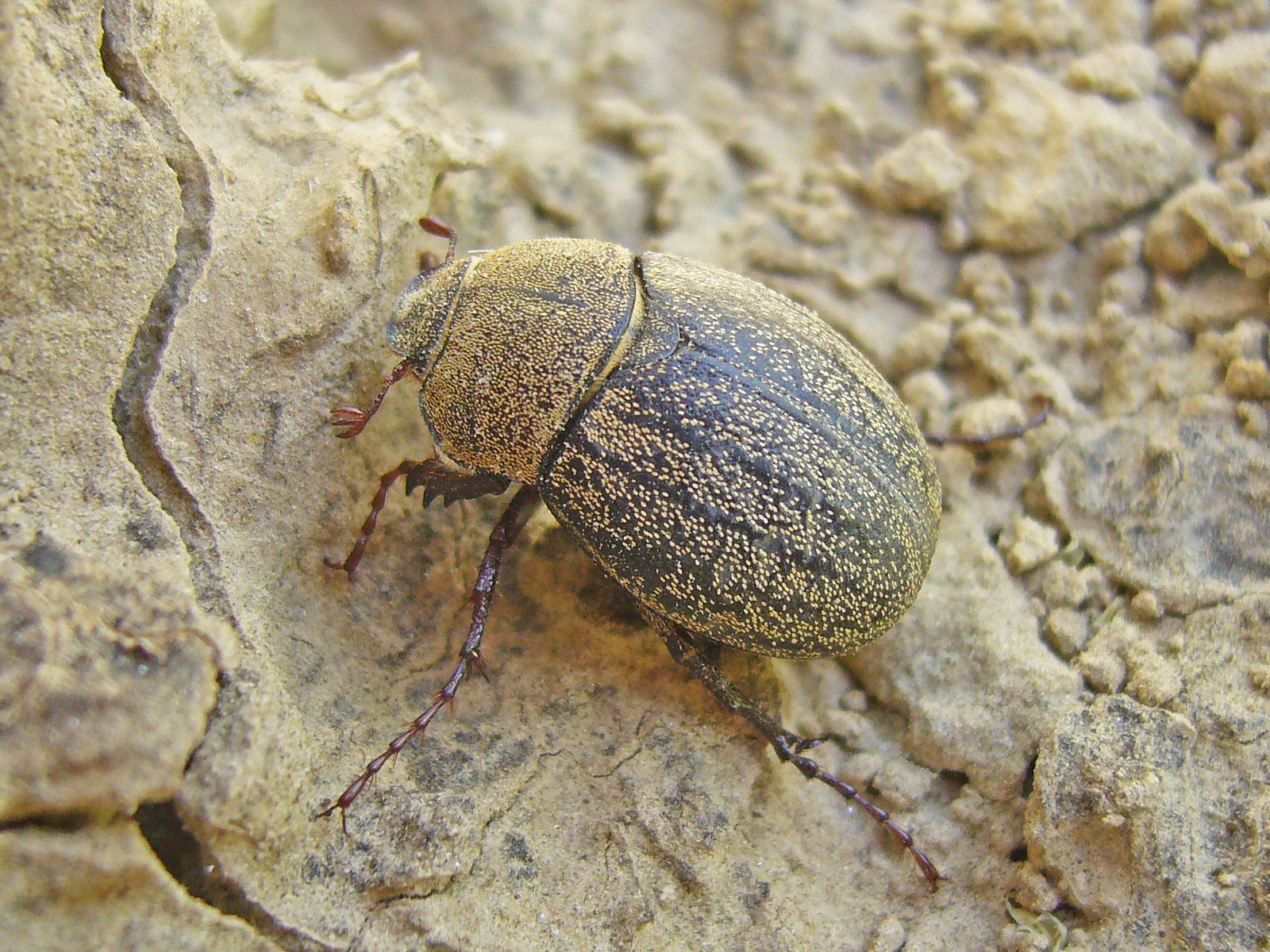
As is typical, the insect fauna of the Loess Hills has been far less studied than its plants, but many of the species that have been documented in its prairies also show affinity to the Great Plains fauna. Both soapweed and skeletonweed have insect associates that rely exclusively on these hosts for reproduction, and as a result they are also highly restricted in Missouri. Evidence of one of these – a tiny cynipid wasp (Anistrophus pisum) that forms small spherical galls on the stems of skeletonweed – can be seen in the photo above. However, my purpose for visiting the Loess Hills this summer was to look for the rare and possibly endangered tiger beetle, Cicindela celeripes (see this post). Cicindela celeripes has not yet been recorded from Missouri but is known to occur in the Loess Hills of southwestern Iowa, and while I have not succeeded in finding it (yet!) I did observe several adults of this unusual May beetle species, Phyllophaga lanceolata. This May beetle occurs throughout the Great Plains in shortgrass prairie communities. Larvae feed in the soil on roots of grasses and other plants, while adults feed above ground on flowers and foliage. The heavy-bodied adults are unusual in the genus due to their conspicuous covering of scales (most species of Phyllophaga are glabrous or with sparsely scattered and indistinct setae) and by being active during the day. They are also relatively poorer fliers and are thus usually observed moving about on foot – as seen with this individual who was found on bare soil below a vertical cut. This snakeweed grasshopper (Hesperotettix viridis, ID by Eric R. Eaton) is another species more typically seen in the western United States, although populations have been found from across the continent. Preferred host plants include a variety of asteraceous shrubs, but as suggested by the common name snakeweeds (Xanthocephalum spp.) are highly preferred and account for its greater abundance in the west. Populations in northern and eastern portions of its range, which would include northern Missouri, are considered subspecies pratensis, while the more southern and western populations are considered the nominotypical subspecies. Interestingly (and unlike many grasshoppers), this species is considered beneficial by ranchers, since the plants on which it prefers to feed are either poisonous to livestock or offer little nutritional value while competing with more desirable forage plants for soil moisture. While exploring the upper slopes, I encountered sporadic plants of two of Missouri’s more interesting species of milkweed – whorled milkweed (Asclepias verticillata) and green milkweed (Asclepias viridiflora), raising my hopes that I might encounter one of the many Great Plains species of milkweed beetles (genus Tetraopes). However, the only species I observed was the common milkweed beetle, Tetraopes tetrophthalmus, which occurs broadly across eastern North America on the equally broadly distributed common milkweed (Asclepias syriaca).

It is a familiar refrain, but Missouri’s dry loess hill prairie communities are critically endangered. Historically, these communities were probably never as well developed as those further north, and only a few small remnants remain today due to significant woody encroachment following decades of fire suppression. Much of this encroachment has occurred in the past 50 years – Heinman (Woody Plant Invasion of the Loess Hill Bluff Prairies. M. A. Thesis, University of Nebraska at Omaha, 1982) used aerial photographs to show a 66 percent encroachment of shrubs and trees into the loess hill mixed-grass prairies between 1940 and 1981. Additional threats include overgrazing, erosion, invasion by exotic plant species and homesite development. Fewer than 50 acres of native dry loess hill prairie remain in Missouri – only half of which are now in conservation ownership. The majority of these can be found at Star School Hill Praire and Brickyard Hill Conservation Areas in Atchison County and at McCormack Conservation Area just to the south in Holt County. Controlled burning and selective cutting are being used at these sites to control woody plant invasions, but even these management techniques present challenges. Spring burns have been shown to promote the growth of big bluestem (Andropogon gerardii), which could allow it to encroach drier areas where mid-grasses such as little bluestem (Schizachyrium scoparium) and sideoats grama (Bouteloua curtipendula) typically dominate (Rushin 2005). Increases in tall grasses could shade out and eliminate some of the rarer low-growing forbs such as downy painted cup (Castilleja sessiliflora), locoweed (Oxytropis lambertii) and low milkvetch (Astragalus lotiflorus). Fall or winter burns may be more beneficial to forbs because the plants are allowed to complete flowering and seed set, but the steep slopes on which these communities occur make erosion a potential concern. Clearly, all factors must be considered when designing management plans for this rare and significant slice of Missouri’s natural heritage.


In addition to the links and references provided above, I highly recommend Fragile Giants: A Natural History of the Loess Hills, by Cornelia F. Mutel (1989). All of the above photographs were taken at Star School Hill Prairie Conservation Area on July 12, 2008. Additional photographs of Loess Hill habitats in extreme southwestern Iowa appeared in my earlier post, The hunt for Cicindela celeripes. The plants shown in photographs 5-7 are purple praire clover (Dalea purpurea), white prairie clover (D. candida), and lead plant (Amorpha canescens), respectively. Lastly, I would like to apologize for the length of this post – a consequence of my inability to temper my utter fascination with the natural world and desire to understand the depths its connectedness.

The hunt for Cicindela celeripes

One of the more enigmatic tiger beetle species in North America is Cicindela celeripes LeConte (swift tiger beetle). This small (6-8 mm), flightless species has been recorded from a restricted area of the eastern and southern Great Plains – from eastern Nebraska and westernmost Iowa south through Kansas to western Oklahoma and the Texas panhandle (Hoback and Riggins 2001, Pearson et al. 2006). Unfortunately, populations of this species appear to have suffered severe declines. It apparently is holding strong in the Flint Hills region of Kansas, but many of the records from outside of that area date back more than a century. Reportedly once common on the bluff prairies along the Missouri River, it has not been seen in Nebraska since 1915 and may have been extirpated from that state (Brust et al. 2005). The reasons for this decline undoubtedly involve loss of preferred habitat – upland prairies and grasslands with clay or loess soils and sparse or patchy vegetation. Areas supporting these native habitats have been drastically reduced since European settlement of the region, and suppression of fire – so vital to prairie ecosystems – has led to extensive woody encroachment on the few prairie relicts that do remain. Unlike many other tiger beetle species that have been able to adapt to these anthropogenic changes, this species apparently cannot survive in such altered habitats.

Chris Brown and I have been interested in this species ever since we began surveying the tiger beetles of Missouri. It has not yet been recorded from the state, but we have long suspected that it might occur in extreme northwest Missouri. It is here where the Loess Hill prairies along the Missouri River reach their southern terminus. (Incidentally, the Loess Hills are themselves a globally significant geological landform, possessing natural features rarely found elsewhere on earth. They will be the subject of a future post). We have searched several of what we consider to be the most promising potential sites for this species in Missouri, though without success. Nevertheless, we remain optimistic that the species might eventually be found in Missouri and has simply been overlooked due to the limited temporal occurrence, small size, rapid running capabilities, and tendency of adults to dart rapidly to the bases of grass clumps where they hide (Pearson et al. 2006). Furthermore, even though the species has not been seen recently in adjacent areas of Nebraska where it has been recorded in the past, it has been seen recently in a few Loess Hill prairie remnants just to the north in Iowa.

A few weeks ago, I was fortunate to receive specific locality information for one of the recently located Iowa populations. Armed with site descriptions, Google maps, photographs, and whatever book learnin’ I had gained about this species, my colleague and I made the long drive to southwestern Iowa in hopes of locating the population for ourselves, seeing adults in their native habitat, and using the learnings we would gain about their habitat preferences and field behavior to augment our efforts to eventually locate the species in northwestern Missouri. At mid-July, we were nearing the end of the adult activity period, but adults had been observed at the site the weekend prior, so we felt reasonably confident that adults might still be found. Additionally, fresh off of our recent success at locating the related Cicindela cursitans in Missouri (another small, flightless, fast-running species), we were hopeful that we now possessed the proper “search image” to recognize C. celeripes in the field should we have the good fortune to encounter it.

Walking into the area, I was impressed at the extensiveness of the prairie habitat – much larger than any of Missouri’s Loess Hill prairies. The presence of large, charred red-cedar cadavers on the lower slopes revealed active management for prairie restoration. We later learned from the area manager that the restoration area had been acquired from a neighboring landowner who had used the land for grazing and sold it when it became unproductive. I can only imagine the second thoughts that landowner must have had when subsequent burn regimes and woody growth removal prompted a return to the beautifully lush sea of prairie vegetation that now covered the hills. As we approached the area where we decided the beetles must have been seen, we started searching slowly and deliberately – looking carefully for any movement between the clumps of grass. It didn’t appear to be prime habitat for C. celeripes – the vegetation was just so thick, with only small openings among the plants. We continued to scour the area closely but saw nothing, and my optimism began to wane. Wrong spot? – I don’t think so. Bad search image? – hard to imagine, considering its similarity to C. cursitans. Too late? – could be.

After it became obvious we were searching the same gaps in the vegetation repeatedly, I started walking towards a small cut further down the hillside that I had noticed earlier (just visible in the previous photo). I had thought, “That’s tiger beetle land down there!” My optimism increased when I reached the cut, seeing the remains of an old, overgrown 2-track leading through the cut and on down the hillside. Vegetation was much sparser within and below the cut – it looked perfect. Chris had become distracted taking photographs of something, so I began searching. I’d been in the cut a few minutes when I thought I saw something flash across a bare patch out of the corner of my eye – was that it? It had to be. I carefully inspected around the base of every clump of vegetation at my feet but found nothing. It must have been wishful thinking – just another spider. I continued on down the cut, and within a few more minutes I saw the flash again – this time there was no doubt as to what it was, and I had a lock on it. I started slapping the ground frantically as the little guy darted erratically under, around, and over my hands. In the few seconds while this was happening, I was simultaneously exuberant at having succeeded in finding it, utterly astounded by its speed and evasiveness, and desperately afraid that it was getting away – swift tiger beetle, indeed! Persistence paid off, however, and eventually I had it firmly in my grasp.

We would see a total of seven individuals that day. Most of them were within or immediately below the cut, while another individual was seen much further down the 2-track. Mindful of the population declines this species has experienced, we decided to capture just three individuals (even though by this point in the season mating and oviposition would have been largely complete) in hopes that at least one would survive the trip back to the lab for photographs. Our primary goal – to see the species in its native habitat – had been accomplished. We now turned our attention to attempting in situ field photographs. This would prove to be too difficult a task – each beetle we located immediately ran for cover, and flushing it out only caused it to dart to another clump of vegetation. This scenario repeated with each beetle until eventually it simply vanished. We would have to settle for photographs of our captured specimens in a confined arena – a few of which are shown here. The beetles were photographed on a chunk of native loess taken from the site, and no chilling or other “calming” techniques were used. Spomer et al. (2008, Field Guide to the Tiger Beetles of Nebraska and South Dakota) state that C. celeripes is a delicate species that does not do well in captivity. It has never been reared, and the larva is unknown. Nevertheless, I placed the chunk of native loess in a plastic tupperware container and transplanted into one corner a small clump of bluegrass from my yard. The soil around the grass clump is kept moist, and every few days I have placed various small insects in the container. Of the three individuals that we brought back, two died within two days. The third individual (these photographs), however, has now survived for four weeks! Moreover, it is a female, and during the past two weeks six larval burrows have appeared in the soil (and another egg was seen on the soil surface just yesterday). Indeed, an egg can be seen in the upper right of the first photo. It remains to be seen whether I will be successful at rearing them to adulthood; however, I’m hopeful this can be accomplished using methods described for C. cursitans (Brust et al. 2005).

Do I still think C. celeripes occurs in Missouri? I don’t know – on one hand, the mixed grass Loess Hill prairie habitats in which the beetle lives in Iowa do extend south into Missouri, and the beetle could be inhabiting them but be easily overlooked for the reasons I’ve already mentioned. However, Missouri’s Loess Hill prairie relicts are small, both in number and in size, and highly disjunct. Such features increase the likelihood of localized extinctions and hamper recolonization through dispersal, especially in flightless species that must traverse unsuitable habitat. With its adult activity period winding down, renewed efforts to locate this species in Missouri will have to wait until next season. Hopefully, the knowledge we gained this season will help this become a reality. For now, the hunt continues…

(closing photo by C. Brown)