The “obscure” Dicerca

IMG_0533_1200x800

Photo details (first 2 photos): Canon 100mm macro lens on a Canon EOS 50D, ISO 100, 1/250 sec, f/13, MT-24EX flash 1/4 power through diffuser caps

During my recent trip to northwestern Oklahoma, we visited Packsaddle Wildlife Management Area, a 17,000-acre chunk of land containing mixed-grass prairie, shinnery oak (Quercus havardii) shrublands, and mesic woodlands along the South Canadian River.  In one of these woodlands, I encountered a small grove of persimmon (Diospyros virginiana) trees – some of which had recently died.  Whenever I see dead persimmons, I immediately think of the jewel beetle species, Dicerca obscura (family Buprestidae).  This attractive species is one of the larger jewel beetles occurring in our country, and although it is fairly commonly encountered in collections, seeing the living beetles in the field is always a treat.  Dicerca obscura is most commonly associated with persimmon, from which I have reared it on several occasions, but Knull (1920) also recorded rearing it from staghorn sumac (Rhus typhina).

IMG_0534_1200x800I began inspecting the dead trees for the presence of the beetles but didn’t see any at first.  Then, I saw something moving right where I had been looking.  I had, in fact, looked right over this beetle without seeing it – even though I knew what could be there and what it looked like.  I don’t know if the species name (from the Latin obscurus, meaning indistinct) was actually given because of its marvelous cryptic abilities, but it certainly could have been.  As I continued to inspect the trees more closely, I found several additional adults – all sitting on trunks that I had just inspected a few minutes prior.  I couldn’t help but think of the irony – in collections, Dicerca beetles are quite gaudy and conspicuous appearing, with their shiny, brassy colors and exquisite surface sculpturing (as exemplified by Dicerca asperatathis photo of a pinned specimen in my collection of a similar species, D. asperata).  However, in the context of their environment, their coloration and sculpturing helps them blend in and become almost invisible.

Dicerca obscura occurs across the eastern U.S. but is absent from much of New England, the Appalachian Mountains, the Allegheny Plateau, and the upper Midwest – apparently due to the absence of persimmon in those regions.  It has been been recorded in Oklahoma as far west as Oklahoma City (Nelson 1975), so my record from Ellis Co. in far northwestern Oklahoma represents a bit of a range extension.  This is not surprising – the species will probably be found wherever persimmon grows.  You’ll just have to look carefully if you want to find it!

REFERENCES:

Knull, J. N.  1920.  Notes on Buprestidae with descriptions of new species.  Entomological News 31:4-12.

Nelson, G. H.  1975.  A revision of the genus Dicerca in North America (Coleoptera: Buprestidae).  Entomologische Arbeiten aus dem Museum G. Frey tutzing bei München 26: 87-180.

Copyright © Ted C. MacRae 2009

Add to FacebookAdd to NewsvineAdd to DiggAdd to Del.icio.usAdd to StumbleuponAdd to RedditAdd to BlinklistAdd to Ma.gnoliaAdd to TechnoratiAdd to Furl

Pyromorpha dimidiata

Photo details: Canon MP-E 65mm 1-5X macro lens on a Canon EOS 50D, ISO 100, 1/200 sec, f/16, MT-24EX flash 1/8 power through diffuser caps

Photo details: Canon MP-E 65mm 1-5X macro lens on a Canon EOS 50D, ISO 100, 1/200 sec, f/16, MT-24EX flash 1/8 power through diffuser caps

Despite being a coleopterist, I was somewhat surprised when I realized that I have not yet posted a Lepidoptera photo on this site – especially considering their abundance, diversity (2nd largest order of insects), and overall photogenicity.  Time to change that.  I encountered this pretty little moth at Reifsnider State Forest in Warren Co., Missouri. 

Pyromorpha dimidiata (orange-patched smoky moth) is one of the so-called “leaf-skeletonizer moths” in the family Zygaenidae.  This particular species is distinguished from a similar, though unrelated species in our area, Lycomorpha pholus (black-and-yellow lichen moth, one of the subfamilies of the tiger moths, or family Arctiidae), by the black hind margin of the forewing and its phenology – L. pholus adults don’t appear until late summer.

Larvae of P. dimidiata are reported to feed on leaf litter, especially oak leaves.  Oaks are present in great quantity and diversity here in Missouri, and in fact this species was photographed in one of Missouri’s finest examples of a mature white oak (Quercus alba) forest – uncommon in Missouri due to the generally less mesic conditions of our upland habitats.

Perhaps I like this moth because it apparently belongs to a mimicry complex involving net-winged beetles (family Lycidae), in particular the species Calopteron terminale (end band net-wing).  Lycomorpha pholus also participates in this mimicry complex; however, unlike that species, P. dimidiata is itself toxic as well – all life stages of this moth contain hydrogen cyanide, which they manufacture rather than obtaining from host plants (Scoble 1992).  Thus, the Calopteron-Pyromorpha mimicry complex appears to be an example of Müllerian mimicry, where both the model and the mimic are toxic.

REFERENCE:

Scoble, M. J. 1992. The Lepidoptera. Form, Function and Diversity. Oxford University Press, Oxford, 404 pp.

Add to FacebookAdd to NewsvineAdd to DiggAdd to Del.icio.usAdd to StumbleuponAdd to RedditAdd to BlinklistAdd to Ma.gnoliaAdd to TechnoratiAdd to Furl

Now you see me…

Myrmeleon_sp_P1020915_2

…now you don’t!
Myrmeleon_sp_P1020914_2

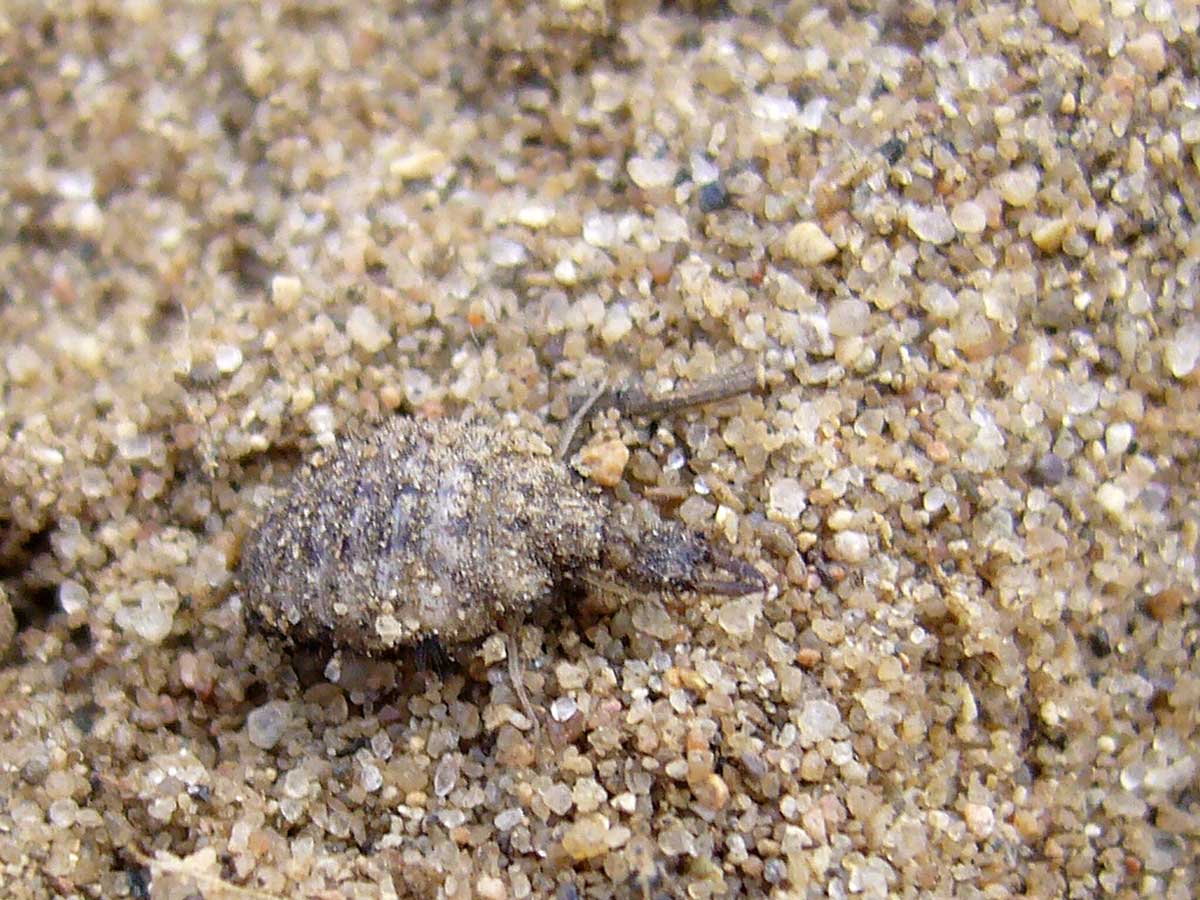
In a previous post, I lamented the fact that I had never actually seen a live antlion larva, or doodlebug (family Myrmeleontidae). Lovers of sand, I’ve seen their famous pitfall traps many times, especially in recent years as I’ve searched sand habitats for my beloved tiger beetles. Occasionally, I’ve stopped to jab my knife under a pit, give it a quick flip, and search the freshly turned sand for the maker of the pit – never seeing anything. It never bothered me much either – there were always beetles to catch!  Two weeks ago I returned to the sand prairies of southeastern Missouri to look for additional sites for Cicindela scutellaris (festive tiger beetle), and as we searched one particular site on the Sikeston Sand Ridge I once again saw the characteristic funnel-shaped pits amongst sparse vegetation in the sandy soil.  I decided this time I needed to give it a good effort – how can any self-respecting entomologist accept not having ever seen a live doodlebug?  As I’d done many times before, I kneeled down, gently put the tip of the knife about an inch away from the edge of the pit, and then jabbed its full length assertively into the sand and under the burrow and flipped it over.  Like previous times, I studied the turned sand and saw nothing.  I stirred the sand gently with the tip of the knife and studied it again – nothing.  I tried another burrow – again, nothing.  I decided right then and there that I was doing something wrong – I could not simply be picking ’empty’ pits.  I continued staring at the turned sand, and then I saw movement – I looked closer, and it seemed as though the sand itself was moving.  At last I made out its outline – I had finally succeeded in finding a doodlebug!  I dug up another burrow, and knowing what I was looking for this time I had no problem quickly locating the little creature.  I watched it as it lay motionless – perfectly camouflaged by its color and with sand grains sticking to its body, and chuckled as it buried itself almost instantly with a quick, backwards shuffle into the sand. Who knows how many doodlebugs I’d successfully dug up in the past, completely overlooking them as they lay disguised and motionless in the sand.

More than 100 species of antlions, representing at least 19 genera, live in the Nearctic Region, although much of this diversity occurs in the southwestern U.S. and Mexico.  Despite the commonly drawn association between antlions and pitfall traps, in North America only those in the genus Myrmeleon actually exhibit this behavior.  This larva dug a pit and so must represent a species of Myrmeleon – perhaps M. immaculatus, a common species in North America and one whose adult I observed last fall on a nearby sand prairie remnant.  Species in other genera have free-living larvae that hide under objects or roam underneath the sand, from where emerge briefly to hunt for prey.

For those interested in learning more about antlions, Mark Swanson has an excellent website called The Antlion Pit.

REFERENCE:

Swanson, M.  1996. The Antlion Pit: A Doodlebug Anthology. http://www.antlionpit.com/

Copyright © Ted C. MacRae 2009

Add to FacebookAdd to NewsvineAdd to DiggAdd to Del.icio.usAdd to StumbleuponAdd to RedditAdd to BlinklistAdd to Ma.gnoliaAdd to TechnoratiAdd to Furl

Magodo – giant twig wilter

petascelis-remipes

In previous posts, I have highlighted some of the insects I observed on a trip to South Africa in November-December 1999.  All of the photos I have shown to this point were taken at Borakalalo National Park in North West Province or at the Geelhoutbos farm of Susan Strauss below the Waterberg Range in the formerly Northern, now Limpopo Province.  Both of these locations are deep inside the bushveld, providing ample opportunity to observe an incredible diversity of insect life.  This is not to say that insects, even spectacular ones, cannot be found in more urban areas.  During the weekend between those two mini-expeditions, I stayed with my friend and colleague, Chuck Bellamy, at his home in Pretoria, a beautiful city with lovely architecture, elegant gardens… and some very impressive bugs!  The bug in this photo was found on a tree in a shrubby enclave, and at well over 35 mm in length it is easily the largest leaf-footed bug (order Hemiptera, family Coreidae) that I have ever seen.  Its chunky build, velvety black coloration with thin yellow lines along the sides and down the center of the thorax, and greatly enlarged hind femora quickly led me to a provisional identification of a male Petascelis remipes, or giant twig wilter.  This ID was confirmed by my friend and colleague Harry Brailovsky, an entomologist at UNAM (Universidad Nacional Autónoma de México) and world expert on Coreidae (and who, incidentally, just recently published a review of this Afrotropical genus – Brailovsky 2008).

According to Picker et al. (2002), these insects are found on plants in the genus Combretum.  Like most species in the family, they have scent (“stink”) glands that provide defensive capabilities. Adults are gregarious and bold, walking towards intruders with antennae vibrating when disturbed, and they are apparently capable of squirting their defensive secretions for some distance.  The nymphs are black as well but futher advertise their noxiousness with warning coloration of red spots on a whitish background. Interestingly, and despite their powerful chemical defenses, this species is considered a delicacy in parts of Mozambique where it is known as Magodo.  In a post called Insects for Dinner (in a blog with the eerily similar title, Beating about the Bush), Bart Wursten of Gorongosa National Park in Mozambique describes how local folk burn small patches of the grassland in which these insects are found to smoke them out and catch them.  The Magodo hunters kill the bugs by breaking off the head and removing the scent glands, which releases a very strong almond-like smell.  In doing this, the locals are able to catch considerable quantities of the bugs, which they eat with supper.

Lest you believe such practices are an anomaly, van Huis (2003) has compiled a list of about 250 insect species used as food in sub-Saharan Africa.  Lepidoptera, Orthoptera and Coleoptera represented the bulk (78%) of species eaten, with Isoptera, Hemiptera, Hymenoptera, Diptera and Odonota making up the rest.  Several examples of toxic insects and the traditional methods used to remove the poisons were given.  It was noted that whether or not insects are eaten depends not only on taste and nutritional value, but also on customs and ethnic preferences or prohibitions.  I’m not one to shy away from the thought of eating insects – after all, shrimp are just bugs that live in water, and insects rank far lower in ‘slime factor’ than many other invertebrates (e.g., oysters) that enjoy great popularity in our culture.  I’ve eaten roasted beet armyworm (Spodoptera exigua) pupae and munched on chocolate covered ants, but that’s kid stuff – the armyworms tasted like the soy sauce in which they were roasted, and the ants tasted like, well… chocolate.  I did once eat a softshelled crab (alive!), and I actually hope to one day taste the enormous grub of the giant metallic ceiba borer, Euchroma gigantea, eaten by indigenous cultures in Central and South America.   Still, I think I’d need a lot of faith in my chef’s scent gland removal prowess before I started scarfing Magodo down like popcorn.

What insects have you eaten?

REFERENCES:

Brailovsky, H.  2008. Notes on the genus Petascelis Signoret and description of one new species (Hemiptera: Heteroptera: Coreidae: Coreinae: Petascelini).  Zootaxa 1749:18–26.

Picker, M., C. Griffiths and A. Weaving. 2002. Field Guide to Insects of South Africa. Struik Publishers, Cape Town, 444 pp.

van Huis, A. 2003. Insects as food in sub-Saharan Africa. Insect Science and Its Application 23(3):163-185.

Copyright © Ted C. MacRae 2009

Add to FacebookAdd to NewsvineAdd to DiggAdd to Del.icio.usAdd to StumbleuponAdd to RedditAdd to BlinklistAdd to Ma.gnoliaAdd to TechnoratiAdd to Furl

Millipede assassin bug

Ectrichodia crux

I continue the hemipteran theme begun in the last post with this photograph I took in South Africa below the Waterberg Range in Northern (now Limpopo) Province. I recognized them as members of the family Reduviidae (assassin bugs), and since to my knowledge species in this family are exclusively predaceous (except for the so-called “kissing bugs” of the mostly Neotropical subfamily Triatominae, large distinctive bugs that feed exclusively on vertebrate blood), I found what I took to be a case of scavenging on a dead millipede to be rather curious.  It had rained the previous evening, resulting in a burst of millipede (and insect) activity that night, and this scene was rather commonly encountered the following morning. Of course, appearances can be deceiving, and it turns out that I actually was witnessing predation – and a most unusual case at that.  The individuals in this photo represent Ectrichodia crux (millipede assassin bug), a common species in many parts of southern Africa.  Although nearly 500 species of assassin bugs are known from the region (Reavell 2000), E. crux is easily recognizable due to its large size (adults measure up to 22 mm in length), stout form, and coloration – shiny black, with a distinctive black cross incised on its dull yellow thorax and with yellow abdominal margins (Picker et al. 2002). The nymphs as well are distinctive – bright red with black wing pads. Clearly, these insects are advertising something.

Ectrichodia crux belongs to the subfamily Ectrichodiinae, noted for their aposematic coloration – often red or yellow and black or metallic blue, and as specialist predators of Diplopoda (Heteropteran Systematics Lab @ UCR).  Species in this subfamily are most commonly found in leaf litter, hiding during the day under stones or amongst debris and leaving their shelters at night in search of millipedes (Scholtz and Holm 1985). They are ambush predators that slowly approach their prey before quickly grabbing the millipede and piercing the body with their proboscis, or “beak.”  Saliva containing paralytic toxins and cytolytic enzymes is injected into the body of the millipede to subdue the prey and initiate digestion of the body contents, which are then imbibed by the gregariously feeding assassin bugs.

Millipedes employ powerful chemical defenses – primarily benzoquinones and sometimes hydrogen cyanide gas as well, which are discharged from specialized glands along the millipede’s body – to protect themselves from predation.  Thus, specialized predation of millipedes is a niche that has been exploited by relatively few predators, and little is known about the mechanisms used for circumventing these defenses. The recently reported millipede specialist, Deltochilum valgum (order Coleoptera, family Scarabaeidae), has been observed killing its prey by violently decapitating and disarticulating it before feeding on the body contents (Larsen et al. 2009, summary here); however, the exact manner by which the beetle avoids or withstands the millipede’s chemical discharges remains unknown.  For ambush predators such as Ectrichodia crux and other ectrichodiines, a strategy similar to that described for another millipede specialist predator, larvae of the phengodid beetle, Phengodes laticollis (order Coleoptera, family Phengodidae), might be employed. This species subdues its millipede prey by piercing thinner regions of the millipede’s integument (e.g., intersegmental membranes on the ventral surface) with its hollow sickle-shaped mandibles and apparently injecting gastric fluids that abruptly paralyze the millipede, thereby preventing it from discharging its gland contents (Eisner et al. 1998).  These undischarged benzoquinones remain confined to the glands and are prevented from diffusing into the body cavity by the glands’ impervious cuticular lining, thus allowing the phengodid larva to safely imbibe the liquified systemic contents of the immobilized millipede.

REFERENCES:

Eisner, T., M. Eisner, A. B. Attygalle, M. Deyrup and J. Meinwald. 1998. Rendering the inedible edible: Circumvention of a millipede’s chemical defense by a predaceous beetle larva (Phengodidae).  Proceedings of the National Academy of Sciences USA 95(3):1108–1113.

Larsen, T. H., A. Lopera, A. Forsyth and F. Génier. 2009. From coprophagy to predation: a dung beetle that kills millipedes. Biology Letters DOI:10.1098/rsbl.2008.0654.

Picker, M., C. Griffiths and A. Weaving. 2002. Field Guide to Insects of South Africa. Struik Publishers, Cape Town, 444 pp.

Reavell, P. E. 2000. The assassinbugs (Hemiptera: Reduviidae) of South Africa. http://oldwww.ru.ac.za/academic/departments/zooento/Martin/reduviidae.html#ectrichodiinae.

Scholtz, C. H. and E. Holm (eds.). 1985. Insects of Southern Africa. Butterworths, Durbin, South Africa, 502 pp.

Copyright © Ted C. MacRae 2009

Add to FacebookAdd to NewsvineAdd to DiggAdd to Del.icio.usAdd to StumbleuponAdd to RedditAdd to BlinklistAdd to Ma.gnoliaAdd to TechnoratiAdd to Furl

Bizarre, beautiful extremes

No niche, it seems goes unfilled. Specialization is likely to be pushed to bizarre, beautiful extremes.–E. O. Wilson, The Diversity of Life

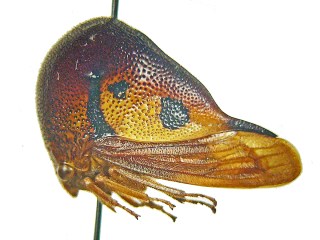
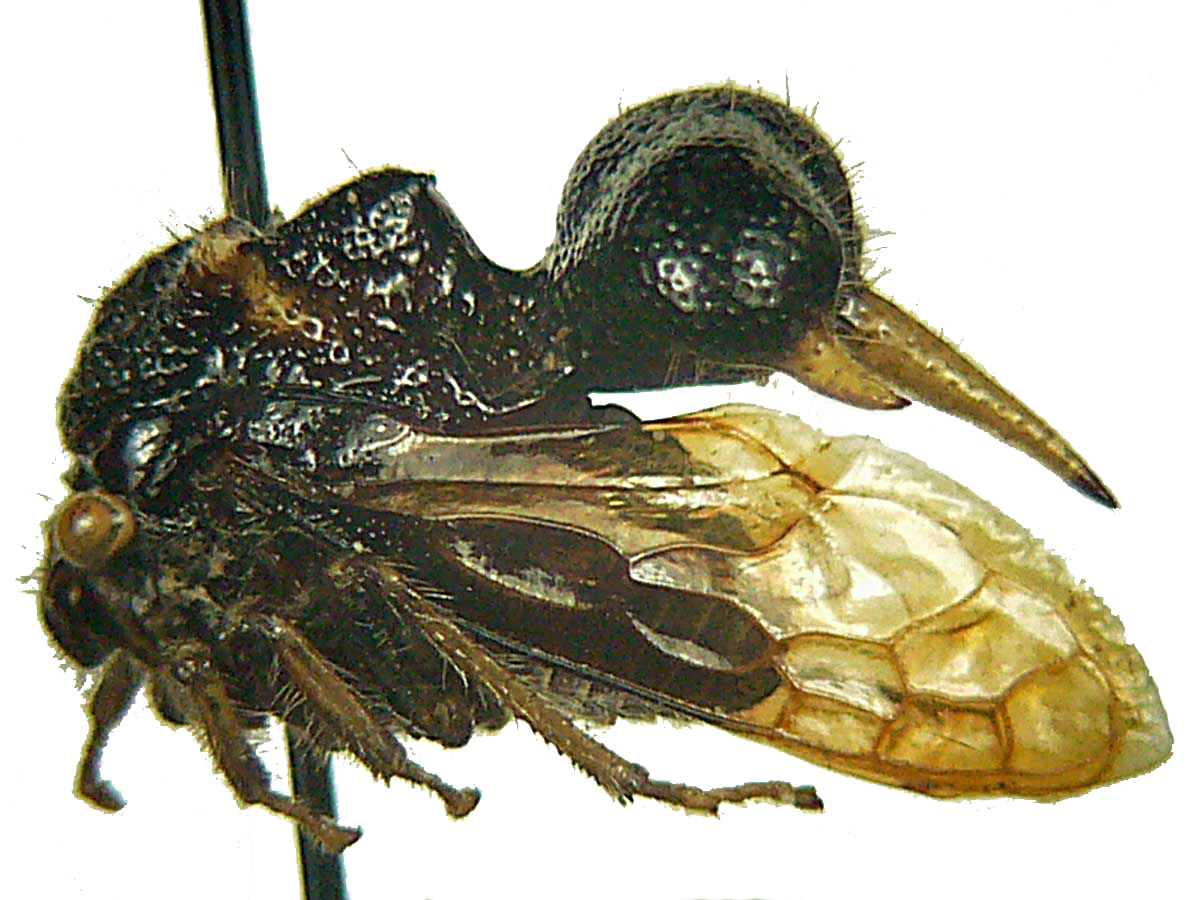
Wilson didn’t mention treehoppers specifically when he made the above quote, referring to the exuberance of extreme behavioral and morphological adaptations seen in the biota of the tropics, but he could have just as easily led off with them.  Treehoppers (order Hemiptera, family Membracidae) are well-known for their variety of oddly grotesque shapes resulting from a curiously inflated pronotum – presumably having evolved to resemble thorns and buds on their host plants, or the ants that vigorously defend numerous treehopper species in exchange for their sweet honeydew, or perhaps to aid in the dispersal of volatile sex pheromones (an attractive hypothesis but lacking experimental support). Despite inordinate attention in relation to their low economic importance, it remains that the pronotal modifications of many treehoppers are so bizarre that they continue to defy any logical explanation.

I must admit that, despite my passion for beetles, treehoppers were my first love.  (Well, actually anything that I could bring home from my solo wanderings in the urban woodlands and vacant lots near my childhood home and keep alive in a terrarium was my first true love, but from an academic standpoint, treehoppers were the first group to arouse my taxonomic interest as I began my transformation from child collector to serious student.) I had just begun graduate school in the Enns Entomology Museum under the late hemipterist Tom Yonke to conduct leafhopper host preference and life history studies, and although far more Cornell drawers in the museum contained Cicadellidae, it was the treehopper drawers that I found myself rifling through each afternoon after completing the day’s thesis duties. Despite their lesser number, the treehopper drawers had recently benefited from the attentions of a previous student, Dennis Kopp, whose efforts during his time at the museum concentrated on collecting treehoppers from throughout Missouri and culminated in the four-part publication, The Treehoppers of Missouri (1973-1974). I was enamored by these little beasts – specifically by their exaggerated pronotum – and started collecting them whenever I could on my forays around the state surveying for leafhoppers. They were closely enough related to leafhoppers to make them relevant to my work, only cooler – like leafhoppers on steroids! With The Treehoppers of Missouri as my bible and my desk located a half dozen footsteps from the largest treehopper collection within a several hundred mile radius, I delved into their taxonomy and, for a time, considered a career as a professional membracid taxonomist.

Fast forward nearly 30 years, and my involvement as a taxonomist is neither professional nor deals with membracids. Beetles have taken over as my focal taxon, and I conduct these studies strictly as an avocation. Still, I continue to collect treehoppers as I encounter them, and although such efforts have been largely opportunistic, I’ve managed to assemble a fairly diverse little collection of these insects as a result of my broad travels. Much of this has occurred in the New World tropics, and it is this region that is the center of diversity for the family Membracidae (fossil evidence suggests that subfamily diversification and subsequent New World radiation began during Tertiary isolation about 65 million years ago after South America separated from Africa, since only the primitive subfamily Centrotinae occurs in both the Old and the New Worlds – all other subfamilies are restricted the New World (Wood 1993)).  Every now and then, as I accumulate enough material to fill a Schmidt box, I sit down and study what I’ve collected, comparing it to my meager literature to attempt identifications.  For material I collect in eastern North America, this works fairly well, as there have been a number of publications covering different parts of this area.  Outside of this area, however, my only hope is to entice one of the few existing membracid specialists into agreeing to look at what I’ve accumulated and ask for their help in providing names, in exchange for which they will be granted retention privileges to benefit their research.

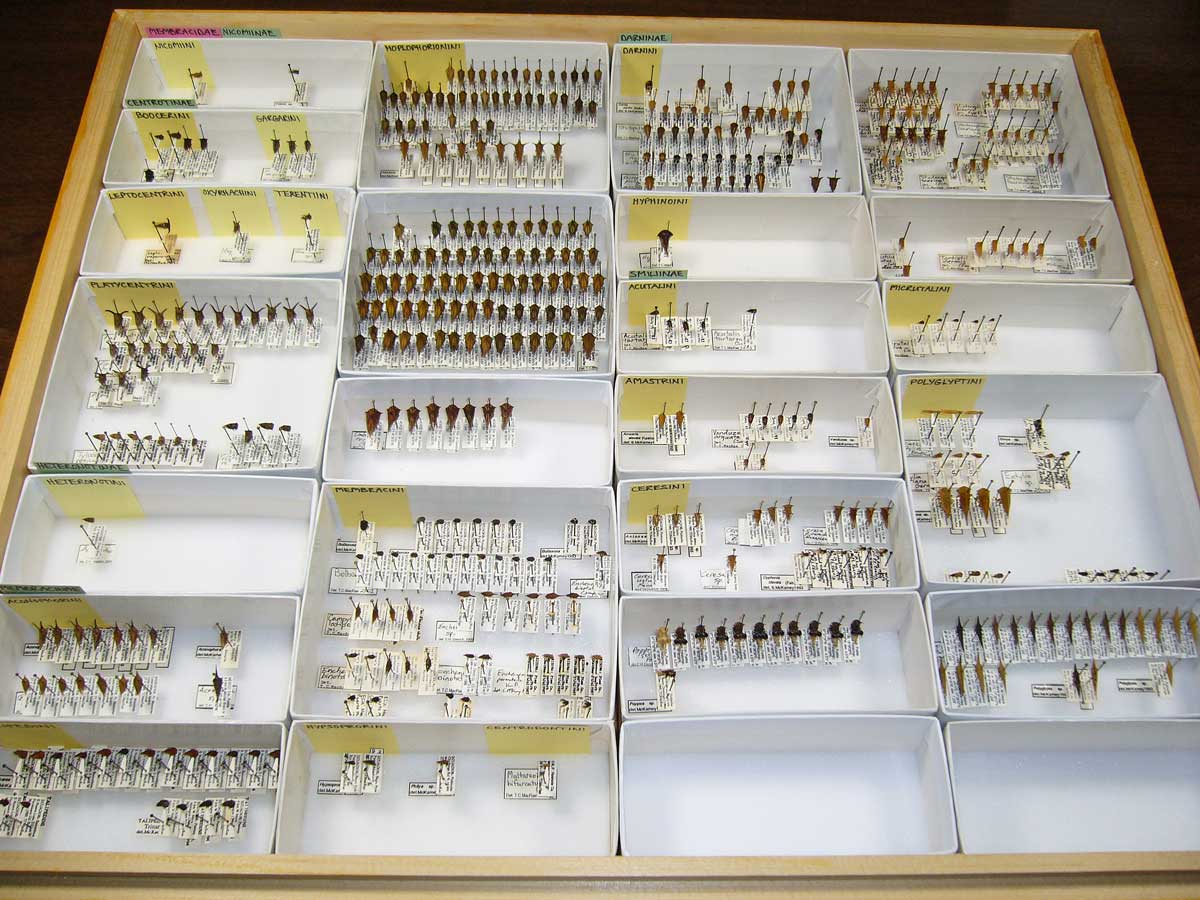
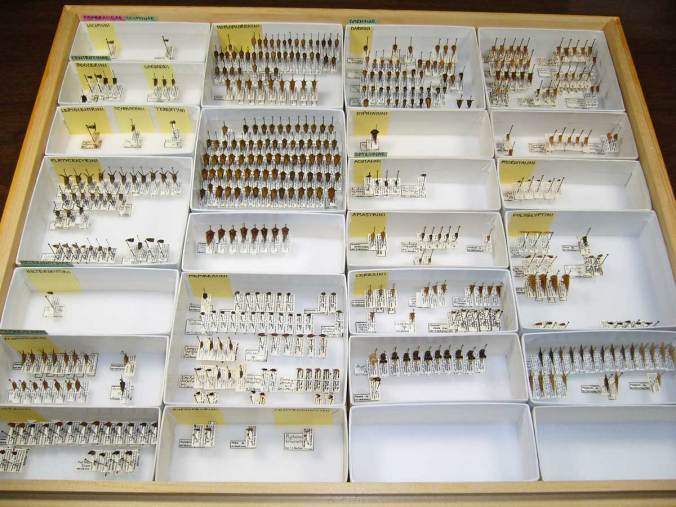
idd-treehoppersMost recently, I was able to convince Illinois Natural History Survey entomologist Chris Dietrich to take a look at the material I had accumulated during the past ten years or so, which included many specimens from Mexico and a smattering from other world areas, including South Africa. Chris did his doctoral work at North Carolina State University under “Mr. Membracid” himself, Lewis Deitz, and has since been conducting evolutionary and phylogenetic studies on Membracidae and the related Cicadomorpha. I recently received this material back from Chris (photo above), the majority of which he had been able to identify to species – only a few specimens in the more problematic genera were left with a generic ID.

Oaxaca)

Campylocentrus sp. (Mexico: Oaxaca)

Oaxaca)

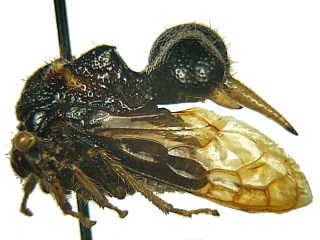
Hyphinoe obliqua (Mexico: Oaxaca)
Puebla)

Poppea setosa (Mexico: Puebla)

Oaxaca)

Umbonia reclinata (Mexico: Oaxaca)

Puebla)

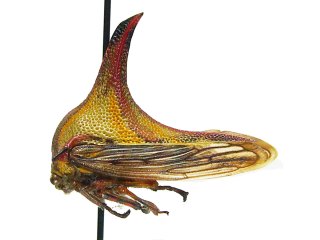
Umbonia crassicornis male (Mexico: Puebla)
umbonia_crassicornis_female

Umbonia crassicornis female (Mexico: Puebla)

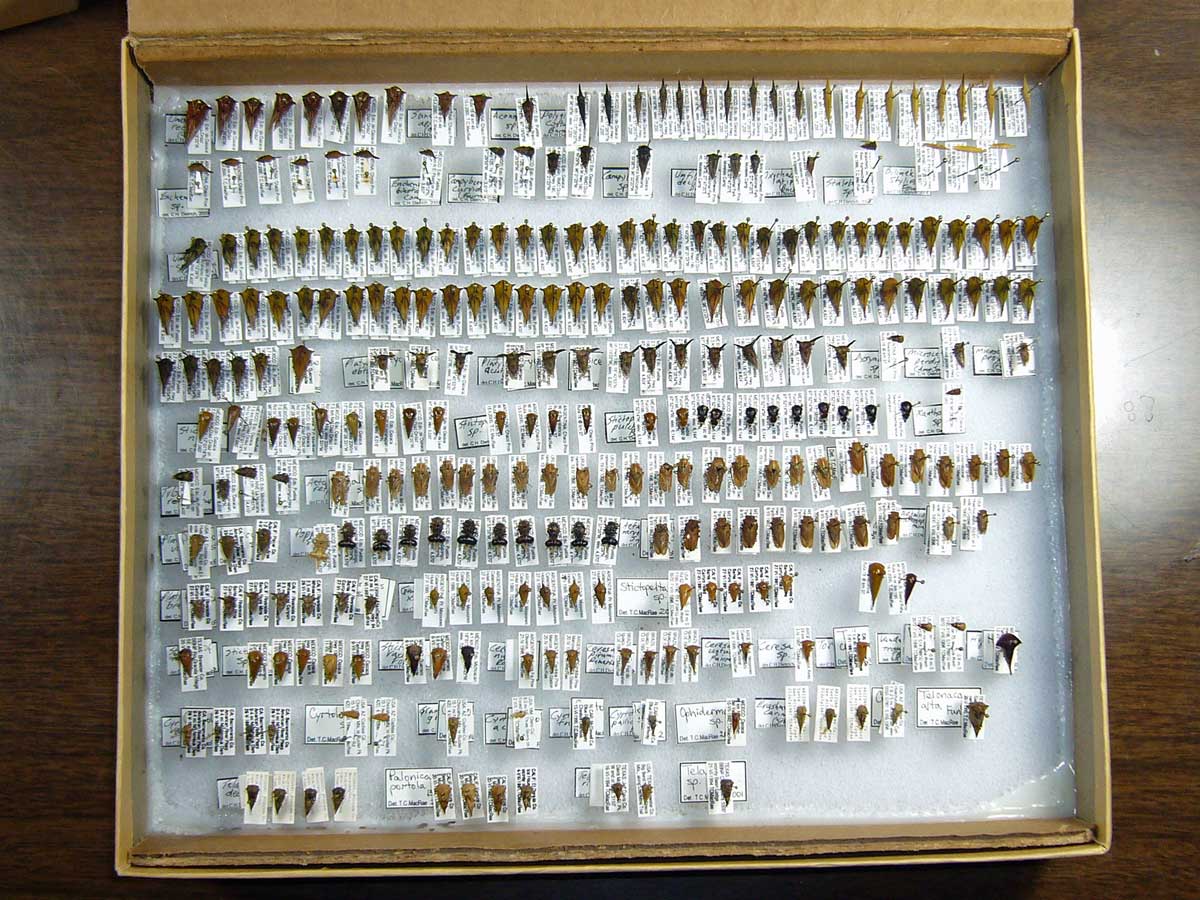
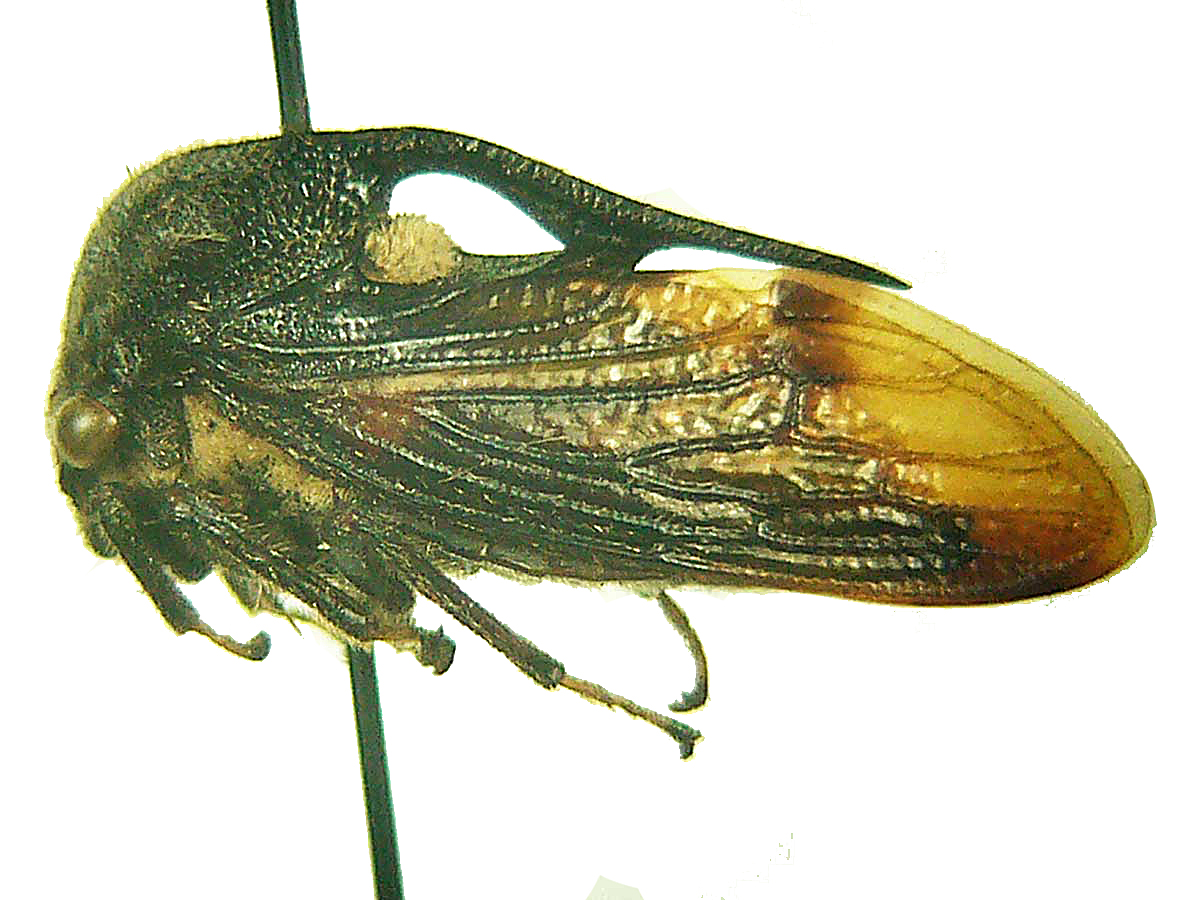
The selection of photos here show a sampling of some of the more interesting forms contained within this batch of newly identified material – all of which hail from southern Mexico. Campylocentrus sp. is an example of the primitive subfamily Centrotinae, distinguished among most membracid subfamilies by the exposed scutellum (not covered by the expanded pronotum).  Hyphinoe obliqua is an example of the largely Neotropical subfamily Darninae, while Poppea setosa represents one of the more bizarre ant-mimicking species of the subfamily Smiliinae.  Umbonia is a diverse genus in the subfamily Membracinae, occurring from the southern U.S. south into South America. Umbonia crassicornis is one of the most commonly encountered species in this genus, with the photos here showing the high degree of sexual dimorphism it exhibits.  As membracids go, these species are quite large (10 mm in length from frons to wing apex for Campylocentrus sp. and P. setosa, a slightly larger 11-13 mm for the others); however, the many smaller species in this family are no less extraordinarily ornamented.  I’ve also included a photo (below) of one of the drawers from the main collection after incorporating the newly identified material – this drawer represents about half of my treehopper collection, with the largely Nearctic tribe Smiliini and the primitive family Aetalionidae contained in another drawer. In all, the material contained one new subfamily, six new tribes, 13 new genera¹, and 30 new species for my collection. For those with an appetite for brutally technical text, a checklist of the species identified, arranged in my best attempt at their current higher classification, is appended below (any treehopper specialist who happens upon this should feel free to set the record straight on any errors). For each species, the country of origin (and state for U.S. specimens) is indicated along with the number of specimens, and higher taxa new to my collection are indicated with an asterisk(*). Don’t worry, I didn’t type this up just to post it here – it’s a cut/paste job from my newly updated collection inventory for Membracoidea. Happy reading!

¹Wildly off topic, and perhaps of interest only to me, but two of the genera represented in the material are homonyms of plant genera: Oxyrhachis is also a Madagascan genus of Poaceae, and Campylocentrus is a Neotropical genus of Orchidaceae. Scientific names of plants and animals are governed by separate ruling bodies (ICBN and ICZN, respectively), neither of which specifically prohibit (but do recommend against) creating inter-code homonyms. The number of such homonyms is surprisingly high – almost 9,000 generic names have been used in both zoology and botany (13% of the total in botany) (source).  Fortunately, there is only one known case of plant/animal homonymy fr BOTH genus- and species-level names – Pieris napi japonica for a subspecies of the gray-veined white butterfly (Pieridae) and Pieris japonica for the popular ornamental plant Japanese andromeda (Ericaceae).
treehopper_drawer
REFERENCES:

Kopp, D. D. and T. R. Yonke. 1973-1974. The treehoppers of Missouri: Parts 1-4. Journal of the Kansas Entomological Society 46(1):42-64; 46(3):375-421; 46(3):375-421; 47(1):80-130.

Wood, T. K. 1999. Diversity in the New World Membracidae. Annual Review of Entomology 38:409-435.
.


.
Superfamily MEMBRACOIDEA
Family MEMBRACIDAE
Subfamily CENTROTINAE

 *Tribe BOOCERINI
*Campylocentrus curvidens (Fairmaire) [Mexico] – 4
Campylocentrus sp. [Mexico] – 1

*Tribe GARGARINI
*Umfilianus declivus Distant [South Africa] – 3

*Tribe OXYRHACHINI
*Oxyrhachis latipes (Buckton) [South Africa] – 1

Tribe PLATYCENTRINI
Platycentrus acuticornis Stål [Mexico] – 11
Platycentrus obtusicornis Stål [Mexico] – 3
Platycentrus brevicornis Van Duzee [USA: California] – 7
Tylocentrus reticulatus Van Duzee [Mexico] – 4

*Tribe TERENTIINI
*Stalobelus sp. [South Africa] – 1

*Subfamily HETERONOTINAE

*Tribe HETERONOTINI
*Dysyncritus sp. [Argentina] – 1

Subfamily MEMBRACINAE

Tribe ACONOPHORINI
Aconophora sp. female [Mexico] – 1
*Guayaquila xiphias (Fabricius) [Argentina] – 7

Tribe HOPLOPHORIONINI
Platycotis vittata (Fabricius) [USA: Arizona, California] – 3
Umbonia crassicornis (Amyot & Serville) [Mexico] – 73
Umbonia reclinata (Germar) [Mexico] – 8

Tribe MEMBRACINI
Enchenopa binotata complex [Mexico] – 1
Enchenopa sp. [Argentina] – 6

Subfamily DARNINAE

Tribe DARNINI
Stictopelta nova Goding [Mexico] – 9
Stictopelta marmorata Goding [USA: Texas] – 1
Stictopelta pulchella Ball [Mexico] – 11
Stictopelta varians Fowler [Mexico] – 3
Stictopelta sp. [USA: Arizona, California] – 5
Stictopelta sp. [Mexico] – 5
Stictopelta spp. [Argentina] – 6
*Sundarion apicalis (Germar) [Argentina] – 2

*Tribe HYPHINOINI
*Hyphenoe obliqua (Walker) [Mexico] – 1

Subfamily SMILIINAE

Tribe AMASTRINI
Vanduzeea triguttata (Burmeister) [USA: Arizona] – 2

Tribe CERESINI
Ceresa nigripectus Remes-Lenicov [Argentina] – 3
Ceresa piramidatis Remes-Lenicov [Argentina] – 4
Ceresa ustulata Fairmaire [Argentina] – 1
Ceresa sp. female [Argentina] – 1
Poppea setosa Fowler [Mexico] – 11
Tortistilus sp. [USA: California] – 1

Tribe POLYGLYPTINI
*Bilimekia styliformis Fowler [Mexico] – 3
Polyglypta costata Burmeister [Mexico] – 18

Tribe SMILIINI
Cyrtolobus acutus Van Duzee [USA: New Mexico] – 1
Cyrtolobus fuscipennis Van Duzee [USA: North Carolina] – 1
Cyrtolobus pallidifrontis Emmons [USA: North Carolina] – 1
Cyrtolobus vanduzei Goding [USA: California] – 4
Cyrtolobus sp. [USA: Arizona] – 2
*Evashmeadea carinata Stål [USA: Arizona] – 4
*Grandolobus grandis (Van Duzee) [USA: Arizona] – 1
Ophiderma sp. [Mexico] – 1
Palonica portola Ball [USA: California] – 4
Telamona decora Ball [USA: Missouri] – 4
Telamona sp. [USA: Texas] – 1
*Telamonanthe rileyi Goding [USA: Texas] – 2
*Telonaca alta Funkhouser [USA: Texas] – 1
Xantholobus sp. [Mexico] – 1

Subfamily STEGASPINAE

Tribe MICROCENTRINI
Microcentrus perditus (Amyot & Serville) [USA: Texas] – 1
Microcentrus proximus (Fowler) [Mexico] – 1

Family AETALIONIDAE
Subfamily AETALIONINAE

Aetalion nervosopunctatum nervosopunctatum Signoret [Mexico] – 9
Aetalion nervosopunctatum minor Fowler [USA: Arizona] – 2
Aetalion reticulatum (Linnaeus) [Argentina, Uruguay] – 26

Copyright © Ted C. MacRae 2009

Add to FacebookAdd to NewsvineAdd to DiggAdd to Del.icio.usAdd to StumbleuponAdd to RedditAdd to BlinklistAdd to Ma.gnoliaAdd to TechnoratiAdd to Furl

Done with dung, meat please!

ResearchBlogging.orgNo feces for this species.” “Carnivorous dung beetle shuns dung and decapitates millipede.” “Little dung beetle is big chopper.” “Dung beetle mistakes millipede for dung.” These were some of the clever headlines that I had to compete with in coming up with my own opener for a remarkable beetle that titillated the science blogosphere last week. At the risk of being redundant, I’d like to revisit that beetle and offer a few (hopefully novel) thoughts of my own. I can say that I have a unique and special treat for those willing to read further.

First the background. Deltochilum valgum is a so-called “dung beetle” in the family Scarabaeidae that lives in the lowland rain forests of Peru. As suggested by its common name, it belongs to a group of beetles that are well known for their dung feeding habits. Over 5,000 species of dung beetles are known throughout the world, all of which carve out balls of dung and bury them as provisions for larval development – or so it was thought.  As reported by Trond Larsen of Princeton University and colleagues in Biology Letters, D. valgum has apparently abandoned its ancestral dung ball-rolling behavior in favor of a predatory lifestyle. Its prey – millipedes! Moreover, the species exhibits several distinct morphological traits that appear to have evolved as a direct result of their predatory behavior. Adult beetles were repeatedly observed killing and eating millipedes, and their disdain for dung was rather conclusively demonstrated by an exhaustive, year-long trapping program in which pit-traps were baited with a variety of bait types known to attract dung beetles (e.g., various kinds of dung, carrion, fungus and fruit) – and millipedes.  In all, over 100,000 dung beetles representing 132 species were trapped (what a nice collection!), 35 of which were found to scavenge on dead millipedes, but only five of these dared tackle live millipedes.  Of these, only D. valgum ignored all other foods – it only came to traps baited with live millipedes.

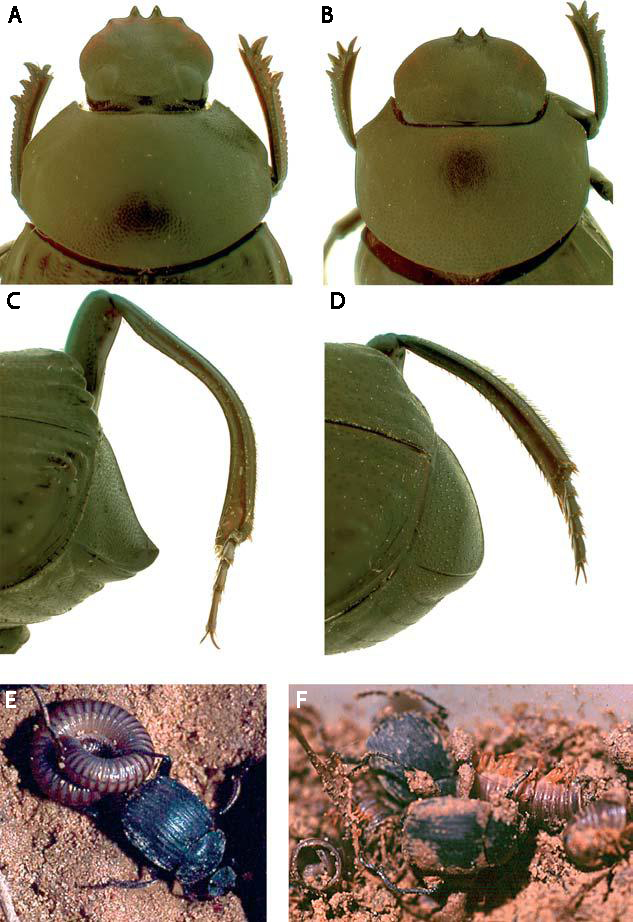
Larsen et al. determined that adults of D. valgum are opportunistic hunters and were much more likely to attack injured millipedes than healthy ones, even those weighing 14 times as much as the beetle.  Ball rolling behavior was never observed by D. valgum.  Most dung beetles have wide, shovel-shaped heads used to scoop and mold dung balls, but D. valgum has a much narrower head with sharp “teeth” on its clypeus (Fig. 1A vs. 1B).  The teeth apparently aid in killing the millipede by piercing the ventral surface behind the head and prying upwards (decapitating it), and the narrow, elongate head facilitates insertion into the millipede body for feeding.  Further, the hind tibia are elongate and curved, which are used to “grip” millipedes by holding them up against the dorsally reflexed pygidium (Fig. 1C vs. 1D).  This allows the beetle to drag its coiled up victim with one hind leg while walking forward on the other five (Fig. 1E).  Once killed, the beetles proceeded to break their prey into pieces and consume their meaty innards, leaving the disarticulated millipede exoskeletons licked clean (Fig. 1F).  One of these “attack” episodes was filmed (using infrared lighting so as not to affect their nocturnal behavior) and can be seen in this BBC News video.

Deltochilum valgum

Figure 1. (a) Dorsal view of D. valgum head. Sharp clypeal teeth and angled clypeus act as a lever to disarticulate millipede. Narrow, elongate head permits feeding inside millipede; (b) dorsal view of Deltochilum peruanum head, lacking characters described in (a), head used to mould dung balls; (c) lateral view of D. valgum pygidium and hind tibia. Dorsally reflexed pygidial lip is used to support millipede during transport. Elongate, strongly curved hind tibia is used to grip millipede. (d ) Lateral view of D. peruanum pygidium and hind tibia, lacking characters described in (c), hind tibia used for rolling dung balls. (e, f ). Predation strategy by D. valgum. (e) Dragging live, coiled millipede with one hind leg, walking forwards; ( f ) feeding on killed millipede with head inside
segments; disarticulated empty millipede pieces nearby.
Credit: Larsen et al. (2009).

Much has been made about this remarkable shift from coprophagy to predation, which Larsen et al. speculate was driven by competition for limited resources with the many other dung beetle species that occur in the Peruvian rainforests. In fact, adult dung beetles are known to feed on a variety of resources besides dung, as exemplified by the range of baits used in their survey. Thus, my first thought after reading the coverage was actually a question: “Has this species abandoned dung provisioning completely as a reproductive strategy?” Everything I had read focused exclusively (quite understandably) on the bizarre feeding habits of the adults, but there was no mention of what the species’ larval provisioning strategies were. Wanting more information about this, I contacted Trond Larsen, who graciously sent me a PDF of the paper. Unfortunately (though not a criticism of the paper), no further insight about this was found in the paper either. Indeed, in all of the observations recorded by Larsen et al., millipedes killed by D. valgum were consumed entirely by the adults, and no mention was made of how or whether millipedes were utilized for larval provisioning. I wondered if D. valgum had truly abandoned dung provisioning for larval development (a remarkable adaptive switch), or if in fact the species might still utilize the strategy for reproduction (perhaps having specialized on a dung type not included in their survey), while also exploiting millipede predation as adults for a nutritional advantage. I asked Trond about this, to which he replied with this juicy tidbit (I told you I had a special treat!):

Yes, I would very much like to know what the reproductive/nesting behavior of D. valgum is. My best guess is that they also use millipedes as a larval food source, but as you say, we haven’t observed that behavior yet. I have observed other generalist dung beetle species rolling balls out of dead millipedes, presumably to bury for the larvae, so I certainly think it would be an adequate food source. Many dung beetle species use carrion for their larvae.

I am quite confident that D. valgum does not use any kind of dung. I have sampled these dung beetle communities very thoroughly, with many dung types and other bait types, and also with passive flight intercept traps that catch all beetles. Every dung beetle species that feeds on dung is at least sometimes attracted to human dung (this is not the case in African savannahs though, but is in neotropical forests – that is a whole different story). There are still a small handful of species we catch in flight intercept traps that we don’t know what they eat, although some of these mysteries have recently been solved – many of them live in leaf-cutter ant nests for example.

While predation of millipedes by a dung beetle is itself a fascinating observation, demonstrating the abandonment of dung provisioning in favor of captured prey for larval development would be a truly remarkable example of an ecological transition to exploit a dramatically atypical niche. I hope Trond (or anybody for that matter) actually succeeds in observing millipede/prey utilization for larval provisioning by this species.

Many thanks to Trond Larsen for his delightful correspondence.

SOURCE:
Larsen, T. H., A. Lopera, A. Forsyth and F. Génier. 2009. From coprophagy to predation: a dung beetle that kills millipedes. Biology Letters DOI: 10.1098/rsbl.2008.0654.

Copyright © Ted C. MacRae 2009

Add to FacebookAdd to NewsvineAdd to DiggAdd to Del.icio.usAdd to StumbleuponAdd to RedditAdd to BlinklistAdd to Ma.gnoliaAdd to TechnoratiAdd to Furl

Lions in South Africa

Joerie, Joerie, botter en brood,
as ek jou kry, slaat ek jou dood.

Doodlebugs, joerie, shunties, toritos—these are but a few of the many colloquial names given to amusing little creatures that many people know simply as antlions (or translation of such) (Swanson 1996).   Larvae of winged insects resembling (but unrelated to) dragonflies, they are best known for their habit of digging smooth-sided, cone-shaped pits in sandy soils and concealing themselves under the sand at the bottom.  There, they lay in wait for some small, unsuspecting creature—often an ant—to fall into the pit.  When that happens, the hidden antlion bursts forth, using its oversized, sickle-shaped mandibles to “flick” sand at the prey to keep it sliding towards the bottom of the hole.  Once it is within reach, the antlion grabs the prey using those same, deadly mandibles (how delightfully morbid!).  So otherworldly is their appearance and behavior that, in addition to inspiring children’s charms, they have served as an unmistakable model for the “Ceti eels” featured in Star Trek: The Wrath of Khan!1  Adults of this group, on the other hand, have inspired far less imagination in nomenclature and culture, to the point that even their common name “antlion lacewing” is merely a reference back to their unusual larvae.  Even the scientific name of the family—Myrmeleontidae—has failed to garner complete adherence, with “Myrmeleonidae” (who needs the “t”?) and “Myrmelionidae” (perhaps from English-speakers focused on the English spelling of “lion” rather than the Latin spelling of “leo”) still appearing in popular and even scientific literature.

1 Sadly (and ironically), actor Ricardo Montalban, who played the villain Khan Noonien Singh in that movie (reprising a character he played 15 years earlier during the debut season of the Star Trek television series), died just eight days ago at the age of 88. I must confess that I am a life-long Star Trek fan (though not a “Trekkie”), and “Wrath” was certainly among my favorite of the movies, due in large part to Montalban’s steely, venomous portrayal of Kahn. My favorite line occurs as Kahn is about to put a Ceti eel in Chekov’s ear, explaining how they wrap themselves around the victim’s cerebral cortex. He then says, “Later, as they [pauses deliciously] grow…”

myrmeleontidae-larval-pitI’ve seen antlion pits on several occasions (especially in recent years as I’ve spent more time in open sand habitats searching for my beloved tiger beetles).  However, the pit pictured here—encountered at Borakalalo National Park in South Africa’s North West Province, was the first I’d ever seen in which there was actually an ant inside the pit.  The ant was dead, presumably having already been sucked dry by the joerie. I didn’t know it at the time, but southern Africa is a major evolutionary center for antlion lacewings and some of their striking relatives such as spoonwinged and threadwinged lacewings (family Nemopteridae) and silky lacewings (family Psychopsidae) (Grimaldi & Engel 2005).  Relatively few of South Africa’s antlions, however, actually dig pits—a habit restricted to species in the genera Hagenomyia, Cueta, and the cosmopolitan Myrmeleon (Scholtz & Holm 1985).  Rather, the majority of species have free-living larvae that hide under objects or roam under deep sand from where they emerge to hunt other insects.

Palpares lentusThis adult antlion lacewing came to an ultraviolet light at our encampment on the Geelhoutbos farm near the Waterberg Range (Limpopo Province). Its tremendous size and distinctly patterned wings placed it in the tribe Palparini, of which the genus Palpares is the most diverse. These are the true giants of the family, with forewing lengths that can reach 75 mm (that’s 3 inches, folks!) and both wings bearing conspicuous patterns of black and yellow markings (the yellow doesn’t show well in this photograph due to illumination by the ultraviolet light).  The larvae, understandably, are also quite large, and have even been observed to capture ground resting grasshoppers (Capinera 2008).  I sent this photograph to Dr. Mervyn Mansell, an expert on African Myrmeleontidae, who kindly identified the individual as a female Palpares lentus, endemic to northern South Africa and Zimbabwe. When queried for more information regarding its biology, Dr. Mansell responded:
We know nothing about P. lentus, except for distribution records. Nothing is known about its larva or biology, although the larvae of all Palpares and related genera are obviously large, and live freely in sand well concealed and almost impossible to find.

Palpares lentus is one of 42 species of Palparini in southern Africa—half of all known species in the tribe.  Nearly two-thirds of them are endemic to “open” biomes in the dry western parts of the subregion (Mansell & Erasmus 2002).  This high level of endemism results from the occurrence of large tracts of sand and exposed soil that are conducive to the large sand-dwelling larvae.  Eastern parts of the subregion containing forest or thicket biomes are not as favored by antlion lacewings, and consequently the diversity of species in these areas is much lower.  Because of their great size, palparine adults are especially vulnerable to predation, with the result that they have evolved elaborately patterned wings to enhance their camouflage—apparently an adaptation to the dappled shade provided by the fine-leafed plants found in these biomes.  While many species in the tribe are diurnal, a few in the related genus Palparellus pulchellus and P. ulrike are known to be attracted to light, spending the day resting concealed amongst vegetation. The attraction of this individual to our ultraviolet light suggests Palpares lentus has similar habits.

Everything you want to know about antlions can be found at Mark Swanson’s excellent website, The Antlion Pit. For information specific to Africa, Mervyn Mansell has assembled a checklist of The Antlions (Neuroptera: Myrmeleontidae) of South Africa, and a nice summary of antlions in Kruger National Park by Dave Rushworth can be found at Destination Kruger Park. I thank Dr. Mansell for his identification of Palpares lentus.

REFERENCES:

Capinera, J. L. (ed.).  2008. Encyclopedia of Entomology, 2nd Edition. Springer, Dordrecht, The Netherlands. 4346 pp.

Grimaldi, D. and M. S. Engel. 2005. Evolution of the Insects. Cambridge University Press, New York, xv + 755 pp.

Mansell, M. W. and B. F. N. Erasmus. 2002. Southern African biomes and the evolution of Palparini (Insecta: Neuroptera: Myrmeleontidae). Acta Zoologica Academiae Scientiarum Hungaricae 48 (Suppl. 2):175–184.

Scholtz, C. H. and E. Holm (eds.). 1985. Insects of Southern Africa. Butterworths, Durbin, South Africa, 502 pp.

Swanson, M.  1996. The Antlion Pit: A Doodlebug Anthology. http://www.antlionpit.com/