Super Crop Challenge #11

It’s been almost 3 weeks since the last challenge, so how about a Super Crop Challenge? Okay, not a true super crop as this is a full-sized photo (is that a hint?), but since it’s a close-up view of a limited area of the subject I’ll call it such. What is shown in the photo below, and what is the beautiful beastie that owns it? I’ll give 2 pts each for structure name and owner order and family. Genus identification is probably a stretch (though not impossible), so I’ll give 2 pts as well for correct subfamily and/or tribe.  Standard challenge rules apply, including moderated comments (although tie-breaker points will be awarded to early birders with correct answers) and bonus pts for additional relevant information at my discretion. Good luck!

Copyright © Ted C. MacRae 2012

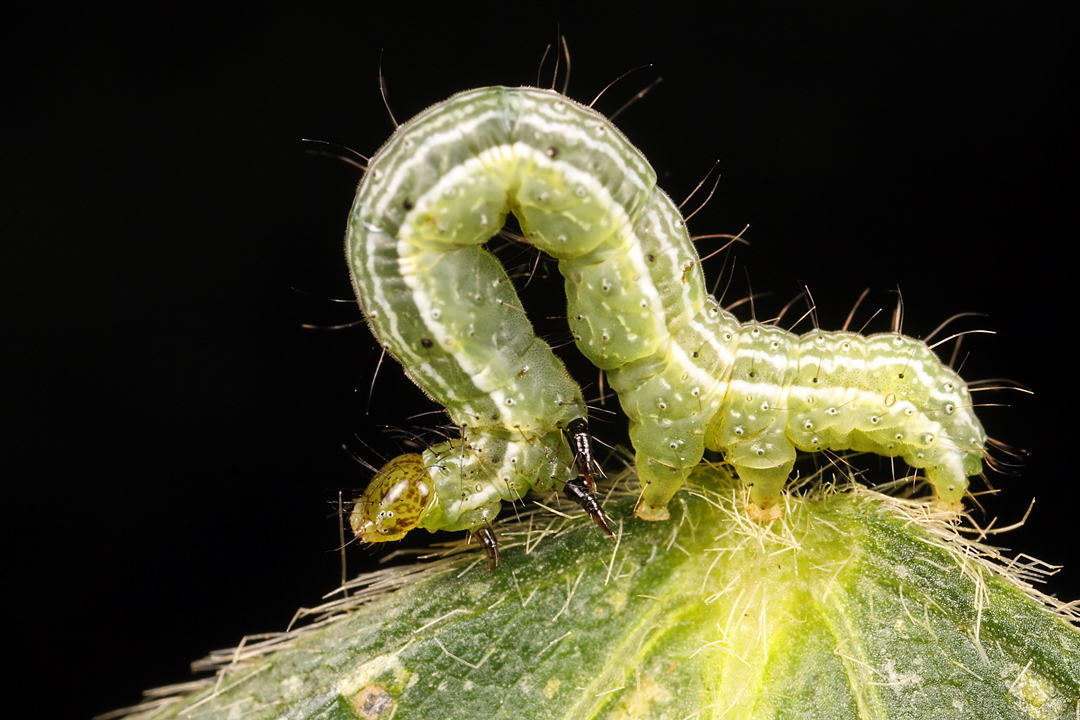
ID Challenge #15

Who am I, and where do I live?

It’s been almost a month since the last challenge, and since Alex got back to his roots I think I’ll do likewise. This is a straight up identification—the order and family are obvious (or should be), so I’m going to limit ID points to genus and species. However, to make up for this loss of higher taxa points I’ll be awarding points for correctly guessing/deducing/intuiting where this little beastie lives or providing any unique comments on its natural history. As always, standard challenge rules apply, including moderated comments to give everyone a chance to submit their answers.  Bonus points will be awarded to for answering first in the case of multiple correct answers, and discretionary bonus points are also up for grabs. Good luck!

Copyright © Ted C. MacRae 2012

A Riot of Colors

Turkey tails (Trametes versicolor) on lichen-encrusted trunk of fallen post oak (Quercus stellata)—ventral view.

For my friend Rich and I, Thanksgiving week marks the official beginning of the winter hiking season.  Fifteen years ago we began our quest to hike the entirety of the Ozark Trail, and with only ~50 of the 350 miles constructed to this point in Missouri to go we find ourselves tantalizingly close to reaching that goal. This year we started the season with 10+ miles of the northernmost Courtois Section. The rains of the previous few days had stopped, but the moisture-laden air still hung heavy under gray, overcast skies.  Such a day may not be considered optimal for photography, but nothing could be further from the truth. Lichens and fungi, normally muted and inconspicuous, spring to life when awash with moisture and splash the woodlands with a riot of colors rarely seen on dry, sunny days. The dark, almost black, color of the wet bark adds to the contrast and further emphasizes the ubiquity of these “lower forms of life” amongst the now leafless trees.

Among the most distinctive of these is turkey tail (Trametes versicolor), an extraordinarily common polypore fungus that grows on the trunks of declining and dead deciduous trees—especially oaks. Like all polypore fungi, turkey tail feeds saprophytically within dead and dying wood but is more familiar to us by way of its externally produced reproductive structures, or “tails,” for the release of spores. As the specific epithet suggests, turkey tail comes in a variety of colors ranging from gray through browns to black, and the association of older tails with algal growth even adds greens to the mix. The diversity of colors is found not only within a single locality, but even on a single tree! The especially colorful example shown in these photos, made even more so by its intermixture with green crustose lichens, was found on the trunk of a post oak (Quercus stellata) tree that had fallen across the trail, and I couldn’t help but marvel at the range of colors present and the contrast between the dorsal and ventral surfaces.

Update 30 Dec 2011: Kathie Hodge has provided the following correction to my identification:

Hate to tell you, but the turkey tails in your post aren’t turkey tails, alas, they’re Trichaptum biforme. It’s one of a bunch of shelf fungi that resemble true turkey tails.  You can tell them apart by the small, regular pores of Trametes, whereas Trichaptum has a rugged toothy thing going on.  Also, T. biforme is paler on top, not as strongly zonate, and has a distinctly purple growing edge (and sometimes the hymenium is delightfully purple too).

Thank you, Kathie, for keeping me on the straight and narrow (and maybe I should stick with beetles in these quizzes!).

Natural light (ISO1600, f/5.6, 1/60 sec)

Full flash (ISO160, f/16, 1/200 sec)

Of course, color is a matter of perception, and I wondered what effect lighting would have on this. When it comes to macrophotography I’m an unapologetic flash-man, preferring the flexibility and sharpness of detail that flash lighting offers over the dreamier “natural” images produced with strictly ambient light. The above comparison, looking at the dorsal surface of the tails with their characteristic concentric zones of colors, did nothing to change that opinion. While some might insist that the natural light photo is a truer representation of the actual colors witnessed, to me it looks gray and faded—no doubt a result of illumination by a large gray light source (the cloudy sky). While my eyes might have seen muted shades of gray and brown, my mind saw vivid shades of rust, orange, and green—colors captured more faithfully by the full-flash illuminated photo.

The strikingly zonate upper surfaces present contrasts in texture as well as color

Congratulations to those of you who guessed some kind of polypore fungus in Super Crop Challenge #10, although nobody correctly deduced an ID below the family level. I fear my challenges have gotten too difficult, as this is the  in which nobody arrived at the correct answer. Nevertheless, on points Mr. Phidippus takes top honors with 11, while Roy, Tim and John earned enough points to receive podium mentions. Session 5 overall leader, Marlin, didn’t play this time, so Mr. Phidippus now takes over the top spot—can he hold onto it as the session plays out?

Copyright © Ted C. MacRae 2011
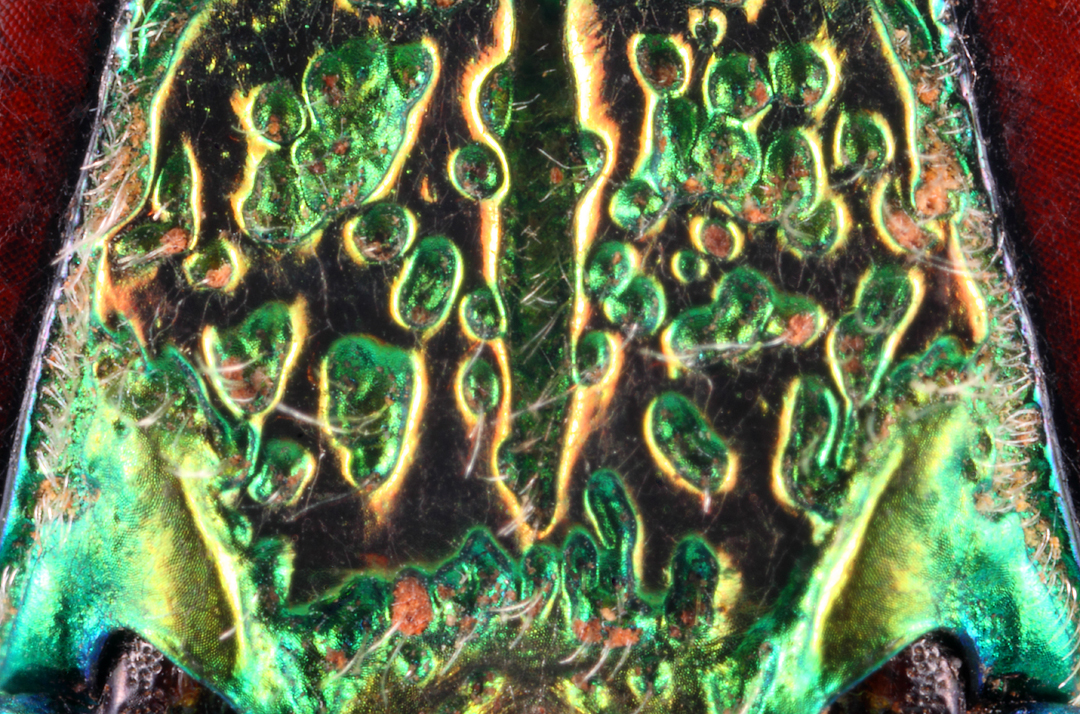
Super Crop Challenge #10

It’s gotten a little quiet around here lately, and since we haven’t done a Super Crop Challenge for awhile let’s see if this latest version will liven things back up. This challenge strays a bit from my normal scope, so I’m not sure how difficult or easy it will prove to be. I’ll award 2 pts for all correctly stated primary rank taxa (what a mouthful!)—standard challenge rules apply, including moderated comments to give everyone a chance to submit their answers.  Bonus points will be awarded to early birds if multiple participants arrive at the same correct answer, and possibly also for other relevant comments (at my discretion). Good luck!

Copyright © Ted C. MacRae 2011

ID Challenge #14

I’ll be leaving soon for another trip to Argentina.  While the process of traveling to the Land of Gauchos (and back) is exhausting, I adore Argentina and look forward to my visits there with great anticipation.  In celebration of my pending return, I’m starting off a new BitB Challenge Session (#5) with a traditional ID challenge—for 2 pts each can you identify the order (a gimme), family, genus, and species of the critter in the photo below?  Say something about the situation for the possibility of bonus points.  Standard challenge rules apply, including moderated comments during the challenge period (you don’t have to be first to score points), early-bird points to those who do arrive at the correct answer before others, etc.

Copyright © Ted C. MacRae 2011

ID Challenge #13 results and Session #4 final standings

Points have been tallied for ID Challenge #13 and its addendum.  Congratulations to Mr. Phidippus, who’s 16 pts edged out Roy (14 pts) and Ben Coulter (13 pts) for the win in IDC13.  Ben Coulter, however, stayed comfortably atop the overall standings in the final challenge of this 4th BitB Challenge Session, earning 78 pts along the way and thus reclaiming his overall championship.  Congratulations to him and also to Mr. Phidippus and Roy, who finish on the 2nd and 3rd steps of the overall podium.  An honorable mention goes to Tim Eisele, who was the only other participant besides our three podium finishers to score points in all six Session #4 challenges.

Complete standings are shown below, and Mr. Coulter, I owe you some loot!

Place Commentor IDC#10 SSC#8 SSC#9 IDC#11 IDC#12 IDC#13 Total
1 Ben Coulter 14 8 13 14 16 13 78
2 Mr. Phidippus 10 8 8 13 15 16 70
3 Roy 8 9 6 5 11 14 53
4 Tim Eisele 5 1 5 5 7 10 33
5 George Sims 2       12 7 21
6 Tracy Morman 3       15   18
  Morgan Jackson   11 7       18
8 Doug Taron         17   17
  Jon Q 4       7 6 17
10 Mike Baker     4 3 6 3 16
11 HBG Dave   9   2   4 15
12 Dave Hubble 12         2 14
13 Troy Bartlett   6   7     13
14 FlaPack 10           10
  Charley Eiseman 4         6 10
16 Matt Brust 9           9
  Bill Meyers         9   9
18 James Trager        6   2 8
19 Crystal Ernst 1     6     7
  itsybitsybeetle         7   7
21 Alex Wild       6     6
  Lee Jaszlics       6     6
23 Traci 5           5
  Laurie Knight   1     4   5
25 Adrian Thysse         4   4
26           2 2
27 Johnson Sau       1     1

Copyright © Ted C. MacRae 2011

ID Challenge #13 – Addendum

I hope you’ll forgive this inordinately extended challenge—I’m taking a little bit of a breather from my normally frenetic working/writing/editing schedule to enjoy a most unexpected baseball post-season.  I will be going through the comments left for ID Challenge #13 and releasing them shortly with awarded points, and without saying precisely what the scene in that challenge showed I will say that several participants correctly identified it as a sand dune habitat shaped by wind and dotted with tiger beetle burrows.  Since this is the last challenge of BitB Challenge Session #4, I thought I would extend it a little further and give people one more shot at scoring points on this challenge before the Session #4 standings are finalized and the winner announced.  The photo in this post shows the culprit responsible for the holes in the earlier photo—can you name it?  Of course, we all know it’s a tiger beetle (don’t we?), so genus and species will be fine and are worth 4 points each (if following the most recent classification).  As always, standard challenge rules apply, and I will be continuing the moderated comments during this extended challenge period.  I promise not to let another week pass before posting the full story.

 Copyright © Ted C. MacRae 2011

ID Challenge #13

For this final challenge of Session #4 we have something a little different—explain the scene shown in the photo below. Your answer can be as short and concise or long and narrative as you wish—points will be awarded subjectively depending on how closely your explanation agrees with reality. Standard challenge rules apply, including moderated comments during the challenge period (you don’t have to be first to score points), early-bird points to those who do arrive at the correct answer before others, etc., and as always, creativity and humor are encouraged. C’mon—we’re all natural historians here, aren’t we? Let’s hear some natural history!

Explain the scene in this photo.

Copyright © Ted C. MacRae 2011