Cicadetta kansa in Oklahoma

Photo details: Canon 100mm macro lens on Canon EOS 50D, ISO 100, 1/250 sec, f/14, MT-24EX flash 1/4 power w/ Sto-Fen diffusers.

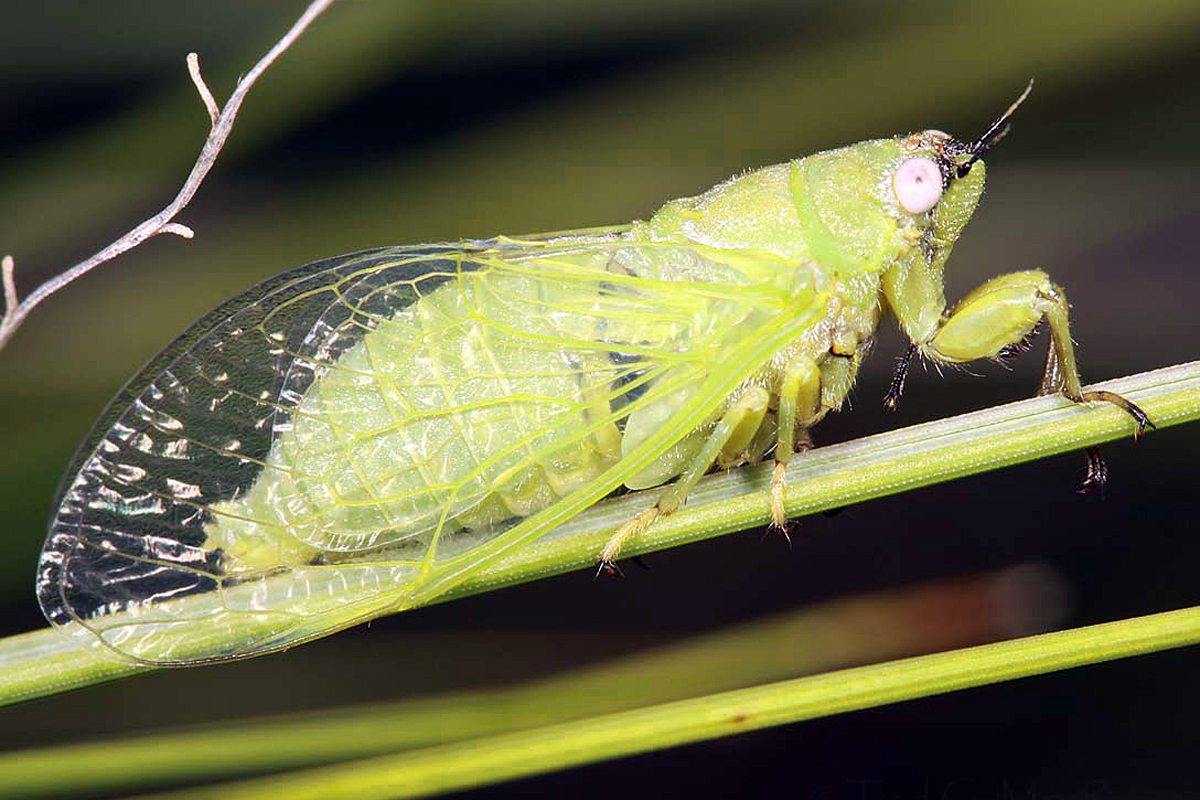
Another of the insects that I saw this past June at Four Canyon Preserve in northwestern Oklahoma was this small cicada, Cicadetta kansa. Though not as small as the diminutive Beameria venosa (see North America’s smallest cicada), their barely audible call – a soft buzz – makes them even more difficult to notice.  I only realized what they were after noticing something odd about the small, green “grasshoppers” that flitted in front of me as I walked through the mixed shortgrass prairie.  They didn’t quite fly “right” and landed delicately within the grass rather than crashing into it clumsily.  Even after realizing that they weren’t grasshoppers, it was difficult to say what they were at first due to their wariness and lime green coloration that helped them blend marvelously into their grassy surroundings.  A few sweeps of the net solved that problem, and I discovered what was at the time the smallest and most beautiful cicada I had seen to that point (Beameria venosa took both honors later that month in the Loess Hills of northwestern Missouri).

Despite being the only world-wide genus of cicadas, Cicadetta is represented in the U.S. by only two species—C. kansa and C. calliope.  In addition to its pale green coloration, C. kansa is distinguished from C. calliope by having only 4 or 5 apical cells in the hind wing (6 in C. calliope).  Cicadetta kansa occurs from Texas north to South Dakota, while C. calliope is found from Texas to Florida and northwards to Iowa, Ohio and New Jersey.  Little is known about the biology of Cicadetta kansa; however, presumably it is similar to that of C. calliope, which emerges and lays eggs in late spring.  Eggs hatch by late summer, at which time the nymphs burrow into the ground again begin feeding on the roots of grasses.  This feature of their biology protects them from the negative impacts of managed spring and fall burns, and indeed C. calliope is known to increase in prairies that are managed by such burns.  This is in contrast to other prairie cicadas (genus Tibicen), which overwinter as eggs in the above-ground portion of grasses and, thus, are negatively impacted by fall and spring burns.

A number of websites are dedicated to these charismatic insects; however, Cicada by Andy Hamilton at the Canadian National Collection of Insects, Arachnids and Nematodes is the most informative and comprehensive that I’ve found.

Copyright © Ted C. MacRae

Add to FacebookAdd to NewsvineAdd to DiggAdd to Del.icio.usAdd to StumbleuponAdd to RedditAdd to BlinklistAdd to TwitterAdd to TechnoratiAdd to Furl

A bid for OpenLab

I’m going to do something I’ve not yet done before—ask for your support.  OpenLab is an annual compilation of the year’s best science-blog writing, as determined by a panel of judges, and the closing date for submissions for 2009 is December 1st—this coming Tuesday.  I’ve vacilated about whether to throw my hat into this ring—the world of science blogs is a crowded place with many erudite writers, and although science is my profession, the science that I write about is purely avocational.  Whether my particular brand of science writing can compete with that of the true academicians that seem to dominate the competition remains to be seen.  Nevertheless, I am willing to put my ego on the line and give it a shot.  If you have seen anything in the past year (since December 1, 2008) here at Beetles in the Bush that you consider exemplary, please consider submitting it.  Feel free to search the sidebar archives (“Taxa,” “Tags” or “Life History”), browse the site Contents, or select from the following list of my own personal favorites (arranged chronologically):

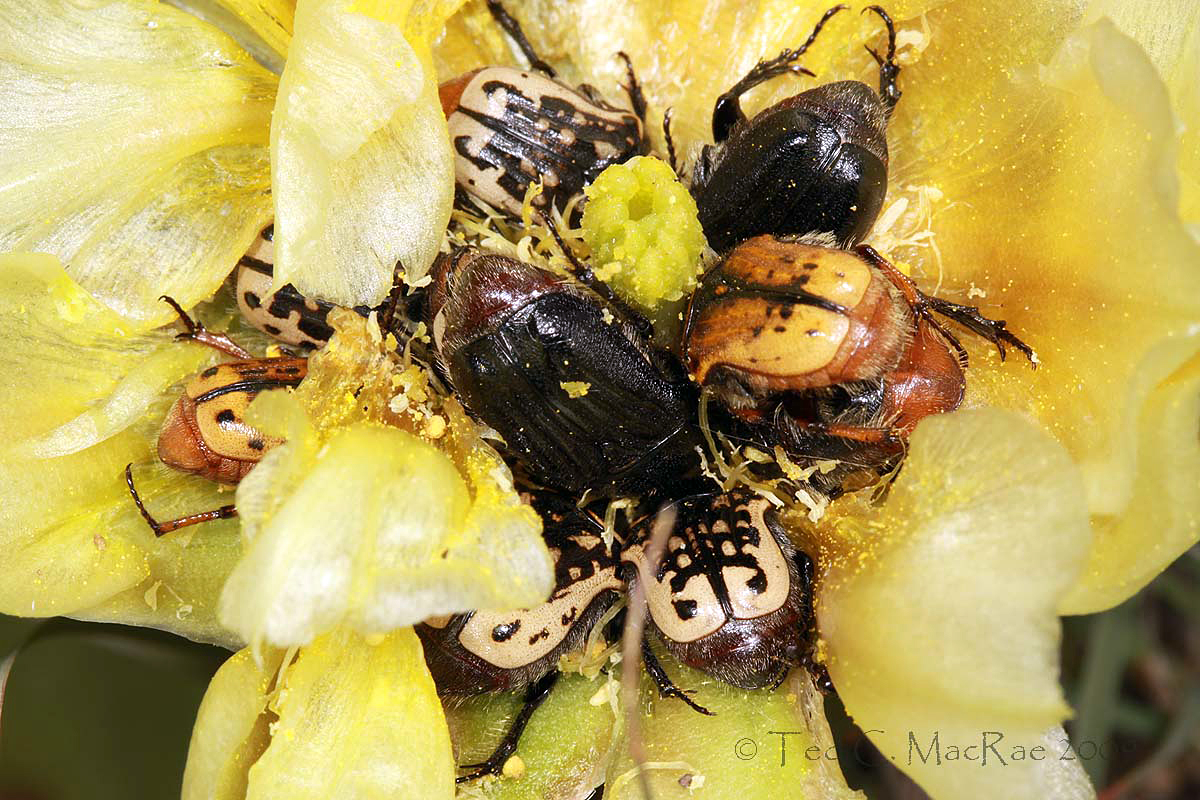
So I don’t get accused of asking but not giving, I leave you with this photograph of a group of Kern’s flower scarabs (Euphoria kernii, family Scarabaeidae) congregated in the flower of large-root prickly pear cactus (Opuntia macrorhiza, family Cactaceae).  Photographed this past June at Four Canyon Preserve in northwestern Oklahoma, this common, extremely variable species (ranging from all black to black and white to black and yellow to nearly all yellow) can be found throughout the southern Great Plains, where it congregates tightly in flowers of Opuntia , pricklypoppy (Argemone spp., family Papaveraceae), thistle (Cirsium spp., family Asteraceae), and yucca (Yucca spp., family Liliaceae).

Photo details: Canon 100mm f/2.4 macro lens on Canon 50D (manual mode), ISO-100, 1/250 sec, f/16, diffused MT-24EX flash.

Copyright © Ted C. MacRae 2009

Add to FacebookAdd to NewsvineAdd to DiggAdd to Del.icio.usAdd to StumbleuponAdd to RedditAdd to BlinklistAdd to TwitterAdd to TechnoratiAdd to Furl

A “Really” Big-headed Tiger Beetle

Megacephala megacephala 3rd-instar larva. Photo © Artur M. Serrano.

In my recent summary of the latest issue of the journal Cicindela, I included a scan of the cover of that issue and its stunning image of the 3rd-instar larva of Megacephala megacephala¹ from Africa.  This otherwordly-looking, four-eyed beast was photographed with jaws agape at the entrance to its burrow in Guinea Bissau by Dr. Artur M. Serrano (University of Lisbon, Portugal).  I was grateful for his permission to post a scan of this spectacular image; however, he did even better and sent me high-resolution images of not only the larva (above) but the adult (below) as well.  This species is one of 13 assigned to the genus—presently restricted to Africa (though not always, see discussion below), where they are usually found in savanna-type habitats and are active during the crepuscular and nocturnal periods (Werner 2000).

¹ An example of a tautonym, i.e. a scientific binomen in which the genus and species names are identical. Familiar tautonymic binomina include the gorilla (Gorilla gorilla), green iguana (Iguana iguana), and European toad (Bufo bufo). Tautonyms are expressly prohibited in plant nomenclature (see Article 23.4 of the International Code of Botanical Nomenclature) but are permitted and, in fact, quite common in zoological nomenclature; Wikipedia lists 51 mammals, 82 birds, 15 reptiles & amphibians, 54 fish, and 33 invertebrates (though not Megacephala megacephla!).

Megacephala megacephala adult. Photo © Artur M. Serrano.

For those of you who see a strong resemblance by this species to another tiger beetle I featured recently, Tetracha floridana (Florida Metallic Tiger Beetle), this is not merely a coincidence.  Megacephala and Tetracha are quite closely related, and in fact the two genera, along with a handful of other closely related genera, are at the center of one of the longest-standing disputes in tiger beetle taxonomy (Huber 1994).  The genus Megacephala was established by Latreille (1802) for the species pictured here (originally described as Cicindela megacephala Olivier).  As additional taxa were found in Africa, Australia and the Western Hemisphere and assigned to Megacephala, several workers attempted to divide the genus into multiple genera (with New World taxa being assigned to Tetracha and a few other mostly South American genera); however, there was little agreement on how these genera should be defined and on what characters they should be based.  The debate was effectively swept under the rug in the early 20th Century when Walter Horn, one of the most influential cicindelophiles of all time, accepted a monotypic Aniara based on the strange South American species A. sepulcralis but reunited the world’s remaining taxa within the single genus Megacephala in his world catalogue (Horn 1910).  Horn’s use of Megacephala as a catch-all genus was followed by subsequent workers for almost a full century until Huber (1994) once again proposed restricting Megacephala to certain of the African species and resurrecting the genus Tetracha for the bulk of the New World fauna.  He also urged additional analyses to resolve the status of the remaining generic names and their composition, which subsequently saw increasing use as subgenera of Megacephala² and later as genera.

² Thus, as type-species for the genus, the species featured here became known as Megacephala (Megacephala) megacephala (Werner 2000)—a triple tautonym that translates to the “Big-headed, Big-Headed, Big-Headed” tiger beetle!  Perhaps it’s best that I’m not an African tiger beetle specialist; I probably would have been unable to resist the temptation to resurrect M. senegalensis and assign it as a subspecies of M. megacephala, just so I could refer to the nominate form as Megacephala (Megacephala) megacephala megacephala!

The reversal of Horn’s concepts now appears to be complete, with all seven former subgenera of Megacephala formally being accorded full generic status (Naviaux 2007). This classification is strongly supported by molecular analysis of nuclear 18S and mitochondrial 16S and cytochrome oxidase gene sequences (Zerm et al. 2007), with the resulting dendrogram indicating three monophyletic clades corresponding to the African/Palearctic (Megacephala and Grammognatha, respectively),  Western Hemisphere (Aniara, Metriocheila, Phaeoxantha and Tetracha) and Australian (Australicapitona and Pseudotetracha) genera³.  The African/Palearctic clade was found to occupy a basal position in the tree, while the Western Hemisphere and Australian clades were more derived.  These data support the hypothesis that the early evolution of the megacephalines took place during the break-up of the ancient Gondwana megacontinent, which began about 167 million years ago (middle Jurassic period) and sequentially disconnected Africa from South America and Australia.

³ One striking deviation from the current classification, however, was the support for nesting the single Aniara species within Tetracha, a placement that renders Tetracha paraphyletic and, thus, requires either its division into multiple genera or the sinking of Aniara as a distinct genus. The support for this placement was quite strong and mirrored the results of a broader molecular phylogenetic study of tiger beetles based on full-length 18s RNA data (Galian et al. 2002). The authors concede that this puzzling placement is not corroborated by numerous morphological, ecological and ethological characters that distinguish Aniara from all known Tetracha species.

REFERENCES

Galián J., J. E. Hogan and A. P. Vogler. 2002. The origin of multiple sex chromosomes in tiger beetles. Molecular Biology and Evolution 19:1792–1796.

Horn, W.  1910.  Coleoptera Adephaga, Fam. Carabidae, Subfam. Cicindelinae.  In P. Wytsman (editor).  Genera Insectorum.  Fascicle 82a.  Desmet-Vereneuil, Brussels, Belgium, pp. 105–208.

Huber, R. L.  1994.  A new species of Tetracha from the west coast of Venezuela, with comments on genus-level nomenclature (Coleoptera: Cicindelidae).  Cicindela 26(3/4):49–75.

Latreille, P. A. 1802. Histoire Naturelle, Générale et Particulière des Crustacés et des Insectes. Paris: F. Dufart 3 xii 13 + 467 pp.

Naviaux R. 2007. Tetracha (Coleoptera, Cicindelidae, Megacephalina): Revision du genre et descriptions de nouveaus taxons. Mémoires de la Société entomologique de France 7:1–197.

Werner, K.  2000.  The Tiger Beetles of Africa (Coleoptera: Cicindelidae).  Volume 1.  Taita Publishers, Hradec Kralove, Czech Republic, 191 pp., 745 figures.

Zerm, M., J. Wiesner, J. Ledezma, D. Brzoska, U. Drechsel, A. C. Cicchino, J. P. Rodríguez, L. Martinsen, J. Adis and L. Bachmann.  2007.  Molecular phylogeny of Megacephalina Horn 1910 tiger beetles (Coleoptera: Cicindelidae).  Studies on Neotropical Fauna and Environment 42(3):211–219.

Copyright © Ted C. MacRae 2009

Add to FacebookAdd to NewsvineAdd to DiggAdd to Del.icio.usAdd to StumbleuponAdd to RedditAdd to BlinklistAdd to TwitterAdd to TechnoratiAdd to Furl

Moustached Tiger Beetle

Lake Wales Ridge

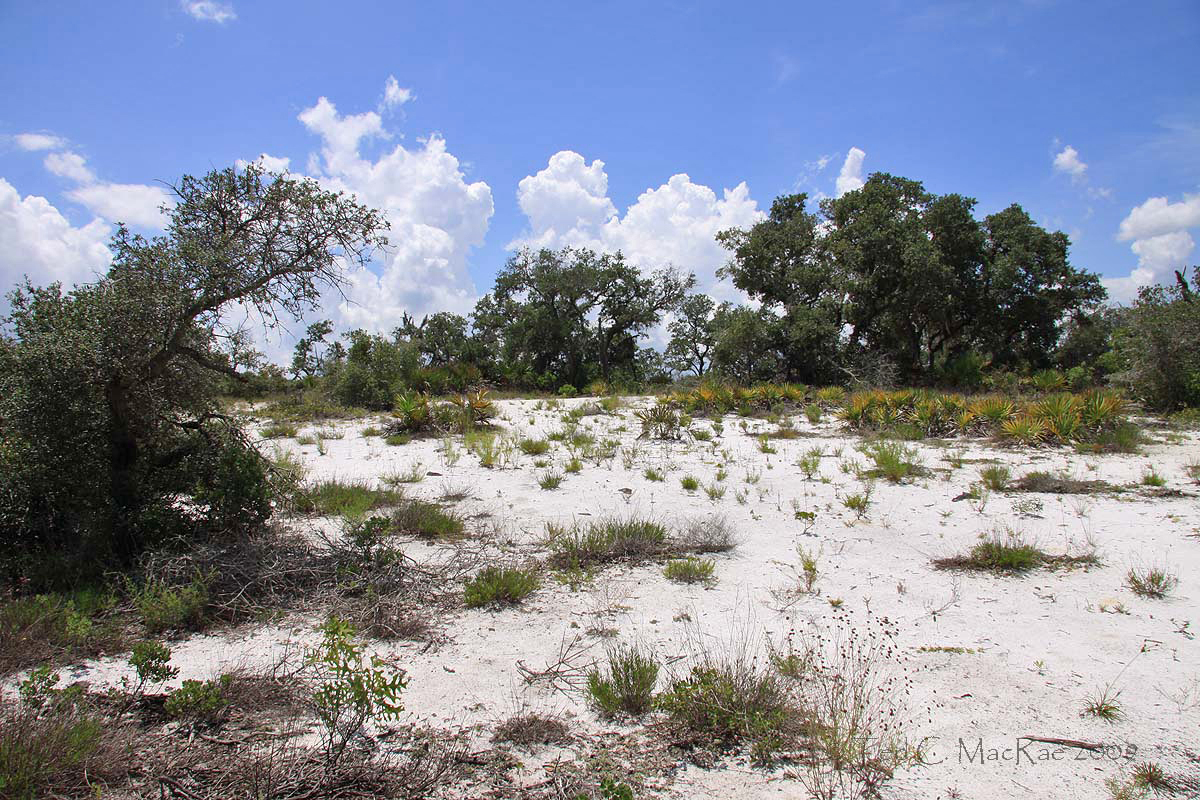
Dry sand scrubland on Lakes Wales Ridge in central Florida—home to Cicindela highlandensis and Ellipsoptera hirtilabris

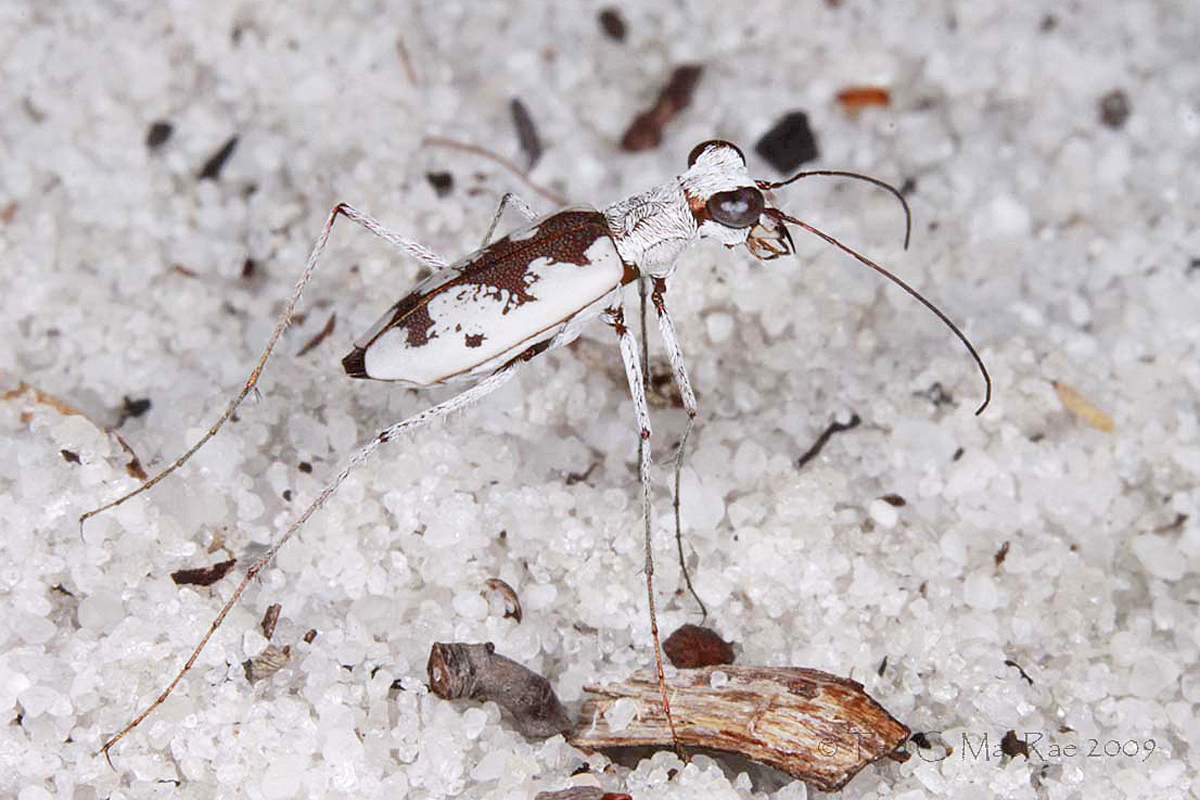
In my previous post, I featured the rare Cicindela highlandensis (Highlands Tiger Beetle), restricted entirely to sand scrubland and pine woodland habitats along the Lake Wales Ridge in central Florida (Choate 2003).  However, that would not be the only Florida endemic tiger beetle that I would encounter during my early August visit.  Another of the several tiger beetle species that I’d hoped to see would also be found that day, although in much lower numbers.  Ellipsoptera hirtilabris (Moustached Tiger Beetle) is so named¹ because of the dense covering of prostrate hairs on its labrum that distinguish it from the closely related E. gratiosa (Whitish Tiger Beetle). Both of these species exhibit striking white maculations that cover almost the entire elytral surface and dense white pubescence covering the head, thorax, underside and legs.  They are the only species of the genus occurring in Florida, but their ranges do not overlap (Pearson et al. 2006)—E. gratiosa occurs in the coastal pine barrens of Virginia, the Carolinas, southern Georgia and the Florida panhandle, while E. hirtilabris is restricted to peninsular Florida in pine woodlands, sand hills and other habitats with open white sand.  Although the latter is considered a Florida endemic, it has been found just outside of Florida in extreme southeastern Georgia on St. Simon’s Island (Choate 2003)In addition to the pubescence of the labrum and their allopatric distributions, the two species may further be distinguished by the slightly less expanded markings and more diffuse edges where they contact the central bronze area in E. hirtilabris and the slightly larger size of E. gratiosa.    Like C. highlandensis and C. abdominalis, it seems likely that E. hirtilabris and E. gratiosa evolved from a common ancestor, diverging in isolation from each other during the pre-Pleistocene separation of peninsular Florida from the North American mainland.   

¹ The species epithet is derived from the Latin words hirtum meaning “hairy” and labrum meaning “lip”.

Ellipsoptera_hirtilabris_IMG_1091_1200x800_enh

Ellipsoptera hirtilabris in the alert position

I found E. hirtilabris to be exceedingly difficult to see and photograph.  Unlike C. highlandensis, which resemble bits of debris laying on the surface of the white sands where it lives, the largely white E. hirtilabris blend into the white sand itself and are almost impossible to see until they move.  The small bronze-colored patches along the elytral suture augment their cryptic capabilities by resembling small bits of debris, which is especially evident in the photo below.  Both Pearson et al. (2006) and Erwin and Pearson (2008) state that adults of this species freeze in position when approached, which may be the reason why I saw so few individuals.  Once I did see them, they were extremely wary and difficult to photograph no matter how cautiously I approached.  The photos shown here represent the only two individuals that I succeeded in photographing, and in neither case did I succeed in getting a frontal perspective to show the pubescent labrum (stifling heat and oppressive humidity during the photo session did not help matters, either).

Ellipsoptera_hirtilabris_IMG_1131_1200x800_enh

The white coloration with small brown markings helps adults blend in perfectly in their white sand habitats

Photo details:
Photo 1: Canon 100mm macro lens on Canon 50D (landscape mode) ISO-100, 1/250 sec, f/16, natural light.
Photos 2 & 3: Manual mode, f/25, MT-24EX flash w/ Sto-Fen diffusers @ 1/8 ratio.

REFERENCES:

Choate, P. M., Jr. 2003. A Field Guide and Identification Manual for Florida and Eastern U.S. Tiger Beetles.  University Press of Florida, Gainesville, 224 pp.

Erwin, T. L. and D. L. Pearson. 2008. A Treatise on the Western Hemisphere Caraboidea (Coleoptera). Their classification, distributions, and ways of life. Volume II (Carabidae-Nebriiformes 2-Cicindelitae). Pensoft Series Faunistica 84. Pensoft Publishers, Sofia, 400 pp.

Pearson, D. L., C. B. Knisley and C. J. Kazilek. 2006. A Field Guide to the Tiger Beetles of the United States and Canada. Oxford University Press, New York, 227 pp.

Copyright © Ted C. MacRae 2009

Add to FacebookAdd to NewsvineAdd to DiggAdd to Del.icio.usAdd to StumbleuponAdd to RedditAdd to BlinklistAdd to TwitterAdd to TechnoratiAdd to Furl

Highlands Tiger Beetle

When my wife and I made plans to spend a week at her sister’s condominium in Florida this past summer, I began making a list of the tiger beetle species that I wanted to see.  I would be happy to see anything, since I had never before tiger beetled in Florida, but early August was looking to be on the late side for many things.  In addition, since this was a family vacation, I would only have a couple days at most to sneak off on my own and immerse myself in bug hunting.  All this meant that I would have to be very judicious about where I went and what I looked for.  I sought advice from a few other cicindelophiles on species and localities, and by the time we made the 16-hour drive from St. Louis to Seminole (near St. Petersburg) I had settled on two destinations—the Lake Wales Ridge of central Florida to look for Cicindela highlandensis (Highlands Tiger Beetle), and the so-called “Road to Nowhere” near Steinhatchee where as many as 10 species of tiger beetles can be seen when the season is right.  Things started out well when, before even looking for any of these species, I stumbled upon Ellipsoptera marginata (Margined Tiger Beetle), its sibling species E. hamata lacerata (Gulf Beach Tiger Beetle), and some 3rd-instar larvae in their burrows that proved to be the Florida endemic Tetracha floridana (Florida Metallic Tiger Beetle) in the small coastal preserve just outside the back door of my sister-in-law’s condo.

Lake Wales Ridge_IMG_1128_1200x800_enh

Dry sand scrubland on Lakes Wales Ridge in central Florida

The big target of the trip, however, was not so straightforward.  Cicindela highlandensis is one of Florida’s rarest endemic tiger beetles, being restricted entirely to remnant sand scrubland and pine woodland habitats along the Lake Wales Ridge of Polk and Highlands Counties in central Florida (Choate 2003).  The Lake Wales Ridge represents former shorelines deposited when the rest of peninsular Florida was covered by seas.  The quick draining sands have created desert-like open habitats dominated by oaks, pines, and other drought-tolerant species.  Cicindela highlandensis is one of many plants and animals endemic to the Lake Wales Ridge, which has the highest concentration of endangered plants in the continental U.S.  Unfortunately, the natural communities found on the Lake Wales Ridge have suffered severe reductions from their historical occurrence.  An estimated 85% of the scrub and sandhills has been converted to citrus groves and urban developments, and the few remaining tracts face not only continued development pressure, but also the threat of degradation from reductions in the frequency and extent of the wildfires that are essential for their maintenance (Turner et al. 2006).  NatureServe (2009) estimates that C. highlandensis populations have declined by as much as 90%, and only a few of the sites where it is known to occur are large enough to sustain viable populations.  While the species has a global status of G1 (critically imperiled) due to its limited range, restricted habitat, and very small population size, and is a candidate for listing as an endangered species by the U.S. Fish & Wildlife Service (Pearson et al. 2006), it remains—bafflingly—unlisted even as threatened by the State of Florida.  As a result, there is no formal conservation management plan for this species to ensure its survival.  Fortunately, the largest populations of C. highlandensis occur on an assemblage of public and private lands that are under partial to full conservation ownership, and preservation/management activities are taking place at most of these.

Cicindela_highlandensis_IMG_1126_1200x800_enh

Cicindela highlandensis, Highlands Tiger Beetle, in alert position

I had debated whether to look for Cicindela highlandensis at all—not because I wasn’t anxious to see it, but because I lacked confidence that I would be able find it.  A late season search for a rare species had all the hallmarks of a potential wild goose chase.  Nevertheless, I like a good challenge, and I had succeeded in obtaining information about specific locations for the species (a matter of public record; however, I prefer to maintain some discretion in this venue).  Although I began my search with tempered optimism, it didn’t take long for me to acheive my goal.  Similar to my experience with Cylindera celeripes in Oklahoma, I had barely walked ten yards into a gorgeous sand scrub habitat at the first site I had planned to search before I saw an individual.  The dark metallic blue coloration of the species would seem to make it easily seen in its white sand environs; however, in reality it is almost impossible to see until it moves.  Some have suggested that its coloration functions to make the beetle resemble the many small pieces of debris that litter the sand surface—perhaps the bits of charred wood that are common in open, fire-mediated environments.  Its dependence upon natural disturbance factors such as fire was made apparent to me by the distinct preference I noted for adults to congregate along trails kept open by human disturbance, and to a lesser degree in the larger, naturally open scrub areas.  The adults made very short escape flights and were easy to follow but difficult to approach closely enough for photographs due to extreme wariness—their long legs giving some indication of their highly cursorial capabilities.

Cicindela highlandensis

Cicindela highlandensis - note absence of setae on thorax and abdomen

Cicindela highlandensis is closely related to two other species of tiger beetles in Florida—C. abdominalis (Eastern Pinebarrens Tiger Beetle), widely distributed throughout the Atlantic and Gulf Coastal Plain, and C. scabrosa (Scabrous Tiger Beetle), confined to the Florida Peninsula and adjacent southeastern Georgia.  Both of these species are absent from the Lake Wales Ridge and, thus, do not co-occur with C. highlandensis. It is likely that C. highlandensis evolved from isolated populations of the widespread C. abdominalis that diverged during pre-Pleistocene separation of the Lake Wales Ridge from the mainland (Choate 1984).  Despite its resemblance to both C. abdominalis and C. scabrosa, C. highlandensis can be distinguished from both of those species by the complete absence of flattened, white setae on the sides of the prothorax and the abdomen and by the highly reduced or absent elytral maculations (note the very small apical markings on the individuals in these photographs).  All three of these species belong to the subgenus Cicindelidia (American Tiger Beetles) and possess red adominal coloration that is prominent during flight.

Photo details:
Photo 1: Canon 17-85mm zoom lens on Canon 50D (landscape mode), ISO-100, 1/160 sec, f/13, natural light.
Photos 2–3: Canon 100mm macro lens on Canon 50D (manual mode), ISO-100, 1/250 sec, f/14 (photo 2) or f/20 (photo 3), MT-24EX flash w/ Sto-Fen diffusers.

REFERENCES:

Choate, P. M., Jr.  1984.  A new species of Cicindela Linnaeus (Coleoptera: Cicindelidae) from Florida, and elevation of C. abdominalis scabrosa Shaupp to species level.  Entomological News 95:73–82.

Choate, P. M., Jr. 2003. A Field Guide and Identification Manual for Florida and Eastern U.S. Tiger Beetles.  University Press of Florida, Gainesville, 224 pp.

NatureServe.  2009.  NatureServe Explorer: An online encyclopedia of life [web application].  Version 7.1.  NatureServe, Arlington, Virginia.  Available at: http://www.natureserve.org/explorer (accessed: November 12, 2009).

Pearson, D. L., C. B. Knisley and C. J. Kazilek. 2006. A Field Guide to the Tiger Beetles of the United States and Canada. Oxford University Press, New York, 227 pp.

Turner, W. R., D. S. Wilcove and H. M. Swain.  2006.  State of the scrub: conservation progress, management responsibilities, and land acquisition priorities for imperiled species of Florida’s Lake Wales Ridge.  Archbold Biological Station, Lake Placid, Florida, iii + 44 pp.

Copyright © Ted C. MacRae 2009

Add to FacebookAdd to NewsvineAdd to DiggAdd to Del.icio.usAdd to StumbleuponAdd to RedditAdd to BlinklistAdd to TwitterAdd to TechnoratiAdd to Furl

Monday Moth: White-tipped Black Moth

Melanchroia_chephise_IMG_1241_1200x800_enh

Photo details: Canon 100mm macro lens on Canon 50D (manual mode), ISO-100, 1/250 sec, f/22, MT-24EX flash w/ Sto-Fen diffusers.

When is a ctenuchid moth not a ctenuchid moth?  When it’s a White-tipped Black Moth (Melanchroia chephise) in the family Geometridae!

I may be a beetle guy, but I also consider myself a competent general entomologist.  What is a competent general entomologist?  Someone who can identify any insect to order at first glance and a majority of them to family – regardless of one’s own taxa of expertise.  Thus, when I encountered this mating pair of moths on the outside wall of my sister-in-law’s condominium in Seminole, Florida, I “recognized” them as something in what I learned as the family Ctenuchidae (later subsumed within the Arctiidae, first as a subfamily and now as several disparate tribes).  They had all the hallmarks of ctenuchids—black and red coloration, narrowish wings with light colored patches, and about the size of the wasps that they presumably mimic.  Upon my return to St. Louis, I sat down to identify the moths—confident that their distinctive appearance would lead to the quick ID that never materialized after scanning through all of the ctenuchine pages at BugGuide.  Frustrated, I resorted to posting the photo on the site’s ID Request, never questioning my ctenuchine placement.  Precisely 4 minutes later, the moths were identified by John Maxwell as Melanchroia chephise and moved to their proper place—among the 50 other adult photographs of this species that can be found on the site!  I might as well have failed to identify a monarch butterfly!

Melanchroia chephise is apparently common in the American tropics, reaching its northern distributional limit along the coastal plains of Florida and Texas but straying further north in certain years.  Larvae feed on several plants in the family Euphorbiaceae, primarily Breynia and Phyllanthus species.  The adult coloration strikes me as obviously aposematic (warning coloration), but I could find no specific references to this.  However, considering that euphorbiaceous plants are famous for their diverse arsenal of latex and irritant toxins (e.g., diterpene esters, alkaloids, glycosides, ricin-type protein toxins, etc.), it seems reasonable to presume that Melanchroia larvae have evolved mechanisms for sequestering one or more of these compounds.  NABA South Texas states that adults of this species are probably mimics of the Red-bordered Pixie (Melanis pixe), an aposematic metalmark butterfly also of Neotropical distribution that reaches south Texas (but not Florida).  Personally, I don’t really see the resemblance (but then, nor am I an avian predator).  I suppose it’s possible that a species such as this can employ different defense strategies in different parts of its range, relying on Batesian mimicry in areas where suitable models occur and aposematism in areas where they don’t, but I have to admit that I’m now straying well outside the coleopteran-centric bounds of my expertise.

Copyright © Ted C. MacRae 2009

Add to FacebookAdd to NewsvineAdd to DiggAdd to Del.icio.usAdd to StumbleuponAdd to RedditAdd to BlinklistAdd to TwitterAdd to TechnoratiAdd to Furl

Beetle Research Roundup

Third-instar larva of Megacephala megacephala (Olivier), photographed near a light trap on 17 July 2006 in Coli, Quebo, Guinea-Bissau, Africa, by Artur R. M. Serrano.The latest issue of the journal Cicindela arrived in my mailbox today, and as usual some interesting papers are included.  For those of you unfamiliar with it, Cicindela is “a quarterly journal devoted to the Cicindelidae,” publishing papers dealing with any aspect of the study of tiger beetles. Founded in 1968 by North American tiger beetle experts Ronald L. Huber, Robert C. Graves, and Harold L. Willis, it was dubbed in those early issues as “…an experiment—an inquiry into the merits (and shortcomings?) of extreme specialization…”. Richard Freitag succeeded Willis in 1975, and that trio has edited and produced this “experiment”—now in its 41st year—ever since!  Issues are available for a very nominal $10 per year ($13 outside of the U.S.).  My sincere thanks to Artur Serrano (University of Lisbon) for permitting me to post his stunning photograph of the third-instar larva of Megacephala megacephala, photographed in Guinea-Bessau, Africa and gracing the cover of this latest issue.

Tetracha virginica in Wisconsin
Despite the common occurrence of this species across the southern two-thirds of the eastern U.S., its northern and western limits of distribution are still poorly known.  Grimek discusses records of this species in Wisconsin during the 45-year period between 1962 to 2007, noting that all of the captures were from sandy areas near rivers in, with the exception of a single specimen, the “Driftless Area” covering the southwestern quadrant of the state.  (The Driftless Area, also called the Paleozoic Plateau, is an area that escaped glaciation during the last glacial period).  The capture of a specimen very near the Mississippi River suggests the species may also be found in Minnesota, where its occurrence has not yet been documented.

Grimek, H.  2009.  Distribution of Tetracha virginica (Linnaeus) in Wisconsin.  Cicindela 41(3):57-61

Brasiella cuyabaensis in Bolivia
Brasiella is a large genus (47 species) of small to very small, mostly Neotropical tiger beetles, of which B. argentata is among the most common and widespread.  While examining specimens of this species that he had collected in Bolivia, Italian coleopterist Fabio Cassola found a second species among the material.  At first thought to potentially represent a new species, its identity was ultimately revealed after examination of the unique male type specimen of B. cuyabaensis from Brazil.  This specimen is very similar to B. argentata except for its genitalia (longer and narrower than in B. argentata), and Cassola has confirmed this in his material as well.  The previously unknown females were especially problematic; however, Cassola found their longer, more convex labrum (upper lip) to be a useful diagnostic character.  Cassola collected B. cuyabaensis some 700 km west of the type locality and speculates that additional specimens of the species may exist in entomological collections, incorrectly placed under B. argentata.

Cassola, F.  2009.  Studies of tiger beetles.  CLXXV.   Occurrence in Bolivia of Brasiella cuyabaensis (Mandl, 1970) (Coleoptera: Cicindelidae).  Cicindela 41(3):63-67.

DNA degrades rapidly in pinned tiger beetles
DNA molecular analyses are increasingly being used to elucidate relationships among tiger beetles, both at the species level and at higher levels of classification.  However, such research is often hampered by the limited availability of sufficient fresh material representing less common taxa.  Pinned museum specimens offer a potential source of DNA for such uncommon taxa; however, successful extraction of useable DNA from pinned specimens has been limited.  Kritsky and Duennes, using a standardized DNA extraction method, determined that DNA extracted from pinned tiger beetles rapidly degrades during the first 25 years after collection before stabilizing at ~10% of the original DNA.  The authors found that frozen specimens yeilded more DNA than specimens killed in ethanol, perhaps due to degradation of DNA by water in the ethanol, and noted that choice of killing method and use of fumigants during storage can also contribute to loss of DNA.  More research is needed to determine optimal conditions for protecting museum specimens while preserving their DNA for future research.

Kritsky, G. and M. Duennes.  2009.  The rate of DNA degradation in pinned tiger beetles.  Cicindela 41(3):69-73.

Mississippi tiger beetles scavenge dead fish
An established breeding population of Cicindela pamphila [= Habroscelimorpha pamphila] was observed during 2006–2008 in a Mississippi coastal salt marsh.  This species was previously considered a rare straggler into Mississippi, occurring primarily along the Texas Gulf Coast south into Mexico.  The Mississippi population was observed co-occurring with C. hamata [= Ellipsoptera hamata], C. severa [= Habroscelimorpha severa], and C. togata [= Eunota togata].  On one occasion, individuals of C. hamata and C. severa were observed feeding on a fresh mullet (Mugil sp.) carcass resulting from a raptor kill, adding these two tiger beetle species to the list for which scavenging on dead vertebrates has now been confirmed.  Despite the co-occurrence of four species of tiger beetles within this area, the author noted no apparent resource partioning and speculates that carrion resulting from predation by birds, racoons, etc. may provide a valuable resource for scavenging tiger beetles that reduces competition for food.

Grammer, G. L.  2009.  A breeding population record of Cicindela pamphila in Mississippi and observations on the scavenging behavior of C. severa and C. hamataCicindela 41(3):75-80.

Copyright © Ted C. MacRae 2009

Add to FacebookAdd to NewsvineAdd to DiggAdd to Del.icio.usAdd to StumbleuponAdd to RedditAdd to BlinklistAdd to TwitterAdd to TechnoratiAdd to Furl

Berry Go Round #21

Berry Go Round copyWelcome to Berry Go Round issue #21.  As a first time host of this – or any – blog carnival, I can tell you that it has not only been more work than I could have imagined, but also a lot more fun!  I’ve read, learned, and marveled at the diversity of knowledge presented by the posts that make up this issue – in all, 25 contributions from 15 blogs by 14 authors who know an awful lot more about plants than I do.  Read my summaries first, or jump straight to the posts, but please visit as many as you can. They will be worth the time spent!  If you’ve not visited Beetles in the Bush before now, I hope you’ll also take a moment to browse its Contents to see what might be of interest.

First things first, however.  Berry Go Round needs a badge!  The small badge you see at the beginning of this post is something I made to put in my sidebar using the masthead and title from the BGR website – not a real badge like the ones you find at Circus of the Spineless, Festival of the Trees and Carnival of Evolution.  If you’re artistically inclined and would like to contribute to the growth of BGR, please leave a comment and contact information – we could use your help!  Now – on with the show.
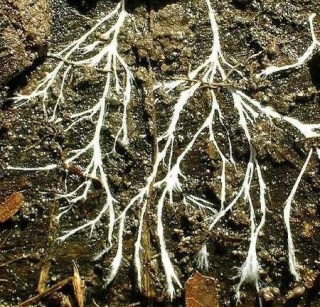
hyphae5Alex at Watching the World Wake Up gets us started with a trilogy of posts as diverse as his interests.  In this fungus¹ post, Alex makes the improbable connection between fungi and The Force (yes, a reference to Star Wars).  Read it, and you will be a believer, too.  I especially enjoyed his post on the search for a rare hybrid oak, not only for the thrill of seeing a probable 4,000-7,000 year old F1 hybrid clone, but also for the most awesome tangent on spiders that any non-entomologist has ever written.  In his post on tumbleweeds, he reminds us that these icons of the west are actually an exotic introduction from Eurasia and recounts the mechanisms by which these ubiquitous plants took over the western U.S.

¹ TANGENT.  Okay I know fungi aren’t really plants, nor are they animals – they’re kinda both and neither.  Botanists, however, appear to have accomodated fungi in their realm of study², I guess because they basically look like plants.  This is much the same situation as entomologists and spiders – the latter not being insects, but sort of looking like them and giving lay folk the same creepy crawly impression.

² NESTED TANGENT.  Despite crossing Kingdom boundaries, the placement of fungi within the botanical realm doesn’t come close to matching the taxonomic disparities that plant pathologists must accept, who despite the microorganismal connotation of the term plant disease have had to accomodate organisms crossing not only Kingdom but also karyotic boundaries – with all three eukaryotic Kingdoms (plants, animals, and fungi) being causal agents in addition to the prokaryotic bacteria³ and the hard-to-even-consider-as-a-life-form viruses.

³ NESTED, NESTED TANGENT4.  I’ve no doubt given short shrift to modern Kingdom-level concepts regarding prokaryotes – I know there are “regular” bacteria and the terribly misnomered blue-green algae, but this entomologist who sometimes masquerades as a general biologist quickly became confused when he found references listing as many as 13 prokaryotic Kingdoms.

4 NESTED, NESTED, NESTED TANGENT. Alex is the undisputed king of the nested tangent, and I hope he forgives me for taking his idea to such level of absurdity!
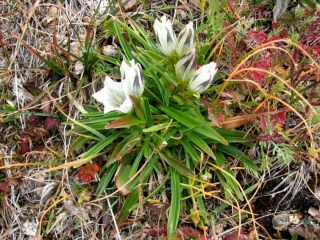
Genalg1On the other side of the Rocky Mountains, Sally at Foothills Fancies highlights color in alpine tundra – it is amazing how much color can be seen in a high-country fall!  She follows up on that post with another highlighting fall tundra wildflowers, including the spectacular Arctic Gentian (Gentiana algida to most of us, Gentianodes algida if Dr. William Weber has his way).  She also focuses on the less conspicuous “flora” of the tundra – cryptogams – and how seemingly “bare” ground in the tundra is actually thick with lichens and mosses.  Most tundra cryptograms represent species not seen in the lower 48 states except at very high altitudes.
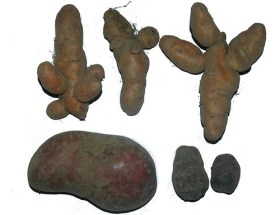
3973291903_8fce836aacLaurent at Seeds Aside submitted a quadrilogy (is that a word?) of posts covering Blogger Bio Blitz 2009.  To start the series, Laurent thinks outside the box by presenting a sampling of old French cultivated potato varieties, then does more conventional bioblitzing in a hedged farmland area in French Brittany (noting a possible case of spider kleptoparasitism along the way) and near the Couesnon river, next to Mézière sur Couesnon.  Seeing and reading these botanical/entomological accounts in France brought back memories of my own visit to the country in 2007.  As I write this piece, I can almost hear the droning buzz of cigales in the dry coastal Mediterranean pine forests.

TrabutJeremy contributes this piece on the history of agriculture at Vaviblog, where he writes about Dr. Louis Trabut – one of many agricultural explorers who searched the North African colony of Algeria in search of plants for introduction into the southwestern United States.  He notes that Algerian agriculture was carried out almost exclusively by the indigenous Berbers for more than a thousand years, resulting in the development and propagation of myriad races of the grape, fig, olive, apricot, and walnut grown in the region today. Jeremy thinks it would be terrific if his post smokes out any information about the history of dates (the plant) in California.

Jeremy is also an author at the Agricultural Biodiversity Weblog and submitted this post about plant breeding in relation to climate change (raising a fair few comments).  He also notes that the addition of agricultural statistics to the astonishing and wonderful GapMinder deserves celebration and wonders if there some other botanical datasets that might be interesting.  db091001Quick to remind us that he’s not all history and no humor, Jeremy puts together (at “great personal expense”) a series of Doonesbury comic strips at his other blog, Another Blasted Blog.  Doonesbury fans, having surely already seen these, will chuckle once again.  Gardener’s who don’t follow Doonesbury will still appreciate their humor.  Doonesbury fans who are also gardeners will guffaw!

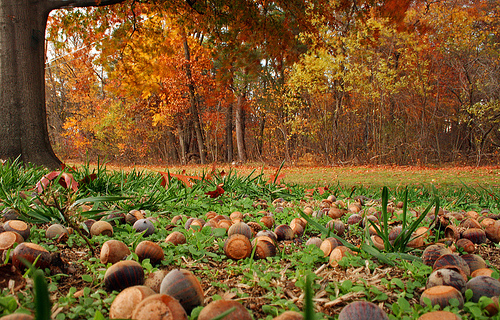
At Denim and Tweed, Jeremy Yoder notes the obvious benefits of synchronized mast seed production as an adaptation in the plants’ coevolution with seed predators, but the not so obvious mechanisms by which this occurs.  He reviews a paper in the latest issue of Ecology Letters that has an answer — synchronization happens accidentally.  I won’t spoil the details of the research and how they reached their conclusion, as Jeremy has done a much finer job of that than I ever could (I study beetles, remember?), but the interaction of resource and pollen limitations is a clue to the answer.

chrysanthFor the pedants among us (count me in!), The Phytophactor has been running a series on plants whose generic names are the common names everyone knows. Here is lesson 4: can you say chrysanthemumum?  This genus has suffered a bit of a decline at the hand of taxonomists in recent years, falling from a burgeoning 300-400 species that used to be in the genus to a pitiful two (not a typo!).  Phytophactor also visited the Great Pumpkin Patch and reports – you won’t believe the cucurbitaceous rainbow he saw! 

1517959584_23c90b9ace

Photo by memotion (http://www.flickr.com/)

Elizabeth Hargrave at The Natural Capital submitted this post on wild grapes.  Native grapes may be smaller and not as sweet as the giant Chilean juice balls found in modern grocery stores. Still, harvesting native species from the wild has its charms – as long as you’re familiar with the several non-edible and sometimes poisonous look-alikes.  If wild harvest isn’t your thing, she also offers some tips for cultivating wild grapes (which is actually much easier than with most cultivated varieties).

myconetThe EEB & flow offers a review of a scientific paper discussing mycorrhizal networks – fungal mycelium that colonize and connect roots of one or more plant species.  Whis this is one of the most intriguing types of fungal-plant associations, even more interesting is its continuation of “The Force” idea brought up in Alex’s fungus post – i.e., evidence of substantial facilitation between plant individuals via these fungal networks (i.e., plants tend to grow better if they are associated with a network).  This is in opposition to the long-held belief that competition, herbivory and dispersal are the main drivers of plant community associations.  They also reviewed a recent paper on the impact of exotic plants on plant-pollinator systems, finding a high overall abundance of exotics in many plant communities but a relative lack of substantial changes in network connectedness.

Fungi continue to muscle in on this carnival of plants, being the subject of a post by Chris Taylor at Castanea dentataCatalogue of Organisms on Diaporthales fungi  that cause disease in trees.  Among the most famous of these to North American readers is Cryphonectria parasitica, the cause of chestnut blight and famed as the bane of the American chestnut, Castanea dentata. However, other trees such as butternut, dogwood, and even non-arboreous woody plants such as grape also have their own pathogenic associates.

PA081120Justin Thomas is one of several erudite botanists behind Get Your Botany On! In this post, Justin discusses Pteris multifida, an exotic fern that he found in Hot Springs National Park while conducting an invasive species survey.  Sadly, this is symptomatic of the Hot Springs area in general, where habitat alteration and rapidly colonizing invasive species have left little room or hope for naturally functioning ecosystems.  Another of the blog’s authors, Keith, quotes with enthusiasm from “Of Woods and Other Things” (Beech Leaf Press, Kalamazoo, 1996), by renowned Indiana Dunes region naturalist Emma “Bickie” Pitcher.  One that caught my eye was “…pale satiny yellow breasts and dark velvety smudges around eyes are apparent.”

20091010-007 Caladenia concolorTim Entwisle at Talking Plants discusses the gorgeous blood orchid, Caladenia concolor.  This endangered Australian species grows sporadically around Victoria and into southern New South Wales.  Apparently some populations consist of only a handful of individuals, and weeds and passing foot damage are probably their biggest threats.  Hopefully Tim and his colleagues will succeed in their efforts to save this stunning species.

herbarius_latinusMary Farmer at A Neotropical Savanna sent me this note, writing “I don’t know how many readers of BGR use the Biodiversity Heritage Library, or know of it, but it is (to me) an extremely valuable resource and they have their own blog (which you no doubt know of) called News and Updates from the Biodiversity Heritage Library. This week’s feature, the oldest book in the BHL, Herbarius latinus, is a ‘…Pre-Linnean text [that] describes 150 plants and 96 medicines commonly found in apothecaries, and each plant description is accompanied by a detailed woodcut.'”  How I adore old botanical scribes – thanks, Mary!

279952-color

Dover photo

For literature along more whimsical lines, NellJean of Secrets of a Seed Scatterer presents an herbalist’s view of tea with Peter Rabbit and its mentions of Camomile Tea and Rabbit Tobacco.  Apparently smoking rabbit tobacco is done only by little boys in the south, but cut stalks, bundled and dried, can impart a pleasingly aromatic and resinous fragrance to the mustiest of tool sheds.

Copyright © Ted C. MacRae 2009

Add to FacebookAdd to NewsvineAdd to DiggAdd to Del.icio.usAdd to StumbleuponAdd to RedditAdd to BlinklistAdd to TwitterAdd to TechnoratiAdd to Furl