Winter botany quiz #3

I won’t be coy about the location of these trees, all of which were photographed within the Lake Tahoe Basin during my recent trip. A further clue: I have already alluded to these species in a previous post. Once again, comment moderation has been turned on to give everyone a fair shot, and I’ll let the quiz go for a couple days or so. I think this quiz will be easier for my North American readers than Winter botany quiz #2, but maybe still harder than Winter botany quiz #1. Anyone who can correctly identify all six species wins my undying admiration 😉

EDIT: Pedant that I am, attention to nomenclature will serve as a tie-breaker if needed.

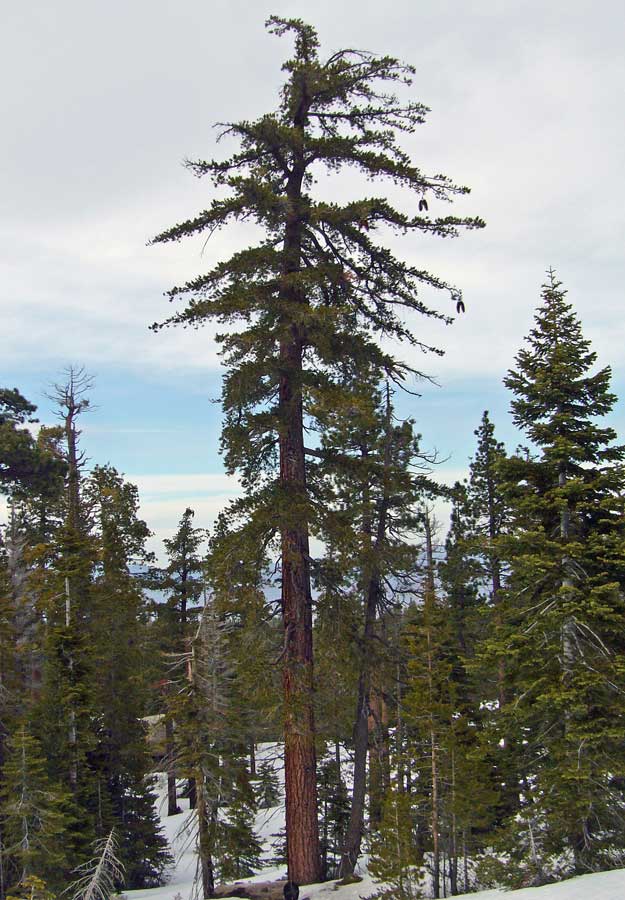
#1.

p1020642_2

HINT: Needles in bundles of 3 and about 10" long.

#2.

p1020583_2

HINT: Needles in bundles of 3 and about 10" long.

MORE HINTS:

p1020662_2

Cones for #1 (left) and #2 (right).

#3.

p1020717_2

HINT: Needles in bundles of 2 and about 2" long.

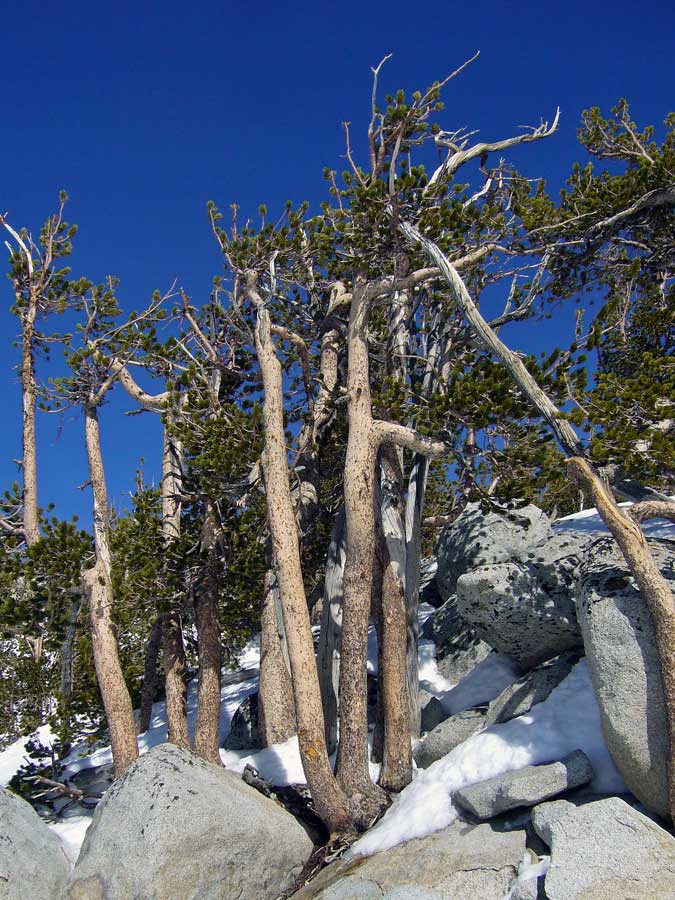
#4.

p1020718_2

HINT: Needles in bundles of 5 and about 4" long.

#5.

p1020795_2

HINT: Needles in bundles of 5 and about 4" long.

#6.

p1020790_2

HINT: Needles in bundles of 5 and about 3" long.

Copyright © Ted C. MacRae 2009

Add to FacebookAdd to NewsvineAdd to DiggAdd to Del.icio.usAdd to StumbleuponAdd to RedditAdd to BlinklistAdd to Ma.gnoliaAdd to TechnoratiAdd to Furl

Sand Harbor Overlook, Nevada

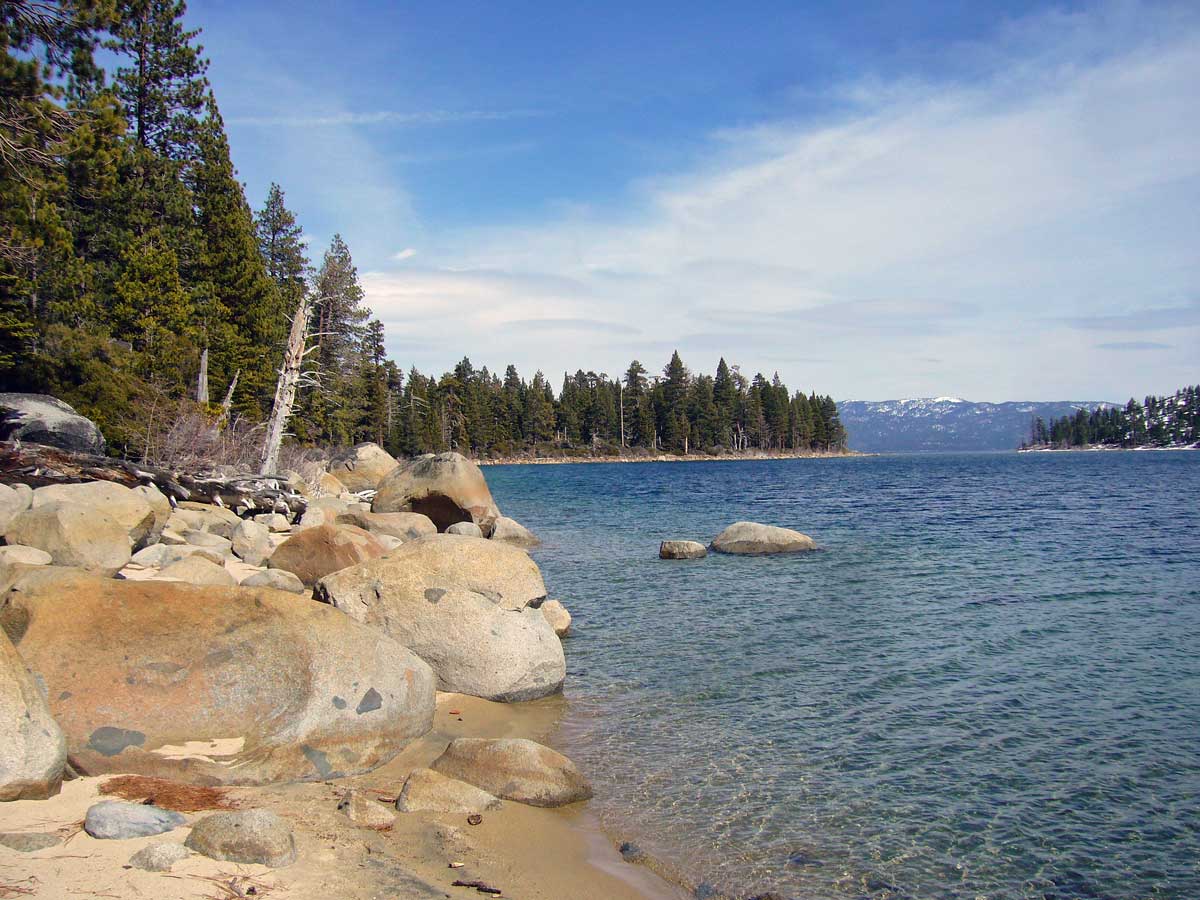
Lake Tahoe is fabulously beautiful from almost any perspective. There are certain places around the lake, however, whose beauty is so striking, so stunning, that one begins to believe they must have been copied from a starving artist’s painting or some inspirational poster. I have already highlighted one of these places – Emerald Bay, sitting at the lake’s southeastern corner on the California side. Emerald Bay is, in fact, the most dramatic example of the beauty that characterizes Lake Tahoe’s entire western shore – a boulder-strewn landscape sprouting rich forests of white fir, pine, and incense-cedar, massively trunked and often draped with lime-green mosses and lichens.

p1020749_2

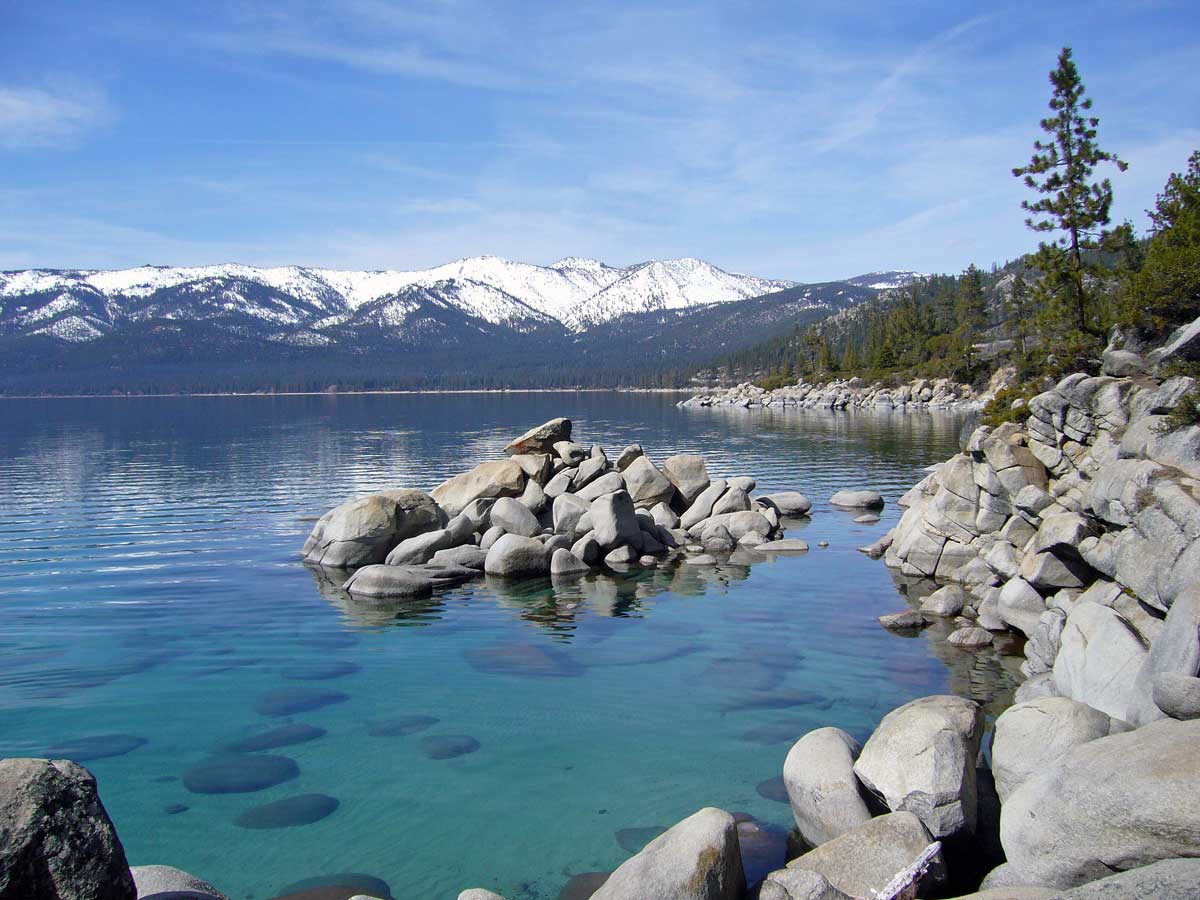
Nevada’s eastern shore, in contrast, has a different feel – its forests more open and dominated by Jeffrey pine due to the relatively lower amounts of rain and snow that reach the eastern shore. I do not mean to imply, however, that the eastern shore is any less beautiful than the western shore – far from it, and after a day of cross-country skiing at Spooner Lake (just below Spooner Summit, elevation 7,200′), my family and I discovered an eastern shore jewel with as much raw, overwhelming beauty as any of Lake Tahoe’s other premier scenic vantage points – Sand Harbor Overlook.

p1020741_2

While the views from Sand Harbor Overlook may not match the grandeur of Emerald Bay, they certainly equal (and perhaps surpass) its more famous landmark in their intimacy and varied perspectives. Whether viewed from high atop the granite point that jutts out into shallow, sandy-bottomed bay, or from lake level atop one of the half-submerged granite boulders, no other vista around the lake shows off Lake Tahoe’s famously clear waters better than Sand Harbor Overlook. Moreover, unlike most of scenic points around the lake, views of the vantage point itself are as dramatic as the views from it.

p1020743_2

I suspect that during the summer months, Sand Harbor Overlook is trampled daily by an unending stream of sightseers, many of whom quickly jump out of their cars and briskly search for a spot or two from which they can take photographs before jumping back into their cars and rushing off to the next scenic spot. Such “power” sightseers rarely experience the full beauty offered by Sand Harbor Overlook – their photographs cluttered by strangers in bright clothes, and their memories of what they saw limited to an instant in time. Similar to our experience at Pyramid Creek Geological Area, we had the good fortune to experience the beauty of Sand Harbor Overlook in complete solitude – able to slowly imbibe the subtlties of scale and nuances of each vantage as we explored the area with leisure and reverence. Unmolested by strangers, our contemplations were free to meander slowly, unintruded by persistent background chatter and adolescent shouting. While I came to Lake Tahoe this winter to enjoy the skiing, I walk away with renewed awe at its extraordinary, unending beauty.

Copyright © Ted C. MacRae 2009

Add to FacebookAdd to NewsvineAdd to DiggAdd to Del.icio.usAdd to StumbleuponAdd to RedditAdd to BlinklistAdd to Ma.gnoliaAdd to TechnoratiAdd to Furl

Pyramid Creek Geological Area

On the western slopes of the Sierra Nevada, Hwy 50 follows the American River Valley on its way up to Echo Summit before dropping precipitously into Lake Tahoe Basin. A few miles from the summit and 13 miles east of the quaint mountain town of Strawberry lies a spectacular gorge – born of glaciers and boasting one of California’s top ten waterfalls. During the warmer months, the small Forest Service parking lot that provides access to the gorge is constantly choked with cars, and throngs of people can be seen milling about. I have passed this place many times during the five years I lived in Sacramento, and though the crowds suggest that the area truly is spectacular, the idea of sharing a visit with so many strangers and their dogs was always out of the question. Yesterday, as daughter Madison and I drove down Hwy 50 to that very spot, I wondered what crowds we might encounter, hopeful that during this winter “off-season” we might luck out and enjoy at least some fragments of the kind of solitude that befits such a magnificent example of California wilderness.

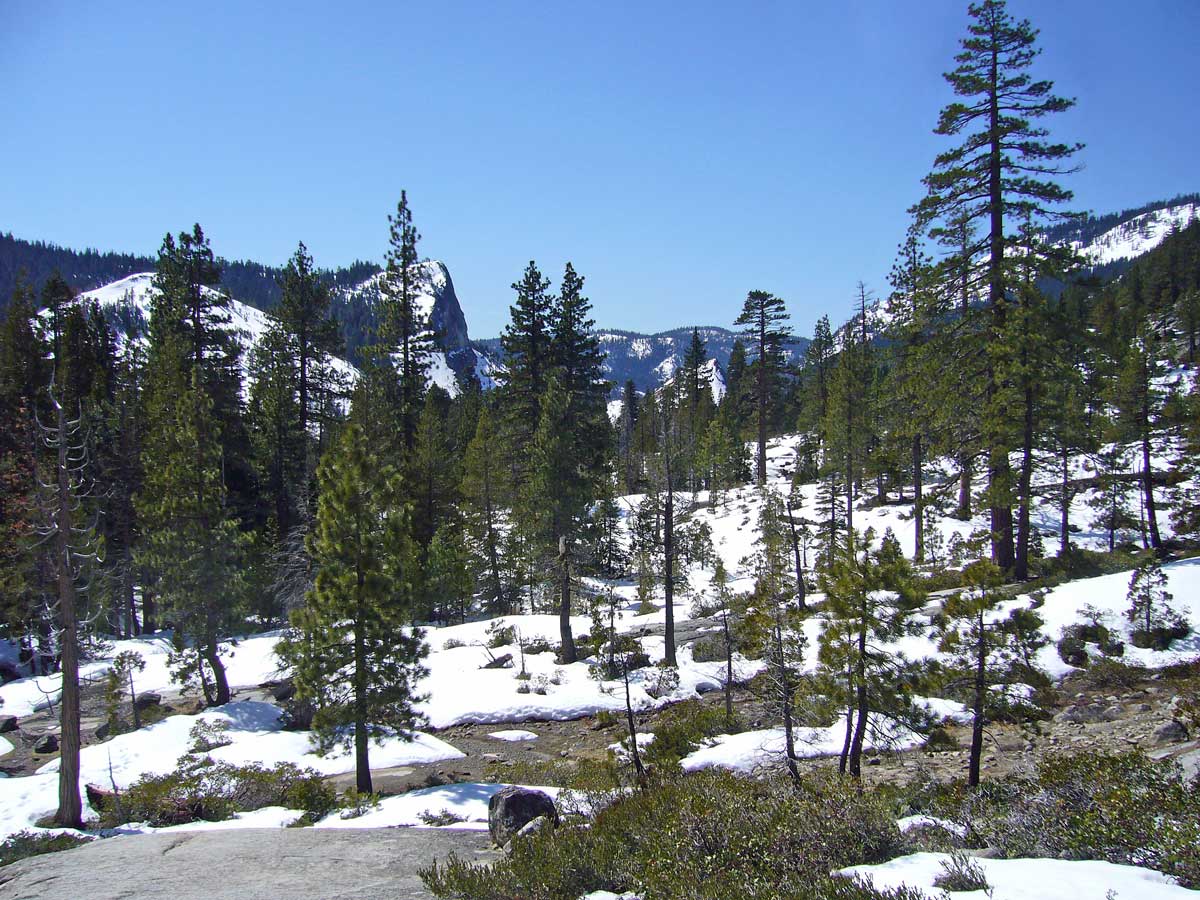
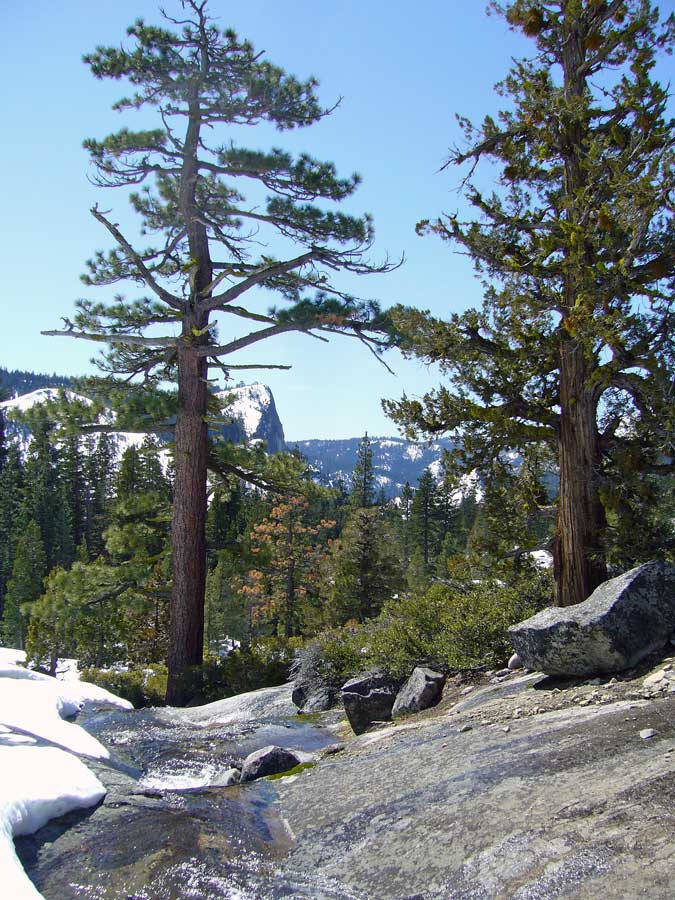
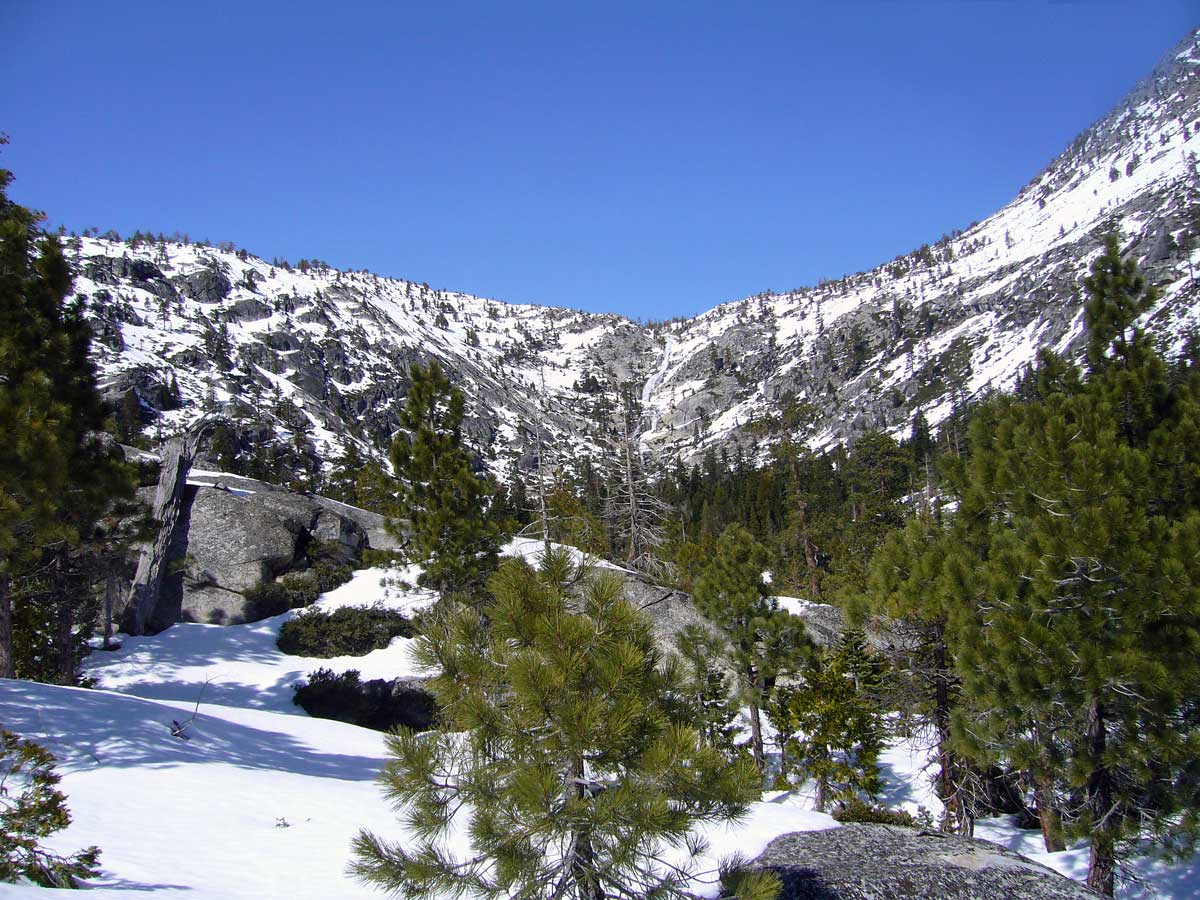
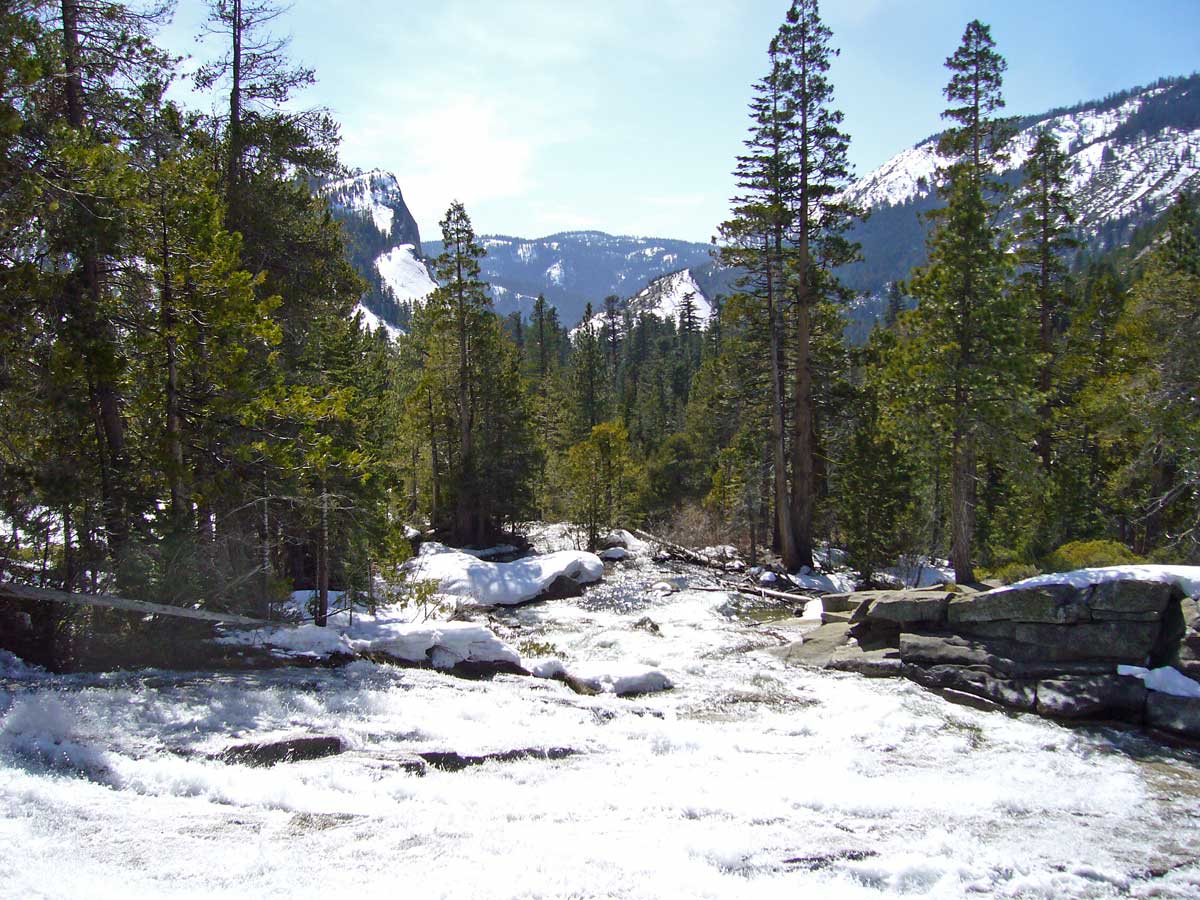
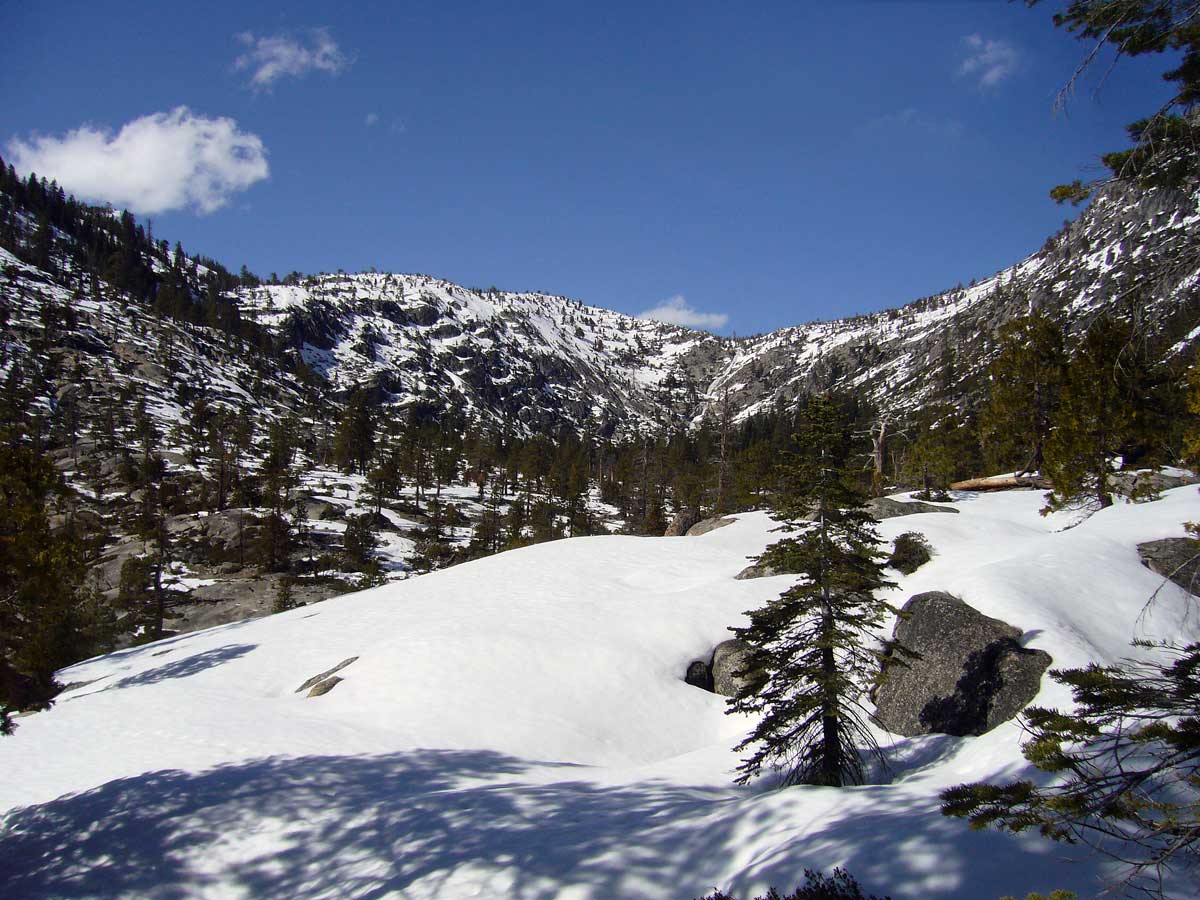
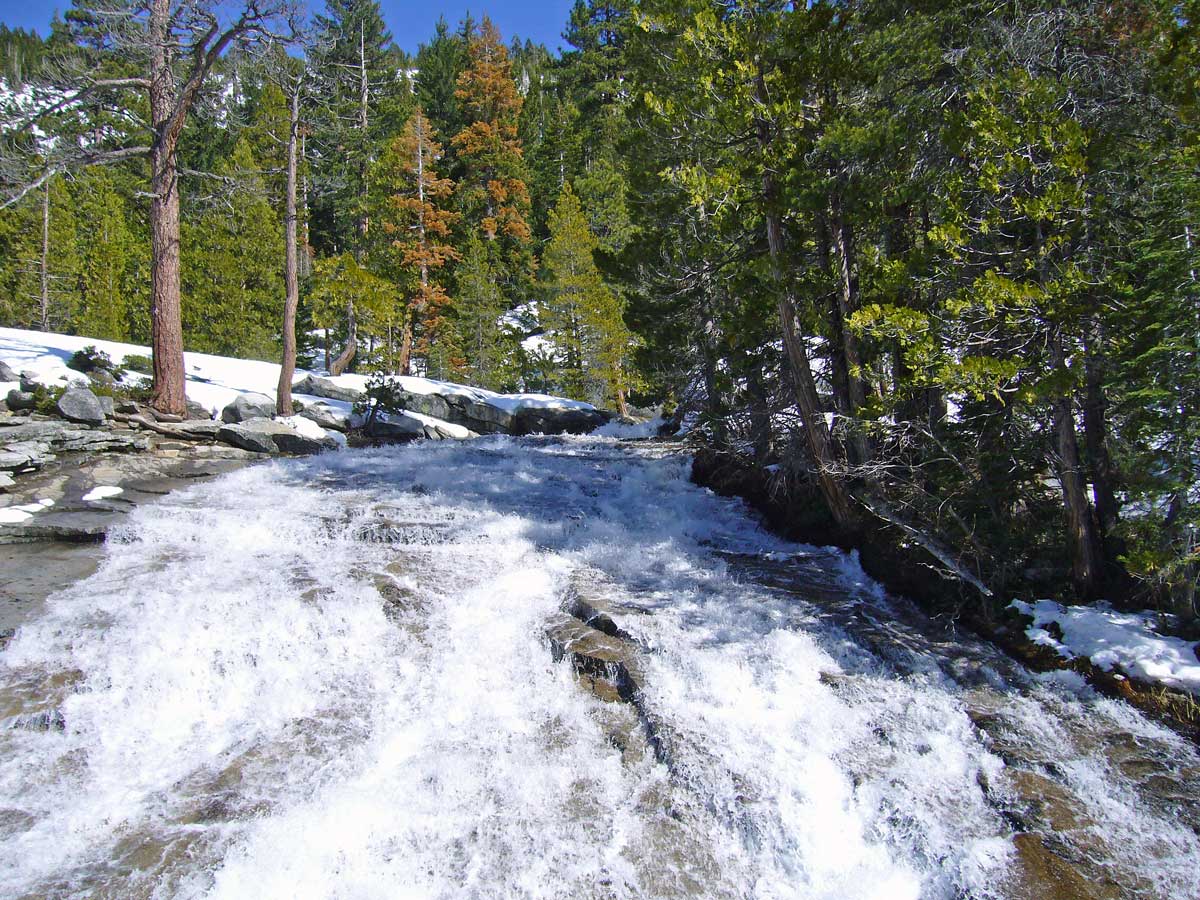
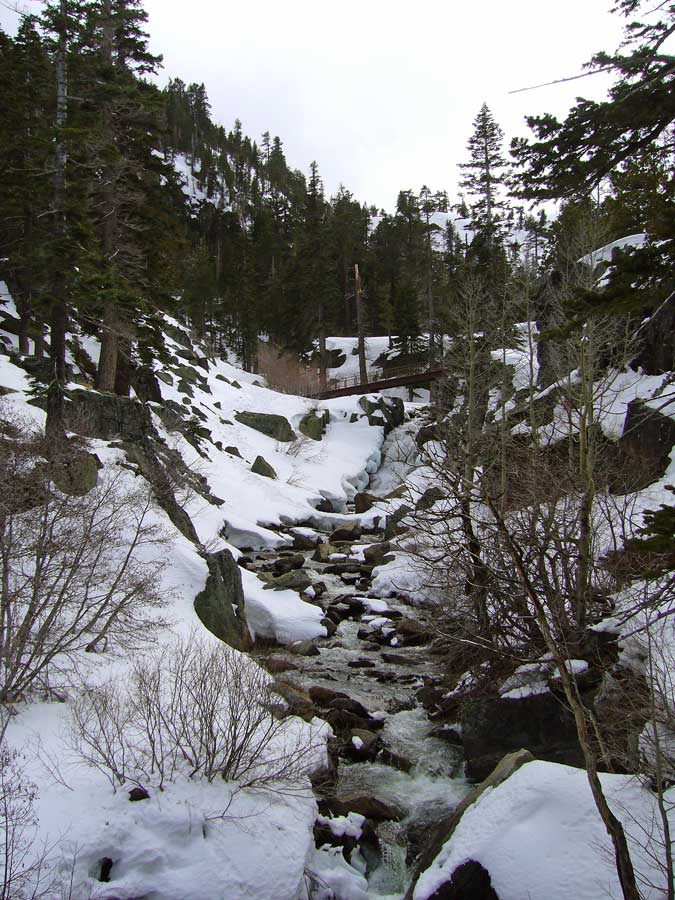
At 6,200 feet elevation, there was still plenty of snow on the ground, and unbeknown to me this USDA Recreation Site is officially closed during the winter months. The parking lot gates were locked, and there was not a car nor a person to be seen anywhere in the vicinity. That did not deter us – despite the many “No Parking” signs along each side of the highway – necessary during the summer months to prevent the throngs from creating chaos – we found a small turnoff in which we were able to tuck away the car and begin our little adventure to see Pyramid Creek Geological Area and its main attractions – Horsetail Falls and Cascade Vista. The gorge – named for the creek that originates at the base of the falls – was formed during the same late Pleistocene glaciations that formed Emerald Bay in Lake Tahoe. Vertical cliffs of granite tower above the U-shaped gorge, whose smooth granite domes remain littered with glacial scree (boulders and smaller rocks of assorted sizes). We lost the trail almost immediately due to snow, but since we knew we could not get lost (with a mountain on each side of us) we decided to bushwhack as far as we could. It was rough going, and with a hiking partner only 4′ in height the deep snow was a formidable obstacle. Still, we soldiered on, zigzagging from this granite exposure to that, testing (and often sinking) into the snow-covered plains between them, and splashing along the many meltwater streams that were gushing on this warm, early-spring day, until finally we could go no further. We were still a quarter mile from the falls (only a 1.25-miles hike from the trailhead if one uses the established trail), yet still the view was mesmerizing! As a father, I should probably be glad we did not make it all the way to the falls, as a number of people have been killed over the years when they got too close to the edge of the constantly wet rocks. On the way back, we spotted some granite exposures that we hadn’t seen earlier that suggested we might be able to get all the way up next to the Cascade Vista, and in this we were successful. We scrambled over the rocks and snow, ever careful but proud for giving the effort, before retracing our tracks back to a clear shot out of the gorge.

Words cannot express the overwhelming beauty of the landscape we explored, the joy in doing so without ever encountering another human being and the expansive feeling of solitude that that allows, and the exhausted satisfaction that results from hiking over rough, snowy terrain for more than 5 hours. Daughter Madison did great, and I almost had to rip her from the area she was having so much fun. She asked question after question as I showed her cracks in the rocks and explained the carving actions of water over the millennia, how water can create such a landscape. “Water always wins,” I told her. My botanizing trip to Emerald Bay two days before had also prepared me well for this trip, as I was able to recognize every single woody plant I encountered in the gorge (the mosses and ferns will have to wait for another day).

Of the many photographs I took during the day, I share with you here some of my favorites:

p1020760_2

Jeffrey pine and white fir soften the stark, towering granite walls

p1020761_2

Evidence of glacial carvings can be seen in the American River valley below.

p1020763_2

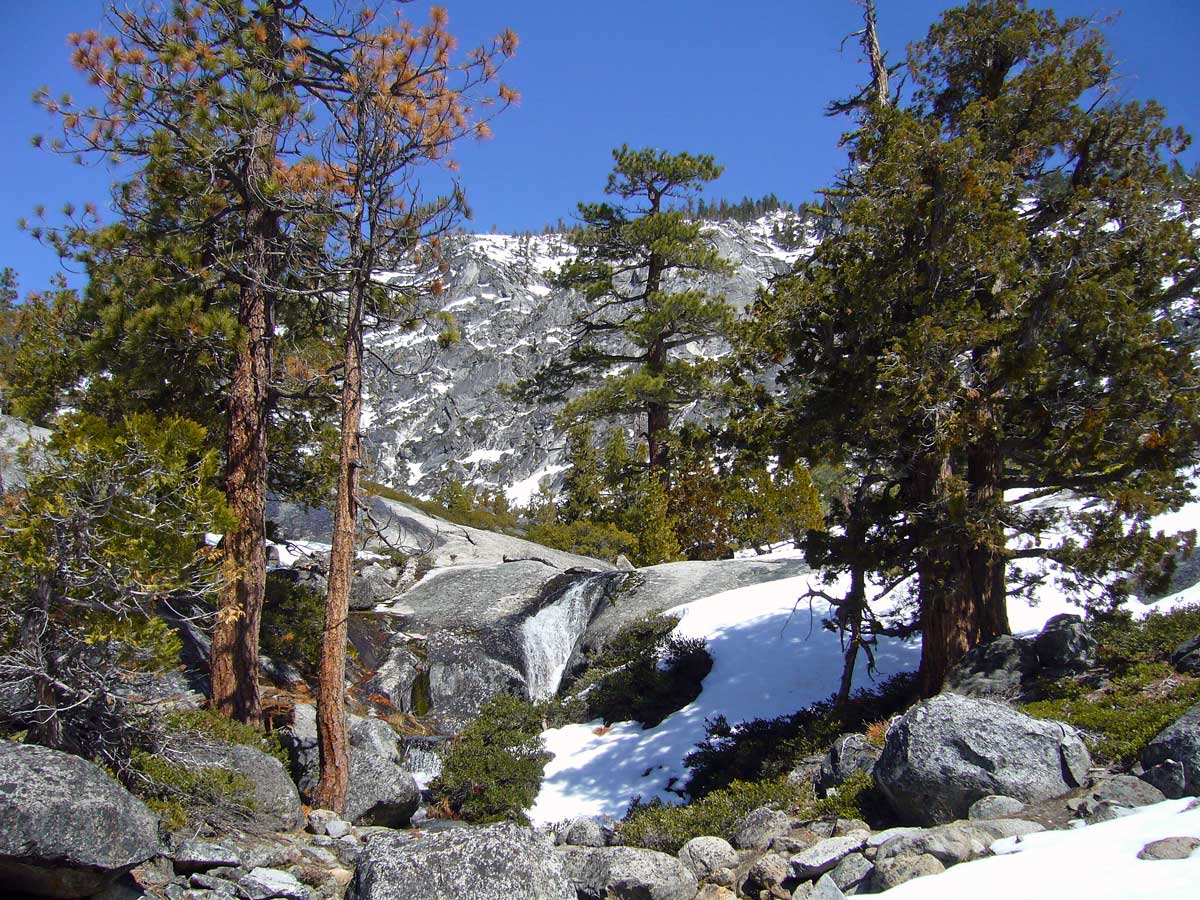
A small waterfall flanked by Jeffrey pine and Sierra juniper previews what is still to come.

p1020765_2

Another view south into the American River valley from a little higher up.

p1020769_2

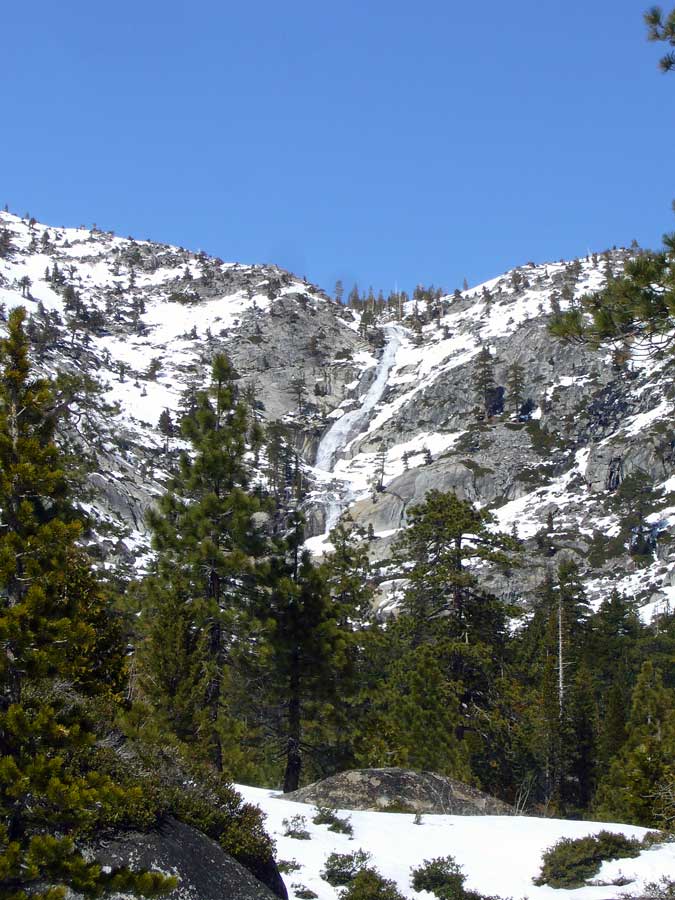
Horsetail Falls is gushing from the snowmelt.

p1020771_2

A distant view of Horsetail Falls.

p1020773_2

Looking down on the Cascade Vista and the American River valley.

p1020777_2

A distant view of Horsetail Falls from the Cascade Vista.

p1020780_2

Pyramid Creek sheets in a continuous cascade over the granite bedrock.

p1020782_3

Deep snow was a continuous obstacle for myself, and for 4'-tall Madison.

Copyright © Ted C. MacRae 2009

Add to FacebookAdd to NewsvineAdd to DiggAdd to Del.icio.usAdd to StumbleuponAdd to RedditAdd to BlinklistAdd to Ma.gnoliaAdd to TechnoratiAdd to Furl

Emerald Bay State Park – Vikingsholm and Rubicon Trails

I had attempted to hike the Eagle Falls Trail two days ago, but deep snow stopped us just below the Upper Falls before reaching the lake. I had noticed, however, that the lower elevations on the west shore of Emerald Bay looked fairly free of snow, and a conversation the following morning with an extraordinarily helpful staff member at the USDA Forest Service’s Lake Tahoe Basin Management Unit headquarters in South Lake Tahoe confirmed that the entire Vikingsholm Trail in Emerald Bay State Park and much of the Rubicon Trail in Emerald Bay State Park and D. L. Bliss State Park immediately to the north should be passable. My objectives were two-fold – hiking and botanizing. I wanted to get in at least 6 miles, and up to 10 would be even better; and I also wanted to locate and identify as many of the woody plants known from the area as possible. I probed the incredibly helpful USDA representative about the subtleties of distinguishing ponderosa pine from the ubiquitous but very similar Jeffrey’s pine, where I might see magnificently mature specimens of sugar pine and the grotesquely beautiful Sierra juniper, how to recognize the moisture loving lodgepole pine, and the slim chance of seeing western white pine due to its preference for higher altitudes. I commented about how I looked forward to seeing stately red firs and wind-swept whitebark pine when I went skiing later in the week – maybe I would be fortunate enough to find western white pine amongst them. I purchased three books: Conifers of California by Ronald Lanner, Discovering Sierra Trees by Stephen Arno, Plants of the Tahoe Basin by Michael Graf and National Geographic’s Trails Illustrated Map™ for Lake Tahoe Basin (my souvenirs for the trip), thanked the wonderfully knowledgeable USDA representative for her help, and bolted up to Emerald Bay. On an extraordinarly warm and delightful mountain day in spring, I hiked down the Vikingsholm Trail to Vikingsholm Castle, stopping frequently to sample and photograph plants, then hiked the Rubicon Trail all the way to Emerald Point at the mouth of Emerald Bay. I hopped on rocks out into the point until I could not go any further and turned around to admire a view that few people have experienced by foot. I lost the trail along the way due to snow, but I did not get lost – I could not get lost with a lake on one side of me and a mountain on the other. Going beyond Emerald Point the snow got too deep – a few steps where I sunk up to my hip confirmed that further passage without snow shoes would be impossible. I bushwhacked back until I found the trail and chose alternate paths the rest of the way. By the time I returned to my car, I had hiked 7 miles in 5½ hours (yes, I’m pokey), encountered only a handful of people (all within a quarter mile of the parking lot) and taken 110 photographs. I share seven of them with you here:

East shore (lateral glacial morraine) of Emerald Bay from Vikingsholm Trail.  Heavenly Ski Resort and the southeast shore of Lake Tahoe can be seen in the distance.

East shore (lateral glacial morraine) of Emerald Bay from Vikingsholm Trail. Heavenly Ski Resort and the southeast shore of Lake Tahoe can be seen in the distance.

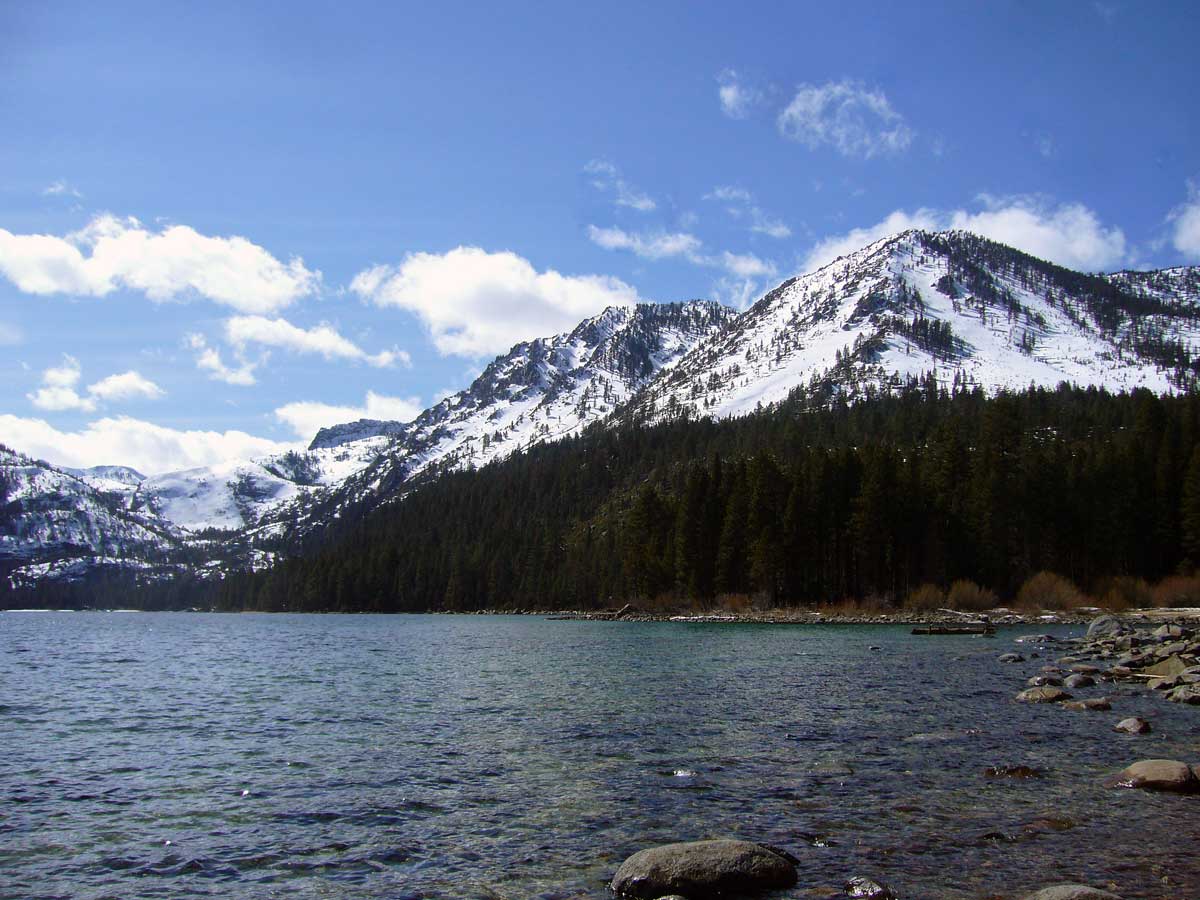
Mt. Tallac (L) and Maggie's Peaks (R) from Vikingsholm Trail

Mt. Tallac (L) and Maggie's Peaks (R) from Vikingsholm Trail

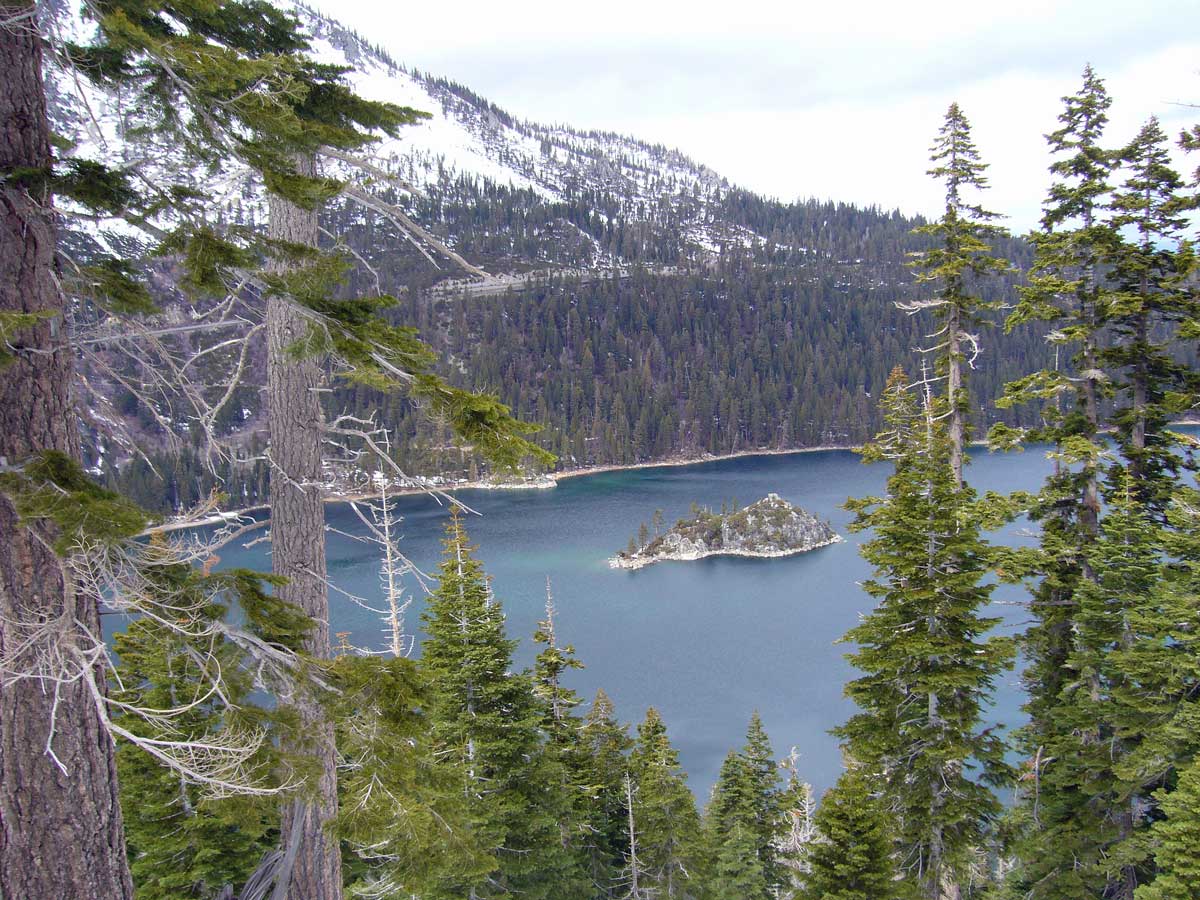
Fannette Island from Vikingsholm Castle

Fannette Island from Vikingsholm Castle

Emerald Point from the west shore of Emerald Bay

Emerald Point from the west shore of Emerald Bay

Emerald Bay and Maggie's Peaks (L) from Emerald Point

Emerald Bay and Maggie's Peaks (L) from Emerald Point

West shore of Emerald Bay from Emerald Point

West shore of Emerald Bay from Emerald Point

Zoom view of Emerald Bay from Emerald Point

Zoom view of Emerald Bay from Emerald Point

Copyright © Ted C. MacRae 2009

Add to FacebookAdd to NewsvineAdd to DiggAdd to Del.icio.usAdd to StumbleuponAdd to RedditAdd to BlinklistAdd to Ma.gnoliaAdd to TechnoratiAdd to Furl

Born of glaciers

Three months of camp life on Lake Tahoe would restore an Egyptian mummy to his pristine vigor, and give him an appetite like an alligator.–Mark Twain, Roughing It (1872)

p1020578_2 When Mark Twain first laid eyes upon Lake Tahoe in 1861, he thought it “must surely be the fairest picture the whole earth affords.” More than a century and a half later, that opinion is still shared by another Missouri boy, and though I would gladly welcome three months of camp life over one week at a ski resort, I nevertheless remain confident that my vigor will be fully restored by the time I return to work next Monday. The journey that began some days ago in the foothills of my beloved, ancient Ozark Highlands has today taken me to one of the youngest of landscapes to grace Lake Tahoe – Emerald Bay. I have written previously about Lake Tahoe (one year ago almost to the day) in a post that also featured photos of Emerald Bay and its only island, the iconic Fannette Island. p1020596_2 The Tahoe Basin itself is a relatively young landscape, forming within the last 5-10 million years as the basin floor dropped between two uplifted blocks. Volcanic flows in the valley on the north side of the present lake dammed the valley to form the lake, whose level has fluctuated drastically over time during the past 2 million years as Pleistocene glaciations have repeatedly damned the Truckee River that drains the lake into the lowlands of Nevada. At maximum, the level of the lake approached 7,000 feet in elevation – nearly 800 feet higher than today. p1020577_2 It was the last of these glacial events – near the end of the Pleistocene just 10,000 years ago – that gave birth to Emerald Bay. Unlike the “ice sheets” that spread out across much of the continent, the ice age here manifested itself as individual glaciers that formed at the highest elevations and carved out individual valleys as their crushing weight ground them inexorably downward. The elongated shape characteristic of such glacial valleys is seen not only in Emerald Bay, but in the adjacent Fallen Leaf Lake and Donner Lake in the north as well. John Muir alludes to this glacial birth in a description of Emerald Bay that he wrote in his private journal in 1888:

Emerald Bay is about two miles long. Its mouth is nearly closed by a terminal moraine; the sides are formed by lateral moraines. The left lateral is very striking, well formed, three or four hundred feet high where it joins the shoulder of the mountain, timbered with pine and spruce¹ sparsely on the grayish slopes.

¹ Actually firs, of the genus Abies.

Upper Eagle Falls from Eagle Lake - part of a ''glacial staircase'' above Emerald Bay

Upper Eagle Falls from Eagle Lake - part of a

Unfortunately, the very existence of Lake Tahoe is under threat. While the mountain building processes that created the Sierra Nevada have ceased for now, the erosive forces caused by weathering continue unabated. The Sierra Nevada range is being gradually worn down, and Lake Tahoe is filling with sediment at an average rate of about 1/10th of a millimeter per year. At this rate, Lake Tahoe will become a meadow in just over 3 million years.[/humor]

Lake Tahoe facts:

  • It is 22 miles long, 12 miles wide, and holds about 40 trillion gallons of water – enough to cover the entire state of California to a depth of 14.5 inches!
  • Maximum elevation of the lake surface is about 6,229 feet above sea level.
  • The lake is drained by the Truckee River, one of a few rivers that run inland to the desert rather than towards the ocean.
  • It is the third deepest lake in North America, with an average depth of 989 feet. However, the deepest point is about 1,645 feet.  It is the largest lake in North America above 600 feet elevation.
  • Surface temperatures can reach as high as 75°F in summer, but at depths below 600 feet the water remains a constant 40°F.
  • Lake Tahoe does not freeze over, although Emerald Bay has formed complete ice cover at least three times during the 20th Century and partial cover in more years.

More Lake Tahoe facts can be found at the U.S.D.A. Forest Service, Lake Tahoe Basin Management Unit FAQ site and at Tahoe Topics and FAQ’s, by David C. Antonucci (2004).

Copyright © Ted C. MacRae

Add to FacebookAdd to NewsvineAdd to DiggAdd to Del.icio.usAdd to StumbleuponAdd to RedditAdd to BlinklistAdd to Ma.gnoliaAdd to TechnoratiAdd to Furl

A journey through time

hole_in_the_mountain

East Humbolt Range, northeastern Nevada

During the past two days, my family and I made the long drive from St. Louis, Missouri to Lake Tahoe, California to enjoy a week of skiing (both alpine and cross-country), snow-shoeing, hiking (at lower elevations), and decompression.  At 1,990 miles, it’s not a drive for the pampered or easily bored (and for those with children, thank goodness for in-car DVD players). Yet, for those willing to explore the little seen wonders of a landscape that most people see only from 30,000 feet, driving cross-country can be a richly rewarding experience.  I have traveled through many parts of the U.S., but this was my first time experiencing the “northern route” between Missouri and California along I-80.  Along the way, I saw:

  • Massive flocks of snow geese roosting in wetlands along the Platte River Valley, rising up at morning’s light in swirling clouds and stringing across the sky in vast, intersecting “V”s as they begin another day on their journey northward.
  • Sandhill cranes in the Nebraska Sand Hills, dropping down from the sky like miniature parachutes as they congregated in fallow corn fields to feed amongst the stubble.
  • The vast, high, arid, lonely expanses of the Wyoming Basin, transitioning from mixed-grass prairie in the east to sagebrush steppe in the west.
  • The stunningly spectacular descent down the western escarpment of the Wasatch Range, where the eastern edge of the Great Basin laps against the western edge of the Rocky Mountains.  (Nightfall unfortunately deprived me of my chance to see the vast Great Salt Lake and the even more expansive stretches of its associated salt flats.)
  • The magnificent Great Basin landscape and its alternating basin and range theme – its broad basins of salt lakes, marshes and mud flats interrupted at regular intervals by craggy, north to south mountain ranges formed as a result of strike-slip faulting during the past 30-50 million years as the thin Basin crust continues to crack and stretch even thinner.
  • The dramatic eastern face of the Sierra Nevada Range, its snow-capped peaks rising massively as a single granite block at the western edge of the Great Basin, and the equally dramatic, tortuous climb up to Spooner Pass at 7,200′ elevation before the 1,000′ drop down into the majestic Lake Tahoe Basin.

Driving across such a vast expanse of North America, especially in the west with its endless vistas and majestic landscapes, invites contemplation about earth and time.  Starting out in the foothills of my beloved Ozark Highlands – born before life itself and weathered for a billion and a half years, driving through the upstart Rocky Mountains – mere babies at only 50-100 million years of age, and finally arriving at the truly young Lake Tahoe – whose mere few million years of age make it a mere infant in geological time, I realized that the vastness of these landscapes, and of the countless tectonic, erosional and sedimentary episodes that shaped them, is surpassed only by the vastness of the time it took to create them.  For those willing to make the investment, driving through these landscapes is more than a trip across the country – it is a journey through time.

Copyright © Ted C. MacRae 2009

Add to FacebookAdd to NewsvineAdd to DiggAdd to Del.icio.usAdd to StumbleuponAdd to RedditAdd to BlinklistAdd to Ma.gnoliaAdd to TechnoratiAdd to Furl

Answers to “Winter botany quiz #2”

Finally, I present to you the answers to “Winter botany quiz #2 “. The delay in providing these answers was two-fold. Firstly, I knew this would be a hard test, so I wanted to give people plenty of time to figure out the answers. Secondly, the answers were delayed an extra day due because of some debate that arose among the experts I consulted about #3 – more on that below. I thank all those who participated, and while there was no clear-cut “winner”, several honorable mentions are deserved:

  • Doug Taron, who was the first to properly deduce the South African nature of these plants.
  • James C. Trager, a myrmecologist (yet still my friend!) who correctly identified the genus of #1.
  • Everyone, for guessing that #2 was “an orchid” – although Tom @ Ohio Nature was the only one to use the formal scientific name for the family, and Doug Taron was the only one to attempt a generic identification (and came close – Oncidium and Ansellia are both assigned to the tribe Cymbidieae in the subfamily Epidendroideae).

#1.  Ornithogalum seineri (family Hyacinthaceae)
Ornithogalum is a large genus occurring mostly in the drier habitats of southern Africa and around the Mediterranean.  The genus and its relatives were formerly included in the Liliaceae (as many of the participants guessed), but the group is now given familial status as the Hyacinthaceae.  This genus contains numerous species of horticultural note.  One is (as James noted) O. umbellatum, or  “star of Bethlehem”, which in North America has escaped cultivation as a garden ornamental and gained status as an invasive weed.  Another is O. longibracteatum (syn. caudatum), a popular houseplant with the common name “pregnant onion”.  This species, native to the Cape and Natal Provinces of South Africa, is easily recognized by its bulb that “gives birth” to tiny replicas of itself just beneath a thin, transparent ‘onion’ skin (as shown in the photo at right from Trans-Pacific Nursery).  At flowering, a long spike grows from the center of the green strap leaves, eventually giving rise to a spearhead of tiny white flowers situated at the end.

While I couldn’t find much information about O. seineri, I did find this spectacular photo of numerous blooming plants in bushveld habitat amongst grazing zebra (photo by ingrid1968 in this post at SANParks.org Forum).  My view of this species was not quite so spectacular, as I saw only the lone plant in the photographs posted earlier.

#2.  Ansellia africana (family Orchidaceae)
Ansellia is an African genus of orchid commonly called Leopard Orchid or African Ansellia.  There is some degree of morphological, geographical and ecological variation in Ansellia populations, with the result that several species, subspecies and varieties have been described.  Flower color varies from pure yellow to variably splotched with brown to almost completely black with finely indicated yellow divisions.  Recent taxonomic work has concluded that there are no discontinuities within the spectra of variations exhibited and the populations are thus attributable to the single, polytopic species, A. africana (Khayota 1999).

Ansellia africana is a large, perennial, epiphytic species that usually grows attached to the branches of tall trees but is sometimes found growing on rocks.  This genus is immediately recognizable by its large, cane-like pseudobulbs that arise from a basal rhizome and is notable for the white, needle-like, upward pointing aerial roots that form a sort of “trash basket” around the clump.  The term is surprisingly appropriate, since the root basket seems to function in catching dropping leaves, flowers and detritus which provide nutrients for the plant as they decay.  This species can grow to enormous size and often forms spectacular clumps, some of which have an estimated weight of more than one ton.

Of the three plants featured in the quiz, this was the one I expected someone would guess, since the species is popularly cultivated by orchid enthusiasts.  Unfortunately, the pressures of wild collection for commercial purposes has caused declines in its population.  The problem is exacerbated by the unsustainable methods use to harvest, transport, and cultivate wild-born plants.  Host trees are usually cut down and sections with the orchid removed, resulting in wholesale destruction of both orchids and hosts. After harvesting, plants are cut up and transported slowly in open handcarts, to be sold along roadsides where they may sit exposed to full sun for days or weeks.  Cutting the clumps damages the roots, and exposure results in dessication, making it difficult for harvested plants to recover once in cultivation.  Plants that do survive harvest and transplant suffer high mortality rates in cultivation due to improper attention to light and moisture regimes.

#3. Adenia sp., poss. glauca (family Passifloraceae)
To be completely honest, not only did I not expect anyone to guess this one, I didn’t think I was even going to be able to provide an answer. I sent the photos to my friend and colleague, George Yatskievych, director of the Flora of Missouri Project (and author of the recently published Steyermark’s Flora of Missouri, 1999 and 2006), who forwarded the photographs to several more colleagues, and at the same time I posted the photos on SANParks.org Forum (a fantastic resource, which I just recently discovered myself, for those interested in South Africa National Parks and their natural history). It took some time for these sources to weigh in with their opinion, which in the end were in agreement that it represented a species of African passion flower in the genus Adenia of the family Passifloraceae (not to be confused with Adenium, a genus of flowering plants in the family Apocynaceae – also occurring in Africa). As for which species, the choices had been narrowed down to either A. glauca or A. fruticosa. According to Imberbe, a photo of the leaves would have been diagnostic, and the flowers are also different (A. glauca has yellow flowers while those of A. fruticosa are green). Fred Dortort, in an article on the University of California at Berkely Botanical Garden website titled, “Passion and Poison“, notes that A. fruticosa has a tall, spindle-shaped caudex topped with a few thin, sparsely-leafed, arching branches, while in A. glauca the caudex is roughly globose and can become quite large. This description seems to favor A. glauca, which Imberbe also noted was known to occur in the area where I took the photographs.

Species identification aside, the genus Adenia is notable for its bizarre adaptations for water storage. Most of the 100 or so species in this Afrotropical and Indomalaysian genus have underground tubers. Those of species adapted to drier environments have grown proportionately larger, with some turning into above ground caudices that can take several different forms and that, in some species, may reach up to eight feet in diameter and height. Even more notable than these succulent adaptations are the poisonous properties that many plants in the genus possess. Not all species have been analyzed (and I found little or conflicting information about A. glauca and A. fruticosa), but one species in the genus – A. digitata – has gained notoriety as perhaps the most poisonous plant in the world. Two different toxins are found within its tuber, one a cyanogenic glycoside, the other a particularly potent toxin called modeccin. The latter is a 57kD protein that resembles ricin and acts a powerful inhibitor of protein synthesis by binding to ribosomes (Gasperi-Campani et al. 1978). Imberbe, in her comments about the photos I posted on SANParks.org Forum, noted the following about plants in this group:

…take heed of the Afrikaans name “Bobbejaangif” (Baboon poison)… It has been used as a fish poison, as well as in suicide and murder. It causes nausea, fits and liver and kidney damage.

REFERENCES:

Gasperi-Campani, A., L. Barbieri, E. Lorenzoni, L. Montanaro, S. Sperti, E. Bonetti, & F. Stirpe. 1978. Modeccin, the toxin of Adenia digitata. Biochemistry Journal 174:491-496.

Khayota, B. N. 1999. Notes on systematics, ecology and conservation of Ansellia (Orchidaceae), pp. 423-425. In: J. Timberlake & S. Kativu (eds.), African Plants: Biodiversity, Taxonomy and Uses, Royal Botanic Gardens, Kew.

Copyright © Ted C. MacRae 2009

Add to FacebookAdd to NewsvineAdd to DiggAdd to Del.icio.usAdd to StumbleuponAdd to RedditAdd to BlinklistAdd to Ma.gnoliaAdd to TechnoratiAdd to Furl

Expanding blogroll

I’m still looking for the correct answers to Winter botany quiz #2.  Several commentors have correctly identified the plant family for one of the three plants and gotten close with the second (it’s not a true Liliaceae), and Doug properly surmised that the photos were indeed taken in South Africa (specifically, in Limpopo Province near the Matlaba River in the vicinity of the Waterberg Range).  With the additional clues I’ve given in the comments to that post, I still think generic and even specific identifications are possible for #1 and #2, while for #3 an ID at any level may prove to be quite a challenge.

While we wait for those answers, I thought I would feature some of the recent additions to my ever-expanding blogroll.  Some of these blogs seem to be already well-known, but only recently have I stumbled onto them myself.  Others I think may not be so widely known, but should be.  All struck a chord with me for some reason, whether it be their entomology-related subject matter, focus on life or nature in my beloved Ozarks, or the brilliance of their writing or photography.  I encourage you to pay them a visit and see what they have to offer.

Botany
Several new links in this section are worth mention. A Neotropical Savanna is an excellent weblog by Mary Farmer about her experiences with plants in Panama (and occasionally their insect associates). Closer to home, Get Your Botany On! features contributions by a consortium of astute botanists, one of which is Missouri-based Justin Thomas.  Justin also writes his own blog – The Vasculum – his exquisite and informative writings are reminiscent of those found on my long-time personal favorite, Ozark Highlands of Missouri (by the ever-eloquent Allison Vaughn).

Insects & Invertebrates
The number of links in this section has grown tremendously in recent weeks.  Bug Eric is one of the newest of these on my list, but its author – Eric Eaton, of Kaufman Field Guide to Insects of North America fame, has been around the bug scene for a long time.  Bug Shutterbug! is the work of Kolby Kirk, whose just published book, Insects & Spiders of Nicaragua, showcases some of his extraordinary photography. Coleop-Terra is written in German, but author Robert Perger’s beautiful beetle photographs can be understood in any language. For regular lessons about the insects around us and their impact on humankind, visit Debbie’s Insects Blog by Debbie Hadley, and orthopteroid specialist Ed Baker keeps us updated on activities from “across the pond” at Invertebrate Diaries (Ed also recently hosted Circus of the Spineless Issue 36). Shelly Cox has joined our growing ranks of Missouri entomologists, posting insect photos on MObugs while she prepares a field guide to the common insects of my beloved home state. Sections, a relatively new blog by British entomologist Laurence Livermore, contains enough information in each post to satisfy even the most erudite among us, and some spectacular captive insects can be seen at SIAM Insect-Zoo & Museum. Rounding out this section, weirdbuglady gives a refreshing view of entomology from an unconventional (and sometimes delightfully immature) perspective.

Missouri & My Beloved Ozarks
This section features a second blog by Shelly Cox – Explore Missouri, which features non-insect nature photos from our beautiful state, while Beau thoughtfully chronicles life in rural Missouri with Fox Haven Journal.

Nature & Conservation
I added Brewster’s linnet . com because of a series of posts about a recent trip to the lower Rio Grande Valley of south Texas. Lindsay and Scott bill Through Handlens and Binoculars as a blog about “Botany… Birds… Butterflies…”, but its subject matter is, in reality, even more diverse (including this recent, informative post about gray tree frogs). I suspect Tom Arbour’s Ohio Nature Blog needs no introduction, considering his current post contains 30 comments as of the time of this writing!

Nature Photography
Some strong photography blogs are joined by Voyages Around My Camera, which features stunning photography by Adrian Thysse (who also authors Evolving Complexity).

Uncategoricalizable
Finally, I’ve added this completely new section specifically for Maggie’s quirky, vexing, and truly unique giroofasaurus-vexed. Nuff said!

Copyright © Ted C. MacRae 2009

Add to FacebookAdd to NewsvineAdd to DiggAdd to Del.icio.usAdd to StumbleuponAdd to RedditAdd to BlinklistAdd to Ma.gnoliaAdd to TechnoratiAdd to Furl