Alkali Tiger Beetle

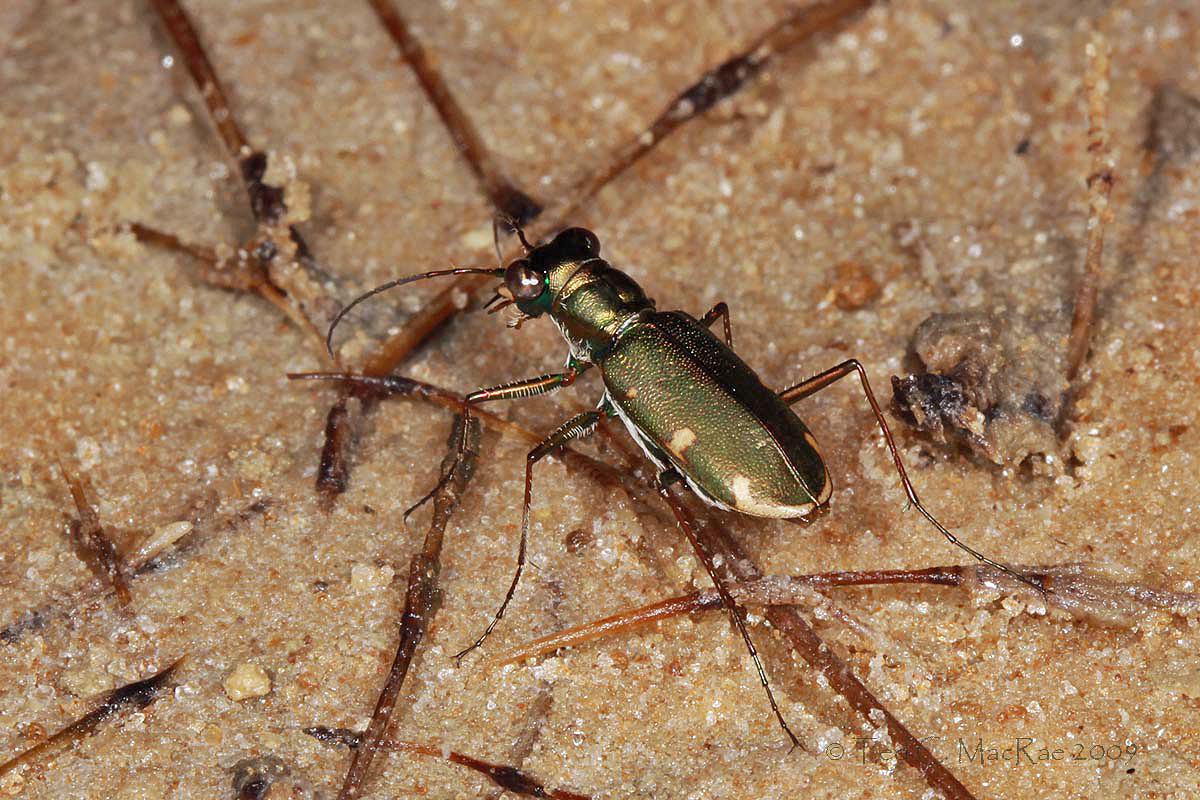
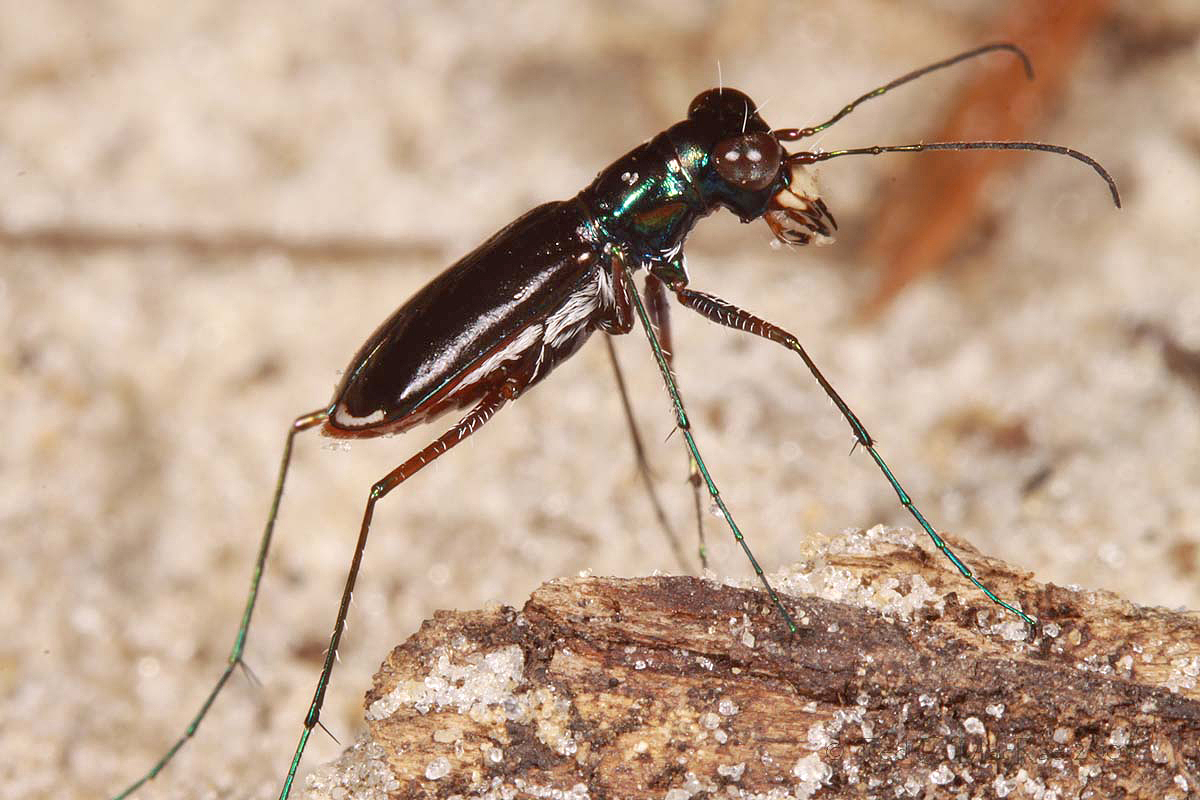
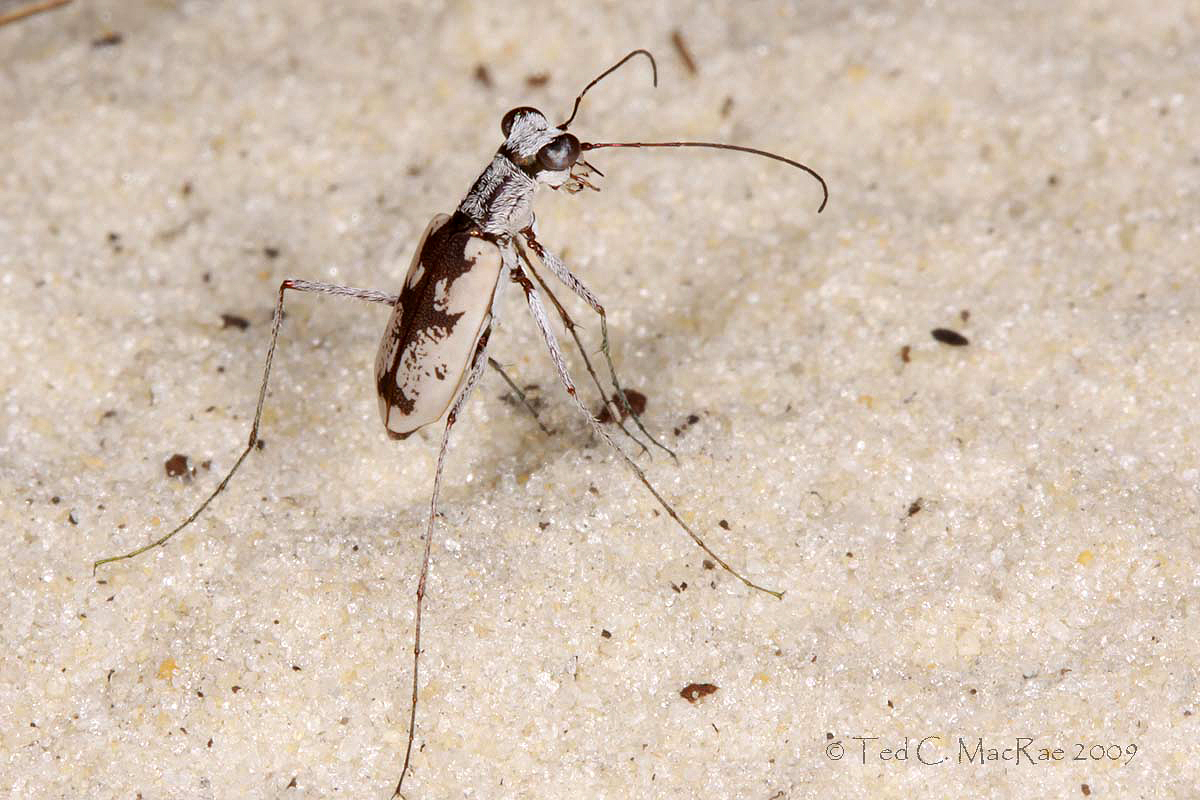
Eunota togata globicollis - Salt Plains NWR, Oklahoma

I haven’t written much about my early October trip to Oklahoma, where I had hoped to confirm a hunch that the gorgeous Cicindela pulchra (Beautiful Tiger Beetle) would be found in the red clay/gypsum hill habitats of Woodward and Major Counties (the same place where I had found the much rarer Cylindera celeripes the previous June).  Unfortunately, a sudden cold snap and overcast skies conspired against me for the duration of that short, 5-day trip, reducing tiger beetle activity to near zero and sending me back to Missouri with little to show for my efforts — save a scorpion, a torpid Cicindela splendida, and some very beautiful ladie’s-tresses orchids in peak bloom.  I did have one moderately successful day, however, when I returned to Salt Plains National Wildlife Refuge in north-central Oklahoma, a place where I observed seven species of tiger beetles during my June trip.  An eighth species that I did not see on that trip, but which I had observed in previous years, was my goal this time, and despite the cold temperatures and cloudy skies I was fortunate to find several individuals of Eunota togata globicollis.  Occurring primarily on saline flats in the central and southern Great Plain, this subspecies was called the Alkali Tiger Beetle¹ by Erwin and Pearson (2008), who reserved for the nominate form (found in salt marshes and tidal flats along the Gulf Coast) the more descriptive name White-cloaked Tiger Beetle².  A third subspecies, E. togata fascinans (Salt Flat Tiger Beetle) is restricted to salt flats in central New Mexico and west Texas (Pearson et al. 2006) (you may remember this subspecies from my habitat partitioning post last month).

¹ In reality, I have come to consider the term ‘alkali’ as a bit of a misnomer, as it is saline soils specifically — not just those with high pH (alkaline) — that the species is fond of. Moreover, there are many species of tiger beetles in addition to this one that are associated with saline soils.

² Okay, I might as well just get all this off my chest. Pearson et al. (2006) gave common names to each species of tiger beetle in the U.S., but not subspecies. I think most non-taxonomists probably consider this a good thing, although it is not without its problems (some species already had multiple common names applied to them, forcing choices that are sure not to please everyone). Erwin and Pearson (2008) took this further and came up with common names for all of the subspecies as well, and like any good taxonomist they steadfastly applied existing common names only to nominate forms. Eunota togata, however, is an example where the original common name would have been better applied to one of the non-nominate subspecies. The species epithet togata means “cloaked” (being derived from the Latin word toga — a reference to the broad white band running along the elytral margins). Each of the two non-nominate forms are distinguished by the white band being more broadly expanded (indeed, almost entirely covering the elytra in subspecies fascinans), yet it is the nominate subspecies — the least “cloaked” of the three — that retains the original common name. A silly argument I suppose, but if we start applying the “prinicple of priority” to common names in the same manner as scientific names, then what have we gained? Of course, I am of the opinion that most insect groups are too diverse and their taxonomy still too unstable to warrant a rigid system of “official” common names. Is it really any easier to learn White-cloaked Tiger Beetle than Eunota togata? How about Mount Ashland Night-stalking Tiger Beetle instead of Omus cazieri? And this is not even considering what happens when category-level shifts occur. For example, the genus Tetracha was formerly called the Big-headed Tiger Beetles; however, its former subgenera were recently elevated to genus level. Erwin and Pearson, accordingly, applied the common name to the entire subtribe containing Tetracha and its relatives and applied a new common name, Metallic Tiger Beetles, to the new, more limited concept of Tetracha. Thus, in an ironic case of common name instability despite no change in scientific name, the Virginia Big-headed Tiger beetle (Tetracha virginica) became the Virginia Metallic Tiger Beetle. Are your eyes bugging yet? Common names may be appropriate for higher vertebrates, but can they really be used effectively for beetles and other insect groups where the increasing use of molecular tools is sure to result in additional, perhaps radical, shifts in taxonomy? There — I said it, and I feel a lot better!
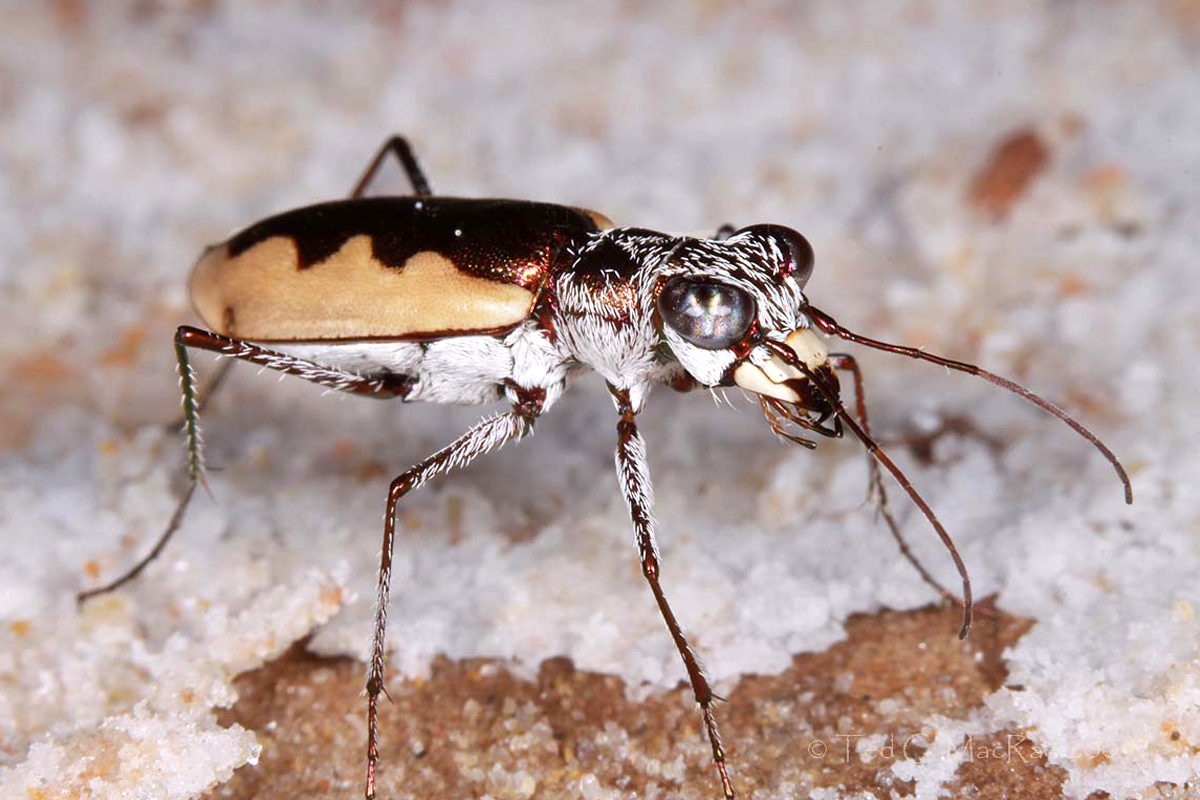
This species is restricted to saline flats in the central/southern Great Plains.

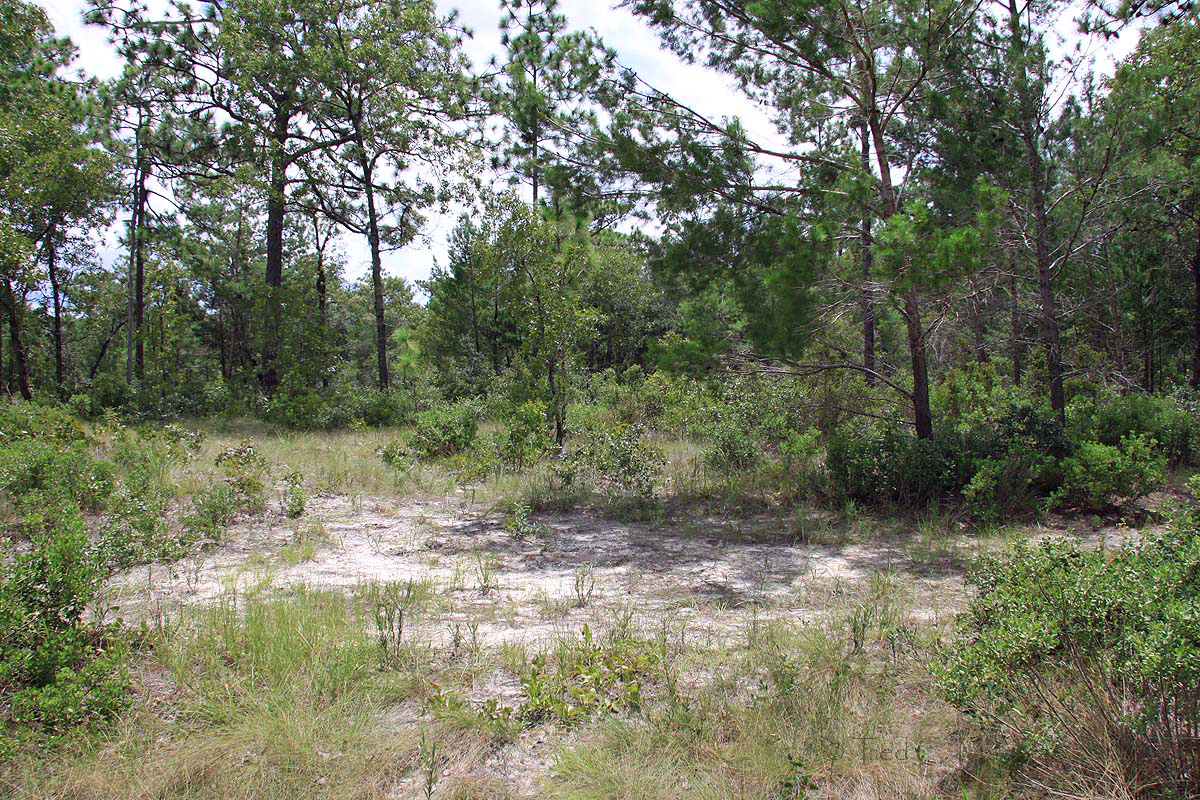
Of the eight tiger beetle species that I’ve now observed at Salt Plains NWR, half of them (Cicindela fulgida, C. nevadica knausii, E. togata globicollis, and Habroscelimorpha circumpicta johnsonii) are true saline habitat specialists.  One of the other four species (Cicindela tranquebarica kirbyi) is also fond of saline habitats but also occurs commonly on dry, sandy soils as well, and two show a high affiinity for nearly any moist (Cicindela repanda) or moist to dry (Cicindela punctulata) soils with little regard for salinity.  Only Cicindela formosa, a denizen of dry, deep sands seems a little out of its element on the moist, salty mud at Salt Plains NWR — perhaps the few individuals I’ve observed here are incidental visitors, mistaking the white, barren expanses of salt-encrusted soil for the dry sand the species prefers during disperal searches.  This again brings up the question of habitat partitioning for competition avoidance among tiger beetle species sharing the same habitat.  Eunota togata globicollis is active during the spring and fall and, thus, temporally isolated from C. nevadica knausii and H. circumpicta johnsonii (both summer-active species).  The other saline specialist at Salt Plains NWR (C. fulgida) is active during the same seasons as E. togata globicollis; however, in my observations that species prefers the sparsely-vegetated zone at the edge of the saline flats, while E. togata globicollis prefers to stay out in the more open areas.  These observations mirror those of Melius (2010) for E. togata fascinans and the other seven species he noted in the Laguna del Perro area of New Mexico, and of Willis (1967), who recorded as many as 11 sympatric tiger beetle species in saline habitats in the central U.S.
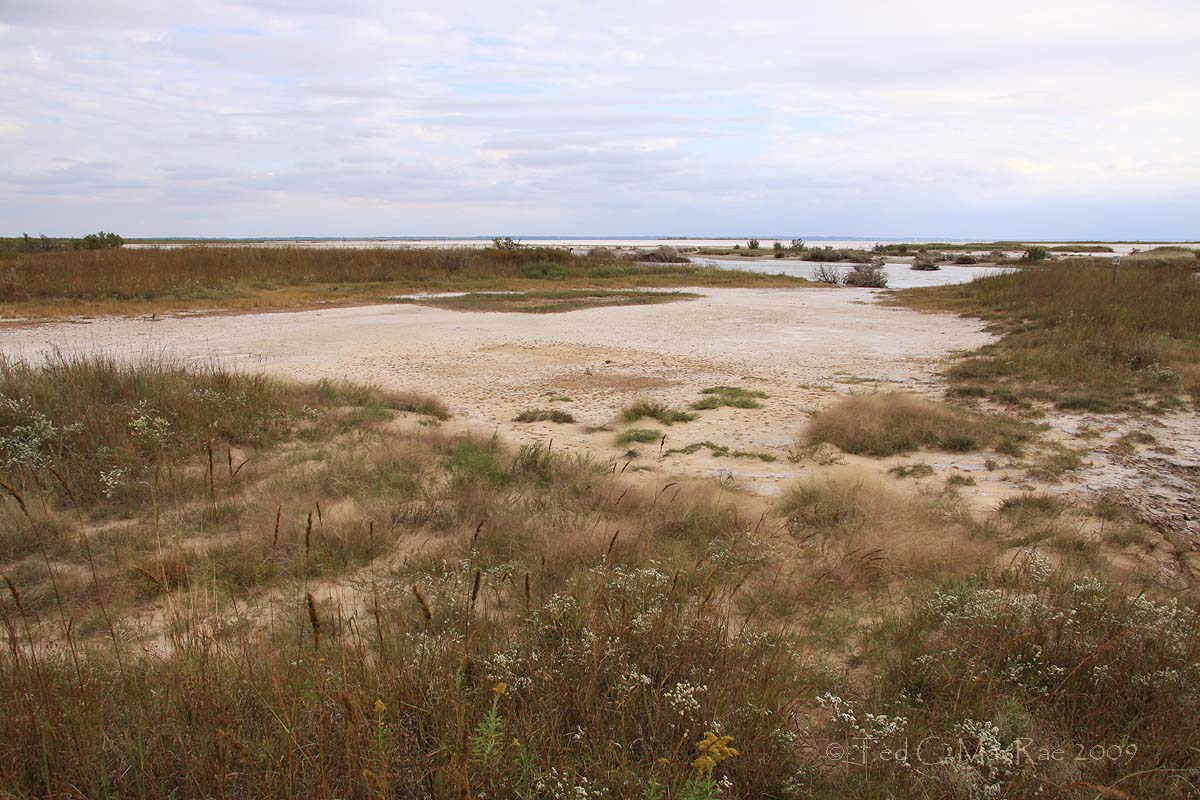
Saline flats at Salt Plains NWR are home to eight species of tiger beetles.

Microhabitat selection and seasonal occurrence are not the only isolating mechanisms that can minimize interspecific competition among the different tiger beetle species at Salt Plains NWR.  Cicindela tranquebarica kirbyi is also a spring/fall species and doesn’t appear to display a preference for open versus vegetated areas, potentially allowing it to compete directly with both E. togata globicollis and C. fulgida.  However, C. tranquebarica kirbyi is a decidely larger species, while the other two are smaller, and correlated with such differences in overall size is the size of their mandibles.  Mandibular size directly correlated to prey size in a number of tiger beetle species (Pearson and Mury 1979), thus providing another mechanism for avoiding competition between these three co-occurring species. 

Photo details:
Beetles: Canon 100mm macro lens w/ 68mm Kenco extension tubes on Canon EOS 50D (manual mode), ISO 100, 1/250 sec, f/18-20, MT-24EX flash 1/4 power w/ Sto-Fen diffusers.
Landscapes: Canon 17-85mm zoom lens (22mm) on Canon EOS 50D (landscape mode), ISO 100, 1/100 sec, f/10, natural light.

REFERENCES:

Erwin, T. L. and D. L. Pearson. 2008. A Treatise on the Western Hemisphere Caraboidea (Coleoptera). Their classification, distributions, and ways of life. Volume II (Carabidae-Nebriiformes 2-Cicindelitae). Pensoft Series Faunistica 84. Pensoft Publishers, Sofia, 400 pp.

Melius, D. A. 2009. Post-monsoonal Cicindela of the Laguna del Perro region of New Mexico. CICINDELA 41(4):81-89.

Pearson, D. L., C. B. Knisley and C. J. Kazilek. 2006. A Field Guide to the Tiger Beetles of the United States and Canada. Oxford University Press, New York, 227 pp.

Pearson, D. L. and E. J. Mury. 1979. Character divergence and convergence among tiger beetles (Coleoptera: Cicindelidae). Ecology 60:557–566.

Willis, H. L.  1967.  Bionomics and zoogeography of tiger beetles of saline habitats in the central United States (Coleoptera: Cicindelidae).  The University of Kansas Science Bulletin 47(5):145-313.

Copyright © Ted C. MacRae 2010

Add to FacebookAdd to DiggAdd to Del.icio.usAdd to StumbleuponAdd to RedditAdd to BlinklistAdd to TwitterAdd to TechnoratiAdd to Yahoo BuzzAdd to Newsvine

Email to a friend

Aaack!-maeodera

Warning: post contains hardcore, taxonomic, sciencey geekiness!

Just as there is seasonality in the lives of insects, there is seasonality in the work of those who study them.  For the collector/taxonomist, everything revolves around the collecting season — time spent on anything else is time not available for collecting. As a result, I spend a good deal of my time during the summer in the field and on its associated planning and organizing activities, leaving the winter months for processing and identifying collected specimens, incorporating them into the permanent collection, generating reports to fulfill permit requirements, and ultimately preparing manuscripts for publication — the raison d’être.  Winter is also the time when I identify specimens sent to me by other collectors.  I do this not only because I’m such a nice guy (at least I hope I am), but also because such material often contains species I haven’t seen before or that represent new distributions and host plant associations that I can use to augment the results of my own studies.  Such work has occupied much of my time during the past several weeks, and I now find myself close to finishing the last of the nearly dozen batches of beetles sent to me since the end of last winter.

Of the three groups of beetles that I actively study — jewel beetles, longhorned beetles, and tiger beetles — it is the jewel beetles that are taxonomically the most challenging.  Tiger beetles can often be indentified in the field (especially with the publication of Pearson et al. (2006), or “the Bible” among cicindelophiles), and North American longhorned beetles have been reasonably well worked by a strong contingent of both professional and amateur taxonomists over the past several decades.  Jewel beetles on the other hand, despite their dazzling colors and popularity with collectors, continue to befuddle even the most dedicated collectors due to their extreme variability and poorly-defined species limits.  Of the 822 species and subspecies known from North America, fully three-fifths of them belong to one of just three hyperdiverse genera — Acmaeodera, Agrilus, and Chrysobothris.  No recent taxonomic treatments are available for any of these genera, thus, identifying species belonging to them requires access to primary literature, a well-represented and authoritatively-identified reference collection, and extraordinary patience!  This is particularly true of the genus Acmaeodera, the North American members of which were last treated collectively more than a century ago (Fall 1899) (at which time less than half of the current 149 species/subspecies were known to science).  The recent explosion of web-based images has helped matters (a particularly useful site for those interested in North American Acmaeodera is Acmaeoderini Orbis, with its galleries of Harvard type specimens and BugGuide photos); however, images are still lacking for many species, and others are not easily distinguished from the images that do exist.

Acmaeodera robigo Knull (Val Verde Co., Texas)

It is precisely this taxonomic challenge, however, that makes the group so interesting to me.  Opportunities for discovery abound, as basic information is incomplete or totally lacking for many species regarding their geographical ranges and life histories.  One of the species I encountered in a batch of material sent to me by cerambycid-specialist Jeff Huether contained three specimens that I eventually determined to represent Acmaeodera robigo.  Josef Knull (1954) first described this species from specimens collected at Lake Corpus Christi in south Texas, and nothing more was recorded about the species until Nelson et al. (1996) reported a single specimen cut from its pupal cell in the base of Dalea formosa (Fabaceae) at White River Lake in far northern Texas — a range extension of almost 500 miles!  Obviously, I didn’t have this species in my collection, and it was only after a series of eliminations that led me to the original description (and confirmation of my ID by Nearctic Acmaeodera-guru Rick Westcott based on the photos shown here) did I know for sure what it was.  These specimens were collected at Seminole Canyon State Historic Park, thus, extending into west Texas the species’ known range, and they exhibit variability in the elytral markings and punctation that was not noted in the original description.  While only an incremental increase in our knowledge of this species, collectively such increases lead to greater understanding of the genus as a whole, and Jeff’s generosity in allowing me to retain examples of the species increases my U.S. representation of the genus to 130 species/subspecies (87%).

Acmaeodera n. sp. (Santa Cruz Co., Arizona)

The opportunity for discovery is not limited to range extensions and new host records, but includes new species as well.  A few years ago I received a small lot of specimens collected in Arizona by my hymenopterist-friend Mike Arduser (hymenopterists, especially those interested in apoid bees, are excellent “sources” of Acmaeodera, which they encounter frequently on blossoms while collecting bees).  Among the material he gave to me was the single specimen shown here that immediately brought to my mind Acmaeodera rubrovittata, recently described from Mexico (Nelson 1994) and for which I had collected part of the type series.  Comparison of the specimen with my paratypes, however, showed that it was not that species, and after much combing through the literature I decided that the specimen best fit Acmaeodera robigo (despite being collected in Arizona rather than Texas and not matching the original description exactly).  This was before I had true A. robigo with which to compare, so I sent the specimen to Rick Westcott for his opinion.  His reply was “good news, bad news” — the specimen did not represent A. robigo, but it didn’t represent any known species either!  While the prospect of adding a new species to the U.S. fauna is exciting, basing a description on this single specimen would be ill-advised.  Only through study of series of individuals can conclusions be made regarding the extent of the species’ intraspecific variability and its relation to known species.  Until such specimens are forthcoming, the specimen will have to sit in my cabinet bearing the label “Acmaeodera n. sp.”  For all of you collector-types who live in or plan to visit southeastern Arizona, consider this a general call for potential paratypes!  The specimen was collected in early August on flowers of Aloysia sp. near the Atascosa Lookout Trailhead on Ruby Road in Santa Cruz Co.

REFERENCES:

Fall, H. C.  1899.  Synonpsis of the species of Acmaeodera of America, north of Mexico.  Journal of the New York Entomological Society 7(1):1–37.
[scroll to “Journal of the New York Entomological Society”, “v. 7 1899”, “Seq 12”]

Knull, J. N. 1954. Five new North American species of Buprestidae (Coleoptera). Ohio Journal of Science 54:27–30.

Nelson, G. H. 1994. Six new species of Acmaeodera Eschscholtz from Mexico (Coleoptera: Buprestidae). The Coleopterists Bulletin 48:272–282.

Nelson, G. H., R. L. Westcott and T. C. MacRae. 1996. Miscellaneous notes on Buprestidae and Schizopodidae occurring in the United States and Canada, including descriptions of previously unknown sexes of six Agrilus Curtis (Coleoptera). The Coleopterists Bulletin 50(2):183–191.

Pearson, D. L., C. B. Knisley and C. J. Kazilek. 2006. A Field Guide to the Tiger Beetles of the United States and Canada. Oxford University Press, New York, 227 pp.

Copyright © Ted C. MacRae 2010

Add to FacebookAdd to DiggAdd to Del.icio.usAdd to StumbleuponAdd to RedditAdd to BlinklistAdd to TwitterAdd to TechnoratiAdd to Yahoo BuzzAdd to Newsvine

Email to a friend

Tiger Beetles at Florida’s “Road to Nowhere”

(continued from the previous post, Tiger Beetles Agree—It’s Hot in Florida!)

During the time that I explored the pine sandhill habitat at Withlacoochee State Forest in Citrus County, I kept close watch for any individuals amongst the dozens and dozens of Cicindela abdominalis (Eastern Pinebarrens Tiger Beetle) that I encountered that might exhibit the deeply pitted rather than smooth elytral surface that would identify it as the closely related Florida-endemic, Cicindela scabrosa (Scabrous Tiger Beetle).  However, no such individuals would be seen (my first tiger beetle failure of the trip), and having already spent more than two hours at the site I decided it was time to move on the the “Road to Nowhere.”

"Road to Nowhere," 11.1 mi S Jena on Hwy 361, Dixie Co., Florida

The Road to Nowhere is a tidal marsh (also known as “coastal salt marsh”) near Steinhatchee in Dixie County (11.1 mi S Jena on Hwy 361).  Although I was not aware of it prior to my August visit, this locality has achieved legendary status among tiger beetle enthusiasts because of the great number of species that can be seen there—as many as 6–10 species in the right season.  Being a coastal wetland with moist, saline substrates, these would include such species as Cicindela trifasciata ascendens (Ascendent Tiger Beetle), Habroscelimorpha severa (Saltmarsh Tiger Beetle), the rarely collected H. striga (Elusive Tiger Beetle), and Eunota togata togata (White-cloaked Tiger Beetle), in addition to Ellipsoptera marginata (Margined Tiger Beetle) and E. hamata lacerata (Gulf Beach Tiger Beetle) which I had already found a few days earlier.  As I found the highway leading to the spot and begain to drive its upper reaches, I looked longingly at the barren sand exposures along the sides of the road thinking that C. scabrosa, already known from the area (Choate 2003) must be there.  However, it was well into the afternoon hours by then, and having already failed to find the species at Withlacoochee State Forest, I decided I should press on and see what the Road to Nowhere had to offer.

Cicindela (Cicindelidia) trifasciata ascendens—Ascendent Tiger Beetle

Almost immediately I began seeing tiger beetles.  The first species I saw was C. trifasciata ascendens—rather common on areas of the flats close to the water’s edge.  I recognized them instantly, as I had not only seen this species some years ago in south Texas, but also in southern Missouri as a lone vagrant (Brown and MacRae 2005).  The dark brown dorsal coloration and thin, sinuous, S-shaped middle maculation are diagnostic for the species (Pearson et al. 2006).  While it was by now late afternoon, the heat of the day had not yet begun to subside, and the beetles were extremely active and flighty.  The difficulty in approaching them closely enough for photographs was exacerbated by the wet, muddy substrate and incessant drone of tenacious mosquitoes intent on breaching my invisible shield of DEET.  Eventually, however, and only due to one decidedly more cooperative individual (above), I succeeded in getting a few shots with which I was happy. 

Habroscelimorpha severa—Saltmarsh Tiger Beetle

Far less common than C. trifasciata ascendens, but equally skittish, was the impressive H. severa.  I have also seen this species before in south Texas, though not in great numbers, and its shiny green surface with maculations reduced to small spots at the middle and rear of the elytra are unmistakealbe.  It was the hardest to approach of the species I saw, and the above (only slightly cropped) photograph is as close as I was able to get (it is also the only photograph from the field session that was good enough and close enough to keep).  This species tends to be most active in the morning and again in the evening, so most of my late-day efforts focused on this species—in fact, it was almost too dark to see by the time I finally quit my attempts at photographing the species.  I brought back one live individual and took some “studio” photographs after I returned home, but I’m still not any happier with them than this lone field shot.

Ellipsoptera hamata lacerata—Gulf Beach Tiger Beetle (reduced maculations)

When I first saw the species represented by the individual in the above photograph, I had not a clue as to its identity—the dark elytra with only a marginal band was unlike anything I would have expected to see.  Quickly thumbing through my “bible” (Pearson et al. 2006), I kept stopping at the plate containing Cicindela marginipennis (Cobblestone Tiger Beetle).  I knew this was impossible, as that species is restricted to several disjunct cobblestone habitats further north.  I collected the specimen for a voucher, keeping it alive for studio photographs, but it wasn’t long before I saw another similar-looking individual.  I decided I must be overlooking something, so after getting photographs and collecting the specimen for another voucher I went back through Pearson.  This time I focused only on the species that could possibly occur here, and realized that it was simply E. hamata lacerata with its normally diffuse middle elytral maculations highly reduced (traces of the middle band can be seen in the photograph).

Ellipsoptera marginata—Margined Tiger Beetle

Ellipsoptera marginata was the most abundant species at this location, and on this day I succeeded in getting a nice photograph of a female with her distinctively downbent elytral apices (see closeup photograph in this post).  This species is very similar to E. hamata, with which it co-occurs along the Gulf Coast of peninsular Florida, but can be immediately recognized by the bent elytral apices (female) or distinct tooth on the underside of the right mandible (male).  Both of these species are distinguished from all other species in the genus by the diffuse middle maculation of the elytra. 

At least two additional species occur at this site, one of which (E. togata) I saw but a single individual of and was unable to photograph, and the other (H. striga) which I did not see.  In fact, the Road to Nowhere is apparently “the” spot for finding the latter species, which occurs predominantly at night and is seen primarily by its attraction to ultraviolet lights.  While I would have liked to stay after dark and setup lights to see this species, I had neither the time nor the equipment to do this.  It may, after all, have been too late in the season anyway—since my visit I’ve heard stories from other tiger beetle aficionados who say the whole area can be filled with collectors from all over the country with their blacklights and bucket traps and someone yelling “striga!” every hour or so.  No such scene developed during my visit, so I suspect my visit was on the late side of the season and that the 5 species I did see represents a pretty good day regardless.  The long drive back to St. Petersburg marked the end of my tiger beetle exploits in Florida, at least for this year.

For another tiger beetling experience at Road to Nowhere, read this post by Doug Taron, who visited the site even later in the season (October).  Although he didn’t see as many tiger beetles, he does provide some interesting details regarding the shady origins of this place.

Photo Details: Canon EOS 50D, ISO 100, 1/250 sec.
Habitat: Canon 17-85mm zoom lens (landscape, 66mm), f/9, natural light.
Insects (except E. marginata): Canon 100mm macro lens (manual), f/22–25, MT-24EX flash w/ Sto-Fen diffusers.
E. marginata: Canon MP-E 65mm 1–5X macro lens (manual), f/16, MT-24EX flash w/ Sto-Fen diffusers.

REFERENCES:

Brown, C. R. and T. C. MacRae. 2005.  Occurrence of Cicindela (Cicindelidia) trifasciata ascendens (Coleoptera: Cicindelidae) in Missouri. Cicindela 37(1–2):17–19.

Choate, P. M., Jr. 2003. A Field Guide and Identification Manual for Florida and Eastern U.S. Tiger Beetles.  University Press of Florida, Gainesville, 224 pp.

Pearson, D. L., C. B. Knisley and C. J. Kazilek. 2006. A Field Guide to the Tiger Beetles of the United States and Canada. Oxford University Press, New York, 227 pp.

Copyright © Ted C. MacRae 2009

Add to FacebookAdd to DiggAdd to Del.icio.usAdd to StumbleuponAdd to RedditAdd to BlinklistAdd to TwitterAdd to TechnoratiAdd to Yahoo BuzzAdd to Newsvine

Email to a friend

Tiger Beetles Agree—It’s Hot in Florida!

Florida is known for its rich assemblage of tiger beetles—27 species in all, including four endemics (Choate 2003).  However, late summer is generally considered not the best time of year for seeing this diversity, since adult populations of most species begin to wane as the intensity of the summer heat reaches its peak.  I knew the timing of my family vacation in early August might be a bit off; however, considering I had never looked for tiger beetles in Florida before, I remained optimistic that I still might encounter some interesting species.  My optimism was quickly rewarded—in one afternoon of exploring the small coastal preserve just outside the back door of my sister-in-law’s condo, I found Ellipsoptera marginata (Margined Tiger Beetle), its sibling species E. hamata lacerata (Gulf Beach Tiger Beetle), and several 3rd-instar larvae in their burrows that proved to be the Florida endemic Tetracha floridana (Florida Metallic Tiger Beetle).  Good fortune would continue when I made a one-day trip to the interior highlands in a successful bid to find Florida’s rarest endemic, Cicindela highlandensis (Highlands Tiger Beetle), finding also as a bonus the splendidly camouflaged and also endemic Ellipsoptera hirtilabris (Moustached Tiger Beetle).  Five species, including three endemics, in just over a day of searching!  I had one more day to sneak off and do what I love most, and I wanted to make the most of it. 

Pine sandhill habitat, Withlachoochee State Forest—Citrus Tract

Among the suggestions given to me by my colleagues, the most promising-sounding was the “end of the road,” a Gulf Coast salt marsh near Steinhatchee in Dixie County where I was told as many as 6-10 species of tiger beetles could be seen at once.  I didn’t know it at the time, but this particular location has achieved legendary status among tiger beetle enthusiasts (Doug Taron recently wrote about his experience, calling it the Road to Nowhere).  A 200+ mile drive from my base near St. Petersburg, it would take the better part of 5 hours to drive there, and not wanting to put all of my eggs in one basket, I looked for potential stops along the way.  About midway along the drive was Withlacoochee State Forest, where one of my colleagues had told me I might still find the fairly widespread Cicindela abdominalis (Eastern Pinebarrens Tiger Beetle) and its close relative, C. scabrosa (Scabrous Tiger Beetle)—the fourth Florida endemic.  My plan was to leave early in the morning and spend a few hours at Withlacoochee before driving the rest of the way to finish out the day at Steinhatchee. 

"Stilting" by Cicindela abdominalis (Eastern Pinebarrens Tiger Beetle)

It took some time to find my bearings upon arriving, but after some discussion with the decidedly forestry-oriented staff at the headquarters, it seemed that the Citrus Tract was where I wanted to be.  I was looking for the sand barren and pine sandhill habitats that these species require, and the staff’s description of the northern edge of the tract as having lots of sand and “not very good for growing trees” suggested this might be the place.  Pine sandhill (also called “high pine”) is a pyrophytic (fire-dependent) plant community characterized by sandy, well-drained soils, a widely-spaced longleaf pine (Pinus palustris) and turkey oak (Quercus laevis) canopy, and an herbaceous layer dominated by wiregrass (Aristida stricta).  I quickly found such habitat in the area suggested, and it wasn’t long before I found the first of the two species—C. abdominalis—rather commonly along a sandy 2-track leading through the area.  For those of you who see a distinct resemblance of this species to the rare C. highlandensis that I highlighted from my trip to the central highlands, this is no coincidence.  Cicindela abdominalis is very closely related to that species, the latter distinquished by an absence of flattened, white setae on the sides of the prothorax and the abdomen and by the highly reduced or absent elytral maculations (Choate 1984).  Dense white setae and distinct apical elytral maculations are clearly visible in the individuals shown in these photographs. 

Stilting is often accompanied by "sun-facing" for additional thermoregulation

It was a blistering hot day (just as every other day on the trip had been so far), and it wasn’t only me who felt that way.  Tiger beetles, of course, are ectothermic and rely upon their environment for their body temperature.  Despite this, they are able to regulate body temperatures to some degree by using a range of behavioral adaptations intended to mitigate the effects of high surface temperatures and intense sunlight.  The photos above show one of these behaviors, known as stilting.  In this behavior, the adult stands tall on its long legs to elevate its body above the thin layer of hotter air right next to the soil surface and as far off the sand as possible (Pearson et al. 2006).  As the heat of the day intensifies and the zone of hot air at the soil surface broadens, stilting alone may be insufficient to prevent overheating. When this happens, the beetles combine stilting with sun-facing, a behavior in which the front part of the body is elevated with the head oriented towards the sun. This position exposes only the front of the head to the sun’s direct rays, thus minimizing the body surface area exposed to incident radiation.

Stilting and sun-facing by Ellipsoptera hirtilabris (Moustached Tiger Beetle)

I was also fortunate to have another chance at photographing the beautiful and marvelously-camouflaged Ellipsoptera hirtilabris (Moustached Tiger Beetle), which, in similar fashion to C. highlandensis, I found co-occurring with C. abdominalis in rather low numbers. As before, they were extremely wary and difficult to approach, especially in the extreme heat of the day, and all of my best efforts to get a good shot of the species in its “classic” pose were frustrated. The photo above was about as close as I could get to any of these beetles when they were out in the open before they would flee; however, it nicely demonstrates the use of stilting combined with sun-facing during the hottest part of the day.

"Shade seeking" is another behavioral response to intense heat.

Another behavioral response to extreme heat is shade-seeking—adults may either remain active, shuttling in and out of shaded areas, or avoid exposed areas altogether and become inactive.  One thermoregulatory behavior for extreme heat that I did not observe was daytime-burrowing, in which adults construct temporary shallow burrows during the hottest hours of the day. Although I did not observe this behavior by either species at Withlacoochee, I have seen it commonly among several species in sandy habitats here in Missouri and in the Sandhills of Nebraska (e.g., Cicindela formosa, Cicindela limbata, Cicindela repanda, Cicindela scutellaris, Cicindela tranquebarica, Ellipsoptera lepida).

There was one disappointment on the day—I did not see C. scabrosa.  However, I still had the “end of the road” to explore, so I remained happy with the now six species I had encountered and optimistic about finding additional species later in the day… 

Photo Details: Canon EOS 50D, ISO 100.
Habitat: Canon 17-85mm zoom lens (landscape, 17mm), 1/100 sec, f/10, natural light.
Insects: Canon 100mm macro lens (manual), 1/250 sec, f/16–18 (C. abdominalis) or f/20–22 (E. hirtilabris), MT-24EX flash w/ Sto-Fen diffusers.

REFERENCES: 

Choate, P. M., Jr.  1984.  A new species of Cicindela Linnaeus (Coleoptera: Cicindelidae) from Florida, and elevation of C. abdominalis scabrosa Shaupp to species level.  Entomological News 95:73–82.

Choate, P. M., Jr. 2003. A Field Guide and Identification Manual for Florida and Eastern U.S. Tiger Beetles.  University Press of Florida, Gainesville, 224 pp.

Pearson, D. L., C. B. Knisley and C. J. Kazilek. 2006. A Field Guide to the Tiger Beetles of the United States and Canada. Oxford University Press, New York, 227 pp.

Copyright © Ted C. MacRae 2009

Add to FacebookAdd to DiggAdd to Del.icio.usAdd to StumbleuponAdd to RedditAdd to BlinklistAdd to TwitterAdd to TechnoratiAdd to Yahoo BuzzAdd to Newsvine

Email to a friend

A “Really” Big-headed Tiger Beetle

Megacephala megacephala 3rd-instar larva. Photo © Artur M. Serrano.

In my recent summary of the latest issue of the journal Cicindela, I included a scan of the cover of that issue and its stunning image of the 3rd-instar larva of Megacephala megacephala¹ from Africa.  This otherwordly-looking, four-eyed beast was photographed with jaws agape at the entrance to its burrow in Guinea Bissau by Dr. Artur M. Serrano (University of Lisbon, Portugal).  I was grateful for his permission to post a scan of this spectacular image; however, he did even better and sent me high-resolution images of not only the larva (above) but the adult (below) as well.  This species is one of 13 assigned to the genus—presently restricted to Africa (though not always, see discussion below), where they are usually found in savanna-type habitats and are active during the crepuscular and nocturnal periods (Werner 2000).

¹ An example of a tautonym, i.e. a scientific binomen in which the genus and species names are identical. Familiar tautonymic binomina include the gorilla (Gorilla gorilla), green iguana (Iguana iguana), and European toad (Bufo bufo). Tautonyms are expressly prohibited in plant nomenclature (see Article 23.4 of the International Code of Botanical Nomenclature) but are permitted and, in fact, quite common in zoological nomenclature; Wikipedia lists 51 mammals, 82 birds, 15 reptiles & amphibians, 54 fish, and 33 invertebrates (though not Megacephala megacephla!).

Megacephala megacephala adult. Photo © Artur M. Serrano.

For those of you who see a strong resemblance by this species to another tiger beetle I featured recently, Tetracha floridana (Florida Metallic Tiger Beetle), this is not merely a coincidence.  Megacephala and Tetracha are quite closely related, and in fact the two genera, along with a handful of other closely related genera, are at the center of one of the longest-standing disputes in tiger beetle taxonomy (Huber 1994).  The genus Megacephala was established by Latreille (1802) for the species pictured here (originally described as Cicindela megacephala Olivier).  As additional taxa were found in Africa, Australia and the Western Hemisphere and assigned to Megacephala, several workers attempted to divide the genus into multiple genera (with New World taxa being assigned to Tetracha and a few other mostly South American genera); however, there was little agreement on how these genera should be defined and on what characters they should be based.  The debate was effectively swept under the rug in the early 20th Century when Walter Horn, one of the most influential cicindelophiles of all time, accepted a monotypic Aniara based on the strange South American species A. sepulcralis but reunited the world’s remaining taxa within the single genus Megacephala in his world catalogue (Horn 1910).  Horn’s use of Megacephala as a catch-all genus was followed by subsequent workers for almost a full century until Huber (1994) once again proposed restricting Megacephala to certain of the African species and resurrecting the genus Tetracha for the bulk of the New World fauna.  He also urged additional analyses to resolve the status of the remaining generic names and their composition, which subsequently saw increasing use as subgenera of Megacephala² and later as genera.

² Thus, as type-species for the genus, the species featured here became known as Megacephala (Megacephala) megacephala (Werner 2000)—a triple tautonym that translates to the “Big-headed, Big-Headed, Big-Headed” tiger beetle!  Perhaps it’s best that I’m not an African tiger beetle specialist; I probably would have been unable to resist the temptation to resurrect M. senegalensis and assign it as a subspecies of M. megacephala, just so I could refer to the nominate form as Megacephala (Megacephala) megacephala megacephala!

The reversal of Horn’s concepts now appears to be complete, with all seven former subgenera of Megacephala formally being accorded full generic status (Naviaux 2007). This classification is strongly supported by molecular analysis of nuclear 18S and mitochondrial 16S and cytochrome oxidase gene sequences (Zerm et al. 2007), with the resulting dendrogram indicating three monophyletic clades corresponding to the African/Palearctic (Megacephala and Grammognatha, respectively),  Western Hemisphere (Aniara, Metriocheila, Phaeoxantha and Tetracha) and Australian (Australicapitona and Pseudotetracha) genera³.  The African/Palearctic clade was found to occupy a basal position in the tree, while the Western Hemisphere and Australian clades were more derived.  These data support the hypothesis that the early evolution of the megacephalines took place during the break-up of the ancient Gondwana megacontinent, which began about 167 million years ago (middle Jurassic period) and sequentially disconnected Africa from South America and Australia.

³ One striking deviation from the current classification, however, was the support for nesting the single Aniara species within Tetracha, a placement that renders Tetracha paraphyletic and, thus, requires either its division into multiple genera or the sinking of Aniara as a distinct genus. The support for this placement was quite strong and mirrored the results of a broader molecular phylogenetic study of tiger beetles based on full-length 18s RNA data (Galian et al. 2002). The authors concede that this puzzling placement is not corroborated by numerous morphological, ecological and ethological characters that distinguish Aniara from all known Tetracha species.

REFERENCES

Galián J., J. E. Hogan and A. P. Vogler. 2002. The origin of multiple sex chromosomes in tiger beetles. Molecular Biology and Evolution 19:1792–1796.

Horn, W.  1910.  Coleoptera Adephaga, Fam. Carabidae, Subfam. Cicindelinae.  In P. Wytsman (editor).  Genera Insectorum.  Fascicle 82a.  Desmet-Vereneuil, Brussels, Belgium, pp. 105–208.

Huber, R. L.  1994.  A new species of Tetracha from the west coast of Venezuela, with comments on genus-level nomenclature (Coleoptera: Cicindelidae).  Cicindela 26(3/4):49–75.

Latreille, P. A. 1802. Histoire Naturelle, Générale et Particulière des Crustacés et des Insectes. Paris: F. Dufart 3 xii 13 + 467 pp.

Naviaux R. 2007. Tetracha (Coleoptera, Cicindelidae, Megacephalina): Revision du genre et descriptions de nouveaus taxons. Mémoires de la Société entomologique de France 7:1–197.

Werner, K.  2000.  The Tiger Beetles of Africa (Coleoptera: Cicindelidae).  Volume 1.  Taita Publishers, Hradec Kralove, Czech Republic, 191 pp., 745 figures.

Zerm, M., J. Wiesner, J. Ledezma, D. Brzoska, U. Drechsel, A. C. Cicchino, J. P. Rodríguez, L. Martinsen, J. Adis and L. Bachmann.  2007.  Molecular phylogeny of Megacephalina Horn 1910 tiger beetles (Coleoptera: Cicindelidae).  Studies on Neotropical Fauna and Environment 42(3):211–219.

Copyright © Ted C. MacRae 2009

Add to FacebookAdd to NewsvineAdd to DiggAdd to Del.icio.usAdd to StumbleuponAdd to RedditAdd to BlinklistAdd to TwitterAdd to TechnoratiAdd to Furl

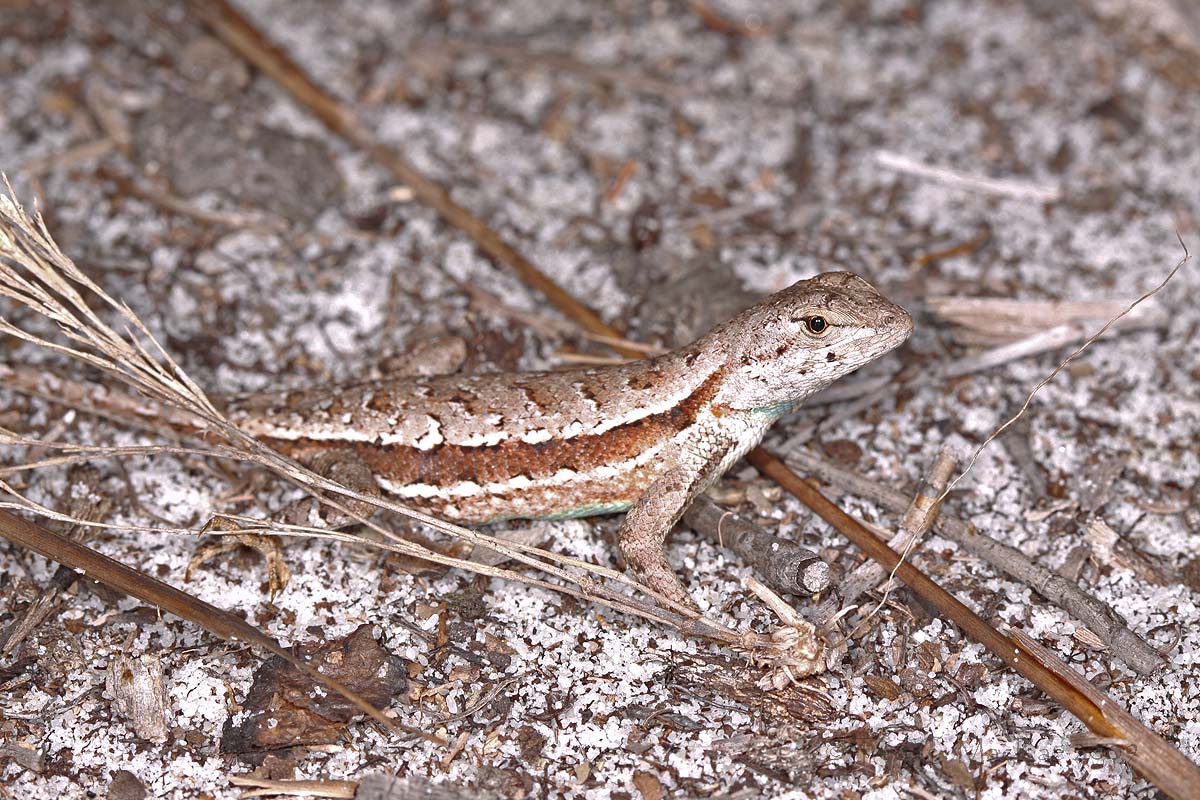
Florida Scrub Lizard

Sceloporus_woodi_IMG_1143_enh_1200x800

The Florida scrub lizard (Sceloporus woodi) is restricted to isolated sand scrub habitats in peninsular Florida.

Tiger beetles were not the only rare endemic species that I encountered during my visit to the Lake Wales Ridge in central Florida last August.  I didn’t know what this small lizard was as I watched it bolt from the trail and scamper for cover during my approach; however, having already found two endemic tiger beetles, I had a feeling that this lizard might also be a good one.  The photo shown here is admittedly not one of my best, but it was the only one I managed to get before the lizard ducked into the brush for good.  Horribly overexposed, I did what I could with it in Photoshop to make it halfway presentable, but there is no question that its subject represents a Florida scrub lizard, Sceloporus woodi¹.  This small, diurnal, ground-dwelling lizard belongs to the family Phrynosomatidae (same family as the Texas horned lizard that I featured in this post) and is restricted to Florida’s rare sand scrub and sandhill habitats.  Like the recently featured Highlands Tiger Beetle, this species is threatened by the isolated, disjunct nature of its required habitat—a threat made worse by the ever increasing pressures of agricultural conversion and urban development.

¹ Sceloporus is derived from the Greek word scelos meaning “leg” and the Latin word porus meaning “hole”, referring to the pronounced femoral pores found in this genus of lizards. The species epithet honors Nelson R. Wood, a taxidermist at the U.S. National Museum who collected the type specimen in 1912.

Distribution of the Florida scrub lizard (from Branch et al. 2003).

The Florida scrub lizard is related to and closely resembles the much more common and widely distributed southern fence lizard (Sceloporus undatus), which co-occurs with the scrub lizard in northern Florida.  Fence lizards, however, lack the dark brown lateral stripe that is clearly visible in the above photo, a feature seen in juveniles and adults of both sexes of the scrub lizard.  Juvenile and adult female scrub lizards also exhibit a dorsal zigzag pattern; however, this fades in males as they reach adulthood and develop the characteristic bright blue belly patches that are seen in both this species and in the fence lizard (Branch and Hokit 2000).  Since light blue patches are just visible on the belly and throat of the individual in the photograph, I haven’t been able to determine whether it represents a mature female or a still-juvenile male—any help from a knowledgeable reader would be greatly appreciated.  Unlike the fence lizard, the scrub lizard displays a high degree of habitat specificity, occurring as disjunct populations in strict association with the major sand scrub ridges of Florida.  The healthiest populations are found on the Mt. Dora Ridge in northern peninsular Florida, on which significant remnants of scrub habitat are preserved in the Ocala National Forest.  Populations also occur on the Lake Wales Ridge of central Florida and the Atlantic Coastal Ridge, but the status of these populations is less secure.  Populations also once occurred along the southwestern coast on the Gulf Coast Ridge, but these populations are now believed extirpated as a result of urban development (Jackson 1973, Enge et al. 1986).  While the Florida scrub lizard is not listed as a threatened or endangered species at the state or federal level, its high specificity to an increasingly isolated and fragmented habitat and its apparently low dispersal capabilities are clear causes for concern over its long-term prospects. As remnant habitats continue to shrink and become more isolated, the threat of localized extinction becomes an increasing concern for the lizard populations that they support.

Lake_Wales_Ridge_IMG_1129_1200x800_enh

Scrub lizard habitat is threatened by development, fragmentation and increased vegetation.

The precarious status of scrub lizards and their occurrence in several disjunct, isolated populations makes them interesting subjects for genetic studies. Mitochondrial DNA analyses suggest that scrub lizard populations exhibit a high degree of phylogeographical structure, with populations diverging significantly not only between major scrub ridges, but also within them (Branch et al. 2003).  The findings support the notion of long-term isolation of scrub lizard populations on the major scrub ridges and confirm their low dispersal rates among adjacent scrub habitats within ridges (as little as a few hundred yards of “hostile” habitat may be sufficient to prevent movement to adjacent habitats).  More significantly, the results support the concept of two distinct morphotypes on the Mt. Dora and Lake Wales Ridges and also raise the possibility that Atlantic Coastal Ridge populations represent a distinct evolutionary entity as well.  These findings are consistent with the hypothesis that scrub lizards evolved in central Florida, where they were isolated when surrounding lands were inundated by rising sea levels during the late Pliocene and subsequent interglacial periods during the Pleistocene.  During periods of low sea level they dispersed to the younger Atlantic and Gulf Coastal Ridges, where they were isolated from parent populations when more mesic conditions returned during the Holocene (12 kya to present).  The genetic distinctiveness of these different ridge populations may justify qualifying each of them for protection as “significant evolutionary units” under the U.S. Endangered Species Act, since it raises concerns about the use of translocations, a common strategy for establishing new populations in restored habitat or augmenting existing populations, as a conservation strategy for the species as a whole.  Since lizards located on different ridges are more divergent than lizards from populations located on the same ridge, movement of lizards between ridges could compromise the integrity of the genetic differences that have accumulated over millions of years and result in loss of genetic diversity.  As a result, augmenting populations on the Lake Wales and Atlantic Coast Ridges with lizards from robust populations on the Mt. Dora Ridge may not be desirable.  Instead, it may be necessary to protect individual scrub lizard populations on each of the major scrub ridges in order to preserve as much of their genetic diversity as possible.

REFERENCES:

Branch, L. C. and D. G. Hokit. 2000. Florida scrub lizard (Sceloporus woodi). University of Florida, IFAS Extension Service Publication #WEC 139, 3 pp.

Branch, L. C., A.-M. Clark, P. E. Moler and B. W. Bowen.  2003. Fragmented landscapes, habitat specificity, and conservation genetics of three lizards in Florida scrub.  Conservation Genetics 4:199

Enge, K. M., M. M. Bentzien, and H. F. Percival. 1986. Florida scrub lizard status survey. Technical Report No. 26, U.S. Fish and Wildlife Service, Jacksonville, Florida, U.S.A.

Jackson, J. F. 1973. Distribution and population phenetics of the Florida scrub lizard, Sceloporus woodi. Copeia 1973:746–761.

Copyright © Ted C. MacRae 2009

Add to FacebookAdd to NewsvineAdd to DiggAdd to Del.icio.usAdd to StumbleuponAdd to RedditAdd to BlinklistAdd to TwitterAdd to TechnoratiAdd to Furl

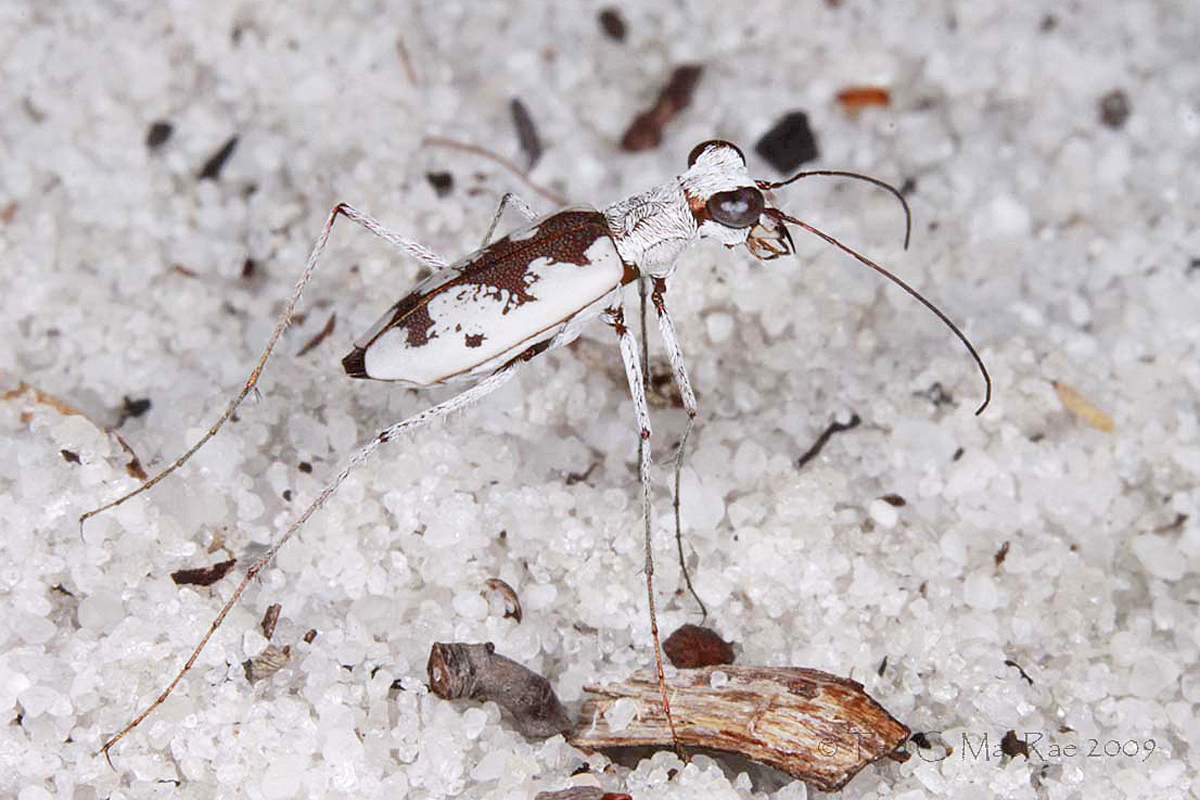
Moustached Tiger Beetle

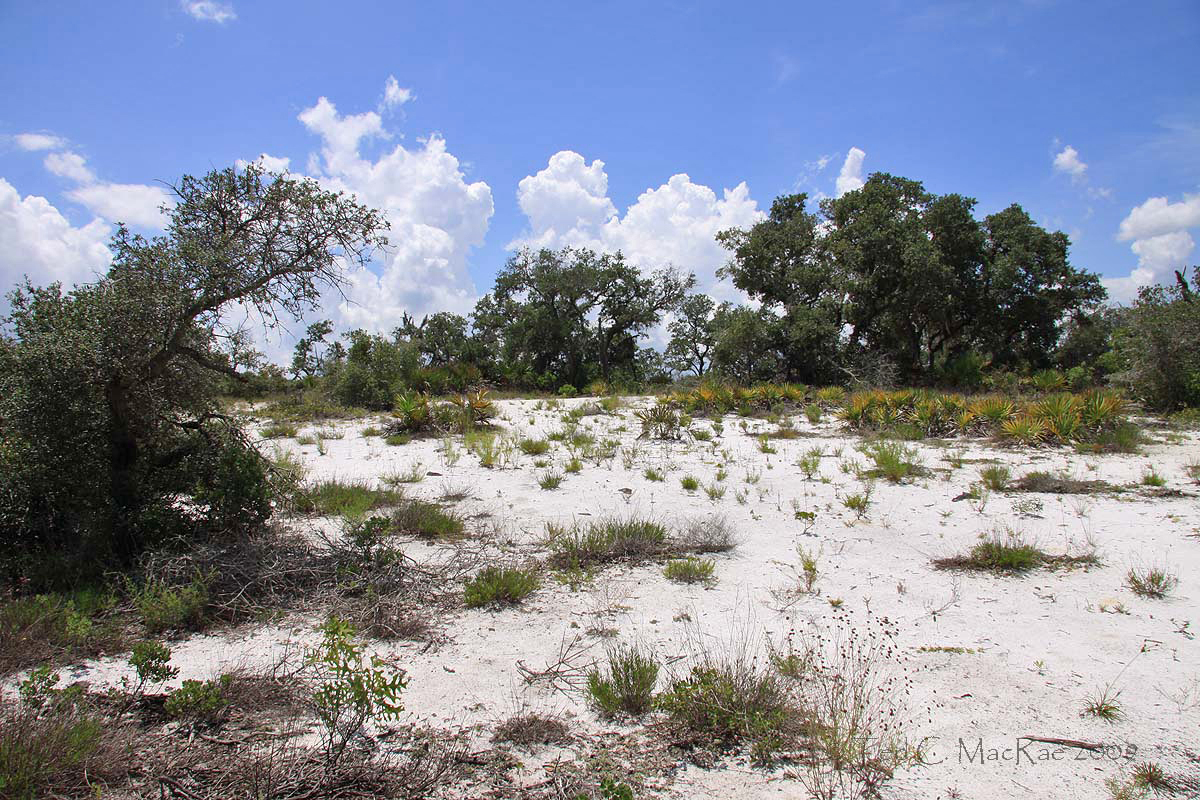
Lake Wales Ridge

Dry sand scrubland on Lakes Wales Ridge in central Florida—home to Cicindela highlandensis and Ellipsoptera hirtilabris

In my previous post, I featured the rare Cicindela highlandensis (Highlands Tiger Beetle), restricted entirely to sand scrubland and pine woodland habitats along the Lake Wales Ridge in central Florida (Choate 2003).  However, that would not be the only Florida endemic tiger beetle that I would encounter during my early August visit.  Another of the several tiger beetle species that I’d hoped to see would also be found that day, although in much lower numbers.  Ellipsoptera hirtilabris (Moustached Tiger Beetle) is so named¹ because of the dense covering of prostrate hairs on its labrum that distinguish it from the closely related E. gratiosa (Whitish Tiger Beetle). Both of these species exhibit striking white maculations that cover almost the entire elytral surface and dense white pubescence covering the head, thorax, underside and legs.  They are the only species of the genus occurring in Florida, but their ranges do not overlap (Pearson et al. 2006)—E. gratiosa occurs in the coastal pine barrens of Virginia, the Carolinas, southern Georgia and the Florida panhandle, while E. hirtilabris is restricted to peninsular Florida in pine woodlands, sand hills and other habitats with open white sand.  Although the latter is considered a Florida endemic, it has been found just outside of Florida in extreme southeastern Georgia on St. Simon’s Island (Choate 2003)In addition to the pubescence of the labrum and their allopatric distributions, the two species may further be distinguished by the slightly less expanded markings and more diffuse edges where they contact the central bronze area in E. hirtilabris and the slightly larger size of E. gratiosa.    Like C. highlandensis and C. abdominalis, it seems likely that E. hirtilabris and E. gratiosa evolved from a common ancestor, diverging in isolation from each other during the pre-Pleistocene separation of peninsular Florida from the North American mainland.   

¹ The species epithet is derived from the Latin words hirtum meaning “hairy” and labrum meaning “lip”.

Ellipsoptera_hirtilabris_IMG_1091_1200x800_enh

Ellipsoptera hirtilabris in the alert position

I found E. hirtilabris to be exceedingly difficult to see and photograph.  Unlike C. highlandensis, which resemble bits of debris laying on the surface of the white sands where it lives, the largely white E. hirtilabris blend into the white sand itself and are almost impossible to see until they move.  The small bronze-colored patches along the elytral suture augment their cryptic capabilities by resembling small bits of debris, which is especially evident in the photo below.  Both Pearson et al. (2006) and Erwin and Pearson (2008) state that adults of this species freeze in position when approached, which may be the reason why I saw so few individuals.  Once I did see them, they were extremely wary and difficult to photograph no matter how cautiously I approached.  The photos shown here represent the only two individuals that I succeeded in photographing, and in neither case did I succeed in getting a frontal perspective to show the pubescent labrum (stifling heat and oppressive humidity during the photo session did not help matters, either).

Ellipsoptera_hirtilabris_IMG_1131_1200x800_enh

The white coloration with small brown markings helps adults blend in perfectly in their white sand habitats

Photo details:
Photo 1: Canon 100mm macro lens on Canon 50D (landscape mode) ISO-100, 1/250 sec, f/16, natural light.
Photos 2 & 3: Manual mode, f/25, MT-24EX flash w/ Sto-Fen diffusers @ 1/8 ratio.

REFERENCES:

Choate, P. M., Jr. 2003. A Field Guide and Identification Manual for Florida and Eastern U.S. Tiger Beetles.  University Press of Florida, Gainesville, 224 pp.

Erwin, T. L. and D. L. Pearson. 2008. A Treatise on the Western Hemisphere Caraboidea (Coleoptera). Their classification, distributions, and ways of life. Volume II (Carabidae-Nebriiformes 2-Cicindelitae). Pensoft Series Faunistica 84. Pensoft Publishers, Sofia, 400 pp.

Pearson, D. L., C. B. Knisley and C. J. Kazilek. 2006. A Field Guide to the Tiger Beetles of the United States and Canada. Oxford University Press, New York, 227 pp.

Copyright © Ted C. MacRae 2009

Add to FacebookAdd to NewsvineAdd to DiggAdd to Del.icio.usAdd to StumbleuponAdd to RedditAdd to BlinklistAdd to TwitterAdd to TechnoratiAdd to Furl

Highlands Tiger Beetle

When my wife and I made plans to spend a week at her sister’s condominium in Florida this past summer, I began making a list of the tiger beetle species that I wanted to see.  I would be happy to see anything, since I had never before tiger beetled in Florida, but early August was looking to be on the late side for many things.  In addition, since this was a family vacation, I would only have a couple days at most to sneak off on my own and immerse myself in bug hunting.  All this meant that I would have to be very judicious about where I went and what I looked for.  I sought advice from a few other cicindelophiles on species and localities, and by the time we made the 16-hour drive from St. Louis to Seminole (near St. Petersburg) I had settled on two destinations—the Lake Wales Ridge of central Florida to look for Cicindela highlandensis (Highlands Tiger Beetle), and the so-called “Road to Nowhere” near Steinhatchee where as many as 10 species of tiger beetles can be seen when the season is right.  Things started out well when, before even looking for any of these species, I stumbled upon Ellipsoptera marginata (Margined Tiger Beetle), its sibling species E. hamata lacerata (Gulf Beach Tiger Beetle), and some 3rd-instar larvae in their burrows that proved to be the Florida endemic Tetracha floridana (Florida Metallic Tiger Beetle) in the small coastal preserve just outside the back door of my sister-in-law’s condo.

Lake Wales Ridge_IMG_1128_1200x800_enh

Dry sand scrubland on Lakes Wales Ridge in central Florida

The big target of the trip, however, was not so straightforward.  Cicindela highlandensis is one of Florida’s rarest endemic tiger beetles, being restricted entirely to remnant sand scrubland and pine woodland habitats along the Lake Wales Ridge of Polk and Highlands Counties in central Florida (Choate 2003).  The Lake Wales Ridge represents former shorelines deposited when the rest of peninsular Florida was covered by seas.  The quick draining sands have created desert-like open habitats dominated by oaks, pines, and other drought-tolerant species.  Cicindela highlandensis is one of many plants and animals endemic to the Lake Wales Ridge, which has the highest concentration of endangered plants in the continental U.S.  Unfortunately, the natural communities found on the Lake Wales Ridge have suffered severe reductions from their historical occurrence.  An estimated 85% of the scrub and sandhills has been converted to citrus groves and urban developments, and the few remaining tracts face not only continued development pressure, but also the threat of degradation from reductions in the frequency and extent of the wildfires that are essential for their maintenance (Turner et al. 2006).  NatureServe (2009) estimates that C. highlandensis populations have declined by as much as 90%, and only a few of the sites where it is known to occur are large enough to sustain viable populations.  While the species has a global status of G1 (critically imperiled) due to its limited range, restricted habitat, and very small population size, and is a candidate for listing as an endangered species by the U.S. Fish & Wildlife Service (Pearson et al. 2006), it remains—bafflingly—unlisted even as threatened by the State of Florida.  As a result, there is no formal conservation management plan for this species to ensure its survival.  Fortunately, the largest populations of C. highlandensis occur on an assemblage of public and private lands that are under partial to full conservation ownership, and preservation/management activities are taking place at most of these.

Cicindela_highlandensis_IMG_1126_1200x800_enh

Cicindela highlandensis, Highlands Tiger Beetle, in alert position

I had debated whether to look for Cicindela highlandensis at all—not because I wasn’t anxious to see it, but because I lacked confidence that I would be able find it.  A late season search for a rare species had all the hallmarks of a potential wild goose chase.  Nevertheless, I like a good challenge, and I had succeeded in obtaining information about specific locations for the species (a matter of public record; however, I prefer to maintain some discretion in this venue).  Although I began my search with tempered optimism, it didn’t take long for me to acheive my goal.  Similar to my experience with Cylindera celeripes in Oklahoma, I had barely walked ten yards into a gorgeous sand scrub habitat at the first site I had planned to search before I saw an individual.  The dark metallic blue coloration of the species would seem to make it easily seen in its white sand environs; however, in reality it is almost impossible to see until it moves.  Some have suggested that its coloration functions to make the beetle resemble the many small pieces of debris that litter the sand surface—perhaps the bits of charred wood that are common in open, fire-mediated environments.  Its dependence upon natural disturbance factors such as fire was made apparent to me by the distinct preference I noted for adults to congregate along trails kept open by human disturbance, and to a lesser degree in the larger, naturally open scrub areas.  The adults made very short escape flights and were easy to follow but difficult to approach closely enough for photographs due to extreme wariness—their long legs giving some indication of their highly cursorial capabilities.

Cicindela highlandensis

Cicindela highlandensis - note absence of setae on thorax and abdomen

Cicindela highlandensis is closely related to two other species of tiger beetles in Florida—C. abdominalis (Eastern Pinebarrens Tiger Beetle), widely distributed throughout the Atlantic and Gulf Coastal Plain, and C. scabrosa (Scabrous Tiger Beetle), confined to the Florida Peninsula and adjacent southeastern Georgia.  Both of these species are absent from the Lake Wales Ridge and, thus, do not co-occur with C. highlandensis. It is likely that C. highlandensis evolved from isolated populations of the widespread C. abdominalis that diverged during pre-Pleistocene separation of the Lake Wales Ridge from the mainland (Choate 1984).  Despite its resemblance to both C. abdominalis and C. scabrosa, C. highlandensis can be distinguished from both of those species by the complete absence of flattened, white setae on the sides of the prothorax and the abdomen and by the highly reduced or absent elytral maculations (note the very small apical markings on the individuals in these photographs).  All three of these species belong to the subgenus Cicindelidia (American Tiger Beetles) and possess red adominal coloration that is prominent during flight.

Photo details:
Photo 1: Canon 17-85mm zoom lens on Canon 50D (landscape mode), ISO-100, 1/160 sec, f/13, natural light.
Photos 2–3: Canon 100mm macro lens on Canon 50D (manual mode), ISO-100, 1/250 sec, f/14 (photo 2) or f/20 (photo 3), MT-24EX flash w/ Sto-Fen diffusers.

REFERENCES:

Choate, P. M., Jr.  1984.  A new species of Cicindela Linnaeus (Coleoptera: Cicindelidae) from Florida, and elevation of C. abdominalis scabrosa Shaupp to species level.  Entomological News 95:73–82.

Choate, P. M., Jr. 2003. A Field Guide and Identification Manual for Florida and Eastern U.S. Tiger Beetles.  University Press of Florida, Gainesville, 224 pp.

NatureServe.  2009.  NatureServe Explorer: An online encyclopedia of life [web application].  Version 7.1.  NatureServe, Arlington, Virginia.  Available at: http://www.natureserve.org/explorer (accessed: November 12, 2009).

Pearson, D. L., C. B. Knisley and C. J. Kazilek. 2006. A Field Guide to the Tiger Beetles of the United States and Canada. Oxford University Press, New York, 227 pp.

Turner, W. R., D. S. Wilcove and H. M. Swain.  2006.  State of the scrub: conservation progress, management responsibilities, and land acquisition priorities for imperiled species of Florida’s Lake Wales Ridge.  Archbold Biological Station, Lake Placid, Florida, iii + 44 pp.

Copyright © Ted C. MacRae 2009

Add to FacebookAdd to NewsvineAdd to DiggAdd to Del.icio.usAdd to StumbleuponAdd to RedditAdd to BlinklistAdd to TwitterAdd to TechnoratiAdd to Furl