Rattled in the Black Hills

My first day in the Black Hills of South Dakota was spent at McNenny State Fish Hatchery near Spearfish – on the north side of the Black Hills. I went to this place on the advice of my esteemed colleagues in Nebraska, who suggested that I might be able to find several interesting tiger beetle species there: the closely related trio of beauties C. denverensis (green claybank tiger beetle), C. limbalis (common claybank tiger beetle), and C. splendida (splendid tiger beetle) in the red clay eroded banks; C. fulgida (crimson saltflat tiger beetle) and C. tranquebarica kirbyi (oblique-lined tiger beetle) around the lakes; and – again, if I’m lucky – intergrades between the prairie and boreal long-lipped tiger beetles (C. longilabris x nebraskana) along a trail through the shortgrass prairie east of the hatchery. For the first time since Saturday, I awoke to baby blue skies which filled me with an optimism and anticipation that made the 3-hour drive from Chadron, Nebraska to Spearfish, South Dakota seem interminable.
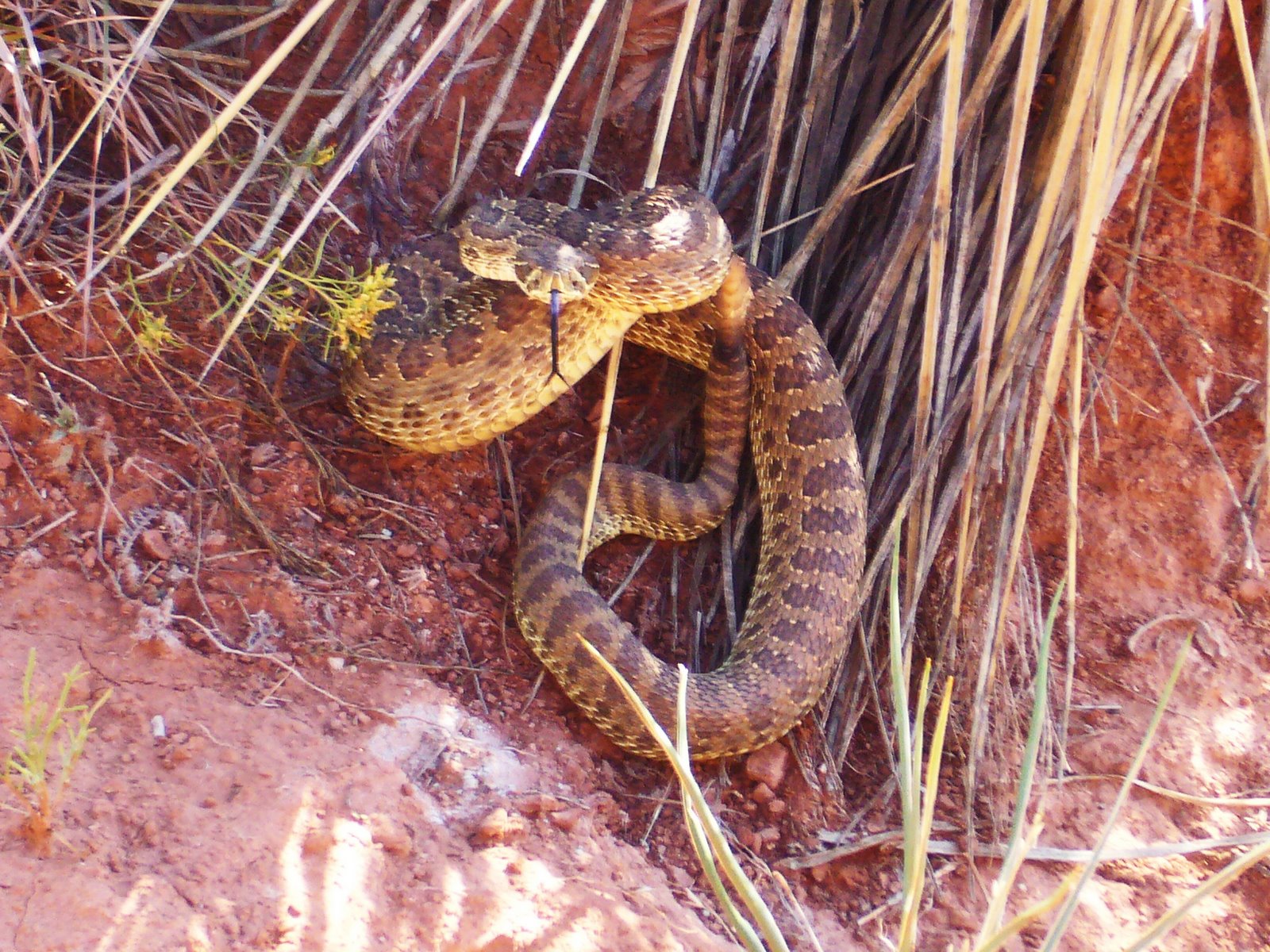
What my esteemed colleagues failed to include on that list of species I might encounter was Crotalus viridis – the prairie rattlesnake! Now folks, I’ve seen a number of rattlesnakes before – mostly in Texas – but I’ve never heard this sound in real life, much less heard it coming from a rattlesnake poised to strike. I encountered this fellow in the eroded red clay slopes above the lake, and even though I wasn’t too terribly close it gave me quite a start (my bravery in taking this photo is vastly exaggerated by the twin miracles of telephoto and cropping!). I walked a little more cautiously afterwards but gradually let my guard down over time. About an hour later, I was startled again by another rattler – I had come within 2 feet of it before it started rattling. I nearly jumped out of my skin, and once I got my heart stuffed back down my throat I noticed several dark juveniles coiled up with her. They slunk away, and I tiptoed back to the car having had my fill of the red clay slopes for the time being.

I did manage some success on the slopes before the rattlers drove me away – not with the claybank and splendid tigers that I had hoped to find, which were largely missing in action save for two individuals of C. limbalis that I spotted amongst the annoyingly similar appearing and ridiculously numerous C. purpurea audubonii (clay path tiger beetle). Success instead came in the form of this cerambycid beetle – Megacyllene comanchei. Recently described from Texas, nothing more was published about this species until I recorded a northern range extension into south-central Kansas (MacRae & Rice 2007). Its occurrence in the Black Hills is not only a new state record for South Dakota but also represents an incredible 700-mile northern range extension – on top of the previous one! Actually, Matt and I each found one individual a few days ago in Sioux County, Nebraska (also a new state record) – I had thought of this species at the time but decided I must be wrong and that I should wait until I got back before making an identification. But the capture of these three additional individuals even further north renewed my suspicions, and consultion of my databases shows good agreement with this species – note the white rather than yellow antemedian elytral band and medial portion of the postmedian elytral band, along with the medial and lateral coelescence of the apical and subapical bands, which distinguish this species from the closely related M. angulifera. The records from this trip show that M. comanchei is much more widely distributed than previously thought. Curiously, all five of the individuals I’ve seen (so far!) were crawling on the ground – an unusual habit for Megacyllene, which are normally found on flowers of goldenrod. The type series was associated with plants in the genus Heterotheca, which I did note growing in the area.

After escaping the snake slopes, I began surveying the lake margins to look for potential tiger beetle habitat. I was especially interested in C. fulgida – Matt and I had seen a single individual along a dry salt creek in Sioux County. The lakeshore around the upper lake was completely surrounded by thick vegetation – no tiger beetles there, but when I arrived at the lower lake I found some small areas of open ground along one side. They didn’t look very extensive, and my initial search of the area showed no activity. Closer inspection, however, showed the presence of larval burrows, and when I grabbed my fishing gear (the nearest grass stem) I promptly managed to extract a couple of larvae. Okay, so there are tiger beetles here, but which one I don’t know – probably C. tranquebarica kirbyi, which we had seen rather commonly at the same dry salt creek in Sioux County. Although the sun would not set for another two hours, it was quite cool already. I wondered if maybe the adults had already started digging in for the night and began looking for evidence of adult burrows. I looked carefully along the edge of the grassline when I saw movement – it was the back end of an adult C. fulgida kicking dirt out as it excavated its burrow. Success! I dug it out, took a few photos (one shown here) and started looking for similar appearing burrows. I not only found several more C. fulgida in their burrows, but also several C. tranquebarica kirbyi. The larvae I collected may or may not represent one of these species – there are other species associated with alkaline habitats that active at other times during the season. I collected a few more larvae, filled a container with soil from the spot – cutting out a section of salt-encrusted surface to place on top, placed all of the collected larvae in it, and watched them immediately start digging new burrows with their shovel-like heads. More babies to take care of!
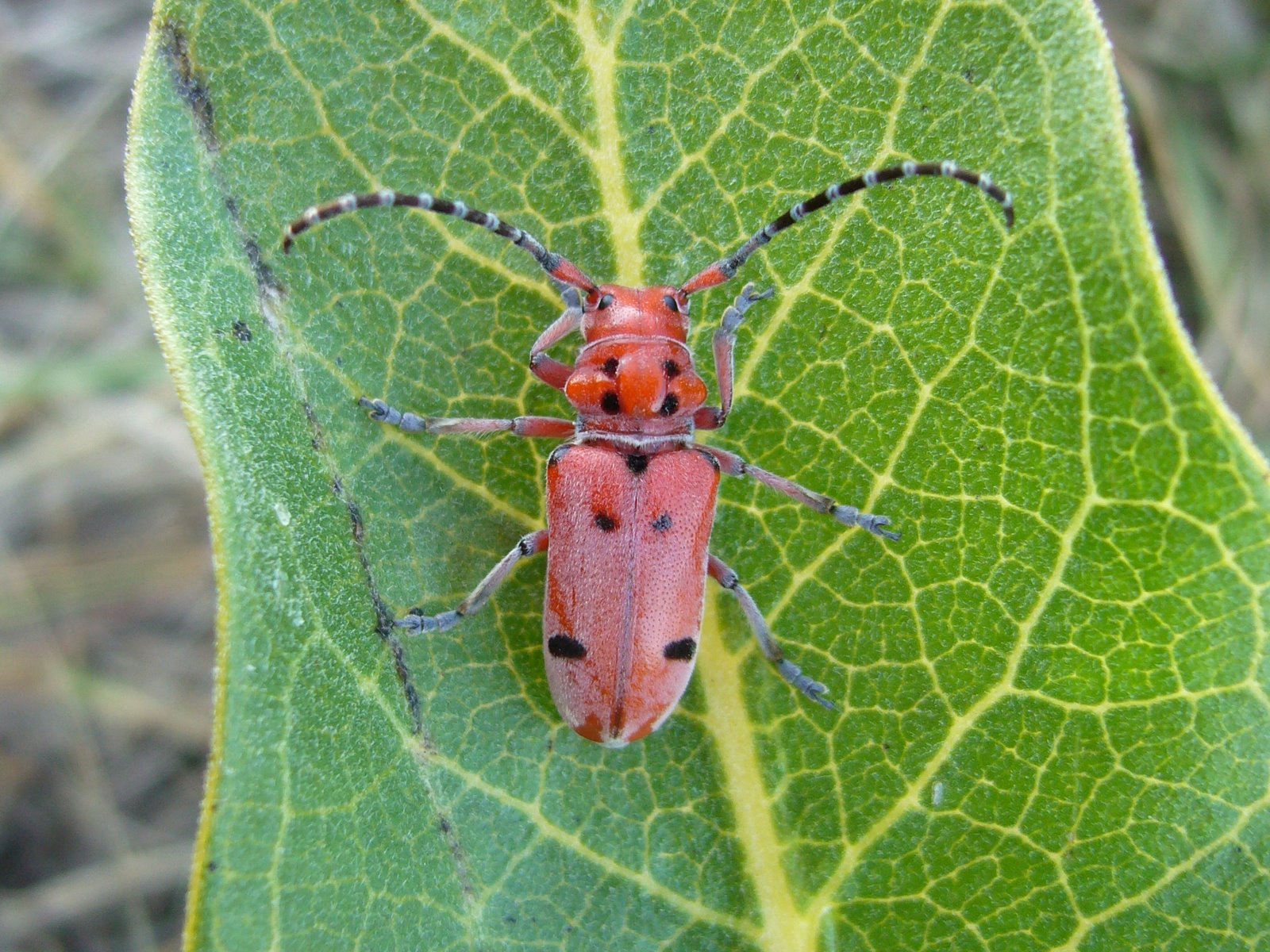
With tiger beetle success under my belt and the sun setting fast, I decided the day was done and packed up the car. As I was closing the hatch, I happened to look over and saw something of great interest – milkweed! I had, in fact, been looking for milkweed all day long in the hopes – faint, I thought – of encountering the newly described Tetraopes heutheri (Skillman 2007). Mirror Lakes, at the McNenny Fish Hatchery, is the type locality of this species, and although the type series was collected in August I held out hope that the adults might persist until September. These hopes faded quickly, however, as I located milkweed plant after milkweed plant on the shortgrass prairie above the eroded clay slopes – all completely senesced, with nary a sign of any milkweed beetles. The plant I’d just spotted – only a small sprout – was green, and on it were two milkweed beetles! I excitedly took some pictures, then started looking carefully about and found several more on additional small sprouts in the area. Apparently, the sprouts represented regrowth from late-season mowing of the roadside, as several full-sized, completely senescent plants were found in the adjacent unmowed area. My excitement at having “found” T. heutheri (because of their small size and occurrence at the type locality) was short lived – closer examination of the specimens after returning home showed them to be very small individuals of the more common Great Plains species T. femoratus. I did have some doubts when I found the beetles, since the milkweed species on which I found them is not the same species with which T. heutheri was associated (Asclepias verticillata, a small species with narrow, linear leaves).

Day 2 in the Black Hills was spent at nearby Boundary Gulch, just across the border in the northeast corner of Wyoming. This was another attempt to find the C. longilabris x nebraskana intergrades that eluded me at McNenney, and although I failed to find them at this location also, I did find five other species of tiger beetles, including several beautifully marked C. limbalis to go along with the two I found the previous day. After that it was some spurious collecting here and there – including larvae from two spots in the southern Black Hills – as I traveled back to Chadron, Nebraska for the night. On tap for tomorrow – Nebraska’s famed Sand Hills! The beautiful sandy tiger beetle (C. limbata) – vivid white and iridescent green to red – hopefully will be found among the super abundant festive (C. scutellaris) and big sand (C. formosa) tigers, and I’ll get another shot at seeing the C. lengi (blowout tiger beetle) that I missed a few days ago.

“All the better to see you with, my dear!”

Click me!

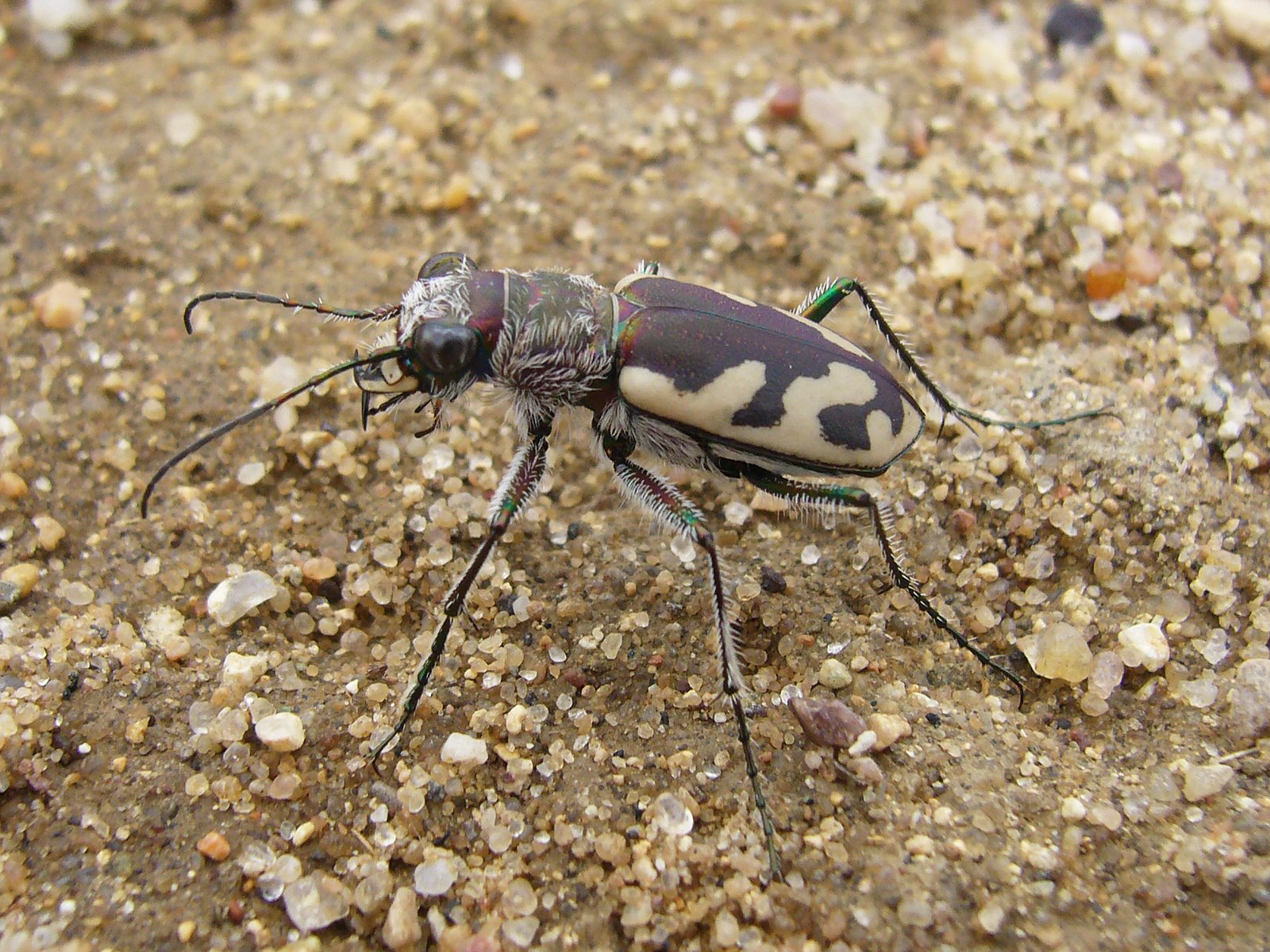
Cicindela formosa (the big sand tiger beetle) is a not uncommon species that occurs across much of North America east of the Rocky Mountains in deep, dry, open sand habitats. It is absent in Appalachia and much of the Interior Highlands, understandable given the rarity of deep sand habitats on these elevated landforms; however, its absence across much of the southeastern coastal plain as well as south and west Texas, despite the widespread presence of apparently suitable habitat, is not easily explained. In Missouri, dry sand habitats are rather limited, occurring primarily along the Missouri and Mississippi Rivers, a few of the larger Ozark rivers, and along Crowley’s Ridge and the Blodgett Terrace in the Mississippi River Alluvial Plain. The individual in these photos was seen last weekend at Sand Prairie Conservation Area (on the Blodgett Terrace), where I also recorded it earlier this year. Despite its relative commoness, I always get a little excited whenever I find this species – it’s a big, chunky thing with bold markings and sufficient habitat specificity to keep it from being too pedestrian (unlike Cicindela repanda and C. punctulata, which usually evoke only a groan – okay, maybe western forms of the latter, with their gorgeous suffusion of green and blue excite me a little bit). Cicindela formosa populations to the west are even more brilliantly colored and localized – it’s a handsome species, indeed! Adults are powerful fliers that terminate their long escape flights with a comical tumble or two across the sand before ending up on their feet. Normally a difficult species to get close to, cool temps and overcast skies on this morning resulted in a cooperative subject and excellent lighting for this series of photos.

Missouri populations are assignable to the eastern subspecies generosa – mostly, that is. There is a population known from the Ozarks, along the beautifully pristine Current River, that exhibits tendencies towards the bright coppery-red dorsal and metallic purple ventral coloration of the nominate subspecies found further west. I’ve also located another population in the northeastern Ozarks on “sand” flats – not true sand, but expansive dumpings of pulverized limestone tailings from former lead mining operations – that shows a similar intergrading with nominotypical characters. The occurrence of these populations near typical generosa populations and disjunct from nominotypical populations several hundred kilometers to the west, coupled with the existence of a broad intergrade zone between the two forms along both sides of the Missouri River through Nebraska, Iowa, and the Dakotas, raises interesting questions about the validity of a subspecific distinction for generosa. Additional subspecies have been described from eastern Texas and adjacent areas of Arkansas and Louisiana (pigmentosignata), southeastern New Mexico (rutilovirens), and southwestern Saskatchewan (gibsoni). Each of these populations is at the edge of the nominate subspecies’ range of distribution and exhibits consistent differentiation in multiple characters – primarily color and maculation – from nominotypical populations. As a result, the case for according subspecific status to these populations is more convincing despite the occurrence of intergrades along narrow zones of contact with nominotypical populations. A truly allopatric population center occurs in northwestern Colorado and southeastern Utah – separated from nominotypical populations to the east by a distance of 230 km. The Colorado population strongly resembles and has thus been assigned to subspecies gibsoni. However, it is hard to imagine a mechanism by which the Colorado and Saskatchewan populations – with over 1,000 km separating them – derived from a common ancestry. A more likely scenario is independent adaptation to similar conditions in their respective habitats. Differences in coloration of the larval head capsule between these two populations lend support to this idea, which if true should qualify the two populations for consideration as distinct subspecies despite the similarity in their appearance. Interestingly, the Utah population resembles nominotypical forms further east, although intergrades with the adjacent Colorado population do occur along a narrow zone of contact.

The subspecies concept has been hotly debated for many decades now. E. O. Wilson and W. L. Brown (1953), in their seminal paper, The subspecies concept and its taxonomic application, questioned the validity of many subspecies on the basis that they failed to exhibit concordance across multiple characters and argued that subspecies that interbreed were not “real taxa” because the flow of genes and characters between them prevented divergence. This restrictive concept essentially limited subspecies to populations that showed significant divergence from their relatives but relied upon external mechanisms (i.e., allopatry) rather than internal (i.e., genetic) for reproductive isolation. Many of North America’s described tiger beetle subspecies would not meet these criteria, since there often exist zones of contact where intergrades (a result of gene flow within hybrid zones) do occur. Ernst Mayr took a more pragmatic approach in Animal Species and Evolution (1963), defining subspecies as “an aggregate of local populations of a species inhabiting a geographic subdivision of the range of the species, and differing taxonomically from other populations of the species” – in other words, subspecies are taxonomic units and not evolutionary units. Viewing subspecies as strictly taxonomic units is more convenient, since the presence of hybrid zones does not invalidate a subspecies as long as it retains its taxonomic distinctiveness. I acknowledge that taxonomic subspecies units are useful – named subspecies provide a convenient shorthand for discussing geographical variation within species and stimulate interest in their study and characterization. Also, as emphasized by cicindelid experts D. L. Pearson et al. (2006), the application of formalized subspecies names for distinctive, local populations makes conservation policy decisions more palatable to policians and legislators, thus enhancing the potential for protection. However, I also agree with O’Neill (1982) that the subspecies concept must be connected to an evolutionary unit to be truly meaningful, and the recent application of molecular techniques is now providing a genetic basis for assessing subspecies validity. Interestingly, some such studies have shown near complete blockage of gene flow across hybrid zones, even when hybridization is frequent, providing genetic evidence of “real taxa” that nevertheless interbreed at their boundaries (Mallet 2007). It would be interesting to apply molecular techniques to populations of generosa, nominotypical formosa, and the Missouri intergrades to understand their degree of genetic divergence, the presence of which could convince me that their status as distinct subspecies should be maintained.

Trichinorhipis knulli

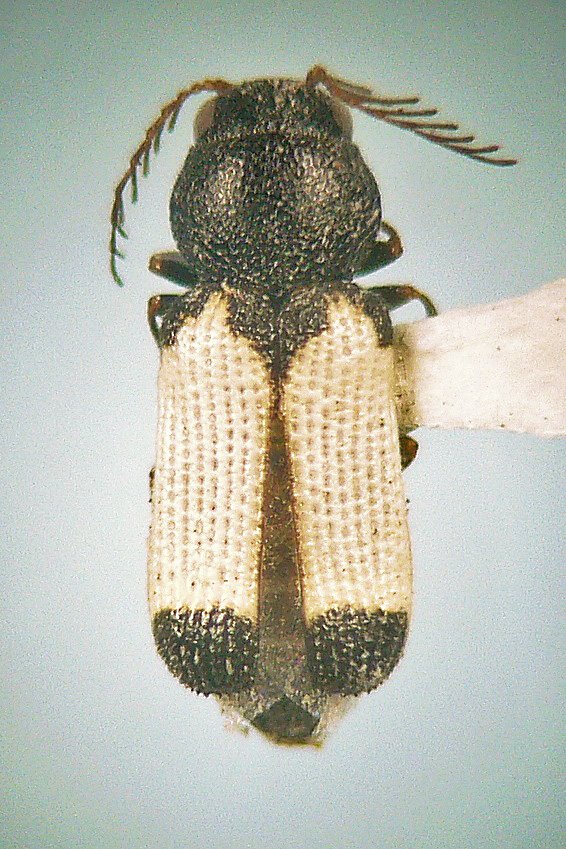
Just a little diddy on one of the more interesting species I’ve encountered over the years while I finish up a longer piece on the Loess Hills of Missouri. The specimen shown here is a male Trichinorhipis knulli. This quirky little species belongs to the equally quirky little tribe Xenorhipidini (family Buprestidae). Members of this tribe are among the few groups of Buprestidae in which evolution of the male antenna has diverged dramatically from the typical condition (i.e., serrate). In the Xenorhipidini, this condition may be considered very extended flabellate or even lamellate. As I mentioned, only males exhibit this antennal modification – females possess typical serrate antennae. The functional significance of this almost certainly involves detection of female sex pheromones. The surfaces of the flabellae in these species are covered with numerous presumably olfactory sensillae that are lacking on female antennae, and males of a related species (Xenorhipis brendeli) have been observed attracted in large numbers to caged live females. This antennal condition appears to have arisen independently in three other groups of Buprestidae as well, but Xenorhipidini is the only non-monotypic tribe in which males of all member species possess the condition.

Trichinorhipis knulli is restricted to southern California and has been encountered most often in the vicinity of Mountain Springs in Imperial County (just north of the Mexican border), where it breeds in dead branches of jojoba, Simmondsia chinensis. Very few individuals have actually been observed in the field – most existing specimens have been reared from caged, infested branches (as is the case with this specimen, which emerged August 1994 from a dead branch I collected in October 1992 – patience prevails!). At only 3.6 mm in length, it is one of the smallest members of the family, but I think you’ll agree that it is just as impressive under the microscope as any of the larger members of the family. The genus is monotypic (although I hear rumor of an undescribed species from west Texas) and has been placed in its own subtribe (Trichinorphidina) within the Xenorhipidini due to unique characters that distinguish it from the other included genera (Hesperorhipis and Xenorhipis). These include its entire (not abbreviated) elytra and broadly rounded pronotum lacking lateral margins. In Hesperorhipis and Xenorhipis the elytra are abbreviated, and the pronotum is quadrate with distinct lateral margins. The organization of the antennal sensillae also differs between Trichinorhipis and these other genera.

The tribe Xenorhipidini is currently being revised by my colleague and friend, Dr. Charles Bellamy, California Department of Food and Agriculture, Sacramento.

Saving Missouri’s tigers

For several years now, my friend and colleague, Chris Brown, and I have been studying the tiger beetles (family Cicindelidae) of Missouri in an attempt to characterize the faunal composition and in-state distributions of the included species. Our studies have relied on examination of specimens in museum collections along with several seasons of field work across the state. The data we’ve gathered so far have revealed a fauna that reflects the ecotonal position of Missouri, comprised of elements from the eastern deciduous forest, the southeastern mixed hardwood forests and pinelands, and the western grasslands. These beetles are most frequently associated with disturbed habitats containing sparse vegetation, such as sandbars and erosion cuts, but they also live in other habitats such as along muddy banks, on glades and in forest litter. Since European settlement of Missouri, drastic alterations have occurred in the abundance and distribution of these habitats across the state, and tiger beetle populations have been affected as a result. Dredging and straightening of natural water courses have impacted species that prefer the water’s edge, while fire suppression has impacted those that need dry, open habitats. Grazing has had a profound impact on species associated with sensitive, saline habitats. Conversely, some anthropogenic changes have benefited certain species – road, borrow sand pit and pond construction have increased habitat for species able to utilize such habitats. To date, our surveys have confirmed the presence of 23 species in Missouri (16% of the North American fauna). Some species are common and widespread, such as Cicindela sexguttata (six-spotted tiger beetle) (above, photo taken in a mature white oak forest in Warren Co.). Others have more specific habitat requirements, but their status within the state remains secure. A few are rare and highly localized, primarily representing species at or near the northern or western edge of their distributions that exist in the state as small, disjunct populations. Special conservation efforts may be warrented for these to ensure their continued survival within the state.

One species of potential conservation concern is C. pruinina (loamy-ground tiger beetle), a grassland species normally found in Kansas, Oklahoma, and Texas (left, photo by Chris Brown). This beetle is sometimes treated as a synonym or subspecies of C. belfragei but was most recently considered a valid species by Spomer et al. (2008). When we began our studies, the species was known from Missouri only by a small series of specimens collected in one of the western counties and deposited in the collection of Ron Huber. An additional specimen in the Huber collection labeled “Columbia, Mo.” is considered to likely represent student mislabeling. Several attempts at relocating the western Missouri population were required before we found it, and intensive surveys to determine the extent of its distribution in Missouri were conducted during 2006 using a combination of pitfall traps and direct observation. Those surveys succeeded in detecting the beetle only along one 2.5-mile stretch of county road in Johnson Co. The beetle seems to be restricted to red clay embankments occurring in a small localized area of the county. This season we plan to refine our survey by focusing tightly on promising habitats in this area near the sites identified in 2006 to more precisely define the distributional limits of this population. Regardless of what we find, the flightless nature of the species, its highly localized Missouri occurrence, and the disjunct nature of such suggest that special conservation status is warranted for the species to ensure its continued presence in the state. Despite the relatively low numbers of individuals we have seen, the protected status of the land on which this beetle lives leaves us optimistic about its future.

A Missouri species about which we are far less optimistic is C. circumpicta johnsonii (saline springs tiger beetle) (right, photo by Chris Brown), long known from saline spring habitats in the central part of the state. The Missouri population is highly disjunct from the main population further west and exhibits a uniform blue-green coloration rather than the mix of blue, green, and red colors exhibited by the main population. These features suggest that separate subspecies status might be warranted for the Missouri population. Numerous historical collection records exist from a handful of sites in Howard and Cooper Counties; however, surveys conducted by us during recent years revealed that the populations had suffered severe declines. This appears to be largely due to cattle disturbance and vegetational encroachment of the sensitive saline spring habitats upon which the beetle depends, especially at sites located on private land. Ron Huber, in a letter to me listing the collecting records he had for this species, reported seeing “hundreds of the wary little buggers” at one locality on private land, but in our visit to the site not a single individual was seen around the spring – badly trampled and overgrown with the exotic pasture grass tall fescue (Festuca arundinacea). In all, we were successful in finding the beetle at only one of the historical localities and at one new site located nearby. While both of these sites are located on state protected land, we concluded that the longterm viability of the C. circumpicta johnsonii population in Missouri was in serious jeopardy. Based on our recommendation, the species was placed on the Missouri Species of Conservation Concern Checklist with a ranking of S1 (critically emperiled). While this affords the species legal protection under the Wildlife Code of Missouri, the benefit may be minimal since the Wildlife Code does not address the main threat to this beetle’s survival – habitat degradation. We have not surveyed for this beetle since but plan to make field observations this summer (no trapping!) to check on its status. I sincerely hope we will not have to hang our heads with the realization that we have succeeded in extirpating yet another beautiful and irreplaceable gem.

Last year we finally succeeded in locating C. cursitans (ant-like tiger beetle) in Missouri (left, photo by Chris Brown). Adults are flightless, and at less than 1 cm in length, are among the smallest of North American tiger beetles. The species has been recorded broadly but sporadically between the Appalachians and Great Plains – a distribution that is probably underestimated due to its small size and general resemblance to ants. A significant distributional gap exists between the eastern and Great Plains records, which Ron Huber believes may be indicative of two disjunct forms and potentially two species. Missouri falls within this gap, and although the species has not yet been formally recorded from the state, a single specimen collected in 1991 “nr. Portageville” is deposited in the Enns Entomology Museum, University of Missouri, Columbia. We had made several attempts over the past few years to locate this species by searching what we thought were promising habitats along the Mississippi River near Portageville, but the species was not located until last year, when I relayed this information to Portageville biologist and tiger beetle enthusiast Kent Fothergill. Kent not only located the beetle at the location I suggested, but quickly found another population on a nearby parcel of land managed by the Missouri Department of Conservation. Hurriedly, we visited the first site and observed a few additional individuals at a nearby location just to the south. The bottomland forest habitat within which all of these individuals were observed is fairly extensive along the Mississippi River in the southeastern lowlands of Missouri, but at this point we can only speculate whether C. cursitans occurs throughout this habitat. Other habitats have been reported for this species, including mesic and wet prairies and meadows (Brust et al. 2005). Such habitats are also found in the southeastern lowlands, and while C. cursitans has not been seen through cursory examinations in such areas, it is possible that the small size, cryptic habits, and narrow temporal occurrence of C. cursitans have allowed it to escape detection. Kent will be helping us this season with additional trapping and direct observation at several selected sites along the Mississippi and St. Francois Rivers to determine whether the beetle occurs more broadly in the southeastern lowlands and whether it utilizes these other habitats in addition to bottomland forests.

I would be most interested in any additional reports of these rare tiger beetles in Missouri (contact me at the email address shown in the left sidebar copyright statement). Remember, C. circumpicta johnsonii is critically emperiled in Missouri – please do not collect it.

The Chrysobothris femorata “problem”

I found a young cottonwood tree (Populus deltoides) the other day that had recently fallen over in one of the many storms we’ve had this spring. Anytime I see one of these “windthrows” I immediately think – woodboring beetles! Windthrows are attractive to numerous species of Buprestidae and Cerambycidae, and when I find one I try to revisit it often as the season progresses and different beetle species – active at different times and attracted to wood at different stages of dying or death – are encountered. This particular tree was only partially uprooted and so still had fresh foliage in the crown. While death is inevitable, it will be a slow, lingering death as the remaining soil-bound roots try in vain to sustain the fallen tree. This is an ideal situation for attracting species of the genus Chrysobothris, which seem to respond to plant volatiles emitted from trees under duress or recently killed. In the deciduous forests of eastern North America, C. femorata and related species are the most commonly encountered Chrysobothris attracted to these situations. Nursery growers and landscapers know this insect as the “flatheaded apple tree borer” – in reference to the appearance of the larvae as they tunnel under the bark of one of its favored hosts. The species has in fact, however, been recorded breeding in some two dozen genera of deciduous woody plants throughout the continental states and Canada, an unusual level of polyphagy for a genus of beetles in which most species typically exhibit a fair degree of host fidelity.

The problem is, “C. femorata” is not really a species, but a complex of closely related species. Entomologists have recognized this for some time, and while diagnostic characters have been identified for some of the more distinctive members of the group, such characters have remained elusive for C. femorata and its closest relatives. As a result, the species has become sort of a “trash can” for specimens that could be not be assigned to one of these more distinctive species, and in many museum collections large series of specimens can be found labeled simply “C. femorata species complex”. Fortunately, some much needed clarity was provided earlier this year by Stanley Wellso and Gary Manley, who after years of careful, systematic study at last published a revision of the Chrysobothris femorata species complex. In their work, six new species were described and one species resurrected from synonymy under C. femorata. Three of the new species occur in the western U.S., another is restricted to Georgia and Florida, and the remaining two new species and one resurrected species occur broadly across the eastern or southeastern U.S. This brings to 12 the total number of femorata-complex species in North America, with nine occurring in the eastern U.S. and seven in Missouri. The characters used to distinguish the species are subtle but consistent, and available biological data seem to support the species as now defined.

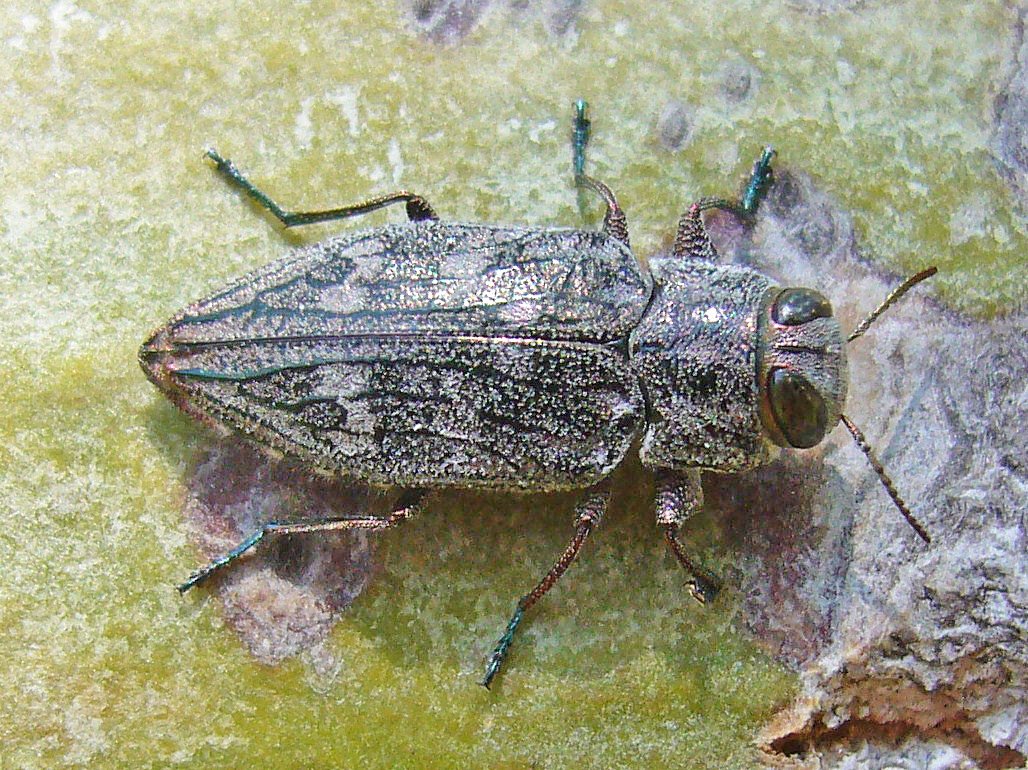
Of the dozen or so Chrysobothris individuals I collected on the fallen cottonwood during this past week, all but one represent C. femorata (as now defined). The photos I share here show some of the characters that distinguish this species from its closest relatives – primarily the straight rather than curved lateral margin on the last third of the elytra and the generally distinctly reddish elytral apices (most easily seen in the full-sized versions of the photos – click to view). Females (first and second photos) tend to show distinct reddish tinges behind the eyes and on top of the head as well. Males (third photo) can be distinguished from females by their bright green face (I tried valiantly but could not get one of these guys to pose in a position showing such). The photos also illustrate some of the typical behaviors displayed by these beetles, with males rapidly searching up and down the trunk looking for mates (third photo), and females probing cracks and crevices in the bark with their ovipositor looking for suitable sites to deposit their eggs (second photo). Of the two dozen host genera recorded for this species, many likely refer to some of the newly described species. In particular, records of this species from oak (Quercus spp.) and hackberry (Celtis spp.) may refer to the new species C. shawnee and C. caddo, respectively. As now defined, this species is still quite polyphagous and occurs throughout the continental U.S., but it is more common east of the continental divide and appears to prefer maple (Acer spp.), birch (Betula spp.), sycamore (Platanus occidentalis), poplar (Populus spp.), and especially rosaceous hosts such as hawthorn (Crataegus spp.), apple (Pyrus malus), pear (Pyrus communis), and cherry (Prunus spp.). Also, of all the species in this complex, C. femorata appears to be the most partial to stressed or dying trees (as with these individuals collected on live, windthrown cottonwood) rather than completely dead hosts. Wellso and Manley note that considerable variation still exists among individuals assignable to their more restricted definition of C. femorata. Thus, it is possible that more than one species is still involved, particularly among those utilizing hardwood hosts (e.g. apple, maple, etc.) versus softwoods (e.g., poplar, birch, etc.). Detailed biological studies will likely be required to identify any additional species that might be hiding amongst these populations.