Charming Couple

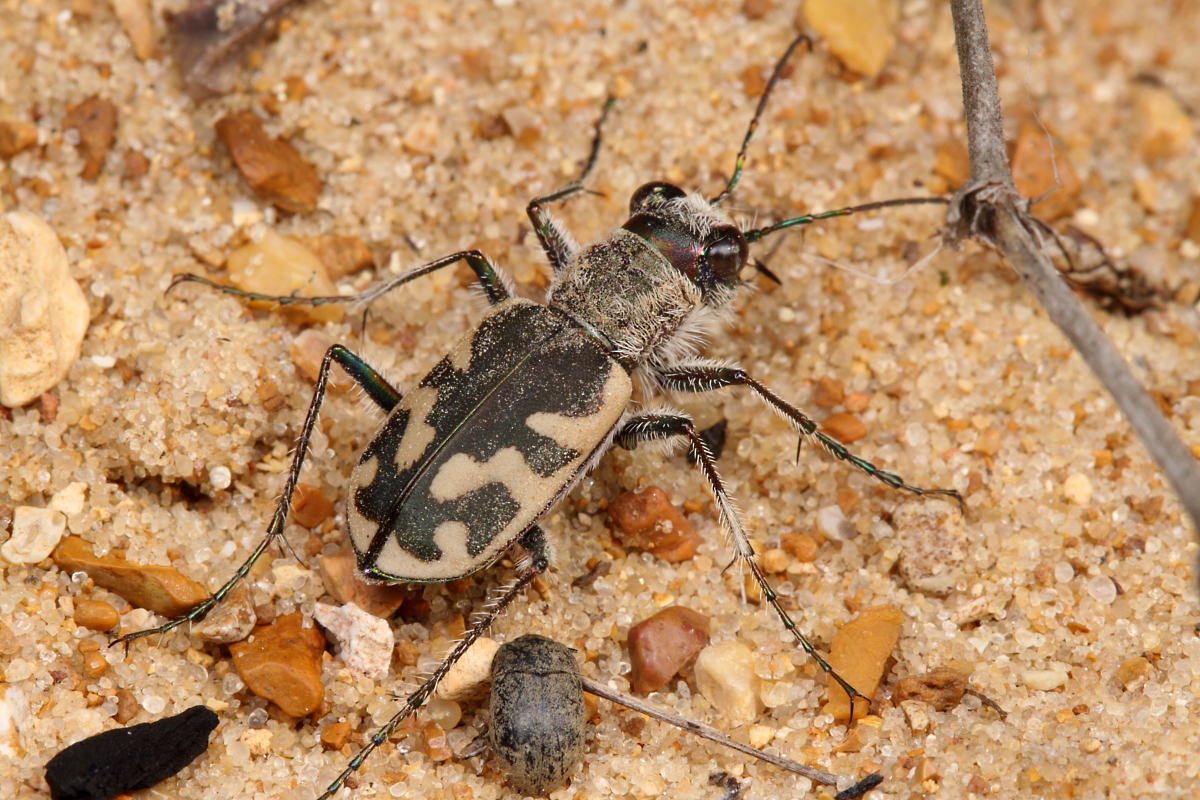
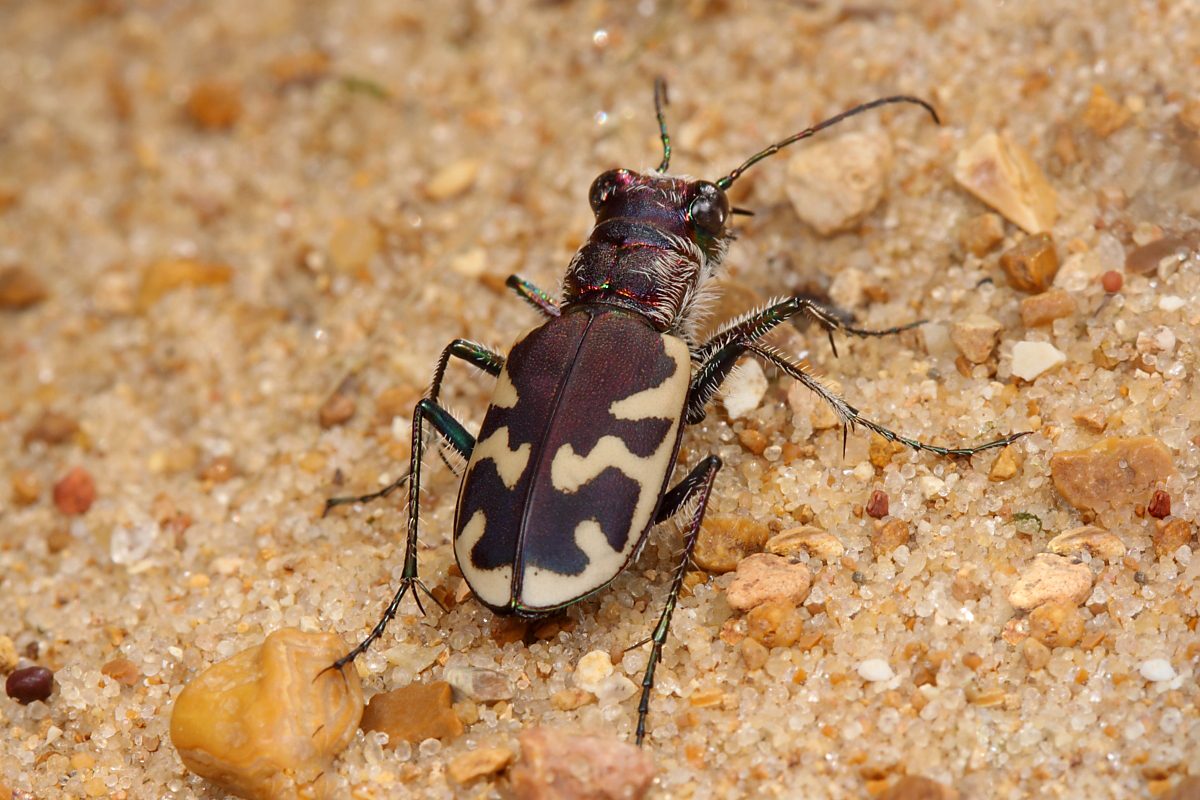
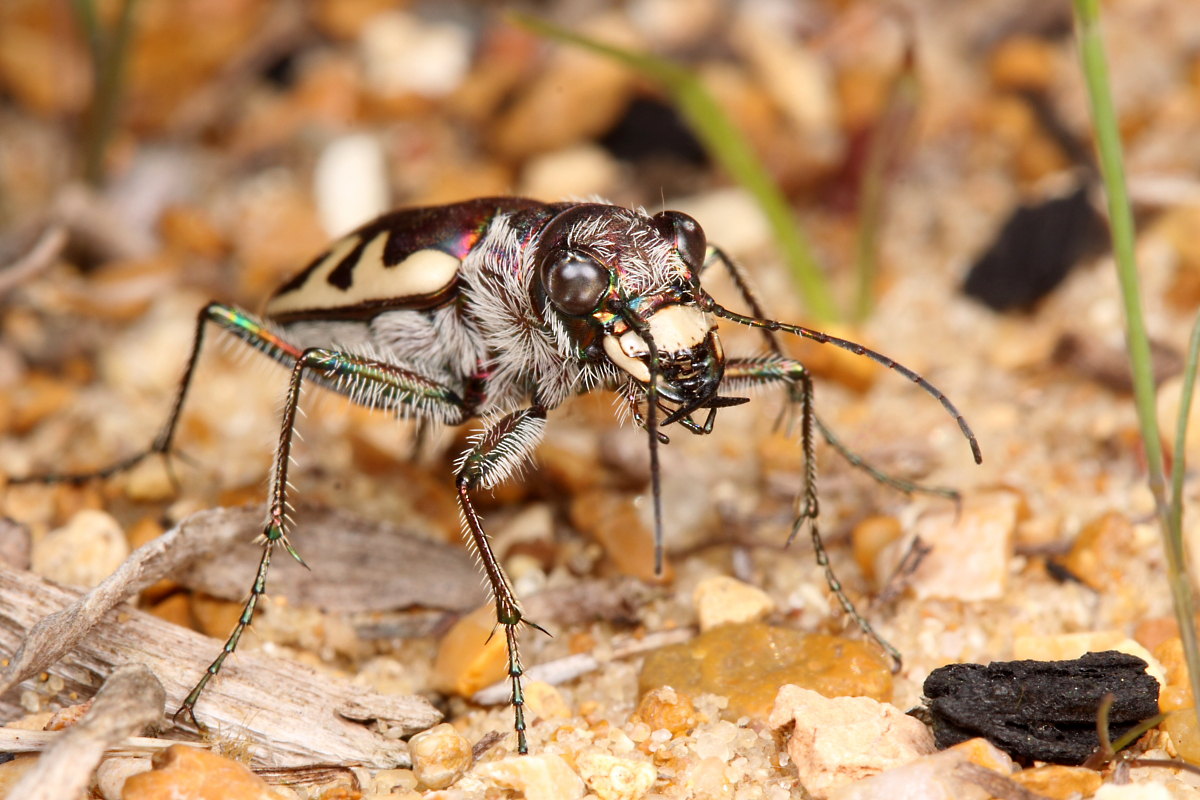
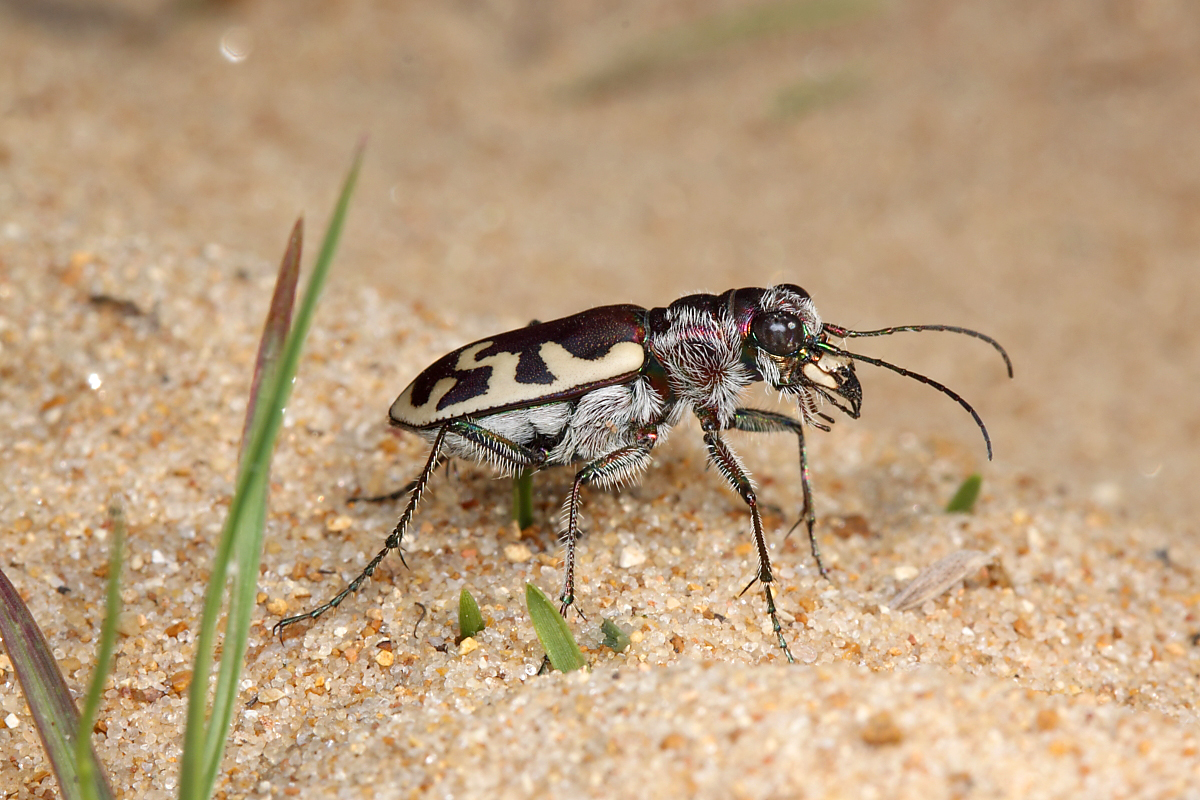
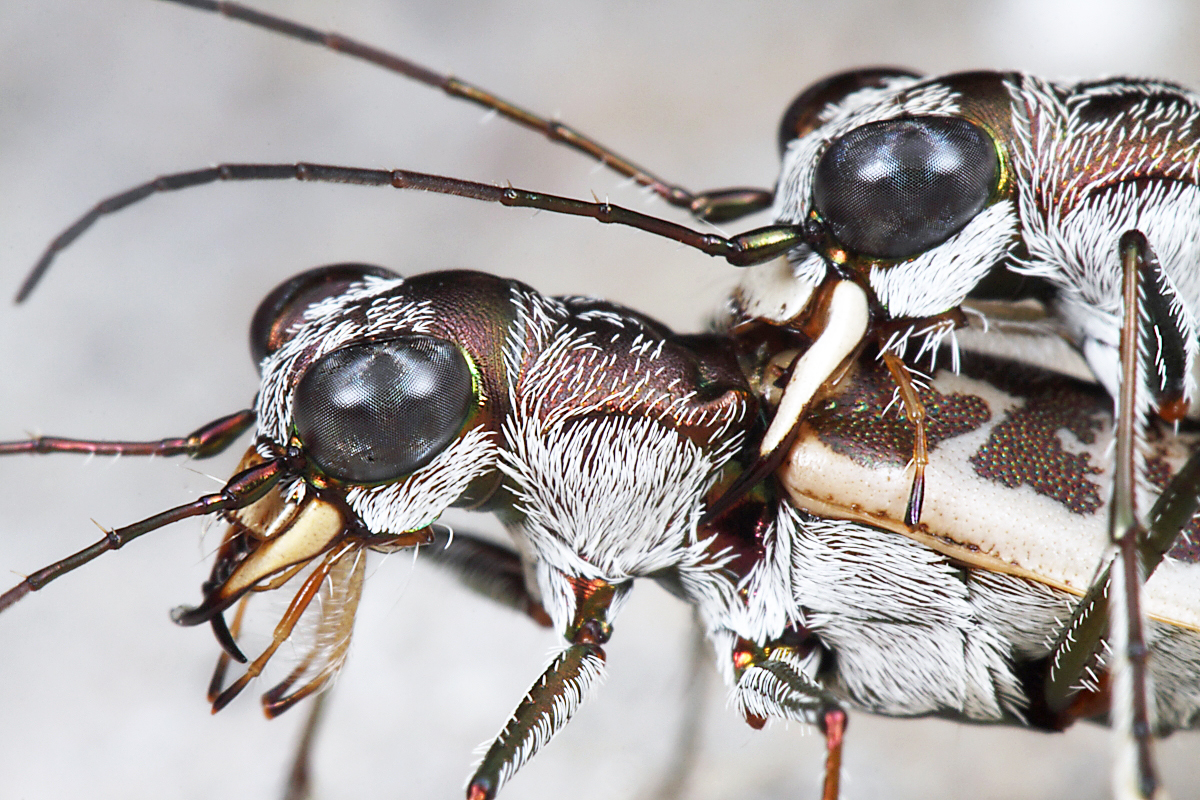
You may have noticed a longer than normal interval since the last post (or not)—the result of a family vacation to Florida.  I’m not much of a beach bum, so while the girls found inordinate pleasure laying on the hot sand and doing absolutely nothing while being baked to a crisp by the almost tropical Florida sun, I took the opportunity to look for some of Florida’s gorgeous and often endemic tiger beetles.  I visited a diversity of habitats to both the north and south of my base near St. Petersburg ranging from white sand beach to salt marsh to oak/pine sand scrub to pine rockland.  I photographed tiger beetles both at night and during the day (laying on the hot sand while being baked to a crisp by the almost tropical Florida sun!).  In total I encountered eleven tiger beetle species—five of them true Florida endemics.  We’re on our way back now, and photos are just now getting downloaded and processed, so I’m not quite ready yet to begin sharing stories in earnest.  Until then, here is a photograph of a mating pair of one of Florida’s classic coastal tiger beetle species, Ellipsoptera hamata lacerata (Gulf Beach Tiger Beetle).

Ellipsoptera hamata lacerata (Gulf Beach Tiger Beetle) | Seminole, Florida

Photo Details: Canon 50D (ISO 160, 1/200 sec, f/16) w/ 100mm macro lens + Kenko DG extension tubes (68 mm), Canon MT-24EX flash w/ DIY oversized concave diffuser. Post-processing to adjust levels and apply unsharp mask.

Copyright © Ted C. MacRae 2011

Cylindera cursitans (Ant-like Tiger Beetle) in Arkansas

In late June I visited Chalk Bluff Natural Area in northeastern Arkansas.  Situated at the northeastern-most corner of the state, it is here where the St. Francis River enters Arkansas from Missouri, slicing through the loose Tertiary conglomerates of Crowley’s Ridge before settling into its lazy, meandering course between the two states in the Upper Mississippi Alluvial Plain.  The site’s geological history, however, is not what attracted me to it, but rather its status as the state’s only known locality for Cylindera cursitans (ant-like tiger beetle).  It was the existence of this population that convinced my colleagues Chris Brown and Kent Fothergill and I that the species must occur in southeast Missouri not only along the Mississippi River, but also along the St. Francis River some 50 miles to the west.  Persistence eventually paid off last year when Kent captured a single individual on the Missouri side of the river at Chalk Bluff Access in Dunklin Co. (MacRae et al. 2011).

Kent had to really work for that specimen, spending several hours crawling through the underbrush in wet, bottomland forests before eventually finding the lone individual.  I was confident, however, that my search at the Arkansas site would require far less effort, as Kent had also observed this population during his attempts to locate the species on the Missouri side of the river, writing “I saw more cursitans in an hour than I have seen lifetime total!” The playground/picnic area where Kent had seen them sits right next to the parking lot and is as un-curitans a habitat as one can imagine—tidy and neat, with a nicely-mowed grass lawn under the shade of large oak trees rather than the sweltering, poison ivy choked understory habitats with their attendant swarms of mosquitoes and deer flies that we’ve braved in order to find the species in Missouri.  Only the small, intermittent patches of barren sandy loam soil gave a clue that this might be good tiger beetle habitat, and even then one might expect only the more pedestrian species such as Cicindela punctulata and Tetracha virginica and not something as exciting as C. cursitans.

But occur there it does, and hardly a few steps had been taken from the parking lot before I saw that familiar “dash” of movement, looking for all intents and purposes at first like a small spider.  A closer look confirmed its true identity, and during the next hour or so I would see countless such individuals—all scrambling rapidly for cover on my approach.  I have seen a number of cursitans populations during the course of our surveys for this species in southeastern Missouri, and this population was as robust as any of them.

Despite my earlier work with this species, I still lacked photographs I was completely happy with—i.e., field photographs of unconfined beetles taken with a true macro lens and flash to control lighting.  All of my previous photographs were either taken with a small point-and-shoot camera or had to rely upon beetles confined in a terrarium.  The species is not easy to photograph in the field—the small size of the adults (6–8 mm in length) and their cryptic coloration matching the soil surface makes them almost impossible to see until they move.  They are also very skittish and are quick to flee when approached, necessitating very slow, deliberate movements in order to approach them closely enough for photographs.  Oftentimes adults will run towards and hide up against the base of a clump of grass, where they are even more difficult to photograph, but sometimes they will hide beneath fallen leaves or other debris.  Interestingly they do not flee immediately if the leaf/debris is very carefully lifted up and removed—almost as if they think they’re still hidden.  I’ve found exposing adults hiding under leaves to be an easier way to get field photographs of the species, although I have noted that some individuals (but not others) seem eventually to adjust to my presence and resume normal activity despite having a camera lens hovering inches away from them.

Once I had my fill of photographs, I walked the trail to the river and back but did not see any beetles along the trail within the forest (too much leaf litter) or along the river.  Surely the beetles occur in these other areas and are not confined in the area just to that small, man-made habitat that is the picnic ground.  Seeing this population gives me greater confidence that the species does indeed occur more broadly along the St. Francis River in Missouri than suggested by single individual caught on the Missouri side by Kent.

REFERENCE:

MacRae, T. C., C. R. Brown and K. Fothergill. 2011. Distribution, seasonal occurrence and conservation status of Cylindera (s. str.) cursitans (LeConte) (Coleoptera: Carabidae: Cicindelitae) in Missouri. Cicindela 43(3): in press.

Copyright © Ted C. MacRae 2011

A Missouri hotspot for Cylindera unipunctata

Cylindera unipunctata | Gray Summit, Franklin Co., Missouri

Cylindera unipunctata | Shaw Nature Reserve, Gray Summit, Franklin Co., Missouri

Long before I began studying tiger beetles in earnest, I became aware of one of Missouri’s more interesting species—Cylindera unipunctata (one-spotted tiger beetle).  One of my favorite woodboring beetle collecting spots back in the 1980s was Pinewoods Lake Recreation Area near Ellsinore in the southeastern Ozarks.  I had stumbled upon this spot in the beginning my beetle studies and spent countless days wandering the trails through the open forest that surrounded the relatively new lake and blacklighting in the campground at night.  I literally cut my entomological teeth at this spot.  While woodboring beetles were my quarry, I couldn’t resist the few brown, apparently flightless tiger beetles (in reality, they can fly but rarely do so) that I had seen clambering across the woodland trail in front of me during one of my first visits to the area.  That following winter, when I showed them to Ron Huber during a mutual visit at the home of long-time lepidopterist Richard Heitzman (and as far as I know, owner of the largest private insect collection in Missouri), I was pleased to see his palpable excitement at my find.  I kept an eye out for this species ever since, and while I have found them in a number of localities here in Missouri—all along the eastern edge of the Ozark Highlands south of St. Louis, I’ve never seen more than one or two, or maybe three at a time.  Even when returning to spots where I had seen them previously and looking for them specifically, they seemed a rare, elusive species.  By the time Chris Brown and I had begun our serious studies of the Missouri tiger beetle fauna, I had accumulated no more than a dozen or so specimens from places like Pinewoods Lake, Hawn State Park, and Trail of Tears State Park.  Their seeming preference for shaded, woodland habitats is unusual amongst North American tiger beetles, save for the conspicuous and commonly encountered Cicindela sexguttata (six-spotted tiger beetle), but within that habitat I had begun to notice a commonality—open woodland with steep rocky/clay slopes.

Beetles are quick to take cover in the leaf litter

Beetles are quick to take cover in the leaf litter

A few years ago, Chris Brown noticed that this species seemed to be fairly common at Shaw Nature Reserve in Gray Summit, Missouri.  I was surprised to learn of the occurrence of this species just 40 miles southwest of St. Louis (and only 15 miles from my home), and in 2009 I resolved to go there and see it for myself.  I had just begun digital insect photography at the time as well, so I was looking forward to the chance to photograph one of Missouri’s rarer tiger beetles.  On the first trip to SNR in May 2009, I searched the trails repeatedly where Chris had seen them but never saw a single one.  I thought maybe I was too early, so I went back a couple of weeks later at the end of May, and this time I found one… but just one!  I got off a series of shots before the beetle bolted and eventually disappeared, leaving me with one decent shot of the species.  The lighting and focus in the photo were good, but the photo was just… well… boring!

Adults were most frequent along sloping portions of the trail.

Adults were most frequent along sloping portions of the trail.

A few weeks ago, again near the end of May, I decided to try for the species again.  I’ve now been photographing tiger beetles for two years rather than two weeks, so perhaps I’ve learned a few tricks in locating and photographing the beetles that would give me a better variety of photos to show for my effort.  I went back to the same trail (Jane’s Wildflower Trail), and while I did have better luck (finding four beetles instead of just one) I was still not happy with the photos I had gotten to that point (only Photo #2 is from that session).  I decided to try my luck along another trail (Bluff Overlook Trail) where James Trager had seen an individual earlier just that week.  At first, the beetles seemed to have the same fairly low occurrence that they had along the first trail.  Still, I saw enough individuals to get a number of photos that I was happier with (#1, #3 and #4 in this series), and I figured the job was done.  We hiked down towards the river to see if we might find the population of Cicindela formosa generosa that Chris had seen on a sand bar in a previous year, but flooding by the Meramec River had much of the area—and certainly any open sandy areas—under water.

Beetles were less skittish when hidden amongst small plants.

Beetles were less skittish when hidden amongst small plants.

By the time we took the trail back up to the higher elevations it was getting later in the afternoon, and I returned to keeping an eye out for the tiger beetles.  As soon as we returned to the steep, rocky clay slope areas where I had seen the few earlier beetles, I started seeing them in decent numbers.  I had enough photos by then, so I collected a few more individuals to beef up the voucher series, and as we walked it seemed the beetles became more numerous with each step.  Then I saw something I had not seen all day—a mating pair!  I carefully setup for the shot, but I disturbed them in the process and they split up.  However, dejection quickly turned to elation, as almost immediately I saw another mating pair.  This time I made no mistakes and got in a few shots before they broke up and split.  As I was photographing them, I saw another mating pair perched on a nearby rock—I liked them even better, and the shot below is my favorite of that pair.  Over the next half hour, we saw countless adults and mating pairs.  Part of me wonders if it was the time of day, as the species is reported to be more active during late afternoon (Pearson et al. 2006).  I do note that all of my visits to Jane’s Wildflower Trail have been during morning and early afternoon, so perhaps they are just as common along that trail as well and I have just never been there at the right time of day to see that.

Mating pairs were seen with greater frequency during late afternoon.

Mating pairs were seen with greater frequency during late afternoon.

While most of the adults I saw were on the Bluff Overlook Trail, one thing I did find in numbers along Jane’s Wildflower Trail were larval burrows.  Their location was consistent with the habitat noted by Hamilton (1925), who described the larvae from specimens dug from bare, rocky soil on a steep, sparsely wooded hillside.  I returned the next morning to the spot where I had seen the larval burrows and was able to extract four larvae from their burrows by digging them out and have set them up in a rearing container of native soil.  I can’t yet rule out the possibility that they might represent C. sexguttata, which occurs commonly in the area; however, all signs—the depth of the burrows (only 3 to 4 inches), their occurrence on steep, rocky slopes, the open woodland—point to them belonging to C. unipunctata.

Larval burrows were located on steep rocky/clay slopes in open woodland.

Cylindera unipunctata may truly be more common across its range (eastern North American forests) than is realized.  In contrast to C. sexguttata, and despite their shared woodland habitat, C. unipunctata is somber colored, avoids sunlit spots, rarely flies, and shows a distinct preference for staying within the leaf litter.  These features make the beetles easily overlooked, even by experienced tiger beetle collectors.  Frank Guarnieri (2009) recently published a note describing a “hot spot” for this species in Maryland, in which he described an encounter with innumerable individuals in a Maryland state park from late May through June.  This encounter was all the more remarkable considering that he had only seen two individuals during the previous ten years.  I tend to agree with his assertion the scarcity of C. unipunctata is probably more apparent than real—an artifact of its cryptic habits, short temporal occurrence, and fairly specific habitat preferences that are atypical amongst most tiger beetle species.

REFERENCES:

Guarnieri, F. G.  2009.  Observations of Cicindela unipunctata Fabricius, 1775 (one-spotted tiger beetle) at Pocomoke River State Park, Worcester County, Maryland.  The Maryland Entomologist 5(1):2–4.

Hamilton, C. C.  1925.  Studies on the morphology, taxonomy, and ecology of the larvae of Holarctic tiger beetles (family Cicindelidae).  Proceedings of the U. S. National Museum 65(17):1–87.

Pearson, D. L., C. B. Knisley and C. J. Kazilek. 2006. A Field Guide to the Tiger Beetles of the United States and Canada. Oxford University Press, New York, 227 pp.
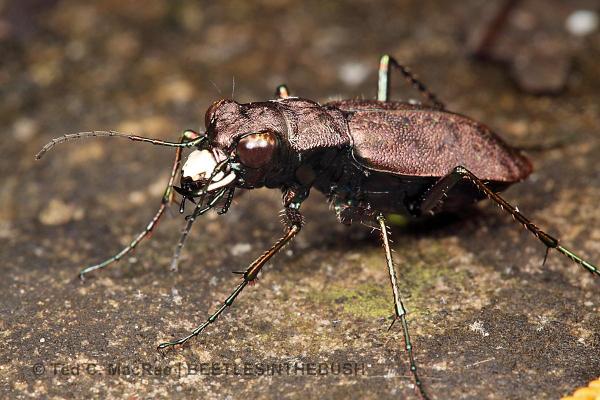
Dromochorus pruinina is not extirpated in Missouri… yet!

ResearchBlogging.orgWhen Chris Brown and I began our study of Missouri tiger beetles back in 2000, our goal was simply to conduct a faunal survey of the species present in the state.  Such studies are fairly straightforward—examine specimens in the major public and private collections, and do lots and lots of collecting, especially in areas with good potential for significant new records.  Over the next 10 years, however, our study morphed from a straightforward faunal survey to a series of surveys targeting a number of species that seemed in need of special conservation attention.  We were no longer just collecting tiger beetles, but trying to figure out how to save them.

There were good reasons for this—Missouri’s tiger beetle fauna is rather unique due to the state’s ecotonal position in the North American continent.  While its faunal affinities are decidedly eastern, there are also several Great Plains species that range into the state’s western reaches.  Even more interestingly, these western species occur in Missouri primarily as relict populations—widely disjunct from their main geographic ranges further west, and limited in Missouri to small geographical areas where just the right conditions still exist.  These include the impressive (and thankfully secure) Cicindela obsoleta vulturina (prairie tiger beetle), the likely extirpated Habroscelimorpha circumpicta johnsonii (Johnson’s tiger beetle, with Missouri’s disjunct population often referred to as the ‘saline spring tiger beetle’), Cylindera celeripes (swift tiger beetle)—still clinging precariously to existence throughout much of its former range, and the subject of our newest publication, Dromochorus pruinina (frosted dromo tiger beetle) (MacRae and Brown 2011).

We were first made aware of the occurrence of this species in Missouri when Ron Huber (Bloomington, MN) sent us label data from 7 specimens in his collection.  One was labeled from Columbia, Missouri—location of the University of Missouri, and source of many a mislabeled specimen culled from collections of entomology students.  The other specimens, however, collected in 1975 and labeled “10 miles W of Warrensburg” in western Missouri, seemed legit, and in 2003 we began searching in earnest for this species.  Our searches in the vicinity of 10 miles W of Warrensburg were not successful (and, in fact, we had difficulty even locating habitat that looked suitable), but on 15 July 2005 Chris found the species on eroded clay roadsides along County Road DD in Knob Noster State Park—precisely 10 mi east of Warrensburg.  With this collection as a starting point, we began an intense pitfall trapping effort in 2006 to more precisely define the geographical extent of this population in Missouri.  The Knob Noster population was confirmed at several spots along the 2.5-mile stretch of Hwy DD that runs through Knob Noster State Park, but we were surprised to find no evidence of this species at any other location throughout a fairly broad chunk of west-central Missouri (see Fig. 1 above).  We examined the area thoroughly in our search to find suitable habitats for placing pitfall traps, and it became quite obvious that the eroding clay banks that harbored the species in Knob Noster State Park were not extensive in the area.  This observation also seemed to further confirm our suspicion that the label data for the original 1975 collection were slightly erroneous, and that the Knob Noster population was, in fact, represented by that original 1975 collection.

In 2008, we conducted additional pitfall trapping surveys tightly concentrated in and around Knob Noster State Park.  Again, we only found the beetle along the same 2.5-mile stretch of Hwy DD, despite the presence of apparently suitable eroded clay roadsides in other parts of the park.  These other areas were either disjunct from the Hwy DD sites, separated by woodlands that this flightless species likely is not able to traverse, or were fairly recently formed through road construction activities.  These newly formed bare clay roadsides were quite close to the beetle sites, and we are still hard pressed to explain why the beetle has apparently not yet colonized them—perhaps there is some physical or chemical property that the beetle requires that is not present in these more anthropogenically formed habitats.  Whatever the explanation, the result is the same—the entire Missouri population of D. pruinina appears to be restricted to a scant 2.5-mile stretch of roadside habitat in west-central Missouri, disjunct from the nearest population further west (Olathe, Kansas) by a distance of 75 miles.  The highly restricted geographical occurrence of this species in Missouri is cause enough for concern about its long-term prospects, but the relatively low numbers of adults that were encountered—38 throughout the course of the study—is even more troubling.  Dromochorus pruinina is not extirpated in Missouri, but the prospect of such is a little too real for comfort.

As a result of our studies, D. pruinina is now listed as a state species of conservation concern with a ranking of “S1” (critically imperiled)—the highest possible ranking (Missouri Natural Heritage Program 2011).  Despite its highly restricted range in Missouri, the occurrence of this population entirely within the confines of Knob Noster State Park under the stewardship of the Missouri Department of Natural Resources (MDNR) provides some measure of optimism that adequate conservation measures will be devised and implemented to ensure the permanence of this population.  Chief among these is the maintenance of existing roadside habitats, which are kept free of woody vegetation by a combination of mowing and xeric conditions.  True conservation of the beetle, however, can only occur if the area of suitable habitat is significantly expanded beyond its present extent.  Much of the park and surrounding areas are heavily forested and, thus, do not provide suitable habitat for the beetle.  Significant areas within the park have been converted in recent years to open woodlands and grasslands; however, these areas still possess a dense ground layer and lack the patchwork of barren slopes that seem to be preferred by the beetle.  Further conversion of these areas to grasslands with more open structure will be required to create additional habitats attractive to the beetle.  Until this is done, D. pruinina is at risk of meeting the same fate that has apparently befallen the Missouri disjunct population of H. circumpicta johnsonii (Brown and MacRae 2011).

REFERENCES:

Brown, C. R. and T. C. MacRae.  2011.  Assessment of the conservation status of Habroscelimorpha circumpicta johnsonii (Fitch) in Missouri.  CICINDELA 42(4) (2010):77–90.

MacRae, T. C. and C. R. Brown. 2011. Distribution, seasonal occurrence and conservation status of Dromochorus pruinina (Casey) in Missouri CICINDELA 43(1):1–13.

Missouri Natural Heritage Program.  2011.  Species and Communities of Conservation Concern Checklist.  Missouri Department of Conservation, Jefferson City, 52 pp.

Copyright © Ted C. MacRae 2011

Big, Bold, and Beautiful

Cicindela formosa generosa | Castlewood State Park, Missouri.

Last fall I took my younger daughter to the Al Foster Trail on the western side of Castlewood State Park, just a few miles down the road from my house.  As we walked the trail through typical bottomland forest next to the Meramec River, I noticed what appeared to be open ground on a rise to the north of the trail.  When I went up to investigate, I saw a rare sight for Missouri—dry sand!  Obviously a deposit from some past flood event, the post oaks established around its perimeter and native warm season grasses sparsely dotting its interior suggested it had been laid down many years ago.  Such sights were likely common along the big river systems of pre-settlement Missouri, as natural flooding cycles laid sand deposits up and down the river courses, each deposit gradually succumbing to vegetation as new deposits were laid down elsewhere.  Today, with channelization and levees for flood control, the Missouri and Mississippi Rivers are just narrow, hemmed-in shadows of their former selves, unable to lay down such deposits in most years until, at last, catastrophic flooding occurs on a grand scale (as is occurring now).  Feeding into the Mississippi River just south of the Missouri River is the Meramec River—as the state’s only still-undamned undammed river system, it still has opportunity on occasion to lay down these interesting dry sand habitats.

The dark brown coloration of this rather ''dirty'' individual is typical of most Missouri populations.

When I see dry sand habitats in Missouri, three tiger beetle species immediately come to mind—Cicindela formosa (big sand tiger beetle), C. scutellaris (festive tiger beetle), and Ellipsoptera lepida (ghost tiger beetle).  My colleague and co-cicindelophile Chris Brown and I have spent many a weekend traveling up and down the state’s river systems with these species in mind.  None of them are rare in the state, but their fidelity to deep, dry sand habitats also makes them by no means common.  It is always cause for celebration when a new site is discovered for one of these species somewhere in Missouri.  Thus, it was in anticipation of one (or more) of these species that I returned to the spot last week on the first truly gorgeous spring day of the season.  Could it really be that, after ten years of searching for these species throughout the state, I would find a population just a few miles down the road from my house?!

A number of individuals in this population show traces of the bright coppery red coloration more typical of nominotypical populations west of Missouri.

Walking onto the site, I began to see tiger beetles immediately.  However, they were Cicindela tranquebarica (oblique-lined tiger beetle), a common species in Missouri that enjoys not only dry sand habitats, but also wet sand, wet mud, dry clay, and even concrete habitats—hard to get excited about such a habitat slut!  Nevertheless, within minutes I began seeing more robust beetles that were unmistakably big sand tigers.  Big, bold, and beautiful, the beetles were wary in the late afternoon heat and quickly launched into their powerful escape flights that ended comically some 20 yards away with a characteristic bounce and a tumble.  Such behavior might seem to make them impossible to photograph, but I’ve been at this for awhile and know their behavior pretty well—a slow, cautious approach, crouching carefully at the right distance, and crawling deliberately on elbows and knees while peering from behind the camera until it shows up in the lens set to 1:3 (one-third life size).  Then it’s a matter of even more slowly closing the distance and scooting around to get the desired angles and composition.  Move slowly enough and they’ll forget you’re there and resume normal behavior—you’ll be richly rewarded with views of foraging, stilting, and other classic tiger beetle behaviors.

Coloration and markings may seem conspicuous but provide excellent camouflage against the pebbley-sand substrate.

Most of the big sand tiger beetle populations we have found in Missouri are typical of the eastern subspecies C. formosa generosa, distinguished from other named subspecies by the dark brown dorsal coloration and thick white markings that are separate dorsally and joined along the outer edges of the elytra (Pearson et al. 2006).  This subspecies is predominantly midwestern and northeastern in distribution, while the typically bright coppery-red individuals assigned to the nominotypical subspecies are found further west in the Great Plains.  There are, however, certain populations in Missouri that show more or less suffusion of coppery-red coloration.  This is typically explained as hybrid influence, as Missouri lies on the western edge of the distributional range of subspecies generosa.  However, we have only seen these coppery-red indications on the eastern side of Missouri, while populations on the western side of the state along the Missouri River exhibit typical dark brown coloration.  The population here in St. Louis Co. is the third population we have found to show this coppery-red influence, and in fact most of the individuals I saw exhibited greater or lesser amounts of this coloration.  My personal belief is that there is no genetic basis for this subspecific distinction, but that the differences in color are instead related to conditions of the soil in which they live—possibly pH.  Sand habitats in the eastern United States are typically acidic, while alkaline soils abound in the Great Plains (formerly a vast sea bottom).  Hey, it’s a thought!

Big sand tiger beetles remain one of my favorite beetle species in Missouri.

The combination of striking coloration and bold white markings exhibited by big sand tiger beetles might seem to make them quite conspicuous and vulnerable to predation—especially in the open, sparsely vegetated areas that they inhabit; however, against the textured sandy substrates on which they are found they are almost impossible to detect until they move.  I’ve learned not to try to see them first and sneak up on them, as this is a lesson in futility.  Rather, I simply walk through an area and fix my sights on individuals as they take flight, watching them as they fly and eventually land and then sneaking up to the spot where I saw them land.  I generally need to stop about 8-12 feet out and study the spot carefully to pick them out, and then I can continue sneaking up on them.

Photo Details: Canon 50D w/ 100mm macro lens (ISO 160, 1/200 sec, f/16), Canon MT-24EX flash w/ DIY oversized concave diffuser. Typical post-processing (levels, minor cropping, unsharp mask).

REFERENCES:

Pearson, D. L., C. B. Knisley and C. J. Kazilek. 2006. A Field Guide to the Tiger Beetles of the United States and Canada. Oxford University Press, New York, 227 pp.

Copyright © Ted C. MacRae 2011

Love is in the air!

My first tiger beetle photograph of the season. There’s nothing more adorable than Spring love!

Cicindela tranquebarica (oblique-lined tiger beetle) | St. Joe State Park, Missouri

Photo details: Canon 50D w/ 100mm f2.4 macro lens (ISO 160, 1/200 sec, f/16), Canon MT-24EX twin flash w/ DIY oversized concave diffuser.

Copyright © Ted C. MacRae 2011

Rediscovery of Cicindela scabrosa floridana

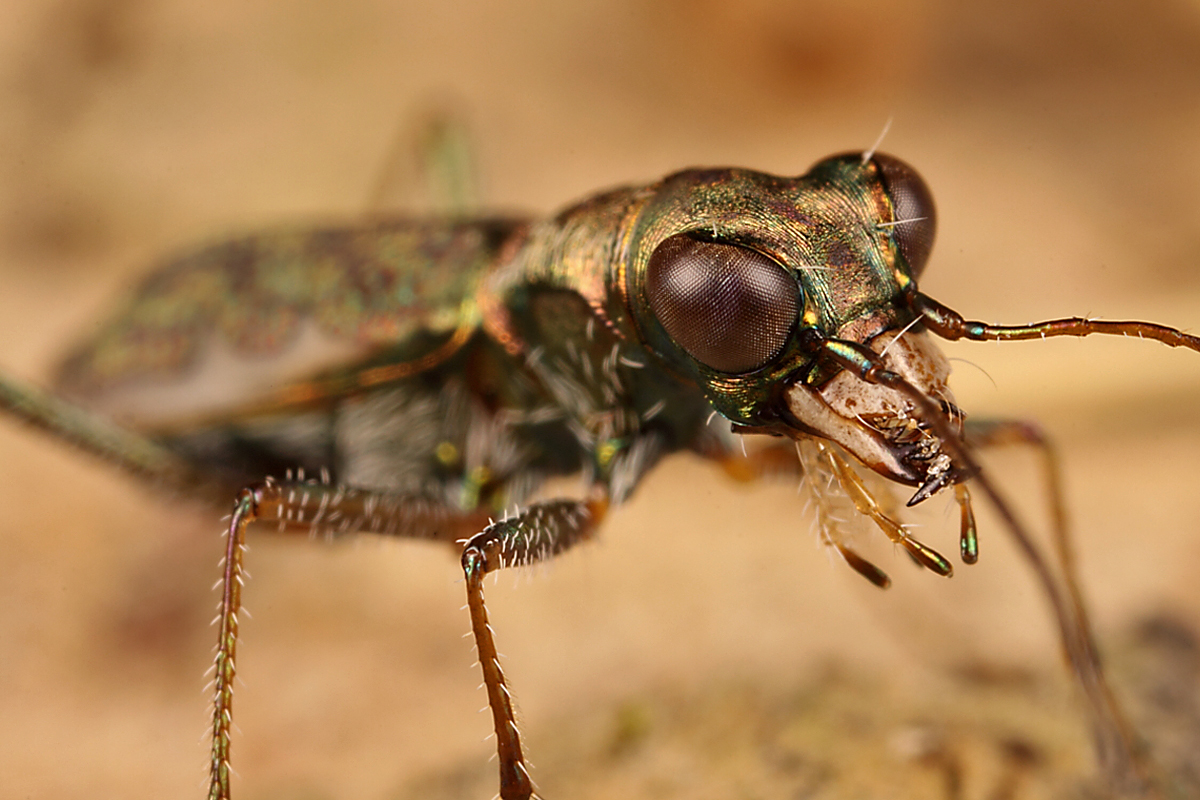
ResearchBlogging.orgIn refreshing contrast to the more usually heard reports of declining and extinct species, a new paper by Dave Brzoska, Barry Knisley, and Jeffrey Slotten (Brzoska et al. 2011) announces the rediscovery of a tiger beetle previously regarded as probably extinct.  Cicindela scabrosa floridana was described from a series of unusually greenish specimens collected in Miami, Florida in 1934; however, no additional specimens turned up in the following 70+ years despite dedicated efforts in the late 1980s and early 1990s by Brzoska, Knisley, and Ron Huber to locate and search areas around the presumed type locality.  This paucity of specimens and occurrence of the type locality in highly urbanized Miami had caused most contemporary tiger beetle researchers to presume that the population had fallen victim to the ceaseless sprawl of urbanization and its attendant habitat destruction.  However, in September of 2007, co-author Jeff Slotten, working with David Fine, rediscovered a population of individuals matching the type series while surveying butterflies in pine rockland habitat in the Richmond Heights area of Miami.  Subsequent surveys of pine rockland habitat in surrounding areas revealed populations of the beetle at three sites – all in the Richmond Heights area. 

Source: Brzoska et al. (2011)

Cicindela scabrosa floridana was originally described by Cartwright (1939) as a variety of the broadly distributed southeastern U.S. species C. abdominalis.  In describing the closely related C. highlandensis (endemic to the Lake Wales Ridge of central Florida), Choate (1984) also elevated the peninsular Florida-endemic C. scabrosa (previously considered a subspecies of C. abdominalis) to full species status and treated floridana as a subspecies of scabrosa, apparently due to the similarity of their elytral sculpturing, occurrence in both of dense flattened setae on the pronotum, and their allopatric distributions.  The new availability of additional specimens of floridana, however, has allowed more detail comparisons of this form with scabrosa.   In addition to the markedly greener elytra, the great majority of floridana lack post-median marginal spots – found consistently in scabrosa, and the apical lunule is generally thinner in floridana than in scabrosa.  Moreover, no floridana were found to exhibit the vestigial middle band that scabrosa often exhibits, and the leg color of floridana also is lighter and more yellow than most scabrosa specimens.  Differences in habitat, distribution and seasonality were also noted – scabrosa occurs in sand pine scrub habitat throughout most of peninsular Florida north of Miami from late spring to mid-summer, while floridana occurs only in pine rockland habitats in southern Florida with adults active well into October.  These consistent differences in morphology, distribution, habitat, and seasonality led Brzoska et al. to elevate floridana to full species status.  According to the most recent classifications of North American and Western Hemisphere tiger beetles (Pearson et al. 2006, Erwin and Pearson 2008), the new name would be Cicindela (Cicindelidia) floridana.  However, Brzoska et al. follow the classification initially proposed by Rivalier (1954) and followed by Weisner (1992) in regarding Cicindelidia as a full genus, resulting in the new combination Cicindelidia floridana.  The character differences identified by Brzoska et al. are illustrated with detailed photographs and presented in a key to allow recognition of the now four species in the abdominalis group.

The rediscovery of a rare species thought to be extinct is always cause for celebration.  However, there is much work still to be done before prospects for the long-term survival of C. floridana can be considered secure.  Many potential scrub and pine rockland sites throughout Miami-Dade, Broward, and Palm Beach Counties were identified and surveyed after the initial discovery of C. floridana in the Richmond Heights area.  Unfortunately, to date the beetle has been found only at three sites in the Richmond Heights area.  This suggests that C. floridana populations are small, highly localized, and greatly restricted in distribution, making the species a likely candidate for listing as endangered by the U. S. Fish and Wildlife Service.   To their credit, the authors have not revealed the precise locations of these sites, which will hopefully reduce the temptation by those with more philatelic tendencies to undercut ongoing studies of the distribution, abundance, biology, and habitat of C. floridana.  These studies will be critical in the development of effective conservation strategies to ensure that this highly vulnerable representative of Florida’s natural heritage does not, once again, become regarded as extinct.

REFERENCES:

Brzoska, D., C. B. Knisley, and J. Slotten.  2011.  Rediscovery of Cicindela scabrosa floridana Cartwright (Coleoptera: Cicindelidae) and its elevation to species level. Insecta Mundi 0162:1–7.

Cartwright, O. L. 1939. Eleven new American Coleoptera (Scarabaeidae, Cicindelidae). Annals of the Entomological Society of America 32: 353–364.

Choate, P. M. 1984. A new species of Cicindela Linnaeus (Coleoptera: Cicindelidae) from Florida, and elevation of C. abdominalis scabrosa Schaupp to species level. Entomological News 95:73–82.

Erwin, T. L. and D. L. Pearson. 2008. A Treatise on the Western Hemisphere Caraboidea (Coleoptera). Their classification, distributions, and ways of life. Volume II (Carabidae-Nebriiformes 2-Cicindelitae). Pensoft Series Faunistica 84. Pensoft Publishers, Sofia, 400 pp.

Pearson, D. L., C. B. Knisley and C. J. Kazilek. 2006. A Field Guide to the Tiger Beetles of the United States and Canada. Oxford University Press, New York, 227 pp.
Rivalier, E. 1954. Démembrement du genre Cicindela Linne, II. Faune americaine. Revue Francaise d’Entomologie 21:249–268.

Wiesner, J. 1992. Checklist of the Tiger Beetles of the World. Verlag Erna Bauer; Keltern. 364 pp.

Copyright © Ted C. MacRae 2011

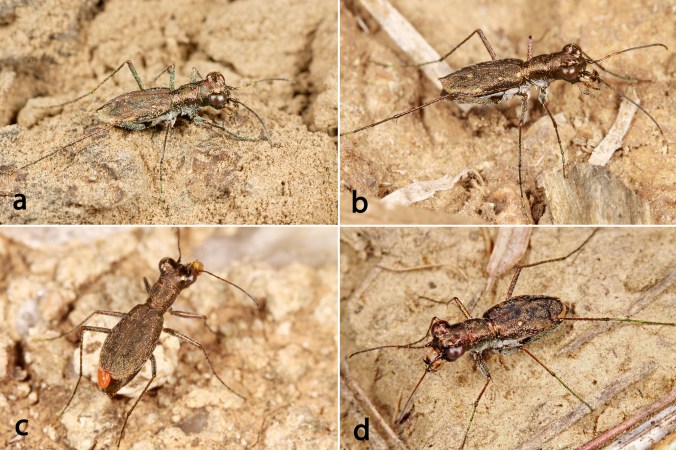
Cylindera celeripes – Fig. 1

One of the plates from our recently submitted manuscript on Cylindera celeripes (swift tiger beetle).¹  For the record, this is my first official attempt at assembling a plate in Photoshop for electronic submission – I sure hope I get quicker at this!

Fig. 1. Cylindera celeripes (LeConte) adults at: a) Hitchcock Nature Center, Pottawattamie Co., Iowa (13.vii.2008); b) Alabaster Caverns State Park, Woodward Co., Oklahoma (10.vi.2009); c) same locality as “b”, note parasite (possibly Hymenoptera: Dryinidae) protruding from abdomen and ant head attached to right antenna; d) Brickyard Hill Natural Area, Atchison Co., Missouri (27.vi.2009). Photos by C.R.Brown (a) and T.C.MacRae (b-d).

¹ “Historical and contemporary occurrence of Cylindera (s. str.) celeripes (LeConte) (Coleoptera: Carabidae: Cicindelitae) and implications for its conservation” – submitted to Journal of Insect Conservation.

Copyright Ted C. MacRae 2011