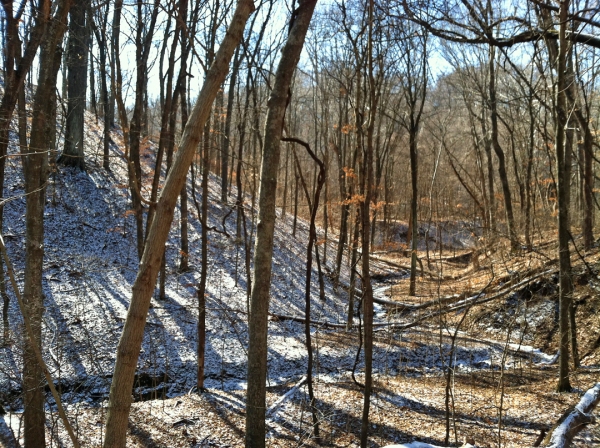
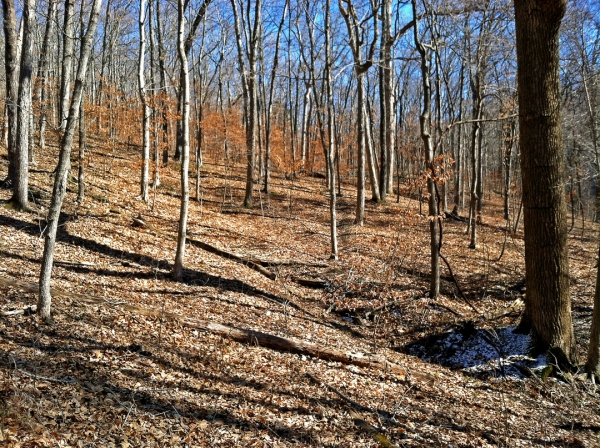
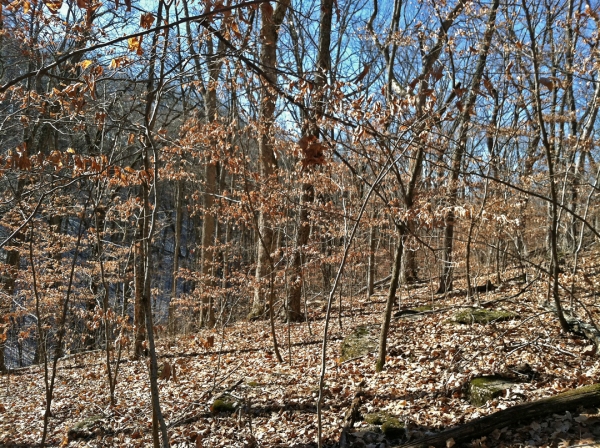
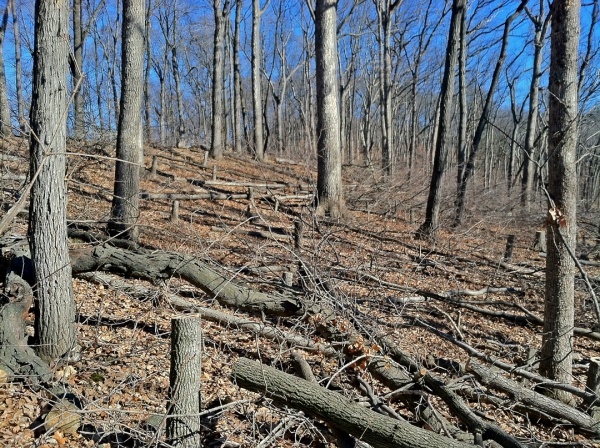
These are a few of my favorite trees

Adrian Thysse recently posted a video of a talk by Wayne Maddison titled “Jumping Spider Melodies,” given November 2012 at the Joint Annual Meeting of the Entomological Society of Canada and the Entomological Society of Alberta. It was a fascinating talk that revealed some interesting correlations between the phylogeny and geographical patterns of distribution of jumping spiders—those bright-eyed, bouncy, almost kitten-like darlings of the spider world. One quote from the talk, however, that stood out for me above all others went something like “Scientists have a rational motivation to seek truth and an emotional motivation to seek beauty.” I think this is true especially for biologists and natural historians—who among us that studies that natural world in adulthood didn’t start out with a love of the outdoors as a child? For me it was the woods that ignited my passion, and still today nothing rejuvenates my spirit like the overwhelming beauty and solitude of the forest.

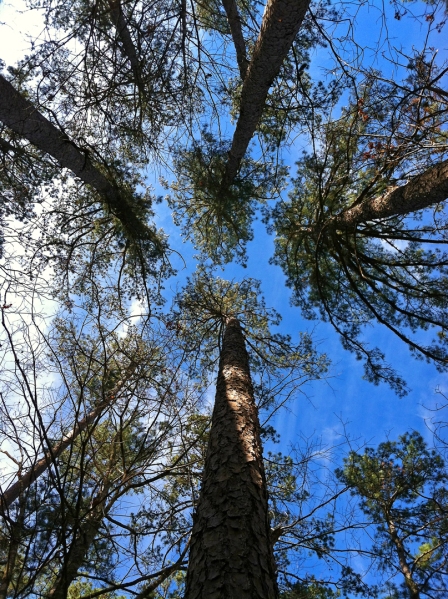
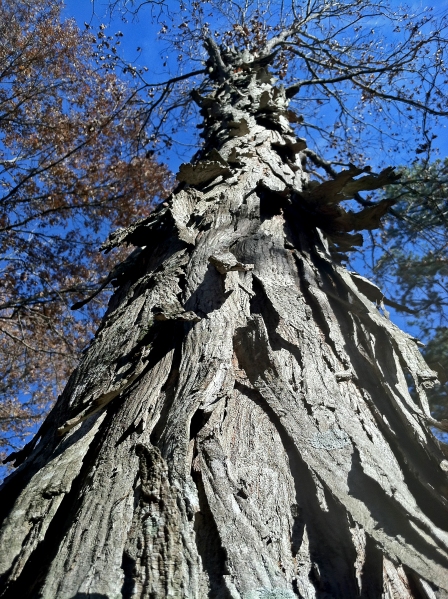
Shortleaf pine (Pinus echinata) | Wayne Co., Missouri

Shortleaf pine (Pinus echinata) | Wayne Co., Missouri

Wintertime especially is when I enjoy my visits to the forest. Far from the cacophony of summer, my mind is free to explore the open canopy, to examine the fabric of the landscape and ponder its history—unhurried, without objective. During the summer, trees are host plants—I see them not for what they are, but for the beetles that might be on them. I identify them, sample them, assess them for where their guests might be. In winter though, without beating sheet in hand, without collecting vials in the pocket, I see trees as works of art—freed from their summer cloaks, living skeletons on a living landscape.

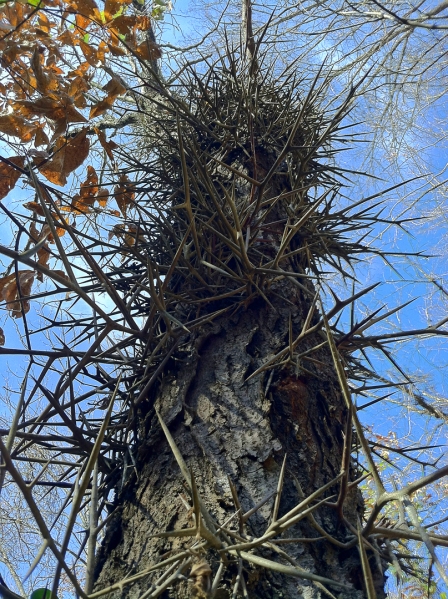
Honey locust (Gleditsia triacanthos) | Wayne Co., Missouri

Honey locust (Gleditsia triacanthos)

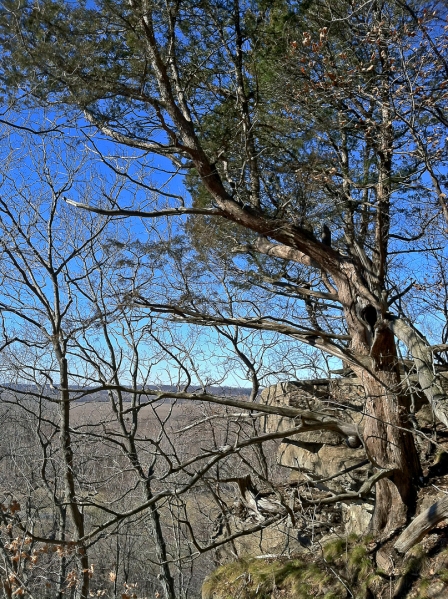
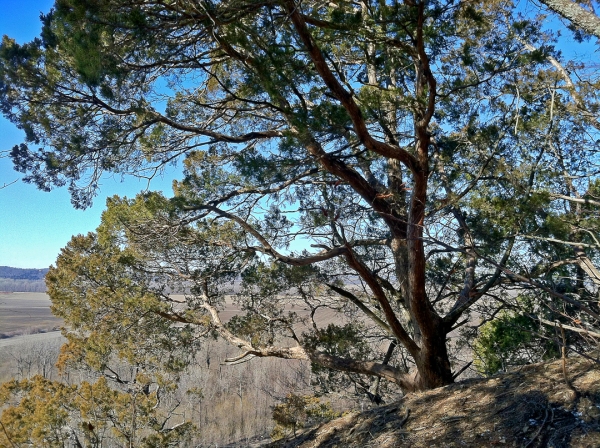
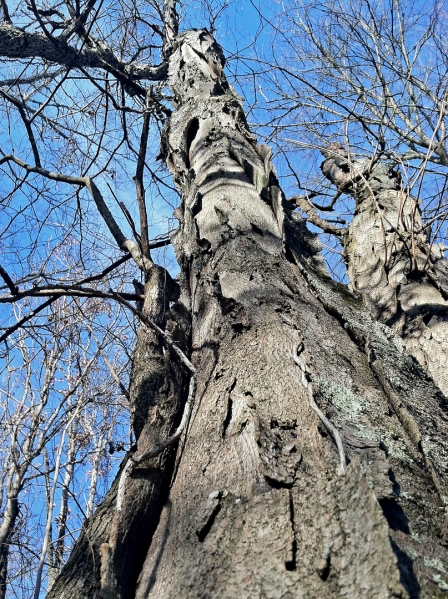
Different trees are my favorite at different times for different reasons. Blazing hot orange sugar maples (Acer saccharum) at peak fall color, stately white oaks (Quercus alba) with their ash-gray branches, broad-crowned post oaks (Quercus stellata) dotting a remnant savanna, or even gnarled, ancient red-cedars (Juniperus virginiana) clinging tenuously to life on the edge of a dolomite bluff. Most often for me, however, the beauty is in the bark. The deeply fissured, reddish plates of shortleaf pine (Pinus echninata), the terrifyingly thorned trunks of honey locust (Gleditsia triacanthos), the shaggy, peeling strips of shagbark hickory (Carya ovata). Even in their winter nakedness, the bark of these trees gives them year-round personality that is lacking in lesser-barked trees.

Shagbark hickory (Carya ovata) | Wayne Co., Missouri

Shagbark hickory (Carya ovata)

Honey locust (Gleditsia triacanthos) - thornless individual | Wayne Co., Missouri

Honey locust (Gleditsia triacanthos) – thornless individual

The tree in this post were photographed during November 2012 while hiking the Wappapello Section of the Ozark Trail in the Ozark Highlands of southeastern Missouri (Wayne Co.). 

Copyright © Ted C. MacRae 2013

Friday Flower – “Palo Borracho”

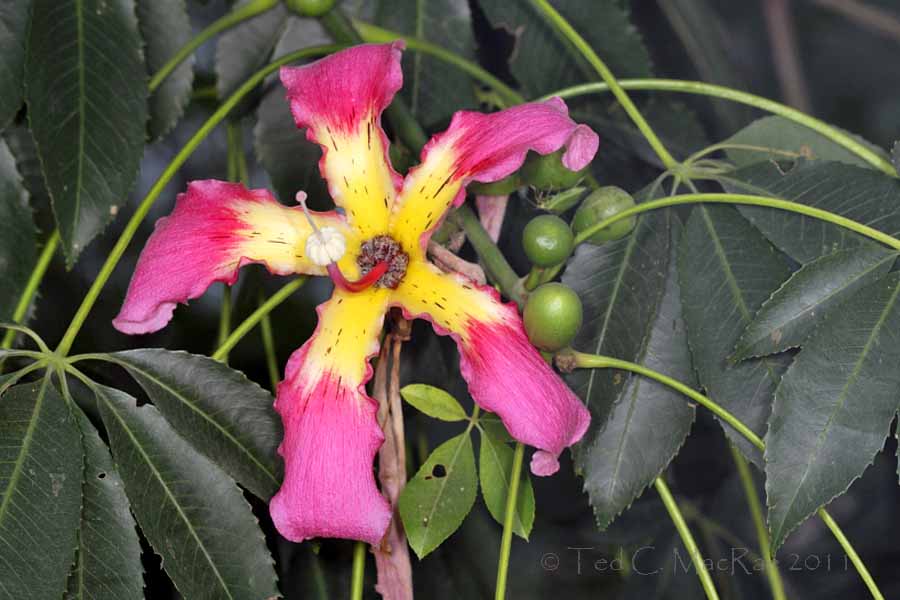
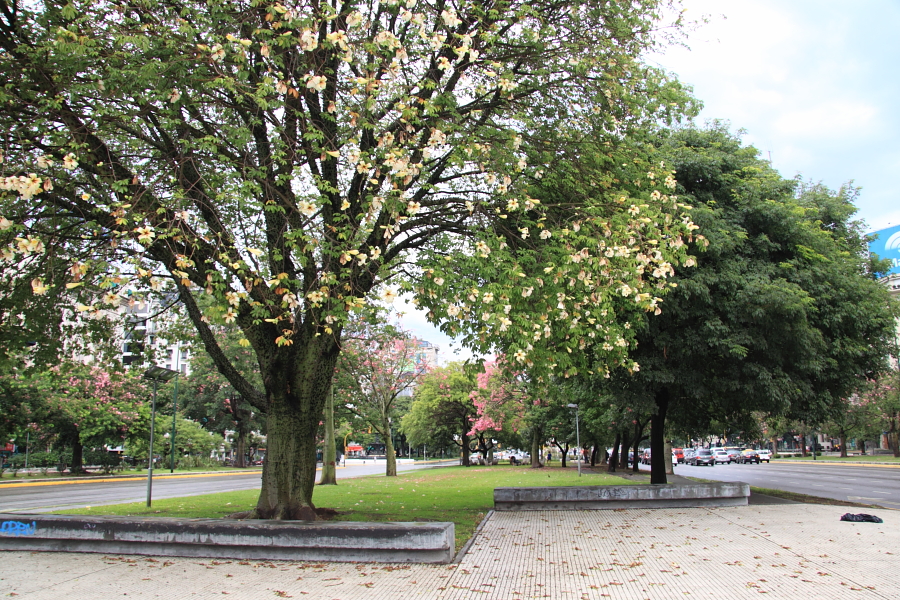
Ceibo may be Argentina’s national flower, but Ceiba is its most iconic flower.  That’s right—Ceibo and Ceiba are two, completely unrelated species!  Ceibo is the common name in Argentina for Erythrina crista-galli, a tree in the family Fabaceae, while Ceiba is a genus of flowering trees in the family Bombacaceae that includes the species pictured above—Ceiba speciosa (syn. Chorisia speciosa), known in Argentina as “Palo Borracho.”  This translates literally to “drunken stick”—a reference to the pot-bellied trunk with narrowed base that gives the tree the appearance of a wine bottle (Haene and Aparicio 2007).  Native to the dry forests of northeastern Argentina, C. speciosa has become an enormously popular street tree in the country due to their dazzling displays of hot pink blossoms, especially in Buenos Aires whose green spaces and wide boulevards are lined with grand old specimens.

Interspersed amongst the pink flowering trees are occasional specimens with the flowers mostly white but otherwise looking much the same as C. speciosa.  These are the closely related species C. chodattii (syn. Chorisia insignis), or Yuchán.  This species is native to more western, even drier areas of northern Argentina than C. speciosa and has also become popular as an ornamental tree in urban areas, though it has been planted with less frequency than its hot pink-flowered congener.

Bombacaceae also contains the famously odd baobab and kapok trees—also distingished by bulging trunks that serve as an adaptation for water storage in seasonally dry environments.  The trunks of Ceiba trees exhibit an additional water conservation adaptation with thick, conical-shaped thorns that are also capable of water storage.  The young tree picture here was photographed in Campinas, Brazil and exhibits the green coloration typical of younger trees that functions to augment their photosynthetic capabilities. In fact, the dry forests in which Ceiba spp. evolved often contain a number of unrelated plants that also are thorny and have green bark.

REFERENCE:

Haene, E. and G. Aparicio.  2007.  100 Trees of Argentina. Editorial Albatros, Buenos Aires, República Argentina, 128 pp.

Copyright © Ted C. MacRae 2011

Friday Flower – Ceibo

Erythrina crista-galli (''ceibo'') | Buenos Aires, Argentina

One of the major flowering spectacles in Argentina is Erythrina crista-galli, or “ceibo” (also spelled “seíbo”).  So great is this spectacle that both Argentina and Uruguay have declared it their national flower.  I’ve seen only hints of it myself, as all of my trips to Argentina have been either before the peak bloom period from November to February or just after.  These blossoms were seen during my most recent trip last month in Buenos Aires at La Reserva Ecológica Costanera Sur, where for most of the day I saw only the occasional, single, straggling blossom before finally encountering the delightful trio near the end of the day.  The elegant simplicity of this photo contrasts starkly with the riotous quality that photographs of this tree in full bloom have (it may be one of the most photographed flowers on the web!).

Native also to Uruguay, Paraguay and Brazil, E. crista-galli has also been planted widely in warmer regions of the world (where it is generally known as cockspur coral tree or cry-baby tree).  Not everyone, however, is so enamored with this tree. In New South Wales, Australia, E. crista-galli has become abundant along several watercourses and is regarded locally as a significant invasive weed (Smith 1996). As in its native South America, its seeds are dispersed by floodwaters and germinate progressively over a period of three years, forming thickets (called “seibales” in Argentina) that can displace native vegetation.

The flaming red color of the flowers would suggest hummingbirds are the primary pollinators, and species in the genus Erythrina are generally characterized as hummingbird/passerine pollinated (Galetto 2000).  However, the broad, undulating “explanade” formed by the lower lip apparently serves as a landing platform for bee pollinators (Haene and Aparicio 2007).  Galetto et al. (2000) note that E. crista-galli is placed basally within the genus and suggest that it may represent an intermediate step in the shift from insect pollination to the bird pollination more typical within the genus. 

REFERENCE:

Galetto, L., G. Bernardello, I. C. Isele, J. Vesprini, G. Speroni and A. Berduc.  2000.  Reproductive biology of Erythrina crista-galli (Fabaceae).  Annals of the Missouri Botanical Garden 87(2):127–145.

Haene, E. and G. Aparicio.  2007.  100 Trees of Argentina. Editorial Albatros, Buenos Aires, República Argentina, 128 pp. [una foto de las floras de E. crista-galli aparece en la portada de este libro, un regalo que me dio mi colega y buen amigo, Guillermo Videla – muchas grácias!]

Smith, J. M. B.  1996.  Notes on Coral-Trees (Erythrina) in Australia with particular reference to E. crista-galli L. in New South Wales.  Australian Geographical Studies 34(2):225–236.

Copyright © Ted C. MacRae 2011

Friday Flower – Pawpaw

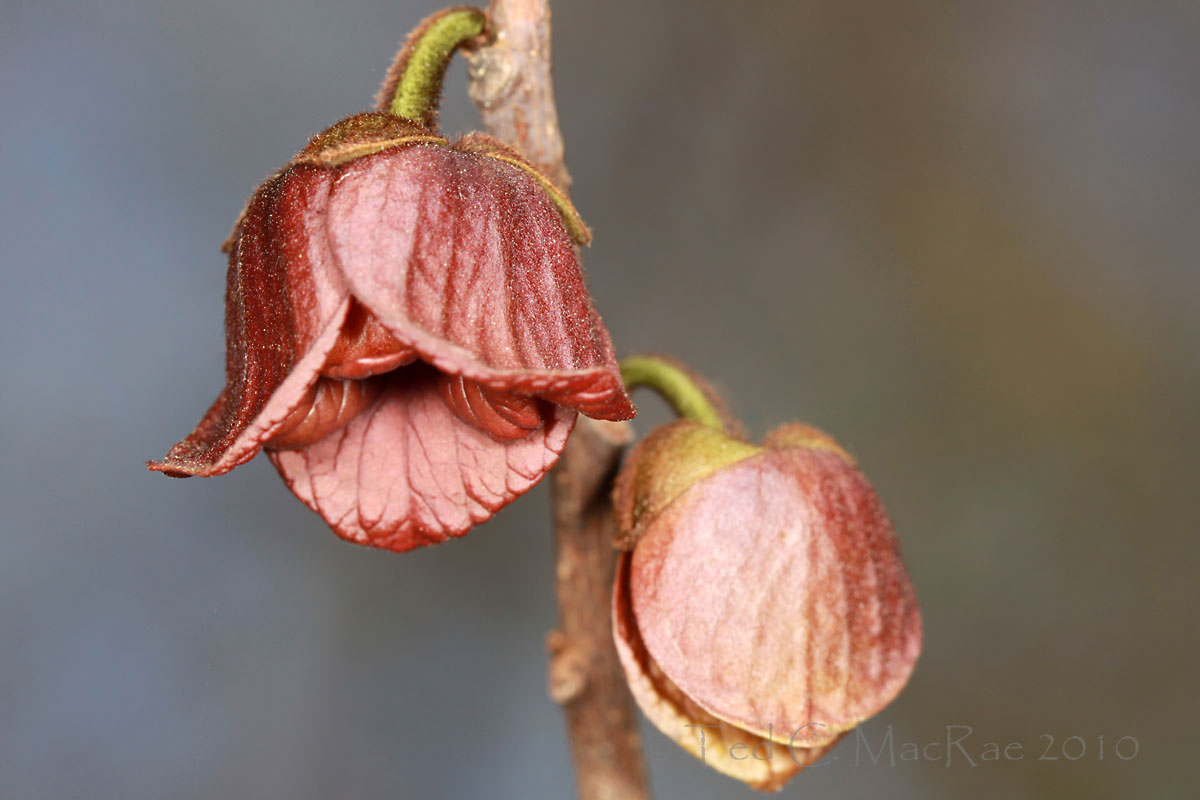
As my friend Rich and I stood in the verdent understory admiring the spectacular panicles of red buckeye punctuating the green lushness, a small brown flower on a leafless branch above me caught my eye.  “Pawpaw!” I exclaimed, perhaps partly in amazement that it took us awhile to notice the trees that were, in fact, all around us.  Pawpaw (Asimina triloba) is a member of the only temperate genus in the otherwise exclusively tropical and subtropical family Annonaceae (Custard Apple Family).  Although not nearly as restricted in occurrence in Missouri as the red buckeyes with which they were growing, they are nevertheless always a treat to see. Scattered throughout the state, they can be found growing in bottomland forests, ravines in mesic upland forests, along woodland streams, and at bases of bluffs (Yatskievych 2006).

Pawpaws are, of course, famous for their large edible fruits, sometimes called Indian bananas, Missouri bananas, Michigan bananas, [insert eastern state here] bananas, etc.  Technically, however, the pawpaw fruit is a berry, since it is derived from a single pistil and has multiple seeds embedded within the pulpy matrix.  I’ve not tried the fruit myself, not for lack of desire but rather an inability to find them when they ripen in fall before the birds and mammals get to them.  Some effort has been made to cultivate the plant for fruit production, but low fruit set seems to be a persistent problem due to reproductive self-incompatibility.

Pawpaw also famously serves as the larval food plant for the zebra swallowtail butterfly, Eurytides marcellus (family Papilionidae).  Beyond this, however, there seem to be not many insects associated with the plant.  I have collected dead wood of pawpaw in an effort to determine the species of wood-boring beetle species that are associated with it.  The only species I’ve reared is the longhorned beetle, Elaphidion mucronatum (whose common name “spined oak borer” belies the fact that it is one of the most polyphagous of all North American species), and two other longhorned beetles, Eupogonius pauper and Urgleptes querci (also highly polyphagous), have also been reported being reared from dead wood of this plant.  I have not associated any jewel beetles with pawpaw, nor have any such associations been reported in the literature.  It would appear that woodboring beetles are not fond of the soft, weak wood of pawpaw, perhaps due to the plant’s annonaceous acetogenins with known pesticidal qualities (Ratnayake et al. 1993) (acetogenins are also under investigation as anti-cancer drugs).  Other poisonous compounds, chiefly alkaloids, are found in various parts of the plant, especially the seeds and bark, and likely play a role in herbivore defense. Insect pollinators also seem to be infrequent, as I have not noted any insects on its flowers. Most members of the family are pollinated by beetles (Yatskievych 2006), but the meat-colored, downward-facing, not-so-sweet-smelling flowers of pawpaw suggest pollination by flies, perhaps those attracted to carrion.

REFERENCE:

Ratnayake, S., J.K. Rupprecht, W.M. Potter, and J.L. McLaughlin. 1993. Evaluation of the pawpaw tree, Asimina triloba (Annonaceae), as a commercial source of the pesticidal annonaceous acetogenins. p. 644-648. In: J. Janick and J.E. Simon (eds.), New Crops. Wiley, New York.

Yatskievych, G. 2006. Steyermark’s Flora of Missouri, Volume 2. The Missouri Botanical Garden Press, St. Louis, 1181 pp.

Copyright © Ted C. MacRae 2010

Add to FacebookAdd to DiggAdd to Del.icio.usAdd to StumbleuponAdd to RedditAdd to BlinklistAdd to TwitterAdd to TechnoratiAdd to Yahoo BuzzAdd to Newsvine

Email to a friend

Friday Flower: Red Buckeye

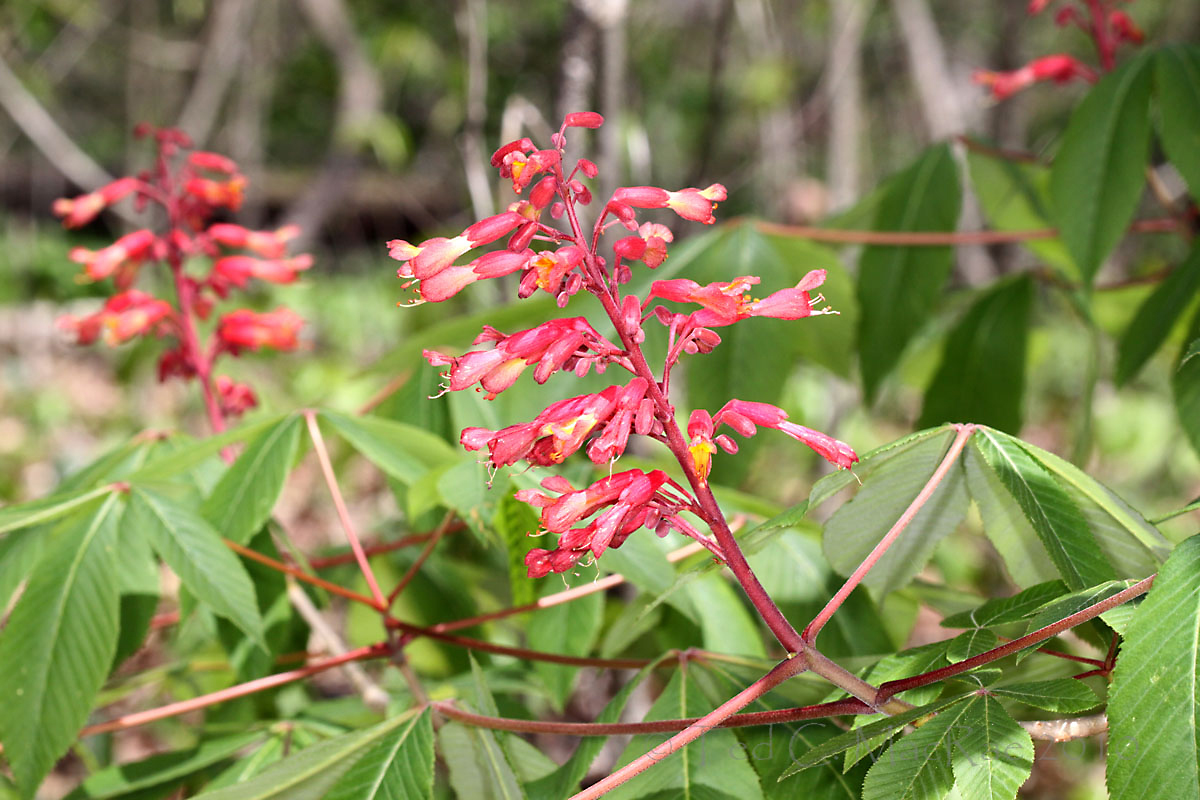
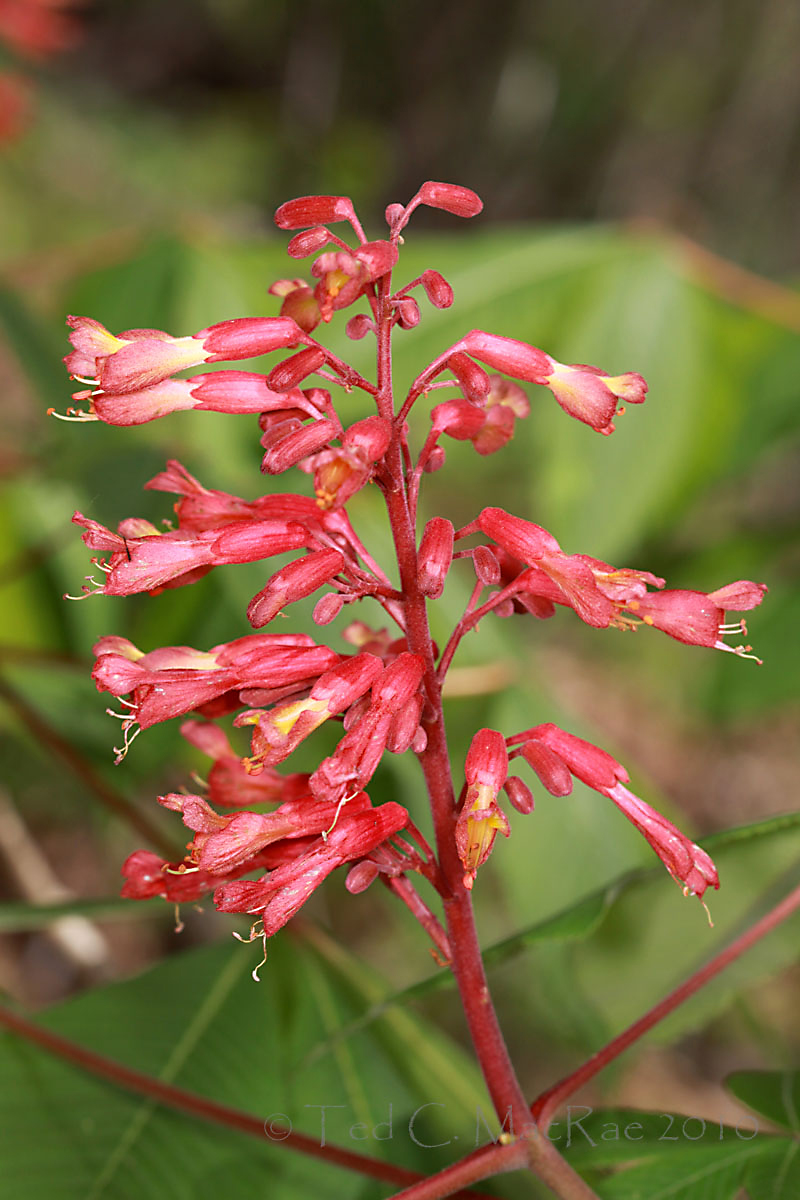
Beetles, spiders, and snakes were not the only delights that Rich and I saw as we hiked the lower stretch of the Ozark Trail’s Wappapello Section in early April.  Entering the rich, moist, east-facing slopes overlooking the Black River valley, the oaks and hickories were still in the early stages of bud break. A lush, green understory, however, spread out before us, punctuated by the striking inflorescences of red buckeye, Aesculus pavia (family Hippocastanaceae). Among the first trees to bloom in spring, red buckeye is unmistakable in the field due to its red flowers and palmately divided leaves.

Red buckeye is native to the southeastern U.S., just reaching Missouri in the southeastern Ozarks (though cultivated further north). This makes it less well-known than the more widely distributed Ohio buckeye, Aesculus glabra (absent only from the southeastern lowlands and northwestern corner of the state, and easily distinguished by its white inflorescences, larger size, and spreading growth habit).  Like that species, the seeds and young foliage especially are poisonous if eaten due to glycosidic alkaloids and saponins.  Native Americans roasted, peeled and mashed the nuts into a meal called “Hetuck.”

I first encountered this species in 2001 along Fox Creek in the White River Hills of extreme southwestern Missouri.  It was one of several species that I had selectively “cut” and left in situ for a season to allow infestation by wood boring beetles.  I retrieved the wood the following spring and reared five species of longhorned beetles (family Cerambycidae) from the dead branches, including Astyleiopus variegatus, Hyperplatys maculata, Leptostylus transversus, Lepturges angulatus, and the prize – the very uncommonly encountered Lepturges regularis. All of these represented new larval host records; however, it was not until after I published those records (MacRae and Rice 2007) that I realized the plant itself was not known by Steyermark (1963) to occur naturally outside of the southeastern Ozark Highlands.

Speaking of early spring flowers, many such delights can be found at Berry Go Round #27 which is now up at Mary Farmer’s A Neotropical Savanna. It’s not just spring ephemerals, however, as another Missouri blogger and I show that winter has it’s own botanical charms. Stop by and enjoy the feast!

REFERENCES:

MacRae, T. C. and M. E. Rice. 2007. Distributional and biological observations on North American Cerambycidae (Coleoptera). The Coleopterists Bulletin 61(2):227–263.

Steyermark, J. A. 1963. Flora of Missouri.  The Iowa State University Press, Ames, 1728 pp.

Copyright © Ted C. MacRae 2010

Add to FacebookAdd to DiggAdd to Del.icio.usAdd to StumbleuponAdd to RedditAdd to BlinklistAdd to TwitterAdd to TechnoratiAdd to Yahoo BuzzAdd to Newsvine

Email to a friend

North America’s second-rarest pine

Jeffrey (L) and Washoe (R) pines at Galena Creek Park

During last year’s trip to Lake Tahoe, I made it a goal to find all of the 11 conifer species occurring naturally in the Lake Tahoe Basin.  It took some effort, some good references (Arno 1973, Graf 1999, Lanner 1999, and Peterson 1975), and the help of an especially knowledgeable associate at the U.S.D.A. Forest Service headquarters in South Lake Tahoe, but I succeeded in my quest and later wrote two posts covering the Lake Tahoe conifers (Trees of Lake Tahoe – The Pines, Trees of Lake Tahoe – The “Other” Conifers).  In the first of the posts covering the six species of pines, I added the following footnote:

Two additional species of pine – Washoe pine (Pinus washoensis) and single-leaf pinyon pine (P. monophylla) – are often treated as occurring in the Lake Tahoe area. However, they are of sporadic occurrence on the eastern slopes of Mount Rose, and thus do not occur within the Tahoe Basin proper.

Of these, I am quite familiar with single-leaf pinyon pine.  Widespread on isolated mountain ranges throughout the Great Basin into eastern and southern California and Baja California Norte, I have encountered it during many of my field trips out west and reared a number of buprestid species from its tough, scrubby branches (including 2 specimens of the rarely encountered Phaenops piniedulis).  The other species, Washoe pine, was a new one on me, and it is, in fact, the second-rarest species of pine in all of North America (Torrey pine, Pinus torreyana, being the rarest).  Well, that was all it took to make me commit to finding this species on this year’s return to Lake Tahoe.

Washoe pine cones surround a larger Jeffrey pine cone.

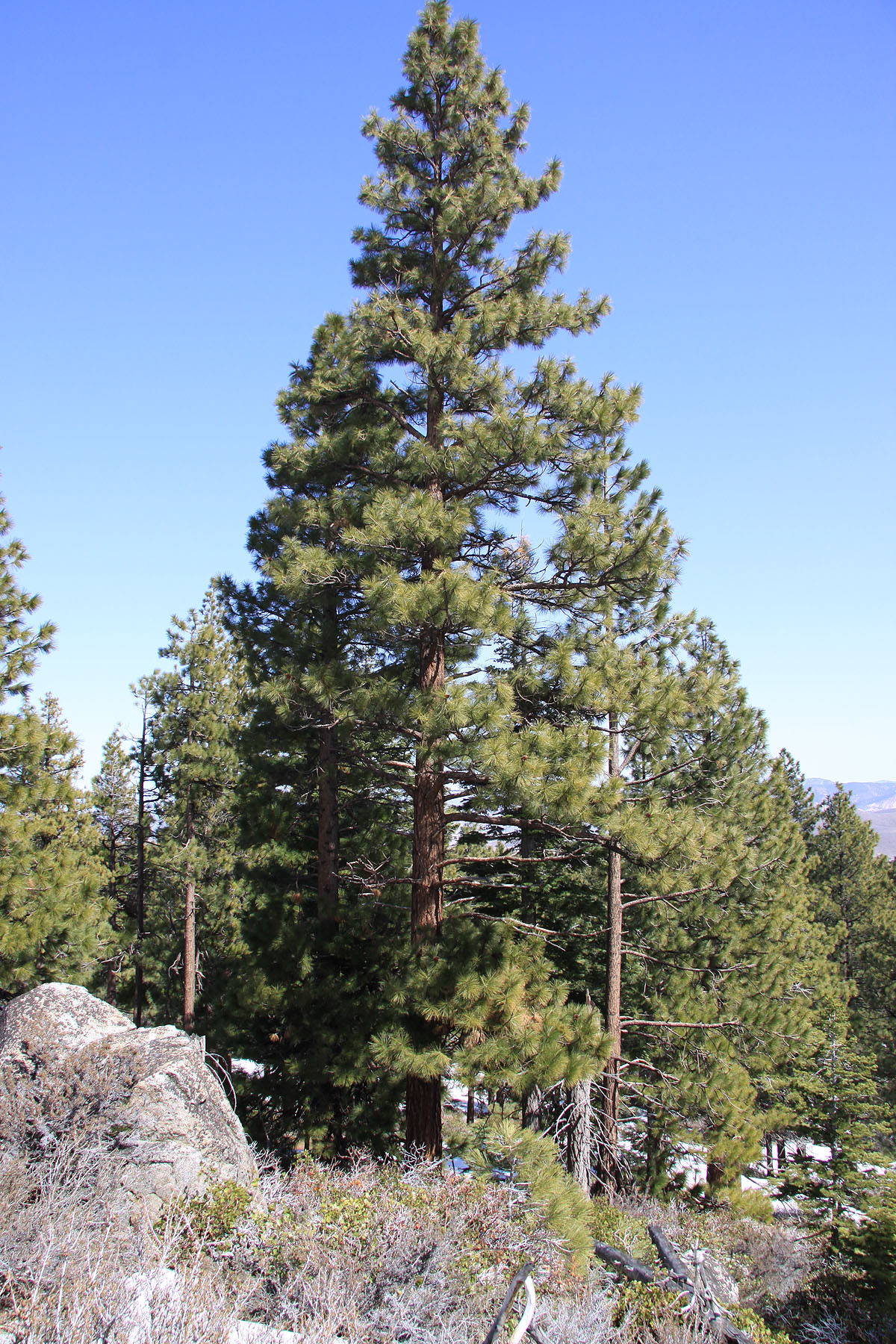
Washoe pine grows only in a few locations, primarily in northern California with the best stands found in the Warner Mountains in Modoc County.  In the Tahoe area, Washoe pine grows only on the eastern slope of Mt. Rose in Nevada, where it is limited to the upper reaches of Galena Creek (Graf 1999, Lanner 1999).  It is apparently very similar to Jeffrey pine (P. jeffreyi) – the most common pine in the Tahoe area – but seems to be more closely related to ponderosa pine (P. ponderosa), which occurs at lower elevations and barely makes it up to the Tahoe area (some authorities even question the distinctiveness of this species, instead considering it a high elevation variety of ponderosa pine).  All three species are 3-needled and grow into tall, pyramidal trees with widely spaced horizontal branches.  Like ponderosa pine, the bark of mature trees forms broad yellowish plates separated by black fissures (the bark of Jeffrey pine is often more reddish with plate more narrowly separated).  The resin of Washoe pine is also chemically similar to that of ponderosa pine, both of which differ from the heptane-producing resin of Jeffrey pine.  However, Washoe pine cones more closely resemble those of Jeffrey pine, being somewhat smaller but sharing the “inward-curved” prickles on the scale tips that make them easy to handle (those of ponderosa pine point outwards, making them very prickly to handle).

Ponderosa (L) and Washoe (R) pine cones. Note smaller size and outward-pointing spines of ponderosa pine cone.

Jeffrey (L) and Washoe (R) pine cones. Both have inward-pointing spines, but Washoe pine cone is smaller and more loosely built.

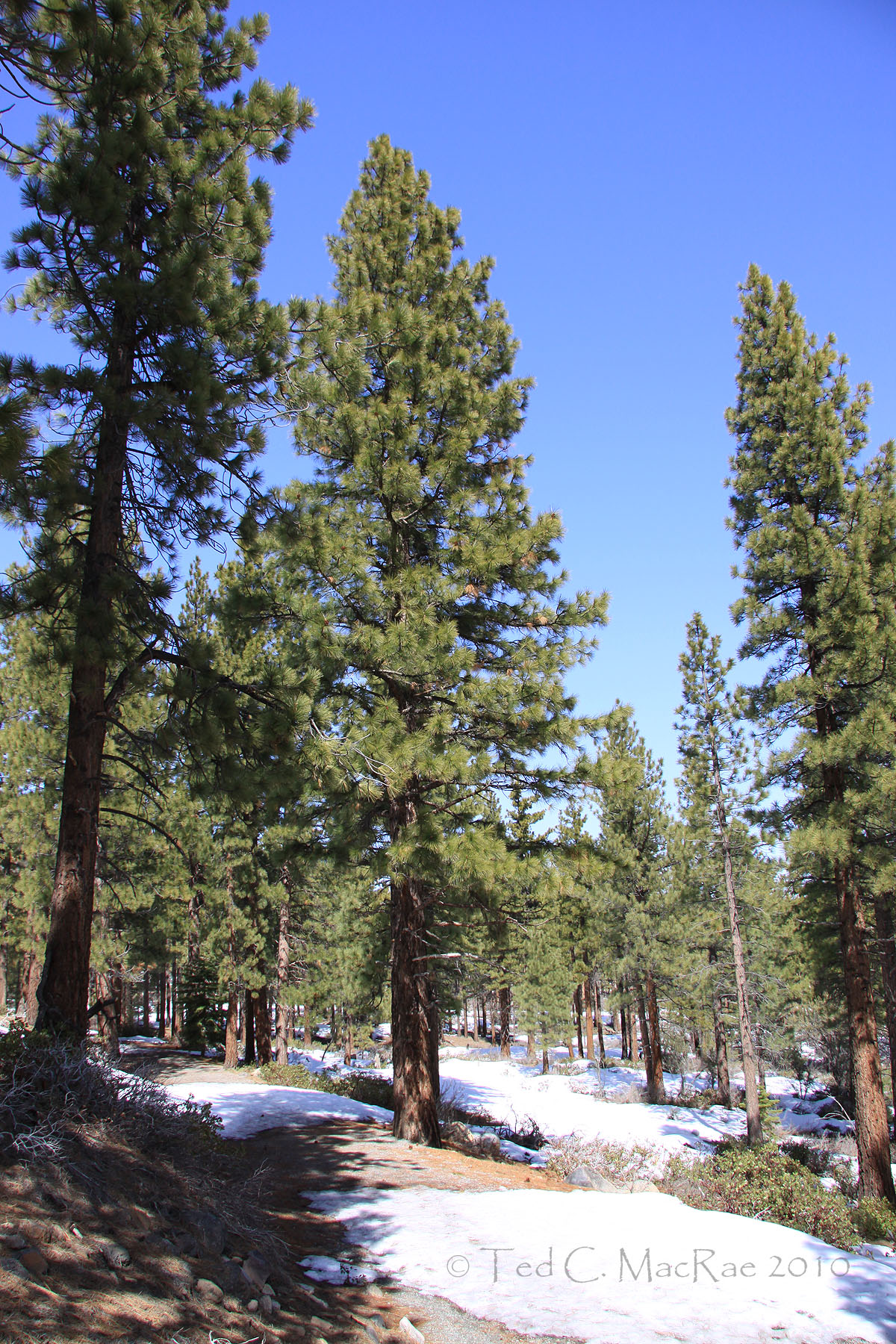
None of my references had any specific locality information for Washoe pine beyond what I’ve stated above, but a little bit of Google snooping through conservation action plan documents revealed that the species occurred at Galena Creek Park, so early in the morning daughter Madison and I made the one-hour drive from South Lake Tahoe to the park.  Arriving at the park, I was disappointed to find nobody manning the headquarters, no maps in the park information board – indeed, no information whatsoever about the occurrence of Washoe pine within the park and where it might be found.  The only clue that there was something special about the pines at this place were the wooden signs around the parking and picnic areas stating “Collection of pine cones prohibited.” I reasoned that it would be very difficult to distinguish the species by its needles, bark, or form, but that the pine cones should be easier to distinguish. I also had no idea whether the pines would occur close to the parking area or if we would need to hike into the area to find them.  So, we just began picking up pine cones.  For a time, all of the pine cones seemed to be typical Jeffrey pine (abundant in the area) with an occasional ponderosa pine (just making up the 6,200′ of elevation in this area).  Ever concerned that I might be missing a subtle difference, I studied each “Jeffrey” pine cone carefully looking for any reason to regard it as truely smaller than normal.  Within about 15 minutes, however, we found it!  Picking up the pine cone, it had the compact build and inward-pointing spines of a Jeffrey pine, but it was smaller and a little more loosely built.  I looked at the trees above and could see no difference from what I would expect for a Jeffrey pine.  Further looking revealed numerous cones of the same type – each tree we found them under was otherwise indistinguishable from Jeffrey pine (at least to this eastern U.S.-based wannabe botanist).  Nevertheless, it was clear that we had found Washoe pine, and that it was quite abundant within this small watershed that we were exploring.  Jeffrey pine was also common in the watershed, and an occasional ponderosa pine could be found.  I took photos of mature individuals of each of the three species, identified conclusively by way of the cones found underneath them, to show how similar in appearance the three species are.

Pinus ponderosa

Pinus jeffreyi

Pinus washoensis

Madison and I later hiked out of the watershed into the higher elevations of Mt. Rose (from where these ants were photographed) – we noticed that almost immediately upon hiking out of the watershed the Washoe and ponderosa pines disappeared, and only Jeffrey pines were seen.  Although I have seen it many times before, I was still hoping to see single-leaf pinyon pine, but none were seen.

REFERENCES:

Arno, S. F. 1973. Discovering Sierra Trees. Yosemite Association, Yosemite National Park, California, 89 pp.

Graf, M.  1999. Plants of the Tahoe Basin.  Flowering Plants, Trees, and Ferns.  A Photographic Guide. California Native Plant Society Press, Berkeley, 308 pp.

Lanner, R. M.  1999. Conifers of California.  Cachuma Press, Los Olivos, California, 274 pp.

Peterson, P. V., and P. V. Peterson, Jr.  1975. Native Trees of the Sierra Nevada.  University of California Press, Berkeley, 147 pp.

Copyright © Ted C. MacRae 2010

Winter Botany Quiz #6 – answers and a checklist

I thought yesterday’s Winter Botany Quiz #6 would be a fairly difficult, and given the apparent difficulty of my previous quizes (Pismire Puzzle and Tuesday Teaser) I thought I’d give readers a break this week and narrow down the location to the Lake Tahoe area. Despite publishing in the dead of night, it took only 31 minutes for Peter Yeeles to swoop down and correctly name the family, genus, species, and function for the structure pictured. His only lapsus regarded the terminology used for the name of the structure itself, leaving the door open for James Trager to snag some scrap points. The plant is, of course, Cercocarpus ledifolius (curl-leaf mountain mahogany) in the family Rosaceae, and the structures pictured above and in the previous post are the stigmas of the flowers persisting as wind-assisted dispersal structures for the fruit. “Cercocarpus” is, in fact, derived from the Greek words for “tailed” and “fruit”, whose numerous erect hairs give the plant in a silvery sheen late in the growing season.

Why was I interested in this plant? It was one of the few tree species occurring in the Lake Tahoe Basin that I wasn’t able to find for last year’s 3-part series, Trees of Lake Tahoe (including The Pines, The “Other” Conifers, and The Deciduous Trees).  Widespread in the mountainous west (and barely qualifying as a tree), its occurrence in the Tahoe Basin is more sporadic.  Better stands are found outside the basin proper on the dry eastern flank of the Sierra Nevada (Graf 1999), and indeed these plants were photographed at ~6,500 feet on the eastern slopes of Mt. Rose.

My real interest in Cercocarpus, however, is as a favored host plant for species of jewel beetles (family Buprestidae).  About two dozen species of these beetles have been associated with Cercocarpus spp. in North America, nine of which have been confirmed as breeding within dead branches of these plants and five having been associated with no other plant.  I’ve collected a number of these species myself, particularly in the San Gabriel and Santa Rosa Mountains of southern California and the Chisos Moutains of Big Bend National Park in Texas, including Polycesta cazieri, Chrysobothris piuta, and paratype specimens of Acmaeodera rubrocuprea. I thought it might be of interest to any readers who might collect these insects to present a checklist of Buprestidae associated with Cercocarpus in North America (see appendix below).

REFERENCE:

Graf, M. 1999. Plants of the Tahoe Basin. Flowering Plants, Trees, and Ferns. A Photographic Guide. California Native Plant Society Press, Berkeley, 308 pp.

Checklist of North American Buprestidae associated with Cercocarpus

(Bold indicates species that have been reared from Cercocarpus.  An asterisk indicates species that have been associated exclusively with Cercocarpus).
Acmaeodera (s. str.) angelica Fall
Acmaeodera (s. str.) connexa LeConte
Acmaeodera (s. str.) dolorosa dolorosa Fall
Acmaeodera (s. str.) idahoensis Barr
Acmaeodera (s. str.) mariposa mariposa Horn
Acmaeodera (s. str.) mariposa dohrni Horn
Acmaeodera (s. str.) nelsoni Barr
Acmaeodera (s. str.) nexa Fall
Acmaeodera (s. str.) plagiaticauda Horn
Acmaeodera (s. str.) pubiventris lanata Horn
Acmaeodera (s. str.) rubrocuprea Westcott & Nelson*
Acmaeodera (s. str.) vandykei Fall
Acmaeodera (s. str.) variegata LeConte
Acmaeodera (Squamodera) vanduzeei (Van Dyke)
Anthaxia (Haplanthaxia) caseyi sublaevis Van Dyke
Anthaxia (Melanthaxia) porella Barr*
Anthaxia (Melanthaxia) simiola Casey*
Chrysobothris bisinuata Chamberlin*
Chrysobothris mali Horn
Chrysobothris piuta Wickham
Chrysobothris purpureovittata purpureovittata Horn
Chrysobothris purpureovittata cercocarpi Westcott & Nelson*
Dicerca (s. str.) hornii hornii Crotch
Polycesta (Tularensia) californica LeConte
Polycesta (Tularensia) cazieri Barr

Copyright © Ted C. MacRae 2010

Add to FacebookAdd to DiggAdd to Del.icio.usAdd to StumbleuponAdd to RedditAdd to BlinklistAdd to TwitterAdd to TechnoratiAdd to Yahoo BuzzAdd to Newsvine

Email to a friend

Bicycle ride around Lake Tahoe

Overlooking Emerald Bay from Emerald Bay Pass.

Perhaps some of you have by now deduced that, in addition to insects and natural history, I have a second passion – cycling! In fact, I raced bikes competitively as an amateur for seven years (going by the local nickname “BugMan“) before hanging it up at the end of 2008.  However, even though I’m not racing anymore, I still ride as much as ever, only now it’s purely for the fun of it!  I’m a dedicated roadie, riding year-round and averaging around 5,000-6,000 miles a year.  I love the speed and the smoothness of the road and the opportunity it provides to cover long distances and enjoy the sights (not to mention the resulting freedom to eat like a horse and stay relatively trim!).

One of my most memorable cycling experiences was in 1995, when I joined a group that rode the entire circuit around Lake Tahoe.  I was living in Sacramento at the time and was a relative newbie – the 72-mile ride with 3,500 feet of climbing at elevations ranging from 6,200 feet at lake level to more than 7,000 feet near Carson Pass was without question the most difficult ride I had ever attempted at that point.  Now, as a seasoned ex-racer, such a ride is not extraordinarily difficult for me – in fact, I do rides in the 60-80 mile range with as much climbing or more almost every weekend.  Still, my memories of the challenge and the unbelievable scenery have kept that ride high in the ranks of my most epic, and since we began going back to Lake Tahoe two spring ago I’ve wanted to do it again.  It would not have been possible during our first trip back, as the roads still had quite a bit of snow on them; however, last year the roads were clean and dry, and I resolved to bring my bike with me on this year’s trip in the event that such was again the case.  Madonna del Ghisallo (patron saint of cycling) must have been smiling down upon me, because this year the roads were again in beautiful condition, despite the amount of snow blanketing the surrounding landscapes.  It made for one of the most beautiful bike rides I have ever done in my life.

There was a comforting familiarity to the ride, despite the 15 years since the last – the stunning landscape that I have come to cherish so dearly, the massively shaded solitude of the west shore, lunching on California cuisine in a quaint village along the north shore, and the long climbs and screaming descents through open Jeffrey pine forests along the east shore.  It was also different – I was by myself, yet despite that I was stronger and briming with confidence; not only a seasoned cyclist, but also much more knowledgeable of and closely attuned to the natural history of the area.  I didn’t fear the climbing, I relished it!  I didn’t overcome the challenge, I enjoyed it!  I stopped at a few places to take photographs (taken with my small point-and-shoot, for obvious reasons) and share some of them here – I hope they give you a tiny taste of the flavor of that day.

Near the summit of Emerald Bay Pass, looking back at Mt. Tallac.

High point on Emerald Bay Pass.

The descent to Eagle Falls at Emerald Bay.

 This is an avalanche zone (note deep snow deposits on steep slopes on left side – these extend high up the mountain here).  Moments after taking this photo, an avalanche fell onto the road right as I was descending by this spot. At ~35 mph there was no stopping – I rode right through it as the initial snow drop hit the pavement and then watched in amazement as the main drop dumped onto the road behind me.  It was not big enough to bury anything, but I surely would have crashed had I gotten there just a moment or two later!

Overlooking Emerald Bay from Emerald Bay Pass.

Emerald Bay is a glacial scour formed during the last glacial period ending only 10,000 years ago. Fannette Island, Lake Tahoe’s only island, is thought to be a resistant rib of granite rock that was overridden by the glacial ice. Lateral glacial morraines enclose each side of the bay, and an incomplete terminal morraine connects Emerald Bay to the main lake. Last year, I stood atop the outermost rock of the left side of the terminal morraine and took photographs looking back in this direction

Grove of sugar pines at D. L. Bliss State Park.

Sugar pine, Pinus lambertiana, is among my favorite of all pines.  More common on the west shore due to their preference for higher levels of moisture, their towering, ragged, asymmetrical crowns with long, pendulous cones (usually a foot or more in length) hanging from the branch tips are immediately recognizable from afar.  These majestic trees are the world’s tallest pine and bear the longest cones in the genus; they stand in defiant contrast to the uniformly symmetrical crowns of the more common Jeffrey pines (Pinus jeffreyi) and white firs (Abies concolor) that surrounded them.  For a more thorough treatment of the trees of Lake Tahoe, please visit my three-part series covering the pines, the “other” conifers, and the deciduous trees.

Some might think it was still a little too early in the season for bike riding.

Looking west across Lake Tahoe from Logan Shoals Overlook.

The east shore in Nevada is decidedly drier than California’s west shore.  The forest on the Nevada side is a more open, fire-mediated landscape dominated by Jeffrey pine, as opposed to the denser forests on the west shore with higher incidence of shade-tolerant trees such as white fir and incense-cedar (Libocedrus decurrens).

View of Cave Rock (left center) from Logan Shoals Overlook.

Cave Rock was and still is a sacred place for people of the Washoe tribe, whose ancestors occupied Lake Tahoe during the summers and performed religious ceremonies inside the largest of its caves.  These caves, sitting several hundred feet above the current lake level, were carved by wave action shortly after Lake Tahoe’s formation nearly 3 million years ago when lake levels were much higher than they are today.  The first of two highway tunnels was blasted through the rock in 1931 (much to the dismay of the Washoes), and the second was added in 1957.

Looking north along Lake Tahoe's east shore from atop Logan Shoals Overlook.

Copyright © Ted C. MacRae 2010

Add to FacebookAdd to DiggAdd to Del.icio.usAdd to StumbleuponAdd to RedditAdd to BlinklistAdd to TwitterAdd to TechnoratiAdd to Yahoo BuzzAdd to Newsvine

Email to a friend