Pardon my introspection

In addition to this blog, I maintain a second, older blog called Bikes, Bugs, and Bones. That snarkier, decidedly less erudite site was my first venture into the world of blogging, initiated some two and a half years ago not due to any particular vision on my part, but more as a reaction to other blogs that were popping up by people I knew in the St. Louis cycling scene. At that time, I was deeply immersed in the world of amateur bike racing, and a blog seemed to be a natural outlet for reporting my take on the races in which I participated. The title – Bikes, Bugs, and Bones – was a reflection of my propensity to be interested in too many things (with not enough time). In reality, however, my surging interest in cycling had by then pushed my longer held entomological and natural history interests to the back burner, and my posts on that blog – then and now – dealt almost exclusively with bicycles and racing. For several reasons racing was something I needed to do, and I had a good run – winning 14 races in seven years (including three state championships) and crowing it all with a highly respectable finish in the 2007 Etape du Tour (an amateur race held on the “Queen stage” route of the Tour de France). My interest in entomology and natural history never waivered during this time, but the demands of training relegated any meaningful field work to short windows before the racing season began and after it ended each year. Eventually, the entomologist in me could be suppressed no longer, and at the end of last year I decided that I needed to get back to doing what I loved – bug collecting! I made a commitment to return entomology field work to its rightful place as my first priority (after family and work, of course) and race bicycles as time permitted. (I have since completely retired from racing, although I still ride and maintain Bikes, Bugs, and Bones as an outlet for discussing all things cycling.) As an expression of that renewed commitment, I started a new blog – this blog – and after much frustration finding that every blog name I thought of had already been thought of by someone else (and generally abandoned after only a few posts) settled on the name Beetles In The Bush. One year ago today – November 24, 2007 – I posted my first entry to this new blog (a subsequent entry, a list of my publications, was backdated to November 23).

Beetles In The Bush started with a simple mission – to document my entomological and other natural history experiences and provide an outlet for the photographs that I was beginning to take. Late fall is not the best time to begin an insect blog, especially with no insect photos on hand to serve as starter material. As a result, my initial posts appeared rather infrequently – primarily whenever I had the opportunity to do a winter hike. It was those first few hikes, however, and my efforts to write something interesting about the natural history represented in the photographs that I took, that called attention to what I realized was a glaring gap in my overall knowledge of natural history. I was a competent entomologist, to be sure, but that competency did not extend to general botany (other than the mostly woody plants with which the insects I studied were associated), or to the natural communities in which those plants and insects occurred, or to the geology of the landforms that contained those natural communities, or to the manner in which these fields intersect, an understanding of which I would have to have before I could consider myself a competent natural historian. More than just an outlet for posting pictures and stories about my adventures, Beetles In The Bush also quickly became a tool to help me learn more about botany, ecology, geology, and related fields. I have read more non-entomology literature in the past year than I have since earning my degrees, and since knowledge and passion are intimately linked in a positive feedback loop, I’ve found myself becoming even more passionate about entomology, too. I still have much to learn – I am a work in progress, far from complete. But in this case, it is the journey that is also the reward.

Like all bloggers, I’d like to think that I have a large, regular following, and that over time more and more people will find my writings interesting and worthy of their time. The numbers don’t support this – as of this one-year anniversary, Beetles In The Bush has received 6,987 hits – not triffling but by no means extraordinary. While the graph below shows steady growth during the first year of existence, the numbers don’t come within a rifle’s shot of some of the really popular natural history and science blogs. I surmise the main reason for this involves a relatively lower posting frequency – a little more than once per week on average instead of the daily or near daily frequency seen with many blogs. I suppose also my relatively specialized subject matter and tendency to ramble on are contributing factors. I have thought about writing smaller, more frequent posts and expanding my subject matter to create greater interest; however, in doing this I realized that what I enjoy most is writing stories about the things that interest me – stories that teach, stories that impart a sense of the passion that I feel, stories that allow me to reflect on what I’ve learned and what I still don’t know. If that makes a broad, daily readership less likely, so be it – I understand now that I’m doing this as much for me as anyone else. So, I mark this first anniversary with a resolution to wean myself from the lure of trying to increase traffic and refocusing my efforts on doing what I enjoy most – writing silly little stories about the things I stumble upon on my journey to become a better natural historian. For the readership that I do have, I am grateful. More importantly, I am thankful for the goodly number of “friendships” that have resulted from these writings. Thank you for your interest, and I sincerely hope that some day I have the chance to meet many of you in person.

Beetles in the Bush - first year summary

A new species of Xenorhipus from Baja California

ResearchBlogging.orgA few months ago I discussed Trichinorhipis knulli of the tribe Xenorhipidini (family Buprestidae). Members of this tribe exhibit highly sexually dimorphic antennae, with the distal segments of the male antennae highly modified into a very extended flabellate or lamellate condition. The surfaces of the flabellae/lamellae are covered with numerous, presumably olfactory sensillae that are lacking on female antennae (which retain the unmodified serrate condition), strongly suggesting a function involving detection of female sex pheromones. Although chemosensory structures are present on the antennae of nearly all buprestids, the extreme modification exhibited by the males of species in this tribe is not a common occurrence. Nevertheless, similar modifications have evolved independently in a few other genera within the family, including Knowltonia (four species in western North America), Mendizabalia and Australorhipis (monotypic genera in South America and Australia, respectively), and two species of the enormous Australian genus Castiarina. Indeed, males of Knowltonia and the two Castiarina species possess what might be termed ‘bipectinate’ or ‘biflabellate’ antennae due to dual projections from the terminal antennomeres (see Bellamy & Nylander 2007 for a more complete discussion of male antennal modifications in Buprestidae). The tribe Xenorhipidini is the most diverse group in which these modifications have arisen, comprised of the monotypic Trichinorhipis from California and the closely related Hesperorhipis (four species in Arizona and California) and Xenorhipis (until now, 14 species from North and South America and the West Indies).

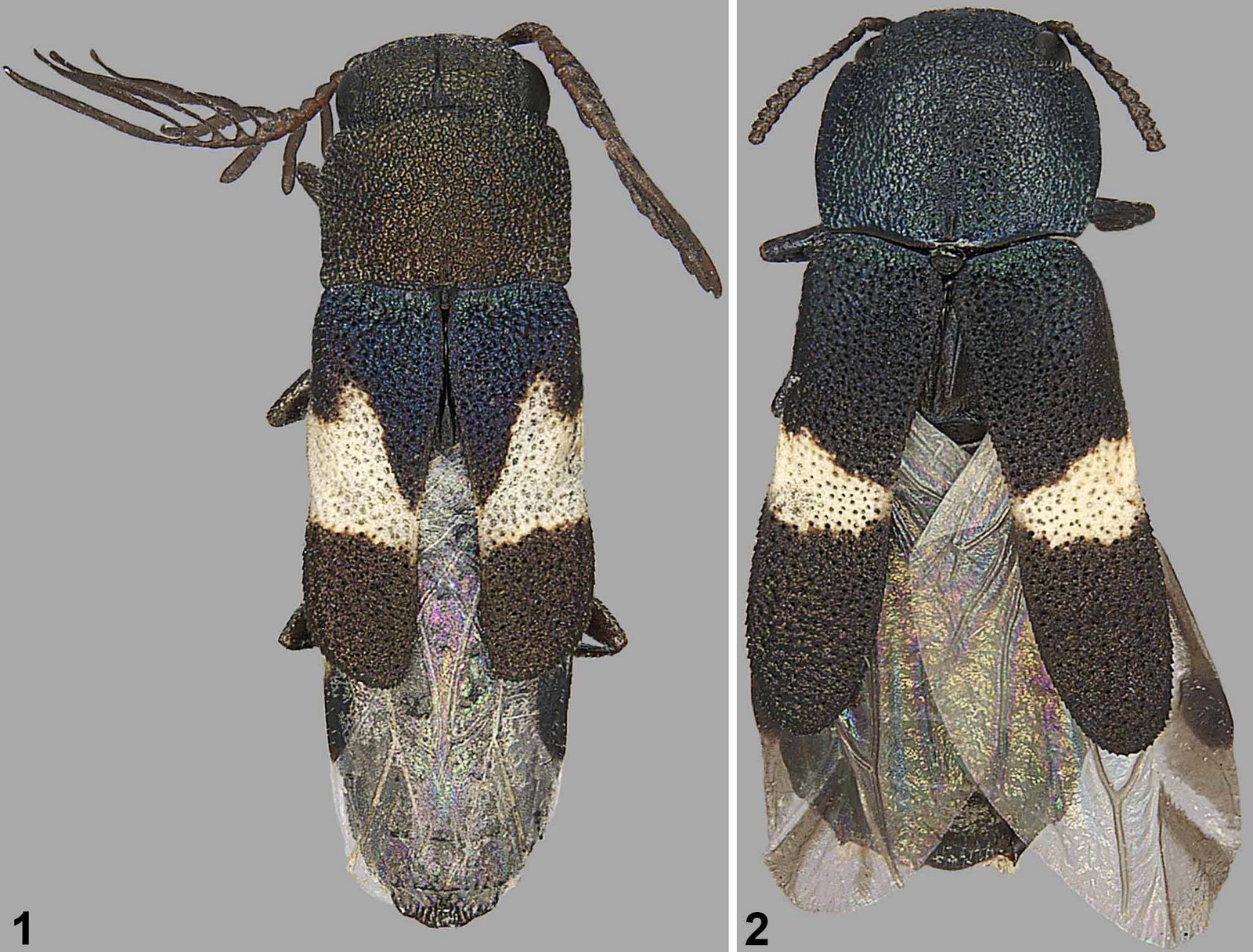
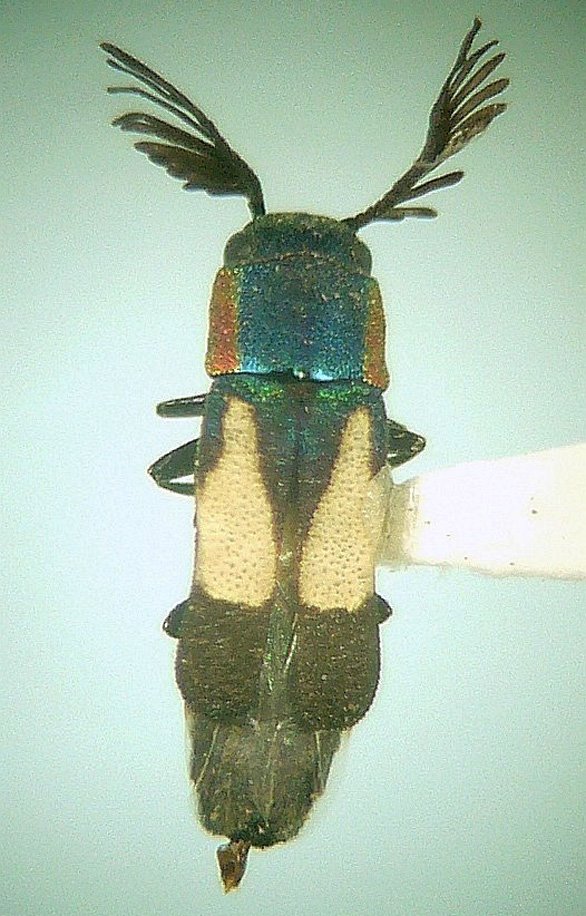
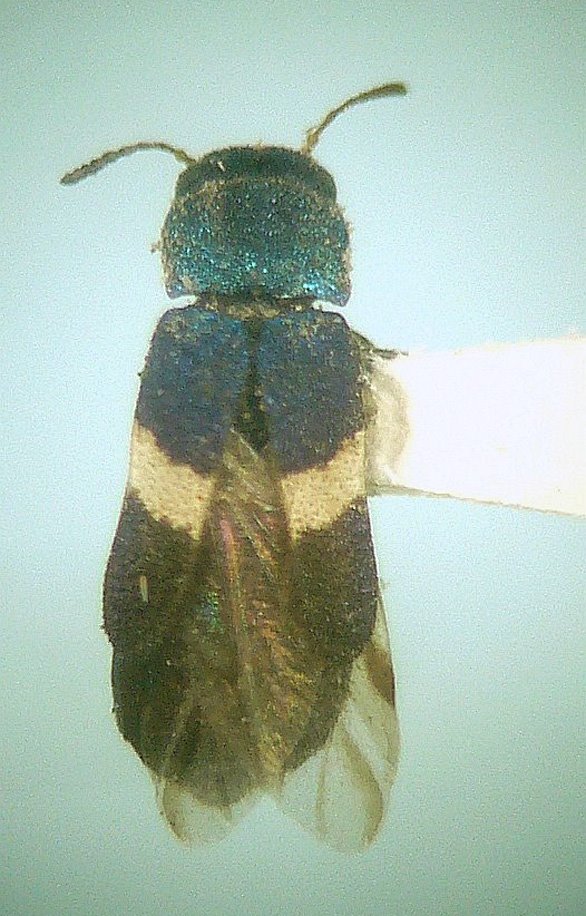
Xenorhipis bajacalifornica Westcott, 2008 – holotype ♂ (1) & allotype ♀ (2).
Photos by Steve Valley (Oregon Department of Agriculture).

In a recent issue of the online journal Zootaxa, Rick Westcott (Oregon Department of Agriculture) describes a new species of Xenorhipis from the Cape Region of Baja California Sur, Mexico. Although assigned to the genus Xenorhipis, the new species – X. bajacalifornica – seems to bridge the gap between the genera Xenorhipis and Hesperorhipis. As currently recognized, Xenorhipis is distinguished from Hesperorhipis by the shape of the posterior coxal plates, which are scarcely narrowed laterally in the former genus, while in the latter genus they are triangular and with the hind margin strongly oblique. In X. bajacalifornica the posterior coxal plates are somewhat triangular but not as acute laterally as in some species of Hesperorhipis. Xenorhipis bajacalifornica also differs from other described Xenorhipis in its strongly abbreviated elytra, which in males barely reach the second ventrite – similar to species of Hesperorhipis. Other described Xenorhipis exhibit less abbreviated elytra, which cover at least the first three ventrites and in some species almost the entire abdomen. Despite these similarities to Hesperorhipis, a consistent distinguishing character between the two genera was found in the male antenna – in Xenorhipis the flabellar processes begin with the second antennomere, while in Hesperorhipis they begin with the third. It was on this basis that the new species was assigned to the genus Xenorhipis. (The genus Trichinorhipis differs from both Xenorhipis and Hesperorhipis by its rounded rather than quadrate pronotum and its unabbreviated elytra that cover the entire abdomen and has, as a result, been placed in its own subtribe.)

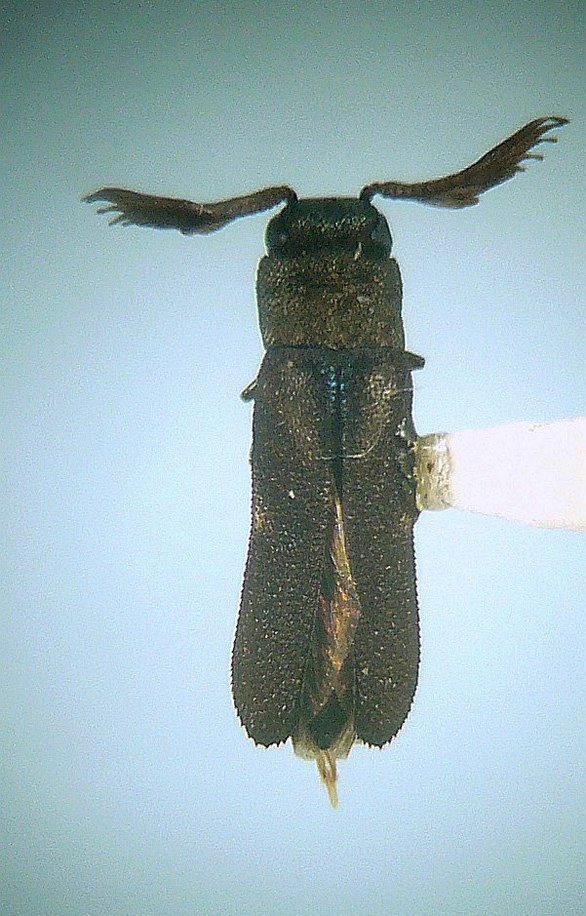
Xenorhipis brendeli ♂Xenorhipis brendeli ♀The photos left show the male (L) and female (R) of Xenorhipis brendeli, the only species in the tribe occurring in eastern North America (west to Minnesota and eastern Texas). Adults of this species are not commonly encountered and have been collected on a variety of deciduous hardwoods but reared almost exclusively from species of hickory (genus Carya). These individuals were reared from dead branches collected in southeastern Missouri – the male from pecan (Carya illinoensis) and the female from shellbark hickory (Carya laciniosa). The male exhibits the scarcely abbreviated elytra that cover almost the entire abdomen (as discussed above). Stan Wellso reported large numbers of males attracted to caged live females in Texas, apparently responding to sex pheromones released by the females.

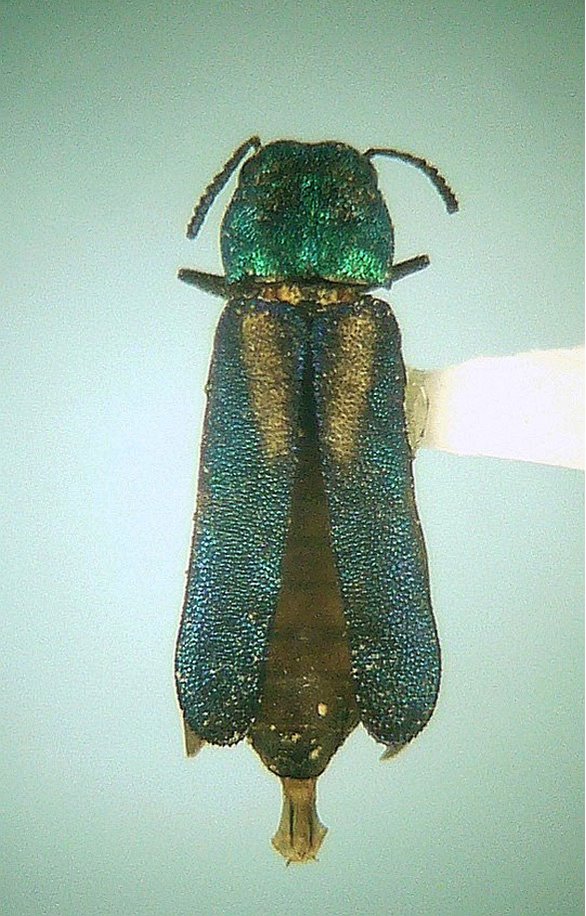
Xenorhipis osborni ♀Xenorhipis osborni ♂This is another species in the genus – Xenorhipis osborni – known from west Texas. Joseph Knull described the species in 1936 from specimens collected in the Davis Mountains on whitethorn acacia (Acacia constricta), but larval hosts remained unknown until I reared a series of these specimens from dead branches of black acacia (Acacia rigidula) collected above the Pecos River in Val Verde County. I’ve also reared a few specimens from dead branches of catclaw acacia (Acacia greggii) collected in Big Bend National Park, and I wouldn’t be surprised if it breeds in other species of acacia. Again, in this speices the elytra are only slightly abbreviated, though more so than in Xenorhipis brendeli above and also more so in the male (L) than in the female (R). The male of this species is one of the prettiest I’ve encountered in the tribe.

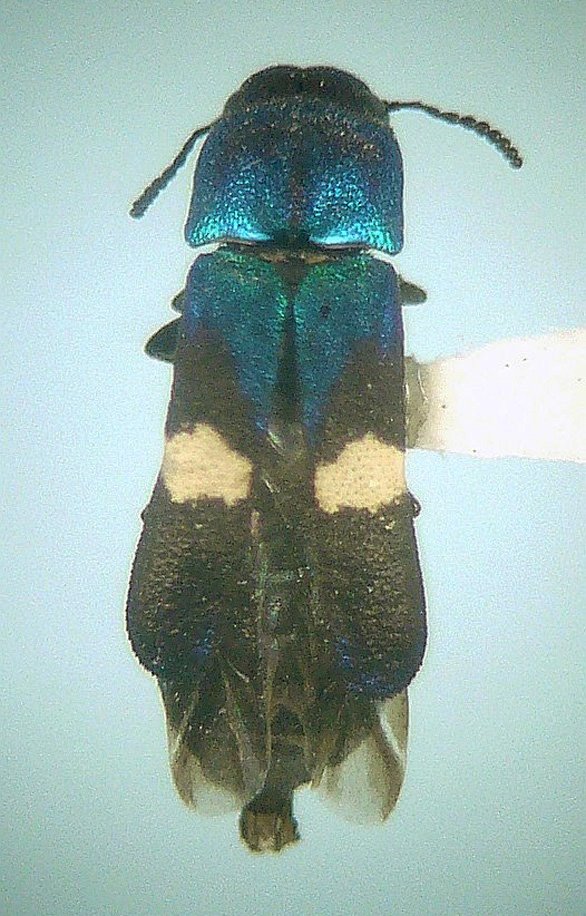
Hesperorhipis albofasciatus ♂Hesperorhipis albofasciatus ♀The genus Hesperorhipis is illustrated here by these photos of H. albofasciatus. These specimens were reared by Rick Westcott from dead branches of walnut (Juglans sp.) – its only known host – collected in Tulare County, California. The elytra in this species are much more abbreviated than in Xenorhipis brendeli and X. osborni but similar to those of X. bajacalifornica – again with the male (L) exhiting greater abbreviation than the female (R). The three remaining species of Hesperorhipis exhibit even more highly abbreviated elytra than H. albofasciatus.

Dr. Charles Bellamy (California Department of Food and Agriculture) is currently revising the tribe. It will be interesting to see how, ulimately, he treats Xenorhipis and Hesperorhipis, given the blended characters exhibited by some species.

REFERENCE

Westcott, R. L. (2008). A new species of Xenorhipis LeConte and of Mastogenius Solier from Mexico, with a discussion of Chrysobothris ichthyomorpha Thomson and its allies and notes on other Mexican and Central American Buprestidae (Coleoptera) Zootaxa, 1929, 47-68

Magnificently Monstrous Muscomorphs

I suppose tiger beetles have gotten more than their fair share of attention here lately, so for this post I thought I’d highlight insects of a completely different group – flies! Admittedly, as a coleopterist, I tend to view flies with much the same disdain as your average insect non-enthusiast – as pesky, pestiferous vermin worthy of little more attention than a decisive swat. I don’t begrudge them their amazing diversity – at ~100,000 described species worldwide, they are strong contenders with the Lepidoptera and Hymenoptera as the second largest order of insects (of course, you need all three of these orders combined to match the diversity of the Coleoptera). I am also prepared to accept that they may well represent, at least morphologically, the pinnacle of insect evolution (a position that a few hymenopterists I know might argue with) due to their amazing flight capabilities and the morphological adaptations they have developed for such. These include the development of aristate antennae for detecting wind speed, the conversion of the second pair of wings into stabilizing organs (halteres), and the ability to beat the remaining pair of wings at incomprehensible rates – up to 1,000 times per second in some very small midges (even more baffling when one considers that the wing “beat” is actually just a passive result of rhythmic distortions of the thoracic box). I even acknowledge that the vast majority of fly species are not even pests, living their lives innocuously as herbivores, scavenging organic matter that nothing else wants, and preying upon or parasitizing other insects, including important agricultural pests. Still, flies bug me – mosquitoes prevent me from sleeping under the stars without a tent, deer flies drone around my head incessantly while I’m trying to stalk an elusive tiger beetle, stable flies trick me into assuming they are just another house fly (until they bite me!), house flies (the real ones) rudely land on my sandwich with their filthy feet, and eye gnats insist on committing hary kary in my eyes as I walk the trails (I won’t mention their other common name, derived from their habit of clustering around exposed canid genitalia).

There is, however, one group of flies that possess “cool factor” rivaling that of even the most popular insect groups – robber flies and their kin. I’ve always picked them up as an aside, even sending them off for authoritative ID and constructing an inventory of the species in my collection. The brute of a fly pictured here is not a true robber fly, but in the related family Mydidae. Mydus clavatus can be recognized easily in the field by its large size and distinctive black coloration with red/orange on top of the 2nd abdominal segment. Presumably this is an example of Batesian mimicry modeled upon spider wasps (family Pompilidae) in the genus Anoplius. This mimicry allows them to fly rather boldly in the open and is so persuasive that it can not only fool the casual observer, but even the most knowledgable of entomologists might be loathe to handle it despite knowing better. Although common across the eastern U.S., aspects of its life history are poorly understood. Adults have been reported to be predators of other insects, but apparently there are some doubts about the veracity of such reports. Patrick Coin of BugGuide has observed adults (males?) taking nectar from flowers and has suggested that reports of predation by adults might have been an erroneous assumption due to their relation and resemblance to robber flies. Larvae are reported to be predaceous on woodboring beetle larvae, and I have reared adults of this species from a dead sycamore (Platanus occidentalis) stump in southern Missouri that was infested with mature larvae of the large buprestid species, Texania campestris. This habit is similar to robber flies of the genus Laphria, which mimic bumble bees and carpenter bees.

In Greek mythology, Promachos (Προμαχοε) was “the champion” or one “who leads in battle” – an appropriate generic name for the so-called “giant robber flies” of the genus Promachus. These large flies are dominant and fearless predators that will capture just about any flying insect – even adult dragonflies. There are three species of Promachus in the eastern U.S. that exhibit the yellow and black tiger striping of the abdomen seen in this individual, identified as a female Promachus hinei by Herschel Raney at BugGuide due to its reddish femora and occurrence in the central U.S. Promachus rufipes is similar but has black femora with distinctly orangish tibiae and is more common in the southeastern U.S., whereas P. vertebratus has more muted two-toned legs with smaller dark areas dorsally on the abdominal segments and is more common in the northern states. Additional species occur in the region but lack the tiger striping of the abdomen, and even more species occur in the western U.S. Members of this genus generally lay their eggs on the ground near grass roots, and the larvae burrow into soil after hatching and feed on soil insects, roots, and decaying matter before pupating within the soil in an unlined cell.

During my recent trip to Nebraska I encountered this related robber fly genus Proctacanthus, also determined by Herschel provisionally as P. milbertii. These large robber flies with a prominent beard are similar in habit to Promachus species, laying their eggs in crevices in soil and the larvae feeding on soil insects, roots, and decaying plant matter. Proctacanthus milbertii is a late season species that occurs across much of the U.S. and reportedly loves butterflies. However, Joern & Rudd (1982), in studying predation by this species in western Nebraska (where the individual pictured here was photographed) found that grasshoppers made up 94% of the prey captured by this species. Interestingly, nearly all of the remaining prey captures were other P. milbertii, which was carefully verified as such since mating postures can be easily mistaken for prey handling positions. Grasshopper prey species taken by this species were most strongly influenced by availability rather than size, suggesting that even the largest grasshopper species could be captured as easily as smaller species – a testament to the ferocity of this robber fly.

Another family of flies modestly related to robber flies and also ranking high in “cool factor” are the bee flies (family Bombyliidae). The scaly bee fly, Lepidophora lepidocera (ID confirmed by Joel Kits at BugGuide), is a particularly attractive member of the family. The distinctive, hunch-backed shape of this southern U.S. species is shared with the more northern L. lutea, from which it is distinguished by having pale scales only on the 5th abdominal segment and not on the 4th also. Most bee flies are presumbably mimics of – yes – bees; however, the species in this genus might actually be mimics of robber flies instead. Adults are most often seen taking nectar from flowers – this individual was taken on flowers of tall boneset (Eupatorium altissimum). Larvae are characterized by Sivinski et al. (1999) as kleptoparasites on the provisions of solitary wasps in the families Vespidae and Sphecidae – meaning that the larva does not parasitize wasp larvae directly, but instead usurpes the nest provisions on which the wasp larvae were supposed to feed. The little thieves!

Cicindela scutellaris lecontei x scutellaris unicolor intergrades in southeast Missouri

An individual from Sand Prairie Conservation Area.  Note the uniform blue-gray coloration and complete lack of maculations, making this individual indistinguishable from true unicolor.Cicindela scutellaris (festive tiger beetle) is widely distributed in the U.S., having been recorded from most areas east of the Rocky Mountains except Appalachia, the lower Mississippi River delta, and south Florida. Within this range, the species occupies deep, dry sand habitats without standing water. It is often found in the company of Cicindela formosa (big sand tiger beetle), whose range largely coincides with that of C. scutellaris (except the southeastern Coastal Plain). More than any other North American Cicindela, populations of this species show extraordinary variability in color across its range of distribution. Seven geographically recognizable subspecies are generally accepted, with considerable variation evident within some of these and along zones of contact between them.

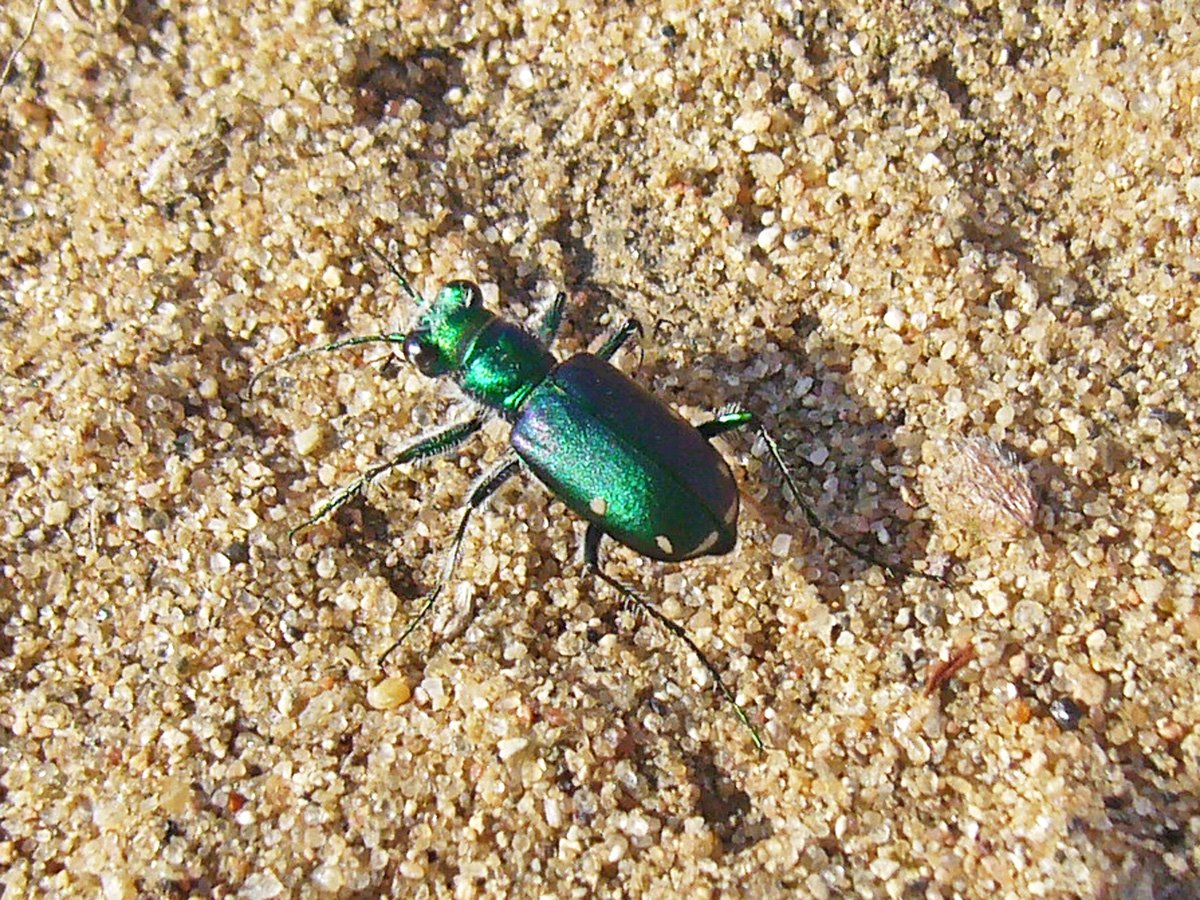
An individual from further south on the Sikeston Ridge (~20 mi S of Sand Prairie Conservation Area).  Note the generally blue-green coloration as in unicolor, but it also exhibits fairly well developed maculations and a suffusion of maroon color on the elytra - distinct influences from subspecies lecontei.The greatest portion of the species’ range is occupied by nominotypical populations in the Great Plains and subspecies lecontei in the Midwest and northeast. Similar to what I’ve noted in previous posts for other species, a broad zone of intergradation between these two subspecies occurs along the upper Missouri River. Other subspecies occupy more limited ranges along the upper Atlantic Coast (rugifrons), southeastern Coastal Plain (unicolor), eastern Texas and adjacent areas of northwestern Louisiana and southwestern Arkansas (rugata), and north-central Texas (flavoviridis), and the highly restricted and disjunct yampae is found only in a small area of northwestern Colorado. Populations in the upper Midwest and Canadian prairie are sometimes regarded as distinct from lecontei (designated as subspecies criddlei) due to their broadly coalesced marginal elyral maculations, and an apparently disjunct population of small, blue individuals in south Texas may also be regarded as subspecifically distinct.

Another individual from Sand Prairie Conservation Area.  It is similar to the unicolor-type individual in Photo 1 but also exhibits small maculations derived from its lecontei influence.Although Missouri lies well within the boundaries of its range, this species has been found in only three widely-separated parts of the state – near the Missouri River in the northwest part of the state, near the Mississippi River in the extreme northeast corner, and in the southeastern lowlands (formally known as the Mississippi River Alluvial Basin). The two northern Missouri populations are assignable to and typical of lecontei, with their uniform dull maroon to olive green coloration and continuous to near-continuous ivory-colored border around the outer edge of the elytra. Additional dry sand habitats occur along the lower Missouri River in central and east-central Missouri and along some of the larger rivers that drain the Ozark Highlands; however, this species has not been located in these habitats despite their apparent suitability and occurrence of C. formosa with which it frequently co-occurs. The reasons for this distributional gap between the northern and southern populations – some 400 miles in width – remain a mystery. The southeastern Missouri population is not clearly assignable to any subspecies, apparently representing an intergrade between lecontei to the north and unicolor to the south. Accordingly, individuals from this area are known by the unwieldy appellative “Cicindela scutellaris lecontei x scutellaris unicolor intergrade.” Pearson et al. (2005) states that intergrades between lecontei and unicolor are evident only in northern “Missouri” (an obvious error for Mississippi) and Tennessee. Thus, the existence of intergrades in southeastern Missouri suggests that the zone of intergradation extends further north than previously realized.

A second individual from ~20 mi S of Sand Prairie Conservation Area.  Similar to the individual in Photo 2 except with smaller maculations.  Note the gorgeous suffusion of maroon, especially on head and pronotum - a spectacular individual.Prior to this season, I had located two main population centers in the southeastern lowlands – one at Holly Ridge Conservation Area in Stoddard County, and another at Sand Pond Conservation Area in Ripley County. Holly Ridge is located on Crowley’s Ridge – an erosional remnant of Tertiary sand and aggregate sediments left behind by the late Pleistocene glacial meltwaters whose scouring action formed the surrounding lowlands, while the sandy sediments at Sand Pond were deposited west of Crowley’s Ridge along the southeastern escarpment of the Ozark Highlands during that same period. These erosional and depositional events created the deep, dry sand habitats that Cicindela scutellaris requires. I had known also about the Sikeston Sand Ridge further to the east – another erosional remnant of Tertiary sands deposited by the ancient Ohio River – but had not explored it closely until this season when I initiated my surveys at Sand Prairie Conservation Area. I expected Cicindela scutellaris might occur here, and in my first fall visit in early September I found two individuals in the sand barrens (alongside Cicindela formosa). Another individual was seen here in early October, but more robust populations were observed at a small, high-quality sand prairie remnant (last photo) further to the south along the Sikeston Ridge, and around eroded sand barrens behind private residences still further to the south. Clearly, the species is well-established in the southeastern lowlands wherever open dry sand habitats can be found.

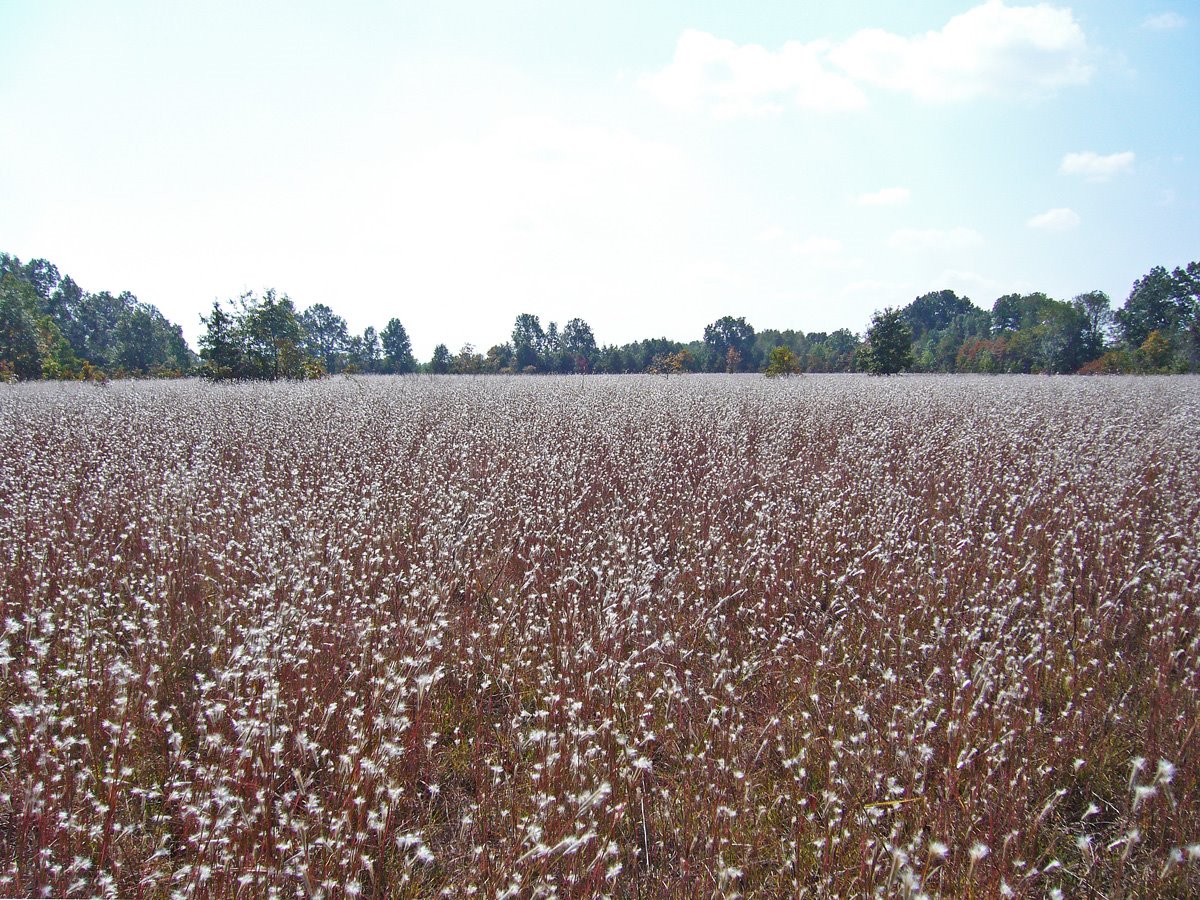
Sand prairie habitat for Cicindela scutellaris in southeast Missouri.  Note the well-spaced clumps of grass, in this case splitbeard bluestem.The individuals shown here exemplify the range of variation exhibited by Cicindela scutellaris populations in southeast Missouri. They greatly resemble subspecies unicolor by their uniform shiny blue-green coloration. Indeed, the individual in the first photo might well be classified as such due to the complete absence of white maculations along the elytral border. Most individuals, however, show varying development of such maculations, ranging from small disconneted spots to the more developed apical “C”-shaped mark – clearly an influence from subspecies lecontei. Another apparent lecontei influence is the suffusion of wine-red or maroon coloration that can be seen on the head, pronotum, and elytra of the individuals in photos 2 and 4. These characters make this population divergent from the typically monochromic unicolor (as its name suggests). Because of their bright green coloration and white maculations, individuals in this population greatly resemble subspecies rugifrons, but that subspecies is limited to the northern Atlantic seaboard. They also resemble the common and widespread Cicindela sexguttata (six-spotted tiger beetle) but can be distinguished from that species by the more noticeably domed profile of the elytra, rounded rather than tapered elytral apex, and dark labrum of the female (both sexes of C. sexguttata have a white labrum).

There is one additional sand ridge in Missouri’s southeastern lowlands – the Malden Ridge. This sand ridge occurs south of Crowley’s Ridge and is much smaller than the Sikeston Ridge. No significant remnant habitats remain on the Malden Ridge, but it is possible that sufficient areas of open sand remain that might support populations of C. scutellaris. Determining whether this is true will require some time studying Google Earth and even more time on the ground to search them out. If they do exist, however, it will be interesting to see what level of influence by lecontei is exhibited in this most southerly of Missouri populations. Only spring will tell!

Happy Halloween!

are-gee-OH-pee our-ON-tea-uhArgiope aurantia

Those who think scientific names are too complicated have the following dizzying array of common names to choose from for this species: black and yellow garden spider; black and yellow argiope; yellow garden spider, yellow garden argiope; yellow garden orbweaver; golden garden spider; golden argiope; golden orbweaver; writing spider; scribbler; corn spider. Or instead, just say Argiope aurantia (are-gee-OH-pee our-ON-tea-uh) – it is unambiguous and will make you sound intelligent.

Large females are commonly encountered in late summer and early fall. This fine lady was photographed 7 September 2008 at Victoria Glades Natural Area in Jefferson County, Missouri. Quite coincidentally, North America’s tarantulas (genus Aphonopelma, represented in Missouri by A. hentzi) reach their natural northeastern limit of distribution in this very glade complex, located ~30 miles south of St. Louis.

There are five North American species of Argiope, of which two occur broadly across the eastern U.S. Argiope aurantia can be distinguished from Argiope trifasciata (banded garden spider/argiope/orbweaver) by the zig-zag pattern of the stabilimentum of the former and the transversely striped abdomen and spotted legs of the latter.

Despite its name, the function of the stabilimentum (reinforced area in the middle of the web) remains controversial. The idea that it somehow adds stability to the web is not given much credence today. A visual function seems much more plausible, especially when considering that only diurnal spiders make such structures. Possibilities include camoflauge for predator avoidance, the seemingly opposite idea of increased visibility to prevent accidental destruction of the web by birds or large animals, and even prey attraction through enhanced reflection of ultraviolet light. Stabilimenta in different spider lineages probably evolved independently and may have different or even multiple functions.

A sand prairie autumn

Splitbeard bluestem seed headsAsk any astronomer when autumn begins, and they will likely tell you it begins at the autumnal equinox – when shortening days and lengthening nights become equal as the sun crosses over the celestial equator. According to them, fall began this year on September 22 – at 11:44:18 A.M. EDT, to be precise. I agree that autumn begins at a precise moment, but it is not at the equinox. Rather, it is that unpredictable moment when a sudden crispness in the air is felt, when the sky somehow seems bluer and shadows seem sharper, and hints of yellow – ever so subtle – start to appear in the landscape. Butterfly pea blossomIn Missouri, with its middle latitudes, this usually happens a few weeks before the equinox, as August is waning into September. It is a moment that goes unnoticed by many, especially those whose lives and livelihoods have lost all connection with the natural world. To plants and animals, however, it is a clear signal – a signal to begin making preparations for the long cold months of winter that lie ahead. Plants that have not yet flowered begin to do so in earnest, while those that have shift energy reserves into developing seeds. Animals take advantage of their final opportunities to feed before enduring the scarcities of winter, digging in to sleep through them, or abandoning altogether and migrating to warmer climes. Insects begin hastily provisioning nests for their broods or laying eggs – tiny capsules of life that survive the harsh winter before hatching in spring and beginning the cycle anew.

Sand prairie in early September.Sand prairie in early October.  Note abundance of splitbeard bluestem seed heads.Across much of Missouri, in the Ozark Highlands and in riparian ribbons dissecting the northern Plains, autumn brings an increasingly intense display of reds, purples, oranges, and yellows, as the leaves of deciduous hardwoods begin breaking down their chlorophyll to unmask underlying anthocyanins and other pigments. Small southern jointweedIn Missouri’s remnant prairies, seas of verdant green morph to muted shades of amber, tawny, and beige. This subtle transformation is even more spectacular in the critically imperiled sand prairies of the Southeast Lowlands, where stands of splitbeard bluestem (Andropogon ternaries – above) turn a rich russet color while fluffy, white seed heads (1st paragraph, 1st photo) appear along the length of each stem, evoking images of shooting fireworks. Small southern jointweed (Polygonella americana – right) finds a home at the northern extent of its distribution in these prairie remnants and in similar habitats in nearby Crowley’s Ridge, blooming in profusion once the cooler nights arrive. Butterfly pea (Clitoria mariana – 1st paragraph, 2nd photo) blooms add a gorgeous splash of soft purple in contrast to the muted colors of the plants around them.

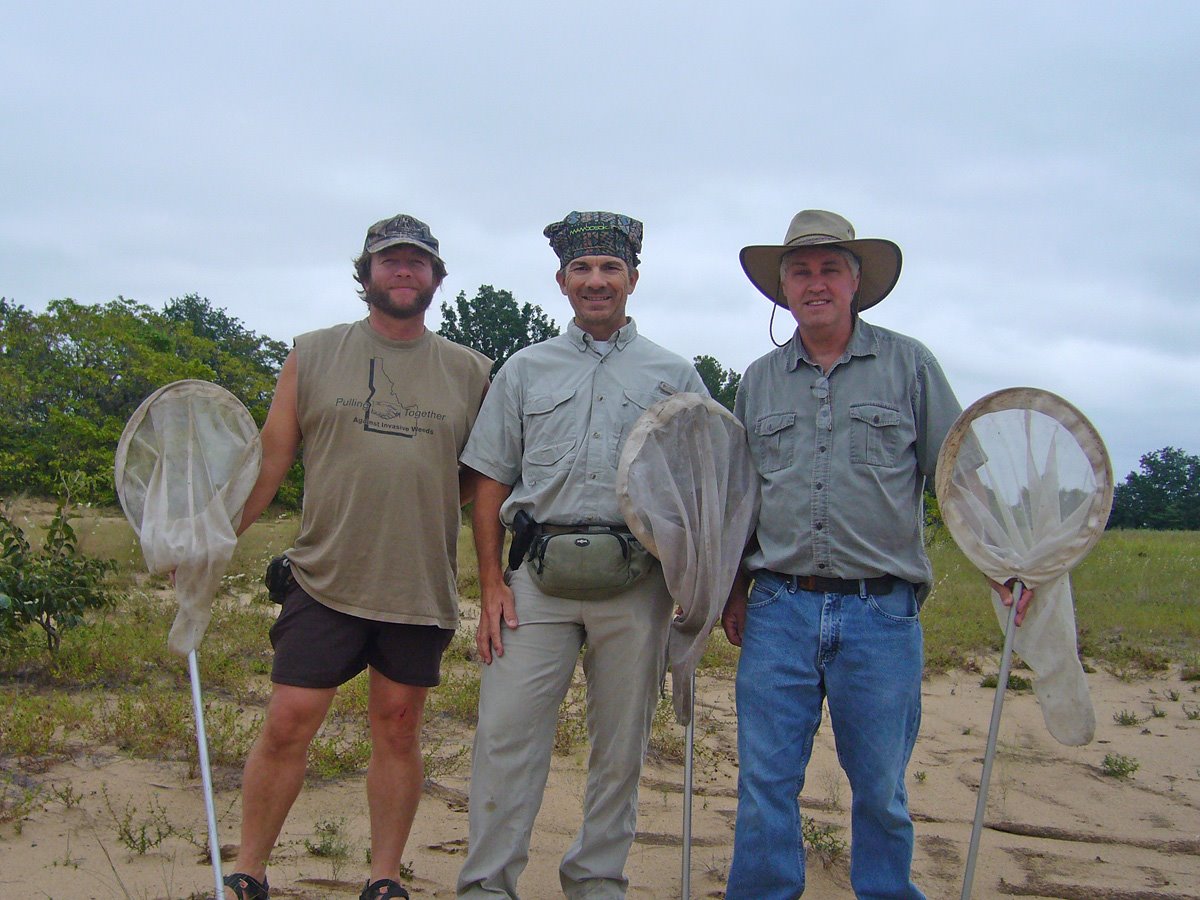
Kent Fothergill, Ted MacRae, and Rich ThomaAfter first becoming acquainted with Missouri’s sand prairies this past summer, I knew a fall trip (or two) would be in order. The extensive deep, dry sand barrens were ideal habitat for sand-loving insects, including certain spring/fall species of tiger beetles that would not be active during the summer months. The cooler nights and crisp air of early fall make insect collecting extraordinarily pleasurable, so it took little effort to convince friends and colleagues Kent and Rich to join me on another excursion to these extraordinary remnant habitats, along with my (then 8 yr-old) daughter Madison (who would likely characterize this as “tallgrass” prairie). Madison MacRae, age 9 (almost)I was, as ever, on the lookout for tiger beetles; however, temperatures were cool, skies were overcast, and the fall season was just beginning, greatly limiting tiger beetle activity during this first fall visit. We did see one Cicindela formosa (big sand tiger beetle), which cooperated fully for a nice series of photographs. We also found single specimens of the annoyingly ubiquitous C. punctulata (punctured tiger beetle) and a curiously out-of-place C. duodecimguttata (12-spotted tiger beetle), which must have flown some distance from the nearest dark, muddy streambank that it surely prefers. Of greatest interest, we found two specimens of C. scutellaris (festive tiger beetle), which in this part of Missouri is represented by a population presenting a curious mix of influences from two different subspecies (more on this in a later post…). Despite the scarcity of tiger beetles, other insects were present in great diversity, some of which I share with you here.

Ululodes macleayanusThis bizarre creature, sitting on the stem of plains snakecotton (Froelichia floridana), is actually a neuropteran insect called an owlfly (family Ascalaphidae). Looking like a cross between a dragonfly and a butterfly due to its overly large eyes and many-veined wings but with long, clubbed antennae, this individual is demonstrating the cryptic resting posture they often assume with the abdomen projecting from the perch and resembling a twig. The divided eyes identify this individual as belonging to the genus Ululodes, and Dr. John D. Oswald (Texas A&M University) has kindly identified the species as U. macleayanus. As is true of many groups of insects, their taxonomy is far from completely understood. Larvae of these basal holometabolans are predaceous, lying on the ground with their large trap-jaws held wide open and often camouflaging themselves with sand and debris while waiting for prey. The slightest contact with the jaws springs them shut, and within a few minutes the prey is paralyzed and can be sucked dry at the larva’s leisure.

Ant lion, possibly in the genus Myrmeleon.Another family of neuropteran insects closely related to owlflies are antlions (family Myrmeleontidae, sometimes misspelled “Myrmeleonidae”). This individual (resting lower down on the very same F. floridana stem) may be in the genus Myrmeleon, but my wanting expertise doesn’t allow a more conclusive identification [edit 4/12/09 – John D. Oswald has identified the species as Myrmeleon immaculatus]. Strictly speaking, the term “antlion” applies to the larval form of the members of this family, all of whom create pits in sandy soils to trap ants and other small insects, thus, it’s occurrence in the sand prairie is not surprising. Larvae lie in wait beneath the sand at the bottom of the pit, flipping sand on the hapless prey to prevent it from escaping until they can impale it with their large, sickle-shaped jaws, inject digestive enzymes that ‘pre-digest’ the prey’s tissues, and suck out the liquifying contents. Finding larvae is not easy – even when pits are located and dug up, the larvae lie motionless and are often covered with a layer of sand that makes them almost impossible to detect. I’ve tried digging up pits several times and have failed as yet to find one. Larvae are also sometimes referred to as “doodlebugs” in reference to the winding, spiralling trails that the larvae leave in the sand while searching for a good trap location – these trails look like someone has doodled in the sand.

Bembix americanaThis digger wasp, Bembix americana (ID confirmed by Matthias Buck), was common on the barren sand exposures, where they dig burrows into the loose sand. Formerly included in the family Sphecidae (containing the better-known “cicada killer”), members of this group are now placed in their own family (Crabronidae). Adult females provision their nest with flies, which they catch and sting to paralyze before dragging it down into the burrow. As is common with the social hymenoptera such as bees and paper wasps, these solitary wasps engage in active parental care by providing greater number of prey as the larva grows. As many as twenty flies might be needed for a single larva. I found the burrows of these wasps at first difficult to distinguish from those created by adults of the tiger beetles I so desired, but eventually learned to distinguish them by their rounder shape and coarser, “pile” rather than “fanned” diggings (see this post for more on this subject).

Stichopogon trifasciatusRobber flies (family Asilidae) are a favorite group of mine (or, at least, as favorite as a non-coleopteran group can be). This small species, Stichopogon trifasciatus (ID confirmed by Herschel Raney), was also common on the barren sandy surface. The specific epithet refers to the three bands of alternating light and dark bands on the abdomen. Many species in this family are broadly distributed but have fairly restrictive ecological requirements, resulting in rather localized occurrences within their distribution. Stichopogon trifasciatus occurs throughout North America and south into the Neotropics wherever barren, sandy or gravely areas near water can be found. Adults are deadly predators, swooping down on spiders, flies and other small insects and “stabbing” them with their stout beak.

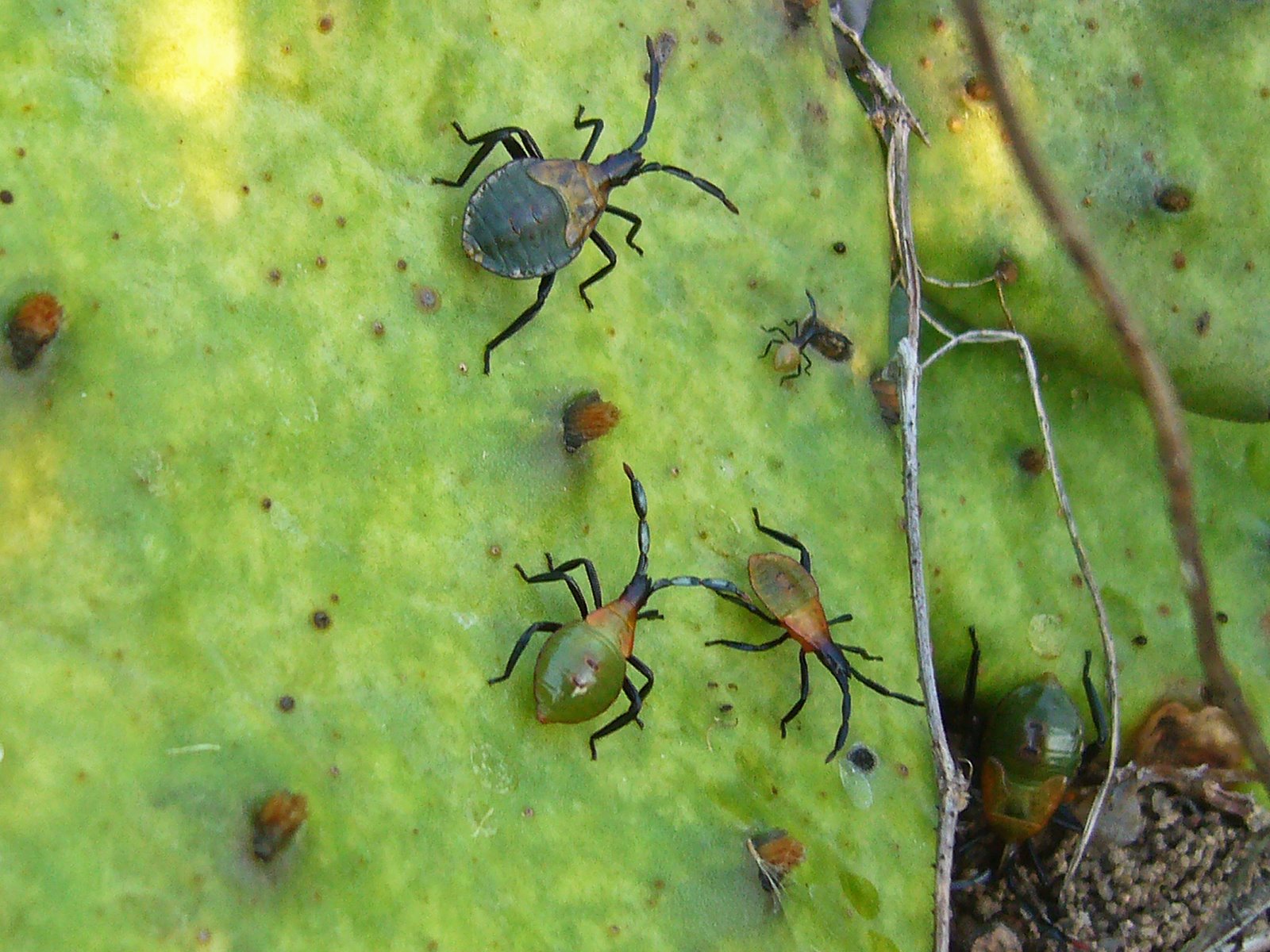
Chelinidea vittigerPrickly pear cactus (Opuntia humifusa) grows abundantly in the sandy soil amongst the clumps of bluestem, and on the pads were these nymphs of Chelinidea vittiger (cactus bug, family Coreidae). This wide-ranging species occurs across the U.S. and southward to northern Mexico wherever prickly pear hosts can be found. This species can either be considered a beneficial or a pest, depending upon perspective. On the one hand, it serves as a minor component in a pest complex that prevents prickly pear from aggressively overtaking rangelands in North America; however, prickly pear is used by ranchers as emergency forage, and fruits and spineless pads are also sometimes harvested for produce. In Missouri, O. humifusa is a non-aggressive component of glades, prairies, and sand and gravel washes, making C. vittiger an interesting member of the states natural diversity.

Ammophila sp., possibly A. proceraThis wasp in the genus Ammophila (perhaps A. procera as suggested by Herschel Raney) was found clinging by its jaws to a bluestem stem in the cool morning, where it presumably spent the night. One of the true sphecid (or “thread-waist”) wasps, A. procera is a widespread and common species in eastern North America. One of the largest members of the genus, its distinctive, bold silver dashes on the thorax distinguish it from most other sympatric congeners. Similar to the habits of most other aculeate wasp groups, this species captures and paralyzes sawfly or lepidopteran caterpillars to serve as food for its developing brood. Females dig burrows and lay eggs on the paralyzed hosts with which the nests have been provisioned. Adults are also found commonly on flowers, presumably to feed on nectar and/or pollen.

Dusty hog-nosed snakeRich is a bit of herpatologist, so when he brought this hog-nosed snake to our attention we all had a good time pestering it to try to get it to turn upside down and play dead. I had never seen a hog-nosed snake before but knew of its habit of rolling over and opening its mouth with its tongue hanging out when disturbed, even flopping right back over when turned rightside up or staying limp when picked up. We succeeded in getting it to emit its foul musky smell, but much to our disappointment it never did play dead, instead using its shovel-shaped snout to dig into the sand. Dusty hog-nosed snake - head closeupWe had assumed this was the common and widespread eastern hog-nosed snake (Heterodon platirhinos); however, in our attempts to turn it over I noticed its black and orange checker patterned belly. I later learned this to be characteristic of the dusky hog-nosed snake (H. nasicus gloydi), only recently discovered in the sand prairies of southeast Missouri and regarded as critically imperiled in the state due to the near complete destruction of such habitats. Disjunct from the main population further west, its continued survival in Missouri depends upon the survival of these small sand prairie remnants in the Southeast Lowlands.

New species and a review of the genus Tragidion

ResearchBlogging.orgSpecies of Tragidion are among the larger and more attractive cerambycids in North America, making them popular among collectors. Their bright orange and black coloration clearly functions in mimicking spider wasps (family Pompilidae) in the genera Pepsis and Hemipepsis – the so-called “tarantula hawks.” Unfortunately, species of Tragidion have been difficult to identify due to a high degree of morphological similarity between species, wide range of variation across geographic areas within species, unusually high sexual dimorphism and dichromatism, and apparent potential for hybridization in areas of geographic overlap. This has confounded efforts to delimit species boundaries, resulting in a confusing assortment of names whose proper application has eluded even the most esteemed of North America’s cerambycid taxonomists. Recently, some much needed clarity was provided by Ian Swift and Ann M. Ray in the journal Zootaxa. Their taxonomic review of Tragidion – the first systematic treatment of the entire genus – recognizes seven species in North America and another four restricted to Mexico. Two species – T. agave from California and Baja California and T. deceptum from montane areas of the southwestern U.S. and northern Mexico (both pictured) – are described as new, and a third – T. densiventre from desert areas of the southwestern U.S. and northern Mexico – is raised from synonymy under T. auripenne. Four new synonymies are also proposed, and dorsal habitus photographs and a key to all species are provided. Life history information is limited for most species of Tragidion. One species – T. coquus – occurs broadly across the eastern and central U.S., where it breeds in a variety of dead hardwoods, especially oak. Several species occur in the southwestern U.S. and northern Mexico – some are found in xeric lowland desert habitats, where they breed in dead branches of Prosopis glandulosa and Acacia greggii (T. densiventre) or dead flower stalks of Yucca and Agave (T. agave and T. armatum), while a fourth (T. deceptum) is found in more montane habitats mining the heartwood of recently dead branches of Quercus. Adults of another species in California and Baja California, T. annulatum, are strongly attracted to brushfires and burning vegetation, and individuals have been observed landing on still-burning and smoldering shrubs, causing their legs and abdomens to melt to the surface of the branches. At several post-burn sites, the melted bodies of this species were common on the charred branches of their hosts, and females have been observed ovipositing on woody shrubs that have been burned. This species likely plays an important role in the decomposition of burned woody material in coastal areas of California. The remaining U.S. species – T. auripenne – is known from only a handful of specimens collected in xeric habitats in the Four Corners region of the southwestern U.S. It’s life history, as well as those of the four strictly Mexican species, remains essentially unknown.

Tragidion agaveTragidion agave Swift & Ray 2008, ♂ & ♀ – California & Baja California. Tragidion deceptumTragidion deceptum Swift & Ray 2008, ♂ & ♀ – southwestern U.S. and northern Mexico.

REFERENCE: Swift, I., Ray, A. M. (2008). A review of the genus Tragidion Audinet-Serville, 1834 (Coleoptera: Cerambycidae: Cerambycinae: Trachyderini) Zootaxa, 1892, 1-25

Deciding on science

I hope you’ll forgive my momentary diversion into politics for this post. I’m not normally one to ‘proseletize’, and I promise to return to my normal subject matter in the next post. But at this moment we find ourselves on the eve of arguably the most important election in our history. Of the many objections that can be raised about the Bush administration’s policies during the past eight years, it is his seeming all-out attack on science and the environment that has most alarmed me. From supporting the teaching of ‘intelligent design’ in science classes and vetoing federal funding for stem cell research, to suppressing and censoring reports on subjects such as global warming and mercury pollution and stacking scientific advisory panels with political appointments, Bush has led what might be described as ‘the most anti-science’ administration in history. Under his administration, federal funding for physical and life science research has stagnated or declined, threatening our once dominant position in the scientific world and risking the future prosperity that depends upon science-based innovation. I suspect both Barack Obama and John McCain will implement science policies that would be a considerable improvement over those of Bush; however, let us consider the details.

Obama has promised to double the federal investment in basic research, restore integrity to the process of obtaining scientific advice, and invest in clean energy technology. McCain has also voiced support for increased science funding and restoring integrity; however, he has also proposed an across the board freeze on all non-defense discretionary spending. Throughout his campaign, Obama has emphasized the power of science and technology to increase U.S. competitivness, while McCain’s relative lack of statements on traditional areas of science policy suggests, if not antagonism, at least apathey. Both candidates recognize nuclear energy as an important non-carbon energy source, but where Obama has urged caution until the significant challenges of waste storage and potential for proliferation are addressed, McCain has called this “no problem.” McCain also sees aggressive oil drilling as an important step in achieving energy independence, despite the fact that the U.S. owns only 3% of the world’s oil reserves while being responsible for a full 25% of its consumption. He considers our need for oil to be a national security issue, justifying the opening of currently protected areas for drilling. Whenever I hear the shrill call to open up ANWAR, I am reminded of this oft-used passage from Life Without Principle by Henry David Thoreau:

“If a man should walk in the woods for the love of them half of each day, he is in danger of being regarded as a loafer, but if he spends his whole day as a speculator, shearing off those woods and making earth bald before her time, he is esteemed an industrious and enterprising citizen.”

John McCain also declined a recent Nature invitation to answer 18 science-related questions in writing (an invitation that Obama accepted), thereby missing another important opportunity to be more forthcoming about his science policy. In contrast, Obama’s science agenda clearly emphasizes a commitment to clean energy, environmental stewardship, and aggressive promotion of science-based education. This has prompted 62 Nobel Prize Laureates to write a letter on Sept. 25 endorsing Obama for president.

Perhaps most illuminating are the candidates responses to questions about the teaching of creationism (sometimes repackaged as ‘intelligent design’) in science classrooms and funding for research using human embryonic stem-cell lines. Obama acknowledges the strong consensus of the scientific community in the validity of evolutionary theory, opposes mandated teaching of ‘alternative’ theories that are not subject to experimental scrutiny, and strongly supports expanding research on stem cells. McCain’s statements have displayed more ambivalence – he believes in evolution and has voted to lift Bush’s ban on stem cell research but has also made statements supporting teaching “all points of view” about human origins and defining stem cell policies that “reflect a refusal to sacrifice moral values and ethical principles for the sake of scientific progress.” Republican vice presidential nominee Sarah Palin – a staunch critic of evolution and stem cell research and supporter of teaching intelligent design – has been anything but ambivalent on these issues, and her selection as his running mate is perhaps the most disturbing indicator of what McCain really believes.

I share with you some pictures that I took this past weekend at the Obama Rally in St. Louis. Our entire family was excited to have the opportunity to view Obama – rightly described by Colin Powell as a ‘transformational figure’ – in person. We expected the crowd would be large so arrived early in the morning, by which time the line already extended almost to the northern boundary of the Gateway Arch grounds. Nevertheless, we enjoyed a spot quite a close to the stage, and once inside savored and shared the excitement and anticipation with a diverse crowd who were all there for a common cause – the 2-hour wait was anything but boring! Local and state dignitaries primed the crowd, and by the time Obama arrived the crowd had swelled to over 100,000. Looking back upon the crowd from our spot near the stage and seeing the excitement, I felt like I was a part of history. While this flyer that was circulating (titled, “Scary Thought”) may be a bit of an exaggeration, I don’t think the choice could be clearer.