
Desmocerus palliatus (elderberry borer), Squaw Creek Natl. Wildlife Refuge, Missouri.
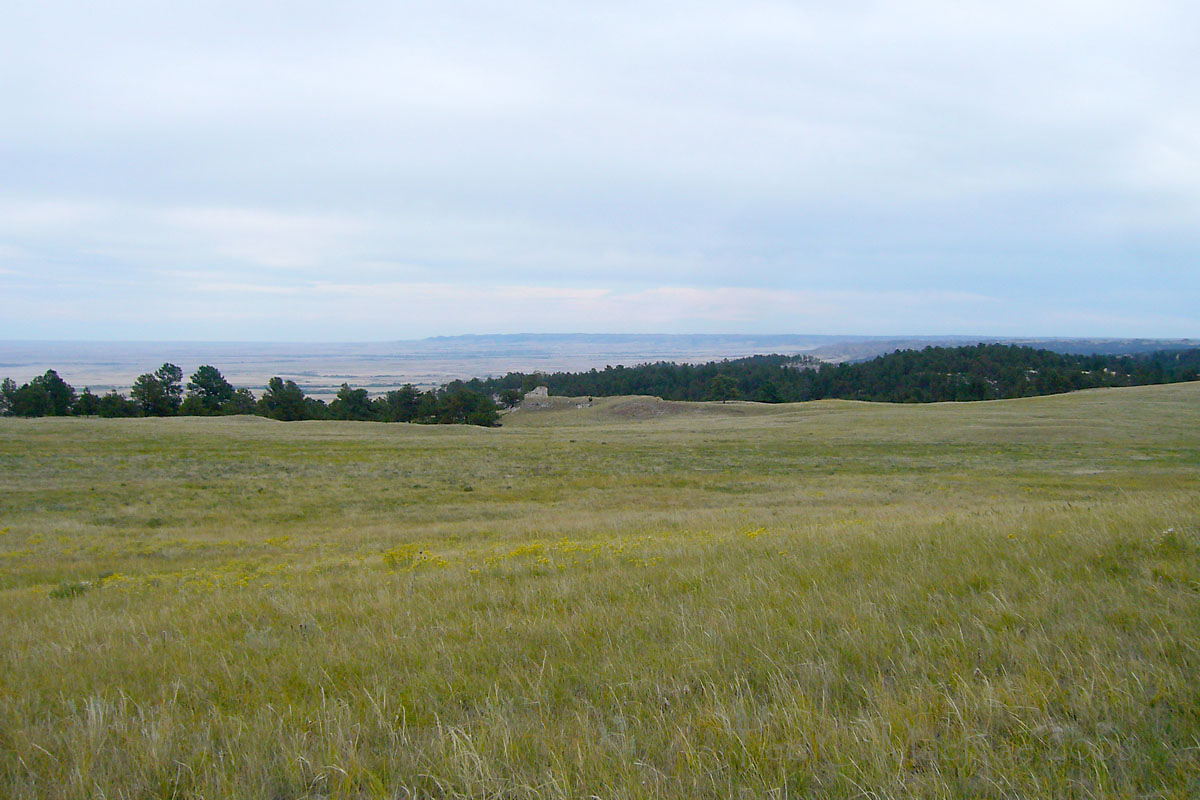
Last June I made two trips to the Loess Hills in northwestern Missouri to survey additional sites for Cylindera celeripes (swift tiger beetle), which my colleague Chris Brown and I had discovered in some of the area’s few remaining loess hilltop prairie remnants the previous year. One of these potential new sites was Squaw Creek National Wildlife Refuge, where a few tiny slivers of hilltop prairie can still be found on the fingers of loess bluffs that border the refuge’s several thousand acres of restored wetlands that famously host large concentrations of snow geese and bald eagles during the fall and spring migrations. On the first visit, I had arranged to meet with Corey Kudrna, Refuge Operations Specialist, who was kind enough to take several hours out of his day to personally guide me to each of the site’s loess hilltop prairie remnants.
As we crossed the highway right-of-way at the base of the bluffs on our way to the one of the remnants, we passed through a large patch of common elderberry, Sambucus nigra ssp. canadensis. Anytime I see patches of this plant, especially in June, I immediately think of Desmocerus palliatus (elderberry borer) – a spectacularly colored longhorned beetle (family Cerambycidae) that breeds exclusively in the living stems and roots of this plant. It is not a particularly rare species, but for some reason I have not had much success in finding this species. In my close to three decades of collecting beetles, I had encountered perhaps a half dozen individuals – never more than two at the same time. Still, when I get the chance to look at elderberry I look for this beetle, and when I did so this time I was delighted to see one within a few moments of entering the patch. I was ecstatic when I saw another one almost immediately after the first, and I was stunned when I realized that they were all around me! Good fortune continued on my subsequent visit two weeks later, when I was able to spend a little more time trying to get a good field photograph. Wind was a problem, the beetles were easily alarmed, and their tendency to rest in the upper reaches of the plant made it difficult to brace myself and the camera while shooting, making this a rather difficult subject to get a good photograph of. The photo shown here is literally the last of around two dozen that I took and is the only one that I really like.
Many cerambycid beetles are mimics of other more noxious species, mostly ants and wasps. However, elderberry borers appear to be the exception in that they are themselves noxious. The cobalt blue and bright orange coloration of the adults screams aposematic (warning) coloration, and it is reasonable to assume that they accumulate in their bodies for defensive purposes the cyanogenic glucosides produced by elderberry plants (Huxel 2000). Even their movements are those of a chemically protected model – lumbering and clumsy, without the alert evasiveness usually seen with other flower longhorn species. Presumably this species participates in a Müllerian mimicry complex involving netwinged beetles (family Lycidae, particularly species in the genus Calopteron) and perhaps Pyromorpha dimidiata (orange-patched smoky moth, family Zygaenidae) as well, and it may serve as a Batesian model for the equally colorful but completely innocuous Lycomorpha pholus (black-and-yellow lichen moth, family Arctiidae).
Photo Details: Canon 50D w/ 100mm macro lens (ISO 100, 1/250 sec, f/10), Canon MT-24EX flash w/ Sto-Fen diffusers.
REFERENCE:
Huxel, G. R. 2000. The effect of the Argentine ant on the threatened valley elderberry longhorn beetle. Biological Invasions 2:81–85.
Copyright © Ted C. MacRae 2010






 Beetles In The Bush