Buprestidae exchange

With my queue of specimen identifications now clear, I can turn my attention to another major backlog that I haven’t been able to give proper attention recently—exchanges. For those of you not into insect collecting, exchanging is something that most collectors eventually end up doing, especially if the goal is to build a taxonomic reference collection within one’s chosen group that has broad representation of species and higher taxa from multiple geographical regions. Truthfully, I don’t do nearly as much exchanging as some collectors I know. It’s not that I don’t want to, but simply a matter of time—receiving and incorporating shipments while preparing and sending out returns is not as quick and easy as it might seem, not to mention the time involved in mining and corresponding with prospective exchange partners. I wish I could do more, but since I can’t I deal with it by limiting myself almost exclusively to exchanging Buprestidae (although I’ve been known to do a tiger beetle exchange or two). I focus on Buprestidae because that is my primary group of taxonomic interest.

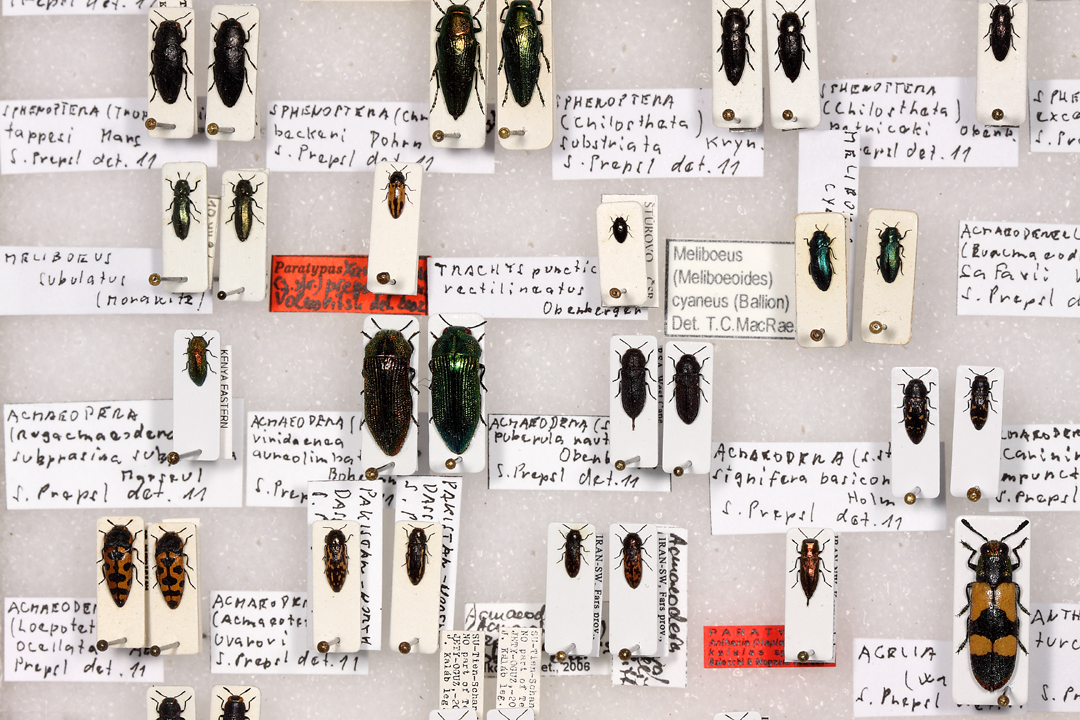
Buprestidae received in exchange from Stanislav Prepsl, Czech Republic

These photos show some of the Buprestidae I received this past year, this particular box coming from Stanislav Prepsl in the Czech Republic. This is the first time that I’ve exchanged with Stan, and I must say I am impressed with the quality and taxonomic diversity of his buprestid holdings. In this exchange, I received 73 species, most of which are represented by a male/female pair and four represented by paratype specimens. These are all Old World species, and while a few are from the well-known fauna of Europe most were collected in countries seldom visited by (or even off limits to) American collectors such as the former USSR, Iran, Pakistan, Kurdistan, Turkey, etc. There are a nice few species also from Namibia, Kenya and Ethiopia. In return, I sent to Stan more than 100 species of Buprestidae from mostly the southwestern U.S. and Mexico where I have done a large part of my collecting. Stan was less demanding about receiving both one male and one female for each species, thus the larger number of species I was able to send him for approximately equal numbers of specimens.
Close-up view of lower left corner of box

Some collectors avoid Buprestidae because of their taxonomic difficulty and the overwhelming numbers of small, difficult-to-identify species. I think this is exactly why I like the group, and though many of the species are small they are certainly no less beautiful than their larger, flashier, more ostentatious brethren. I include this close-up view (you might recognize the specimen in the lower right corner as the previously featured Agelia lordi) to show the meticulous preparation of the specimens included in the shipment—an example of a well-curated collection by someone who knows what they are doing. Incidentally, the cards on which the specimens are mounted are standard fare among European collectors, and although as an American I prefer direct pinning of larger specimens and mounting smaller specimens on points versus cards, I’ve come to appreciate the exacting care with which some Europeans practice this card-mounting technique.

It’ll take me a few hours of dedicated attention to move all of these specimens into the main collection—not only must their proper placement be determined, but there is usually a lot of reshuffling of specimens within and amongst unit trays whenever such a large number of specimens is incorporated into it. With 15,000 described species and counting, this sending of Buprestidae represents only a modest increase (0.5%) in my representation of species; however, it adds representation from geographical areas that previously had virtually no representation in my collection at all. I hope Stan is as pleased with the material that I sent to him as I am with this material, and I look forward to the opportunity to exchange again with him in the near future.

Copyright © Ted C. MacRae 2012

Extreme sexual dimorphism in Buprestidae: Xenorhipis hidalgoensis

Yesterday I received in the mail a package of specimens for identification from Dan Heffern in Houston, Texas. I first began corresponding with Dan about 25 years ago—not long after I myself became interested in Coleoptera, and as an avid collector of longhorned beetles (family Cerambycidae) Dan knows a thing or two about jewel beetles (family Buprestidae) as well. Over the years, Dan has come up with a number of great buprestid species from Texas, especially through rearing, many of which he has graciously sent to me examples for my cabinet.

Xenorhipis hidalgoensis (male, length 5.3 mm) | Hidalgo Co., Texas

The present package was no exception, as it contained a male/female pair of one of North America’s least frequently encountered buprestids, Xenorhipis hidalgoensis. Dan had reared them from dead branches of Condalia obovata collected in south Texas as part of a multi-year beetle survey in the Lower Rio Grande Valley. He had mentioned to me that he would be including them in the sending, but that did nothing to diminish my excitement upon seeing the specimens when I opened the box. The species was first described from Hidalgo Co., Texas (Knull 1952), and other than a single record from the neighboring Mexican state of Tamaulipas (Nelson et al. 1981) subsequent mentions of the species have been limited to catalogue listings and inclusion in keys to species. Thus, these specimens represent not only a nice addition to my collection, but also the first reported larval host for the species.

Xenorhipis hidalgoensis belongs to the tribe Xenorhipini, the males of which exhibit a distinctive specialization of their antennae in that the distal segments are highly modified into a very extended flabellate or lamellate condition. Females, in contrast, retain the serrate antennal condition that is more typical throughout the family.  Differences in antennal morphology aren’t the only sexual differences exhibited by members of the tribe, as males and females often exhibit differences in coloration as well. This is especially true in the genus Xenorhipis, and I’m not aware of a more striking example of this than X. hidalgoensis (compare these photos to those of male/female pairs of X. bajacalifornica, X. brendeli and X. osborni in A new species of Xenorhipus from Baja California).

Xenorhipis hidalgoensis (female, length 6.4 mm) | Hidalgo Co., Texas

The highly modified male antennae are interesting from both an evolutionary and functional standpoint. Similarly modified male antennae are found in a few other groups of Buprestidae, including the genus Knowltonia in western North America (four species), the monotypic genera Mendizabalia and Australorhipis in South America and Australia, respectively, and two species in the enormous Australian genus Castiarina (Bellamy and Nylander 2007). The Xenorhipini, however, with 20 species distributed throughout the Western Hemisphere, is by far the most diverse group exhibiting the condition. Despite the similarity of their antennae, the taxonomic distance between these groups and differences in the detailed structure of the numerous olfactory sensillae that cover the modified segments (Volkovitsh 2001) suggest that the modifications have arisen and evolved independently in these several disparate taxa.

All Buprestidae exhibit sensory structures on their antennae, presumably with olfactory and/or thermosensory functions; however, Wellso (1966) provided strong evidence that females of X. brendeli release pheromones that are highly attractive to males and detected by their elaborate antennae. Caging studies with virgin and mated females revealed that males were highly attracted to virgin but not mated females, and that mated males were not attracted to either virgin or mated females and died shortly thereafter.  Further, more than 80% of males were attracted within a 1-hour period just past midday. It is assumed that chemoreceptors for detecting female pheromones are located on the male antennae, as males with their antennae removed were not attracted to caged virgin females but were able to mate when caged with them. This suggests that the male antennae evolved in response to selection for greater surface area, which allows placement of more sensillae to detect female pheromone. Wellso observed also that adults are very short-lived, with no individuals living longer than 48 hours (perhaps due to reliance on pheromone attraction rather than longevity for mate location). This, along with their very short daily activity period, may explain  why adults of species in this tribe are so seldom encountered in the field.

Male with highly flabellate antennae

Female with unmodified serrate antennae


REFERENCES:

Bellamy, C. L. and U. Nylander. 2007. New genus-group synonymy in Stigmoderini (Coleoptera: Buprestidae). The Coleopterists Bulletin 61(3):423–427.

Knull, J. N. 1952. A new species of Xenorhipis from Texas (Coleoptera: Buprestidae). Entomological News 63(7):177–178.

Nelson, G. H., D. S. Verity, and R. L. Westcott. 1981. Additional notes on the biology and distribution of Buprestidae (Coleoptera) of North America. The Coleopterists Bulletin 35(2):129–152.

Volkovitsh, M. G. 2001. The comparative morphology of antennal structures in Buprestidae (Coleoptera): evolutionary trends, taxonomic and phylogenetic implications. Part 1. Acta Musei Moraviae, Scientiae biologicae (Brno) 86:43-169.

Wellso, S. G. 1966. Sexual attraction and biology of Xenorhipis brendeli (Coleoptera: LeConte). Journal of the Kansas Entomological Society 39(2):242–245.

Copyright © Ted C. MacRae 2012

Sometimes the best collecting…

Anambodera sp. (prob. undescribed) | Nothing, Arizona

As a practicing (albeit non-professional) taxonomist, I spend a goodly amount of time examining specimens collected not only by me, but by others as well. I’ve mentioned before the benefits of doing this—both to the collector, who gets names for the specimens in their collection, and to my own research in being able to cast a broader net in my search for new distributions and host associations within my two primary focus groups—Buprestidae and Cerambycidae. Such information remains surprisingly incomplete for these two popularly collected groups of beetles, and every few years I assemble whatever records that I’ve accumulated to that point for publication in the form of a “notes” paper (e.g., Nelson and MacRae 1990, Nelson et al. 1996, MacRae and Nelson 2003, MacRae 2006, MacRae and Rice 2007). Occasionally I encounter species that I have not yet collected myself (although with ~70% of Nearctic species now represented in my collection, this is becoming more and more infrequent), and in most such cases the collector graciously allows me to keep an example or two (leading to the saying, “Sometimes the best collecting is in other people’s collections!” ☺). The ultimate find, however, is a specimen or series of specimens that represent an undescribed species. Yes, even amongst North America Buprestidae and Cerambycidae there are many species still awaiting discovery (imagine the situation with other families of beetles, many receiving far less attention than these two popular groups).

The beetle shown here, a member of the genus Anambodera, represents one such species. This individual is part of a small series collected in Nothing, Arizona this past summer by Paul Kaufman, an indefatigable amateur beetle collector who has routinely over the years provided fodder for my research in the way of new state records and, more recently, new larval host records through rearing. While the key characters that separate Anambodera from the closely related and exorbitantly speciose genus Acmaeodera (front margin of epistoma not reflexed or plate-like, front angles of pronotum rounded in side view, suture between 1st and 2nd abdominal sterna visible, etc.—see Barr 1972), the coarse elytral punctation and heavily sculptured and bronzed pronotal surface are classic gestalt for Anambodera and unlike any of the small, vittate species of Acmaeodera that they resemble. This specimen keys to A. gemina, but it clearly differs from that species in a number of characters. Anambodera is restricted to western North America, and species tend to be poorly represented in collections due to their more cryptic habits (unlike Acmaeodera, most tend not to visit flowers, but are instead found alighting on rock surfaces or bare soil). As a result, the genus is still incompletely known and in bad need of revision. Dennis Haines and George Walters are working on such a revision and have already found several undescribed species among material collected in Arizona—I’m sure they will be pleased to include these specimens in their study as well.

My sincere thanks to Paul Kaufman for faithfully sending to me for examination his “catch” at the end of each season and allowing me to publish information gleaned from the included specimens. Keep it up, Paul!

REFERENCES:

Barr, W. F. 1972. New genera and species of North American Buprestidae. Occasional Papers of the Biological Society of Nevada 39:1–13.

MacRae, T. C. 2006. Distributional and biological notes on North American Buprestidae (Coleoptera), with comments on variation in Anthaxia (Haplanthaxia) viridicornis (Say) and A. (H.) viridfrons Gory. The Pan-Pacific Entomologist 82(2):166–199.

MacRae, T. C., and G. H. Nelson. 2003. Distributional and biological notes on Buprestidae (Coleoptera) in North and Central America and the West Indies, with validation of one species. The Coleopterists Bulletin 57(1):57–70.

MacRae, T. C. and M. E. Rice. 2007. Distributional and biological observations on North American Cerambycidae (Coleoptera). The Coleopterists Bulletin 61(2):227–263.

Nelson, G. H., and T. C. MacRae. 1990. Additional notes on the biology and distribution of Buprestidae (Coleoptera) in North America, III. The Coleopterists Bulletin44(3):349–354.

Nelson, G. H., R. L. Westcott and T. C. MacRae. 1996. Miscellaneous notes on Buprestidae and Schizopodidae occurring in the United States and Canada, including descriptions of previously unknown sexes of six Agrilus Curtis (Coleoptera). The Coleopterists Bulletin 50(2):183–191.

Copyright © Ted C. MacRae 2011
 

‘Beetles in the Bush’ T-Shirts now available!

I’ve mentioned before my preference for simple cotton t-shirts over fancy pocketed nylon shirts while I’m out in the field (see Beetle Collecting 101: Dress for Success). Lightweight and comfortable under even the most extreme conditions, they do the job cheaply and effectively. While most any t-shirt will do, I am especially fond of the set I purchased from CafePress, each artfully emblazoned with a stylized image of Cicindela ancosisconensis by Kirk Betts at The Wild Edge. In addition to their lightweight comfort, these shirts leave curious onlookers with little doubt about what I am up to (and of course, I also clearly be stylin’!).

Of course, variety is the spice of life, and I’m happy to now announce a new design created specifically for ‘Beetles in the Bush’. My deepest appreciation to Kirk, who has once again worked his PhotoShop filters magic to create a stylized image of this blog’s icon, the jewel beetle Agelia petalii (see Buppies in the bush(veld) for the original photo of this species that I took in South Africa back in 1999). Men’s, women’s and children’s t-shirts and other apparel bearing this design are now available at the new Beetles in the Bush CafePress online store. Two versions of each item are offered—one with the image and ‘Beetles in the Bush’ logo, and another with the image only, as shown below:

Image w/ logo

Image only


A variety of t-shirt and sweatshirt styles are available, as are coffee mugs for those who (like me) prefer to start their collecting day with a jolt of java! I hope you’ll browse the product selection and find something that you like.

Show your support for ‘Beetles in the Bush’! I don’t expect to get rich off of this, but whatever proceeds from sales that I do get will go a long way towards helping fund future insect collecting and photography expeditions. If you have any feedback on the design/organization of the online store, the products offered, or future designs that you would like to see made available please let me know, either by comment or by contacting me directly.

Copyright © Ted C. MacRae 2011

Lined Jewel Beetle

Buprestis lineata mating pair on lower trunk of Pinus echinata | vic. Calico Rock, Arkansas

Here is another of the several wood-boring beetle species that I encountered during my June trips to the sandstone glade complex near Calico Rock in north-central Arkansas.  Shortleaf pines (Pinus echinata), the only native pine in this region, are common on and around the glades due to their acidic soils, and this mating pair of Buprestis lineata (family Buprestidae) was found near the base of the trunk of one of the larger trees.  These were actually the first of a number of different wood-boring beetles that I found on this particular tree, others being Xylotrechus sagittatus, Chalcophora virginiensis, and the sumptuously beautiful Acanthocinus nodosus.  All of these species are classic pine-associates in the southeastern U.S.  After photographing this couple, I observed numerous other individuals flying to the tree, landing on its trunk and searching nervously for mates, then fleeing if I approached too close (except the unfortunate early few that I conscripted as ‘vouchers’).  The tree was a veritable singles bar for wood-boring beetles!

Despite their abundance in the area, the pines do not grow well on the glades due to the thinness of the soils (that is, where there is soil!).  Not only do the trees grow slowly, but they suffer reduced longevity and high turnover, producing an abundance of stressed and dying trees that wood-boring beetles in the families Buprestidae and Cerambycidae are only too happy to utilize.  Most species in these families (with notable exceptions such as the emerald ash borer, Agrilus planipennis) prefer dead or dying trees for larval development, largely because healthy trees are quite capable of fending off attacks by bleeding and overwhelming newly hatched larvae as they attempt to bore into the tree.  Adults are able to detect these stressed trees through chemoreception of host plant volatiles, thus, the presence of numerous wood boring beetle adults on an otherwise healthy-looking tree is a clue that the tree’s days are numbered.  I don’t know what it was about the tree that caught my attention and made me go over to take a look at it—perhaps just its large size, but it proved to be a fruitful detour.

Copyright © Ted C. MacRae 2011

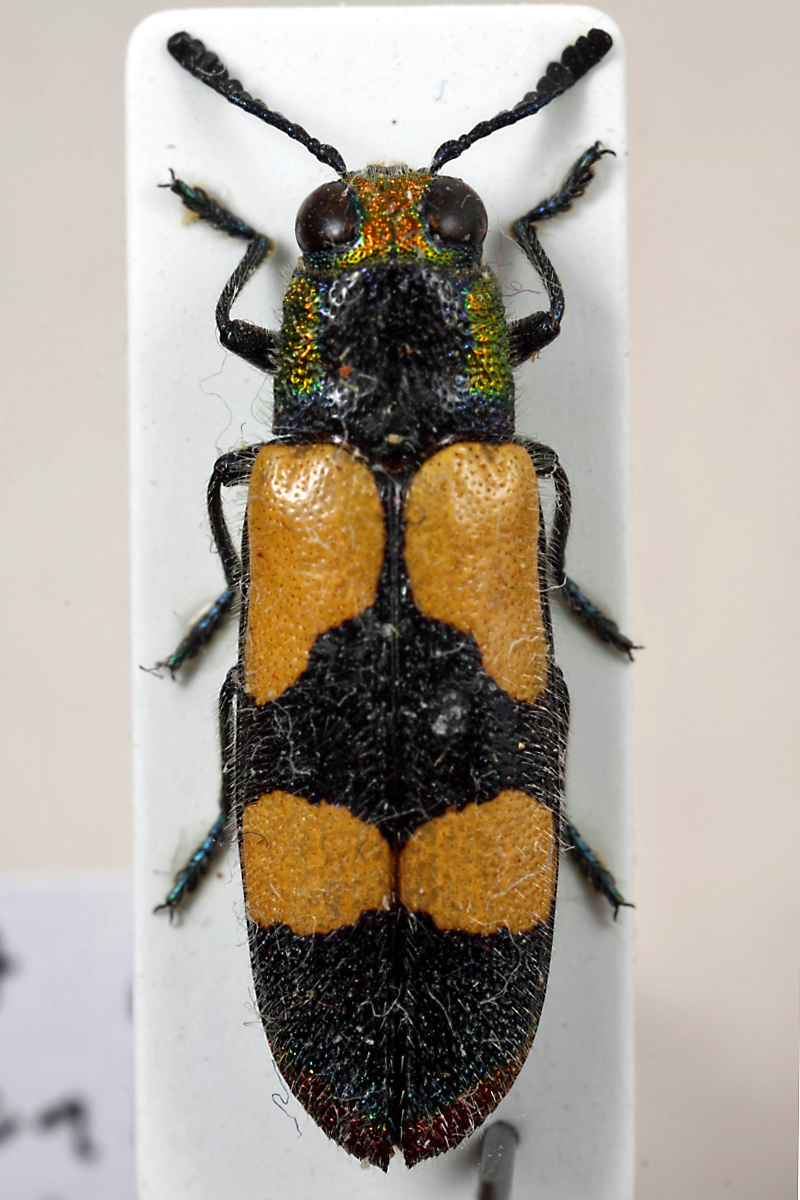
Agelia lordi (Walker)

Aegilia lordi (Walker) | Kenya

This pretty little beetle is Agelia lordi (Walker), a member of the jewel beetle family Buprestidae. I received this meticulously curated specimen – collected in Kenya – in a recent exchange with Stanislav Prepsl (Czech Republic). The species is found in Sub-Saharan east Africa and is the smallest of the nine recognized Agelia species. Two other species occur in eastern and southern Africa, including Agelia petalii (Gory) which I collected in South Africa (see Buppies in the bush(veld)), while the remaining six are found on the Indian subcontinent. The presence of two distinct and geographically isolated population centers, along with some seemingly common differences in the included species, begs the question of whether they may perhaps be subgenerically distinct. Gussmann (2002), however, regarded most of these differences to be simply a matter of degree and insufficient to warrant subgeneric separation.

Males of A. lordi are easily recognized by the orange-brown color of the last 2-3 sterna, in sharp contrast to the mostly strongly metallic integument of the rest of the ventral surface (females and both sexes of all other species have all sterna concolorous). The metallic reflections on the head, pronotal sides, and elytral apices – along with size – further distinguish A. lordi from other African species.

As is typical with so many tropical insects, little is known about the biology and lifestyle of species of Agelia. The bold, contrasting coloration of especially the African species would seem to make them conspicuous to predation, but this seems to be the result of a mimetic association with noxious species of blister beetles (family Meloidae) in the genus Mylabris. I saw one of these (see Mylabris oculatus in South Africa) in association with A. petalii during my 1999 visit to South Africa, and the resemblance was so strong that I had do a double-take every time I saw one to determine whether it was Agelia or Mylabris.

REFERENCE:

Gussmann, S. M. V. 2002. Revision of the genus Agelia Laporte and Gory (Coleoptera: Buprestidae). Annals of the Transvaal Museum 39:23–55.

Copyright © Ted C. MacRae 2011

Recent literature – The Coleopterists Bulletin

Volume 64, No. 4 - December 2010

I returned to the office this week after spending two weeks in Brazil to find the December 2010 of The Coleopterists Bulletin in my inbox.  I don’t think there is another journal that I look forward to more eagerly than this one (with the possible exception of CICINDELA) – with each issue, I know that regardless of whether it contains any papers in my priority groups of interest (jewel beetles, longhorned beetles, and tiger beetles), it will nevertheless contain well-written articles presenting results of high-quality research on nothing but beetles – pure elytral ecstasy!  This latest issue, however, is a real keeper.  Gracing the cover is a stunning image of the South African jewel beetle species Julodis viridipes, photographed by my good friend and world jewel beetle expert Chuck Bellamy, and inside are three tiger beetle papers and two longhorned beetle papers – it’s almost as if the issue were produced just for me.

Friend and colleague Mathew Brust takes credit for two of the three tiger beetle papers.  In the first (Brust et al. 2010), he compares the efficiency of the three main methods for collecting tiger beetle larvae: fishing, stab-and-grab, and excavation. They found fishing to be the most efficient and least damaging of the three methods, an important finding for tiger beetle conservation where the availability of efficient, non-lethal survey methods is critical.  (What are “fishing” and “stab-and-grab” you ask?  Read the paper.)  In the second paper (Brust and Hoback 2010), Matt teams up with University of Nebraska entomologist Wyatt Hoback to provide new distributional records and larval descriptions of Nebraska’s tiger beetle, Cicindela nebraskana.  Ironically, this species is quite rare in it’s namesake state, and their findings give clues about the habitats in which it is most likely to occur (I had the good fortune to contribute a small amount of data).  In the third tiger beetle paper, Robert Richardson (2010) notes an overwhelming preponderance of left-superior mandibles in two species of Omus and speculates on the selective pressures that might operate on different tiger beetle clades to produce such a finding – a truly interesting read.

As for longhorned beetles, Sánchez-Martínez et al. (2010) report the utilization of living oaks by an apparently disjunct population of the marvelously beautiful Crioprosopus magnificus in central Mexico, complete with photographs of the larval workings and detailed emergence data.  (I am also reminded that I have a post on this very species that I need to put up).  Closer to home, Terence Schiefer and Patricia Newell (2010) independently recognized the existence of an undescribed subspecies of the red-edged saperda, Saperda lateralis, in the lower Mississippi Delta Region of the southeastern U.S., which together they describe as S. lateralis rileyi (named for Edward Riley, indefatigable collector of beetles, and collector of much of the type material).  Okay, I know what you’re thinking – “A new subspecies of S. lateralis? No way!”  Well, I was skeptical also when I first saw the title – several untenable and no longer recognized subspecies have already been described for this broadly distributed and variable species.  However, after noting the nature of the diagnostic characters, seeing the photographs, and studying their partially allopatric distributions, I was convinced.

In addition to the above papers, there were also a number of interesting book reviews in the issue, including The Chiasognathinae of the Andes, reviewed by M. J. Paulsen, A Field Guide of the Dynastidae Family of the South of South Americano access, reviewed by Ronald M. Young, and three book reviews by our beloved Art Evans: Illustrated Identification Guide to Adults and Larvae of Northeastern North American Ground Beetles (Coleoptera: Carabidae) [including tiger beetles]; The African Dung Beetle Genera; and Weevils of South Carolina (Coleoptera: Nemonychidae, Attelabidae, Brentidae, Ithyceridae, Curculionidae)no access.

REFERENCES:

Brust, M. L. and W. W. Hoback. 2010. Larval description and new Nebraska distribution records for Nebraska’s tiger beetle, Cicindela nebraskana Casey (Coleoptera: Carabidae). The Coleopterists Bulletin 64(4):341-346.

Brust, M. L., W. W. Hoback, and J. J. Johnson. 2010. Fishing for tigers: A method for collecting tiger beetle larvae holds useful applications for biology and conservation. The Coleopterists Bulletin 64(4):313-318.

Richardson, R. K. 2010. Mandibular chirality in tiger beetles (Carabidae: Cicindelinae). The Coleopterists Bulletin 64(4):386-387.

Sánchez-Martínez, G., O. Moreno-Rico, and M. E. Siqueiros-Delgado. 2010. Crioprosopus magnificus Leconte (Coleoptera: Cerambycidae) in Aguascalientes, Mexico: Biological observations and geographical distribution. The Coleopterists Bulletin 64(4):319-328.

Schiefer, T. L. and P. Newell. 2010. A distinctive new subspecies of Saperda lateralis F. (Coleoptera: Cerambycidae) from the southeastern United States. The Coleopterists Bulletin 64(4):329-336.

Copyright © Ted C. MacRae 2011

BitB Top 10 of 2010

Welcome to the 3rd Annual BitB Top 10, where I pick my 10 (more or less) favorite photographs of the year.  My goal for 2010 was to continue the progress that I began the previous year in my quest to become a bona fide insect macrophotographer.  I’m not in the big leagues yet, but I have gotten more comfortable with using my equipment for in situ field photographs and am gaining a better understanding of lighting and the use of flash.  I also began experimenting with different lighting techniques (e.g. white box) and diffusers and am putting more effort into post-processing techniques to enhance the final appearance of my photographs.  I invite you to judge for yourself how successful I’ve been toward those goals by comparing the following selections with those from 2009 and 2008 – constructive feedback is always welcome:


Best Tiger Beetle

Cicindela denverensis - green claybank tiger beetle

From ID Challenge #1 (posted December 23).  With numerous species photographed during the year and several of these dramatic “face on” shots, this was a hard choice.  I chose this one because of the metallic colors, good focus throughout the face, and evenly blurred “halo” of hair in a relatively uncluttered background.


Best Jewel Beetle

Buprestis rufipes - red-legged buprestis

From Special Delivery (posted July 13).  I didn’t have that many jewel beetles photos to choose from, but this one would have risen to the top no matter how many others I had.  The use of a white box shows off the brilliant (and difficult-to-photograph) metallic colors well, and I like the animated look of the slightly cocked head.


Best Longhorned Beetle

Desmocerus palliatus - elderberry borer

From Desmocerus palliatus – elderberry borer (posted November 18).  I like the mix of colors in this photograph, and even though it’s a straight dorsal view from the top, the partial dark background adds depth to the photo to prevent it from looking “flat.”


Best “Other” Beetle

Enoclerus ichneumoneus - orange-banded checkered beetle

From Orange-banded checkered beetle (posted April 22).  The even gray background compliments the colors of the beetle and highlights its fuzziness.  It was achieved entirely by accident – the trunk of the large, downed hickory tree on which I found this beetle happened to be a couple of feet behind the twig on which it was resting.


Best Non-Beetle Insect

Euhagenia nebraskae - a clearwing moth

From Euhagena nebraskae… again (posted October 21).  I photographed this species once before, but those photos failed to capture the boldness of color and detail of the scales that can be seen in this photo.


Best “Posed” Insect

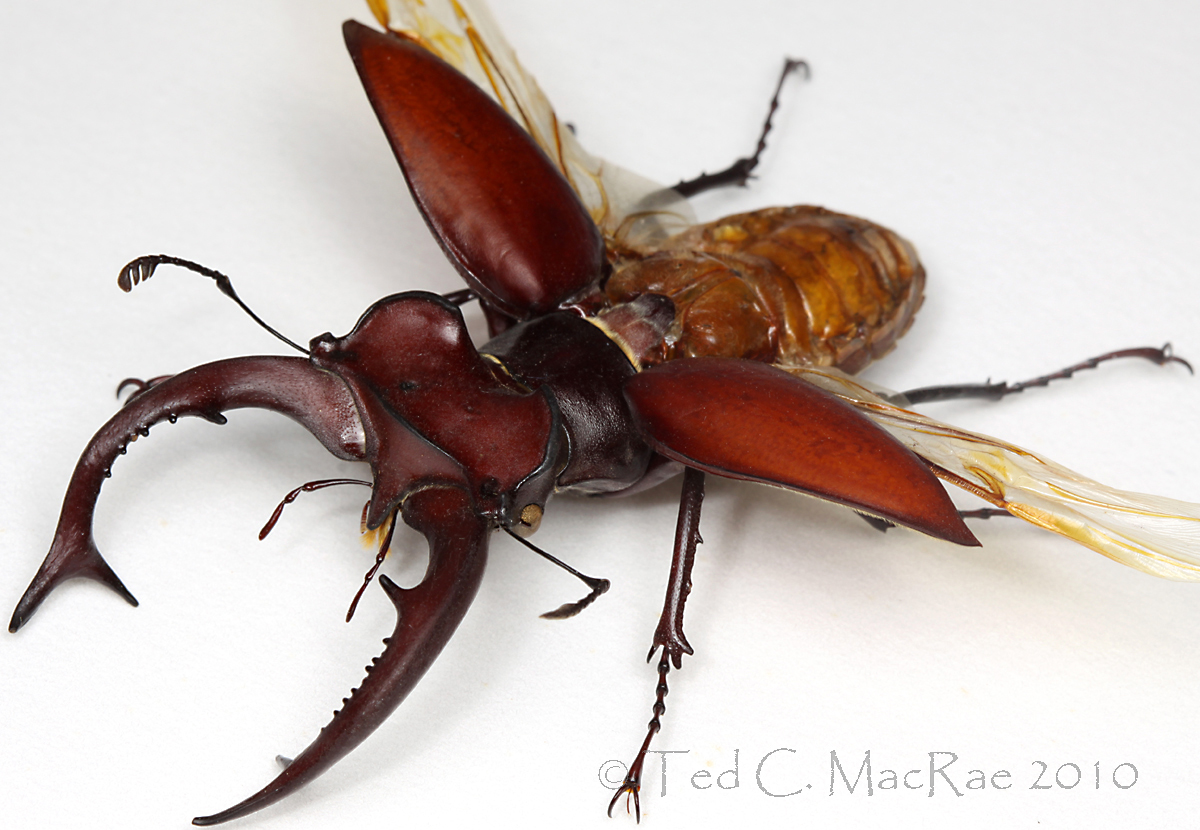
Lucanus elaphus - giant stag beetle

From North America’s largest stag beetle (posted December 30).  I’ve just started experimenting with photographing posed, preserved specimens, and in fact this male giant stag beetle represents only my second attempt.  It’s hard to imagine, however, a more perfect subject than this impressively stunning species.


Best Non-Insect Arthropod

Scolopendra heros - giant desert centipede

From North America’s largest centipede (posted September 7).  Centipedes are notoriously difficult to photograph due to their elongate, narrow form and highly active manner.  The use of a glass bowl and white box allowed me to capture this nicely composed image of North America’s most spectacular centipede species.


Best Wildflower

Hamamelis vernalis - Ozark witch hazel

From Friday Flower – Ozark Witch Hazel (posted March 26).  The bizarre form and striking contrast of colors with the dark background make this my favorite wildflower photograph for the year.


Best Non-Arthropod

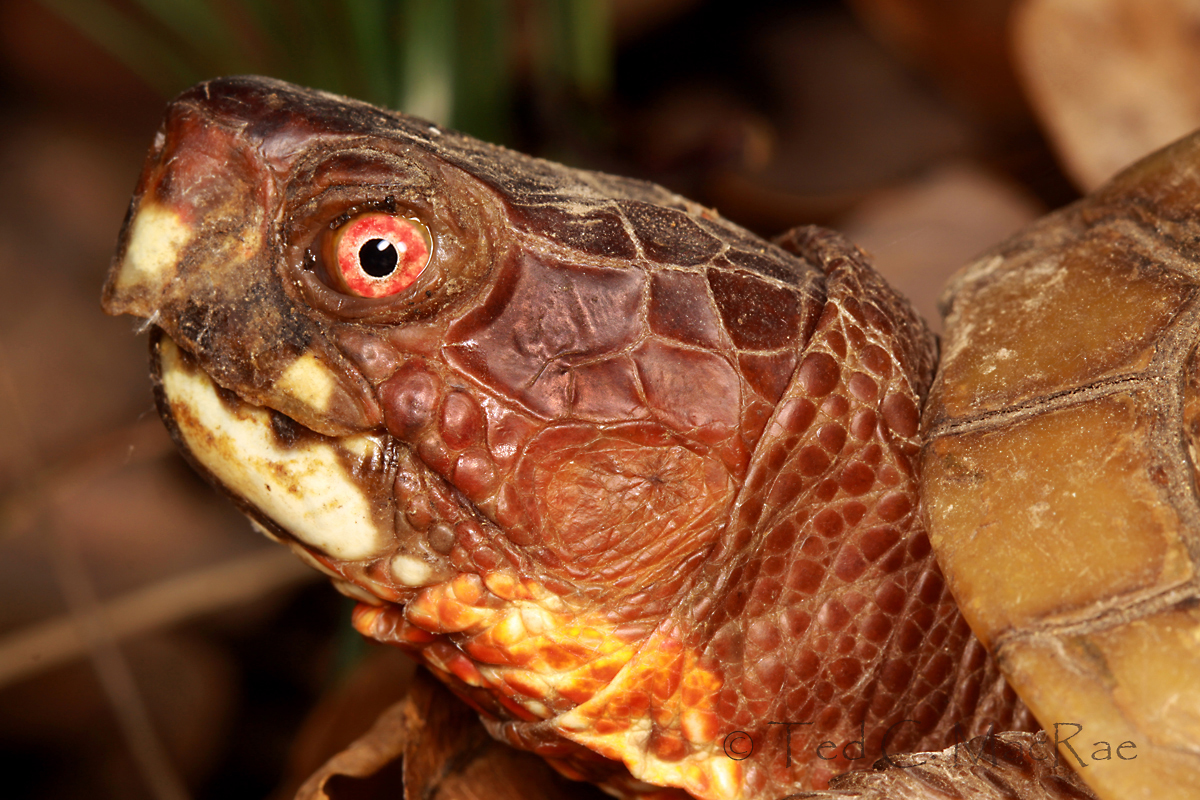
Terrapene carolina triunguis - three-toed box turtle

From Eye of the Turtle (posted December 10).  I had a hard time deciding on this category, but the striking red eye in an otherwise elegantly simple photograph won me over.  It was also one of two BitB posts featured this past year on Freshly Pressed.


Best “Super Macro”

Phidippus apacheanus - a jumping spider

From Jeepers Creepers, where’d ya get those multilayered retinae? (posted October 5).  I’m not anywhere close to Thomas Shahan (yet!), but this super close-up of the diminutive and delightfully colored Phidippus apacheanus is my best jumping spider attempt to date.  A new diffuser system and increasing comfort with using the MP-E lens in the field at higher magnification levels should allow even better photos this coming season.


Copyright © Ted C. MacRae 2011