Circus of the Spineless #47

When I started participating in blog carnivals last year, Circus of the Spineless was – for me – the pinnacle of blog carnivals.  I wanted to take my shot at hosting this venerable celebration of creepy crawlies, and even though the waiting list for hosting was almost a year long, I offered my services and settled in for the long wait until February 2010.  Ten months have passed and the time has come.  In the meantime, I did my blog carnival host début with Berry Go Round #21 and snatched the sophomore slot for nature blogging’s newest carnival with House of Herps #2.  Through those efforts, I learned that blog carnival hosting is an incredible amount of work/fun, and while plants and herps are fascinating, inverts are my true love.  It is, thus, with great pride that I join the ranks of previous hosts in presenting this, the 47th edition of CotS.  Featured below are 16 submissions by 14 contributors that cover representatives from 5 classes in 3 invertebrate phyla.  A humorous look at some of the personalities behind invertebrate study is presented as a bonus for those who make it to the end.

If you missed last month’s issue, you can find Circus of the Spineless #46 at Kate’s Adventures of a Free Range Urban Primate, and next month’s edition will be hosted by Matt Sarver at The Modern Naturalist.

Phylum CNIDARIA
–Class ANTHOZOA

Coral Reefs
The Voltage GateJeremy at The Voltage Gate reports on peer-reviewed research on the impact of herbivorous fish on the recovery of coral reefs in his post, Protecting herbivorous fishes significantly increases rate of coral recovery.  Coral reefs have been hard hit by the challenges of bleaching and disease, pressures likely linked to climate change, and macroalgae, when given the opportunity to dominate, provide even further challenges.  This can happen when populations of herbivorous fish, major grazers of macroalgae, are reduced through commercial harvest.  The study authors evaluated ten sites over a two-and-a-half year period in and around the Exuma Cays Land and Sea Park (ECLSP), which was established as a no-take marine reserve in 1986, finding an increase of coral cover during the study period from 7 percent to 19 percent.  However, ECLSP reefs were responsible for all of this increase, with no net recovery occurring outside the ECLSP.  These results illustrate the importance of reserves as a refuge for biodiversity and the service they provide in keeping marine systems intact.

Phylum MOLLUSCA
–Class GASTROPODA¹
—-“Informal Group” OPISTHOBRANCHIA

Sea slug (Glaucus atlanticus)
Deep-Sea NewsThis gorgeous nudibranch species got a foul slandering when they started washing up on Gold Coast beaches in Australia.  Miriam Goldstein debunks this unfair treatment in her post, Sea slugs have self esteem too, at Deep-Sea News, noting its absolutely stunning iridescent blue and silver color with gorgeous feathery tentacles.  Further exception is taken with such descriptors as “slimy”, “venomous”, “blue-bottle eating”, and “cannibals” – with the truth behind each of these terms far more fascinating than the visceral reaction their use was intended to elicit.  Good news as well – you don’t have to travel to Australia to see these things – they live throughout the world’s open oceans (but you will have to get far from shore, where the pelagic jellys upon which they feed can be found).

—-“Informal Group” PULMONATA

Iron-clad snail (Cyrsomallon squamiferum)
Deep-Sea NewsI’ve known about iron-clad beetles, species of Zopheridae whose exoskeleton is so hard and thick it is almost impossible to impale them with an insect pin.  I’d never heard of an iron-clad snail, however, until I read Dr. M’s post, The Evolution of Iron-Clad Samurai Snails With Gold Feet, at Deep-Sea News.  Unlike the seemingly iron-impregnated beetles, these snails actually utilize iron sulfide in a series of armor plates covering the “foot.”  Just described in 2003 from a hydrothermal vent in the Indian Ocean, it is the only known animal known to use iron sulfide as skeletal material.  Only time will tell if these snails achieve the same popularity as living jewelry as the beetles.

¹ The taxonomy of the Gastropoda is under constant revision, as the results of DNA studies increasingly reveal as possibly polyphyletic many of the former orders (including the Opisthobranchia and Pulmonata, now known as “informal groups”).

Phylum ARTHROPODA
–Class CRUSTACEA
—-Order DECAPODA

Samurai crab (Heikea japonica)
ArthropodaMike Bok at Arthopoda shares two stories about this crab – one an ancient Japanese legend, the other a modern piece of scientific folklore – in his post, Samurai Crabs: Transmogrified Japanese warriors, the product of artificial selection, or pareidolia?  In the first, popular legend alleges that these crabs were transformed from drowned samurai warriors, each one identifiable by the face of the fallen samurai that it bears on its backs and for whom the crab searches in the depths of the oceans around Japan.  This ancient legend has led to a modern scientific quibble about whether the stylized face that can be seen on the crab’s carapace is the result of artificial selection by generations of superstitious Japanese fishermen, who have selectively released crabs bearing any resemblance to a human face.  This may make for compelling scientific debate, but Mike counters even the considerable eloquence of Carl Sagan in providing his own thoughts on why this likely is not true.

—-Order AMPHIPODA

Amphipod (Phronima spp.)
ArthropodaIn another example of the intermixture of science and culture, Mike Bok (Arthopoda) asks, Did Phronima inspire the design of the Alien Queen?  Mike agrees with the claim that the original “soldier” alien morph seen in “Alien” (1979) was based on a painting by artist H. R. Giger, but he thinks that Phronima more likely influenced the design of the queen alien morph in “Aliens” (1986).  The truth may remain hidden at Stan Winston Studios, but the broad crest atop the head of Phronima, bearing tubular, upward-pointing eyes, its “necro-parasitic” tendencies, and a chillingly suggestive photograph of the beast from a 1981 paper lend an air of plausibility to Mike’s hypothesis.

–Class ARACHNIDA
—-Order PHALANGIDA

Harvestmen, daddy-long-legs
Kind of CuriousJohn at Kind of Curious follows up on David Attenborough’s Life in the Undergrowth Episode 1 with his post, Daddy Long Legs Daddies (aka Harvestman).  Looking like spiders but lacking their venomous and silk-spinning abilities, it seems that nobody can agree on the proper name for these spider relatives.  Brits call them “harvestmen”, but Americans call them “daddy-long-legs”, a term that in the UK refers rather to crane flies (which less informed Americans simply call “giant mosquitoes”).  Let’s not even mention the daddy-long-legs spider (Pholcus phalangioides), which actually is a spider.

—-Order ARANEA

Neoscona crucifera (barn spider)
XenogereAnyone who hikes along woodland trails in the eastern U.S. during autumn knows what a “spider stick” is – i.e., any handy stick that can be waved probingly in front of one as they hike, lest they run smack into the web of any number of orb weavers that are fond of stretching their large webs across such natural insect flyways. Jason, at Xenogere, has some biggun’s in his neck of the woods, which he describes in intriguing detail in his post, Walking with spiders – Part 3. Barn spiders are some of the biggest, allowing one to fully appreciate their polychroism and polymorphism. I challenge even the most arachnophic of readers to look at Jason’s photographs and not be mesmerized by their beauty.

–Class INSECTA
—-Order ODONATA

Autumn meadowhawk dragonfly (Sympetrum vicinum)
Rambling Woods~The Road Less TraveledMichelle at Rambling Woods~The Road Less Traveled presents a stunning series of photographs of this gorgeous red dragonfly in her post, Circus of The Spineless~Curiosity will conquer fear even more than bravery will.~James Stephens.  Perching on her hanging basket of pink-flowered begonias, colors matching perfectly, it was almost as if the dragonfly has staked a claim on the hanging basket as it own personal territory.  Where there is one, there are others, and her neighbor’s deck had both a red male and a blue female doing… well, see Michelle’s diagram.

—-Order COLEOPTERA

Horned passalus (Odontotaenius disjunctus)
Anybody Seen My Focus?Joan Knapp at Anybody Seen My Focus?  shows photographs of this beetle in her post, Bess Beetle: Horned Passalus (Odontotaenius disjunctus), as it lumbered slowly and gracefully over a fallen tree branch.  Perhaps the cool temperatures were the reason for its sloth.  Or perhaps the missing antenna indicated a feeble, old individual on its last (six) legs.  A brief interruption for photographs seemed not to deter the beetle from its destination, somewhere in the leaf litter beyond the log…

—-Order LEPIDOPTERA

Skipper butterflies (family Hesperiidae)
Nature of a ManRandomtruth at Nature of a Man loves skippers (are they butterflies, or aren’t they?), and you’ll love his photographs of these delightful little half-butterflies in his post, Day Skippers.  While there is some slight doubt about the identity of individuals he sees in his backyard (skippers are notoriously difficult to identify in the field), there is no doubt that these little guys are loaded with personality.  You won’t believe the “natural history” moment he caught on film (er… pixels?) and presented in the final photo sequence.

Monarch butterfly (Danaus plexippus)
GrrlscientistGrrlscientist summarizes a recent peer-reviewed paper in her post, Migratory Monarch Butterflies ‘See’ Earth’s GeoMagnetic Field.  The paper reports on photoreceptor proteins in monarch butterflies known as “cryptochromes” that not only allow the butterflies to see ultraviolet light, but also allows them to sense the Earth’s geomagnetic field.  These highly conserved proteins evolved from the light-activated bacterial enzyme phytolase, which functions in DNA damage repair.  Most animals have one of two types of cryptochromes, but monarchs have both – providing the first genetic evidence that the vertebrate-version of cryptochrome is responsible for the magnetoreception capabilities in migratory birds.  Further research may provide insight on the workings of the circadian clock, which could lead to better understanding of sleep disorders and mental illnesses such as depression and seasonal affective disorder, as well as development of new treatments for jet lag and shift-work ailments.

—-Order HYMENOPTERA

Ants (family Formicidae)
Wild About AntsKatydids, grasshoppers, cicadas – what do ants have on these singers of the insect world?  Plenty, as Roberta at Wild About Ants points out in her post, Ants: No Longer the Strong Silent Types.  It turns out that ants have patches of ridge-like structures on their gaster, which they rub against a curved ridge (called a “scraper”) on the petiole to communicate with each other via stridulation.  While lacking the decibel level of a cicada, these sounds are nevertheless in the audible range for human ears and are thought to have alarm, mating, and recruitment functions.  Even more fascinating, stridulation is not the only tool in the ant music chest – drumming and rattling have also been documented.  Curiously, however, ants do not possess ears, rather likely sensing sounds through their legs or by specialized hairs on their antennae.  Check out the provided links to SEM photographs and a sound recording.

Bald-faced hornet (Dolichovespula maculata)
Hill-Stead's Nature BlogDiane Tucker, Estate Naturalist at the Hill-Stead Museum in Farmington, Connecticut, writes at Hill-Stead’s Nature Blog. In her post, Be it ever so humble, she takes a look at some of the different animal nests that become revealed during autumn’s leaf drop – particularly those made by the bald-faced hornet (and also birds such as oriole’s).  From its start as simple cluster of chambers, to its growth over the course of the summer – growing fatter until the summer’s apex of warmth and light, then tapering off with the approach of fall, these insect homes are a marvel of nature – intricately constructed homes made entirely of paper.

—-Order DIPTERA

Common green bottle fly (Lucilia sericata)
Bug Girl's BlogBug Girl discusses the resurging use of bottle fly larvae in her post, Maggot therapy.  The academic among us will appreciate her discussion of the mechanisms that allow these seemingly disgusting vermin to function as incredibly delicate microsurge0ns in cleaning and disinfecting open wounds.  The morbid among us will appreciate the links to the most entertainingly disgusting medical photos one can imagine.  Check it out – but not over your lunch hour!

BUGS IN FIR

Wanderin' Weeta (With Waterfowl and Weeds)Wanderin’ Weeta (With Waterfowl and Weeds) was going to make an owl out of Douglas fir cones, but instead she found globular springtails, a crab spider, and a ladybug in a sprig of fir.  We’re glad she has an interest in little hitchhikers such as these, even if the kids at school when she was growing up didn’t.

ENTOMOLOGY HUMOR

Bug Girl shows that entomologists have a sense of humor with her post, Monday Morning bug jokes – a video compilation of jokesters from the recent Entomological Society of America Annual Meeting in Indianapolis.  My favorites were the best dung beetle pickup line (“Is this stool taken?”) and Marvin Harris’ rendition of the minimum number of insects needed to elicit control (1 pubic louse, or 1/2 codling moth larva :)).  J. McPherson was equally, if unwittingly, hilarious due to his Christopher Lloyd-esque mannerisms.  My favorite entomological joke of all, however, was not featured, so I offer the following addendum to Bug Girl’s post:

Copyright Ted C. MacRae 2010

Add to FacebookAdd to DiggAdd to Del.icio.usAdd to StumbleuponAdd to RedditAdd to BlinklistAdd to TwitterAdd to TechnoratiAdd to Yahoo BuzzAdd to Newsvine

Email to a friend

Triple Quiz

Photo Details: Canon EOS 50D w/ Canon 100mm macro lens, ISO 100, 1/250 sec, f/20, MT-24EX flash w/ Sto-Fen diffusers.

  1. Entomology Quiz: Name the beetle.
  2. Botany Quiz: Name the plant.
  3. History Quiz: Name the location (yes, attentive readers will be able to deduce this).

While you ponder these questions, please make note of two upcoming blog carnivals:

  • Circus of the Spineless – I’ve waited almost a year to host issue #47 of this venerable blog carnival – look for its appearance early next week.  Send me your submissions by January 31 if you want to be included in this issue – ossified homeotherms need not apply.
  • An Inordinate Fondness – The inaugural issue of this monthly blog carnival devoted to beetles is set to debut in mid-February at the home site.  Post submissions are already starting to come in, so don’t miss this chance to be a founding participant.  Submissions are due by February 15 – either by email or using this handy BlogCarnival submission form.

I’ve discovered a few more interesting blogs since my last blogroll update – the following are definitely worth a visit:

  • Biodiversity in Focus Blog – A new blog by graduate student Morgan Jackson.  Amazing photographs of stilt-legged flies (Diptera: Micropezidae).
  • BunyipCo – David Rentz writes about entomology from Queensland, Australia, with a focus on orthopteroid insects and the rain forest.
  • I Love Insects – Entomology student and insect enthusiast Erika Lenz really loves insects.
  • nbell.dk/BLOG – A relatively new blog by a dragonfly/butterfly enthusiast in Denmark.
  • Forest Fragments – Just a stone’s throw from my backyard, the staff at Washington University’s Tyson Research Center has begun a blog about their 2,000-acre experiment.
  • Exploring the Remnants – A brand new blog from Aaron Brees, who explores Iowa’s natural history.  Drop by and give him a jump start.

For those really interested in exploring entomology-related blogs, Anna Miller has provided nice descriptions of her Top 25 Entomology Blogs.  Yes, I made the list, as did most of the other usual suspects, but you might find one or two that you didn’t know about.

Copyright © Ted C. MacRae 2010

Add to FacebookAdd to DiggAdd to Del.icio.usAdd to StumbleuponAdd to RedditAdd to BlinklistAdd to TwitterAdd to TechnoratiAdd to Yahoo BuzzAdd to Newsvine

Email to a friend

A matter of diffusion

In my Best of 2009 post, I mentioned four skills that, to me, seemed to be crucial for becoming a successful insect macrophotographer: 1) composition, 2) understanding lighting, 3) knowing how to use a flash, and 4) knowledge of the subject.  Of these, I’m most comfortable with the last – three decades of insect study have given me the chance to observe a tremendous diversity of insects in a variety of situations and habitats.  Many species are located only through understanding of their haunts and habits, and the ability to capture them relies upon successful approach techniques.  Collecting insects has been excellent preparation for photographing them.  I’m also reasonably satisfied with my compositional skills – at least in this early stage of my development as a photographer.  I don’t expect to win any photo competitions (yet), especially since my intent as a photographer is at least as much for scientific documentation as it is for artistic expression, but I’m satisfied that I’m on the right track and developing the eye I’ll need to make good progress.

What I’m not satisfied with yet are the middle two – understanding lighting and knowing how to use a flash.  Let’s face it, I was starting from square one here.  My only prior experience with insect photography were middlin’ attempts in the mid-1980’s using an Olympus OM-10 body, a Zuiko 50mm lens (maximum magnification 1:2), and natural light only.  I quickly lost interest (too distracting for the collecting), picking it back up only for my 1999 trip to South Africa.  Fast forward to May 2009 and my acquisition of a bona fide insect macrophotography setup, complete with Canon’s 100mm f/2.4 and 65mm 1-5X macro lenses and their MT-24EX macro twin flash.  Talk about giving a Ferrari to someone who had just received their learner’s permit!  I like a good challenge, however, and spent the rest of 2009 with camera in hand on several memorable field trips – shooting lots of frames, deleting many on the spot and more when I saw them on the computer, and occasionally stumbling onto a pretty good one.

While I still have much to learn, one thing I did realize is that lighting remains a challenge even with a decent setup such as mine.  The MT-24Ex flash unit, in particular, while seemingly the flash of choice among Canon-using amateur insect macrophotographers, produces a very harsh light.  The capabilities and shortcomings of this flash unit have been reviewed in great detail by several insect macrophotographers much more knowledgeable than I (e.g., Alex Wild, Dalantech, Kurt, etc.), so I simply refer you to their websites if you’re interested rather than try to summarize here.  However, the one thing they all emphasize with this flash unit is the need for diffusers.  Diffusing light is easy; a simple sheet of tracing paper will do.  However, diffusing light in a manner that is equally effective with both the 65mm and 100mm lenses (with their shorter and longer working distances, respectively) and also convenient for field-use is hard.  For most of the 2009 season, I tried using Sto-Fen Omni-Bounce Diffusers, and while they were marginally better than no diffusers at all, the results were still not satisfying.  More recently, I’ve been experimenting with the Gary Fong Puffers, which Dalantech has modified for use with the MT-24EX.  I hadn’t yet committed to constructing the diffusers as described and conducting controlled comparisons between the Puffers and Sto-Fens, but my initial tinkering with the Puffers has me impressed.  Below are two photos of Cicindela splendida (the aptly-named Splendid Tiger Beetle) – the first (which some of you may remember from this post) was taken in the field using the Sto-Fen diffusers and the 65mm lens (1X)…

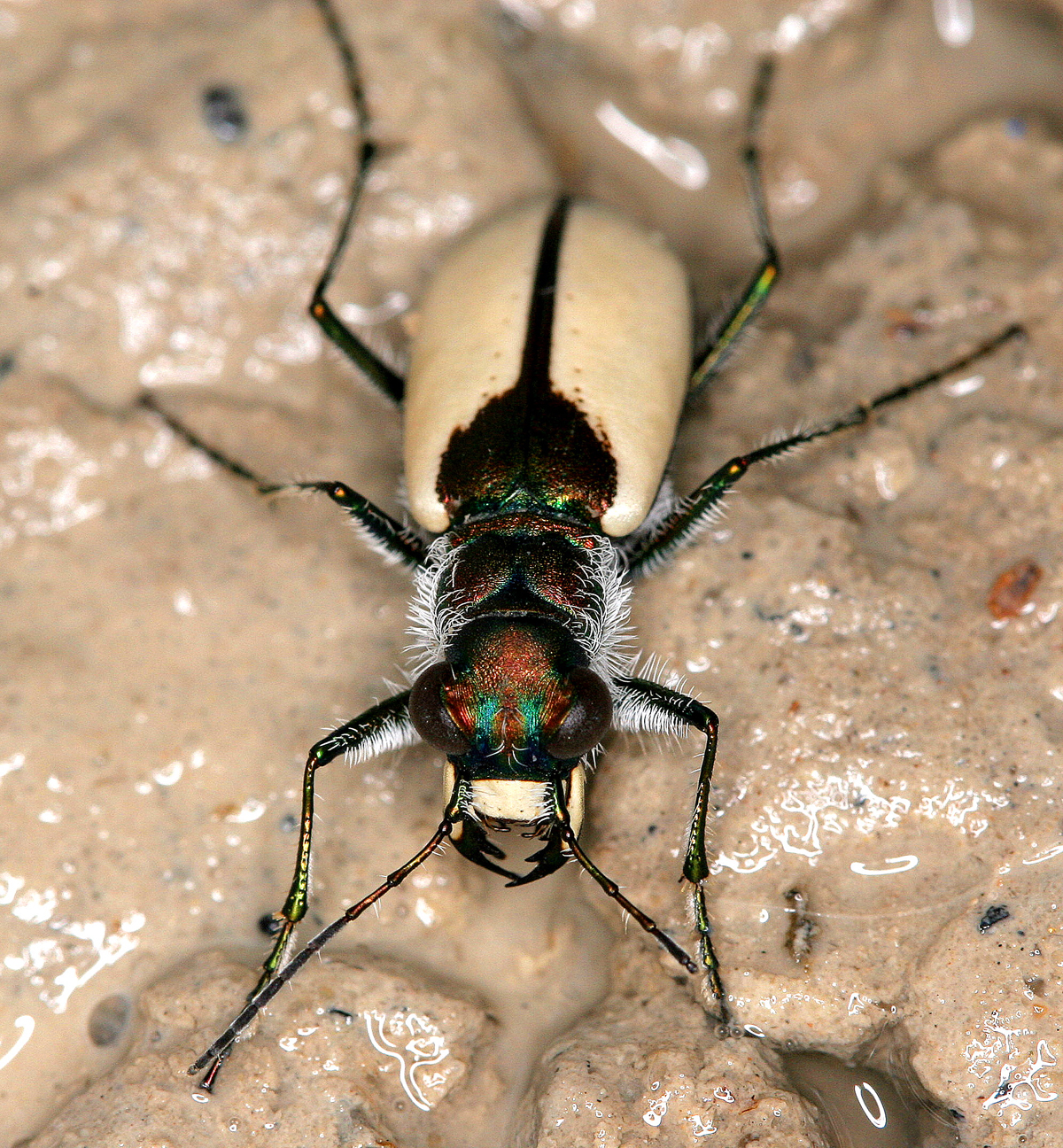
…while the second was taken recently of this same beetle (in captivity on native soil) using the Puffers attached to the Sto-Fens and the 100mm lens (at slightly less than 1X).

Both photos have been cleaned up a bit with post-processing; however, neither has been altered dramatically.  While not a true one-to-one comparison due to different venues (field versus captivity) and lenses (65mm versus 100mm), the second photo is clearly superior to the first, with softer lighting resulting in richer colors and far fewer specular highlights on the insect body.   I had to bump the lighting up considerably for the second photo, since the Puffer combined with the Sto-Fens cut the light levels quite a bit, yet still the photo lacks any of the harshness and washed appearance of the first photo.  The use of the 100mm lens in the second photo also should have presented a greater challenge for the lighting due to the increased working distance (~8 inches, compared to only 2-3 inches for the 65mm lens).  I’m really quite pleased with the results of this initial experiment – enough to the point that I’ve ordered the necessary materials and am ready to dive into construction of my own set of “Dalantech-Puffers.”

Copyright © Ted C. MacRae 2010

Add to FacebookAdd to DiggAdd to Del.icio.usAdd to StumbleuponAdd to RedditAdd to BlinklistAdd to TwitterAdd to TechnoratiAdd to Yahoo BuzzAdd to Newsvine

Email to a friend

Me and my buds!

Those of you who have followed this blog for any length of time have seen repeated references to my friends and colleagues, Chris Brown and Rich Thoma. Rich and I have been collecting insects together for almost 25 years now (since shortly after we bothed first moved to the St. Louis area), and Chris has joined us in the fun for the past ten years as well. It is rare when all three of us can get out in the field together – meshing hectic professional and family lives with the sometimes coincident, sometimes divergent insect collecting goals of three fathers can be challenging. Nevertheless, at least once or twice a year we manage to converge on a date and enjoy each other’s company out in the field. I don’t think I’m ever happier than when I’m in the field (well, except when one of my daughter’s nestles into my lap to watch a movie!), and the chance to share that experience with close friends of like interest is especially gratifying.

Chris is quite an accomplished insect photographer himself, having been at it for much longer than I’ve known him and providing me great coaching as I’ve begun testing the waters myself. Recently, he sent me some photos from our 2009 field trips to the lowlands of southeastern Missouri and the Loess Hills of northwestern Missouri. Those were two exciting trips, revealing new localities for Cicindela scutellaris, the discovery of Cylindera celeripes in Missouri, the rediscovery of Ellipsoptera macra, and even a new state record robber fly.  The sharing kind of guy he is, he’s granted me permission to post them here (plus one taken by Rich Thoma).

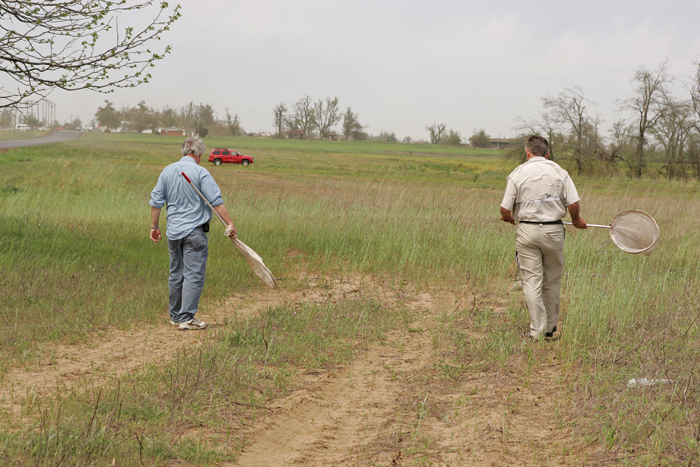
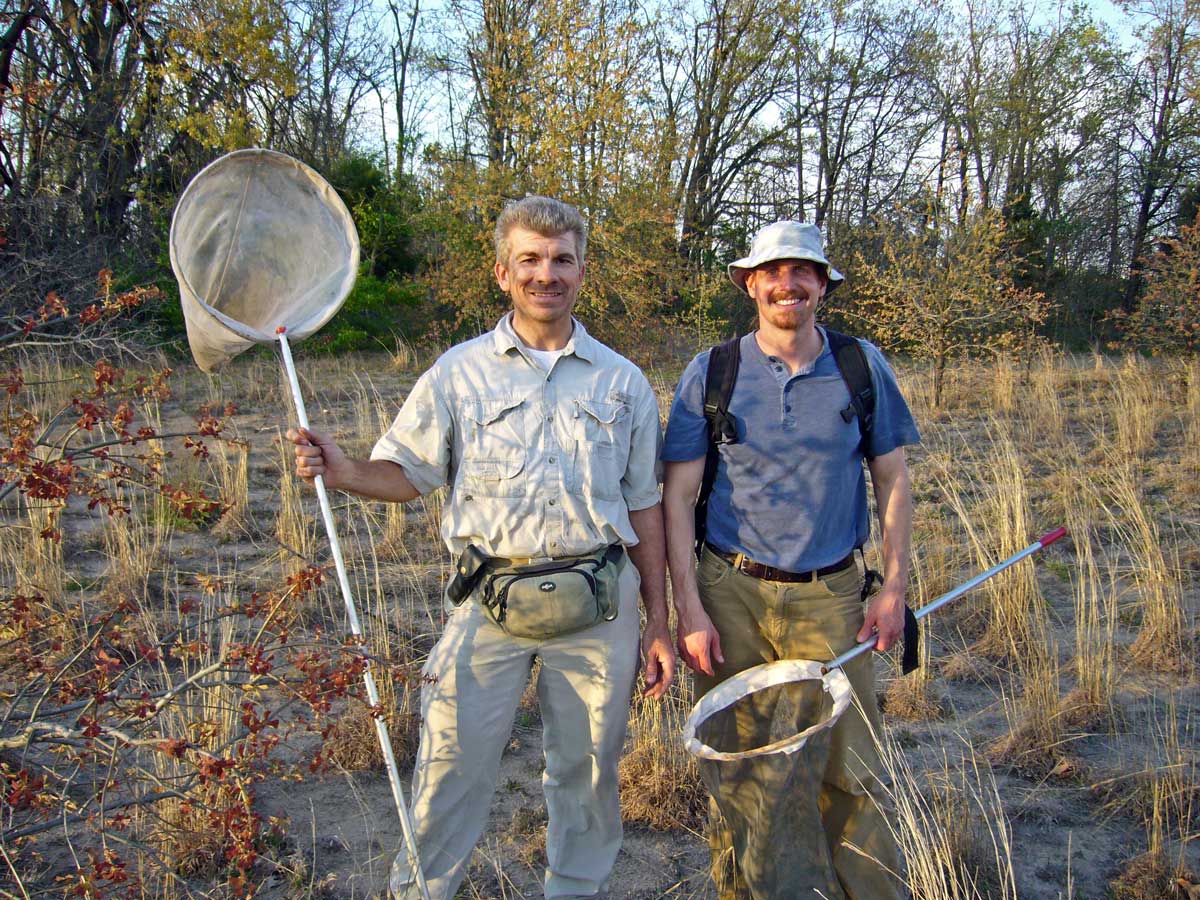
Rich (left) and Ted scan 2-track through sandy ground in the southeastern lowlands looking for tiger beetles.

Ted and Chris take a break from looking for tiger beetles in a sand prairie relict. Photo by Rich Thoma.

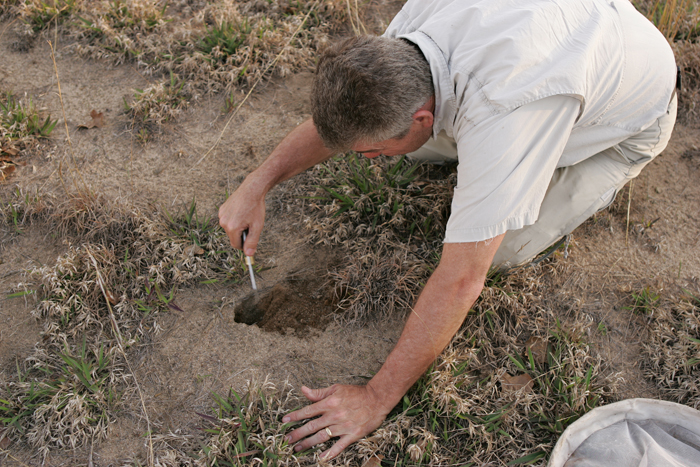
Ted attempts to extract an adult tiger beetle from its daytime burrow in a sand prairie relict.

Ted scans the open sand in a sand prairie relict for adult tiger beetles.

Ted fishes for a tiger beetle larva in a sand prairie relict.

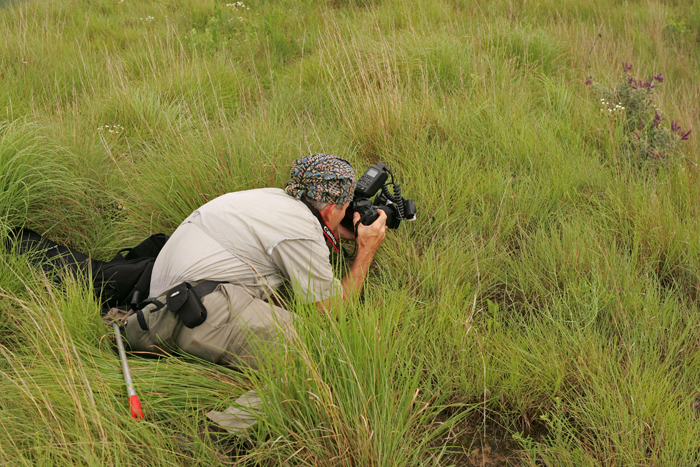
Ted photographing the robber fly, Ospriocerus abdominalis, at Star School Hill Prairie in the Loess Hills of northwest Missouri.

Distant view of Ted (small spot in center) photographing Ospriocerus abdominalis at Star School Hill Prairie.

Copyright © Ted C. MacRae 2009

Add to FacebookAdd to DiggAdd to Del.icio.usAdd to StumbleuponAdd to RedditAdd to BlinklistAdd to TwitterAdd to TechnoratiAdd to Yahoo BuzzAdd to Newsvine

Email to a friend

Habitat Partitionining in Tiger Beetles

Cicindela willistoni estancia

Cicindela willistoni estancia. Photo by David Melius.

ResearchBlogging.orgThe latest issue of CICINDELA (December 2009, vol. 41, no. 4) contains an interesting paper by David A. Melius titled, “Post-monsoonal Cicindela of the Laguna del Perro region of New Mexico.” This paper continues a theme that I have touched on a few times in recent posts regarding the partioning of resources by multiple species of tiger beetles utilzing the same habitat. The author reports on the results of two visits to the Laguna del Perro salt lake region of New Mexico (Torrance County) in July 2009, during which time he recorded a total of eight tiger beetle species in the area. As in many other parts of the arid west, tiger beetles in this region are highly dependent upon summer monsoonal rains to trigger adult emergence (Pearson et al. 2006), resulting in multiple species occupying a given habitat during the relatively short post-monsoonal period. However, according to the competitive exclusion principle (Hardin 1960), two species cannot stably coexist in the same habitat and compete for the same resources—one of the two competitors will always overcome the other unless resources are partitioned to avoid competition.

Cicindela willistoni estancia

Cicindela willistoni estancia. Photo by David Melius.

Tiger beetles that occupy the the same habitats employ a variety of mechanisms for avoiding direct competition. One of these is partitioning the environment into different “microhabitats.” One of the earliest reports of this was by noted American ecologist Victor Shelford, who reported that adult tiger beetles on the southern shores of Lake Michigan occupied different habitats from water’s edge to oak forest floor (Shelford 1907). Similarly, Choate (2003) found three sympatric species of tiger beetles in a coastal mudflat region in South Carolina, each of which utilized a different portion of the salt marsh. I myself have noted multiple species occupying the same habitat in Oklahoma’s Salt Plains National Wildlife Refuge, on a coastal salt marsh in Florida, and in the White River Hills of southwestern Missouri.

In the present study, the author noted distinct preferences among the eight species for different microhabitats within and adjacent to the salt flats, including 1) thick, wet mud immediately adjacent to the water, 2) damp, soft sand 10-20 m from the water and devoid of vegetation, and 3) dry to damp sand further away from the water with salt-tolerant plants. Nearby roadside habitats were also noted as an additional microhabitat. The species found and their preferred niches were:

  • Cicindela fulgida rumppii, exclusively in vegetated dry sand areas around the salt flats.
  • Cicindela (Cicindelidia) nigrocoerulea, mostly 10-20m from the water’s edge, a few also in roadside habitat.
  • Cicindela (Cicindelidia) punctulata chihuahuae, exclusively in roadside habitats.
  • Cicindela (Cicindelidia) willistoni estancia, mostly along the water’s edge.
  • Cylindera terricola cinctipennis, exclusively in dry grassy areas away from the water.
  • Ellipsoptera nevadica, exclusively along the water’s edge.
  • Eunota togata fascinans, unvegetated areas near and 10-20m from the water’s edge.
  • Habroscelimorpha circumpicta johnsoni, limited to roadside habitats and vegetated dry sand areas around the salt flats.

These microhabitat partitions can be visualized below. Note that although eight total species were collected, only 2-4 occur within each particular microhabitat and that all eight species were limited to just 1 or 2 microhabitats, resulting in unique species-guilds for each.

Some differences were also noted in species present during the different trips, suggesting that species occurring within the same microhabitat are also utilizing differences in temporal occurrence to further minimize competition. Differences in size among the different species were noted as well – for example, of the four species occurring in the vegetated, dry-damp sand microhabitat, Cylindera terricola is notably smaller and Habroscelimorpha circumpicta notably larger than the others. Since mandible length of adult tiger beetles is highly correlated with preferred prey size (Pearson et al. 2006), this likely results in utilization of different prey, further partioning resources within the different microhabitats.

I thank David A. Melius (Albequerque, New Mexico) for allowing me to include his stunning photographs of Cicindela willistoni estancia in this post.

REFERENCES:

Choate, P. M., Jr. 2003. A Field Guide and Identification Manual for Florida and Eastern U.S. Tiger Beetles.  University Press of Florida, Gainesville, 224 pp.

Hardin, G. 1960. The competitive exclusion Principle. Science 131:1292-1297.

Melius, D. A. 2009. Post-monsoonal Cicindela of the Laguna del Perro region of New Mexico. CICINDELA 41(4):81-89.

Pearson, D. L., C. B. Knisley and C. J. Kazilek. 2006. A Field Guide to the Tiger Beetles of the United States and Canada. Oxford University Press, New York, 227 pp.

Shelford, V. E. 1907. Preliminary note on the distribution of tiger beetles (Cicindela) and its relation to plant succession. Biological Bulletin of the Marine Biological Laboratory at Woods Hole 14:9-14.

Copyright © Ted C. MacRae 2009

Add to FacebookAdd to DiggAdd to Del.icio.usAdd to StumbleuponAdd to RedditAdd to BlinklistAdd to TwitterAdd to TechnoratiAdd to Yahoo BuzzAdd to Newsvine

Email to a friend

BitB Best of 2009

In my first post of 2009, I looked back at the photographs I had posted during 2008 and picked some of my personal favorites. I hesitated then to call myself a photographer (and still do), but I at least now have suitable equipment to aid in my progress toward that eventual goal. I have learned much over the past six months in my first attempt at serious insect macrophotography (prioritizing in situ field photographs of unmanipulated subjects as a matter of personal choice).  Through this, I’ve come to realize the following skills to be the most important for success:  

  1. Composition
  2. Understanding lighting
  3. Knowing how to use a flash
  4. Knowledge of the subject

I’ll give myself a “A” in the last of these, but in the other areas I still have much to learn. With this caveat, and for the last post of 2009, I offer the following twelve photographs as my final choices for the 2nd Annual “Best of BitB”:  

Best beetle

Cylindera celeripes (swift tiger beetle), Woodward Co., Oklahoma

From Revisiting the Swift Tiger Beetle – Part 1 (June 30).  A decent enough photograph, especially considering that I’d had my camera for about a month when I took it.  However, the discovery of robust populations of this formerly rare and enigmatic species throughout northwestern Oklahoma (and later also in northwestern Missouri) was the most significant find of the 2009 field season, and this photograph is the best capture of that moment.

Best fly

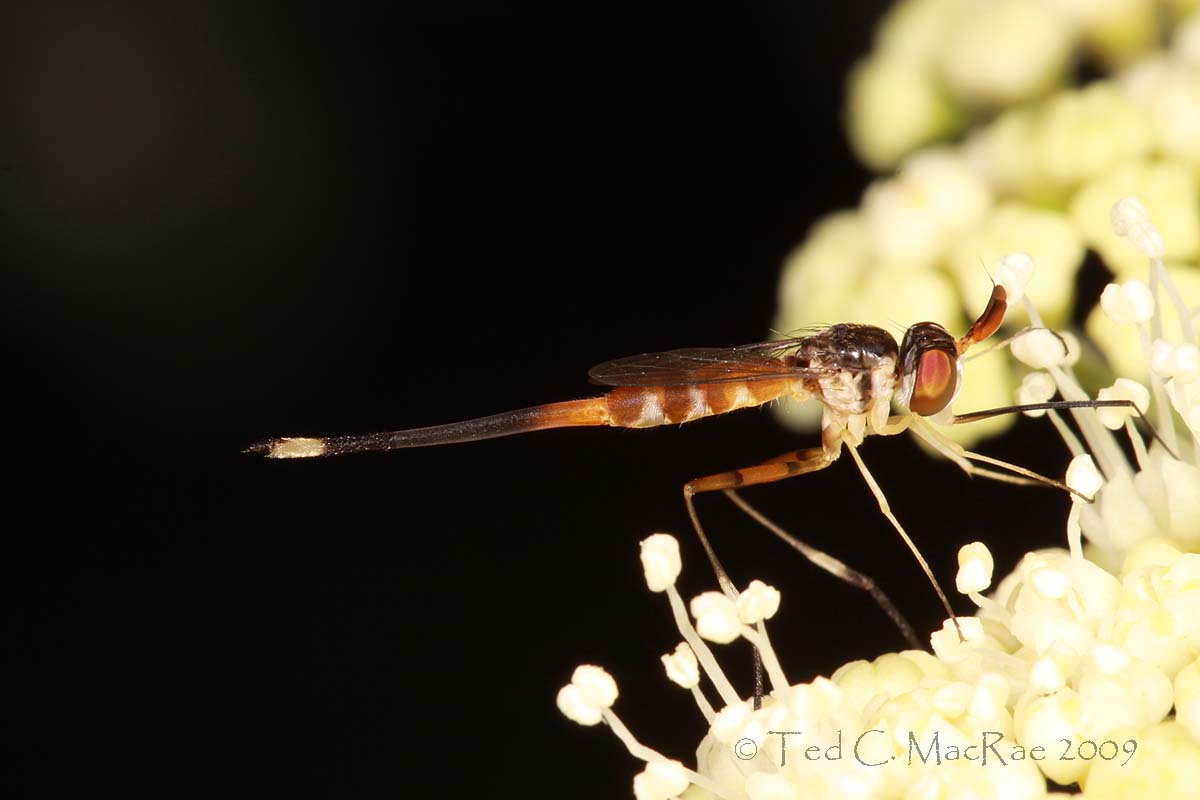
Stylogaster neglecta, a species of thickheaded fly

From Overlooked, needle-bellied, thick-headed fly (Aug 14).  One of my first good “black background” shots.  The white tip of the abdomen compliments the white flower stamens against the background.

Best “true” bug

Beameria venosa, a prairie obligate cicada

From North America’s smallest cicada (Aug 4).  So many different shades of green with white frosting on the bug’s body.  I tried taking this shot in portrait and it just didn’t work—I liked this landscape shot much better.

Best predator

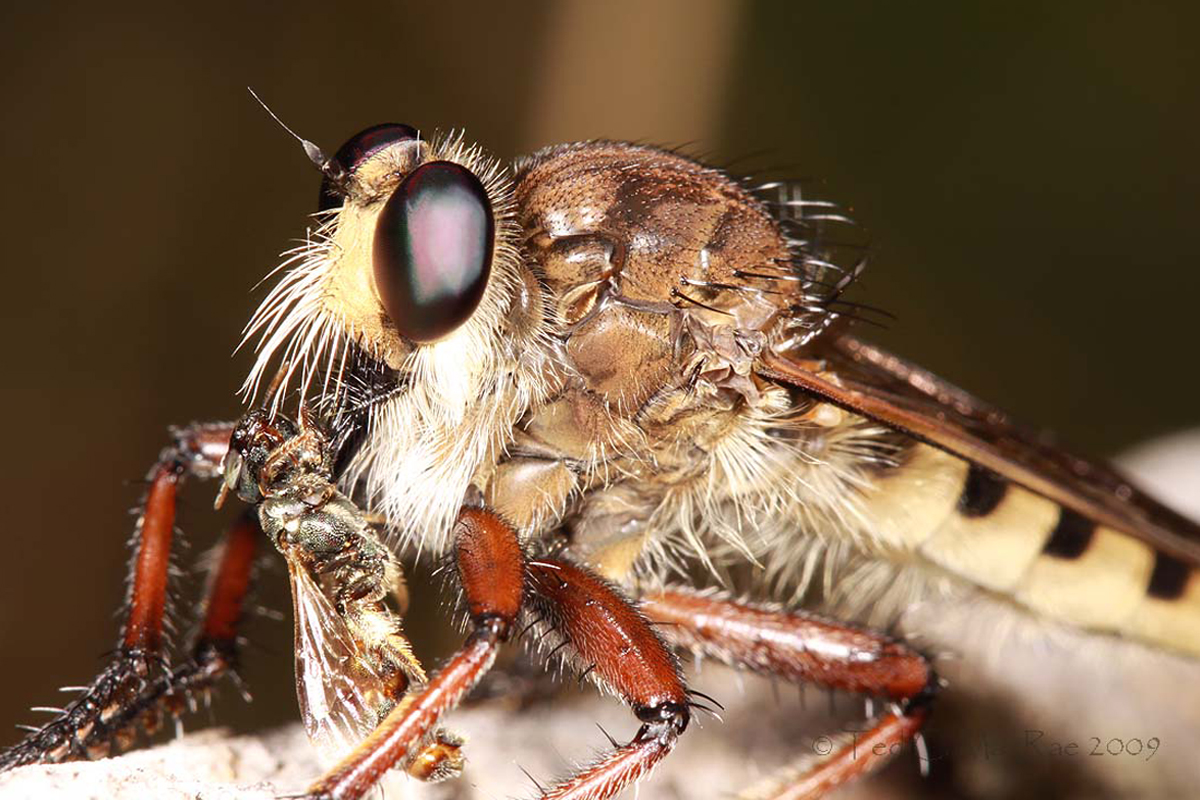
Promachus hinei (Hines giant robber fly) & Ceratina sp. (small carpenter bee) prey

From Prey bee mine (Sept 14).  Robber flies are immensely photogenic, especially those in the genus Promachus due to their prominent “beards.”

Best camoflauge

Dicerca obscura on bark of dead persimmon

From The “obscure” Dicerca (June 19).  Sparkling and gaudy as specimens in a cabinet, the coloration of many jewel beetles actually helps them blend almost perfectly with the bark of their preferred tree hosts.

Best immature insect

Tetracha floridana (Florida metallic tiger beetle) 3rd-instar larva

From Anatomy of a Tiger Beetle Larva (Oct 22).  “Otherwordly” is invariably the first word that comes to mind when someone sees a tiger beetle larva for the first time.  I was lucky enough to get this one in profile with a nice view of its abdominal hump and its curious hooks.

Best arachnid

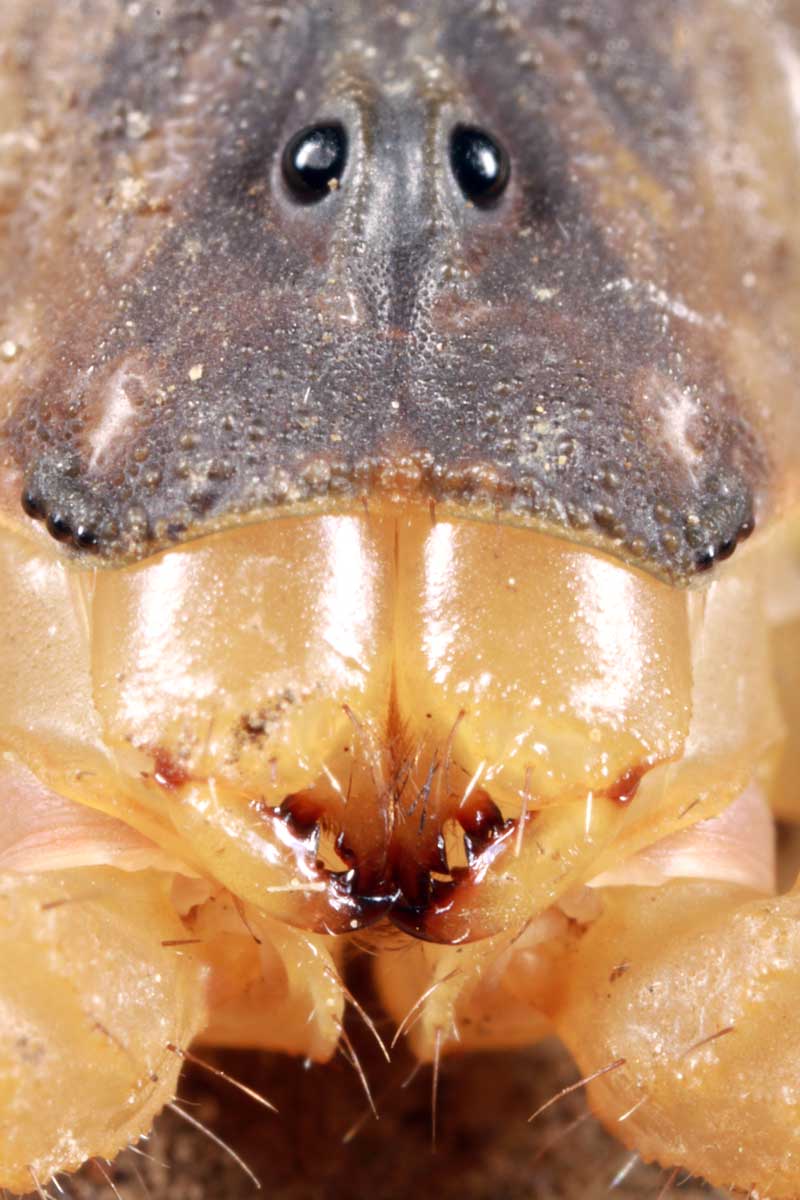
Centruroides vittatus (striped bark scorpion)

From A face only a mother could love (Oct 6).  Despite some minor depth-of-field problems with this photograph, I’m fascinated by its “smile.”

Best reptile

Eastern collared lizard (Crotaphytus collaris collaris) adult male

From North America’s most beautiful lizard (July 10).  A simply spectacular lizard—all I had to do was frame it well and get the flash right.

Best wildflower

Spiranthes magnicamporum (Great Plains ladies

From Great Plains Ladies’-tresses (Dec 7).  Few flowers are as photogenic as orchids, even native terrestrials with minute flowers such as this one.  I like the frosty texture of the lip and the starkness of the white flower on the black background.

Best natural history moment

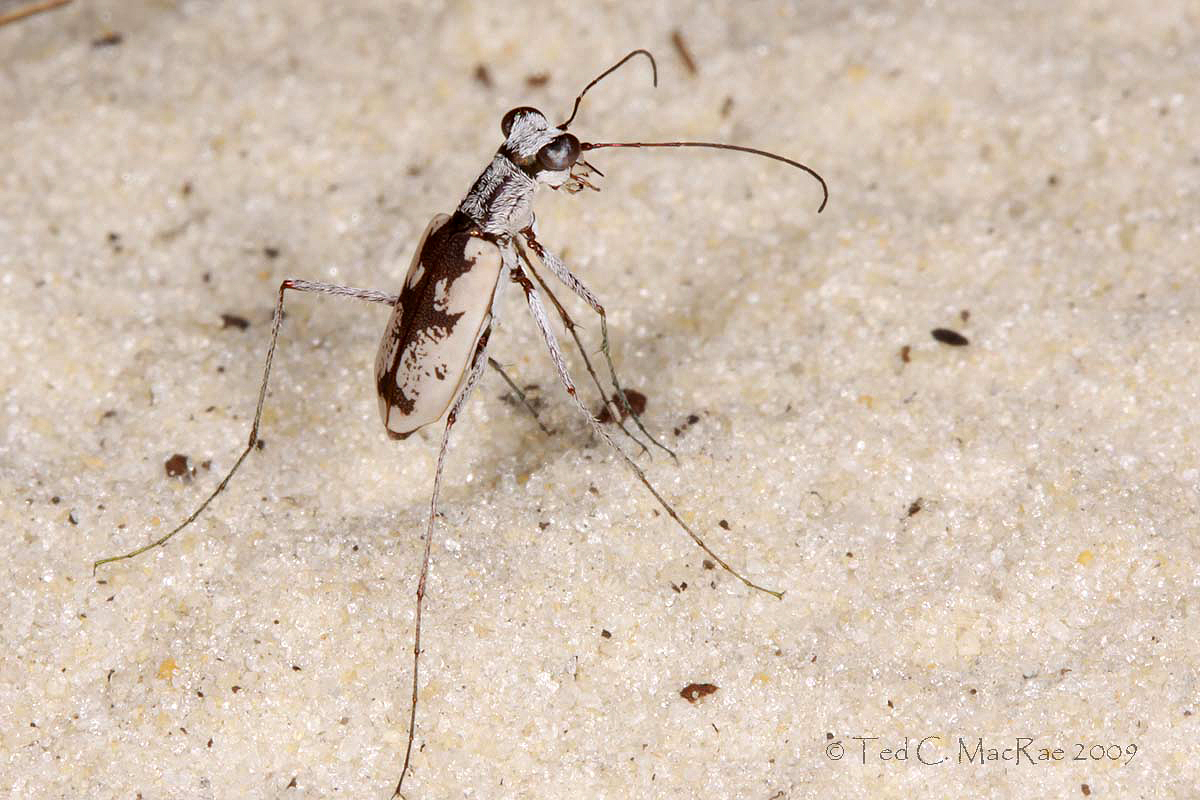
Thermoregulatory behavior by Ellipsoptera hirtilabris (moustached tiger beetle)

From Tiger Beetles Agree—It’s Hot in Florida! (Dec 18). I chose this photo for the classic “stilting” and “sun-facing” thermoregulatory behaviors exhibited by this tiger beetle on a blistering hot day in Florida.

Best closeup

Megaphasma denticrus (giant walkingstick)

From North America’s longest insect (Aug 21).  I haven’t tried a whole lot of super close-up photographs yet.  I liked the combination of blue and brown colors on the black background.

Best Landscape

Sand Harbor Overlook, Lake Tahoe, Nevada

From Sand Harbor Overlook, Nevada (March 23).   My choice for “best landscape” again comes from Lake Tahoe.  This is not a great photo technically—I was still using a point-and-shoot and had to deal with foreground sun.  However, none of the other photos I took during my March visit to the area captivate me like this one.  I like the mix of colors with the silhouetted appearance of the trees on the point.

Copyright © Ted C. MacRae 2009

Add to FacebookAdd to DiggAdd to Del.icio.usAdd to StumbleuponAdd to RedditAdd to BlinklistAdd to TwitterAdd to TechnoratiAdd to Yahoo BuzzAdd to Newsvine

Email to a friend

Tiger Beetles at Florida’s “Road to Nowhere”

(continued from the previous post, Tiger Beetles Agree—It’s Hot in Florida!)

During the time that I explored the pine sandhill habitat at Withlacoochee State Forest in Citrus County, I kept close watch for any individuals amongst the dozens and dozens of Cicindela abdominalis (Eastern Pinebarrens Tiger Beetle) that I encountered that might exhibit the deeply pitted rather than smooth elytral surface that would identify it as the closely related Florida-endemic, Cicindela scabrosa (Scabrous Tiger Beetle).  However, no such individuals would be seen (my first tiger beetle failure of the trip), and having already spent more than two hours at the site I decided it was time to move on the the “Road to Nowhere.”

"Road to Nowhere," 11.1 mi S Jena on Hwy 361, Dixie Co., Florida

The Road to Nowhere is a tidal marsh (also known as “coastal salt marsh”) near Steinhatchee in Dixie County (11.1 mi S Jena on Hwy 361).  Although I was not aware of it prior to my August visit, this locality has achieved legendary status among tiger beetle enthusiasts because of the great number of species that can be seen there—as many as 6–10 species in the right season.  Being a coastal wetland with moist, saline substrates, these would include such species as Cicindela trifasciata ascendens (Ascendent Tiger Beetle), Habroscelimorpha severa (Saltmarsh Tiger Beetle), the rarely collected H. striga (Elusive Tiger Beetle), and Eunota togata togata (White-cloaked Tiger Beetle), in addition to Ellipsoptera marginata (Margined Tiger Beetle) and E. hamata lacerata (Gulf Beach Tiger Beetle) which I had already found a few days earlier.  As I found the highway leading to the spot and begain to drive its upper reaches, I looked longingly at the barren sand exposures along the sides of the road thinking that C. scabrosa, already known from the area (Choate 2003) must be there.  However, it was well into the afternoon hours by then, and having already failed to find the species at Withlacoochee State Forest, I decided I should press on and see what the Road to Nowhere had to offer.
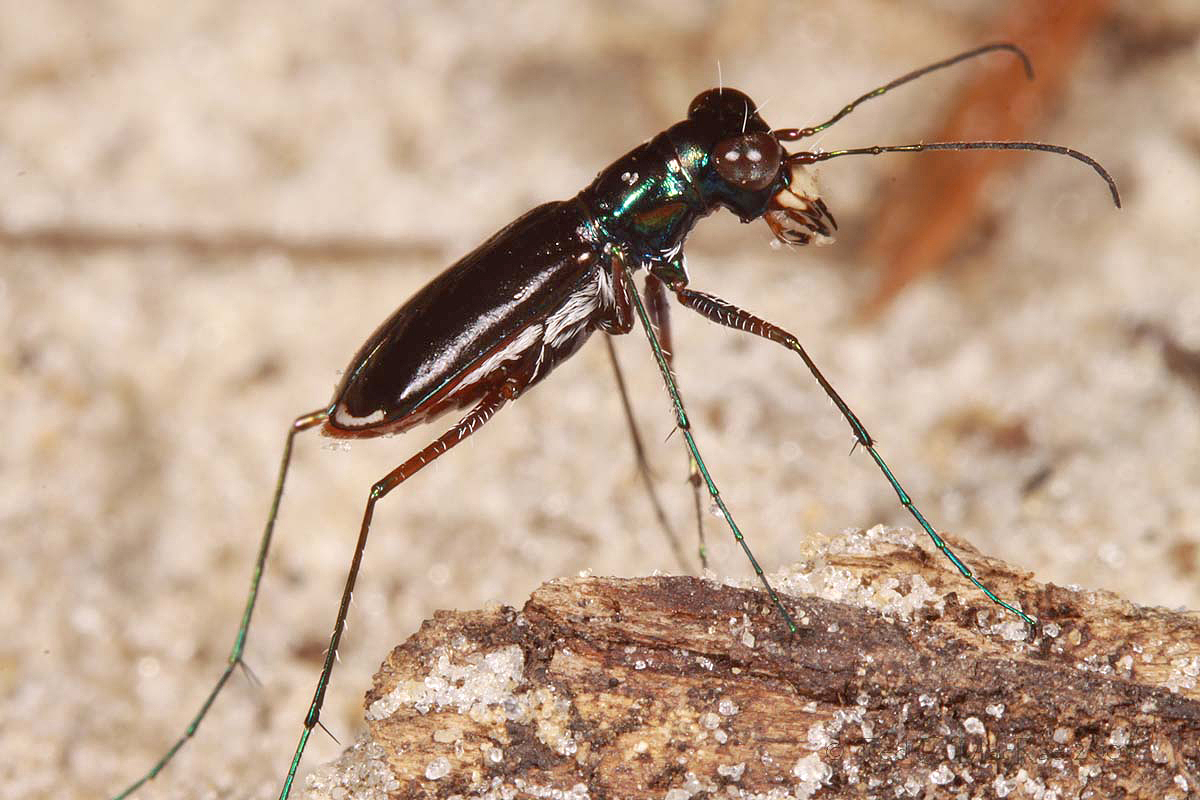
Cicindela (Cicindelidia) trifasciata ascendens—Ascendent Tiger Beetle

Almost immediately I began seeing tiger beetles.  The first species I saw was C. trifasciata ascendens—rather common on areas of the flats close to the water’s edge.  I recognized them instantly, as I had not only seen this species some years ago in south Texas, but also in southern Missouri as a lone vagrant (Brown and MacRae 2005).  The dark brown dorsal coloration and thin, sinuous, S-shaped middle maculation are diagnostic for the species (Pearson et al. 2006).  While it was by now late afternoon, the heat of the day had not yet begun to subside, and the beetles were extremely active and flighty.  The difficulty in approaching them closely enough for photographs was exacerbated by the wet, muddy substrate and incessant drone of tenacious mosquitoes intent on breaching my invisible shield of DEET.  Eventually, however, and only due to one decidedly more cooperative individual (above), I succeeded in getting a few shots with which I was happy. 

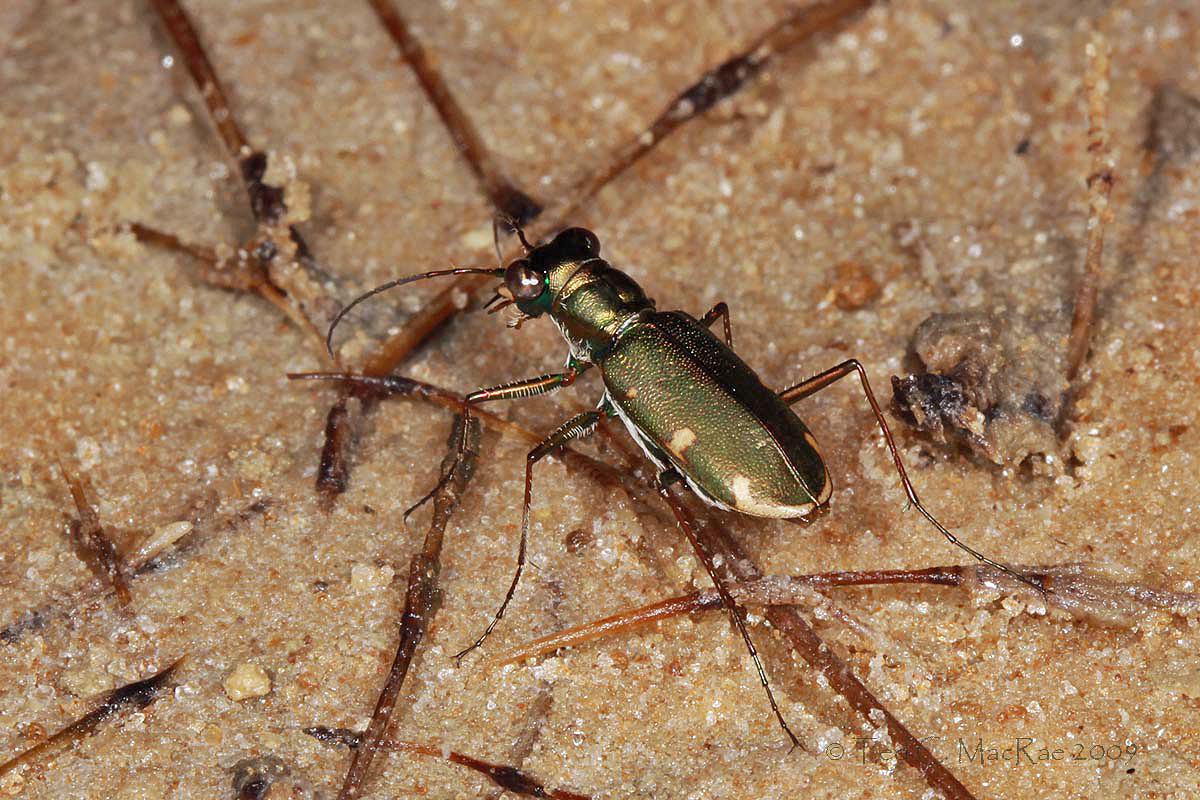
Habroscelimorpha severa—Saltmarsh Tiger Beetle

Far less common than C. trifasciata ascendens, but equally skittish, was the impressive H. severa.  I have also seen this species before in south Texas, though not in great numbers, and its shiny green surface with maculations reduced to small spots at the middle and rear of the elytra are unmistakealbe.  It was the hardest to approach of the species I saw, and the above (only slightly cropped) photograph is as close as I was able to get (it is also the only photograph from the field session that was good enough and close enough to keep).  This species tends to be most active in the morning and again in the evening, so most of my late-day efforts focused on this species—in fact, it was almost too dark to see by the time I finally quit my attempts at photographing the species.  I brought back one live individual and took some “studio” photographs after I returned home, but I’m still not any happier with them than this lone field shot.

Ellipsoptera hamata lacerata—Gulf Beach Tiger Beetle (reduced maculations)

When I first saw the species represented by the individual in the above photograph, I had not a clue as to its identity—the dark elytra with only a marginal band was unlike anything I would have expected to see.  Quickly thumbing through my “bible” (Pearson et al. 2006), I kept stopping at the plate containing Cicindela marginipennis (Cobblestone Tiger Beetle).  I knew this was impossible, as that species is restricted to several disjunct cobblestone habitats further north.  I collected the specimen for a voucher, keeping it alive for studio photographs, but it wasn’t long before I saw another similar-looking individual.  I decided I must be overlooking something, so after getting photographs and collecting the specimen for another voucher I went back through Pearson.  This time I focused only on the species that could possibly occur here, and realized that it was simply E. hamata lacerata with its normally diffuse middle elytral maculations highly reduced (traces of the middle band can be seen in the photograph).

Ellipsoptera marginata—Margined Tiger Beetle

Ellipsoptera marginata was the most abundant species at this location, and on this day I succeeded in getting a nice photograph of a female with her distinctively downbent elytral apices (see closeup photograph in this post).  This species is very similar to E. hamata, with which it co-occurs along the Gulf Coast of peninsular Florida, but can be immediately recognized by the bent elytral apices (female) or distinct tooth on the underside of the right mandible (male).  Both of these species are distinguished from all other species in the genus by the diffuse middle maculation of the elytra. 

At least two additional species occur at this site, one of which (E. togata) I saw but a single individual of and was unable to photograph, and the other (H. striga) which I did not see.  In fact, the Road to Nowhere is apparently “the” spot for finding the latter species, which occurs predominantly at night and is seen primarily by its attraction to ultraviolet lights.  While I would have liked to stay after dark and setup lights to see this species, I had neither the time nor the equipment to do this.  It may, after all, have been too late in the season anyway—since my visit I’ve heard stories from other tiger beetle aficionados who say the whole area can be filled with collectors from all over the country with their blacklights and bucket traps and someone yelling “striga!” every hour or so.  No such scene developed during my visit, so I suspect my visit was on the late side of the season and that the 5 species I did see represents a pretty good day regardless.  The long drive back to St. Petersburg marked the end of my tiger beetle exploits in Florida, at least for this year.

For another tiger beetling experience at Road to Nowhere, read this post by Doug Taron, who visited the site even later in the season (October).  Although he didn’t see as many tiger beetles, he does provide some interesting details regarding the shady origins of this place.

Photo Details: Canon EOS 50D, ISO 100, 1/250 sec.
Habitat: Canon 17-85mm zoom lens (landscape, 66mm), f/9, natural light.
Insects (except E. marginata): Canon 100mm macro lens (manual), f/22–25, MT-24EX flash w/ Sto-Fen diffusers.
E. marginata: Canon MP-E 65mm 1–5X macro lens (manual), f/16, MT-24EX flash w/ Sto-Fen diffusers.

REFERENCES:

Brown, C. R. and T. C. MacRae. 2005.  Occurrence of Cicindela (Cicindelidia) trifasciata ascendens (Coleoptera: Cicindelidae) in Missouri. Cicindela 37(1–2):17–19.

Choate, P. M., Jr. 2003. A Field Guide and Identification Manual for Florida and Eastern U.S. Tiger Beetles.  University Press of Florida, Gainesville, 224 pp.

Pearson, D. L., C. B. Knisley and C. J. Kazilek. 2006. A Field Guide to the Tiger Beetles of the United States and Canada. Oxford University Press, New York, 227 pp.

Copyright © Ted C. MacRae 2009

Add to FacebookAdd to DiggAdd to Del.icio.usAdd to StumbleuponAdd to RedditAdd to BlinklistAdd to TwitterAdd to TechnoratiAdd to Yahoo BuzzAdd to Newsvine

Email to a friend

Tiger Beetles Agree—It’s Hot in Florida!

Florida is known for its rich assemblage of tiger beetles—27 species in all, including four endemics (Choate 2003).  However, late summer is generally considered not the best time of year for seeing this diversity, since adult populations of most species begin to wane as the intensity of the summer heat reaches its peak.  I knew the timing of my family vacation in early August might be a bit off; however, considering I had never looked for tiger beetles in Florida before, I remained optimistic that I still might encounter some interesting species.  My optimism was quickly rewarded—in one afternoon of exploring the small coastal preserve just outside the back door of my sister-in-law’s condo, I found Ellipsoptera marginata (Margined Tiger Beetle), its sibling species E. hamata lacerata (Gulf Beach Tiger Beetle), and several 3rd-instar larvae in their burrows that proved to be the Florida endemic Tetracha floridana (Florida Metallic Tiger Beetle).  Good fortune would continue when I made a one-day trip to the interior highlands in a successful bid to find Florida’s rarest endemic, Cicindela highlandensis (Highlands Tiger Beetle), finding also as a bonus the splendidly camouflaged and also endemic Ellipsoptera hirtilabris (Moustached Tiger Beetle).  Five species, including three endemics, in just over a day of searching!  I had one more day to sneak off and do what I love most, and I wanted to make the most of it. 

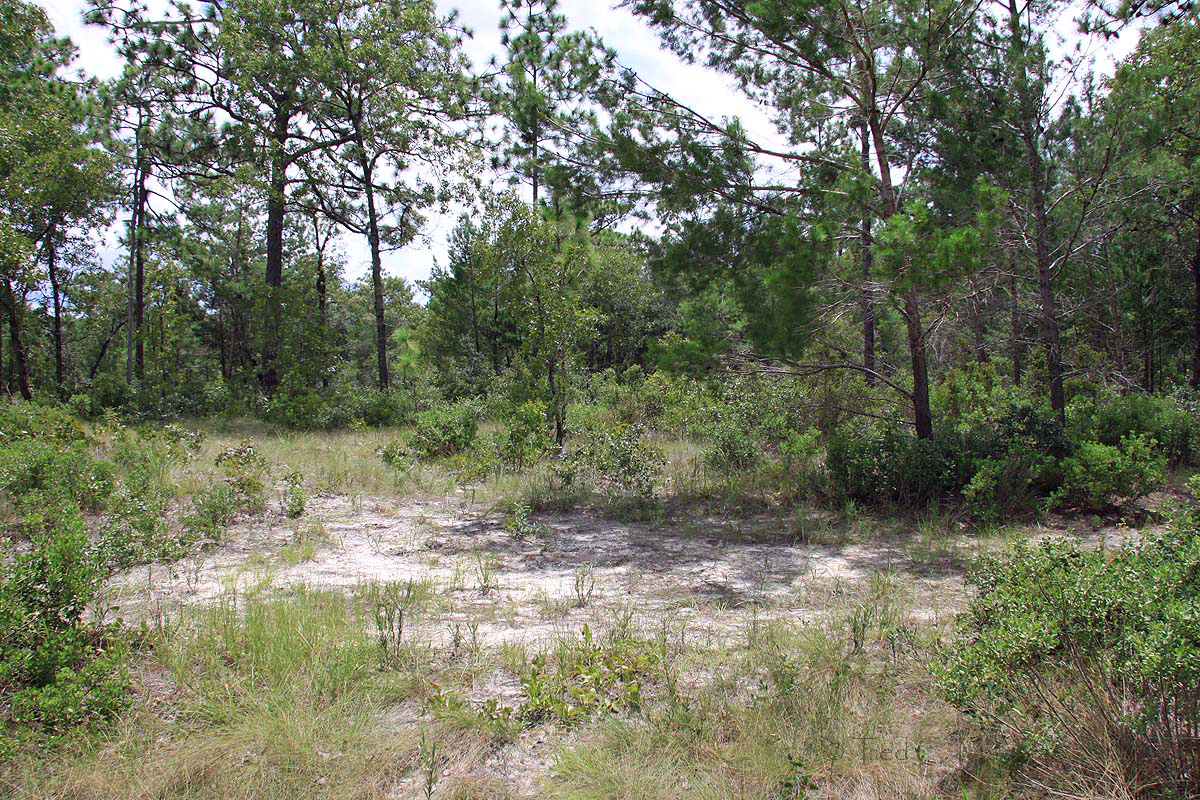
Pine sandhill habitat, Withlachoochee State Forest—Citrus Tract

Among the suggestions given to me by my colleagues, the most promising-sounding was the “end of the road,” a Gulf Coast salt marsh near Steinhatchee in Dixie County where I was told as many as 6-10 species of tiger beetles could be seen at once.  I didn’t know it at the time, but this particular location has achieved legendary status among tiger beetle enthusiasts (Doug Taron recently wrote about his experience, calling it the Road to Nowhere).  A 200+ mile drive from my base near St. Petersburg, it would take the better part of 5 hours to drive there, and not wanting to put all of my eggs in one basket, I looked for potential stops along the way.  About midway along the drive was Withlacoochee State Forest, where one of my colleagues had told me I might still find the fairly widespread Cicindela abdominalis (Eastern Pinebarrens Tiger Beetle) and its close relative, C. scabrosa (Scabrous Tiger Beetle)—the fourth Florida endemic.  My plan was to leave early in the morning and spend a few hours at Withlacoochee before driving the rest of the way to finish out the day at Steinhatchee. 

"Stilting" by Cicindela abdominalis (Eastern Pinebarrens Tiger Beetle)

It took some time to find my bearings upon arriving, but after some discussion with the decidedly forestry-oriented staff at the headquarters, it seemed that the Citrus Tract was where I wanted to be.  I was looking for the sand barren and pine sandhill habitats that these species require, and the staff’s description of the northern edge of the tract as having lots of sand and “not very good for growing trees” suggested this might be the place.  Pine sandhill (also called “high pine”) is a pyrophytic (fire-dependent) plant community characterized by sandy, well-drained soils, a widely-spaced longleaf pine (Pinus palustris) and turkey oak (Quercus laevis) canopy, and an herbaceous layer dominated by wiregrass (Aristida stricta).  I quickly found such habitat in the area suggested, and it wasn’t long before I found the first of the two species—C. abdominalis—rather commonly along a sandy 2-track leading through the area.  For those of you who see a distinct resemblance of this species to the rare C. highlandensis that I highlighted from my trip to the central highlands, this is no coincidence.  Cicindela abdominalis is very closely related to that species, the latter distinquished by an absence of flattened, white setae on the sides of the prothorax and the abdomen and by the highly reduced or absent elytral maculations (Choate 1984).  Dense white setae and distinct apical elytral maculations are clearly visible in the individuals shown in these photographs. 

Stilting is often accompanied by "sun-facing" for additional thermoregulation

It was a blistering hot day (just as every other day on the trip had been so far), and it wasn’t only me who felt that way.  Tiger beetles, of course, are ectothermic and rely upon their environment for their body temperature.  Despite this, they are able to regulate body temperatures to some degree by using a range of behavioral adaptations intended to mitigate the effects of high surface temperatures and intense sunlight.  The photos above show one of these behaviors, known as stilting.  In this behavior, the adult stands tall on its long legs to elevate its body above the thin layer of hotter air right next to the soil surface and as far off the sand as possible (Pearson et al. 2006).  As the heat of the day intensifies and the zone of hot air at the soil surface broadens, stilting alone may be insufficient to prevent overheating. When this happens, the beetles combine stilting with sun-facing, a behavior in which the front part of the body is elevated with the head oriented towards the sun. This position exposes only the front of the head to the sun’s direct rays, thus minimizing the body surface area exposed to incident radiation.

Stilting and sun-facing by Ellipsoptera hirtilabris (Moustached Tiger Beetle)

I was also fortunate to have another chance at photographing the beautiful and marvelously-camouflaged Ellipsoptera hirtilabris (Moustached Tiger Beetle), which, in similar fashion to C. highlandensis, I found co-occurring with C. abdominalis in rather low numbers. As before, they were extremely wary and difficult to approach, especially in the extreme heat of the day, and all of my best efforts to get a good shot of the species in its “classic” pose were frustrated. The photo above was about as close as I could get to any of these beetles when they were out in the open before they would flee; however, it nicely demonstrates the use of stilting combined with sun-facing during the hottest part of the day.

"Shade seeking" is another behavioral response to intense heat.

Another behavioral response to extreme heat is shade-seeking—adults may either remain active, shuttling in and out of shaded areas, or avoid exposed areas altogether and become inactive.  One thermoregulatory behavior for extreme heat that I did not observe was daytime-burrowing, in which adults construct temporary shallow burrows during the hottest hours of the day. Although I did not observe this behavior by either species at Withlacoochee, I have seen it commonly among several species in sandy habitats here in Missouri and in the Sandhills of Nebraska (e.g., Cicindela formosa, Cicindela limbata, Cicindela repanda, Cicindela scutellaris, Cicindela tranquebarica, Ellipsoptera lepida).

There was one disappointment on the day—I did not see C. scabrosa.  However, I still had the “end of the road” to explore, so I remained happy with the now six species I had encountered and optimistic about finding additional species later in the day… 

Photo Details: Canon EOS 50D, ISO 100.
Habitat: Canon 17-85mm zoom lens (landscape, 17mm), 1/100 sec, f/10, natural light.
Insects: Canon 100mm macro lens (manual), 1/250 sec, f/16–18 (C. abdominalis) or f/20–22 (E. hirtilabris), MT-24EX flash w/ Sto-Fen diffusers.

REFERENCES: 

Choate, P. M., Jr.  1984.  A new species of Cicindela Linnaeus (Coleoptera: Cicindelidae) from Florida, and elevation of C. abdominalis scabrosa Shaupp to species level.  Entomological News 95:73–82.

Choate, P. M., Jr. 2003. A Field Guide and Identification Manual for Florida and Eastern U.S. Tiger Beetles.  University Press of Florida, Gainesville, 224 pp.

Pearson, D. L., C. B. Knisley and C. J. Kazilek. 2006. A Field Guide to the Tiger Beetles of the United States and Canada. Oxford University Press, New York, 227 pp.

Copyright © Ted C. MacRae 2009

Add to FacebookAdd to DiggAdd to Del.icio.usAdd to StumbleuponAdd to RedditAdd to BlinklistAdd to TwitterAdd to TechnoratiAdd to Yahoo BuzzAdd to Newsvine

Email to a friend