
Litaneutria minor - agile ground mantid
Have you ever seen a mantid that lives exclusively on the ground? Most mantids are ambush predators, hiding amongst the bushes while patiently waiting for unsuspecting prey to happen within striking range. However, a few small groups of mantids have adopted a different strategy – running down their prey! One such group is the ground mantids, represented in the U.S. by two genera – Litaneutria and Yersiniops. These small mantids, cryptically colored brown or gray, occur in desert and grassland habitats across the western U.S. This particular individual was seen in the expansive shortgrass prairie atop the Pine Ridge in northwestern Nebraska. The rounded eyes and brown coloration identify it as as a member of the genus Litaneutria (the tops of the eyes are pointed in Yersiniops, giving them a “horned” appearance, and they tend to be more gray). Two species of Litaneutria are found in the U.S. – this one, L. minor, occurring broadly throughout the Great Plains and western U.S. into southwestern Canada (it is Canada’s only native mantid), while a second species, L. obscura, is restricted to the desert southwest.¹ Several common names have been applied to L. minor, including lesser ground mantid, minor ground mantid, and agile ground mantid. While the first two represent more precise literal translations of the scientific name, I like the latter which well describes the ability of these mantids to hop over rocks and dart swiftly through sparse prairie vegetation in pursuit of prey or to evade predators (and inexperienced collectors!). Despite its small size (total length less than 1.5″), the presence of wings – albeit small – indicate this is an adult. All females of this species are brachypterous (short-winged), but most males are as well. However, males apparently have a small spot at the base of the forewings, which seems lacking in this individual, and a smoother pronotum – also not readily apparent in this individual, so I’m guessing that this is an adult female.
¹ BugGuide and many other web sources list five additional U.S. species in the genus (including L. borealis, described from northwestern Nebraska). However, Vickery and Kevan (1983) note that these were all synonymized under L. minor by Hebard in 1935 (sorry – I couldn’t find that reference).
“Mantid” vs. “mantis” vs. “praying mantis.” It has become common to use the terms “mantid” and “mantis” (or even “praying mantis”) interchangeably. However, in its strictest sense the term “mantis” is most properly applied to species of the genus Mantis – of which Mantis religiosa – the European mantid or praying mantis, introduced to the U.S. in the late 19th century (either accidentally on a shipment of nursery plants or deliberately for pest control – depending on the source) is the most widely recognized. The term “mantid” refers to any species in the suborder Mantodea as a whole.
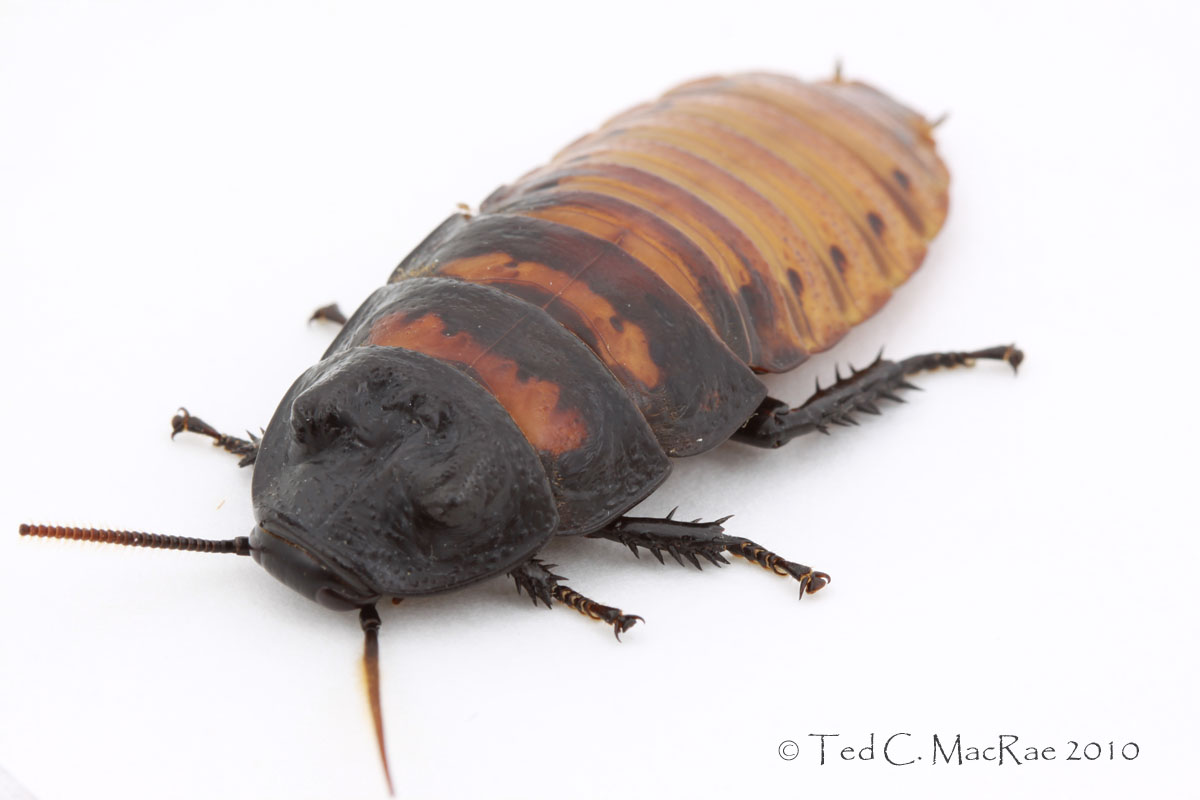
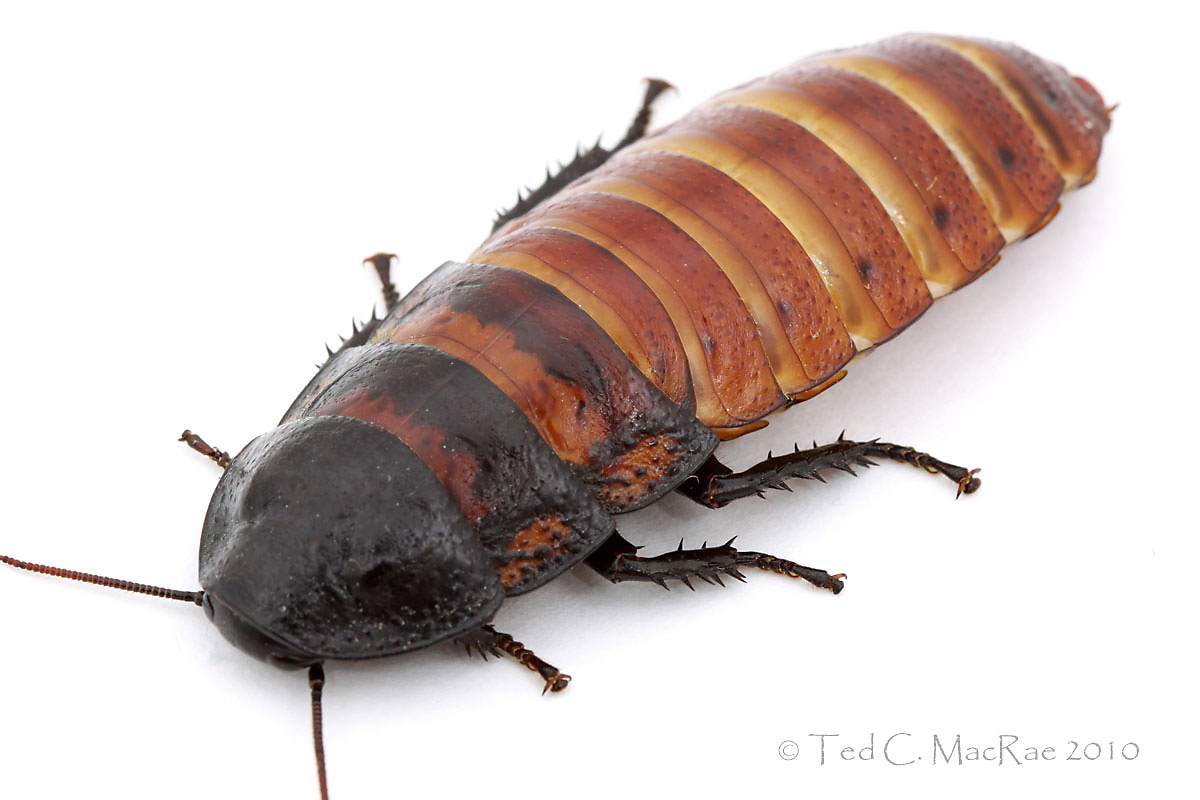
Carnivorous cockroaches! When I was in college back in the late 1970s, mantids and most other “orthopteroid” insects had long been considered suborders of a single order, the Orthoptera. Around that time began a great dismantling of the Orthoptera, pared down to only the grasshoppers, crickets, and katydids while the other former suborders (mantids, walkingsticks, cockroaches, etc.) were raised to full order status. The walkingsticks (Phasmida), grylloblattids (Grylloblattodea), and gladiators (Mantophasmatodea) all continue to enjoy their elevated status (Tree of Life Web Project 2003); however, a close relationship has been established between the mantids, cockroaches, and termites² (Kristensen 1991), resulting in the sinking of all three former orders into a single order, the Dictyoptera (Tree of Life Web Project 2002) (and not to be confused with the lycid beetle genus Dictyoptera). Mantids, thus, can be considered derived cockroaches with morphological specializations for predation!
² Long accorded an order of their own – the Isoptera, recent molecular phylogenetic studies have placed termites not only with the cockroaches, but within them (Ware et al. 2008). Just as mantids can be considered cockroaches that evolved as predators, termites can be considered cockroaches that evolved to eat wood (with the help of cellulose-digesting gut symbionts)!
Photo Details: Canon 50D w/ MP-E 65mm 1-5X macro lens (ISO 100, 1/250 sec, f/13), Canon MT-24EX flash w/ Sto-Fen + GFPuffer diffusers. Typical post-processing (levels, minor cropping, unsharp mask).
REFERENCES:
Kristensen, N. P. 1991. Phylogeny of extant hexapods. Pp. 125–140 in Insects of Australia: A Textbook for Students and Research Workers. Volume I and II. Second Edition. I. D. Naumann, P. B. Carne, J. F. Lawrence, E. S. Nielsen, J. P. Spradberry, R. W. Taylor, M. J. Whitten and M. J. Littlejohn eds. Carlton, Victoria, Melbourne University Press.
Tree of Life Web Project. 2002. Dictyoptera. Version 01 January 2002 (temporary). http://tolweb.org/Dictyoptera/8253/2002.01.01 in The Tree of Life Web Project, http://tolweb.org/
Tree of Life Web Project. 2003. Neoptera. Version 01 January 2003 (under construction). http://tolweb.org/Neoptera/8267/2003.01.01 in The Tree of Life Web Project, http://tolweb.org/
Vickery, V. R. and D. K. M. Kevan. 1983. A monograph of the orthopteroid insects of Canada and adjacent regions. Lyman Entomological Museum and Research Laboratory Memoir 13:216–237.
Ware, J. L., J. Litman, K.-D. Klass, and L. A. Spearman. 2008. Relationships among the major lineages of Dictyoptera: the effect of outgroup selection on dictyopteran tree topology. Systematic Entomology 33(3):429–450.
Copyright © Ted C. MacRae 2010





 Beetles In The Bush