
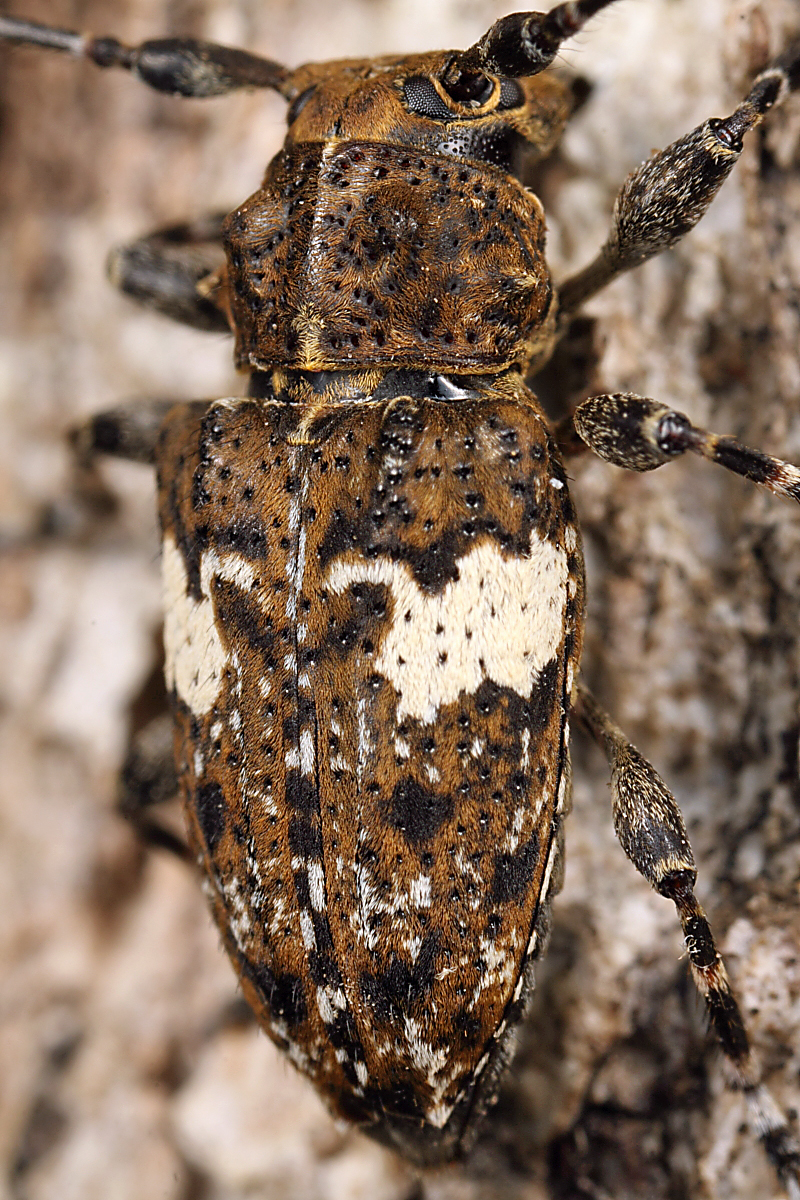
Acanthocinus nodosus on trunk of Pinus echinata | vic. Calico Rock, Arkansas
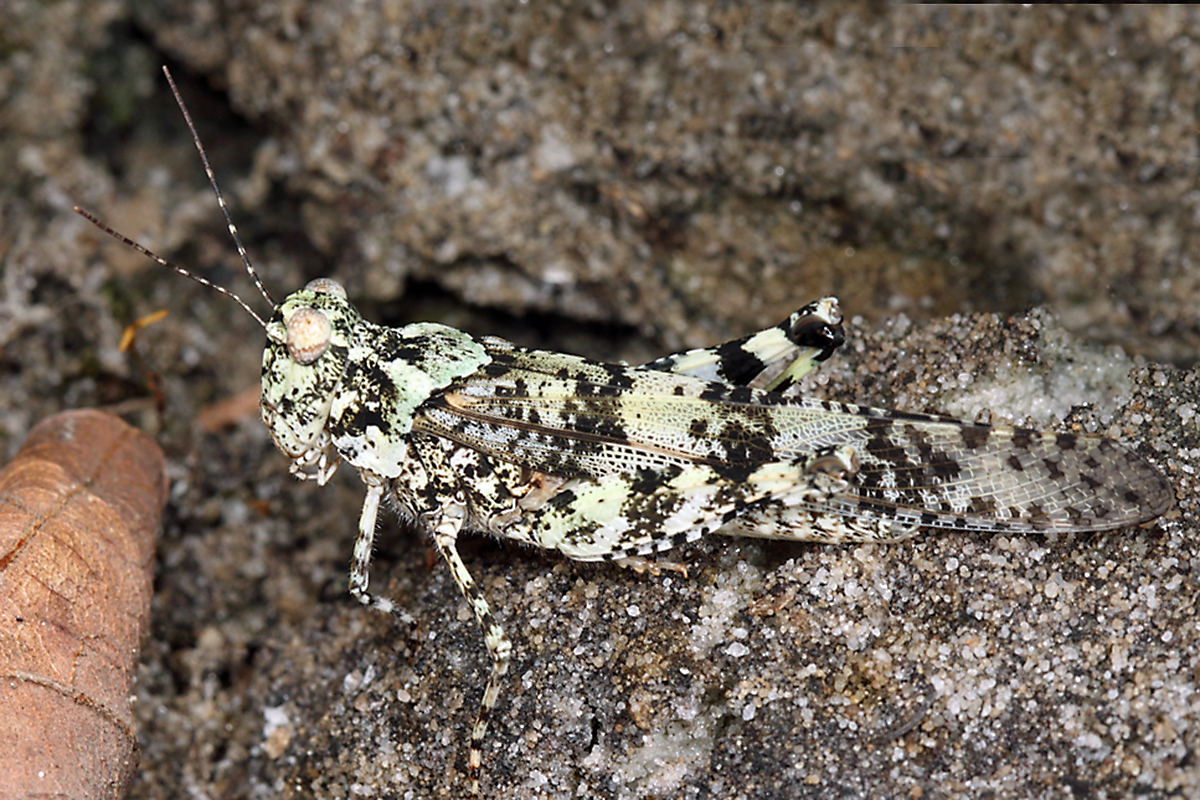
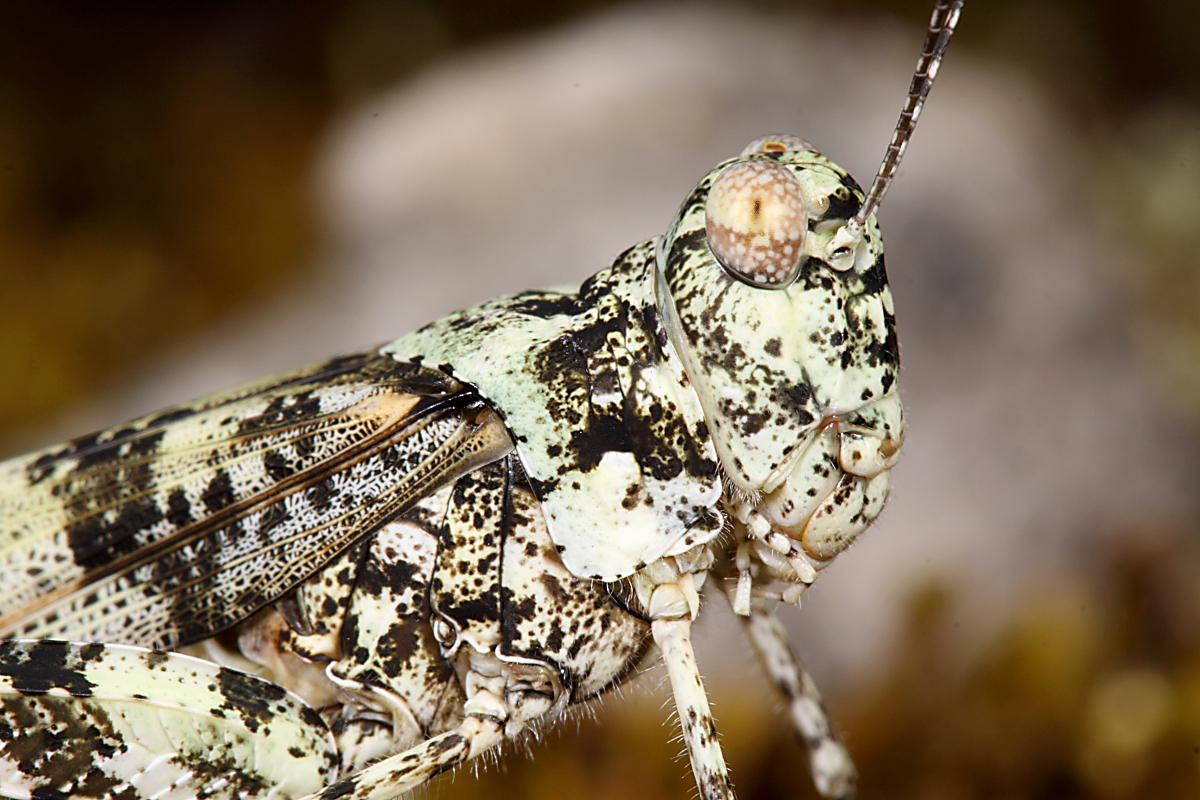
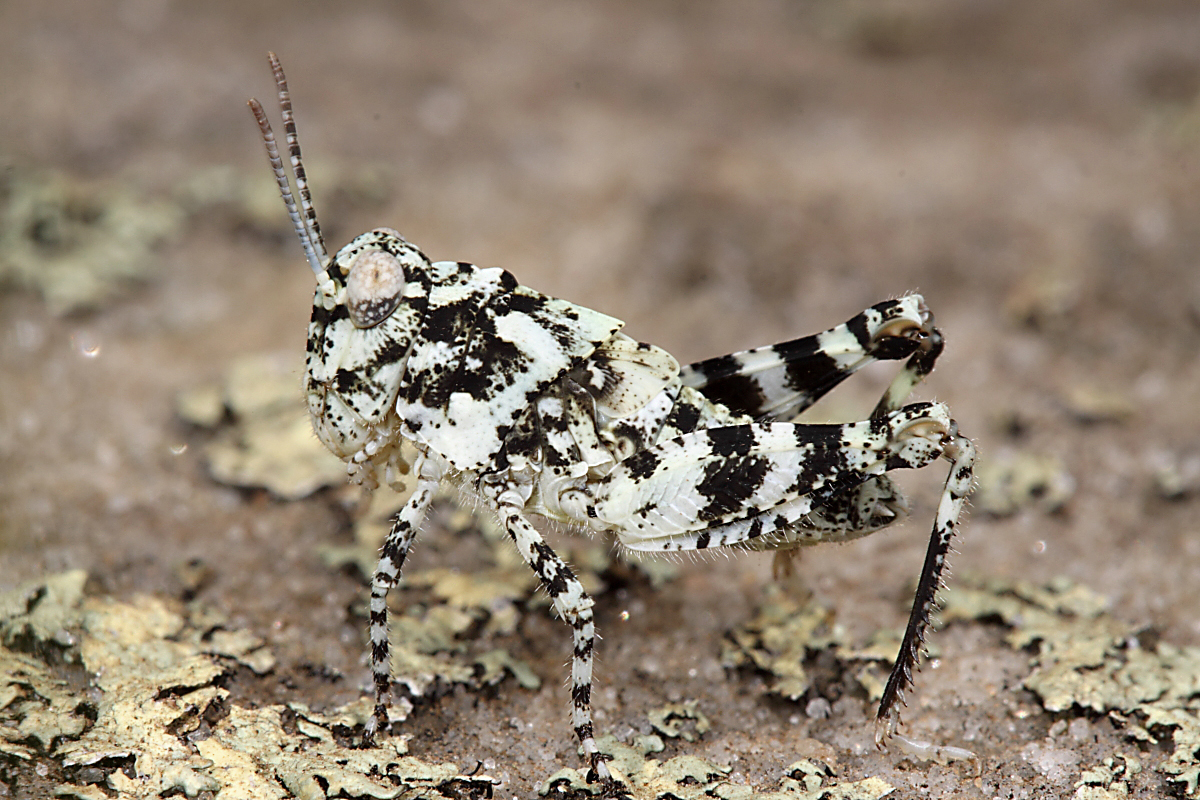
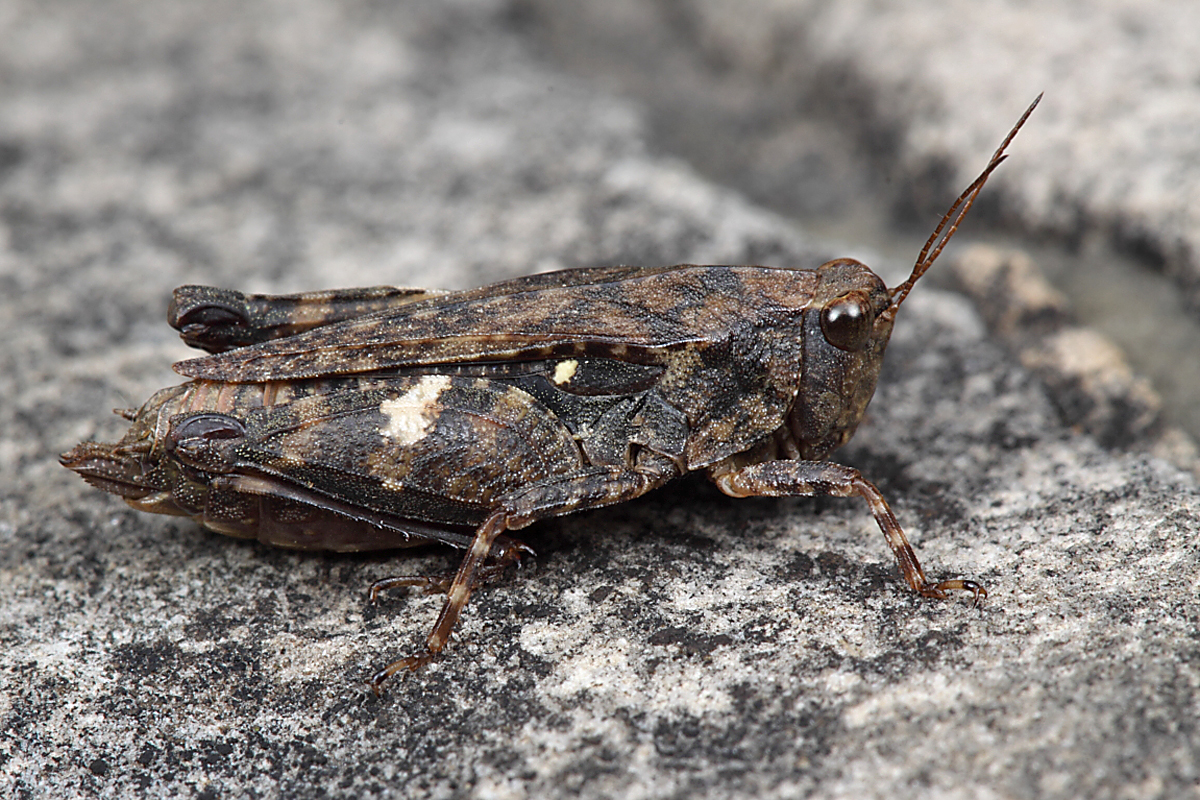
In my previous post (Oedipodine Rex), I used the term ‘conspicuous crypsis’ to describe the sumptuously beautiful lichen grasshopper, Trimerotropis saxatilis, as an example of an insect that, despite strikingly conspicuous colors/patterns, blends in perfectly with its native surroundings. I don’t think this is a formally recognized ecological concept (and a quick search of the web and my limited ecology literature didn’t turn up anything about it) with any real biological/ecological relevance, but rather just a little irony that personally I find interesting.

The same individual in the above photograph in its original resting spot.
The photographs in this post were also taken during one of my June trips to the sandstone glade complex around Calico Rock, Arkansas and show another insect that I would describe as conspicuously cryptic. This is Acanthocinus nodosus, in my opinion one of eastern North America’s most attractive longhorned beetles (family Cerambycidae). This species occurs across the eastern U.S. (just sneaking up into southern Missouri), where the larvae mine the phloem beneath the bark of dead and dying pines (Linsley and Chemsak 1995). BugGuide describes it as “subtle, yet beautiful” with an antennal span in males reaching a spectacular 120 mm (that’s 5 inches, folks!). Perhaps others have encountered this beetle more commonly further south, but I have previously seen only single individuals on just three occasions—twice in the Ozark Highlands of southern Missouri (one at lights and another searching the trunk of a standing, decadent pine tree at night) and another at lights in Alabama. As a result, I was quite excited to find this individual clinging during the day to the trunk of a large shortleaf pine (Pinus echinata). The tree appeared healthy, but I found adults of several other wood boring beetles crawling on its trunk as well, suggesting that maybe the tree was stressed or in the initial stages of decline.
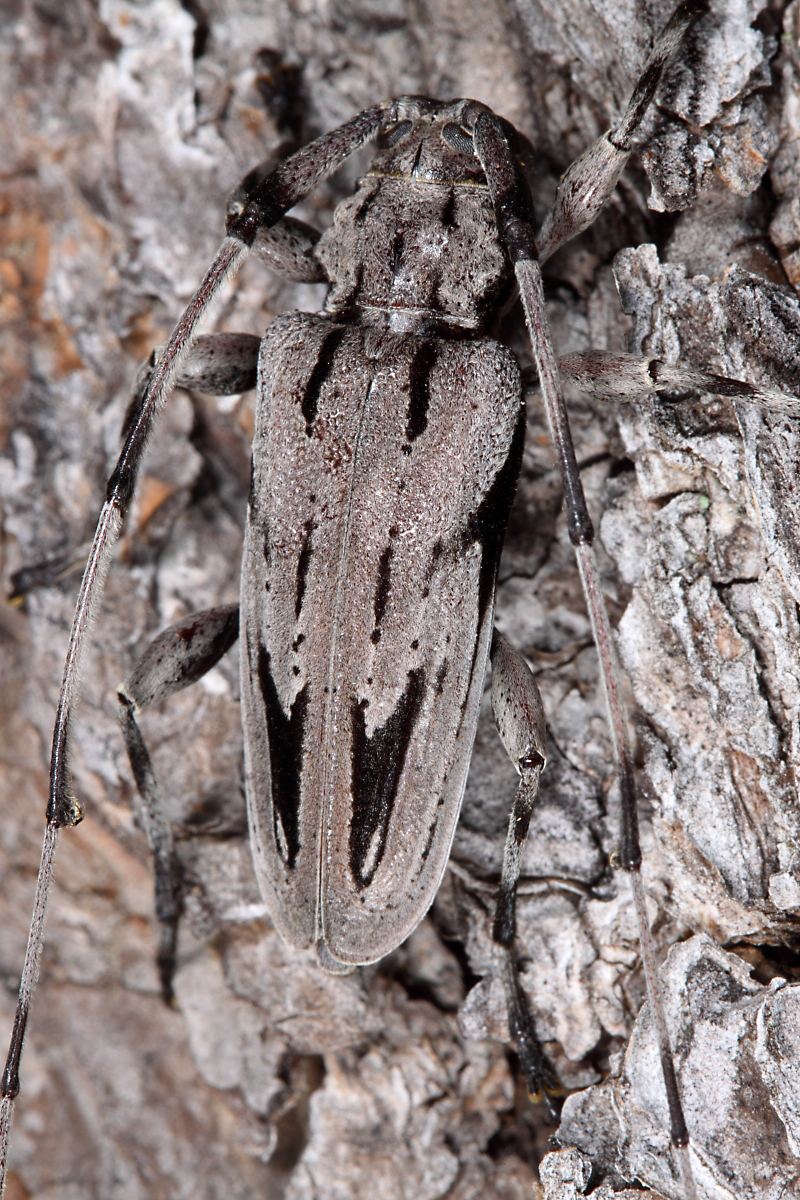
Subtle, yet beautiful!
I must confess that the first photograph above was staged—I had moved the beetle from its original resting spot and placed it on a part of the trunk where the bark color contrasted more strongly with the beetle to increase its visibility. The second and third photos above and left show the beetle in its original resting spot and illustrate just how cryptic the beetle is when resting on older, more weathered pine bark. Admittedly, the somber coloration of this species is not as extraordinary as the lichen-green of the lichen grasshopper, but I nevertheless find the slate gray with velvet black markings quite beautiful. When mounted on pins and lined up neatly in a cabinet, individuals of this species are as attractive as any dead insect can be. It was not until I saw this individual in Arkansas—and tried to photograph it during the day—that the cryptic function of its coloration and patterning became truly apparent to me. Most species in the tribe Acanthocini (to which this species belongs) also exhibit somber coloration with variable black markings or mottling, although only a handful can be considered as ‘conspicuously cryptic’ as this one.
REFERENCE:
Linsley, E. G. and J. A. Chemsak. 1995. The Cerambycidae of North America. Part VII, No. 2: Taxonomy and classification of the subfamily Lamiinae, tribes Acanthocinini through Hemilophini. University of California Publications in Entomology 114:1–292.
Copyright © Ted C. MacRae 2011











 Beetles In The Bush