In any insect collection, space is expensive and, thus, almost always at a premium—especially a large, self-funded, private collection such as mine. As a result, I am constantly looking for creative ways to maximize space efficiency. The photo here shows a technique I’ve adopted that works especially well for “leggy” beetles. Rather than lining them up “knee-to-knee” and wasting space between the specimens, I line them up “knee-to-elbow” by orienting every other specimen head downward. Of course, one can always simply tuck the legs and antennae underneath the body. However, this manner of mounting not only obscures the underside, but, in my opinion, looks rather sloppy and aesthetically unpleasing.
Unit trays of Plinthocoelium suaveolens.
I have a few other tricks I use to maximize not only space in my collection but also its athletics that I may show here in future posts. However, if you have tips and tricks of your own, I’d love to hear them in the comments below.
This is the 10th “Collecting Trip iReport”; this one covering 13 days of collecting in western Texas, southern New Mexico, and southeastern Arizona July 19–31, 2021. This trip was a “two-parter”—the first week with frequent field mate Jeff Huether (our seventh joint collecting trip) as we made our way from western Texas through southern New Mexico and into southeastern Arizona on our way to a memorial celebration for Jim Wappes at the home of Steve Lingafelter and Norm Woodley (for which I took the day off from collecting), and the second week visiting various locations in the “Sky Islands” of southeastern Arizona with several other entomologists.
Day 1 – Monahans State Park, Texas This was my first stop on the previous trip back in late April and early May, and what a difference a couple of months with good rains makes—dry as a bone then but bursting with a great variety of wildflowers now. Like last time we stopped at the Shin Oak Picnic Area first, and almost immediately Jeff got an Acmaeodera gibbula on living Prosopis glandulosa (mesquite). I started beating the trees and got a good series of that species along with a good series of an Actenodes sp. (prob. A. mendax). There were also some mesquites that had been killed (apparently by herbicide), and when I started beating them I got several more A. gibbula and one Paratyndaris sp. It went from blazing hot when we arrived to raining about an hour later, and for a while after the rain moved through it stayed cloudy and quite comfortable. Eventually we decided to look for another spot with more mesquite to beat.
Monahans Sandhills State Park with rain moving in!
Poecilanthrax effrenus (family Bombyliidae) on flower of Thelosperma megapotamicum (rayless greenthread).
Acanthochalcis nigricans (family Chalicididae) female looking to oviposit on dead Prosopis glandulosa (mesquite).
Palafoxia sphacelata (othake).
Palafoxia sphacelata (othake).
Asclepias arenaria (sand milkweed).
Asclepias arenaria (sand milkweed).
Penstemon ambiguus (gilia beardtongue).
We found an area closer to the entrance (Equestrian Area) with lots of mesquite and also sunflowers, which Jeff was interested in looking at to search for meloids (blister beetles). Before I even reached the first mesquite I saw an Acmaeodera sp. (maybe A. obtusa) sitting on the flower of Thelosperma megapotamicum (rayless greenthread) and later found another plus one A. immaculata. Off the mesquite I beat just one Actenodes sp. prob. mendax and a few treehoppers, while another and a Chrysobothris sp. got away (it was by now quite hot and they bolted!). I continued beating mesquite but just wasn’t seeing anything, so we decided to take a look at the area around the main dunes and another picnic area.
Helianthus petiolaris (prairie sunflower).
At the Pump Jack Picnic Area, we saw a lot of Thelosperma megapotamicum (rayless greenthread) in bloom and decided to check the flowers for Acmaeodera. We each got a nice series of what appear to be A. obtusa and A. immaculata. Also, I finally found a single Acmaeodera immaculata on the flower of Hymenoppapus flavescens (collegeflower), which I’d been looking at all day thinking it must be a good Acmaeodera flower host. On the way back to the vehicle, I scared up a cicada that had been singing on a nearby plant—I’d been hearing them all day but assumed they were grasshoppers or katydids. I listened for another and saw it perched on the stem of Mentzelia nuda (bractless blazingstar), and netted it—a fine male, smallish and with a very white venter. I wanted to find one more—catching another A. gibbula in flight, and saw one singing in a mesquite tree. This time I took some photos of it (working carefully not to alarm it) and then hand-caught it (later identified as Diceroprocta texana). A nice end to the visit.
Male Diceroprocta texana singing on Prosopis glandulosa (mesquite).
Mentzelia nuda (bractless blazingstar).
Mentzelia nuda (bractless blazingstar).
After dinner, we returned to Shin Oak Picnic Area for night collecting. I setup my new Mercury-vapor (MV) station (first time using the gas-powered generator and tripod—slick setup) and my two ultraviolet (UV) stations. Jeff set out three prionic acid lures. Large numbers of Polyphylla monahanensis (which came mostly to the UV stations) and P.pottsorum (which came mostly to the MV station), but otherwise few beetles showed up and not a single longhorn. Other insects were also limited mostly to large numbers of ground-nesting bees and several big grasshoppers. No Prionus came to the lures—not surprising since we are in the tail end of the season for P. arenarius (April to July) and too early for P. spinipennis (mostly August). I’ve only gotten a few P. monahanensis and P. pottsorum before now, so it’s nice to have good series of each, but I would have preferred to collect some longhorns.
Blacklights humming as dusk settles over the dunes.
Polyphyllapottsorum at the MV sheet.
Day 2 – Toyahvale, Texas We’re on our way to the Davis Mountains, and along the way I decided to stop at the “Agrilus cochisei” spot we found (on a tip from Jason) back during the April trip. I swept the roadsides—not just the host plant (Artemisia occidentalis, western ragweed) but a variety of other plants in bloom but did not find any A. cochisei. I did collect a few meloids (which were on Solanum eleagnifolium) and Zygogramma leaf beetles but nothing else.
Proboscidea parviflora (family Martyniaceae)—doubleclaw or red devil’s-claw.
A bit further down the road from the last stop, we noticed this memorial to the many horses that have been transported along this highway on their way to slaughter.
Davis Mountains, Ft. Davis, Texas Another roadside stop for one of the places where I collected during last April’s trip. I was hoping we would not be too late for Acmaeodera—there were plenty of plants in bloom but we did not see any. Senegalia greggii (formerly Acacia greggii, commonly called cat-claw acacia) and Vachellia constricta (formerly Acacia constricta, commonly called whitethorn acacia) were both in bloom, and off the former I got the obligatory Stenaspis solitaria male/female pair as well as a Lampetis drummondii, but I collected nothing off the latter. Tried for a couple of cicadas and missed ‘em both!
Stenaspis solitaria male on flowering Senegalia greggii (cat-claw acacia).
Lampetis drummundii captured on flowering Senegalia greggii (cat-claw acacia).
Eurema nicippe (sleepy oranges) on yellow asteraceous flower.
Davis Mountains,Boy Scout Rd, Texas This looked like a good spot, with water in the creek and lots of butterflies flying around. Beating, however, yielded nothing but lots of lep larvae. It seems we are in the mid-summer lull—too late for spring things, but too early for late summer-fall species. I think we’ll try some higher elevations and see what it is like.
Argemone aenea (golden prickly poppy).
Argemone aenea (golden prickly poppy).
Argemone albiflora (white prickly poppy).
Argemone albiflora (white prickly poppy).
We were headed back towards the highway when I spotted a stand of Thelosperma megapotamicum along the road. We got out so I could take a look at them and immediately encountered this Texas horned lizard who seems to be saying “WTF?!” I swept through the Thelosperma and picked up two Batyle sp., one Enocleris sp., and a couple of species of meloids. There were lots of other plants in bloom, too, including several that are typically attractive to beetles such as Sphaeralcea and Ratibida. However, nothing was seen on them, further reinforcing our desire to go to higher elevations to see if that would improve the collecting.
Phrynosoma cornutum (Texas horned lizard).
Davis Mountains, Madera Canyon, Texas We wanted to get up to higher elevation to see if that might improve the insect collecting. It is strange—the Davis Mountains are greener than I’ve ever seen them, yet there are almost no insects, no flowers. Jeff and I were wondering if the deep freeze Texas experienced this past winter might have knocked out insect populations. We beat along the way but just we’re not seeing anything on the beating sheets. We hiked our way up to the overlook, and up there I ran into a few species of tenebrionids running along the trail and doing their famous “headstands” when we disturbed them. On the way back down I saw a few large, red and black clytrine chrysomelids on what I take to be a fall-flowering helianthoid aster (old flowering stalks were 5–6 feet tall), so I picked up a few for Shawn (my scope of insects that I’ll collect expands greatly when I’m not finding anything in the groups that I study). I think we’ve had it with the Davis Mountains, and tomorrow we’ll travel further west and try our luck around Fabens.
Lower part of the Madera Canyon Trail.
The trail at upper elevations.
A small Eleodes sp. doing the headstand.
A larger species (Eleodes wenzelisulcicollis) doing the headstand.
Same individual as in the previous photo.
Day 3 – Van Horn, Texas Just a quick stop along the highway when we saw a variety of plants in bloom. Things are different at these lowers elevations compared to the Davis Mountains. Sweeping yielded a number of Agrilus sp. (vittate) and two Agaeocera gentilis—I suspect they were on the Sphaeralcea angustifolia (narrow-leaved globemallow), along with an Acmaeodera sp. and assorted other beetles. On a much taller globemallow I found two Tylosis jiminezi (male/female) perched on the foliage—a first for me! I did a little more sweeping further to the south but came up with only a few melyrids and a blister beetle (Epicauta segmenta). Nice stop!
Tylosis jiminezi on Sphaeralcea angustifolia (narrowleaf globemallow).
San Felipe Park, El Paso Co., Texas When we first arrived, we were not at all optimistic—it looked like it hadn’t rained in years. However, the Larrea tridentata (creosote) and Prosopis glandulosa (mesquite) were both in full bloom, so we began looking about. Almost immediately I saw Stenaspis solitaria in the mesquites, which in itself is not exciting, but two of the first three I saw were the form that has the distinctly reddish-brown pronotum, which I’ve never seen before. I saw a couple more and tried to get photographs, but they were too skittish. As I searched for them, I caught one Aethecerinus latecinctus (a second got away), one Plionoma sp. (not sure if it’s suturalis or rubens), one Chrysobothris sp. (prob. C. octocola) and one Acmaeodera gibbula. The real fun began, though, when I walked by a creosote and saw a Gyascutus planicosta (should be subsp. obliteratus in this area) take flight. I tracked it to see where it landed, caught it, and then put most of my effort into getting a decent series of individuals. I succeeded, but it took more than four hours with the heat maxing out at 96°F! In addition to the Gyascutus, Jeff was quite excited to see the bright green and orange blister beetle Eupompha fissiceps abundant on the creosote in mating pairs and feeding on the petals of the flowers. I finished off the blister beetle fun by finding Cysteodemus wislizeni (black bladder-bodied meloid) crawling in the sand, which, despite the common name, was decidedly bluish.
The author looks out over the vast creosote/mesquite scrub.
Eupompha fissiceps on Larrea tridentata (creosote).
Eupompha fissiceps feeds on Larrea tridentata (creosote) as “Mr. Meloid” (Jeff Huether) looks on.
After going into town to restock on supplies and catch some dinner, we returned to the park to do some lighting and night collecting. The moon is almost full, which generally puts the kibosh on longhorns coming to the lights, but we decided to try anyway because of the high amount of activity during the day in a rarely-visited location. I set up the Mercury-vapor (MV) light only and skipped going through the trouble to put up the ultraviolet lights also. I also wanted to beat the mesquite since I didn’t have much chance during the day, spending most of my time hunting Gyascutus with an aerial net, and once I got the MV setup going I started whacking the mesquite. Almost immediately, I got three Aethecerinus latecinctus, which came off the first two plants I beat. This motivated me further and caused me to commit to beating for the next hour or so—never even getting a single beetle of any kind! By then the lights had been going for awhile, and I was pleased to see several Derobrachus hovorei (palo verde root borer) crawling on the sand near the light. Even though it is a common species, I’ve not seen many myself, so I was happy to have a nice series to take up beaucoup room in one of my prionid drawers. Otherwise, very few beetles came to the lights, or most other insects as well—the sheet being covered primarily by dozens of white-lined Sphinx moths and lots of wasp/bee-type things. We did enjoy the evening, however, as we sat in our chairs and drank a cold brew between checkings of the light.
Mercury-vapor light setup at dusk.
Mercury-vapor light just turned on at sunset.
Mercury-vapor light going strong as darkened settles.
Derobrachus hovorei (palo verde root borer).
Day 4 – Chaparral, New Mexico We had planned to take NM-213 north to White Sands, but public access was blocked at Ft. Bliss. While backtracking, I spotted Sphaeralcea angustifolia (narrow-leaved globemallow) growing along the roadside and stopped to check it out. There was nothing on any of the plants, despite good growth and appearing to be coming into flowering. I did a little beating on Prosopis glandulosa (mesquite) as well—again very little going on, just a few treehoppers, tiny blister beetles, and one weevil. Larrea tridentata (creosote) was in full bloom, just like at Fabens, and here too there were many Eupompha fissiceps on the flowers and in mating pairs. I couldn’t resist collecting just a few and even made a short video of a mating pair engaged in some interesting behavior. I did see one Gyascutus planicosta as it flew by, but I could not track it to see where it landed. Otherwise all I picked up was another Cysteodemus wislizeni (black bladder-bodied meloid)—along with a photo, and a male cicada (maybe Diceroprocta texana) singing on a dry yucca stalk (hand-collected!).
Eupompha fissiceps mating pair engaged in some interesting behavior.
Point of Sands, New Mexico Jeff wanted to stop here to look for Pleurospasta mirabilis, a really cool-looking blister beetle that looks unlike anything else. He found just one by disturbing the host plant (small purple blooms), and I found none—seems we are right at the tail end of their activity period. I looked around for other things also, but there was not much out. I did catch a couple more cicadas (males singing), and near an Ephedra sp. bush I found a mostly-intact carcass of Sphaerobothris ulkei. The most interesting find, however, was a couple of apparently lost pitfall traps—the barriers had fallen over, and the cops were filled with sand and the carcasses of numerous tenebrionids that had fallen into the traps and never been retrieved. I pulled up the cups and filled in the holes to prevent further loss, finding a few live tenebrionids and trogids and one Pasimachus sp. ground beetle that had not yet succumbed in the process.
Point of Sands, New Mexico.
“Lost” pitfall trap.
Hatch, New Mexico While passing through the town of Hatch, I couldn’t resist taking the opportunity to stop and photograph some interesting town characters.
An interesting take on the Sinclair dinosaur.
Chili Pepper Man!
Cast of characters.
Deming, New Mexico Another roadside stop in an area that was green with flowers and also had Yucca (to look for Tragidion) and Ephedra (to look for Sphaerobothris). Neither of those insects were found, and no buprestids or cerambycids were seen on or swept from any of the many composite flowers about including Thelosperma megapotamicum. I did find a couple of the meloid Lytta biguttata, one on flowers of Cirsium sp. and another on an unidentified yellow composite flower, and Jeff found a huge aggregation of another meloid, Epicauta costata, on herbicide-treated Kali tragus (prickly Russian thistle). I finished off the stop by finding a spectacular ridged tenebrionid beetle walking about after the sinking sun went behind some clouds.
Lytta biguttata on yellow composite flower.
Epicauta costata on herbicide-treated Kali tragus (prickly Russian thistle).
Epicauta costata on herbicide-treated Kali tragus (prickly Russian thistle).
Day 5 – Sunshine, New Mexico We saw a nice stand of what proved to be Picradeniopsis absinthifolia (formerly Bahiaabsinthifolia, hairyseed bahia) and stopped to check them for buprestids/meloids. None were seen, just a few bees and lots of bee flies (genus Geron?). We did find a fair number of Cysteodemus wislizeni (black bladder-bodied meloid) crawling on the roadsides in a patch of Solanum elaeagnifolium (silverleaf nightshade).
Geron? sp. (family Bombyliidae) on flower of Picradeniopsis absinthifolia (hairyseed bahia).
Geron? sp. (family Bombyliidae) on flower of Picradeniopsis absinthifolia (hairyseed bahia).
Columbus, New Mexico We found a moist drainage along the roadside with plants blooming in abundance, including Isocoma tenuisecta (burroweed) and Sphaeralcea angustifolia (narrow-leaved globemallow); however, insects were very scarce. I didn’t see any buprestids or cerambycids at all on any of the plants, only picking up one Lytta biguttata and one Cotinis mutabilis on the Isocoma and sweeping single examples of a small black/red Cleridae from the latter and a yellow-flowered composite.
Pepsis thisbe (Thisbe’s tarantula-hawk wasp) on flowers of Isocoma tenuisecta (burroweed).
Animas, New Mexico We drove a fair distance west hoping to get into a different rainfall system in hope that insects would be present and saw a roadside in good bloom with the surrounding creosote scrub also green and blooming. As soon as we got out of the car we saw big beetles flying overhead and tracked them back to several creosote bushes very near the car with an aggregation of yet another blister beetle, Pyrota postica, which were mating and feeding on the flowers and leaves. After taking a few photos (and collecting my small series), I started sweeping through the variety of plants in bloom along the roadsides. I did not see anything on the flowers themselves (including Baileya multiradiata, pretty good buprestid flower) but collected a series of clytrine chrysomelids and one Dectes sp. While sweeping through Sphaeralcea hastulata (spear globemallow), I got one Agaeocera gentilis, and sweeping though a mix of S. hastulata and S. angustifolia (narrow-leaved globemallow) I got three Agrilus sp. (perhaps the same as I collected south of Van Horn, Texas). Finally, on the latter, I found one more A. gentilis perched on the leaf.
Pyrota postica female on flowering Larrea tridentata (creosote).Pyrota postica female feeding on the flowers of Larrea tridentata (creosote).
Sphaeralcea hastulata (spear globemallow).
Portal, Arizona Finally made it to Arizona, and for the first stop I wanted to try a spot below Portal where I’ve had limited success finding Sphaerobothris ulkei on Ephedra. Last time I was I here I found a few, but not until after being distracted by Gyascutus caelatus and Hippomelas sphenicus in the acacias and mesquites. I vowed not to let that happen this time and weaved a zigzag pattern looking at every Ephedra I could find. While I was doing that. I did see one G. caelatus take flight and then caught another that I saw sitting on Vachellia constricta (white-thorn acacia) but remained focused on looking at the Ephedra. Eventually, after not seeing any S. ulkei, I started looking for other buprestids. The acacias were just beginning to flower—only a few plants had open flowers, and Jeff noticed the tiny silhouette of an insect in flight approaching the flowers. He netted it and showed it to me, and to my surprise it was one of the species in the A. stigmata group (black with two red apical spots)—none of which I have ever collected before but which I believe could be A. davidsoni. We spent the next hour watching for and netting the silhouettes on the few trees we could find with flowers, and then I got the beating sheet out and beat more off of the trees (whether in flower or not) to end up with a nice little series. I’ll be anxious to confirm whether these are A. davidsoni.
Mozena arizonensis on Vachellia constricta (white-thorn acacia).
Vachellia constricta (white-thorn acacia).
South of Willcox, Arizona We got to Willcox around dusk, and the cool, breezy conditions told my gut that it would be pointless to set up the lights. Still, I couldn’t let myself not try, and without much opportunity to look for a good place to set up I just went down Blu Sky Rd to E Moonlight Rd and hoped for the best. My optimism waned rapidly, as conditions continued getting colder and breezier, and not a single insect came to the light—I should’ve listened to my gut!
Moonrise. A twilight zone moment occurred when I realized that I had taken this photo on Moonlight Rd!😮
Day 6 – Jim Wappes Celebration, Hereford, Arizona Fun day with lots of fellow coleopterists at the home of Steven Lingafelter and Norm Woodley in memory of Jim Wappes. We got there in the early afternoon and enjoyed eats, conversation, and war stories from the field.
Min, Sangmi Lee, Lisa Lee, Candy Kuckartz, the author, Margarethe Brummermann, Jason Botz, & Andrew Johnston (photo by Steven Lingafelter).
The author, Andrew Johnston, Norm Woodley, & Ed Riley (photo by Margarethe Brummermann).
It was a good day for a party, as rain made insect collecting a no-go. As dusk settled, I admired the incredible view from Steve’s and Norm’s back patio!
Low clouds hang over the Huachuca Mountains.
The fun extended well into the evening hours. My thanks to Steve and Norm for hosting the celebration—what fun to see and talk to so many entomologists in one place.
Steve Lingafelter, Gino Nearns, “Kira Brummermann,” & the author (photo by Margarethe Brummermann).
Bill Warner, Norm Woodley, Paul Skelley, Jeff Huether, Steve Lingafelter, Andrew Johnston, & the author (photo by Margarethe Brummermann)
Day 7 – Superstition Mountains, Weaver’s Needle Vista Viewpoint, Arizona We awoke to rain yesterday morning in Willcox, and it has stayed with us since—first on our way to Hereford for the Wappes Celebration, then up to Phoenix this morning—our efforts to escape the rain by coming north thus proving futile. I came to this spot on a tip that I might find Agrilus cavifrons on Celtis pallida (spiny hackberry) (although maybe a bit early), and I’d hoped despite the light rain I would still be able to find it. I did not—though I found the plants, but I did get a Chrysobothris sp. that I don’t recognize while beating Senegalia greggii (formerly Acacia greggii, cat-claw acacia). Of course, it was on the first plant that I beat, so I ended up beating for another hour with nothing to show for it! While walking the short paved trail, I found Cercidium sp. (palo verde) tree that had been cut up and showed evidence of buprestid infestation in one of the larger branches, so I retrieved and cut it up for rearing.
Lost Dutchman State Park, Arizona We made a quick stop here to admire its incredible scenery before heading back south.
Superstition Mountains as seen from Lost Dutchman State Park.
Stands of Cylindropuntia fulgida (chain-fruit cholla) frame this view of the Superstition Mountains from Lost Dutchman State Park.
Carnegiea gigantea (saguaro) in front of the Superstition Mountains.
Carnegiea gigantea (saguaro).
Upper Tanque Verde Falls Trailhead, Tucson, Arizona The rain finally moved out and it was sunny for the drive back to Tucson, but with still-cool temps we weren’t sure if lighting would be worthwhile. We decided to try this spot—not too high (based on a tip by Bill Warner), and I setup the lights using a technique recommended by Roy Morris that involved placing one ultraviolet (UV) light on each side of the sheet, extending the Mercury-vapor lamp above to the top of the sheet, and periodically shutting off the latter to allow the UV lights the pull in the “shyer” insects before turning it back on. While I waited for the lights to started pulling things in, I did some beating around the area. I only collected one specimen, but it was a Cleridae that I don’t recognize, which was beaten off of Prosopis glandulosa (mesquite). Temps ended up in the lower 70s to upper 60s, but at the lights we still got a few longhorned beetles (Aneflomorpha sp.), a few melolonthine scarabs, and a nice series of two species of Pachybrachis (that I will send to Bob Barney).
Jeff looks for beetles at the light sheet.
Lethocerus medius at ultraviolet/mercury-vapor light in mesquite/acacia scrub.
Day 8 – Atascosa Mountains, Ruby Rd near Atascosa Lookout Trailhead, Arizona The primary quarry here was Acmaeodera chuckbellamyi, a species I described in 2014 from a single specimen collected by my friend and hymenopterist, Mike Arduser, at this location on flowers of Aloysia sp. Several people have tried to find it since—without success, and in June 2011 the area was severely burned by the 27,550-hectare Murphy Fire. I was hoping enough time has passed to allow the area (and beetle population) to recover in this, my first attempt, at finding the species myself. I knew it was a long-shot, and long sorry short I did not find either the beetle or it’s Aloysia host flowers. I did collect a number of other beetles, however, including Lycus lorises, a few longhorned beetles and pachybrachine leaf beetles, and one Acmaeodera quadrivittatoides on flowers of Eysenhardtia orthocarpa (desert kidneywood), several Aneflomorpha sp. and a few pachybrachines on Quercus oblongifolia (Mexican blue oak), and more pachybrachines on Senegalia greggii (catclaw acacia), Mimosa dysocarpa (velvetpod mimosa)—the latter also yielding a few tiny Chrysobothris spp. (one looking like C. lucanus), and Propopis glandulosa (mesquite). Jeff also collected and gave to me a couple of Acmaeodera parkeri on flowers of Talinum whitei (White’s flameflower). I hiked 0.7 mi E on Ruby Rd to a spot where I swept a few beetles from low vegetation, and on the underside of a large, fallen branch of Q. oblingifolium I found a large female Polycesta arizonica. Finally, about halfway back to the trailhead I encountered a few tiger beetles on the road near standing puddles of water from the recent rains.
View from Ruby Rd looking south toward Mexico.
View from Ruby Rd looking southwest toward Mexico.
Lycus loripes on flowers of Eysenhardtia orthocarpa (desert kidneywood).
Lycus loripes on flowers of Eysenhardtia orthocarpa (desert kidneywood).
Talinum whitei (White’s flameflower).
Atascosa Mountains, Peña Blanca Lake, Arizona We came here to look for Deltaspis tumacacorii, which like many rare beetles the odds are against finding it despite it having been taken in the area on several occasions. Again, this would not be one of those occasions, but I was happy to find a tiny tiger beetle (Cylindera viridisticta arizonensis) along the creek and even happier to beat a series of two species of Paratyndaris, one large Lampetis webbii (only my fifth specimen). and one Aneflomorpha sp. from mostly dead Senegalia greggii (catclaw acacia).
Leptinotarsa lineata on Ambrosia monogyra (cheeseweed burrobrush)—adult.
Leptinotarsa lineata on Ambrosia monogyra (cheeseweed burrobrush)—larvae.
Huachuca Mountains, lower Carr Canyon, Arizona After dropping Jeff off at his hotel in Tucson (he flies home in the morning), I high-tailed it down to Carr Canyon to do some light collecting. It has been a long time since I’ve seen my sheet covered so quickly and thoroughly with insects! My quarry was longhorned beetles—of which I got a nice variety, but who can resist also the variety of scarabs, ground beetles, tenebrionids, blister beetles, and even planthoppers that flock to the lights in the mountains of southeastern Arizona? I’ll have to control myself a little better in the coming nights! Walking about along the roadsides (hoping to see Amblycheila giant tiger beetles), I encountered a gorgeous male Aphonopelma chalcodes (Arizona blonde tarantula).
Mercury-vapor/ultraviolet light setup.
Enaphalodes cortiphagus at Mercury-vapor/ultraviolet light in oak/juniper woodland.
Parabyrsopolis chihuahuae at Mercury-vapor/ultraviolet light in oak/juniper woodland.
Phileurus truncatus (triceratops beetle) at Mercury-vapor/ultraviolet light in oak/juniper woodland.
Chrysina beyeri (Beyer’s jewel scarab) at Mercury-vapor/ultraviolet light in oak/juniper woodland.
Chrysina gloriosa (glorious jewel scarab) at Mercury-vapor/ultraviolet light in oak/juniper woodland.
Pachysphinx occidentalis (western poplar sphinx) at Mercury-vapor/ultraviolet light in oak/juniper woodland.
Manduca florestan (Florestan sphinx) at Mercury-vapor/ultraviolet light in oak/juniper woodland.
Aphonopelma chalcodes (Arizona blonde tarantula) on ground in in oak/juniper woodland.
Aphonopelma chalcodes (Arizona blonde tarantula) on ground in in oak/juniper woodland.
Aphonopelma chalcodes (Arizona blonde tarantula) on ground in in oak/juniper woodland.
Day 9 – Huachuca Mountains, Copper Canyon, Arizona I met Steve Lingafelter and Norm Woodley at their house, and together we drove to the famed Copper Canyon on the south side of the Huachucas. On the way I got a nice primer about the species that have been collected there and the plants they have been collected on. Steve and I started out walking the trail up the canyon while Norm swept the area down below. I pretty much beat every oak along the way, for a while only getting a smattering of beetles—Agrilaxia sp. on Quercus emoryi (Emory oak) and also on Q. arizonica (Arizona white oak) along with Sternidius decorus?. About a half-mile up the trail I beat dead branches of Q. hypoleucoides (silverleaf oak) and, not seeing anything at first, said “I’m going back; I’m literally not getting anything.” Right then, a small black beetle on the sheet caught my eye. I looked at it closely and realized it was a Mastogenius (prob. M. robustus)! I popped it in the bottle and beat more dead branches from the same tree and got not only another Mastogenius but also Tigrinestola tigrina. Freshly motivated, I spent the next half-hour working all the oaks in the area—and, as often happens, did not see another beetle! Nevertheless, it was hard not to be happy with the beetles that I’d gotten.
An unidentified treehopper nymph, likely something in the subfamily Smiliinae, tribe Telamonini, on twig of Quercus arizonicus (Arizona white oak).
I walked back down the trail and met Norm, who was just starting up. He filled me in on the results from below, which included sweeping a few Agrilaxia hespenheidei—one of my target species—and an Agrilus sp. on Bouvardia ternifolia (firecrackerbush). I decided to work the slope under the road, reasoning that Norm had likely already worked the flat ground below. On the first B. ternifolia I approached, I saw an A. hespenheidei on the flower, gave the plant a sweep, and caught not only the A. hespenheidei but also an Agrilus sp. (maybe A. latifrons). Over the next hour I would sweep a nice series of A. hespenheidei from B. ternifolia (but not another Agrilus sp.). While I was doing that, I also swept the numerous stands of Acaciella angustissima (formerly Acacia angustissima, prairie acacia) looking for the large, spectacular Agrilus cavatus. I would find two, and considering that I swept perhaps 50 or more stands they were well earned. Also, in the meantime, I noticed Acmaeodera parkeri on small blue flowers that I eventually identified as Evolvulus arizonicus (Arizona blue-eyes). The flowers were few in number and the beetles difficult to catch, so I only ended up with two specimens. Further down the slope the flowers much more abundant, but there was not a beetle to be found on them. In the waning moments of my visit, I encountered two Trichodes peninsularis horni on flowers of Lasianthaea podocephala (San Pedro daisy).
Bouvardia ternifolia (firecrackerbush), flower host for Agrilaxia hespenheidei.
Acaciella angustissima (prairie acacia), host for Agrilus cavatus.
Evolvulus arizonicus (Arizona blue-eyes), flower host for Acmaeodera parkeri.
Lasianthaea podocephala, flower host for Trichodes peninsularis horni.
Eventually we all met up at the car, compared our catches (not surprisingly, Norm did very well with buprestids and Steve did very well with cerambycids), and I did okay in both counts. We headed back over Montezuma Pass and were greeted with stunning views looking down into the Coronado National Monument!
Coronado National Monument from near Montezuma Pass.
Huachuca Mountains, Miller Canyon, Arizona After dropping Steve off, Norm and I went to nearby Miller Canyon to look at a spot where he has collected three species of Taphrocerus (I’ve only collected two, but only once way back in 1987 at a spot in the lower canyon). We thought it might be too late in the season, but it was at least worth a shot. The sedges were lush and green, but the “sedgy wedgies” were absent. Looks like I’ll have to just come back out in April or May!
After striking out with Taphrocerus, I went back down to the lower elevations of the canyon to look for Tragidion on the stand of Baccharis sarothroides (desert broom) that occurs there. Once again, I was likely too late to find them, but as with Taphrocerus it was certainly worth a shot, and again I would not find any despite looking and most of the large plants in the area. I did find a few Euphoria leucographa feeding on the sap flows and a very large red/black clytrine, so it wasn’t all for naught. Just another reason to come out earlier in the season.
Euphoria leucographa feeding on a sap flow on stem of Baccharis sarothroides (desert broom).
Day 10 – Santa Rita Mountains, upper Box Canyon, Arizona After getting reports of buprestid activity near Madera Canyon, I decided to head to the Santa Rita Mountains today instead of continuing in the Huachucas. The shortest route to this most famous of canyons in the Santa Ritas goes down Box Canyon, a less-well-known but still-fantastic canyon in its own right and where I’ve had good luck collecting the two previous times I’ve been there (August 2018 w/ Art Evans, Steve Lingafelter, and Norm Woodley; and September 2019 w/ Jeff Huether). I stopped at the “dry falls” and worked my way back up the road to a point where I’ve collected the majority of my insects there. Along the way, I beat the flowering Eysenhardtiaorthocarpa (desert kidneywood)—insects were not numerous on the plants, but over the course of the trips up and back I got Acmaeodera gibbula, A. cazieri, two Aneflomorpha sp., and a few Lycus sp. I also swept the just-beginning-to-flower Mimosa dysocarpa (velvetpod mimosa) but got just a single Sphaenothecus bivittatus. When I reached the top of the canyon, I looked for a small patch of Allionia incarnata (creeping four-o’clock) in the steep road bank, off the flowers of which I have previously collected Acmaeodera cazieri, A. parkeri, and A. yuccavora. I found the patch, but the plants were not yet in flower. What was in flower on the flats above the bank, however, was Talinum aurantiacum (orange flameflower), off which I collected all three species (A. cazieri being the most abundant and only a single A. cazieri). As at previous stops this week, it seems that insect activity is beginning but is still a bit shy of coming into full peak.
Larva of Euscirrhopterus gloveri (purslane moth), which was present in outbreak numbers on a portulacaceous plant growing amongst Talinum aurantiacum.
While I was collecting, a caravan of cars came by. They turned out to be filled with entomologists attending the Invertebrates in Education Conference, one of whom I knew—Tad Yankoski of the Sophia M. Sachs Butterfly House in my hometown of St. Louis. He handed me a vial containing a large, live individual of Polycesta aruensis. I was excited to see this, especially when he told me he found it and saw many more in the flats below Madera Canyon, where I had planned to go next!
Santa Rita Mountains, flats below Madera Canyon, Arizona It was a frustrating afternoon on several fronts. Starting off, I had trouble finding the Polycesta aruensis locality, and when I finally did find it there was nary a Polycesta to be seen. Perhaps they sleep during the heat of the day.🤷 After that, there was little time to go anywhere but Madera Canyon, where I spent a half-hour beating Quercus oblongifolia (Mexican blue oak) hoping to see Chrysobothris chalcophoroides (I didn’t) and another two hours checking out Baccharis sarothroides (desert broom) in the area where I collected Stenaspis verticalis and Tragidion deceptus two years ago (also fruitless). Of course, the dreadfully common Stenaspis solitaria was everywhere, but all I ended up collecting was a tenebrionid on the 2-track, a clytrine beaten from Cercidium aculeata (retama), and one Euphoria leucographa along with a nondescript cerambycid (Heaperophanini maybe) on B. sarothroides. On the way back to the vehicle, I encountered a dead, mostly skeletonized deer, and while I rarely collect from carcasses, I noticed a little green beetle crawling on the jaw bone. I figured it must be the cosmopolitan clerid, Necrobia rufipes—something I’d not seen before, so I collected it and tried to collect but missed another one.
Rain clouds gather over Madera Canyon.
Another view of the mouth of Madera Canyon.
Magusa sp. (one of the narrow-wings) caterpillar feeding on Sarcomphalus obtusifolius (lotebush).
Santa Rita Mountains, lower Florida Canyon,Arizona I suppose I can credit my frustrating afternoon for one of my best nights of lighting ever. I stumbled upon this spot at the bottom of Florida Canyon during this afternoon’s Polycesta wild-goose chase and immediately thought, “Wow, what a perfect spot to set up a light!” A nice place to pull off the road with a small, level clearing embedded within low-elevation oak woodland. There was even a babbling creek in the background! It was close to dark by the time I returned and set up the lights (would’ve been even later if I’d gone into town for a “real” dinner). Ironically, there were neither the diversity nor quantity of beetles as two nights ago in lower Carr Canyon. But the cerambycids brought it… and kept bringing it! It seemed like every time I got up to check the sheet there were another 4–5 individuals. I ended up leaving the sheet up for four full hours and collected perhaps 40–50 specimens representing a dozen or more species. A few I don’t recognize, and most of those that I do recognize have resided in my cabinet in precious few numbers until now. It’s been years literally since I’ve had a night like this, and it’s a nice shot of motivation leading into the last few days of what is starting to feel like a long trip.
Sometimes circumstances dictate an unusual dinner.
Enaphalodes niveitectus at Mercury-vapor/ultraviolet light in oak/juniper woodland.
Tigrinestola tigrinus at Mercury-vapor/ultraviolet light in oak/juniper woodland.
Coenopoeus palmeri at Mercury-vapor/ultraviolet light in oak/juniper woodland.
Syssphinx hubbardi (Hubbard’s silk moth) at Mercury-vapor/ultraviolet light in oak/juniper woodland.
Eacles oslari (Oslar’s imperial moth) at Mercury-vapor/ultraviolet light in oak/juniper woodland.
Day 11 – Madera Canyon Rd, Continental, Arizona I came back to the spot where Tad Yankoski had seen Polycesta aruensis so abundantly yesterday morning but which was completely absent by the time I got there in the afternoon. I did not see any adults on the trees this morning either and was about to give up when I spotted a few partially dead trees with very large, apparently fresh emergence holes in the main trunks that were the perfect size for P. aruensis—good thing I brought my chainsaw! I cut a trunk with its branches and segregated the cut up wood into age (fresh dead versus older) and size (twigs, medium branches, and main trunk) classes. While I was doing this, a Polycesta adult dropped off one of the fresh-dead, medium-sized branches! I beat the remaining branches on the tree and on nearby trees but did not see any more, so whatever Tad witnessed yesterday morning must have been an ephemeral event, perhaps related to synchronized emergence from the very trees among which I collected the wood. NOTE: don’t let anyone tell you that cutting up wood for rearing beetles is anything but a sweaty, exhausting endeavor, even with temps still in the mid-80s and decent cloud cover!
This camouflaged tanker marks the spot—trees on the W side of the tanker.
Job half-done—wood cut up.
Job complete—wood segregated and bundled.
Santa Rita Mountains, lower Florida Canyon, Arizona I had such good night collecting here last night that I thought I’d come back and see what I could find during the day in this ribbon of riparian oak/hackberry woodland. Almost immediately I beat a Paratyndaris sp. off of dead Celtis reticulata (netleaf hackberry). The tree was very dead, but I knew Paratyndaris spp. like old, dead wood, so I split open some of the branches and found larvae inside and also a dead and unemerged but perfectly intact adult of a very tiny Chrysobothris sp. inside one of the smaller branches. Beating on other plants in the area was, in general, fruitless, but occasionally (and just often enough) I encountered something of interest that motivated me to continue working: Paratyndaris sp. and Agrilus sp. on Quercus oblongifolia (Arizona white oak), a small red/brown elaterid on Prosopis glandulosa (mesquite), and Acmaeoderopsis sp., Paratyndaris sp., and a few clytrines on Senegalia greggii (cat-claw acacia).
Lower Florida Canyon.
Celtis reticulata (netleaf hackberry).
Santa Rita Mountains, Gardner Canyon, Arizona Last night, I got a message from fellow buprestophile Robert Velten, who told me that he would be in Gardner Canyon the next day, so after finishing at Florida Canyon I drove over to Gardner Canyon to meet up with him. Despite being longtime correspondents, Rob and I had never actually met face-to-face, so I was thrilled to have the chance to do so and spend some time with him in the field. Joining him were his mothing buddies Steve McElfresh and Paul Tuskes, and a little later our mutual friend and Arizona coleopterist-extraordinaire, Margarethe Brummermann, also joined us for a night of lighting. It was great to spend time at the lights with so many like-minded folks! There were three light stations between us, but the weather was less than cooperative—a persistent cool breeze accompanied constant lighting and thunder in the mountains above. Eventually, the threat was realized when the skies opened up, prompting a hasty dismantling and storage of all my lighting equipment safely inside the vehicle. Nevertheless, in the time that I was able to collect, I got a small number of longhorned beetles (half of which came to my light in the moments I was taking it down—longhorns typically become very active right before a storm) along with a variety of showy scarabs and clerids. The rain ended as quickly as it began, so the socializing continued. The entire evening I was continuously taunted, however, by a large prionid sitting inside its emergence hole on the trunk of a large Quercus emoryi (Emory oak). It only showed its jaws and antennae, and if I even touched the tree to boost myself up for a closer look it withdrew deep into the hole. I’m convinced it was Nothopleura madericus—a species I’ve never collected. I can still hear it laughing at me! My attempt to find one out and about by scanning the trunks and branches of of the other oaks in the area with my headlight was not successful, although I did collect another elaphidiine longhorn in such manner.
Polyphylla decemlineata (or perhaps a new species) at Mercury-vapor/ultraviolet light in oak/juniper woodland.
Lucanus mazama (cottonwood stag beetle) at Mercury-vapor/ultraviolet light in oak/juniper woodland.
Xyloryctes thestalus (western rhinoceros beetle) at Mercury-vapor/ultraviolet light in oak/juniper woodland.
Hemiphileurus illatus at Mercury-vapor/ultraviolet light in oak/juniper woodland.
Cymatodera horni at Mercury-vapor/ultraviolet light in oak/juniper woodland.
Manduca rustica (rustic sphinx) at Mercury-vapor/ultraviolet light in oak/juniper woodland.
Day 12 – Santa Rita Mountains, Gardner Canyon, Arizona Rob had noticed a stand of Anisacanthus thurberi (desert honeysuckle)—a host for Spectralia cuprescens—along the road into Gardner Canyon, so together (after morning coffee!) we checked the spot on the way out. The plants were in the early stages of leafing out, and after visually inspecting them for a while and not seeing anything I decided to get out the beating sheet to sample the stand more thoroughly. My eyes did not deceive me—neither one of us found any. Too early? Low population? Who knows! I did beat one clytrine off the plants and collected a few weevils by beating Prosopis glandulosa (mesquite) before finding Acmaeodera parkeri and A. cazieri on the flowers of Allionia incarnata (creeping four o’clock). The flowers were common in the area around the road, but no Acmaeodera were seen until I started scaling the steep hillside nearby—a similar situation in which I’ve found these species on this flower in Box Canyon.
Rob Velten and the author enjoying morning coffee (photo by Margarethe Brummermann).
Dense stand of Anisacanthus thurberi (desert honeysuckle) in Gardner Canyon.
Gardner Creek running full after last night’s rain.
Yours truly with buprestophile extraordinaire Rob Velten.
Huachuca Mountains, upper Carr Canyon, Reef Township Campground, Arizona I’ve been wanting to explore the higher reaches of Carr Canyon ever since I arrived in Arizona a full week ago. It is the only high canyon in the Huachucas that has a road leading all the way into its upper reaches. At these high elevations the forest is Pinus ponderosa (ponderosa pine) and Quercus hypoleucoides (silverleaf oak). There are many species of woodboring beetles at these high elevations that simply aren’t found down below. Another reason is the recent discovery up here of one of the rarest and most enigmatic of North American longhorned beetles, Placoschema dimorpha. Not even know to science until it was described from Mexico in 2007, it has since popped up here and a few other places in southeast Arizona—some of which have been heavily studied by coleopterists or many decades. Now, I didn’t actually <u>expect</u> to find such a rare thing, but maybe I could get lucky or at least find some other unusual species. The specimen at this location was photographed on a burned pine tree; however, I do not think that is the host (as far as I am aware, no species in the tribe utilizes gymnosperms as larval hosts). I think the host must be oak, as is the case for many trachderines. So, while I kept an eye out for burned pine trees, I also looked for oak, and especially recently dead oaks showing signs of woodboring beetle infestation. I did some of beating on Q. hypoleucoides and had collected just a clerid (Enoclerus bimaculatus) when I came upon a recently fallen Q. hypoleucoides that showed a few buprestid(ish) emergence holes and looked to be “the right age.” Cutting away the bark of the trunk revealed galleries, and chopping into sapwood revealed buprestid larvae in their galleries. I tagged it for retrieval, eventually cutting it up and segregating the trunk sections from the branches. Very nearby, I found another dead Q. hypoleucoides, this one much smaller and apparently cut rather than fallen. Unlike the previous one, however, this one showed the round holes with ejecting frass that indicated infestation by cerambycid rather than buprestid larvae. Cutting into the wood confirmed the presence of such, and so this one also was later cut up and bundled for bringing back. I saw no beetles on the trunks of any of the many fire-scarred pines lofting overhead, but at one point I spotted in the distance the telltale brown flagging of a recently died pine up the slope. Hiking up to it took some effort, but when I reached it the first thing I saw was a giant click beetle—Chalcolepidius apacheanus (Apache click beetle)—nestled against the ground at the base of the trunk (apparently ovipositing?). Inspecting the trunk of the tree itself, I noted just a few buprestid emergence holes that seemed fresh. Once again, chopping away the bark revealed the frass-packed galleries, and chopping into the heartwood revealed a large pre-pupal buprestid larvae. This was put into a vial, and I noted the location so I could return with the chainsaw and “bring ‘er down.” As I was cutting up the oaks, I found some small, recently cut pine branches near where I had parked the car. I found (and accidentally killed) a woodboring beetle larva of some type (I mangled it pretty good, but I think it was a buprestid) in one of them, so that was good enough to earn a spot in the rearing tubs. Unfortunately, I was not able to retrieve the dead pine tree—cutting up the oaks took a fair bit of time, during which darkening clouds gathered over the nearby peaks. Eventually cracks of thunder began piercing the air. It was all I could do to get the oaks into the car and all of the equipment put away before heavy rain drops began pelting the car. I had no idea what the storm would bring, but the last thing I wanted to be was stranded on the top of a mountain on my last full day of field collecting. As it turned out, the storm was more bark than bite (although the sharp drop in temperatures would kill lighting later in the evening). Perhaps I’ll be able to get back up the mountain in the morning and retrieve the pine tree.
Chalcolepidius apacheanus (Apache click beetle) on trunk base of dead Pinus ponderosa (ponderosa pine).
Huachuca Mountains, lower Carr Canyon, Arizona It seems like forever ago that I began this trip, and now the last night of collecting has arrived. I decided to come back to this spot where I’d had such good luck earlier this week, but I wasn’t optimistic given how rain chased me out of the canyon earlier. My pessimism was warranted, and while I did picked up a variety of things, it included only two longhorns—both rather pedestrian species. No, the real charm of the night came not from collecting insects, but after the lights were down and my mind was free to wander as I leaned back in my chair and gazed into the crisp, dark, starry Arizona sky—its perimeter along the horizon bound by a craggy silhouette of nearby oak trees and distant peaks; from listening to the sounds of the night, alternately focusing on the individual cricket or distant coyote versus the chorus as a whole. Only to the north could I see the faint glow of city lights—the only sign that anything beyond me and this moment exist. These moments happen only once on a trip (maybe twice), and they are to be savored; indelibly stamped into the memory banks for future enjoyment; one of those experiences that, when recalled, is guaranteed to trigger euphoric recall.
Campground set for a final night of lighting.
Manduca sexta (Carolina sphinx) at Mercury-vapor/ultraviolet light in oak/juniper woodland.
Sphinx dollii (Doll’s sphinx) at Mercury-vapor/ultraviolet light in oak/juniper woodland.
Sphinx dollii (Doll’s sphinx) at Mercury-vapor/ultraviolet light in oak/juniper woodland.
Day 13 – Huachuca Mountains, upper Carr Canyon, Reef Township Campground, Arizona I went back up to the top of Carr Canyon to retrieve the dead Pinus ponderosa that I found yesterday. Good thing I did, as I also found my favorite hatchet (which I’d inadvertently left behind yesterday). The 9” diameter trunk was almost too big a job for my Stihl MiniBoss chainsaw, but I kept at it and finally felled the the 25’ tall tree. It took three trips up and down the steep slope—each round trip almost a half-mile—to haul out the upper 10 ft of trunk and associated branches, which I segregated into three batches for rearing: trunk, 1–2” día. branches, and <1” dia. twigs. Now let’s hope the effort was worth it and I get some good species out of the wood.
Pinus ponderosa (ponderosa pine) dominates the high elevations in the Huachuca Mountains.
Huachuca Mountains, near Carr Canyon, Waterfall, Arizona One last stop to take in the terrifyingly magnificent views from atop Carr Canyon! You can see the road that I traveled up this morning snaking back down the right side of the mountain. The massif to the left is the highest point that you can see from the valley below, but there are much higher peaks behind me.
Terrifyingly steep, magnificently endless drop!
Carr Canyon Rd snakes up the right side of the mountain.
This massif is the highest point visible from the mouth of the canyon.
Epilogue Sadly, I could squeeze no more stops into the trip—I’d allowed myself two days to make the 24-hour drive back to St. Louis, and it was already almost noon on the first of the two days. I left, however, with a rack full of vials filled with insects and a renewed love for Arizona and the desert southwest that first captured my heart some 37 years ago!
I’ve been collecting insects for a long time. A really long time… like, almost my whole life! In the beginning, as a child and adolescent, I collected everything—a so-called “general collector.” Sadly, none of the collections I made during those formative years survived—lost to curious cats and benign neglect. I loved hunting for insects but hadn’t yet learned the importance of collection maintenance and preservation. This changed once I began taking entomology courses in college, and in fact the oldest personally-collected insects in my present collection are from my Entomology 201 “Introduction to Entomology” course taken during my junior year in 1978.
Entering graduate school in 1980 began my next phase as a collector—learning to specialize. With more than three-quarters of known life on earth being represented by insects (and perhaps, conservatively, 95% when considering all the not yet discovered species of insects), attempting to build a collection focused on all groups of insects is barely less ambitious—or feasible—than attempting to build a collection representing all life on earth!* If one wishes—as I did—to make meaningful contributions to insect taxonomy, they must specialize in a particular group—typically a family but sometimes even more restricted to certain subfamilies, tribes, or even genera. Although I was still not quite ready to narrow my focus to that degree, I was already leaning towards beetles, especially longhorned beetles (family Cerambycidae) (this despite the fact that leafhoppers were my thesis subject).
* I am reminded at this point of the quote by Oliver Wendell Holmes, who, when asked if he was an entomologist, replied “No man can be truly called an entomologist, sir; the subject is too vast for any single human intelligence to grasp.” In ‘The Poet at the Breakfast Table: II’, The Atlantic Monthly (Feb 1872), 29, 231.
My interest in longhorned beetles grew even stronger after I finished my degree and began working as a field entomologist for the Missouri Department of Agriculture. Part of my responsibilities included detecting, identifying, and providing recommendations for control of insect infestations in commercial nurseries. Woodboring beetles—primarily longhorned beetles but also jewel beetles (family Buprestidae)—were among the most difficult to control and, to me, interesting of the nursery pests that I encountered. These quickly gelled as my focus groups, and nearly 40 years later I still study them seriously, although for various reasons I eventually began focusing my primary efforts on jewel beetles while working on longhorned beetles as a secondary interest.
If, by now, you have the impression that I stopped collecting insects in other groups, you would be mistaken. While I may have been (somewhat) successful in focusing my studies on woodboring beetles (let’s forget for now my later diversions into tiger beetles—family Cicindelidae), I have been spectacularly unsuccessful in restricting my collecting activities just to those groups of insects. For years after I ‘supposedly’ specialized in woodboring beetles, I continued collecting insects in other groups—primarily but not exclusively beetles, and the farther afield I go from my home state of Missouri, the less discriminating I become when it comes to deciding what insects to place in the bottle. Of course, while I pin and label all the specimens I collect in these other groups, I cannot effectively work with them; with rare exceptions, I lack the knowledge, literature, and reference materials necessary to identify the specimens or, more importantly, synthesize and disseminate the findings to the broader scientific community. Thus, the specimens accumulate in my cabinet—waiting to be seen by somebody with the knowledge to determine their significance. Until that happens, the knowledge they represent is locked away; hidden.
In recent years, I have begun making an effort to change that. Four+ decades of being a serious insect collector has given me the opportunity to establish relationships with entomologists whose specializations run the gamut. Each of them could make far greater use of the specimens I have collected in these other groups than I ever will, and I have begun reaching out to them offering access. The photos shown here represent one such group—the leaf beetles (family Chrysomelidae). It has been more than 30 years since anybody specializing in this group has looked at the specimens I’ve collected, and in that time I’ve not only collected numerous specimens from my home state of Missouri but also from extensive collecting trips across the U.S., Mexico, South America, and even Africa—enough to fill six Schmidt-sized boxes! Surely, within this amount of material, there are specimens representing significant records or possibly even new species and just waiting for a discerning eye to spot them. Shawn Clark at Brigham Young University graciously identified the specimens in these boxes, and in return for his efforts he was allowed to retain anything of interest to his research.
A similar situation exists for other groups of insects that I have accumulated a wealth of specimens over the past several decades: click beetles (family Elateridae), currently being examined by Paul Johnson at South Dakota State University; darkling beetles (family Tenebrionidae), currently being examined by Aaron Smith at Purdue University; and weevils (family Curculionidae), currently being examined by Robert Anderson at the Canadian National Collection.
It should be noted that, eventually, my entire collection will end up in a public research collection, where it will be accessible at any time to any researcher. Nevertheless, I still take satisfaction in knowing that I don’t have to die before significant specimens in my collection belonging to groups that I don’t study can come to light.
Chrysomelidae Box 1—Missouri 1.
Chrysomelidae Box #2—Missouri 2, Michigan, Connecticut, North Carolina, Georgia.
Fall color was the goal of today’s Webster Groves Nature Study Society (WGNSS) Botany Group field trip, and Castlewood State Park—with its breathtaking bluff-top views over the Meramec River Valley—is as good a place to see the autumn spectacle as any. It was a well-attended group despite the cool temps, blustery winds, and hint of moisture in the air, likely helped by the park’s closer-than-usual proximity to St. Louis.
Meramec River viewed from Lone Wolf Trail Overlook.
The group decided to hike the Lone Wolf Trail, which traverses both dry forest along the bluffs and riparian forest along Kiefer Creek. We got the climbing out of the way quickly by making the long, steep ascent up to the bluffs from the parking lot—giving ample opportunity for all to make it up before exploring the bluffs. John pointed out a small tree with developing male catkins that identified it as Ostrya virginiana (hop hornbeam). The catkins will remain closed through the winter and flower next spring. Ostrya (pronounced “oh-STRY-uh”) bark is usually vertically striate (pronounced “STRY-ate”), but the bark on this tree was still relatively smooth—a “non-striate Ostrya”!
Male catkins of Ostrya virginiana (hop hornbeam).
Reaching the wooden deck overlooking the Meramec River Valley, the size of our group apparently intimidated three youngsters that were on the deck, and they quickly yielded way. The expected fall colors had not yet materialized, leading some to engage in what seems to be an annual tradition of debating whether this year’s colors are abnormally late. While at the deck and walking further along the trail from it, debates centered mostly around distinguishing the various oaks and hickories. Fallen (squirrel-clipped?) twigs from one of the large oaks exhibited large, fuzzy, quadrangular buds typical of Quercus velutina (black oak), but the leaves had usually deep sinuses. After consulting a Missouri oaks field guide, we decided they must represent Q. velutina despite the atypical leaves. Close examination of the hickories with magnification revealed distinct pubescence on the buds and petioles, suggesting Carya texana (black hickory).
The WGNSS Botany Group takes in the view from the Lone Wolf Trail Overlook.
There was little still remaining in bloom along the bluffs, and what was still in bloom was in pretty rough shape. We found two blue fall asters near each other, but a closer look revealed that they were actually two different species—Symphyotrichum turbinellum (prairie aster), distinguished by its vase-shaped involucre and branchy growth with simple leaves, and Symphyotrichum patens (creeping aster), recognizable at once by its basally clasping leaves. Another fall aster without blooms caused some debate—the recurved phyllaries of the involucre and chordate lower leaves suggested Symphyotrichum anomalum (manyray aster), but the toothed leaf edges suggested something else. Without a flower to see the color, it was suggested it could be an “anomalous anomalum.” Otherwise, only the occasional, scraggly Solidago ulmifolia (elm-leaf goldenrod) completed the list of still-barely-blooming plants along the bluffs.
Acalypha virginca (Virginia copperleaf) provides the forest floor with subtle fall color.
Descending from the bluffs along a north-facing slope and more mesic conditions provided much more color than along the bluff. Patches of Asimina triloba (pawpaw)—their large, simple leaves now vivid yellow, brightened the understory, while the ubiquitous Acer saccharum (sugar maple) lifted the yellows higher into the canopy. Only the giant oaks, mostly Q. alba (white oak) and the aforementioned Q. velutina soared above the maples, their great height no doubt a result of rich, deep soils on the north-facing slope. On the ground below, a multitude of ferns colonized the moister areas, with three species found growing side-by-side: Adiantum pedatum (northern maidenhair fern), Phegopteris hexagonoptera (broad beech fern), and Polystichum acrostichoides (Christmas fern).
Apioperdon pyriforme (pear-shaped puffball, stump puffball) on dead oak trunk base.
Fall color was not restricted to the leaves of the trees—fruits also provided dazzling points of color. Cornus florida (flowering dogwood) and Lindera benzoin (spicebush) both sported bright red berries similar enough in appearance to each other that close examination was required to distinguish those that had fallen to the ground. The former is synecious (i.e., all flowers bisexual), thus, all individuals can bear fruit. The latter, however, is dioecious (i.e., some individuals bear only male flowers, while others bear only female flowers); thus, only female trees produce the red berries. Comparing male versus female trees provided a chance to compare also the now-developing flower buds that will be among the first to open of any plant next spring. Since male plants tend to flower earlier than females, their flower buds were observed to be ever so slightly larger and further developed than those on female plants.
Lindera benzoin (spicebush) female fruits.
Lindera benzoin (spicebush) female flower buds.
Lindera benzoin (spicebush) male flower buds.
Along Kiefer Creek, flowers were limited to the occasional Campanula americana (tall bellflower) until we came upon a small area where a few late-blooming and very short-stemmed Rudbeckia hirta (black-eyed Susan) were found (regrowth?), but the remnants of green garden netting found around them indicated that they might have been planted. Definitely native in the same area, however, were a few still-flowering Eupatorium serotinum (late boneset) plants, a couple of which were found to be hosting a small, dark blue and yellow striped caterpillar. Neither of the two entomologists present knew what it was, although both had suggestions, but a little bit of sleuthing revealed them to be the larval stage of Haploa clymene (clymene moth), one of the tiger moths (subfamily Arctiinae) and known to feed on Eupatorium.
An unusually short-stemmed Rudbeckia hirta (black-eyed Susan).
Haploa clymene (clymene moth) caterpillar on Eupatorium serotinum (late boneset). Species ID based on host.
After returning to the parking lot and chatting with the group, I went back to the Eupatorium plants to take additional photographs of the Haploa clymene caterpillars with the big camera (look for those in a future post). On the way back to the car, I found a small snail actively crawling over the trail surface—its body fully stretched and antennae fully extended. I couldn’t resist putting the iPhone to the test to see if it could capture good photos of this small snail, and both the lateral and head-on shots were more than adequate. iNaturalist identifies it as a species in the genus Ventridens (dome snail), a member of the family Zonitidae (true glass snails).
Ventridens sp. (dome snail) on trail through mesic riparian deciduous forest.
Ventridens sp. (dome snail) on trail through mesic riparian deciduous forest.
Today’s outing for the Webster Groves Nature Study Society (WGNSS) Botany Group was Prairie Fork Conservation Area, a newish Missouri Department of Conservation (MDC) property that is open to the public only by appointment. The 911-acre property lies within the historic 9-mile long prairie of Callaway County, Missouri—namesake for Nine Mile Prairie Township. Prior to MDC ownership, the property was owned by Ted Jones, son of the founder of Edward Jones Financial Company, and his wife Pat, who began dedicated conservation practices beginning in the 1950s. Obviously, conservation in those days—with its reliance on plantings of many now-invasive exotics such as Lespedeza sericea (sericea lespedeza), Lonicera mackii (bush honeysuckle), and Elaeagnus angustifolia (Russion olive), meant something very different than it does today. Nevertheless, the foresight and generosity of Ted and Pat Jones ultimately led to the creation a conservation area where more than half of its area has been or is being restored to claypan prairie resembling as much as possible its presettlement character.
Crow Pond.
The group engaged in two short hikes—the first through several garden plantings and then at the interface between tallgrass prairie and upland forest surrounding the perimeter of Crow Pond. Almost immediately we were treated to the sight of Gentiana andrewsii (closed gentian) in bloom. To the uninitiated, the mature flowers appear to be still-unopened buds. In fact, the corolla in this species remains closed, and the flowers are pollinated by bumblebees, which must force their way through the closed corolla. We would see numerous plants as we traveled around the pond, with most being difficult to access and photograph due to the thick, surrounding vegetation.
At pond’s edge, we found several examples of Symphyotrichum laterifolium (calico aster), one of the few white fall asters that can be identified fairly easily in the field due to its profusion of smaller-than-average-sized flowers along lateral branches with relatively few rays (9–16) and disc florets turning from pale yellow to purple, lance-elliptic leaves with a “Mohawk” (i.e., hairs only along the midvein) on the underside, and stems covered in soft, white hairs.
Symphyotrichum laterifolium (calico aster).
At the far end of the pond, the group noticed Taxodium distichum (bald cypress) trees (native to southeastern Missouri but not this far north) with strange-looking galls on the twigs. There was some discussion about whether they were caused by an insect or a fungus—their rusty-brown color and numerous spikes brought to mind the galls on Juniperus virginiana (eastern red-cedar) caused by the fungus Gymnosporangium juniperi-virginianae (cedar-apple rust). The fact that both Taxodium and Juniperus are in the family Cupressaceae made the idea of a rust fungus being the culprit seem even more likely. Nevertheless, a little online sleuthing (thank goodness for smart phones!) revealed that the actual culprit was, indeed, and insect—specifically Taxodiomyia cupressiananassa (cypress twig gall midge), a tiny fly. The spongy galls are snow-white at first and then turn brown with age, eventually dropping from the tree as leaves are shed. Maggots pupate inside the galls and adults may emerge from galls that are still on the tree later in the season. Maggots usually overwinter inside fallen galls to pupate and emerge as adults the following spring.
Galls caused by Taxodiomyia cupressiananassa (cypress twig gall midge) on Taxodium distichum (bald cypress).
Galls start out snow-white but turn brown with age.
As we walked, some of the more adventurous among us partook in freshly fallen fruits of Diospyros virginiana (persimmon). Those that were plucked from trees just as they were ready to drop were found to be the tastiest and least stringent, and sucking on the five or so seeds per fruit stretched out the flavor as long as possible. As we enjoyed the impromptu snack, a few still-flowering plants of Bidens aristosa (bearded beggarsticks or tickseed sunflower) were seen near the pond margin.
Bidens aristosa (bearded beggarsticks or tickseed sunflower).
Bidens aristosa (bearded beggarsticks or tickseed sunflower).
Eventually, we spotted from afar a large patch of bright, yellow-flowered composites in the distance. Their brown-purple discs brought the genus Rudbeckia immediately to mind, and our initial thought was R. subtomentosa (sweet coneflower) after seeing some of the large leaves with lobes. Still, the time of bloom seemed very late, and the plants were not as tall nor the leaves as “gray” as would be expected for that species. In reality, the majority of leaves were not lobed, and we decided they instead represented a form of R. fulgida (orange coneflower)—a highly variable and taxonomically difficult complex of populations.
Rudbeckia fulgida (orange coneflower).
Rudbeckia fulgida (orange coneflower).
Rudbeckia fulgida (orange coneflower) involucre.
Rudbeckia fulgida (orange coneflower) leaf.
Rudbeckia fulgida (orange coneflower) stem.
After completing the circuit around Crow Pond, the group caravanned to the northernmost and most recently renovated quarter on the property. Most of the plants established in this large tract of now-tallgrass prairie were well on their way to fall seed (and, in fact, had been combine-harvested for such), but mowing along the gravel access road allowed some still-green regrow the—the most dramatic being Helianthus maximiliani (Maximilian sunflower). This uncommon sunflower is most similar to H. grosseserratus (sawtooth sunflower) due to its large attractive flowers and narrow, curved leaves. However, leaves of the former are grayish due to the presence of many tiny hairs covering the surface of the leaf (in the latter leaves are glabrous), and the stem is rough—also due to the presence of hairs (in the latter the stem is glabrous and has a glaucus coating that can be rubbed off).
300-ft bluffs tower above the Missouri River valley.
Balmy conditions continue as we head into the back half of October. For today’s hike, I decided to try something new and settled on Grand Bluffs to check out the spectacular views that are said to be available from atop its 300-ft bluffs that overlook the Missouri River valley.
The Missouri River Valley stretches off to the west.
I expected fall colors to be well advanced by now, but at least in this area the forests remain mostly green with only hints of the yellows, reds, and oranges that will soon explode across the canopy. The parking lot is near the valley, so the hike to the overlook is mostly up, sometimes for fairly long stretches. The views from the lookout, however, are breathtaking and well worth the effort to get there.
Warty leaf beetle (Neochlamisus sp.).
On the way up, fall asters (Symphyotrichum spp.) and goldenrods (Solidago spp.) bloomed prolifically along the trailsides under mesic deciduous forest—I saw three species of the former (anomalum, oolentangyense, and turbinellum) and two of the latter (nemoralis and petiolaris).
Gemmed satyr butterfly (Cyllopsis gemma).
Insects seen included syrphid flies and halictid bees on the fall asters, several warty leaf beetles (Neochlamisus sp.) feeding on foliage of black oak (Quercus velutina), and gemmed satyr (Cyllopsis gemma) butterflies flitting above the forest floor. A male eastern harvestman (Leiobunum vittatum) sitting in the trunk of a shagbark hickory (Carya ovata) proudly displayed his elongated, spiny pedipalps for all to see.
Eastern harvestman (Leiobunum vittatum).
The hike back down was almost as deliberate as the hike up, taking care to watch my footing as the late afternoon shadows grew longer and sharper through the dappled sunlight. While 2.7 miles is not a long hike, it was sufficient for the day, and I look forward to returning during the winter when an open canopy will afford even more spectacular views from atop the bluffs.
One of the dark-spored mushrooms (family Psathyrellaceae) at the base of a sugar maple (Acer saccharum).
My good hiking/collecting buddy Rich called me yesterday and asked if I was interested in a hike. Since I am retired, and he is retired, there was nothing on either of our schedules that prevented us from doing it the very next day, so we decided to come to one of our favorite places that we haven’t been to in awhile—Valley View Glades Natural Area near Hillsboro.
Fall color beginning at Valley View Glades Natural Area.
I brought my big camera along because I figured Great Plains ladies’-tresses orchids (Spiranthes magnicamporum) would be in good bloom, and I wanted to get good closeups with a blue sky background (I was successful in that regard—photos coming soon). I also brought along my collecting pack in case we found a beetle or two, but in this regard I was only half-successful—careful examination of several ninebark (Physocarpus opulifolius intermedius) patches did not reveal any Dicerca pugionata (seen a week ago at nearby Victoria Glades), but I did find a Blackburn’s earth-boring beetle (Geotrupes blackburni) on the trail. We also found a gum bumelia (Sideroxylon lanuginosum) tree with copious amounts of frass at the base, indicating infestation by a bumelia borer (Plinthocoelium suaveolens), and I recorded the location so I could put an emergence cage at the base of the tree next season to catch the emerging adult.
One other item of botanical interest was downy goldenrod (Solidago petiolaris) growing near the margins of the dry post oak woodlands—a species I’ve not previously noticed but was able to recognize due to its combination of recurved phyllaries and moderately widened leaves without teeth (Buckley’s goldenrod, S. buckleyi, also has recurved phyllaries but wider leaves with the edges distinctly toothed).
Downy goldenrod (Solidago petiolaris).
Downy goldenrod (Solidago petiolaris).
Downy goldenrod (Solidago petiolaris).
Downy goldenrod (Solidago petiolaris).
Downy goldenrod (Solidago petiolaris).
An especially colorful gall caused by the cynipid wasp Atrusca quercuscentricola on the leaf of post oak (Quercus stellata) piqued both entomological and botanical curiosity.
Atrusca quercuscentricola gall on leaf of post oak (Quercus stellata). Note adult emergence hole in upper left of gall.
Atrusca quercuscentricola gall on leaf of post oak (Quercus stellata)—turned upside down.
Near the end of the hike, I pointed out a shortleaf pine (Pinus echinata) tree that may be the northernmost naturally-occurring shortleaf pine in the state. I am aware of some trees further north along Hwy 21 at Sunridge Tower Park and in St. Louis Co. at Rockwoods Reservation, but I believe in both of these cases they are planted.
Even though I ended the bait trapping season last weekend, I still plan to get out on a weekly basis to explore some areas that I haven’t been able to visit yet this season. Tops on the list for me is Hughes Mountain Natural Area, an exposed rhyolite dome in the St. Francois Mountains that features dry oak-hickory woodlands surrounding xeric igneous glades.
Hughes Mountain summit.
The main thing I was hoping to see was Tragidion coquus, a spectacular longhorned beetle that seems common in some areas (e.g., Texas) but is rarely seen in Missouri. I saw one here three years ago in late September at the woodland/glade interface, and a recent conversation with fellow cerambyciphile Dan Heffern, who mentioned that they seem to prefer recently burned oak woodlands, makes me think that is why I saw it here (the surrounding woodlands are managed with periodic prescribed burns to stave off woody encroachment of the glade proper).
Columnar fracturing of rhyolite dome.
Eastern red-cedar (Juniperus virginiana) on the glade.
I hiked along the trail through the forest leading to the main glade, noting an abundance of many-rayed aster (Symphyotrichum anomalum) in bloom and a few persisting blooms on now-rank plants of slender false foxglove (Agalinis tenuifolia).
Many-rayed aster (Symphyotrichum anomalum). Note the photobombing ambush bug (Phymatodes sp.) on the stem in the lower left corner.
Slender false foxglove (Agalinis tenuifolia).
Slender false foxglove (Agalinis tenuifolia).
Common dittany (Cunila origanoides).
After reaching the main glade, I stayed along the interface around its entire perimeter, hoping to see one of the beetles either resting on foliage or in flight. It was a good day to look—sunny and relatively warm, but no beetles were seen. In fact, even though we haven’t yet had any frost, there was not a lot of insect activity in general with the exception of marvelously cryptic lichen grasshoppers (Trimerotropis saxatilis), which were common on the glade along with a variety of other grasshoppers.
The remarkably cryptic lichen grasshopper (Trimerotropis saxatilis).
There was also little blooming on the glade, which made the chances of seeing the beetle even lower since they are known to be attracted to flowers such as thoroughwort (Eupatorium spp.) and blazingstar (Liatris spp.). I did find a few persisting blooms of the hot-pink largeflower fameflower (Phemeranthus calycinus), but most other plants were well past bloom. Eventually I completed the walk around the glade perimeter and worked my way back.
At one point, I found a clump of small shagbark hickories (Carya ovata) that were oozing sap at several points along the main trunks and noted a variety of insects feeding at the sap flows. I checked carefully, thinking that they might include T. coquus, but none were seen—just flies, butterflies, and a wheel bug assassin bug (Arilus cristatus). Shortly afterwards, I reached the car—my bottles empty but my soul nourished by another day surrounded by nature.
An abnormal fall-blooming serviceberry (Amelanchier arborea).
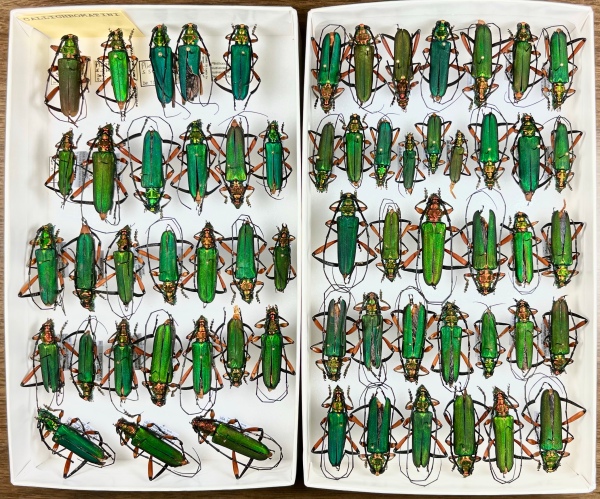


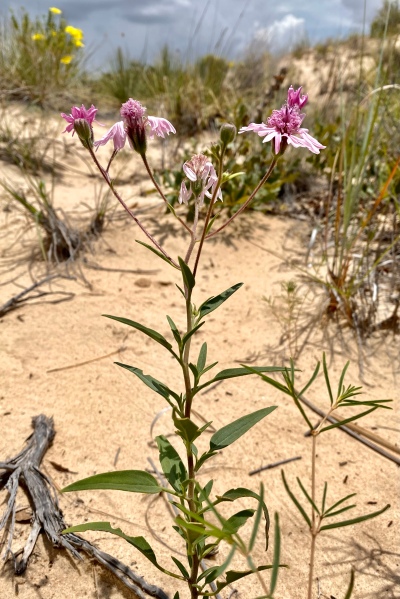


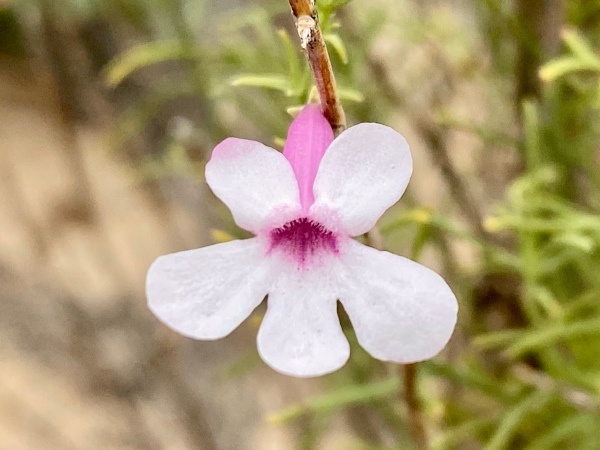
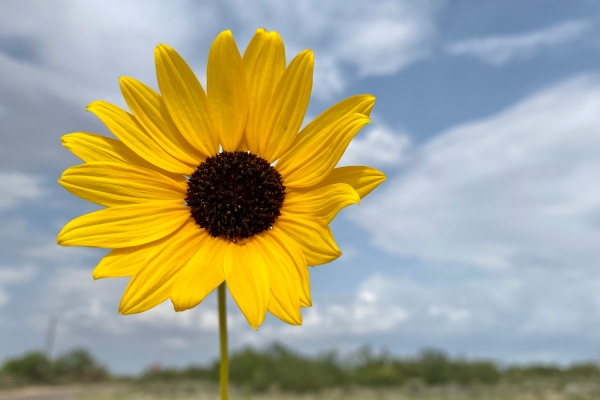
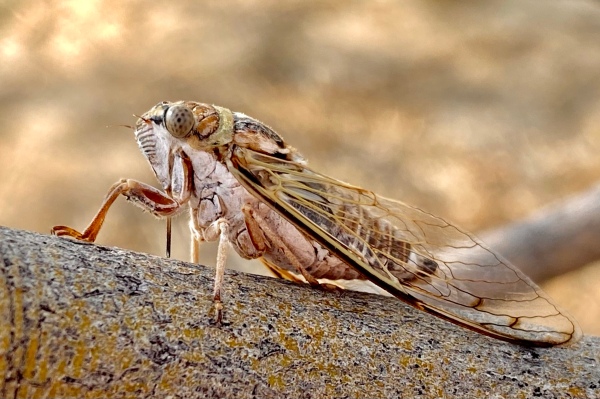


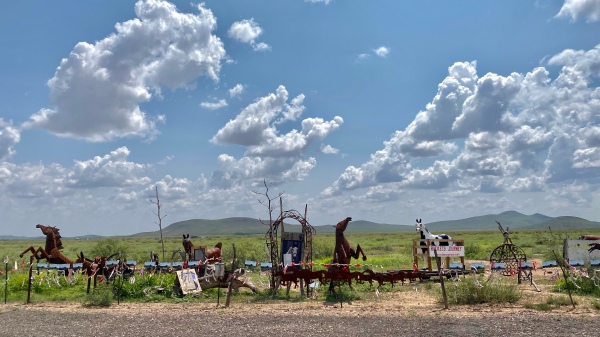


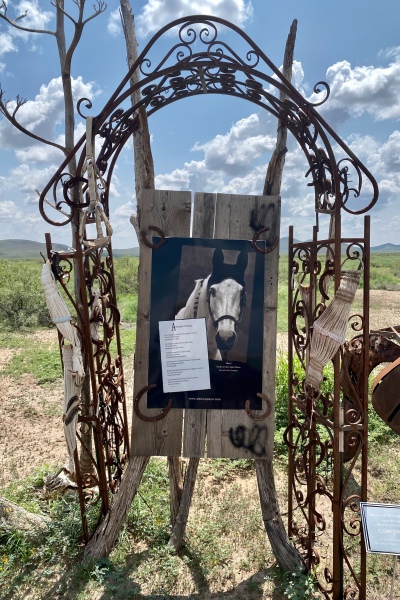


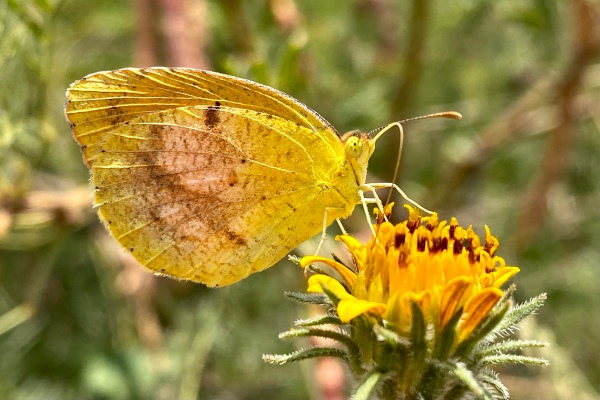


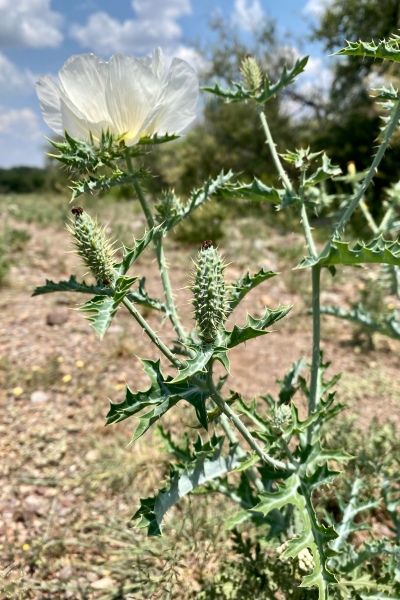

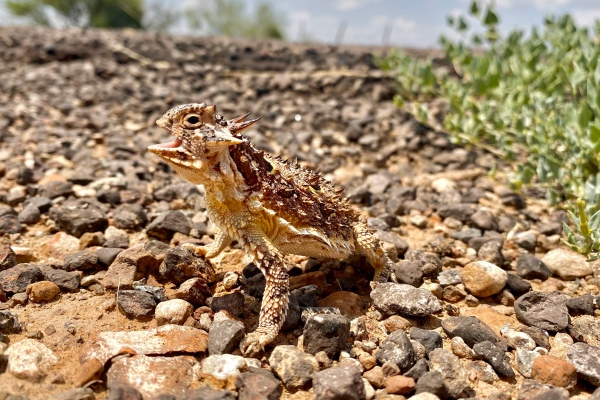
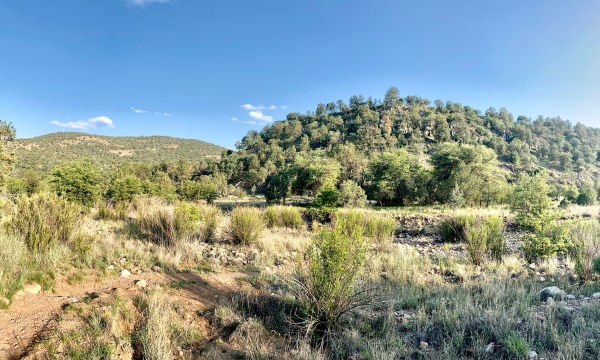
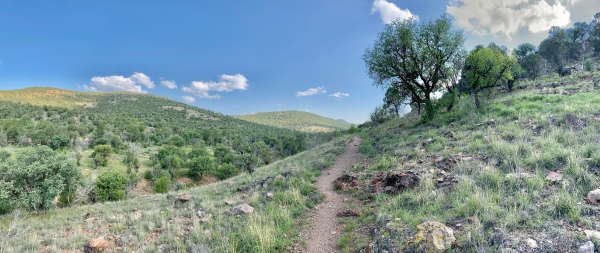
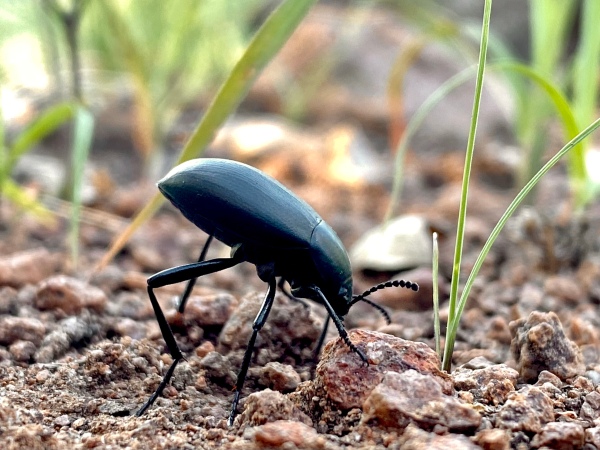
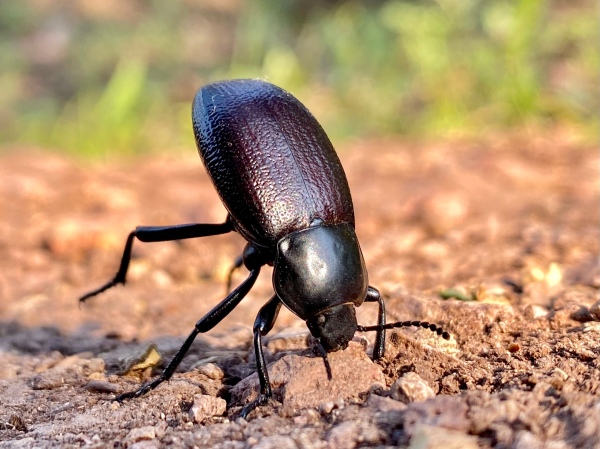
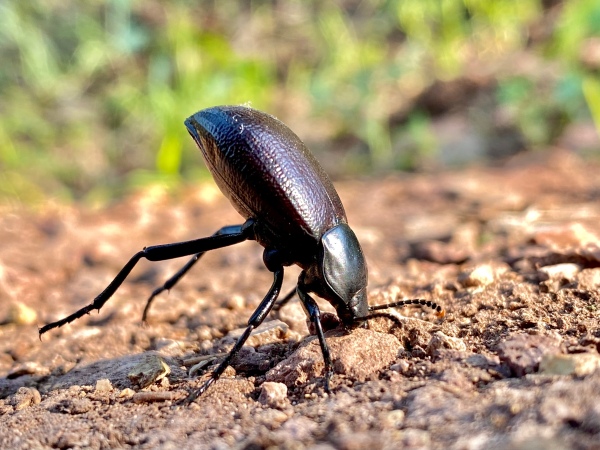


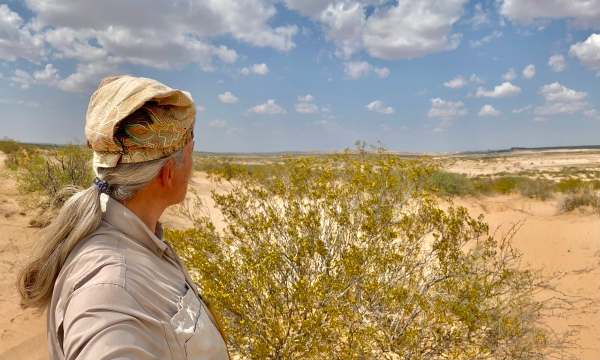
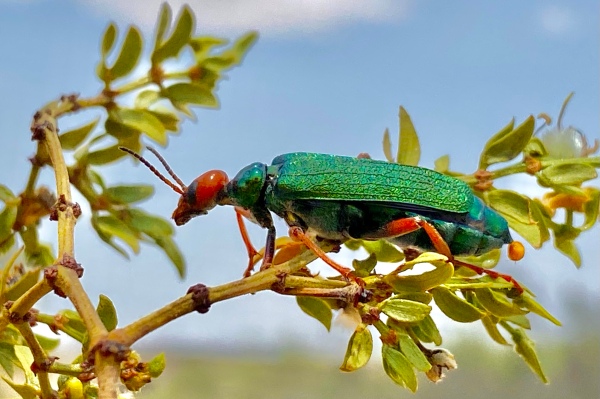

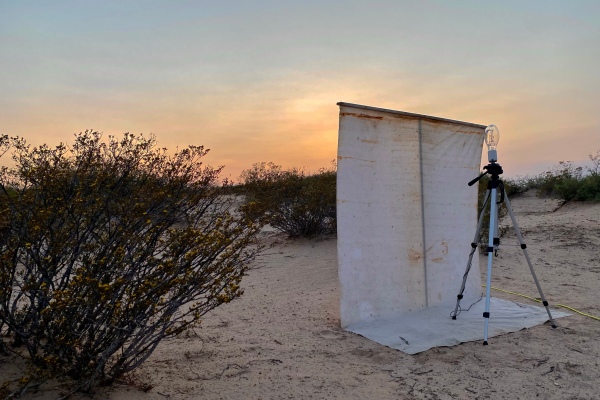


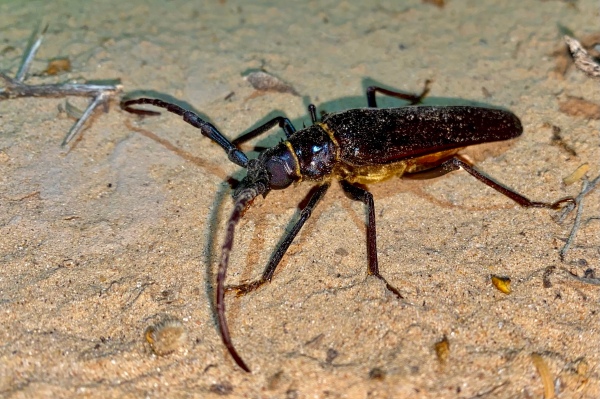


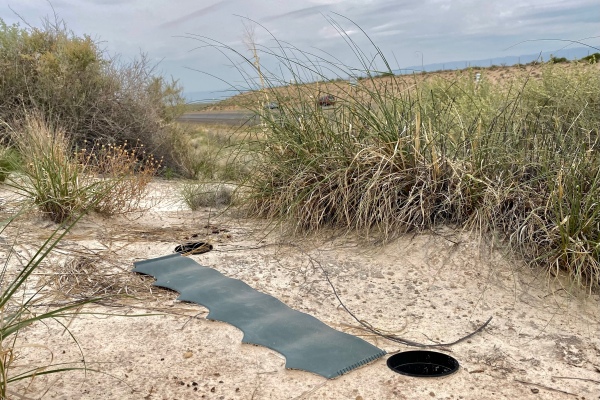



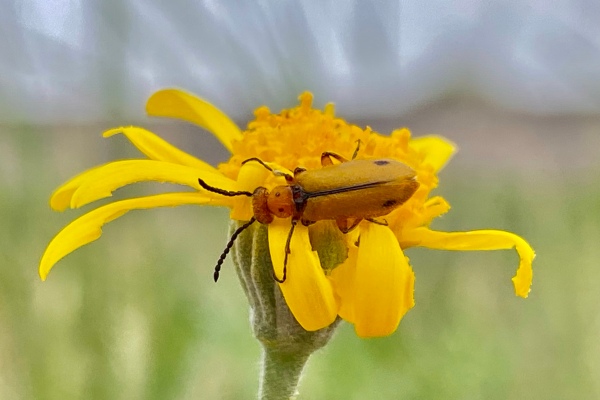


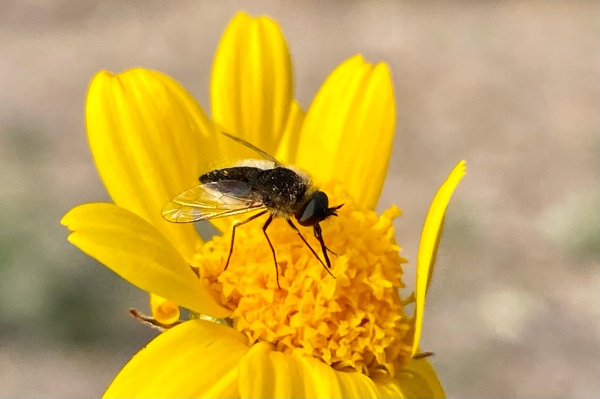
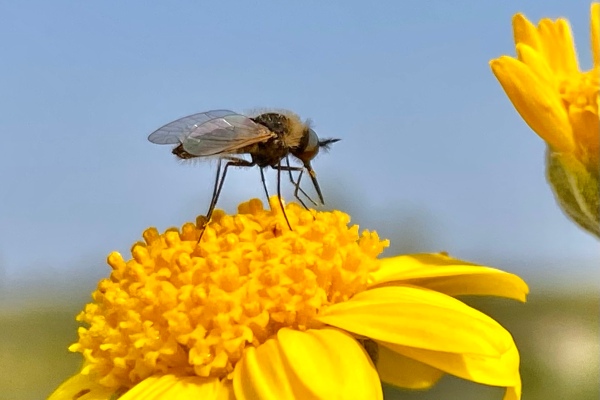
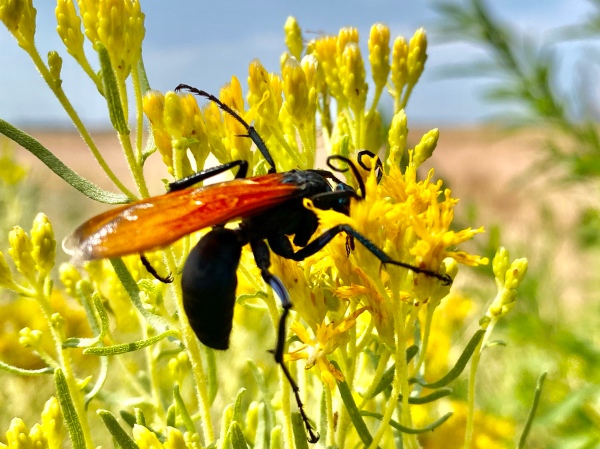
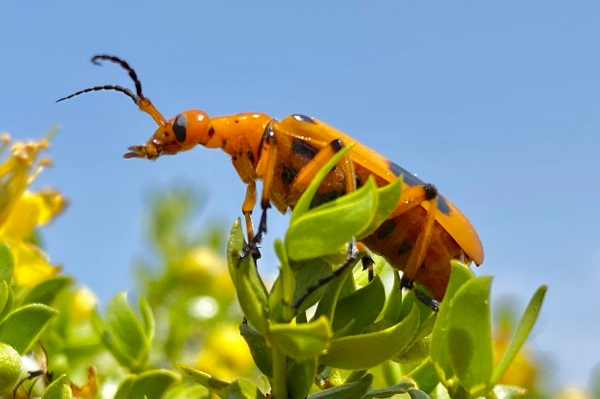
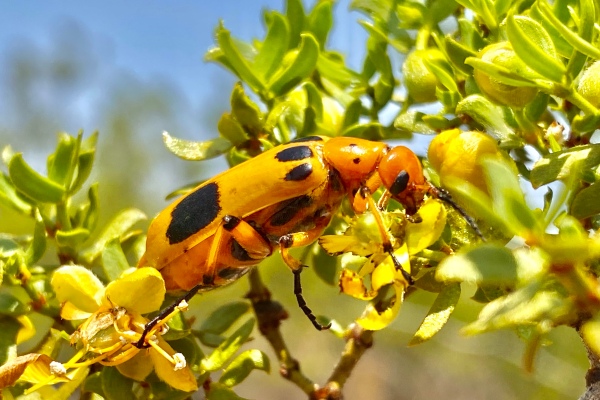


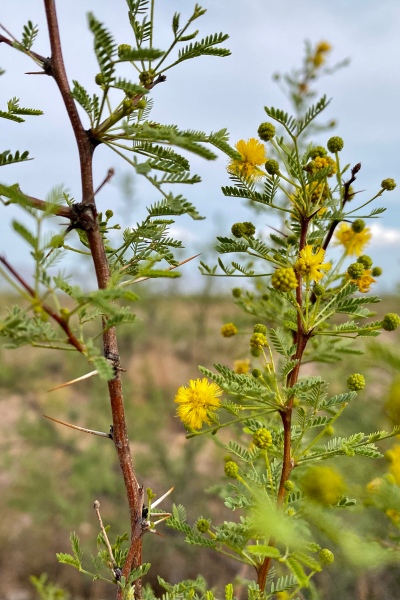
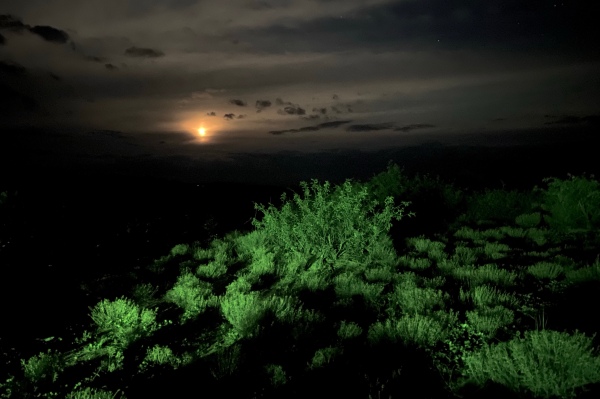


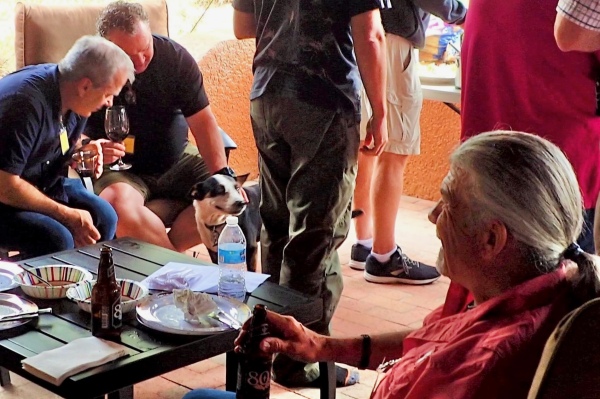


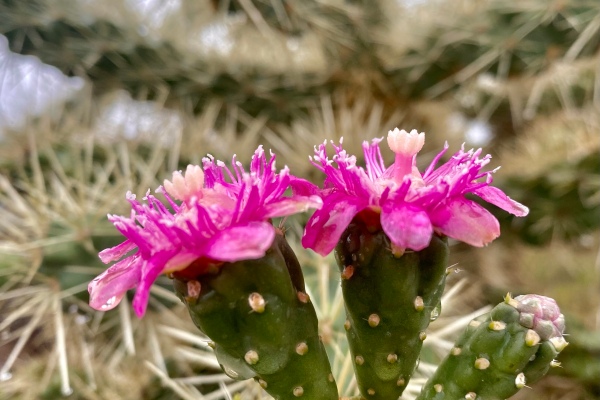
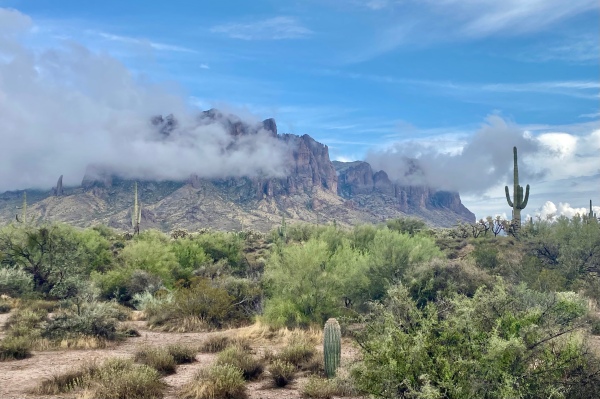
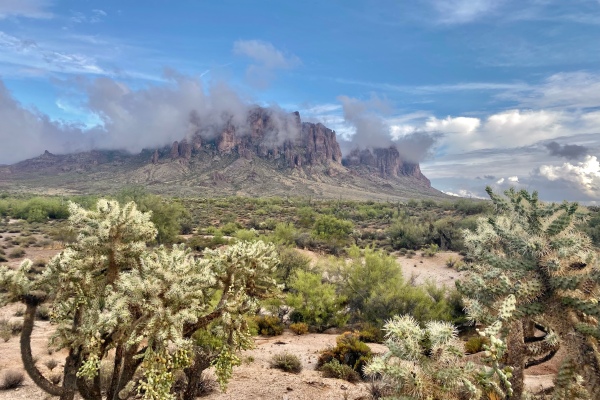
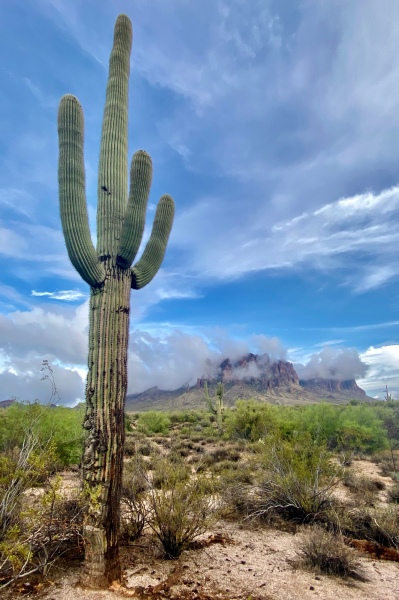


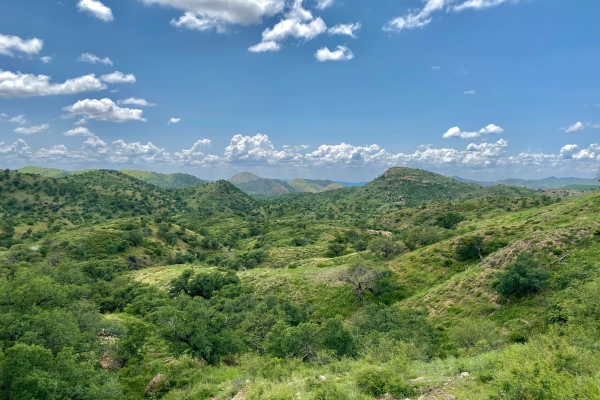

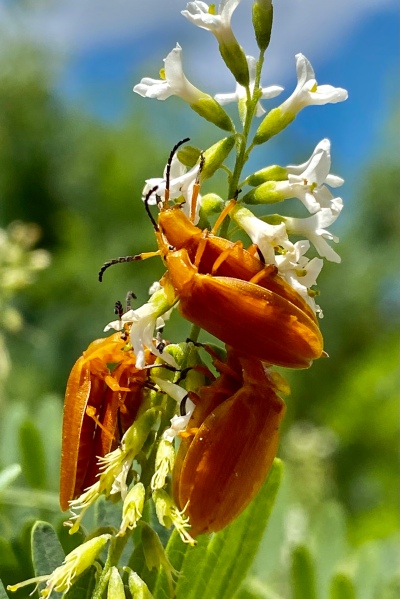


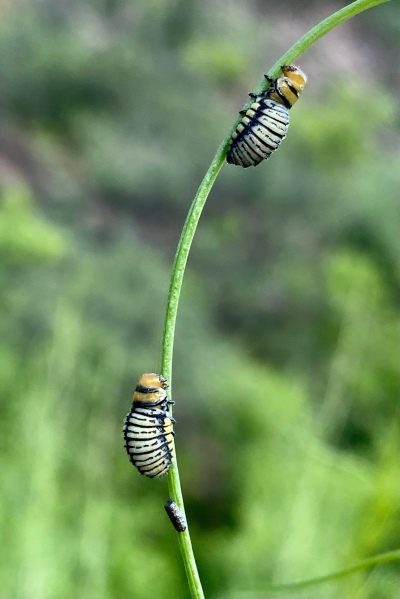


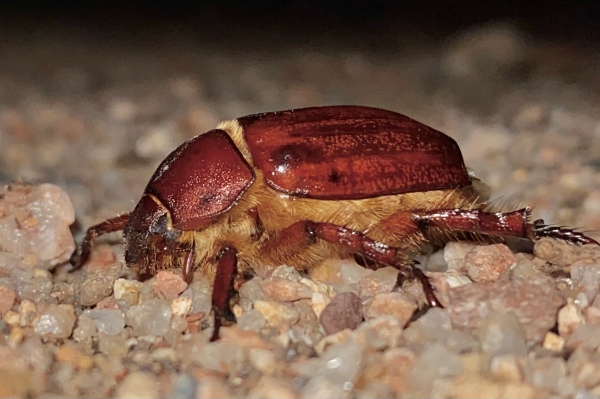

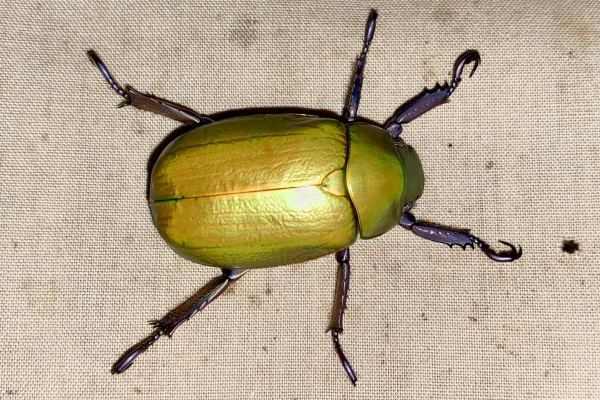
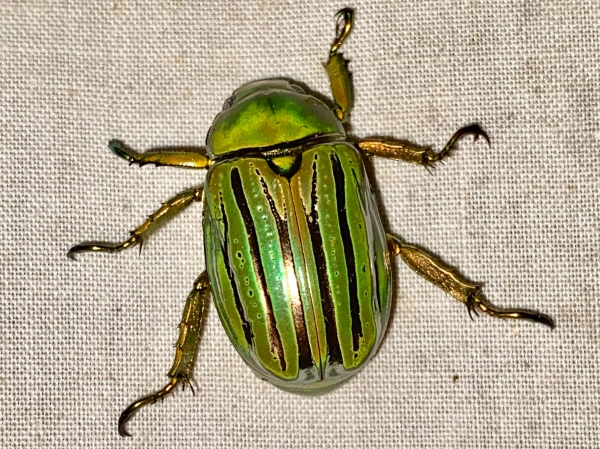
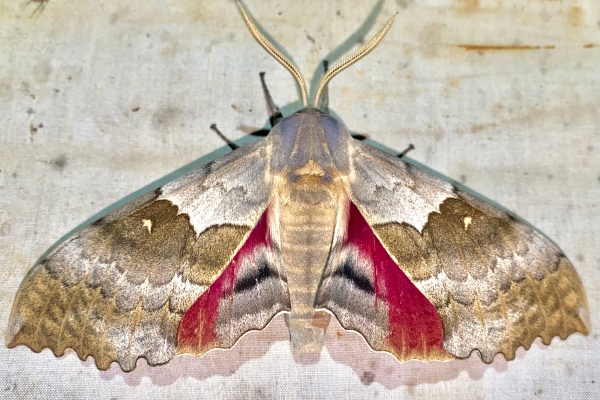
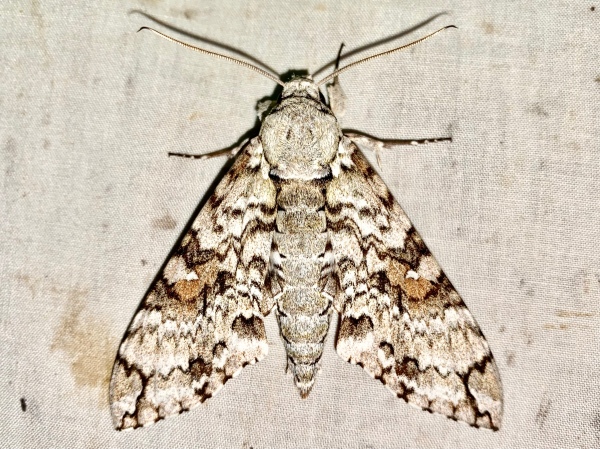
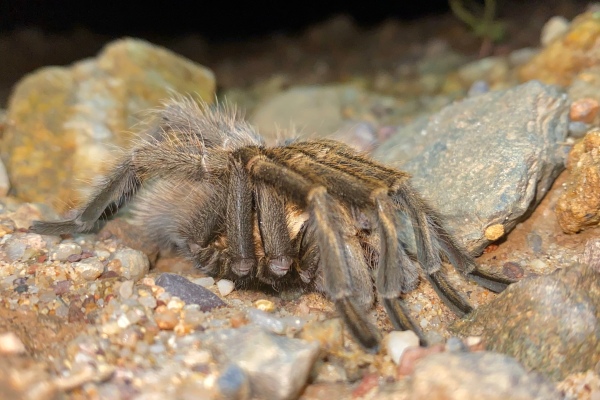
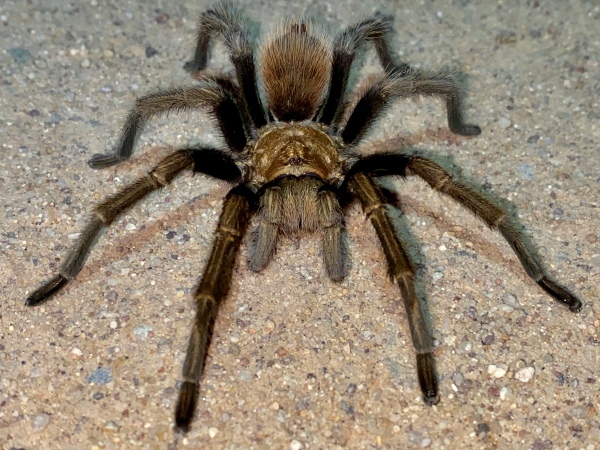

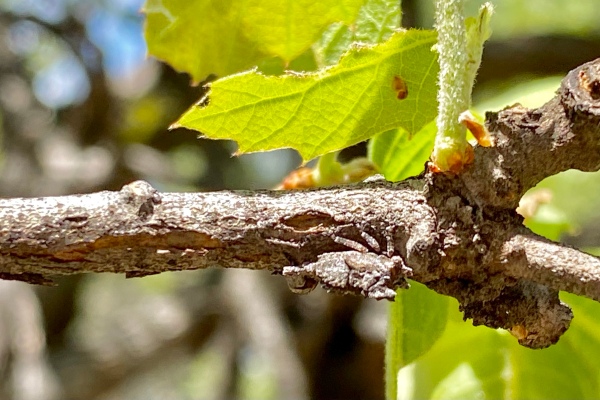

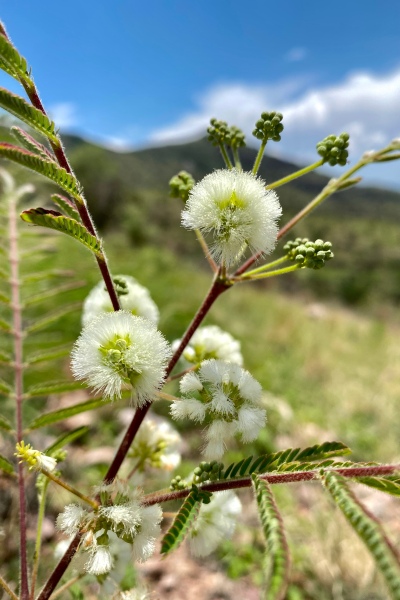

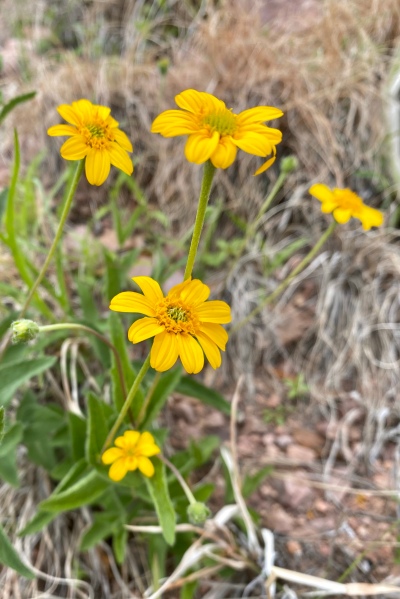
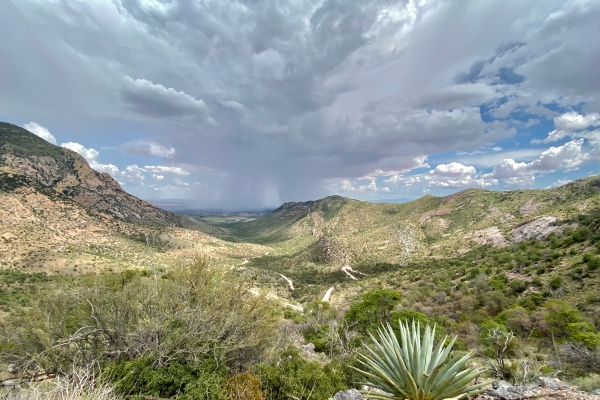
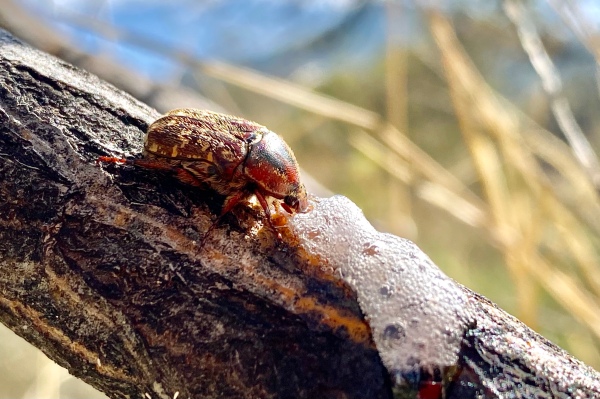
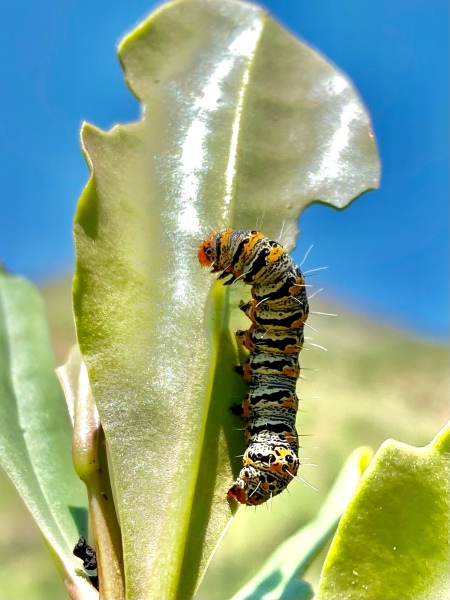

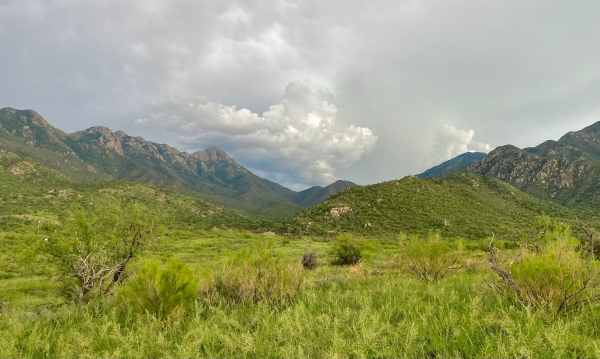
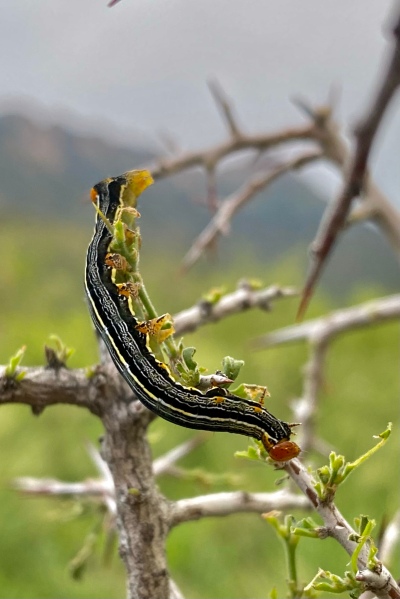
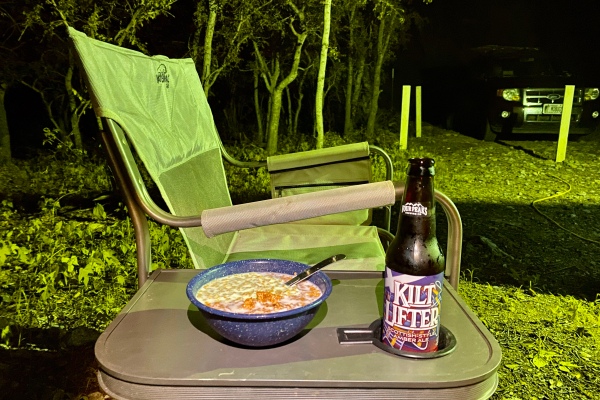
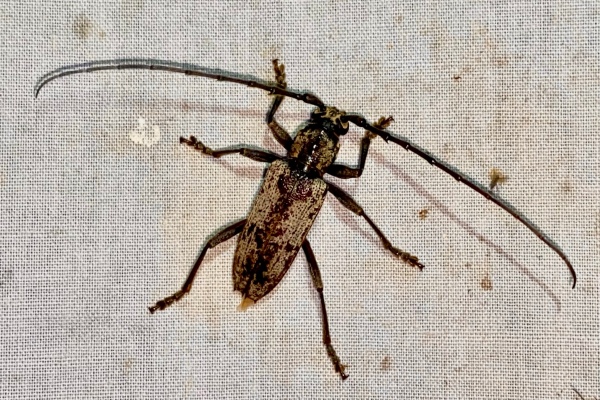
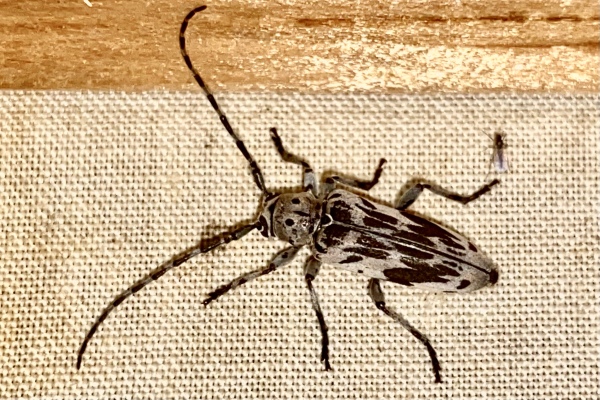
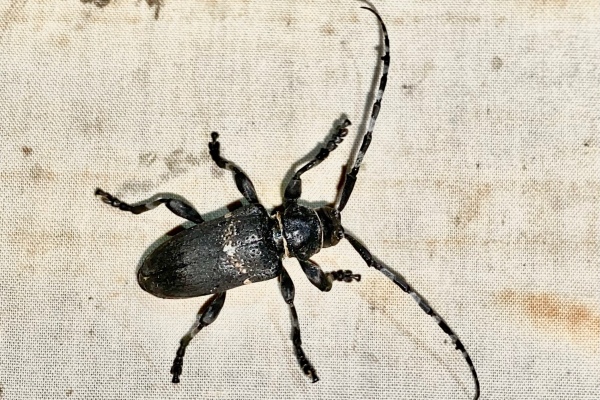

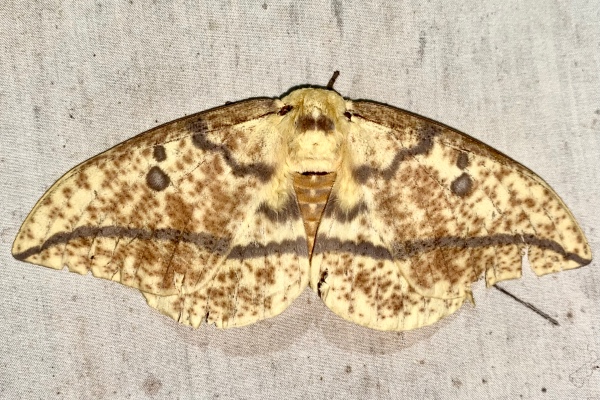

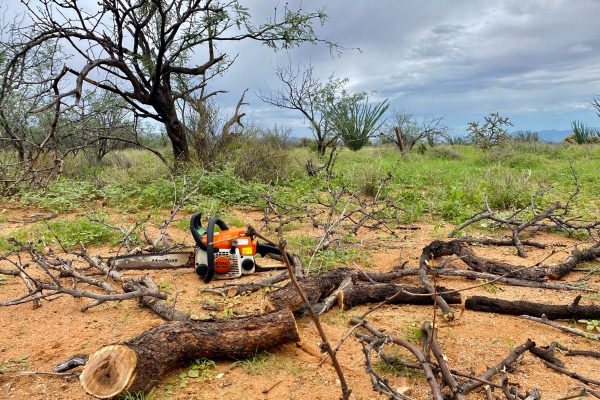


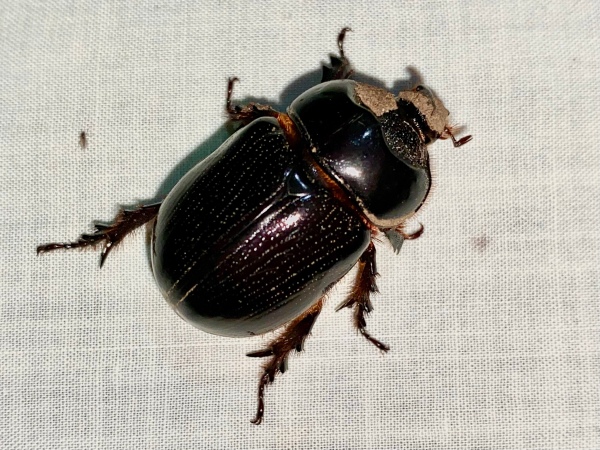


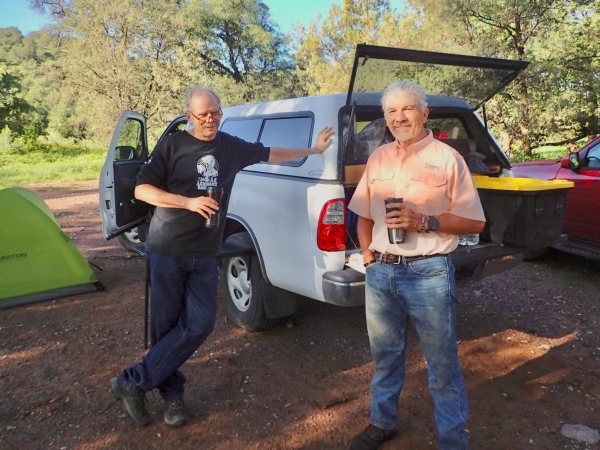
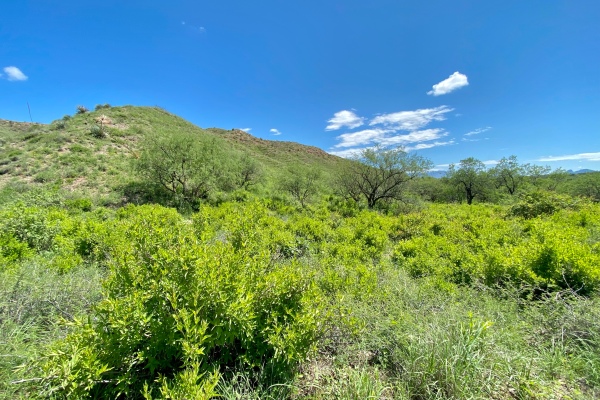
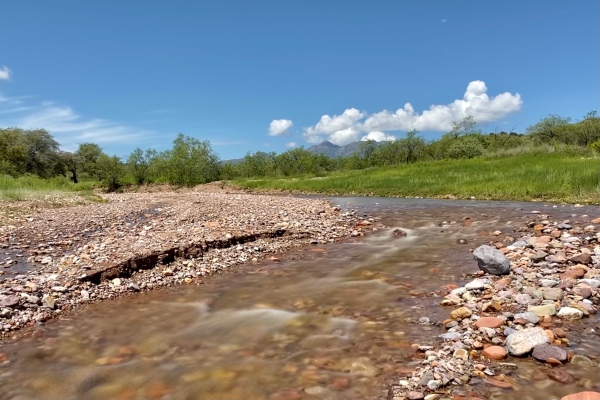
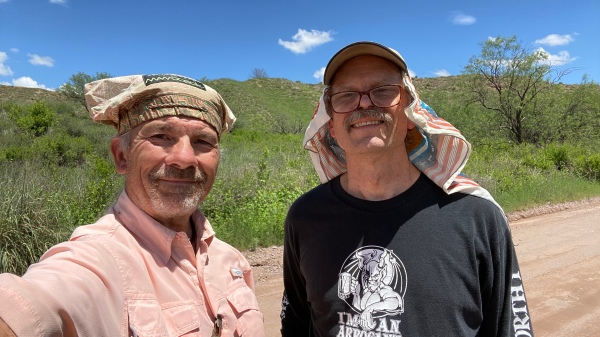


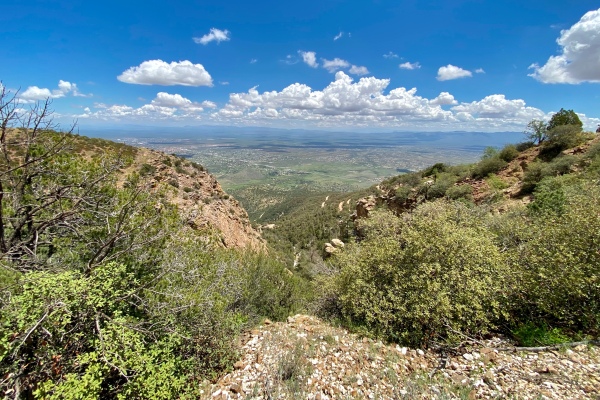
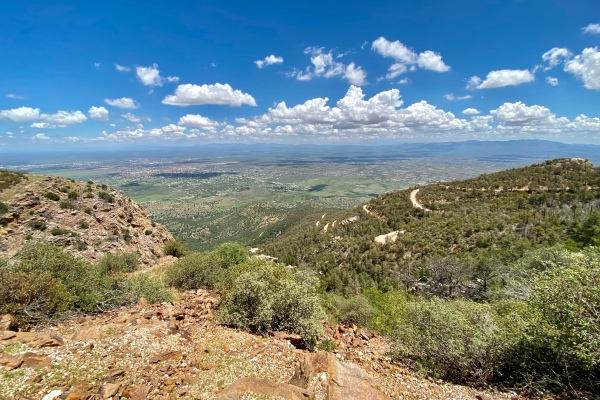
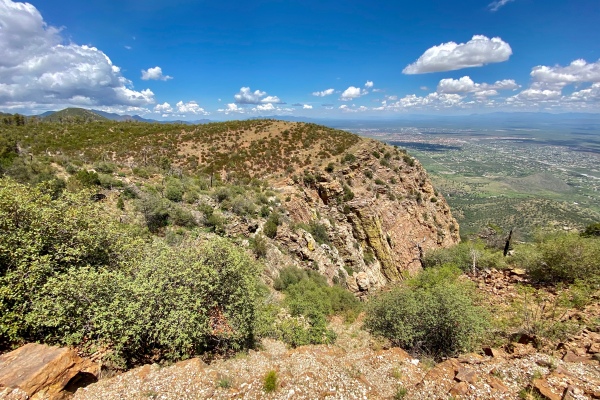
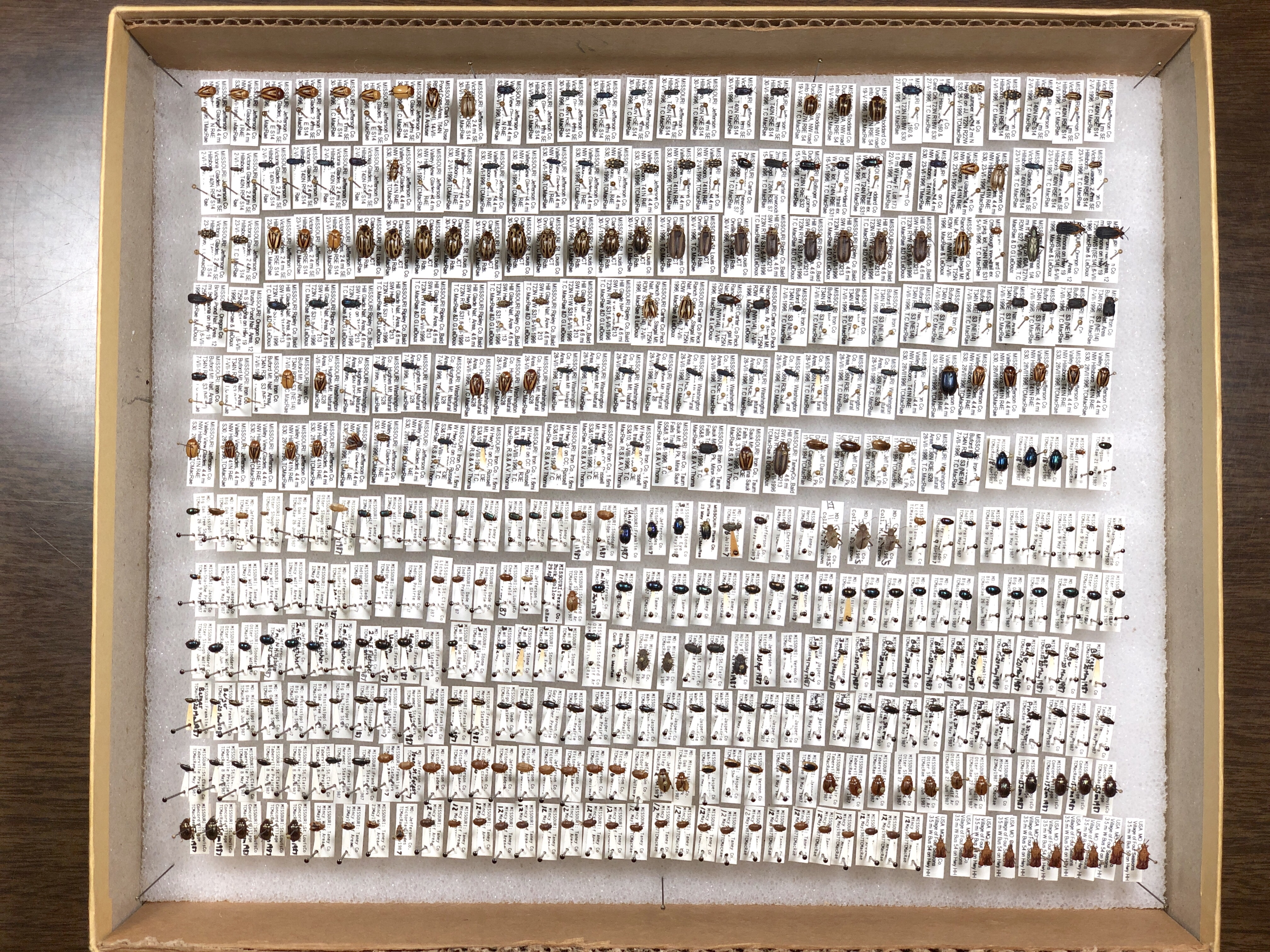
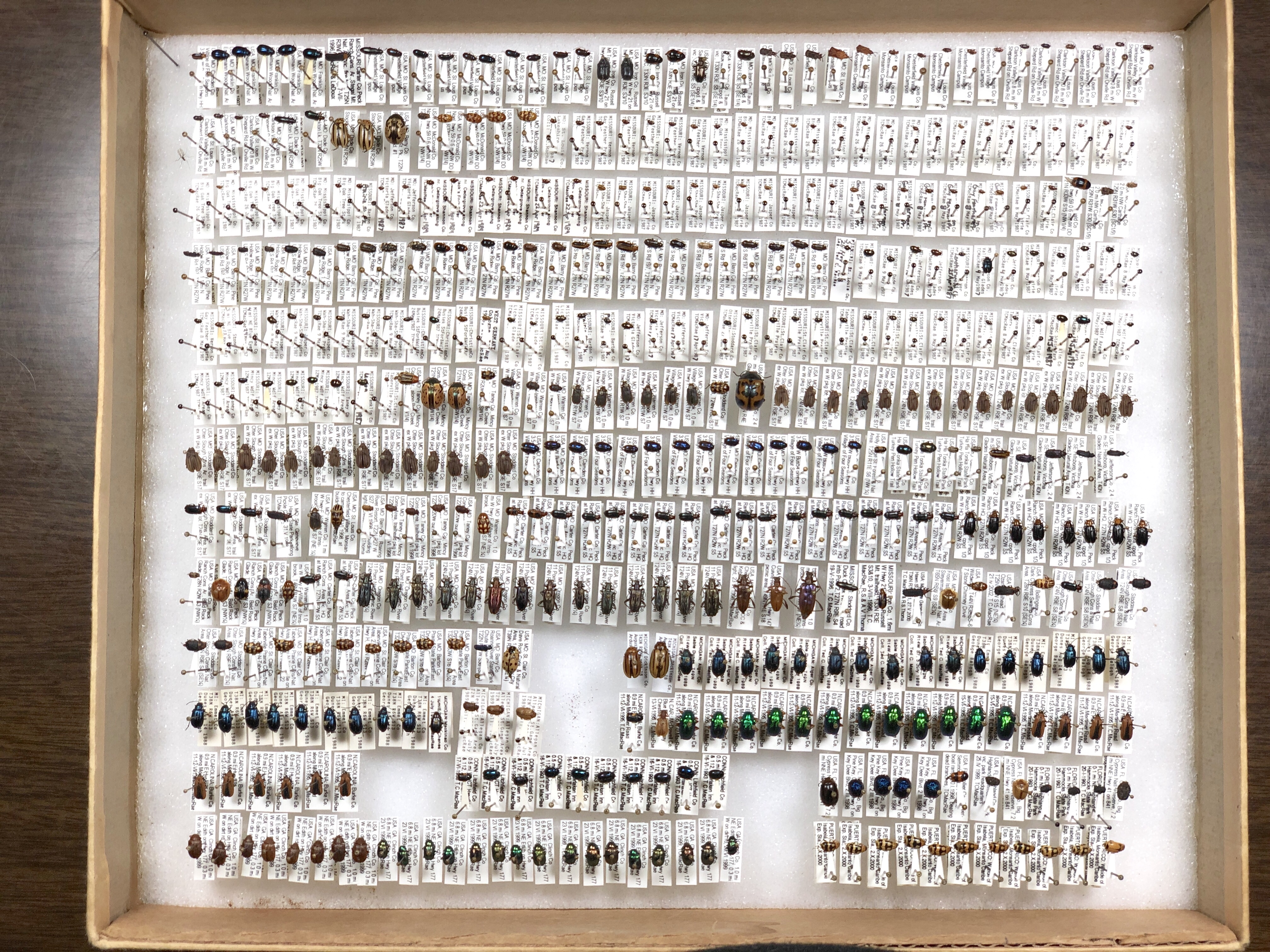
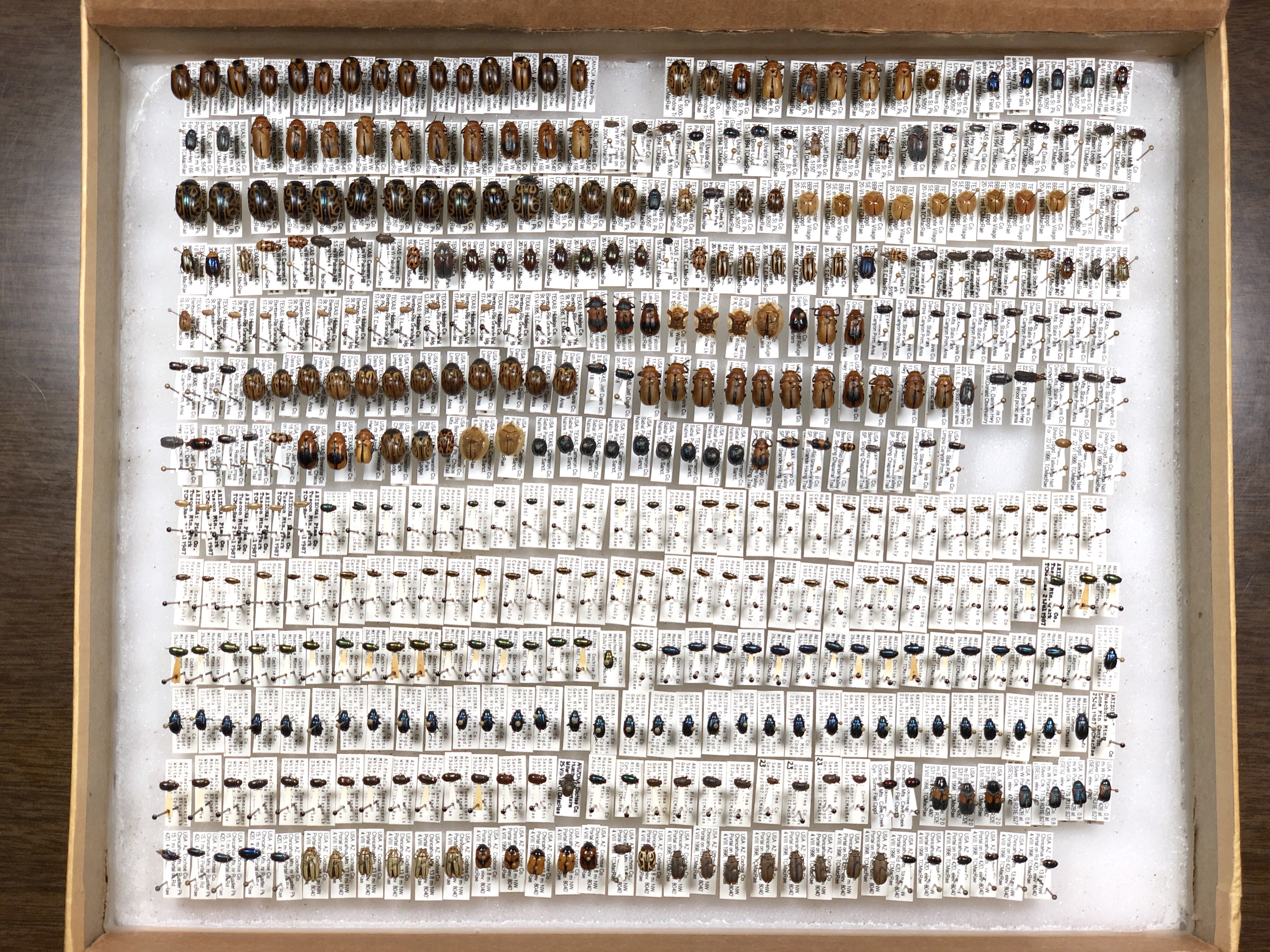
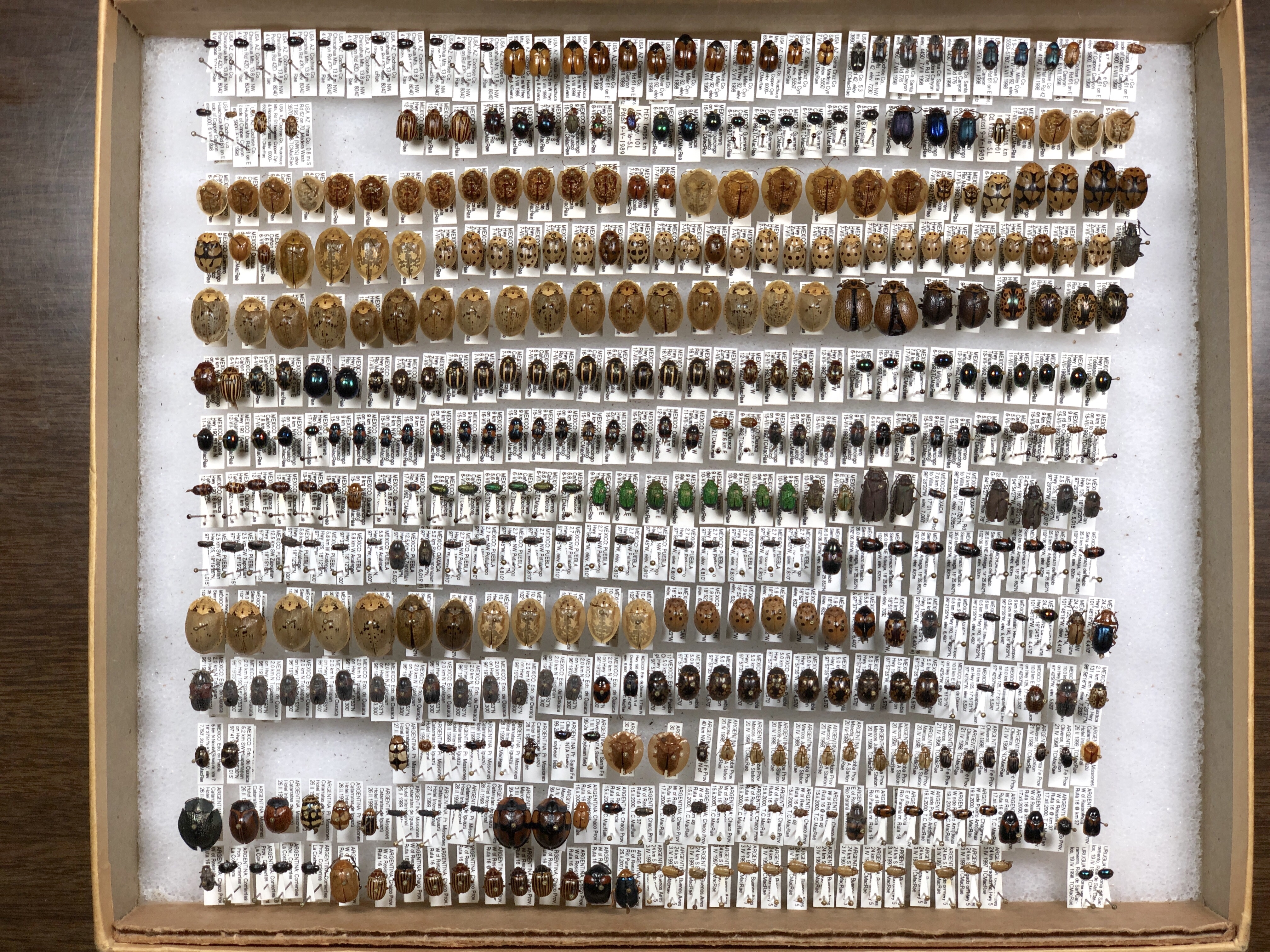
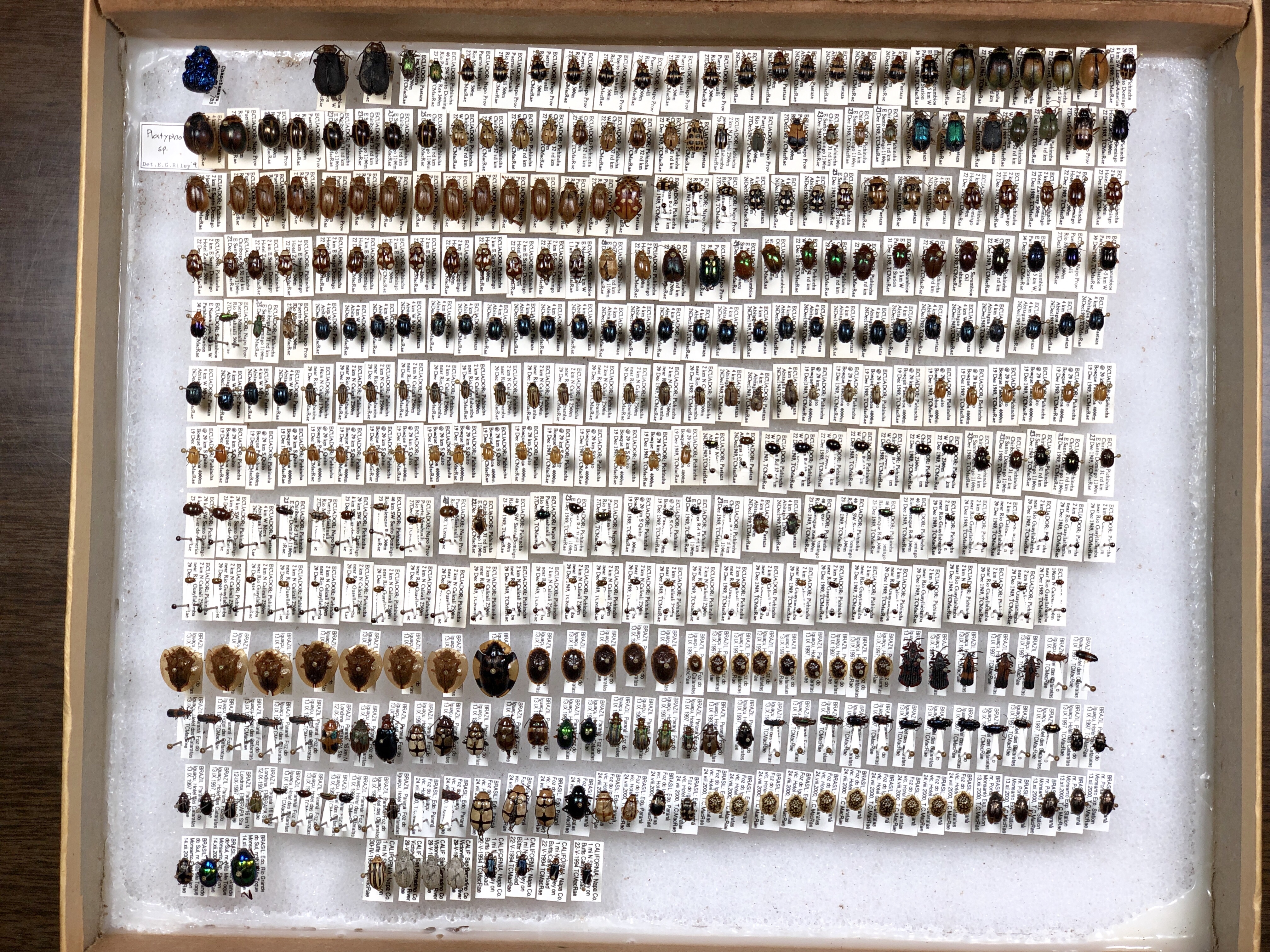


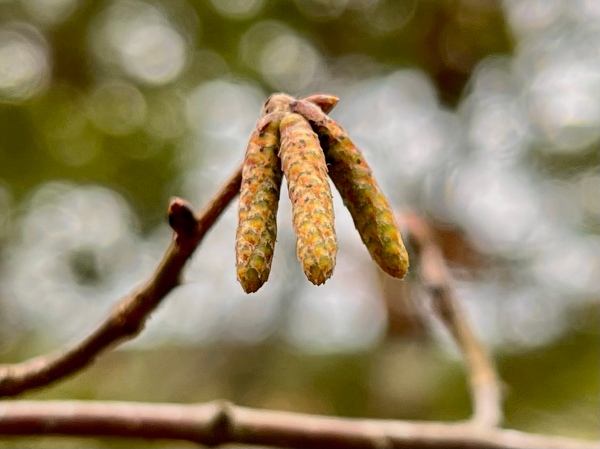

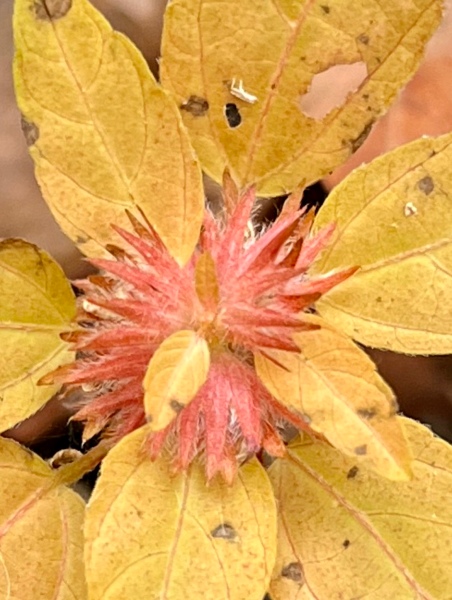

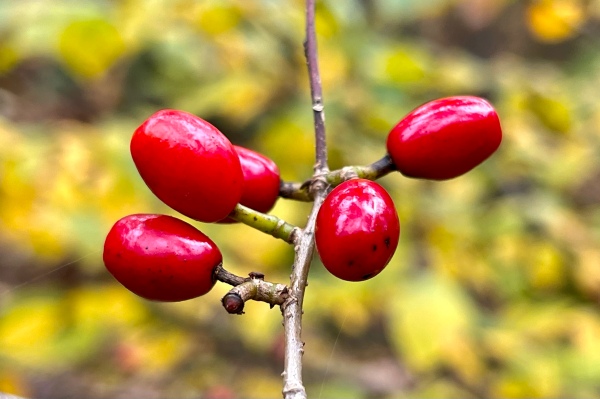

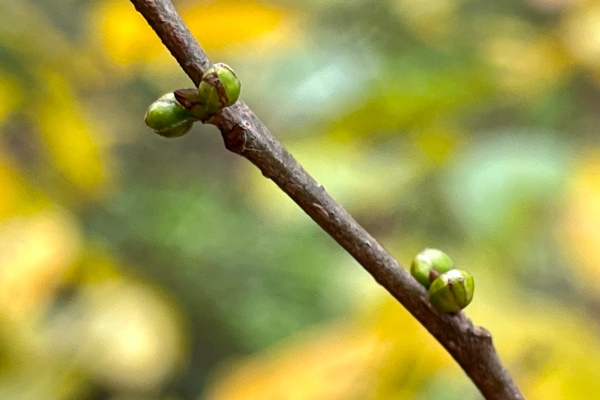
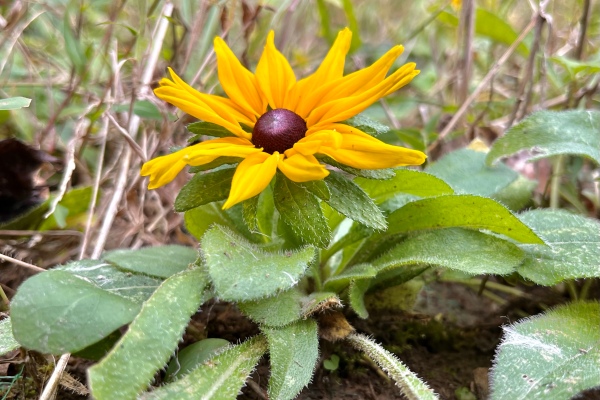

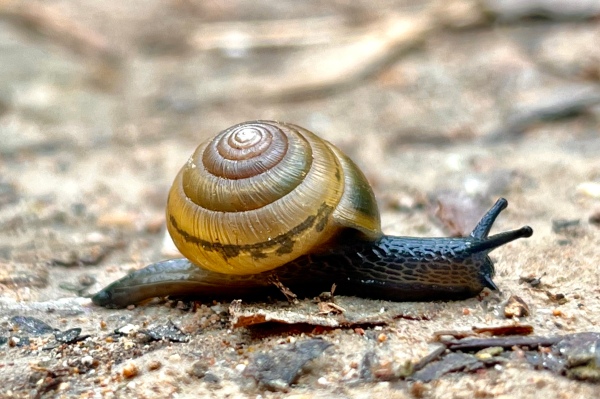

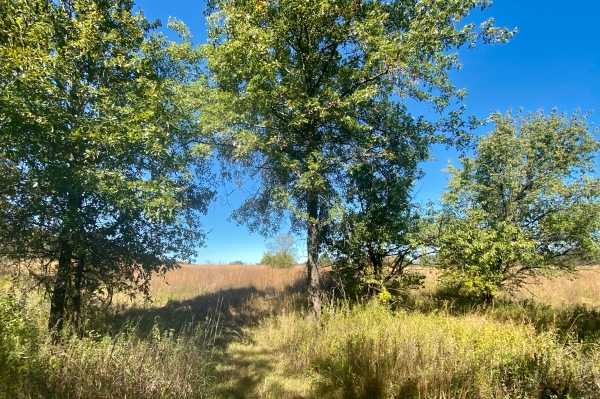
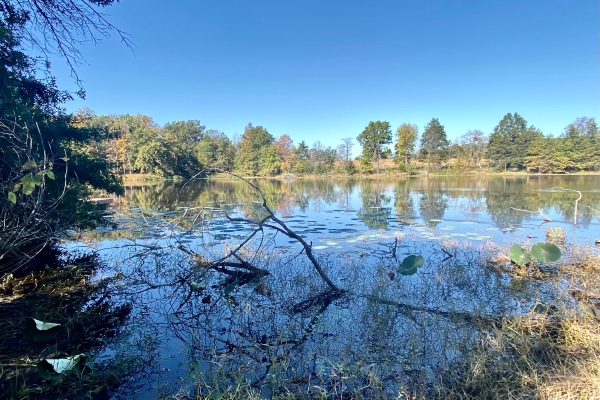
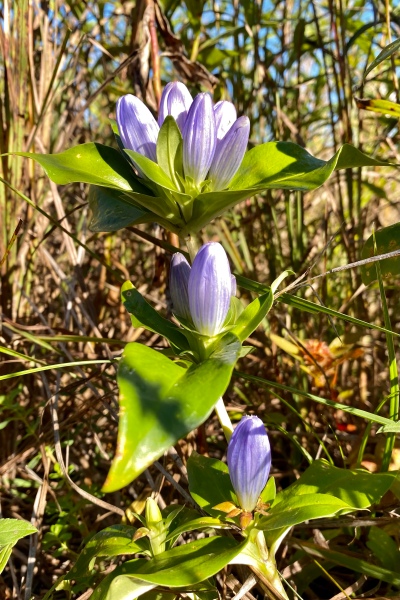
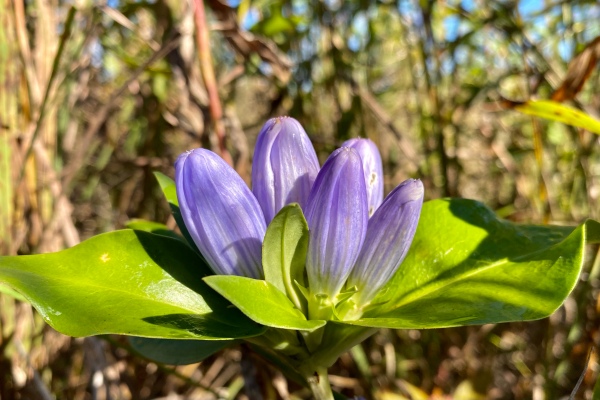
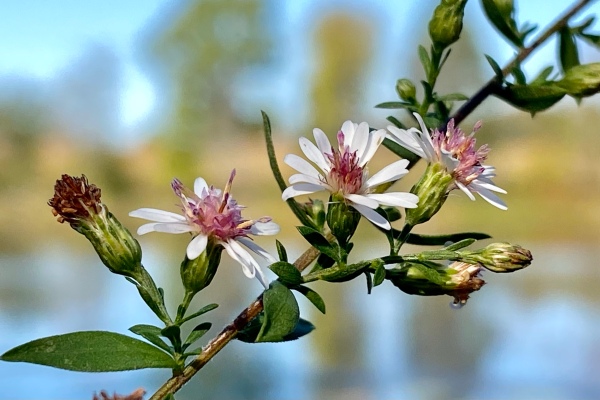
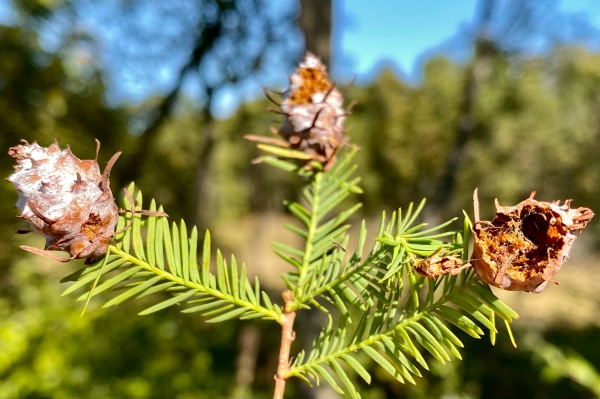
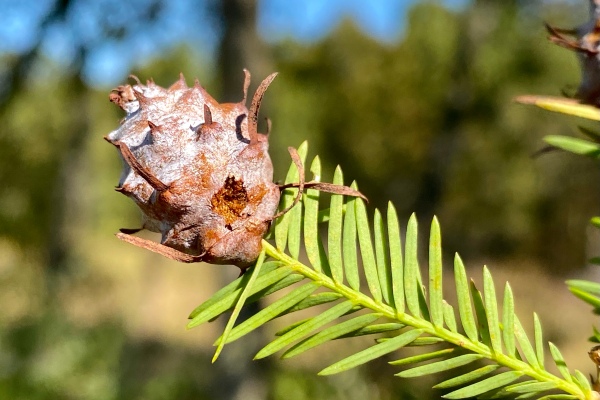

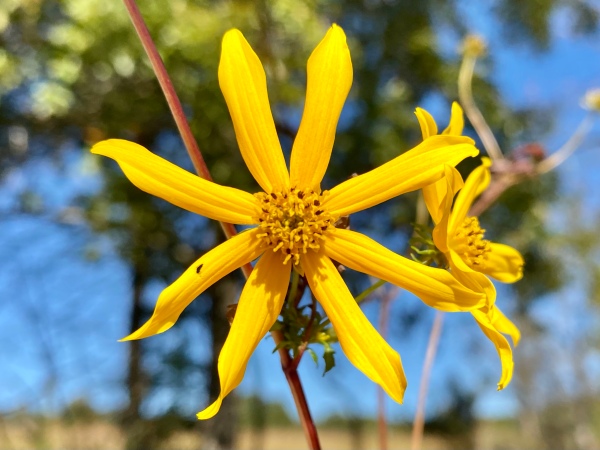
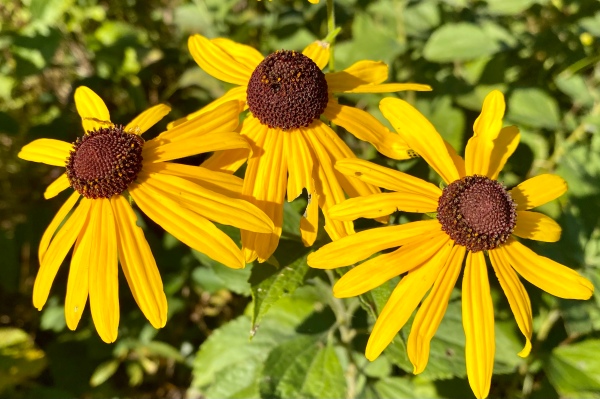
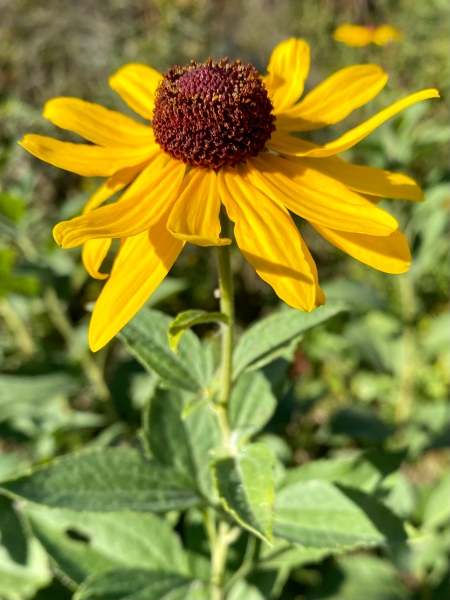
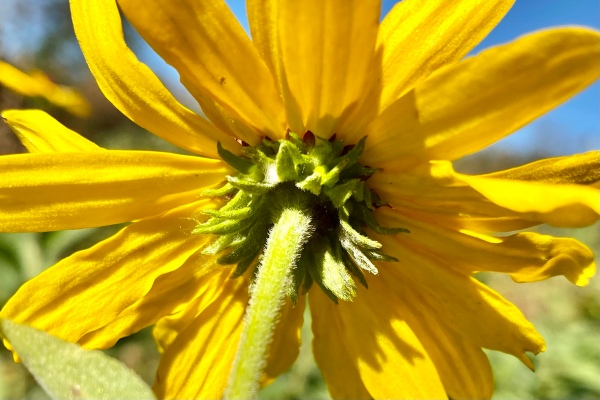
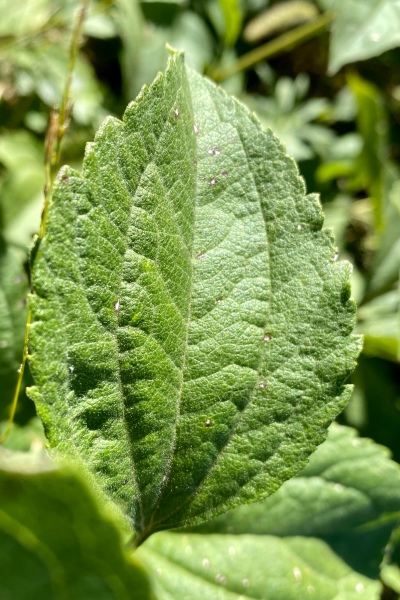
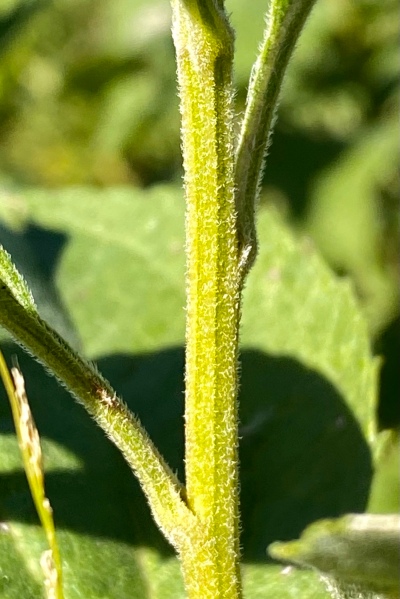
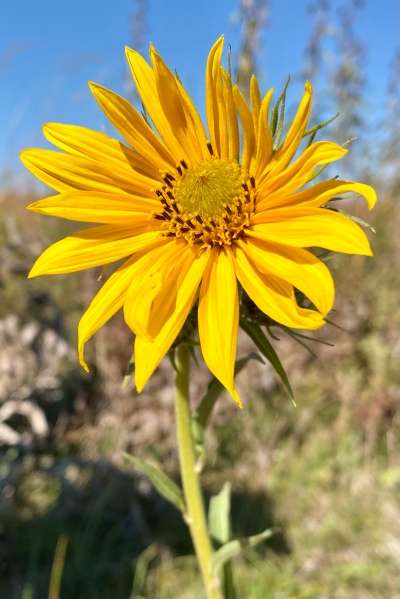

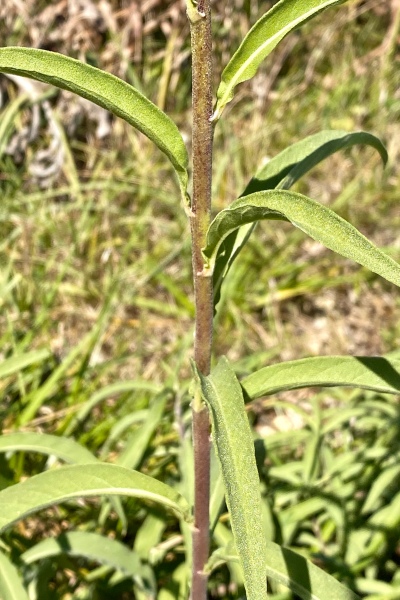


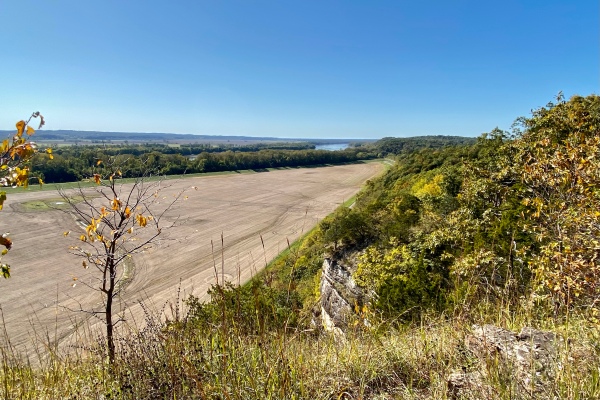
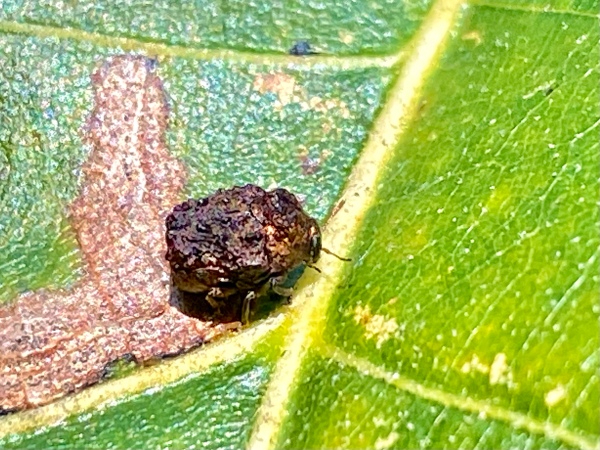
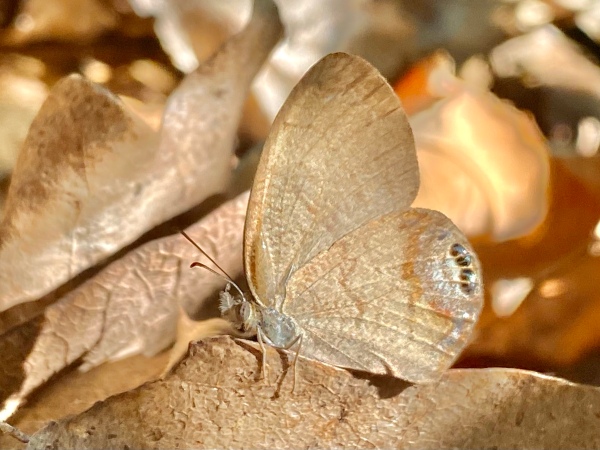
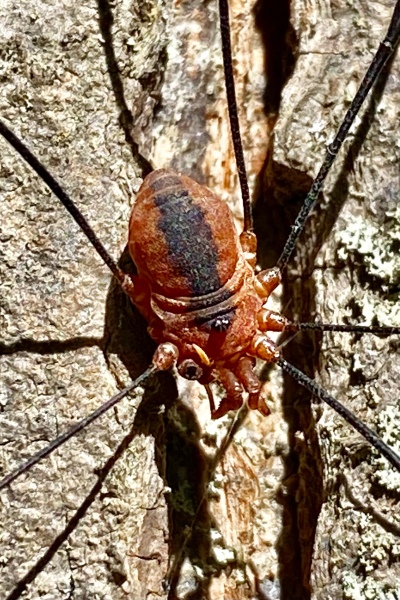
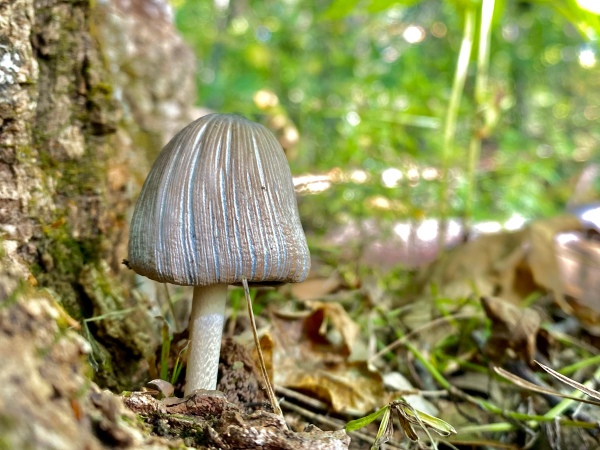
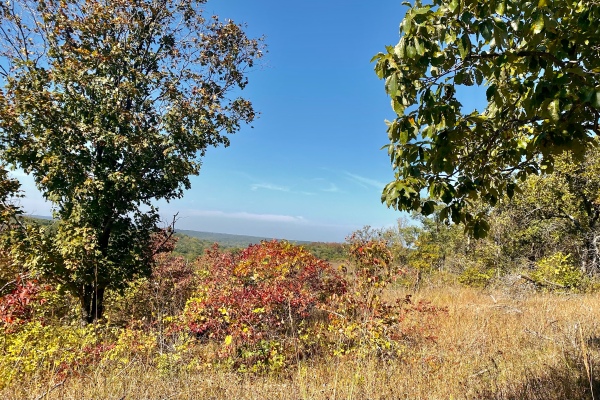
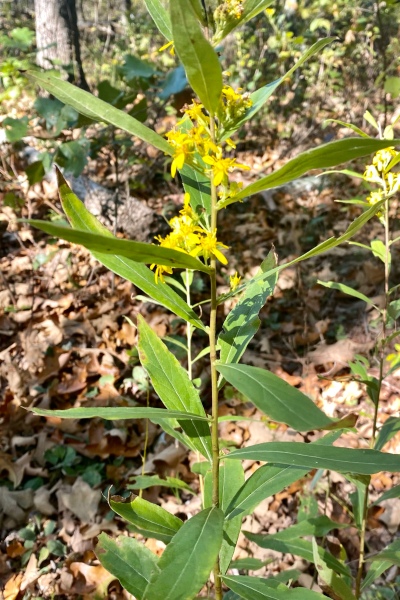

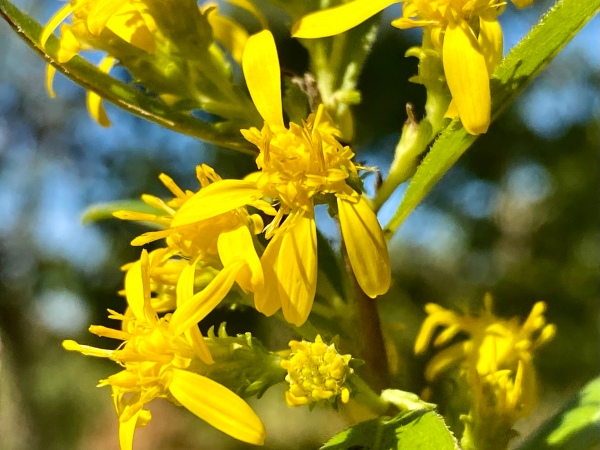
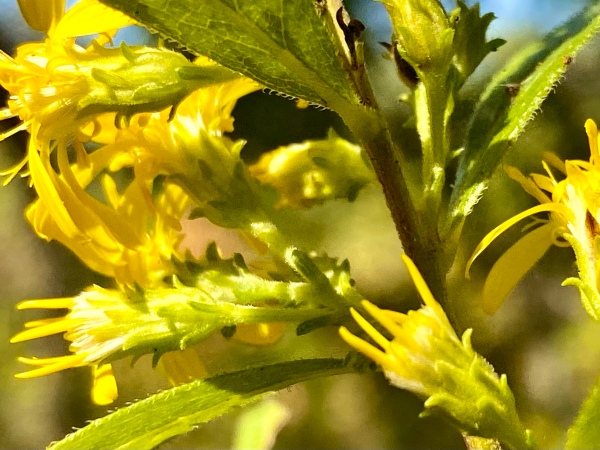
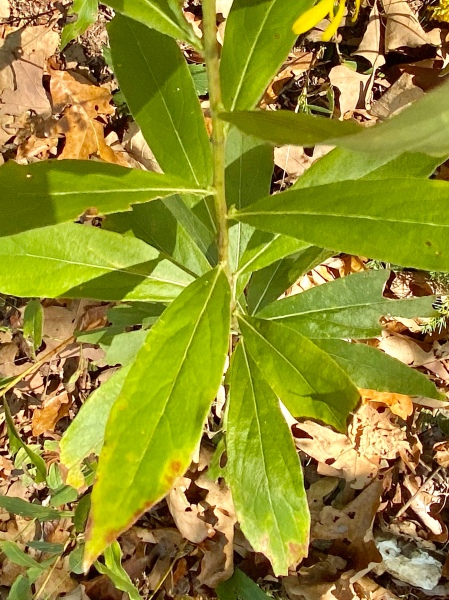
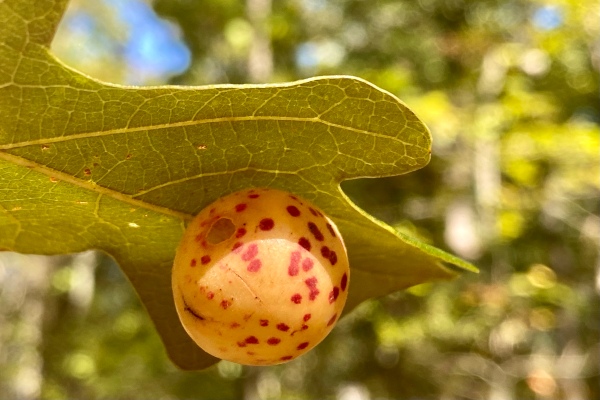

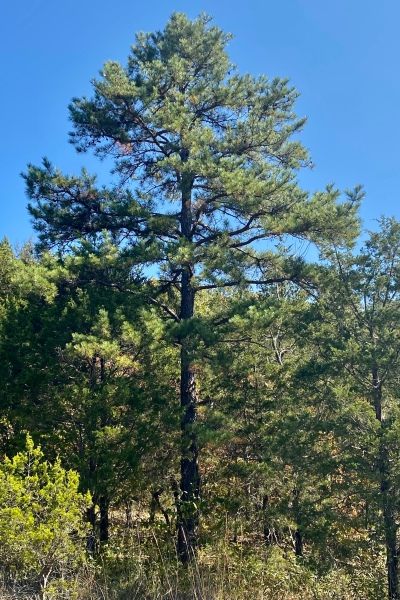

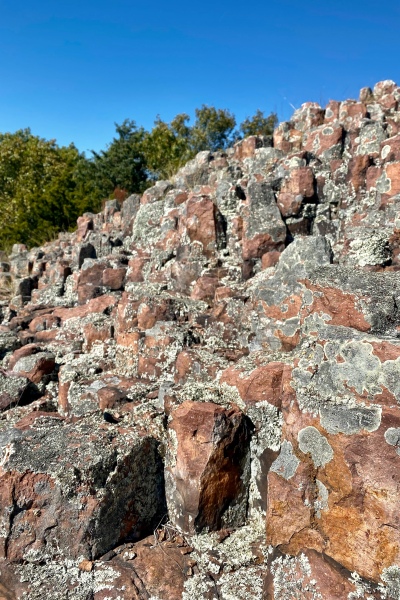

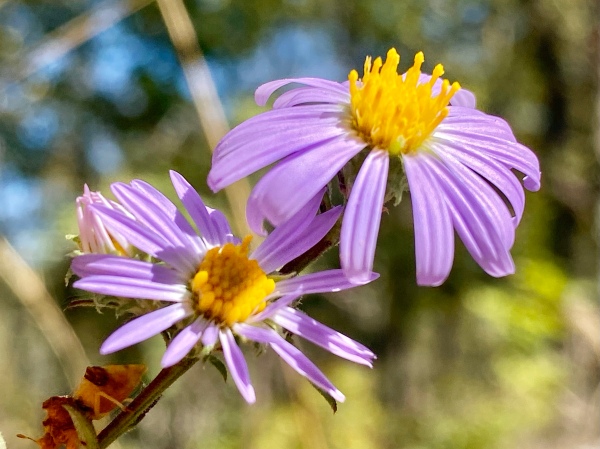
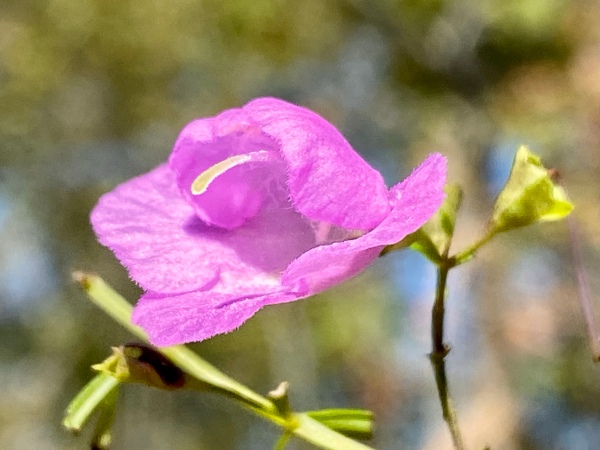
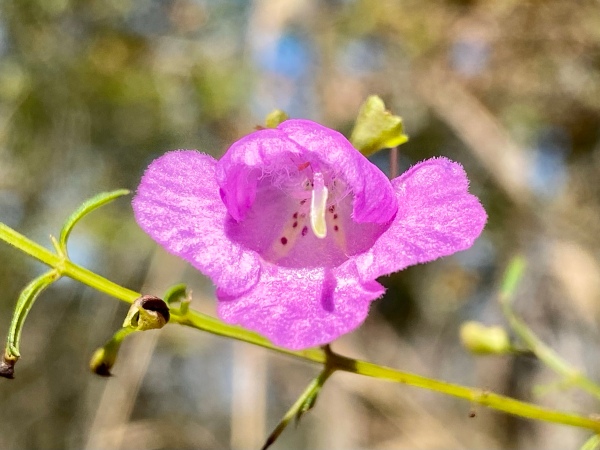
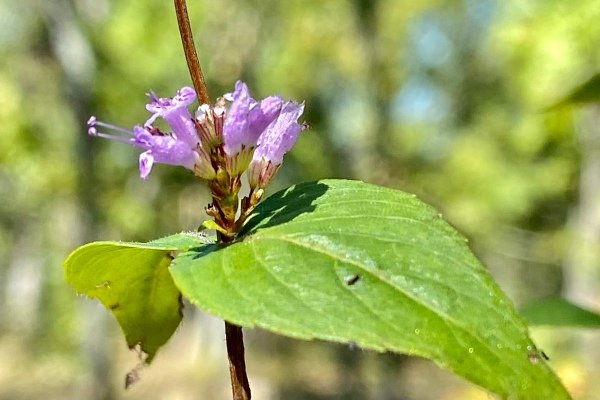
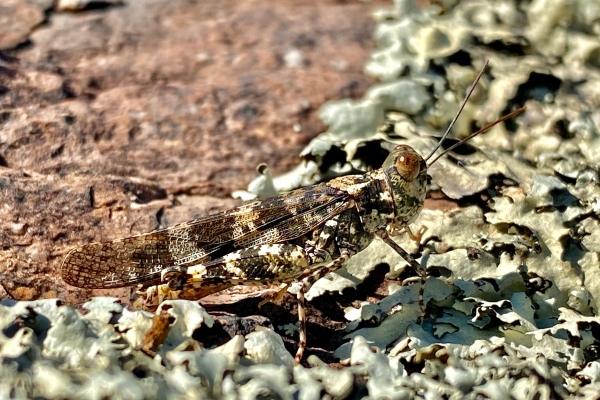
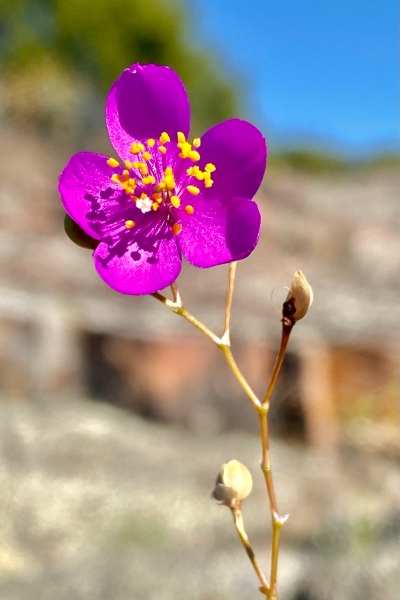
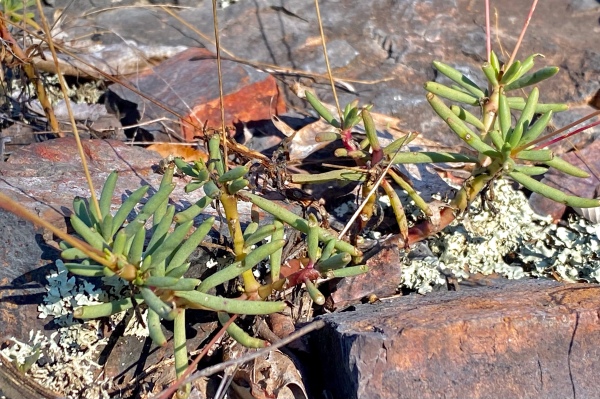

 Beetles In The Bush