ID Challenge #13 results and Session #4 final standings

Points have been tallied for ID Challenge #13 and its addendum.  Congratulations to Mr. Phidippus, who’s 16 pts edged out Roy (14 pts) and Ben Coulter (13 pts) for the win in IDC13.  Ben Coulter, however, stayed comfortably atop the overall standings in the final challenge of this 4th BitB Challenge Session, earning 78 pts along the way and thus reclaiming his overall championship.  Congratulations to him and also to Mr. Phidippus and Roy, who finish on the 2nd and 3rd steps of the overall podium.  An honorable mention goes to Tim Eisele, who was the only other participant besides our three podium finishers to score points in all six Session #4 challenges.

Complete standings are shown below, and Mr. Coulter, I owe you some loot!

Place Commentor IDC#10 SSC#8 SSC#9 IDC#11 IDC#12 IDC#13 Total
1 Ben Coulter 14 8 13 14 16 13 78
2 Mr. Phidippus 10 8 8 13 15 16 70
3 Roy 8 9 6 5 11 14 53
4 Tim Eisele 5 1 5 5 7 10 33
5 George Sims 2       12 7 21
6 Tracy Morman 3       15   18
  Morgan Jackson   11 7       18
8 Doug Taron         17   17
  Jon Q 4       7 6 17
10 Mike Baker     4 3 6 3 16
11 HBG Dave   9   2   4 15
12 Dave Hubble 12         2 14
13 Troy Bartlett   6   7     13
14 FlaPack 10           10
  Charley Eiseman 4         6 10
16 Matt Brust 9           9
  Bill Meyers         9   9
18 James Trager        6   2 8
19 Crystal Ernst 1     6     7
  itsybitsybeetle         7   7
21 Alex Wild       6     6
  Lee Jaszlics       6     6
23 Traci 5           5
  Laurie Knight   1     4   5
25 Adrian Thysse         4   4
26           2 2
27 Johnson Sau       1     1

Copyright © Ted C. MacRae 2011

ID Challenge #13 – Addendum

I hope you’ll forgive this inordinately extended challenge—I’m taking a little bit of a breather from my normally frenetic working/writing/editing schedule to enjoy a most unexpected baseball post-season.  I will be going through the comments left for ID Challenge #13 and releasing them shortly with awarded points, and without saying precisely what the scene in that challenge showed I will say that several participants correctly identified it as a sand dune habitat shaped by wind and dotted with tiger beetle burrows.  Since this is the last challenge of BitB Challenge Session #4, I thought I would extend it a little further and give people one more shot at scoring points on this challenge before the Session #4 standings are finalized and the winner announced.  The photo in this post shows the culprit responsible for the holes in the earlier photo—can you name it?  Of course, we all know it’s a tiger beetle (don’t we?), so genus and species will be fine and are worth 4 points each (if following the most recent classification).  As always, standard challenge rules apply, and I will be continuing the moderated comments during this extended challenge period.  I promise not to let another week pass before posting the full story.

 Copyright © Ted C. MacRae 2011
ID Challenge #13

For this final challenge of Session #4 we have something a little different—explain the scene shown in the photo below. Your answer can be as short and concise or long and narrative as you wish—points will be awarded subjectively depending on how closely your explanation agrees with reality. Standard challenge rules apply, including moderated comments during the challenge period (you don’t have to be first to score points), early-bird points to those who do arrive at the correct answer before others, etc., and as always, creativity and humor are encouraged. C’mon—we’re all natural historians here, aren’t we? Let’s hear some natural history!

Explain the scene in this photo.

Copyright © Ted C. MacRae 2011

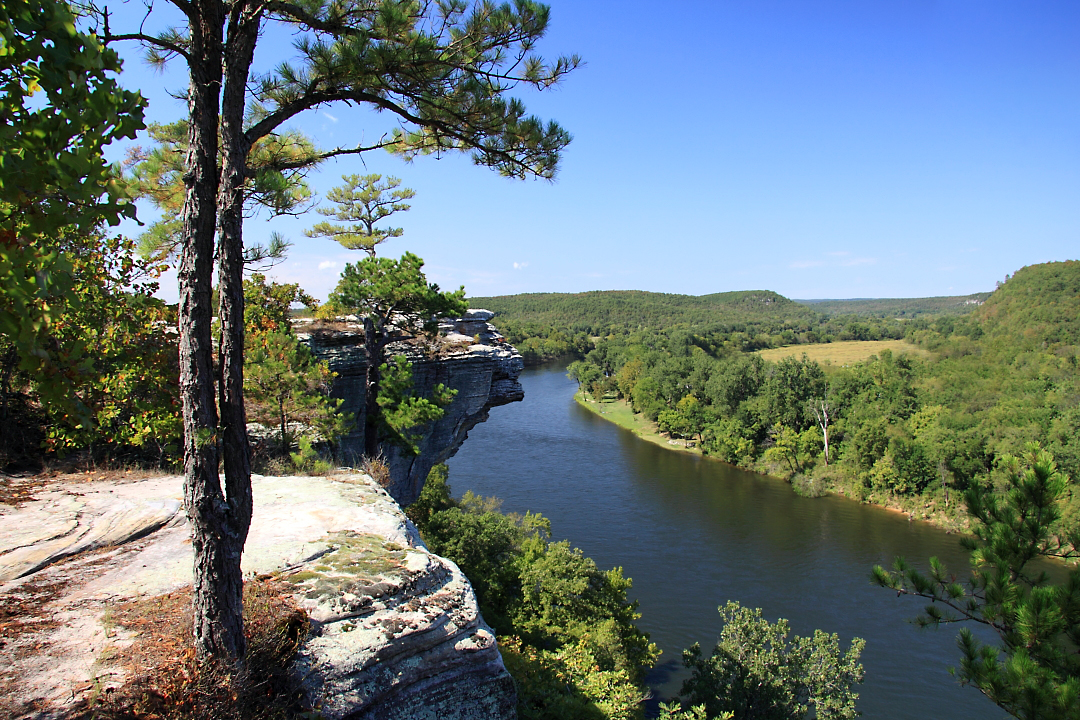
Ozark Landscapes – White River in northern Arkansas

White River near Calico Rock, Arkansas

One of my favorite insect collecting sites is a system of sandstone glades in the White River Hills of north-central Arkansas. Overlooking the White River as it courses past the quaint little town of Calico Rock, the glades atop these towering bluffs host a rich diversity of insects—some attracted from the surrounding woodlands, others restricted only to the glades. I had not visited the area before this year but went there five times this season—twice in June, once in July, once in August, and once in September.  Of the many insect species I found here this season, some of the more interesting include:

Copyright © Ted C. MacRae 2011

ID Challenge #12

This should be a relatively easy ID Challenge compared to previous editions—2 points each for the correct order, family, genus, species, and subspecies.  Additional points will be awarded on a discretionary basis for relevant natural history comments.  Standard challenge rules apply, including moderated comments during the challenge period (you don’t have to be first to score points), early-bird points to those who do arrive at the correct answer before others, etc.  Ben Coulter maintains a commanding lead in BitB Challenge Session #4, but with this and one more challenges left in the current session is his lead secure?

Copyright © Ted C. MacRae 2011

My Canon 8X Macro Lens

For the past few months I have started routinely using extension tubes with my 100mm macro lens for photographing tiger beetles. I do this primarily because for most tiger beetles and other insects in the smallish to medium-sized range I need the capability to go both above and below 1X magnification, meaning that I must constantly switch between my Canon 100mm lens (1X maximum) and MP-E 65mm lens (1X minimum). With a full extension tube set (68mm), my 100mm macro lens effectively becomes a 0.7–2.0X macro lens, a nice range of magnifications for most of the photographs that I take. There is a secondary benefit to this in that the subject-to-lens distance is decreased somewhat, allowing me to get the MT-24EX flash heads closer to the subject for better lighting.

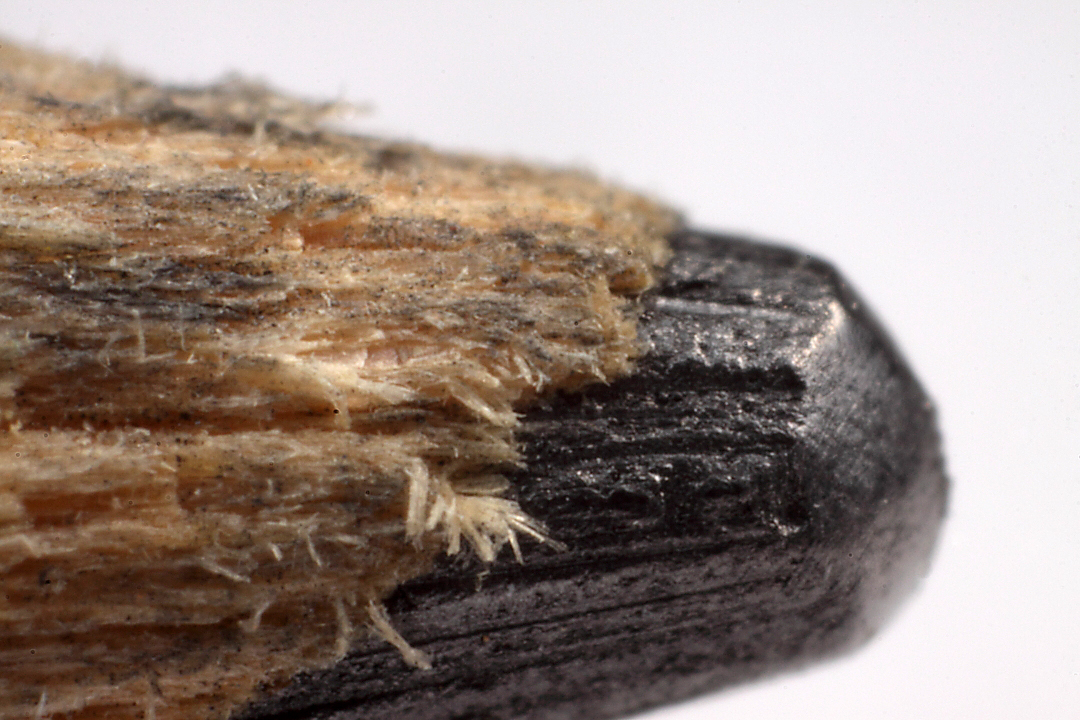
Lately I’ve been wondering what the magnification capabilities would be if I added extension tubes to the 65mm lens.  With a maximum magnification of 5X, it hardly seems that even more magnification would ever be needed, but who knows what uses one might find if the capability exists.  In theory, it seemed like it should work—after all extension tubes are simply tubes with no glass (in fact, the 65mm lens itself is simply a macro lens with a very expensive, built-in bellows).  The only consideration was whether the focal plane would remain outside of the lens.  Tonight I finally decided to sit down and try it out, and the results were really quite stunning.  The three photos below show an ordinary pencil lead, the first with the 65mm lens alone set at 1X, the second with the lens set at 1X plus full extension tubes, and the third with full extension tubes and the lens set at 5X.  The full extension tube set provides an additional ~1.7X magnification, making the 65mm lens effectively a 1.7–8.0X macro lens!

Canon MP-E 65mm lens @ 1X

Canon MP-E 65mm lens @ 1X + 68mm extension tubes (= 1.7X)

Canon MP-E 1-5X macro lens @ 5X + 68mm extension tubes (= 8X)

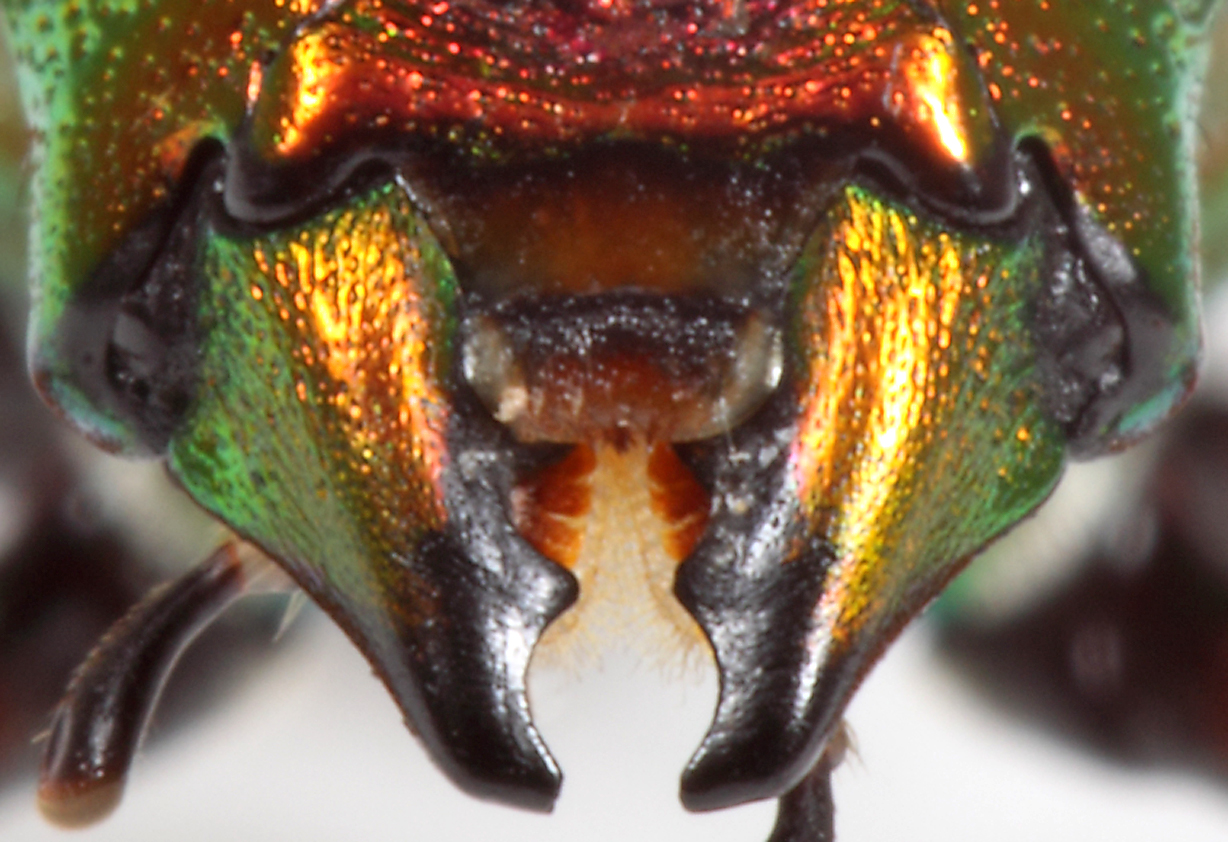
The subject-to-lens distance is indeed quite short—only about 38mm or so.  However, having at my disposal an 8X macro lens suddenly opens up a whole new world of ideas for insect macrophotography.  Knowing that the combination of 65mm lens and extension tubes is possible, I just had to try this out on a living subject—like now!  I happened to have in a terrarium a subject from the day’s collecting, so I tried it out—again with the 65mm lens fully extended to result in 8X magnification.  Shown below is a example of this lens combination at full magnification, completely uncropped—can you name the subject?

Canon MP-E 65mm lens @ 5X + 68mm extension tubes (= 8X)

Copyright © Ted C. MacRae 2011

ID Challenge #11

It’s time for another ID Challenge—can you name the organism(s) shown here?  I’ll give two points each for the correct order, family, genus and species.  Additional points will be awarded on a discretionary basis for relevant natural history comments.  Standard challenge rules apply, including moderated comments during the challenge period (you don’t have to be first to score points), early-bird points to those who do arrive at the correct answer before others, etc.  Ben Coulter has a solid lead in BitB Challenge Session #4, but there are enough challenges left in the current session that his lead is not secure—do you have what it takes to put together a run to bump him off the podium top spot?

Shaw Nature Reserve, Franklin Co., Missouri

Copyright © Ted C. MacRae 2011

Super Crop Challenge #9

Can you name the structures in this photo (easy) and the critter they belong to (maybe not so easy)?  Because there are so many potential answers to those two questions, I’ll give 1 point for each correctly named structure (5 maximum) and taxon (primary categories from class to species).  As always, standard challenge rules apply, including moderated comments to allow time for everyone to submit their answers.  Bonus points will be awarded to early birds if multiple participants arrive at the same correct answer and possibly also for other relevant comments at my discretion.

The competition is really heating up in the current Session #4—current leader and 2-time champ Ben Coulter has 22 points, but there are at least half a dozen folks who could easily earn enough points in this one challenge to either take the lead or grab a podium spot.  If you’re stumped, remember that the pity points you earn now could be a tie-breaker at the end of the session.  Good luck!

Copyright © Ted C. MacRae 2011