Missouri Master Naturalists Seminar

Missouri Master Naturalist Confluence Chapter Seminar | December 9, 2014. Photo by Lee Phillion.

Speaking to the Missouri Master Naturalist Confluence Chapter, December 9, 2014. Photo by Lee Phillion.

Earlier this week I had the privilege of speaking to the Confluence Chapter of the Missouri Master Naturalist Program, the members of which are all graduates of the Missouri Master Naturalist Program. This community-based natural resource education and volunteer service program, sponsored by the Missouri Department of Conservation and the University of Missouri Extension Service, seeks to engage Missourians in the stewardship of our state’s natural resources through science-based education and volunteer community service. To accomplish such, members support conservation efforts and natural resource education in their local communities.

Since I’ve studied the insect fauna of Missouri for many years now, especially in its threatened and endangered natural communities, I thought a talk on this subject might be of interest to the group. I decided to focus on some of the work I’ve done in two of our state’s most critically imperiled natural communities: loess hilltop prairies in the northwest corner of the state and sand prairies in the southeastern lowlands—with a talk titled, “From Hilltops to Swamps: Insects in Missouri’s Rarest Prairies”. The presentation provided an overview of each of these natural communities, the circumstances that have led to their rarity in Missouri, and the insects associated with them with special emphasis on species that are dependent upon these natural communities for survival. For those who might be interested, I’ve posted a PDF version of the presentation here.

From Hilltops to Swamps: Insects in Missouri’s Rarest Prairies

Truth be told, it was one of the most enjoyable seminars I’ve ever given, due mostly to a wonderfully engaged audience of about 70 people. It was a perfect opportunity for me to promote awareness of insects and the need to consider them in conservation efforts with an audience whose members are at the forefront of the citizen science effort within our state. I extend my heartiest thanks to Leslie Limberg for giving me the opportunity to speak, Lee Phillion for sending me photos from the event, including the one posted above, and—most importantly—the members of the audience for the warm welcome they extended to me and the interest they showed during my presentation.

© Ted C. MacRae 2014

First-ever BitB “Reader’s Poll”

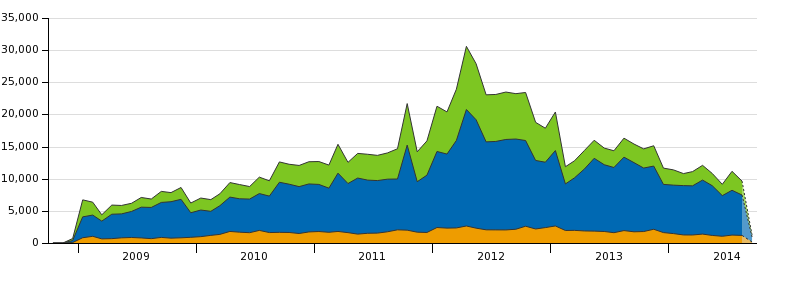
For seven years now I’ve been conducting this experiment called Beetles in the Bush. In that time I’ve written nearly 1,000 posts (with the help of a few guest authors), posted nearly 3,000 images, contributed or entertained over 10,000 comments, and watched the site creep ever closer to its millionth hit! This might leave you wondering why I should, now, be asking readers to provide feedback on why they visit BitB and what they like most (or least) about it. The reason is simple—blogging is less popular now than it was a few years ago. Comments and readership are both in decline (not just here, but across the platform), and the trend has left few clues about who the remaining readership is and what they are interested in. If I know clearly what readers want, it will be easier for me to provide it. That is not to say I expect (or even could) drastically change my content or its focus. However, if I know a certain topic is more popular than others I can give that topic priority, or if nobody really reads the “long-reads” I can skip them altogether. I hope you’ll indulge my curiosity by participating in the five short polls below that need only a few anonymous clicks of the mouse—no written responses required. Of course, if you wish to provide written feedback in the comments section it will be most appreciated. And, as always, thank you for your readership.

© Ted C. MacRae 2014

Super Crop Challenge #16

Who am I?

Who am I?

Can you identify the structures in the photo above (2 pts), their significance (2 pts), and the organism to which it belongs (order, family, genus, and species—2 pts each)? Comments will be held in moderation so everybody has a chance to participate, but there are early-bird bonus points on offer for those who get their answers in quickest. You’ve got the weekend to think about it. 🙂

p.s. Read the full rules for details on how (and how not) to earn points. Good luck!

© Ted C. MacRae 2014

ID Challenge #23

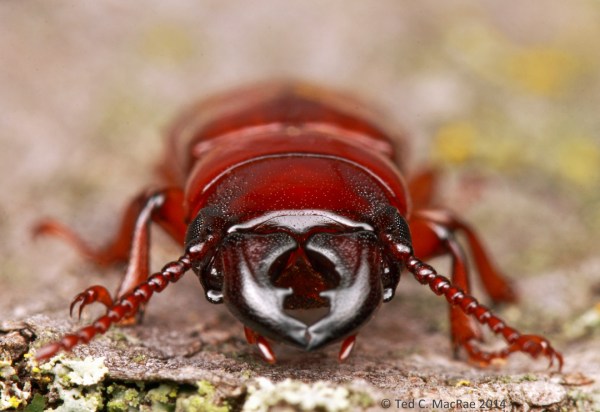
This is a straight up identification challenge. Can you identify the order (duh!), family, genus, and species? Total body length of the subject is ~20 mm. Answers revealed in a couple of days or so, with comments moderated until that time to allow all who wish a chance to participate.

IMG_6786_enh_1080x742

© Ted C. MacRae 2014

Seminar on Oklahoma’s Glass Mountains

Earlier this week I gave a seminar to the Entomology Group of the Webster Groves Nature Study Society. Founded in 1920 and known locally as “WGNSS”, the organization seeks “to stimulate interest in nature study on the part of adults and children, to cooperate with other organizations in nature study, and to encourage amateur research in the natural science.” I’ve been an active member in the society’s Entomology Group since the early 1980s, and for almost five years now I have also served as editor for the society’s newsletter, Nature Notes (see this archive of recent issues). Occasionally they invite me to talk—sometimes to just the Entomology Group and other times to the Society as a whole—about my entomological exploits. This time I chose to focus on my several visits to the Glass Mountains in northwestern Oklahoma over the past few years, which readers of this blog may remember has been the source of an inordinate number of new state records and other significant finds for the beetles I study. The presentation provided an overview of the insects I’ve encountered during these visits, and for those who might be interested a PDF version of the presentation is posted here. 

Natural History of Oklahoma’s Glass Mountains…

Copyright © Ted C. MacRae 2014

ID Challenge #22

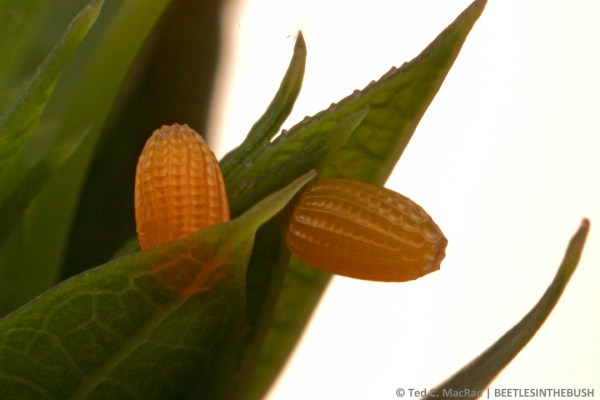
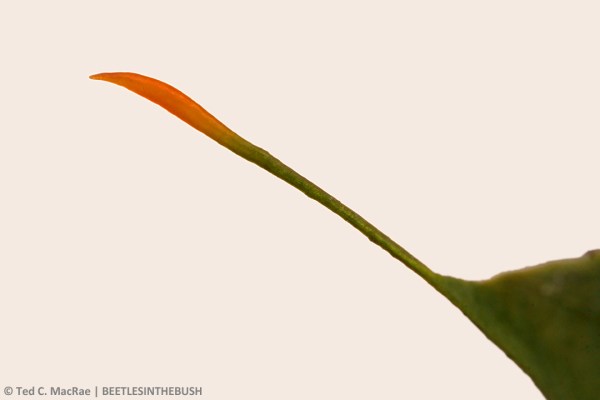
For this ID Challenge, please identify the objects/structure in the photos below and discuss how they are related to each other. I’ll give 5 pts to anybody who correctly identifies the object/structure in each photo and another 5 pts to anyone who correctly elucidates their connection. Go!

Edit: I am looking for a family-level ID for the objects in the first photo and a genus-level ID for the plant bearing the structure in the second photo to get full credit. Answers will be held in moderation until the answers are revealed to give all a chance to play.

What are these?

What are these objects?

What is this, and how does it relate to the structures in the other photo?

What is this structure, and how does it relate to the objects in the first photo?

© Ted C. MacRae 2014

Virtual Mantle 2013

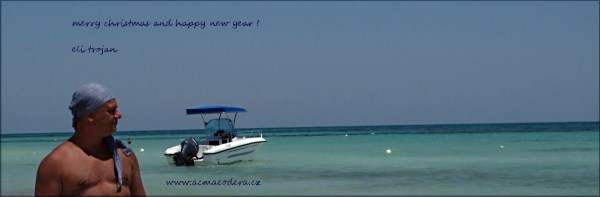
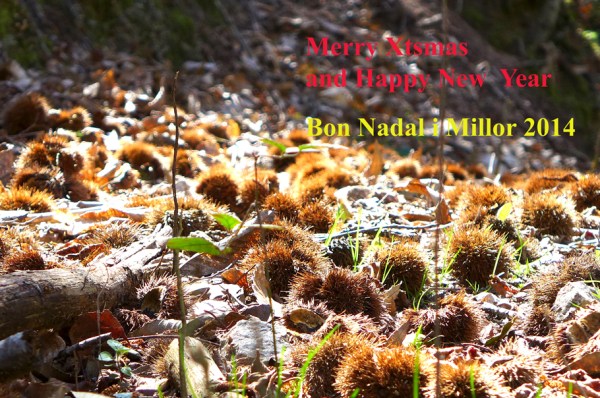
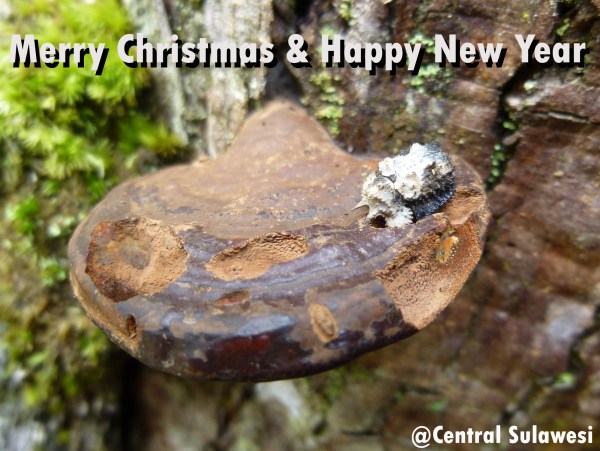
One of my favorite customs over the holidays is exchanging Christmas e-cards with my fellow entomologist/natural historian friends and colleagues. On the sending side, I’m especially fond of the “insect-with-Photoshopped-Santa-hat” variety (see 2011’s Santa Jaws and 2012’s Buprestis saintnicholasii), but I broke from the insect part of the theme this year and instead used a lizard to wish everybody a Felizard Navidad! On the receiving side, and in the spirit of my first Virtual Mantle post last year, here are the e-cards that I received for my virtual mantle this year from entomologists as near as neighboring Illinois and as far as Europe and Asia! If you didn’t send me an e-card this year, I hope you’ll consider sending one to me in 2014!

Sam Heads, Illinois Natural History Survey, Champaign

Sam Heads, Illinois Natural History Survey, Champaign

Mark Kalashian,  National Academy of Sciences of Armenia, Yerevan

Mark Kalashian, National Academy of Sciences of Armenia, Yerevan

Denis Keith, Muséum des Sciences Naturelles et de Préhistoire 5bis, Chartres, France

Denis Keith, Muséum des Sciences Naturelles et de Préhistoire 5bis, Chartres, France

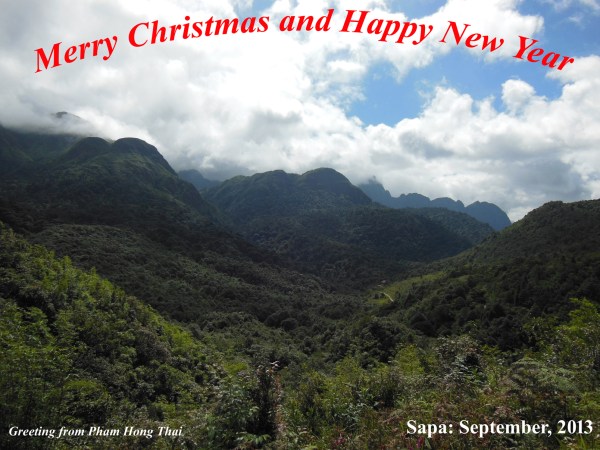
Hong Thai Pham, Institute of Ecology and Biological Resources, Hanoi, Vietnam

Hong Thai Pham, Institute of Ecology and Biological Resources, Hanoi, Vietnam

Erico Ruzzier, Mirano, Italy

Erico Ruzzier, Mirano, Italy

Ilja Trojan, South Moravia, Czech Republic

Ilja Trojan, South Moravia, Czech Republic

Eduard Vives, Museo Nacional de Ciencias Naturales, Barcelona,  Spain

Eduard Vives, Museo Nacional de Ciencias Naturales, Barcelona, Spain

Junsuke Yamasako, Ehime University, Tarumi, Matsuyama, Japan

Junsuke Yamasako, Ehime University, Tarumi, Matsuyama, Japan

Copyright © Ted C. MacRae 2013