My Dad

My dad had knee replacement surgery a couple days ago. The surgery went off without a hitch, and he’s doing very well. All signs are that he will bounce back quickly and suffer few, if any, complications. I’ve spent much of the past three days here at the hospital – sometimes providing support and encouragement, other times just keeping him company. He should be released tomorrow, and I’ll spend the rest of the week with him at his house – hopefully he’ll be able to get around okay by then.

Some thirty years ago, my dad got an infection that settled in his left hip. By the time doctors found it and figured out what was going on, his left hip socket had degenerated badly, and the only medical option after cleaning up the infection was a year in a full body cast that resulted in fusion of the socket with the femoral head. This left him with a left leg two inches shorter than his right, a bad limp, and a lifetime of pain medications. His right leg became his ‘good leg’ and his left became the ‘bad.’ Decades of walking with a cane and favoring his bad leg put a lot of pressure on his good leg, and at age 73 his right leg had had enough. Now, his good leg is his bad leg, and his bad leg is, well, still his bad leg. This will add a wrinkle to his recovery, since he won’t have a healthy leg to carry the load while his good leg recovers. But I will be there to help, if needed, and in a few weeks his good leg should be good as new.

My dad is not only my dad, but also my best friend. We have a relationship that is based on mutual love and respect, and I don’t know which of us appreciates more what we have with each other. It wasn’t always this way – my dad and I were estranged for 25 years starting when I was 10 years old. My parents married far too young, and each had their own issues – they were but children themselves. Having first me, then my brother and sister, only delayed but could not prevent the inevitable break up that resulted in my fathers absence. I paid a heavy price by not having a father during those crucial, formative years as I finished growing up, but I seem to have turned out okay regardless. It would take many years before I would be ready for something so bold as reconciliation, but maturity and the support of a loving wife eventually made it possible. There were difficult questions to answer, but through it I realized that my father had paid a heavy price as well. Not the selfish irresponsible man I had been taught about, instead I saw a sensitive, deeply introspective man who had lived a life of hard knocks, suffered the consequences, learned from his mistakes and turned his life around.

My dad loves to ride bikes. I do too, but I did not learn the love of cycling from him. My dad is simple yet elegant, with an understated class that people adore. I, too, try to show respect and modesty, but I did not learn these things from my father. We both love classical music (he can live without the metal), listen to NPR, and enjoy humor with more than a touch of irreverance – tastes acquired by each of us before we knew each other. What I have learned from my father during these past 15 years is why I am me – a gift I didn’t know I lacked. I don’t mourn the loss of those 25 years spent without my father, rather I rejoice at the very special relationship that we now have – perhaps possible only because of our separate pasts. My father describes that year in a body cast as the darkest period of his life. I did not know him then, so I could not be there to help him through it. While his recovery from knee replacement will not be near that ordeal, neither will it be easy. But I am here with him, and I know in my heart that whatever difficulties he faces during his recovery, he will look back on this as a small part of the best time of his life.

The Chrysobothris femorata “problem”

I found a young cottonwood tree (Populus deltoides) the other day that had recently fallen over in one of the many storms we’ve had this spring. Anytime I see one of these “windthrows” I immediately think – woodboring beetles! Windthrows are attractive to numerous species of Buprestidae and Cerambycidae, and when I find one I try to revisit it often as the season progresses and different beetle species – active at different times and attracted to wood at different stages of dying or death – are encountered. This particular tree was only partially uprooted and so still had fresh foliage in the crown. While death is inevitable, it will be a slow, lingering death as the remaining soil-bound roots try in vain to sustain the fallen tree. This is an ideal situation for attracting species of the genus Chrysobothris, which seem to respond to plant volatiles emitted from trees under duress or recently killed. In the deciduous forests of eastern North America, C. femorata and related species are the most commonly encountered Chrysobothris attracted to these situations. Nursery growers and landscapers know this insect as the “flatheaded apple tree borer” – in reference to the appearance of the larvae as they tunnel under the bark of one of its favored hosts. The species has in fact, however, been recorded breeding in some two dozen genera of deciduous woody plants throughout the continental states and Canada, an unusual level of polyphagy for a genus of beetles in which most species typically exhibit a fair degree of host fidelity.

The problem is, “C. femorata” is not really a species, but a complex of closely related species. Entomologists have recognized this for some time, and while diagnostic characters have been identified for some of the more distinctive members of the group, such characters have remained elusive for C. femorata and its closest relatives. As a result, the species has become sort of a “trash can” for specimens that could be not be assigned to one of these more distinctive species, and in many museum collections large series of specimens can be found labeled simply “C. femorata species complex”. Fortunately, some much needed clarity was provided earlier this year by Stanley Wellso and Gary Manley, who after years of careful, systematic study at last published a revision of the Chrysobothris femorata species complex. In their work, six new species were described and one species resurrected from synonymy under C. femorata. Three of the new species occur in the western U.S., another is restricted to Georgia and Florida, and the remaining two new species and one resurrected species occur broadly across the eastern or southeastern U.S. This brings to 12 the total number of femorata-complex species in North America, with nine occurring in the eastern U.S. and seven in Missouri. The characters used to distinguish the species are subtle but consistent, and available biological data seem to support the species as now defined.

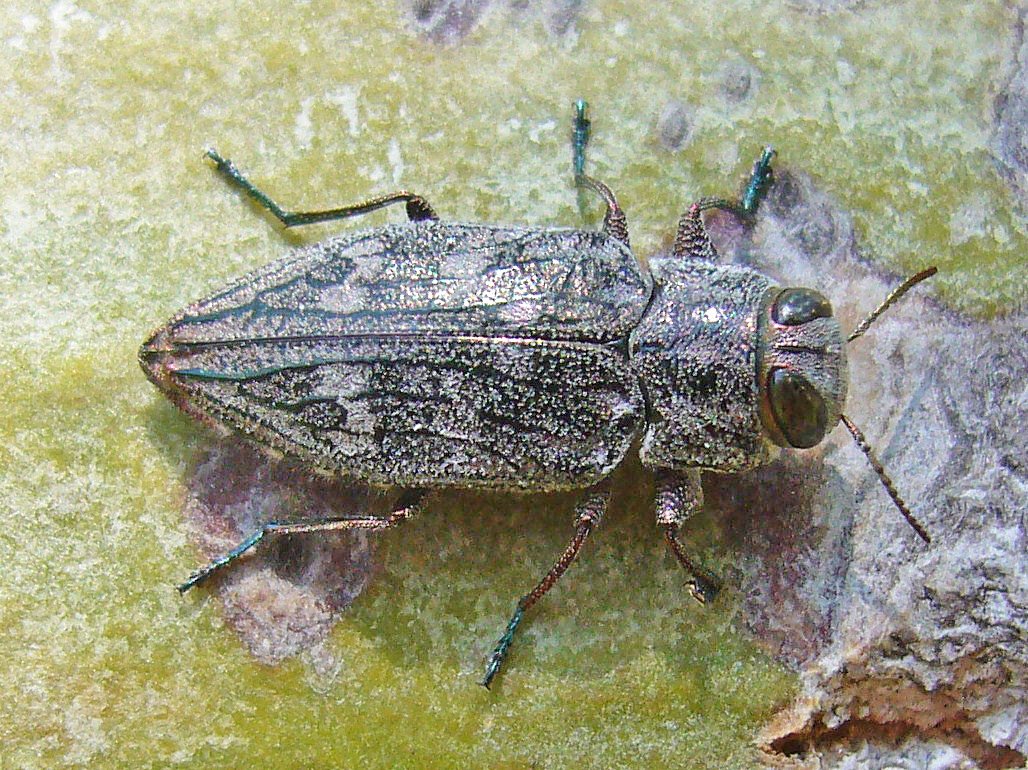
Of the dozen or so Chrysobothris individuals I collected on the fallen cottonwood during this past week, all but one represent C. femorata (as now defined). The photos I share here show some of the characters that distinguish this species from its closest relatives – primarily the straight rather than curved lateral margin on the last third of the elytra and the generally distinctly reddish elytral apices (most easily seen in the full-sized versions of the photos – click to view). Females (first and second photos) tend to show distinct reddish tinges behind the eyes and on top of the head as well. Males (third photo) can be distinguished from females by their bright green face (I tried valiantly but could not get one of these guys to pose in a position showing such). The photos also illustrate some of the typical behaviors displayed by these beetles, with males rapidly searching up and down the trunk looking for mates (third photo), and females probing cracks and crevices in the bark with their ovipositor looking for suitable sites to deposit their eggs (second photo). Of the two dozen host genera recorded for this species, many likely refer to some of the newly described species. In particular, records of this species from oak (Quercus spp.) and hackberry (Celtis spp.) may refer to the new species C. shawnee and C. caddo, respectively. As now defined, this species is still quite polyphagous and occurs throughout the continental U.S., but it is more common east of the continental divide and appears to prefer maple (Acer spp.), birch (Betula spp.), sycamore (Platanus occidentalis), poplar (Populus spp.), and especially rosaceous hosts such as hawthorn (Crataegus spp.), apple (Pyrus malus), pear (Pyrus communis), and cherry (Prunus spp.). Also, of all the species in this complex, C. femorata appears to be the most partial to stressed or dying trees (as with these individuals collected on live, windthrown cottonwood) rather than completely dead hosts. Wellso and Manley note that considerable variation still exists among individuals assignable to their more restricted definition of C. femorata. Thus, it is possible that more than one species is still involved, particularly among those utilizing hardwood hosts (e.g. apple, maple, etc.) versus softwoods (e.g., poplar, birch, etc.). Detailed biological studies will likely be required to identify any additional species that might be hiding amongst these populations.

Ozark Trail – Marble Creek Section

If you know wilderness in the way that you know love, you would be unwilling to let it go…. This is the story of our past and it will be the story of our future. – Terry Tempest Williams


During the past several years that Rich and I have been hiking the Ozark Trail, most of our hikes have taken place in the fall and winter months. From a hiker’s perspective, I really enjoy these off-season hikes – the foliage-free canopy affords unobstructed views of the terrain and vistas, the cool (even cold) temperatures are more comfortable under exertion (provided one has properly layered), and there are no mosquitos to swat, ticks to pick, or gnats to incessantly annoy. I also enjoy them as a naturalist, for the world is quiet and still, allowing me to focus on things I may not notice amidst the cacophany of life during the warmer months. By the end of winter, however, the biologist in me yearns to once again see bugs and flowers and the great interplay of life. Unfortunately, this makes something as simple as hiking from point A to point B rather difficult – too many distractions! Nevertheless, each spring Rich and I try to hike a small leg of the Ozark Trail before the crush of summer activities fills our calenders. Last week, we chose the Marble Creek Section, an orphan stretch (for the time being) in the rugged St. Francois Mountains that eventually will connect to the famed Taum Sauk Section. It would be our first return visit to the St. Francois Mountains since we first embarked on our goal to hike the entirety of the Ozark Trail.

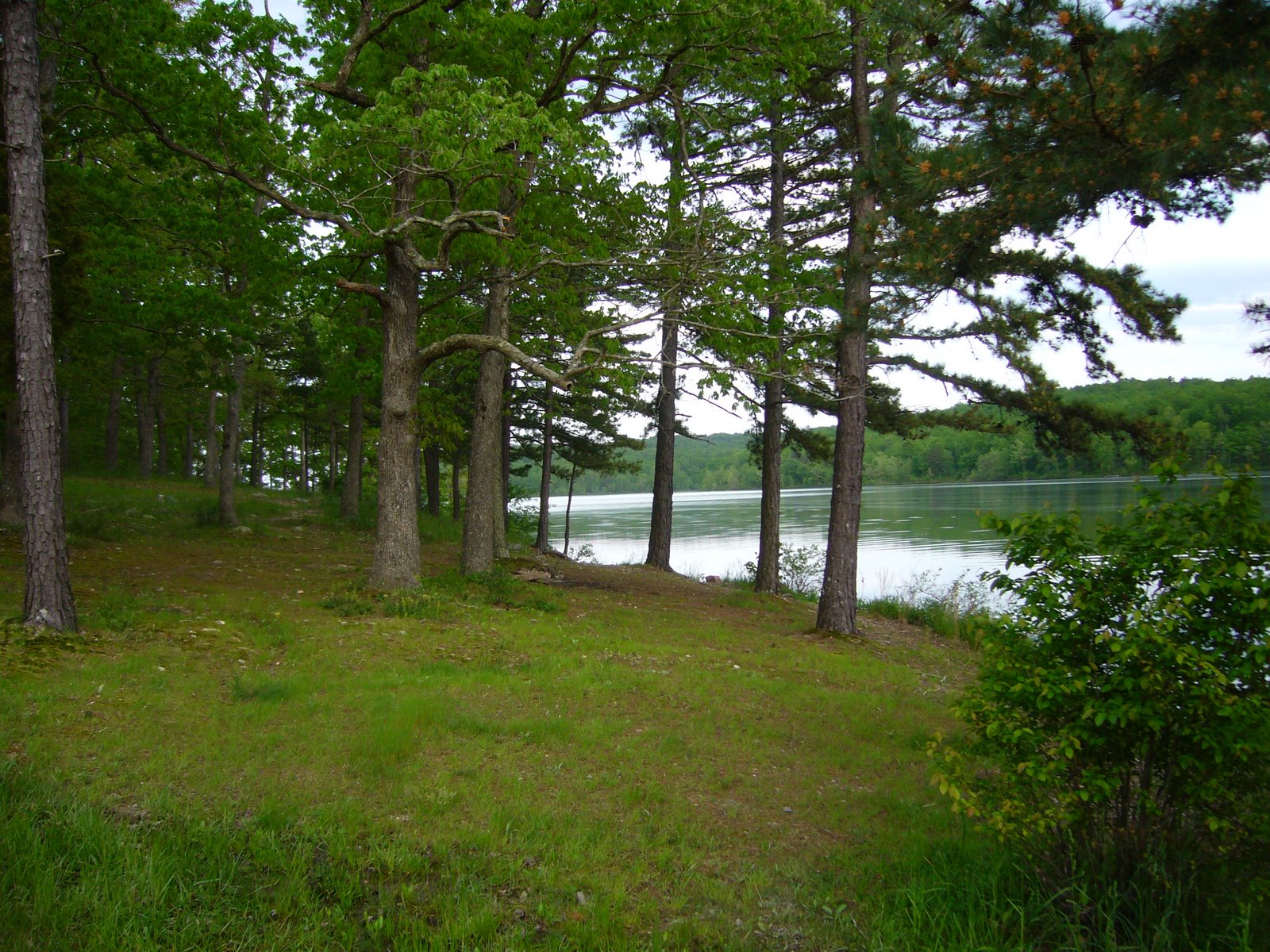
The St. Francois Mountains are the geologic heart of the Ozark Highlands. Since their primordial birth 1.5 billion years ago, recurring cycles of erosion and deposition have worn them down and covered them up, only to see them reemerge once again as the younger rocks covering them were themselves stripped away. The Ozarks are an ancient landscape with ancient hills, and none are older than those of the St. Francois Mountains. It’s as if the Earth itself began in these mountains. We began our hike at Crane Lake, a clear, blue 100-acre lake built in the 1970s by the Youth Conservation Corps. The trail surrounding the lake was built in 1975 and is, in its own right, a National Recreation Trail. It meanders along the lakeshore and through hillside igneous glades and descends into a deep ravine below the dam where Crane Pond Creek cascades through spectacular rhyolite shut-ins. East of the lake the trail connects to the Ozark Trail proper and continues to Marble Creek campground. All told, we would be hiking a 9-mile stretch.

I knew we were in a special place almost from the beginning when I noticed a small flowering plant growing next to the trail under the mixed pine/oak canopy. I’m not a very good botanist, but I instantly recognized the plant as dwarf spiderwort (Tradescantia longipes), an Ozark endemic known from only a handful of counties in Missouri and Arkansas. I knew this only because I had just the night before read about this wonderful plant on Ozark Highlands of Missouri, a superb natural history blog focused on my beloved Ozarks. Reading about this lovely, diminutive member of the genus, I wondered if I might encounter it on my own hike the next day. As we searched off the trail and near the lakeshore we encountered dozens of the plants, each with one or two exquisite blue flowers. Our excitement at seeing a true Ozark endemic increased with each plant we encountered, giving us confidence that its future, at least in this area, appears secure. Of the numerous photographs I took, I share two that show its short, squat habit and filament-covered stamens. Eventually we decided we needed to move on – we had spent 20 minutes and only hiked 100 ft!

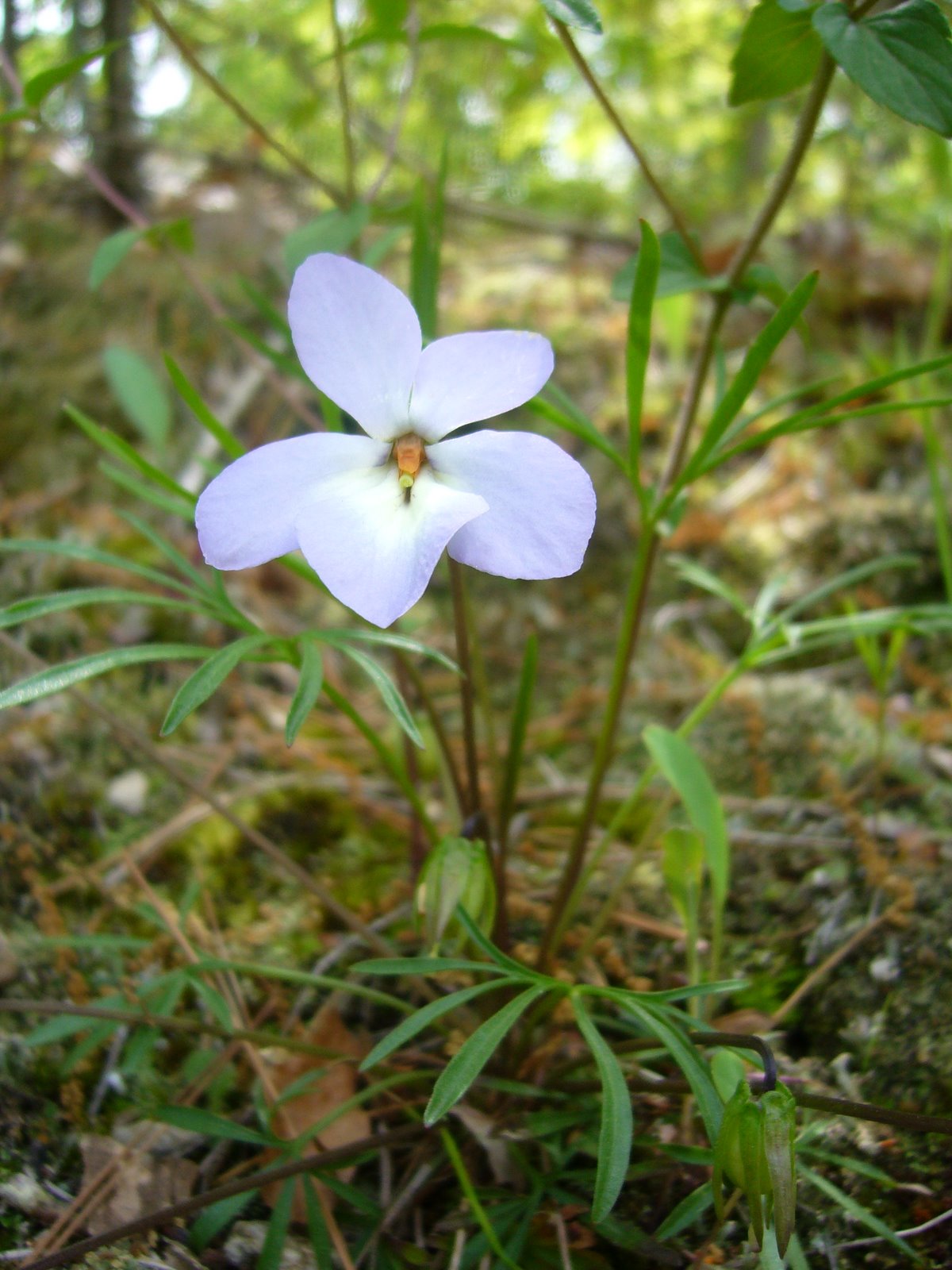
Looping around the south side of the lake, the trail traversed mesic to dry-mesic upland forest and afforded spectacular views of the lake and rugged north shore. The spring ephemerals had already come and gone, replaced by such classic woodland denizens as birdfoot violet (Viola pedata, pictured), fire pink (Silene virginica), cream wild indigo (Baptisia leucophaea), four-leaved milkweed (Asclepias quadrifolia), Pursh’s phacelia (Phacelia purshii), and shooting star (Dodecatheon meadia). Insect life was abundant, however, the only species seen in one of my chosen specialties, metallic wood boring beetles (family Buprestidae), were early spring species of Acmaeodera – pictured here is A. ornata on a dewberry (Rubus sp.) flower. This pretty little beetle occurs throughout eastern North America in early spring on a variety of flowers, where adults feed on pollen and mate. Eggs are laid on dead branches of certain hardwood trees, through which the larvae tunnel as they develop. Dry, dead wood contains little nutritional value, and the larvae cannot digest the cellulose. As a result, they eat considerable volumes of wood, extracting whatever nutrients they can for growth and ejecting the bulk as sawdust, which they pack tightly in their tunnels behind them. A year or more might be required before they have grown sufficiently to transform into the adult and emerge from the wood. A smaller relative, Acmaeodera tubulus, was also seen on flowers of native dwarf dandelion (Krigia biflora).

We stopped for lunch on a little point extending out towards the lake. The forest overstory was dominated by an open mixture of white oak (Quercus alba) and shortleaf pine (Pinus echinata). Thickets of highbush huckleberry (Vaccinium stramineum) and carpets of reindeer moss in the open areas belied the acidic nature of the igneous substrate. Stands of bastard toad flax (Comandra richardsiana) in full bloom were found at the tip’s dry, rocky tip. These interesting plants feed parasitically on neighboring plants, attaching to the roots of their hosts by means of their long, thin rhizomes. Resuming our hike, we descended down into a shaded, moist draw feeding the lake and saw a huge royal fern (Osmunda regalis var. spectabilis) bush. I had never seen this aptly named fern before, but it was immediately recognizeable by its large size (~5 ft in height) and presence of distinctive, fertile leaflets on some of its upper branches – a very striking and handsome fern, indeed. Nearby was a smaller, but no less attractive species of fern that I take to be marginal sheild fern (Dryopteris marginalis) – another species I have not seen before (or at least made the effort to notice).

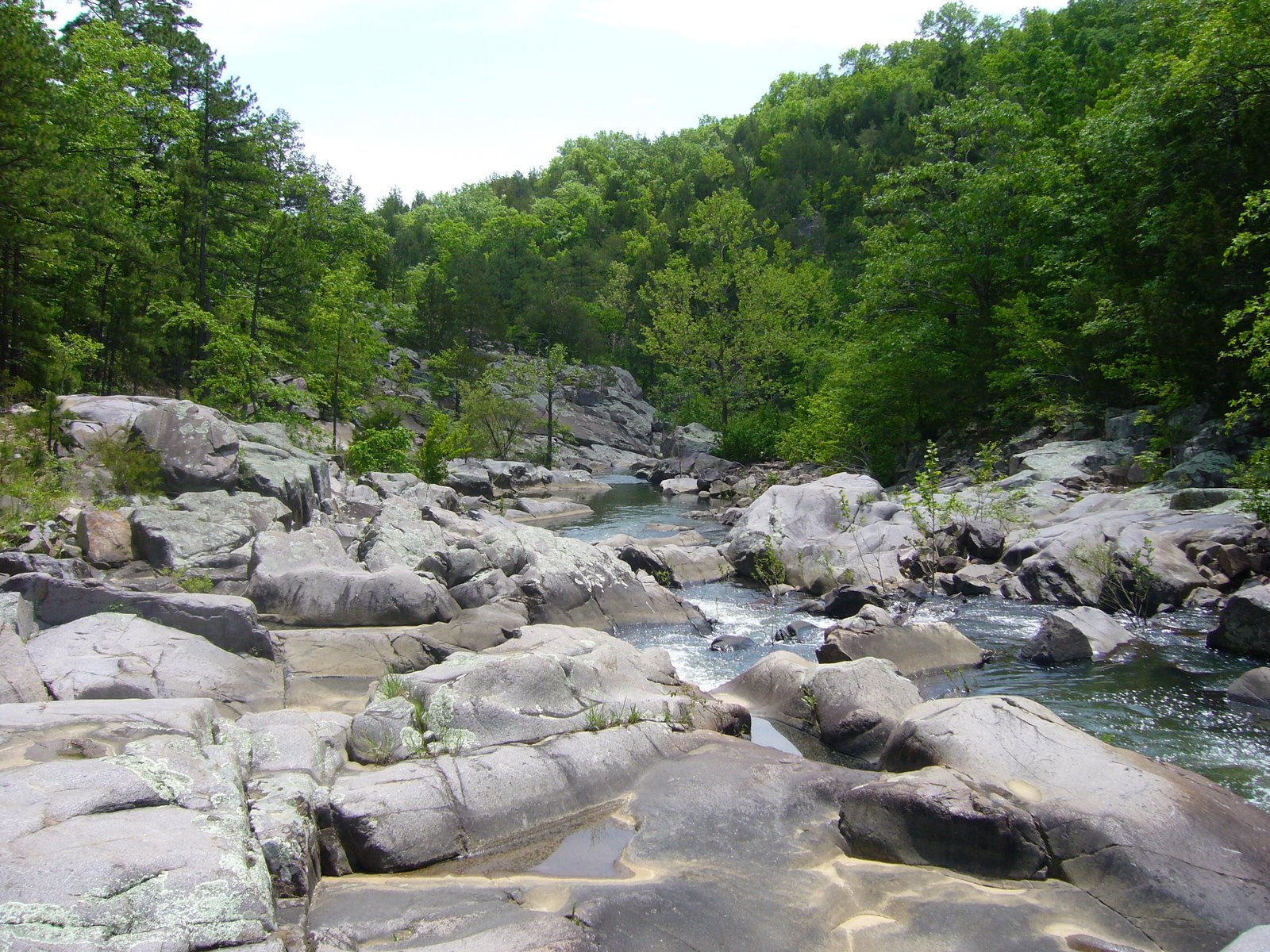
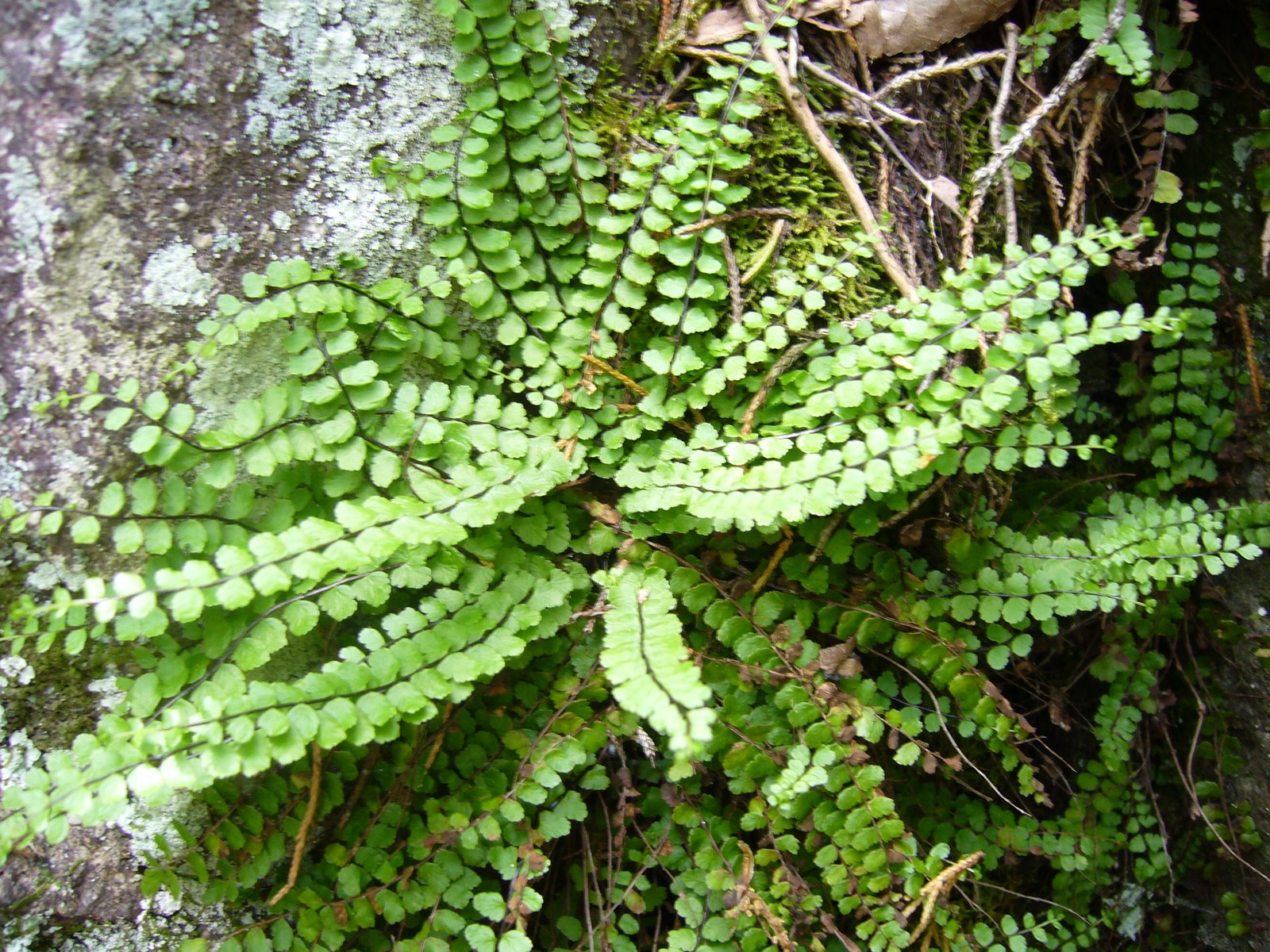
Soon, we reached the dam and for the first time saw the spectacular rhyolite shut-ins. While perhaps not quite as impressive as the nearby and much more famous Johnson’s Shut-Ins, Rich and I nonetheless watched entranced as the water roared over the smooth igneous rock exposure, forming elegant cascades, rushing through narrow chutes, and swirling into small pools. Steep canyon walls rose sharply on each side of the shut-ins, as if standing guard. Clambering amidst the pines and cedars that cloaked them, we found this maidenhair spleenwort (Asplenium trichomanes) nestled within a crack on a vertical rock face under continuous deep shade. Reaching the top of the bluffs, we were greated by one of my favorite of all Ozark habitats – the igneous glade. Glades are natural island communities surrounded by a sea of forest. Their shallow, dry, rocky soil conditions support plants and animals more adapted to prairie or desert habitats. Specific communities are influenced by the type of rock below – igneous and sandstone substrates support lichens, mosses, and other acid soil-loving plants, while limestone and dolomite substrates support a more calcareous flora. The photo here shows the massive boulder outcroppings typical of igneous glades and their weather-resistant bedrock. We hoped to see a collared lizard (Crotaphytus collaris), perhaps Missouri’s finest saurian reptile, but today was not the day. We did, however, see adults of the beautiful and aptly named splendid tiger beetle (Cicindela splendida) sunning themselves on the bare rock surfaces – flashing brilliant green and clay-red. The adults we saw had spent the winter deep inside tunnels dug into the rocky soil the previous fall and were now looking for mates. Male tiger beetles grab females by the neck, their jagged, toothy jaws fitting precisely in grooves on the female neck designed specifically for such. As I looked upon this prairie island within the forest, I thought about how the St. Francois Mountains were once themselves islands. I realized the landscape we were exploring today was itself a fossil – with rhyolitic ‘islands’ amidst a ‘sea’ of cherty dolomite laid down a half billion years ago in the warm, tropical, Cambrian waters that surrounded the St. Francois Islands, by then already a billion years old themselves. Yes, the Earth itself seems to have begun here.

Leaving the glade and once again entering the acid pine forest, we came upon one of the most striking floral displays that either of us have ever witnessed – wild azalea (Rhododendron prinophyllum) in the midst of full bloom! I have known about several colonies of this plant for many years now but had only seen them at the very end of the bloom period, with just a few, pitiful, limply hanging flowers still attached. Today, the plants were absolutely dazzling. The blossoms were not only visually attractive, a deep pink color, but also unexpectedly fragrant. We stood amongst several specimen plants as tall as ourselves, taking picture after picture amidst the clovelike aroma wafting around us.

We checked our watches – we were now 3 hours into our hike and had traversed just 2 miles. Clearly, this was not a sustainable pace, so we put our heads down and focused on covering ground. Once leaving the vicinity of Crane Lake, the trail became rather difficult to follow – it obviously receives little use, and in one stretch some logging activities had obliterated the trail completely. Were it not for the sporadic pieces of orange flagging tape tied just within sight of the previous, we would not have know where to go. At one point, we got completely off-track and had to backtrack a full half mile before we found the proper trail. The day put our contour map reading skills to their greatest test yet. It was difficult and strenuous terrain, with steep up and down grades and few long ridgetop stretches until (thankfully) the final 2 miles, which terminated in a long descent (more thankfully) to Marble Creek Campground. Despite the difficulties in following the trail and our not bringing enough water, I would have to rank this section a close second to the Taum Sauk stretch for its ruggedness, spectacular vistas, and unique plant communities. Yes, the St. Francois Mountains are truly the heart of the Ozarks.

Saving turtles, one by one…

“You should be able to push him from behind,” said the other motorist, who had also seen the young snapping turtle sitting in the middle of the exressway right after I did and pulled up as I was taking some “pre-rescue” pictures. “Nyeah, I think I’ll go ahead and get something to push him with anyway,” I said, hoping that the tone of my voice did not betray my true thoughts, “What, are you crazy? I’m not putting my bare fingers or sandal-clad feet anywhere near that thing!” I’ve rescued plenty of snappers over the years, and I know first hand just how surprisingly quick they can be. Truth be told, snapping turtles can be safely moved by hand – apparently they cannot reach the back of or underneath their shell. However, it takes considerably more temerity than I possess to actually try this. I grabbed a bicycle pump from the back of the truck and hooked the base of it under its shell. Immediately, the young turtle snapped at the pump – startling the man as well as two other cyclists who had stopped to watch the goings on. I admit to feeling more than a little vindicated as they all stepped back a few steps. I was hoping the turtle would maintain his grip on the pump so I could just carry him over to the roadbank, but every time I tried to lift he let go. So I had to just keep hooking the pump under his shell and pulling him towards the side of the road – the turtle fought every bit of the way, hissing and snapping and clawing against the road. At last he was in the grass – it was then an easy matter to roll him over a few times down the bank and safely (for now) away from the road.

Road mortality is suspected to have contributed to widespread population declines in turtles across the United States. This seems especially true for freshwater aquatic species, which often make land migrations for breeding. Vehicles often do not stop for turtles in the road, and I have seen some (usually a pickup truck with very large tires) swerve deliberately in an attempt to hit them (or even more sadistically, “shoot” them across the roadway). Conincident with these declines has been a demographic change towards male-biased populations in many freshwater species. Adult female freshwater turtles make nesting migrations that males do not and are often attracted to road shoulders and embankments as nesting habitat, making them disproportionately more vulnerable to road mortality. The resulting male-biasing surely represents an additional risk factor to their populations, especially in areas where high traffic occurs in proximity to wetlands. In such places, mitigation measures such as barriers and wildlife underpasses are clearly warranted (Steen et al. 2006).

I’ve always been a little awed by snappers – so grizzled and ancient, almost dinosaurian, and while I doubt that my sporadic rescues have near as much impact as barriers or underpasses, I do know that they cannot possibly hurt. As for this turtle, whether it continued on its way or turned around and crawled back onto the road (due to my unwittingly placing it on the side from which it just came) will remain unknown. I was heartened to see that I wasn’t the only person who stopped, intent on saving this grotesquely beautiful creature. But as I scanned this miles-long stretch of very recently constructed roadway, which now enables St. Louis countians to rapidly zip along next to newly created wetlands in the Missouri River bottoms while avoiding the stop-and-go on I-270, I couldn’t help but wonder why barriers and underpasses, seemingly simple protective measures, weren’t also included on the final blueprints of the roadway before they were sent to the printers. If such had been done, then I would not have had this encounter. But I could’ve lived with that.

Pipestone National Monument

Grandson, do not expect to accomplish much in this lifetime, for no one shares your vision… – The Oracle


Wednesday was my birthday, and it has been my custom for many years now to take the day off and go hiking/bugging somewhere. Coming as it does in early spring, it is usually the first real bug collecting trip of the year. This year, however, I was roped into a short business trip to visit a USDA lab in Brookings, South Dakota, so tradition would have to take a back seat. My visit at the lab ended early, though, and my flight back home from Sioux Falls didn’t leave until that evening, so I studied the map to look for any possible nearby points of interest in this landscape that has, for the most part, been unforgivingly converted to fields of corn, soybean, and wheat. I quickly noted a place called Pipestone National Monument just over the border into Minnesota. I love stopping at national monuments while traveling – they usually have some significant historical or geological interest, and their typically (though not always) small size means one can fully explore the area in a relatively short time. I did not know or had never heard of this place, but what I found was a charming little jewel tucked within a remnant of tallgrass prairie. At this far northern latitude, spring is still in its earliest of states. Few insects would be seen, but nevertheless I felt thankful for the chance to spend time outdoors and in a place of beauty where I could reflect on the years gone by and those (hopefully) still to come.

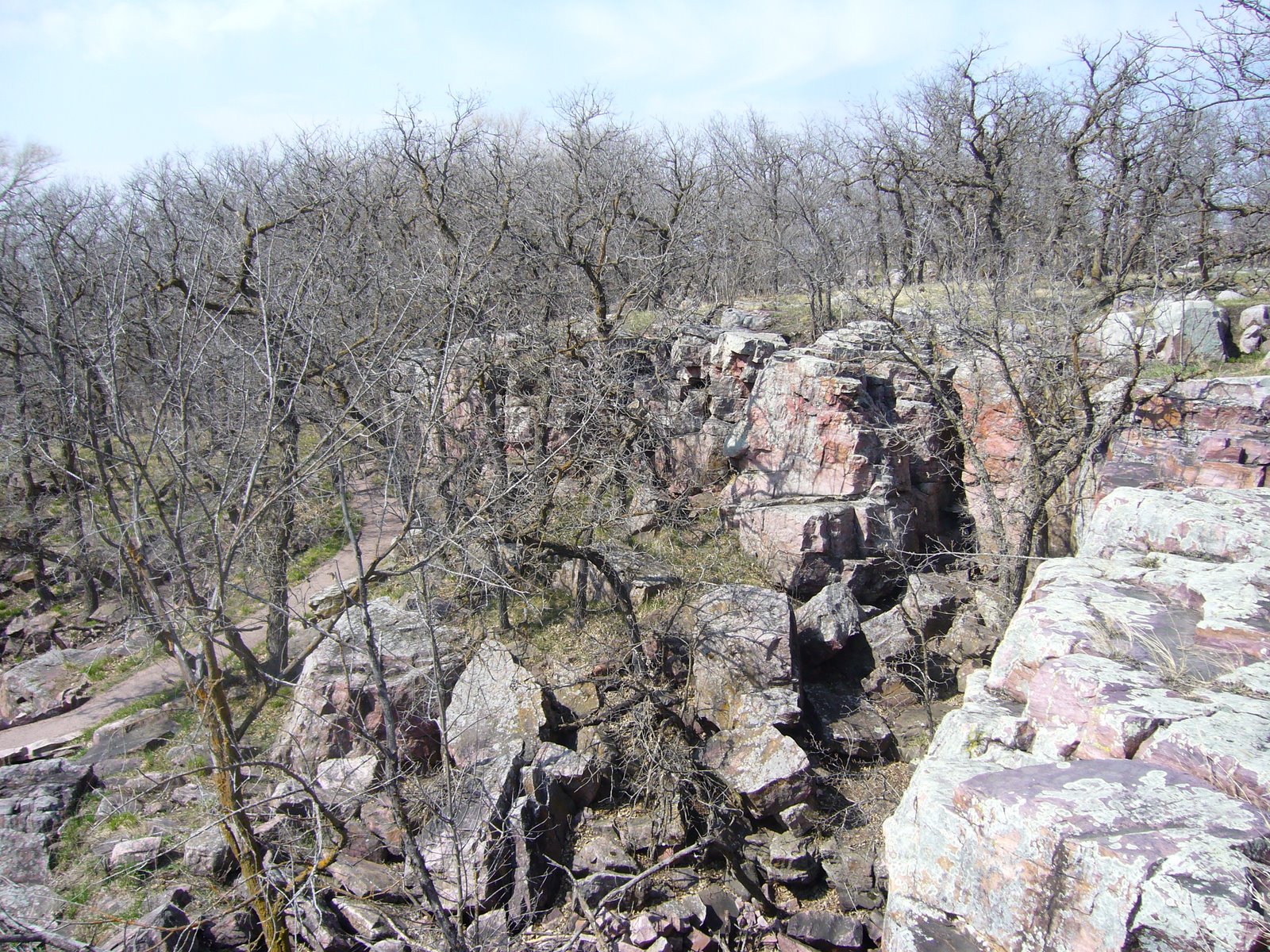
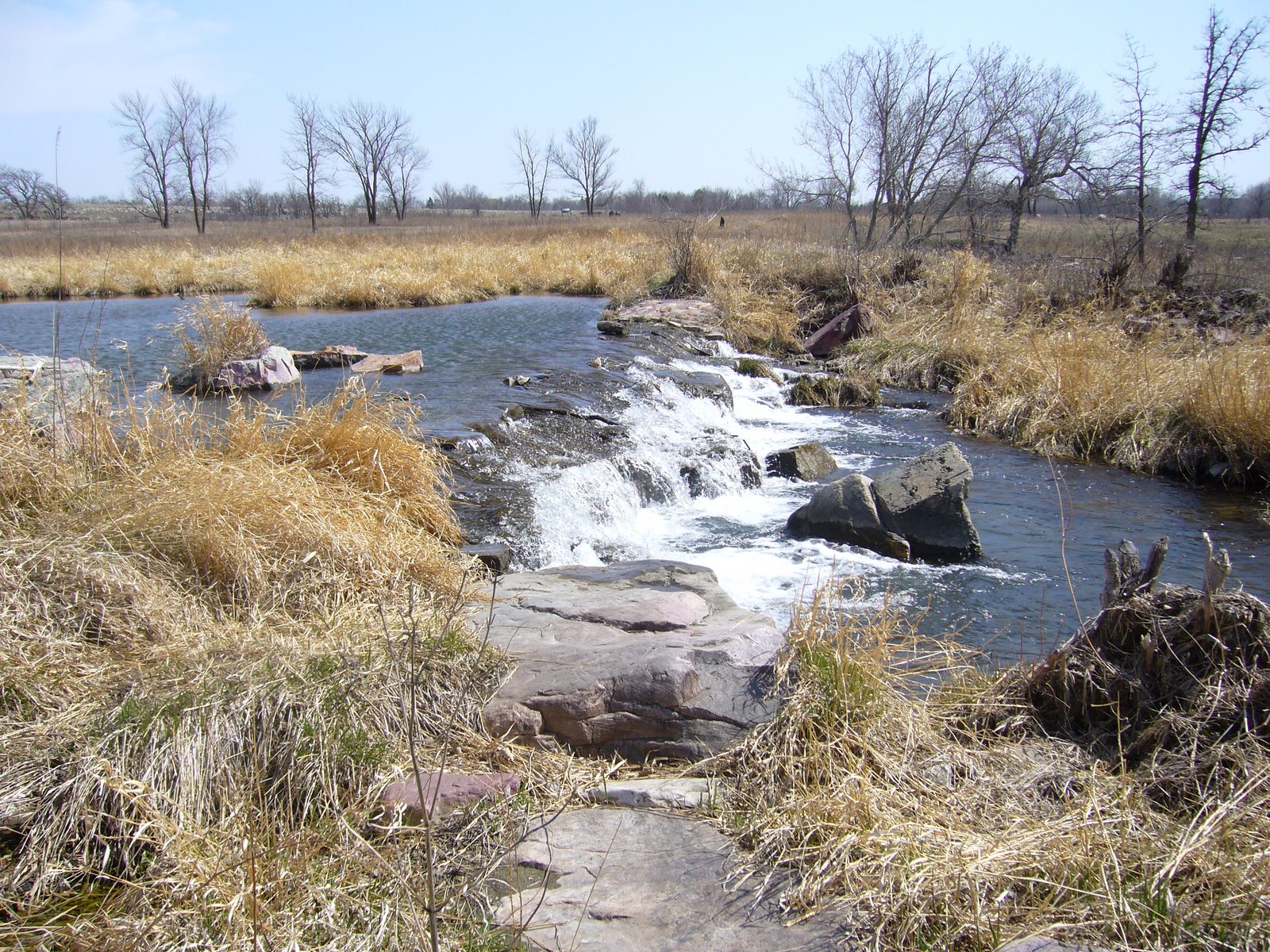
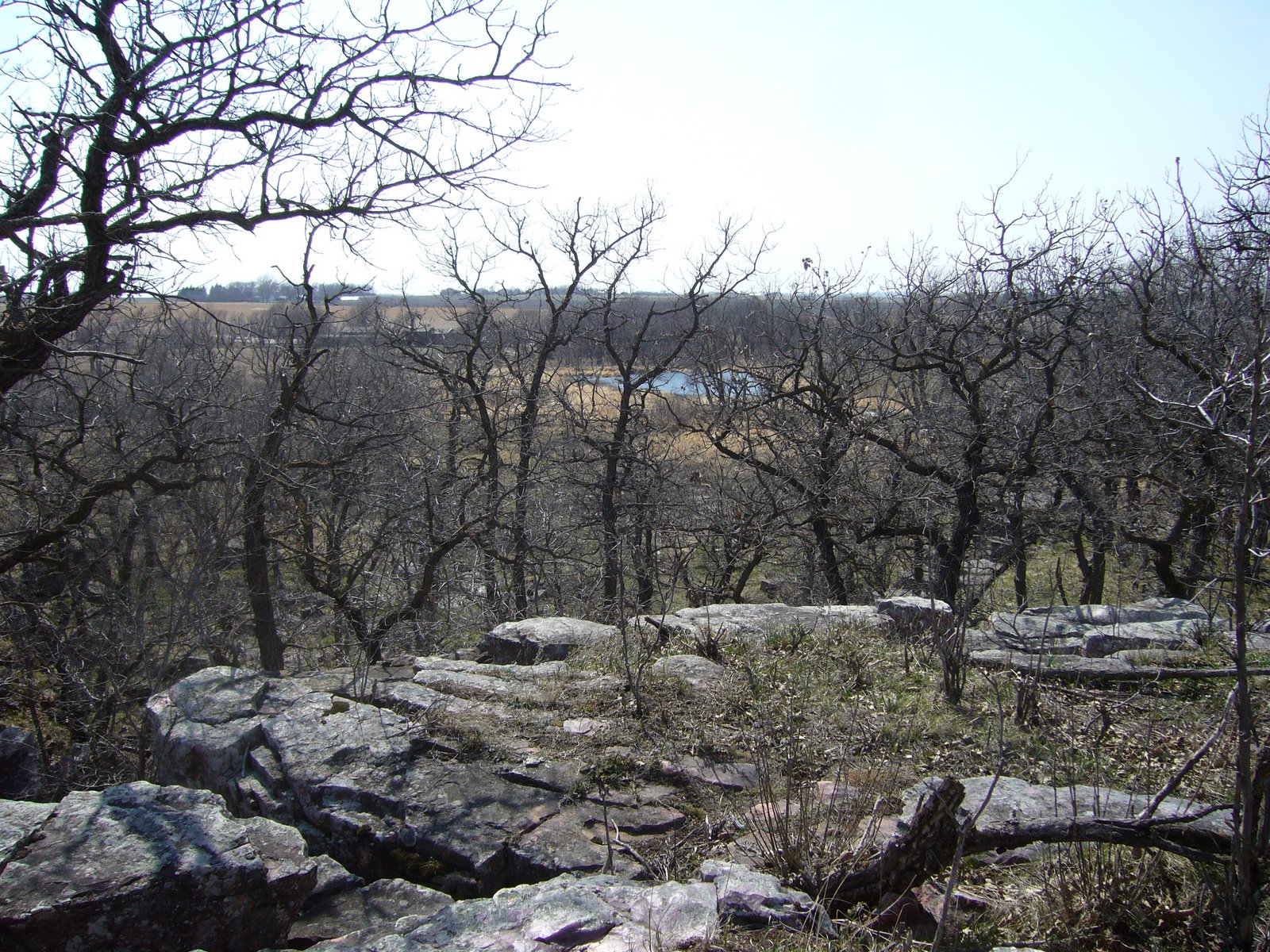
The area is named for a thin layer of catlinite – pipestone – exposed in this small area that has been quarried for centuries by Native Americans for carving into pipes (both war and peace). Quarrying within the monument continues to this day, with permission to do so reserved by law only to registered Native Americans. The area is identified as a sacred site associated with Native American spiritual beliefs and is preserved as a significant cultural and ethnographic landscape. Of particular interest to me was the site’s distinct hydrologic/geologic landscape and the native tallgrass prairie associated with it. A short ¾-mile trail loops through the area, providing a diverse glimpse of the area’s unique features. Pipestone may have provided the area’s namesake, but a narrow exposure of Sioux quartzite is the area’s most prominent geologic feature. Sioux quartzite is derived from billion and a half year-old layers of sand/silt sediments deposited thickly on the floors of ancient, Precambrian seas and compressed over the vastness of time into a hard, reddish metamorphic rock. Normally covered in this area by glacial till, the layers at this site are tilted upward 5–10 degrees towards the west and break through the surface to form a jagged, mile-long west-facing escarpment 23-30 feet high. Underneath the quartzite is the pipestone, a thin layer of metamorphosed shale. This fine-grained rock is derived from clay deposits, thus it is much softer and redder than the harder-than-steel quartzite. Pipestone Creek bisects the escarpment, giving rise to the lovely Winnewissa Falls, flowing over the escarpment and running down to a small, natural empoundment (Hiawatha Lake) before continuing its journey back into the glacial till and tallgrass prairie (for anybody surprised that there should be “falls” in this part of the country, it is interesting to note that nearby Sioux Falls is named after a grander example of of such flowing over quartzite exposures in its downtown).

Precious little remains of the expansive tallgrass prairie that once extended from horizon to horizon in this area. A few small parcels managed to escape the plow, but even in those tiny remnants dramatic alterations in plant communities have occurred due to fire suppression and the introduction of more than 70 non-native plant species. Prescribed burning programs are now being used at the Monument to restore the prairie’s native plant composition and appearance. Looking out over the tallgrass prairie remnants above and below the quartzite escarpment, it I was tempted to visualize circles of teepees on the higher ground away from the quarries (all Native American tribes worshipped this site and would never camp directly within it), with herds of American bison dotting the landscape in the distance. Contrasting with the openness of the prairie, the escarpment itself is densely studded with trees – American elm (Ulmus americana) along the top edge, and bur oak (Quercus macrocarpa) in the escarpment itself. Unlike the large, sometimes towering examples of their kind found further to the east, the trees here are dwarfed and spreading, almost gnarled. Below the escarpment, woodland quickly gives way to pure stands of smooth sumac (Rhus glabra) and choke cherry (Prunus sp.), which just as quickly yield to the surrounding sea of prairie. Along Pipestone Creek below the escarpment, lower layers of exposed quartzite provide nooks and crannys where enough moisture collects to support the growth of green ash (Fraxinus pennsylvanica) trees, until glacial till once again covers the quartzite, and riparian woodland yields to grasses and forbes. It’s not hard to imagine why this became a special place to the Native Americans, even before they discovered the pipestone that was to become so important to their culture.

The pipestone quarries are located a short distance to the west of the escarpment – where the hard quartzite layer is thin enough to break through – and, thus, have had little impact on altering the physical appearance of the escarpment itself. Winnewissa Falls (meaning “Jealous Maiden” in the Dakota language), lies at the center of the escarpment, providing a stunning centerpiece. Despite its beauty, it is but a shadow of what it was before early settlers in the area blasted away the top 18 feet of the ledge to create a reservoir for drinking water. A century of weathering and recolonization by lichens and mosses have softened the scars on the rocks, leaving little to indicate that such a dramatic alteration took place. However, standing in front of the falls, finding that “zone” where the temperature suddenly drops and cool wet mist blows on the face, and thinking about the significance of this place to the Native American tribes who held it so sacred, I was left feeling bewildered at how such drastic measures could have been contemplated for so beautiful a place.

In addition to the falls, nature has created some striking sculptures in the rock. “Old Stone Face” can hardly be mistaken for anything else – despite its human likeness, it was created entirely by natural forces. “The Oracle” is another naturally-formed human likeness found (though not as easily as Old Stone Face) in the outlines of the rocks. Tribal Shamans (Medicine Men) believed it served as a guardian of the valley and that voices issued from it’s cold stone lips. I stared for awhile and strained to listen, trying to imagine what words it might have spoken. At first, it seemed as if all was silent. Then I noticed the sound of the wind rolling over the prairie and twirling through the gnarled oaks. I heard the falls in the distance. I heard birds in the midst of frantic early-spring songs. I thought perhaps these might be the voices that guided the Shamans – spoken so loudly, yet so easily unheard.

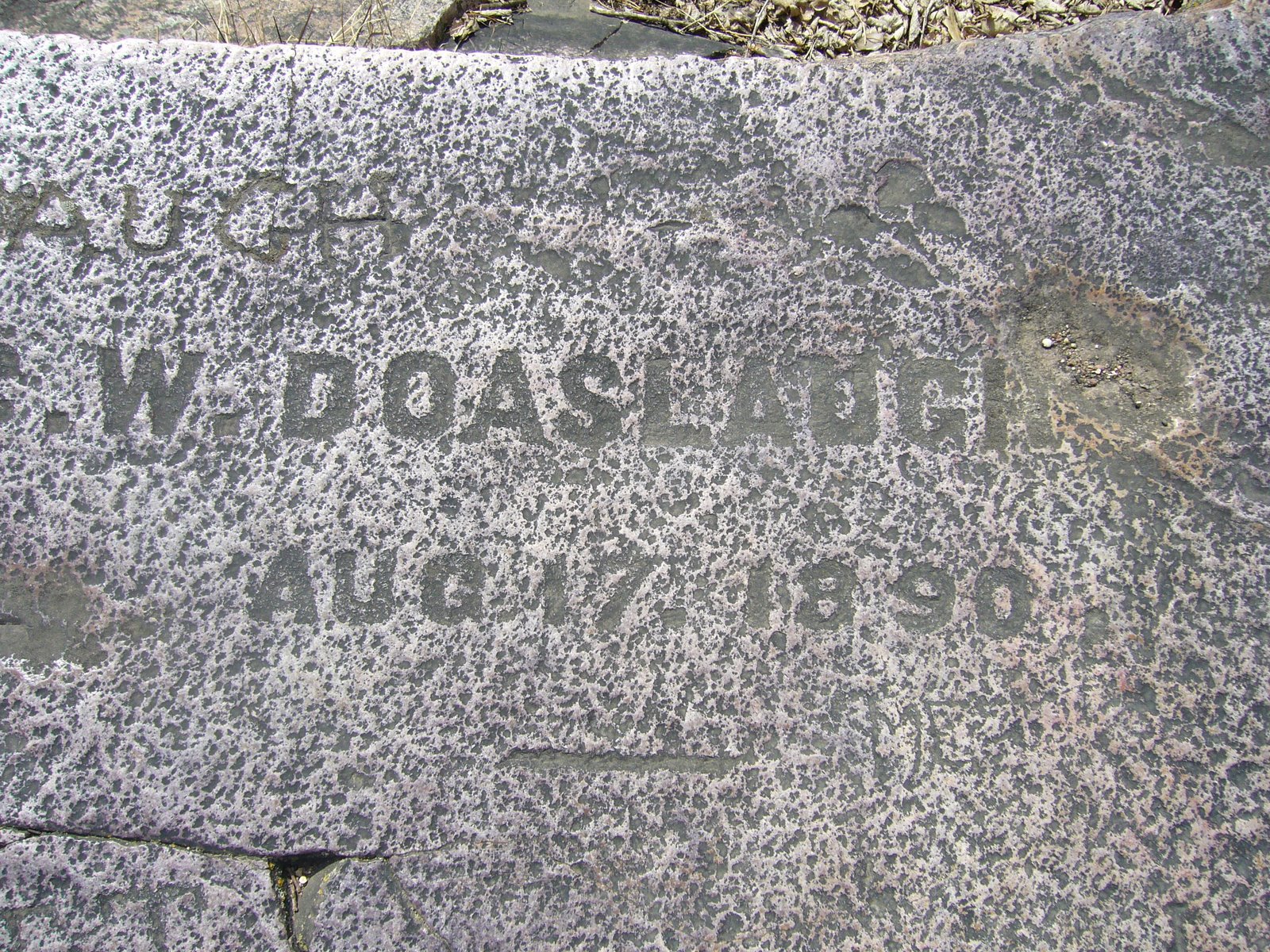
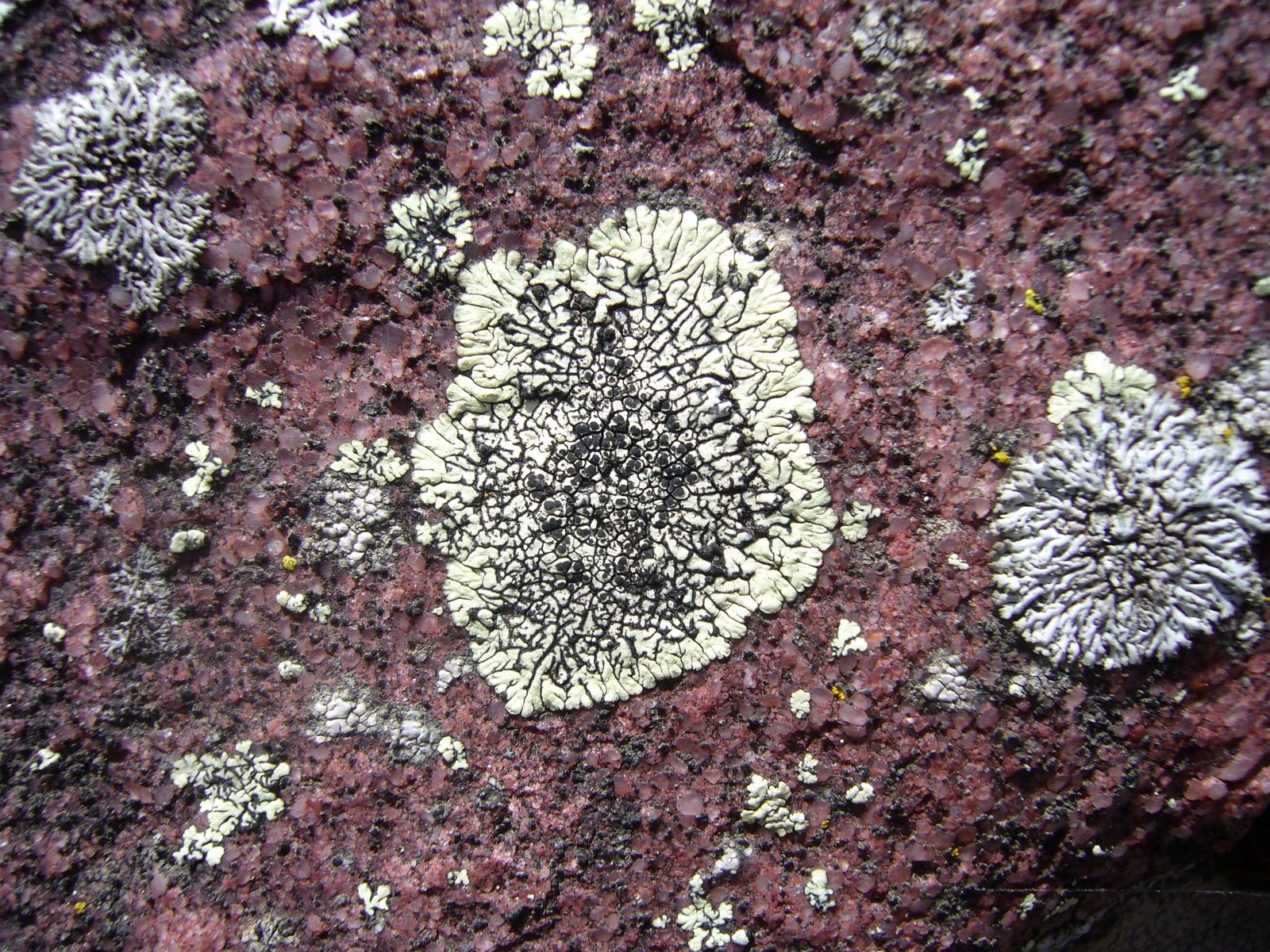
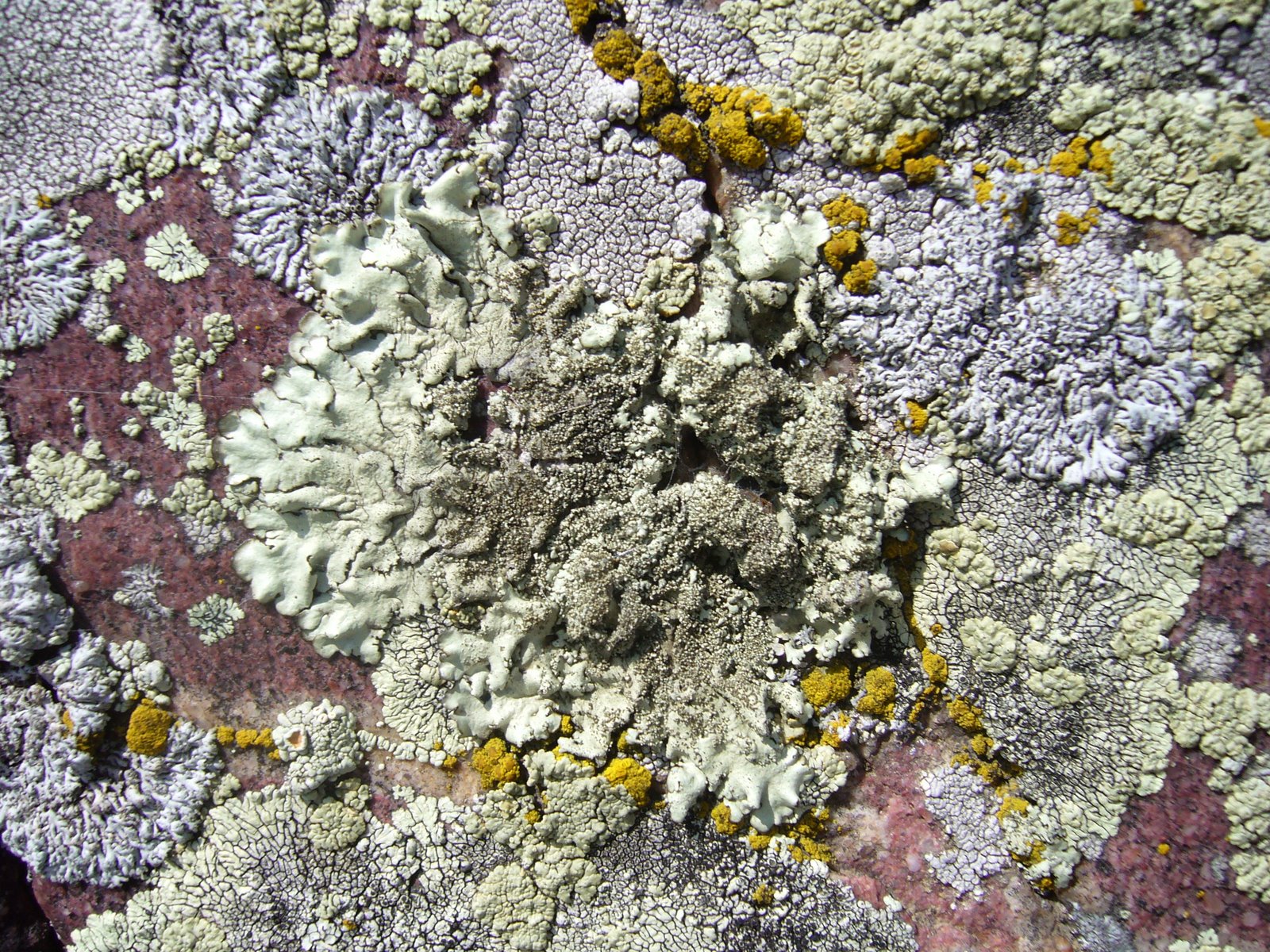
The first U.S. government expedition to the quarry occurred in 1838 with Joseph Nicollet, a French scientist who was sent to map the upper Mississippi country. He and the members of his expedition carved their names in the rocks atop the escarpment, as did many of the early pioneers that first settled in the area. In studying the surface of these rocks, I couldn’t help but notice the incredible diversity of lichens to be found. Around 75 species are known from the area, and as shown in the photos I share below they come in a fantastic array of forms and colors. Lichens are primary colonizers of rock surfaces, able to do so as a result of their nutritional autonomy. Lichens are merely fungi that have evolved a specialised mode of nutrition: symbiosis with photosynthetic microalgae or cyanobacteria. Often, the algal component is capable of fixing nitrogen from the atmosphere, while the fungal organism attacks the rock with organic acids to release minerals. This is the basis of soil formation. Over time, enough soil accumulates in small depressions to allow mosses to colonize the rock surface. As successive generations of moss grow and die, more and more organic material accumulates on the rock surface, eventually supporting the growth of vascular plants (which extract nitrogen from the soil, rather than from atmospheric sources). These cycles of growth and death act in concert with the forces of erosion to ultimately convert barren rock to tallgrass prairie, hardwood forest, or other climax habitat. Mind you, this is an extraordinarily slow process – it can take a full century for a lichen to grow one inch! As I looked at the abundance and diversity of lichens on the rock surfaces, I tried to visualize the breadth of time encompassed by what was before me and quickly became lost in eternity.

While the trail that loops through the area is less than a mile in length, it took me an hour and a half to complete it. What started out as a few hours to kill ended as a hurried rush through the museum and interpretive center, trying to cram a few last morsels of knowledge into my head in those final moments before I would have to submit to the drive back to Sioux Falls. As I left the area, I noticed these oddly out-of-place boulders known as “The Three Maidens.”
Native Americans believe that these boulders shelter the spirits of maidens who demand offerings before permitting them to quarry the pipestone. Science tells us that the boulders are composed of granite and were likely carried here by glaciers during the past 1 million to 10,000 years ago. Originally a single boulder some 50 feet in diameter, repeated freezing and thawing over the millenia since it was dropped here have split the boulder into the several pieces seen here. Perhaps only The Oracle knows which is true.

For a more detailed, yet highly readable account of the geology of this area, please consult Minnesota Geology, Field Trip, Summer 2000 and Other MN DNR Workshops, by Arlyn DeBruyckere.

Muir Woods National Monument

This is the best tree-lovers monument that could possibly be found in all the forests of the world. – John Muir

Coastal redwood (Sequoia sempervirens) is the tallest type of tree in the world, with maximum recorded heights approaching 380 feet. This majestic conifer grows only along the Pacific Coast in a narrow strip from Monterey to Oregon. Most of the estimated 2 million acres of original redwood forest are now gone — victims of the saw! One of the small groves that managed to escape this fate due to its relative inaccessibility grows along Redwood Creek and adjacent slopes in what is now Muir Woods National Monument. At heights approaching 260 feet, the redwoods growing here are not the tallest to be found; however, their proximity to San Francisco (just 15 miles from the Golden Gate Bridge) makes them the most heavily viewed examples of this ancient tree. Lynne and I visited Muir Woods a few times in the 90’s after moving to Sacramento — today (3/20) was our first visit since then, and the first ever for Mollie and Madison. In addition to getting to see these marvelous trees once again, we were also treated to a spectacular display of spring wildflowers.

We began our hike on the main paved trail. This is where most visitors confine themselves during a visit to this place, so the picture here documents a rare sight — no people! I apologize for its lack of focus, a consequence of the limitations of my little point-and-shoot camera in the limited amount of light that makes it through these towering trees during late afternoon.

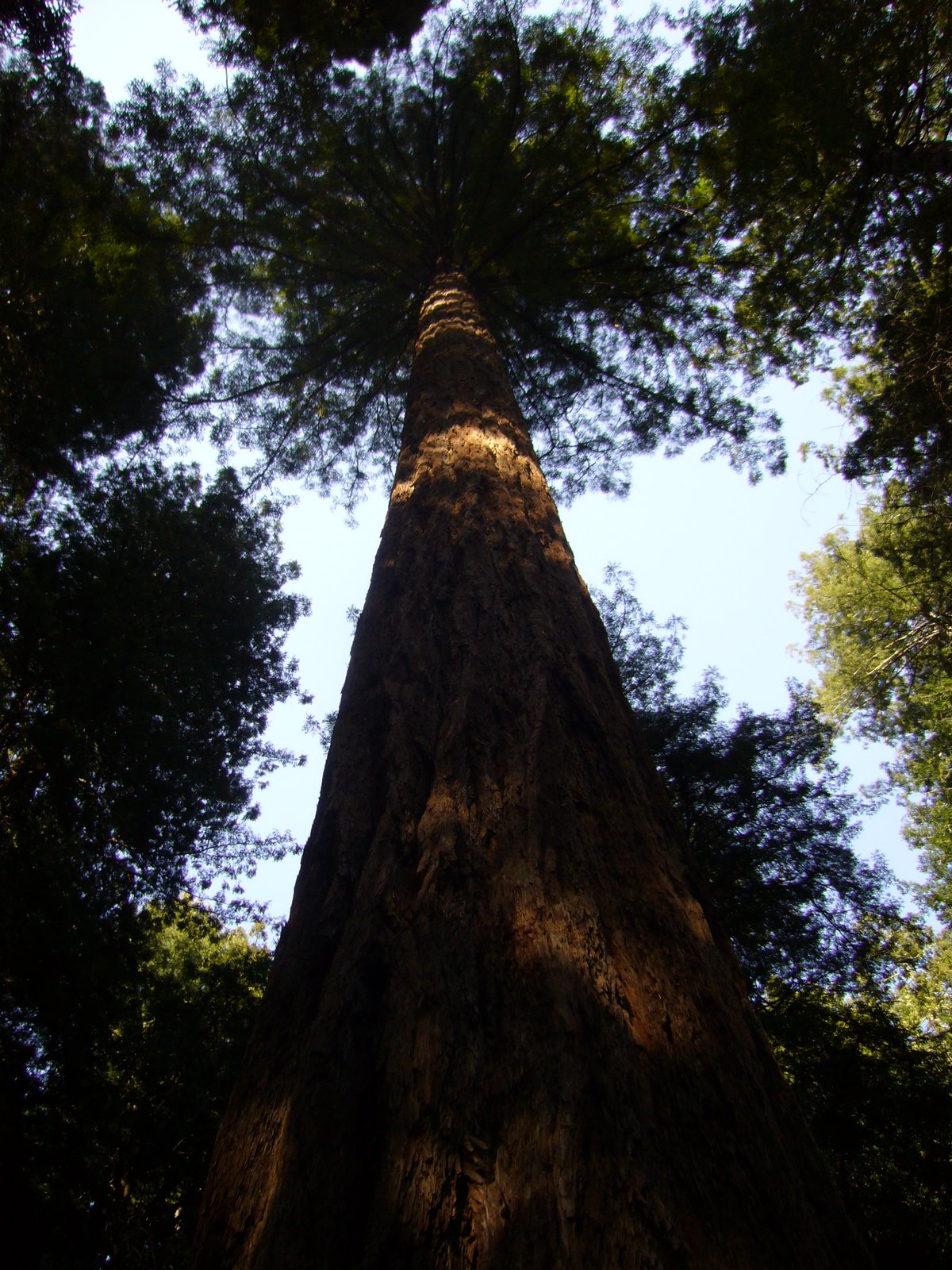
Standing beneath one of these trees and looking up is a lesson in insignificance — the feeling one gets looking straight up the trunk of one of these giants cannot be adequately captured on film (er… microchip).

We quickly tired of the crowds and decided to hike up the Ocean View Trail, which climbs quite steeply up the east side of the valley. This marvelous trail was nearly devoid of people, and we found ourselves winding through thick, dark, cool forest with numerous side ravines. The lower elevations of the trail were dominated by redwood trees and a spectacular array of spring wildflowers. Among the most common was California toothwort (Cardamine  californica [=Dentaria californica]), a member of the mustard family (Brassicaceae). I noticed that the leaves at the base of the plant were broad and oval, while those arising from the flower stalk were slender and lanceolate, often divided into 3 leaflets.

Wake robins (genus Trillium), belonging to the lily family (Liliaceae, sometimes separated into the lily-of-the-valley family, Convallariaceae), are among my favorite wildflowers. We soon noticed Western wake robin (Trillium ovatum) growing commonly in shaded areas along the trail. We were also seeing some purple-flowered wake robins — at first I thought they were a different species, but it soon became apparent that these were older Western wake robin flowers, which change color from white to purple as they age.

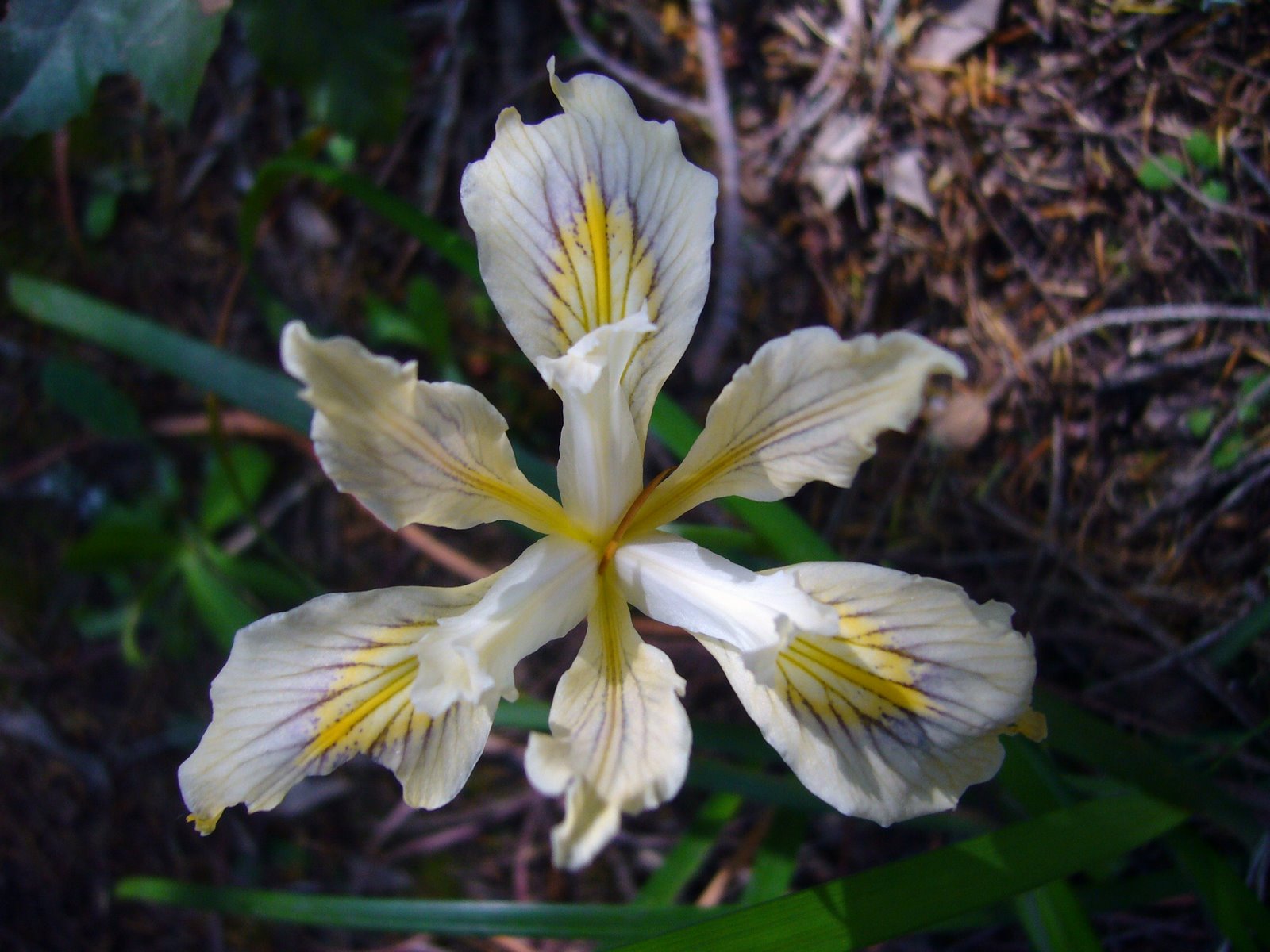
A little further up the trail we began encountering small patches of Mountain iris (Iris douglasiana, family Iridaceae). Flower color for this native species ranges from cream-white to lavender, but all of the flowers we saw were of the white variety.

We saw this fat Solomon’s seal (Maianthemum racemosum ssp. amplexicaule [=Smilacina racemosa var. amplexicaulis]) growing in one of the cool, moist, side ravines. This is another member of the Liliaceae (sometimes separated into the Convallariaceae). The large, oval leaves clasping around the distinct, unbranched stem were almost as attractive as the flowers, which apparently give rise to bright scarlet berries in the summer.

In the middle elevations the redwood forest transitioned to drier oak woodland containing a mixture of Douglas-fir (Pseudotsuga menziesii), Pacific madrone (Arbutus menziesii), bigleaf maple (Acer macrophyllum), and tan oak (Lithocarpus densiflorus). Some of the Douglas-firs were enormous.


Indian warrior (Pedicularis densiflora) is a member of the figwort family (Scrophulariaceae, sometimes separated into the Orobanchaceae). This plant, with its striking bright red flowers and finely divided, fern-like leaves, is a facultative parasite on the roots of other plants. Apparently, the genus name refers to an old superstition that sheep could become infested with lice if they ate this plant.


The juncture of the Ocean View Trail with the Lost Trail was closed, so we backtracked down the 1+ miles back to the main paved trail. By now it was fairly late in the afternoon, and the crowds had thinned considerably. Having gotten lots of good views of the giant trees, we began turning our attention downwards to the smaller understory flora. Ferns, of course, are a dominant component of this understory, especially along Redwood Creek. This large specimen may represent Western sword fern (Polystichum munitum) (family Dryopteridaceae), which can apparently be distinguished by small hilt-like projections from the base of the pinnae (leaflets), but I couldn’t get close enough to see for sure.


Abundant on the ground in the valley was redwood sorrell (Oxalis oregana), a member of the family Oxalidaceae. In places this plant covered the ground in thick carpets.


Among the more interesting plants we saw in the valley was California fetid adder’s tongue (Scoliopus bigelovii), yet another member of the Liliaceae or Convallariaceae. I wasn’t sure what this plant was at first, despite its highly distinctive, glossy, mottled foliage. We were too late to see the blooms, which apparently have a fetid odor to attract flies for pollination, but did find the maturing pods on their slender, drooping stems.


Close to the creek’s edge we saw this colony of horsetails (Equisetum sp.), primitive plants in the family Equisetaceae. Members of this group belong to one of the most ancient lineages of vascular plants, dating back to the Devonian period (416-359 million years ago). Their Paleozoic ancestors (Calamitaceae and Archaeocalamitaceae) were giants, reaching heights of 50 ft or more, and were major components of the Carboniferous swamplands. Along with lycopod trees (Lepidodendrales), they were important contributors to coal formation and, like the lycopods, became extinct by the mid-Permian (~270 million years ago). The genus Equisetum represents the only surviving descendants of this lineage. Unlike their extinct progenitors, these small, herbaceous plants rarely exceed 4 ft in height; however, they share many of the same characters such as articulate stems with microphylls arranged in whorls. Recent phylogenetic studies, using both molecular and morphological characters, suggest that horsetails, together with ferns, form a clade representing one of the three major lineages of vascular plants (Pryer et al. 2001).


Nearby we saw a patch of Giant wake robin (Trillium chloropetalum) in flower. These were taller than the California wake robins we saw on the slopes of the Ocean View Trail but similarly characterized by a whorl of 3 leaves and flowers composed of 3 erect petals. Mature flowers darken to a deep red purple, so it seems these plants had just begun flowering. Muir Woods appears to be a good place for observing a diversity of Convallariaceae!


Also along Redwood Creek we found this bigleaf maple (Acer macrophyllum) in full bloom. As its specific epithet suggests, this maple has the largest leaves of any member of the genus — in this example the newly-expanded leaves were distinctly purplish. The picture below shows the greenish-yellow flowers (petals inconspicuous) produced on long, pendulous racemes.


Interpretive signs along the paved main trail pointed out a redwood “family group,” formed by sprouts growing from the base of a larger tree. Eventually, the central “mother” tree died and decayed away, leaving a ring of offspring that mature into an enormous, characteristic circle of trees. This apparently also happens with other types of trees, though on a smaller scale, as demonstrated in this picture of an oak (Quercus sp.) family group.


As the day drew to a close we found ourselves back in the parking lot, where this California icon, a clump of Coast live oak (Quercus agrifolia), was spreading its wide, majestic crown from multiple, twisted trunks and gnarled branches.


Much too soon, it was time to leave this beautiful valley, but before heading back to Sacramento we stopped to take one last look down towards the valley and out to the Pacific Ocean from the Panoramic Highway.

Lake Tahoe, California

…at last the Lake burst upon us — a noble sheet of blue water lifted six thousand three hundred feet above the level of the sea, and walled in by a rim of snow-clad mountain peaks that towered aloft full three thousand feet higher still! It was a vast oval, and one would have to use up eighty or a hundred good miles in traveling around it. As it lay there with the shadows of the mountains brilliantly photographed upon its still surface I thought it must surely be the fairest picture the whole earth affords. – Mark Twain, Roughing It (1872)

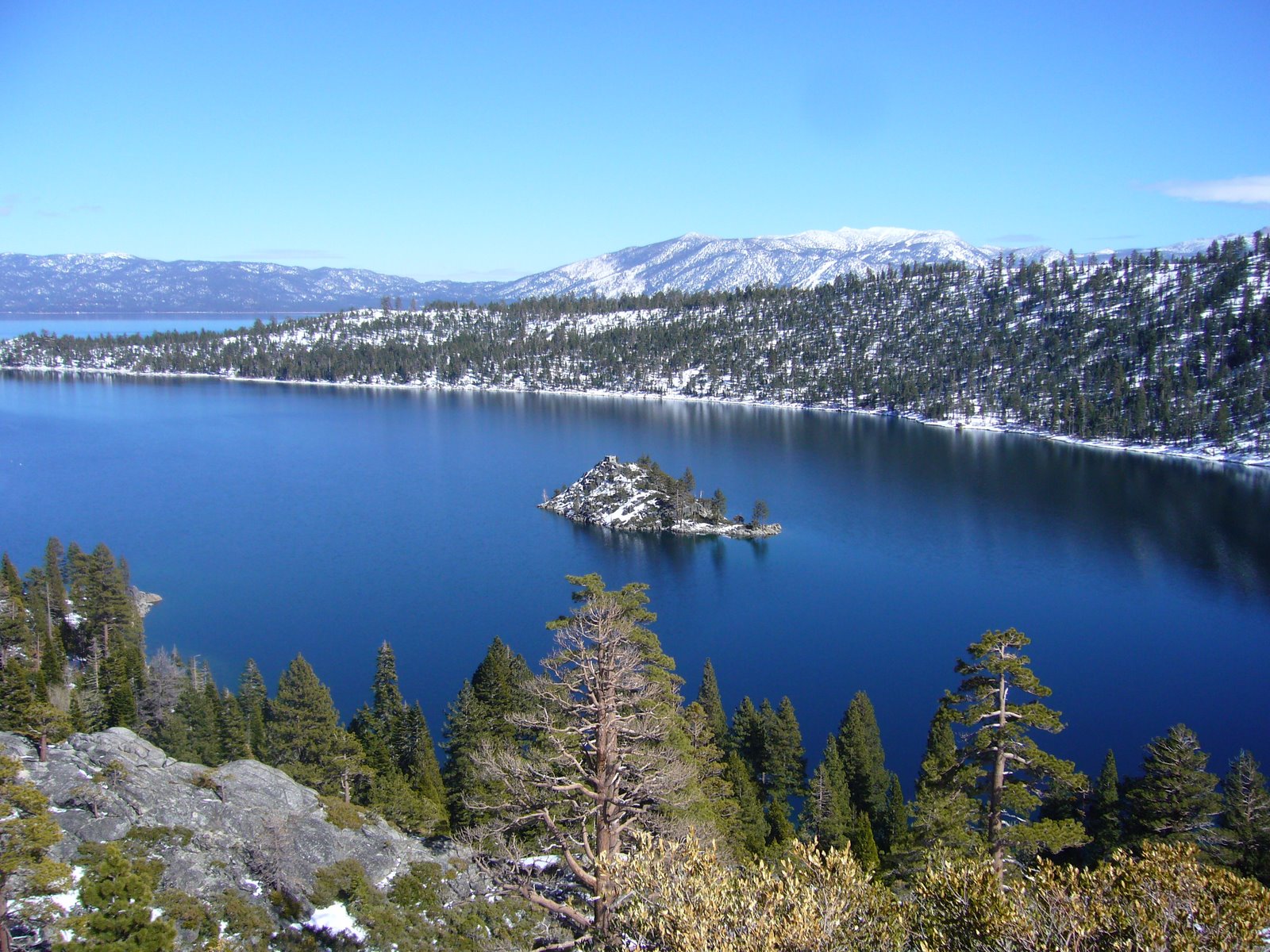
Mark Twain may not have liked the name “Lake Tahoe” – preferring its then-official, patronimic designation as “Lake Bigler.” However, he was clearly overwhelmed by its beauty, and surely no person who has ever seen this place can find fault with the words he so eloquently penned almost a century and a half ago. The view above of Emerald Bay, on the south side of the lake, may not be where Twain first viewed Lake Tahoe, but for me it is the most iconic place from which to view it. I first fell in love with Lake Tahoe almost 18 years ago, when my then fiancée and I first moved to Sacramento. We married up there, and for the 5 years we lived in California we spent many a weekend enjoying Tahoe’s 4-season charm. It has been 12 years since we moved back to St. Louis, and I hadn’t been back — until this past weekend. The reasons for the delay are many, but returning to this place reminded me why I consider it the most beautiful place in the world. I shall not let so long a time pass before my next visit.

Lake Tahoe is a relatively young lake, forming within the last several million years (in contrast, the block of granite that was to become the Sierra Nevada mountains – and in which Lake Tahoe lies – began forming during the Paleozoic Era and was then exposed by erosion beginning about 130 million years ago). The basin in which the lake lies was formed by fault-induced block slippage between two uplifted blocks, with the lake itself forming after magma upwellings dammed the northern part of the basin. Glacial action in more recent years (2 million to 20,000 years ago) caused additional damming, causing drastic fluctuations in the lake level — maximum levels reached nearly 800 feet higher than present. The most recent glaciations (~10,000 years ago) carved out Donner Lake (just east of Lake Tahoe), Emerald Bay (above), and nearby Fallen Leaf Lake (below — the frozen lake surface can just be seen above the trees in the foreground).
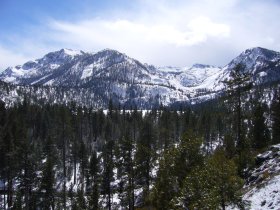

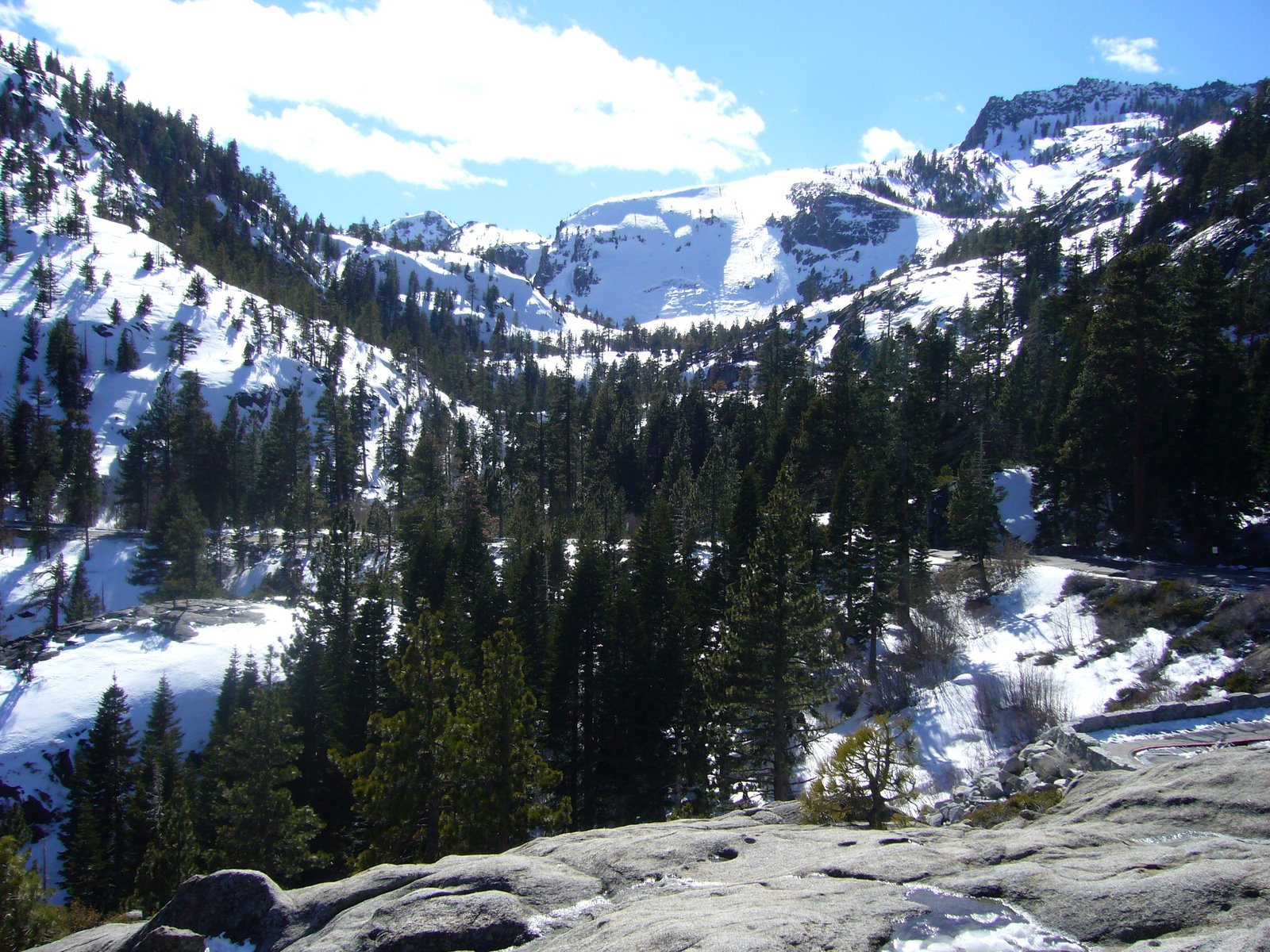
Emerald Bay is actually part of a glacial “staircase” featuring intermittent flat stretches containing lakes and meadows before ultimately ending at Emerald Bay. Eagle Lake lies immediately above Emerald Bay on one of these “steps,” and the 1-mile trail to it is one of the most popular hikes in the area — below is a view towards Eagle Lake from Emerald Bay:


On the day we arrived (Sat 3/15), a late winter storm was dumping new snow on the surrounding mountains, as seen in this view across the south end of the lake towards the city of South Lake Tahoe. Heavenly Ski Resort was shrouded from view on this day, but the fresh powder being dumped there would provide for some delightful spring skiing over the next few days.
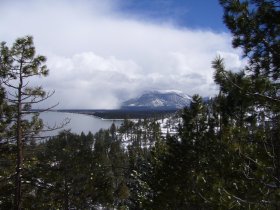

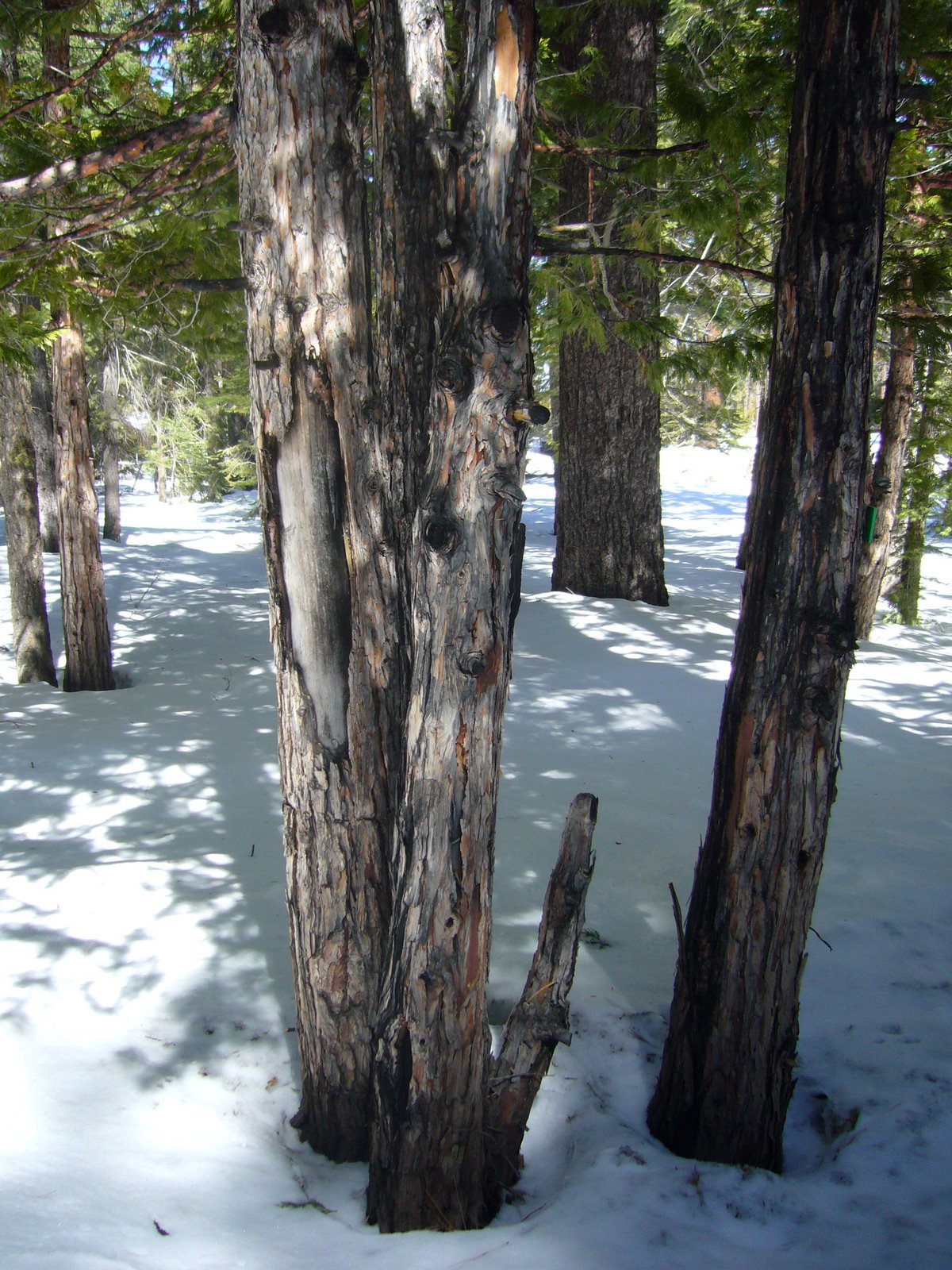
In the meantime, there would be plenty of activities to keep ourselves occupied. With the amount of snow on the ground, one might think there would be little opportunity for botanizing. However, I favor the woody flora, and I was excited about the chance to begin reacquainting myself with some of the western conifers for a change. Of these, one of my favorites is incense-cedar (Calocedrus decurrens) — mature trees develop thick, deeply furrowed, brick red bark that stands out in beautiful contrast from the other trees. Even dead trees maintain a rustic and majestic beauty, and this large dead snag is as stately as any I’ve seen:


On Monday we rented snowshoes and hiked the cross-country ski trails at Camp Richardson. None of us had ever snowshoed before, but the girls quickly got the hang of it (note the live incense-cedar in the background):


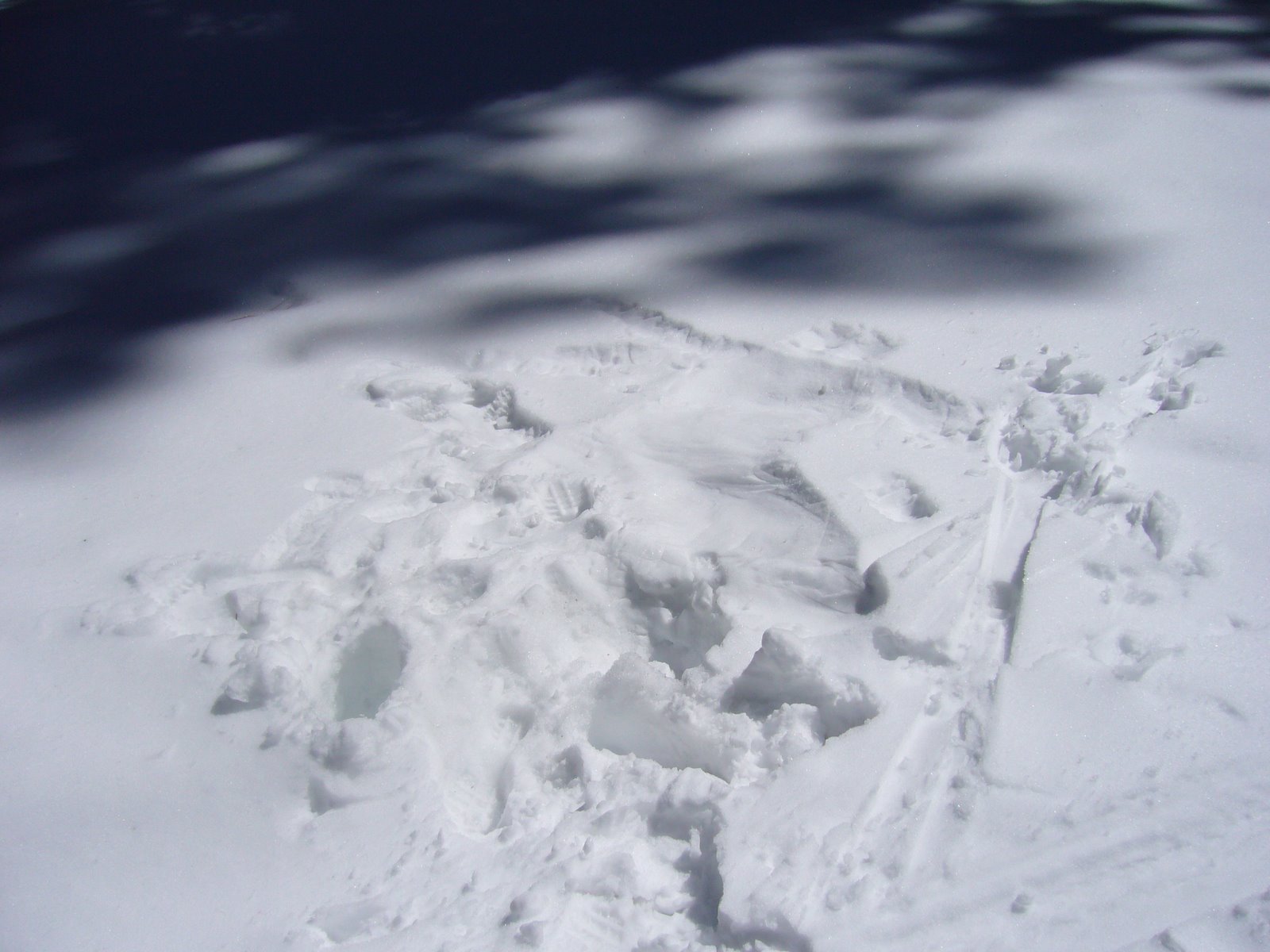
We encountered a few cross-country skiers during our hike, but for the most part we spent the day in solitude. Shortly after beginning our hike, however, we came upon this impression in the snow. At first we thought someone had attempted to make a “snow angel,” but after studying it more carefully we realized it was made by a cross-country skier who had fallen and then struggled to get back up:


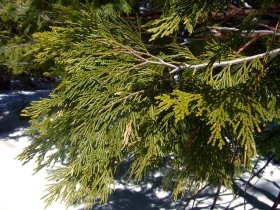
At this altitude, conifers dominate the flora. I was a little rusty on my knowledge of western U.S. plants, but I think I have things figured out (please let me know if you see any needed corrections to my identifications). The aforementioned incense-cedar was a conspicuous component of this lake-level forest, and its foliage – arranged in flattened, elongated, rumpled sprays – makes this tree easily identifiable amongst the other coniferous genera with which it grows:

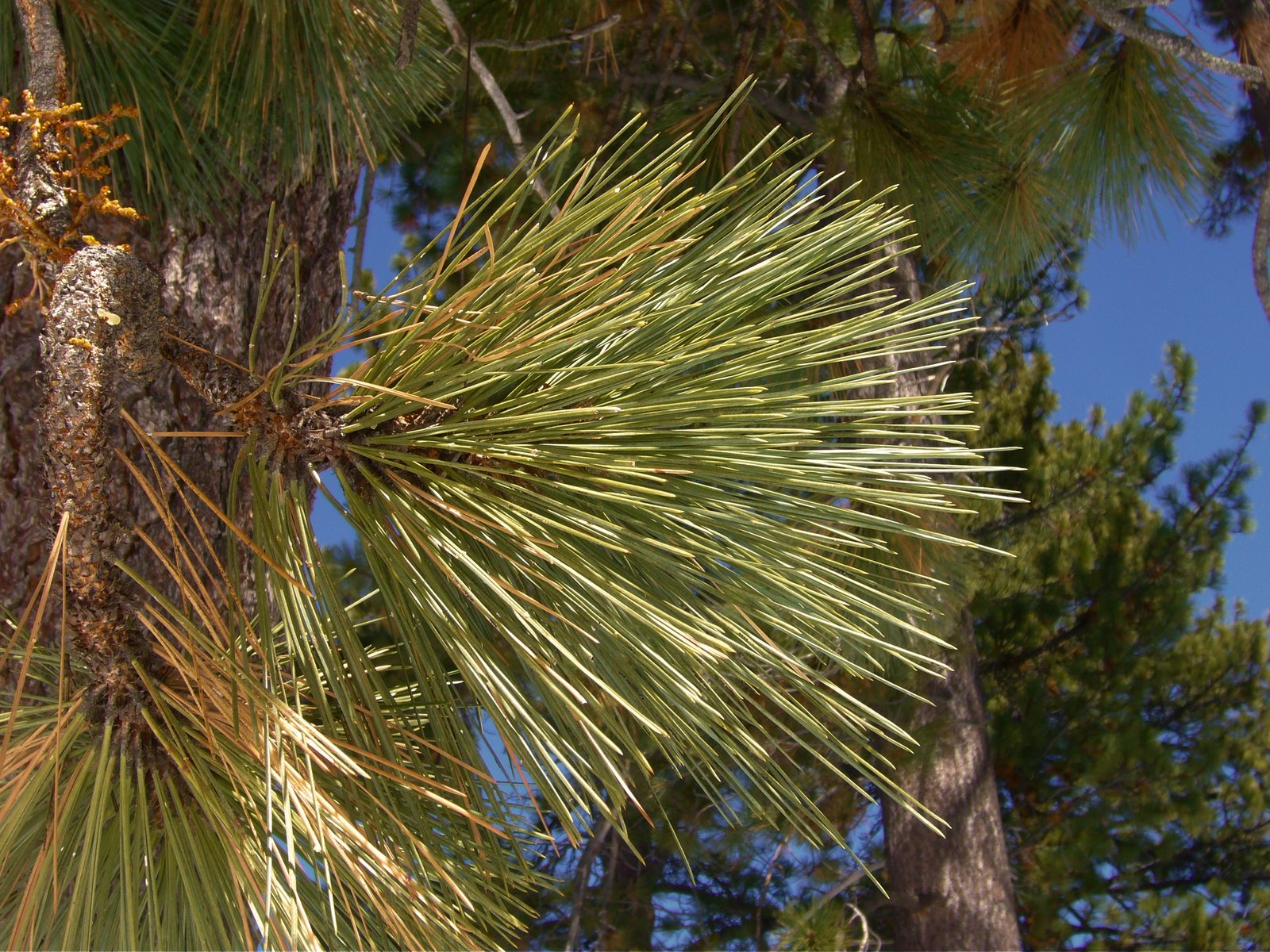
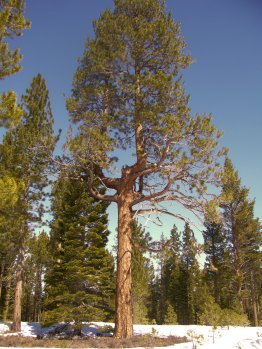
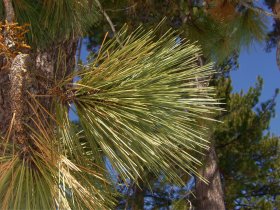
Huge pine trees also dominanted the forest in this area. At first I thought they were ponderosa pines (Pinus ponderosa) due to their large size, irregular crown, and large plate-like patterns on the trunk caused by deep cross-checked fissuring of the bark. Eventually, however, I decided they must instead be Jeffrey pine (Pinus jeffreyi), a closely related species (that was once considered a variety of ponderosa pine), since the bark was more orange than yellow.

A closeup of the needles, which are in bundles of three and measure around 6-8 inches in length:

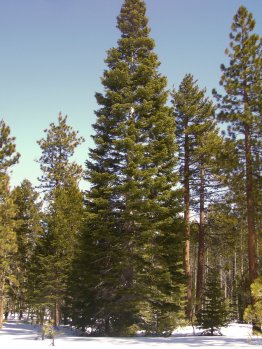
Another dominant coniferous component of this forest, also reaching massive size, was white fir (Abies concolor). The first photo below shows a large, mature tree in the distance, while the second shows a closeup of the foliage. At first I thought this might be Douglas-fir (Pseudotsuga menziesii), as the needles appeared to be irregularly 2-ranked; however, I asked Prof. Ronald Lanner to take a look, and he confirmed it is white fir. He said Douglas-fir needles are shorter, thinner, darker green, and have a skinny stalk, while fir needles have a fat round base and are wider and flatter. The latter also have a citrusy smell when crushed, which he describes as one of the best smells in the woods! Too bad I did not try it.


This decaying stump also represents white fir based on the scaly gray bark. I suspect the outer layers of the lower portion of the trunk (core still standing) were ripped off over time by animals looking for grubs and insects as decay progressed, eventually weakening it to the point that the upper portion (laying on the ground) finally broke off and fell:


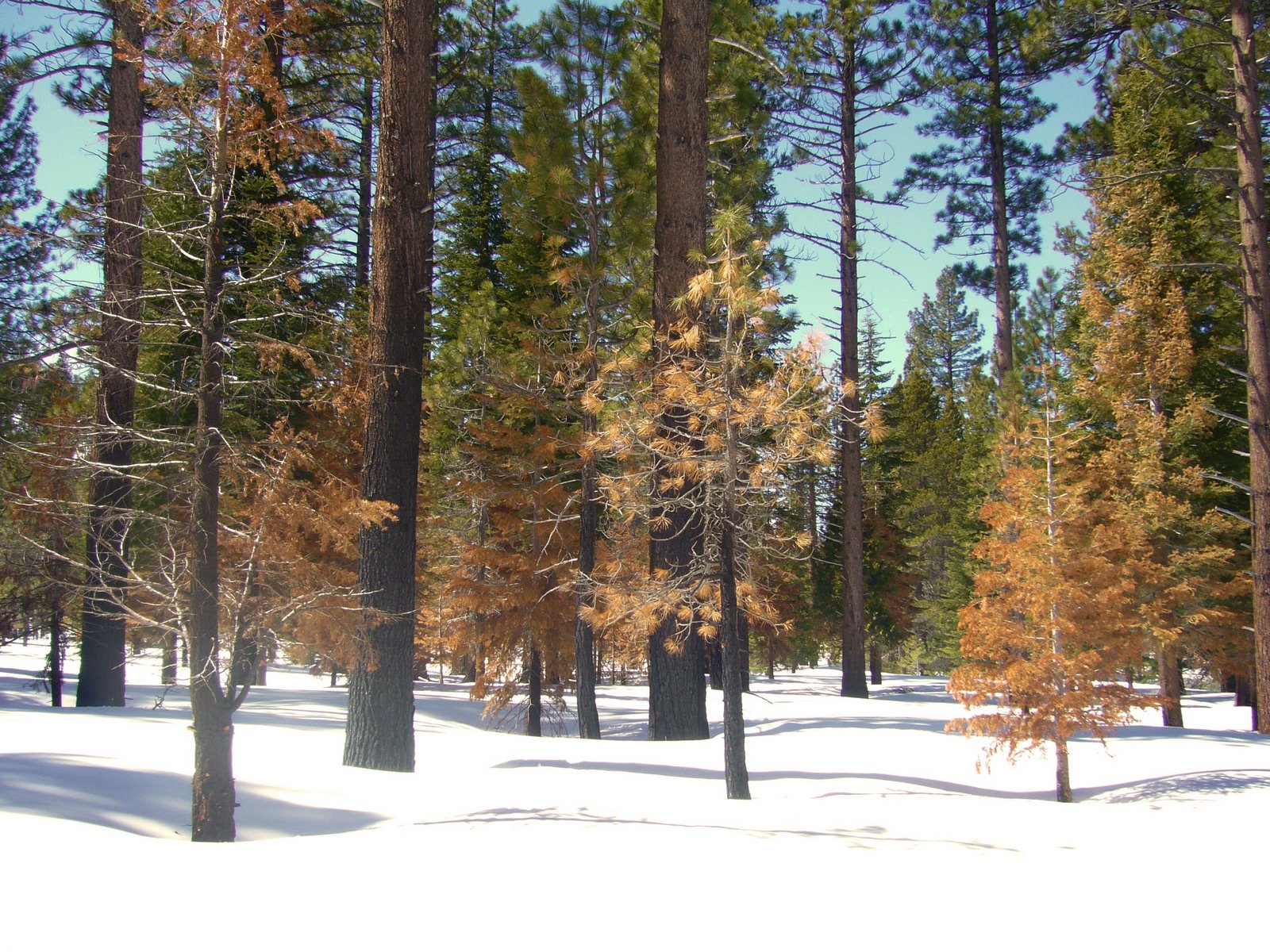
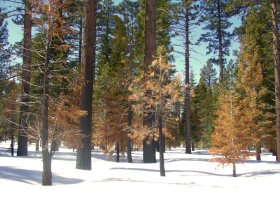
As we hiked, I realized what an important part fire plays in the ecology of these forests. During the drive up from Sacramento, we passed several areas along Hwy 50 that had suffered severe damage due to the wildfires that swept through Lake Tahoe recently. One such area was even seen in the far eastern slopes of Heavenly Ski Resort itself. The forests around Camp Richardson had largely escaped these fires, and I wondered if fire management had contributed to this. Along the trail, evidence of fire was common on the trunks of trees, but few trees – even small ones – had been killed. I presumed the charring was evidence of fires that had been intentionally set and managed by the Forest Service with the objective of preventing fuel accumulation that could lead to the larger conflagrations that caused so much damage in other parts of the basin. These small incense-cedars trunks show obvious fire charring but otherwise looked healthy:


In a few areas it appears even these “cool” fires burned a little hot, killing some of the smaller trees but still avoiding the “torched-earth” damage seen in areas affected by uncontrolled burns:

I’m not much of a birder, but I do love woodpeckers. I got a glimpse of one during our hike, but I didn’t see it well enough to identify it. We did find this woodpecker hole in the trunk of a large, dead Jeffrey pine — a feather can even be seen clinging to the upper rim of the hole. The Lake Tahoe basin is home to several species of woodpeckers — whether this hole belongs to the black-backed woodpecker (Picoides arcticus), white-headed woodpecker (P. albolarvatus), or (more likely) hairy woodpecker (P. villosus) I can’t say for sure:


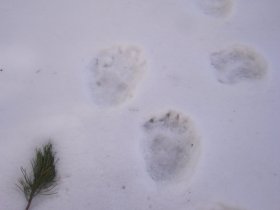
At the beginning of our hike, signs warning of bears and pleading not to feed them caught the girls attention. I told them it was winter and that they would be hibernating, but I wondered if at this late stage they might actually be starting to become active. It wasn’t long before we encountered these unmistakably bear tracks, made fresh in the new-fallen snow, and the more we looked the more abundant the tracks were to be found. I secretly (and the girls outwardly!) hoped we would see a live bear, but I don’t think the girls would have handled such an encounter very calmly:

I had intended to photograph some of the conifers seen at higher elevations while skiing at Heavenly Ski Resort, but I decided not to bring my camera. Pity, as I not only saw nearly pure stands of what I presume to be red fir (Abies magnifica), but also beautifully twisted and wind-gnarled pines at the highest elevations (+10,000 ft) that probably represent whitebark pine (Pinus albicaulis), judging by their highly forked trunks and upswept limbs. These magically grotesque trees were made even more beautiful by the previous day’s storms, which had deposited thick cakes of ice on their windward sides.

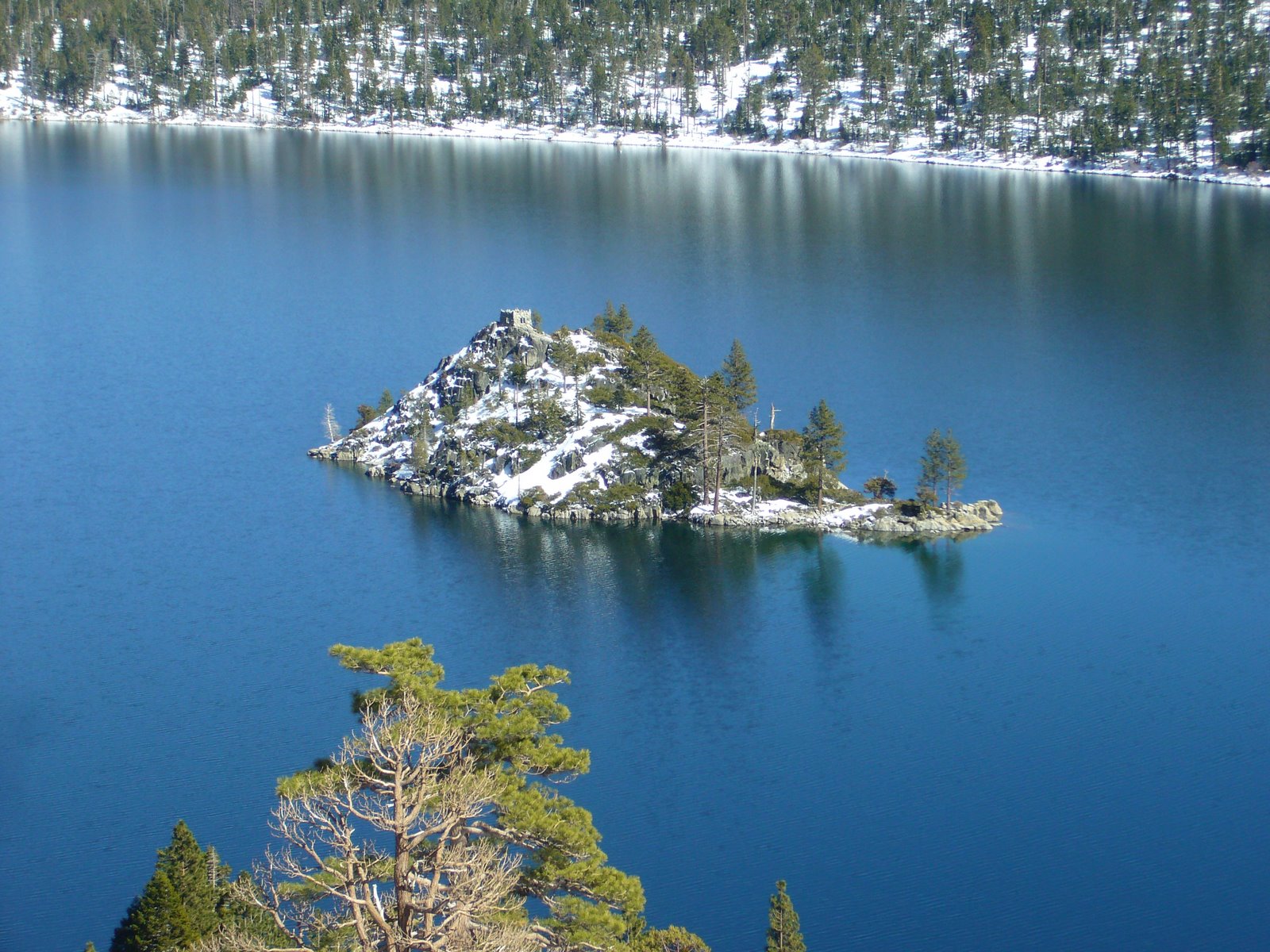
We coudn’t leave Lake Tahoe without one final visit to Emerald Bay. Below is a close up photograph of Fannette Island, the only island to be found in all of Lake Tahoe, and its famed “Tea House”:
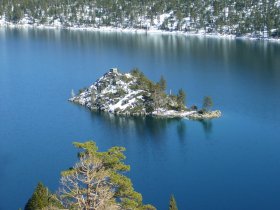

We concluded our visit to Lake Tahoe by driving up Hwy 89 to Tahoe City for dinner at the Bridgetender Cafe before heading back to Sacramento. Next up — Muir Woods!
Ozark Trail – lower Courtois Section

The Courtois Section is the northern terminus of the Ozark Trail (OT). Despite its proximity to the St. Louis metro area, it feels just as remote and wild as the more southern sections. Rich and I played hooky from work on Friday and made our first visit to this stretch of the Ozark Trail. At 40 miles in length, we’ll need to break it up into at least three parts, so for our first attempt we hiked the lower portion from Hazel Creek (where the Trace Creek section begins) north to the Hwy 8 trailhead. Apparently this portion of the OT is very popular with mountain bikers and equestrians; however, we didn’t encounter a single person all day.
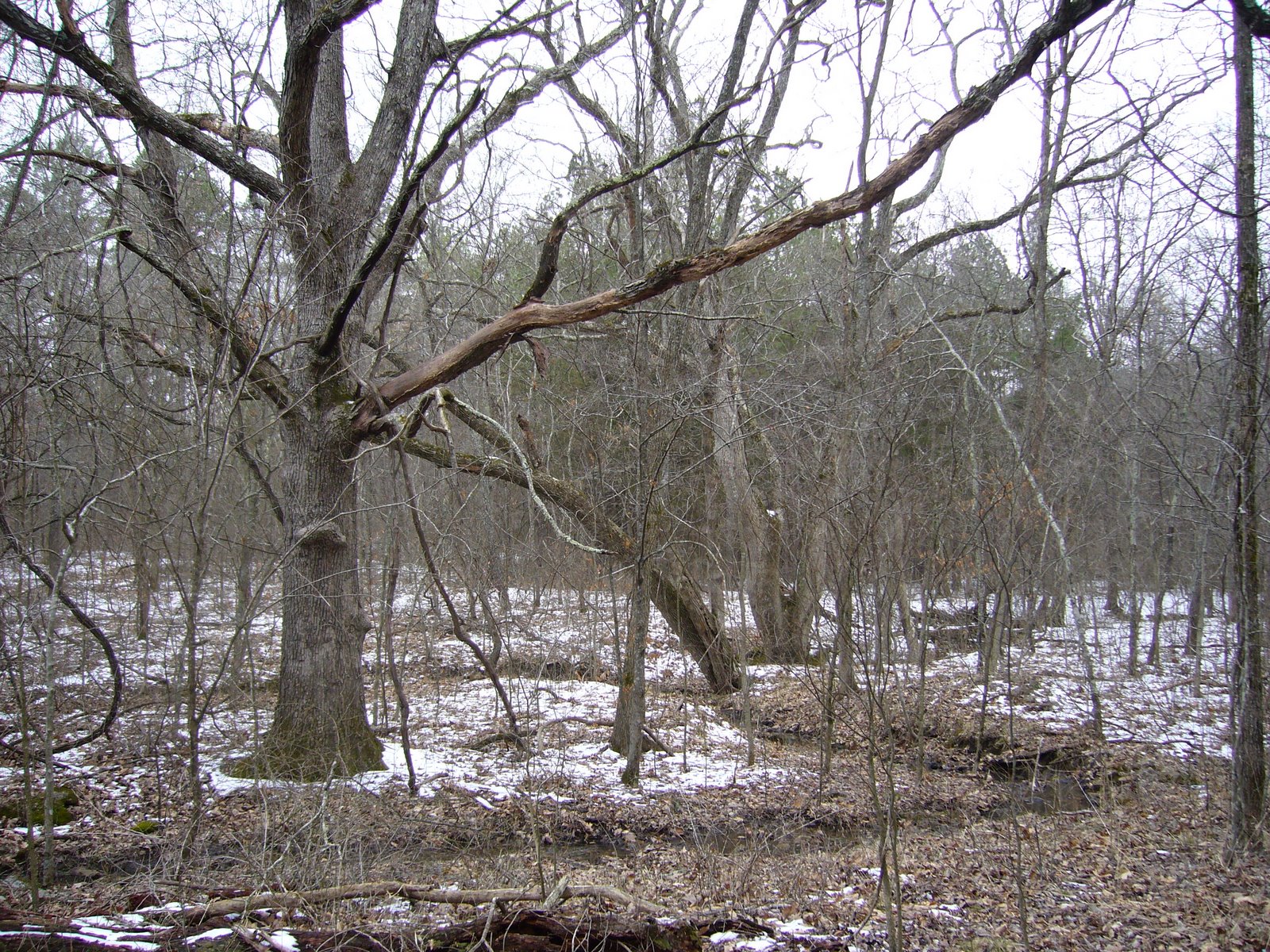
I expected the terrain to be rather mild at this northern end of the OT, but the first few miles were quite up and down. There was still some snow on the ground from a big storm a few days earlier – mild temps and sunny skies since then had caused a lot of melt. As a result, south facing slopes were completely devoid of snow cover, while north facing slopes still had and inch or two of snow, creating “split” scenes such as this:


Right away we noticed a lot of fresh woodpecker damage on oak trees. This is likely the result of infestations by the red oak borer (Enaphalodes rufulus), a cerambycid beetle that preferentially attacks red and black oaks suffering from drought or other environmentally-induced stress. The larvae of these beetles mine beneath the bark on the trunks of these trees before tunneling into the sapwood to pass the winter. Overwintering larvae are tasty morsels for woodpeckers, who hammer into the trunks with their beaks and extract the larvae with their barbed tongues. Interestingly, conventional wisdom has it that the tongue “stabs” the larva, and the barbs aid in pulling the larva out of its gallery. However, recent experiments with a West Indian species suggest this is not the case. Rather, the larva “sticks” to saliva on the tongue, and the barbs help to grab the larva as the tongue is wrapped around it. This picture shows a small black oak (Quercus velutinus) tree with fresh damage, probably from a pileated woodpecker (Dryocopus pileatus) judging by the size, going after one of these larvae.


A few miles into the trail, we came upon some curious “pits” covering one hillside. We speculated what they might be – sinks was an early thought, but I didn’t think that was so because the ground was mounded around the edge like they had been intentionally dug. Rich then remembered reading something about miners digging such pits in past years looking for minerals – we decided that must be what they were, and this was later confirmed in our Ozark Trail guidebook. Certain hillsides were literally covered with these pits, spaced ~10-15 feet apart.

After passing through Snapps Branch (where we noticed a small calcareous wet meadow, or fen – thankfully fenced), the trail leveled out for awhile before descending down to Boiling Springs Hollow where we stopped for lunch. Many of the larger valleys along the OT show some evidence of prior habitation – either by remains of old structures or by the stage of succession exhibited by the bottomland forest. Right at Boiling Springs, I noticed this large, old oak tree along with several large sugar maples (Acer saccharum) surrounded by younger forest – I suspect these “founder trees” were planted at some point when people lived near the spring (or at least spared from “the saw”) and remain as the only evidence of the people who lived here in the past.


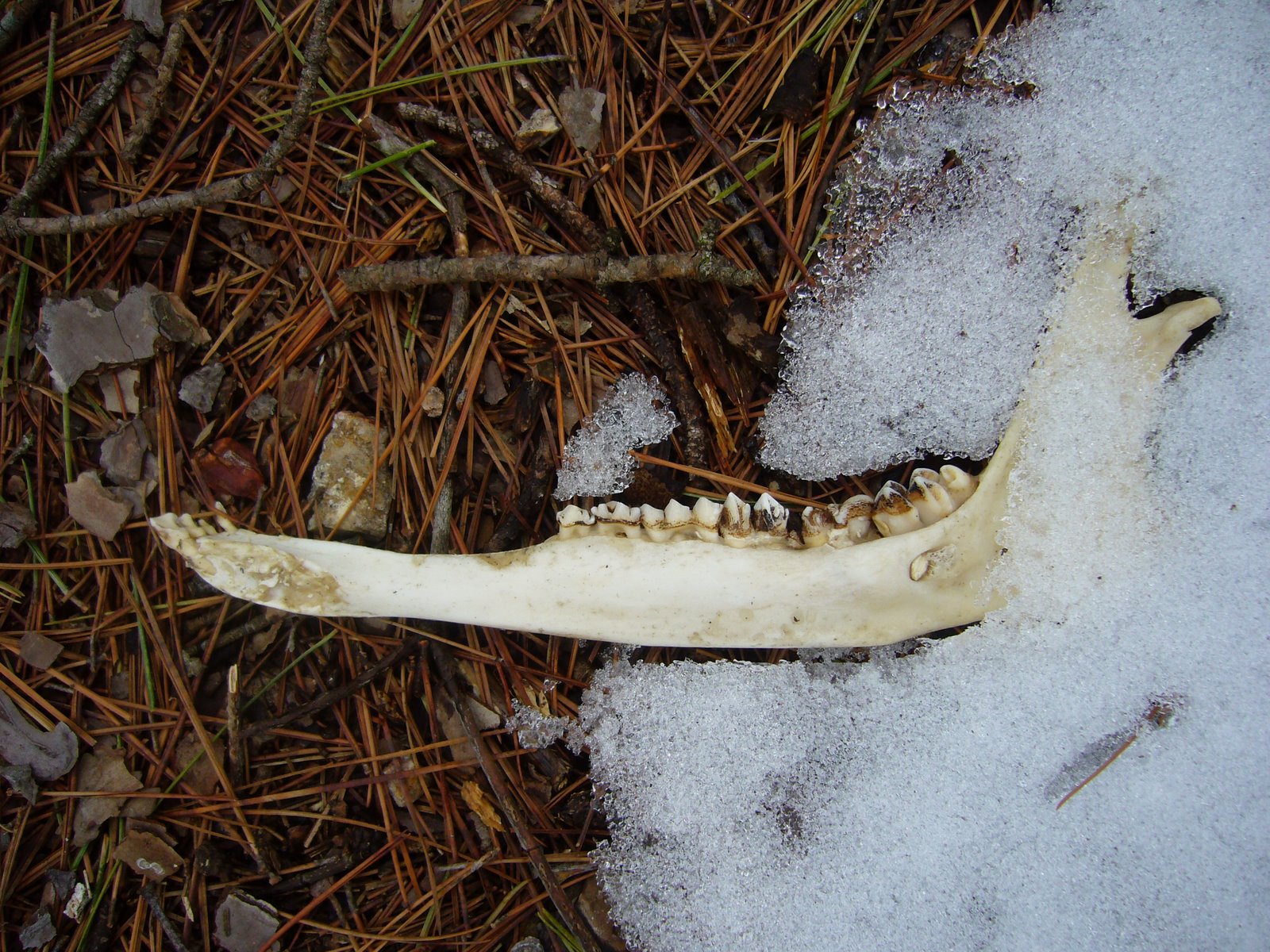
I love bones and pick them up whenever I get the chance. After leaving Boiling Springs I noticed this half mandible of a white tailed deer (Odocoileus virginianus) laying on the trail, still partially embedded in the snow. It was remarkably clean and complete, containing all of its dentition and with no remaining tissue except for a small piece attached to the nerve fossa. It’s completeness begged the question – where was the other half? We looked around and couldn’t find it. We then wondered if it had been dragged there by a scavenger, although we thought that if that was the case it should show signs of gnawing or at least have lost some of its dentition. At any rate, I have a white tailed deer cranium in my collection but not a mandible, so this will be a welcome addition.


Eventually we entered Machell Hollow, where we followed a beautiful stretch through the upper reaches of the valley. In this area we noticed a large number of dead white oaks (Quercus alba) that were all about the same size (~4-8″ dbh) and in about the same stage of decay, as if they had all died about the same time (maybe 4-5 years ago). There were still plenty of larger living trees, and I began to suspect that a fire had moved through this area and began looking for the evidence. Soon we found several larger trees showing some blackening around the base of the trunk that seemed to confirm this thought. We had a lot of fun “pushing over” some of these trees, with one in particular probably representing our champion pushover to this point. I didn’t think it was gonna go, but Rich chipped in, and against our formidable combined weight the tree gave way and came down with a crash. I noticed evidence of tunneling by wood boring beetles (probably a species of Buprestidae) inside the trunk of this tree where it cracked upon falling and lamented that I could not take a piece with me for rearing. All of the dead white oaks had this one type of shelf fungus growing from their trunks, which were particularly numerous on this already fallen tree:


Climbing up (briefly) out of Machell Hollow, we saw this cut shortleaf pine (Pinus echinata) laying by the side of the trail. Interestingly, the accumulated ice on the cut end of the trunk was not the result of water running off the trunk, but through the trunk, apparently through insect galleries and perhaps even the vascular bundles of the wood itself. The slow melt and freeze resulted in these interesting little ice columns joining the trunk to the moss-covered ground below.


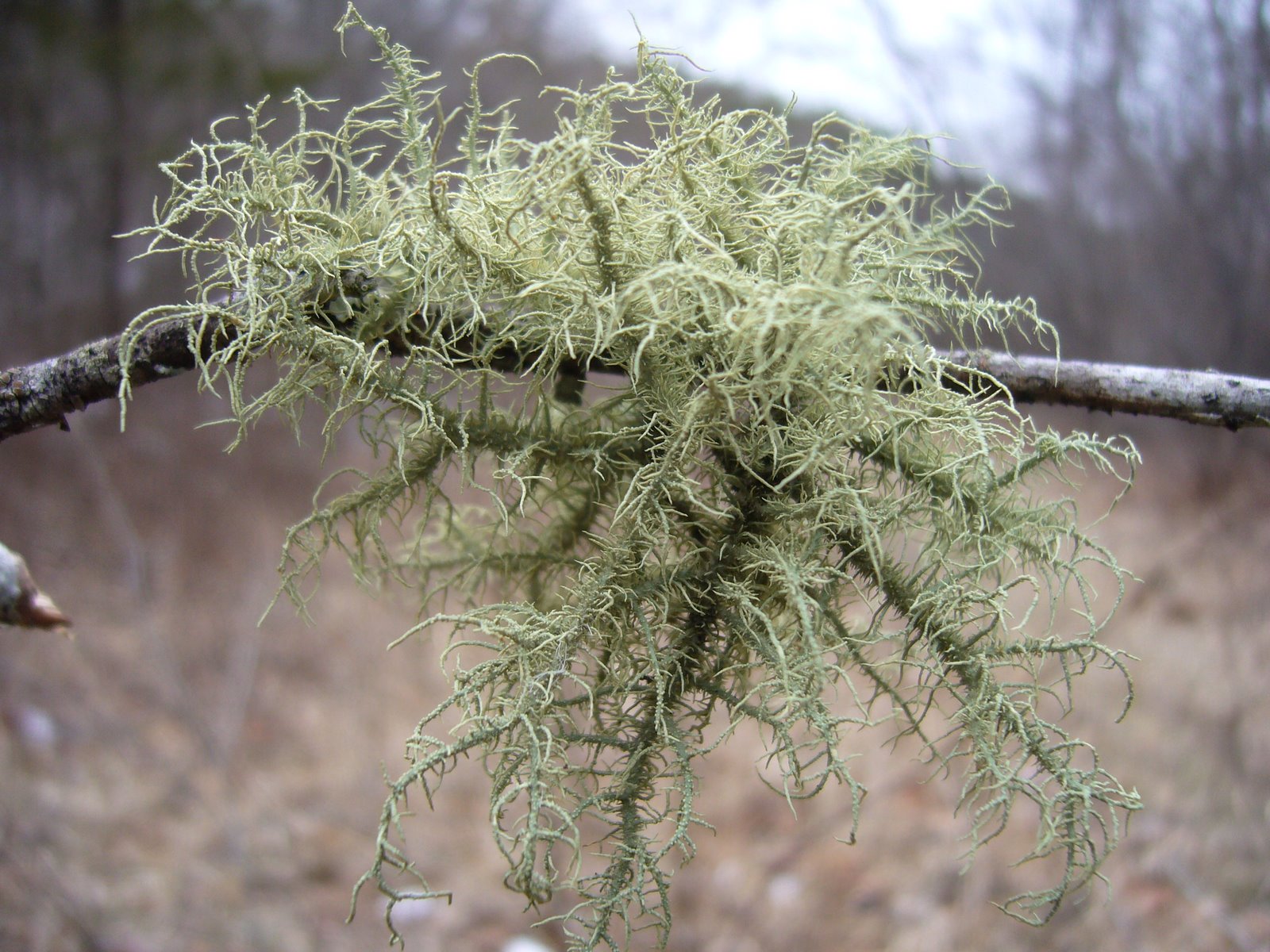
Back down into the lower reaches of Machell Hollow, evidence of prior settlement was obvious, as the bottomland forest in this area was replaced by young successional forest comprised primarily of chokecherry (Prunus virginiana), honey locust (Gleditsia triacanthos), and brambles (Rubus sp.). We saw this lone little fruticose lichen growing on a small honey locust. Apparently, of the three main groups of lichens, fruticose lichens are the most sensitive to environmental disturbance. Perhaps the existence of this one colony suggests that the health of this bottomland forest is returning as succession proceeds along the path to maturity.


Here’s a picture of Rich taking his own picture of the lichen. I don’t know why he didn’t just wait and steal mine once it got posted 😉


Much more abundant on the honey locust trees were these foliose lichens. Lichens in this group are probably the most commonly noticed lichens in the Missouri Ozarks (although the less conspicuous crustose lichens may actually be more diverse). If you click on the photo to see the full-sized version, you can see long, black “hairs” around the margin of each “leaf” – if anyone knows the identity of this or any of the other lichens pictured on this site please let me know.


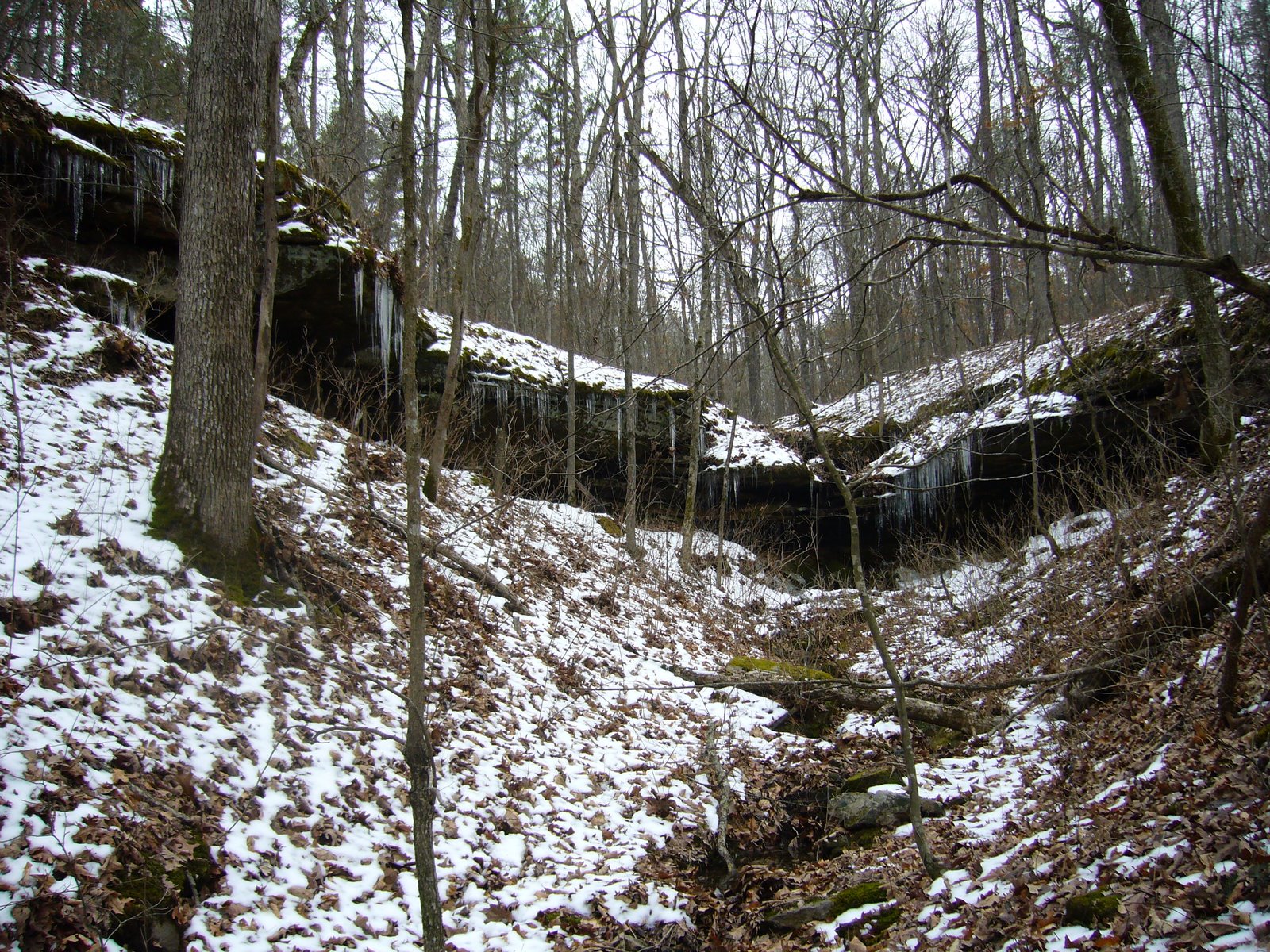
While ascending out of Machell Hollow, we noticed this small canyon about a hundred yards off to the left and decided to go investigate. Along the way we noticed the small creek coming from it was actually a ‘losing creek’ – which means that the water flows into the ground at certain points and is ‘lost.’ This is another feature of the limestone/dolomite-based Karst geology so common here in southern Missouri that results in its abundance of caves and springs. When we got to the canyon we saw it was comprised of a layer of sandstone. This must be a rare western exposure of the LaMotte sandstones that are more common just to the east in Ste. Genevieve County (see earlier posts on Hawn State Park and Pickle Springs Natural Area). This sandstone layer overlying dolomite has created an interesting geological feature, where a losing creek originates from a box canyon. Ice stalactites were dripping from the north facing slope of the canyon walls.


Back down into another hollow leading to Lost Creek we saw more dead white oaks with shelf fungi growing from the trunks. This one was interesting in that the shelf fungi were themselves supporting the growth of algae on their surface – an exquisite example of the interconnectedness of life.


We had seen a flock of wild turkeys (Meleagris gallopavo) moving through the forest earlier in our hike. We were too clumsily noisy to get close enough for more than a cursory look at them as they trotted off on high alert, but evidence of their activity was obvious as we saw their fresh “scratchings” over a wide swath through the forest as they searched for acorns to eat. Tracks were abundant in the snow around the area also, but I couldn’t get a good picture of them. Later, as we neared Lost Creek, I saw more tracks in the mud, so I was able to get a good picture of one. It looked fairly fresh (well defined, with nail holes evident):

Lost Creek represented the end of our hike, but it proved to be a more than insigificant final hurdle, as the water level was quite high due to all the recent snow melt. There was no choice, we would have to get wet. Rich is smarter than I and had thought to bring along some flip flops, so he took off his boots and socks, rolled up his pants, and forded the creek. I let him go first to see how deep the water was – it reached above his knees and got is rolled up pants wet. I decided to get my boots wet – I didn’t want to walk on those rocks barefoot, which would slow me down far more than I wanted in that cold water. I could handle wet boots for the final quarter mile in exchange for the comfort and speed they would provide on the rocks. Rich may be smarter, but I took a better line and didn’t even get my pants wet, so for me it was only a matter of changing into my comfy shoes back at the car, with no need for a change of clothes (which I also wasn’t smart enough to bring, either). We completed the hike in 7 hours – yes, we’re lollygaggers, constantly distracted by little things that most people either don’t see or don’t care about. It was a wonderful hike on another beautiful day, and we ended it with another traditional post-hike visit to the nearest pizza parlor before the short drive back to St. Louis.