First-ever BitB “Reader’s Poll”

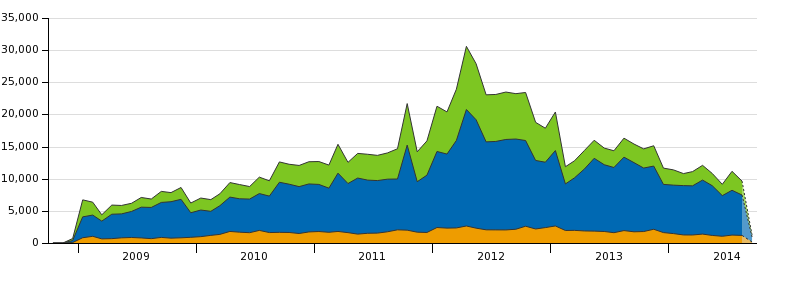
For seven years now I’ve been conducting this experiment called Beetles in the Bush. In that time I’ve written nearly 1,000 posts (with the help of a few guest authors), posted nearly 3,000 images, contributed or entertained over 10,000 comments, and watched the site creep ever closer to its millionth hit! This might leave you wondering why I should, now, be asking readers to provide feedback on why they visit BitB and what they like most (or least) about it. The reason is simple—blogging is less popular now than it was a few years ago. Comments and readership are both in decline (not just here, but across the platform), and the trend has left few clues about who the remaining readership is and what they are interested in. If I know clearly what readers want, it will be easier for me to provide it. That is not to say I expect (or even could) drastically change my content or its focus. However, if I know a certain topic is more popular than others I can give that topic priority, or if nobody really reads the “long-reads” I can skip them altogether. I hope you’ll indulge my curiosity by participating in the five short polls below that need only a few anonymous clicks of the mouse—no written responses required. Of course, if you wish to provide written feedback in the comments section it will be most appreciated. And, as always, thank you for your readership.

© Ted C. MacRae 2014

One-shot Wednesday: swamp milkweed leaf beetle

Labidomera clivicollis on Asclepias incarnata | Hickman Co., Kentucky

Labidomera clivicollis on Asclepias incarnata | Hickman Co., Kentucky

Technically this photograph of Labidomera clivicollis (swamp milkweed leaf beetle) doesn’t qualify as a “one-shot”, as I did take a few other shots as well. However, this was the only shot out of the handful that I didn’t throw away. It’s not perfect—the right front and left rear legs are raised awkwardly, and the lighting is a bit harsh. However, the important parts of the beetle are in focus, the composition is acceptable (with all parts of the beetle within the frame), and there is pleasing value contrast between the orange and black body of the beetle, the green plant on which it sits, and the clear blue sky in the background. The plant’s flowers have even added a smidgen of pink. All of the other photos lacked either focus or composition, neither of which are easily “fixable” in post-processing. The difficulty in getting a better photo is a result of the beetle’s refusal to settle down and stop walking and my lack of desire to spend an inordinate amount of time waiting for this to happen as opposed to finding the insect I was really looking for (more on that in a future post).

I found this beetle on swamp milkweed (Asclepias incarnata) in Hickman Co., Kentucky. As the common name suggests, swamp milkweed is one of the main hosts for this rather large beetle (at least, by leaf beetle standards). However, they can and do feed and develop on other milkweeds, especially common milkweed (A. syriaca), and even related genera such as swallow-wort (Cynanchum) and twinevine (Funastrum) (all belonging the family Asclepiadaceae).

Labidomera clivicollis is part of the orange and black milkweed mimicry complex, which includes monarch butterfly (Danaus plexippus), red milkweed beetles (Tetraopes spp.), large milkweed bug (Oncopeltus fasciatus), small milkweed bug (Lygaeus kalmii), milkweed assassin bug (Zelus longipes), and others. Most of these insects have evolved mechanisms for avoiding or detoxifying cardenolides (produced by milkweed as a defense against herbivores) and sequestering them within their bodies for their own defense against predators. This represents a classic example of a Müllerian mimicry ring, in which multiple insect species—sometimes from different families and even different orders—share a common warning color. Predators learn to avoid these colors and, thus, avoid all of the species within the mimicry ring.

© Ted C. MacRae 2014

My, what busy palps you have!

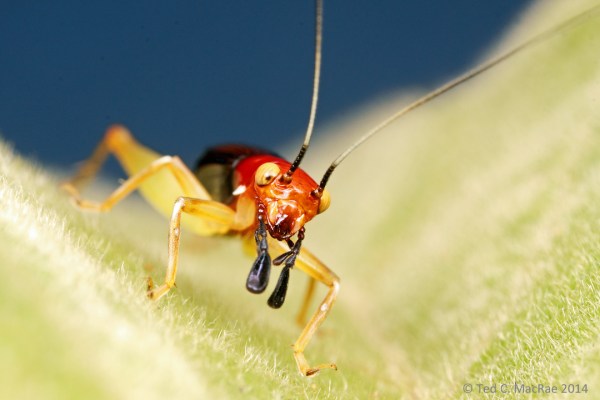
In mid- to late summer, the swamps of southeast Missouri and adjacent areas along the Mississippi River become awash in color as stands of hairy rose mallow (Hibiscus lasiocarpus) put forth their conspicuous, white and pink blooms. I’ve been waiting for the mallows to bloom this year, as there is one particular beetle associated with plants in this genus that I have been keen to photograph since I first picked up a real camera a few years ago, to this point without success. My first attempt this year came in early August as I noted the tell-tale blooms while passing through extreme western Kentucky. I was foiled again (but would succeed the next day—more on this in a future post), but as I tiptoed over the soggy ground searching through the lush foliage, I saw a small, brightly colored cricket with curiously enlarged mouthparts. Even more interesting was the constant, almost frenetic manner in which the insect was moving these mouthparts. My first attempts to detach the leaf on which it was moving spooked it, and it jumped to another leaf, but I persisted and finally succeeded in detaching the leaf with the critter still upon it and maneuvering it up towards the sky for a few photographs.
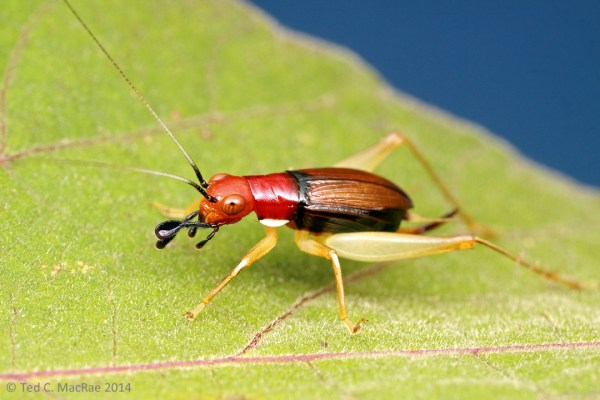
Phyllopalpus pulchellus (red-headed bush cricket) | Hickman Co., Kentucky

Phyllopalpus pulchellus (red-headed bush cricket or “handsome trig”) | Hickman Co., Kentucky

It didn’t take long to identify the cricket as Phyllopalpus pulchellus, or “red-headed bush cricket” (family Gryllidae). This species, also known as the “handsome trig” on account of its stunning appearance and membership in the subfamily Trigonidiinae, is distinctive among all North American orthopterans by its red head and thorax, pale legs, dark wings, and—as already noted—highly modified maxillary palpi with the greatly expanded and paddle-like terminal segment. According to Capinera et al. (2004), adults appear during mid- to late summer near streams and marshes on vegetation about one meter above the ground—precisely as this individual was found. Surely it represents one of our most photographed cricket species (208 BugGuide photos and counting).
The greatly expanded palps are thought to mimic beetle mandibles or spider pedipalps.

The greatly expanded palps are said to mimic beetle mandibles or spider pedipalps.

The obvious question to anyone who sees this species is, “Why the curiously enlarged palps?” Both males and females exhibit this character (even as juveniles), so it seems clear that there is no special sexual or hypersensory function. One idea mentioned on BugGuide (perhaps originating from this EOL post by Patrick Coin) suggests that the crickets are Batesian mimics of chemically-defended ground beetles (family Carabidae) such as bombardier beetles (genus Brachinus). This thought is based on their similar coloration, the convex and shiny (and, thus, beetle-like) forewings of the females, and some resemblance of the enlarged palpi to the mandibles of the beetles. I am not completely satisfied with this idea, since bombardier beetles are generally found on the ground rather than foliage. Moreover, males lack the convex, shiny forewings exhibited by females, and resemblance of the palps to beetle mandibles doesn’t explain their curiously constant movement (ground beetles don’t constantly move their mandibles). Another idea suggested by orthopterist (and insect macrophotographer extraordinaire!) Piotr Naskrecki is a mimetic association with another group of arthropods, noting that the busy movements of the palps is very similar to the way jumping spiders (family Salticidae) move their pedipalps. This suggestion also is not completely satisfying, as it leaves one wondering why the crickets are so boldly and conspicuously colored. While some jumping spiders are brightly colored, I’m not aware of any in eastern North America with similar coloration (indeed, many jumping spiders can be considered ‘drab’). Perhaps the crickets have adopted mimetic strategies using multiple models in their efforts to avoid predation?

The brown wings and long, sickle-shaped ovipositor identify this individual as a female.

The brown wings and sickle-shaped ovipositor identify this individual as a female.

The individual in these photos can be identified as a female due to the presence of the sickle-shaped ovipositor and, as mentioned above, the convex, shiny forewings. Males possess more typically cricket-like forewings, perhaps constrained to such shape by the sound producing function they must serve. The males do, however, exhibit an interesting dimorphism of the forewings, with one wing being clear and the other one black. Fellow St. Louisan and singing insect enthusiast James C. Trager notes this dimorphism has been mentioned in the literature but not explained and suggests it may have something to do with the adaptive physics of sound production.

Congratulations to Ben Coulter, who wins Super Crop Challenge #16, which featured a cropped close-up of the enlarged maxillary palpi of this insect. His 12 pts increase his lead in the overall standings for BitB Challenge Session #7 to an almost insurmountable 59 pts. Morgan Jackson and Troy Bartlett round out the podium with 10 and 9 pts, respectively—Troy’s points being enough to move him into 2nd place in the overalls with 23 pts. Third place in the overalls is still up for grabs, since none of the people occupying the 3rd through 6th places has played for awhile—realistically any number of people behind them could jump onto the podium (or even grab 2nd place!) in the next (and probably last) Session #7 challenge.

REFERENCE:

Capinera, J. L., R. D. Scott & T. J. Walker. 2004. Field Guide To Grasshoppers, Katydids, And Crickets Of The United States. Cornell University Press, Ithaca, New York, 249 pp. [Amazon].

© Ted C. MacRae 2014

Super Crop Challenge #16

Who am I?

Who am I?

Can you identify the structures in the photo above (2 pts), their significance (2 pts), and the organism to which it belongs (order, family, genus, and species—2 pts each)? Comments will be held in moderation so everybody has a chance to participate, but there are early-bird bonus points on offer for those who get their answers in quickest. You’ve got the weekend to think about it. 🙂

p.s. Read the full rules for details on how (and how not) to earn points. Good luck!

© Ted C. MacRae 2014

Southern armyworm feeding on soybean

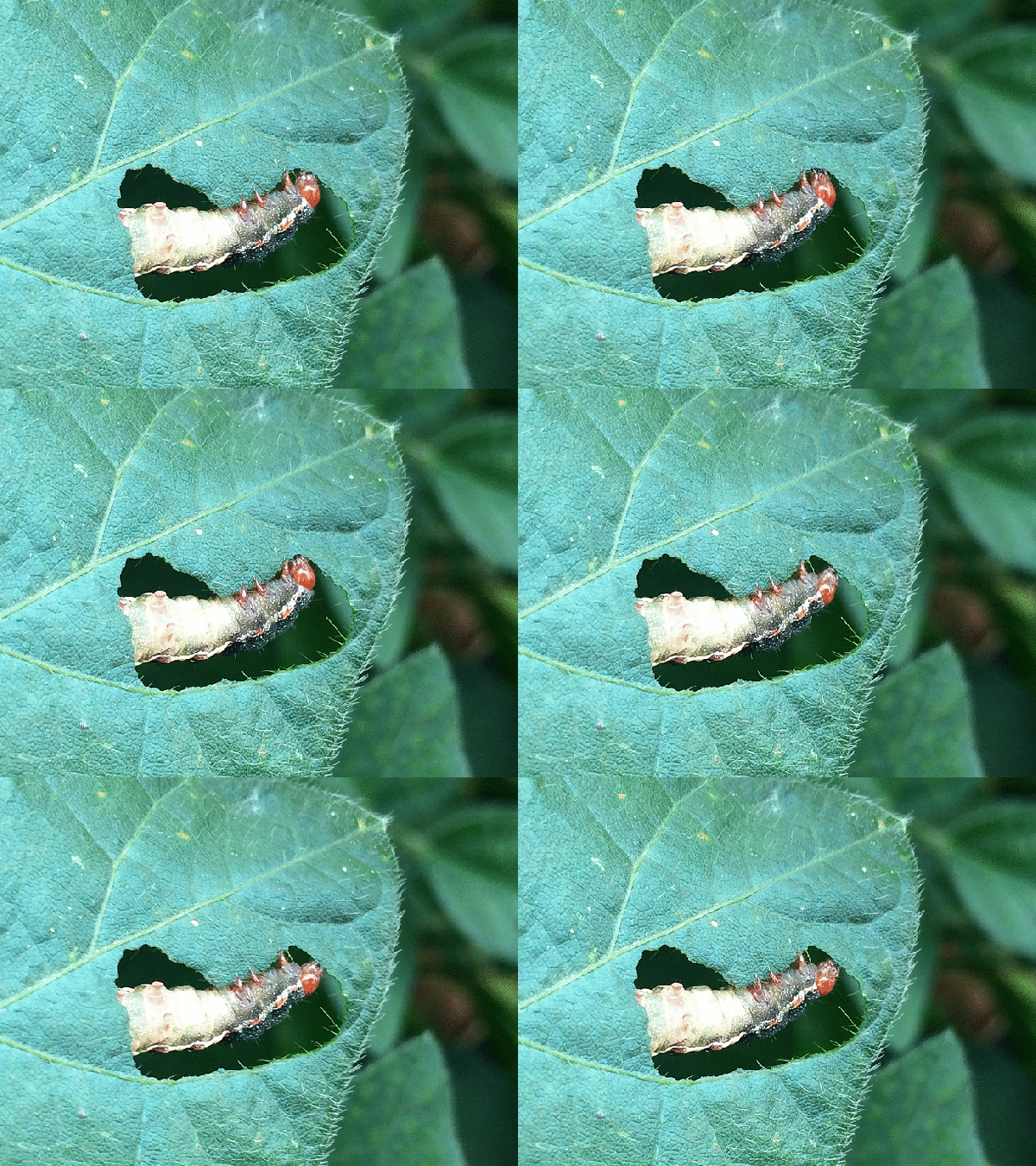
Southern armyworm (Spodoptera eridania) late-instar larva feeding on soybean.

Southern armyworm (Spodoptera eridania) late-instar larva feeding on soybean.

Here is another animated gif that I made recently, this one showing a late-instar larva of southern armyworm (Spodoptera eridania) feeding on soybean (Glycine max). This polyphagous species is widely distributed from the southern U.S. through the northern half of South America and feeds on a variety of weeds, especially pigweed (Amaranthus spp.) and pokeweed (Phytolacca americana). It also occasionally attacks vegetable, fruit, and ornamental crops; however, in recent years it has become increasingly important on cultivated soybean in Brazil and Argentina, especially in regions where cotton is also cultivated. As a result, they have become one of the insects that I deal with regularly in my own research. More information on this and other armyworm species that affect soybean can be found in my earlier post, Quick Guide to Armyworms on Soybean.

Like many other lepidopteran caterpillars that feed on foliage, late-instar larvae become “feeding machines” that remain active both day and night as they try to cram as much nutrition into their expanding bag of a body as possible in preparation for an adult life focused solely on finding mates and laying eggs. Large larvae actively feeding during the day can be rather conspicuous, and as a result they often secrete themselves on the undersides of the leaves while feeding to make themselves less visible to predators. As they feed, however, a “window” opens up that gradually eliminates their cover. Rather than remaining in the same spot and feeding until they are completely exposed, however, larvae will move when the feeding hole reaches a certain size and find another place to conceal themselves before resuming feeding. Different caterpillar species have different exposure tolerances, and as a result, this combines with slight differences also in preferred tissue types to create recognizable differences in the damage patterns resulting from feeding by different species.

For those interested, making these animated gifs is really simple and allows those of us without expensive macro-video gear to simulate short videos of insect behavior. I make my animated gifs at GIFMaker.me—all you do is take a series of photos, touch them up in photo editing software (I use Photoshop Elements to adjust levels, color and sharpness), upload them to the site in the sequence desired, and click “Create Now”. It couldn’t be easier! You don’t even need a “real” camera—I took the photos for this gif with my iPhone using the “burst” function to take a rapid sequence of photos (all you do is hold your finger down on the shutter button for the desired length of time).

© Ted C. MacRae

Digger wasps in action

Bicyrtes quadrifasciatus

Bicyrtes quadrifasciatus digging a burrow | Stoddard Co., Missouri

Here is an animated gif that I made from a series of photographs of the digger wasp, Bicyrtes quadrifasciatus (ID courtesy of Doug Yanega), digging a burrow in a sand bank in extreme southeastern Missouri (it’s amazing what you can do with an iPhone and a free internet app!). A large number of these wasps had colonized the sand bank, and as I photographed this one individual busily digging its burrow, others repeatedly flew up and investigated. The digging individual would disappear briefly down into the burrow, and each time it returned to the surface with a fresh load of sand another wasp would fly up to it and investigate. The digging individual never seemed to pay much attention to the investigating wasp, so I’m not sure if these other wasps were looking for a potential mate or perhaps even trying to usurp the burrow.

The cumulative noise from all of the flying wasps was really quite remarkable—indeed, the noise is what drew my attention to the sand bank in the first place. A video of the colony with my commentary can be seen here. I did see one wasp that had returned to its burrow carrying prey (apparently a stink bug in the family Pentatomidae). I touched the wasp thinking that it would drop the prey and fly away, as another digger wasp, Cerceris fumipennis, does with its buprestid prey when disturbed. This would have given me a chance to confirm the prey identity. Unfortunately, the wasp kept hold of the prey and flew off with it.

© Ted C. MacRae 2014

Pretty, little, no-name spider

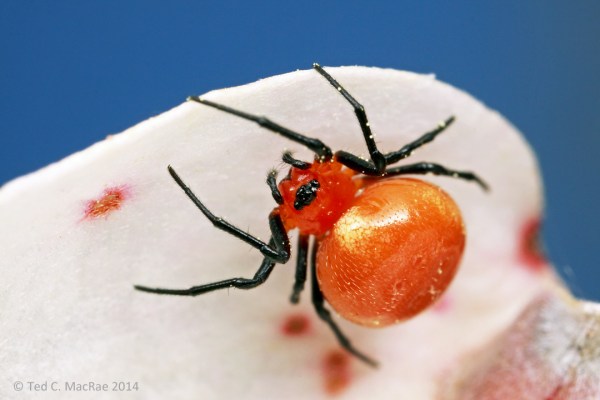
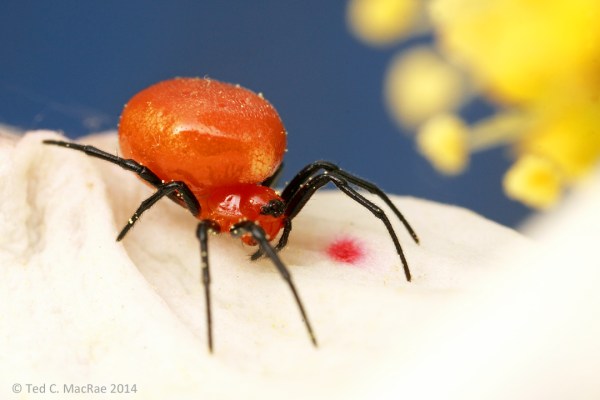
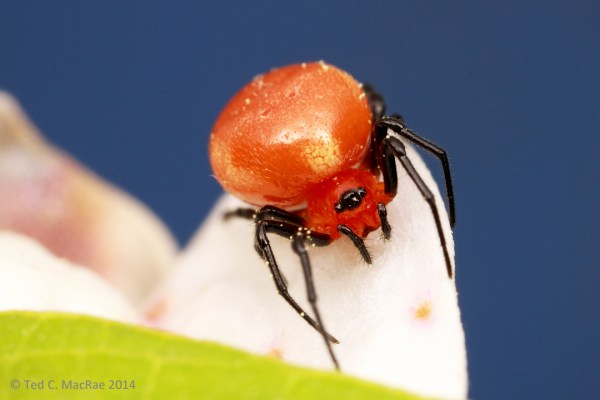
I don’t like posting photographs of unidentified “bugs” (insects, spiders, etc.). There are times, however, when my best efforts are thwarted and I’m left with the choice to admit defeat or relegate the photos indefinitely to the “archives”. In this case, the subject in the photos is just cute to hide. I found this bright red spider on the blossom of a flowering dogwood (Cornus florida) this past spring while hiking the North Fork Section of the Ozark Trail near Blue Hole Hollow in Howell Co., Missouri. While I am fairly certain that it belongs to the family Linyphiidae (dwarf and sheetweb spiders), I cannot decide if it is the former or the latter. Among the dwarf spiders (subfamily Erigoninae), it resembles some members of the genus Ceraticelus, while among the sheetweb spiders (subfamily Linyphiidae) it seems a good match for the genus Florinda (as suggested by Bug Eric). Whatever its identity, it is one of the prettiest and most brightly colored little spiders I have seen. (Photographed on 4 May 2014 with a Canon MP-E 65 mm 1-5X lens.)

Edit 8/22/14, 12:20 p.m.—I now believe this to be an orb weaver (family Araneidae), albeit a very small one (only ~8 mm in length); specifically something in the genus Hypsosinga. Take a look at this photo of H. rubens, which seems to be a near perfect match for the individual in these photos.

Ceraticelus minutus?Ceraticelus minutus? Ceraticelus minutus? Ceraticelus minutus? Ceraticelus minutus?

© Ted C. MacRae 2014

Stag and “stagette” beetle

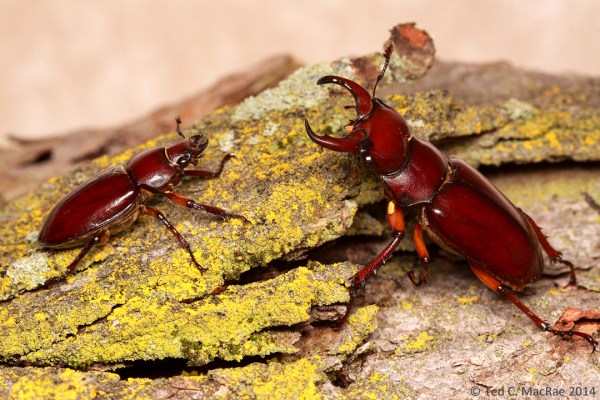
Lucanus capreolus, female (L) and male (R) | Fort Defiance Park, Illinois

Lucanus capreolus, female (L) and male (R) | Fort Defiance Park, Illinois

Last month I posted some photos of the very “stag beetle-ish” looking longhorned beetle, Parandra polita. Chestnut brown in color with large, forward projecting mandibles, this member of the longhorned beetle subfamily Parandrinae looks almost nothing like longhorned beetles in other subfamilies but very much like a small species of stag beetle (family Lucanidae). If it weren’t for the straight rather than elbowed antennae, even experienced coleopterists might be fooled by its appearance. The beetle had been attracted to an ultraviolet light setup in wet bottomland forest at the southern tip of Illinois where the Mississippi and Ohio Rivers meet. Perhaps not coincidentally, several true stag beetles representing both males and females of the species Lucanus capreolus were attracted to the lights that night as well.

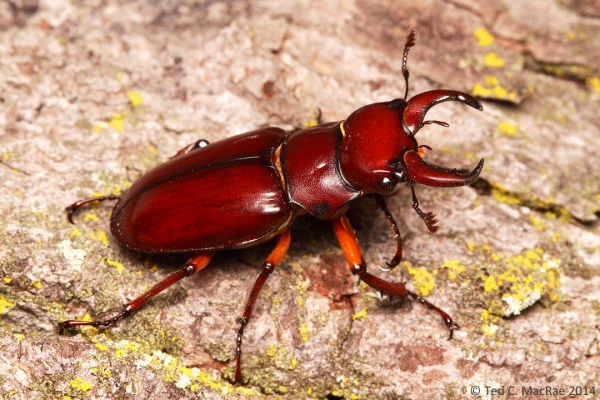
Males are distinctive by their large, sickle-shaped mandibles.

Males are distinctive by their large, sickle-shaped mandibles.

The genus Lucanus contains the largest stag beetles in North America—the most desirable of the handful of species it contains being L. elaphus (North America’s largest stag beetle) due to the male’s outrageously enlarged mandibles and the species’ general scarcity. Lucanus capreolus nearly matches L. elaphus in size and has an equally broad distribution across eastern North America, but it seems to be a more common species and has the male mandibles only moderately (though still distinctly) larger than the female. Despite its more routine occurrence, I rarely see more than a few individuals at a time, and they are almost always all males. This night, however, I was fortunate to encounter not only males but several females as well. I’ve previously photographed the female of this species (Diminishing Stag Beetle), but this was my first chance to photograph both male and female together.

Females have much smaller mandibles (but are still capable of delivering a painful 'nip').

Females have much smaller mandibles (but are still capable of delivering a painful ‘nip’).

While male L. elaphus are undeniably distinct, I frequently see confusion about how to distinguish male L. capreolus from L. placidus (the third eastern North American species of the genus, occurring more sporadically than L. capreolus), and separating females of all three species can be even more confusing. Male L. elaphus are readily identified by their greatly elongated and multi-toothed mandibles, but a suite of characters may need to be employed for females and non-elaphus males. The best character to use for L. capreolus are the distinctly bicolored femora that are yellowish at the base; however, color can be variable and some individuals will exhibit the more uniform chestnut-brown color typical of L. elaphusLucanus placidus, on the other hand, is usually distinctly darker in color than either of the other two species. Surface sculpture of the elytra and pronotum also offer useful characters. The elytra of L. capreolus and L. elaphus are rather smooth, while in L. placidus they are more distinctly punctate/rugose. The pronotum of both L. capreolus and L. placidus, however, is usually distinctly punctate compared to the relatively smooth pronotum of L. elaphus. The shape of the labrum (projection between the mandibles) is also usually distinctive and is not influenced by gender like the mandibles. In L. elaphus the labrum is rather pointed, while in L. capreolus and L. placidus it is more blunt (indeed, in L. placidus the labrum can almost be described as quadrate, or “squared”). Lastly, the number of teeth on the inner margin of the mandibles is usually diagnostic for females of the three species—L. capreolus possessing one tooth, L. placidus possessing two, and L. elaphus possessing more than two.

Unlike in most insect groups, males rather than females.

Unlike most insect groups, male stag beetles rather than females are generally larger.

© Ted C. MacRae 2014