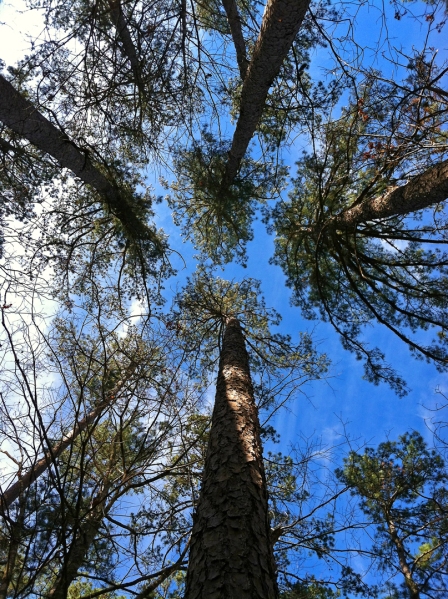
These are a few of my favorite trees

Adrian Thysse recently posted a video of a talk by Wayne Maddison titled “Jumping Spider Melodies,” given November 2012 at the Joint Annual Meeting of the Entomological Society of Canada and the Entomological Society of Alberta. It was a fascinating talk that revealed some interesting correlations between the phylogeny and geographical patterns of distribution of jumping spiders—those bright-eyed, bouncy, almost kitten-like darlings of the spider world. One quote from the talk, however, that stood out for me above all others went something like “Scientists have a rational motivation to seek truth and an emotional motivation to seek beauty.” I think this is true especially for biologists and natural historians—who among us that studies that natural world in adulthood didn’t start out with a love of the outdoors as a child? For me it was the woods that ignited my passion, and still today nothing rejuvenates my spirit like the overwhelming beauty and solitude of the forest.

Shortleaf pine (Pinus echinata) | Wayne Co., Missouri

Shortleaf pine (Pinus echinata) | Wayne Co., Missouri

Wintertime especially is when I enjoy my visits to the forest. Far from the cacophony of summer, my mind is free to explore the open canopy, to examine the fabric of the landscape and ponder its history—unhurried, without objective. During the summer, trees are host plants—I see them not for what they are, but for the beetles that might be on them. I identify them, sample them, assess them for where their guests might be. In winter though, without beating sheet in hand, without collecting vials in the pocket, I see trees as works of art—freed from their summer cloaks, living skeletons on a living landscape.

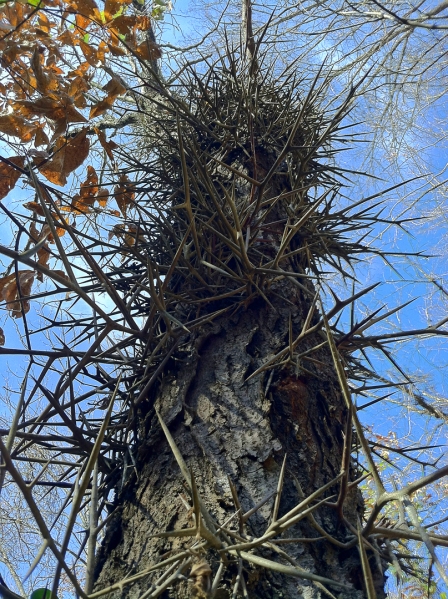
Honey locust (Gleditsia triacanthos) | Wayne Co., Missouri

Honey locust (Gleditsia triacanthos)

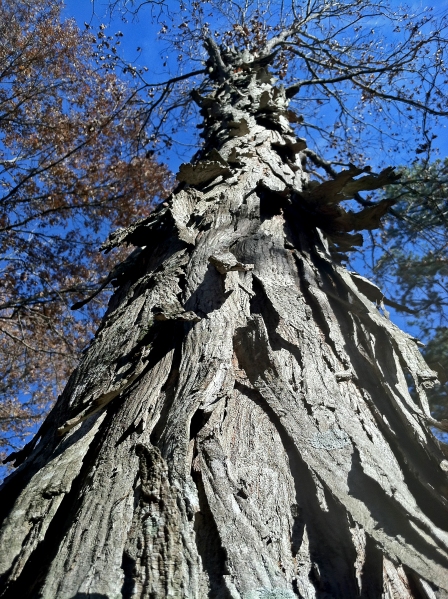
Different trees are my favorite at different times for different reasons. Blazing hot orange sugar maples (Acer saccharum) at peak fall color, stately white oaks (Quercus alba) with their ash-gray branches, broad-crowned post oaks (Quercus stellata) dotting a remnant savanna, or even gnarled, ancient red-cedars (Juniperus virginiana) clinging tenuously to life on the edge of a dolomite bluff. Most often for me, however, the beauty is in the bark. The deeply fissured, reddish plates of shortleaf pine (Pinus echninata), the terrifyingly thorned trunks of honey locust (Gleditsia triacanthos), the shaggy, peeling strips of shagbark hickory (Carya ovata). Even in their winter nakedness, the bark of these trees gives them year-round personality that is lacking in lesser-barked trees.

Shagbark hickory (Carya ovata) | Wayne Co., Missouri

Shagbark hickory (Carya ovata)

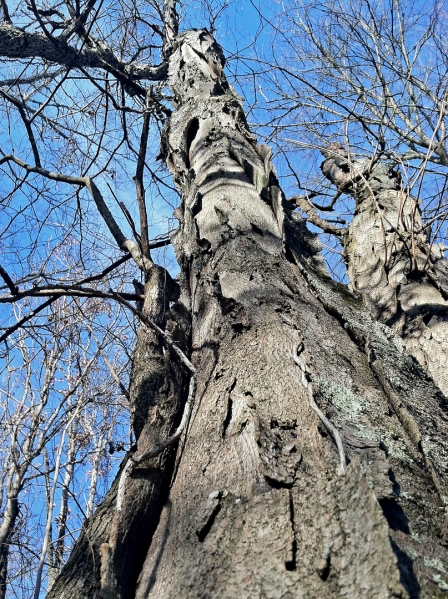
Honey locust (Gleditsia triacanthos) - thornless individual | Wayne Co., Missouri

Honey locust (Gleditsia triacanthos) – thornless individual

The tree in this post were photographed during November 2012 while hiking the Wappapello Section of the Ozark Trail in the Ozark Highlands of southeastern Missouri (Wayne Co.). 

Copyright © Ted C. MacRae 2013

His name is Ralph!

E

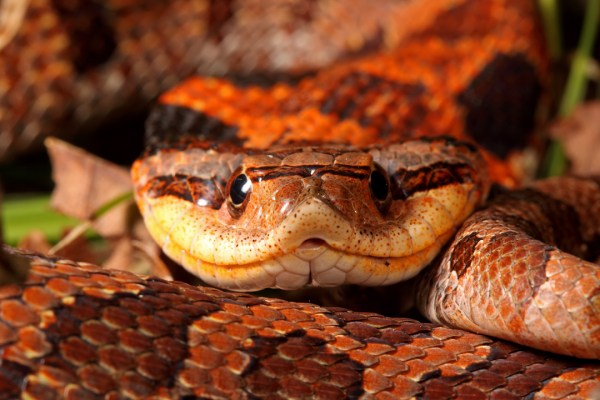
Eastern hognose snake (Heterodon platirhinos) | Wayne Co., Missouri

Until the past few years, I could probably count on my two hands the number of snakes I’d seen in the field. This despite nearly weekly outings throughout each season going back to young adulthood. I’m sure this has something to do with my search image (beetles), my primary method of looking for them (whacking tree branches with my net handle over a beating sheet), and what I wasn’t also doing at the time (looking for snakes or anything else that wasn’t a beetle). One is unlikely to see these mostly shy, secretive animals when thrashing and whacking through the bush, and even if no ruckus is made to make them scamper they can still hide in plain sight due to their wonderfully cryptic coloration. It wasn’t until I started carrying a camera and began looking for other natural history subjects rather than just focusing on collecting as many beetles as possible that I began to see snakes. And since then I’ve seen a lot of them, including a terrifyingly aggressive timber rattler, a juvenile Osage copperhead, an uncooperative dusty hognosed snake, a death-feigning western hognosed snake, a cute little western pygmy rattlesnake, a rough green snake, a juvenile timber rattler, an adult Osage copperhead, and a yellow-bellied racer. The last three were all seen at what has become for me my favorite “snake spot”—a gorgeous preserve in the southeastern Missouri Ozarks. I’m not sure what makes this place so ideal—perhaps the massive outcroppings of jumbled rhyolite alongside the clear, spring-fed, gravel-bottomed river provide ample habitat and food for a variety of species. Regardless, I have visited the preserve each April  (for my annual season-opening birthday bug collecting trip) for the past three years and never failed to see at least one snake.¹

¹ To be clear, I am not a snake collector. That said, I do not have a problem with keeping snakes in captivity, at least in principle, but I am disturbed by the frequency with which snakes and other reptiles are irresponsibly collected at levels that are unsustainable and even “poached” from protected areas. For me personally, it is enjoyment enough to see, be able to identify, and observe these gorgeous animals in their native habitats, leaving with nothing more than a digital record and my vivid memories of that brief encounter.

Eastern Hognose Snake (Heterodon platirhinos) | Wayne Co., Missouri

When threatened, hognose snakes flatten their head and neck, puff up their body, and hiss loudly.

On my most recent visit, I was hoping to once again see one of the timber rattlers that inhabit these rocky hillsides. I tip-toed up and down the rocky slopes as quietly as I could, but no such luck. On the way back, however, I spotted this colorful eastern hognose snake (Heterodon platirhinos) lying just off the path. Despite its brilliant coloration and vivid markings, it was remarkably well camouflaged and I almost walked right past it. Of course, hognose snakes are well-known for their various threat and defensive displays. I’ve experienced some of these in my previous sightings with other species (death-feigning, mouth bleeding, and foul-smelling emissions), but to my delight I got to experience their most classic behaviors—flattening of the head and neck, puffing of the body, and loud hissing. The snake repeatedly performed these behaviors as I photographed it, and because I persisted the snake apparently concluded that these tactics weren’t working. What happened next was something I was completely unprepared for.

”Sir, what’s your name?”

As the snake began trying to crawl away, it opened its mouth widely…

”Uh, his name is…”

…and out came it’s last meal (obviously a frog, but with the head and front legs already digested, too difficult to identify any further)!

”RRRAAAALLPH!”

p.s. If you didn’t get the joke, watch this clip from the classic Cheech and Chong movie, Up in Smoke.

Copyright © Ted C. MacRae 2013

An elegant living fossil…

In the insect world, hyperdiversity is the norm. More than a million species are known, and perhaps several million more await discovery. Beetles alone represent nearly a quarter of the earth’s described biota, with one genus (Agrilus in the family Buprestidae) bursting at the seams with more than 3,000 described species (Bellamy 2008). Biodiversity gone wild! While birders routinely field identify (and list) a majority of the birds they see to species, most insect enthusiasts are happy if they can simply identify their subjects to family—in most cases still leaving several hundred to several thousand possibilities for species identification. Even trained entomologists usually can identify only a tiny fraction of the insects they see and remain just as clueless about the vast majority of insects they encounter that don’t represent one of their limited number of study groups.

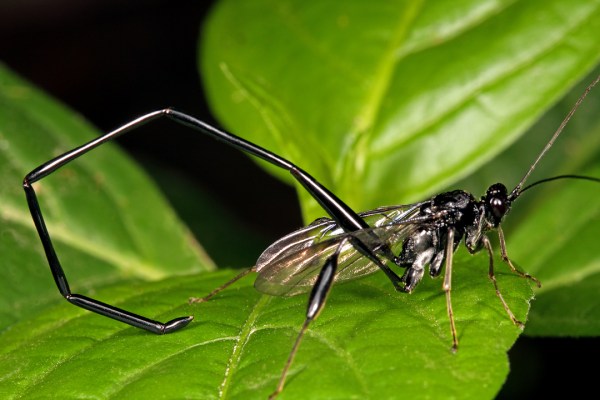
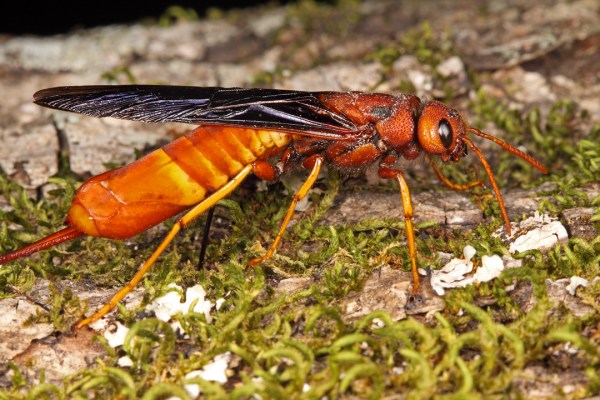
Pelecinus polyturator female | Wayne Co., Missouri

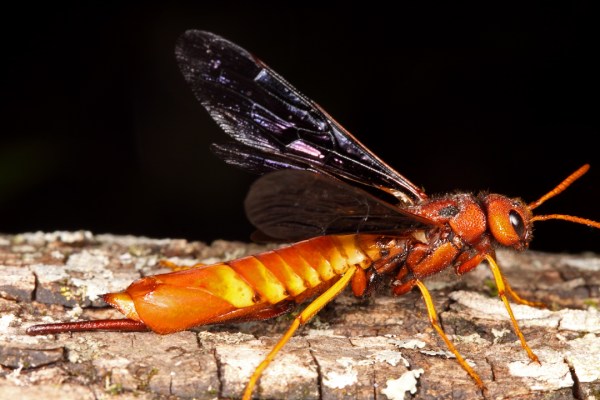
Pelecinus polyturator female | Wayne Co., Missouri

 Of course, that doesn’t mean field identification is impossible for all insects—certain groups such as butterflies, dragonflies, and tiger beetles lend themselves to field identification due to their relatively large size, bright colors, and distinctive markings. Many would also include the aculeate hymenopterans (i.e., “stinging” wasps and bees) among those groups for these same reasons. However, the vast majority of hymenopterans belong to a multitude of families characterized by tiny, parasitic species that seem (to this coleopterist’s eyes) to differ only in bafflingly minute details of wing venation and tibial spurs. (Honestly, I couldn’t tell you the difference between Tanaostigmatidae and Tetracampidae if my life depended on it!) Nevertheless, there are a small handful of parasitic hymenopterans in North America that are instantly recognizable due to their giant size (2 or more inches in length)—namely, Megarhyssa spp. (giant ichneumons) and the species shown in this post, Pelecinus polyturator (American pelecinid). Pelecinus polyturator is the only North American member of the family Pelecinidae, which itself contains only two additional species that are restricted to Mexico and Central/South America. It wasn’t always this way—fossils assignable to the family and representing 43 species in a dozen genera have been found as far back as the early Cretaceous (121–124 mya) across North America, Europe, and Asia (Grimaldi & Engel 2005). Surely this represents just the tip of the iceberg of Mesozoic and early Cenozoic pelecinid diversity, making today’s three species the last representatives of a once great lineage—”living fossils”¹ some might say.

¹ To ward off any scolding I might get from evolutionary purists, I get it; there is no such thing as a living fossil (except the T. rex skeleton in the movie “Night at the Museum”). I know that all species alive today have the same amount of evolutionary history behind them and are, if not from more immediate ancestors, highly derived compared to earlier life forms. I will admit that the term has become a bit overused as pseudoscientific shorthand for branding an organism as ‘primitive’ (another term which tends to raise hackles); however, I don’t see the problem with its use as informal reference to relatively ancient groups, usually more diverse in the past and now represented by only a few species. Innocuous shorthand is all it is.

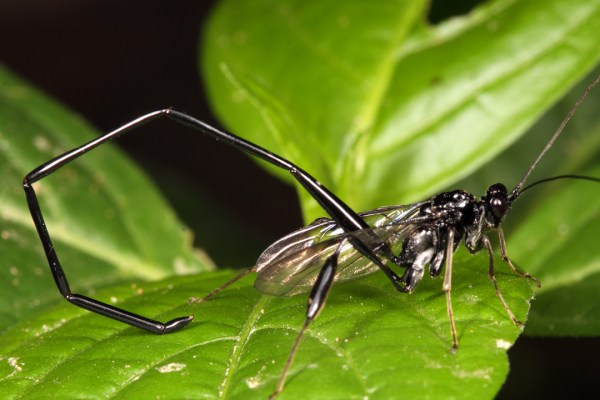
This elegant female, recognizable by her extraordinarily narrowly elongate abdomen (males have a somewhat shorter abdomen that is widened at the end), was seen back in July 2011 as she flew to a blacklight and landed on nearby foliage in a mesic bottomland forest in southeastern Missouri’s Ozark Highlands. I have seen females on occasion over the years but have not yet seen a male, which are increasingly rare in more northern latitudes of the species distribution. I missed the focus a bit on this photo (and also the other half-dozen or so shots that I took)—photographing an active subject at night on elevated foliage without a tripod is difficult to say the least! Nevertheless, after post-processing it’s a decent photograph. If you are wondering why it took me so long to post it, that’s because only recently have I gained the confidence to “clean up” poorly exposed photos where the subject and/or substrate on which they are resting is so distractingly littered with debris as this:

Yuk!!!

Yuk!!!

Compare the original photo here to the final photo above it—how many post-processing tools can you detect the use of? 🙂

REFERENCES:

Bellamy, C. L. 2008. World catalogue and bibliography of the jewel beetles (Coleoptera: Buprestoidea), Volume 4: Agrilinae: Agrilina through Trachyini. Pensoft Series Faunistica 79:1–722.

Grimaldi, D. and M. S. Engel. 2005. Evolution of the Insects.Cambridge University Press, New York, xv + 755 pp.

Copyright © Ted C. MacRae 2013

Cicindela 44(3–4) is issued

Cicindela_44(3-4)

The latest issue of the journal Cicindela arrived in my mailbox yesterday, and it’s safe to say that I’ve got the issue “covered.” The issue features three papers, one of which documents my recent encounter with Cicindelidia ocellata rectilatera (Reticulated Tiger Beetle) in Arkansas (MacRae 2012), the first confirmed occurrence of the subspecies in that state and a northeastern extension of its known range. (This paper is an expansion of my post Just repanda… er, wait a minute…) Normally restricted to (though abundant in) Texas and New Mexico (Pearson et al. 2006), the only previous records of this subspecies east of Texas are at two localities near the eastern side of the Sabine River dividing Texas and Louisiana (Graves & Pearson 1973). More recently, however, the subspecies was also recorded just north of Texas in southwestern Oklahoma Schmidt 2004). Whether these recent extensions to its known range reflect an expanding distribution or are merely artifacts of sampling is unknown; however, one of the Arkansas localities has been visited frequently by tiger beetle enthusiasts over the years, as it is a known locality for the very attractive Cicindela formosa pigmentosignata (Reddish-green Sand Tiger Beetle), lending some support to the range expansion hypothesis.

In addition to the paper, one of the photographs that I took of C. ocellata rectilatera in Arkansas graces the cover of the issue.

Two other papers are also contained in the issue, one documenting an additional occurrence of Opisthencentrus dentipennis in Brazil by Ron Huber (2012), and another by Kristi Ellingsen featuring photographs and habitat description for the first tiger beetle to be found in Tasmania, Australia (Ellingsen 2012). A truly international journal!

Lastly, please consider subscribing to Cicindela. Subscription rates are only $10 in the U.S. and $13 outside of the U.S., amounts that even the most casually interested can justify! Also, if you have a more serious interest in tiger beetles, I hope you’ll consider submitting a manuscript for consideration. Subscription information and editorial policy can be found inside the front cover of a recent issue or at this post.

REFERENCES:

Ellingsen, K. 2012. Discovery of the first tiger beetle found on the island of Tasmania, Australia. Cicindela 44(3–4):55–57.

Graves, R. C. & D. L. Pearson. 1973. The tiger beetles of Arkansas, Louisiana, and Mississippi (Coleoptera: Cicindelidae). Transactions of the American Entomological Society 99(2):157–203.

Huber, R. L. 2012. Another locality record for Opisthencentrus dentipennis (Germar) in Brazil. Cicindela 44(3–4):55–57.

MacRae, T. C. 2012. Occurrence of Cicindelidia ocellata rectilatera (Chaudoir) (Coleoptera: Cicindelidae) in Arkansas. Cicindela 44(3–4):49–54.

Pearson, D. L., C. B. Knisley and C. J. Kazilek. 2006. A Field Guide to the Tiger Beetles of the United States and Canada. Oxford University Press, New York, 227 pp.

Schmidt, J. P. 2004. Tiger beetles of Fort Sill, Comanche County, Oklahoma, with a new state record for Cicindela ocellata rectilatera Chaudoir. Cicindela 36:1–16.

Copyright © Ted C. MacRae 2013

Diffuser comparisons for 100mm macro lens

I really wish I could just buy three Canon Speedlite 580EX II flash units, mount one directly on the camera, run the other two wirelessly on each side as slaves, put a nice big soft box diffuser on each of them, and be done with it! I’m beginning to think that’s the only way I’m going to get the kind of full flash insect macro photographs that I want with larger subjects that require the use of my 100mm macro lens. You know what I mean—nice, even, diffuse, vibrant light that comes at the subject from multiple directions (eliminating those annoying specular highlights in the eyes that result from more unidirectional lighting) and with enough power to allow minimal flash pulse durations (resulting in maximum motion freeze). But I can’t—the money is not in the budget, and even if it was I’d have to think seriously about the logistics of carrying and setting up in the field three Speedlites every time I wanted to photograph an (often moving) insect.

Thus, I continue trying to come up with some kind of system that makes the most of my Canon MT-24EX twin flash unit. It’s not that I don’t like this flash unit—I love it because of its light weight (good for field use) and the front-of-the-lens mounting feature that, with its dual heads, gets the flash heads closer to the subject but avoids the “flat” lighting effect of typical ring flash units. In addition, for those shooting insect macro photographs with Canon’s shorter focal length MP-E65 macro lens, the twin flash unit is probably the best choice of all, since the lens is right on top of the subject and it is relatively easy to place diffusing materials between the subject and the flash heads—Alex (Myrmecos) with his tracing paper diffuser and Kurt (Up Close with Nature) with his concave foam diffuser are two of the more successful designs out there. I use my MP-E65 lens a lot, but I use my 100mm macro lens a lot more because many of the beetles I photograph are best photographed at magnification ranges between 0.5–1.0X and, thus, are a little too large for the 65mm lens. The longer lens-to-subject distance of the 100mm lens may be helpful for working with skittish subjects, but it also creates challenges for the MT-24EX because of its relatively low power (more light drop off) and small flash heads (more specular highlighting). For the past couple of years I’ve been using a large sheet of polypropylene foam jury-rigged to the front of the lens, and while it too has functioned fairly well, I keep thinking that if I can just get the flash heads closer to the subject—each fitted with a good diffuser—then it should be possible to achieve results similar to what can be done with the 65 mm lens.

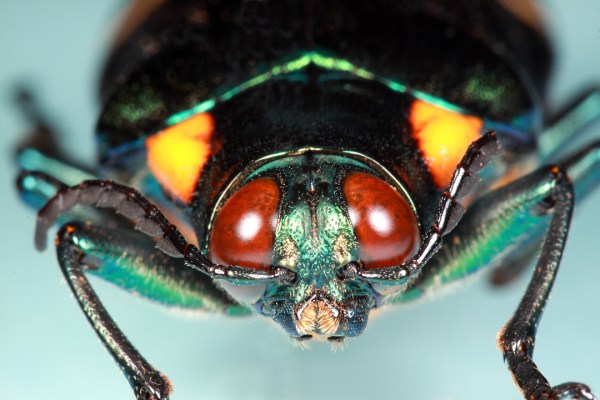
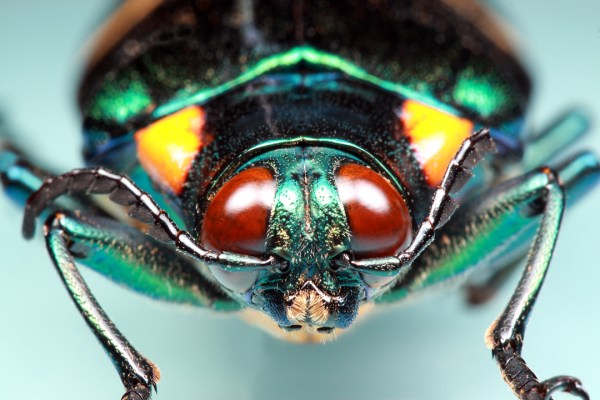
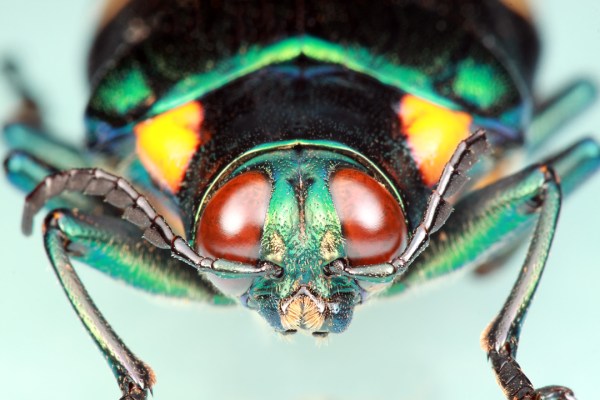
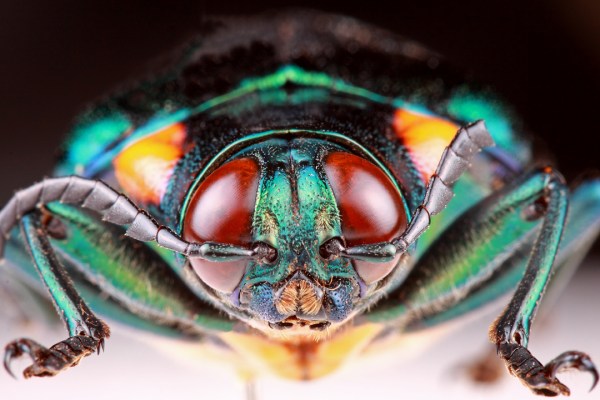
The photos below show the results of some of the ideas I’ve been working on. My main idea was to use extenders that would allow adjustable placement of the flash heads relatively close to the subject and diffuse the light from them with a modified version of the Sto-Fens+Puffers that I have tried in the past. Here is an example of the system mounted on my camera using cheap, flexible arms mounted on a plate attached to the bottom of the camera. If I decide to use this system in the field I would want to purchase much sturdier extenders (e.g. Really Right Stuff), but at only $25 these flexible arms are perfect for proof-of-concept testing. For the modified Sto-Fens+Puffers, I completed the modifications shown by Dalantech (No Cropping Zone) (I was planning to do this when I first tried the Sto-Fens+Puffers but soon found that I preferred the concave and tent designs by Kurt and Alex, at least for use with the 65mm lens). At any rate, to test the ideas I selected a very large (for long subject-to-lens distance), very shiny (for maximum specular highlighting potential) beetle from my collection (Megaloxantha bicolor palawanica, a stunning jewel beetle from Palawan, Philippines) and set it up for “face shots” that simulate my favorite pose for beetles in the field. Keep in mind that this was not intended to be a test of lighting for pinned specimens in the studio—that is not my interest, and there are much better approaches for doing that—but rather a proxy for the kind of lighting and diffusion I might achieve in the field. Here are the results:

IMG_2087_enh_1080x720

– flash heads mounted on lens, diffused by modified Sto-Fens+Puffers

The example above show the results obtained when using the modified Sto-Fens+Puffers with the flash heads mounted directly to the front of the lens. I didn’t try this shot without diffusers, but I doubt it would be much worse than this—specular highlighting is bad because of the small apparent light size, and overall the lighting is not very even with dark shadows and harsh highlights. This shot is a perfect example of the problems inherent in using the twin-flash with a long macro lens.

IMG_2082_enh_1080x720

– flash heads mounted on flexible arms, diffused by modified Sto-Fens+Puffers

This second shot shows the results when the modified Sto-Fens+Puffers are mounted on the flexible arm extenders and positioned as close to the subject as possible to maximize apparent light size. This was supposed to be the system that gave me the results I was looking for, but honestly I am not impressed. The highlights in the eyes are certainly larger than in the previous photo, and the overall lighting is not quite as uneven, but still the highlights are harsh and fairly sharply defined. Considering the greater difficulty in positioning the flash heads compared to lens-mounted, I have to consider the marginal improvement in lighting not worth the effort.

IMG_2090_enh_1080x720

– flash heads mounted on lens, diffused with modified Sto-Fens+ Puffers and concave diffuser (closed)

This third shot has the modified Sto-Fens+Puffers once again mounted on the lens, but also attached is my trusty concave diffuser. Honestly this combination of diffusers provides much better overall lighting and softening of the highlights compared to the previous shot, even though the flash heads are mounted on the lens rather than positioned close to the subject. Apparently the concave diffuser, though further away from the subject, still has larger apparent size and thus allows light to be transmitted to the subject from a larger apparent area. I have not normally used another diffuser between the flash heads and the concave diffuser, but my impression from this shot is that the modified Sto-Fens+Puffers do a good job of dispersing light before it hits the concave diffuser to soften the “hot spots” behind it and provide somewhat more even lighting across its surface.

IMG_2095_enh_1080x720

#4 – flash heads mounted on lens, diffused with modified Sto-Fens+ Puffers and concave diffuser (open)

When I use the concave diffuser, I normally pull the corners back and attach them to the tops of the flash heads with Velcro to minimize light blow back (although how effective it is I really don’t know). Just for kicks, I decided to try some shots with the concave diffuser not pulled back, but left open and extending out over the subject. I did this because that actually more closely approximates how smaller versions of concave diffusers are used with the 65mm lens. The effect was not only remarkable diffusion of light, with specular highlights and hot spots almost completely lacking, but also much better lighting behind rather than just on the front of the specimen. That said, the quality of the light lacks vibrancy and seems somewhat “dead,” perhaps because of the great distance between the flash heads and the diffuser and the MT-24EX units relatively limited power. The large diffuser extending far out in front of the lens might cause problems with bumping and skittish subjects, but I am intrigued enough by this result to continue with some field testing to see what I think.

IMG_2113_enh_1080x720

#5 – flash heads mounted on flexible arms, diffused by SoftBoxes

The final shot shows the results of another promising setup—this one again uses the flash heads mounted on flexible arm extenders to get them close to the subject, but instead of the modified Sto-Fens+Puffers I fitted each flash head with a mini SoftBox. This was not easy, as the SoftBox is designed for much larger flash heads than those of the MT-24EX, so I took another set of Sto-Fen diffusers, cut off the face, then hot-glued the SoftBox to the open Sto-Fen. Thus modified it was a simple matter to “snap” the SoftBoxes in place over the flash heads. Despite the term ‘mini’ these Soft Boxes still provide a much larger area for light transmission than the modified Sto-Fens+Puffers, and this much larger apparent light size has a dramatic effect on the overall lighting and diffusion. I’m tempted to say I like this one best. However, I do have to consider ease of function in the field—the lens-mounted Sto-Fen+Puffers and concave diffuser, either open or closed, would certainly be easier and involve no further cost (for better extenders than the cheap flexible arms I now have), but if SoftBoxes on flash heads placed close to the subject gives better results than I may have to go with it.

Will you please help me decide? I setup this little poll so you can tell me which of the systems you thought gave the most pleasing result in terms of vibrant, evenly diffused light. I can’t (to my knowledge) tell who’s voting (and if there is a way don’t tell me because I don’t want to know), so don’t let privacy concerns prevent you from adding your vote—the more voters that participate, the better information I get to help me with my decision.

Copyright © Ted C. MacRae 2013

It’s always a happy day…

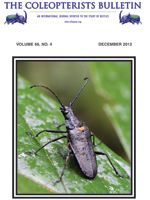
072_066_0400_cover…when the latest issue of The Coleopterists Bulletin arrives in my mailbox. On this occasion it was the December issue of Volume 66—nine papers and eight scientific notes filling 84 pages of beetle awesomeness. It’s pure elytral ecstasy! I presume I am like most subscribers—rapidly scanning the Table of Contents on the back cover to see if any deal directly with my preferred taxa. Yes! Two papers dealing with Buprestidae (jewel beetles), one on Cerambycidae (longhorned beetles), and one on Cicindelinae (tiger beetles)—a real bonanza. After that, a more cursory look through the rest of the Table of Contents to see what other papers look interesting enough to at least scan through.

For me the most interesting are the two Buprestidae papers, with Hansen et al. documenting new state records, larval hosts, and biological notes for 47 North American species and Westcott & Murray reporting the introduction into the U.S. of yet another Eurasian exotic (Trachys minutus) and its apparent establishment in Massachusetts. As the current “keeper” of distributional records and host plant associations for North American jewel beetles (along with Rick Westcott, Salem, Oregon), I will be busily updating my database over the next few days to reflect these new records. I am a great fan of “notes” papers such as these (and am, in fact, currently finishing a similar manuscript with co-author Joshua Basham, who is also a co-author on the Hansen et al. paper). However, I do have a few quibbles—Hansen et al. report Agrilus  quadriguttatatus as a new record for Tennessee, but it is already known from that state, and Cercis canadensis (eastern redbud) is reported as a new larval host for Anthaxia (Haplanthaxia) cyanella despite the prior records from that host by Knull (1920) and Hespenheide (1974). More puzzlingly, the authors record Agrilus lecontei celticola from locations in eastern Tennessee despite guidance from me on several occasions that this subspecies, while perhaps distinctive in Texas, transitions broadly across Louisiana and Mississippi  with the nominate subspecies. As such, material from eastern Tennessee cannot be regarded conclusively to represent this subspecies (and I remain unconvinced even that the subspecific distinction is warranted). Lastly, in recording Actenodes simi from Tennessee, the authors mention that the closest previous record is from Missouri with no specific locality mentioned (Fisher 1942), even though I recently recorded several specific locations for the species in eastern and southern Missouri (MacRae & Nelson 2003). The overall impression is that the authors are not fully versed in recent literature on Buprestidae and have instead relied exclusively on the recent Nelson et al. (2008) catalogue—known amongst buprestid workers to be incomplete and with errors—as the only source for determining the status of their records.

Among Cerambycidae, Raje et al. report the results of molecular analyses on two color forms of Sternidius alpha. This broadly distributed and highly variable species exhibits multiple color variants across its range, leading to the description of multiple subspecies that were eventually synonymized under the current name. Their analysis of the barcoding region of the cytochrome oxidase I gene, however, revealed three distinct clades among the two color forms, suggesting the potential for taxonomic significance. More work, of course, is needed from additional color morphs from different localities.

Finally, my friend Matt Brust and colleagues discuss the ovipositional behavior of numerous species of North American tiger beetles, unexpectedly finding that many oviposit only after digging some distance below the surface of the soil. This information is extremely valuable for those interested in rearing tiger beetles for description of larval stages, expanding the window of survey for species with limited temporal occurrence, and cross-breeding studies. To that end, and of greatest interest to me, they have included numerous observations from their own studies that have resulted in the development of successful protocols and rapid rearing of large numbers of larvae to adulthood.

cso 66-4Mco14.qxdActually, there is one more thing… For several years now the December issue, as a bonus, has been accompanied by the Patricia Vaurie Series Monograph as a supplement to that year’s volume. This year’s issue features a revision of the scarab genus Euphoria by Jesús Orozco, and although I have not studied it carefully it looks like a robust treatment of the group. Yes, I know that scarabs are not one of my primary interest groups, but show me a coleopterist that—regardless of the group they work on— does not stop and collect these gorgeous, colorful, flower-loving beetles whenever they encounter them and I’ll show you a coleopterist that is far too restrictive in their natural history interests! Based on examination of nearly 19,000 specimens from 67 collections, the work considers 59 valid species (ten of which are described as new) distributed throughout the Western Hemisphere. Complete with keys to species and, for each, synonymy, description, diagnosis, taxonomic history, natural history, temporal occurrence geographic distribution, and—of critical importance in my opinion—full data for all specimens examined, it is everything a good revision should be. Then there are the color plates—one full page for each species—with a large dorsal habitus view, closeups of the head, male genitalia, and color variants, a temporal distribution chart, and a map of its geographical distribution. Again, while I may not be a serious student of scarabs, you can bet that I’ll be going back through my holdings of Euphoria beetles and checking them to make sure they conform to this new standard of knowledge on the group.

REFERENCES:

Brust, M. L., C. B. Knisley, S. M. Spomer & K. Miwa. 2012. Observations of oviposition behavior among North American tiger beetle (Coleoptera: Carabidae: Cicindelinae) species and notes on mass rearing. The Coleopterists Bulletin 66(4):309–314.

Fisher, W. S. 1942. A revision of North American species of buprestid beetles belonging to the tribe Chrysobothrini. U. S. Department of Agriculture, Miscellaneous Publication 470, 1–275.

Hansen, J. A., J. P. Basham, J. B. Oliver, N. N. Youseef, W. E. Klingeman, J. K. Moulton & D. C. Fare. 2012. New state and host plant records for metallic woodboring beetles (Coleoptera: Buprestidae) in Tennessee, U.S.A. The Coleopterists Bulletin 66(4):337–343.

Hespenheide, H. A. 1974.  Notes on the ecology, distribution, and taxonomy of certain Buprestidae.  The Coleopterists Bulletin 27(4) [1973]:183–186.

Knull, J. N. 1920. Notes on Buprestidae with description of a new species (Coleop.). Entomological News 31(1):4–12.

MacRae, T. C. and G. H. Nelson. 2003. Distributional and biological notes on Buprestidae (Coleoptera) in North and Central America and the West Indies, with validation of one species. The Coleopterists Bulletin 57(1):57–70.

Nelson, G. H., G. C. Walters, Jr., R. D. Haines, & C. L. Bellamy.  2008.  A Catalogue and Bibliography of the Buprestoidea of America North of Mexico.  Coleopterists Society Special Publication No. 4, The Coleopterists Society, North Potomac, Maryland, 274 pp.

Orozco, J. 2012. Monographic revision of the American genus Euphoria Burmeister, 1842 (Coleoptera: Scarabaeidae: Cetoniinae). Coleopterists Society Monographs, Patricia Vaurie Series No. 11, 182 pp.

Raje, K. R., V. R. Ferris & J. D. Holland. 2012. Two color variants of Sternidius alpha (Say) (Coleoptera: Cerambycidae) show dissimilar cytochrome oxidase I genes. The Coleopterists Bulletin 66(4):333–336.

Westcott, R. L. & T. C. Murray. 2012. An exotic leafminer, Trachys minutus (L.) (Coleoptera: Buprestidae), found in Massachusetts, U.S.A. The Coleopterists Bulletin 66(4):360–361.

Copyright © Ted C. MacRae 2013
Mr. Phidippus gets his loot

Synoptic collection of tiger beetles

Synoptic collection of tiger beetles for Mr. Phidippus.

I’m sure by now Mr. Phidippus is wondering where his loot is. You see, some months ago Mr. Phidippus won BitB Challenge Session #5 with a solid string of 1st and 2nd place finishes in that session’s five ID and super crop challenges. The top three points earners at the end of each session are offered a variety of prizes, and among the choices offered Mr. Phidippus chose to receive a small collection of beetles from my collection. However, I’ve been remiss in my follow up, with only a heavy travel schedule and seemingly endless string of commitments when I am at home to offer as excuses for such.

At long last, however, I am making things right and have put together this small synoptic collection of tiger beetles that I hope Mr. Phidippus will find useful. Some of the species selected might be common in some areas, while others are certainly found very seldomly—and even then only by those who know what they are looking for. Nevertheless, one of the most fascinating features of tiger beetles is their extreme polytopism, so even commonly encountered species can look very different depending on what part of their range they come from. A perfect example of this is Cicindela scutellaris, represented in the box above by three individuals: one from Kansas (subspecies scutellaris), one from northeast Missouri (subspecies lecontei) and one from southeast Missouri (an unusual population representing an intergrade of subspecies lecontei and subspecies unicolor). Ranging from wine-red to blue-green to brilliant red and green, they are perhaps the best example of tiger beetle polytopism gone wild!

So, Mr. Phidippus this one is for you. Congratulations again on your win, and thank you for your patience!

Copyright © Ted C. MacRae 2013

Ovipositing Pigeon Horntail

Tremex columba (pigeon horntail) | Wayne Co., Missouri

Tremex columba (pigeon horntail) | Wayne Co., Missouri

By early July, woodboring beetle activity is at its peak in southern Missouri. Even though many of the smaller species of jewel beetles (family Buprestidae) and longhorned beetles (family Cerambycidae) have already come and gone, bigger species in genera such as Buprestis, Acanthocinus, Enaphalodes, etc. are ripe for the picking. All one has to do is travel for hours to high-quality forest (upland or lowland—either is fine depending on what you wish to find), hike for additional hours through stifling mid summer heat and humidity, and carefully search the trunks and branches of any declining or recently downed tree (don’t forget to look along the undersides) while dodging deer flies (if ever a creature sprang from the pit of hell!) and slapping mosquitos! Sure, you can cheat and just drive along National Forest roads looking for recent logging operations—it’s a good way to get large series of common, widespread species; however, if you want to get the good stuff you’ve got to seek out the high-quality forests—those not managed for timber—and look for declining trees and natural wind-throws.

Of course, not all wood borers are beetles. Among the more spectacular non-beetle wood borers are the horntails (order Hymenoptera, family Siricidae), represented in this post by one of its more commonly encountered species, Tremex columba (pigeon horntail). That is not to say that they are frequently encountered, at least in my experience, but I do remember the first time I saw one of these as a boy. I knew in my heart that they were harmless—my already tattered copy of The Golden Guide to Insects said so; yet I could not bring myself to actually grab what would become the latest prize specimen in my insect collection with my bare fingers, instead sneaking a jar over it and sliding the lid underneath.  I’ve seen them a few times since, but until recently I had never seen what must be considered their most remarkable feature—the ability to thrust a needle-thin ovipositor several cm into solid wood! While hiking the Shut-Ins Trail at Sam A. Baker State Park last year, I spotted a large, recently wind-thrown tree off the trail and picked my way over to see what woodboring beetles I might find. As I approached the horntail in these photos took flight, but I stood still and watched her settle back onto the trunk and resume searching activities. Using all the stealth I could muster, I made my approach—hoping to get at least one good shot of this spectacular insect. I would have been happy if I had walked away with nothing more than the first photo in the sequence below. What happened next, however, was icing on the cake. As the remaining photo sequence shows, she suddenly arched her abdomen high and began probing the wood with the tip of her ovipositor, then bracing it at a precise 90° angle relative to the lower abdomen, slowly thrust it deep into the wood until her abdomen was completely level above the trunk.

I never cease to be amazed by insects, but sometimes their capabilities just seem incomprehensible. If you disagree, just imagine trying to insert an insect pin deep into solid wood with nothing but your bare hands (or, more precisely, pushing only with your butt) and see if you don’t change your mind!

T
T
T
T
T
T
Copyright © Ted C. MacRae 2013