T.G.I.Flyday: Tachinomyia sp.

You would think that somebody with enough patience to photograph tiger beetles would be equally patient with “calyptrate” flies, but for me such is not the case. It’s not that I don’t find them interesting (although, really, what insect group can match the diversity, polytopism, ecological extremism and behavioral charisma of tiger beetles?), but their flighty, frenetic behavior and difficult taxonomy are just a bit too much for me. After all, why invest the time it would take to get a good photograph of something that, in the end will probably be unidentifiable.

IMG_9659_enh_1080x720

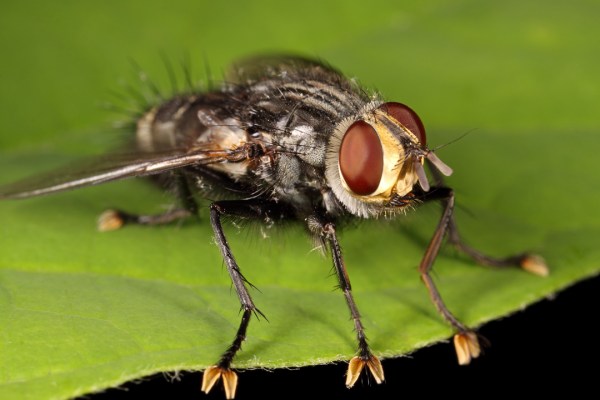
Tachinid fly (prob. Tachinomyia sp.) | Wayne Co., Missouri

Last April as I was hiking a woodland trail in Sam A. Baker State Park in southeastern Missouri’s Ozark Highlands, I saw this decent-sized fly bumbling across the trail. I knelt to look at it more closely, and though it tried to flee, it seemed too weak and uncoordinated to take flight. It was in beautiful condition—a perfect specimen, and I surmised that it represented a newly emerged adult that had not yet hardened sufficiently to withstand the rigors of flight. I was fascinated by its distinctive, orange tarsal pads and the white “beard” around its head, and the ability to coax the fly onto a leaf and hold the leave in whatever position I desired was all the enticement I needed to spend a little time with it. Out of the several shots that I took, these two are my favorites.

IMG_9683_enh_1080x720

You got it—the BitB face shot!

Of course, just being able to photograph the fly was only half the battle—there still remained the matter of its identification. It seemed “tachinidish” to me at the time, but a little digging revealed that there are species of Sarcophagidae look very similar to tachinids, the difference being the presence or absence of a visible postscutellum. My photos don’t show this character, and I quickly became overwhelmed when I tried scanning through BugGuide photos for these two families. Nevertheless, I’m a persistent sort, and after winnowing out the numerous unlikely choices I finally settled on not only family Tachinidae, but possibly Tachinomyia sp. (tribe Exoristini). I was tempted to go out on a limb and post the ID here unvetted, but I chickened out and and sent the photos to fly guy Norman Woodley at the Systematic Entomology Lab in Washington, DC. Norm supported my identification and wrote back:

I think it is probably Tachinomyia.  It would be better to have a wing view as well as the hind end to be absolutely positive, but I’m reasonably sure that’s what it is.  It’s a male.  Some species are active in the spring, so that fits with your data as well.

Copyright © Ted C. MacRae 2012

A 50-million-year-old midge

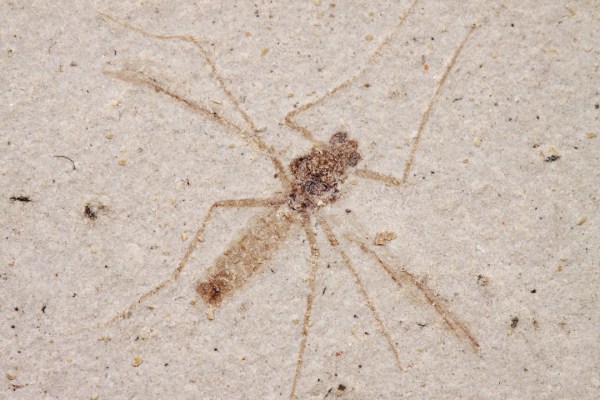
Several of the insect fossils collected from the Green River Formation (45–50 mya) that I am photographing appear to be flies, and specifically members of the “primitive” suborder Nematocera. This is not surprising, as the G.R. Formation of Colorado, Utah, and Wyoming, is composed of shales derived from volcanic ash sediments that were laid down in a system of large, shallow lakes. Most (all?) nematoceran flies are aquatic to some degree in the larval stage, thus the adults are also closely associated with such habitats for mating and egg laying.

Diptera: Chironomidae | USA: Colorado, Garfield, Hwy 139, Douglas Pass

Diptera: Chironomidae | USA: Colorado, Garfield, Hwy 139, Douglas Pass

This particular fossil looked to me a lot like the more elegantly preserved fossil of another fly that I posted a few days ago, which at the time I thought represented a member of the family Mycetophilidae (fungus gnats) or Sciaridae (black-winged fungus gnats). Several knowledgable specialists offered their opinions in comments at this site and at Facebook’s Diptera forum (my thanks to all who offered their opinion), with most settling on Mycetophilidae and Vlad Blagoderov further suggesting subfamily Mycetophilinae. The fossil posted here seemed to me to represent a dorsal view of the same species, but, of course, I’m a coleopterist—so what do I know? Indeed, dipterist Dr. Chris Borkent believes this is actually a species of Chironomidae (common name simply “midges”)—also a nematoceran but differing from Mycetophilidae by their longer front tarsi and longer, relatively narrower wings. Males of the family have thickly plumose (“feathery”) antennae, which are not visible in this specimen and thus suggesting it might be a female. I wouldn’t doubt Chris’ identification  for a second, as he comes from good stock—his father is Art Borkent, a world expert on several families of nematoceran dipterans. Art also agreed after seeing the photo that it looked like a female chironomid midge, so that is what I am going with. Thank you, Chris and Art, for your help in identifying this fossil!

Complete fossil specimen (63 mm x 52 mm maximum each axis).

Copyright © Ted C. MacRae 2012

Eye to eye to eye to eye with a tiger beetle larva

After the past few years of hunting tiger beetles, I’ve learned not only how to find the larval burrows but—at least for most of the species occurring in Missouri—how to identify the larvae in the field. While conclusive identifications rely upon morphological characters, a preliminary field ID is often possible based on a combination of burrow size, placement, soil type and knowledge of which species are likely to occur in a given habitat. Tiger beetle larvae don’t have the same aesthetic appeal to many people that the adults have, and for this reason many species remain undescribed in the larval stage—even the well-studied North American fauna has only about 60% of its species with the larval stages described (Pearson et al. 2006). Nevertheless, the ability to find, collect and rear tiger beetle larva remains an important part of my studies because it not only expands my survey power (most tiger beetles have more restricted temporal occurrence as adults than as larvae) but can also lead to novel findings such as previously undescribed larvae and unknown parasitoid associations.

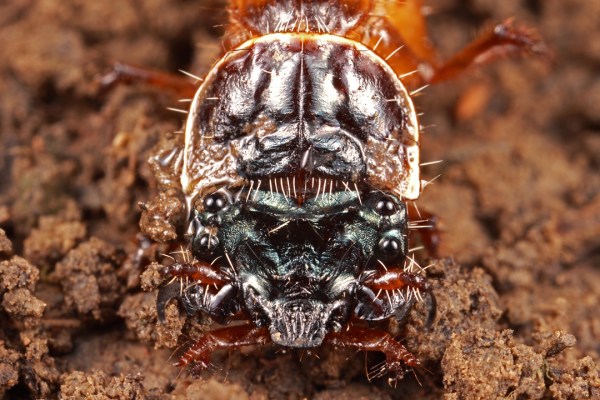
Tetracha virginica 3rd instar larva | Mississippi Co., Missouri

Tetracha virginica 3rd instar larva | Mississippi Co., Missouri

This larva was dug from its burrow in bottomland forest habitat in the southeastern lowlands of Missouri. However, before I even saw the larva I knew it belonged to the genus Tetracha and probably represented the species T. virginica (Virginia Metallic Tiger Beetle, according to Erwin & Pearson 2008). How did I know this? First, the size of the burrow (~8 mm in diameter) excluded all but one other non-Tetracha species known to occur in Missouri—Cicindelidia obsoleta vulturina (Prairie Tiger Beetle), a species known to occur only in the dry, rocky, dolomite glades in the White River Hills region of extreme southwestern Missouri. Secondly, while T. carolina (Carolina Metallic Tiger Beetle) is also found in southeastern Missouri, that species has been associated almost exclusively with treeless habitats—at least in southeastern Missouri (K. Fothergill, personal communication). Since the burrow from which this individual was dug was found in wet, bottomland forest, chances were high that it instead represented T. virginica.

Simple, thorn-like outer hooks with much smaller inner hooks distinguish Tetracha larvae from other tiger beetle genera.

Simple, thorn-like outer hooks with much smaller inner hooks distinguish larvae of Tetracha.

Notwithstanding the circumstantial evidence, there are morphological characters that also distinguish both the genus and the species of this larva. Of primary importance are the hooks and setae on the prominent “hump” of the fifth abdominal segment. This hump is braced against the vertical wall of the larval burrow as it sits at the entrance waiting for passing prey. Once the prey is seized, the hump armature provides traction against the burrow wall, preventing the struggling prey from pulling the tiger beetle larva out of its burrow (where it would not only be ineffectual as a predator but also highly vulnerable to predation itself). Tiger beetle larvae can often be distinguished at the generic level by the shape and size of the main hooks. Tetracha larvae have four hooks—two outer and two inner—that are simple and thorn-like, with the inner hooks much smaller than and placed much closer to the outer hooks than to each other (other genera either have six hooks, or they have the outer pair 1) highly curved or 2) the inner pair larger and nearly as close to each other as to the outer hooks). There are also fine details of the pattern of the setae (smaller hairs) on the hump that identify this larva as T. virginica, but the presence of numerous hairs over the surface of the abdominal segments is a much easier character to see in the field (see first photo).

Note the white-margined pronotum and nearly equal sized simple eyes.

Note also the white-margined pronotum and nearly equal sized simple eyes.

Finally, there is that head—two pairs of large, simple eyes sitting behind gaping, cocked jaws that give them an oh so alien aspect! An often metallic, shield-like pronotum sitting behind the head, both used in concert to seal the burrow entrance as the larva lies in wait, serve to complete the alien ensemble but also offer clues to the larva’s identity. All larvae of Tetracha and closely related genera bear a distinctive rim of white around the pronotal margin, making them instantly recognizable even while still sitting in their burrow. Also useful is the relative size of the eyes, which in the case of Tetracha the second pair of eyes are nearly as large as the first pair (Amblycheila and Omus have the second pair distinctly smaller than the first, while Cicindela and related genera also have the eyes more nearly equal-sized).

P.S. This is what I was photographing when my friend Kent Fothergill surreptitiously took this photograph of me!

REFERENCES:

Erwin, T. L. and D. L. Pearson. 2008. A Treatise on the Western Hemisphere Caraboidea (Coleoptera). Their classification, distributions, and ways of life. Volume II (Carabidae-Nebriiformes 2-Cicindelitae). Pensoft Series Faunistica 84. Pensoft Publishers, Sofia, 400 pp.

Pearson, D. L., C. B. Knisley and C. J. Kazilek. 2006. A Field Guide to the Tiger Beetles of the United States and Canada. Oxford University Press, New York, 227 pp.

Copyright © Ted C. MacRae 2012
An elegant Eocene fly

IMG_1864_enh_720x1080

USA: Colorado, Garfield, Hwy 139, Douglas Pass.

Here is one of the more elegantly preserved specimens among the collection of Green River Formation fossil insects that I am photographing. It is obviously a fly (order Diptera), but I don’t agree with the preliminary identification of “Mosquito?” as indicated on its label. Rather, I think it is one of the fungus gnats—also members of the suborder Nematocera and, thus, closely related to mosquitos (family Culicidae), but with distinctly elongate coxae (bases of the legs) and lacking the elongated proboscis that mosquitos use for sucking blood. It’s hard to decide between Mycetophilidae (fungus gnats sensu stricto) or Sciaridae (dark-winged fungus gnats), which differ in whether the eyes meet above the antennae (Sciaridae) or not (Mycetophilidae). However, Borrer & White (1970) mention that species of the former are generally less than 5 mm in length, while the latter range from 5–10 mm. This specimen measures 4.15 mm from the front of the head to the tip of the abdomen, so  maybe that is evidence supporting Sciaridae (although perhaps there were smaller mycetophilids 50 mya than today).

Here is a view of the whole fossil, measuring approximately 50 mm on each side:

IMG_1937_enh_1080x720

REFERENCE:

Borrer, D. J. & R. W. White. 1970. A Field Guide to the Insects of America North of Mexico. Houghton Miffton Company, Boston, 404 pp.

Copyright © Ted C. MacRae 2012

Beautiful box of Buprestidae

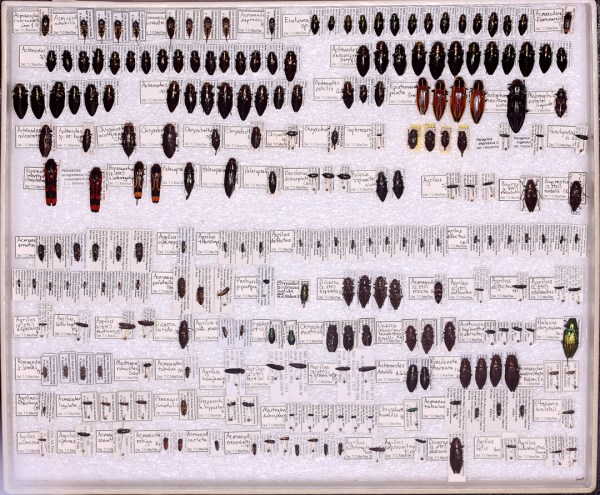
I’ve been working on identifying Buprestidae accumulated from a variety of sources over the past year—mostly exchanges and gifts, before beginning the processing specimens collected during this past season. Once identified, and combined with specimens gleaned from material submitted by other collectors for identification (I generally only retain examples of species that are poorly represented in my collection or specimens that represent and will serve as vouchers for significant new distributional records), they make for a very pretty box of Buprestidae! It’s kind of nice to keep them collected together like this for a little while, but I’ll soon incorporate them into the main collection where they will more securely protected and to free up the temporary box now containing them for new material as it moves through the process of labeling and identification. (Incidentally, I think I might like to do a series a posts over this winter covering my version of the specimen curation process).

There are some very cool Buprestidae in this box—88 species in all, that originated from a remarkable variety of locations across the U.S., Mexico/Central America, and South America. Do you see any species of particular interest?

236 specimens representing 88 species of Buprestidae

236 specimens representing 88 species of Buprestidae

Copyright © Ted C. MacRae 2012

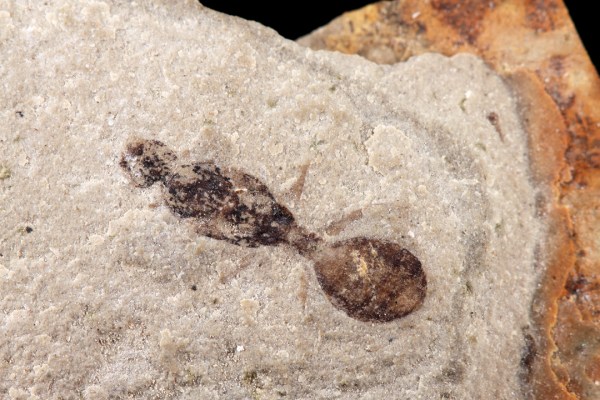
Beetle, orthop or something else?

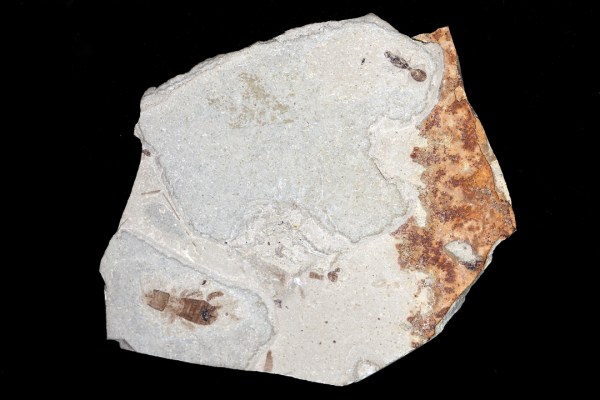
I had such helpful participation with my first fossil ID request that I thought I would go to the well again. This one is not so enigmatic as the first—it is clearly an insect, but it’s the only insect fossil among the batch that I haven’t settled on at least an order-level identification. Again, this is one of a set of 20 fossils loaned to me by a local collector for photographs and possible identifications, all coming from the Green River Formation in Colorado and dating back to the early to mid-Eocene (45–50 mya).

USA: Colorado, Rio Blanco Co., Parachute Creek Member. Body length = 11.05 mm.

USA: Colorado, Rio Blanco Co., Parachute Creek Member. Body length = 11.05 mm.

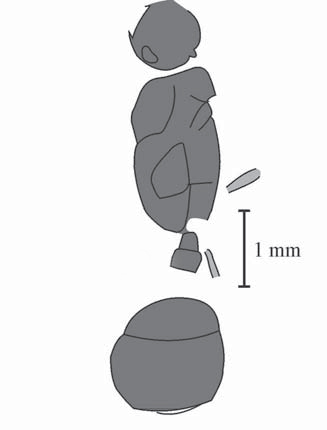
The label for this fossil indicates “Planthopper; Homoptera; Fulgoridae”; however, the short, robust legs and overall gestalt do not look right for either a planthopper or really any of the other hemipteran groups. What I see is an indistinct (mandibulate?) head, a distinct and well-developed pronotum, mes0- and metathoracic segments that are not nearly as heavily sclerotized as the pronotum but also lacking any sign of wings, a distinctly segmented abdomen with 9 or 10 segments, and short robust legs. I’m thinking an apterous/brachypterous coleopteran (Staphylinidae?) or a wingless member of one of the orthopteroid orders (although size alone excludes many of the latter—at more than 11 mm in length it is too large for something like Zoraptera). At first I thought the extension near the apex of the abdomen was a cercus, but I now think this is part of the piece of debris over the abdomen as there is no evidence of a cercus on the left side—another knock against something orthopteroid. Still, the lack of any trace of elytra—however shortened—keeps me from fully endorsing Coleoptera. Okay, so what do you guys think?

Copyright © Ted C. MacRae 2012

The gloriously dichromatic Dasymutilla gloriosa

I have a small collection of velvet ants (family Mutillidae) that I’ve accumulated over the years—not through active collection but more as bycatch from my beetle hunting operations. Velvet ants are, of course, not ants at all, but wasps, and as such the females are—like their winged relatives—quite capable of delivering a painful sting if mishandled. They also tend to be seen running rather frenetically across the ground, making them difficult to guide into a collection vial or grab with forceps. You’ve gotta really want ’em if you want to collect them. Still, even though I don’t study them I find them interesting enough to pick up on occasion, and with most groups outside of my area of focus the hope is that eventually they will end up in the hands of somebody who actively studies the group. Such is now the case with my mutillid collection, which will be shipped this week to another collector specializing in the group. In return I will be filling some holes in European representation of my collection of Cerambycidae.

Dasymutilla gloriosa, female | Brewster Co., Texas

Dasymutilla gloriosa, female | Brewster Co., Texas

Without question, the most interesting mutillid species that I’ve encountered is Dasymutilla gloriosa. All mutillids are sexually dimorphic, as only the males are winged, but most also tend to be sexually dichromatic to a greater or lesser degree. No species I am aware of takes this to the same level as D. gloriosa! The males (photo below) are rather typically colored compared to other species in the genus, but the females (photo above) are densely covered with long, strikingly white hairs. While this would seem to make them quite conspicuous, the true effect is the exact opposite as they easily confused with fuzzy plant seed. For this reason they are commonly called thistledown velvet ants. I encountered the female in west Texas in 2003 while walking a mountain trail and at first thought it was the fuzzy seed of a creosote bush (Larrea tridentata) being blown by the wind—except there was no wind! It took me a little while looking closely at it before I could figure out what it actually was. This is the only female of this species that I’ve seen in the wild, and I’ll be a little sad to see it sent to another location.

Dasymutilla gloriosa, male | Riverside Co., California

Dasymutilla gloriosa, male | Riverside Co., California

The male also is the only one I’ve encountered—or at least taken the trouble to collect. I would have never suspected this male, which I collected in southern California in 1991, was the same species as the female that I collected many years later. My thanks to Kevin Williams, who provided the identifications for both of these specimens.

Also called the ''thistledown velvet ant''

Also called the ”thistledown velvet ant”

Copyright © Ted C. MacRae 2012

Spider, insect or something else?

I recently received a batch of fossil insects from a local fossil collector, who is hoping that I and other local entomologists will be able to provide some level of identification beyond just “insect.” All are from the Green River Formation, a lake bed shale deposit dating back to the early to mid-Eocene epoch (45–50 mya). Most major insect orders and families were established and undergoing rapid diversification by this time, and as a result most of the fossils are clearly identifiable at least to order or even family. There is one fossil, however, that has got me stumped. The label that came with the fossil indicates “Spider (?)”, and while at first glance this is the first thing that comes to mind, the more I look at it the more I become convinced that it represents something else. What, however, I do not know.

The fossil is a cast and mold from a split rock, so two views of the fossil are available. I’ve photographed them to try to get a better look at the details and still can’t come to a decision (I’ve even considered a small crustacean or even a plant part). Perhaps somebody who reads this might have an idea?

Colorado: Garfield, Hwy 139, Douglas Pass. Maximum diameter = 22.5 mm.

Colorado: Garfield, Hwy 139, Douglas Pass. Maximum diameter = 22.5 mm.

IMG_1840_enh_1080x720

Mirror half of same fossil.

Copyright © Ted C. MacRae 2012