Have you googled yourself lately?

I recently came upon a post titled, What will I find if I google you?, written last year by Scientopia blogger gerty-z at Balanced Instability. Although written from the perspective of a new, tenure-track academician giving advice to students with similar aspirations, the main point of the post is relevant to probably any profession: “SEARCH COMMITTEES WILL GOOGLE YOU.” That this is true for industry as well as academia is a fact—over the course of my now three-decades-long career, the past 22 in industry, I have been involved in many a search committee, and particularly over the past 3–4 years a Google search has become a standard part of my resume screening process as I try to whittle down the 10 or so resumes that have survived my initial screening to those 3 to 5 candidates that I will recommend for an interview.

For me, the post had it’s intended effect, as I started wondering what, really, I would find if I googled myself. Of course, I’ve done this in the past, primarily in the early days of my online and social media presence and more out of trivial curiosity than as part of an effort to critically assess what impression the results might give to a prospective employer. Not that I am actively looking for another job—I love what I do, have a reasonable amount of autonomy, and am fairly compensated. Nevertheless, one never knows what opportunity or circumstance might arise and the timing of such, and a favorable online reputation is much easier to maintain than to create or repair on short notice. In my case, that presence is extensive—I’ve blogged regularly for almost five years now and participated to greater or lesser degree in most of the other social media outlets frequented by entomologists—BugGuide, Facebook, Google+, Twitter, Flickr, etc.—for much of that same period. This blog alone contains nearly 650 posts and averages somewhere between 500 to 1,000 words per post—that’s in the neighborhood of one-half million words tagged with my very searchable name. Add to that my 3,601 comments here, innumerable comments and mentions on other blogs (including 1,158 on BugGuide alone), and perhaps somewhat sillier musings over on FB and Twitter—well, whatever reputation I’ve accumulated by now I’m probably stuck with, good or bad!

I didn’t think I would find any problems, but gerty-z’s post did convince me that I should at least take the exercise. What if I did suddenly find myself on a candidate short list for that dream curatorship at the U.S. National Museum (right!)? Would Terry Erwin, Steve Lingafelter, and the other members of their search committee be impressed or concerned by what they found when they googled my name? I probably represent the best case scenario for a prospective employer wanting to search my online presence—my first and last names are both fairly uncommon, and add to that the fact that I always sign with my middle initial. Enclose all that in quotes and one has a very specific search term with little likelihood that the results will be diluted by other people. What did I find? 40,800 results! (I made sure to turn off “Personal” results so that I would see the same search results that somebody else googling my name would see). Nevertheless, the results were largely what I expected. The top 4 and 7 of the top 15 results (see below) linked directly to Beetles in the Bush or one of its posts, and all but one of the remaining top 15 results linked to my various online profiles—all but one of which are either professionally oriented or highlight my entomological expertise. That’s a good thing—I’m happy for anyone to see my list of publications, research interests, professional capabilities, etc. The one exception is Facebook, and that is the only social medium I use that might possibly contain content that someone, somewhere, might find objectionable (I generally stick to entomology and photos from travel or my family while avoiding contentious subjects, but sometimes my touch of irreverence sneaks through). Still, it’s not like one will find photos of drunken excess or poor choices on my FB page, so I think my relative FB risk is small. I doubt many prospective employers would look much past the top 15 results, especially with such a consistent picture of who I am (at least who I project myself to be) having already been painted by that point, but those who do choose to look further will find several dozen subsequent results largely linking to blogs on which I have left a comment or been mentioned by name (the latter usually referring back to Beetles in the Bush or thanking me for an insect identification). I also conducted the search on “Images”, and the result was largely the same—page after page of images from Beetles in the Bush or from other blogs on which I had left a comment or been mentioned by name.

gerty-z suggests that Google searches by potential employers have either neutral or negative impacts on their decisions but rarely have a positive impact since anything “awesome” about you that can be found online should also be in your application. I’m not sure I agree with this latter point. Awesome can include more than simply a long list of publications or multiple summaries of degrees earned and experience gained—things that are easy to include in a resume. Awesome can also include a well-practiced commitment to high quality writing, or consistent involvement in outreach activities, or demonstrated taxonomic expertise far beyond that implied by a list of publications, or even a solid foundation of knowledge in subjects beyond one’s immediate area of expertise but that nevertheless enhance perspective. These are concepts that are much more difficult to capture or highlight in a resume but that might tip the balance in a candidate’s favor if all other considerations are equal. The point is, don’t look at your online presence only as something to manage to prevent failure, but rather as a potential tool to help build a positive reputation and enhance the information provided in your application.

Top 15 results from search on “Ted C. MacRae”

  1. Beetles In The Bush
  2. About the Author « Beetles In The Bush
  3. A visit to the Dallas Arboretum « Beetles In The Bush
  4. Ted C. MacRae (tcmacrae) on Twitter
  5. Ted C. MacRae – The Coleopterists Society – An International …
  6. Ted C. MacRae – BugGuide
  7. Ted C Macrae | ResearchGate
  8. Ted MacRae | Facebook
  9. Ted C. MacRae – Gravatar Profile
  10. Ted C. MacRae – Wikispecies
  11. Program Announcment: 2012 ESA Annual Meeting « Beetles In The …
  12. MacRae, T. C. 2000. – Beetles In The Bush

Copyright © Ted C. MacRae 2012
Frustrating Emerald

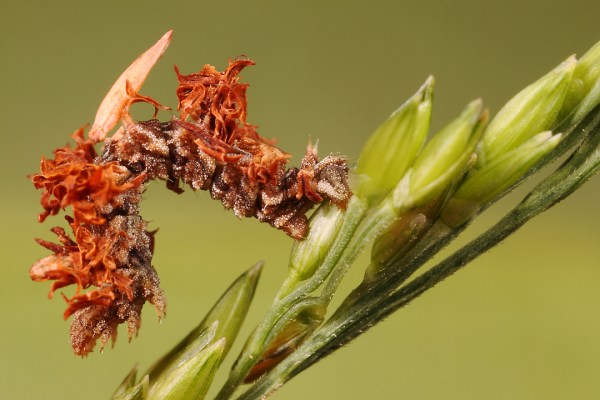
After years in the field looking for insects, one develops an eye not only for recognizing insects but also recognizing when something doesn’t look quite right. That happened to me early this past September at a spot along the Mississippi River in southeast Missouri where I had stopped during late afternoon to look for diurnal species of tiger beetles and then man a blacklight in the evening for nocturnal ones. It was still daylight as I walked along the edge of rank growth bordering the upper banks when a small, reddish “cluster” on a seed head in a stand of tall grasses caught my eye. I didn’t know what it was when I saw it, but I knew it was something ‘out of place.’ My first, cursory thought was that somehow the spent anthers of the now-seeding grass had gotten caught in a tangle, but I must have still had doubts because I looked closer anyway. Just then the “cluster” moved, and I then recognized what I was dealing with—an Emerald moth (Synchlora sp.) caterpillar. Caterpillars in this genus are remarkable for their habit of adorning their bodies with bits of the plants upon which they feed. I am, however, a beetle man and thus admit to being completely unaware of their existence until last summer when Alex Wild featured one of these as a Monday Night Mystery. I wondered then, “Why haven’t I seen one of these before?”, and now I know why—because they are extremely well camouflaged!

Synchlora sp. | Mississippi Co., Missouri

Realizing what I had, all efforts to look for tiger beetles were suspended (I hadn’t seen anything after ~30 minutes of looking anyway), and I broke out the 65mm lens to get the most of this small but remarkable looking insect. I took more than 50 shots, trying different backgrounds, angling the grass stem in different positions, and hoping with each shot that I had captured the larva in full profile, completely in focus, and in the midst of that magical loop. I was sure I had that “perfect” shot when I got home and anxiously fired up the computer to get a better look at the photos. My optimism began to drop, however, as I scanned through each successive photo and continued to not encounter that one photo that would cause me to say “Yes!” Exposure? Check. Composition? Check. Lighting? Check. Focus? Er… crap! The problem was pervasive throughout the entire set, and in the end, I have only this one photo that comes anywhere close to what I had envisioned while I was taking the photos. It’s a shame, because I love everything else about this photo. The cause of the problem is the very thing that makes the larva so remarkable—its adornments. The spent anthers project off the larva in all directions, adding considerable dimensionality to the subject and surpassing the depth-of-field capabilities of my lens. If the subject was in focus the forward projecting anthers were not, and if the anthers were in focus the subject was not. If I had realized in the field what was going on, I would have not gotten in so tight and cropped as appropriate during post-processing. Live and learn!

Although 12 species of Synchlora are found in North America, only one—Synchlora aerata (Wavy-lined Emerald)—is widespread in the eastern U.S. However, a number of other species are found in the southeastern U.S., and for all intents and purposes the Mississippi Lowlands of southeastern Missouri  are the south (culturally as well as biogeographically!). As a result, a generic ID is the best that can be done for this larva.

Copyright © Ted C. MacRae 2012

How to deal with a crappy photo of a beautiful beetle

One thing I’ve discovered after trying my hand at insect macrophotography for the past three years is that I take a lot more photos than I can possibly post. As a result, I tend to focus my efforts on more recent photos, especially those that have some kind of interesting natural history story to tell. Photos that don’t get posted soon after I took them tend to accumulate in my virtual “not yet posted” files, and periodically I need to browse through them to re-acquaint myself with any that I may have since forgotten about. Not all of these “other” photos are bad or uninteresting—they just happened to be taken at a time when I had other photos that I was more interested in using. Admittedly, however, there truly are some rather ugly photos in these archives, and the older they are the more frequently I find myself asking, “Why in the heck did I even keep that photo?” (hopefully this indicates improvement in my standards of what constitutes a photo worth keeping).

Cicindela limbalis | nr. Laramie, Wyoming

There is, however, a lesson here to be learned, and that is don’t be too quick to send to the recycle bin a photo that at first sight appears not worth keeping. Take, for example, this photograph of Cicindela limbalis (Common Claybank Tiger Beetle). This pretty little species is broadly distributed in Canada and the northern U.S. from New England across the Great Plains to the eastern edge of the Rocky Mountains. Different populations show differing degrees of maculation, and here in Missouri the species is nearly immaculate. I found the individual in the above photo in Wyoming’s Medicine Bow National Forest as an example of the more completely maculated forms. However, since it was the only individual I saw in that location I didn’t try to photograph it in the field. Instead, I captured it and photographed it later in the “studio” (my hotel room). Sadly, this was in September 2010 when I was still a rank beginner in terms of insect macrophotography, and as a result I was far less versed on such details as lighting and composition than I am now. I’m ashamed to say that I thought this photo was “good enough.”

Of course, by today’s standards that is one crappy photo! If it wasn’t the sole photo that I have from that population I wouldn’t hesitate to throw it away. However, since I’ve been putting some effort recently into honing my Photoshop skills, I thought I would see if I could “rescue” from this crappy photo a halfway decent one. I did this as follow:

  • I opened the “Levels” tool, clicked on the “Set White Point” button, and touched the cursor to an area of the upper background. This not only eliminated most of the gray tinge in the background but also brightened up the beetle quite a bit. I brightened the beetle even more by pulling the left slider button in the “Input Levels” box a little more to the right (12). In the case of this photo, such levels adjustments were sufficient, but in some cases I might also slightly reduce shadowing using the “Shadows/Highlights” tool (2–10% is usually enough) or adjust color using the “Adjust Hue/Saturation” tool (whether you increase or decrease saturation, a light touch is best).
  • With the background brightened up, the debris spots were even more visible and needed to be cleaned up. This was easily accomplished with the “Spot Healing Brush” tool. I keep the size setting as small as possible for each spot while still encompassing the entirety of the spot. Debris spots next to or on the surface of the beetle are better dealt with using the “Clone Stamp” tool—this tool is a little more involved than the Spot Healing Brush, since a source point needs to be selected for each spot. However, it is more effective than the Spot Healing Brush for spots that are in areas where the background is not uniform. Again, I use the smallest size possible and carefully consider the source point for each clone to achieve the best results.
  • The last major problem with this photo was its composition. If I were to take it again today, I would angle the front of the beetle higher in the photo and not clip the middle and hind tarsi or antennal tip as I did in this photo. There is not a lot (though there is a little) that can be done about the clipping, but I used the “Straighten” tool to change the angle of the beetle by clicking on the tip of the abdomen and dragging the cursor to somewhere between the lower front leg and antenna. This resulted in a more pleasing pose for the beetle, but of course it also created triangular areas of blank canvas on each side that had to be dealt with. To do this, I cropped the edges of the photo to remove as much of the blank canvas as I could without cropping off any more of the beetle (I did end up cropping a little bit of the left hind leg), then used the Clone Stamp tool to fill the remaining blank areas with white background (this is much more difficult when the background is not as uniform as in this photo). Careful cloning is required in areas that are close to the beetle to prevent unintended alterations, and in this case I even had to clone in a fake lower tarsus for the middle leg and antennal tip for the left antenna to fill gaps that I could not crop. Cloning in new body parts is not always possible, and even when it is possible it’s not easy; however, with care and practice reasonable results can be achieved. In the case of this beetle it was not too difficult since the body parts that needed to be cloned were just short extensions of already blurred parts.

Lastly, I used typical “Unsharp Mask” settings to sharpen the photo, and here is the final result:

This photo won’t win any awards, but it is a completely serviceable illustration of the species.

This is still not a great photo—in addition to the clipping, the focus is a tad too deep and the beetle has assumed that dreaded “ground hugging” pose that I so detest with confined subjects. Nevertheless, I wouldn’t be ashamed to use this photo if none better were available.

What alternative techniques would you have used on reworking this photo?

Copyright © Ted C. MacRae 2012

The “Other” Marvelously Monstrous Microstylum

Microstylum galactodes | Brewster Co., Texas

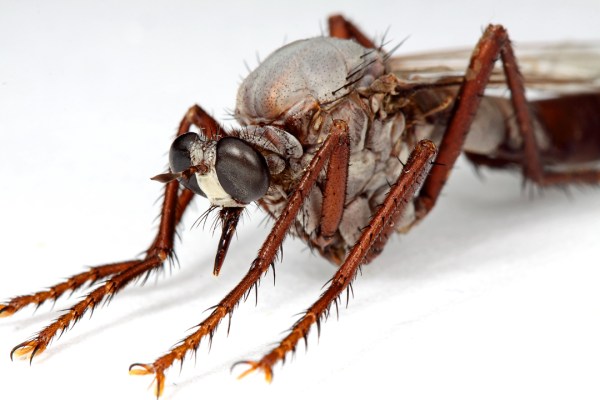
A couple of years ago during the initial testing of my DIY diffuser, I pulled a selection of rather impressive insects from my collection and photographed them on a white background to see how effectively the diffuser worked with different types and sizes of insects. I posted some of those photos for the larger insects in the following weeks, including the tank-like eastern Hercules beetle, the frightful-looking stag beetle, and the downright evil-looking red-eyed devil. There were, however, a number of smaller insects that I had also photographed but whose photos never made it onto these pages as a flush of new photography began the following spring. This is one of them: the robber fly, Microstylum galactodes (order Diptera, family Asilidae). I collected this specimen nearly 20 years ago in western Texas, and until the last few years it was the largest robber fly I had ever seen. That honor now goes to the closely related M. morosum (North America’s largest robber fly), which I have seen in northwest Oklahoma and as a previously unreported occurrence in southwestern Missouri. Still, M. galactodes is an impressive beast, and these photographs of the preserved specimen do little justice to its appearance in life.

The ”beard” (mystax) of Microstylum is confined to the oral margin and composed of stout bristles.

Both species of Microstylum are distinguished by the mystax (dense moustache of bristles on the face) confined to the oral margin and composed chiefly of stout bristles, but M. galactodes may be separated from its larger cousin by the light-colored wings and even, whitish bloom (powdery covering) covering the head and thoracic dorsum (Back 1909). Despite being the relatively commoner species, M. galactodes seems to be a little more specific in habitat preference, most often found in short grass prairies and scrub lands (Beckemeyer & Carlton 2000). Also, even though both species occur broadly in the southcentral to southwestern U.S., M. galactodes seems to have a slight western shift in its distribution compared to M. morosum, extending north only into the western parts of Oklahoma and Kansas (Beckemeyer & Carlton 2000); while M. morosum occurs across these states and eastward into northwestern Arkansas (Warriner 2004) and southwestern Missouri (MacRae unpublished—gotta get that note submitted!

REFERENCES:

Back, E. A. 1909. The robberflies of America, north of Mexico, belonging to the subfamilies Leptograstrinae and Dasypogoninae. Transactions of the American Entomological Society 35:137–400.

Beckemeyer, R. J. & R. E. Carlton.  2000.  Distribution of Microstylum morosum and M. galactodes (Diptera: Asilidae): significant extensions to previously reported ranges.  Entomological News 111(2):84–96.

Warriner, M. D.  2004.  First Arkansas record of the robber fly Microstylum morosum (Diptera: Asilidae).  The Southwestern Naturalist 49(1):83–84.

Copyright © Ted C. MacRae 2012

The Third of Florida’s Three Metallic Tiger Beetles

Tetracha virginica (Virginia Metallic Tiger Beetle) | Levy Co., Florida

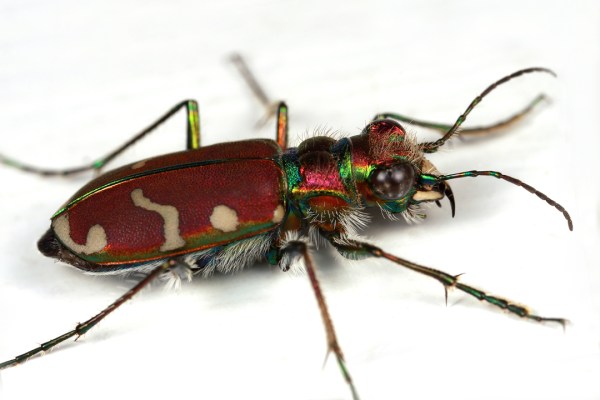
After three straight posts not about tiger beetles, I’m hoping readers will forgive my return to this fascinating group. The photos in this post represent Tetracha virginica (Virginia Metallic Tiger Beetle), the most widely distributed (at least in the U.S.) of the four species occurring in North America north of Mexico. Even though this species occurs in my home state of Missouri, I’d not found an opportunity to photograph it until August last year at Florida’s “Road to Nowhere“—famous among U.S. cicindelophiles as one of the country’s true tiger beetle “hot spots.” In fact, it was on the very same night at this same place that I photographed the related Tetracha carolina (Carolina Metallic Tiger Beetle) (featured in Not all Florida tiger beetles are rare) and just one day after I photographed the endemic Tetracha floridana (Florida Metallic Tiger Beetle) (featured in Why I Roamed the Marsh at Night). That’s all three species of Tetracha occurring in Florida in just two days (and if I want to photograph the fourth and only remaining U.S. species, Tetracha impressus (Upland Metallic Tiger Beetle), I’ll have to go to Brownsville, Texas and get very lucky!).

The solid green elytra without apical markings distinguish this species from all other Tetracha spp. in the U.S.

Truthfully, I had no plans to post these photos after I took them. Like the other species they were photographed at night, and when I got a better look at the photos on the computer I was disappointed to see the subject was badly covered with large particles of sand. I don’t mind a little bit of debris on insects—it is, after all, a normal part of their appearance. However, too much debris is, for me, an aesthetics killer! “Wait a minute… these don’t look too bad”, you say? Well, thanks to the Clone Stamp Tool in Photoshop Elements, and as a followup to my recent post on this subject, I now have enough confidence to tackle not only small pieces of debris, but also more difficult “debris cases” such as this one with relatively large particles. Here is the same photo as shown above and processed in exactly the same manner, except that no cloning was used to remove the debris:

Aren’t I a dirty boy?!

Obviously, there are limits to what the Clone Stamp Tool can do, and I didn’t try to deal with the sand particles clinging to more difficult to clone body parts such as legs and antennae (although I’m sure that in the right hands even these could be cloned out). Nevertheless, even just cleaning the dorsal surface of the beetle does much to improve its appearance with a relatively minor amount of effort.

And, of course, what would a tiger beetle post be if it did not end with my signature face portrait (notwithstanding a few large sand grains that I wasn’t sure I could clone out effectively)?

Copyright © Ted C. MacRae 2012

A visit to the Dallas Arboretum

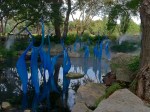
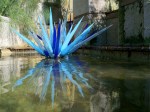
This post is a little different from my normal fare, so feel free to glance and move on (or if you like it, let me know that too). Earlier this week I traveled to Argentina, but along the way I found myself unexpectedly spending a day in Dallas due to a missed connection. Such travel snags are never fun, especially when the result is an entire day lost from a tight itinerary. I do, however, have to give American Airlines props for comping me a night’s stay at the Downtown Crowne Plaza Hotel (very, very nice!). The following day, my flight to Buenos Aires would not leave until early evening, so I had to find some way to occupy myself after my noon checkout. Whenever I find myself in a large city looking for something to do, my first thought is always the local botanical garden. Dallas, of course, has a world class example of such—the Dallas Arboretum, situated in the heart of the city on the east side of White Rock Lake. Any time of year is a good time to visit a botanical garden, but fall is without question my favorite time. Turning leaves and late-season blooms would have been enticement enough, but this particular day found the garden in the midst of its annual fall festival, featuring a Pumpkin Village and a charming little “Small Houses of Great Artists” exhibit, and artfully placed throughout the garden were glass sculptures by world-famous Dale Chihuly. There was a lot to see, and I’m thankful that I had the luxury of exploring the garden’s many meandering paths at a leisurely pace without feeling rushed for time.

Frustratingly, I had decided not to bring my good camera with me on this trip since I didn’t anticipate any opportunities for photography. Even though I’m not normally inclined to photograph gardens and especially sculptures (preferring instead native and naturalized landscapes), I found the expert fusion of art and nature in the displays irresistible and did what I could with my smart phone (which, it turns out, takes surprisingly good photos for its size, especially for certain applications such as wide-angle landscapes). Obviously, armed with such, it’s hard to take “unique” photos of subjects that thousands of others (also armed mostly with smart phones) are passing by daily. Hopefully, however, I managed one or two that provide a different perspective. With that, I’ve picked out my 24 favorites and present them here in a brief slide show (the slides cycle continuously, beginning with “Mexican Hat Tower” and ending with “Blue Icicles”). Below that is a gallery of the photos in case the slideshow does not function in your browser or if you would like to see a larger version of a particular photo.

I know which are my favorites—are there any that you would call out (compositionally at least)?

This slideshow requires JavaScript.


Copyright © Ted C. MacRae 2012

Post processing—then and now

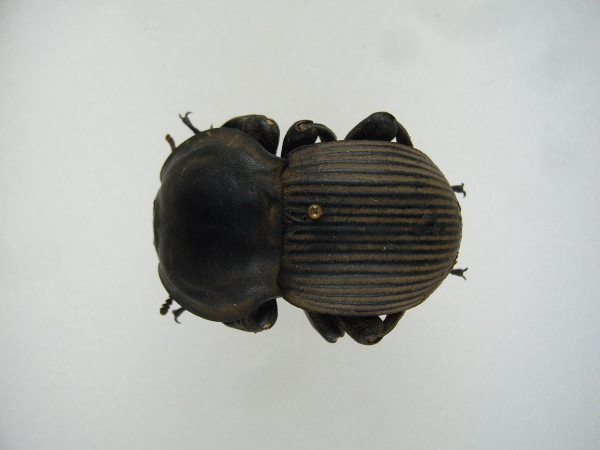
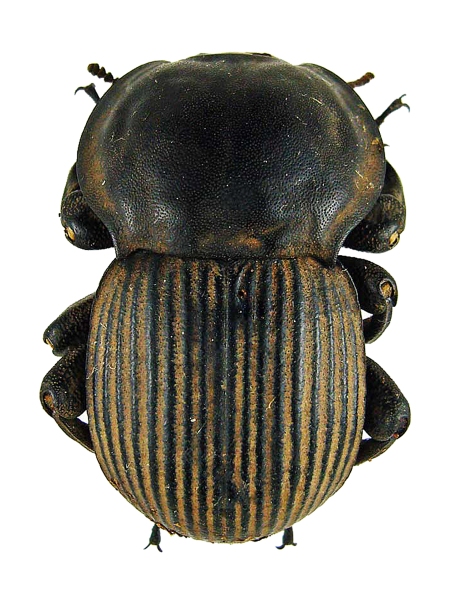
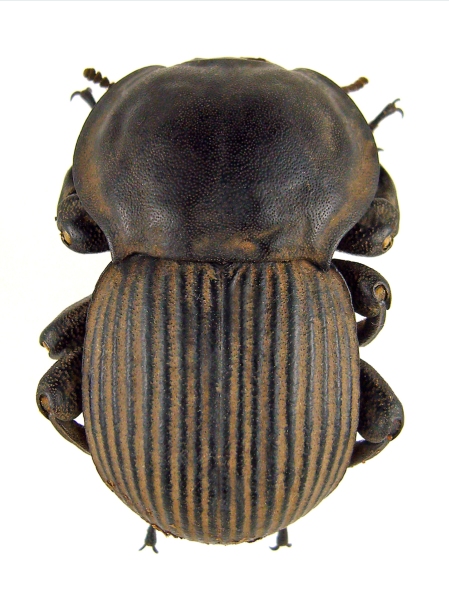
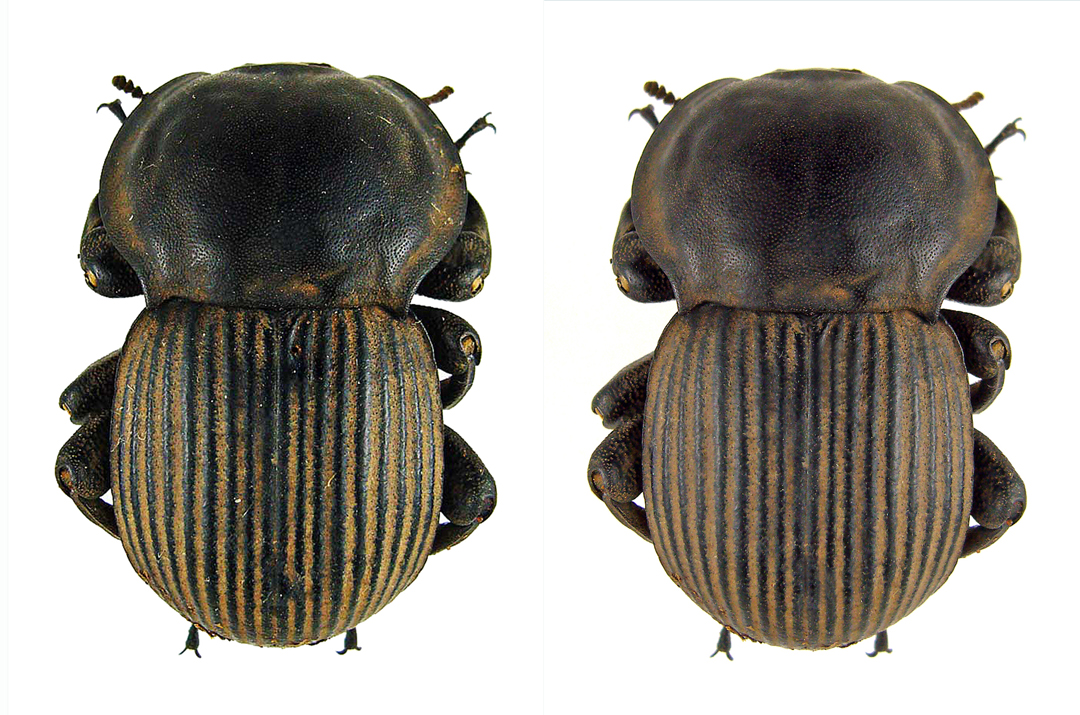
I recently happened upon one of my first attempts at post processing a photograph of a pinned insect specimen. The subject was Anomalipus elephas (large armoured darkling beetle), a tank of an insect (this example measuring 32 mm in length) belonging to the family Tenebrionidae. At the time, I was quite pleased with the results of my crude post processing efforts and proudly posted the “enhanced” photo in full-sized glory for all to behold. Since then, I’ve gained some experience with post processing of photos, and when I saw the processed photo this time I knew that there was considerable room for improvement. I thought it might be interesting to give the photo another PP whack and compare the two efforts from then and now.

Here is the original photo—keep in mind that the photo was taken with a small (though fairly decent) point-and-shoot camera (Panasonic DMC-FX3) a few months before I made the move to my current dSLR setup. I pinned the specimen to a styrofoam board, illuminated it with two 23w compact fluorescent light bulbs, and took the photo with the camera set on its “macro” setting. For the original post processed version (using Adobe Photoshop Elements version 6.0), I rotated and cropped the photo, then increased brightness and contrast (I don’t remember the values for each), used the clone tool to remove the pinhead (I’d just figured out how to do this), and increased sharpness using unsharp mask. This is all well and good (although I think the added contrast was a little excessive); however, I did make two big mistakes. The first was using the eraser tool to create a white background—a tedious process, especially around the perimeter of the subject to avoid “clipping” any of the subject’s body. The second was leaving the numerous small pieces of debris clinging to the subject. Debris on pinned (and even live) specimens is now a pet peeve of mine—I find it detracts greatly from the appearance of the photo, yet it is remarkably easy to remove in all but the most extreme of cases. At any rate, here is the result of that original attempt:

For the latest attempt, I rotated and cropped the original photo as before. Next, I created a white background, not with the “Eraser Tool” but rather by opening “Levels”, clicking on “Set White Point”, and touching the darkest part of the background. Voilá—a beautiful white background with no clipped subject edges! The subject still needed to be brightened up (two 23w fluorescent bulbs don’t put out that much light); however, instead of directly adjusting brightness I set “Lighten Shadows” to a value of +30% (a rather heavy handed setting) to also reduce shadows around the subject’s legs. Then I used the “Clone Stamp Tool” to clone out the pinhead, but this time I didn’t stop there—I continued using the tool to clone out all of the tiny little pieces of debris on the subject surface. Using the clone stamp tool effectively requires some practice, but eventually one learns to adjust the size and define the source set point to achieve almost perfect results. Lastly, I increased sharpness with “Unsharp Mask” (118%, 1.0 pixels, 8 levels). That’s it—took me all of about 3 or 4 minutes to post process the original photo to achieve the following result:

To compare the two post-processed images directly click here. Of course, my current camera setup is capable of much higher quality photographs than the point-and-shoot used for the subject of this post; however, the sequence of post processing  steps that I use is essentially the same (if less heavy handed). One final note—I am not a Photoshop expert, and perhaps some of the processes I have described can be done even more effectively or easily than in the manner I have described. I would welcome any comments or tips that you think might offer a better way to post process photos of pinned specimens.

Copyright © Ted C. MacRae 2012

Life at 8X—Bandedwinged Whitefly

Trialeurodes abutiloneus (bandedwinged whitefly) | Obion Co., Tennessee

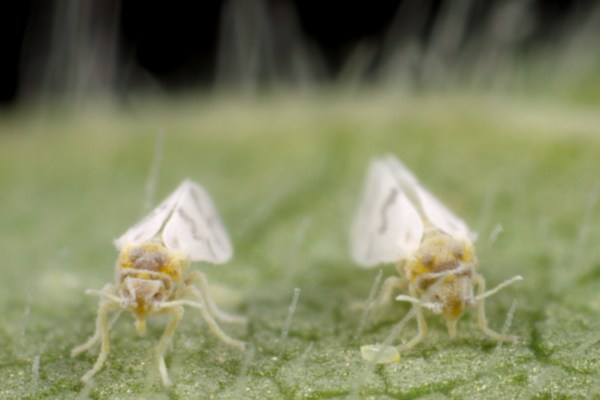
The world of minute insects can seem strange and even bizarre when compared to our relatively giant perspective. To the unaided human eye, this bandedwinged whitefly (Trialeurodes abutiloneus), measuring only 1 mm in length, looks like nothing more than a fleck of dandruff. Through a Canon MP-E 65mm 1–5X macro lens with 68 mm of extension tube (resulting in 8X magnification), however, we see an almost moth-like insect with a decidedly adorable “face” negotiating the “trichome forest” of a soybean leaf under-side.

A more conventional 2X view of a whitefly infestation on the underside of a leaf

Whiteflies (order Hemiptera, family Aleyrodidae) are tiny insects (more related to aphids than true flies) that colonize a variety of host plants, often building to extraordinary numbers and densities while sucking juices from the leaves. The bandwinged whiteflies in these photos were seen in a soybean field in northwestern Tennessee this summer and can be easily identified as this species due to the transverse, zig-zag bands on the forewings (Malumphy et al. 2010). In the photo above numerous eggs can also be seen distributed over the leaf surface—a sign that this population is about to explode given the numbers of eggs present.

Zooming in to 8X allows the zig-zag wing pattern to be seen easily.

Whiteflies are an occasional pest of soybean in the U.S., but yield reduction has been documented only in the southeastern U.S. by another species, Bemisia tabaci (sweet potato whitefly). Whiteflies are also occasionally seen on soybeans in the Midwest by B. tabaci or yet another species, Trialeurodes vaporarium (greenhouse whitefly); however, yield impacts in this area are rare. Trialeurodes abutiloneus is occasionally reported from soybean, but this species is actually more commonly encountered on sweet potato and malvaceous crops such as cotton and hibiscus (Clower et al. 1973). There was a lot of cotton growing in the area of this soybean field, so perhaps this infestation was a result of spillover from that crop.

Piercing/sucking mouthparts are inserted into the leaf for feeding.

“Adorable” and “cute” are not words that I’ve ever associated with whiteflies, but these ultra-closeup photographs give them a personality that I’ve not seen before. For an even more astounding view of the face of a greenhouse whitefly, see this incredible 16X photograph by Huub de Waard. Taken with the same lens as these—though I suspect with a 2X converter rather than extension tubes, it shows an amazing level of sharpness compared to the admittedly soft photos in this post. The larger aperture used (f/6.3) may also be a better choice than the small f/13 aperture I used in an attempt to preserve as much depth of field as possible but with which diffraction is likely significantly greater. Stay tuned as I do some more testing…

A cute couple!

REFERENCE:

Clower, D. F. & C. M. Watve. 1973. The bandedwinged whitefly as a pest of cotton, pp. 90–91. Proceedings of Beltwide Cotton Production and Research Conference, 11–12 January, Phoenix, Arizona. Cotton Council of America, Memphis, TN.

Malumphy, C., A. MacLeod & D. Eyre. 2010. Banded-winged whitefly Trialeurodes abutiloneus. Plant Pest Factsheet, The Food and Environment Research Agency (Fera), 4 pp.

Copyright © Ted C. MacRae 2012