ID Challenge #14

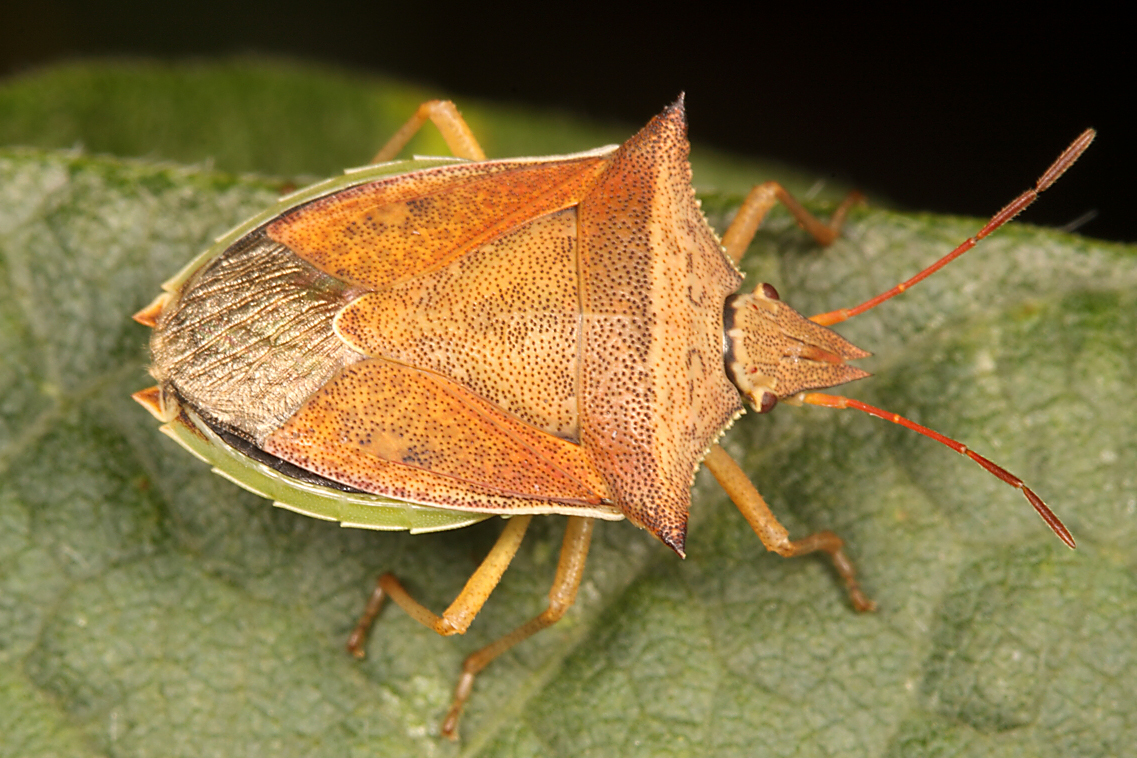
I’ll be leaving soon for another trip to Argentina.  While the process of traveling to the Land of Gauchos (and back) is exhausting, I adore Argentina and look forward to my visits there with great anticipation.  In celebration of my pending return, I’m starting off a new BitB Challenge Session (#5) with a traditional ID challenge—for 2 pts each can you identify the order (a gimme), family, genus, and species of the critter in the photo below?  Say something about the situation for the possibility of bonus points.  Standard challenge rules apply, including moderated comments during the challenge period (you don’t have to be first to score points), early-bird points to those who do arrive at the correct answer before others, etc.

Copyright © Ted C. MacRae 2011

Burrowing Owl in Argentina

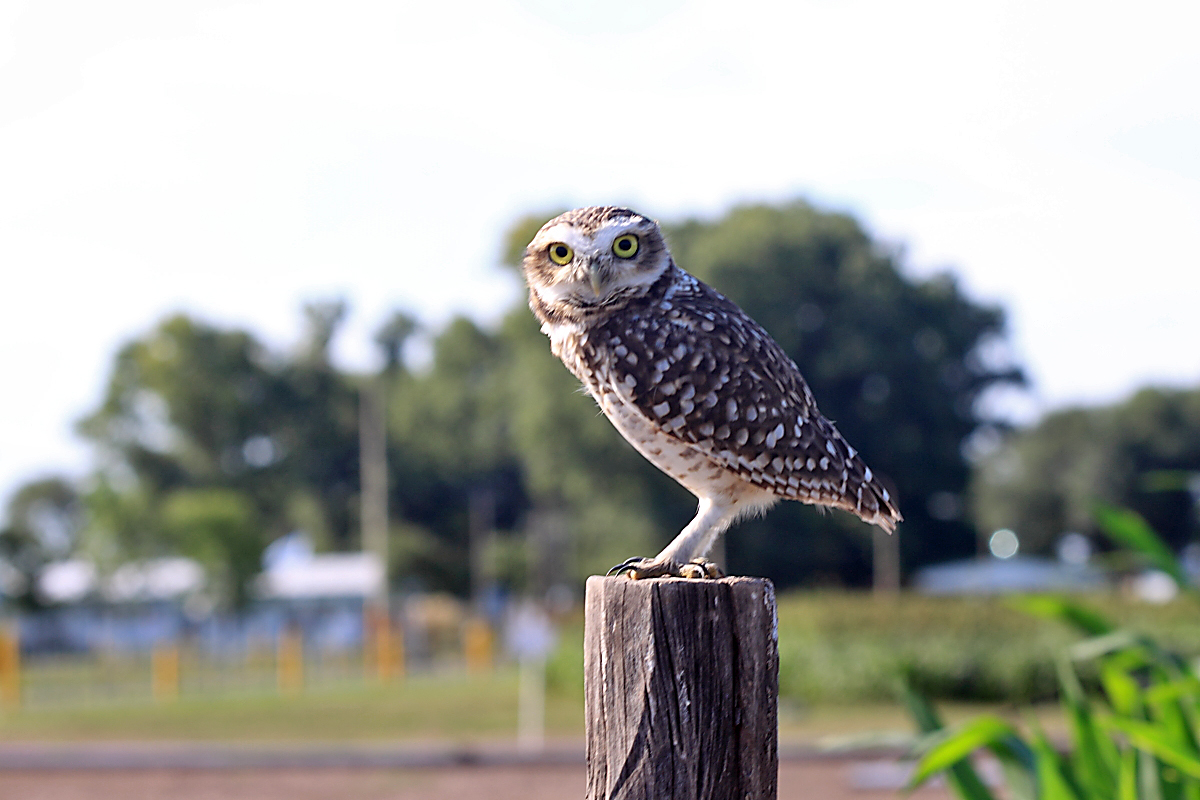
I’m not normally one to try to photograph birds—I have neither the expertise nor the long lenses that are generally required for good bird photographs.  However, during my March trip to Argentina I scared up this burrowing owl (Athene cunicularia), who flew a short distance, landed on a nearby fence post, and then just sat there staring at me—almost as if it was daring me to try.  Never one to turn down a challenge (real or perceived), I took the bait.  My longest lens is a 100mm macro, so I set the camera to automatic mode, pointed it at the bird, and started walking.  After each slow, deliberate step I clicked the shutter, racking up about a dozen shots by the time I took the photos below.  They are minimally cropped only for composition and, thus, attest to how amazingly close the owl allowed me to get before it finally found the situation just too unsettling and flew much farther away.  My colleagues commented afterwards that they wished they’d taken a video of me stalking the owl (which they found almost as amusing as the bird’s incredulous stare).  Perhaps all the tiger beetle stalking I’ve done helped.

Copyright © Ted C. MacRae 2011

Bichos Argentinos #14 – Flies!

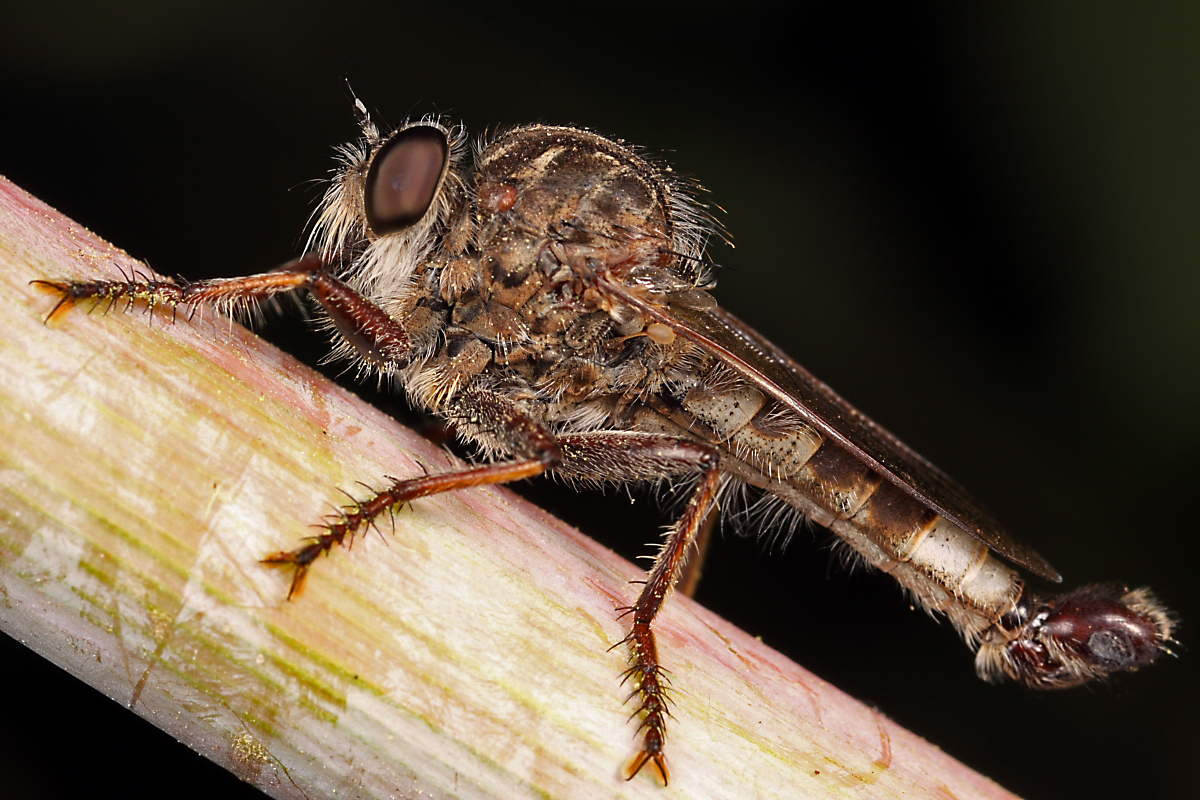
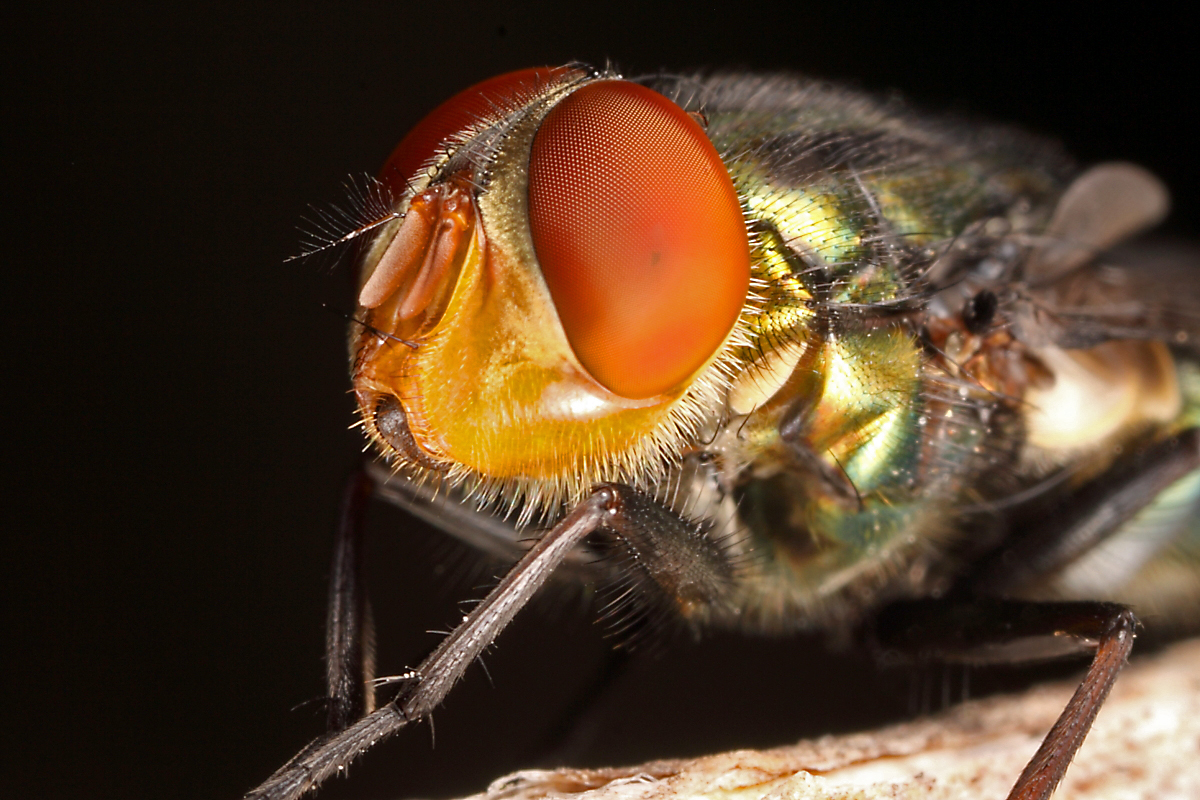
A few miscellaneous fly photos from La Reserva Ecológica Costanera Sur (Buenos Aires, Argentina)  taken last March.  I don’t have IDs except provisionally to family (let’s face it—flies are hard!).

I suppose something in the Tachinidae, based on the black and white striped coloration and distinct abdominal setae.


Definitely a robber fly (family Asilidae), but which one?


I suppose this is some kind of bottle fly (family Calliphoridae).


Nice eyes!


Copyright © Ted C. MacRae 20011

Stink Bugs on Soybean in Argentina

Despite the natural history and taxonomic focus on beetles and other insects I have adopted for this blog, I am by day an agricultural research entomologist.  For the past 15 years soybean entomology has been my focus, and there is no better nexus for soybeans and entomology than South America.  Cultivated hectares have increased dramatically in Argentina and Brazil over the past several decades, now totaling nearly 80 million acres in those two countries alone (roughly the same area as in the US, by far the world’s largest producer of soybean).  Unlike the US, however, where insect pressure is minor outside of a small number of acres in the southeast, significant pressure occurs in nearly 100% of South America’s soybean acres.  Lepidopterans, primarily species in the family Noctuidae such as velvetbean caterpillar (Anticarsia gemmatalis) and soybean looper (Pseudoplusia includens), are the most important pests, followed closely by stink bugs.  This latter group is especially problematic for growers to deal with.  Stink bugs feed on the developing seeds, causing direct yield impacts through reductions in weight and quality, and because they are a guild of insects rather than a single species, differences in product efficacy against the different species can lead to ineffective or inconsistent control.  I’m involved in trying to do something about this, and while I hate to be deliberately coy, suffice it to say that there is an awful lot of insecticide being sprayed on an awful lot of acres and that the world really would be better off if this weren’t the case.

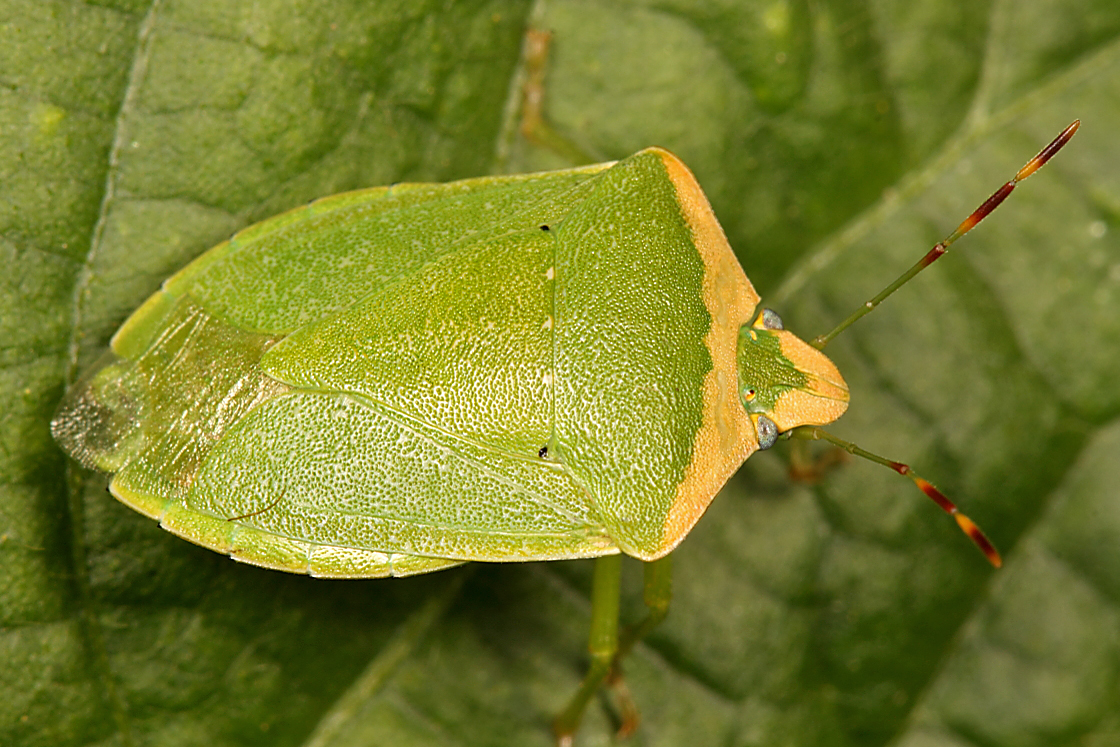
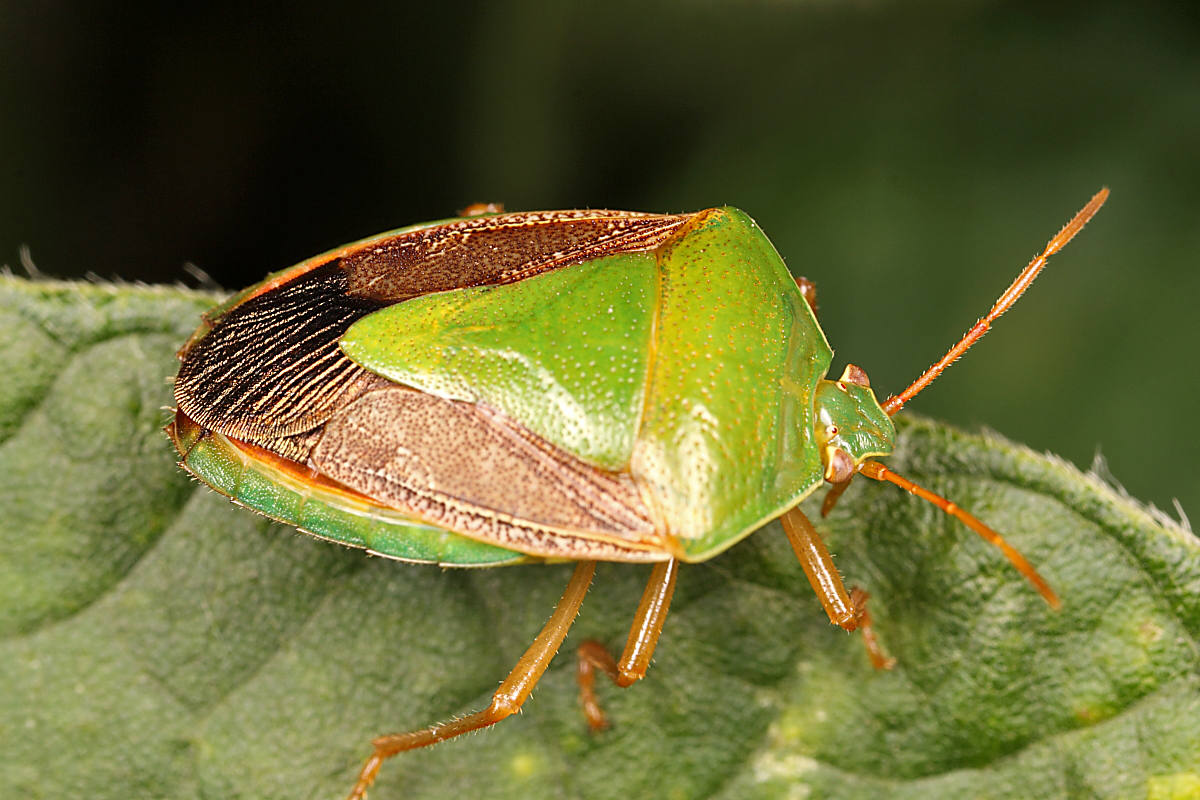
During my recent visit to Argentina this past March, I took advantage of the opportunity while touring soybeanland to photograph a number of these stink bug species.  Proper identification of stink bugs in a crop is the first step towards controlling them, thus I present here my own photographic guide to some of the more important stink bug species found on soybean in Argentina.

Nezara viridula (chinche verde), adult | Pergamino, Argentina

Nezara viridula, 5th instar nymph | San Pedro, Argentina

Nezara viridula, 1st instar nymphs on egg mass | Oliveros, Argentina

Piezodorus guildinii (chinche de las leguminosas), adult | Pergamino, Argentina

Piezodorus guildinii, 1st instar nymphs on egg mass | Acevedo, Argentina

Edessa meditabunda (alquiche chico), adult | Acevedo, Argentina

Edessa meditabunda, 1st instar nymphs on egg mass | San Pedro, Argentina

Edessa meditabunda, eggs nearing eclosion (note eye spots) | Oliveros, Argentina

Euschistus heros (chinche marrón), adult | Oliveros, Argentina

Dichelops furcatus (chinche de los cuernos - note two ''horns'' in front), adult | Inés Indart, Argentina

Copyright © Ted C. MacRae 2011

Bichos Argentinos #13 – Spotted Maize Beetle

Astylus atromaculatus (spotted maize beetle) | Inés Indart, Argentina.

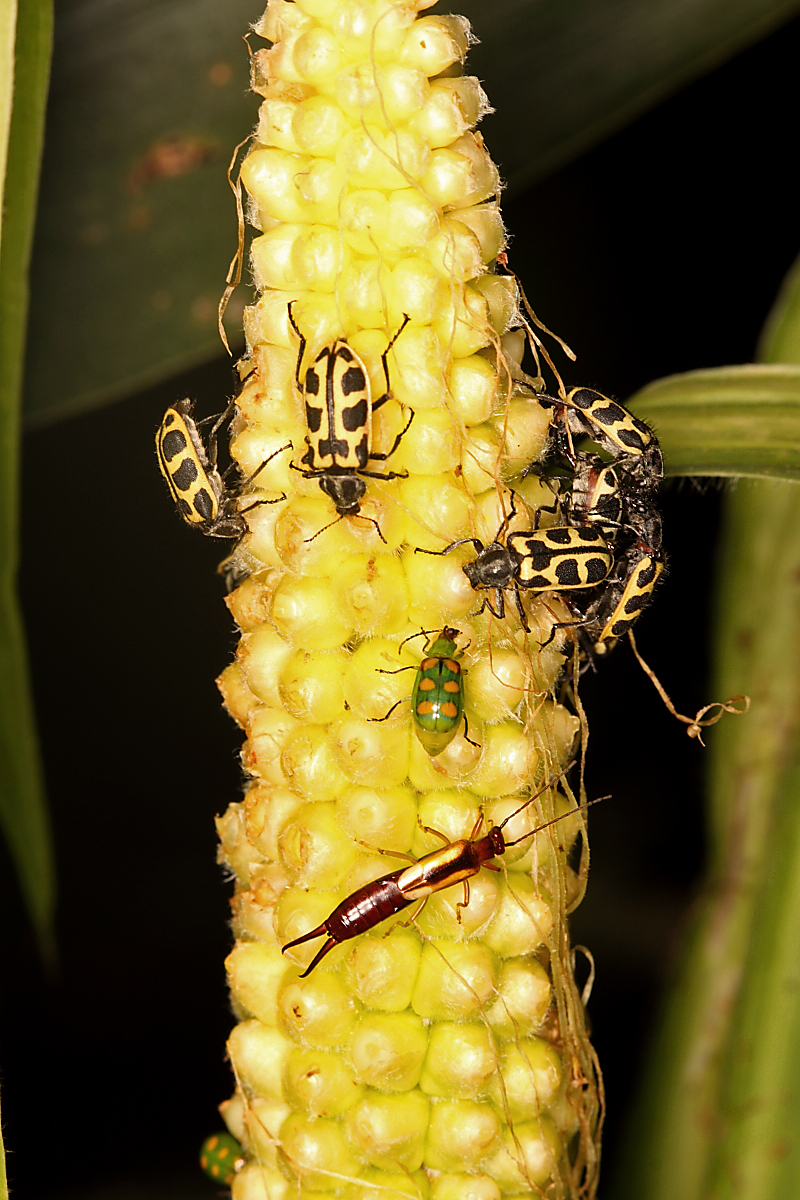
One of the most common insects encountered in agricultural fields in Argentina is Asylus atromaculatus (spotted maize beetle).  This native species can also be found further north in Bolivia and Brazil, and as implied by its common name it is frequently encountered in maize fields.  The species, however, is also common on soybean, on which the individual in the above photo (and mating pair in the previous post) were found.  Looking like some strange cross between a checkered beetle (family Cleridae) and a blister beetle (family Meloidae), it is actually a member of the Melyridae (soft-wing flower beetles)—placed with the Cleridae in the superfamily Clerioidea.

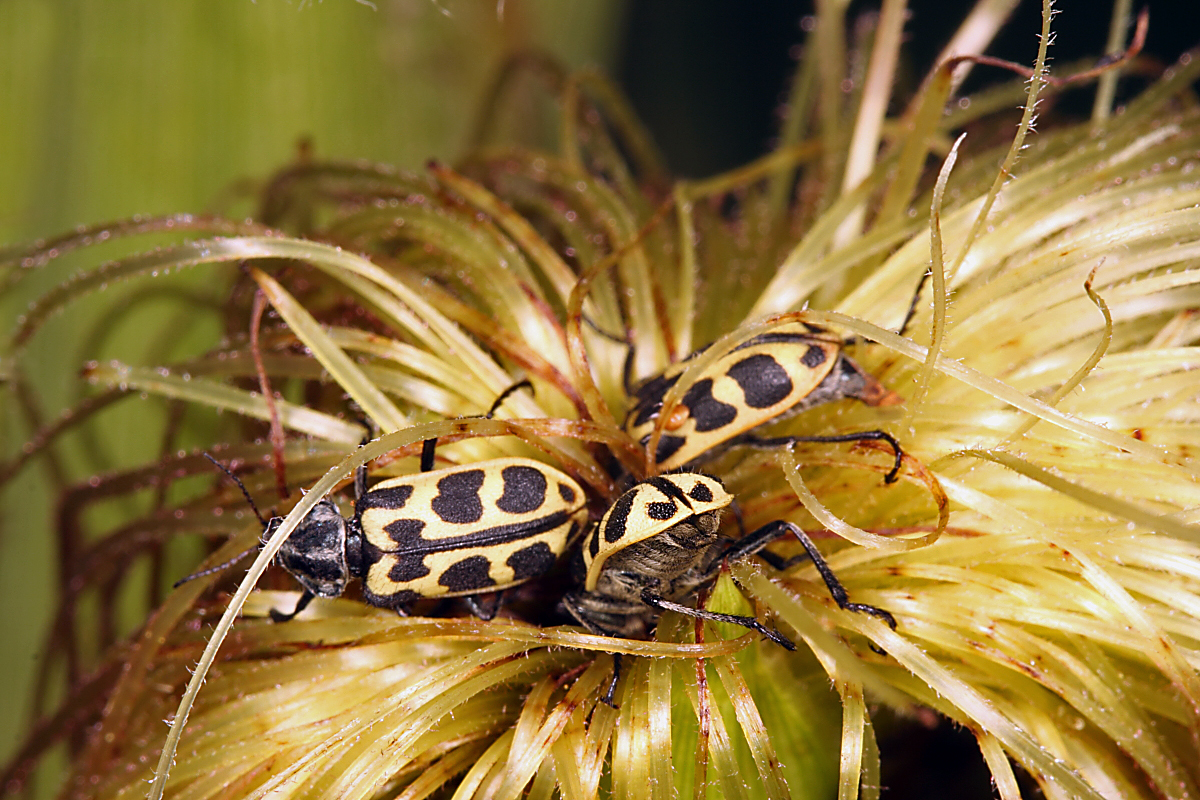
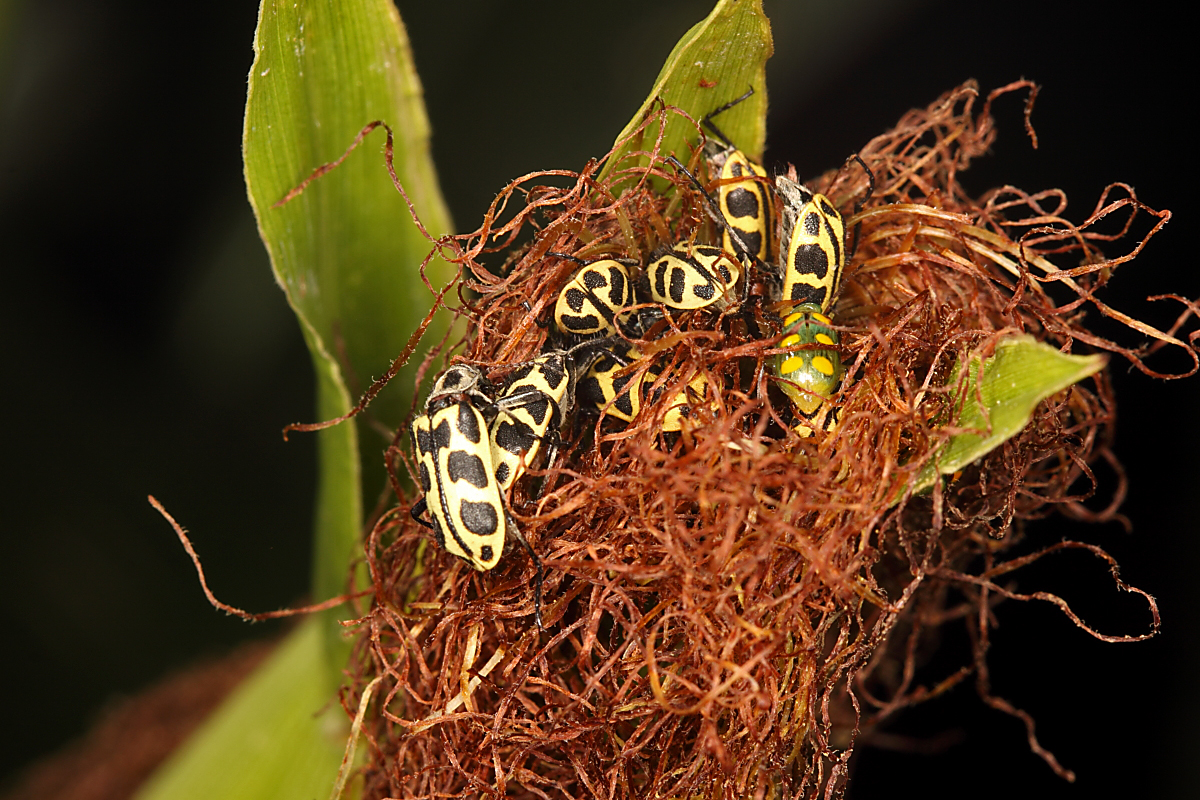
Despite its abundance (and the resultant attention it gets from growers), the pollen feeding adults are of little economic importance.  It’s easy to see, however, why this species gets so much attention from growers—during January through March the adults occur in tremendous numbers, congregating on a wide variety of flowering plants, but especially corn. Their large numbers are an impressive sight, with literally dozens to even hundreds of adults occurring on a single plant. Tassles—the source of corn pollen—are highly preferred, but when populations are heavy the silks and any exposed ears are also popular congregation sites. Despite their numbers, the impact of the beetles on yield is rarely sufficient to warrant the cost of control measures.


Whatever economic impact the species might have is actually due more the larvae—hidden within soil—than to the super-abundant and highly conspicuous adults. Feeding primarily on decaying plant matter within the soil, larvae do occasionally attack newly planted corn, either before or just after germination. Their attacks are more common in dry years and in severe cases can lead to the need to replant a field. This seems to be more common in South Africa, where the species was introduced in the early 1900s, than in its native distribution in South America.


Whenever I see a ubiquitous, diurnal, brightly and contrastingly colored insect, the first suspicion that comes to my mind is aposematic (warning) coloration and chemical defense against predation. There seems to have been some investigation into the toxicity of this species (Kellerman et al. 1972), and in South Africa they have been implicated in poisoning of livestock when accidentally ingested with forage (Bellamy 1985).  Few other reports of toxicity by beetles in this family are known, but four species of the genus Choresine have been shown to produce high levels of batrachotoxin alkaloids—these are the same toxins found in the skin of poison-dart frogs of the genus Phyllobates (Dumbacher 2004).  The frogs are unable to synthesize these toxins themselves, thus, it is presumed that they sequester these compounds from their diet—whether it is from some species of Melyridae remains to be determined.

Congratulations to Alex Wild and Max Barclay, who both answered the call to ID Challenge #8 and correctly determined all taxa from order to species.  Alex, by way of submitting his ID first, gets a bonus point and leads the current BitB Challenge session with 9 points.  Thanks to the rest who played along as well—see my response to your comments for your points earnings.

REFERENCES:

Bellamy, C. L. 1985.  Cleroidea, pp. 237–241.  In: Scholtz, C. H. and E. Holm (Eds.), Insects of Southern Africa, Butterworths, Durban.

Dumbacher, W. A., S. R. Derrickson, A. Samuelson, T. F. Spande and J. W. Daly. 2004.  Melyrid beetles (Choresine): a putative source for the batrachotoxin alkaloids found in poison-dart frogs and toxic passerine birds.  Proceedings of the National Academy of Sciences, USA 101(45):15857–15860.

Kellerman, T. S., T. F. Adelaar and J. A. Minne. 1972. The toxicity of the pollen beetle Astylus atromaculatus Blanch. Journal of the South African Veterinary Medical Association 43(4):377–381.

Copyright © Ted C. MacRae 2011

Bichos Argentinos #12 – Lace Bugs

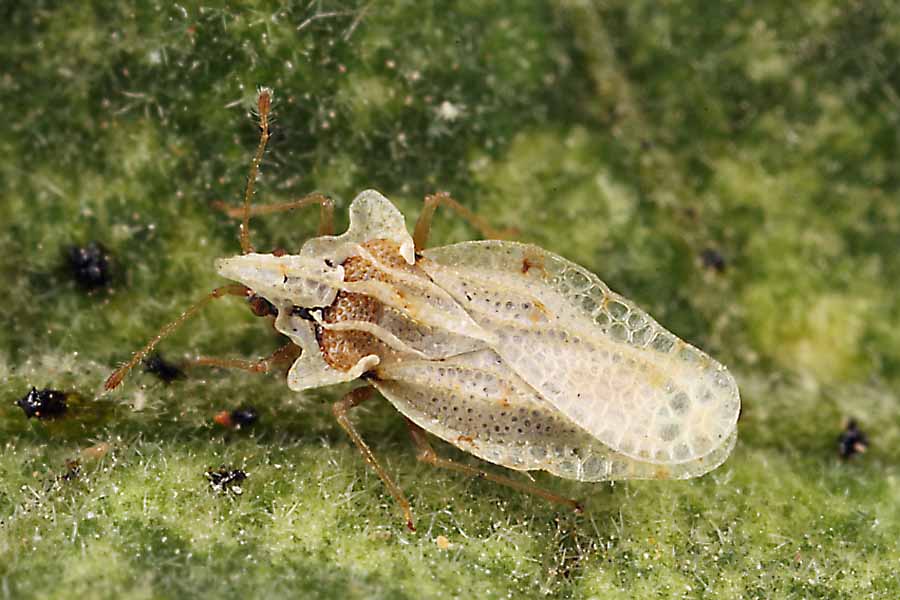
Corythaica cyathicollis on upper leaf surface of Solanum granuloso-leprosum.

Shortly after entering La Reserva Ecológica Costanera Sur (Buenos Aires, Argentina) during my early March visit, I noticed a fairly large patch of solanaceous-looking shrubs.  Even from a distance, I could see patterns of white stippling on the foliage immediately identifiable as signs of lace bugs, true bugs (order Hemiptera) in the family Tingidae.  As the only arborescent solanaceous plant recorded from the reserve, I was quickly able to identify the plant as Solanum granuloso-leprosum (Haene and Aparicio 2007), but I expected an identification of the bug to be much more difficult to come by.  Afterall, 84 species of tingids distributed in 25 genera have been recorded from Argentina (Montemayor and Cascarón 2005), and lace bug photos aren’t very frequently encountered in the variety of web sites that I visit when trying to get a lead on the identity of insects outside my area of expertise.

Corythaica cyathicollis adult. The black spots either represent frass or protective egg coverings.

Still, I had a clue—the association of the species with Solanum. Lace bugs are predominantly specialist feeders, with many species showing fidelity to a particular plant genus or group of related genera. The genus Solanum contains a number of economically important species, thus, it was a good bet that this species has at some point been considered an economic pest. With this in mind, I opened my volume of Heteroptera of Economic Importance (Schaefer and Panizzi 2000) to the chapter on lace bugs (Neal and Schaefer 2000) and began looking through the species accounts for South American species recorded on Solanum or other species in the family Solanaceae. I only had to reach the second species account before finding Corythaica cyathicollis and the statement “This Neotropical species is a pest on many solanaceous crops…” The identification was confirmed when I found a rather complete description of the species’ systematics, biology, and economic importance (Kogan 1960), complete with line drawings of the adults and all immature stages. Comparison of my photos with these drawings leaves little doubt that this is, indeed, C. cyathicollis.  (Interestingly, Montemayor and Cascarón (2005) list 28 species of Solanum as recorded hosts for C. cyathicollis in their Argentina checklist; however, S. granuloso-leprosum is not among them…)

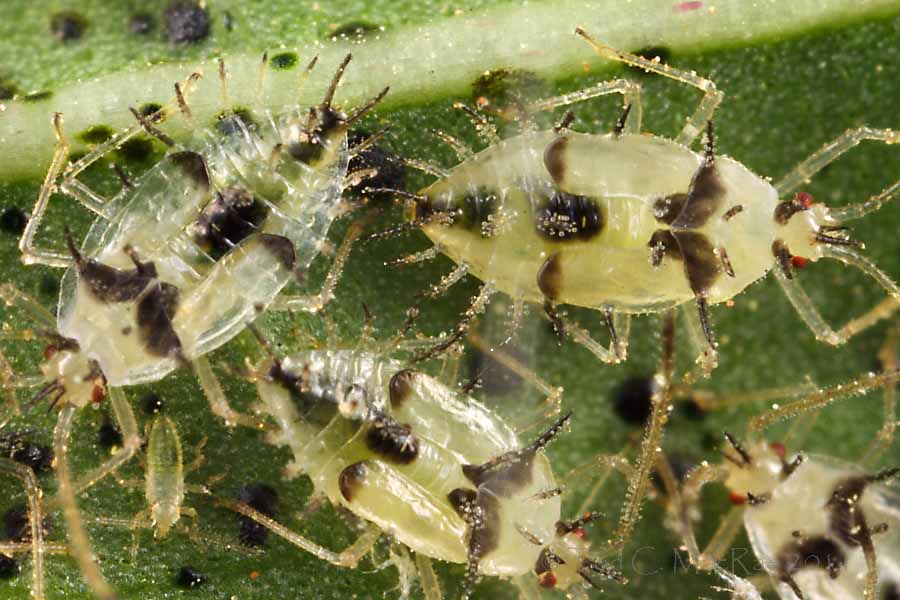
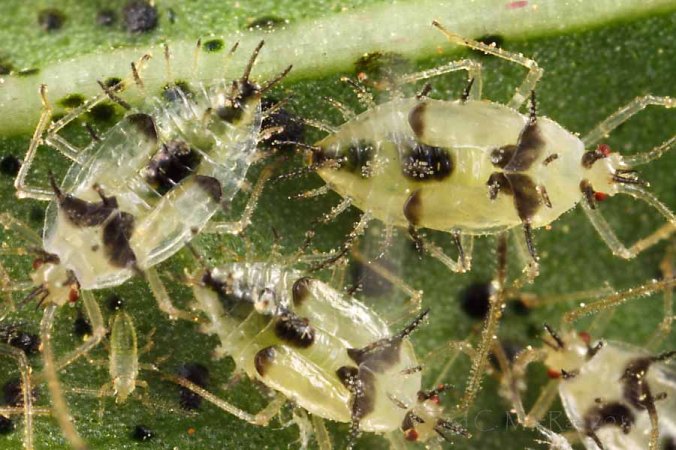
Corythaica cyathicollis late-instar nymphs.

The bristles of needle-like setae exhibited by the nymphs may be useful for species identification by entomologists (and even phylogenetic analyses—see Guilbert 2005), but for the nymphs themselves it seems fairly obvious that they serve some adaptive function for protection. Neal and Schaefer (2000) note that nymphs of many species of Tingidae seem to be protected by a wide variety of other adaptive mechanisms as well, including maternal care, the production of alarm pheromones and possibly the secretion of noxious compounds. Indeed, most tingids occur in multiple aggregations with large numbers of nymphs of the same species on a single host plant relatively free of predation and parasitism—it is difficult to imagine that such aggregations could exist without employing a strong arsenal of multiple defense mechanisms.
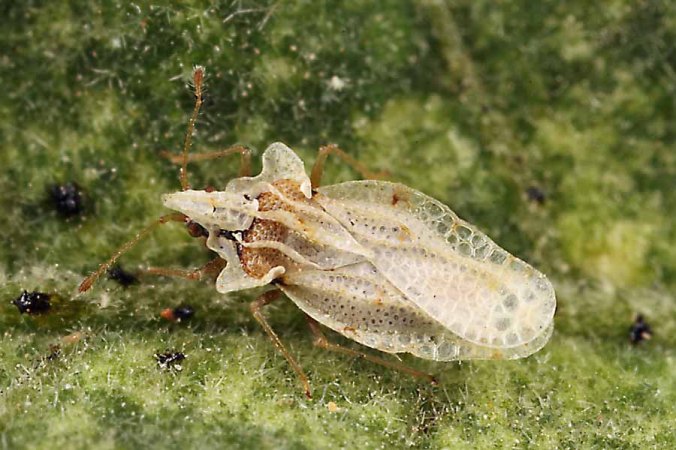
A presumably teneral adult Corythaica cyathicollis.

Occasional adults were seen within the aggregations that showed decidedly lighter coloration than the majority of adults seen. The aggregations were comprised primarily of adults and late-instar nymphs, so I presume these light-colored adults represented newly molted, teneral individuals that will eventually assume normal coloration once their new adult exoskeleton fully hardens.

Adult Gargaphia lunulata on lower leaf surface of Ricinus communis.

Later in the day, I encountered a different lace bug species on a different shrub—Ricinus communis.  This is the famous castor oil plant, a member of the Euphorbiaceae, native to the Old World and now widely distributed throughout tropical regions.  Despite castor oil’s reputed ability to heal wounds and cure ailments, the beans and other plant parts also contain ricin—a toxin with known insecticidal properties.  Apparently these lace bugs possess some mechanism that makes them immune from its effects.
Gargaphia lunulata 5th instar nymphs (and an apparent 1st instar in lower left corner).

This species was also fairly easy to identify—one of the species listed in Neal and Schaefer (2000) as feeding on Ricinus is Gargaphia lunulata, which they note feeds on several useful South American plants belonging to a number of families, including the Euphorbiaceae.  Photographs and drawings of this species can be found in Ajmat et al. (2003) and agree well with the adults and nymphs I found on this plant.  Unlike C. cyathicollis, which were found on the adaxial (upper) surface of the leaves, I found G. lunulata exclusively on the abaxial (lower) surfaces.  Nevertheless, the characteristic white stippling was easily visible on the leaves and gave immediate clue to their presence.

Photo Details: Canon 50D w/ MP-E 65mm 1-5X macro lens (ISO 100, 1/200 sec, f/13), Canon MT-24EX flash w/ Sto-Fen + GFPuffer diffusers. Typical post-processing (levels, minor cropping, unsharp mask). Photo 1 taken at 1X, photos 2 through 6 taken at or near 5X.

REFERENCES:

Ajmat, M. V., S. G. Bado, M. A. Coviella and M. J. Pannuzio. 2003. Aspectos morfológicos, biológicos y daño de Gargaphia lunulata (Mayr) 1865 (Heteroptera: Tingidae) sobre Passiflora caerulea L. (Passifloraceae). Boletin Sanidad Vegetal Plagas 29:339–346.

Guilbert, É. 2005. Morphology and evolution of larval outgrowths of Tingidae (Insecta, Heteroptera), with description of new larvae. Zoosystema27(1):95–113.

Haene, E. and G. Aparicio.  2007.  100 Trees of Argentina. Editorial Albatros, Buenos Aires, República Argentina, 128 pp.

Kogan, M.  1960.  Corythaica cyathicollis (Costa, 1864), aspectos sistemáticos, biológicos e econômicos (Hemiptera, Tingidae). Memorias Instituto Oswaldo Cruz 58(1):59–88.

Montemayor, S. and M. del Carmen Coscarón. 2005. List of Argentinian Tingidae Laporte (Heteroptera) with their host plants. Zootaxa 1065:29–50.

Neal, J. W., Jr. and C. W. Schaefer. 2000. Chapter 4. Lace Bugs (Tingidae), pp. 85–137. In:C. W. Schaefer and A. R. Panizzi (Eds.). Heteroptera of Economic Importance, CRC Press LLC, Boca Raton, 828 pp.

Copyright © Ted C. MacRae 2011
Friday Flower – “Palo Borracho”

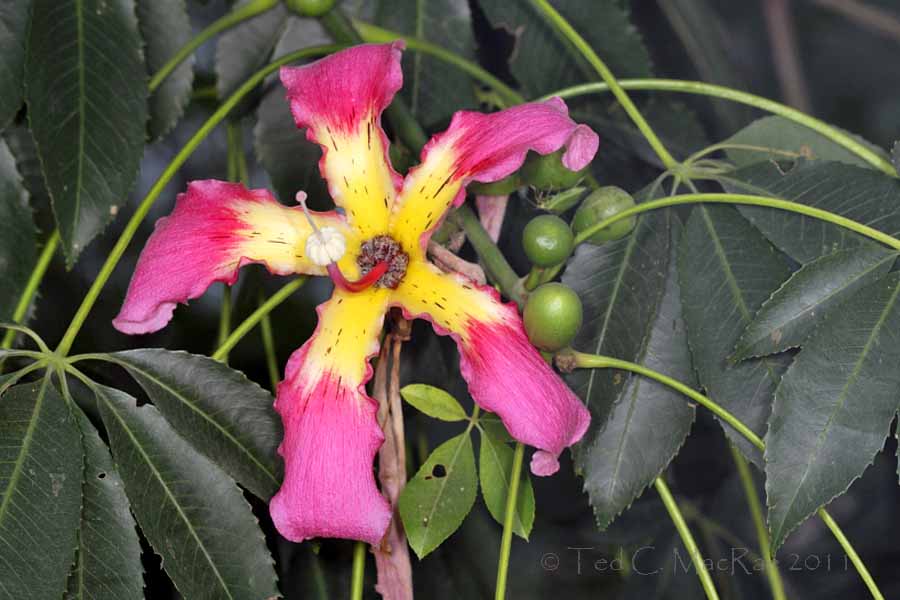
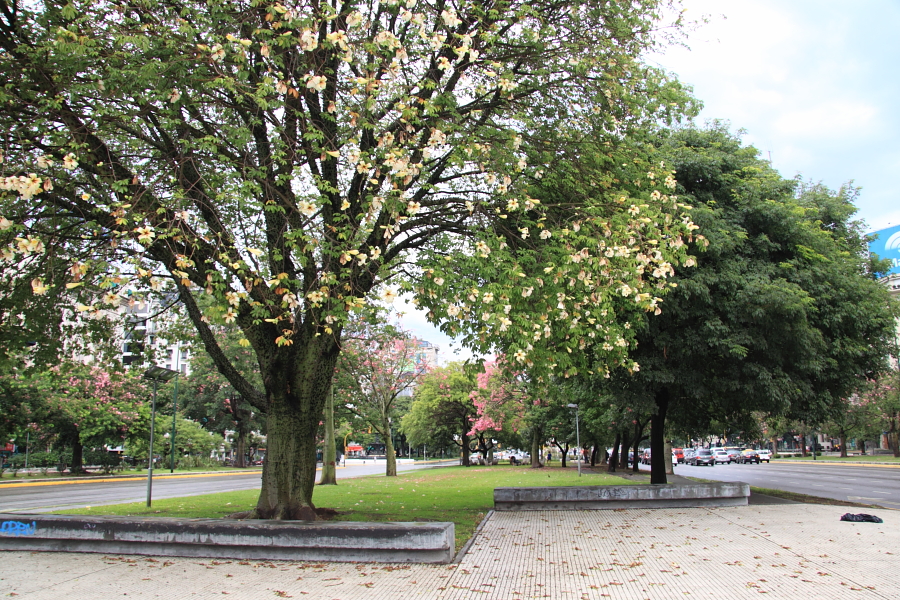
Ceibo may be Argentina’s national flower, but Ceiba is its most iconic flower.  That’s right—Ceibo and Ceiba are two, completely unrelated species!  Ceibo is the common name in Argentina for Erythrina crista-galli, a tree in the family Fabaceae, while Ceiba is a genus of flowering trees in the family Bombacaceae that includes the species pictured above—Ceiba speciosa (syn. Chorisia speciosa), known in Argentina as “Palo Borracho.”  This translates literally to “drunken stick”—a reference to the pot-bellied trunk with narrowed base that gives the tree the appearance of a wine bottle (Haene and Aparicio 2007).  Native to the dry forests of northeastern Argentina, C. speciosa has become an enormously popular street tree in the country due to their dazzling displays of hot pink blossoms, especially in Buenos Aires whose green spaces and wide boulevards are lined with grand old specimens.

Interspersed amongst the pink flowering trees are occasional specimens with the flowers mostly white but otherwise looking much the same as C. speciosa.  These are the closely related species C. chodattii (syn. Chorisia insignis), or Yuchán.  This species is native to more western, even drier areas of northern Argentina than C. speciosa and has also become popular as an ornamental tree in urban areas, though it has been planted with less frequency than its hot pink-flowered congener.

Bombacaceae also contains the famously odd baobab and kapok trees—also distingished by bulging trunks that serve as an adaptation for water storage in seasonally dry environments.  The trunks of Ceiba trees exhibit an additional water conservation adaptation with thick, conical-shaped thorns that are also capable of water storage.  The young tree picture here was photographed in Campinas, Brazil and exhibits the green coloration typical of younger trees that functions to augment their photosynthetic capabilities. In fact, the dry forests in which Ceiba spp. evolved often contain a number of unrelated plants that also are thorny and have green bark.

REFERENCE:

Haene, E. and G. Aparicio.  2007.  100 Trees of Argentina. Editorial Albatros, Buenos Aires, República Argentina, 128 pp.

Copyright © Ted C. MacRae 2011
Bichos Argentinos #11 – Takes Two to Tango

Epilachna vigintioctopunctata (vaquita de las solanáceas) | Buenos Aires, Argentina

Another of the insects that I photographed at La Reserva Ecológica Costanera Sur, Buenos Aires, Argentina during my early March visit.  I found quite a few of these beetles feeding on the newly sprouting growth from cut stumps of a small, multi-stemmed tree.  At first I thought they were leaf beetles of the family Chrysomelidae because of the way they were actively feeding on the fresh, succulent growth; however, a closer look quickly revealed them to be members of the family Coccinellidae (ladybird beetles).  Their phytophagous, gregarious behavior immediately identified them as members of the subfamily Epilachninae, and in fact they bear a remarkable resemblance to Epilachna varivestis (Mexican bean beetle) and E. borealis (squash lady beetle) – the best known examples of this subfamily in North America.

Armed with confidence in at least a subfamilial placement, I looked for references on the group and quickly found a reasonably recent revision of the subfamily for the entire Western Hemisphere (Gordon 1975) – jackpot!  I reasoned an abundant species seen in the heart of the 3rd largest city in South America would likely show up on page one, but after several increasingly careful passes through the entire revision, it became clear that whatever species this was, it was not among the nearly 300 species (2/3 of them in the genus Epilachna) treated in that work. 

Now, the exuberant, young, not-very-sage entomologist that I was 30 years ago would have immediately gotten all excited that I had found a new species, but the older, battle-tested, more cautious entomologist that I am now instead started suspecting I was dealing with an introduced species.  After all, some of the insects and plants I’ve already featured from this man-made nature reserve are introduced.  I figured as abundant as the beetles were, the species had to be featured on some website, so I started with the obvious and Googled “Coccinellidae Argentina,” clicked on the very first result (appropriately titled Coccinellidae of Argentina), and found a seemingly authoritative site with links to the different subfamilies.  Clicking on Epilachninae and scanning the photos, there it was – Epilachna vigintioctopunctata (28-spotted ladybird beetle).  Native to India and southeastern Asia, this species is well known for its attacks on numerous solanaeous and cucurbitaceous crops (Richards 1983).  It made its first appearance in the Western Hemisphere in southern Brazil (Schroder et al. 1993) and in 1994 was observed on experimental eggplant plots at the School of Agronomy, University of Buenos Aires (Folcia et al. 1996).  Poetically, those initial specimens were sent to Robert Gordon at the U.S. National Museum (and author of the Western Hemisphere revision), who confirmed their identity.  It seems that Argentinians are not the only ones that like to tango!

REFERENCES:

Folcia A. M., S. M. Rodriguéz and S. Russo. 1996. Aspectos morfológicos, biológicos y de preferencia de Epilachna vigintioctopunctata Fabr. (Coleoptera Coccinellidae). Boletin de Sanidad Vegetal Plagas 22:773–780.

Gordon, R. D. 1975. A revision of the Epilachninae of the Western Hemisphere (Coleoptera: Coccinellidae). U. S. Department of Agriculture, Technical Bulletin No. 1493, ii+409 pp.

Richards, A. M.  1983.  The Epilachna vigintioctopunctata complex (Coleoptera: Coccinellidae).  International Journal of Entomology 25(1):11–41.

Schroder, R. F. W., M. M. Athanas and C. Pavan. 1993. Henosepilachna vigintioctopuctata (Coleoptera-Coccinelidae), new record for Western Hemisphere, with a review of host plants. Entomological News 104(2):111–112.

Copyright © Ted C. MacRae 2011